
Eye Exams for Residents With Dementia or Limited Mobility
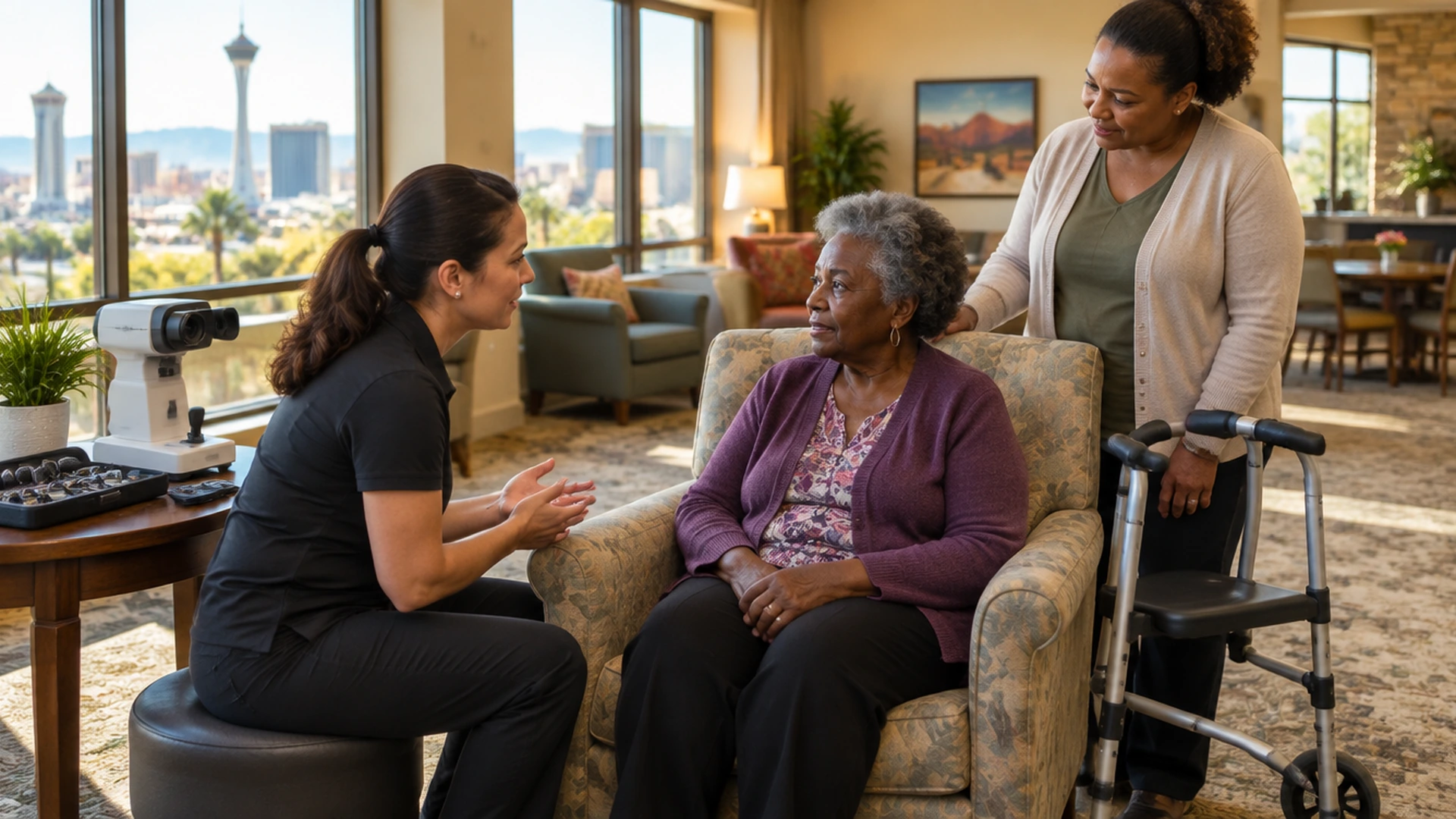
TLDR: I plan eye exams for seniors with dementia around your resident’s communication, mobility, and decision-making needs. Prepare consent, support, examination scope, and follow-up with me before the visit. Discuss a familiar room, flexible pacing, and further assessment when needed.
Answer: For eye exams for seniors with dementia in Nevada assisted living communities, give me your resident’s communication preferences, mobility needs, current glasses, and prior eye care instructions. Prepare consent and representative documents, then plan the room and assistance. Keep incomplete testing and referrals on the follow-up list after the exam.
Give me a useful picture. Your resident’s discomfort signals, daily routine, and usual assistance belong in the visit notes. I need to know who helps with familiar activities and how the resident responds. A diagnosis alone leaves those practical details unanswered.
Plan the people alongside your appointments. In Las Vegas, use an assisted living vision day call with me to settle access, privacy, consent, and examination scope. On-site eye care needs a suitable room and the right support. Include the next steps for further testing and referrals before the visit.
How Should You Prepare Eye Exams for Seniors With Dementia?
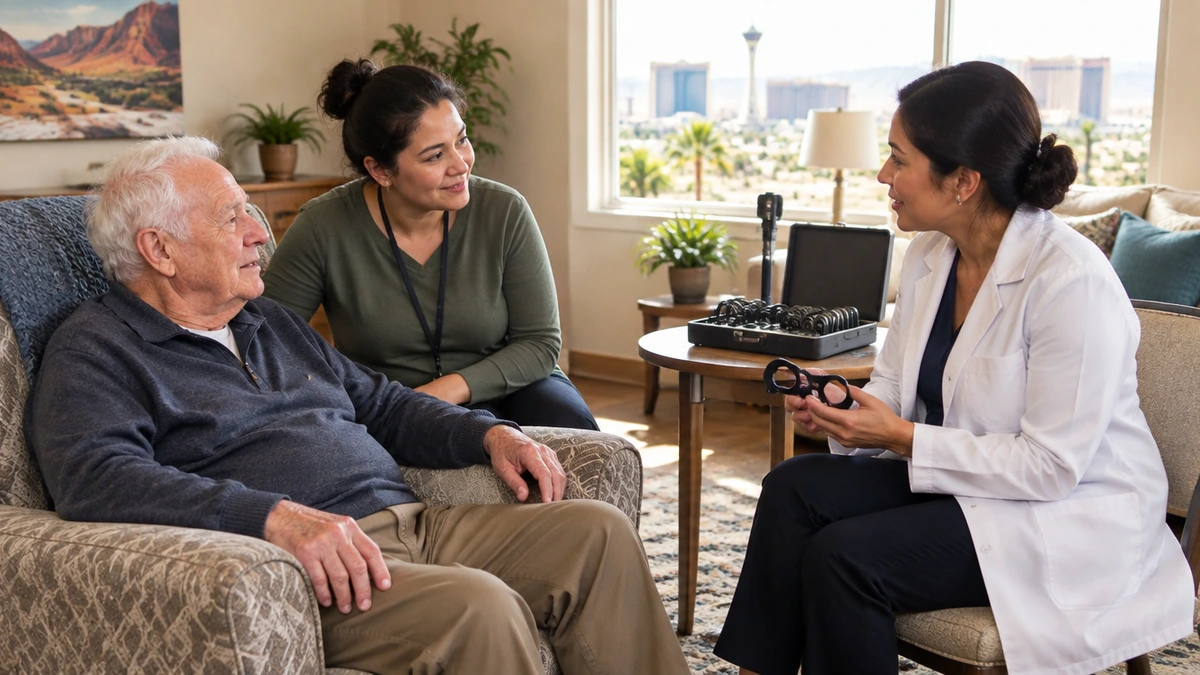
Start with your resident’s routine. Note the practical time and setting, the person they want nearby, and what helps explain an unfamiliar activity. Discuss using a familiar room with me. Treat it as a possible accommodation without predicting comfort or more accurate findings.
Leave room to adjust your plan. A published Canadian facility optometry program described some residents with dementia needing assessment across several days or help from a family member. I plan pacing around your resident’s response and identify further assessment when testing is unfinished. An examination slot does not establish every task will be completed during that visit.
Bring the glasses your resident uses. Gather available eye examination reports and describe changes in familiar activities, such as reading or watching television. Include the glasses still needing adjustment and any pending referral. Put unfinished care beside the current concern for my review.
Which Communication Arrangements Should Staff Discuss?
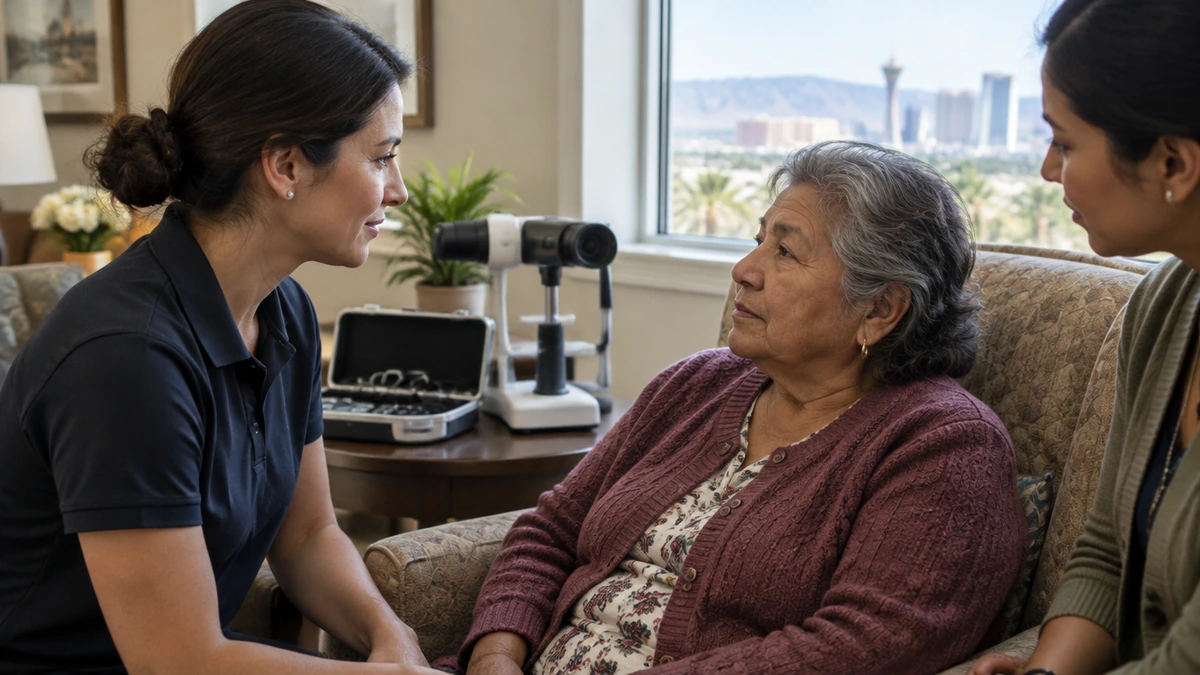
Share the words your resident uses. Describe familiar task names, signs of discomfort, and whether a trusted caregiver helps explain activities. Give me that account before the examination. Settle the caregiver’s role while planning support for the resident.
Give your resident time to respond. Explain who is visiting and the activity about to happen in simple, concrete words. I guide the pace and pauses. Let the resident hear a clear instruction without several people talking at once.
Keep your resident’s preference visible. Record whom they want present and protect privacy in the examination room. If the resident becomes distressed or declines a step, pause. I address the next action with you before testing continues.
Write down what helped your conversation. Describe what the resident understood or found difficult during the task, using concrete observations. An unfinished task does not describe every ability. Identify my assessment and your staff’s observations separately in the handoff.
How Do You Confirm Guardian or Representative Involvement?
Start with your resident’s participation. Establish who is making the care decision and gather the documents supporting any representative’s role. A relative’s name on the contact sheet does not establish consent authority. Keep the review separate from booking the room.
Read the document in your file. For a healthcare power of attorney, Nevada law makes a health-care power of attorney effective when executed unless its terms specify a future date or incapacity trigger, with the required determination for that trigger. Share scope and activation terms with my team while preparing the representative’s role. Flag unanswered questions before seeking a signature.
Send your current guardianship order for review. Under Nevada law, a guardian of the person generally authorizes medical care and serves as the protected person’s HIPAA personal representative unless the court orders otherwise. Have the responsible care-team contact check the actual appointment and any restrictions in the order. Settle consent and records authority from those documents before assigning decisions to the guardian.
Flag overlapping papers before your visit. Nevada law suspends an existing durable health-care power of attorney when a guardian of the person is appointed. The resident consent coordination guide helps you collect the documents and identify the unresolved authority question. Keep the question visible for review with my team before routine examination scheduling proceeds.
What Mobility Accommodations Should You Confirm?
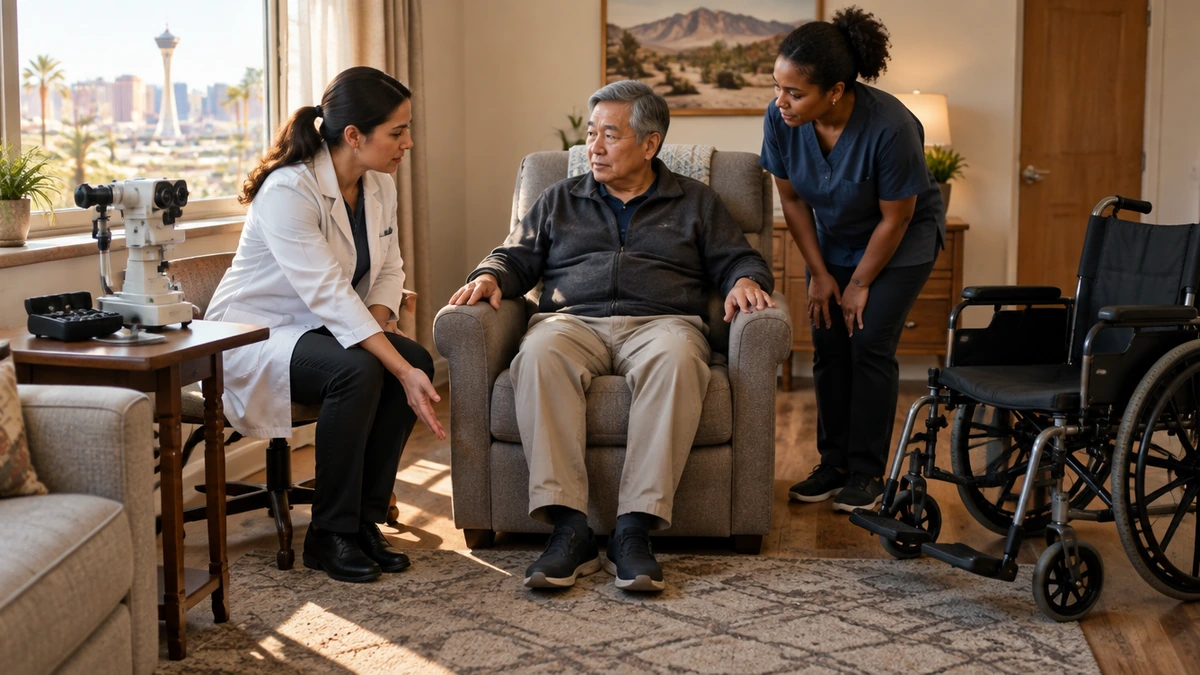
Describe the chair your resident uses. Include the mobility device and usual assistance before settling the setup, since A published Delaware facility study documented examinations in chairs, wheelchairs, or at bedside. Those study settings show possible approaches. I still need to match the examination position to your resident and room.
Walk your route before examination day. Check the doorway, space around the resident’s seating, privacy, and a power outlet for my setup. Name the staff member providing any agreed assistance. Leave no transfer dependent on a caregiver who has not been assigned.
Raise positioning needs on your planning call. I review the room and portable examination equipment with you against the assessment planned for the resident. Identify a different setup or location when a component requires it. Keep that next step in the visit notes until resolved.
| Planning area | Information to share | Arrangement to confirm |
|---|---|---|
| Communication | Resident’s preferences and discomfort signals | Explanation, pacing, and caregiver support |
| Decision-making | Relevant consent and current authority documents | Who participates in each decision |
| Mobility | Seating, device, and assistance needs | Access and positioning for planned testing |
| Examination | Previous findings and current concerns | Scope, limitations, and next assessment |
| Follow-up | Provider contacts and open tasks | Named staff owner for each action |
What Should You Expect From Adapted Testing?
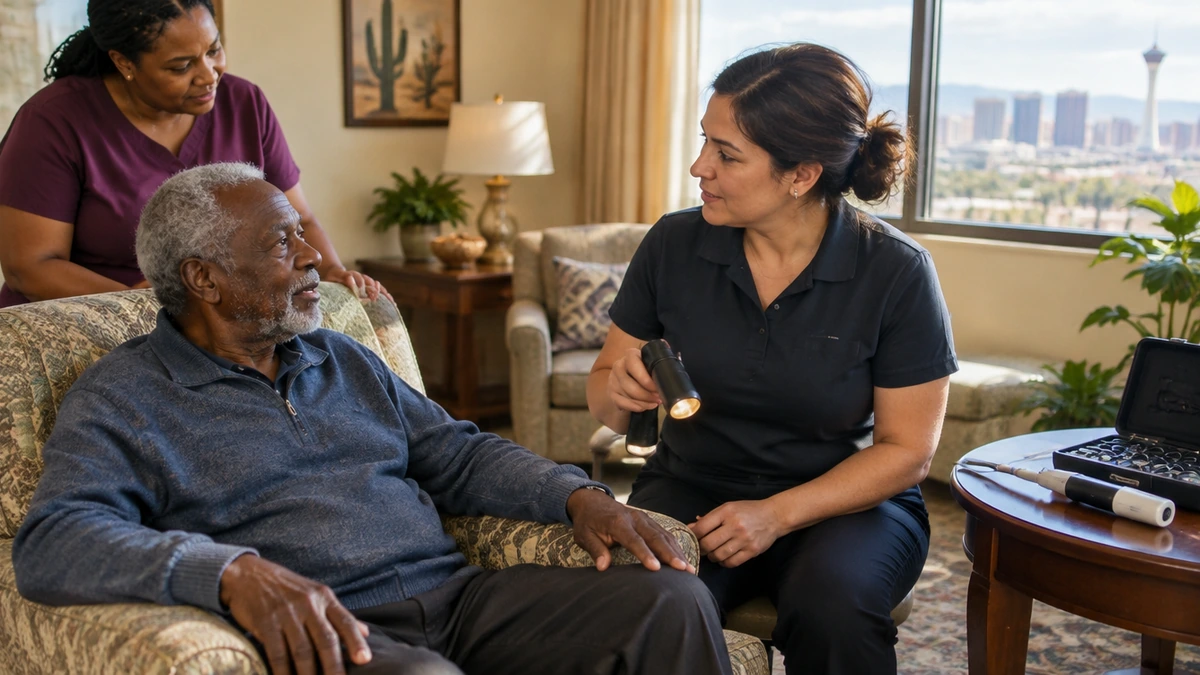
Get a clear account of your testing plan. As your visiting optometrist, I report what I assessed, and Nevada’s comprehensive-examination definition permits an alternative method for an unperformable component when it obtains comparable data. Record the findings obtained and the method used when relevant to the handoff. An unfinished assessment needs an explicit next step.
I reviewed 69 primary sources across five research lenses for this series, and some residents with dementia needed assessment over several days in a published facility program. Put your resident’s pacing and support needs in the examination notes. Keep incomplete measurements visible in the report. I need to see what remains unresolved, as does any outside eye doctor receiving a referral.
Record the examination your resident received. For a comprehensive eye exam, I identify completed parts, unfinished testing, and any referral or further appointment. Keep those details beside the next instruction. An ended appointment or recorded vision screening result does not establish a complete examination.
How Do You Follow Through After Eye Exams for Seniors With Dementia?
Locate your resident’s glasses first. Access belongs alongside prescription review, because A study of residents with probable Alzheimer’s disease at St. Louis nursing facilities identified unused glasses associated with inability to request them, lost or broken pairs, and inadequate prescriptions. Have staff find the correct pair and report fit or condition concerns. Record any need for reassessment with the eyewear task.
Put names beside your next steps. Track prescription eyewear, delivery, adjustments, testing, and referral appointments as separate actions. At shift change, identify what is open and the provider or authorized contact receiving updates. A glasses case on the desk needs a clear destination.
- Obtain the examination findings and any limitations.
- Confirm the next assessment or referral instruction.
- Assign a contact for eyewear questions and adjustments.
- Send relevant instructions securely to the named recipient.
- Check that each requested action has been completed.
Describe the care your resident received. An examination and usable glasses address eye health and vision needs without establishing a change in dementia or independence. Put the resident’s priorities beside my recommendations. Keep predictions out of the results handoff.
Discuss Accessibility Needs With Vision by Amel
Bring your accessibility notes to the call. I am Dr. Amel Youssef, OD, founder of my practice, Vision by Amel, in Downtown Summerlin. I invite you to plan a visit for your assisted living home, Residential Facility for Groups, memory care community, adult day care program, or senior living community in the Las Vegas Valley. Describe communication, mobility, and representative needs before settling the room and schedule.
Build your voluntary resident interest list. Gather consent, representative documents, and insurance information. My team and I verify benefits before service. Prepare a private room with electrical access and the examination schedule with my team. Benefits depend on each resident’s eligibility and plan terms.
Plan your visit through follow-up. Review eye examination services and the on-site examination process with the facility contact, including on-site limits and secure records. My team and I coordinate eyeglass selection, measurements, delivery, and adjustments. I use the accessibility call with you to identify support needs and the next steps for further assessment or referrals.
Frequently Asked Questions About Accessible Resident Eye Exams
What should I do if the resident uses different names for familiar objects?
Give me your resident’s familiar words and their meanings before testing. Describe how the words are used in daily activities without coaching examination answers. I guide communication during each task.
How should I arrange the caregiver’s role during testing?
Assign a caregiver who knows your resident’s support needs when their involvement is appropriate. Agree with me where that person sits and when to help. Leave the resident space to respond directly.
What if the resident arrives without the mobility device listed in the plan?
Pause the planned setup and tell me what changed. Give your staff the assistance instructions already in the resident’s care plan. I reassess positioning before proceeding, so you do not need to improvise a transfer.
How do I document an unfinished examination?
Record completed tests, unfinished tests, and my next instruction. Name your staff contact arranging each follow-up action. Keep the report ready for the next appointment so the unanswered measurement stays visible.
What information belongs in the initial accessibility call?
Describe your facility type, room, and residents’ support needs in the initial call. My team and I establish secure intake with you for resident-specific details. Keep personal diagnoses, identity documents, and insurance records off the public marketing form.
Schedule an On-Site Vision Day Speak With Dr. Amel’s Team: (702) 858-4362
Like this article? Add Vision by Amel as a preferred source, and you are more likely to see our articles in Google’s Top Stories.
