
How Vision Problems Affect Fall Risk in Senior Living Communities
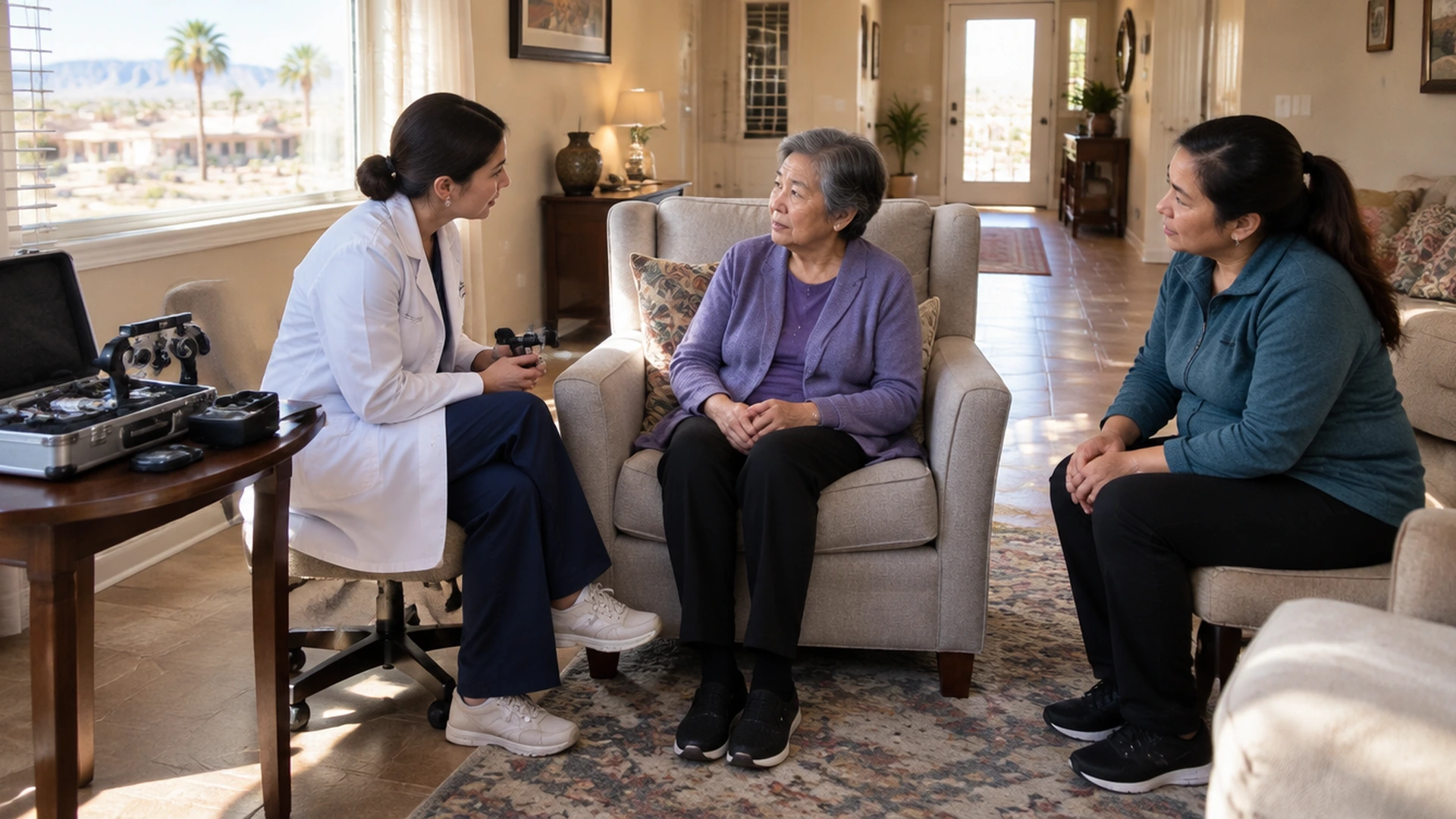
TLDR: Put vision on your resident safety checklist alongside the care plan and conditions in the home. Research links visual impairment with falls, but a vision day does not establish a fall-prevention benefit. I help you plan the assessment, glasses follow-up, and staff handoff around each resident.
Answer: Address vision problems and falls in seniors together in your Nevada assisted living safety review. Record difficulty judging steps, seeing edges, or using glasses, then arrange an eye exam and care-plan review. Include lighting, medication review, mobility support, and follow-up, with clear tasks for staff and no predicted reduction in falls from the visit.
Your incident report tells part of the story. Add what the resident was doing, the glasses being worn, and the conditions in the room or walkway. Those details give your care team and me a better starting point than assuming every stumble has a visual cause.
Give your caregivers a clear reporting route. In Las Vegas, a facility-coordinated vision day adds assessment and follow-up to the home’s existing safety work. Plan on-site eye care around each resident’s support needs. Keep the eye report with the care instructions staff use during daily activities.
What Does Research Say About Vision Problems and Falls in Seniors?
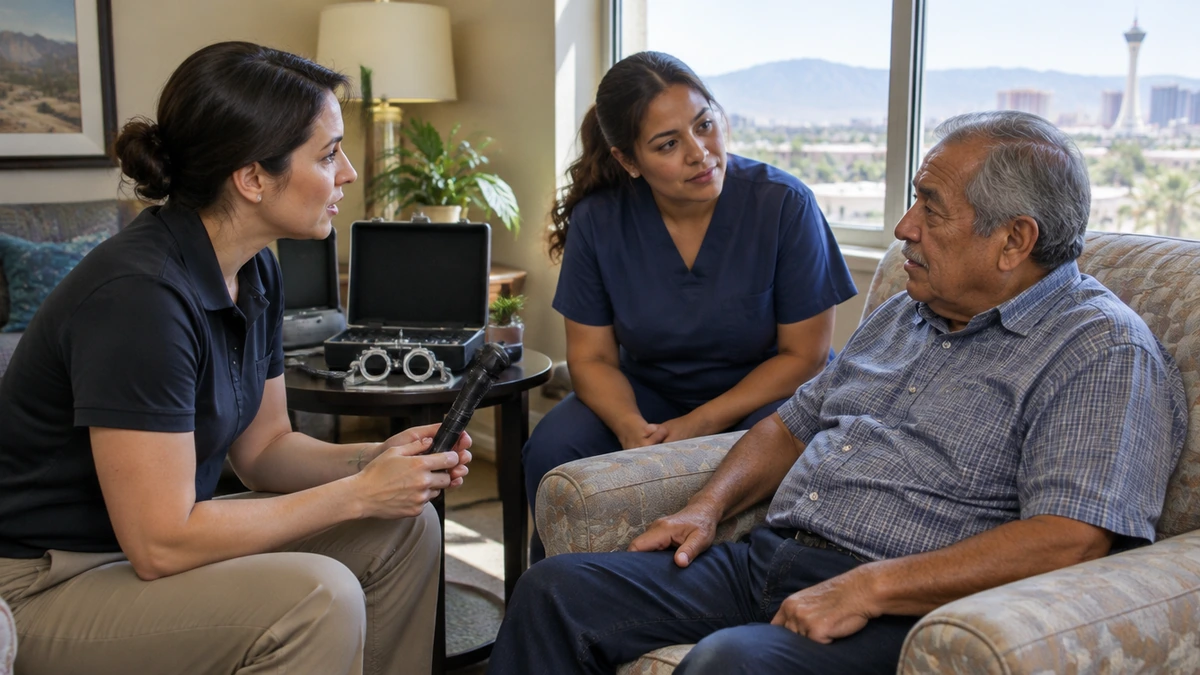
Read the figures for what they measure. Your incident log and this study describe different groups: CDC’s analysis of the 2014 BRFSS, published in 2016, found that 46.7% of noninstitutionalized adults aged 65 or older with severe vision impairment reported a fall, compared with 27.7% without severe vision impairment. The figures describe an association in the study population. They do not predict your home’s fall rate or the result of changing a resident’s glasses.
Keep treatment findings in view too. For your safety review, A 2007 randomized trial of 616 frail community-dwelling adults aged at least 70 found that 65% receiving a vision intervention versus 50% receiving usual care fell at least once, with a fall-rate ratio of 1.57 and a 95% confidence interval of 1.20 to 2.05. The percentages count participants who fell, while the ratio measures fall rates. Keep those measures distinct when explaining the study, which does not establish all eye care causes falls.
Give your program a concrete task. Identify visual concerns, arrange assessment, and put the resulting instructions where caregivers will use them. Track your own incident reports and unfinished follow-up separately. A published study does not tell you what will happen in the hallway at your home.
Why Discuss Depth Perception and Contrast Sensitivity?
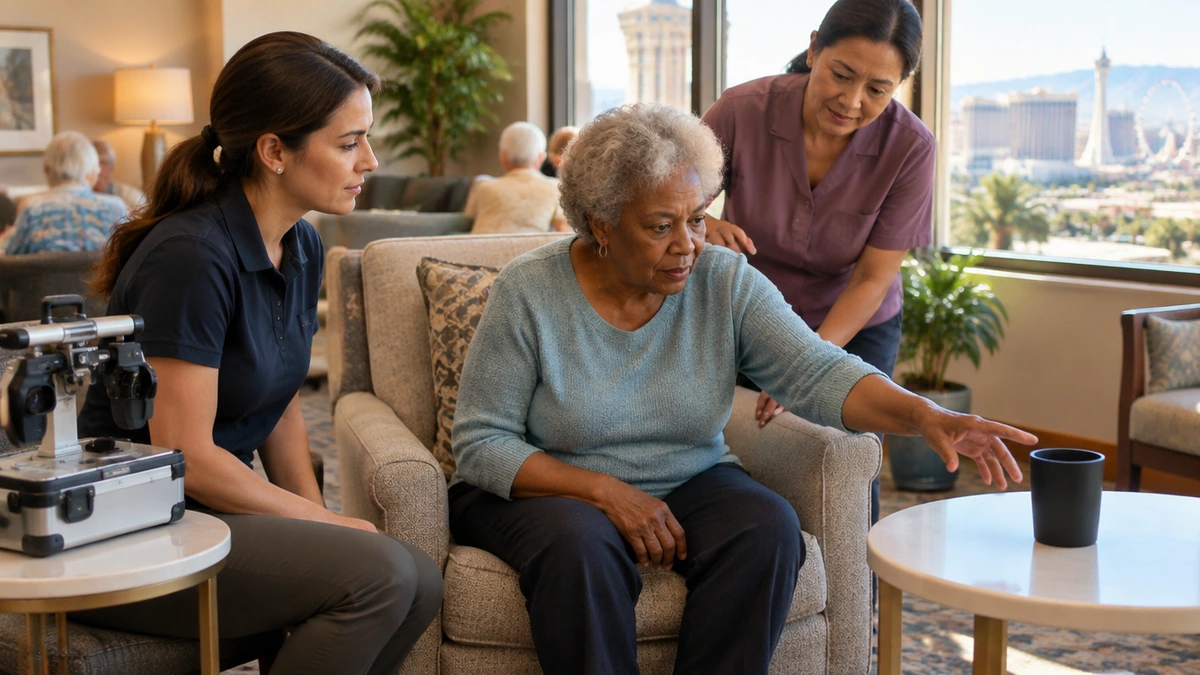
Look beyond the printed page. When your resident struggles to judge an object’s position or see its edge, note the task, because A prospective study published in 2001 identified impaired depth perception, contrast sensitivity, and low-contrast visual acuity as the strongest visual risk factors for multiple falls in its community-dwelling sample. Include those observations even if ordinary print remains clear. Bring the activity into the examination history.
Give me your account of the scene. Record hesitation at a step, difficulty finding a chair edge, or trouble locating an object against a similar color. Name the location and activity staff observed. I interpret those details with the resident’s history before identifying a visual deficit.
Keep findings separate from impressions. As your visiting optometrist, I provide measured results for the handoff alongside the caregiver’s observations and unresolved questions. If the resident did not complete a task, record the limitation and next instruction. An empty result line needs follow-up, not a normal label.
What Should You Do About Old Prescriptions and Multifocal Glasses?
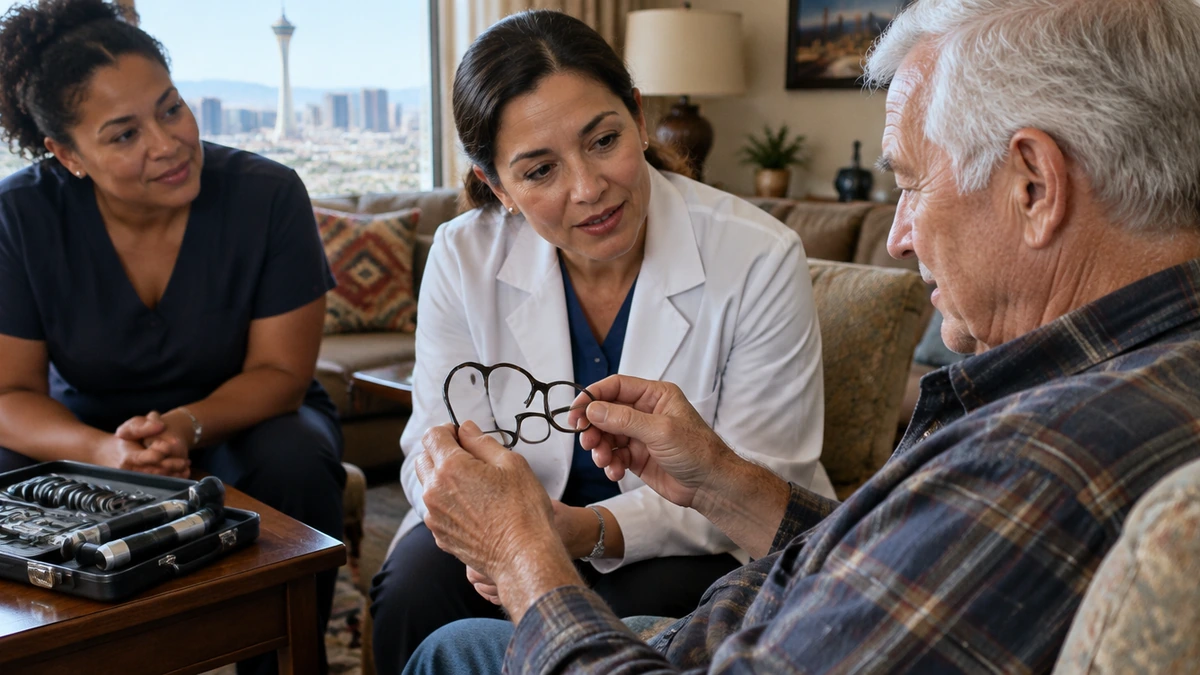
Bring the glasses your resident wears. Include other available pairs and label their usual purpose, such as reading or watching television. Request a prescription and fit review when staff report difficulty. The age of a frame alone does not identify the cause of a fall.
Match lens advice to your resident’s activities. The 2010 VISIBLE trial found no significant overall fall reduction from single-vision distance glasses plus counseling, with benefit in the active-outdoors subgroup and increased outdoor falls in the less-active subgroup. A resident’s outdoor routine belongs in the discussion about lenses and use. Keep the decision individual instead of setting a home-wide rule about multifocals or progressive lenses.
Make wear instructions easy to find. Your caregiver needs to know which glasses the resident uses for each activity, with unclear directions sent back for explanation. Use the guide to prescription glasses fitting and delivery to plan measurements, delivery, and adjustments. Keep the resident’s questions beside the eyewear task.
How Should You Review Lighting, the Environment, and Medicines?
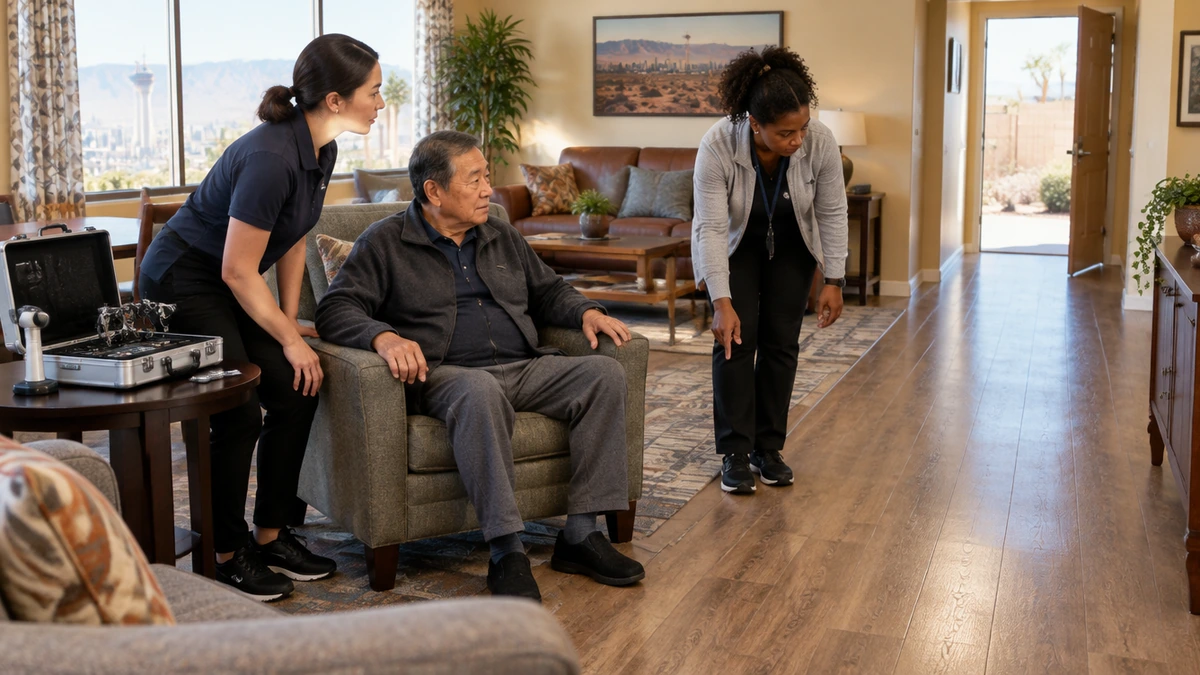
Walk the route in your incident report. With the responsible care staff, record the lighting, glare, furniture, and objects where the resident moved. Have the care team decide what needs changing and assign each action. The note needs a person responsible for the furniture or lighting review.
Check the setting at the relevant time. Your brightly lit hallway at another hour does not describe the activity the resident found difficult. Record the actual light, glasses worn, and usual mobility support used. Give me the scene staff observed.
Name the person reviewing your medication list. Send the nurse or prescribing doctor the current medicines, recent changes, and symptom timing. Keep my findings beside those details for review. The resident’s prescribing team directs medicine changes.
| Review area | Information to gather | Next staff action |
|---|---|---|
| Vision and daily tasks | Resident’s description and observed difficulty | Request eye assessment |
| Glasses | Pair worn, purpose, fit concerns | Obtain wear and adjustment instructions |
| Environment | Lighting and route at the time | Assign a care-team review |
| Medicines | Current list and recent changes | Send to the nurse or prescribing doctor |
| Follow-up | Open referrals and pending instructions | Name the person closing each task |
When Should Your Team Request an Eye Evaluation?
Report a new difficulty promptly. Your note needs the resident’s words or the changed activity staff observed, with documented cataracts, glaucoma, or macular degeneration included when present. Bring the concern to me for diagnosis. Staff do not need another incident before requesting clinical direction.
Send sudden symptoms for immediate assessment. For your urgent response plan, The National Eye Institute directs immediate eye-doctor or emergency-department assessment for sudden new floaters, flashes, or a dark curtain or shadow suggesting retinal detachment. Tell the eye doctor handling the urgent assessment when the change began and what the resident described. Keep that call out of the routine vision day queue.
Give your referral a specific question. Describe the step, chair edge, or other task the resident struggled with and request assessment and assistance instructions. For a comprehensive eye exam, I explain the tests planned and any limitations needing another visit. Put the next appointment and staff responsibilities in the care record.
Build a Follow-Up Process for Vision Problems and Falls in Seniors
I reviewed 69 primary sources across five research lenses for this series, and vision intervention studies do not support a uniform fall-prevention promise. Use the trial findings above to set your goals around assessment and follow-through. Put the examination instructions beside the resident’s safety plan. A finished appointment does not establish that fall risk is gone.
Turn the examination report into tasks your staff understand. Record whether there is a glasses order, an adjustment request, further testing, or a referral. Keep the resident’s existing mobility and safety instructions active while the care team reviews changes to the care plan.
- Gather the incident details and the resident’s account.
- Route urgent symptoms for immediate assessment.
- Prepare glasses, medication information, and previous eye reports.
- Prepare consent, the examination room, and resident assistance.
- Record results and assign responsibility for each next step.
- Check completion and report new concerns to me or the resident’s outside treating team.
Count the tasks your staff finished. Check whether reports arrived, referrals were booked, and glasses questions were answered. Review incidents within the wider safety program, alongside the resident’s care and surroundings. Do not assign a change in falls to the eye visit alone.
Add Vision by Amel to Your Resident Safety Planning
Plan your vision day with me. I am Dr. Amel Youssef, OD, founder of my practice, Vision by Amel, in Downtown Summerlin. My team and I serve assisted living homes, Residential Facilities for Groups, memory care communities, adult day care programs, and senior living communities across the Las Vegas Valley. Bring your resident list to the planning call. Describe support needs before settling the room and examination schedule.
Keep your resident participation voluntary. Gather consent, representative documents, and insurance information for my review. I verify benefits before service. Prepare a private room with electrical access and agree on the examination schedule. Benefits depend on each resident’s eligibility and plan terms.
Plan for the work after your visit. My team and I coordinate prescription eyewear selection, measurements, delivery, and adjustments with you. I arrange clinical referrals and explain each next step. Review eye examination services and the facility examination workflow before the vision day. I explain on-site testing limits and secure record handling for your resident safety plan.
Frequently Asked Questions About Vision and Resident Fall Risk
What should I ask after a near miss without a fall?
Ask the resident what they noticed and what they were trying to do. Record your staff’s observations through the usual care reporting process, including the location and glasses being worn. Send recurring or new visual concerns to me even when the event did not result in an injury.
Should we put every resident into the same kind of glasses?
Use individual eyewear instructions for your residents. Record each person’s activities, preferences, and difficulty with current glasses for my review. Keep clear wear directions with every replacement or additional pair.
How should I handle a resident who dislikes a new pair?
Record what your resident finds difficult and when it happens. Send that description to my eyewear team for fit, use, or reassessment instructions. Keep the concern in the care handoff until it is resolved, even after the glasses have arrived.
What belongs in our vision-related safety audit?
Check whether your reported concerns reached me or the resident’s outside eye doctor and requested follow-up occurred. Identify missing reports, unresolved glasses problems, and tasks without a staff owner. Use the findings to improve the handoff without treating completed paperwork as a clinical outcome.
What if a family asks whether the visit will stop falls?
A vision day does not establish that your resident will stop falling. Explain the planned assessment and how findings enter the resident’s wider care plan. Name the follow-up tasks without predicting a fall reduction.
Schedule an On-Site Vision Day Speak With Dr. Amel’s Team: (702) 858-4362
Like this article? Add Vision by Amel as a preferred source, and you are more likely to see our articles in Google’s Top Stories.
