
Common Eye Problems Assisted Living Staff Should Watch For
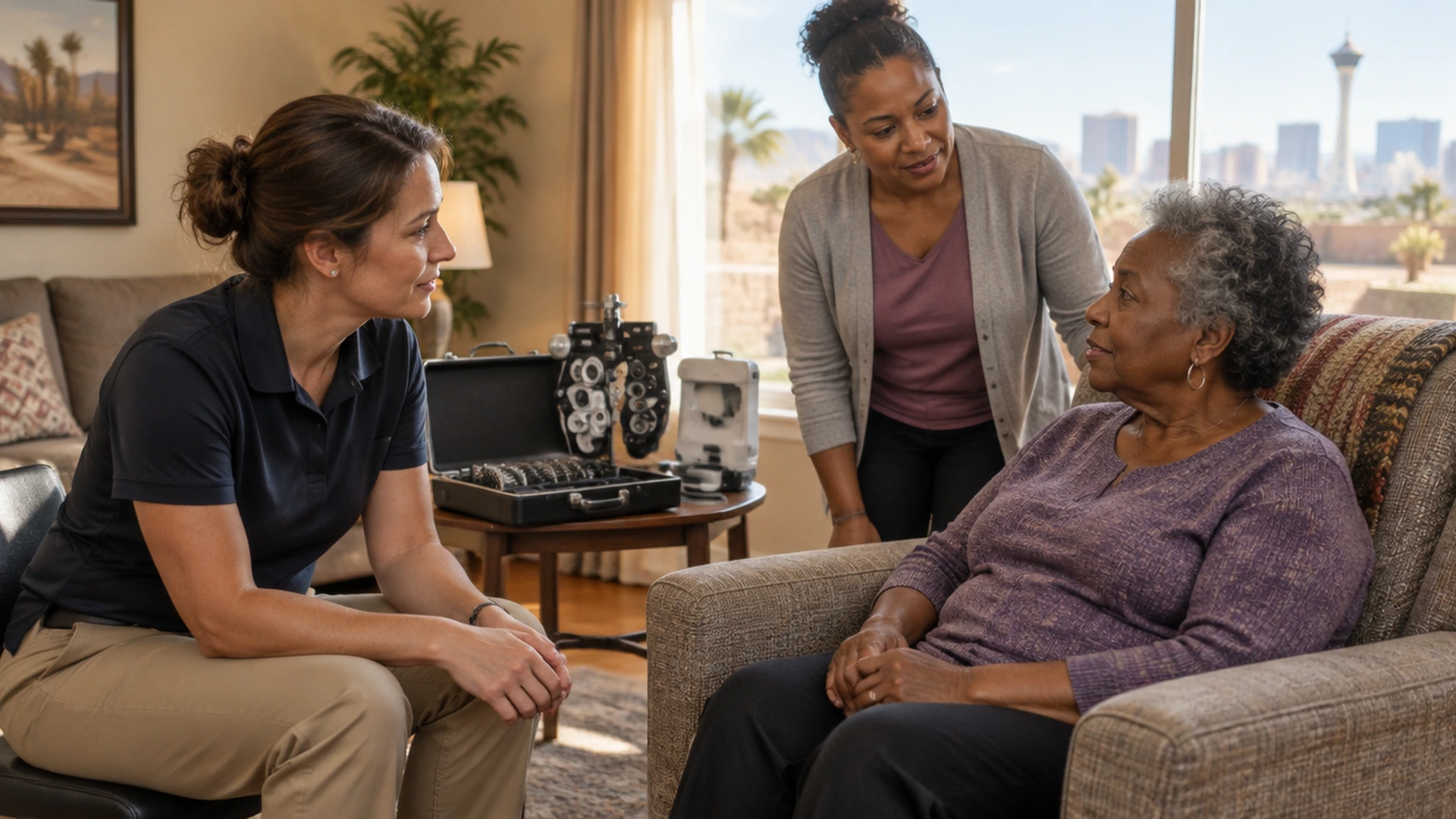
TLDR: Give your staff a clear reporting task: record vision changes, find existing eye care instructions, and send observations to me for the planned visit. Sudden new flashes, floaters, or a dark curtain need immediate assessment, as described by the National Eye Institute. Keep urgent symptoms out of the routine vision day queue.
Answer: For common eye problems in assisted living residents, your Las Vegas team needs clear reporting and follow-up. Record changes, gather established diagnoses, and arrange an eye exam for ongoing concerns. Include cataracts, glaucoma, diabetic retinopathy, macular degeneration, dry eye, and irritation in my review, and send sudden changes for urgent assessment.
Your caregivers notice daily tasks. For example, a resident stops reading a favorite book, asks for help finding glasses, or reports discomfort during breakfast. Record what changed and when, then give me a usable description rather than assigning a diagnosis from the dining room.
Give each concern a next step. As an owner or care director, you need someone responsible for resident consent, records, and appointments. Start with on-site eye care for assisted living residents and name that contact. Build assisted living eye exams into the care plan, with a separate route for urgent symptoms.
Common Eye Problems in Assisted Living Residents: Start With Cataracts
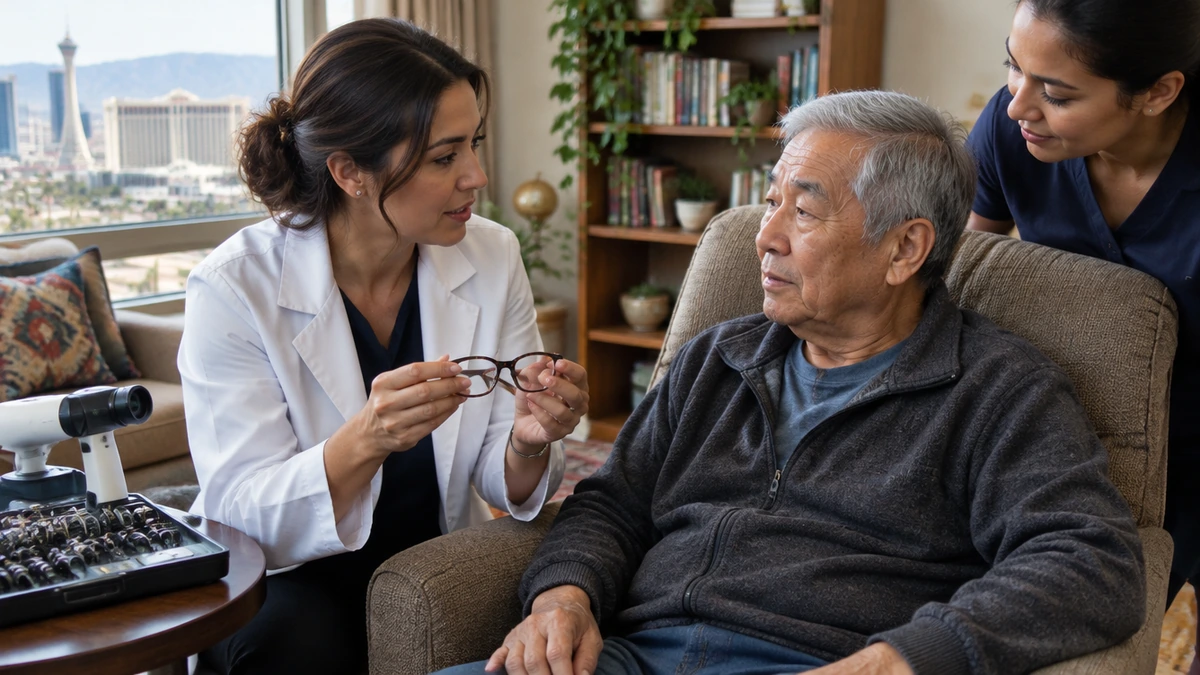
Bring the glasses and prior advice. When you gather the resident’s history, include known cataracts and previous recommendations, because MedlinePlus explains that glasses and better lighting sometimes help early cataract difficulties, while surgery is the only way to remove a cataract. Put the current prescription glasses beside those records for me, your visiting optometrist. The next decision starts with what the resident uses and what earlier care established.
Name the task your resident finds hard. Write down trouble reading a page, finding an object, or using the glasses prescribed for that activity. Include the resident’s own words and the circumstances staff saw. I handle diagnosis, treatment, and any surgical referral.
Explain the next appointment plainly. I examine, diagnose, manage, and co-manage eye conditions, with referral when needed. If surgery enters your resident’s plan, name the receiving surgical specialist and the staff contact booking the appointment. Keep those details beside the referral instructions for the family conversation.
What Should Staff Report About Glaucoma?
Find your resident’s current glaucoma instructions. Check the resident’s existing treating eye doctor’s name, prescribed eye medicines, and follow-up already requested. A medication entry without the requested appointment leaves work unfinished. Send missing instructions to the resident’s existing treating team for clarification before creating a facility schedule.
Act on sudden symptoms now. Your team needs immediate medical care when this combination occurs: The National Eye Institute identifies sudden intense eye pain, redness, blurred vision, and nausea as possible angle-closure glaucoma symptoms requiring immediate medical care. Contact the resident’s treating eye doctor or emergency department for immediate care. Keep the resident’s symptom description ready for the call and follow the instructions returned.
Send your observation note with the resident. Include when symptoms began, the resident’s words, and actions already taken under the home’s response process. Write down who received the call and the instructions returned. The incoming caregiver needs that record at the shift handoff.
How Should You Handle Diabetes and Macular Degeneration?
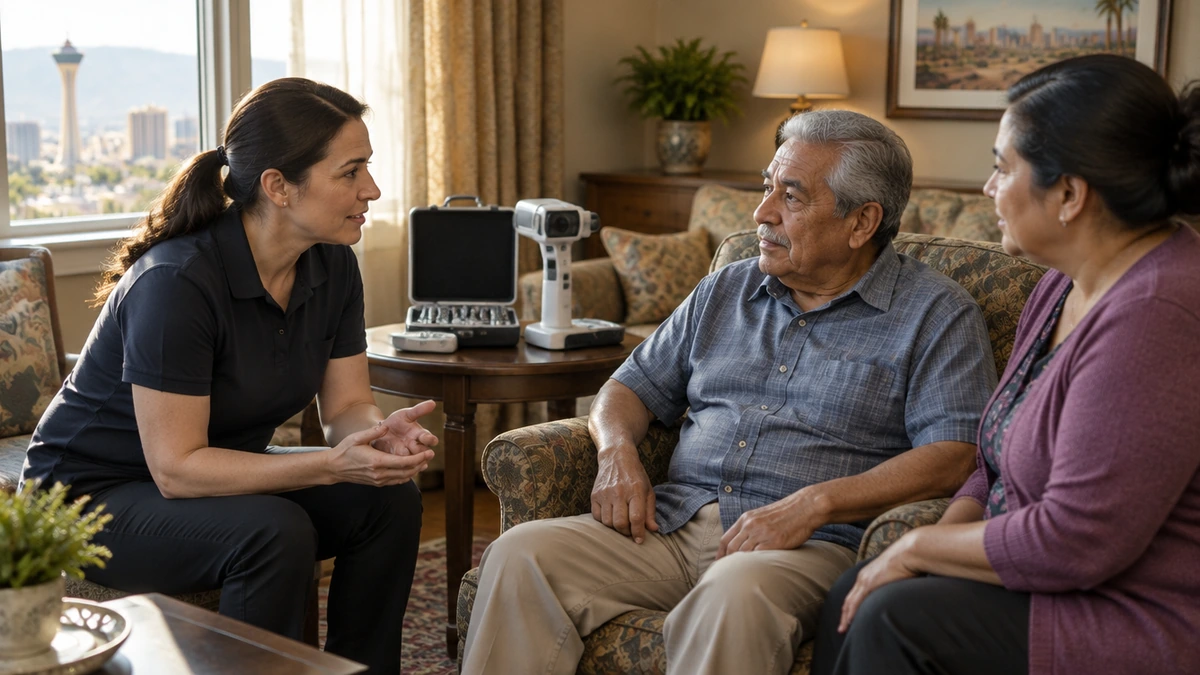
Find the retinal follow-up plan. Your resident’s lack of a complaint does not settle the question, because The National Eye Institute states that early diabetic retinopathy usually has no symptoms. Locate the existing retinal assessment and instructions even when the resident still reads comfortably. Keep any missing report visible for my review.
Put known macular degeneration in your handoff. Gather prior findings, the resident’s existing treating eye doctor’s contact details, and instructions for reporting a change. If reading a familiar page becomes difficult, describe the task and what changed. Leave the cause to the resident’s treating eye doctor’s assessment.
Track both tasks in your resident’s plan. The glasses order and disease follow-up each need a next action and a responsible contact. A prescription review leaves an unresolved clinical referral open. The guide to coordinating diabetic eye care helps your staff prepare records and follow through.
How Should You Respond to Dry Eye, Irritation, or Suspected Infection?
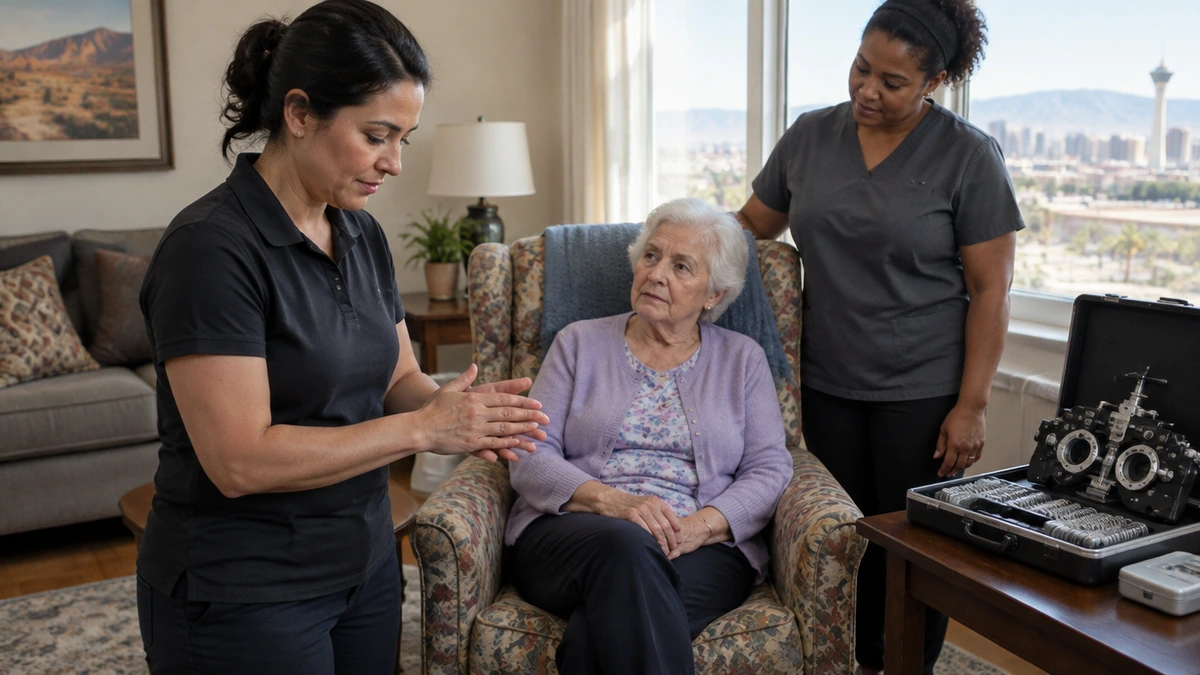
Use your resident’s description of discomfort. Record when it began, whether either eye or both are affected, and existing treatment instructions. A report of irritation at breakfast gives me a concrete starting point. Send it for assessment without naming dry eye or infection from appearance alone.
Prepare the room before residents arrive. For your examination setup, CDC’s core practices call for hand hygiene and appropriate reprocessing of reusable equipment between patients or when soiled. Work through my team’s cleaning steps and assign responsibility for shared surfaces and equipment. Staff need to know who handles the examination table and room between appointments.
Tell my team about infection concerns before the visit. Send your description through secure intake and settle any needed changes to the appointment schedule or room. Give staff the revised instructions. Keep medical details off the sign-up sheet, communal calendar, and marketing form.
Which Sudden Changes Belong Outside the Routine Schedule?

Keep sudden changes off your waiting list. New flashes, floaters, or a curtain across vision need the immediate assessment described in the guidance above. Use the home’s urgent response process while the resident’s account is fresh. A future group appointment leaves that urgent need unanswered.
Start your call with what happened. State when it began and whether the resident reports pain or changed vision, using their own words when available. Write down instructions from the eye doctor handling urgent care and carry out the next step. Give the incoming caregiver the same facts and directions.
| Observation or record finding | Staff action | Handoff detail |
|---|---|---|
| Sudden flashes, floaters, or a dark curtain | Arrange immediate assessment | Onset and resident’s description |
| Sudden intense eye pain with redness, blur, and nausea | Seek immediate medical care | Symptoms and actions already taken |
| Ongoing difficulty with a familiar task | Request my review | Task, glasses used, and observed change |
| Existing diagnosis with missing follow-up instructions | Contact the resident’s treating team | Last available report and unresolved action |
Keep the care instructions beside your phone. Use this table to organize the report while clinical staff direct care. Read back the resident’s description, onset, and actions already taken. A short factual account is more useful than a guessed disease name.
Turn Common Eye Problems in Assisted Living Residents Into Clear Handoffs
I reviewed 69 primary sources across five research lenses for this series, and aging alone does not cause low vision. You have a reason to act when a resident stops reading a familiar book, consistent with the National Eye Institute’s low-vision guidance. Record the change instead of dismissing it as age. Name the person taking the next step.
Make your handoff ready for the next shift. Keep observations, resident consent, clinical instructions, and appointment status in the secure care record. After a comprehensive eye exam or referral, turn the report into tasks staff understand. A pending appointment needs an owner as much as a missing pair of glasses does.
- Record the resident’s complaint or the observed change.
- Route sudden symptoms through the urgent response process.
- Gather current glasses, medication information, and previous eye reports.
- Confirm consent and any representative’s authority before the visit.
- Assign responsibility for results, referrals, and eyewear follow-up.
Track completion in your appointment record. The on-site examination process helps you plan registration through results with the facility contact. When further assessment is requested, keep the task open until the receiving service and next step are confirmed. A call requesting an appointment is the start of that work.
Arrange a Facility-Coordinated Vision Day With Vision by Amel
Plan your vision day with me. I am Dr. Amel Youssef, OD, founder of my practice, Vision by Amel, in Downtown Summerlin. My team and I serve assisted living homes, Residential Facilities for Groups, memory care communities, adult day care programs, and senior living communities in the Las Vegas Valley. Bring your resident concerns to the planning call. Discuss the examination scope alongside the glasses, records, and support each resident needs.
Start with your resident interest list. Participation is voluntary. My team and I review consent, representative authority, and insurance documents, and I verify benefits before service. Prepare a private room with electrical access and an examination schedule with my team. Benefits depend on each resident’s eligibility and plan terms.
Keep your plan open after the examination. My team and I coordinate eyeglass selection, measurements, delivery, adjustments, and clinical follow-up with you. I arrange testing or referrals beyond the on-site visit when needed. Review medical eye care services during the planning call. Connect each staff observation with the next appointment or instruction it needs.
Frequently Asked Questions About Common Resident Eye Problems
What should I ask a resident who has stopped reading?
Ask what makes reading difficult and whether the change is new. Have your team record the answer alongside the reading material and glasses being used. Include whether the resident still wants to read, so I receive the resident’s priorities as well as the observation.
How should I handle conflicting reports from different shifts?
Keep both reports with their times and settings. Your morning and evening caregivers need to describe what each saw without changing either account to match. Send both to me, especially when the change comes and goes or the resident struggles to explain it.
What if the resident already has an outside eye doctor?
Keep the resident’s chosen eye doctor and active instructions in your plan. With appropriate permission, obtain relevant reports and tell my team about appointments already booked. Discuss the resident’s preferences before adding another examination.
What should I record when glasses are missing?
Record the missing pair’s purpose and last known location. Have your contact check for another current pair or an available prescription record. Keep the replacement task separate from a new visual complaint needing my assessment.
How do I brief temporary staff about eye health concerns?
Give temporary staff your current reporting instructions at handoff. Name the person receiving an eye health concern and show staff where urgent response instructions are kept. Include the resident’s assistance plan in the private care record.
Schedule an On-Site Vision Day Speak With Dr. Amel’s Team: (702) 858-4362
Like this article? Add Vision by Amel as a preferred source, and you are more likely to see our articles in Google’s Top Stories.
