
Diabetic Eye Care for Assisted Living Residents
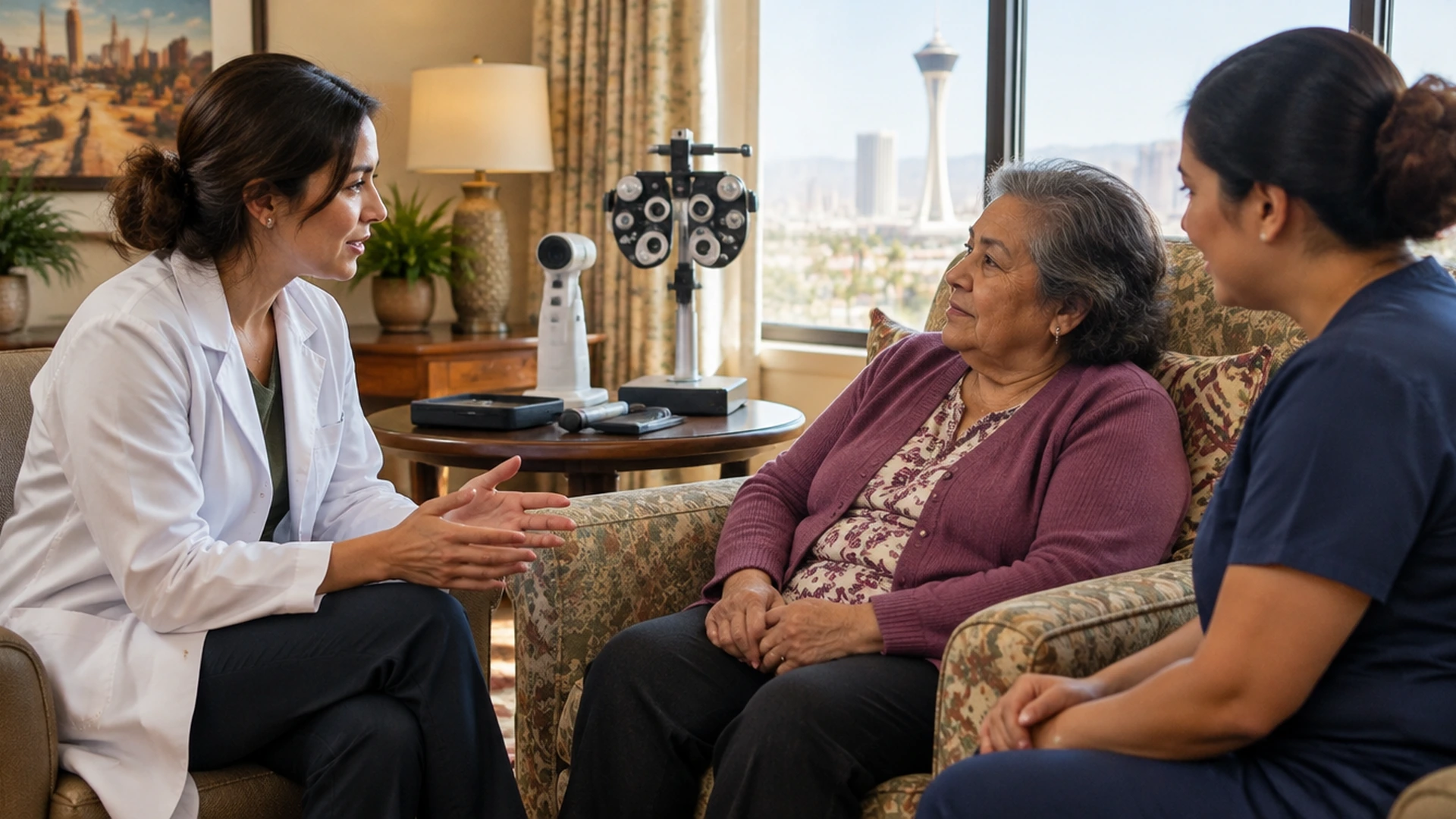
TLDR: I help you plan your residents’ diabetic eye assessments and follow-up. Gather prior findings, report changes, and track referrals, with clinical timing separate from benefits.
Answer: Diabetic eye exams for assisted living residents in Las Vegas need consent, previous retinal findings, current medicines, and follow-up. Your team gathers records and support needs. I clarify examination scope and further testing with you. Confirm results contacts and report new symptoms before the next group visit.
Find the instructions before the visit. For example, your resident has an outside eye doctor’s note in the record, a retinal photograph from a clinic visit two years ago, or a follow-up appointment nobody booked. Check your eye care records for those three things first. Unfinished appointments belong on a list with a name beside each one.
Name your facility contact, then plan with me for on-site eye examinations for senior living around the residents whose diabetes care already has instructions attached. Track registration and results in one restricted record so the clinic report, the examination date and the referral status sit together. Your staff then sees what is done and what still needs a call.
Diabetic Eye Exams Assisted Living Teams Should Plan Around
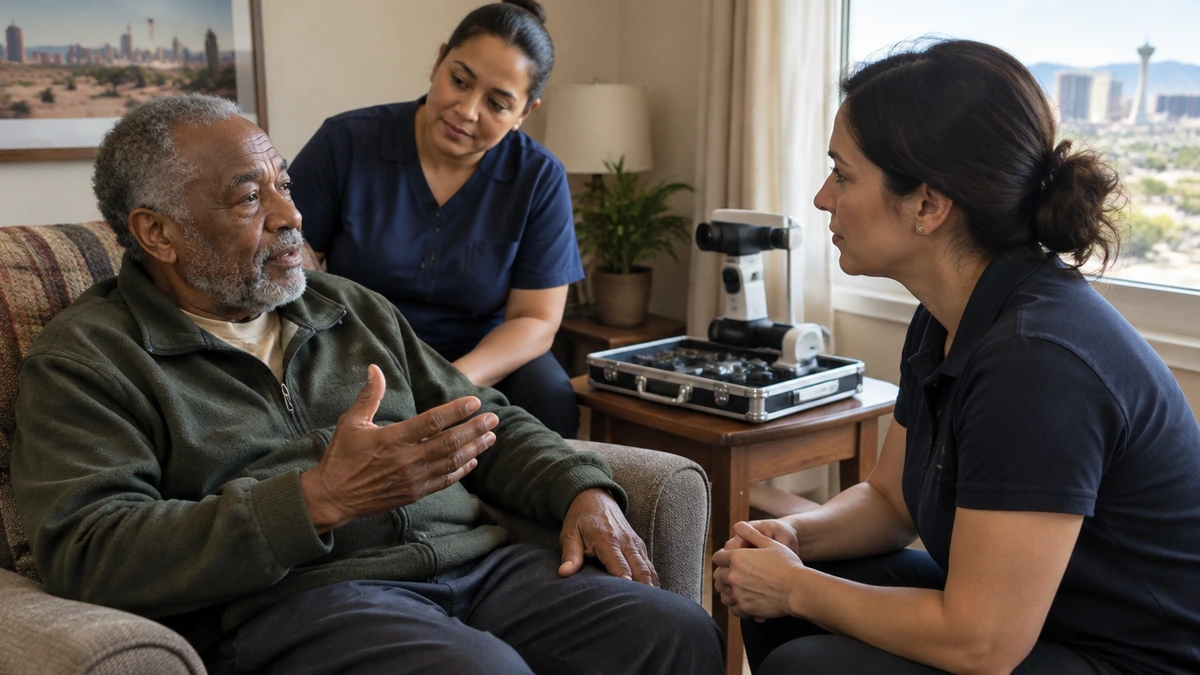
Find the retinal assessment instructions. Your resident’s lack of a complaint leaves the question open, because The National Eye Institute states that early diabetic retinopathy usually has no symptoms. As your visiting optometrist, I need diabetes included in the history you send me, with previous retinal findings and requested follow-up. Keep missing reports on the preparation list.
Send both concerns to me. Your resident’s glasses question and diabetic eye assessment each belong in the visit plan when relevant. Include known cataracts, glaucoma, macular degeneration, and other established diagnoses in the history. I assess the cause of a new difficulty during the examination.
Make your resident’s history easy to follow. Include diabetes type, available diagnosis history, previous retinal findings, and the doctors already involved. Put those details beside the resident’s current concern. Send me the relevant records securely so I have them when planning assessment and follow-up.
How Do You Confirm the Resident’s Examination Schedule?
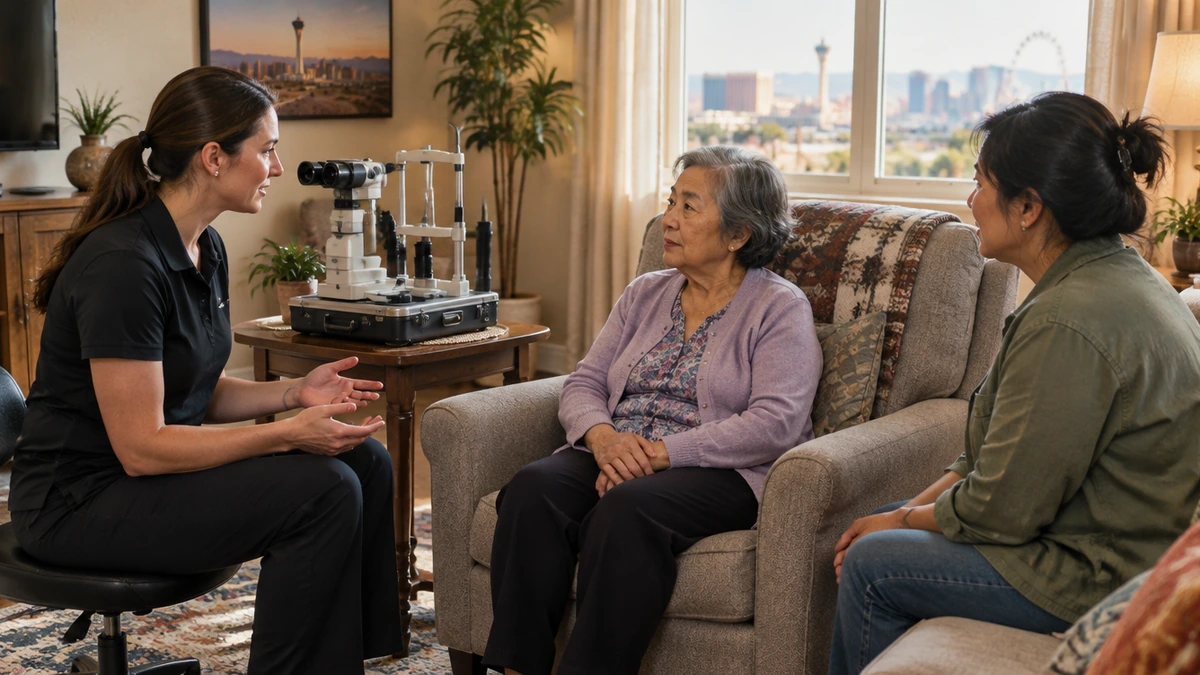
Find your resident’s next examination instruction. Start with the most recent report and the resident’s treating eye doctor’s reason for that timing. If the due date is unclear or the report is missing, get that question resolved. A date on the home’s group calendar does not establish when the resident needs care.
Keep your appointment record current. Write down my name or the treating specialist’s name, according to who supplied the instruction, when it arrived, and the action required. When new findings lead to another appointment, update the schedule and notify the person booking it. Leave the next step visible at shift change.
Keep your benefit review beside the care plan. Medicare Part B covers a diabetic-retinopathy eye examination once a year for beneficiaries with diabetes when performed by a legally authorized eye doctor. The benefit describes coverage, while instructions from me or the resident’s treating specialist set the follow-up schedule. New symptoms need assessment without waiting for the next benefit date.
Plan the appointment your resident needs. My team and I review services and benefits with you before finalizing the routine visit schedule. Keep clinical instructions beside coverage details so staff see both. When follow-up falls outside the vision day, book the appropriate appointment through the outside treating team’s office.
What Does a Diabetic Retinal Assessment Require?

Set out the retinal examination clearly. On your planning call with me, address dilation, because The American Optometric Association’s diabetes guideline recommends retinal examinations through dilated pupils and separately recommends considering retinal photography to identify lesions and document retinal status. Describe the planned assessment in the resident’s visit record. I do not treat photography alone as a replacement for clinically indicated dilation.
Check the room and positioning needs. I explain which parts of your resident’s assessment take place at the home and which require another setting. Portable examination equipment does not establish every measurement or treatment is available there. Keep incomplete findings and additional testing on the follow-up list.
I reviewed 69 primary sources across five research lenses for this series, and retinal photography does not replace the guideline’s recommendation for a dilated retinal examination. Give your family contact an accurate description of the exam. Leave an unanswered scope question visible in the visit notes. Resolve it with me before describing the planned assessment as settled.
Plan your resident’s aftercare before activities resume. The National Eye Institute notes that blurred vision and light sensitivity sometimes last several hours after a dilated eye examination. Get my aftercare instructions and assign the staff member providing the requested help. Include those instructions in the handoff for the resident’s next activity.
Which Changes Should Staff Report?
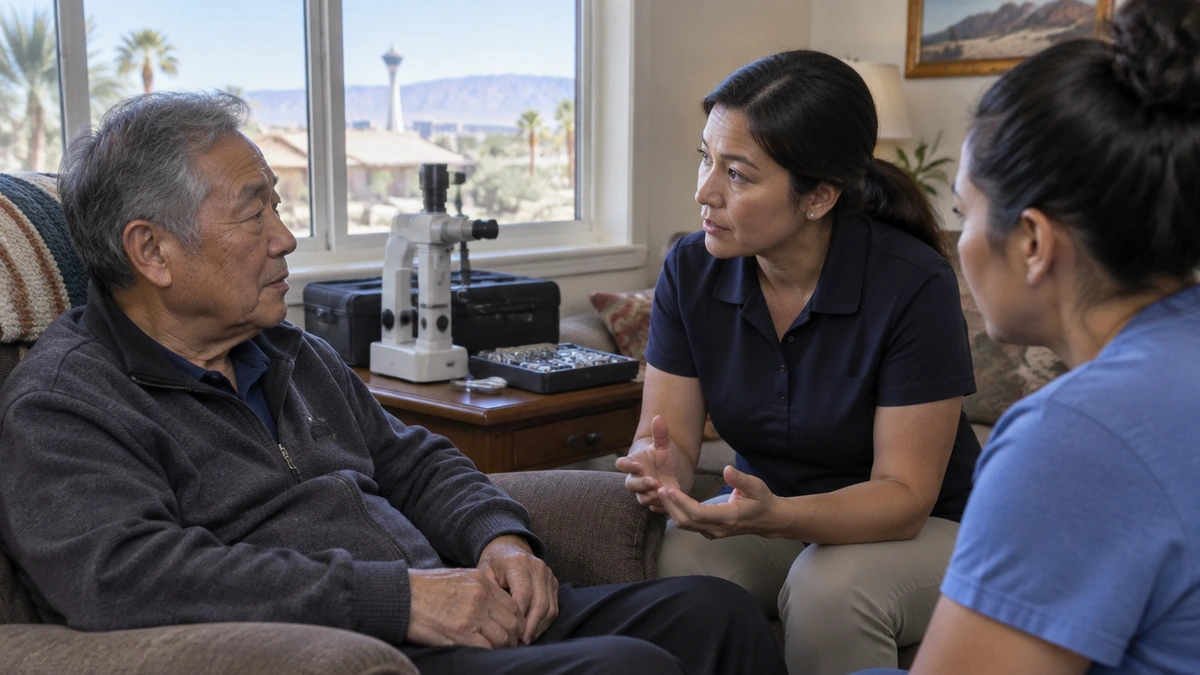
Report the task your resident finds difficult. Describe a new visual complaint or a change while reading, including the resident’s own words and when it began. Give me that account for assessment. I assess the cause rather than assume the change comes from blood sugar, an old prescription, or diabetic retinopathy.
Act on sudden changes now. For your urgent response process, The National Eye Institute identifies sudden new floaters, flashes, or a dark curtain or shadow as possible retinal detachment symptoms requiring immediate assessment by an eye doctor or emergency department. Tell the eye doctor receiving the urgent referral when symptoms began and what the resident said. A routine diabetic eye appointment does not meet that immediate need.
Write what your caregiver observed. If the resident struggles to explain, describe the changed activity and whether glasses were worn. Send me those facts and record the instructions I return. Name the staff member taking the next step before the shift ends.
| Information to send | What to include | Why it belongs in the handoff |
|---|---|---|
| Diabetes history | Type and available diagnosis history | Provides clinical context |
| Previous eye findings | Last report and requested follow-up | Identifies unfinished care |
| Current medicines | Medication list and recent changes | Informs the treating doctors |
| New concern | Onset and resident’s exact description | Supports clinical triage |
| Access needs | Mobility, communication, and representative needs | Supports visit preparation |
How Should You Coordinate Medicines, Records, and Consent?
Send your current medication list. Include prescribing contacts, relevant medical history, and requested care instructions through secure intake. Flag recent changes for my review. Your resident’s prescribing doctors direct medicine changes, independent of what suits the vision day schedule.
Keep your resident’s choice visible. Record how they wish to participate and who is involved in decisions, then gather consent and representative documents when needed. Resolve unclear paperwork with my team before the routine exam. A place on the interest list leaves those steps unfinished.
Keep private records out of your public form. Use the resident information checklist to prepare current glasses, medication details, and the requested paperwork for assisted living eye exams. The facility form takes contact and scheduling information. Send clinical records through my team’s secure intake method.
- Locate prior retinal findings and the current follow-up instruction.
- Gather medication information, current glasses, and relevant history.
- Check consent, representative documents, and accessibility needs.
- Verify benefits and agree on the examination scope.
- Assign responsibility for results and any further appointment.
How Do You Close the Loop After Diabetic Eye Exams Assisted Living Residents Receive?
Turn your report into next steps. I document the assessment completed, its limits, and the next clinical action for your care record. Name the person arranging further testing or an ophthalmology referral. Record how findings will return to your care team before closing the handoff.
Give report receipt a named owner. Your home needs someone watching for the examination report, and A Canadian facility optometry program tracked follow-up timing and supplied examination reports to residents’ family physicians. Assign staff to receive findings, book appointments, and pass instructions to the right contacts. Put each responsibility beside the pending action in the care record.
Keep both tasks on your list. Eyeglass selection, measurements, delivery, and adjustments belong beside pending retinal assessment and referral work. A delivered pair of glasses leaves the clinical referral open. Mark each requested action finished only after it occurs and the next instruction is available.
Plan your shift handoff before the visit. Review the on-site examination process with the facility contact and decide who carries unfinished tasks into the next shift. Name the person calling a receiving clinic when an appointment remains unresolved. Keep an owner on the referral through its final handoff.
Schedule a Resident Eye Care Visit With Vision by Amel
Bring your residents’ needs to the call. I am Dr. Amel Youssef, OD, founder of my practice, Vision by Amel, in Downtown Summerlin. I invite you to plan a visit for your assisted living home, Residential Facility for Groups, memory care community, adult day care program, or senior living community in the Las Vegas Valley. Have diabetes care instructions and access needs ready for visit planning.
Start with your voluntary interest list. Gather consent, representative documents, and insurance information. My team and I verify benefits before service. Prepare a private room with electrical access and an examination schedule with my team. Benefits depend on each resident’s eligibility and plan terms.
Plan your on-site eye care through follow-up. Review medical eye care services alongside the planned assessment and referrals beyond the visit’s scope. My team and I coordinate prescription eyewear selection, measurements, delivery, and adjustments when needed. I review secure record handling and responsibility for each next step with you before the vision day.
Frequently Asked Questions About Diabetic Eye Care Coordination
What should I do if the resident’s last report is unavailable?
Mark the report as missing in your examination packet. Have the resident or authorized representative identify the previous practice, then request the report through secure records intake. Tell me what remains unavailable.
How should I prepare a resident who already sees a retinal specialist?
Bring the specialist’s current instructions and booked appointments into your visit plan. Tell my team about that active care before another assessment is arranged. I clarify my assessment’s purpose with you, and you confirm the specialist’s appointment purpose with that office.
What happens if the resident declines the planned visit?
Respect your resident’s decision and notify my team and your facility’s care contact. Record the declined visit and any request to discuss another option. Keep existing care instructions and unresolved follow-up visible for my next direction or instructions from the resident’s existing specialist.
Should the public scheduling form include diabetes records?
Keep diabetes records off your public scheduling form. Use it for facility contact details and planning needs, with resident names, diagnoses, insurance cards, and medical histories sent through secure intake. Establish the recipient and transfer method before sending those records.
How do I manage follow-up when a resident moves?
List your resident’s open appointments, missing reports, and unfinished eyewear tasks before the move. Send relevant instructions and provider contacts securely to the receiving care team. Name the next action and responsible contact in the transfer note.
Schedule an On-Site Vision Day Speak With Dr. Amel’s Team: (702) 858-4362
Like this article? Add Vision by Amel as a preferred source, and you are more likely to see our articles in Google’s Top Stories.
