
Dry Eye, Hormones and Menopause: Why Women Feel It More

TLDR: The link between dry eye and menopause involves hormones, aging and your individual eye findings. Women have more dry eye, but menopause alone is not a proven cause. Start with an eye exam, and leave hormone therapy changes to your prescriber.
Answer: Women experience dry eye more often than men, with hormones among several contributors. For you in Las Vegas, the useful question is what your eyes need now. Androgen changes matter to eyelid oil glands, while estrogen findings remain mixed. Treatment should address your tear film and daily exposures alongside a review of medicines.
Breakfast is done, the Summerlin sun fills your office window, and the first emails are waiting. By lunch, your eyes burn. Menopause feels like the obvious culprit, and it might be part of the story. Your eyes need the whole story, not a label that ends the search.
I reviewed 123 primary sources across five research lenses for this guide, and definitive evidence that menopause itself causes dry eye is still lacking. Your symptoms need a closer look than a label based on age. As an optometrist, I want your eye care to address the problem an exam finds. My approach to dry eye care begins with your history and an individual plan.
Why Are Dry Eye and Menopause Linked?

Women carry more of the dry eye load, and the numbers show it. A national survey conducted in 2013 reported diagnosed dry eye in 8.8% of women and 4.5% of men, as described in the American Journal of Ophthalmology. Those are historical national figures for diagnosed disease, not your personal odds or a Summerlin rate. That gap is why your question matters.
Your hormone story involves more than estrogen. The 2017 TFOS DEWS II report links androgen deficiency with meibomian gland dysfunction, describes inconsistent estrogen and progesterone findings, and finds definitive evidence for menopause itself lacking. Dry eye prevalence rises gradually with age in both sexes, a pattern more consistent with declining androgens than a sudden estrogen drop. That distinction matters when you are offered a simple hormone explanation for a complicated symptom.
Timing still belongs in your history. Write down whether discomfort began before your periods changed, during that transition or after a medicine change. Add what you notice during reading, computer work and time outdoors. I consider the sequence alongside your eye findings, without treating the calendar as a diagnosis.
I believe your comfort deserves more than an age-based explanation. You should leave with a plan specific enough to follow at home. For the gland side of your hormone history, see my guide to meibomian gland dysfunction. Use it when that term appears in your plan, so the reason for each step stays clear.
What Helps With Dry Eye and Menopause?
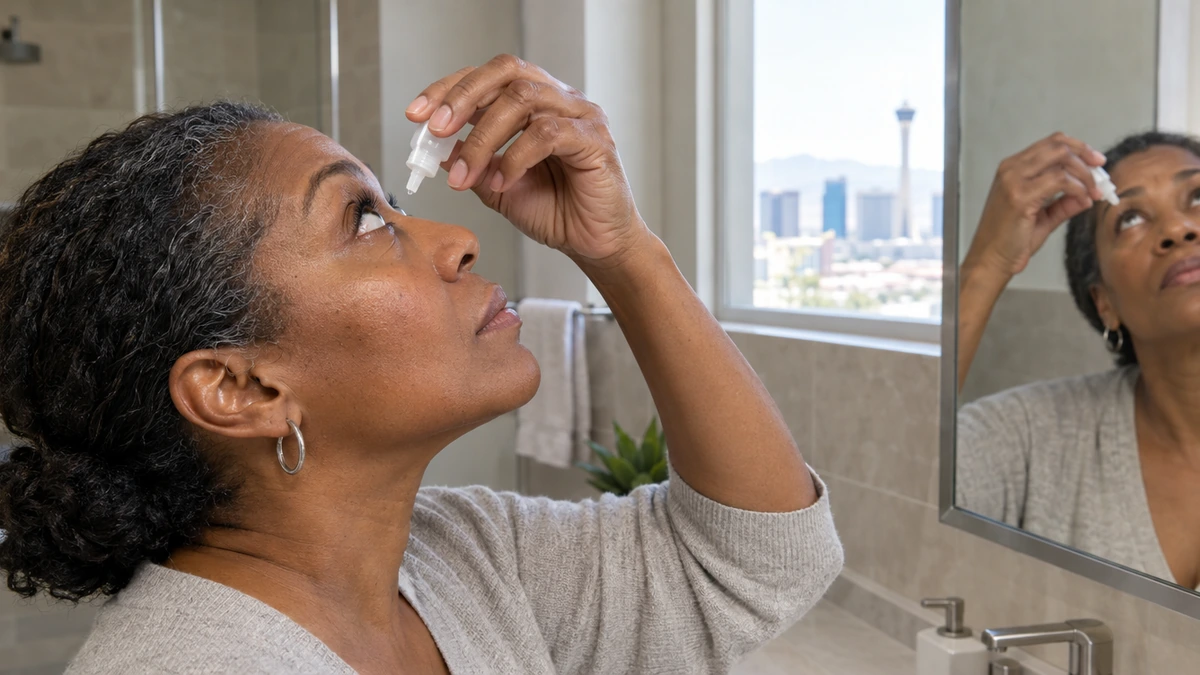
Match care to your eyes. The National Eye Institute describes artificial tears as the usual treatment for mild dry eye and bases treatment on the cause. An assessment considers tear amount, how quickly tears dry and eyelid structure. That gives your dry eye treatment a clearer direction than choosing a bottle because it mentions aging.
No step stays in your plan without a reason. Before you head home, you know what each step targets and when we check it. Daily care and occasional comfort measures sit on separate lines of your plan. My dry eye treatment guide covers the broader options, including warm compresses, eyelid hygiene and prescription care.
| What You Notice | What to Record | What to Discuss |
|---|---|---|
| Discomfort began around a hormone change | Approximate dates and the symptoms you noticed first | How the timing fits your eye findings |
| You reach for eye drops throughout the day | The bottle name, frequency and how your eyes feel afterward | Whether the current plan needs review |
| Your contact lenses feel less comfortable | When you put them in and when discomfort begins | Lens material, fit and wear schedule |
| You struggle most at your desk or outdoors | The task, surroundings and time of day | Which daily habit to address first |
Use this table as a record, not a self-diagnosis. You do not need a perfect symptom diary to book an appointment. A few clear examples are enough to begin the conversation. Include the activity you miss most, whether it is wearing contacts to dinner or working comfortably through the afternoon.
What Do Hormone Therapy Studies Show?

The hormone therapy finding needs its context. In an observational cohort of 25,665 postmenopausal women, the Women’s Health Study reported adjusted odds ratios of 1.69 for estrogen alone and 1.29 for estrogen plus progestin, compared with no hormone therapy, for diagnosed dry eye or severe symptoms. These are odds ratios, not absolute risk or proof of cause. You cannot use them to calculate what will happen to your own eyes.
Leave treatment changes with your prescriber. MedlinePlus advises talking to your provider before you stop any medicine. For hormone therapy, that means discussing any proposed start, stop, dose change or switch with the person managing it. An eye symptom is information to share, not an instruction to alter a prescription yourself.
Make that discussion concrete. Bring the hormone name, dose, start date and any recent changes, alongside your other medicines and eye drops. Record whether dryness began before or after a change, including symptoms present beforehand. My article on medicines linked with dry eye explains why the full list matters.
Your priorities count too. What is the hormone prescription meant to fix, and what is your eye discomfort keeping you from? Put both answers beside the timeline, and neither concern gets lost. I favor a clear eye plan and a clear prescriber conversation over guessing which medicine to blame.
How Do You Fit Eye Care Into a Las Vegas Day?

Your day holds the clues. A morning walk on a Summerlin trail, then a glass of water on a shaded patio among the desert plants. Later, a drive across Las Vegas with cool air blowing toward your face. Which moment set your eyes burning? That answer tells me more than a note that your eyes felt bad all day.
- Choose one recurring activity to describe, such as your afternoon computer work.
- Note when discomfort starts and what you are doing, including contact lens wear.
- List the care you used and how your eyes felt afterward.
- Share the pattern at your follow-up and agree on the next adjustment.
Make the plan fit the day you live. Set your care supplies where you will remember the prescribed routine, and leave the instructions somewhere easy to find. Wind, car vents and dry indoor air get their own guide: desert air and your eyes. Use that detail to support the plan you already have.
Which Eye Changes Should Never Wait for a Hormone Review?
A red or painful eye skips the symptom diary. Contact an eye care provider right away, the step MedlinePlus gives for red or painful eyes, and say what changed when you call. My guide to dry eye warning signs in Summerlin lists the other symptoms that need care right away.
How I Approach Dry Eye Around Menopause
Your visit starts with your history. At Vision by Amel, I consider what you report during my evaluation and explain the plan. A comprehensive eye exam gives us time to address your concerns about comfort and eye health. Mention the menopause timeline and hormone medicines at the beginning so they remain part of the conversation.
Your plan draws on what your exam shows: artificial tears, targeted prescription eye drops including anti-inflammatory medication, warm compresses or eyelid hygiene, depending on your eyes. Care for meibomian gland dysfunction and blepharitis also belongs among the available approaches. We discuss the steps relevant to your findings and how they fit your routine. For contact lens discomfort, options include adjusting the lens material, wear schedule or fit.
You reach me at 2010 Festival Plaza Dr, Suite 195, Las Vegas, NV 89135, inside Festival Plaza in Downtown Summerlin, minutes from The Vistas, The Paseos, Sun City and Red Rock Country Club. You need no referral for an eye exam. Book online or call (702) 858-4362, and mention your dry eye concerns when scheduling. See our eye exam page for more about the visit.
Frequently Asked Questions About Dry Eye and Menopause
Why Do Women Get Dry Eye More Than Men?
Sex hormones explain much of the gap, along with genetic and other biological factors, the TFOS report says. In the Beaver Dam Study of 3,703 U.S. adults, age-adjusted dry eye prevalence ran 16.7% in women versus 11.4% in men, a study figure, not a Las Vegas rate. Your sex is one clue, and your own exam findings still decide your plan.
Does Menopause Cause Dry Eye?
Menopause alone is not an established cause, even when your symptoms begin during the transition. The practical point is to include the timing without letting it replace an eye evaluation. You do not need to settle the hormone question before seeking help for discomfort.
What Do Hormones Have to Do With My Oil Glands?
Low androgen levels are linked with meibomian gland dysfunction, so the eyelids belong in a conversation about your hormone history. That link does not establish your personal hormone level. When gland care appears in your plan, ask which finding it addresses and how to follow the routine.
Will Hormone Therapy Help My Dry Eyes?
A Menopause meta-analysis published in 2020 combined nine randomized trials with 612 women and reported improvements in tear tests and symptoms, while calling effectiveness controversial. The TFOS report adds that none of the studies showing symptom relief used a placebo, and of three placebo-controlled studies, one found symptoms worse and two found no change. Hormone therapy is not a proven treatment for your dry eye. Discuss eye treatment separately from the reasons your prescriber recommends hormone therapy.
Do Birth Control Pills Cause Dry Eye?
The TFOS hormone report describes case reports of dry eye symptoms and contact lens intolerance with birth control pills, but formal investigations have not confirmed the link. Record a change in comfort if you notice one after starting a pill. Share it with me and your prescriber, including whether you also changed contact lenses or other medicines.
Should I Change My Hormone Therapy Because of My Eyes?
Any change belongs with your prescriber. For that conversation, include what prompted the hormone prescription as well as what bothers your eyes now. After an eye visit, take your care plan to the next prescribing appointment so both discussions use the same information.
Book My Eye Exam Call (702) 858-4362
Like this article? Add Vision by Amel as a preferred source, and you are more likely to see our articles in Google’s Top Stories.
