TLDR: Here is how assisted living eye exams work: residents choose to participate, your staff prepares the room and records, and my team and I handle consent checks, benefit verification, and examinations. You plan eyewear delivery and outside appointments before the visit ends. Each unfinished task needs a named contact.
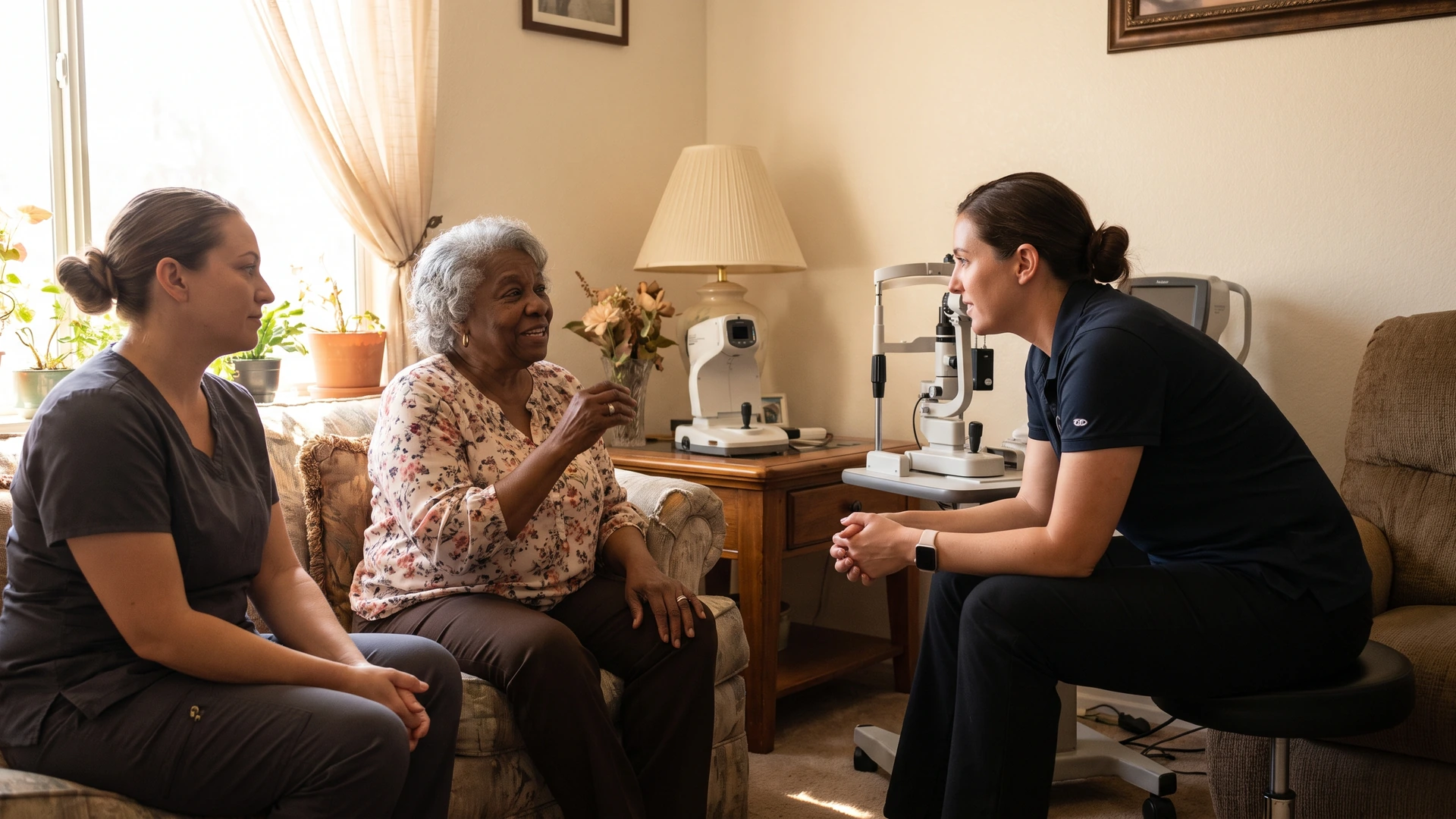
Answer: I bring on-site examinations to your assisted living home in Las Vegas for a facility-coordinated vision day. You gather resident interest, prepare consent and insurance records for secure intake, and set aside an accessible private room with a power outlet. I verify benefits before service and plan examinations, prescription eyewear, follow-up, and referrals with my team.
Your residents have different reasons for seeking eye care. Someone needs help with existing prescription glasses, while another resident wants to discuss a change in vision. I start with those concerns when you explore on-site eye care for assisted living residents. A useful visit leaves each participating resident with a clear next step.
You need more than an arrival date. Someone must handle registration, prepare the room, and receive follow-up instructions while the rest of the home keeps running. I explain how assisted living eye exams work from the interest list through glasses delivery and referrals. Use this guide to give your staff clear jobs before examination day.
How Assisted Living Eye Exams Work: Examination Scope
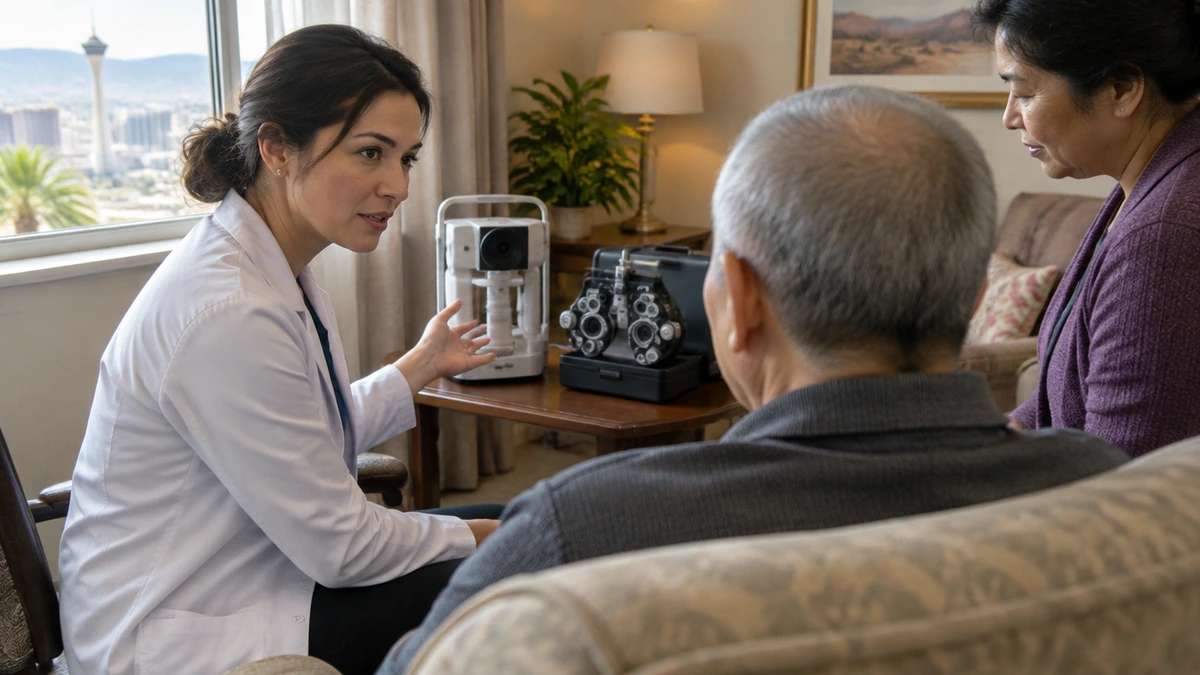
Know what your eye exam covers. MedlinePlus explains that vision screening identifies some vision problems but misses other eye disorders, while a comprehensive eye exam also evaluates overall eye health. As your optometrist, I explain the assessment and its limits before you describe the visit to residents. A resident reading letters on an eye chart still needs an assessment matched to the concern behind the appointment.
Put your residents’ concerns on paper. Include questions about visual acuity, refraction, cataracts, glaucoma, or dry eye so I know what needs attention. Nevada defines comprehensive examinations by their components and permits comparable-data alternatives when a component cannot be performed. Review the examination scope before inviting residents, and describe only the services planned for your home.
Unfinished testing needs a next step. Your planning call should cover how I record an unsuccessful measurement, explain the unresolved concern, and handle referral to another setting. Review my eye examination services before the call. Match the services to your residents’ needs and the room available for the exam.
How Do Residents Register and Have Benefits Verified?
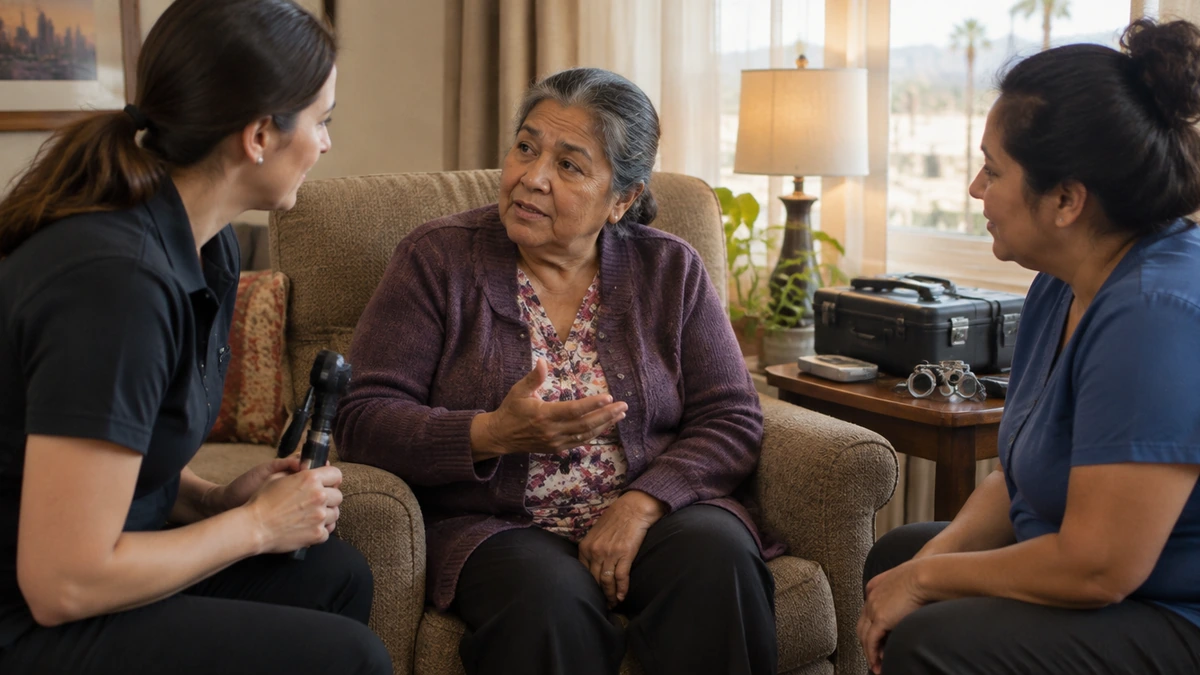
Start with your residents’ interest. Explain voluntary participation directly, and note who wants a representative involved before you fill the examination schedule. Use my team’s registration instructions and secure intake channel for personal records. An insurance card belongs in that intake channel, never in the public facility inquiry form.
Interest is the starting point. Your registration list also needs completed resident consent and a clear record of who makes the healthcare decision. Review any representative’s current authority, since a family name on the contact sheet does not establish signing authority. Settle unanswered consent questions before adding the resident to the confirmed schedule.
I verify benefits before service. Send your resident’s insurance details through secure intake so my team has the plan information needed for the check. Original Medicare excludes routine examinations for prescribing glasses or contact lenses. Keep the examination, refraction, medical testing, and eyewear clear in the benefits conversation, and use the resident’s actual plan instead of relying on the card’s logo.
- Invite residents to express interest and record their preferred way to be contacted.
- Complete my team’s registration and resident consent process.
- Provide insurance documents and relevant history through secure intake.
- Confirm benefit verification and resolve outstanding questions.
- Set the examination order around residents’ support needs.
What Does Your Facility Provide?

Give the exam a private room. Your staff should walk the route to it, check the power outlet, and describe doors, seating, and mobility needs to my team. Review the layout before moving furniture or seating residents nearby. Keep the path accessible and ordinary household traffic outside the examination space.
Put a name beside attendance. Your facility contact needs to know where residents are, who needs assistance, and which registration questions remain open. Assign a backup while I direct the assessment. Describe the home clearly during planning, including the memory care wing or common room my team and I will pass through.
| Planning item | Facility preparation | Confirm with my team |
|---|---|---|
| Resident readiness | Record interest and assistance needs | Registration and consent completion |
| Examination space | Offer privacy, seating, and electrical access | Usable layout and equipment placement |
| Resident records | Identify the authorized contact | Secure intake and results channels |
| Daily schedule | Note meals and care routines | Arrival time and resident order |
| After the visit | Name the follow-up coordinator | Eyewear, adjustments, and referral tasks |
Keep your staffing plan practical. Identify who escorts residents, who remains available for assistance, and who covers the coordinator’s usual duties. Use the assisted living vision day checklist to turn those decisions into assigned tasks. An unassigned task is still unfinished preparation.
How Assisted Living Eye Exams Work on Examination Day
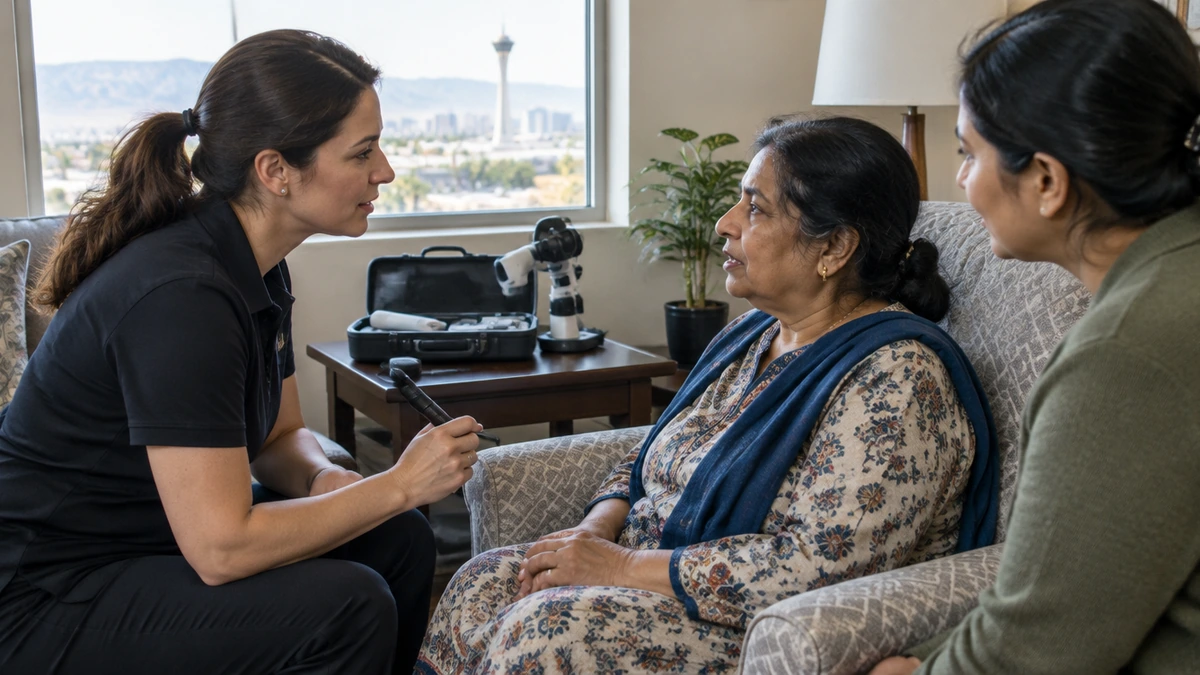
Set up before residents arrive. Review the room, resident order, and changes since registration with me while your staff prepares the first resident. Tell me about new communication or mobility needs before the next person enters. Keep the waiting area comfortable and the examination room private.
Let the resident speak first. As your mobile optometrist, I direct the exam and explain findings, while you supply requested assistance and useful observations. Bring current glasses and the medication information requested during intake. Report trouble reading an activity sheet in plain words, and leave the diagnosis to me.
Leave room for a pause. Your resident’s need for extra assessment or support takes priority over keeping every appointment to a fixed slot. During planning, identify who explains unfinished testing and the next step to the resident. Keep conversations about findings private while staff help the residents still waiting.
What Happens With Eyeglass Selection and Delivery?
Start eyewear decisions with the findings. My team handles eyeglass selection, measurements, delivery, and adjustments as part of the vision day process. Tell my team how your resident uses glasses, whether for an activity sheet or reading in an armchair. Keep the choice voluntary and leave time for the resident’s questions before an order.
Plan for glasses after delivery, too. AOA guidance for nursing-home residents recommends arranging dispensing services, routine glasses adjustments, and identification of residents’ glasses. Name the person your staff will contact about an order or frame fitting. Get the expected delivery timing once the order details are known, then keep it with the resident’s eyewear notes for the next shift.
Know where each pair belongs. Your staff needs the resident’s name, the handoff plan, and a contact for fit problems before glasses arrive. The guide to prescription glasses fitting and delivery explains those steps. Record an adjustment request when a frame feels uncomfortable so it stays visible to the person responsible for follow-up.
Who Handles Follow-Up and Referrals?
Give each referral a named contact. I reviewed 69 primary sources across five research lenses for this series, and facility-based assessment still led to ophthalmology referrals in a published Canadian program. Put outside appointments on your follow-up list while the visit is being planned, and keep that published program’s results separate from expectations for your own residents.
Follow the referral through. Keep my next action and timing in your resident’s care record, with access limited to the people handling the task. Name who tells the resident or authorized representative and who books any outside appointment. Check the appointment record to see whether the action happened, rather than stopping at a sent message.
Plan Your Facility-Coordinated Vision Day With Vision by Amel
Plan your visit with me. I am Dr. Amel Youssef, OD, founder of my practice, Vision by Amel, in Downtown Summerlin. I bring facility-coordinated vision days to assisted living homes and senior living communities across the Las Vegas Valley. Tell me about your private room with electrical access, accessibility needs, interested residents, and preferred month. My team and I plan registration, examinations, eyewear selection, measurements, delivery, adjustments, follow-up, and referrals with you.
Your residents choose to take part. I plan for voluntary participation and verify insurance benefits before service. Benefits depend on each resident’s eligibility and plan terms. My team reviews the visit and preparation tasks with your facility contact before residents go onto the final schedule.
Frequently Asked Questions About On-Site Assisted Living Eye Exams
What should I do if a resident already has an eye doctor?
Keep the resident’s existing care in view and let the resident choose whether to participate. Record outside appointments on your planning list so staff do not duplicate follow-up tasks. Include previous records requested for the current concern in the resident’s intake documents.
Should I promise residents they will receive new glasses?
No, an examination does not mean a resident will order glasses. You leave the prescription decision to me and the purchase decision to the resident or authorized decision-maker. Include residents who want an examination without an eyewear order on your interest list.
What if a resident changes their mind on the day?
Notify my team and update your attendance record. Ask whether the resident wants another conversation or prefers no further scheduling contact. Keep the change out of announcements made to other residents.
How should I handle a family member arriving during an examination?
Keep the examination private while my team handles the visitor’s entry. You handle questions about the visitor’s role and the resident’s preferences outside the room. Let the resident finish speaking with me before interrupting with administrative details.
What information belongs in the facility consultation request?
Provide your contact details, facility address, facility type, approximate resident count, and preferred month. Describe the number of homes you operate and estimated interest without identifying individual residents. Save insurance cards, diagnoses, and medical histories for my team’s secure intake process.
Schedule an On-Site Vision Day Speak With Dr. Amel’s Team: (702) 858-4362
Want more of this in your Google feed?