Tag: antihistamines

  • Dry Eye or Eye Allergies? Telling Them Apart in Las Vegas
    Dry Eye or Eye Allergies? Telling Them Apart in Las Vegas

    Dry Eye or Eye Allergies? Telling Them Apart in Las Vegas

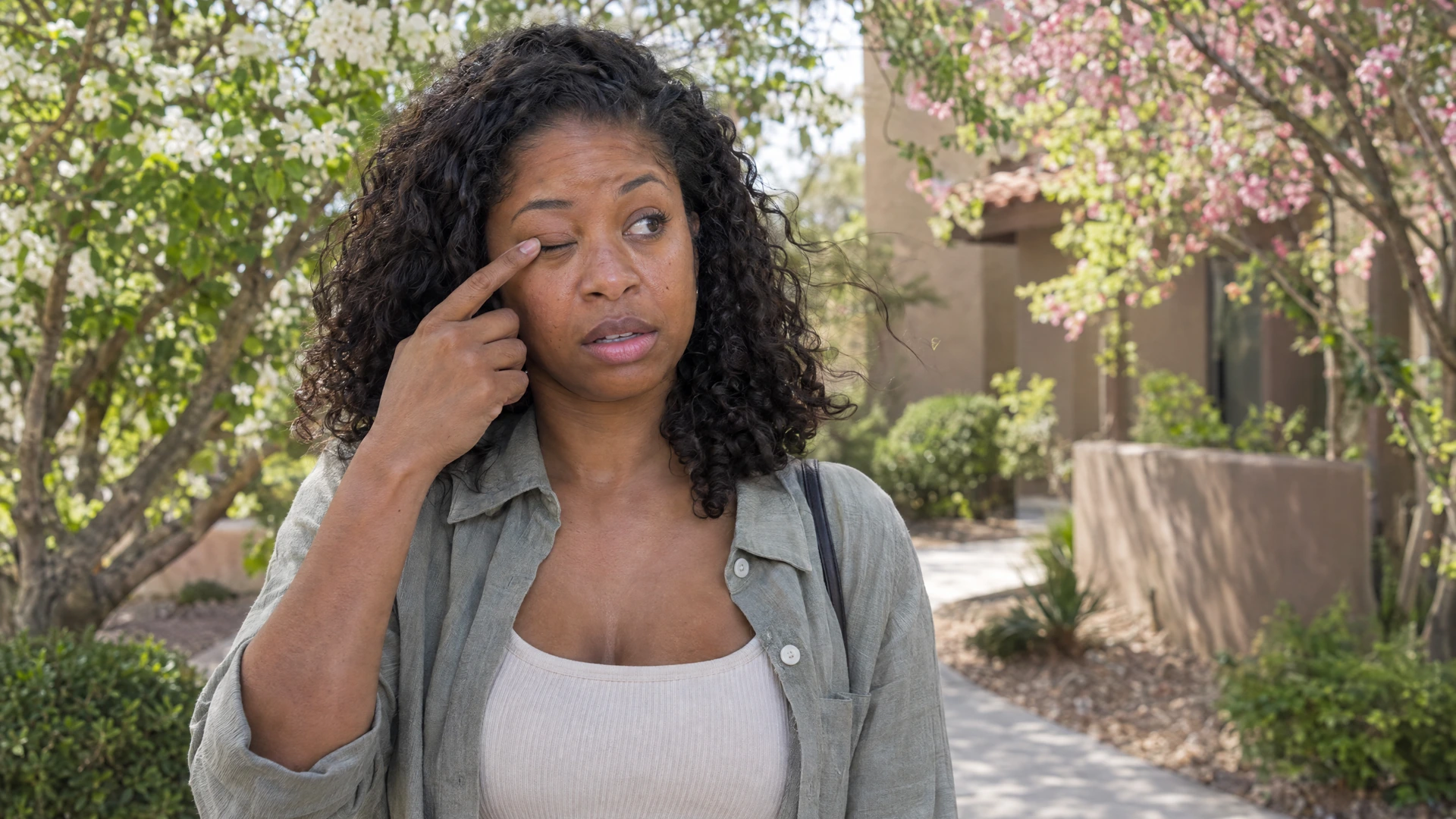
    Black woman rubbing an itchy eye by blooming desert trees, dry eye vs allergies

    TLDR: The useful distinction in dry eye vs allergies is your pattern of symptoms: itching is the strongest allergy clue, while burning points neither way on its own. Symptoms overlap, and both problems sometimes occur together. An eye exam sorts out the cause so your care fits it.

    Answer: Eye allergies usually make your eyes itch, often alongside sneezing, while dry eye often brings burning or a gritty feeling. In Las Vegas, pollen and dusty air complicate the picture. Burning alone does not separate them, and allergy medicine sometimes adds dryness. Your symptom history and an examination help distinguish allergy, dryness and overlapping problems.

    You step onto a Las Vegas patio and start rubbing your eyes. Later, indoors, they feel sandy instead. Before buying another bottle, notice which feeling troubles you most and when it starts. Those details give an optometrist more to work with than the word irritation.

    I reviewed 88 primary sources across five research lenses for this guide, and dry eye and blepharitis share symptoms with eye allergies. The American Optometric Association recommends a comprehensive eye exam to distinguish these causes of your discomfort. My approach to dry eye care starts with understanding what needs treatment. A guess between allergy and dry eye costs you weeks of the wrong drops.

    Dry Eye vs Allergies: What Do Your Symptoms Suggest?

    White man squinting on a dusty Las Vegas sidewalk with palms, dry eye vs allergies
    A dusty-day flare does not establish pollen allergy.

    Start with the itch. AAPOS identifies itching as the main symptom of allergic conjunctivitis, although your eyes also sometimes burn, sting or tear. Allergic conjunctivitis means allergy-related inflammation of the tissue covering the white of the eye and lining the eyelids. Burning does not settle the question.

    Your description matters more than finding the perfect medical word. Say whether you want to rub your eyes, blink away a gritty feeling or wipe away tears. Mention a stuffy nose or sneezing, too. Use the comparison below to organize what you notice before your visit.

    What You NoticeWhat It SuggestsWhat It Does Not Settle
    Itching is the strongest complaintAllergy deserves considerationDry eye and eyelid inflammation also cause itch
    Burning or stingingDryness or allergyThe sensation alone does not identify the cause
    Grittiness or a scratchy feelingDry eye belongs in the evaluationA symptom description does not replace an examination
    Sneezing or an itchy, stuffy nose with eye symptomsAn allergy patternDryness still needs consideration
    Symptoms during a dusty outingIrritation or exposure worth reportingDust exposure does not establish pollen allergy

    Your whole pattern belongs in the appointment. Describe the strongest symptom first, then the others, even when they seem unrelated. Include whether the discomfort starts outdoors, follows a medicine or stays with you indoors. A useful history describes what happened before you decided what to call it.

    Do Allergy Pills or Eye Drops Add Dryness?
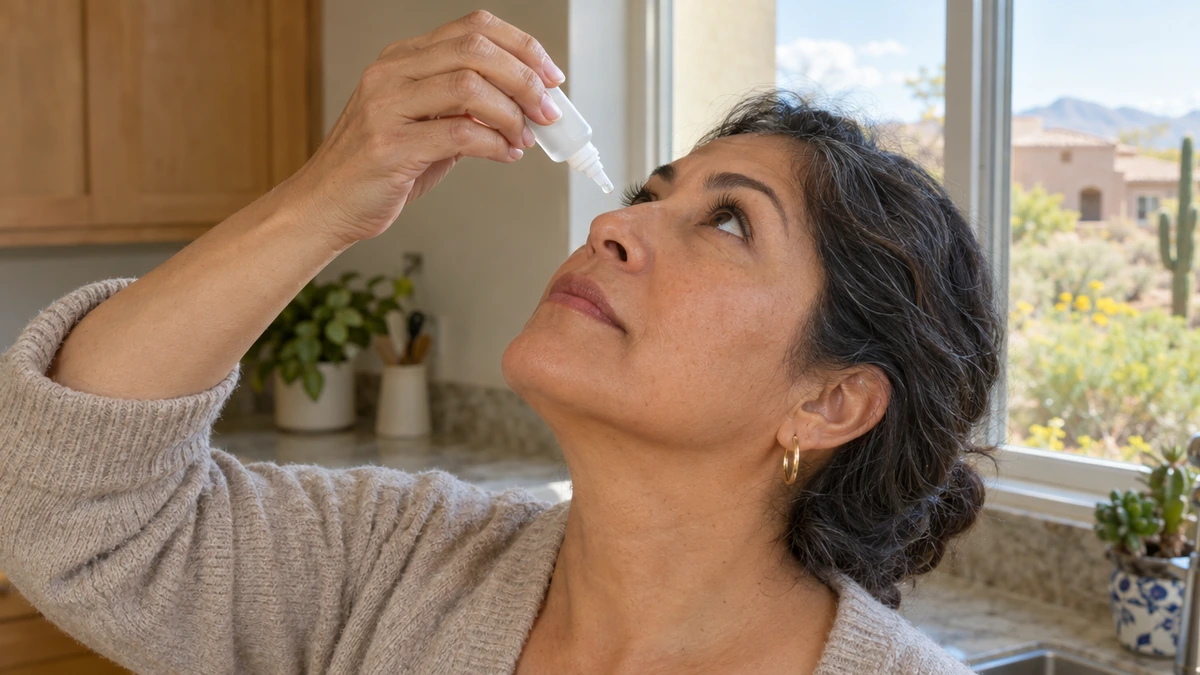
    Latina woman using an unbranded eye drop by a sunny kitchen window, dry eye vs allergies
    Include eye drops in your medication review.

    An allergy pill can stop the itch and still dry your eyes. The American Academy of Ophthalmology notes that oral antihistamines sometimes dry your eyes and worsen eye allergy symptoms despite helping itch. Report both changes when they happen together. Less itching does not explain new grittiness.

    Eye drops need review, too. The 2017 TFOS DEWS II report links topical medicines and some preservatives to dry eye through effects on your ocular surface, the exposed surface of the eye. With an antihistamine drop, review the full formulation and your response rather than assuming every drop has the same drying effect. A pill and a drop are different decisions.

    Bring your bottles or a written list. Include allergy pills, eye drops and medicines you buy without a prescription, with a note about when each started. Keep prescription changes with the prescriber, and report new discomfort instead of stopping treatment yourself. My guide to medications linked to dry eye explains that review in more detail.

    Make your notes specific. Record what improved, what persisted and what appeared after a new medicine. Keep the product names on your list even when the packaging calls several bottles allergy relief. At the visit, ask what each medicine is meant to treat and which changes need a call.

    When Does Southern Nevada Pollen Matter?

    East Asian man sneezing into his elbow by a Summerlin flowering shrub, dry eye vs allergies
    Sneezing alongside eye symptoms belongs in your allergy history.

    Spring in the valley is tree pollen season, and your calendar is a clue. A UNLV pollen study observed the main tree season from February to June and higher weed pollen from March to May and August to October across five Las Vegas Valley sites during April 2015 to April 2016. The study covered one year, with differences between sites, so use those months as an observed pattern rather than a fixed calendar for your neighborhood. Report your own timing.

    A dusty afternoon calls for a separate question. The CDC distinguishes allergens such as pollen from irritants such as dust, so your reaction to blowing desert dust does not prove allergy. Describe what was in the air and what your eyes felt. Windblown desert dust irritates your eyes. Irritation is not allergy.

    Think about your usual route through Summerlin. Note whether discomfort starts beside flowering plants in your yard, during a dusty walk or after you return indoors. Include uneventful outings as well as uncomfortable ones. For practical changes involving wind and indoor air, see why Las Vegas air dries out your eyes.

    Dry Eye vs Allergies: What If Both Are Involved?

    You do not have to choose a diagnosis before booking. Dryness and allergy sometimes coexist, and blepharitis adds another source of similar symptoms. Your appointment should address the whole complaint, including symptoms left over after treatment. I want your plan to explain the discomfort you still have.

    Keep a short record before your visit. Use ordinary language and include your current treatment. Follow this sequence to make the discussion useful without turning it into homework.

    1. Name the main feeling: itch, burning, grittiness or watering.
    2. Record when it starts and whether one eye or both feel affected.
    3. Note the setting, such as your backyard, a dusty sidewalk or an indoor workspace.
    4. List the medicines and drops used before and after symptoms began.
    5. Describe what improved and what still interrupts your day.

    Book an evaluation when recurring discomfort leaves you uncertain about what to use. Explain the problem when arranging your visit, especially when a previous allergy label no longer describes it well. Your history matters even if your eyes feel better that morning. For a broader look at visits and follow-up, read when to see an optometrist for dry eye.

    Which Red Eyes Cannot Wait Out Allergy Season?

    Red or painful eyes do not wait out allergy season: contact an eye care provider right away, as MedlinePlus instructs. Its warning signs also include flaking, discharge or a sore on your eye or eyelid, an eye injury, a bulging eye or a drooping lid. Get care right away for those signs rather than waiting for a routine allergy appointment. See a provider for pink eye with eye pain, light sensitivity, intense redness or blurred vision that stays after you wipe away discharge, the CDC advises.

    Describe your symptoms when you call. Say when they began and whether they are getting worse, and identify any drops already used. A familiar pollen season is no reason to postpone evaluation of these warning signs.

    How I Sort Allergy From Dryness at Vision by Amel
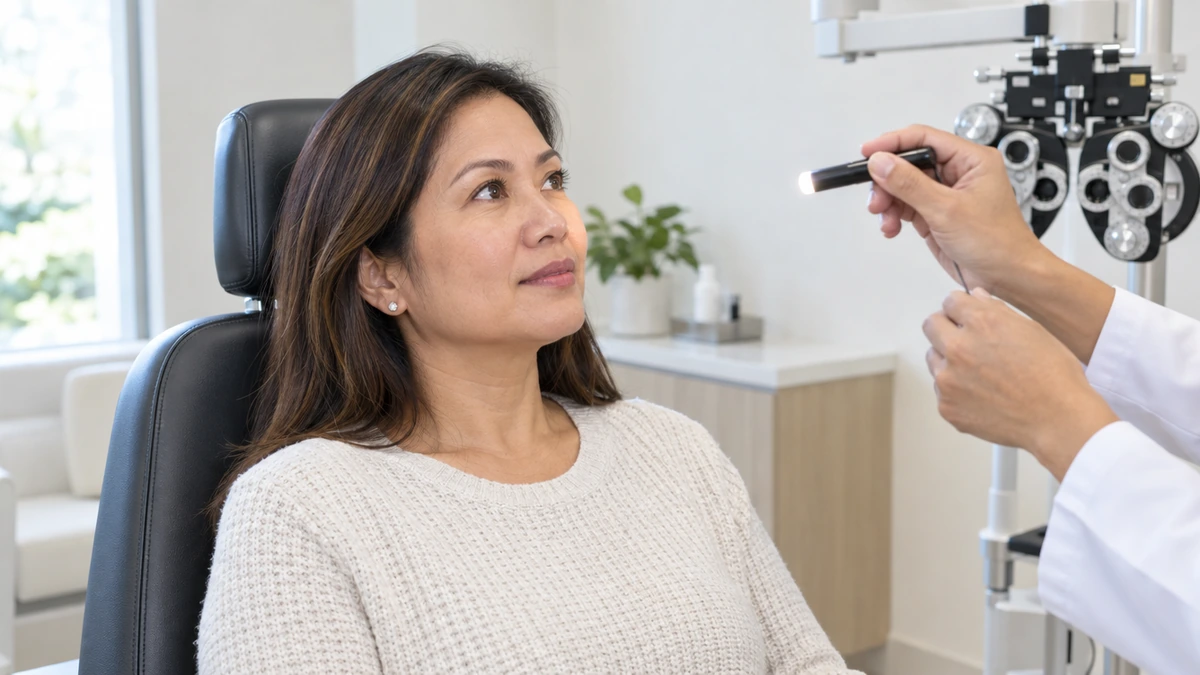
    Filipino woman in an eye exam chair with clinician hands holding a light, dry eye vs allergies
    An examination helps distinguish causes of eye discomfort.

    Your visit should separate allergy from dryness. As Dr. Amel Youssef, OD, I use your symptom history and my evaluation to shape your plan at Vision by Amel. Your symptom notes and medicine list put the details in front of us. Our eye exams include patient history, digital diagnostics, my evaluation and your plan.

    When dryness shows up in your findings, your dry eye treatment depends on your eyes: artificial tears, targeted prescription drops, warm compresses or eyelid hygiene, with care for meibomian gland dysfunction or blepharitis, chosen to sit beside your allergy care. My guide to dry eye treatment in Las Vegas explains those options. Your visit gives those choices a purpose.

    My office sits in Downtown Summerlin at Festival Plaza, 2010 Festival Plaza Dr, Suite 195. No referral is needed for an eye exam. Book online or call with your symptoms and the questions you want answered. Leave knowing which problem you have and what calms it, so your eye health stays protected.

    Frequently Asked Questions About Dry Eye and Eye Allergies

    Will I Need Allergy Testing for Itchy Eyes?

    Allergy testing is rarely needed to diagnose allergic conjunctivitis, according to the AAPOS guidance cited above. Your history and eye examination usually guide the diagnosis. Details about your exposures and symptoms come before arranging testing on your own.

    Are Allergic Eyes Contagious?

    Allergic conjunctivitis is not contagious, and neither is irritation from dust. The CDC distinguishes both from viral and bacterial causes of pink eye. Your red eye still needs a diagnosis before you assume allergy explains it.

    Should I Rub My Eyes When They Itch?

    Avoid rubbing your eyes. Rubbing adds irritation and swelling, even when the urge feels hard to resist. Mention persistent itching during your evaluation so the plan addresses the reason you keep reaching for your eyes.

    Do Artificial Tears Help Eye Allergies?

    Artificial tears temporarily wash allergens from your eyes and relieve dryness. That overlap in uses means relief from a lubricating drop does not identify which condition you have. Record the response and bring it to your visit.

    How Long Should I Use Redness-Relief Drops?

    The American Academy of Ophthalmology advises you not to use decongestant redness-relief drops for more than two to three days because longer use worsens symptoms. Check which kind of drop you have. Bring recurring redness for evaluation instead of repeatedly restarting the bottle.

    Book My Eye Exam Call (702) 858-4362

    Like this article? Add Vision by Amel as a preferred source, and you are more likely to see our articles in Google’s Top Stories.

    Add as a preferred source on Google

  • Medications That Can Cause Dry Eye, and What to Do About It

    Medications That Can Cause Dry Eye, and What to Do About It

    Medications That Can Cause Dry Eye, and What to Do About It

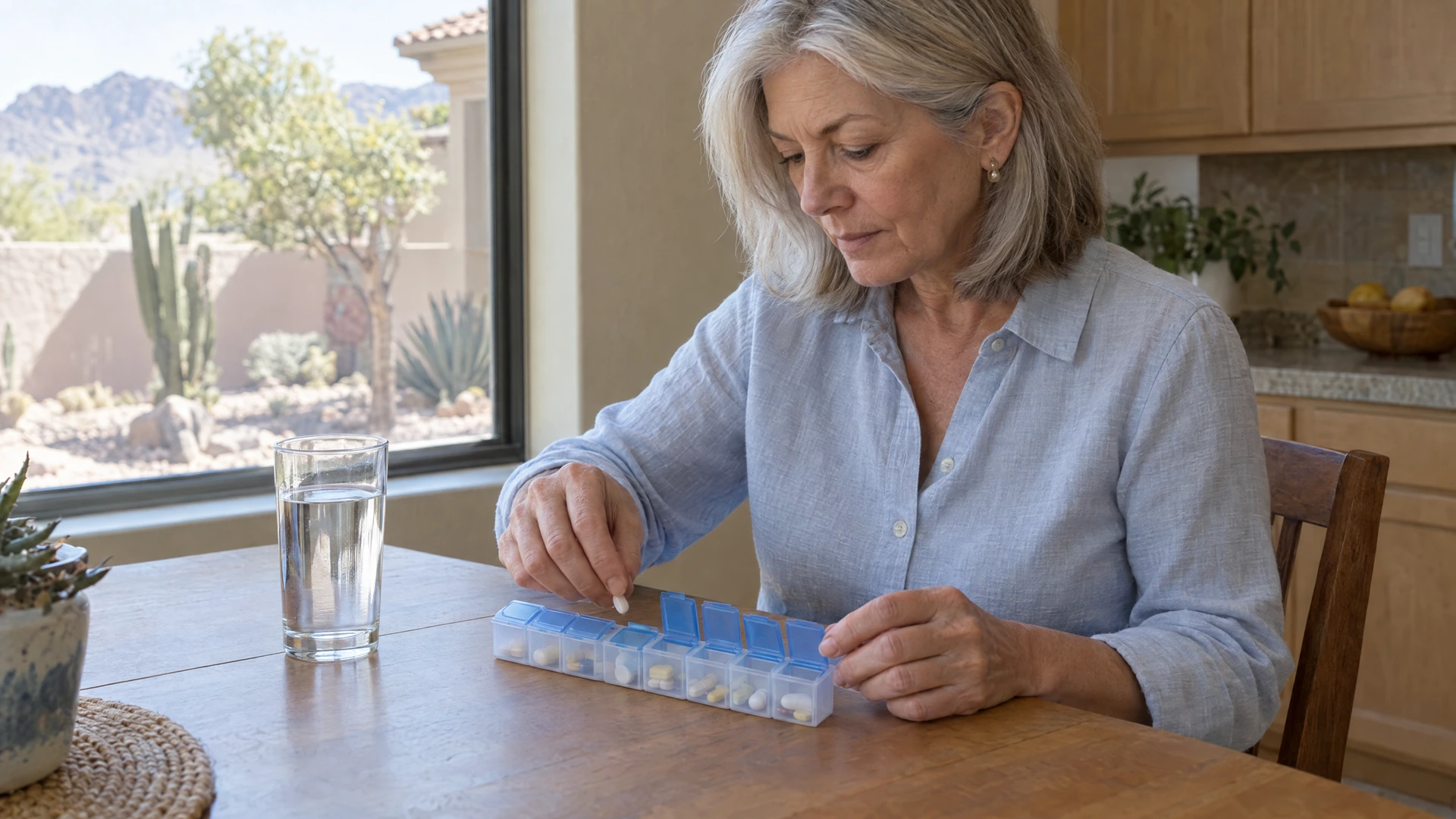
    White woman sorting a pill organizer beside water, for a guide to medications that cause dry eye

    TLDR: Reviewing medications that cause dry eye starts with your full medicine list, including allergy tablets and eye drops. Never stop or change a prescribed medicine without your prescriber, and bring the list to an eye appointment so we address dryness alongside your other health needs.

    Answer: Antihistamines, decongestants, antidepressants, some blood pressure medicines, isotretinoin and hormone therapy are linked to dry eye. Your medicine is a clue, not a diagnosis. In Las Vegas, an eye exam helps identify contributing factors and guide treatment while your prescriber decides whether a prescription needs changing.

    You fill the pill organizer at your Summerlin kitchen table. Then you reach past your breakfast cup for eye drops. When dryness appears after a new prescription, bring that timing to me, your optometrist, along with the medicine name. My priority is an eye care plan you understand, with a clear next step for both your eyes and your prescriptions.

    I reviewed 88 primary sources across five research lenses for this guide, and some medicines for allergies, depression and high blood pressure are linked to dry eye. The National Eye Institute identifies these medicine groups among possible causes of your symptoms. My dry eye treatment approach starts with the whole picture, as outlined on our dry eye care page. Bring your questions, including the ones you have hesitated to ask.

    Which Medications That Cause Dry Eye Belong on Your List?

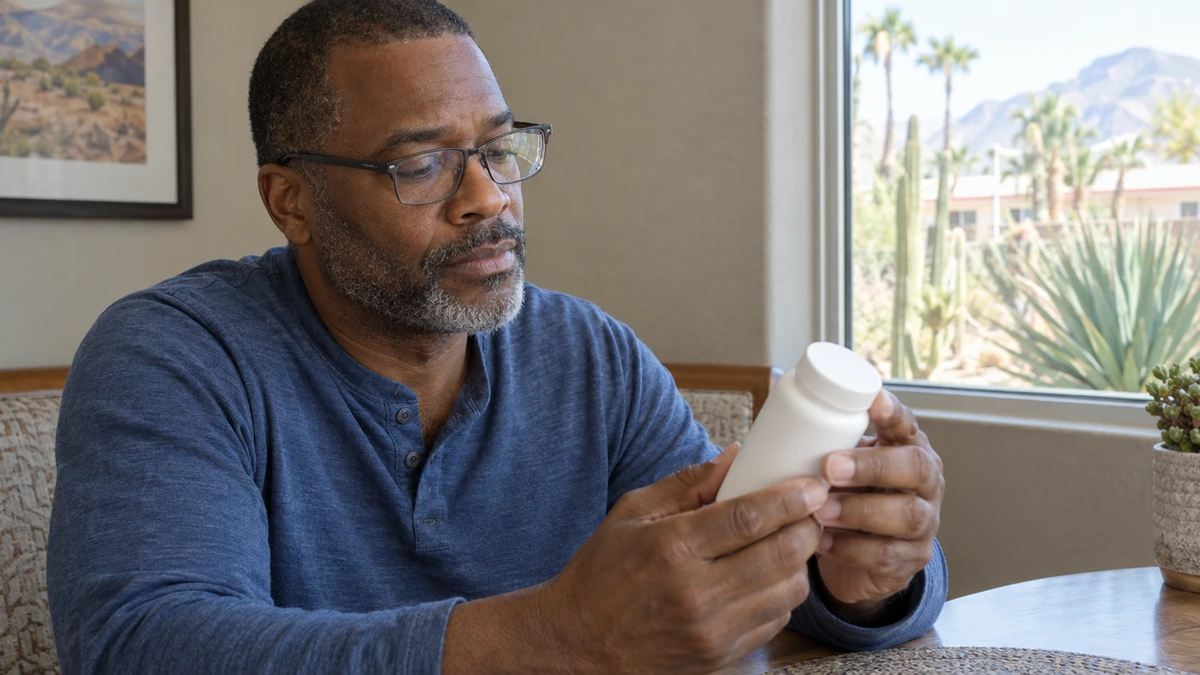
    Black man reading a medicine container with glasses, for a guide to medications that cause dry eye
    Bring the medicine container when you are unsure of its name.

    Names beat categories. “Blood pressure pill” tells me little. The name on the bottle tells me plenty. The 2017 TFOS DEWS II report links the groups below to dry eye through effects on your tears or eyelid oil glands. These links describe possible contributors, with effects differing by medicine and person.

    Medicine GroupLink to Dry EyeWhat to Bring Up
    AntihistaminesSome have drying effects, and oral use is associated with dry eye.Your allergy tablets, including occasional use.
    DecongestantsIncluded among medicine groups with drying effects.Cold remedies and products with several ingredients.
    Antidepressants and anti-anxiety medicinesUse is associated with dry eye in observational research.The exact prescription and any recent changes.
    Some blood pressure medicinesDiuretics and beta-blockers have links to dry eye.The medicine name, rather than its purpose alone.
    IsotretinoinLinked to changes in eyelid oil glands and tear film stability.Current or past acne treatment and when symptoms began.
    Hormone therapyMenopausal hormone therapy, especially estrogen alone, is associated with dry eye.The type of hormone therapy you use.

    Use this table to prepare. Bring the actual package when you do not know which group a medicine belongs to. Include treatments prescribed elsewhere, even when their purpose seems unrelated to your eyes. I would rather review an extra bottle than have you leave out a medicine because it seemed irrelevant.

    How Does Dry Eye Care Work Around Your Medicines?

    Latina woman using eye drops at a kitchen counter, for a guide to medications that cause dry eye
    Include eye drops when you review your medicines.

    You keep your treatment. We work on your comfort. Depending on your eyes, my plan includes artificial tears, targeted prescription eye drops for inflammation, warm compresses, eyelid hygiene or punctal plugs to conserve tears. Care for meibomian gland dysfunction and blepharitis also belongs in the discussion when those conditions are present. The choice follows your evaluation.

    Your home plan needs clear instructions. Before you leave, ask which drops to use, how to use them and what should prompt a call. My guide to dry eye treatment in Las Vegas explains the treatment options in more detail. A drop schedule needs to fit your day, whether you are heading to a shift off the 215 or caring for a parent at home. Tell me which step feels difficult so we address it before you leave.

    Write down whether your concern is discomfort, difficulty using the drops or uncertainty about the instructions. Keep prescribed medicines on their assigned schedule while you seek advice about changes. I want your eye treatment to fit into a plan you understand, rather than become another bottle you feel unsure about.

    What Should You Bring to Your Eye Appointment?

    Older Asian couple with a medicine pouch at a front desk, for a guide to medications that cause dry eye
    Bring your medicine containers when you need help completing the list.

    A complete list saves you guesswork at the visit. Include daily prescriptions, occasional tablets and everything you put in your eyes. A bottle tucked into a travel bag still belongs on that list, even when you rarely use it. Gather the containers before your drive to Festival Plaza, while the pill organizer and bathroom shelf are still within reach.

    1. Record each medicine’s name, strength and schedule exactly as shown on its container. Add the reason you take it and the prescriber’s name.
    2. Include nonprescription cold and allergy remedies, vitamins, supplements and eye drops. Record how often you actually use each product.
    3. Note when dryness began and any prescription starts or dose changes near that time. Mark uncertain dates as approximate.
    4. Describe a difficult moment in your day, such as reading at the kitchen table or wearing contacts through a shift. Explain what you tried afterward.
    5. Bring the list to both visits. Use the same version with me and your prescriber, then update it after an agreed change.

    Missing a detail is easy. A partner who fills your pill organizer might know the names better than you do. That person or the containers help fill the gaps, along with recently stopped medicines and their stop dates. You do not need to decide which item matters before you arrive.

    Specific timing gives your concern a clear focus. “My eyes started burning after this prescription changed” gives us more to discuss than “my eyes feel bad.” Describe the timing without deciding the cause yourself. Save the main concern at the top of your list so it gets discussed before the visit ends.

    What Should You Ask About Medications That Cause Dry Eye?

    Middle Eastern woman on the phone beside a notepad, for a guide to medications that cause dry eye
    Discuss symptoms with your prescriber before changing a prescription.

    Never stop or change your prescribed medicine without your prescriber. MedlinePlus advises discussing side effects before stopping, with dose adjustments or a different medicine among the options your prescriber considers. Start the conversation with the symptom, the medicine and the timing. Your request is simple: help with the discomfort, with no break in your treatment.

    You do not need to propose a replacement. Ask whether the medicine is a plausible contributor and whether an alternative makes sense for your health needs. Explain any eye treatment already prescribed so the discussion includes both plans. Leave with clear instructions about what to continue and whom to contact with questions.

    Keep your mental health care in that conversation. Finding an antidepressant in the table is a reason to discuss symptoms, not to experiment with missed doses. The same instruction applies to blood pressure treatment and hormone therapy. Your prescriber should direct any change.

    Use a short note during the call. Include the medicine name, when symptoms appeared, what your eyes feel like and what you need clarified. Record the advice in your own words and read it back when anything sounds uncertain. One clear call to your prescriber beats a month of guessing.

    When Should You Get Help Right Away?

    A red or painful eye comes before any medication question: contact an eye care provider right away, as MedlinePlus advises. Do not wait for a routine medication review to report those symptoms. Tell the person taking your call about the eye symptoms first, then the medicine you suspect.

    Your suspected side effect is still a symptom that needs an exam. My guide to when dry eyes need an appointment covers the broader signs and referral discussion.

    How I Approach Your Medication Questions at Vision by Amel

    Your medicine list gives us a clear place to begin your comprehensive eye exam. At Vision by Amel, your visit includes a patient history, digital diagnostics, my evaluation and your plan. Use the history discussion to raise changes in prescriptions and the discomfort you want addressed. The eye exam page explains the visit before you arrive.

    Your eye health plan should make sense at home. Your medicines stay in your prescriber’s hands, and I build your eye plan around them. With your current drop bottles in front of us, we discuss the products you use at the kitchen counter or keep in your work bag. My priority is a workable eye plan with prescription changes directed by the prescriber responsible for that medicine.

    You will find Vision by Amel in Downtown Summerlin at Festival Plaza, 2010 Festival Plaza Dr, Suite 195, Las Vegas, NV 89135. No referral is needed for an eye exam. Book online or call (702) 858-4362, and mention the medication question when arranging your visit. Tuck your medicine list beside your keys before you leave home.

    Frequently Asked Questions About Medications and Dry Eye

    Why Do My Allergy Tablets Help Itching but Leave My Eyes Dry?

    Both effects are possible with oral antihistamines, according to the American Academy of Ophthalmology. Relief from itching does not tell you whether the treatment suits your dryness. Describe each symptom separately when we discuss your allergy medicines.

    Will My Eyes Return to Normal After Isotretinoin?

    A small uncontrolled study in Ophthalmology and Therapy found gland changes judged reversible, but symptoms remained above baseline a month after treatment stopped. That finding does not establish a recovery date for your eyes. Arrange an eye assessment for dryness during treatment or symptoms persisting afterward.

    Do My Glaucoma Drops Belong on the List Too?

    Yes, include their names and schedules because the 2017 TFOS DEWS II report describes irritation of the ocular surface and dry eye linked to topical medicines and their preservatives. Keep using your glaucoma prescription as directed while you raise the concern with its prescriber. Include which drop stings and whether the sensation continues after you use it.

    Does a Medicine Missing From This Table Need Mentioning?

    Yes, the AAO Preferred Practice Pattern includes additional medicines in its history checklist, such as heart rhythm drugs and chemotherapy. Your list should be complete even when this article does not name the treatment. Include the prescribing team’s contact details with an unfamiliar medication.

    What Should I Do When Different Offices Give Me Different Instructions?

    Request clarification before changing your prescription. Write down each instruction and contact the prescriber responsible for the medicine, explaining where the advice differs. At your next eye visit, share the clarified plan so we are discussing the same schedule.

    Book My Eye Exam Call (702) 858-4362

    Like this article? Add Vision by Amel as a preferred source, and you are more likely to see our articles in Google’s Top Stories.
    Add as a preferred source on Google