Category: Dry Eye in Summerlin and Las Vegas

Desert air, screens and contact lenses: dry eye care for Summerlin and Las Vegas patients.

  • Dry Eye or Eye Allergies? Telling Them Apart in Las Vegas
    Dry Eye or Eye Allergies? Telling Them Apart in Las Vegas

    Dry Eye or Eye Allergies? Telling Them Apart in Las Vegas

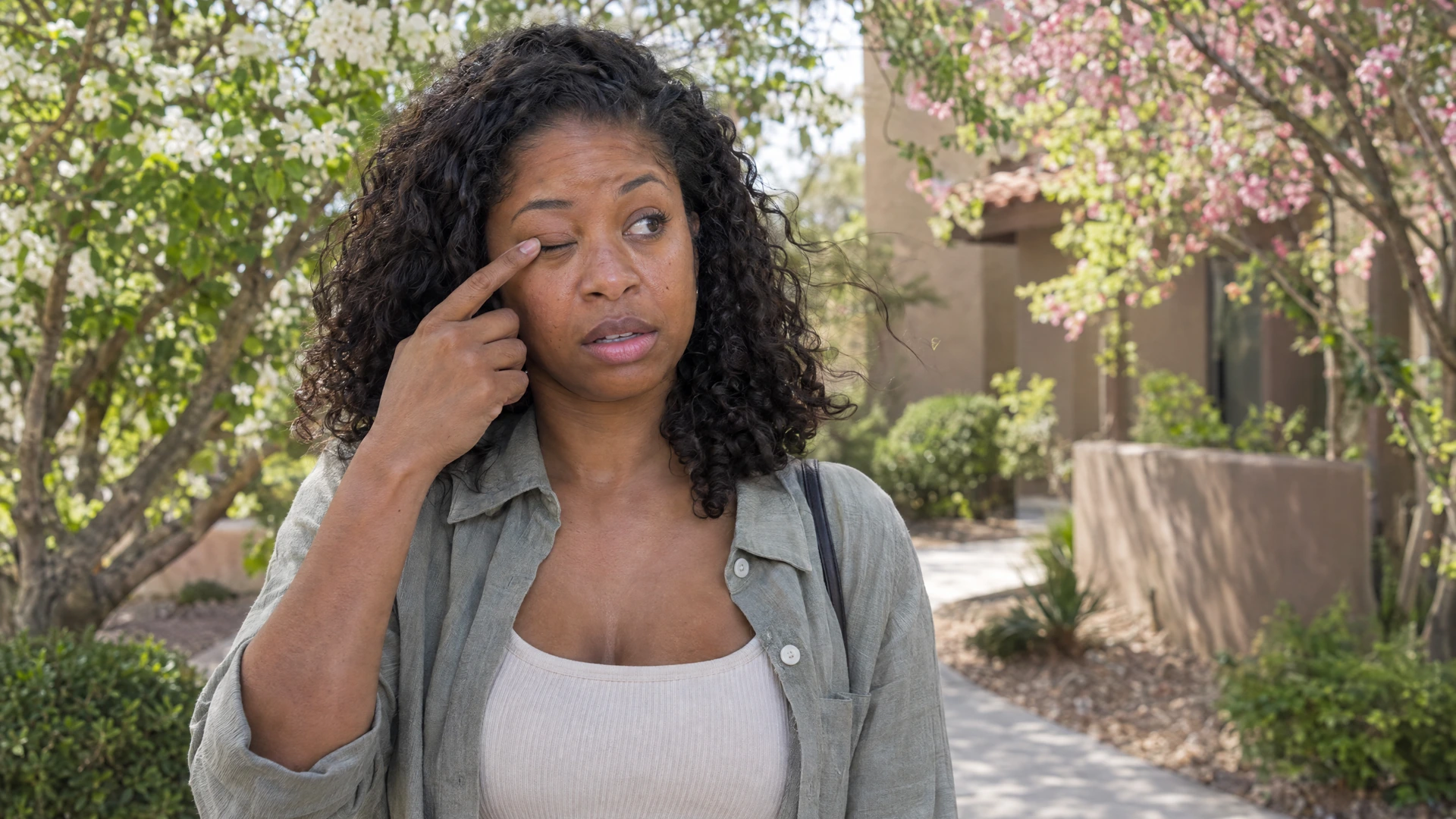
    Black woman rubbing an itchy eye by blooming desert trees, dry eye vs allergies

    TLDR: The useful distinction in dry eye vs allergies is your pattern of symptoms: itching is the strongest allergy clue, while burning points neither way on its own. Symptoms overlap, and both problems sometimes occur together. An eye exam sorts out the cause so your care fits it.

    Answer: Eye allergies usually make your eyes itch, often alongside sneezing, while dry eye often brings burning or a gritty feeling. In Las Vegas, pollen and dusty air complicate the picture. Burning alone does not separate them, and allergy medicine sometimes adds dryness. Your symptom history and an examination help distinguish allergy, dryness and overlapping problems.

    You step onto a Las Vegas patio and start rubbing your eyes. Later, indoors, they feel sandy instead. Before buying another bottle, notice which feeling troubles you most and when it starts. Those details give an optometrist more to work with than the word irritation.

    I reviewed 88 primary sources across five research lenses for this guide, and dry eye and blepharitis share symptoms with eye allergies. The American Optometric Association recommends a comprehensive eye exam to distinguish these causes of your discomfort. My approach to dry eye care starts with understanding what needs treatment. A guess between allergy and dry eye costs you weeks of the wrong drops.

    Dry Eye vs Allergies: What Do Your Symptoms Suggest?

    White man squinting on a dusty Las Vegas sidewalk with palms, dry eye vs allergies
    A dusty-day flare does not establish pollen allergy.

    Start with the itch. AAPOS identifies itching as the main symptom of allergic conjunctivitis, although your eyes also sometimes burn, sting or tear. Allergic conjunctivitis means allergy-related inflammation of the tissue covering the white of the eye and lining the eyelids. Burning does not settle the question.

    Your description matters more than finding the perfect medical word. Say whether you want to rub your eyes, blink away a gritty feeling or wipe away tears. Mention a stuffy nose or sneezing, too. Use the comparison below to organize what you notice before your visit.

    What You NoticeWhat It SuggestsWhat It Does Not Settle
    Itching is the strongest complaintAllergy deserves considerationDry eye and eyelid inflammation also cause itch
    Burning or stingingDryness or allergyThe sensation alone does not identify the cause
    Grittiness or a scratchy feelingDry eye belongs in the evaluationA symptom description does not replace an examination
    Sneezing or an itchy, stuffy nose with eye symptomsAn allergy patternDryness still needs consideration
    Symptoms during a dusty outingIrritation or exposure worth reportingDust exposure does not establish pollen allergy

    Your whole pattern belongs in the appointment. Describe the strongest symptom first, then the others, even when they seem unrelated. Include whether the discomfort starts outdoors, follows a medicine or stays with you indoors. A useful history describes what happened before you decided what to call it.

    Do Allergy Pills or Eye Drops Add Dryness?
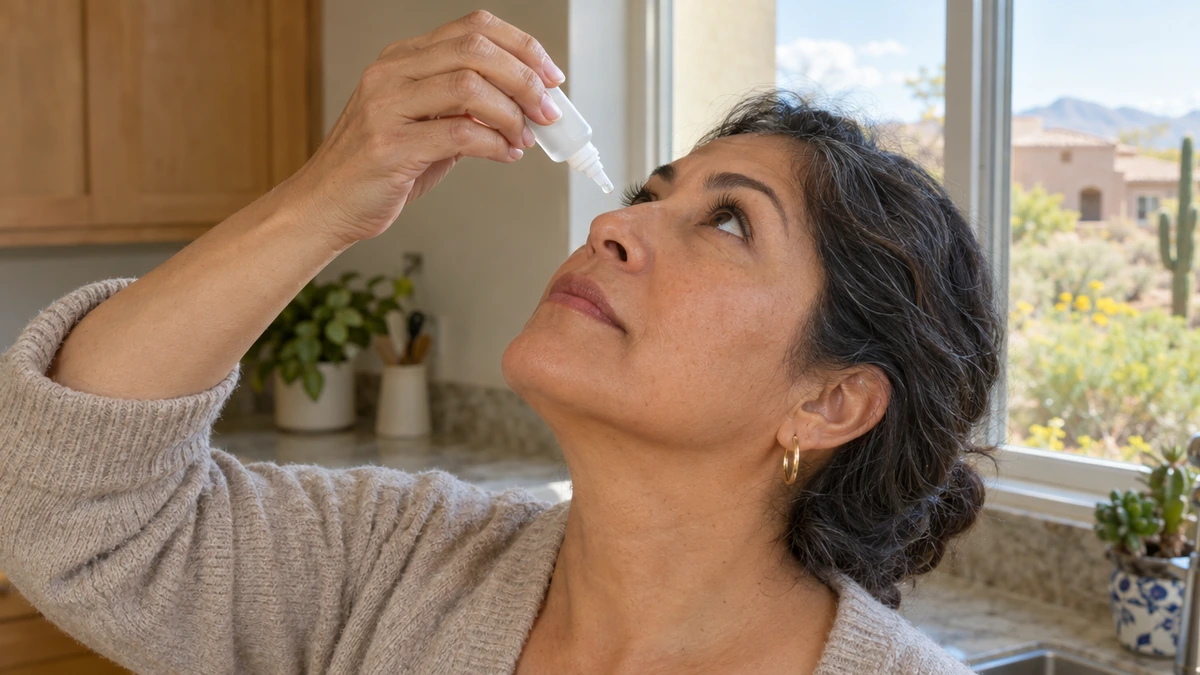
    Latina woman using an unbranded eye drop by a sunny kitchen window, dry eye vs allergies
    Include eye drops in your medication review.

    An allergy pill can stop the itch and still dry your eyes. The American Academy of Ophthalmology notes that oral antihistamines sometimes dry your eyes and worsen eye allergy symptoms despite helping itch. Report both changes when they happen together. Less itching does not explain new grittiness.

    Eye drops need review, too. The 2017 TFOS DEWS II report links topical medicines and some preservatives to dry eye through effects on your ocular surface, the exposed surface of the eye. With an antihistamine drop, review the full formulation and your response rather than assuming every drop has the same drying effect. A pill and a drop are different decisions.

    Bring your bottles or a written list. Include allergy pills, eye drops and medicines you buy without a prescription, with a note about when each started. Keep prescription changes with the prescriber, and report new discomfort instead of stopping treatment yourself. My guide to medications linked to dry eye explains that review in more detail.

    Make your notes specific. Record what improved, what persisted and what appeared after a new medicine. Keep the product names on your list even when the packaging calls several bottles allergy relief. At the visit, ask what each medicine is meant to treat and which changes need a call.

    When Does Southern Nevada Pollen Matter?

    East Asian man sneezing into his elbow by a Summerlin flowering shrub, dry eye vs allergies
    Sneezing alongside eye symptoms belongs in your allergy history.

    Spring in the valley is tree pollen season, and your calendar is a clue. A UNLV pollen study observed the main tree season from February to June and higher weed pollen from March to May and August to October across five Las Vegas Valley sites during April 2015 to April 2016. The study covered one year, with differences between sites, so use those months as an observed pattern rather than a fixed calendar for your neighborhood. Report your own timing.

    A dusty afternoon calls for a separate question. The CDC distinguishes allergens such as pollen from irritants such as dust, so your reaction to blowing desert dust does not prove allergy. Describe what was in the air and what your eyes felt. Windblown desert dust irritates your eyes. Irritation is not allergy.

    Think about your usual route through Summerlin. Note whether discomfort starts beside flowering plants in your yard, during a dusty walk or after you return indoors. Include uneventful outings as well as uncomfortable ones. For practical changes involving wind and indoor air, see why Las Vegas air dries out your eyes.

    Dry Eye vs Allergies: What If Both Are Involved?

    You do not have to choose a diagnosis before booking. Dryness and allergy sometimes coexist, and blepharitis adds another source of similar symptoms. Your appointment should address the whole complaint, including symptoms left over after treatment. I want your plan to explain the discomfort you still have.

    Keep a short record before your visit. Use ordinary language and include your current treatment. Follow this sequence to make the discussion useful without turning it into homework.

    1. Name the main feeling: itch, burning, grittiness or watering.
    2. Record when it starts and whether one eye or both feel affected.
    3. Note the setting, such as your backyard, a dusty sidewalk or an indoor workspace.
    4. List the medicines and drops used before and after symptoms began.
    5. Describe what improved and what still interrupts your day.

    Book an evaluation when recurring discomfort leaves you uncertain about what to use. Explain the problem when arranging your visit, especially when a previous allergy label no longer describes it well. Your history matters even if your eyes feel better that morning. For a broader look at visits and follow-up, read when to see an optometrist for dry eye.

    Which Red Eyes Cannot Wait Out Allergy Season?

    Red or painful eyes do not wait out allergy season: contact an eye care provider right away, as MedlinePlus instructs. Its warning signs also include flaking, discharge or a sore on your eye or eyelid, an eye injury, a bulging eye or a drooping lid. Get care right away for those signs rather than waiting for a routine allergy appointment. See a provider for pink eye with eye pain, light sensitivity, intense redness or blurred vision that stays after you wipe away discharge, the CDC advises.

    Describe your symptoms when you call. Say when they began and whether they are getting worse, and identify any drops already used. A familiar pollen season is no reason to postpone evaluation of these warning signs.

    How I Sort Allergy From Dryness at Vision by Amel
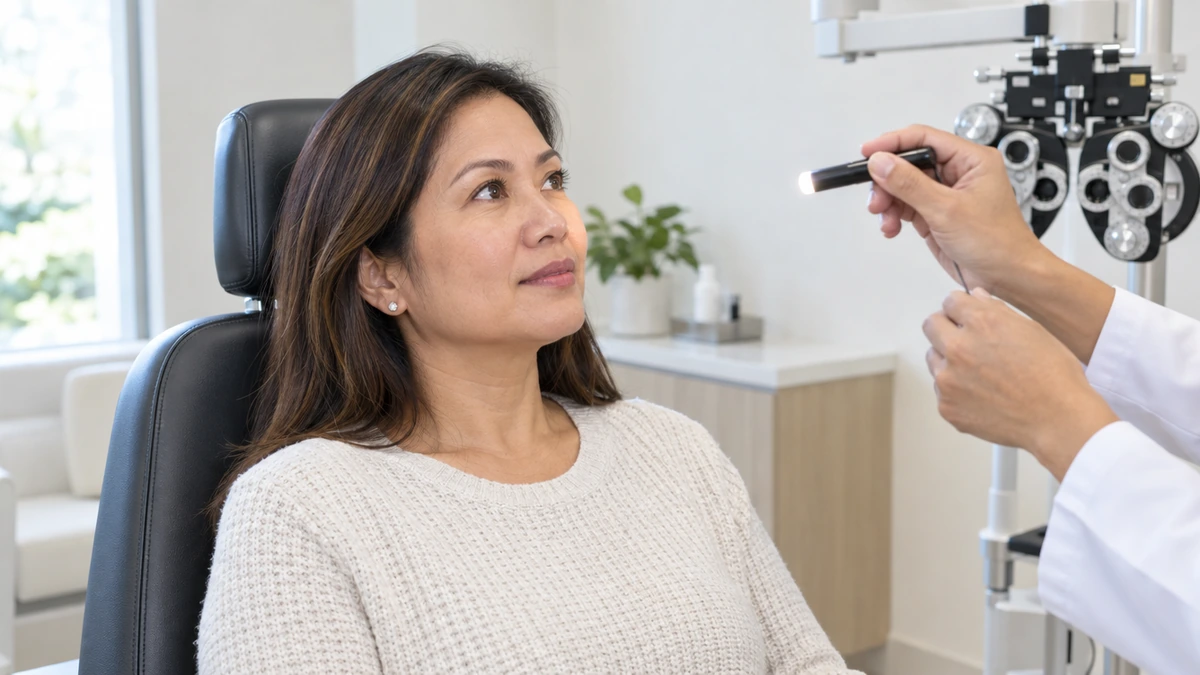
    Filipino woman in an eye exam chair with clinician hands holding a light, dry eye vs allergies
    An examination helps distinguish causes of eye discomfort.

    Your visit should separate allergy from dryness. As Dr. Amel Youssef, OD, I use your symptom history and my evaluation to shape your plan at Vision by Amel. Your symptom notes and medicine list put the details in front of us. Our eye exams include patient history, digital diagnostics, my evaluation and your plan.

    When dryness shows up in your findings, your dry eye treatment depends on your eyes: artificial tears, targeted prescription drops, warm compresses or eyelid hygiene, with care for meibomian gland dysfunction or blepharitis, chosen to sit beside your allergy care. My guide to dry eye treatment in Las Vegas explains those options. Your visit gives those choices a purpose.

    My office sits in Downtown Summerlin at Festival Plaza, 2010 Festival Plaza Dr, Suite 195. No referral is needed for an eye exam. Book online or call with your symptoms and the questions you want answered. Leave knowing which problem you have and what calms it, so your eye health stays protected.

    Frequently Asked Questions About Dry Eye and Eye Allergies

    Will I Need Allergy Testing for Itchy Eyes?

    Allergy testing is rarely needed to diagnose allergic conjunctivitis, according to the AAPOS guidance cited above. Your history and eye examination usually guide the diagnosis. Details about your exposures and symptoms come before arranging testing on your own.

    Are Allergic Eyes Contagious?

    Allergic conjunctivitis is not contagious, and neither is irritation from dust. The CDC distinguishes both from viral and bacterial causes of pink eye. Your red eye still needs a diagnosis before you assume allergy explains it.

    Should I Rub My Eyes When They Itch?

    Avoid rubbing your eyes. Rubbing adds irritation and swelling, even when the urge feels hard to resist. Mention persistent itching during your evaluation so the plan addresses the reason you keep reaching for your eyes.

    Do Artificial Tears Help Eye Allergies?

    Artificial tears temporarily wash allergens from your eyes and relieve dryness. That overlap in uses means relief from a lubricating drop does not identify which condition you have. Record the response and bring it to your visit.

    How Long Should I Use Redness-Relief Drops?

    The American Academy of Ophthalmology advises you not to use decongestant redness-relief drops for more than two to three days because longer use worsens symptoms. Check which kind of drop you have. Bring recurring redness for evaluation instead of repeatedly restarting the bottle.

    Book My Eye Exam Call (702) 858-4362

    Like this article? Add Vision by Amel as a preferred source, and you are more likely to see our articles in Google’s Top Stories.

    Add as a preferred source on Google

  • How to Choose a Dry Eye Doctor in Las Vegas

    How to Choose a Dry Eye Doctor in Las Vegas

    How to Choose a Dry Eye Doctor in Las Vegas

    Woman seated across from a dry eye doctor seen from behind in a bright consultation room

    TLDR: Choose a dry eye doctor who explains your findings, treatment choices and next steps. In Las Vegas, compare the evaluation, follow-up plan and referral approach, then check your insurance benefits before booking.

    Answer: To choose a dry eye doctor in Las Vegas, look for an optometrist or ophthalmologist who evaluates your symptoms, eyelids and tears. Request a clear explanation of the findings and a plan for reviewing progress. Check how the office handles ophthalmology referrals and whether your visit will be billed to medical or vision insurance.

    You want an explanation you understand. You have tried three bottles of drops. Your eyes still burn on the drive home along the 215. My approach to treating dry eye starts with understanding what your eyes need, before choosing a product.

    I reviewed 88 primary sources across five research lenses for this guide, and a dry eye diagnosis needs more than an isolated test result. For your evaluation, the American Academy of Ophthalmology says no single test establishes the diagnosis. I value a clear explanation more than a long equipment list.

    How Do You Compare Dry Eye Doctors?

    Man with reading glasses preparing questions in a notebook for a dry eye doctor visit
    Write down what you want answered.

    Start with the care you need. For general eye care, the National Eye Institute considers either an optometrist or ophthalmologist a good option, with ophthalmologists offering additional treatments such as surgery for serious eye problems. Both professions examine eyes and prescribe medicines within their scope of practice.

    You might search for a “dry eye specialist” or “dry eye clinic” when ordinary drops have disappointed you. A search hands you names. The first visit shows you who explains, who listens and who plans ahead. On that call, find out what the evaluation covers, who explains your results and what happens when you need more care.

    One call tells you a lot. Say why you want an eye exam and what you have already tried. Then listen: does the office ask about your symptoms, or only about your insurance?

    Compare explanations as well as availability. Write down what you want answered before you arrive. Afterward, consider whether the explanations made sense, whether you had time for questions and whether you felt rushed. Choose someone you feel able to work with.

    What Should a Dry Eye Doctor Evaluate?

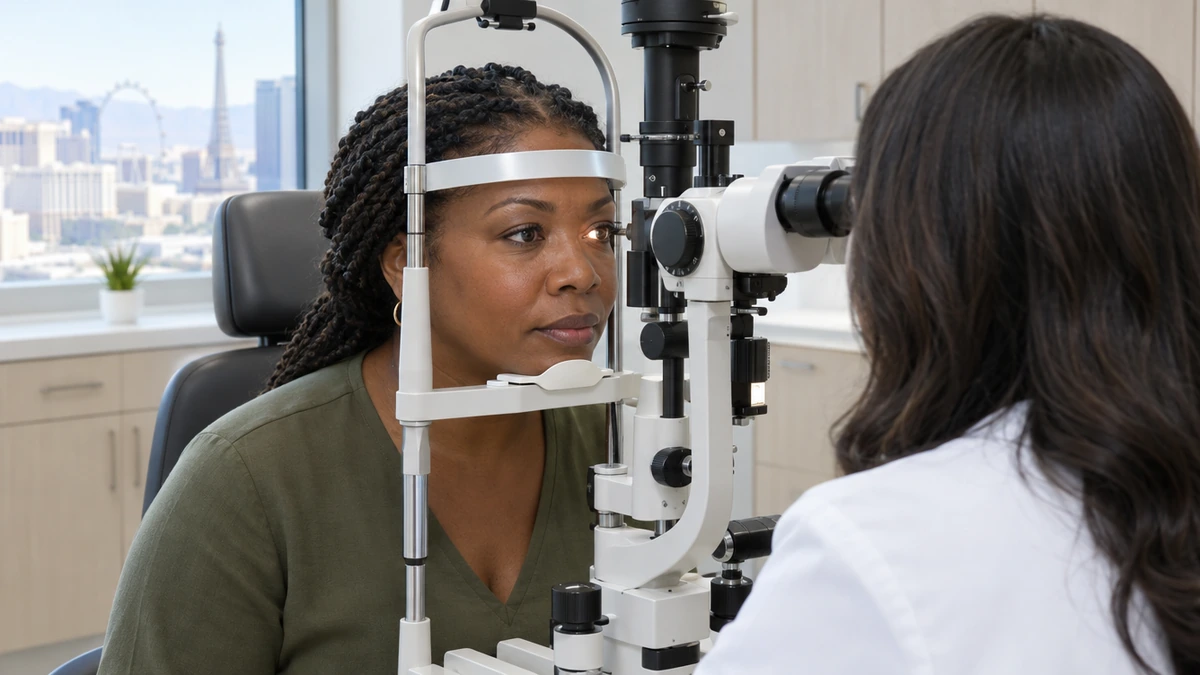
    Woman seated at a slit lamp with a dry eye doctor visible only from behind
    Discuss what the examination shows.

    Your daily symptoms should guide the evaluation. The American Optometric Association describes a workup covering symptoms, general health, medications and environment, along with examination of the lids, blinking, cornea and tear quantity and quality. Bring the names of your medicines and eye drops, plus notes about what you have already tried.

    Make those notes specific. Describe what happens during your afternoon computer work in Summerlin or after a long shift under hospital air conditioning. Include when the problem began and what interrupts your day. A brief account in your own words is more useful than a collection of search results.

    Use this table to prepare your questions. It turns broad examination terms into points to discuss during the visit. The key question is how those findings fit together for you.

    Part of the EvaluationWhat to DiscussA Useful Question
    Symptom and health historyYour symptoms, medicines, general health and environmentWhich details in my history matter here?
    Eyelids and blinkingLid structure and how your eyes blinkWhat did you notice about my lids?
    Magnified examinationThe lids and ocular surface, including the corneaWhat did the close examination show?
    Tear assessmentTear quantity and qualityHow do these findings explain my symptoms?

    A comprehensive eye exam should leave you understanding why a test matters. The 2017 TFOS DEWS II report explains that symptoms plus a positive tear film test support diagnosis without the full test battery, while negative available tests sometimes require referral for further testing. Each proposed test needs a reason tied to your care: what would its result change?

    Which Questions Make the Visit More Useful?

    Leave with a plan you understand. Keep your questions on paper so nothing important gets lost in the conversation. Work through them in this order, beginning with the findings and ending with follow-up.

    1. Start with the explanation: “What did you find, and how does it relate to what I feel?”
    2. Clarify the first step: “Why are you recommending this option for my eyes?”
    3. Discuss practical use: “How do I fit the plan into my workday, and what problems should I report?”
    4. Set the review: “When should we assess progress, and what should I track until then?”
    5. Establish the referral plan: “What findings would mean I need an ophthalmologist?”

    Your questions should include treatment you found online. For example, ask why artificial tears, warm compresses or prescription eye drops belong in your proposed plan. My guide to treating dry eyes in Las Vegas explains the options in more detail. Name the specific option you want to discuss.

    Be candid about what feels manageable. Tell me when a proposed routine conflicts with your work schedule or when an instruction is unclear. Repeat the plan back in your own words and request clarification where needed. I consider a plan unfinished until you understand the next step.

    When Should You Seek Care or an Ophthalmology Referral?

    Stop comparing offices the moment your eyes turn red or painful, and contact an eye care provider right away, as MedlinePlus advises. Put the provider comparison aside while you seek care. My guide to when to seek care for dry eyes covers the broader warning signs.

    I refer you to an ophthalmologist when your eyes need one. The AAO dry eye guideline calls for ophthalmologist evaluation for moderate or severe pain, lack of response to treatment, corneal infiltration or ulceration, progressive conjunctival scarring, or vision loss. Referral belongs in the discussion when choosing ongoing care.

    Before leaving a visit with a referral, establish the next step. Confirm whom you should contact, how soon you should be seen and which records to bring. Before you leave, clarify how to follow your current treatment while waiting. Keep the referral details with your care plan.

    What Should You Check About Insurance Before Booking?

    Couple reviewing a plain folder at a boutique front desk before a dry eye doctor visit
    Keep your appointment questions together.

    Know how your visit will be billed before you arrive. The American Optometric Association tells optometrists to say it up front: care for an eye complaint is billed to your medical plan, not your vision plan. Payment still depends on your plan, deductible, network and medical necessity. Describe your symptoms when booking so the office understands what care you are seeking.

    Keep both insurance cards handy. Ask your insurer whether the provider is in network for the medical visit and which benefits apply. Confirm whether your plan requires a referral or authorization. Write down the answer and the date of your call.

    Your question to the office should be specific. Say, “I am booking for persistent eye discomfort and want to understand how this visit will be billed.” Confirm what the planned evaluation includes and how any separate services are billed. Settle billing on the phone, so your visit stays about your eyes.

    How I Approach Your Visit at Vision by Amel

    Man walking across a Downtown Summerlin plaza toward a boutique for a dry eye doctor visit
    A man walks across an open-air plaza in Downtown Summerlin.

    Your visit here starts with your concerns. I am Dr. Amel Youssef, an optometrist and the founder of Vision by Amel. You will find us at 2010 Festival Plaza Dr, Suite 195, Las Vegas, NV 89135, in Downtown Summerlin at Festival Plaza. Book online or call my team to arrange your visit.

    Your visit runs in four steps: your history, digital diagnostics, my evaluation and your plan. We discuss how the findings relate to the concerns you brought. Our medical eye care page introduces the care available for your eye health.

    Your dry eye treatment plan depends on your eyes. Options include artificial tears, targeted prescription drops, warm compresses and eyelid hygiene, with care for meibomian gland dysfunction and blepharitis. Punctal plugs are another option within a plan. Bring your questions about which steps fit your findings.

    My team verifies your insurance benefits by phone before the visit. Have your plan details ready when you call. You do not need a referral to book an eye exam here. We are open seven days, Monday to Saturday 9 am to 6 pm and Sunday 11 am to 5 pm, so your visit fits your week.

    Frequently Asked Questions About Choosing a Dry Eye Doctor

    Is a Nevada Optometrist Allowed to Prescribe Dry Eye Medicine?

    Yes, with the required state certificate: the Nevada Legislature includes drug treatment within optometric practice and requires a certificate for prescribing treatment drugs beyond diagnostic agents. That certificate covers the treatment drugs your plan might need, beyond the drops used for diagnosis. Ask me what the proposed medicine does and why it belongs in your plan.

    What Should I Bring From a Previous Eye Appointment?

    Request a copy of your previous findings and treatment instructions. Bring the names of products you used and your notes about the experience. Mark anything you stopped using so we discuss what happened.

    Should I See an Optometrist or an Ophthalmologist for Dry Eye?

    Either can be a good choice for your general eye care, the National Eye Institute says, and both prescribe medicines. The difference is surgery. Nevada optometry excludes procedures that cut or burn tissue, so when your eyes need surgery, an ophthalmologist takes that part of your care.

    How Do I Explain What I Want From Treatment?

    Name the activity you want to discuss, such as reading an evening newspaper or wearing your contacts through a workday. Describe what interrupts it and what you have tried. Use that specific concern to begin the discussion about treatment goals.

    How Do I Judge Whether the Visit Was a Good Fit?

    Try explaining the visit to someone at home. You should be able to describe the findings, the proposed plan and the next contact. Write down unanswered questions and request clarification before deciding how to continue care.

    Book My Eye Exam Call (702) 858-4362

    Like this article? Add Vision by Amel as a preferred source, and you are more likely to see our articles in Google’s Top Stories.
    Add as a preferred source on Google

  • Dry Eye Care in Summerlin: When to See an Optometrist

    Dry Eye Care in Summerlin: When to See an Optometrist

    Dry Eye Care in Summerlin: When to See an Optometrist

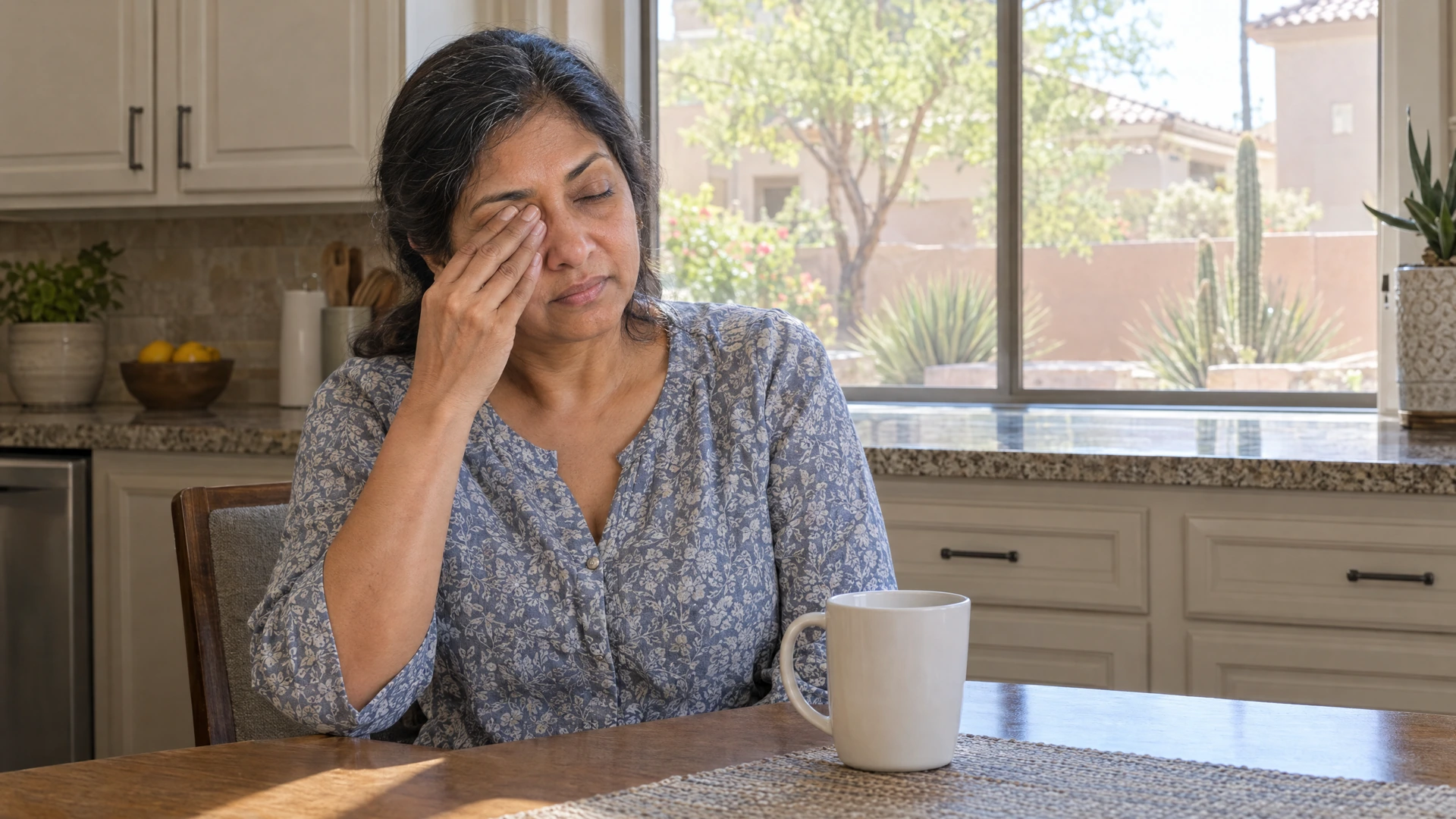
    South Asian woman rubbing one eye beside a coffee mug, dry eye care in Summerlin

    TLDR: Book dry eye care in Summerlin when discomfort keeps returning or interrupts your reading and work. An optometrist checks the cause and decides whether you need treatment or referral. Red or painful eyes and sudden vision changes need care right away.

    Answer: Arrange an eye exam in Summerlin when burning or grittiness keeps returning despite self-care. Your symptoms, tear function and eyelids help me decide the next step. Seek care right away for red or painful eyes, sudden vision changes, light sensitivity with pain, or sudden intense eye pain with nausea.

    You close your book halfway through a chapter. At breakfast in your Summerlin kitchen, the coffee sits untouched while you rub a stinging eye. Stop shopping the eye drop aisle for an answer. Your discomfort keeps coming back for a reason, and an exam is how we investigate it.

    I reviewed 51 primary sources across five research lenses for this guide, and no single test establishes a dry eye diagnosis. Your symptoms and examination belong together, as the AAO Dry Eye Preferred Practice Pattern explains below. My approach to dry eye treatment starts with a clear decision: what needs attention now, and what belongs in an ongoing plan.

    When Is It Time for Dry Eye Care in Summerlin?

    White man blinking hard while reading by a window, dry eye care in Summerlin
    A man pauses over a book beside a window.

    Book when discomfort keeps interrupting you, whether it is the book you put down, the work you leave unfinished, or the afternoon you spend blinking hard. You need no medical words to book. “My eyes burn and I stop reading” tells me plenty.

    Give self-care a clear stopping point. Contact an eye care provider promptly when your eyes fail to improve within a few days, as MedlinePlus dry eye guidance advises below. Repeatedly buying another bottle puts off the evaluation. Make the call and explain what keeps happening.

    Your call starts with the problem. “I need new glasses” leaves out the burning which brought you to the phone. A direct description helps my team understand why you want a visit. These details are enough to begin:

    • What you feel, such as grittiness or burning.
    • When the discomfort began and whether it keeps returning.
    • Whether it interrupts reading, work or another part of your day.
    • Which eye drops you have tried and whether they helped.

    You deserve an explanation for recurring discomfort. I believe a useful visit starts with what your eyes are costing you in daily life. Whether you are reading at home in The Paseos or finishing work before dinner in Downtown Summerlin, name the interruption. That gives our conversation a purpose.

    When Should Your Symptoms Bypass a Routine Visit?

    Your next step is immediate care when an eye turns red or painful. MedlinePlus dry eye guidance also advises contacting a provider right away for flaking, discharge or a sore on the eye or eyelid, an eye injury, a bulging eye or a drooping lid. Wearing contacts? Take them out and get care right away when your eyes turn light sensitive or painful. These changes belong outside the routine appointment queue.

    Sudden intense eye pain, nausea, a red eye or blurry vision are warning signs of angle-closure glaucoma, according to the National Eye Institute glaucoma guide, and any of these symptoms means you should go to a doctor or emergency room right away. Do not wait for the whole pattern to appear.

    A red, painful eye with blurred vision is a medical emergency, as MedlinePlus vision guidance explains. Get emergency help right away when this happens to you.

    What Does the Optometrist Check?

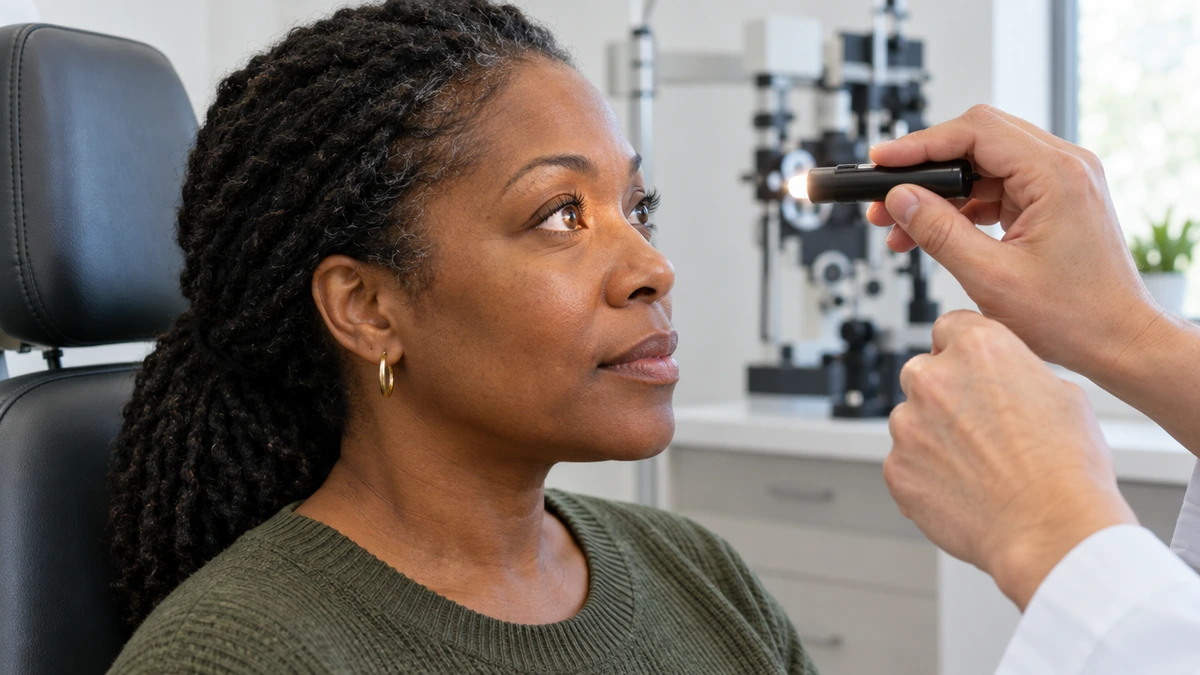
    Black woman in an exam chair with a doctor’s hands holding a small light, dry eye care in Summerlin
    A clinician holds a small light near a seated woman’s eye.

    Your examination should explain the next step. A comprehensive eye exam reaches beyond the glasses prescription. I put your history beside the findings, then explain what they mean for your eye health. The goal is a decision you understand.

    Your tear film is the thin coating over your eye. I check how it behaves and how your eyelids look, side by side. The National Eye Institute dry eye guide describes checks of tear quantity, evaporation and eyelid structure, and warns that untreated severe dry eye sometimes damages the cornea. Most people with dry eye have discomfort without vision loss.

    The details of your day matter. A chapter read beside a window in Sun City and a long work session in Las Vegas give me useful context for your symptoms. I want to know what interrupts each activity and what helps you resume it. For the environmental side, my guide explains why Las Vegas air dries out your eyes.

    Part of Your EvaluationWhat It Helps Me UnderstandWhat You Gain
    Symptoms and historyWhen discomfort occurs and what makes it worse.A visit focused on your daily problem.
    Tears and eyelidsTear quantity, evaporation and eyelid structure.An explanation of the findings behind your plan.
    Response to previous careWhether treatment has helped and whether referral is needed.A clear next step when symptoms persist.

    Your care needs a next step when treatment fails. Under the AAO Dry Eye Preferred Practice Pattern, moderate or severe pain, lack of treatment response, corneal ulceration or vision loss calls for evaluation by an ophthalmologist. I refer you to an ophthalmologist when your eyes need one. Referral belongs in good eye care.

    You should leave knowing what comes next. I want every recommendation to have a clear reason and every referral to have a clear purpose. Before you leave, we should be able to name the problem being addressed and the next decision. An unexplained list of products leaves too much work to you.

    Does Dry Eye Point to Something Else?

    Your general health belongs in this conversation. The National Eye Institute causes guide identifies diabetes, thyroid problems, lupus and Sjögren syndrome as possible causes of dry eye, along with some medicines for colds, allergies, depression and high blood pressure. Tell me about your diagnoses and medicines. The desert is only part of the history.

    Your dry mouth matters too. Dry eye together with daily dry mouth for over 3 months should prompt referral for possible Sjögren syndrome, according to the 2017 TFOS DEWS II diagnostic report. Tell me when this is happening to you. A symptom outside the eye still belongs in your eye history.

    Keep taking prescribed medicines as directed. A suspected side effect needs a conversation with your prescriber before any change. The medicine name and when you started it give that conversation a useful starting point. We need the whole picture.

    Your persistent symptoms need a broader look. Suspected systemic disease or moderate to severe dry eye which fails to respond warrants timely referral. Depending on your findings, that evaluation involves an ophthalmologist and sometimes a rheumatologist or internist. Tell me about dry mouth and joint pain, swelling or stiffness promptly.

    Does Medical or Vision Insurance Apply?

    Couple speaking with a front desk team member seen from behind, dry eye care in Summerlin
    A couple talks with a team member at the front desk.

    Start with why you need the visit. According to Prevent Blindness insurance guidance, glasses and contact prescriptions generally fall under vision benefits, while disease-related eye care generally goes through medical insurance. Payment still depends on your plan, network, deductible and medical necessity. Burning eyes belong in the booking conversation. Lead with the concern you want evaluated.

    Get the benefit details before your visit. My team verifies benefits by phone, using your specific plan information. My team accepts medical and vision plans including Medicare, Anthem, Aetna, United Healthcare, VSP and EyeMed. Your individual benefits determine what applies.

    Exam coverage and treatment coverage are two separate questions. My team checks each one. Give my team both medical and vision insurance details when you have both. Then work through the questions in order:

    1. Explain the symptoms prompting your visit.
    2. Confirm which plan applies to the planned examination.
    3. Clarify the benefits for any proposed treatment separately.
    4. Resolve outstanding benefit questions before assuming a service is included.

    Still unsure? Ask my team what they still need to confirm with your plan. You should hear which service is covered and what is still open.

    How I Approach Dry Eye Care in Summerlin at Festival Plaza

    Woman walking toward a glass-front boutique in Downtown Summerlin, dry eye care in Summerlin
    A woman walks toward a glass-front boutique in a Summerlin plaza.

    Your visit starts with your story. I am Dr. Amel Youssef, OD, founder and optometrist at Vision by Amel, and my exam moves from patient history through digital diagnostics to my evaluation and your plan. Visionix diagnostics include digital refraction, eye pressure measurement, retinal imaging and corneal mapping. I connect those findings to the concern which brought you in.

    I plan dry eye treatment around your eyes. Artificial tears or targeted prescription eye drops are among the options in my plans, depending on your findings. The appointment is the place to understand why a recommendation fits. My dry eye treatment guide explains the treatment options in more detail.

    Set your map to 2010 Festival Plaza Dr, Suite 195, Las Vegas, NV 89135, for my Downtown Summerlin location at Festival Plaza. My practice sits minutes from The Vistas, The Paseos, Sun City and Red Rock Country Club.

    Fit the visit into your week. My office is open seven days, Monday to Saturday 9 am to 6 pm and Sunday 11 am to 5 pm. Book online or call (702) 858-4362.

    Frequently Asked Questions About Dry Eye Care in Summerlin

    Which Eye Symptoms Are an Emergency?

    A red, painful eye with blurred vision needs emergency care right away. Any red eye needs a diagnosis, so contact your eye doctor right away instead of treating it yourself. Your next step is an examination, not another bottle of drops.

    Can Dry Eye Be a Sign of Another Disease?

    Yes, it sometimes accompanies diabetes, thyroid disease or autoimmune illness. Repeated salivary gland swelling or needing liquids to swallow dry food are additional clues for possible Sjögren syndrome. Tell me about either symptom so your evaluation includes the right referral decision.

    Can My Medications Cause Dry Eyes?

    Yes, some cold, allergy, depression and blood pressure medicines cause dryness as a side effect. A change in medicine is a prescriber decision, so keep taking yours as directed until you discuss it. Include nonprescription products in that conversation too.

    Why Do My Eyes Water If They Feel Dry?

    Excess tearing sometimes follows periods of dryness. Both sensations belong in your symptom history. Explain whether watering follows the gritty feeling so I hear the sequence as well as the symptoms.

    Do I Need a Referral to Book an Eye Exam?

    You do not need a referral to book an eye exam at Vision by Amel. Contact my team directly, even when you have never had dry eye evaluated before. A referral I arrange after examining your eyes serves a different purpose: getting the additional evaluation your findings require.

    Book My Eye Exam Call (702) 858-4362

    Like this article? Add Vision by Amel as a preferred source, and you are more likely to see our articles in Google’s Top Stories.
    Add as a preferred source on Google

  • Why Las Vegas Air Dries Out Your Eyes, and What You Can Do

    Why Las Vegas Air Dries Out Your Eyes, and What You Can Do

    Why Las Vegas Air Dries Out Your Eyes, and What You Can Do

    Middle Eastern woman squinting in wind on a palm-lined sidewalk, illustrating dry eyes in Las Vegas

    TLDR: Desert air and wind speed tear evaporation, making dry eyes in Las Vegas harder to ignore. Point your vents away, consider a humidifier at home and wear wraparound sunglasses outdoors. Persistent discomfort deserves an eye exam.

    Answer: Low humidity in Las Vegas speeds moisture loss from your tear film, and wind adds airflow across your eyes. Start with the air you control: redirect car vents, move out of household drafts and consider a humidifier. Wear wraparound sunglasses outside, and have persistent symptoms evaluated so the weather does not become your only explanation.

    The sidewalk is windy. Your car is cool. Yet your eyes sting through both parts of the trip home to Summerlin. You cannot change the desert, but you have control over the air hitting your face from the driver’s seat to your pillow.

    I reviewed 51 primary sources across five research lenses for this guide, and low humidity increases tear evaporation. The 2017 TFOS DEWS II report adds that moving air across your ocular surface, the exposed surface of the eye, speeds that loss too. My approach to dry eye treatment puts those everyday conditions alongside your symptoms.

    Your desert climate has numbers behind it: NOAA’s Las Vegas climate summary gives 1991 to 2020 airport humidity normals of 17% in June, falling to 11% at 4 p.m. local standard time, compared with 31% annually and 48% in January. These are long-term airport figures, not readings for Summerlin homes. The same summary describes Las Vegas as the driest major metro in the continental United States, storm gusts most often in spring and fall, dust and sand in strong winds, and airport winds near 10 mph from April through June. The wind speed is a 40-year mean.

    Why Do Dry Eyes in Las Vegas Flare Up in the Car?

    Man in a parked car angling the dashboard vent away from his face, a habit for dry eyes in Las Vegas
    Angle the vent away from your face while you are still parked.

    Turn the vent away from your face. A cool cabin still has moving air, and a dashboard vent puts the stream close to your eyes. On the 215, cooling down after a hot parking lot walk feels welcome. Keep the cool air and change its direction.

    You have a practical place to start: the American Academy of Ophthalmology says changing airflow at home, at work and in the car may help dry eye, along with humidifying the air and blocking drafts with side shields on your glasses. Pointing vents away from your face applies that advice to the driver’s seat. Make the adjustment while parked. Then give the road your full attention.

    1. Sit in your usual driving position before setting off.
    2. Feel where the dashboard air lands, including the vent nearest the side window.
    3. Angle the vents away from your eyes while keeping the cabin comfortably cool.
    4. Check the open window too, since it changes the airflow around your face.

    Hunt down the drafts in your day. Start with the car, then check the chair where you read and the fan aimed at your pillow. The aim is simple: stop sitting directly in the stream. Use the table to make a targeted change where you spend time.

    Everyday SettingAirflow to CheckPractical Adjustment
    Driving across Las VegasDashboard vents pointed at eye levelRedirect them before driving
    Reading at homeA nearby fan or overhead ventMove your chair out of the stream
    Settling into bedAir blowing toward your pillowChange the fan’s direction
    Walking outsideWind reaching around your glassesChoose wraparound coverage

    Same trip, same scratchy eyes? Check the seat you sit in. Your usual vent setting might feel different when someone else drives and you sit closer to the side outlet. Adjust the air for the seat you occupy before the car moves.

    Does a Humidifier Help Your Eyes at Home?

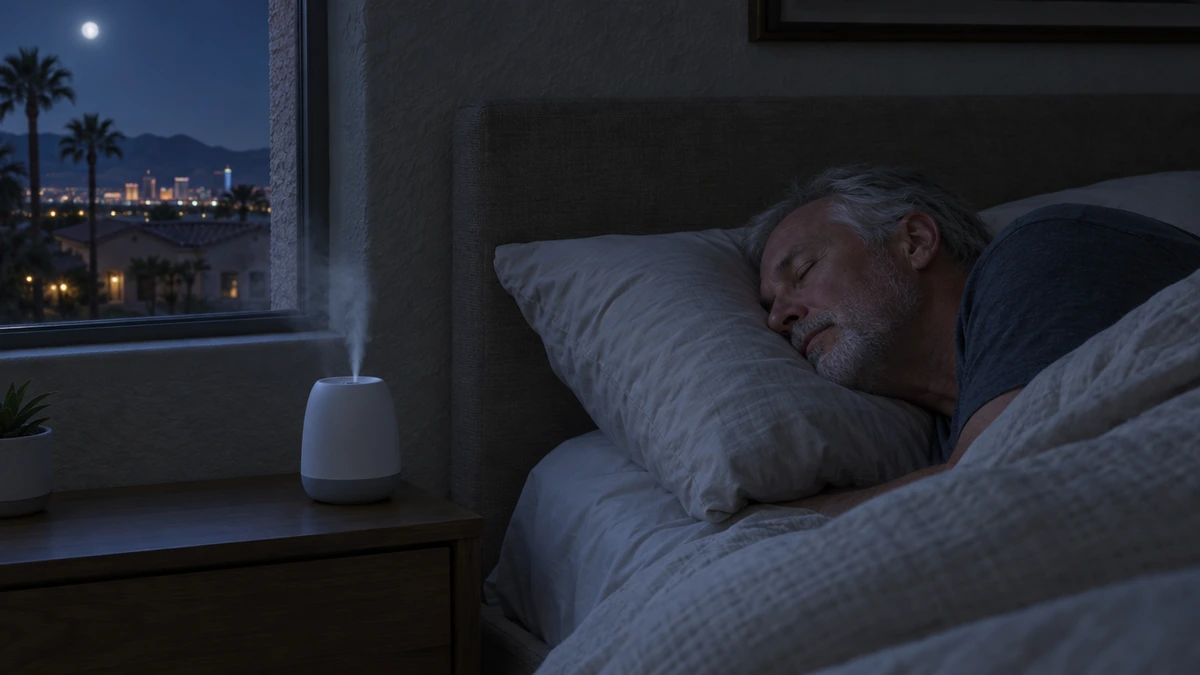
    Older white man asleep beside a small humidifier, illustrating dry eyes in Las Vegas
    A bedside humidifier releases mist while a man sleeps.

    A humidifier puts moisture back into dry bedroom air. Treat it as a comfort tool alongside your care plan. Start with the room where you want that extra moisture, rather than treating the entire house as one space. A quiet bedroom and a living room with a running fan have different setups.

    The evidence for adding a humidifier to your dry eye treatment plan has limits: the 2017 TFOS DEWS II management report identified only one controlled study supporting local humidifying devices at that time. That dated review is a reason to keep expectations modest, not a count of all research published since.

    Start at pillow level. Lie where you normally sleep and notice whether the fan blows across your face, then check the nearest vent. Follow the humidifier’s cleaning and placement instructions. Give the device a suitable place of its own instead of crowding it against your bedding.

    What did researchers measure? In a randomized crossover trial of 44 computer users published in Optometry and Vision Science, one hour beside a desktop humidifier improved reported comfort for 36% of participants, compared with 5% without it, and lengthened median tear breakup time by 4.0 seconds. The study shows short-term comfort and tear stability, not what a humidifier will do for your eyes over months. I favor changes you will keep using. Think about filling, cleaning and placement before choosing where it goes.

    How Should You Protect Your Eyes From Las Vegas Wind?

    Latino hiker wearing wraparound sunglasses on a red rock trail, illustrating dry eyes in Las Vegas
    Wraparound sunglasses provide coverage around the sides of your eyes.

    Take the wind seriously on ordinary errands. The airport wind figures above give your outdoor plans some local context, but you need no wind-speed measurement to notice air blowing around your glasses. Have your outdoor coverage ready before you leave.

    Put your wraparounds beside your keys. A walk across an exposed Summerlin parking lot counts as time outdoors, even when a red rock trail is nowhere on the day’s agenda. Look for coverage around the sides as well as the front. Wind reaches your eyes from more than straight ahead.

    Fit matters in daily eye care. Turn your head while trying the frame and check how it sits beside your temples. A close shape needs to feel comfortable enough for the walks you take. Choose with your ordinary day in mind, from errands at Festival Plaza to the path back to your car.

    What Changes Help Dry Eyes in Las Vegas Between Stops?

    Filipino woman drinking water at an office desk by a sunny window, illustrating dry eyes in Las Vegas
    A woman pauses for water beside a sunny office window.

    Your office air runs dry too: the American Academy of Ophthalmology explains that indoor humidity drops when heating or air conditioning works harder against outdoor temperature extremes. Use your next water break to find the vent aimed at your chair. Keep the room cool while moving out of its direct draft.

    A short stay in dry air matters in the research: the 2017 TFOS DEWS II pathophysiology report describes increased blink rate, discomfort and inflammatory markers in tears after as little as 90 minutes in low humidity. That finding gives you a reason to consider time indoors as well as time outside. It is an exposure-study result, not a countdown to symptoms for everyone who enters an office.

    Look at the room where you spend that time. An open-plan office, a shared living room and a bedroom each leave you different choices about where to sit and which vent to adjust. Moving a chair away from a fan takes less planning than rearranging an entire room. Leave room for the people sharing that space. I want your home adjustments to solve a specific problem you have noticed.

    A turned vent is a start. A sting that keeps coming back needs an exam. My guide to dry eye treatment options explains the next part of the conversation about your eye health.

    When Does Desert Dryness Need Care Today?

    Do not wait for a less windy day when your eye is red or painful, or you notice discharge or a sore on the eye or lid: contact an eye care provider right away, as MedlinePlus advises. Its separate advice for eyes that fail to improve with self-care within a few days is to contact your provider promptly. Give those symptoms priority over another change to the room.

    How I Connect Your Symptoms With Your Surroundings

    Your commute belongs in the conversation. As your optometrist, I start with your history, including the car vents, the fan at home and the places where discomfort interrupts your day. Tell me what happens in plain language. “The air hits my face all the way home” gives us a concrete starting point.

    Your comprehensive eye exam gives us time to connect the findings with the symptoms you describe. Environment habits are among the options I consider when we discuss your plan at an eye exam visit.

    You will find me at Vision by Amel in Downtown Summerlin, at 2010 Festival Plaza Dr, Suite 195, Las Vegas, NV 89135. My team takes bookings online or by phone, with no referral needed for an eye exam. Choose a visit so we have time to examine your eyes and discuss what comes next.

    Frequently Asked Questions About Dry Eyes in Las Vegas

    What Is the Average Humidity in Las Vegas?

    NOAA’s annual airport normal is 31%, but the June and January figures above show why you should specify the season. For your own room, record the location and hour alongside a humidity reading before comparing it with those outdoor figures. Keep an afternoon reading separate from a monthly average.

    Do Humidifiers Help Dry Eyes?

    It is a reasonable comfort measure to discuss for your room, with the short trial above setting the limits of the evidence. Before choosing one, decide where it would sit and who would keep up with its care. Follow its cleaning instructions, and judge the effort alongside the rest of your care plan.

    Is Las Vegas Wind Bad for Dry Eyes?

    Yes, moving air speeds evaporation from your tear film. A gusty walk and a steady household draft both put air across your eyes, so consider each when you change your surroundings. Wind protection matters on ordinary errands as well as longer outings.

    Should I Turn Off My Air Conditioning If My Eyes Feel Dry?

    No. Keep your room cool and point the vents away from your face. Check the outlet above or behind your usual seat too, where the source of a draft is easier to miss. Move the chair when the vent itself is hard to redirect.

    Do Wraparound Sunglasses Help Dry Eye?

    They help shield your eyes from wind coming around the sides. When you wear prescription glasses, discuss a wraparound shape or side protection suited to your lenses. Try the fit while looking sideways as well as straight ahead.

    Does Living in Las Vegas Mean I Have Dry Eye?

    No. Your ZIP code is not a diagnosis. Tell me when your symptoms hit and when they ease, including time away from drafts. Your surroundings belong in the history, and I evaluate your eyes before choosing a plan.

    Book My Eye Exam Call (702) 858-4362

    Like this article? Add Vision by Amel as a preferred source, and you are more likely to see our articles in Google’s Top Stories.

    Add as a preferred source on Google