
Your Baby’s First Eye Exam in Las Vegas: What Parents Should Know
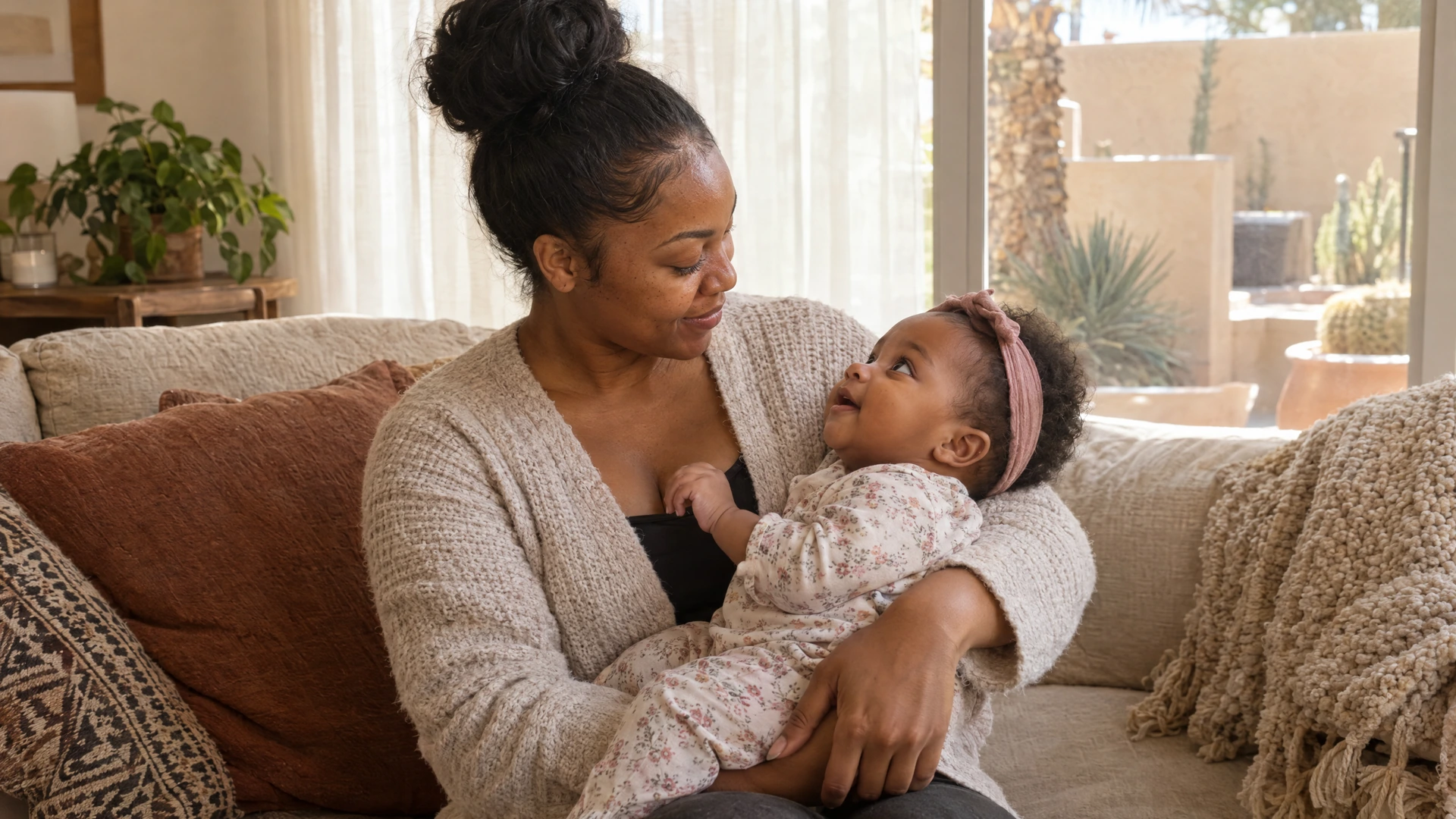
TLDR: Your baby’s eye care starts in the first days of life. This baby eye exam guide shows you when the first full exam fits, what it checks, and the warning signs that mean you call an eye doctor right away.
Answer: The American Optometric Association recommends your baby’s first comprehensive eye exam between 6 and 12 months of age. Your pediatrician checks your baby’s eyes from birth with a red reflex test. In Las Vegas, call an eye doctor right away for a white pupil, an eye that turns all the time, or discharge and puffy red eyelids in a newborn.
Your baby cannot read an eye chart, and does not need to. You bring the birth history and what you have seen at home, from the stroller walk to the 2 am feed. That is where a great first visit starts. At home in Las Vegas, you settle into a bedroom chair for that feed while a bottle warms nearby. Those quiet moments give you something specific to describe when you call.
I reviewed 113 primary sources across five research lenses for this guide, and infant eye screening starts at birth. Start the booking conversation with your baby’s age and history. My eye examination page explains our practice’s general exam process, while this guide stays focused on infancy.
When Should You Plan a Baby Eye Exam?

The American Optometric Association recommends your baby’s first comprehensive eye exam between 6 and 12 months of age, even when nothing looks wrong. Put that recommendation on your list for the next well-child visit. Include any existing screening results in the discussion.
AAO and AAPOS instead emphasize screening from the newborn nursery, including a red reflex check, and referral for concerning findings or risk factors rather than routine comprehensive exams for every healthy child without symptoms. File your pediatrician’s screening record alongside any eye examination report. Keep both available when discussing follow-up.
At a newborn red reflex check, a trained clinician looks for the reflection of light from inside your baby’s eyes. An abnormal red reflex needs urgent consultation, so follow the referral right away. Under the same AAO and AAPOS guidance, an ophthalmologist should examine high-risk infants, including those at risk of retinopathy of prematurity or with a family history of childhood cataract, glaucoma or retinoblastoma.
Born early? Family history of childhood eye disease? Tell your pediatrician first, because those babies need an ophthalmologist’s exam, not a routine date. Mention any existing referral when you call an eye care office. I would rather hear your concern early than have you wait for the perfect appointment age.
How Do You Prepare Your Baby for the Visit?
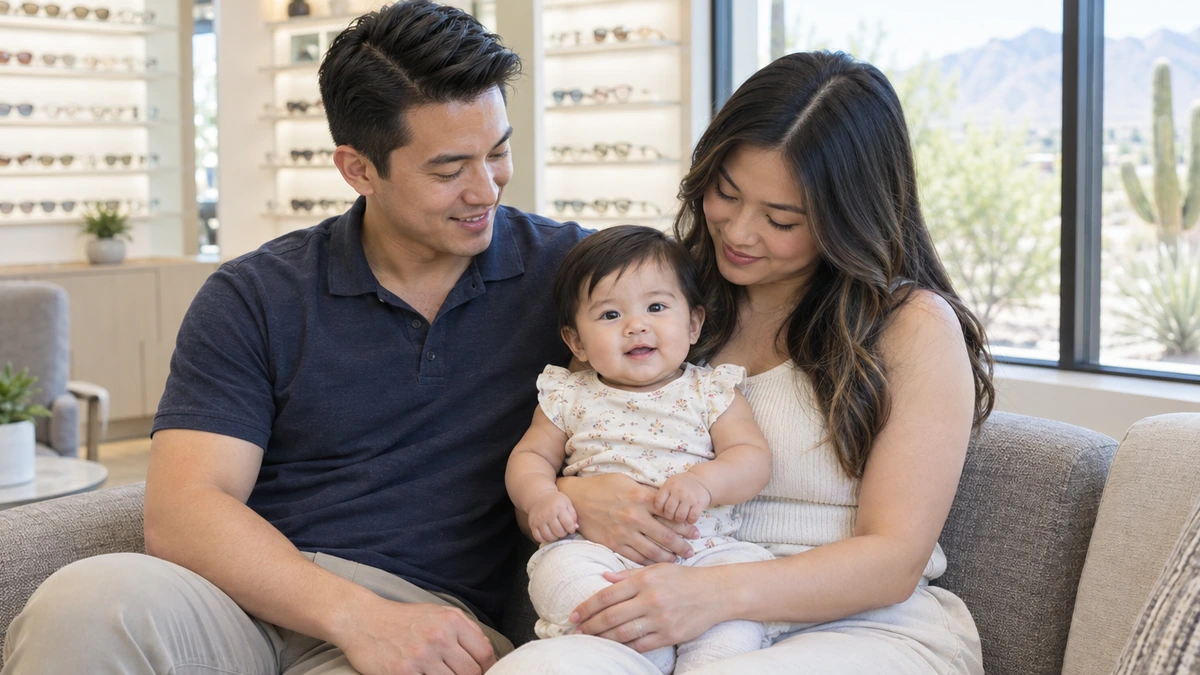
Pack for your baby first. A diaper bag, familiar comfort item and feeding supplies belong beside the insurance card. When arranging the visit, describe your baby’s usual nap and feeding pattern and ask how much time to reserve.
- Share the basics. Your baby’s age and the reason for the visit help my team pick the right appointment.
- Gather the history. Bring birth records you already have, screening results, medication details and any referral instructions.
- Describe what you noticed. Note which eye, when the change began and whether it happens constantly or comes and goes.
- Plan the trip. Leave room in your schedule for feeding, changing and settling your baby after the drive.
- Write your questions. Include who will examine your baby, what the visit covers and how follow-up will be arranged.
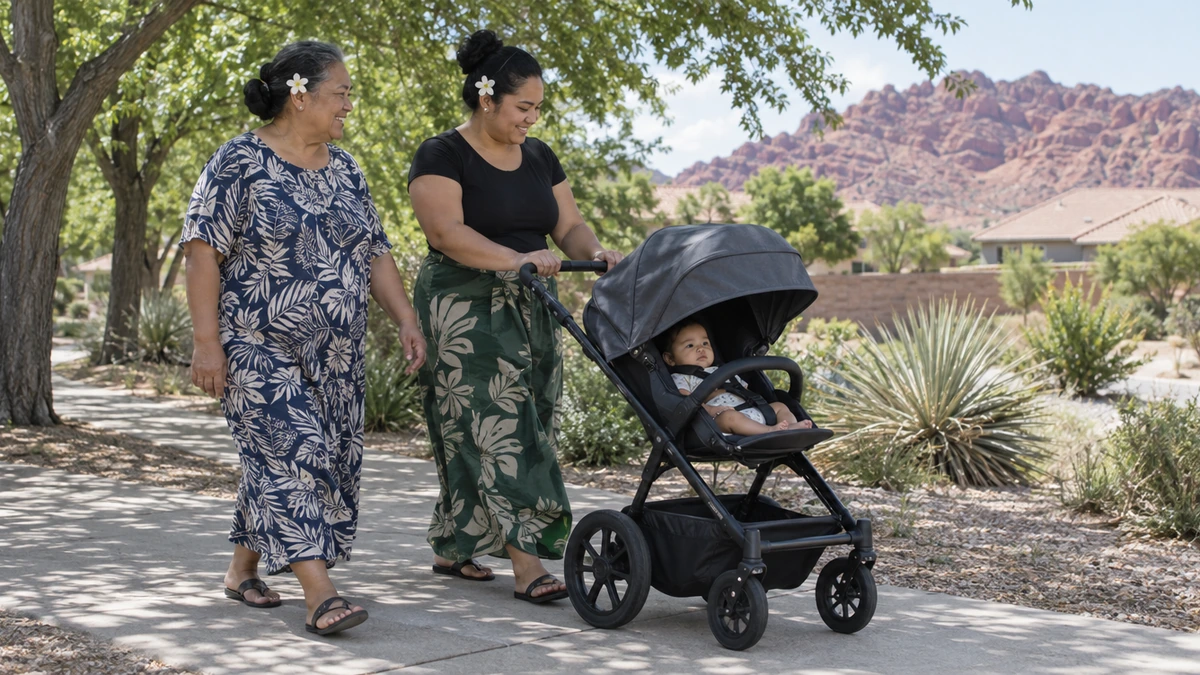
Share the load. On a shaded path at a Summerlin park, you push the stroller while a grandparent leans down to greet your baby. Later, compare what each of you noticed, such as whether your baby watched that familiar face. When you come together for the visit, agree on who will describe the concern and who will hold the bag.
Skip the rehearsal. Bring your baby as they are, with the information the office requested. For an older sibling accompanying you, my guide to a child’s first visit in Summerlin offers preparation aimed at children old enough to discuss the appointment.
What Does a Baby Eye Exam Check?
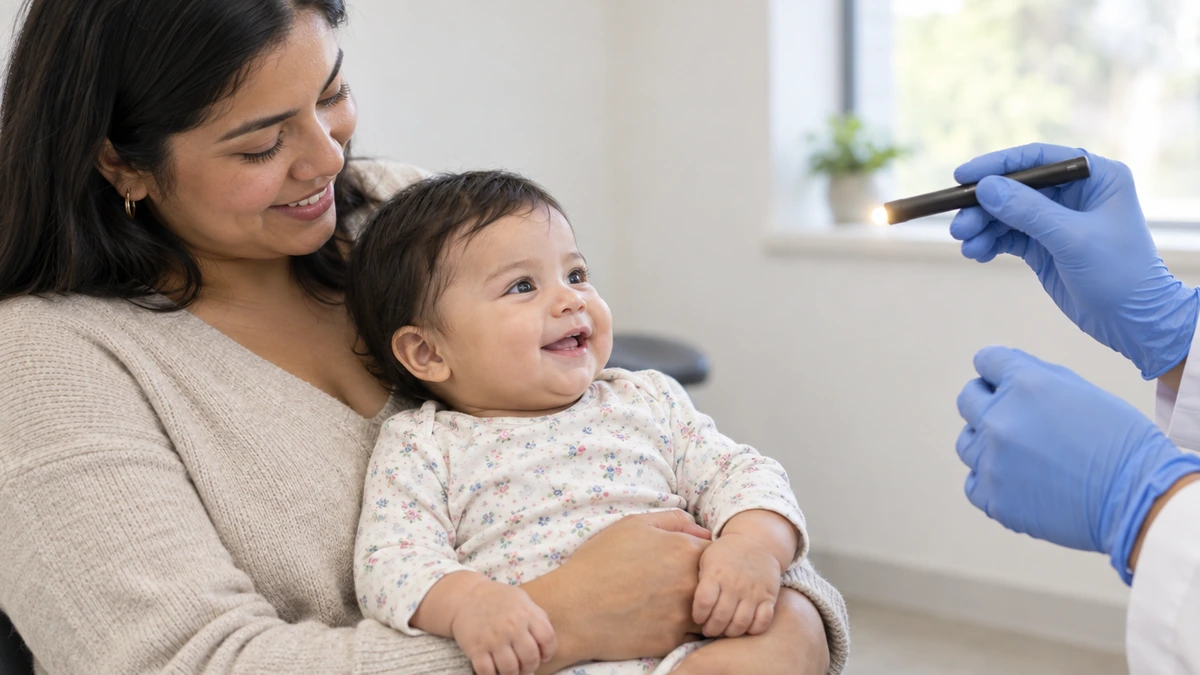
The AOA infant vision guide describes checks for nearsightedness, farsightedness, astigmatism, eye movement, alignment and overall eye health during your baby’s exam. Use those areas to organize your questions. Start with the concern you brought from home, then ask what the findings mean.
| Area of the Exam | What to Ask About Your Baby |
|---|---|
| Focusing and refraction | Did the check find a focusing issue, and what happens next? |
| Eye movement | What did you observe as my baby’s eyes moved? |
| Alignment | Did the eyes appear aligned during the examination? |
| Overall eye health | Was anything found that needs further evaluation? |
| Follow-up plan | Who should we see next, and when should we arrange it? |
You deserve plain English. Visual acuity, refraction, amblyopia and strabismus should each come with what it means for your baby, today. Before leaving, repeat the next step aloud so everyone has the same plan.
Leave space for your questions in a pediatric eye exam. Write down any recommendation for prescription glasses, another examination or an ophthalmology appointment, including who will arrange it. My broader pediatric eye exam guide covers the wider picture of children’s vision as your child grows.
Which Eye Changes Need Prompt Care?
Call an eye doctor right away if your baby has a white or gray-white glow in the pupil, in person or in a flash photo, because it has several possible causes and some are serious, as AAPOS explains. Save the photo to show at the examination. Seek care now rather than waiting to collect more pictures.
Discharge from your baby’s eye or puffy red eyelids means you call a doctor now, says the National Eye Institute. Say it is urgent, and skip the online booking form. Mention when the discharge or swelling began.
Brief, on-and-off wandering is common in your baby’s first few months. Any crossing after about 4 months needs a check, and constant crossing is worrisome at any age, says AAPOS. An eye that turns all the time, at any age, needs an eye exam right away. Describe whether the eye stays turned or straightens between episodes.
Have your baby’s tracking checked promptly if they do not follow well after 3 months, the referral threshold in AAPOS screening recommendations. Explain what you see when your baby watches a face or moving toy. That observation is a reason for assessment, not a diagnosis you need to make at home.
Call an eye doctor right away if your baby turns away from ordinary light or squeezes both eyes shut indoors. The AOA lists extreme light sensitivity among infant warning signs, along with excessive tearing and red or crusted lids. Describe what happens in the room’s usual light when you call.
How Do You Handle Coverage and the Next Visit?
Check benefits before the trip. Vision by Amel accepts Nevada Medicaid, and my school screening guide explains how Healthy Kids handles referrals. Have your child’s member information ready for the benefits check.
With any plan, get specific. Confirm your baby’s enrollment, the participating provider and which benefit applies to the proposed visit. Request an explanation of your share of the bill and whether further testing needs separate approval.
Make the next step easy to find. Store your visit summary with the pediatric records, and put any follow-up date in the calendar you share with other caregivers. Back home after a stroller walk, you should have the next appointment and contact details within reach.
I favor a written next step over a vague instruction to watch and wait. Before leaving, make sure your plan says what to watch, whom to contact and when to return. Keep the contact details beside those instructions.
How I Approach Your Family’s Visit at Vision by Amel
I am Dr. Amel Youssef, founder and optometrist at Vision by Amel. Children’s eye care is central to my practice, and Summerlin families visit every week. Tell my team your baby’s age and any note from your pediatrician when you call, and we will tell you the right next step for a baby that age.
My team verifies your benefits by phone before the visit, and we accept Nevada Medicaid along with several medical and vision plans. Benefits vary with your plan. Have your baby’s insurance details available when you call, and bring the same information to the appointment.
You will find us at 2010 Festival Plaza Dr, Suite 195, Las Vegas, NV 89135, in Downtown Summerlin at Festival Plaza. Book online or call (702) 858-4362, seven days a week. We open Monday to Saturday, 9 am to 6 pm, and Sunday, 11 am to 5 pm.
Picture your Sunday at Festival Plaza: the stroller is folded in the trunk, the diaper bag is on your shoulder, and your baby is ready for a feed. Leave room for that pause when you plan a routine visit. My team will give you the appointment details before you make the trip.
Frequently Asked Questions About Baby Eye Exams
How Do You Check a Baby’s Eyes if They Can’t Talk or Read?
No letters are needed for your baby’s eye examination. Focus, eye movement and alignment help assess vision, alongside checks of eye health. Even before speech, the newborn red reflex check looks for reflected light from inside the eyes.
When Should My Baby Start Following Toys With Their Eyes?
Around three months, your baby should begin following moving objects with their eyes and reaching for things, according to the AOA. AAPOS recommends having poor tracking checked after 3 months. Note whether you see the same response to a face and a moving toy, and share those observations at the assessment.
Why Does My Baby’s Eye Water All the Time?
Excessive tearing can point to a blocked tear duct, according to the AOA. An assessment of your baby’s watering helps identify the cause. Discharge or puffy red eyelids means you call a doctor now, as the National Eye Institute advises.
Should I Bring a Video of the Eye Movement?
Bring an existing video or photo and note when you took it. Keep the original available, and tell me what you noticed when you recorded it. Describe what happened before and after the recording so our discussion includes more than a single moment.
Does Nevada Medicaid Cover My Baby’s Eye Care?
Vision by Amel accepts Nevada Medicaid, and my team verifies your benefits by phone before the visit. Your plan determines the benefits available for the proposed appointment. For Healthy Kids referral rules, read my guide to school screening and eye exams.
Book My Eye Exam Call (702) 858-4362
Like this article? Add Vision by Amel as a preferred source, and you are more likely to see our articles in Google’s Top Stories.
