Category: Children’s Eye Exams

When to book your child’s eye exam, how often to return and what happens at each age.

  • Contact Lenses for Kids and Teens in Las Vegas: Is Your Child Ready?

    Contact Lenses for Kids and Teens in Las Vegas: Is Your Child Ready?

    Contact Lenses for Kids and Teens in Las Vegas: Is Your Child Ready?

    Teen girl holding a contact lens case beside her mother at a kitchen table, contact lenses for kids

    TLDR: Readiness for contact lenses for kids rests on hygiene, motivation and your supervision, with no fixed starting age. A contact lens fitting and a dependable care routine come before regular wear. A painful red eye in a lens wearer means remove the lenses and get care right away.

    Answer: No single birthday makes your child ready for contact lenses. Maturity, hygiene and motivation decide, and your supervision matters. In Las Vegas, an eye exam and a contact lens fitting show whether your child is ready. Daily disposables reduce some risks, yet water, sleep and a painful red eye still need firm rules.

    Your teen wants contacts before basketball season. You want to know who will remember the handwashing when practice runs late and homework waits at home. As an optometrist, I start with those ordinary decisions. I value a reliable routine more than an eager promise.

    I reviewed 168 primary sources across five research lenses for this guide, and readiness for contacts depends on maturity, hygiene and motivation. The American Optometric Association identifies those factors, sets no universal starting age and emphasizes your supervision. Start during your child’s comprehensive eye exam, using our eye exam services page to plan the visit.

    Are Contact Lenses for Kids a Good Fit for Your Family?
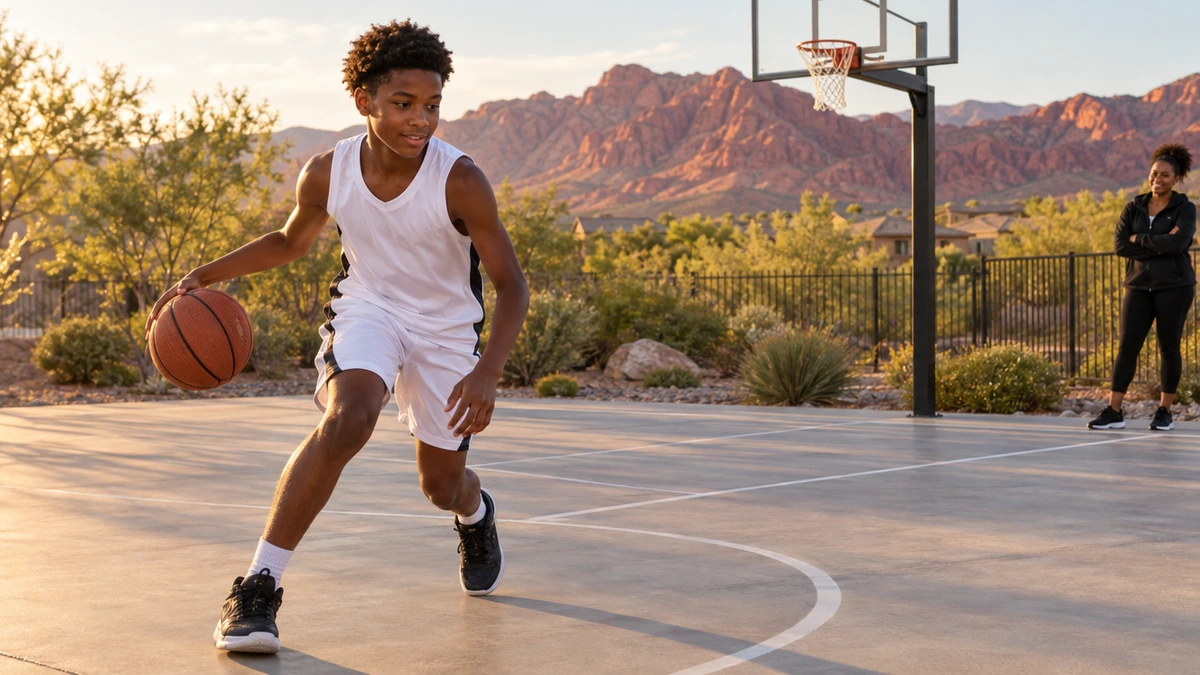
    Black teen boy dribbling on a Summerlin basketball court without glasses, contact lenses for kids
    A boy dribbles a basketball on a Summerlin court, no glasses on.

    Readiness shows up on a rushed school morning. Does your child wash up without bargaining over every step? Does your child speak up when something feels wrong? Those two answers tell you more than any birthday.

    On a Summerlin outdoor basketball court, your child stops mid-drill to push slipping glasses back up their nose. Contacts appeal because there is no everyday frame to adjust during play. Eye protection still belongs in the sports bag, and my sun and sports eyewear guide shows what to pack. The American Academy of Ophthalmology and American Academy of Pediatrics state that contact lenses offer no protection, so your athlete needs sport-appropriate protective eyewear over them.

    Use this table to check whether your child is ready. It translates readiness into things you have already seen at home. Work through the hesitant answers together before making contacts the next morning’s expectation.

    Readiness QuestionA Useful SignA Reason to Pause
    Who wants contacts?Your child wants to learn.The pressure comes from friends or adults.
    How does hygiene go?Your child follows the whole routine.Handwashing becomes a daily argument.
    How do they handle trouble?Your child speaks up and accepts help.They hide discomfort to stay in the game.
    Who supervises?You have a clear role at home and away.Each adult assumes someone else checked.

    A hesitant child deserves room to decide. You might be ready to move beyond glasses before your child wants to touch a lens. Let them explain what appeals to them and what worries them. I would rather revisit contacts later than turn lens handling into a daily argument.

    What Comes Before the First Pair?
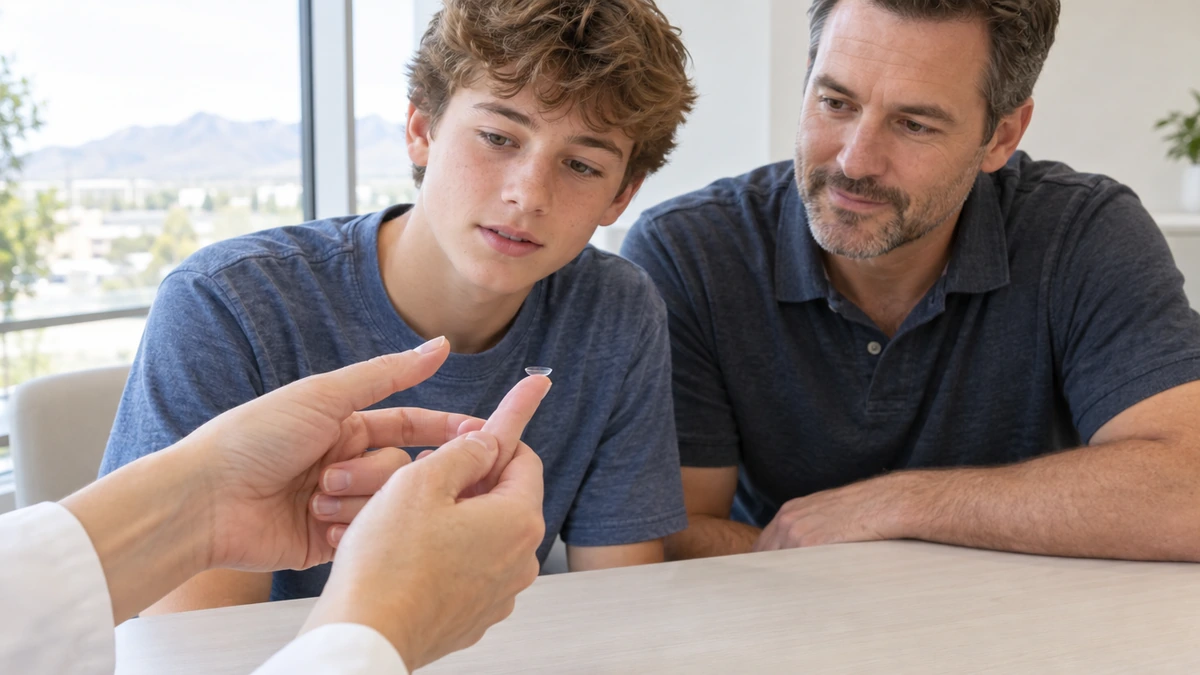
    Eye doctor hands showing a white teen and his father a lens on a fingertip, contact lenses for kids
    An eye doctor's hands show a teen and his father how to hold a lens.

    The fitting is where the plan gets real. Vision by Amel offers contact lens fittings, including daily disposables, and I weigh every lens choice against your child’s eye health. Sports, school or weekends only? Your child’s real week shapes the lens and the schedule.

    Use your visit to discuss the lens prescription and care instructions together. Start with what your child finds difficult. Your child needs room to speak, especially about touching their eyes or removing a lens. Let them describe the difficult part in their own words.

    The Food and Drug Administration says daily disposables reduce some risks because your child starts with a fresh pair each day. That benefit has limits. Handling habits still matter, even when there is no reusable lens to clean overnight.

    Daily disposable means use once and discard, according to the CDC, so your child should never save that pair for another day. Make disposal part of the routine before the first wear. A lens that looks clean has still been used. Agree who checks supplies before school trips and weekends away.

    Your child’s first visit deserves its own preparation. Our guide to a child’s first eye exam explains what to expect without crowding this contact lens decision. Read it together if the appointment itself feels unfamiliar. Leave time for your child to name their questions.

    Which Contact Lens Symptoms Need Care Right Away?

    A painful red eye in a lens wearer means one thing: take the lenses out and get care right away. Irritated red eyes, worsening pain, light sensitivity, sudden blurry vision, unusual watering or discharge all count, says the CDC, and each one means you call your eye doctor right away. Leave the lenses out until your eye doctor clears your child to wear them again.

    Explain this before the first game in contacts. Your child needs to know that eye pain ends lens wear, even during warmups or a close match. Skip the debate over whether they should finish practice. Getting care takes priority.

    When you call, describe the symptoms and say your child wears contacts. Tell me when the trouble started and whether lenses were worn during sleep or around water. Our pink eye guide for parents offers background on red eyes, but reading it should never delay care for these symptoms.

    Which Habits Matter Most With Contact Lenses for Kids?
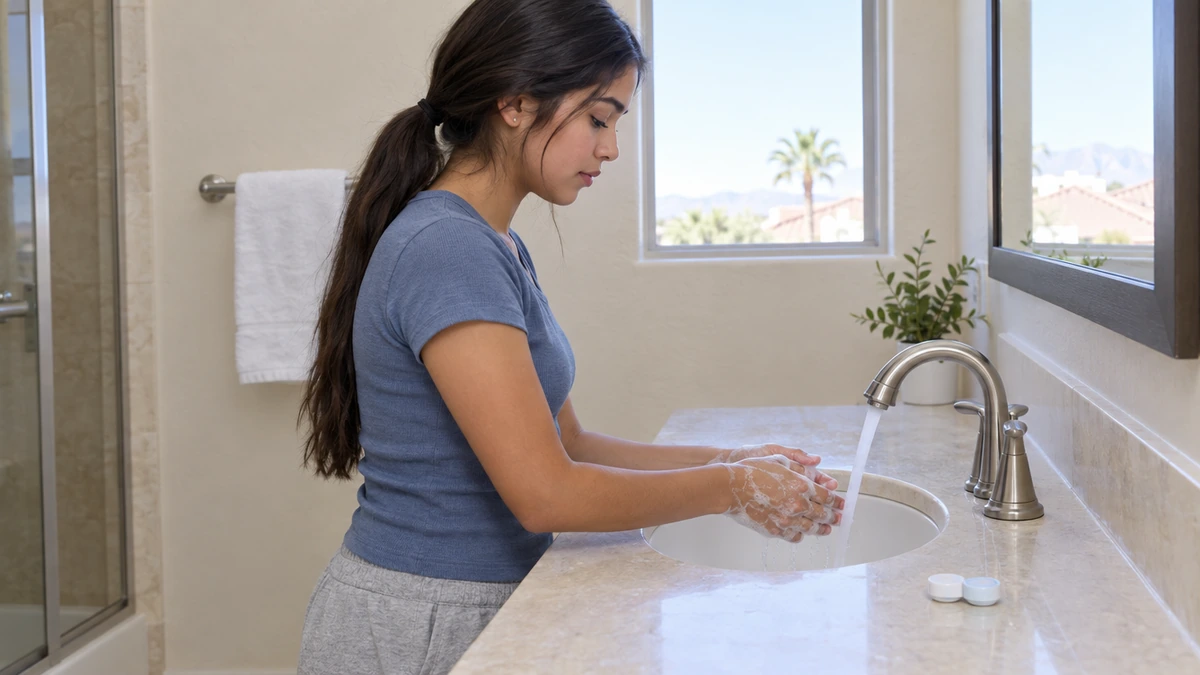
    Latina teen washing hands beside an untouched plain lens case, contact lenses for kids
    A teen washes her hands before she touches her lens case.

    Set the routine before the busy day. Your child needs clear instructions for hands, water, sleep and storage. Follow the sequence below with them until everyone knows their part. Give each step enough time.

    1. Wash hands with soap and water, then dry them completely with a clean cloth before touching lenses.
    2. Handle lenses with clean, dry hands. Follow the wear instructions given with the fitting.
    3. Remove lenses before swimming or showering. Keep lenses away from all water, including tap water used as a rinse.
    4. Take lenses out before sleep, including naps.
    5. For reusable lenses, follow the prescribed cleaning routine and use fresh solution. Never add fresh solution to old solution in the case.
    6. Replace a reusable lens case at least once every three months.

    These handwashing, water, sleep, solution and case rules come from CDC guidance for your child’s contact lens routine. Make the order easy to remember at home. The bathroom sink is for washing hands. Lenses stay clear of the running water.

    Put the case date on the family calendar, right beside the practice schedule, so your child’s case never outlives its three months. Review the cleaning steps together before every sleepover bag gets packed. Small habits, repeated daily, protect your child’s eyes.

    How Do You Share Responsibility With a Teen?
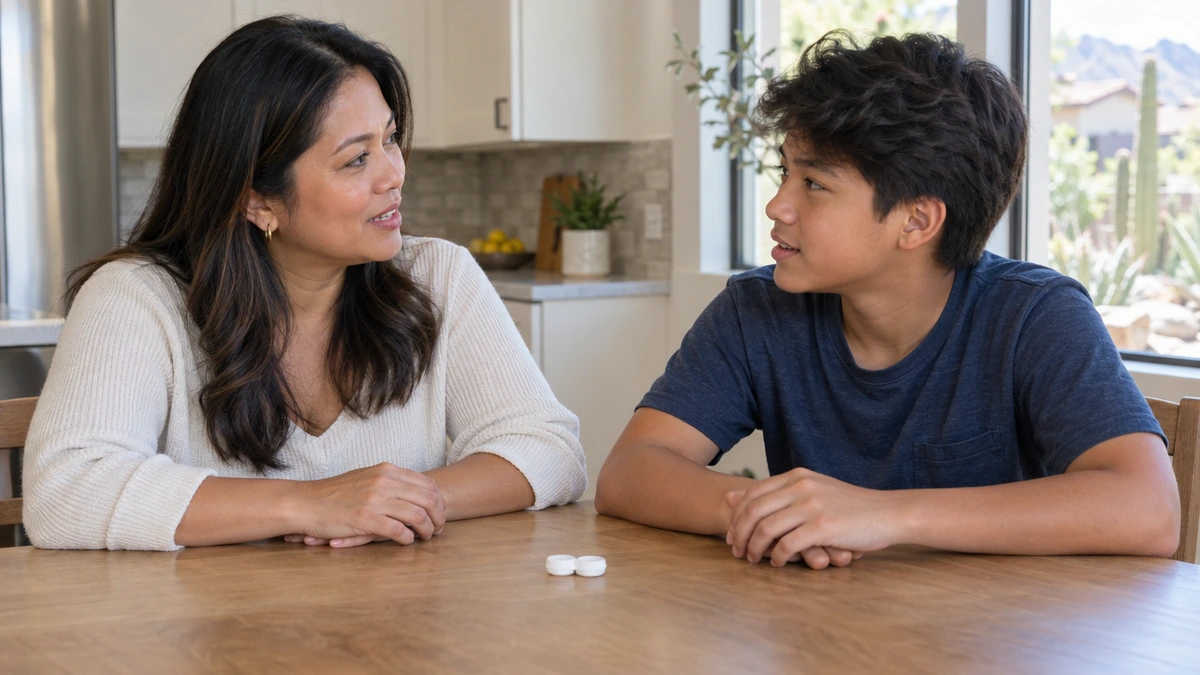
    Filipino-American mother and son talking beside a plain lens case, contact lenses for kids
    A mother and her son talk through the lens routine at the kitchen table.

    Make the plan fit a real evening. Your teen gets home from practice in Las Vegas, drops a gym bag beside the kitchen table and heads toward the shower. This is the moment to remember lens removal. Decide on that order together while nobody is tired or rushed.

    Give your teen ownership of the routine while keeping your role clear. Agree who notices supplies running low and who checks the bag before a sleepover. Talk through what happens when plans change and swimming gets added to a friend’s afternoon. The answer needs to be settled before everyone reaches the pool.

    Leave room for honest reports. Your child should feel comfortable saying they forgot a step, struggled with removal or felt something unusual. Start with what happened, then address it together. Treat speaking up as part of responsible eye care.

    How I Approach Your Child’s Contact Lens Visit

    I am Dr. Amel Youssef, founder and eye doctor at Vision by Amel. My practice offers pediatric eye exams and contact lens fittings, from daily disposables onward. Your child gets the exam first, then a fitting planned around school, sports and your home routine.

    Your child’s exam uses Visionix digital diagnostics, and I walk you through every result. When a lens feels wrong, your child tells me, and I adjust the lens material, the wear schedule or the fit. A painful red eye never waits for a routine visit: follow the steps above.

    You will find us at 2010 Festival Plaza Dr, Suite 195, Las Vegas, NV 89135. Our Downtown Summerlin location is at Festival Plaza. For a routine exam and contact lens fitting, book online or call. Include your child’s interest in contacts when arranging the visit.

    Frequently Asked Questions About Contact Lenses for Kids

    How Old Does My Child Have to Be to Wear Contacts?

    No birthday decides it. The American Optometric Association sets no single starting age, and your child’s maturity, hygiene and motivation matter more. Younger children often need more practice: in the CLIP study, children aged 8 to 12 needed about 42 minutes of insertion and removal training, against about 30 for teens. That was a short, 3-month study, so read it as a guide to patience, not a rule.

    Are Daily Disposable Contacts Safer for Kids?

    Daily disposables reduce some risks, because your child starts each day with a fresh pair, yet no lens is infection-proof. A 2023 review of seven studies by Bullimore and Richdale found serious corneal infection no more common in children wearing soft lenses than in adults. Those are study rates, not your child’s own odds, so the water, sleep and handwashing rules apply every single day.

    Can My Teen Swim, Shower or Sleep in Contacts?

    No. Take the lenses out before the pool, the shower or bed, because water carries germs and sleeping in lenses raises the chance of a serious eye infection. Eye care professionals generally do not recommend overnight lenses for kids and teens, the Food and Drug Administration says, since they raise the rate of corneal ulcers. Pack the lens case and backup glasses in your teen’s sleepover bag.

    My Child’s Eye Is Red and Hurts With Contacts In. What Do I Do?

    Take the lenses out now and call your eye doctor right away. Leave them out until your eye doctor says your child is ready to wear them again. The most severe lens-related infections sometimes lead to blindness or a corneal transplant, the CDC warns, which is why this call never waits for morning.

    Can Kids Wear Colored or Costume Contacts?

    Only with a prescription. The Food and Drug Administration treats lenses without corrective power as medical devices, so Halloween lenses from a costume shop are off the table for your child. Never let your child share a friend’s lenses or wet a lens with saliva.

    Book My Eye Exam Call (702) 858-4362

    Like this article? Add Vision by Amel as a preferred source, and you are more likely to see our articles in Google’s Top Stories.

    Add as a preferred source on Google

  • How to Choose a Pediatric Eye Doctor in Las Vegas

    How to Choose a Pediatric Eye Doctor in Las Vegas

    How to Choose a Pediatric Eye Doctor in Las Vegas

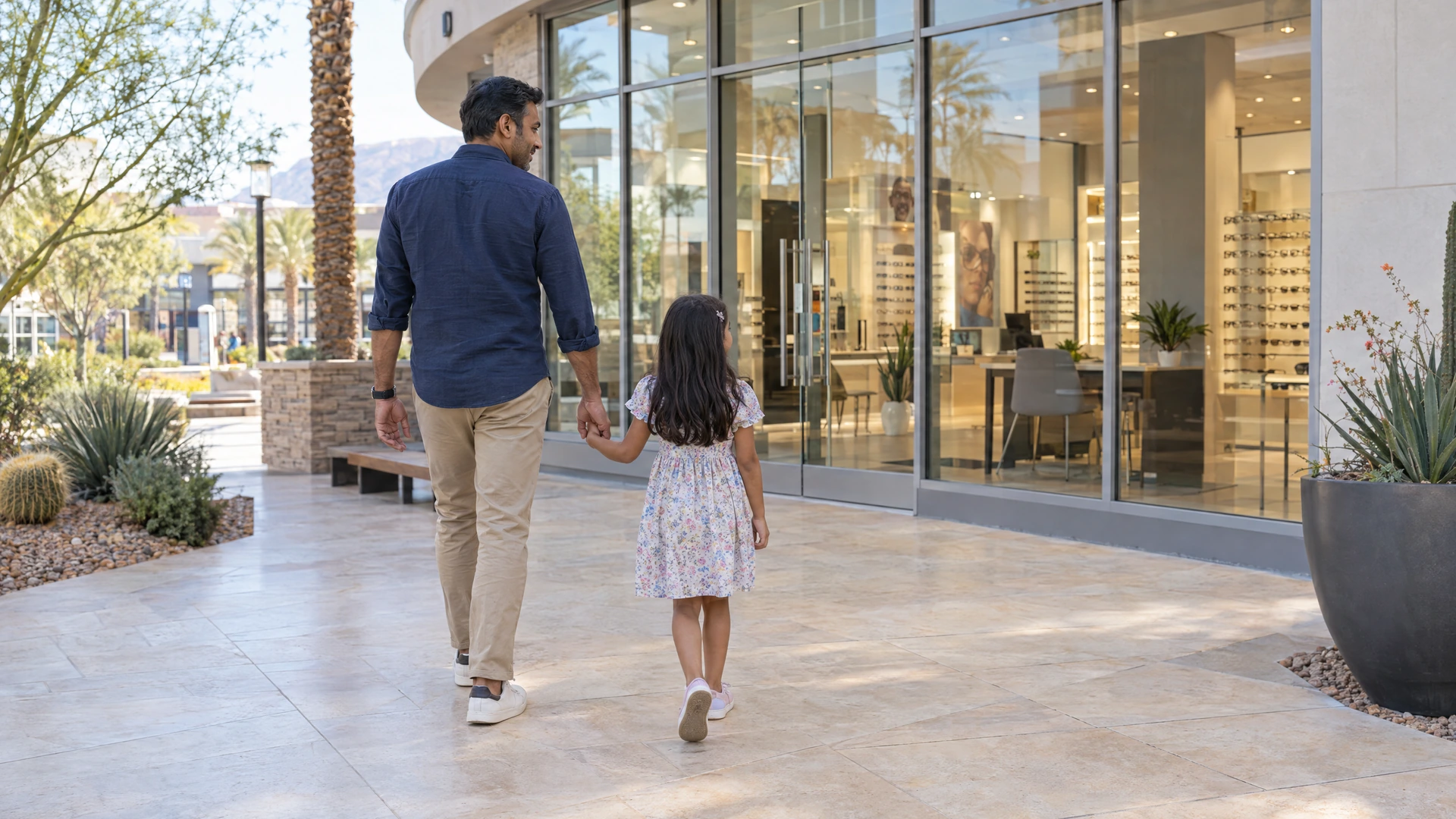
    Father and daughter walking toward an optometry boutique, choosing a pediatric eye doctor

    TLDR: Choose a pediatric eye doctor who examines children your child’s age and explains the next step clearly. An optometrist offers exams and treatment within optometry’s scope, while a pediatric ophthalmologist provides specialist medical and surgical care. Match the appointment to your child’s needs.

    Answer: To choose a pediatric eye doctor in Las Vegas, check experience with your child’s age, the purpose of the eye exam, and the approach to referrals. For a failed screening, look for an optometrist or ophthalmologist experienced with children. For surgical needs or complex disease, seek pediatric ophthalmology care.

    Choose the visit that answers your child’s question. At school pickup in Summerlin, your child hands you a vision screening note before climbing into the car, and now you need to know whom to call. Start with the reason for the visit, then choose the professional equipped to address it.

    I reviewed 113 primary sources across five research lenses for this guide, and a failed screening needs follow-up even when you notice no problems. The American Academy of Pediatrics names an ophthalmologist or optometrist experienced with children for that follow-up. For your local appointment options, explore our eye exams in Downtown Summerlin.

    Which Pediatric Eye Doctor Fits Your Child’s Needs?

    Mother beside her coloring son, with laptop lid visible, considering a pediatric eye doctor
    A mother considers an appointment beside her son.

    You searched “pediatric optometrist” or “pediatric specialist” because you want someone great with kids. Good instinct. Those words describe a search, not a license, so check the degree behind the name.

    ProviderRole in Your Child’s CareWhat to Clarify Before Booking
    PediatricianChecks eyes and vision during well-child care, including screening and referral when needed, per the AAP.What did the screening show, and what follow-up was recommended?
    Optometrist, ODExamines, diagnoses, treats and manages eye diseases and disorders, as described by the American Optometric Association.Does this practice examine children your child’s age and handle the reason for this visit?
    Pediatric ophthalmologistA medical doctor with ophthalmology training and pediatric fellowship training who provides exams, glasses and medical or surgical treatment, according to the American Academy of Pediatrics.Does your child need evaluation for a complex condition or possible surgery?

    Experience deserves a direct question. Prevent Blindness notes that some optometrists focus on working with young children. For your family, confirm who will perform the examination and whether the appointment fits your child’s age and concern.

    A title tells you about training. A clear explanation tells you about care. You should understand why this appointment is appropriate before you reserve it. A useful answer names the examination, the concern it addresses and the next step if another professional is needed.

    What Should Your Child’s Eye Exam Include?

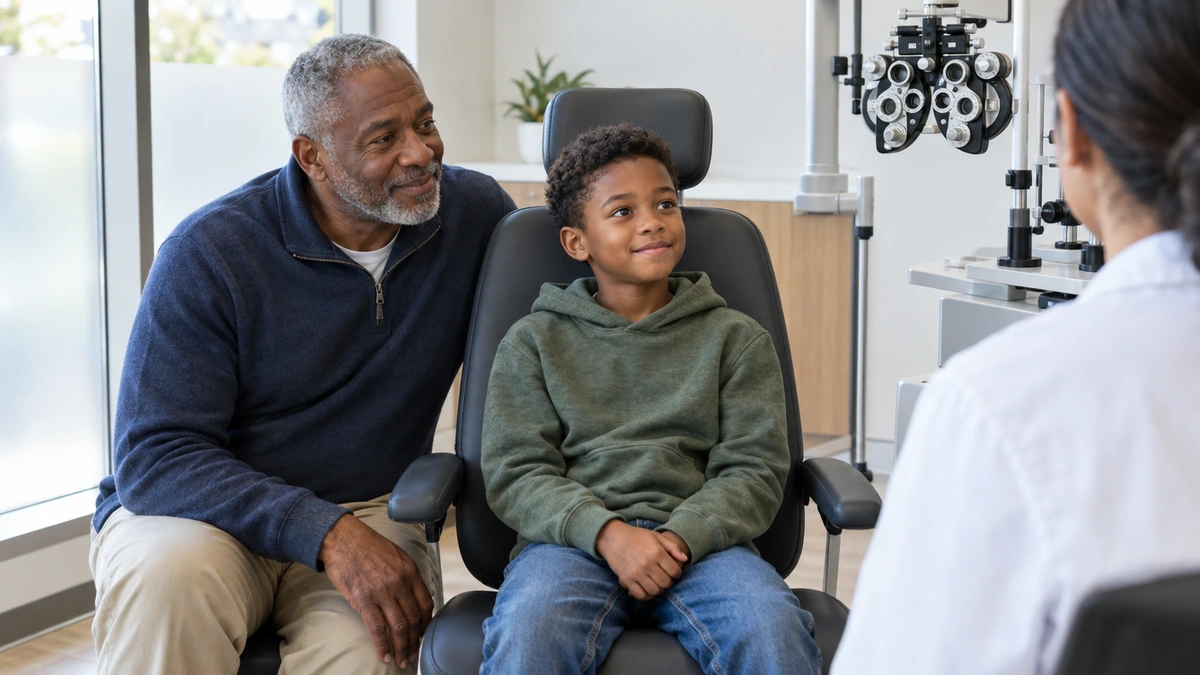
    Grandfather beside his grandson in an exam chair, an eye doctor seen from behind
    A grandfather stays beside his grandson in the exam room.

    Know what you are booking. A screening sorts. A comprehensive eye exam diagnoses. Your confirmation should name which one your child gets.

    Your examination has a defined scope: the Nevada Legislature defines a comprehensive examination as an in-person examination including history, eye alignment, visual acuity, pupils and examinations of the front and back of the eyes. When comparing appointments, ask how your child’s visit addresses those areas. Unfamiliar terms deserve plain answers before you agree to the plan.

    The screening note gives you a useful first question: what needs checking? You do not need to translate its abbreviations before calling my team. Our guide to school vision screening and comprehensive exams explains the distinction in more detail.

    Your child’s comfort belongs in the conversation, too. Describe worries about unfamiliar equipment, communication needs or a previous difficult visit. Tell my team what made the earlier visit difficult so we discuss your concerns before you arrive.

    When Does Your Child Need a Pediatric Ophthalmologist?

    Eye muscle surgery belongs to ophthalmology. Nevada law bars optometrists from any procedure that cuts tissue, so when your child’s misaligned eyes need surgery, I refer you to a pediatric ophthalmologist and coordinate your child’s care around it. You should know who handles the surgical assessment and where your follow-up belongs.

    A premature baby or a family history of childhood eye disease changes who should examine your baby first, and my baby eye exam guide lists those histories. Lead with that history when arranging care. A family concern belongs in the first conversation, even when you do not know its medical name.

    An eye that crosses all the time needs an eye exam right away, at any age, and AAPOS sends constant crossing to a pediatric ophthalmologist. Describe whether your child’s eye turns constantly or comes and goes when you call. Use those observations to explain the concern, without trying to name the condition yourself.

    A referral should leave you with clear instructions. My explanation should name the reason, the recommended timing and the service you need to contact. For complex disease, bring any existing diagnosis and treatment plan into that conversation so the next appointment addresses the actual problem.

    What Should You Ask a Pediatric Eye Doctor?

    Mother holding her daughter's hand while asking questions at an optometry front desk
    A mother asks questions while her daughter holds her hand.

    Skip “Do you see kids?” Every office says yes. These questions tell you how your child’s visit will go.

    1. Does this office examine children my child’s age for this concern? Give the age and reason for the visit together.
    2. Who will examine my child, and what is their training and experience with children? Listen for the name and qualification.
    3. Is this a comprehensive examination or a visit for a particular eye concern? Match the answer to your screening note or referral.
    4. How should I explain my child’s communication or sensory needs? Describe what helps your child understand a new situation.
    5. How will I get referral instructions if another service is needed? The answer should cover the reason, timing and next contact.
    6. Which insurance details and previous records do you need? Have the relevant information beside you while you call.

    Listen for a specific answer. โ€œWe see childrenโ€ answers less than a discussion of your child’s age, history and reason for coming. Keep your school report or previous prescription in front of you during the call so the details stay accurate.

    Leave with the result and the next step. Before you leave my exam room, I want you to understand the findings and the follow-up plan. Write down what you need to do, who to contact and when to return.

    How Do You Compare Appointment Options?

    Fit first, then the drive. A Sunday slot after soccer at a Summerlin park means nothing if the visit cannot answer your child’s real question. While your child packs dusty cleats beside the field, settle what the appointment needs to accomplish before checking the route.

    Use the same details for each call. Give your child’s age, the concern and any existing referral, then record the answers together. This keeps a routine examination and a specialist consultation from looking interchangeable because both appear in the same search.

    Consider what happens after the visit. Ask how you would request an explanation of findings or send a question about the plan. For your child who already wears prescription glasses or has an amblyopia treatment plan, bring the current instructions and clarify which earlier records the receiving practice wants.

    Your child also deserves a simple explanation of where you are going. Keep it factual, and let the team explain any unfamiliar examination steps. Our first eye exam guide for Summerlin families covers preparation, so you do not have to work it out during the drive.

    How I Approach Your Child’s Eye Care

    Mexican-American family of four smiling outside an optometry office in desert sunlight
    A family leaves an optometry office together.

    I am Dr. Amel Youssef, OD, founder and optometrist at Vision by Amel. My practice offers pediatric eye care, and I see families from Summerlin every week. At Vision by Amel, you get an optometrist who explains every finding, a team that verifies your benefits by phone before the visit, and a clear plan, including a referral when your child needs one.

    My examination process moves from patient history through digital diagnostics, my evaluation and your plan. Every visit runs on Visionix digital diagnostics, and I review the findings with you myself, in plain language. I check how both eyes work together, test color vision where your child needs it, and screen for eye disease before we set your child’s plan. Your questions about eye health belong in that discussion.

    Saturday at Festival Plaza looks like this: your child beside you, the screening note in your bag, the visit already booked. You will find us at 2010 Festival Plaza Dr, Suite 195, Las Vegas, NV 89135, in Downtown Summerlin at Festival Plaza. We are open Monday to Saturday, 9 am to 6 pm, and Sunday, 11 am to 5 pm. Book online or call (702) 858-4362 to arrange your pediatric eye exam.

    Frequently Asked Questions About Choosing a Pediatric Eye Doctor

    Should My Child See an Optometrist, a Pediatric Ophthalmologist or the Pediatrician?

    Your pediatrician screens for vision problems during well-child care. After a failed screening, the AAP recommends follow-up with an optometrist or ophthalmologist experienced with children, even when you notice no problems. Both examine and diagnose eye conditions, while eye muscle surgery belongs to ophthalmology. Take the screening result to the appointment so the finding that prompted it gets addressed.

    What Is the Difference Between a Pediatric Optometrist and a Pediatric Ophthalmologist?

    Prevent Blindness describes some optometrists as focusing on work with young children. A pediatric ophthalmologist is a medical and surgical eye doctor whose training, according to the AAP, includes at least 4 years of medical school, 1 year of internship, at least 3 years of ophthalmology residency and at least 1 year of pediatric fellowship. For your child, choose by the care needed and the provider’s experience with that age and concern.

    Can an Optometrist Treat My Child’s Eye Infection?

    Yes, treating eye infections falls within Nevada optometry’s scope. Nevada law includes prescribing medication to treat an abnormality of the eye. Your child’s examination determines the diagnosis and appropriate treatment, so describe the symptoms when arranging care.

    Will My Child’s Optometrist Work With a Pediatric Ophthalmologist?

    When your child needs a pediatric ophthalmologist, I refer you and coordinate care around that evaluation. Co-management means I remain your home base for eye care while the ophthalmologist handles the specialty care your child needs. You always know which office books the next visit and which one answers each question.

    What Should I Check About Insurance Before Choosing an Appointment?

    My team verifies your benefits by phone before the visit, and Vision by Amel accepts plans including VSP, EyeMed and Nevada Medicaid. Your own plan determines the coverage available. Have your insurance details ready when you call. You do not need a referral to book an eye exam.

    Book My Eye Exam Call (702) 858-4362

    Like this article? Add Vision by Amel as a preferred source, and you are more likely to see our articles in Google’s Top Stories.

    Add as a preferred source on Google

  • Your Baby’s First Eye Exam in Las Vegas: What Parents Should Know

    Your Baby’s First Eye Exam in Las Vegas: What Parents Should Know

    Your Baby’s First Eye Exam in Las Vegas: What Parents Should Know

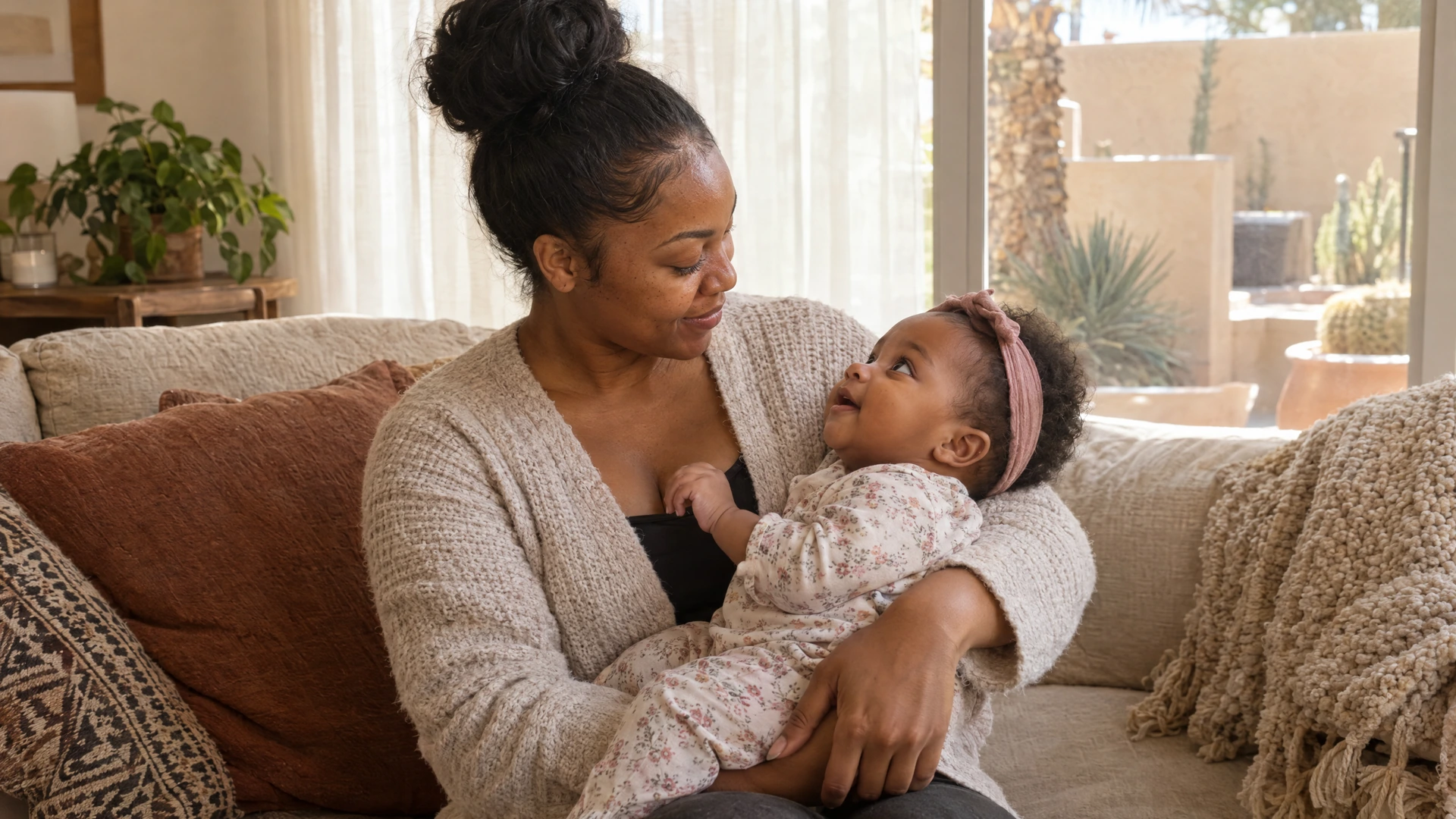
    A Black mother cradling her baby girl on a sofa, accompanying a baby eye exam guide.

    TLDR: Your baby’s eye care starts in the first days of life. This baby eye exam guide shows you when the first full exam fits, what it checks, and the warning signs that mean you call an eye doctor right away.

    Answer: The American Optometric Association recommends your baby’s first comprehensive eye exam between 6 and 12 months of age. Your pediatrician checks your baby’s eyes from birth with a red reflex test. In Las Vegas, call an eye doctor right away for a white pupil, an eye that turns all the time, or discharge and puffy red eyelids in a newborn.

    Your baby cannot read an eye chart, and does not need to. You bring the birth history and what you have seen at home, from the stroller walk to the 2 am feed. That is where a great first visit starts. At home in Las Vegas, you settle into a bedroom chair for that feed while a bottle warms nearby. Those quiet moments give you something specific to describe when you call.

    I reviewed 113 primary sources across five research lenses for this guide, and infant eye screening starts at birth. Start the booking conversation with your baby’s age and history. My eye examination page explains our practice’s general exam process, while this guide stays focused on infancy.

    When Should You Plan a Baby Eye Exam?

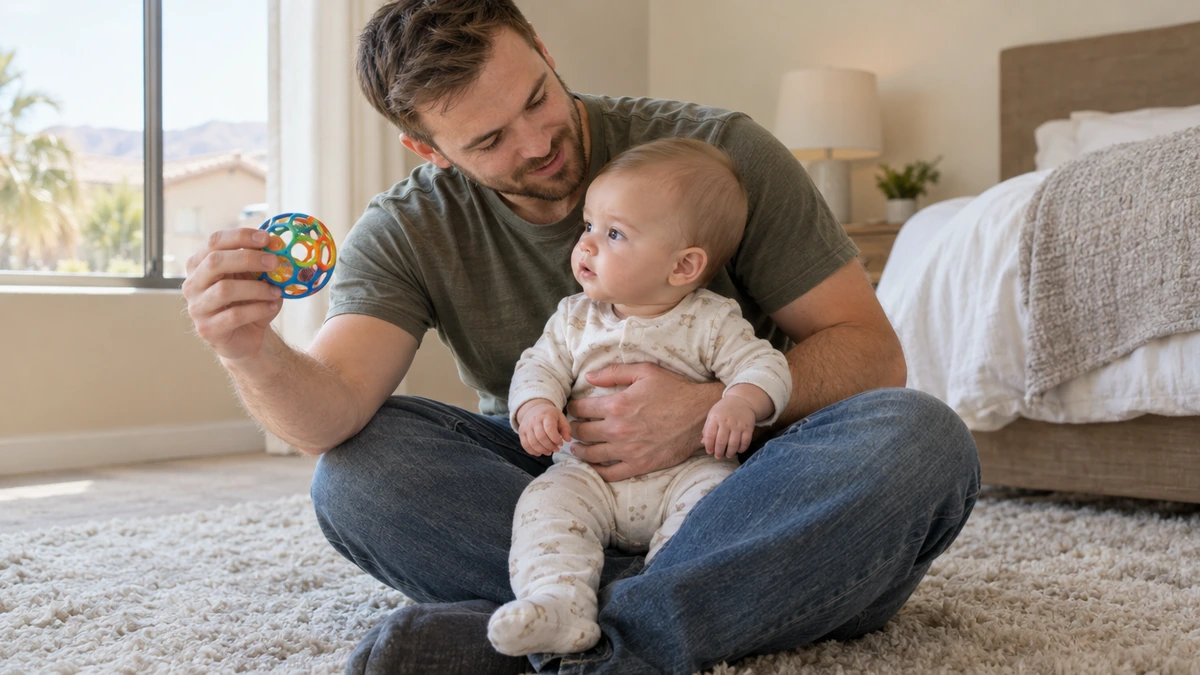
    A white father holding his infant son and a colorful toy, accompanying baby eye exam guidance.
    A father holds his infant son while moving a colorful toy.

    The American Optometric Association recommends your baby’s first comprehensive eye exam between 6 and 12 months of age, even when nothing looks wrong. Put that recommendation on your list for the next well-child visit. Include any existing screening results in the discussion.

    AAO and AAPOS instead emphasize screening from the newborn nursery, including a red reflex check, and referral for concerning findings or risk factors rather than routine comprehensive exams for every healthy child without symptoms. File your pediatrician’s screening record alongside any eye examination report. Keep both available when discussing follow-up.

    At a newborn red reflex check, a trained clinician looks for the reflection of light from inside your baby’s eyes. An abnormal red reflex needs urgent consultation, so follow the referral right away. Under the same AAO and AAPOS guidance, an ophthalmologist should examine high-risk infants, including those at risk of retinopathy of prematurity or with a family history of childhood cataract, glaucoma or retinoblastoma.

    Born early? Family history of childhood eye disease? Tell your pediatrician first, because those babies need an ophthalmologist’s exam, not a routine date. Mention any existing referral when you call an eye care office. I would rather hear your concern early than have you wait for the perfect appointment age.

    How Do You Prepare Your Baby for the Visit?

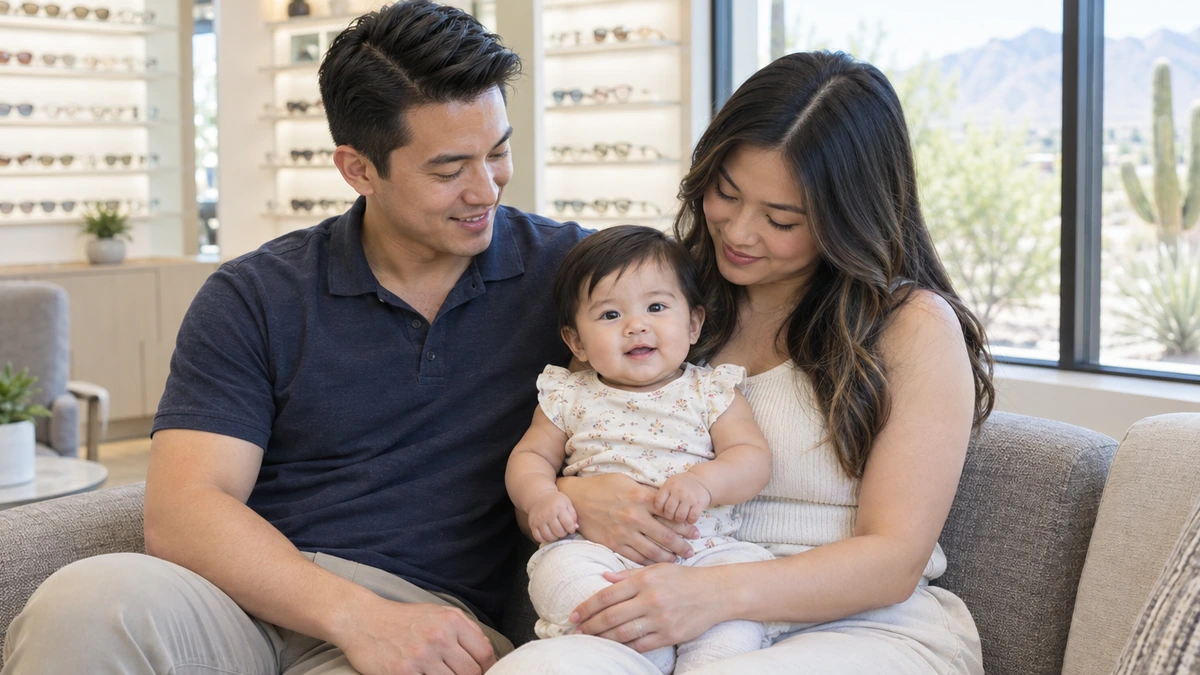
    A Vietnamese-American couple seated with their baby in a boutique waiting area before a baby eye exam.
    Parents sit together with their baby in a waiting area.

    Pack for your baby first. A diaper bag, familiar comfort item and feeding supplies belong beside the insurance card. When arranging the visit, describe your baby’s usual nap and feeding pattern and ask how much time to reserve.

    1. Share the basics. Your baby’s age and the reason for the visit help my team pick the right appointment.
    2. Gather the history. Bring birth records you already have, screening results, medication details and any referral instructions.
    3. Describe what you noticed. Note which eye, when the change began and whether it happens constantly or comes and goes.
    4. Plan the trip. Leave room in your schedule for feeding, changing and settling your baby after the drive.
    5. Write your questions. Include who will examine your baby, what the visit covers and how follow-up will be arranged.

    Share the load. On a shaded path at a Summerlin park, you push the stroller while a grandparent leans down to greet your baby. Later, compare what each of you noticed, such as whether your baby watched that familiar face. When you come together for the visit, agree on who will describe the concern and who will hold the bag.

    Skip the rehearsal. Bring your baby as they are, with the information the office requested. For an older sibling accompanying you, my guide to a child’s first visit in Summerlin offers preparation aimed at children old enough to discuss the appointment.

    What Does a Baby Eye Exam Check?

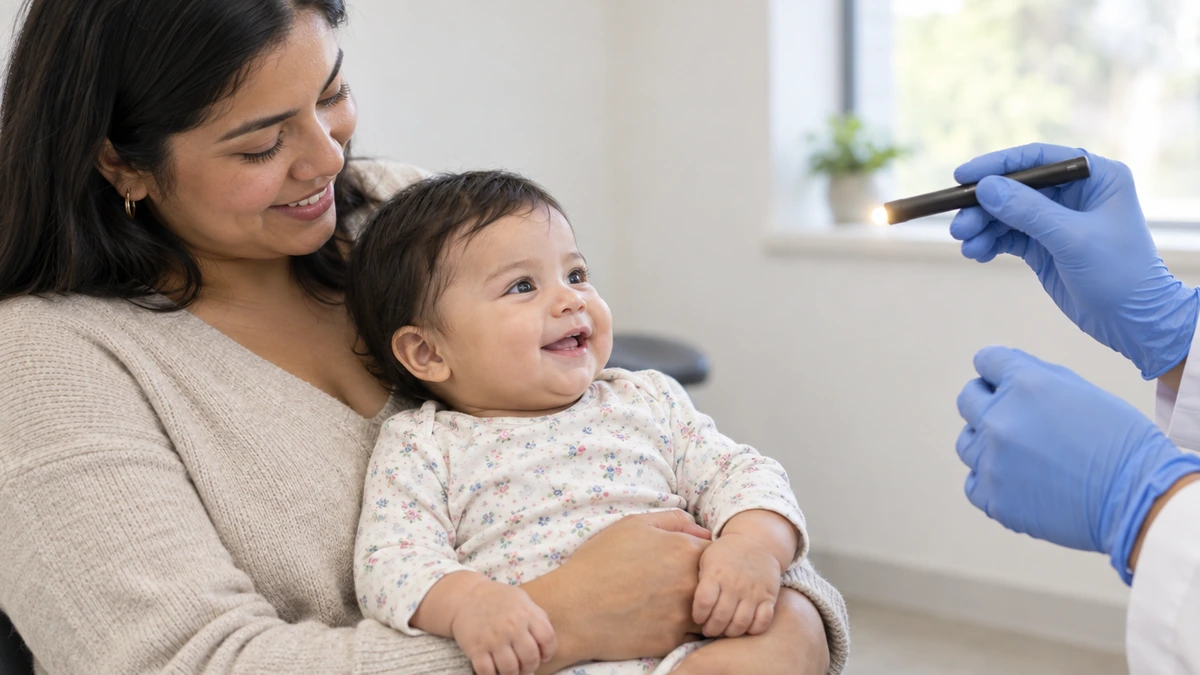
    Gloved hands holding a penlight near a smiling infant on a Latina mother's lap during a baby eye exam.
    A mother holds her infant while a penlight is held nearby.

    The AOA infant vision guide describes checks for nearsightedness, farsightedness, astigmatism, eye movement, alignment and overall eye health during your baby’s exam. Use those areas to organize your questions. Start with the concern you brought from home, then ask what the findings mean.

    Area of the ExamWhat to Ask About Your Baby
    Focusing and refractionDid the check find a focusing issue, and what happens next?
    Eye movementWhat did you observe as my baby’s eyes moved?
    AlignmentDid the eyes appear aligned during the examination?
    Overall eye healthWas anything found that needs further evaluation?
    Follow-up planWho should we see next, and when should we arrange it?

    You deserve plain English. Visual acuity, refraction, amblyopia and strabismus should each come with what it means for your baby, today. Before leaving, repeat the next step aloud so everyone has the same plan.

    Leave space for your questions in a pediatric eye exam. Write down any recommendation for prescription glasses, another examination or an ophthalmology appointment, including who will arrange it. My broader pediatric eye exam guide covers the wider picture of children’s vision as your child grows.

    Which Eye Changes Need Prompt Care?

    Call an eye doctor right away if your baby has a white or gray-white glow in the pupil, in person or in a flash photo, because it has several possible causes and some are serious, as AAPOS explains. Save the photo to show at the examination. Seek care now rather than waiting to collect more pictures.

    Discharge from your baby’s eye or puffy red eyelids means you call a doctor now, says the National Eye Institute. Say it is urgent, and skip the online booking form. Mention when the discharge or swelling began.

    Brief, on-and-off wandering is common in your baby’s first few months. Any crossing after about 4 months needs a check, and constant crossing is worrisome at any age, says AAPOS. An eye that turns all the time, at any age, needs an eye exam right away. Describe whether the eye stays turned or straightens between episodes.

    Have your baby’s tracking checked promptly if they do not follow well after 3 months, the referral threshold in AAPOS screening recommendations. Explain what you see when your baby watches a face or moving toy. That observation is a reason for assessment, not a diagnosis you need to make at home.

    Call an eye doctor right away if your baby turns away from ordinary light or squeezes both eyes shut indoors. The AOA lists extreme light sensitivity among infant warning signs, along with excessive tearing and red or crusted lids. Describe what happens in the room’s usual light when you call.

    How Do You Handle Coverage and the Next Visit?

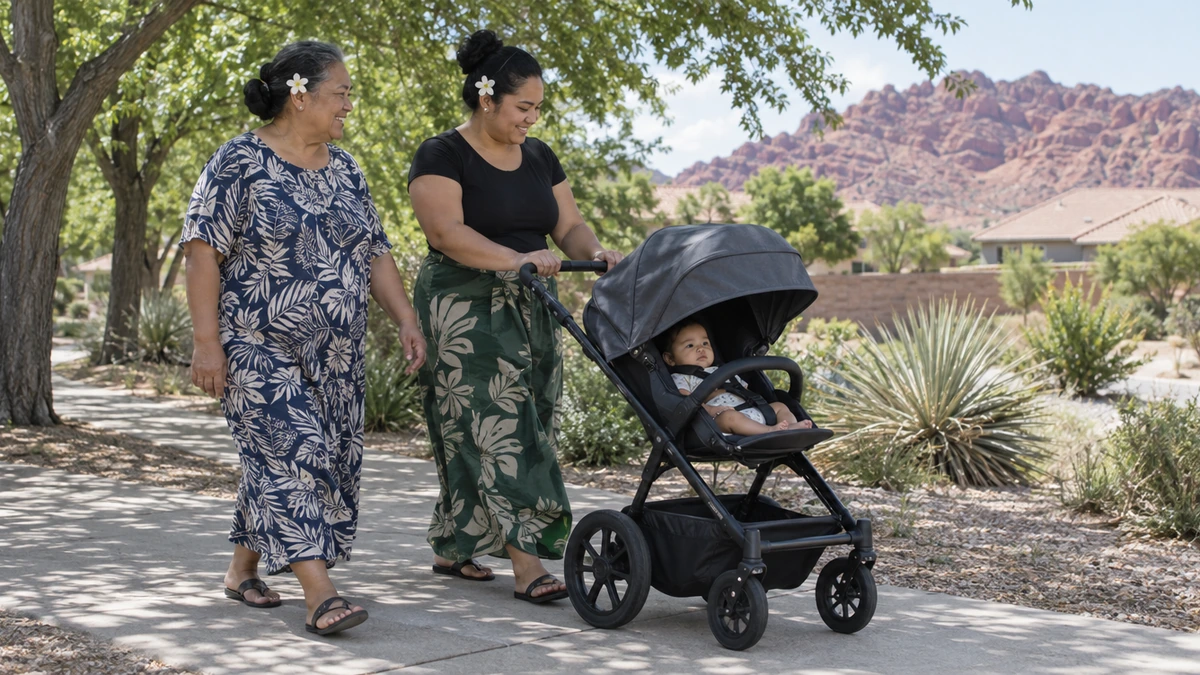
    A Pacific Islander mother and grandmother walking with a baby in a stroller, accompanying baby eye exam guidance.
    A mother and grandmother walk beside a stroller under shade trees.

    Check benefits before the trip. Vision by Amel accepts Nevada Medicaid, and my school screening guide explains how Healthy Kids handles referrals. Have your child’s member information ready for the benefits check.

    With any plan, get specific. Confirm your baby’s enrollment, the participating provider and which benefit applies to the proposed visit. Request an explanation of your share of the bill and whether further testing needs separate approval.

    Make the next step easy to find. Store your visit summary with the pediatric records, and put any follow-up date in the calendar you share with other caregivers. Back home after a stroller walk, you should have the next appointment and contact details within reach.

    I favor a written next step over a vague instruction to watch and wait. Before leaving, make sure your plan says what to watch, whom to contact and when to return. Keep the contact details beside those instructions.

    How I Approach Your Family’s Visit at Vision by Amel

    I am Dr. Amel Youssef, founder and optometrist at Vision by Amel. Children’s eye care is central to my practice, and Summerlin families visit every week. Tell my team your baby’s age and any note from your pediatrician when you call, and we will tell you the right next step for a baby that age.

    My team verifies your benefits by phone before the visit, and we accept Nevada Medicaid along with several medical and vision plans. Benefits vary with your plan. Have your baby’s insurance details available when you call, and bring the same information to the appointment.

    You will find us at 2010 Festival Plaza Dr, Suite 195, Las Vegas, NV 89135, in Downtown Summerlin at Festival Plaza. Book online or call (702) 858-4362, seven days a week. We open Monday to Saturday, 9 am to 6 pm, and Sunday, 11 am to 5 pm.

    Picture your Sunday at Festival Plaza: the stroller is folded in the trunk, the diaper bag is on your shoulder, and your baby is ready for a feed. Leave room for that pause when you plan a routine visit. My team will give you the appointment details before you make the trip.

    Frequently Asked Questions About Baby Eye Exams

    How Do You Check a Baby’s Eyes if They Can’t Talk or Read?

    No letters are needed for your baby’s eye examination. Focus, eye movement and alignment help assess vision, alongside checks of eye health. Even before speech, the newborn red reflex check looks for reflected light from inside the eyes.

    When Should My Baby Start Following Toys With Their Eyes?

    Around three months, your baby should begin following moving objects with their eyes and reaching for things, according to the AOA. AAPOS recommends having poor tracking checked after 3 months. Note whether you see the same response to a face and a moving toy, and share those observations at the assessment.

    Why Does My Baby’s Eye Water All the Time?

    Excessive tearing can point to a blocked tear duct, according to the AOA. An assessment of your baby’s watering helps identify the cause. Discharge or puffy red eyelids means you call a doctor now, as the National Eye Institute advises.

    Should I Bring a Video of the Eye Movement?

    Bring an existing video or photo and note when you took it. Keep the original available, and tell me what you noticed when you recorded it. Describe what happened before and after the recording so our discussion includes more than a single moment.

    Does Nevada Medicaid Cover My Baby’s Eye Care?

    Vision by Amel accepts Nevada Medicaid, and my team verifies your benefits by phone before the visit. Your plan determines the benefits available for the proposed appointment. For Healthy Kids referral rules, read my guide to school screening and eye exams.

    Book My Eye Exam Call (702) 858-4362

    Like this article? Add Vision by Amel as a preferred source, and you are more likely to see our articles in Google’s Top Stories.
    Add as a preferred source on Google

  • Signs Your Child Needs Glasses: A Las Vegas Parent’s Checklist

    Signs Your Child Needs Glasses: A Las Vegas Parent’s Checklist

    Signs Your Child Needs Glasses: A Las Vegas Parent’s Checklist

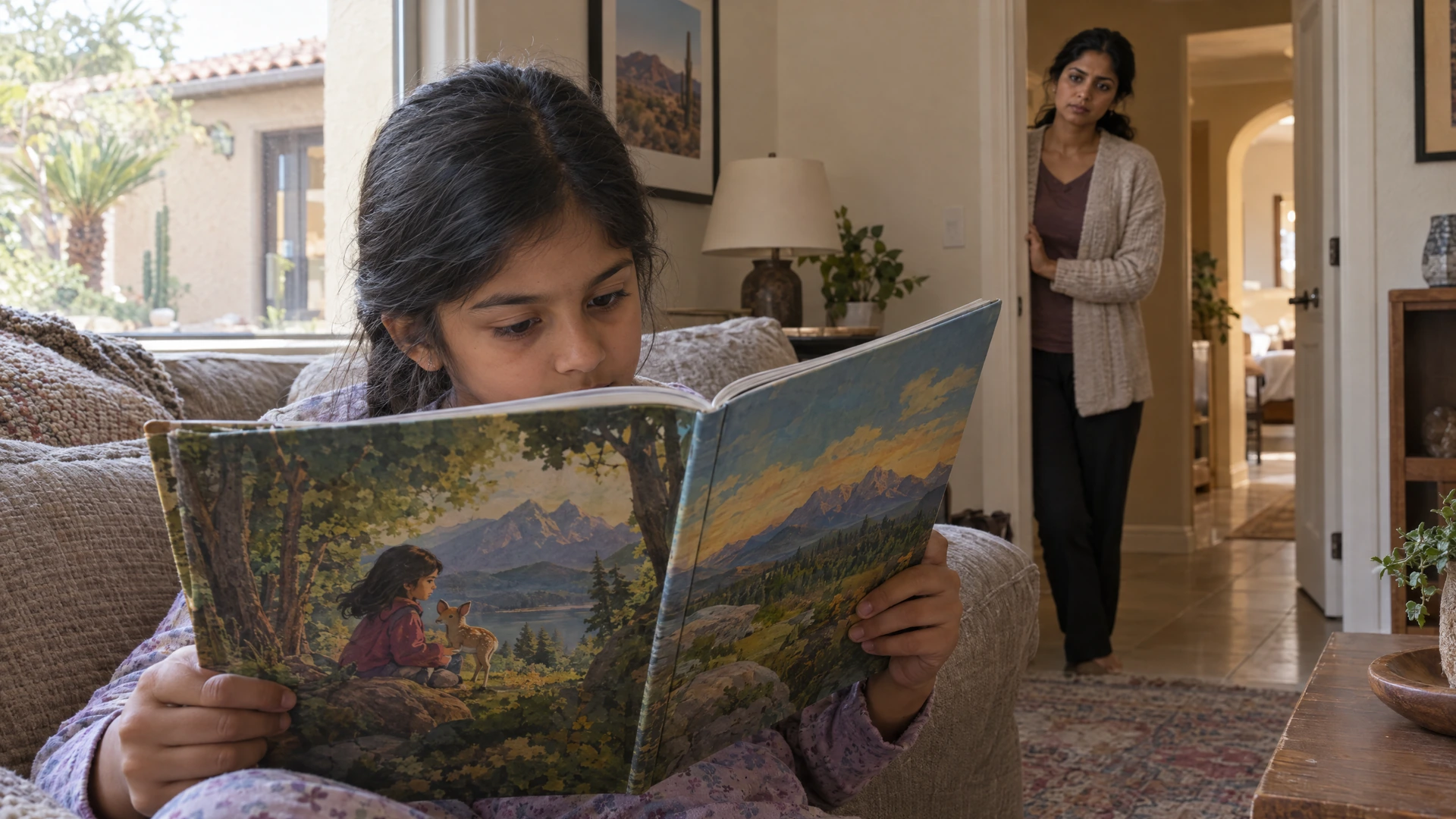
    South Asian girl holding a picture book close as her mother watches from a doorway, signs your child needs glasses

    TLDR: Common signs your child needs glasses include squinting, holding books close, tilting the head and avoiding reading. Book an eye exam to find out what those habits mean for your child. Start with the behavior you notice, then let the findings guide the prescription.

    Answer: For parents in Las Vegas, repeated squinting, eye rubbing, headaches during schoolwork, covering an eye and losing place while reading are reasons to arrange a comprehensive eye exam. As your child’s optometrist, I check the cause before recommending glasses. An eye turning inward or outward also needs attention, even when your child reports clear vision.

    Your second grader squints at the whiteboard. Back home in Summerlin, a picture book comes close enough to hide their face. When these habits interrupt the school day or bedtime reading, move children’s vision up your list.

    I reviewed 73 primary sources across five research lenses for this guide, and a child with a vision problem does not always report difficulty seeing. Your notes hand me a head start before the exam even begins. My eye exams in Downtown Summerlin start with patient history, so tell me what caught your attention.

    What Are the Signs Your Child Needs Glasses at Different Ages?

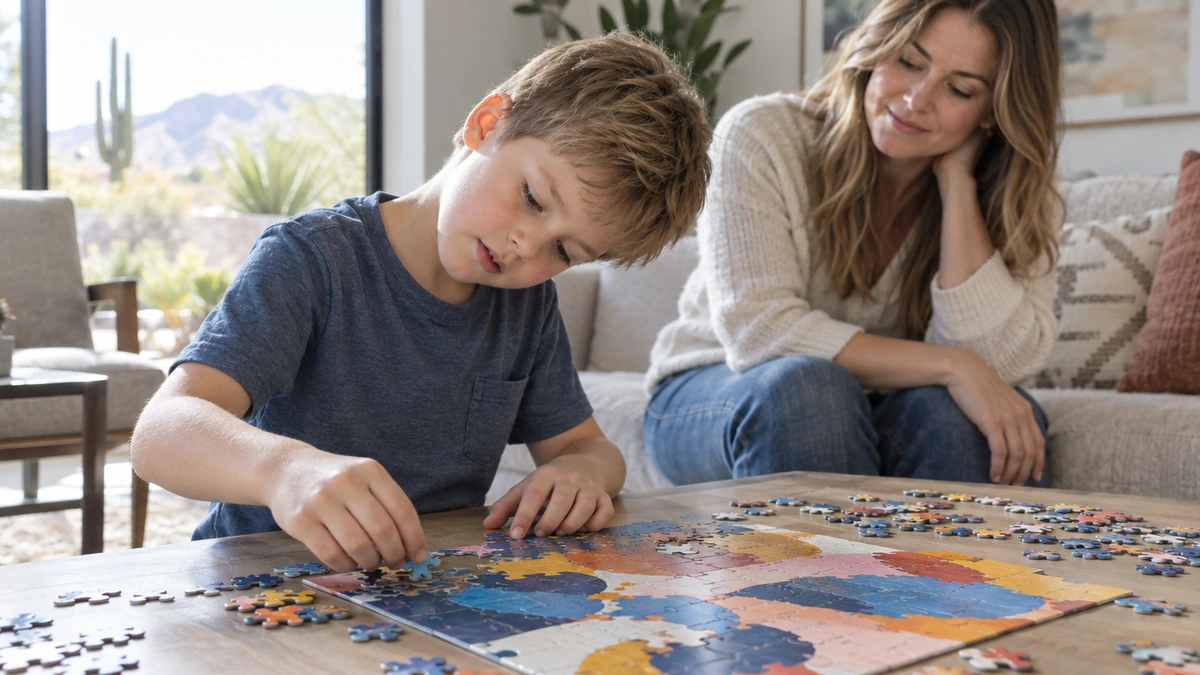
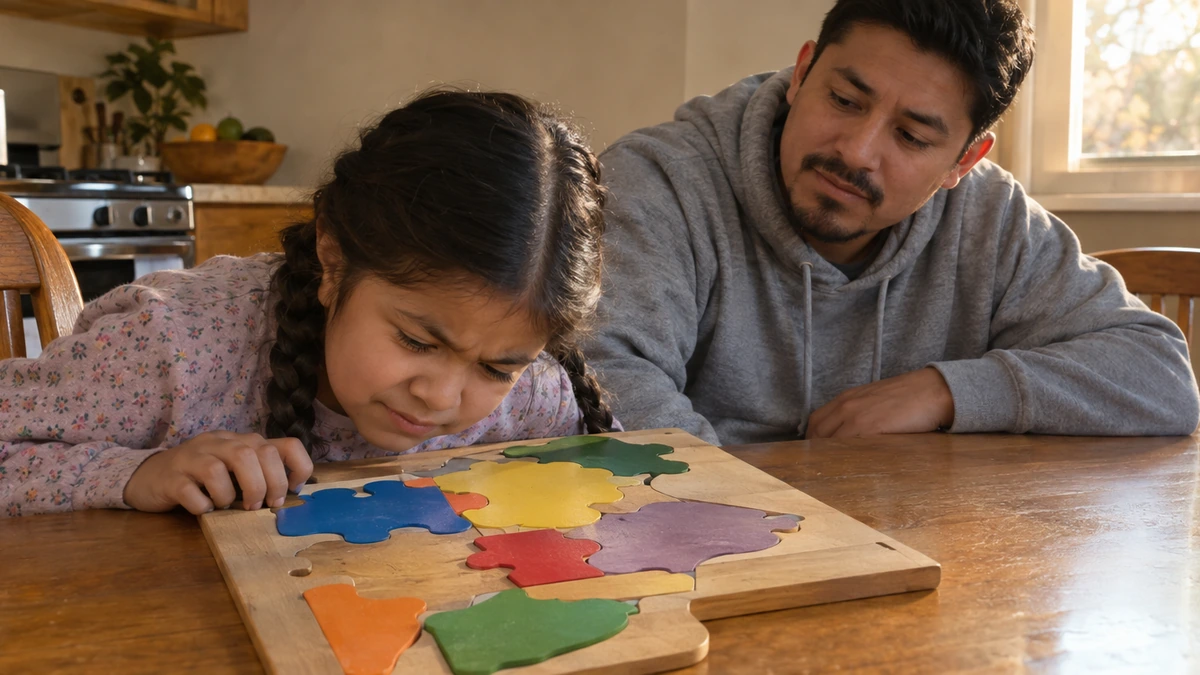
    White boy tilting his head while fitting a puzzle piece, signs your child needs glasses
    Include head tilting in your observation notes.

    Watch the everyday moments. The American Optometric Association lists close viewing, squinting, head tilting and avoiding puzzles among preschool warning signs, and notes amblyopia sometimes develops without noticeable signs. Your child’s puzzle abandoned on the coffee table deserves a closer look before anyone calls it laziness.

    StageWhat You Might NoticeDetails Worth Sharing
    Preschool playA book held close, a tilted head, covering an eye or avoiding coloring and puzzlesThe activity, head position and whether the behavior repeats
    Early elementary schoolSquinting toward the board, rubbing eyes during homework or losing place while readingWhether the trouble happens looking across the room or down at a page
    Older school childrenHeadaches with schoolwork, reading avoidance, visual fatigue or reports of double visionWhich tasks bring on the discomfort and what makes the child stop

    Use this table as your watch list. It tells you what to look for. The exam tells you what it means.

    Notice the pattern without staging a test. During an ordinary evening at home, does your child pull the book closer, cover an eye or leave the puzzle unfinished? Describe the moment as it happened, including whether you have seen it before. There is no need to repeat an uncomfortable task for proof.

    I treat a repeated squint as a reason to investigate. The prescription comes from the exam. You have already done something useful by noticing the change and arranging a visit.

    Which Signs Your Child Needs Glasses Show Up in Class?

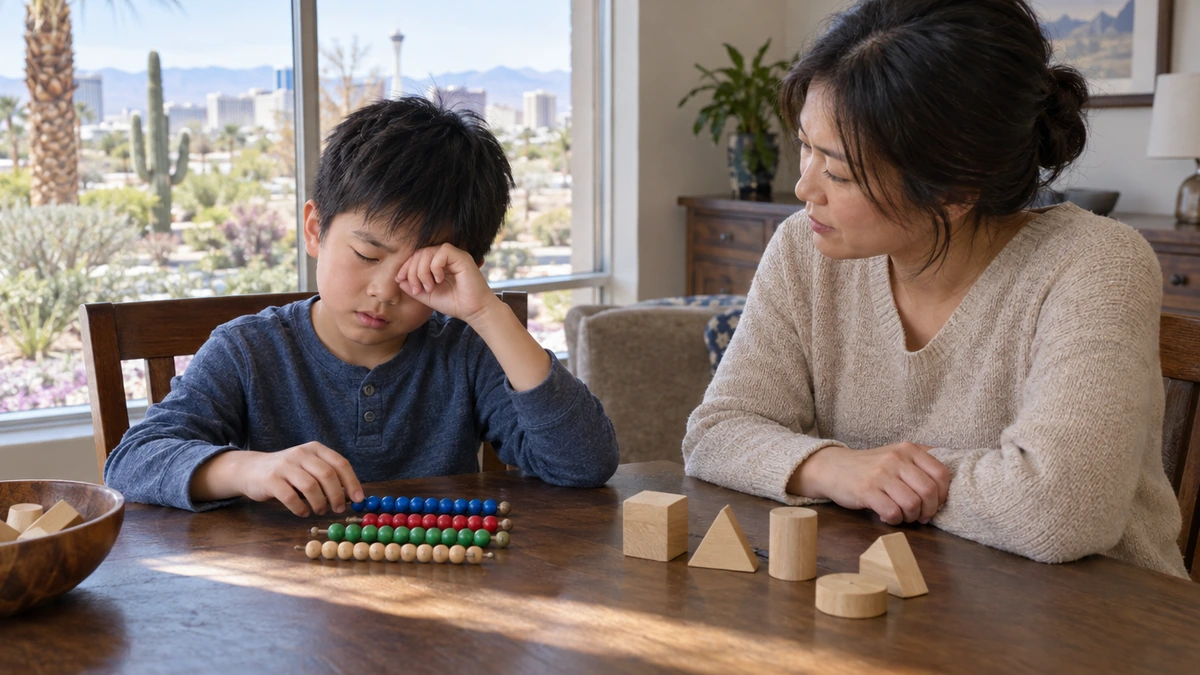
    East Asian boy rubbing one eye during homework by a window, signs your child needs glasses
    Describe when eye rubbing interrupts homework.

    Look beyond the report card. The AOA school-age guidance includes headaches, eye rubbing, reading avoidance, double vision and losing place, and explains children sometimes assume everyone sees as they do. Your child’s silence proves nothing. Watch what they do, not what they say.

    Compare the whiteboard with the homework page. Trouble copying from across the classroom and rubbing eyes over a book are different details for me to hear. Bring the teacher’s words and your own. Leave the diagnosis to the exam.

    Does Reading Trouble Mean a Learning Disability?

    Treat reading trouble and vision as two separate questions. Chase both answers. The AAP, AAO, AAPOS and AACO joint statement explains vision problems sometimes interfere with learning but do not cause dyslexia or other learning disabilities. Your child’s eye findings and educational assessment serve different purposes.

    Keep educational support moving while you arrange the visit. Describe whether your child struggles to see the page, recognize words or understand a passage. Glasses help your child see the page. Reading support helps them read it. Chase both.

    What Do an Eye Turn or Other Red Flags Mean?

    Report an eye turn when you arrange care. An eye turning inward or outward is called strabismus, while amblyopia, often called lazy eye, involves reduced vision developing in childhood. The National Eye Institute emphasizes starting amblyopia treatment early. Give your child’s eye alignment attention even when seeing seems easy to them.

    Tell me when the turn appears. You might notice it during reading, while your child looks across the living room or during several different activities. I check binocular vision as part of my evaluation and explain the findings alongside the rest of the exam. Your job is to describe what you see.

    A White Pupil Needs Immediate Attention

    A white pupil or white pupil reflection in your child’s photograph needs action right away because AAPOS warns it sometimes signals serious disease. Call your child’s eye doctor or pediatrician today and say the words “white pupil” to arrange an immediate eye assessment. Do not wait for a routine appointment. Skip further photo checks and seek care now.

    How Do You Help Your Child Wear New Glasses?

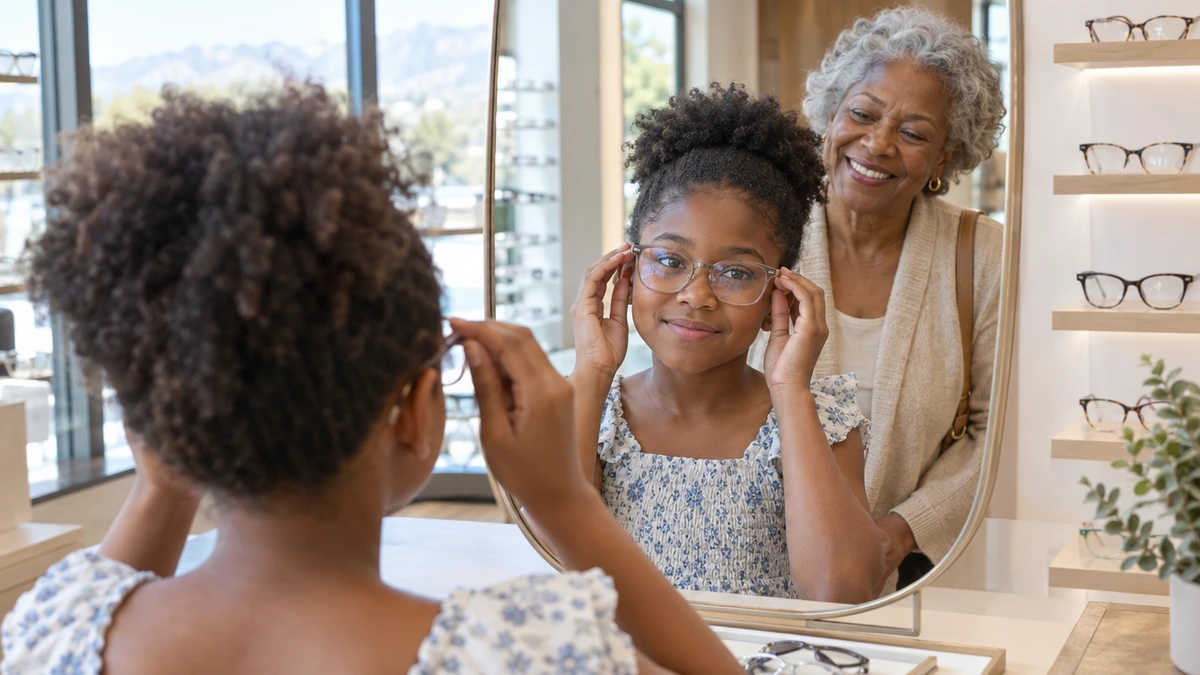
    Black girl trying on glasses in a mirror with her grandmother, signs your child needs glasses
    Ask your child how the new frames feel.

    Fit first, color second. Ask your child what presses, slips or pinches before anyone mentions purple frames. For everyday glasses, AAPOS fitting guidance recommends polycarbonate lenses and frames with eyes centered in the lenses, clear of cheeks and eyelashes. Have whoever fits the glasses show you those checks on your child’s face.

    Give adjustment time and a clear follow-up point: AAPOS says most children adjust within two weeks, and a prescription recheck may be needed when resistance continues after a few weeks. Some children need longer. Call my team to review the fit and prescription when your child keeps fighting the glasses. Pain or a pinching frame deserves a call sooner.

    I put comfort ahead of coaxing. A complaint about the frame deserves attention before another reminder to wear it. You learn more by finding the spot behind the ear that pinches than by debating whether the glasses look nice.

    1. Start with the fit. Have whoever fits the glasses adjust slipping frames or pressure points before you settle on a pair.
    2. Give your child a choice among suitable frames, then confirm the impact-resistant lens recommendation.
    3. Get the prescribed wear schedule from me so you know when the glasses belong on.
    4. Choose a regular place for the case when the glasses come off, away from the rush of backpacks and shoes.
    5. Encourage wearing the glasses and report persistent resistance so I know the plan needs another look.

    Make the morning routine practical. Before the Las Vegas school run, backpacks loaded and breakfast unfinished, check where the glasses belong under the prescribed schedule. Give your child a calm reminder and time to describe discomfort. A rushed departure is a poor moment to settle a fit problem.

    Make the next conversation specific. Tell me whether your child pushes the frames up, points to a sore spot or takes them off during a particular activity. Mention what happens with the glasses on as well as off. Those details help us address the complaint without turning every removal into an argument.

    Are Everyday Glasses Enough for Sports?

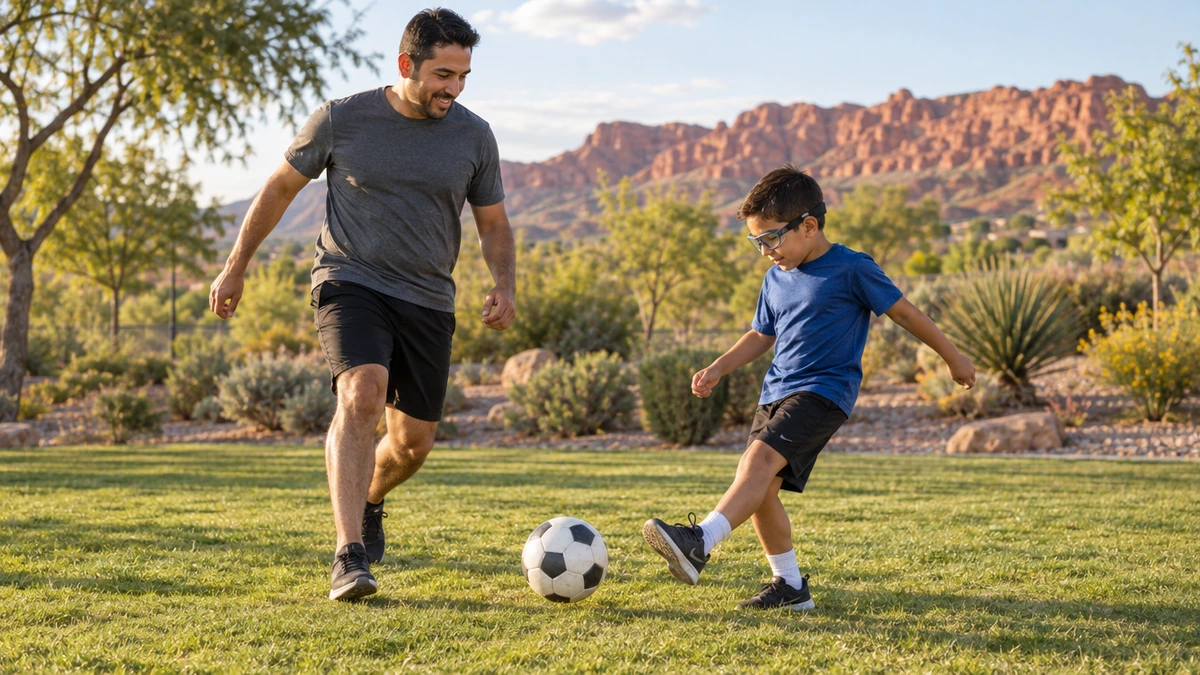
    Latino father and son kicking a soccer ball, boy wearing sports glasses, signs your child needs glasses
    Ask about protection matched to your child's sport.

    Everyday glasses are not soccer gear. Before your child’s next practice at a Summerlin park, follow Prevent Blindness guidance to choose sport-specific protective eyewear with polycarbonate lenses meeting the applicable ASTM standard. Bring the sport and the prescription when you shop for the protector.

    What Should You Do Before the Appointment?

    Give me the reason for your visit. A brief account of the squinting, reading trouble or frame discomfort gets us started. For a school referral, my guide to school screening and comprehensive exams explains what the screening result means and how to follow through.

    What I Check When You Report Squinting at Vision by Amel

    When you report squinting, I measure refraction, check whether both eyes team up and assess your child’s eye health in the same visit. Bring the concern back into the conversation as we discuss the findings. Keep asking until you understand what they mean for the moment that worried you.

    Use your pediatric eye exam to get the next step clear. Does the plan call for glasses, and when should your child wear them? Before you leave, confirm which changes to report and when to follow up.

    Make room for eye care in your school-week plans in Downtown Summerlin. Choose a visit you will be able to attend without rushing through the conversation. Keep your main concern in view from the first question to the last.

    Frequently Asked Questions About Signs Your Child Needs Glasses

    Will Glasses Make My Child’s Eyes Weaker?

    No, AAPOS explains glasses do not weaken your child’s eyesight or create dependence. Going without prescribed glasses sometimes harms normal vision development. I will explain the purpose of your child’s prescription so you understand why the wear schedule matters.

    What Should I Ask If My Child Already Has Glasses?

    Tell me whether your child’s symptoms happen with the current pair on, off or both. Use the pair worn at school for the discussion, including any bent or damaged frame. We will review the fit and prescription alongside the symptoms instead of assuming every complaint means stronger lenses.

    How Do I Get My Toddler to Keep Their Glasses On?

    Keep encouragement positive and check comfort first. AAPOS suggests books about children wearing glasses and family members modeling comfortable wear to help your toddler accept them. When slipping gets in the way, discuss a retaining strap or silicone temple tips with whoever fits your child’s glasses.

    Do I Need a Referral, and Does Vision by Amel Accept Nevada Medicaid?

    You do not need a referral for an eye exam at Vision by Amel, and we accept Nevada Medicaid. Give my team your plan details when you book online or call. We will help you check which benefits apply to the exam and any prescribed eyewear.

    What Should I Tell a Grandparent Who Helps With Glasses?

    Share your child’s prescribed wear schedule and the office contact information. Explain which concerns I want to hear about, including uncomfortable frames or continued resistance. Have the grandparent pass those concerns to you so we address them together before anyone changes the schedule.

    Book My Eye Exam Call (702) 858-4362

    Like this article? Add Vision by Amel as a preferred source, and you are more likely to see our articles in Google’s Top Stories.
    Add as a preferred source on Google

  • Pediatric Eye Exams in Las Vegas: A Parent’s Guide to Timing

    Pediatric Eye Exams in Las Vegas: A Parent’s Guide to Timing

    Pediatric Eye Exams in Las Vegas: A Parent’s Guide to Timing

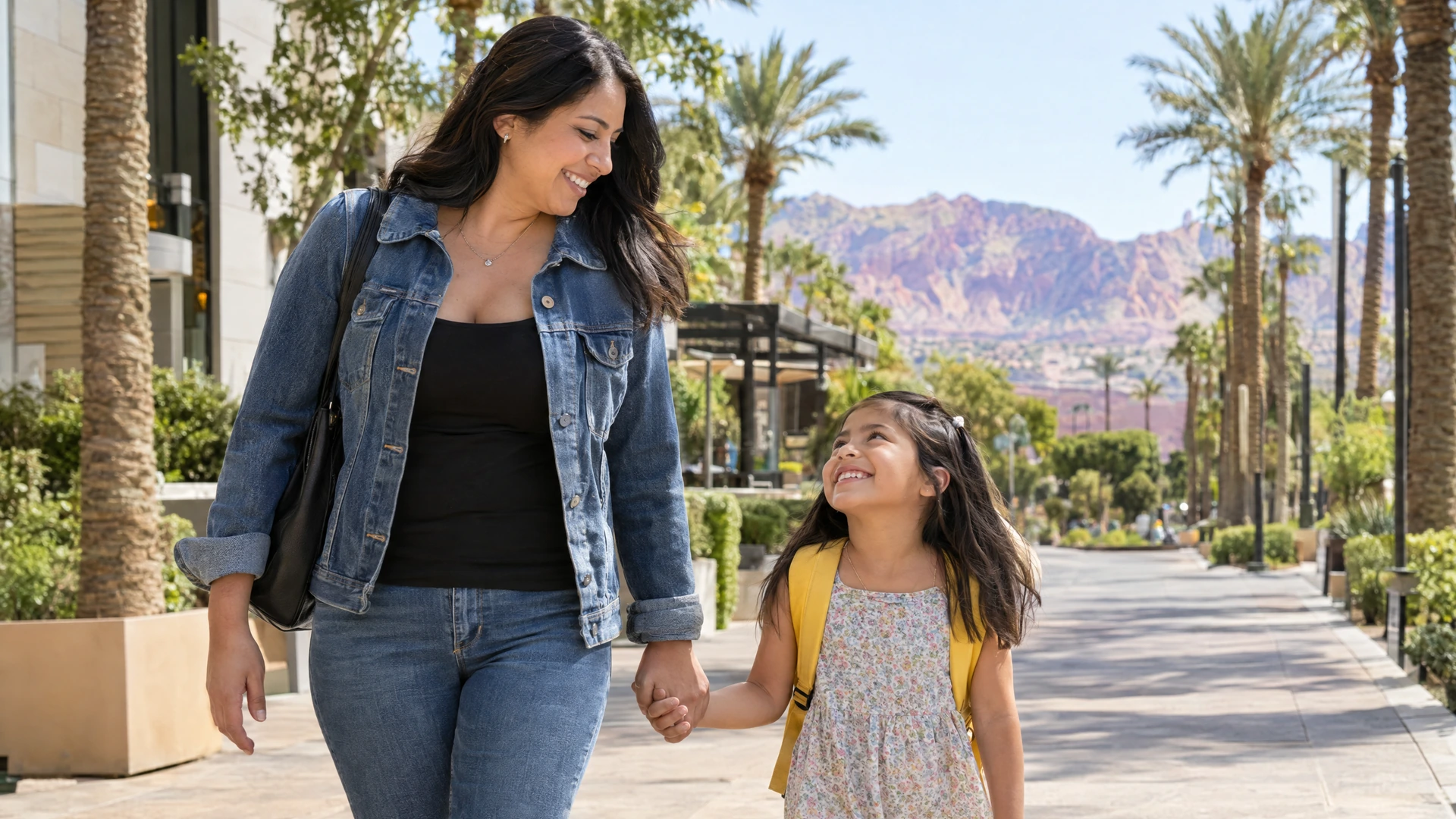
    A mother and her young daughter smile together on a sunny Las Vegas sidewalk on the way to an eye appointment

    TLDR: Your child needs a full eye exam after a failed screening, at the first sign of a vision problem, and on a regular schedule as school demands grow. A passed school screening does not rule out a problem, so your child’s eye exam fills the gap.

    Answer: Book a pediatric eye exam in Las Vegas whenever your child fails a screening, squints, tilts their head or struggles with reading. The American Optometric Association recommends a first exam at about 6 months, another between ages 3 and 5, one before school starts, then every year. Pediatric groups rely on screenings and send your child for an exam when a screening flags a problem.

    Your child rarely tells you the board looks blurry. Kids assume everyone sees the way they do. That is why I treat your child’s eye exam as the one visit that answers what a quick screening only guesses at. As an optometrist in Downtown Summerlin, I see pediatric eye exams as part of the comprehensive eye exams I give your whole family.

    This guide gives you the schedules the experts publish, the signs to watch for, what happens in the chair and how coverage works in Nevada. I reviewed 38 primary sources across five research lenses for this guide, and the eye care and pediatric groups agree on one rule: a child who fails a screening, shows symptoms or struggles to see needs a full eye exam. Use this page to decide when your child’s next visit belongs on the calendar.

    When Should Your Child Have a First Pediatric Eye Exam?

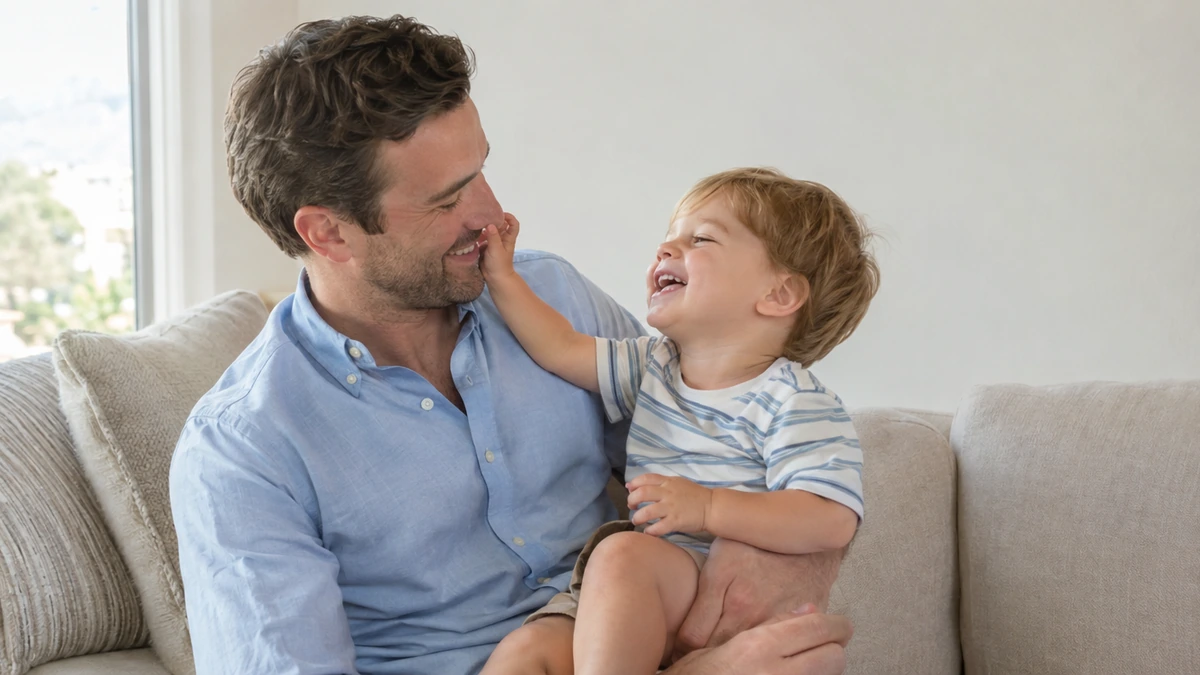
    A father holds his toddler son on his lap in a bright living room, both laughing
    Expert schedules differ, and both agree a child with symptoms needs an exam.

    Two respected camps answer this question differently, and you deserve both answers. The American Optometric Association recommends a first thorough exam at about 6 months, an in-person exam between ages 3 and 5, another as school starts and then an eye examination every year from 6 to 18. That schedule puts a doctor’s eyes on your child before problems show up in class.

    The American Academy of Pediatrics, the American Academy of Ophthalmology and AAPOS take a screening-first route. Your pediatrician checks the red reflex at birth, tries instrument-based screening between 12 months and 3 years, and tests reading-chart vision around age 4. The 2022 joint statement from AAPOS and the American Academy of Ophthalmology calls for repeat screening every 1 to 2 years after age 5 and an eye exam for any child who fails. The same statement says routine comprehensive exams in children with no symptoms have no proven medical benefit. Under this route, your child gets screened at checkups and examined when something turns up.

    Here is where I stand. For school-age kids, I follow the AOA’s yearly schedule, because schoolwork asks more of your child’s eyes every year and screenings miss some children with real problems. Both camps agree on the moments that matter most, so never skip an exam after a failed screening, a new symptom or a family history of crossed or lazy eyes.

    School Vision Screening vs a Comprehensive Eye Exam

    A boy with a backpack waves goodbye to his mother at the school drop-off line
    Passing a school screening does not rule out a vision problem.

    A vision screening is a quick filter. It checks whether your child reads a chart or passes an instrument test, then sorts children into pass and refer. A comprehensive eye exam is a diagnosis. Nevada law even defines a comprehensive examination as an in-person visit covering history, eye alignment, visual acuity, pupils and the front and back of your child’s eyes.

    What it coversSchool or pediatrician screeningComprehensive eye exam
    Who performs itSchool nurse, staff or pediatric officeOptometrist or ophthalmologist
    PurposeFlag children who need a closer lookDiagnose and plan treatment
    Eye alignment and focusingPartly, depending on the testYes
    Eye health inside the eyeLimited to a red reflex check in infancyYes, front and back of the eye
    Glasses prescriptionNoYes

    Screenings miss children. In the Vision In Preschoolers study of 2,588 children, the best screening tests run by trained eye care professionals caught only about two-thirds of children with a target condition, though they caught nearly 90 percent of the most serious ones. Prevent Blindness notes that passing a vision screening does not mean there is no chance your child has a vision disorder.

    Follow-up often breaks down too. A 2026 review of 30 studies found a median of only 43.1 percent of children who failed a school screening got the follow-up care they needed. If your child brings home a referral note, book the exam that week.

    What Nevada Schools Check

    Under NRS 392.420, Nevada schools with a school nurse check your child for vision problems before the end of the first year of elementary school, in at least one more elementary grade, and once each in middle school and high school. Children in special programs or repeating a grade get an extra check, and you receive a notice with a recommendation if something turns up. You also have the right to opt your child out in writing.

    Signs Your Child Needs a Pediatric Eye Exam Now

    A young girl squints and leans close while working on a puzzle at a kitchen table as her father watches
    Squinting, head tilting and sitting too close are worth an exam.

    Your child’s habits often tell you more than any chart. The American Optometric Association lists warning signs worth an exam even if your child passed a recent screening. Watch for these at home and ask your child’s teacher about them too:

    • Sitting close to the TV or holding a book close to the face
    • Squinting, tilting the head or covering one eye
    • Rubbing the eyes often or complaining of headaches
    • An eye that turns in, out, up or down
    • Losing their place while reading or skipping lines
    • Avoiding coloring, puzzles or close-up games
    • Unusual sensitivity to light

    Lazy Eye and Crossed Eyes

    Amblyopia, often called lazy eye, affects up to 3 in 100 children according to the National Eye Institute, and the sooner treatment starts the better. Large studies of preschool children found eye misalignment, called strabismus, in roughly 2 to 3 percent of kids. Your child rarely notices either one, which is exactly why your eyes and an exam matter.

    Reading Trouble and Vision

    Uncorrected farsightedness is linked to weaker early literacy scores in studies of 4 and 5 year olds. That is a real reason to check your child’s eyes when reading feels hard. A joint statement from the American Academy of Pediatrics, the American Academy of Ophthalmology and AAPOS also states vision problems do not cause dyslexia or learning disabilities, so your child’s exam rules vision in or out while the school evaluates learning.

    What Happens During a Pediatric Eye Exam in Las Vegas

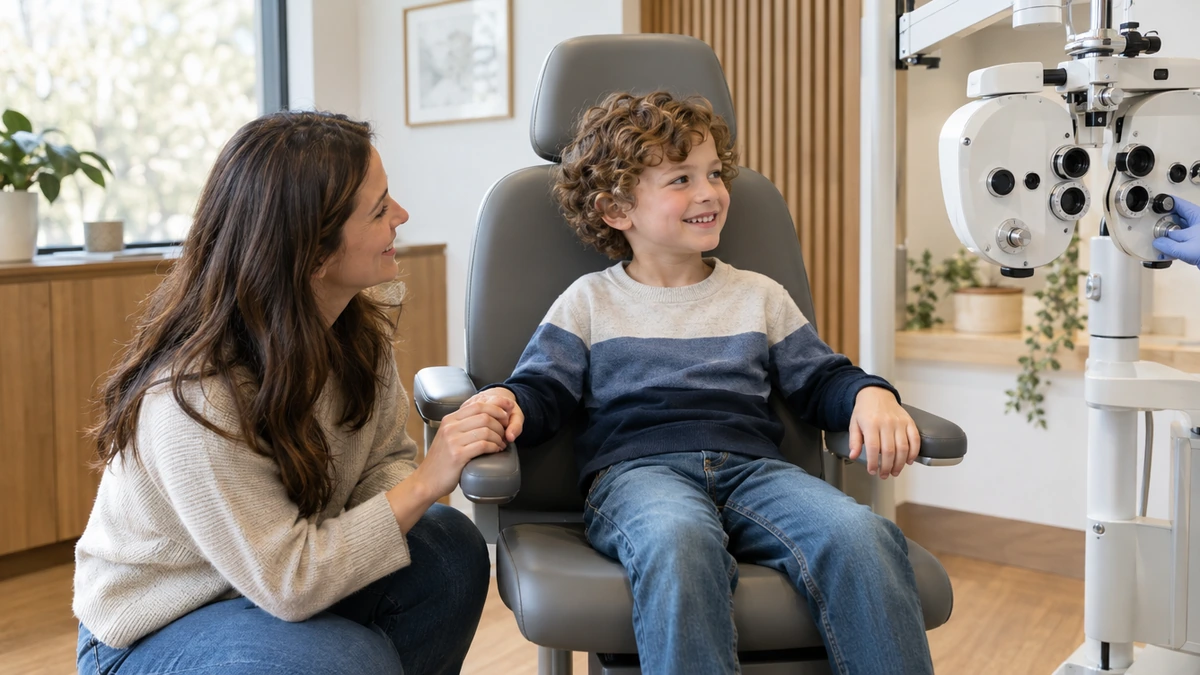
    A smiling boy sits in an eye exam chair holding his mother's hand during a pediatric eye exam
    Your child does not need to know letters to have a full eye exam.

    Your child does not need to know letters or how to read to have an eye exam. The AOA suggests allowing about an hour, booking early in the day when your child is fresh, and talking the visit through beforehand. Tell your child they will look at pictures and lights while you stay close by.

    The exam covers the whole visual system. I check how clearly each eye sees, how well the eyes line up and move together, whether your child needs glasses for nearsightedness, farsightedness or astigmatism, and the health of each eye from front to back. Visionix digital diagnostics measure your child’s eyes in seconds, which keeps the visit moving for short attention spans.

    Dilating drops are not routine in my exam room. If your child’s eye health calls for them, I explain why before any drops go in. The American Academy of Ophthalmology notes dilation lasts longer in children, so bring sunglasses and plan a quiet afternoon for your child.

    Screens, Homework and Your Child’s Eyes

    Screens tire your child’s eyes, and the tiredness passes. The American Academy of Ophthalmology states there is no scientific evidence screen light damages eyes, and dry eyes, blur and headaches from screens are temporary. Its guide to screen use for kids points parents to pediatric guidance on how much screen time fits each age.

    Comfort habits help your child most. Use the AOA’s 20-20-20 rule: every 20 minutes, look at something 20 feet away for 20 seconds. Keep tablets at arm’s length, remind your child to blink and set a timer for homework breaks. If headaches or squinting continue after those changes, book your child’s exam.

    How Coverage Works for Your Child’s Eye Exam

    Children’s vision gets better protection than adult vision under federal law. HealthCare.gov lists pediatric vision care as an essential health benefit, so every Marketplace plan includes vision coverage for your child. Employer plans vary, so check your own benefits.

    Nevada Medicaid covers children under 21 through the Healthy Kids program. Under the state’s ocular services manual, optometrists examine Healthy Kids members without a referral or prior authorization, routine exams are covered once every 12 months, and glasses are replaced after a prescription change or when they are lost or broken. Nevada Check Up covers children under 19 in families with income up to 205 percent of the Federal Poverty Level, so check whether your household qualifies.

    My team accepts Nevada Medicaid along with Anthem, Aetna, UMR, Humana, United Healthcare, Tricare, EyeMed, Spectera, Davis and VSP. We verify your child’s plan by phone before the visit. You know what to expect before you walk in.

    Why Las Vegas Parents Book Pediatric Eye Exams With Dr. Amel

    You get one boutique for your whole family’s eyes. I built my practice at 2010 Festival Plaza Dr, Suite 195, in Downtown Summerlin, open seven days a week, so weekend appointments fit around your child’s school week. Your child gets a doctor who explains every step, and you leave knowing exactly what I found.

    Book now if your child has never had a full eye exam, failed a screening or shows any sign on the list above. Learn more about Dr. Amel and the boutique, browse the Children’s Vision guides and protect your child’s eye health before the next school year asks more of their eyes.

    Frequently Asked Questions

    At what age should my child have their first eye exam?

    The American Optometric Association recommends a first exam at about 6 months, another between 3 and 5, and one before school starts. The American Academy of Pediatrics relies on screenings at well visits and sends your child for an exam when a screening flags a concern. Either way, a failed screening or a symptom means your child needs an exam now.

    Is a school vision screening enough?

    A screening sorts children, and an exam diagnoses them. Screenings check far fewer things than a comprehensive exam and miss some children with real problems. Treat a pass as good news and keep your child’s regular exam on the calendar.

    How long does a pediatric eye exam take?

    Plan on about an hour, the AOA suggests, especially for a first visit. Book a morning slot when your child is rested. Bring your child’s current glasses and any school screening notice.

    Does Nevada Medicaid cover my child’s glasses?

    Yes, for Healthy Kids members under 21. Nevada Medicaid covers a routine exam every 12 months and replaces glasses after a prescription change or when they are lost or broken. Call my team and we confirm your child’s coverage before the visit.

    Do screens damage my child’s eyes?

    The American Academy of Ophthalmology finds no scientific evidence that screen light damages your child’s eyes. Screen time causes temporary strain, dryness and headaches. Regular breaks and blinking keep your child comfortable.

    My child has type 1 diabetes. When do they need an eye exam?

    The American Diabetes Association recommends a first dilated diabetes eye exam once your child has had type 1 diabetes for three to five years and is 11 or older or has started puberty. Read my guide to diabetic eye exam timing for the full schedule. Keep your child’s regular vision exams going in the meantime.

    Book My Eye Exam Call (702) 858-4362

    Like this article? Add Vision by Amel as a preferred source, and you are more likely to see our articles in Google’s Top Stories.
    Add as a preferred source on Google