
Eye Allergies in Kids: Itchy, Watery Eyes in Summerlin
TLDR: Itching is the main clue to eye allergies in kids, often alongside redness and watering. Start with a cool compress and help your child stop rubbing. Eye pain, light sensitivity, blurred vision or intense redness need medical care right away.
Answer: Eye allergies in kids cause itchy, watery, red eyes after contact with allergens such as pollen or pet dander. In Summerlin, your child’s outdoor routine offers useful clues, but itching alone does not establish the cause. Cool compresses and removing allergens help with comfort. Persistent symptoms need an eye exam, and warning signs need care right away.
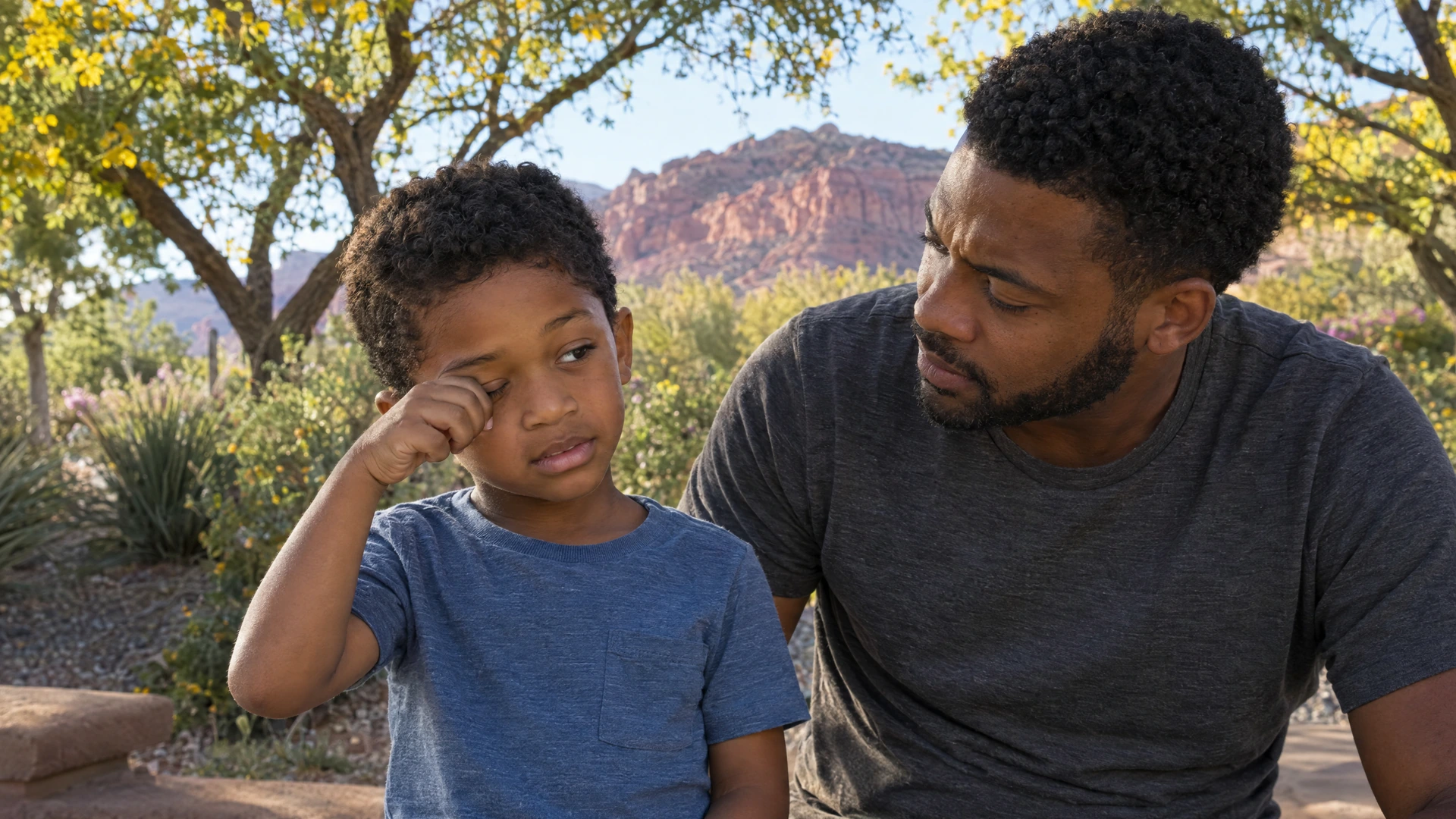
Your child leaves a Summerlin park rubbing both eyes, still carrying a dusty soccer ball. Back home, the rubbing continues through snack time. You need to know what helps, whether this spreads, and when to stop treating it as an ordinary itchy afternoon.
I reviewed 168 primary sources across five research lenses for this guide, and itching is the main symptom of allergic conjunctivitis. AAPOS identifies itching as the hallmark and describes redness, watering and swelling alongside it. As your optometrist, I use your observations as part of the history, then examine the eyes. Our eye exams page explains the practice’s approach to evaluating your child’s concerns.
How Do You Soothe Eye Allergies in Kids?
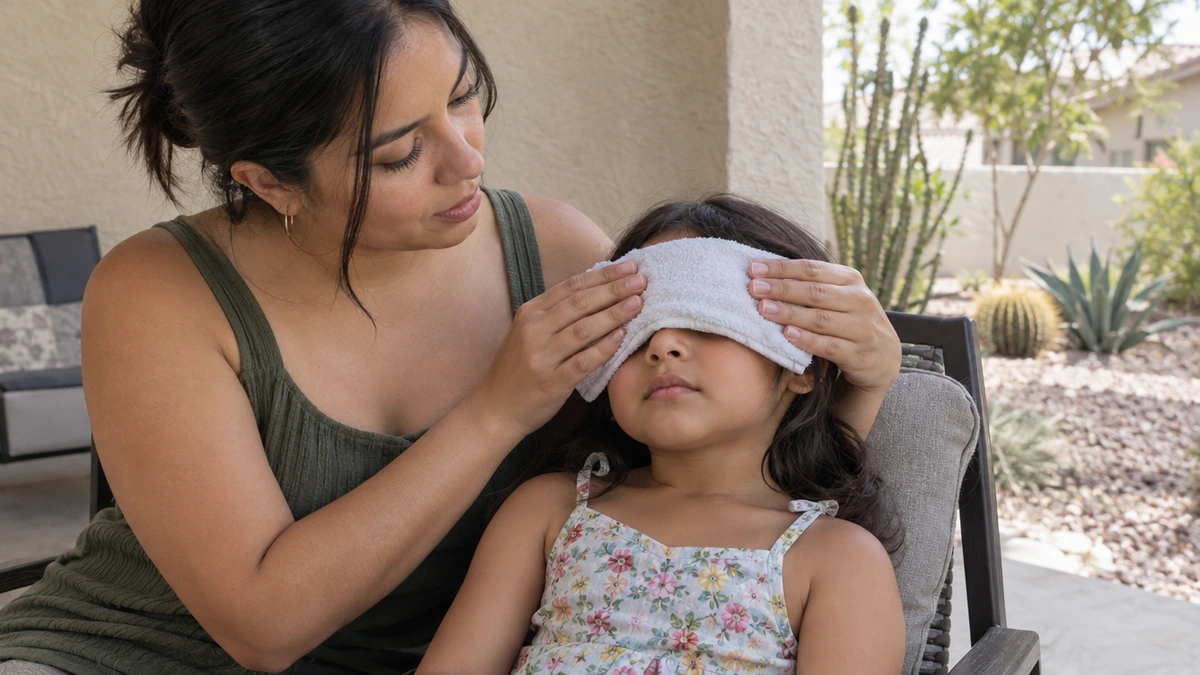
Cool the itch first. A clean, cool, damp cloth over your child’s closed eyes is the simplest relief you own. Then take away the trigger: wash off the pollen, move away from the cat, close the window. Watch how your child feels over the next day.
Hands up to the eyes? Hand over the cool cloth. You might see your child press a fist into one eye, blink hard or squeeze both eyes shut. Name the plan in words your child understands, and the cloth becomes the thing to reach for.
I favor a simple comfort routine parents repeat without a struggle. For you, that means putting the cloth within reach and choosing a quiet place to sit together. A patio chair in the shade or a comfortable seat indoors works for the pause. The goal is a manageable response to the itching while you watch how your child feels.
Is It Eye Allergies in Kids or Infectious Pink Eye?
Pink eye describes more than infection. According to the CDC, allergies and irritants cause noncontagious pink eye, while viral and bacterial forms spread between people. Symptoms overlap, so your child’s red eyes alone do not settle the cause. Use the distinctions below to describe what happened before the redness began.
| Possible Cause | Useful Clue | What It Means for Your Family |
|---|---|---|
| Allergic conjunctivitis | Itching with exposure to pollen, pets or indoor allergens | The allergy itself does not spread to siblings. |
| Viral or bacterial conjunctivitis | Contact with someone who has infectious pink eye | These infections spread, and overlapping symptoms need assessment. |
| Irritant conjunctivitis | Exposure to blowing dust, smoke or fumes | Irritation is not automatically an allergy and is not contagious. |
Start with what your child reports. Is the main complaint itching, or is the eye painful? Was there outdoor play, a dusty gust, or time around a pet before symptoms began? Those answers matter even when the eyes look the same as last time, because your child’s history is where I start.
Leave the diagnosis to me. Your job is the story: itch or pain, park or pet, today or all week. My guide to pink eye in kids covers the contagious kinds and the school rules, so this guide stays with allergy and what you control at home.
What Should You Do After Outdoor Play?
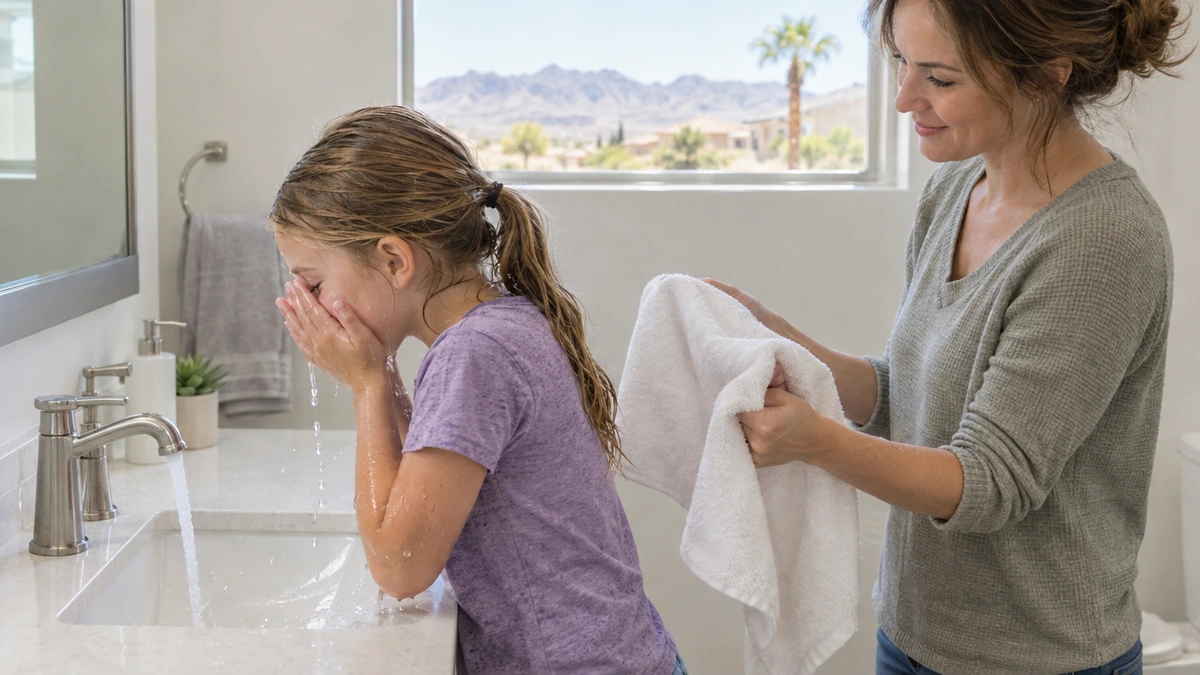
Make cleanup part of coming home. After your child runs across the grass at a Summerlin park, shoes land by the door and a parent sets a clean towel beside the bathroom sink. Wash your child’s face and hair to clear away pollen, and steer little hands away from the eyes, because rubbing makes allergic conjunctivitis worse, as AAPOS advises. Build that step into the transition from outdoor play to the rest of your afternoon.
- Help your child wash their hands with soap and water before touching the face.
- Wash the face and hair to remove allergens picked up outdoors.
- Offer a clean, cool damp cloth over closed eyes for itching.
- Redirect rubbing and notice whether symptoms settle, persist or worsen.
Outdoor preparation matters too. Sunglasses or eyeglasses help keep pollen out of your child’s eyes, and nasal allergy symptoms often accompany eye allergies, according to the American Academy of Ophthalmology. Notice sneezing or an itchy nose along with the eye symptoms. For choosing eyewear, our children’s sunglasses guide covers UV protection separately.
What Do Las Vegas Pollen and Dust Mean for Your Child?
Desert surroundings still contain pollen. In Las Vegas, researchers found tree pollen contributed the largest share of airborne pollen, with spring and fall weed peaks in a UNLV pollen study covering a single year. Those findings give you an observed pattern rather than fixed annual start and end dates. Use your child’s symptom history alongside the season.
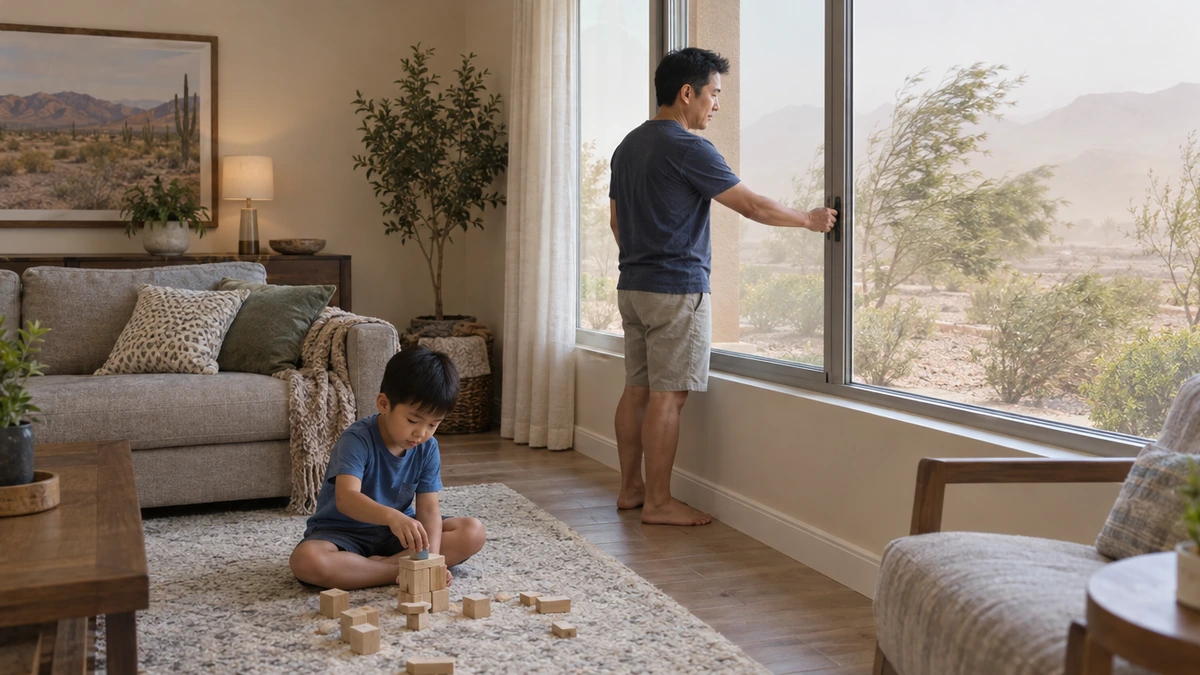
A windy afternoon adds another possibility. You are gathering toys from a stucco home’s patio when a gust lifts dust from the edge of the yard. Your child comes inside blinking and rubbing. Outdoor dust irritates eyes without necessarily causing an allergic reaction, so describe the exposure without deciding the diagnosis.
Close your windows and doors when dust blows, as Clark County advises. That guidance addresses airborne dust exposure, not proof of an eye allergy. Move the afternoon’s quiet play indoors while you assess the symptoms. Persistent discomfort still deserves attention after the window closes.
No pollen calendar knows your child like you do. Where did your child play? When did the itching start? Did a bath fix it, or did it last through dinner? Those answers, plus any pets at home, tell me more than any forecast.
When Is an Itchy Eye More Than Allergies?
Itching points to allergy. Pain points somewhere else. The CDC says to see a provider for eye pain, light sensitivity, blurred vision that stays after you wipe away discharge, or intense redness, and I want your child seen right away for any of them. These symptoms take priority over an allergy explanation. Do not wait for the next routine appointment to have them assessed.
Itching that gets worse, or never lets up, earns an exam. Share what you have tried and how your child responded. A new pattern, such as itching on indoor days too, matters. The next step is an eye exam, not another round of guesswork drops.
Leave leftover eye drops in the cabinet. A sibling’s old bottle or a relative’s prescription says nothing about what your child’s eyes need today. Bring the bottle to the visit instead, so I see exactly what your child used.
How I Approach Your Child’s Itchy Eyes at Vision by Amel
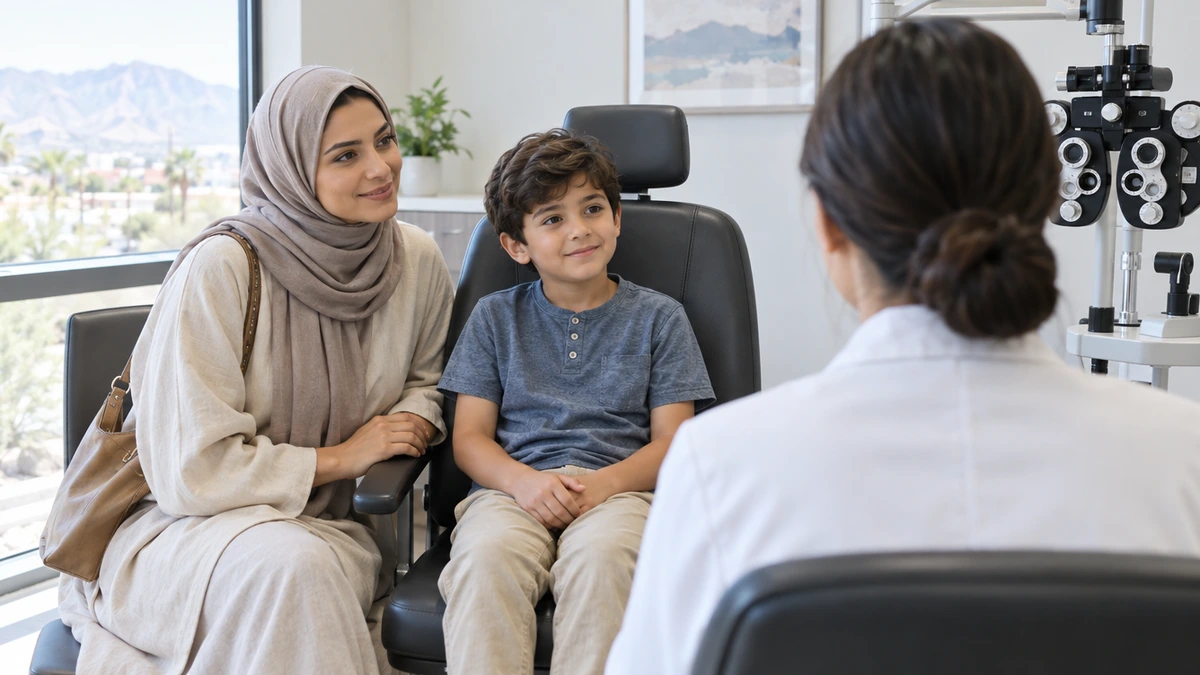
Your observations belong at the start of the visit. I am Dr. Amel Youssef, OD, founder of Vision by Amel, and Summerlin families come to me every week for their children’s eye care. After we discuss the itching, I use digital diagnostics and examine your child’s eyes to build a plan around what I find. For itchy eyes, explain the timing, exposures and home measures you have tried.
A clear history is worth more to me than a parent’s best guess at a diagnosis. Skip the medical names. Does the rubbing stop your child’s play, or follow your child indoors? My evaluation brings those answers together with the examination.
You will find us at Downtown Summerlin at Festival Plaza, at 2010 Festival Plaza Dr, Suite 195, Las Vegas, NV 89135. You do not need a referral for an eye exam. For a routine visit, book online or call our team. Mention the itching when you book, so your child’s visit starts with the history.
Frequently Asked Questions About Eye Allergies in Kids
Are My Child’s Itchy Red Eyes Allergies or Pink Eye?
Allergies are one cause of pink eye, and itching supports that possibility. Your child’s history of asthma or eczema also belongs in the discussion because allergic eye conditions are more likely in children with those conditions. Neither that history nor the appearance of the eyes establishes the diagnosis.
What Helps My Child’s Eye Allergies at Home?
Wash up, cool the eyes and stop the rubbing. Cold compresses and artificial tears ease the inflammation, and allergic pink eye usually improves once the allergen is gone, says the CDC. AAPOS adds that keeping artificial tears in the refrigerator gives extra relief for some children, and that washing bedding often and vacuuming your child’s bedroom cuts indoor triggers.
When Is Pollen Season in Las Vegas, and Can Desert Dust Bother My Child’s Eyes?
Spring is a major tree pollen period, and weed pollen also appears in fall. Your child’s exposures also include pollen from grass, so notice symptoms after playing on lawns as well as around flowering trees. Desert dust also irritates eyes, while indoor dust is an allergy trigger.
When Should My Child See an Eye Doctor for Eye Allergies?
Book an eye exam when your child’s symptoms get worse or do not improve, and get care right away for the warning signs above. You usually skip allergy testing: AAPOS says the history and the eye exam make the diagnosis. AAPOS also says steroid eye drops should be prescribed and monitored only by an ophthalmologist, because overuse risks glaucoma, cataract and infection.
Can My Child Wear Contacts If They Have Eye Allergies?
Seasonal allergies often make children poor candidates for contact lenses, according to the Food and Drug Administration. Discuss your child’s allergies at the contact lens visit. For itching, burning, irritation or redness during lens wear, remove the lenses and contact me right away. Our guide to contacts for kids and teens covers the broader readiness decision.
Book My Eye Exam Call (702) 858-4362
Like this article? Add Vision by Amel as a preferred source, and you are more likely to see our articles in Google’s Top Stories.
