Category: Summerlin Kids’ Eye Care

Children’s eye exams, sun protection and everyday eye care for Summerlin and Downtown Summerlin families.

  • Eye Allergies in Kids: Itchy, Watery Eyes in Summerlin
    Eye Allergies in Kids: Itchy, Watery Eyes in Summerlin

    Eye Allergies in Kids: Itchy, Watery Eyes in Summerlin

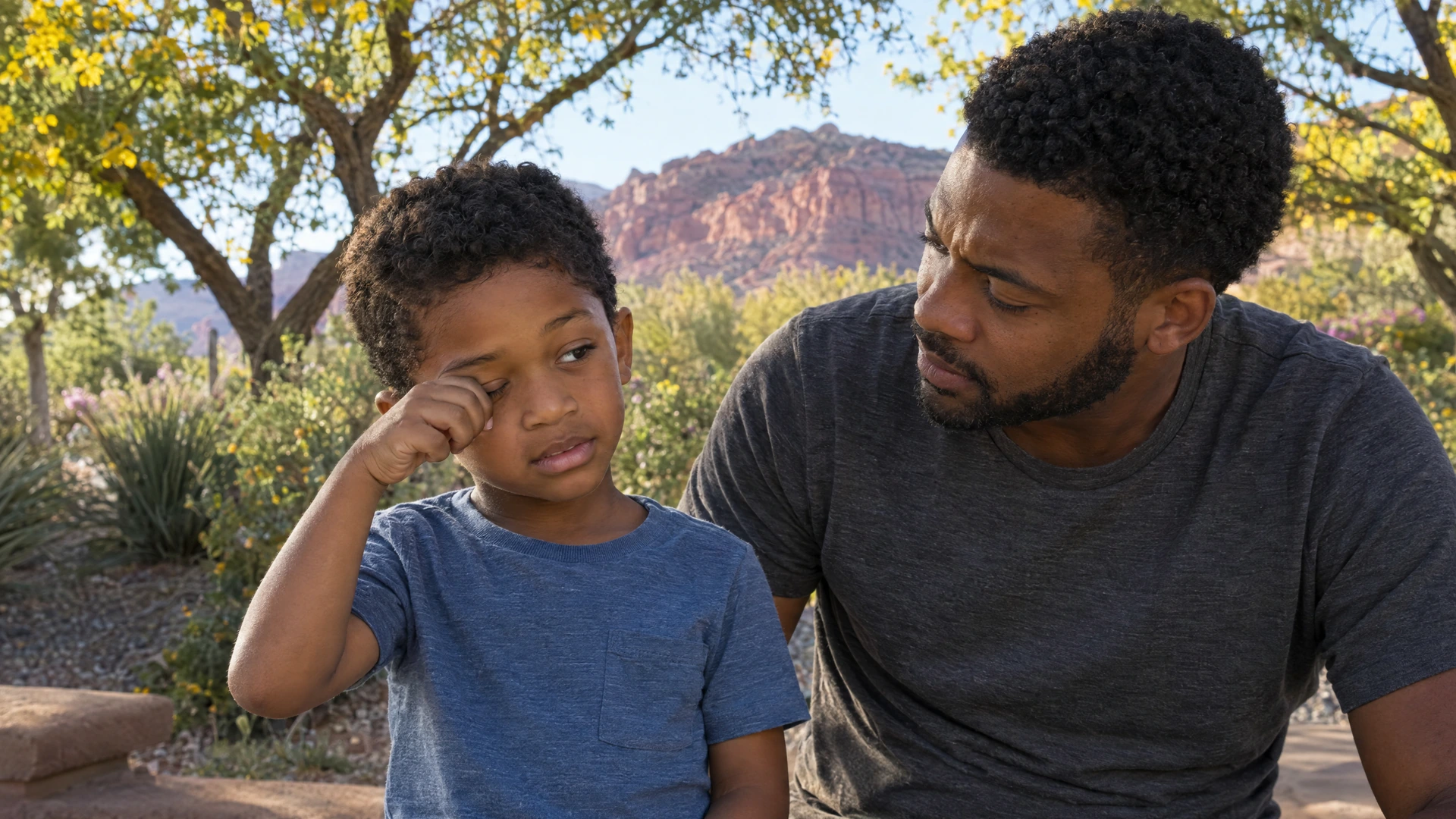
    Boy rubbing an eye beside his father at a Summerlin park, eye allergies in kids

    TLDR: Itching is the main clue to eye allergies in kids, often alongside redness and watering. Start with a cool compress and help your child stop rubbing. Eye pain, light sensitivity, blurred vision or intense redness need medical care right away.

    Answer: Eye allergies in kids cause itchy, watery, red eyes after contact with allergens such as pollen or pet dander. In Summerlin, your child’s outdoor routine offers useful clues, but itching alone does not establish the cause. Cool compresses and removing allergens help with comfort. Persistent symptoms need an eye exam, and warning signs need care right away.

    Your child leaves a Summerlin park rubbing both eyes, still carrying a dusty soccer ball. Back home, the rubbing continues through snack time. You need to know what helps, whether this spreads, and when to stop treating it as an ordinary itchy afternoon.

    I reviewed 168 primary sources across five research lenses for this guide, and itching is the main symptom of allergic conjunctivitis. AAPOS identifies itching as the hallmark and describes redness, watering and swelling alongside it. As your optometrist, I use your observations as part of the history, then examine the eyes. Our eye exams page explains the practice’s approach to evaluating your child’s concerns.

    How Do You Soothe Eye Allergies in Kids?
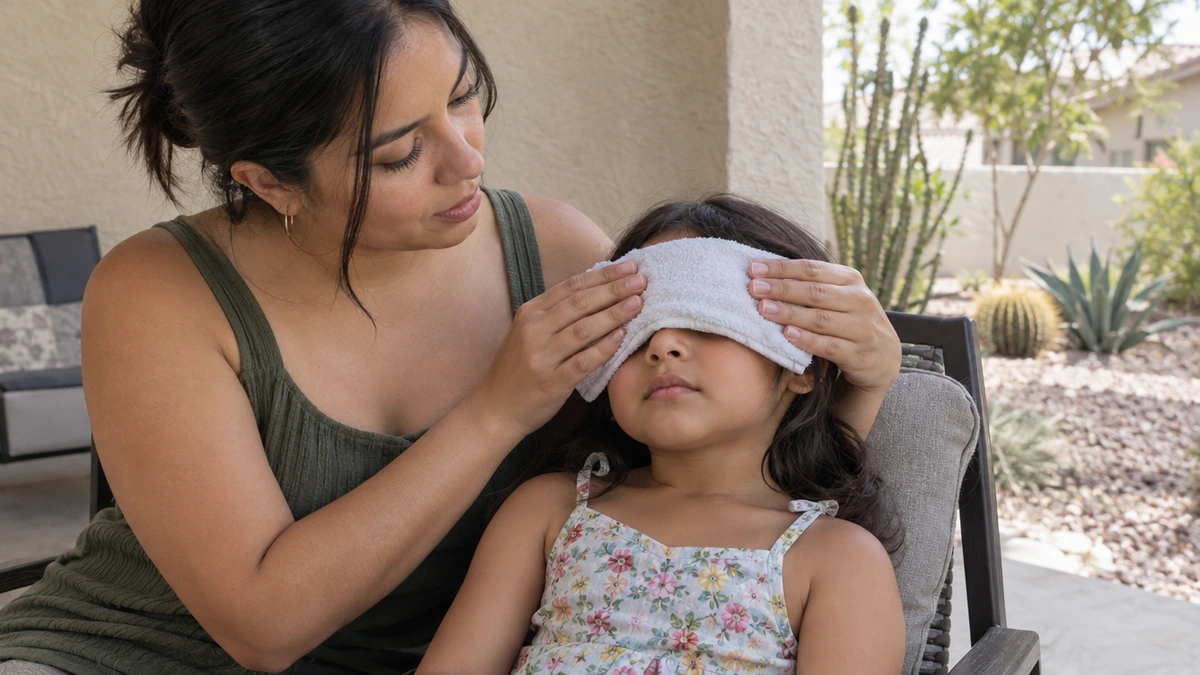
    Mother placing a cool cloth over her daughter's closed eyes, eye allergies in kids
    A cool damp cloth offers a simple comfort measure.

    Cool the itch first. A clean, cool, damp cloth over your child’s closed eyes is the simplest relief you own. Then take away the trigger: wash off the pollen, move away from the cat, close the window. Watch how your child feels over the next day.

    Hands up to the eyes? Hand over the cool cloth. You might see your child press a fist into one eye, blink hard or squeeze both eyes shut. Name the plan in words your child understands, and the cloth becomes the thing to reach for.

    I favor a simple comfort routine parents repeat without a struggle. For you, that means putting the cloth within reach and choosing a quiet place to sit together. A patio chair in the shade or a comfortable seat indoors works for the pause. The goal is a manageable response to the itching while you watch how your child feels.

    Is It Eye Allergies in Kids or Infectious Pink Eye?

    Pink eye describes more than infection. According to the CDC, allergies and irritants cause noncontagious pink eye, while viral and bacterial forms spread between people. Symptoms overlap, so your child’s red eyes alone do not settle the cause. Use the distinctions below to describe what happened before the redness began.

    Possible CauseUseful ClueWhat It Means for Your Family
    Allergic conjunctivitisItching with exposure to pollen, pets or indoor allergensThe allergy itself does not spread to siblings.
    Viral or bacterial conjunctivitisContact with someone who has infectious pink eyeThese infections spread, and overlapping symptoms need assessment.
    Irritant conjunctivitisExposure to blowing dust, smoke or fumesIrritation is not automatically an allergy and is not contagious.

    Start with what your child reports. Is the main complaint itching, or is the eye painful? Was there outdoor play, a dusty gust, or time around a pet before symptoms began? Those answers matter even when the eyes look the same as last time, because your child’s history is where I start.

    Leave the diagnosis to me. Your job is the story: itch or pain, park or pet, today or all week. My guide to pink eye in kids covers the contagious kinds and the school rules, so this guide stays with allergy and what you control at home.

    What Should You Do After Outdoor Play?
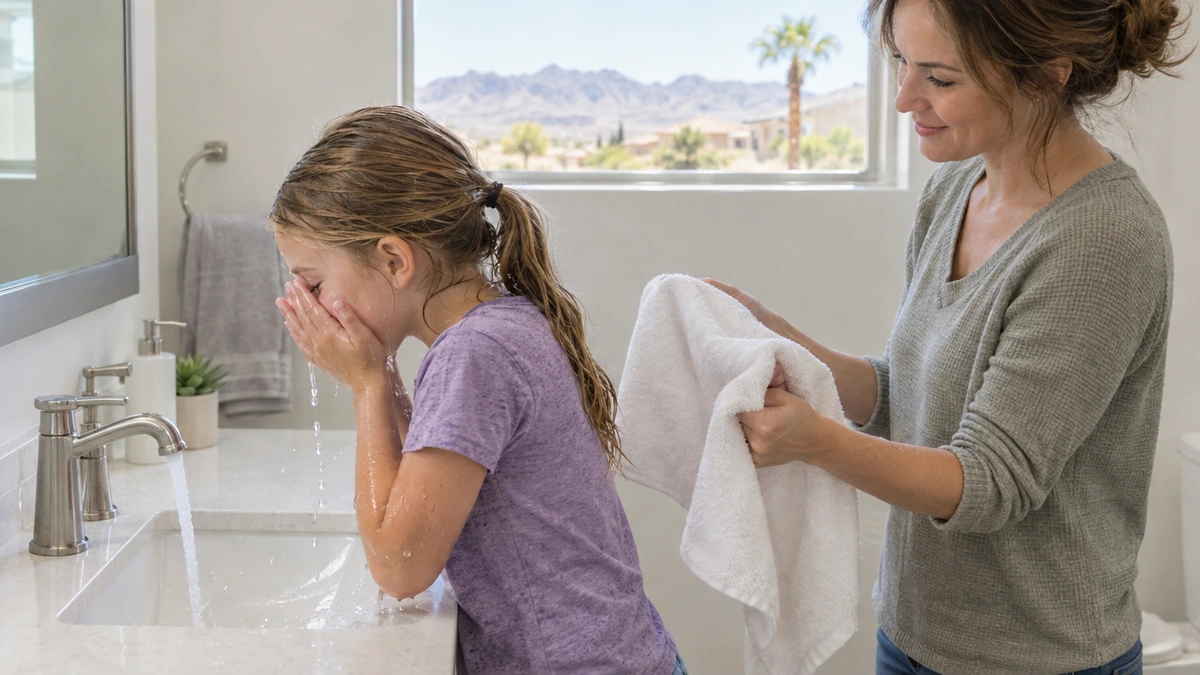
    Girl washing her face and hands as her mother offers a towel, eye allergies in kids
    Washing the face helps remove allergens after outdoor play.

    Make cleanup part of coming home. After your child runs across the grass at a Summerlin park, shoes land by the door and a parent sets a clean towel beside the bathroom sink. Wash your child’s face and hair to clear away pollen, and steer little hands away from the eyes, because rubbing makes allergic conjunctivitis worse, as AAPOS advises. Build that step into the transition from outdoor play to the rest of your afternoon.

    1. Help your child wash their hands with soap and water before touching the face.
    2. Wash the face and hair to remove allergens picked up outdoors.
    3. Offer a clean, cool damp cloth over closed eyes for itching.
    4. Redirect rubbing and notice whether symptoms settle, persist or worsen.

    Outdoor preparation matters too. Sunglasses or eyeglasses help keep pollen out of your child’s eyes, and nasal allergy symptoms often accompany eye allergies, according to the American Academy of Ophthalmology. Notice sneezing or an itchy nose along with the eye symptoms. For choosing eyewear, our children’s sunglasses guide covers UV protection separately.

    What Do Las Vegas Pollen and Dust Mean for Your Child?
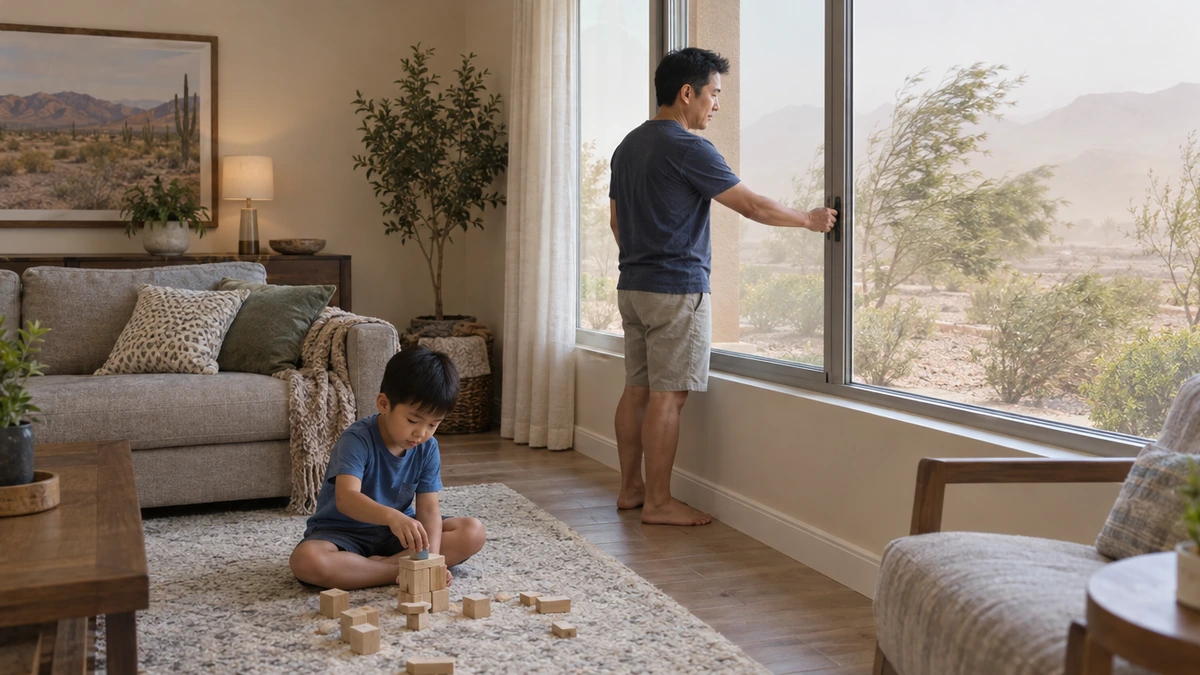
    Father closing a living room window while his son plays nearby, eye allergies in kids
    Closed windows help limit exposure to blowing dust.

    Desert surroundings still contain pollen. In Las Vegas, researchers found tree pollen contributed the largest share of airborne pollen, with spring and fall weed peaks in a UNLV pollen study covering a single year. Those findings give you an observed pattern rather than fixed annual start and end dates. Use your child’s symptom history alongside the season.

    A windy afternoon adds another possibility. You are gathering toys from a stucco home’s patio when a gust lifts dust from the edge of the yard. Your child comes inside blinking and rubbing. Outdoor dust irritates eyes without necessarily causing an allergic reaction, so describe the exposure without deciding the diagnosis.

    Close your windows and doors when dust blows, as Clark County advises. That guidance addresses airborne dust exposure, not proof of an eye allergy. Move the afternoon’s quiet play indoors while you assess the symptoms. Persistent discomfort still deserves attention after the window closes.

    No pollen calendar knows your child like you do. Where did your child play? When did the itching start? Did a bath fix it, or did it last through dinner? Those answers, plus any pets at home, tell me more than any forecast.

    When Is an Itchy Eye More Than Allergies?

    Itching points to allergy. Pain points somewhere else. The CDC says to see a provider for eye pain, light sensitivity, blurred vision that stays after you wipe away discharge, or intense redness, and I want your child seen right away for any of them. These symptoms take priority over an allergy explanation. Do not wait for the next routine appointment to have them assessed.

    Itching that gets worse, or never lets up, earns an exam. Share what you have tried and how your child responded. A new pattern, such as itching on indoor days too, matters. The next step is an eye exam, not another round of guesswork drops.

    Leave leftover eye drops in the cabinet. A sibling’s old bottle or a relative’s prescription says nothing about what your child’s eyes need today. Bring the bottle to the visit instead, so I see exactly what your child used.

    How I Approach Your Child’s Itchy Eyes at Vision by Amel
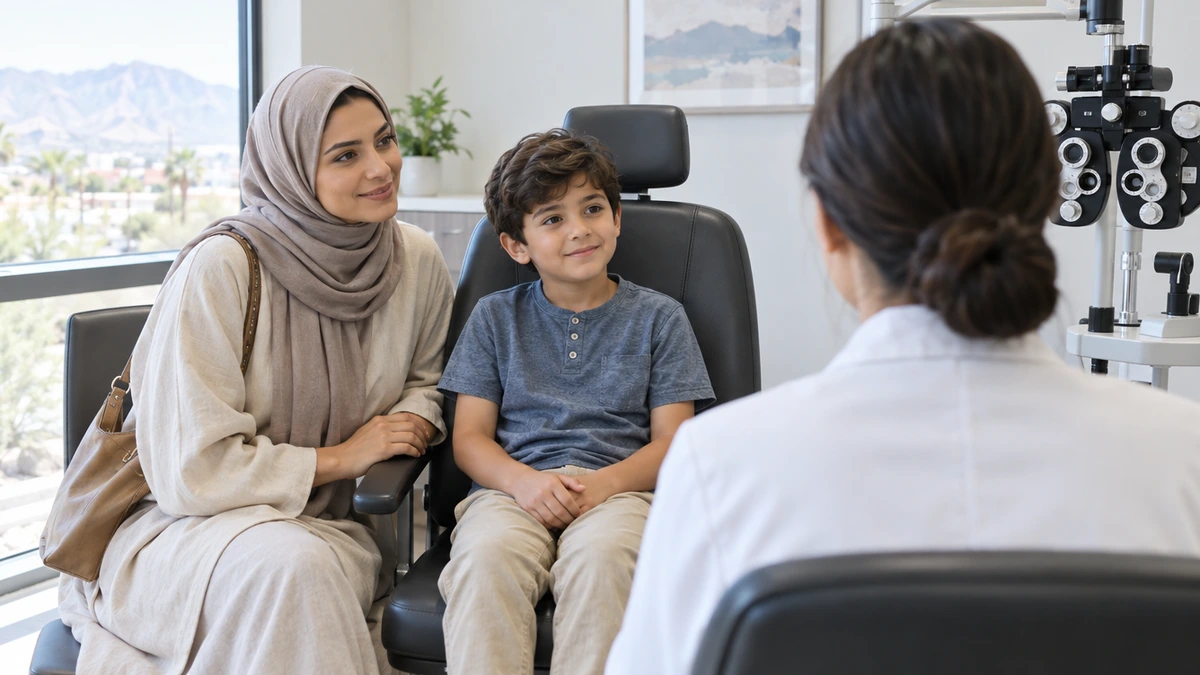
    Mother beside her son in an exam chair, clinician seen from behind, eye allergies in kids
    A mother sits beside her son in the exam chair as the eye doctor listens.

    Your observations belong at the start of the visit. I am Dr. Amel Youssef, OD, founder of Vision by Amel, and Summerlin families come to me every week for their children’s eye care. After we discuss the itching, I use digital diagnostics and examine your child’s eyes to build a plan around what I find. For itchy eyes, explain the timing, exposures and home measures you have tried.

    A clear history is worth more to me than a parent’s best guess at a diagnosis. Skip the medical names. Does the rubbing stop your child’s play, or follow your child indoors? My evaluation brings those answers together with the examination.

    You will find us at Downtown Summerlin at Festival Plaza, at 2010 Festival Plaza Dr, Suite 195, Las Vegas, NV 89135. You do not need a referral for an eye exam. For a routine visit, book online or call our team. Mention the itching when you book, so your child’s visit starts with the history.

    Frequently Asked Questions About Eye Allergies in Kids

    Are My Child’s Itchy Red Eyes Allergies or Pink Eye?

    Allergies are one cause of pink eye, and itching supports that possibility. Your child’s history of asthma or eczema also belongs in the discussion because allergic eye conditions are more likely in children with those conditions. Neither that history nor the appearance of the eyes establishes the diagnosis.

    What Helps My Child’s Eye Allergies at Home?

    Wash up, cool the eyes and stop the rubbing. Cold compresses and artificial tears ease the inflammation, and allergic pink eye usually improves once the allergen is gone, says the CDC. AAPOS adds that keeping artificial tears in the refrigerator gives extra relief for some children, and that washing bedding often and vacuuming your child’s bedroom cuts indoor triggers.

    When Is Pollen Season in Las Vegas, and Can Desert Dust Bother My Child’s Eyes?

    Spring is a major tree pollen period, and weed pollen also appears in fall. Your child’s exposures also include pollen from grass, so notice symptoms after playing on lawns as well as around flowering trees. Desert dust also irritates eyes, while indoor dust is an allergy trigger.

    When Should My Child See an Eye Doctor for Eye Allergies?

    Book an eye exam when your child’s symptoms get worse or do not improve, and get care right away for the warning signs above. You usually skip allergy testing: AAPOS says the history and the eye exam make the diagnosis. AAPOS also says steroid eye drops should be prescribed and monitored only by an ophthalmologist, because overuse risks glaucoma, cataract and infection.

    Can My Child Wear Contacts If They Have Eye Allergies?

    Seasonal allergies often make children poor candidates for contact lenses, according to the Food and Drug Administration. Discuss your child’s allergies at the contact lens visit. For itching, burning, irritation or redness during lens wear, remove the lenses and contact me right away. Our guide to contacts for kids and teens covers the broader readiness decision.

    Book My Eye Exam Call (702) 858-4362

    Like this article? Add Vision by Amel as a preferred source, and you are more likely to see our articles in Google’s Top Stories.

    Add as a preferred source on Google

  • Pink Eye in Kids: When to See an Eye Doctor in Summerlin

    Pink Eye in Kids: When to See an Eye Doctor in Summerlin

    Pink Eye in Kids: When to See an Eye Doctor in Summerlin

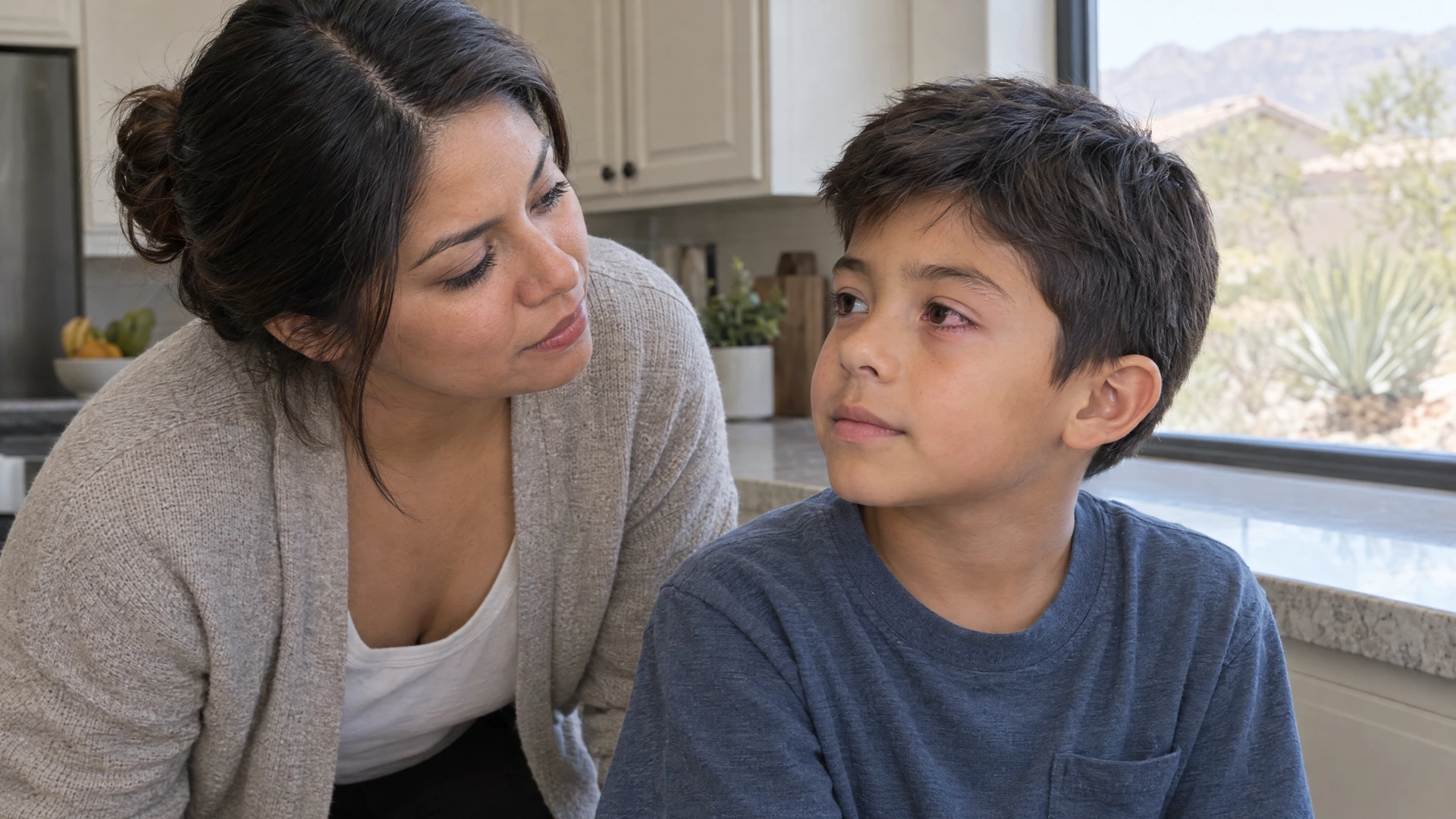
    Latina mother checking her son's slightly red eye at a kitchen counter, illustrating pink eye in kids

    TLDR: With pink eye in kids, your first decisions are whether your child needs prompt care and how to limit spread. Get care right away for the warning signs below, and check the school or daycare policy before sending your child back.

    Answer: Seek an eye doctor right away in Summerlin for your child’s pink eye with pain, light sensitivity or blurred vision that persists after discharge is wiped away. A newborn with pink eye symptoms, or a contact lens wearer with a red, painful eye, needs care right away too. For other concerns, call to arrange an eye exam and discuss school return.

    Your child wakes up with one red, sticky eye. The lunch is packed, the carpool leaves at 7:40, and you have five minutes to decide. Start with how your child feels, then sort out school. At your Summerlin kitchen counter, the car keys sit beside an untouched bowl of cereal.

    I reviewed 113 primary sources across five research lenses for this guide, and the cause of pink eye is sometimes hard to tell from symptoms alone. You do not need to name the infection before calling for help. As an optometrist in Las Vegas, I want your first call to describe what changed and how your child feels. Our eye exam service page explains the broader exam process.

    What Should You Do First for Pink Eye in Kids?

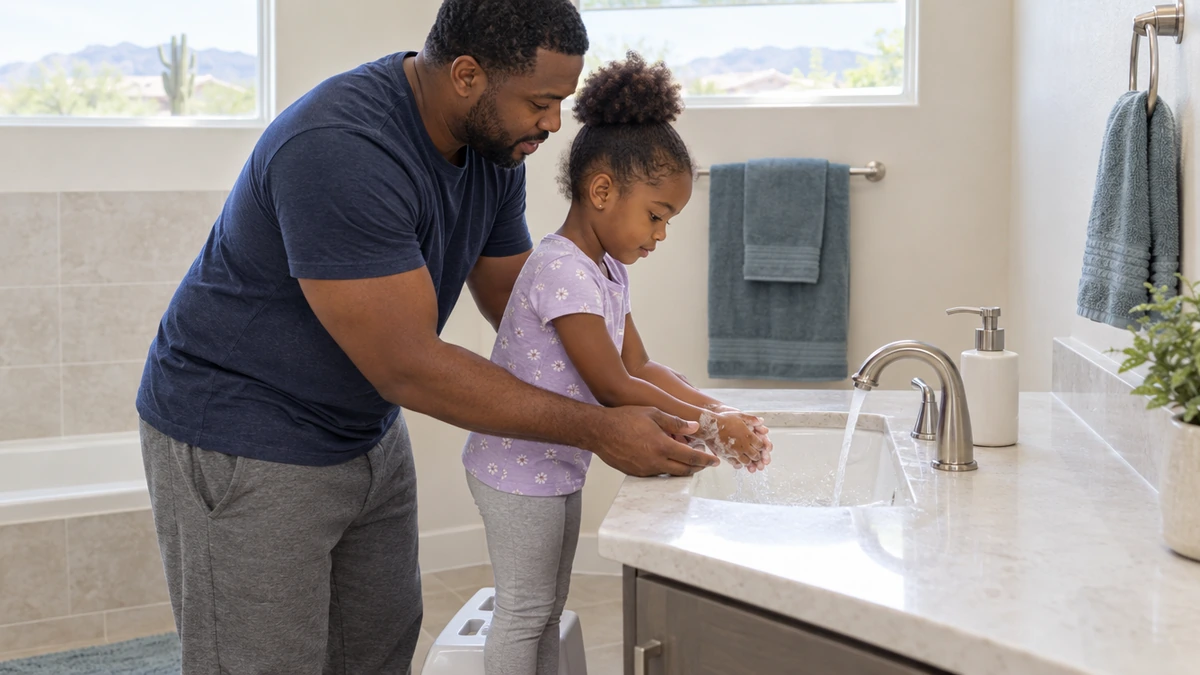
    Black father helping his daughter wash her hands at a bathroom sink, a hygiene step for pink eye in kids
    A father helps his daughter wash her hands with soap at the sink.

    Start at the sink. Wash your hands often with soap and water for at least 20 seconds, as the CDC recommends to limit spread. Help your child follow these hygiene steps while you arrange any needed eye care.

    1. Wash your own hands and help your child wash theirs.
    2. Discourage touching and rubbing the eyes.
    3. Set aside separate towels, washcloths and pillows.
    4. Keep eye drops for the person using them, without sharing bottles.
    5. Wash used linens in hot water, then wash your hands after handling them.

    Make the routine easy to follow. Put your child’s towel where they reach for it, and show siblings which towel belongs to them. Explain the plan to the adult handling pickup or bedtime. A clear handoff keeps everyone following the same steps.

    When Does Pink Eye in Kids Need Care Right Away?

    Eye pain, light sensitivity and blurred vision that does not clear when you wipe away the discharge are on the CDC list of reasons to see a provider. With pink eye, I want your child seen for those right away. The CDC also wants a provider to check intense redness, symptoms that get worse or do not improve, bacterial pink eye that is not better after 24 hours of antibiotics, and any child with a weakened immune system. Say which sign you noticed when you call. Do not wait for a routine appointment slot.

    Have your newborn seen right away for pink eye symptoms, as the CDC directs. Start the call with your baby’s age and symptoms. This call takes priority over planning your routine infant visit.

    Wear contacts? Take them out now. A red, painful eye in a contact lens wearer needs care right away. The CDC warns that bacterial pink eye in lens wearers raises the risk of bacterial keratitis and calls for antibiotics plus a prompt ophthalmologist exam. Mention your child’s contact lenses when calling for care.

    Is Your Child’s Pink Eye Viral, Bacterial or Allergic?

    The cause matters. Viral and bacterial pink eye spread between people, allergic pink eye does not, and overlapping symptoms complicate identifying your child’s cause, according to the CDC. Use this comparison to understand those distinctions before discussing treatment.

    TypeDoes It Spread Between People?What It Means for Your Family
    ViralYesFollow the handwashing and separate towel routine.
    BacterialYesFollow the same hygiene routine and discuss treatment.
    AllergicNoDiscuss allergy care once the cause has been assessed.

    Describe what you see without trying to label it. Note when the redness began, whether an eye is draining and what your child says about discomfort. Include anything already used on the eye. I would rather hear your child’s own words than a guessed diagnosis.

    One red eye, one question. Save the glasses and screening questions for another day, and read my pediatric eye exam guide once the redness clears. Your notes about today’s redness deserve their own space.

    How Do You Keep Pink Eye From Spreading at Home?

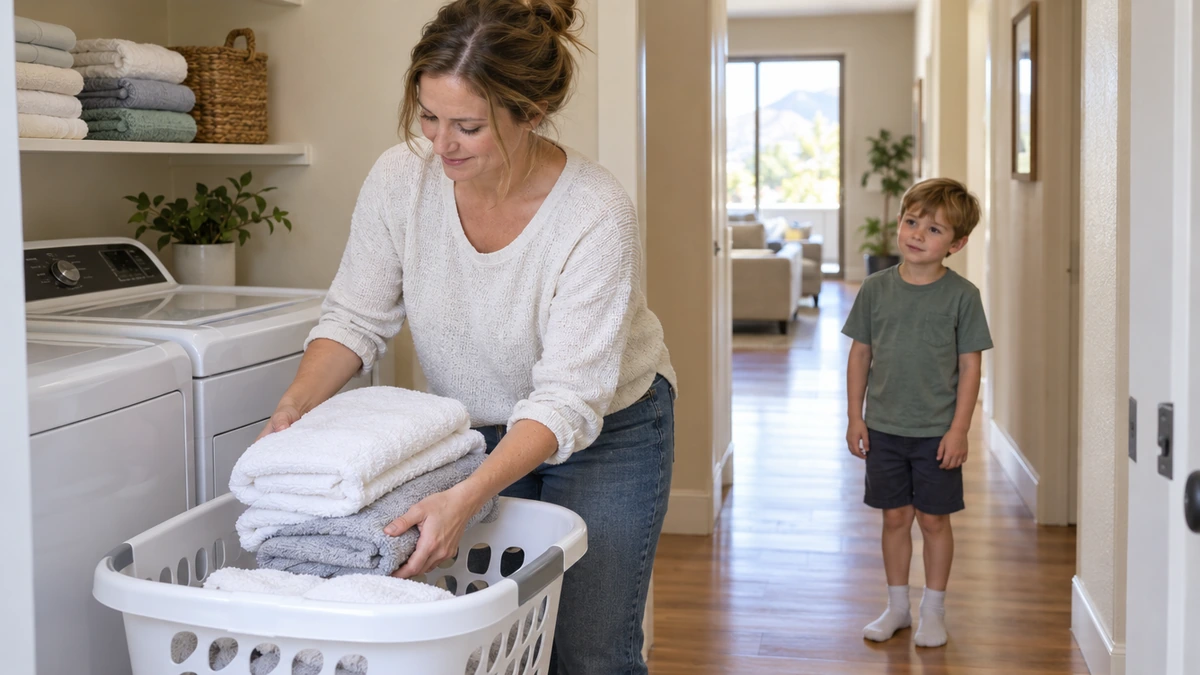
    White mother placing fresh towels in a laundry basket as her son watches, home hygiene for pink eye in kids
    A mother sets out fresh towels while her son watches from the hallway.

    One towel per person. That single rule protects your whole household, including whoever does the laundry. Set clean towels within reach and put used ones straight into the laundry basket. Avoid leaving a damp washcloth beside the shared hand towel.

    Your child needs a simple explanation. Try, “This towel is yours while we look after your eye.” Show them where it belongs instead of repeating a warning from across the room. When another caregiver takes over, point out the towels and explain the handwashing routine.

    At a Las Vegas school pickup, your child climbs into the back seat rubbing an eye while another parent waits behind you. Park before calling about the symptoms. Tell the teacher or daycare staff what symptoms you noticed and what guidance you received. Explain whether your child still needs help keeping hands away from the eyes. That detail belongs in the return discussion alongside the attendance policy.

    What Helps Your Child Feel More Comfortable?

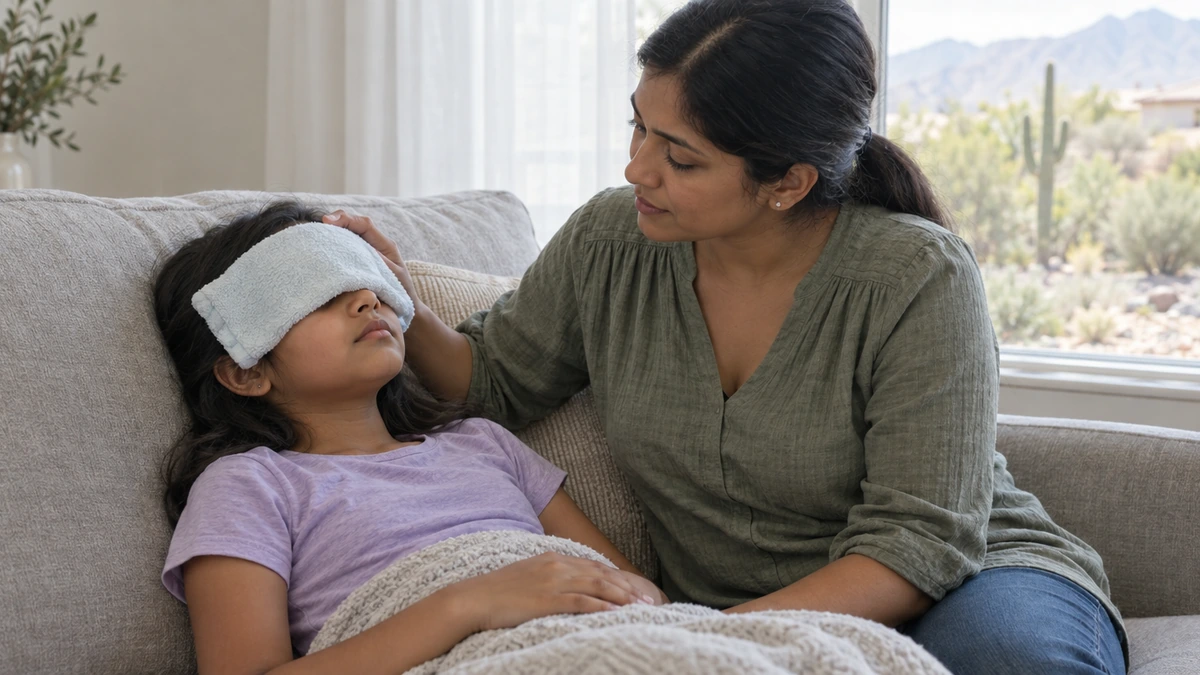
    South Asian girl resting with a cool damp washcloth over closed eyes beside her mother, comfort for pink eye in kids
    A cool compress is a comfort measure for pink eye.

    Match your child’s care to the cause. Antibiotics do nothing for viral pink eye, mild bacterial pink eye often clears without them, and cold compresses with artificial tears ease the irritation, says the CDC. For allergic pink eye, the same guidance points to allergy medicine or antihistamine eye drops. Discuss which drops fit your child’s symptoms before choosing a bottle.

    Your child’s treatment decision belongs with the assessment. Bring the school policy to that discussion, along with the symptoms you have observed. Describe what has changed since the morning, including anything your child says feels worse.

    Make your questions practical. Write down what to use, how to use it and when to check back. Repeat those instructions to anyone helping with care so the plan stays consistent. I want you to leave with instructions you understand and know how to follow.

    When Should Your Child Return to School or Daycare?

    Rules depend on the type of pink eye and on your child’s school or daycare. Nevada’s state health guidance does not require keeping your child home for clear, watery pink eye without fever, eye pain or red eyelids, unless your child cannot keep hands away from the eyes, says the Nevada OSE provider sheet. Thick white or yellow discharge with eye pain means a provider exam and approval before your child goes back.

    The Nevada OSE parent sheet says your child needs to stay home for fever or being too unwell for routine activities, and says antibiotics or a provider note are not required for return. These are health guidance documents. Confirm how your school or daycare handles the differing instructions.

    Ask staff for their written policy. Explain the symptoms, the assessment and any treatment instructions rather than promising a return date before the visit. Save the response with your child’s care notes. I believe a clear return plan is part of caring for the whole family.

    How I Approach Your Child’s Visit at Vision by Amel

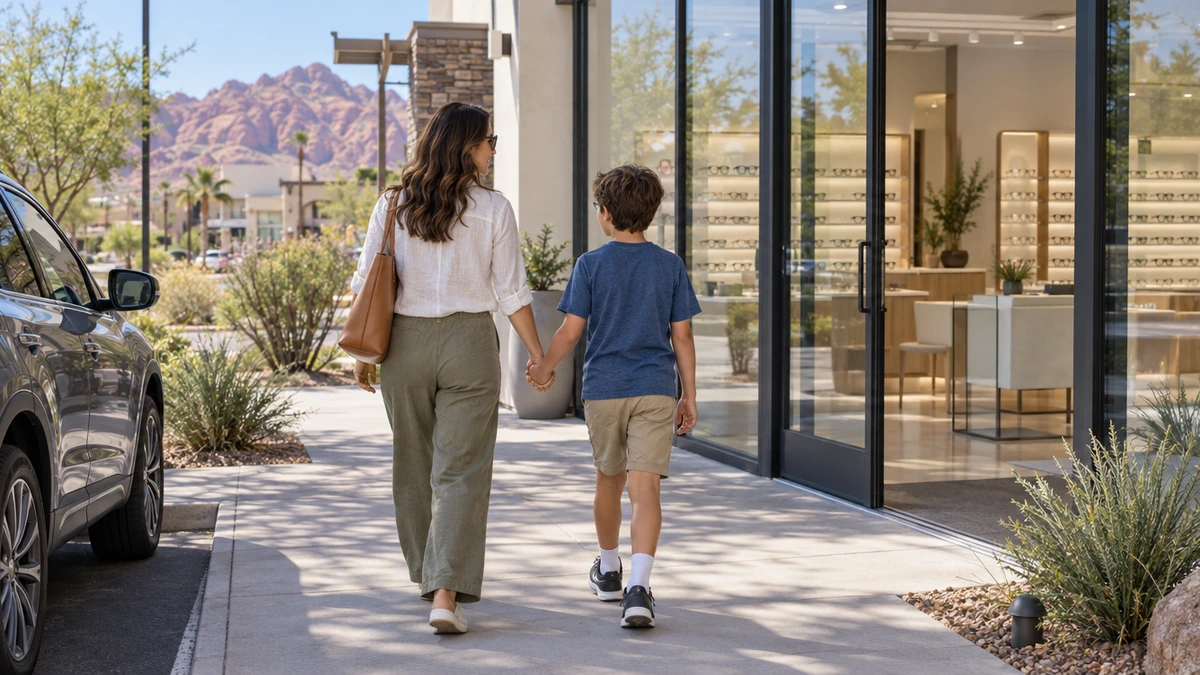
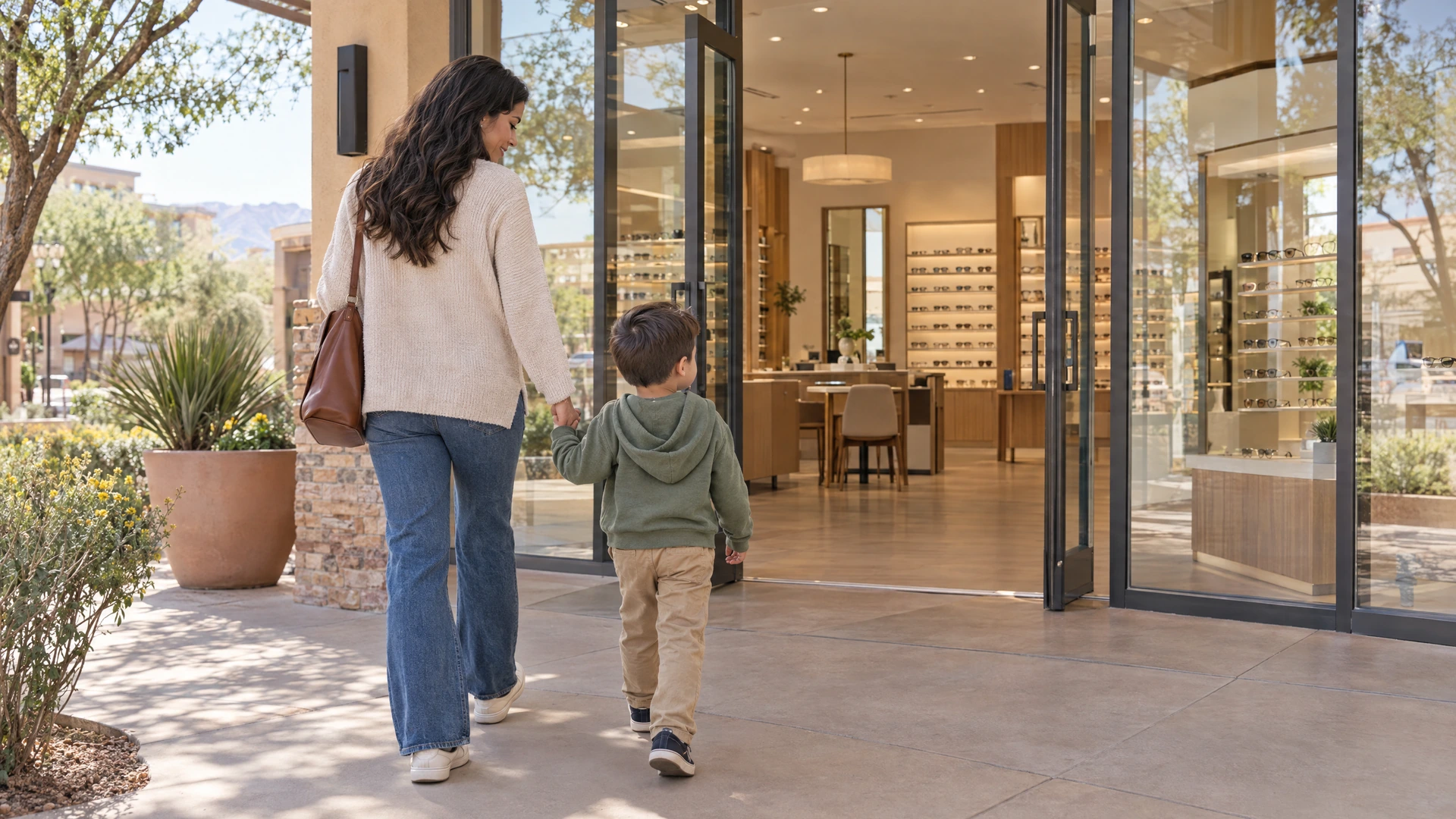
    Mother and son walking from a parked car toward a glass-front optometry boutique, a visit for pink eye in kids
    A mother and son walk toward an optometry boutique on a late Sunday morning.

    Call with the red eye first. Tell my team your child’s age, when the redness started and whether your child wears contacts. Act on the urgent signs above before making a routine booking request. Your child’s eye health comes before finding the most convenient appointment.

    I am Dr. Amel Youssef, OD, founder of Vision by Amel. You are welcome to book a pediatric eye exam without a referral. For visit preparation, our guide to your child’s first eye exam in Summerlin walks through what to expect. List your red eye questions ahead of any broader vision concerns. My medical eye care page explains how my team handles red, irritated eyes.

    You will find our Summerlin office at 2010 Festival Plaza Dr, Suite 195, Las Vegas, NV 89135, in Downtown Summerlin at Festival Plaza. We open seven days, Monday to Saturday 9 am to 6 pm and Sunday 11 am to 5 pm. Book online or call (702) 858-4362. Use the weekend hours to plan a visit, while acting right away on urgent symptoms.

    On a Sunday at Festival Plaza, your child holds your hand as you cross the walkway from the parked car. Before heading over, call with the symptoms and your visit questions. Put the care instructions beside the car keys so whoever takes your child has the same information. The next step should be clear before you leave home.

    Frequently Asked Questions About Pink Eye in Kids

    How Long Is Pink Eye Contagious?

    For infectious pink eye, Nevada’s provider sheet lists the contagious period as the time symptoms are present. It lists symptom onset 1 to 12 days after exposure, usually 1 to 3 days. Your child’s symptom timeline helps you explain when the redness began, but it does not establish who passed the infection along.

    How Long Does Pink Eye Last in Kids?

    Most children improve after 5 or 6 days without antibiotics, according to Nevada’s parent sheet. The CDC says mild bacterial pink eye usually clears in 2 to 5 days, though complete recovery sometimes takes 2 weeks. Your child’s return date still needs its own discussion with the school or daycare.

    Should My Child Stop Wearing Contact Lenses With Pink Eye?

    Yes, stop your child’s contact lenses until symptoms are gone or I say wearing them again is appropriate, following the CDC prevention guidance. Make the restart instruction part of your care notes. A school return date does not settle when to put the lenses back in.

    What Should I Ask My Child’s School About a Return Note?

    Request the exact wording of the policy and find out who handles return decisions. Bring any form your school wants completed to the visit. Keep a copy of the instructions so the adult taking your child back has the same information.

    Why Does My Newborn Have Pink Eye?

    The CDC lists a blocked tear duct, irritation from antimicrobial drops given at birth, and infection passed during birth among the causes. You do not need to identify which one applies before seeking help. Have your newborn seen right away for pink eye symptoms.

    Book My Eye Exam Call (702) 858-4362

    Like this article? Add Vision by Amel as a preferred source, and you are more likely to see our articles in Google’s Top Stories.
    Add as a preferred source on Google

  • Sun Protection for Kids’ Eyes in Summerlin: UV, Sunglasses and Outdoor Play

    Sun Protection for Kids’ Eyes in Summerlin: UV, Sunglasses and Outdoor Play

    Sun Protection for Kids’ Eyes in Summerlin: UV, Sunglasses and Outdoor Play

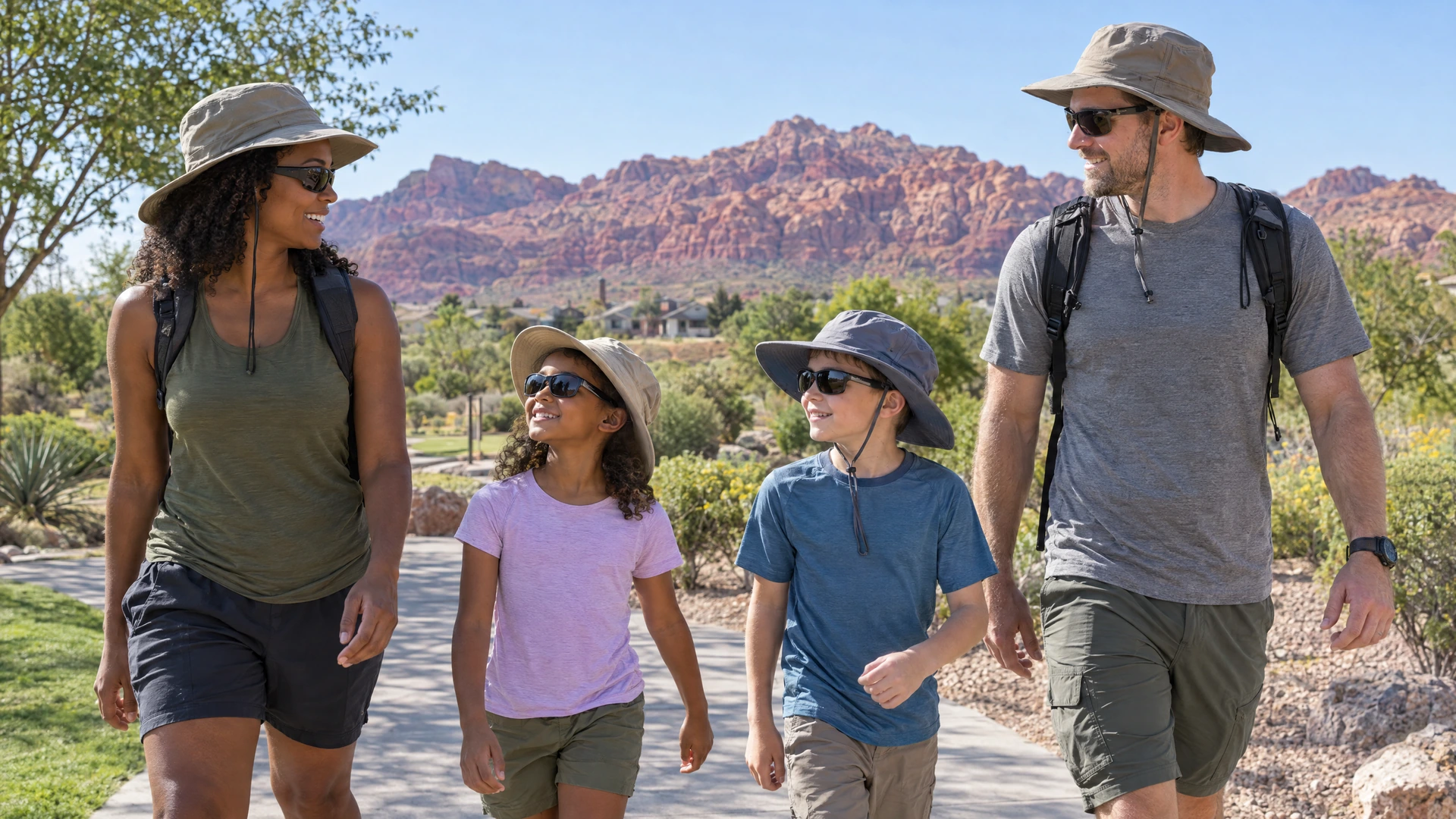
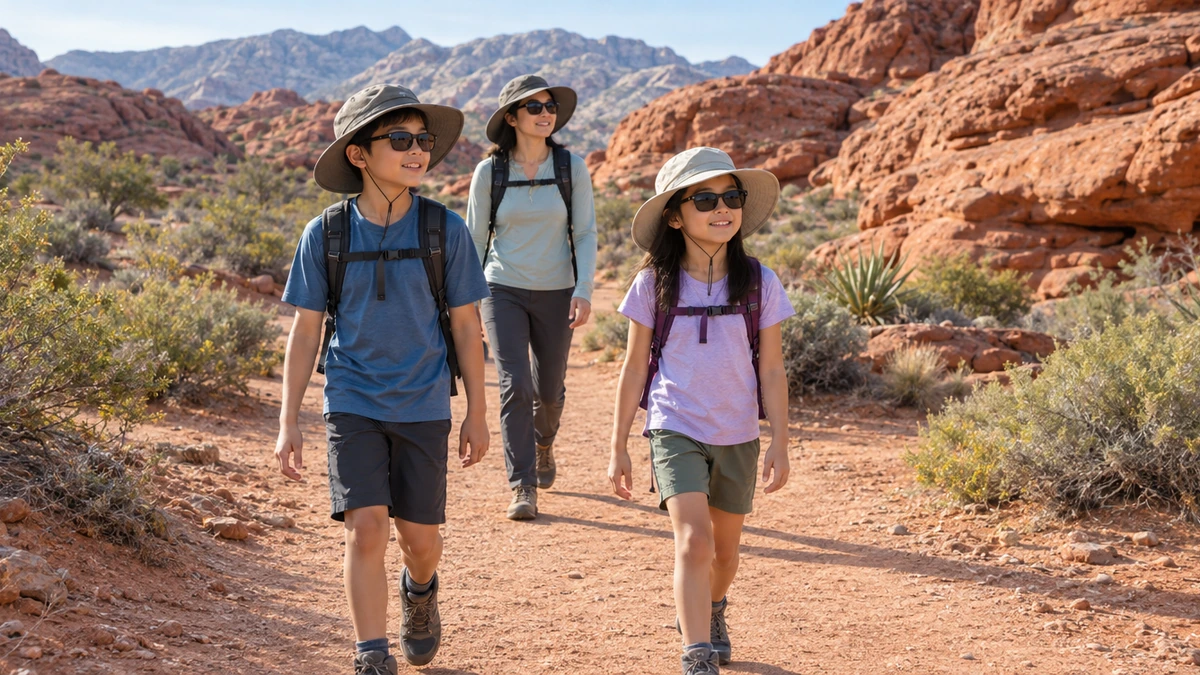
    Family in hats and sunglasses at a Summerlin park, UV protection for kids' eyes

    TLDR: Make UV protection for kids’ eyes part of your outdoor routine in Summerlin, with sunglasses, a broad-brimmed hat and planned shade. Check the lens protection label before choosing a frame. For sports, match eye protection to the activity.

    Answer: Sun protection for children in Las Vegas starts with sunglasses selected for UV protection, a hat and a plan for outdoor time. Your child’s everyday sunglasses and sports eye protection serve different purposes. Read the lens label, check the fit and choose equipment for the activity before heading to a park or Red Rock trail.

    Your child wants the playground. You want a morning outside without another argument over a hat. Put eye health on the packing list now, while the sunglasses are still within reach on the kitchen counter.

    I am Dr. Amel Youssef, an optometrist and the founder of Vision by Amel. I reviewed 73 primary sources across five research lenses for this guide, and the sources distinguish sun protection from sports eye protection. Bring your questions about outdoor eye care to an eye exam, along with the eyewear your child already uses, and explore our eye exam services.

    Why Does UV Protection for Kids’ Eyes Start Early?

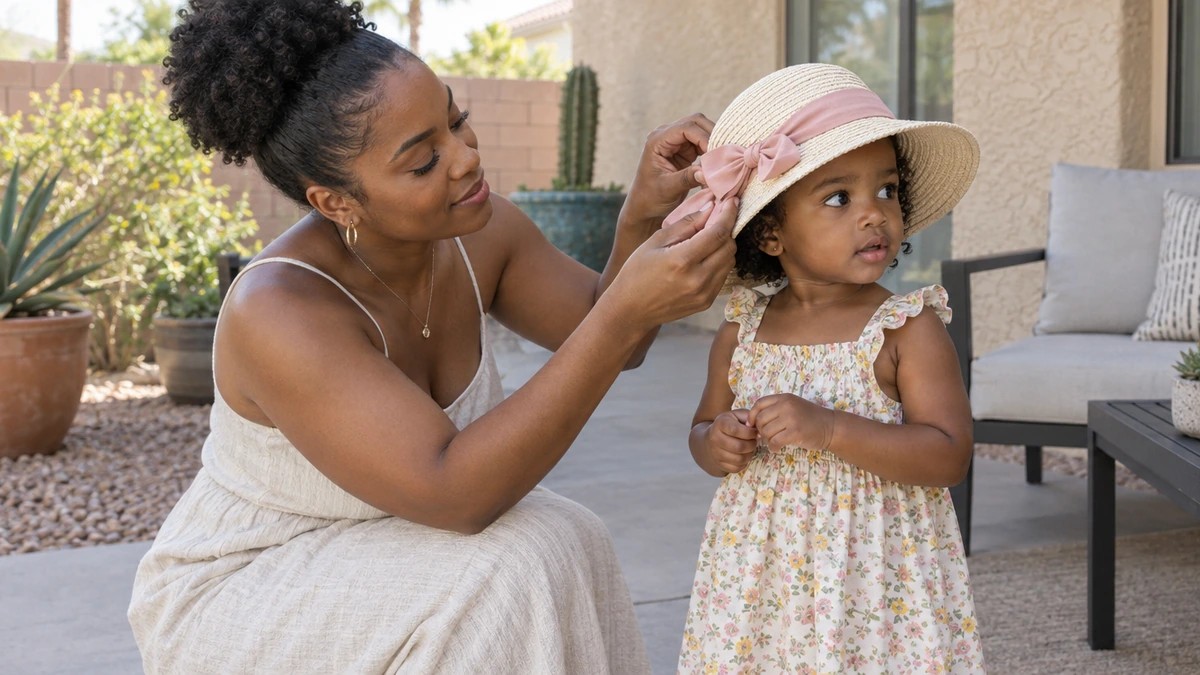
    Mother tying her toddler's sun hat on a patio, UV protection for kids' eyes
    A mother helps her toddler put on a wide-brim sun hat.

    Start protecting your child’s eyes now. The Environmental Protection Agency links UV radiation to a greater likelihood of certain cataracts. That supports reducing exposure from childhood, without predicting your child’s future risk. The hat and sunglasses belong in the toddler bag, right next to the sunscreen.

    Eye protection matters for today’s outing, too. The EPA UV Index guide describes painful corneal burns from excess UV, stronger UV at higher elevations and around reflective sand or water, and a seasonal peak from April through August followed by a fall decline and winter low. Make protection part of your usual departure routine, whether you are walking around the neighborhood or spending the morning near Red Rock. Start with the things you control: the gear, the timing and the shade.

    A hat your child wears beats perfect sunglasses left on the counter. That is my practical starting point for children’s vision care outdoors. Keep working toward a comfortable pair of sunglasses alongside the hat, and let your child choose a color after you check the protection details. Cooperation starts before the front door opens.

    How Does Las Vegas UV Change With the Seasons?

    Plan by the season. Then check the day’s UV forecast before you leave. Use the EPA guide’s seasonal pattern above to plan ahead, then use the daily forecast to choose the time. Your October soccer schedule deserves a fresh check, even when the air finally feels cool.

    SeasonMidday UV WindowYour Outdoor Plan
    SpringIn the continental US, the CDC identifies the strongest UV window as 10 am to 4 pm daylight saving time, or 9 am to 3 pm standard time.Check whether daylight saving time has begun before choosing your playground time. Check last season’s sunglasses and hats ahead of the EPA peak period described above.
    SummerChoose outings outside the daylight saving time window. Plan a shade stop before you leave for the park.
    FallCheck whether standard time has resumed before choosing an outing time. Revisit your soccer sideline plans after the clock change, even when the air feels cool.
    WinterPlan desert walks outside the standard time window when possible. Check the day’s forecast and take your hat and sunglasses.

    Use timing to reduce exposure. Early and late outings still get the hat and the sunglasses. Put them on your child before leaving for the playground. A quieter morning departure gives you room to check the fit before the slide wins everyone’s attention.

    Pack the plan before you pack the car. Decide where your family will pause and where the glasses case will ride. Put it within your reach, above the spare clothes and snacks. Check before departure, while you are still beside the car.

    What Eye Protection Does Your Child Need for Sports?

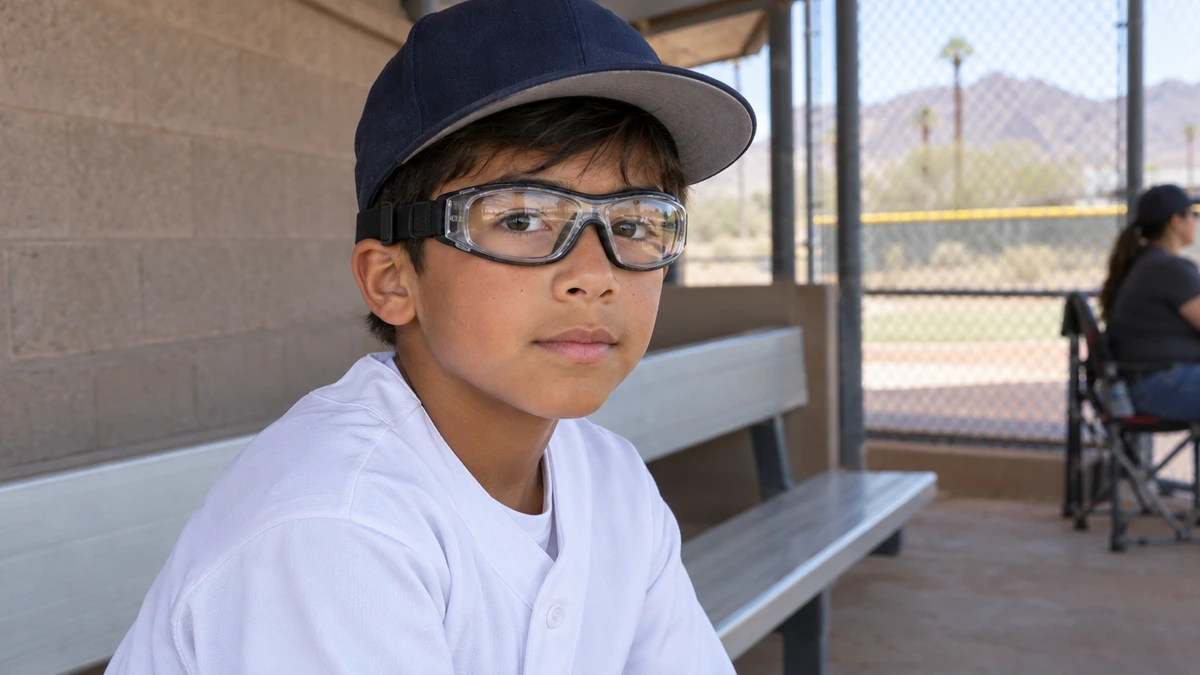
    Latino boy in baseball uniform wearing protective sports goggles before practice, sports eye protection for kids
    A young baseball player wears protective sports goggles before practice.

    Match the protector to the game. Prevent Blindness recommends sport-specific protectors with polycarbonate lenses meeting the current applicable ASTM standard, because ordinary prescription glasses and sunglasses provide inadequate sports protection. Tell me which sport your child plays so we discuss the right protection question. The supplier should show you the applicable standard for the product you are considering.

    Bring the helmet when you shop for the protector. Have your child wear the equipment together and point out anything that presses or shifts. Work through those fit problems with the seller before practice starts. A helmet change is a reason to check the combination again.

    Shop with three facts: the sport, the prescription, indoors or out. Give the seller your details before looking at frame colors. For outdoor play, get separate confirmation of the sports standard and the UV protection. A sporty shape answers neither question.

    Sunglasses are for the sun. Sports protectors are for the ball. Your child needs the right pair for each. For a child who already wears prescription glasses, bring the prescription information when shopping. My guide to signs your child needs glasses covers the everyday vision concerns to discuss with me.

    How Do You Choose UV Protection for Kids’ Eyes?

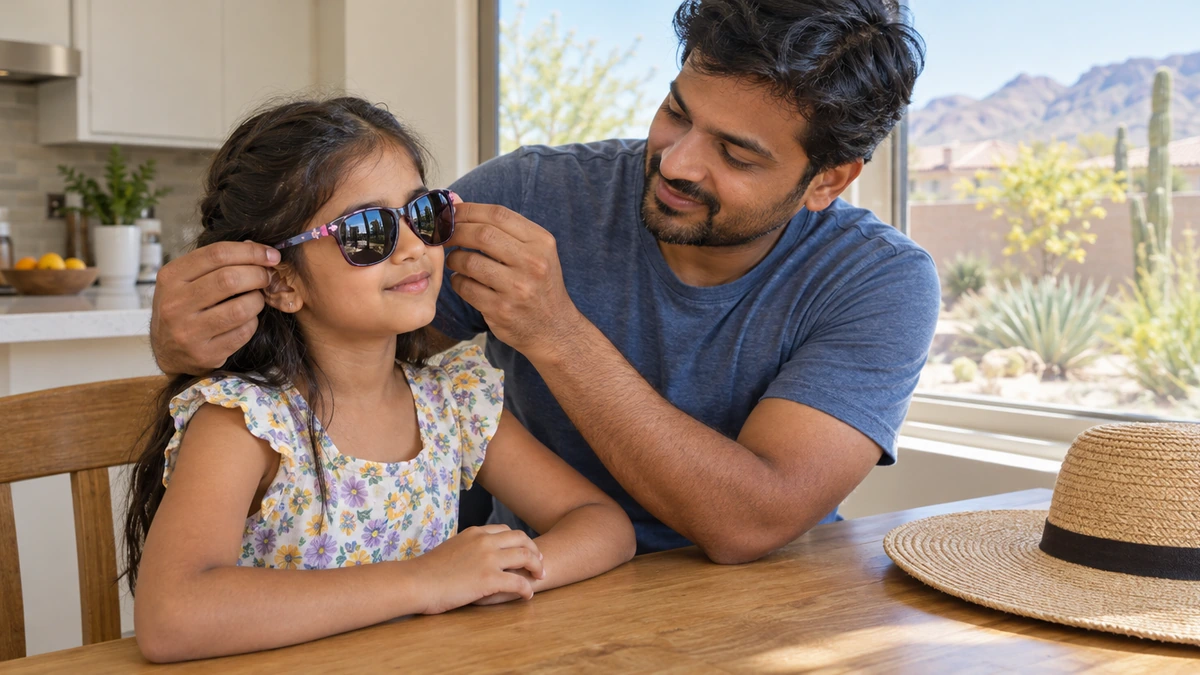
    Father helping his daughter try sunglasses at a kitchen table, UV protection for kids' eyes
    A father helps his daughter try on sunglasses at home.

    Read the label first. The US Food and Drug Administration says to choose UV400 or 100 percent UV protection on the label for protection against UVA and UVB, while warning that dark tint does not establish UV protection and toy sunglasses lack assured protection. Get the protection statement for the exact pair before your child falls in love with the frame.

    Make comfort part of the decision. Let your child look down and turn their head while you watch the frame. Listen for pinching behind the ears or pressure around the nose, then try the hat alongside the glasses. The mirror shows the color, but the try-on reveals what needs attention.

    1. Check the protection statement for the exact lenses. Save the product information with your purchase records.
    2. Try the frame on your child. Let them point to any pressure instead of settling for a quick nod.
    3. Add the hat. Watch whether the brim or hatband pushes the glasses out of position.
    4. Name the intended activity. A park walk and a baseball practice call for different equipment decisions.
    5. Check the full setup before leaving. Let your child show you how the hat and glasses sit together.

    Give your child a real choice. Set out the suitable options and let them pick a favorite. Then rehearse the departure at home, with shoes, hat and glasses together. Save the final decision until you have watched the whole setup in use.

    How Do You Prepare for Summerlin Parks and Red Rock?

    East Asian siblings hiking in hats and sunglasses with a parent, UV protection for kids' eyes
    Siblings wear hats and sunglasses on a Red Rock trail.

    The trail matters as much as the forecast. Use the EPA guide’s elevation and reflection guidance above when planning your stops. Build shade stops into your route before leaving home. Look at where you will rest as carefully as where you will walk.

    Get ready before the playground takes over. At a Summerlin park, put your child’s hat and sunglasses on before opening the car door for the dash to the swings. For Red Rock, check them alongside shoes and water at the trailhead. A familiar sequence makes the preparation clear.

    Pack for every activity on your itinerary. A family walk followed by sports practice needs the appropriate eyewear for each. Put your walking gear and sports equipment together for a final check before leaving home. Gear left in the garage protects no one.

    What to Bring Me About Your Child’s Outdoor Eyewear

    Bring me the pair your child wears outside. Add its lens information and the name of any sport they play, so our conversation starts with specifics. At your pediatric eye exam, describe what slips, what pinches and what you want to understand about the prescription.

    Start with the outing you have in mind. Describe the moment the glasses come off, whether your child removes them before the playground or leaves them behind before practice. Point to the part of the frame that bothers them instead of settling for a general complaint about comfort. Bring those details into our conversation about outdoor eyewear.

    Bring me your questions about a comprehensive eye exam and the glasses your child uses outdoors. For the visit itself, my first eye exam guide explains how to prepare. Use our Downtown Summerlin page to plan your visit.

    Frequently Asked Questions About Kids’ Sun Protection

    What If My Toddler Refuses to Wear Sunglasses?

    Start with the hat your child will keep on. The National Eye Institute identifies a hat as a practical option when sunglasses will not stay on. Treat it as a workable start while you keep trying sunglasses, rather than equal protection. Offer the glasses during a calm moment at home, before the excitement of the park.

    Are Polarized Sunglasses Better for My Child’s UV Protection?

    Read past the glare feature. The CDC travel guidance explains that polarization reduces glare but polarized or mirrored lenses provide no extra UV protection. Compare the UV protection statement separately when you shop, even when a product description leads with polarization.

    What If I Cannot Find My Child’s Lens Information?

    Contact the seller with your order details and ask for the lens material and UV protection statement. Request information for the exact lenses your child received, including any prescription replacement lenses. Keep that reply with the product records before deciding what to buy next.

    What Should I Ask Before Buying Sunglasses Online?

    Get the protection information for the exact frame and lens combination in your cart. Check the child sizing details and the seller’s process for handling a poor fit. Save the product description with your order, then compare it with the pair you receive.

    How High Is the UV Index in Las Vegas, and When Is It Worst?

    NOAA’s 2025 Las Vegas chart records 142 Very High or Extreme forecast days, peaks around 12 in June and July, and Low levels from roughly mid-November through January. These are city forecasts, separate from your child’s eye exposure. Use the seasonal pattern to choose an outing time, then check the day’s forecast before leaving.

    Book My Eye Exam Call (702) 858-4362

    Like this article? Add Vision by Amel as a preferred source, and you are more likely to see our articles in Google’s Top Stories.
    Add as a preferred source on Google

  • Your Child’s First Eye Exam in Summerlin: What to Expect

    Your Child’s First Eye Exam in Summerlin: What to Expect

    Your Child’s First Eye Exam in Summerlin: What to Expect

    Mother and son entering a boutique for a child's first eye exam

    TLDR: Your child’s first eye exam in Summerlin starts with your concerns and ends with a clear next step. Talk through the visit, pack previous screening results, and leave time to hear the findings. Vision by Amel offers weekend appointments at Festival Plaza.

    Answer: At your child’s first eye exam in Summerlin, I review health history, check vision and eye health, and explain the findings. A comprehensive eye exam includes how the eyes focus and work together. As your optometrist, I use those findings to explain whether glasses, further assessment, or a return visit belongs in the plan.

    First visits come with questions. What is that machine, and what will my child need to do? Between preschool pickup and a weekend soccer game, you want clear answers before adding another appointment. My eye examination services page explains how I examine your eyes, and this guide walks you through your child’s visit.

    I start with your concerns. You leave with a next step. Whether you are driving across Las Vegas or coming from a nearby Summerlin neighborhood, preparation starts with knowing what you want to understand about your child’s eye health. I believe good eye care leaves parents with a plan they know how to use.

    How Do You Prepare for Your Child’s First Eye Exam?

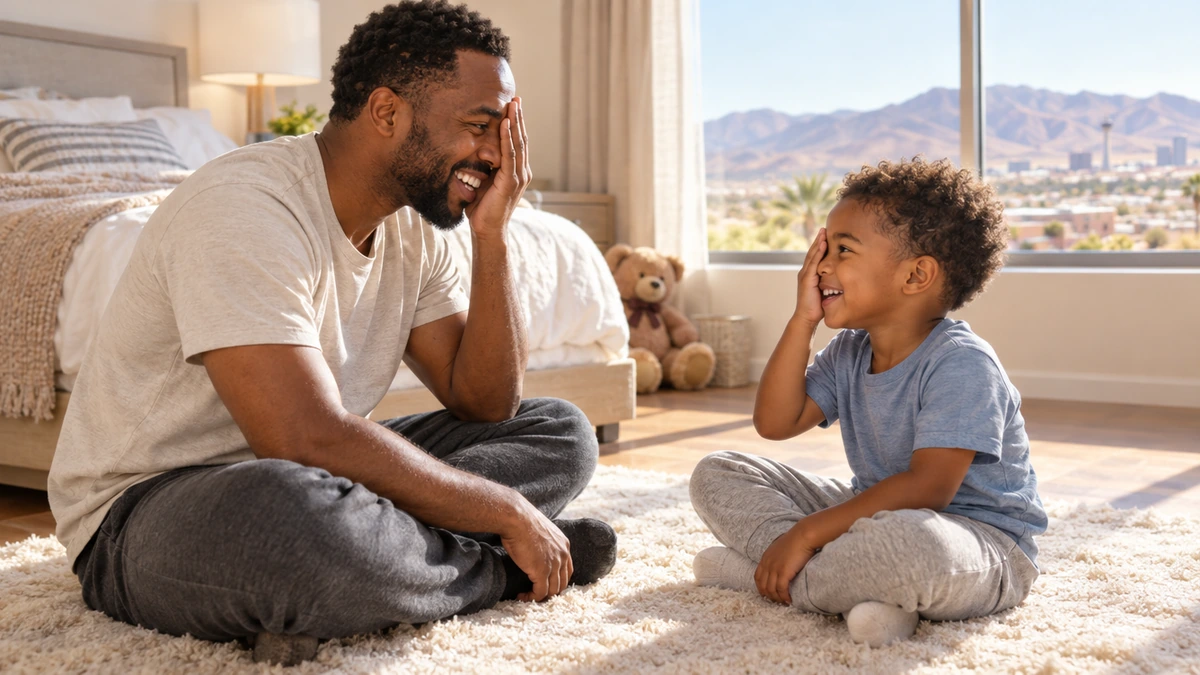
    A father and his young son cover one eye in a playful game to prepare for a child's first eye exam
    A father and son share a playful one-eye game at home.

    Keep the explanation small. Your child needs a sense of what comes next. I reviewed 73 primary sources across five research lenses for this guide, and the AOA recommends talking through the visit beforehand with your child.

    Start with a conversation at home. The AOA recommends talking about the examination beforehand, inviting your child’s questions, and allowing about an hour for a preschool exam. Sitting together on the bedroom rug gives you a simple place to begin. Say, “We are going to have your eyes checked, and you get to ask questions too.”

    Pack once, then stop rehearsing. Put the records and questions together before you head toward Festival Plaza. Use this list to prepare for your pediatric eye exam while leaving the testing to me.

    • Previous vision screening results, a referral note, and any earlier eye records.
    • Current prescription glasses, if your child already wears them.
    • Medicines, allergies, relevant health history, and known family eye conditions.
    • Your main concern, with a concrete example of when it happens.
    • A familiar comfort item and the questions you most want answered.

    Tell my team about your child’s communication preferences, sensory concerns, or worries about unfamiliar rooms. Be specific about the worry. A child nervous about a machine needs a different explanation from a child worried about giving a wrong answer. Help me understand the worry before your child walks in.

    When Should You Book Your Child’s First Eye Exam?

    You deserve to see the timing advice side by side. The experts split on routine children’s vision checks. The table separates the American Optometric Association’s examination schedule from the screening approach of the American Academy of Ophthalmology and the American Association for Pediatric Ophthalmology and Strabismus.

    ApproachPublished GuidanceWhat to Discuss
    AOA, infancyThe AOA infant guidance recommends a first thorough examination at about age 6 months, even without apparent problems.Your baby’s previous checks and health history.
    AOA, preschoolThe AOA preschool guidance recommends an in-person examination between ages 3 and 5, then another around school entry at age 5.What your child has already had checked.
    AOA, school yearsThe AOA school-age guidance recommends annual examinations for school-age children, with more frequent visits for problems or risk factors.Your child’s individual follow-up plan.
    AAO and AAPOS, screening firstThe AAO and AAPOS joint statement supports screening and referral after a failed screen, while finding no proven medical benefit from routine comprehensive examinations in otherwise normal children without symptoms.Your child’s screening results, symptoms, and risk factors.

    Start with the checks your child has already had. Let my team know whether you are arranging a routine first visit or following up on a concern. The pediatric eye exam guide covers timing, Medicaid, and school screenings to give you more context for that conversation.

    What Happens During the Exam, Step by Step?

    Mother holding her daughter during a child's first eye exam
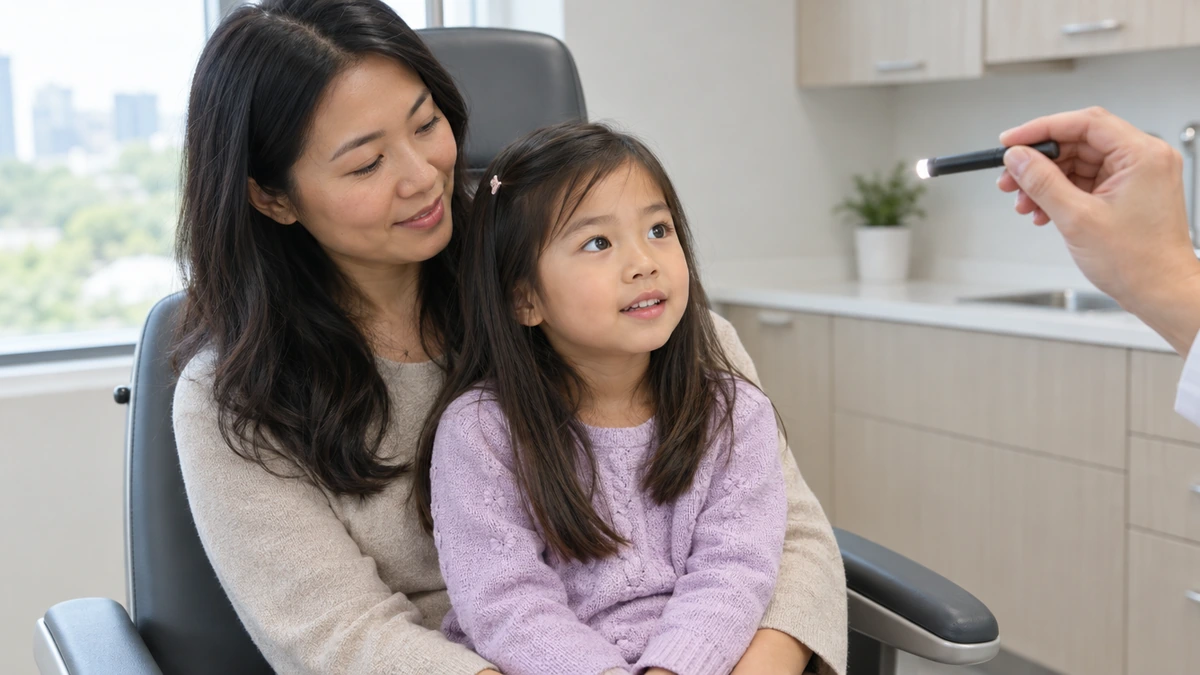
    A child sits on her mother's lap during an eye examination.

    Your child’s age shapes the examination. The AAO’s pediatric evaluation guidance describes history, vision and eye health checks, with techniques and order adapted to age, development, and cooperation. Here is the visit in five steps. The order bends to your child.

    1. Start with the history. Tell me why you booked and what you want answered. We review earlier results, medicines, and family eye history, including any known amblyopia or strabismus. Share the diagnosis as you received it.
    2. Check clarity of sight. Visual acuity describes how clearly your child sees. Let me explain the task, then give your child space to respond. You do not need to supply an answer when they hesitate.
    3. Look at teamwork. I check eye alignment and movement as part of evaluating how the eyes work together. Point out any instruction that seems unclear so I know what needs explaining.
    4. Assess focus and eye health. Refraction measures the need for a glasses prescription. I also evaluate the eyes themselves and explain the findings relevant to the concern you brought.
    5. Set the next step. We discuss what the findings mean, whether more assessment is needed, and what to do next. Before leaving, confirm how and when to follow the plan.

    You matter in that room. Share what helps your child communicate, then leave room for their response. Say so when they need a pause or do not understand an instruction. I value an honest “I don’t know” more than a coached answer.

    What Should You Do After the Visit?

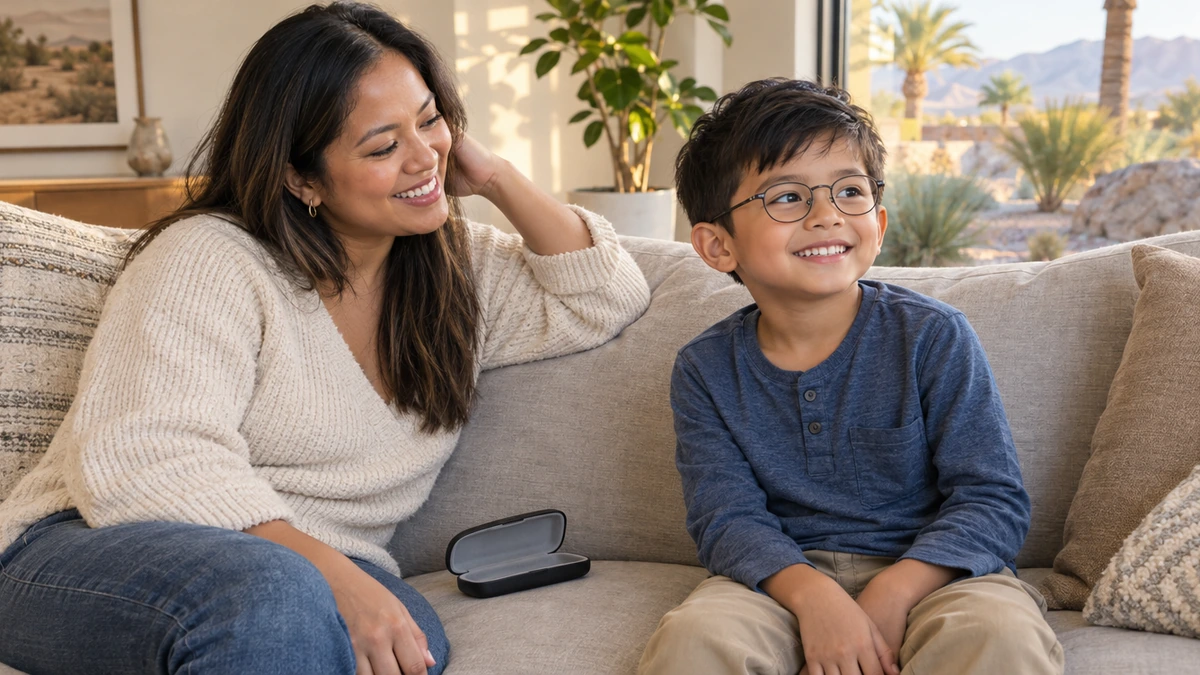
    A mother and her young son on the sofa at home as he wears his new glasses after his first eye exam
    Know when your child should wear new glasses before you leave the visit.

    Leave with a clear next step. You should know whether the plan involves glasses, further evaluation, or a return visit. Ask me to explain any unfamiliar term before you head back to the parking area. Skip the jargon. Leave with one clear next step.

    When glasses are prescribed, settle the wear instructions first. You need to know when your child should wear them and what follow-up I recommend. During frame selection, invite your child to describe what presses at the nose or behind the ears. Discuss lens choices, including polycarbonate lenses and UV protection, in relation to the prescription.

    Keep the plan within reach. Save your visit information with the records you brought, so the next appointment starts with the previous findings available. Before leaving, repeat the next step back to me and clear up anything you are unsure about. Leave knowing what happens next and who to contact with questions.

    How Do You Plan the Trip to Festival Plaza?

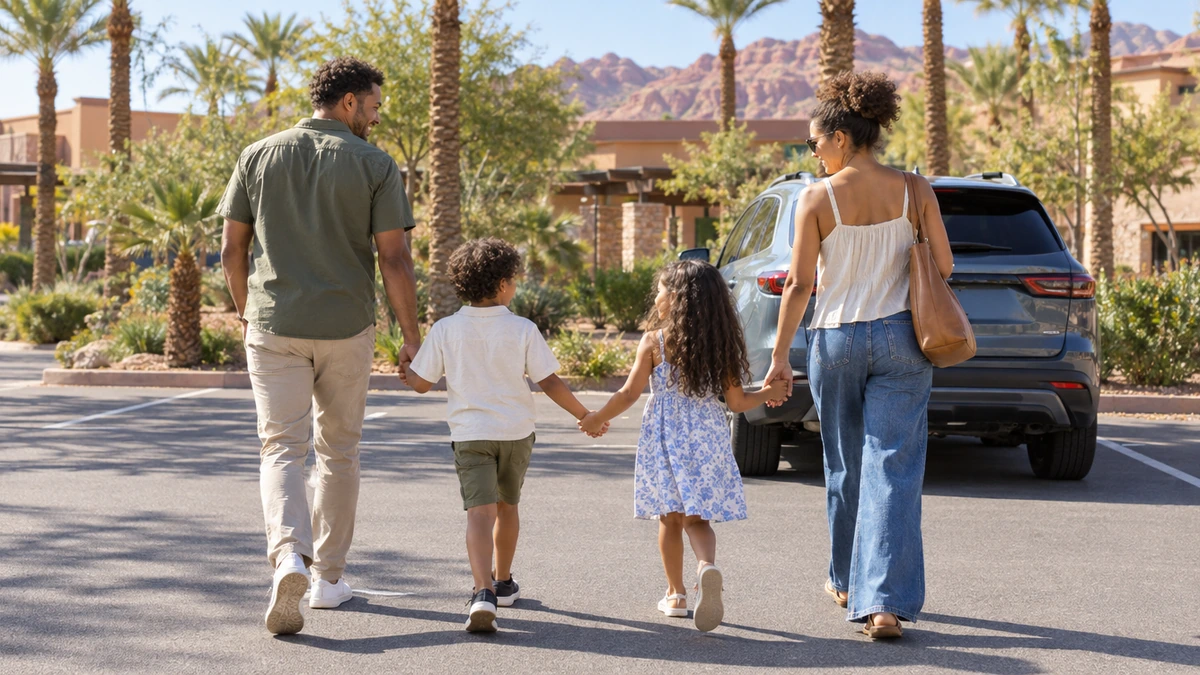
    Family walking toward their car after a child's first eye exam
    A family walks together toward their car at a sunny plaza.

    Plan the arrival before you leave home. Vision by Amel is at 2010 Festival Plaza Dr, Suite 195, Las Vegas, NV 89135, in Downtown Summerlin at Festival Plaza. My office sits minutes from The Vistas, The Paseos, Sun City and Red Rock Country Club. Use the Downtown Summerlin location page to plan your route, with time to park and walk to the suite.

    Weekend hours give you options beyond school pickup. My office opens seven days a week, Monday to Saturday from 9 am to 6 pm and Sunday from 11 am to 5 pm. Check available appointment times with my team when you book. Choose a time you can reach without rushing from the last stop.

    Leave space around your visit. Do not stack soccer practice right after. Give yourself time to hear the findings before packing everyone back into the car under the desert sun. Block the morning and keep it calm.

    How I Walk You Through a First Visit at Vision by Amel

    Your first visit starts with why you came. I am Dr. Amel Youssef, OD, the optometrist who founded Vision by Amel, and I guide you through your child’s eye examination. My team welcomes Summerlin families every week, and you do not need a referral to book an eye exam. Tell us your child’s age and your main concern when you call (702) 858-4362 or book online.

    You get an explanation alongside the equipment. The office uses Visionix digital diagnostics, from digital refraction and eye-pressure measurement with tonometry to retinal imaging and corneal mapping. My evaluation includes binocular vision, color vision testing where needed, and screening for eye disease. I perform a dilated eye exam only when I see a medical reason for one.

    The findings lead to your plan. We move from your child’s history through diagnostics and my evaluation to the next step. Prescription glasses are available from my gallery when they belong in that plan. Have me explain anything unclear about the prescription before you choose frames.

    Sort out benefits before the first visit. Before you arrive, my team uses your plan details to verify benefits by phone. Vision by Amel accepts Nevada Medicaid, VSP, EyeMed, Aetna, and other plans on our accepted list. Your individual plan determines the benefits, so have its details ready when you call.

    Frequently Asked Questions About Your Child’s First Eye Exam

    What Should I Say If My Child Is Afraid of Getting an Answer Wrong?

    Try saying, “You are here to show us what you see.” A blurry view is useful information to share, so let your child say when something looks unclear. Avoid praising a guessed answer as correct, and let me explain a task again when needed.

    Does My Child Need to Know Their Letters?

    No, the AOA preschool exam guidance confirms children do not need the alphabet or reading skills for an eye examination and recommends booking early in the day. Use that advice to plan your first visit. When you call, discuss an available time that fits your child’s usual routine.

    Can My 3-Year-Old Do an Eye Exam If They Won’t Sit Still?

    A restless child still deserves an assessment suited to their development. The AAO explains that cooperation helps determine the examination order. Tell me what is difficult for your child, then confirm which parts were completed and whether anything needs another visit.

    What If I Do Not Know Our Family’s Eye History?

    Share what you know and mark the gaps. A relative’s diagnosis is useful even when you do not know the treatment details. I will help you identify which missing information is worth gathering, rather than asking you to guess at a family condition.

    What Should I Ask When Booking a Visit for a Young Child?

    Give my team your child’s age and reason for coming, then confirm the appointment details. Check whether there are instructions to follow before arrival. Mention language or accessibility needs during the call, so you know what to expect before you set out.

    Book My Eye Exam Call (702) 858-4362

    Like this article? Add Vision by Amel as a preferred source, and you are more likely to see our articles in Google’s Top Stories.
    Add as a preferred source on Google