Tag: children’s eye health

  • Contact Lenses for Kids and Teens in Las Vegas: Is Your Child Ready?
    Contact Lenses for Kids and Teens in Las Vegas: Is Your Child Ready?

    Contact Lenses for Kids and Teens in Las Vegas: Is Your Child Ready?

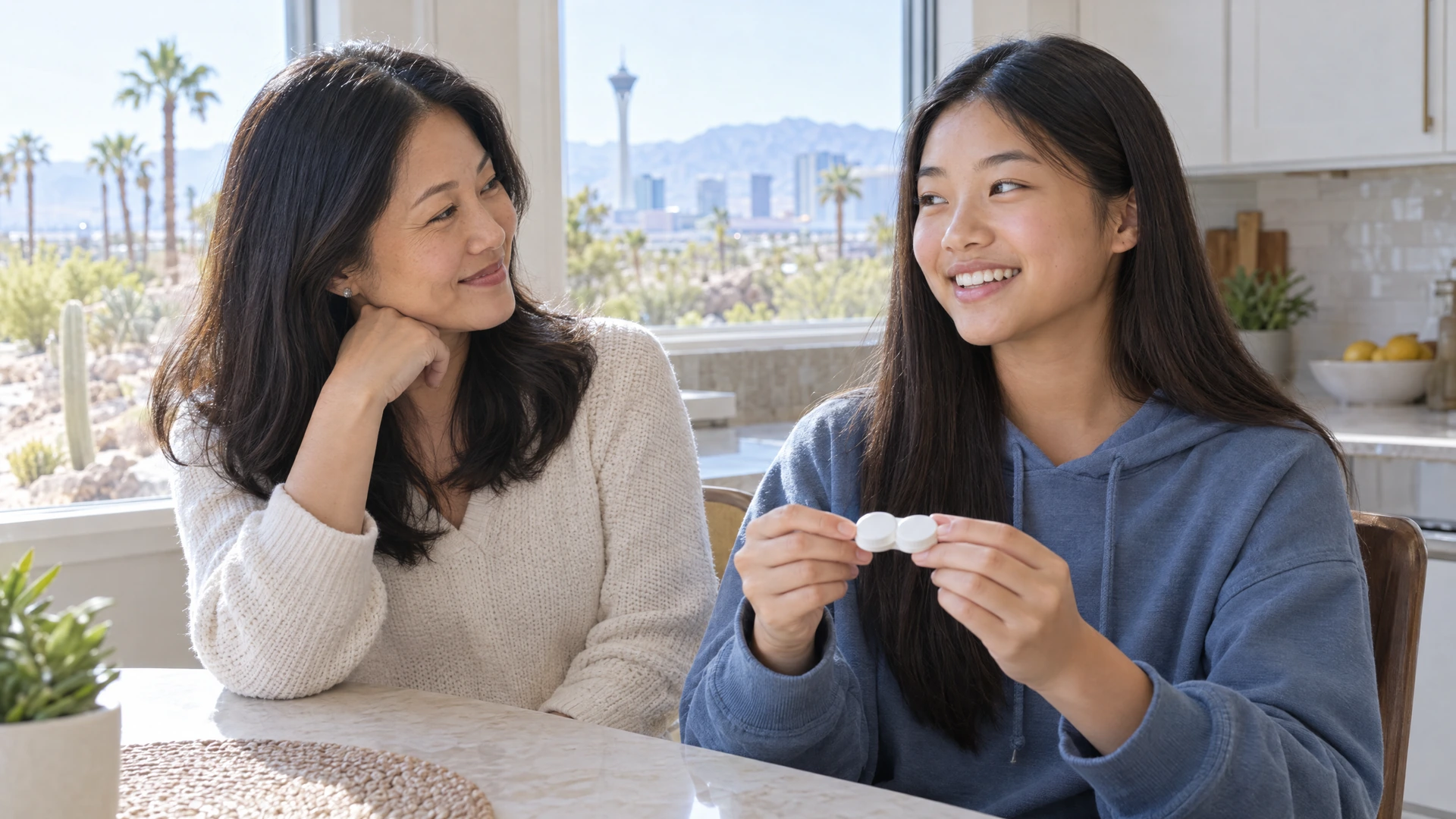
    Teen girl holding a contact lens case beside her mother at a kitchen table, contact lenses for kids

    TLDR: Readiness for contact lenses for kids rests on hygiene, motivation and your supervision, with no fixed starting age. A contact lens fitting and a dependable care routine come before regular wear. A painful red eye in a lens wearer means remove the lenses and get care right away.

    Answer: No single birthday makes your child ready for contact lenses. Maturity, hygiene and motivation decide, and your supervision matters. In Las Vegas, an eye exam and a contact lens fitting show whether your child is ready. Daily disposables reduce some risks, yet water, sleep and a painful red eye still need firm rules.

    Your teen wants contacts before basketball season. You want to know who will remember the handwashing when practice runs late and homework waits at home. As an optometrist, I start with those ordinary decisions. I value a reliable routine more than an eager promise.

    I reviewed 168 primary sources across five research lenses for this guide, and readiness for contacts depends on maturity, hygiene and motivation. The American Optometric Association identifies those factors, sets no universal starting age and emphasizes your supervision. Start during your child’s comprehensive eye exam, using our eye exam services page to plan the visit.

    Are Contact Lenses for Kids a Good Fit for Your Family?
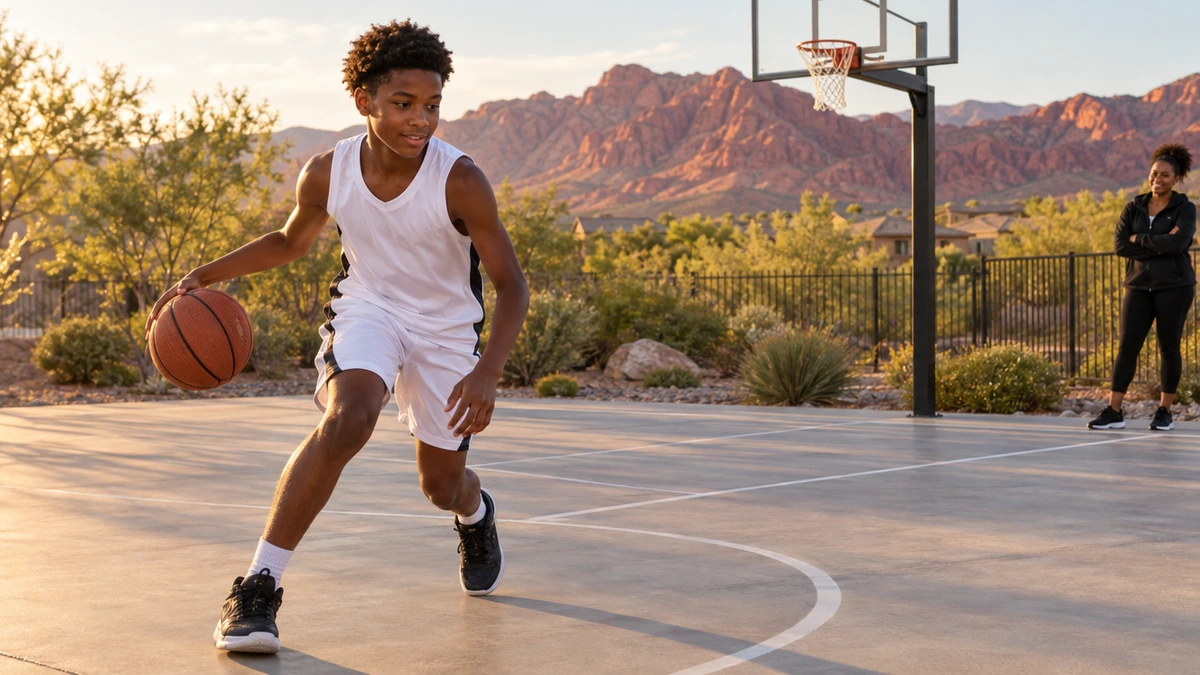
    Black teen boy dribbling on a Summerlin basketball court without glasses, contact lenses for kids
    A boy dribbles a basketball on a Summerlin court, no glasses on.

    Readiness shows up on a rushed school morning. Does your child wash up without bargaining over every step? Does your child speak up when something feels wrong? Those two answers tell you more than any birthday.

    On a Summerlin outdoor basketball court, your child stops mid-drill to push slipping glasses back up their nose. Contacts appeal because there is no everyday frame to adjust during play. Eye protection still belongs in the sports bag, and my sun and sports eyewear guide shows what to pack. The American Academy of Ophthalmology and American Academy of Pediatrics state that contact lenses offer no protection, so your athlete needs sport-appropriate protective eyewear over them.

    Use this table to check whether your child is ready. It translates readiness into things you have already seen at home. Work through the hesitant answers together before making contacts the next morning’s expectation.

    Readiness QuestionA Useful SignA Reason to Pause
    Who wants contacts?Your child wants to learn.The pressure comes from friends or adults.
    How does hygiene go?Your child follows the whole routine.Handwashing becomes a daily argument.
    How do they handle trouble?Your child speaks up and accepts help.They hide discomfort to stay in the game.
    Who supervises?You have a clear role at home and away.Each adult assumes someone else checked.

    A hesitant child deserves room to decide. You might be ready to move beyond glasses before your child wants to touch a lens. Let them explain what appeals to them and what worries them. I would rather revisit contacts later than turn lens handling into a daily argument.

    What Comes Before the First Pair?
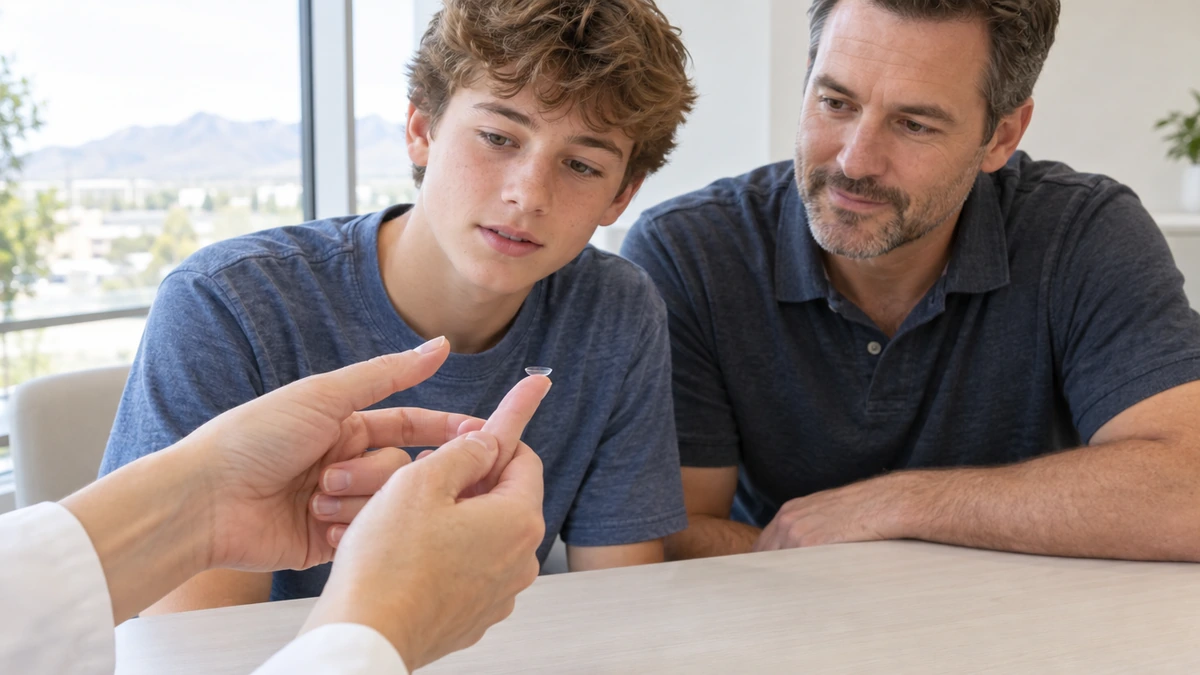
    Eye doctor hands showing a white teen and his father a lens on a fingertip, contact lenses for kids
    An eye doctor's hands show a teen and his father how to hold a lens.

    The fitting is where the plan gets real. Vision by Amel offers contact lens fittings, including daily disposables, and I weigh every lens choice against your child’s eye health. Sports, school or weekends only? Your child’s real week shapes the lens and the schedule.

    Use your visit to discuss the lens prescription and care instructions together. Start with what your child finds difficult. Your child needs room to speak, especially about touching their eyes or removing a lens. Let them describe the difficult part in their own words.

    The Food and Drug Administration says daily disposables reduce some risks because your child starts with a fresh pair each day. That benefit has limits. Handling habits still matter, even when there is no reusable lens to clean overnight.

    Daily disposable means use once and discard, according to the CDC, so your child should never save that pair for another day. Make disposal part of the routine before the first wear. A lens that looks clean has still been used. Agree who checks supplies before school trips and weekends away.

    Your child’s first visit deserves its own preparation. Our guide to a child’s first eye exam explains what to expect without crowding this contact lens decision. Read it together if the appointment itself feels unfamiliar. Leave time for your child to name their questions.

    Which Contact Lens Symptoms Need Care Right Away?

    A painful red eye in a lens wearer means one thing: take the lenses out and get care right away. Irritated red eyes, worsening pain, light sensitivity, sudden blurry vision, unusual watering or discharge all count, says the CDC, and each one means you call your eye doctor right away. Leave the lenses out until your eye doctor clears your child to wear them again.

    Explain this before the first game in contacts. Your child needs to know that eye pain ends lens wear, even during warmups or a close match. Skip the debate over whether they should finish practice. Getting care takes priority.

    When you call, describe the symptoms and say your child wears contacts. Tell me when the trouble started and whether lenses were worn during sleep or around water. Our pink eye guide for parents offers background on red eyes, but reading it should never delay care for these symptoms.

    Which Habits Matter Most With Contact Lenses for Kids?
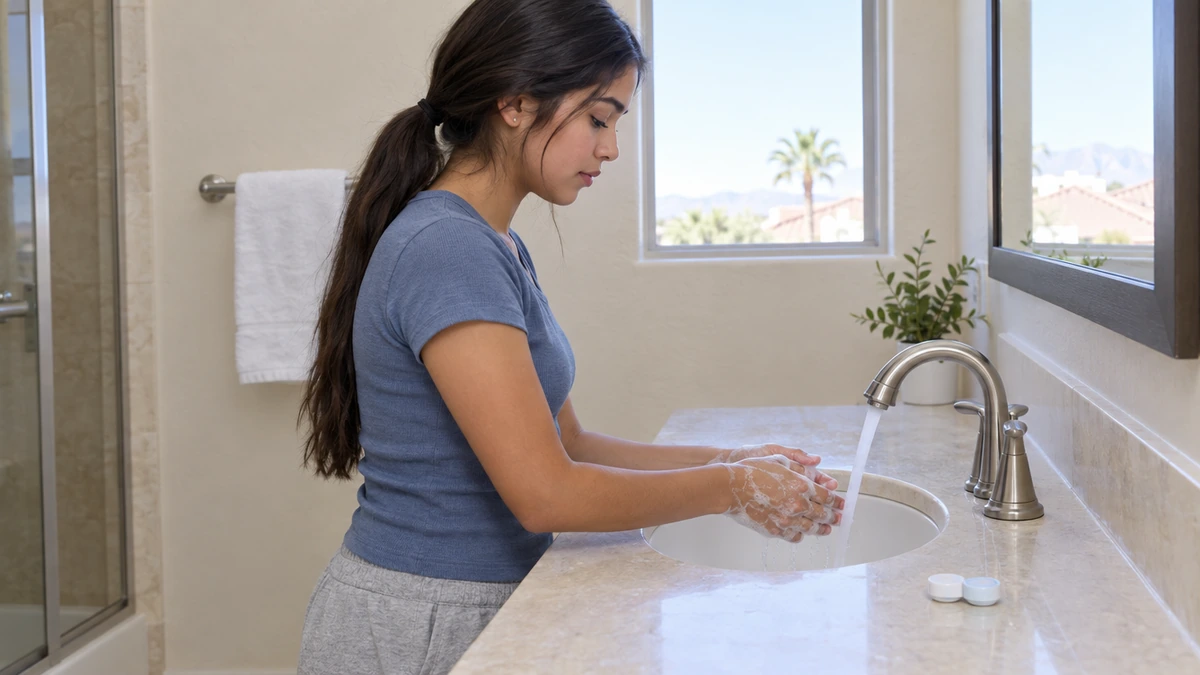
    Latina teen washing hands beside an untouched plain lens case, contact lenses for kids
    A teen washes her hands before she touches her lens case.

    Set the routine before the busy day. Your child needs clear instructions for hands, water, sleep and storage. Follow the sequence below with them until everyone knows their part. Give each step enough time.

    1. Wash hands with soap and water, then dry them completely with a clean cloth before touching lenses.
    2. Handle lenses with clean, dry hands. Follow the wear instructions given with the fitting.
    3. Remove lenses before swimming or showering. Keep lenses away from all water, including tap water used as a rinse.
    4. Take lenses out before sleep, including naps.
    5. For reusable lenses, follow the prescribed cleaning routine and use fresh solution. Never add fresh solution to old solution in the case.
    6. Replace a reusable lens case at least once every three months.

    These handwashing, water, sleep, solution and case rules come from CDC guidance for your child’s contact lens routine. Make the order easy to remember at home. The bathroom sink is for washing hands. Lenses stay clear of the running water.

    Put the case date on the family calendar, right beside the practice schedule, so your child’s case never outlives its three months. Review the cleaning steps together before every sleepover bag gets packed. Small habits, repeated daily, protect your child’s eyes.

    How Do You Share Responsibility With a Teen?
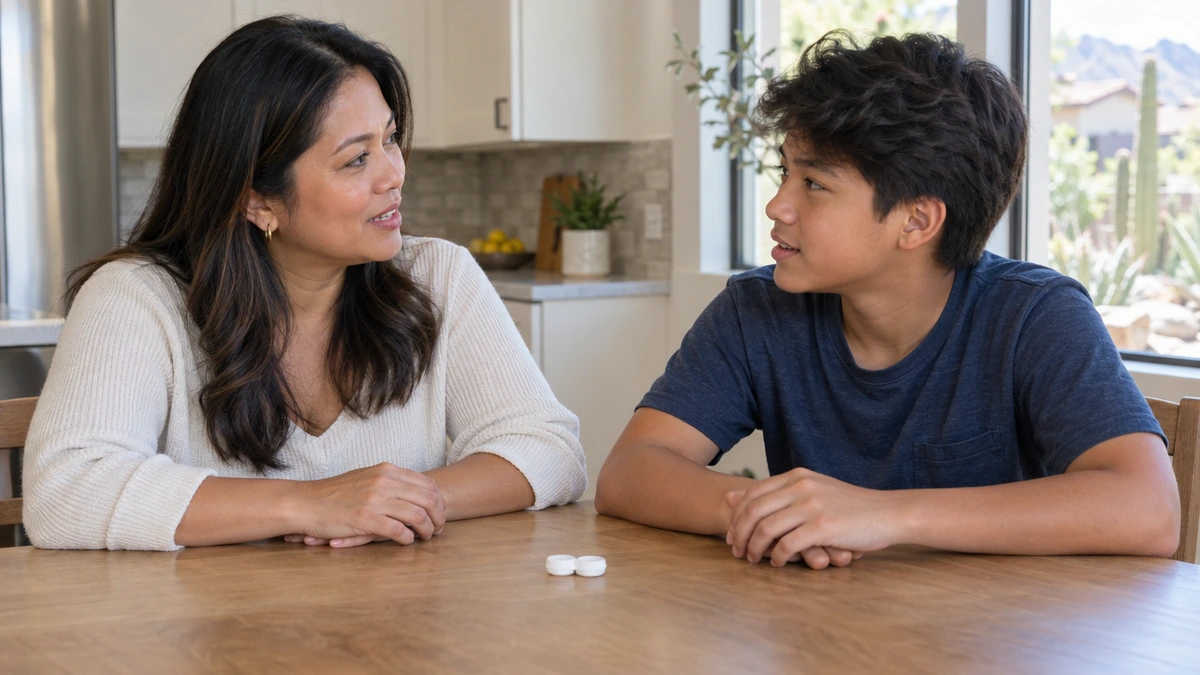
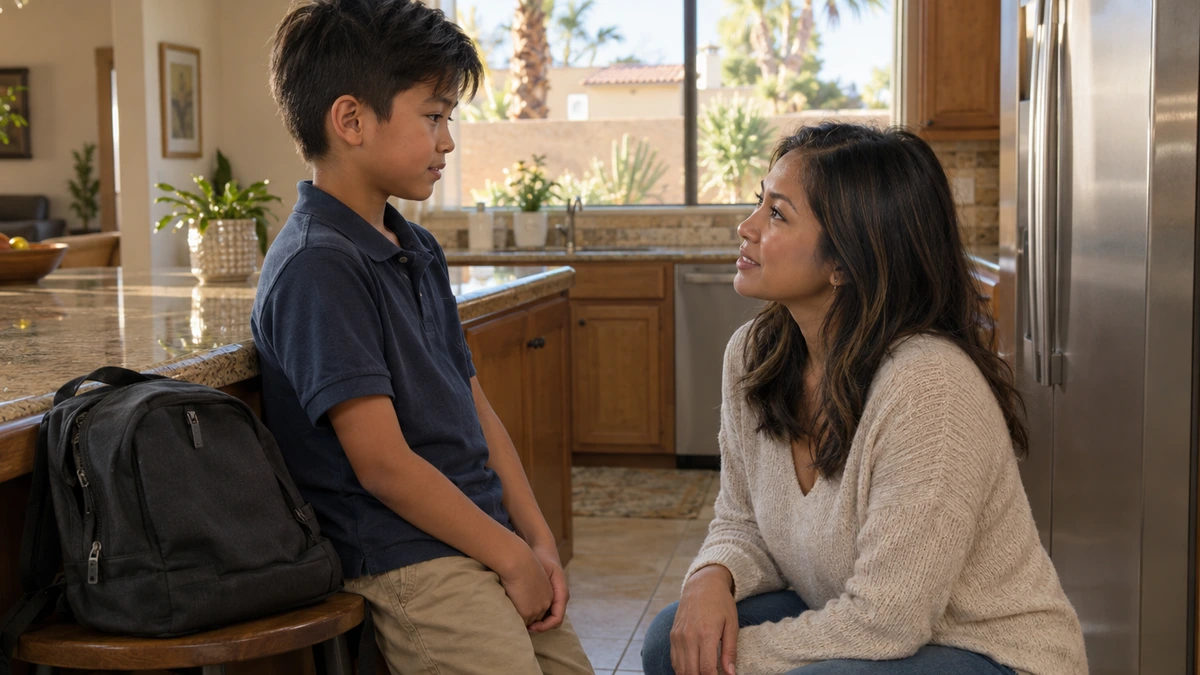
    Filipino-American mother and son talking beside a plain lens case, contact lenses for kids
    A mother and her son talk through the lens routine at the kitchen table.

    Make the plan fit a real evening. Your teen gets home from practice in Las Vegas, drops a gym bag beside the kitchen table and heads toward the shower. This is the moment to remember lens removal. Decide on that order together while nobody is tired or rushed.

    Give your teen ownership of the routine while keeping your role clear. Agree who notices supplies running low and who checks the bag before a sleepover. Talk through what happens when plans change and swimming gets added to a friend’s afternoon. The answer needs to be settled before everyone reaches the pool.

    Leave room for honest reports. Your child should feel comfortable saying they forgot a step, struggled with removal or felt something unusual. Start with what happened, then address it together. Treat speaking up as part of responsible eye care.

    How I Approach Your Child’s Contact Lens Visit

    I am Dr. Amel Youssef, founder and eye doctor at Vision by Amel. My practice offers pediatric eye exams and contact lens fittings, from daily disposables onward. Your child gets the exam first, then a fitting planned around school, sports and your home routine.

    Your child’s exam uses Visionix digital diagnostics, and I walk you through every result. When a lens feels wrong, your child tells me, and I adjust the lens material, the wear schedule or the fit. A painful red eye never waits for a routine visit: follow the steps above.

    You will find us at 2010 Festival Plaza Dr, Suite 195, Las Vegas, NV 89135. Our Downtown Summerlin location is at Festival Plaza. For a routine exam and contact lens fitting, book online or call. Include your child’s interest in contacts when arranging the visit.

    Frequently Asked Questions About Contact Lenses for Kids

    How Old Does My Child Have to Be to Wear Contacts?

    No birthday decides it. The American Optometric Association sets no single starting age, and your child’s maturity, hygiene and motivation matter more. Younger children often need more practice: in the CLIP study, children aged 8 to 12 needed about 42 minutes of insertion and removal training, against about 30 for teens. That was a short, 3-month study, so read it as a guide to patience, not a rule.

    Are Daily Disposable Contacts Safer for Kids?

    Daily disposables reduce some risks, because your child starts each day with a fresh pair, yet no lens is infection-proof. A 2023 review of seven studies by Bullimore and Richdale found serious corneal infection no more common in children wearing soft lenses than in adults. Those are study rates, not your child’s own odds, so the water, sleep and handwashing rules apply every single day.

    Can My Teen Swim, Shower or Sleep in Contacts?

    No. Take the lenses out before the pool, the shower or bed, because water carries germs and sleeping in lenses raises the chance of a serious eye infection. Eye care professionals generally do not recommend overnight lenses for kids and teens, the Food and Drug Administration says, since they raise the rate of corneal ulcers. Pack the lens case and backup glasses in your teen’s sleepover bag.

    My Child’s Eye Is Red and Hurts With Contacts In. What Do I Do?

    Take the lenses out now and call your eye doctor right away. Leave them out until your eye doctor says your child is ready to wear them again. The most severe lens-related infections sometimes lead to blindness or a corneal transplant, the CDC warns, which is why this call never waits for morning.

    Can Kids Wear Colored or Costume Contacts?

    Only with a prescription. The Food and Drug Administration treats lenses without corrective power as medical devices, so Halloween lenses from a costume shop are off the table for your child. Never let your child share a friend’s lenses or wet a lens with saliva.

    Book My Eye Exam Call (702) 858-4362

    Like this article? Add Vision by Amel as a preferred source, and you are more likely to see our articles in Google’s Top Stories.

    Add as a preferred source on Google

  • School Vision Screening vs a Comprehensive Eye Exam in Las Vegas

    School Vision Screening vs a Comprehensive Eye Exam in Las Vegas

    School Vision Screening vs a Comprehensive Eye Exam in Las Vegas

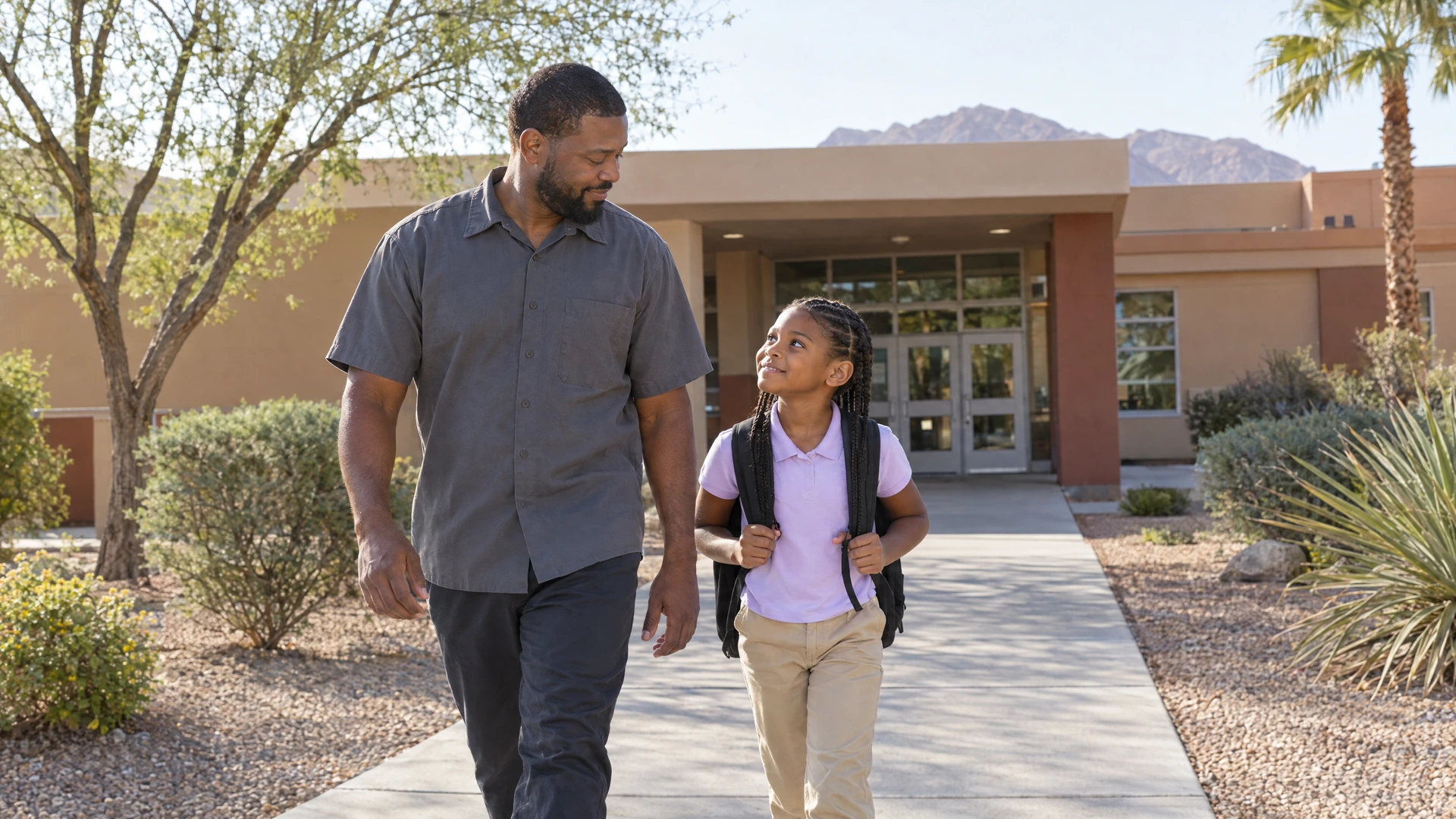
    Father and daughter arriving at elementary school for a school vision screening article

    TLDR: A school vision screening flags possible vision problems, while an eye exam investigates your child’s vision and determines the next step. Book the exam when a referral note comes home, even when your child seems to see well. A passing screening does not rule out a vision problem.

    Answer: In Las Vegas, school vision screening helps identify children who need further evaluation. A comprehensive eye exam examines your child’s vision and eye health in more detail, including eye alignment and the structures of the eyes. Take a school referral to an optometrist or ophthalmologist for evaluation and a plan based on the findings.

    A referral note slides out beside the lunchbox. Your child swears the board looks fine. Trust the note anyway. Book the exam first, then gather what the school sent. My eye exams at Vision by Amel page explains the visit and booking options.

    I reviewed 73 primary sources across five research lenses for this guide, and passing a screening does not rule out a vision disorder. As Prevent Blindness explains, a screening flags a concern, while an eye doctor diagnoses the problem. That difference decides your next move.

    What Does a School Vision Screening Check in Nevada?

    Boy leaning forward toward a classroom board, illustrating school vision screening concerns
    A boy leans forward and squints toward the classroom board.

    Your child’s screening looks for signs worth investigating. A chart-based check measures visual acuity, meaning how clearly your child sees the chart, while other screenings use an instrument. The school nurse has the details about the method and result. A screening report is a snapshot of one morning’s check of children’s vision. Your child’s vision deserves the full picture.

    Nevada sets a school screening schedule so your child’s vision gets attention during the school years. Under NRS 392.420, schools with a school nurse check for visual problems before the end of the first elementary year, in at least one additional elementary grade, and in one middle and one high school grade, with parent notification of concerns and an option to decline in writing. The requirement covers school checks. A referral tells you to take the next step toward an exam.

    Get the result directly. An empty backpack tells you nothing about whether your child completed the screening or needs follow-up. Contact the nurse for the recorded outcome and any instructions sent home. On a busy Las Vegas pickup afternoon, a quick call beats searching through another pile of school papers.

    What Should You Do With a School Referral Note?

    Mother kneeling beside her son at a kitchen counter after school vision screening
    Ask your child about the screening and bring questions to the exam.

    Book the follow-up. The American Academy of Pediatrics advises an eye exam after a failed screening, even when you have noticed no problem. The exam determines whether your child needs glasses or other care. Your child has done nothing wrong.

    1. Read the requested action. Find the screening result, the eye involved and the follow-up instructions. Have the nurse explain any unfamiliar abbreviation.
    2. Arrange the exam. Explain to my team that a school screening prompted your call, and mention concerns from home or the classroom.
    3. Check the paperwork route. Find out which form the school wants back and who should receive it after the visit.
    4. Confirm your benefits. Give my team your insurance details before the appointment so we have the information needed to check them.
    5. Finish the handoff. Return the requested information after the exam and save a copy with the original screening result.

    Give the note a job. Put it beside your appointment details so it reaches the exam room instead of disappearing under homework. Let your child describe the screening without rehearsing chart answers or trying to prove the result wrong. The useful question is what the exam finds.

    What Happens When You Book a Comprehensive Eye Exam?

    Mother and son in an optometry waiting area for follow-up after school vision screening
    Bring the school referral and your questions to the appointment.

    A screening is a sorting tool. An eye exam is a diagnosis. Your child’s chart result belongs alongside the history, eye alignment and examination findings. I use those pieces to decide what care is needed and explain the next step.

    Your QuestionSchool ScreeningComprehensive Exam
    What is its purpose?Flag a possible vision problem needing follow-up.Evaluate vision and eye health and determine a plan.
    What does a chart result show?How clearly your child sees the chart during that check.Visual acuity interpreted with history and other findings.
    Does it diagnose a condition?The result identifies a concern for evaluation.I evaluate the findings to make a diagnosis.
    Does it prescribe glasses?The screening supplies no glasses prescription.I determine whether prescription glasses or other care are needed.
    What happens afterward?You complete the recommended follow-up.You follow the individual plan and return requested information to school.

    Leave knowing what the findings mean. A pediatric eye exam gives us room to discuss the concern behind the referral, beyond the letters your child read during screening. Tell me whether the difficult task is seeing the front board, reading a book or finishing homework comfortably. A specific example gives our conversation a clear starting point.

    You do not need a diagnosis before booking. Previous records sometimes contain terms such as amblyopia or strabismus, and I want to hear about those findings when we discuss your child’s history. Have me explain any unfamiliar terms. Leave the visit knowing what the findings mean for the school referral and what happens next.

    What Does a Passing School Vision Screening Miss?

    A pass is good news. Your child’s complaints still win the argument. In the 2004 Vision In Preschoolers study of 2,588 Head Start children aged 3 to 5, the best tests run by eye care professionals at 90% specificity detected about two-thirds of children with an eye condition targeted by the study and nearly 90% of those with the most important conditions. Those results describe the study’s preschool tests. Book the exam when those complaints keep coming.

    Homework discomfort deserves its own answer. The American Optometric Association’s parent guidance says school screenings look for amblyopia and its risk factors but do not check for most vision conditions behind digital eye strain. Your child reading the classroom chart does not settle a complaint about uncomfortable screen work at the kitchen counter. Tell me when the discomfort starts and which task brings it on.

    Watch what happens after the reassuring result. Your second grader still leaning toward the whiteboard gives us a concern to investigate. A parent in Summerlin hearing another complaint over evening homework has a reason to arrange an exam. My pediatric eye exam guide covers timing, Medicaid and school screenings when you need the wider overview.

    Why Does Completing the Follow-Up Matter?

    The referral needs a finished follow-up. A 2026 BMJ Open Ophthalmology review of 30 studies reported a median follow-up rate of 43.1% after school vision screening referrals. That median spans those studies. Make sure your child lands on the follow-through side of it.

    Choose a date you will keep. Check transportation and your work schedule before confirming the visit, especially when pickup and an afternoon shift compete for the same hour. A change of plans calls for a replacement date during the same phone call. Keep the school informed when arranging follow-up takes longer than expected.

    Showing up is half the job. Walking out with a plan you understand is the other half. Before you leave, confirm what the findings mean for the referral, whether your child needs glasses or other care, and when to return. A clear next step belongs beside the appointment on your calendar.

    Close the paperwork loop. Check the school’s instructions before sending the completed form, and keep your copy somewhere easier to find than the bottom of a backpack. Report continuing concerns to me even after the form is returned. The paperwork records the visit, while the plan guides your child’s care.

    How I Follow Up on Your School Referral at Vision by Amel

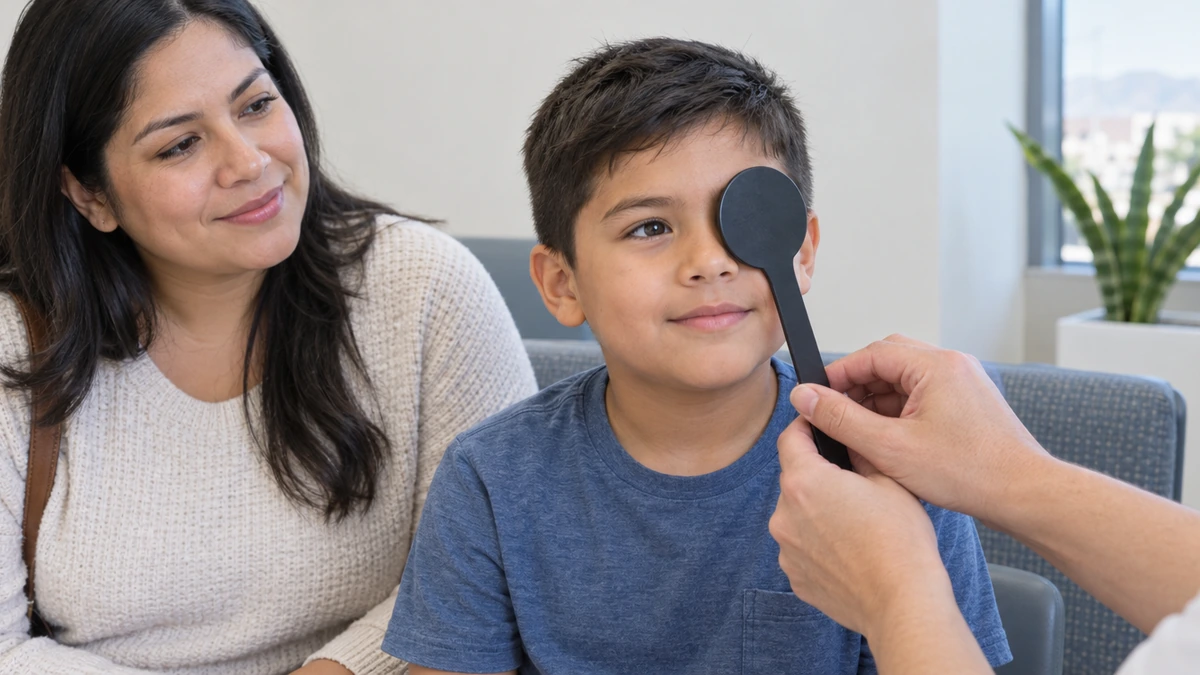
    Doctor's hands holding an occluder at a boy's left eye during school vision screening follow-up
    The eye exam evaluates the concern raised by screening.

    You do not need a referral for an eye exam at Vision by Amel, and we accept Nevada Medicaid. Mention the school screening when you book. A missing form need not delay that call.

    Put your main concern first when we talk. Start with what prompted the school referral, then describe anything you have noticed since the screening. Leave room for your child to explain what feels difficult, too.

    Plan your route to Festival Plaza in Downtown Summerlin before the appointment. Choose a time around your family’s school and work commitments. Keep the school’s contact details handy for returning the requested findings after the visit.

    Frequently Asked Questions About School Vision Screening

    What If I Lost the Referral Note From School?

    Request a replacement from your school nurse, including the screening date and recorded results. Tell my team you are waiting for the copy when you book. Confirm whether the school also has a separate form for the exam findings, so the replacement packet includes what you need.

    Should I Buy Glasses Based on the School Eye Test?

    Wait for my findings before buying prescription glasses for your child. The screening note supplies a reason to investigate, while the exam determines whether glasses belong in the plan. During the visit, have me explain what any prescription means and how the glasses should be worn.

    Which Grades Get Vision Screening in Clark County Schools?

    The Clark County School District screening schedule lists kindergarten and grades 4, 7 and 10, plus students new to the district, repeating a grade or with disabilities. Your child’s grade is therefore only part of the answer. Check with the school nurse about your child’s screening status and follow-up instructions.

    Does Nevada Medicaid Need Prior Approval for the Follow-Up Exam?

    No, Nevada Medicaid’s ocular services manual allows optometrists to examine Healthy Kids members without a referral or prior authorization and covers routine exams once every 12 months. Give my team your child’s plan details when you arrange the follow-up. Confirm the coverage for the planned visit before you arrive.

    Are Weekend Appointments Available at Vision by Amel?

    Yes, you have weekend booking options because my office opens seven days. Our hours are Monday to Saturday 9 am to 6 pm and Sunday 11 am to 5 pm. Call or use online booking to check appointment availability for your child.

    Book My Eye Exam Call (702) 858-4362

    Like this article? Add Vision by Amel as a preferred source, and you are more likely to see our articles in Google’s Top Stories.
    Add as a preferred source on Google