Tag: contact lenses

  • Contact Lenses for Kids and Teens in Las Vegas: Is Your Child Ready?

    Contact Lenses for Kids and Teens in Las Vegas: Is Your Child Ready?

    Contact Lenses for Kids and Teens in Las Vegas: Is Your Child Ready?

    Teen girl holding a contact lens case beside her mother at a kitchen table, contact lenses for kids

    TLDR: Readiness for contact lenses for kids rests on hygiene, motivation and your supervision, with no fixed starting age. A contact lens fitting and a dependable care routine come before regular wear. A painful red eye in a lens wearer means remove the lenses and get care right away.

    Answer: No single birthday makes your child ready for contact lenses. Maturity, hygiene and motivation decide, and your supervision matters. In Las Vegas, an eye exam and a contact lens fitting show whether your child is ready. Daily disposables reduce some risks, yet water, sleep and a painful red eye still need firm rules.

    Your teen wants contacts before basketball season. You want to know who will remember the handwashing when practice runs late and homework waits at home. As an optometrist, I start with those ordinary decisions. I value a reliable routine more than an eager promise.

    I reviewed 168 primary sources across five research lenses for this guide, and readiness for contacts depends on maturity, hygiene and motivation. The American Optometric Association identifies those factors, sets no universal starting age and emphasizes your supervision. Start during your child’s comprehensive eye exam, using our eye exam services page to plan the visit.

    Are Contact Lenses for Kids a Good Fit for Your Family?

    Black teen boy dribbling on a Summerlin basketball court without glasses, contact lenses for kids
    A boy dribbles a basketball on a Summerlin court, no glasses on.

    Readiness shows up on a rushed school morning. Does your child wash up without bargaining over every step? Does your child speak up when something feels wrong? Those two answers tell you more than any birthday.

    On a Summerlin outdoor basketball court, your child stops mid-drill to push slipping glasses back up their nose. Contacts appeal because there is no everyday frame to adjust during play. Eye protection still belongs in the sports bag, and my sun and sports eyewear guide shows what to pack. The American Academy of Ophthalmology and American Academy of Pediatrics state that contact lenses offer no protection, so your athlete needs sport-appropriate protective eyewear over them.

    Use this table to check whether your child is ready. It translates readiness into things you have already seen at home. Work through the hesitant answers together before making contacts the next morning’s expectation.

    Readiness QuestionA Useful SignA Reason to Pause
    Who wants contacts?Your child wants to learn.The pressure comes from friends or adults.
    How does hygiene go?Your child follows the whole routine.Handwashing becomes a daily argument.
    How do they handle trouble?Your child speaks up and accepts help.They hide discomfort to stay in the game.
    Who supervises?You have a clear role at home and away.Each adult assumes someone else checked.

    A hesitant child deserves room to decide. You might be ready to move beyond glasses before your child wants to touch a lens. Let them explain what appeals to them and what worries them. I would rather revisit contacts later than turn lens handling into a daily argument.

    What Comes Before the First Pair?
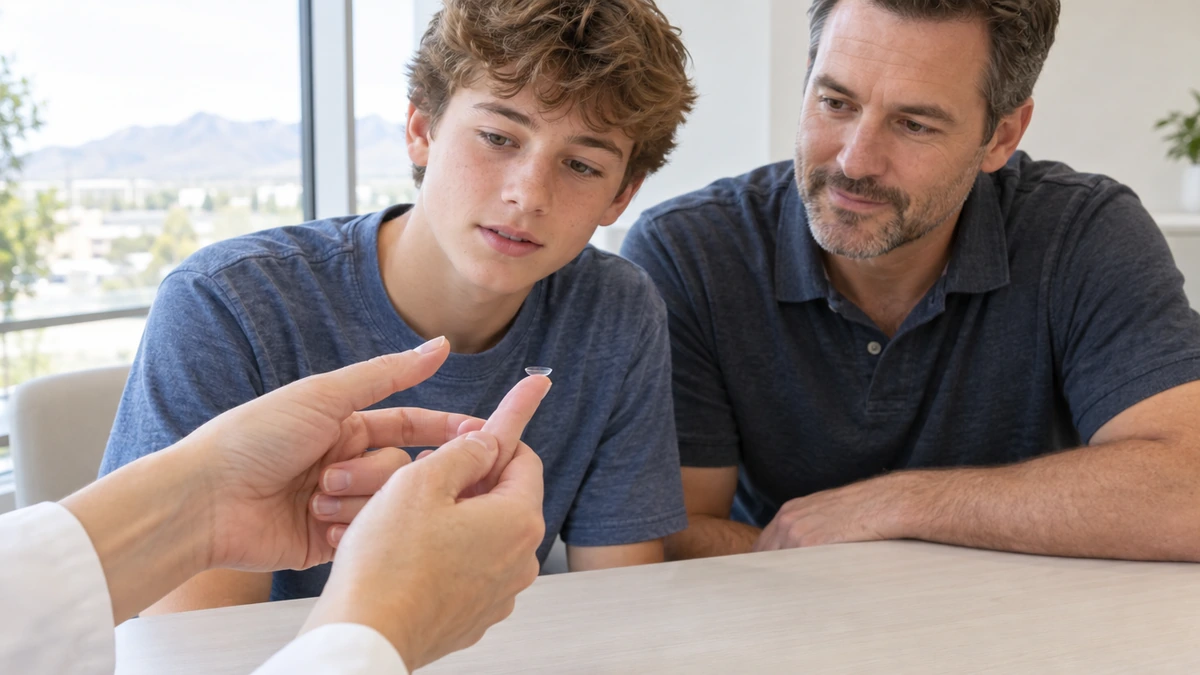
    Eye doctor hands showing a white teen and his father a lens on a fingertip, contact lenses for kids
    An eye doctor's hands show a teen and his father how to hold a lens.

    The fitting is where the plan gets real. Vision by Amel offers contact lens fittings, including daily disposables, and I weigh every lens choice against your child’s eye health. Sports, school or weekends only? Your child’s real week shapes the lens and the schedule.

    Use your visit to discuss the lens prescription and care instructions together. Start with what your child finds difficult. Your child needs room to speak, especially about touching their eyes or removing a lens. Let them describe the difficult part in their own words.

    The Food and Drug Administration says daily disposables reduce some risks because your child starts with a fresh pair each day. That benefit has limits. Handling habits still matter, even when there is no reusable lens to clean overnight.

    Daily disposable means use once and discard, according to the CDC, so your child should never save that pair for another day. Make disposal part of the routine before the first wear. A lens that looks clean has still been used. Agree who checks supplies before school trips and weekends away.

    Your child’s first visit deserves its own preparation. Our guide to a child’s first eye exam explains what to expect without crowding this contact lens decision. Read it together if the appointment itself feels unfamiliar. Leave time for your child to name their questions.

    Which Contact Lens Symptoms Need Care Right Away?

    A painful red eye in a lens wearer means one thing: take the lenses out and get care right away. Irritated red eyes, worsening pain, light sensitivity, sudden blurry vision, unusual watering or discharge all count, says the CDC, and each one means you call your eye doctor right away. Leave the lenses out until your eye doctor clears your child to wear them again.

    Explain this before the first game in contacts. Your child needs to know that eye pain ends lens wear, even during warmups or a close match. Skip the debate over whether they should finish practice. Getting care takes priority.

    When you call, describe the symptoms and say your child wears contacts. Tell me when the trouble started and whether lenses were worn during sleep or around water. Our pink eye guide for parents offers background on red eyes, but reading it should never delay care for these symptoms.

    Which Habits Matter Most With Contact Lenses for Kids?
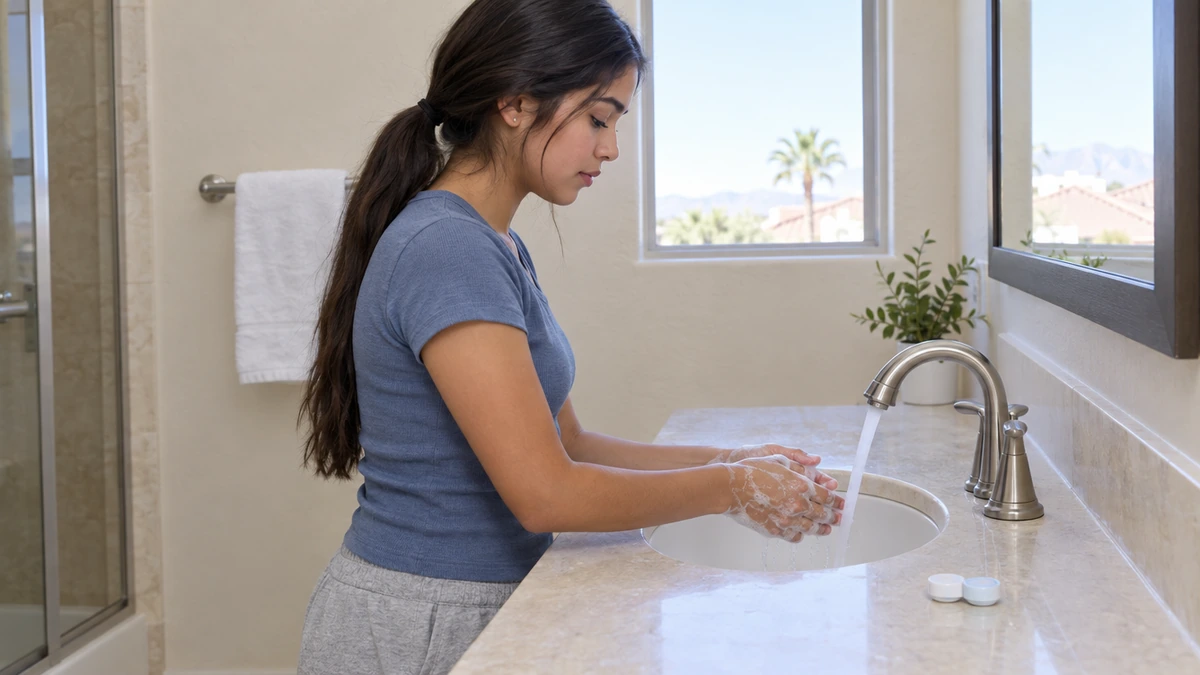
    Latina teen washing hands beside an untouched plain lens case, contact lenses for kids
    A teen washes her hands before she touches her lens case.

    Set the routine before the busy day. Your child needs clear instructions for hands, water, sleep and storage. Follow the sequence below with them until everyone knows their part. Give each step enough time.

    1. Wash hands with soap and water, then dry them completely with a clean cloth before touching lenses.
    2. Handle lenses with clean, dry hands. Follow the wear instructions given with the fitting.
    3. Remove lenses before swimming or showering. Keep lenses away from all water, including tap water used as a rinse.
    4. Take lenses out before sleep, including naps.
    5. For reusable lenses, follow the prescribed cleaning routine and use fresh solution. Never add fresh solution to old solution in the case.
    6. Replace a reusable lens case at least once every three months.

    These handwashing, water, sleep, solution and case rules come from CDC guidance for your child’s contact lens routine. Make the order easy to remember at home. The bathroom sink is for washing hands. Lenses stay clear of the running water.

    Put the case date on the family calendar, right beside the practice schedule, so your child’s case never outlives its three months. Review the cleaning steps together before every sleepover bag gets packed. Small habits, repeated daily, protect your child’s eyes.

    How Do You Share Responsibility With a Teen?

    Filipino-American mother and son talking beside a plain lens case, contact lenses for kids
    A mother and her son talk through the lens routine at the kitchen table.

    Make the plan fit a real evening. Your teen gets home from practice in Las Vegas, drops a gym bag beside the kitchen table and heads toward the shower. This is the moment to remember lens removal. Decide on that order together while nobody is tired or rushed.

    Give your teen ownership of the routine while keeping your role clear. Agree who notices supplies running low and who checks the bag before a sleepover. Talk through what happens when plans change and swimming gets added to a friend’s afternoon. The answer needs to be settled before everyone reaches the pool.

    Leave room for honest reports. Your child should feel comfortable saying they forgot a step, struggled with removal or felt something unusual. Start with what happened, then address it together. Treat speaking up as part of responsible eye care.

    How I Approach Your Child’s Contact Lens Visit

    I am Dr. Amel Youssef, founder and eye doctor at Vision by Amel. My practice offers pediatric eye exams and contact lens fittings, from daily disposables onward. Your child gets the exam first, then a fitting planned around school, sports and your home routine.

    Your child’s exam uses Visionix digital diagnostics, and I walk you through every result. When a lens feels wrong, your child tells me, and I adjust the lens material, the wear schedule or the fit. A painful red eye never waits for a routine visit: follow the steps above.

    You will find us at 2010 Festival Plaza Dr, Suite 195, Las Vegas, NV 89135. Our Downtown Summerlin location is at Festival Plaza. For a routine exam and contact lens fitting, book online or call. Include your child’s interest in contacts when arranging the visit.

    Frequently Asked Questions About Contact Lenses for Kids

    How Old Does My Child Have to Be to Wear Contacts?

    No birthday decides it. The American Optometric Association sets no single starting age, and your child’s maturity, hygiene and motivation matter more. Younger children often need more practice: in the CLIP study, children aged 8 to 12 needed about 42 minutes of insertion and removal training, against about 30 for teens. That was a short, 3-month study, so read it as a guide to patience, not a rule.

    Are Daily Disposable Contacts Safer for Kids?

    Daily disposables reduce some risks, because your child starts each day with a fresh pair, yet no lens is infection-proof. A 2023 review of seven studies by Bullimore and Richdale found serious corneal infection no more common in children wearing soft lenses than in adults. Those are study rates, not your child’s own odds, so the water, sleep and handwashing rules apply every single day.

    Can My Teen Swim, Shower or Sleep in Contacts?

    No. Take the lenses out before the pool, the shower or bed, because water carries germs and sleeping in lenses raises the chance of a serious eye infection. Eye care professionals generally do not recommend overnight lenses for kids and teens, the Food and Drug Administration says, since they raise the rate of corneal ulcers. Pack the lens case and backup glasses in your teen’s sleepover bag.

    My Child’s Eye Is Red and Hurts With Contacts In. What Do I Do?

    Take the lenses out now and call your eye doctor right away. Leave them out until your eye doctor says your child is ready to wear them again. The most severe lens-related infections sometimes lead to blindness or a corneal transplant, the CDC warns, which is why this call never waits for morning.

    Can Kids Wear Colored or Costume Contacts?

    Only with a prescription. The Food and Drug Administration treats lenses without corrective power as medical devices, so Halloween lenses from a costume shop are off the table for your child. Never let your child share a friend’s lenses or wet a lens with saliva.

    Book My Eye Exam Call (702) 858-4362

    Like this article? Add Vision by Amel as a preferred source, and you are more likely to see our articles in Google’s Top Stories.


    Add as a preferred source on Google

  • Screens, Contact Lenses and Dry Eye: Daily Habits That Help

    Screens, Contact Lenses and Dry Eye: Daily Habits That Help

    Screens, Contact Lenses and Dry Eye: Daily Habits That Help

    Woman resting her gaze out a home office window beside a laptop, illustrating screen time and dry eye

    TLDR: Better blinking, a lower monitor and regular breaks give you a practical starting point for screen time and dry eye. Pair those habits with careful contact lens care, and let an optometrist evaluate recurring discomfort.

    Answer: Three habits help with screen-related dry eye: full blinks, distance breaks and a monitor below eye level. For your workday in Las Vegas, keep glasses within reach and follow your lens care instructions. Recurring discomfort calls for an eye exam focused on both your eyes and your lenses.

    Your laptop closes. Your eyes still feel gritty. You spent the afternoon answering messages at home in Summerlin, and your contacts stayed in through dinner. Sound familiar? Give your eye health a place in the workday before another late laptop session begins.

    I reviewed 51 primary sources across five research lenses for this guide, and reduced blinking during screen work is a recognized dry eye aggravator. Full blinks, regular breaks and a screen below your eye level are practical habits from the AAO Preferred Practice Pattern, a guideline. Those habits belong alongside dry eye treatment when discomfort persists.

    Where Should Your Screen Sit for Dry Eye Comfort?

    Man lowering his monitor below eye level on an adjustable arm, a screen time and dry eye habit
    The monitor center sits below his eye level.

    Lower beats higher. Set the center of your screen below eye level. The American Optometric Association recommends a screen center 15 to 20 degrees below eye level and 20 to 28 inches from your eyes. Start from your normal seated position.

    The center is your reference point. Find it before adjusting the stand. A monitor with its top below eye level also puts its center below your gaze, but check the actual distance and angle. The goal is a comfortable downward view.

    You need no new furniture, but you need an honest look at your real day. Check the desk in your spare room, the laptop on the kitchen table and the monitor at work, then set each up for the way you sit.

    Your SetupThe Useful ChangePut It Into Practice
    Monitor above your gazeSet the center below eye levelAdjust while seated in your usual chair
    Laptop tucked behind other equipmentMake room at your intended viewing distanceMove the clutter before moving your chair closer
    Breaks spent scrollingChoose a distant viewLeave the phone beside the keyboard
    Contacts through a long device sessionKeep prescription glasses accessibleMake switching part of your workday plan

    Leave your chair and display where you intend to use them, then check the view when you sit down. A shared desk needs another look after someone else adjusts it.

    What Should Your Contact Lens Care Routine Include?

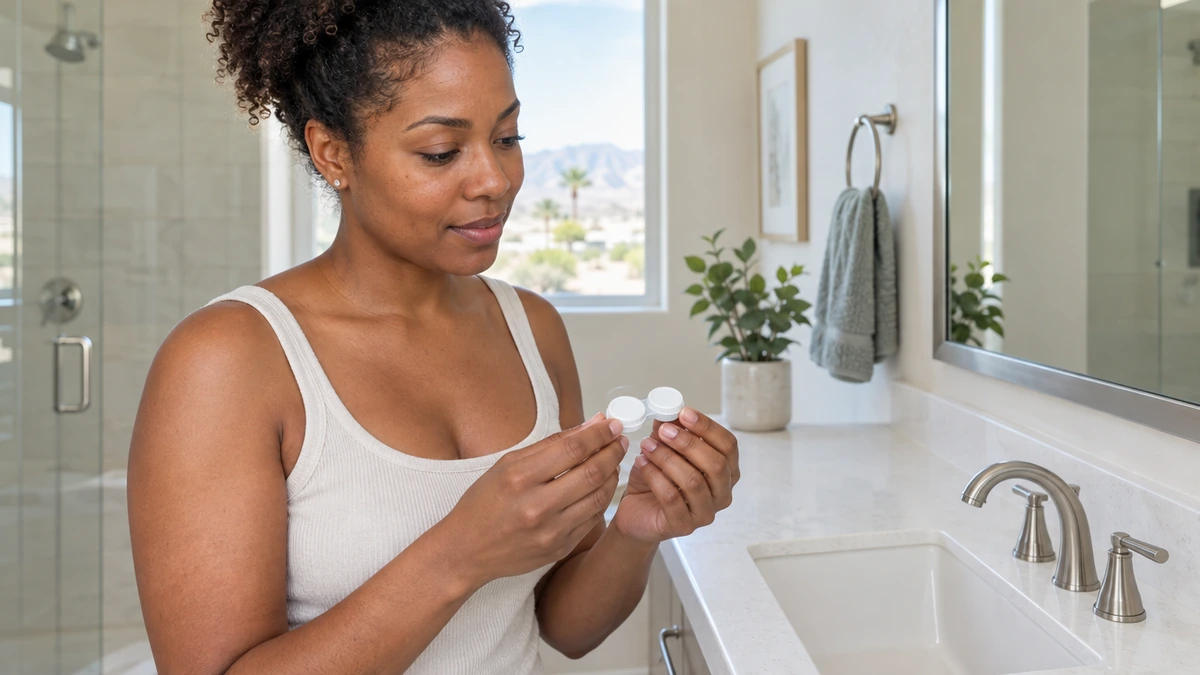
    Woman holding a contact lens case at a clean bathroom counter, illustrating screen time and dry eye
    A contact lens case stays away from the faucet.

    Protect your eyes with a dependable routine. Under CDC lens care guidance, wash and dry your hands before handling lenses, keep lenses away from water, remove them before showering or swimming, never mix fresh and old solution, and replace your case at least every three months. Make those steps part of the day even when work runs late.

    1. Start with clean, dry hands before touching your lenses.
    2. Take lenses out before a shower or swim.
    3. Use fresh solution for reusable lenses according to your care instructions.
    4. Keep the case replacement date in your calendar.

    Daily care should fit real life. A Summerlin morning often means answering messages before you have finished getting ready, then rushing out with your lens case still on the counter. Pause long enough to follow the routine. Your next meeting does not change the care instructions.

    Tell me about the messy days too. Travel, late meetings and overnight stays bend your lens routine, and they matter. Explain which step gets difficult when you are away from home or working late. I want a useful eye care conversation grounded in what you do.

    I believe your lens routine should be simple enough to follow on your busiest day. Keep your prescribed instructions together so you have a clear reference at home and when you travel. Ask my team when a step is unclear. A direct answer beats guessing over the bathroom sink.

    Why Do Screen Time and Dry Eye Go Together?

    Your blinking changes at a screen. According to the AAO computer-use guide, you normally blink about 15 times a minute, compared with roughly 5 to 7 during screen use. These are approximate rates, varying by person. Screens do not permanently damage your eyes, though long sessions leave some eyes uncomfortable and dry.

    Finish the blink. In a study published in Optometry and Vision Science involving 21 people, incomplete blinks tracked with symptoms, while increasing blink frequency alone did not improve symptoms. For you, the practical point is full eyelid closure. Chasing a faster blink count misses part of the problem.

    Give that habit a clear cue. When you finish a message or look away from a spreadsheet, notice whether your lids meet as you blink. Let the pause interrupt the long stretch of staring. You do not need to count every blink through every meeting.

    Count every screen in your day. Include the phone while you ride as a passenger on the 215, the recipe tablet and the late laptop session. Your work calendar captures only part of that time. For the air around those screens, read my guide to Las Vegas air and dry eyes.

    How Do You Build a Screen Break That Works?

    Man looking toward distant mountains from an office patio, illustrating screen time and dry eye
    Use a screen break to look into the distance.

    Give your eyes a distant view. The American Optometric Association recommends the 20-20-20 rule: every 20 minutes, look 20 feet away for 20 seconds. From a Summerlin office window, your view might be the red rock ridgeline. Leave the next message until the break ends.

    A phone swap keeps you looking close. Set the device down beside your keyboard and choose something farther away before the next task starts. On an office patio, let the mountains hold your attention for the pause. The view is already there.

    Make room for glasses, too. The AAO computer-use guide advises switching to glasses during long device sessions and avoiding sleep in contact lenses. Keep your glasses somewhere easy to reach before settling into evening work.

    End your lens day on purpose. Glasses and case on the desk before the after-dinner laptop opens. Lenses out before a late session turns into sleep.

    When Do Screen or Lens Symptoms Need Care Today?

    Seek care right away when your eye is red, painful and your vision is blurred: MedlinePlus identifies that combination as a medical emergency. Another screen break is no reason to delay care.

    Remove your contacts and call your eye doctor immediately for irritated red eyes, worsening pain even after lens removal, light sensitivity, sudden blur, unusual watering or discharge, as CDC infection guidance directs. When your eyes need an ophthalmologist, I refer you to one. My guide to when dry eye symptoms need care covers other warning signs.

    How I Approach Your Lens Comfort at Vision by Amel

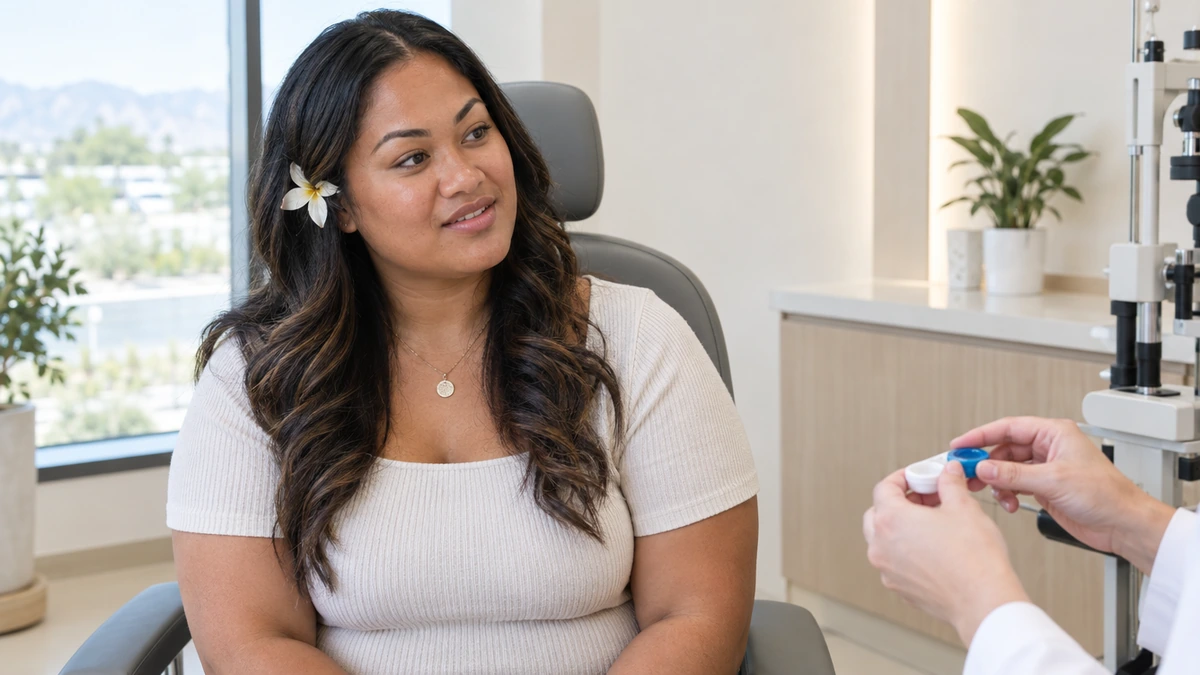
    Woman seated for a contact lens fitting with doctor hands holding a case, illustrating screen time and dry eye
    Bring your lens comfort questions to your contact lens fitting.

    Your lens fit belongs in the discussion. At Vision by Amel, a contact lens fitting includes options from daily disposables onward, with changes to material, wear schedule or fit for discomfort. Tell me what you need from your contacts across desk work, errands and evenings out. I believe your workday deserves a lens plan you understand.

    Your comprehensive eye exam gives us time to discuss comfort alongside prescription needs. Bring the routine into that conversation: when you put lenses in, the screen tasks you spend time on and when you switch to glasses. I want to understand what you need from dry eye treatment alongside your lens plan.

    Make the concern concrete: are you removing lenses earlier than you want, or leaving them in through another uncomfortable evening? Mention whether the same feeling occurs with glasses. We will discuss lens choices with your actual day in mind.

    You will find my practice at Festival Plaza in Downtown Summerlin. Book online or call, with no referral needed for an eye exam. Let my team know you want to discuss lens comfort as well as your prescription.

    Frequently Asked Questions About Screens, Contact Lenses and Dry Eye

    How Much Less Do We Blink on Screens?

    In a study published in Graefe’s Archive, 30 participants with dry eye averaged 16.8 complete blinks per minute during conversation and 6.6 when screen work began. This small study measured complete blinks specifically. It gives you a concrete example of the change during focused work.

    Can Contact Lenses Cause Dry Eye?

    Yes. The AAO computer-use guide lists dry eye as a possible ongoing problem when you wear contacts through long device sessions. But a dry feeling in your contacts also occurs with normal tear function, according to the AAO. I distinguish lens discomfort from a tear film problem rather than treating the sensation alone as a diagnosis.

    Do Screens Damage Your Eyes?

    The AAO computer-use guide says screens do not permanently damage your eyes. For a more comfortable setup, that guide recommends sitting about 25 inches away, roughly arm’s length, with your gaze angled slightly downward. Use that distance when checking the space between your chair and screen.

    Can Screens Cause Dry Eye?

    Screen work contributes to dryness through reduced and incomplete blinking. Reading and driving also involve sustained visual effort linked with reduced blinking in the AAO guideline. Tell me when your symptoms appear during those activities, too.

    How Should I Care for Contact Lenses When My Eyes Feel Dry?

    Keep following the care instructions for your prescribed lens type, and use glasses for a break during long device sessions. Daily disposables and reusable lenses need different routines, so tell me which you wear. Fit, material and wear schedule are all part of the discussion when your usual lenses feel uncomfortable.

    Book My Eye Exam Call (702) 858-4362

    Like this article? Add Vision by Amel as a preferred source, and you are more likely to see our articles in Google’s Top Stories.

    Add as a preferred source on Google