Tag: dry eye

  • Dry Eye, Hormones and Menopause: Why Women Feel It More

    Dry Eye, Hormones and Menopause: Why Women Feel It More

    Dry Eye, Hormones and Menopause: Why Women Feel It More

    Hispanic woman wearing wraparound sunglasses on a Summerlin trail, dry eye and menopause

    TLDR: The link between dry eye and menopause involves hormones, aging and your individual eye findings. Women have more dry eye, but menopause alone is not a proven cause. Start with an eye exam, and leave hormone therapy changes to your prescriber.

    Answer: Women experience dry eye more often than men, with hormones among several contributors. For you in Las Vegas, the useful question is what your eyes need now. Androgen changes matter to eyelid oil glands, while estrogen findings remain mixed. Treatment should address your tear film and daily exposures alongside a review of medicines.

    Breakfast is done, the Summerlin sun fills your office window, and the first emails are waiting. By lunch, your eyes burn. Menopause feels like the obvious culprit, and it might be part of the story. Your eyes need the whole story, not a label that ends the search.

    I reviewed 123 primary sources across five research lenses for this guide, and definitive evidence that menopause itself causes dry eye is still lacking. Your symptoms need a closer look than a label based on age. As an optometrist, I want your eye care to address the problem an exam finds. My approach to dry eye care begins with your history and an individual plan.

    Why Are Dry Eye and Menopause Linked?

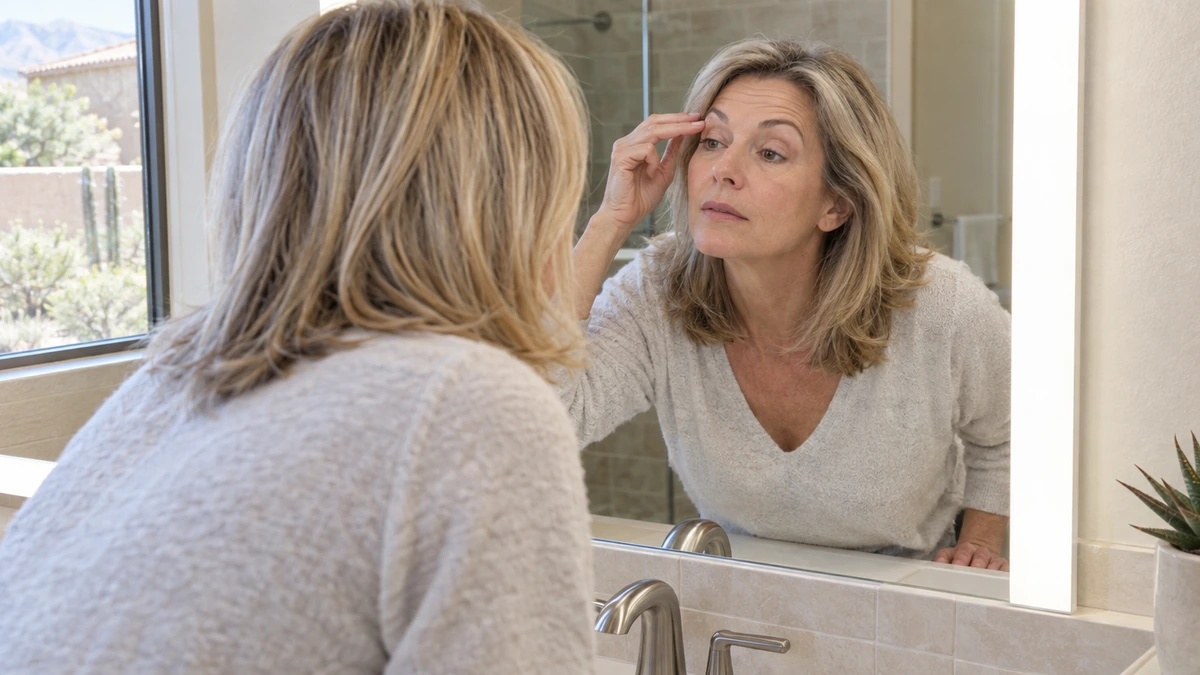
    White woman blinking at a desk beside a bright window, dry eye and menopause
    A woman pauses with her eyes closed at a bright Summerlin desk.

    Women carry more of the dry eye load, and the numbers show it. A national survey conducted in 2013 reported diagnosed dry eye in 8.8% of women and 4.5% of men, as described in the American Journal of Ophthalmology. Those are historical national figures for diagnosed disease, not your personal odds or a Summerlin rate. That gap is why your question matters.

    Your hormone story involves more than estrogen. The 2017 TFOS DEWS II report links androgen deficiency with meibomian gland dysfunction, describes inconsistent estrogen and progesterone findings, and finds definitive evidence for menopause itself lacking. Dry eye prevalence rises gradually with age in both sexes, a pattern more consistent with declining androgens than a sudden estrogen drop. That distinction matters when you are offered a simple hormone explanation for a complicated symptom.

    Timing still belongs in your history. Write down whether discomfort began before your periods changed, during that transition or after a medicine change. Add what you notice during reading, computer work and time outdoors. I consider the sequence alongside your eye findings, without treating the calendar as a diagnosis.

    I believe your comfort deserves more than an age-based explanation. You should leave with a plan specific enough to follow at home. For the gland side of your hormone history, see my guide to meibomian gland dysfunction. Use it when that term appears in your plan, so the reason for each step stays clear.

    What Helps With Dry Eye and Menopause?
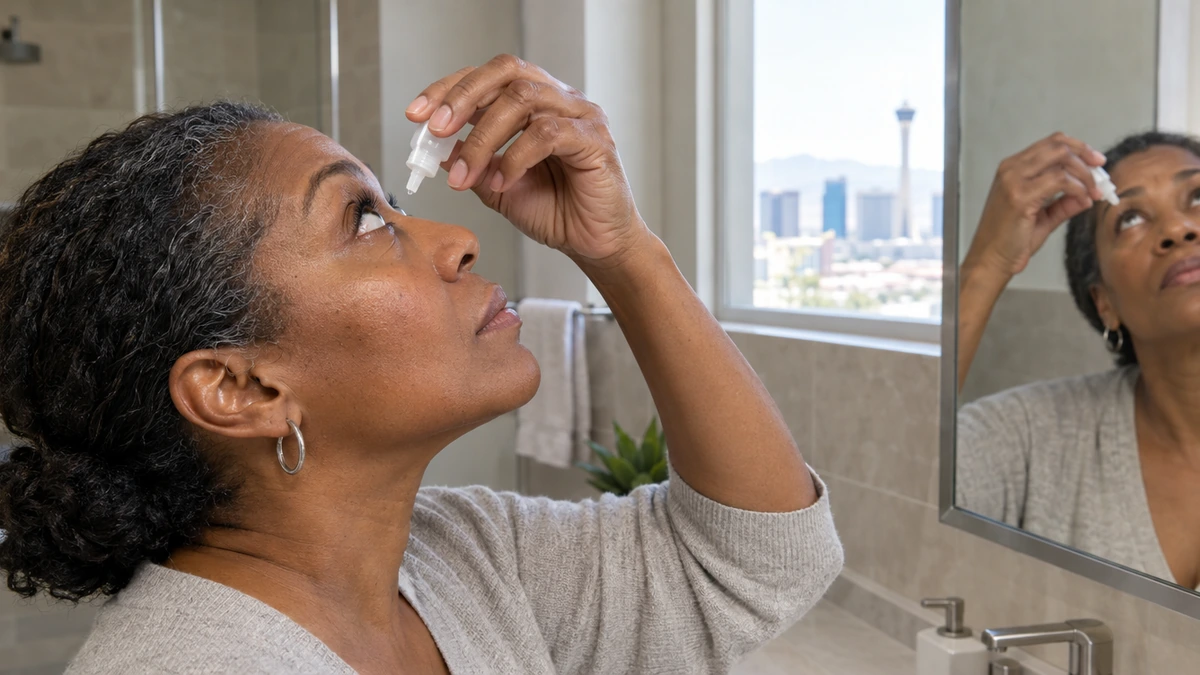
    Black woman using an eye drop at a bathroom mirror, dry eye and menopause
    A woman puts in an eye drop at her bathroom mirror.

    Match care to your eyes. The National Eye Institute describes artificial tears as the usual treatment for mild dry eye and bases treatment on the cause. An assessment considers tear amount, how quickly tears dry and eyelid structure. That gives your dry eye treatment a clearer direction than choosing a bottle because it mentions aging.

    No step stays in your plan without a reason. Before you head home, you know what each step targets and when we check it. Daily care and occasional comfort measures sit on separate lines of your plan. My dry eye treatment guide covers the broader options, including warm compresses, eyelid hygiene and prescription care.

    What You NoticeWhat to RecordWhat to Discuss
    Discomfort began around a hormone changeApproximate dates and the symptoms you noticed firstHow the timing fits your eye findings
    You reach for eye drops throughout the dayThe bottle name, frequency and how your eyes feel afterwardWhether the current plan needs review
    Your contact lenses feel less comfortableWhen you put them in and when discomfort beginsLens material, fit and wear schedule
    You struggle most at your desk or outdoorsThe task, surroundings and time of dayWhich daily habit to address first

    Use this table as a record, not a self-diagnosis. You do not need a perfect symptom diary to book an appointment. A few clear examples are enough to begin the conversation. Include the activity you miss most, whether it is wearing contacts to dinner or working comfortably through the afternoon.

    What Do Hormone Therapy Studies Show?

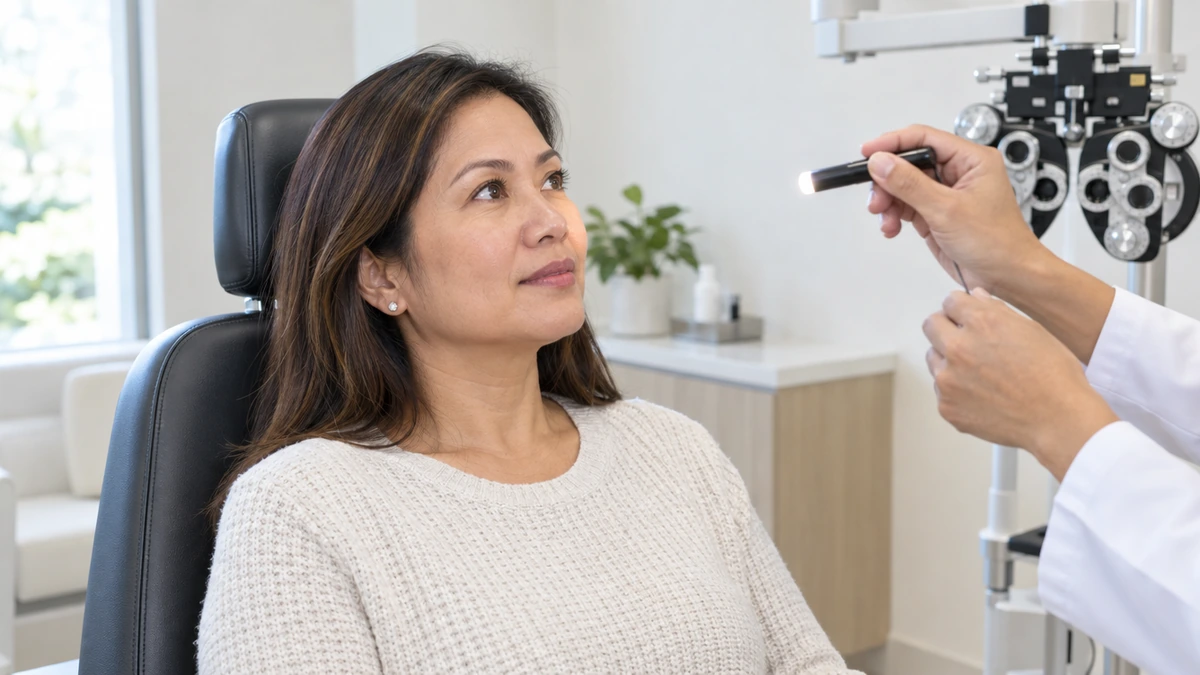
    Asian woman speaking with a clinician seen from behind, dry eye and menopause
    A woman talks with a clinician, seen from behind, in a bright consultation room.

    The hormone therapy finding needs its context. In an observational cohort of 25,665 postmenopausal women, the Women’s Health Study reported adjusted odds ratios of 1.69 for estrogen alone and 1.29 for estrogen plus progestin, compared with no hormone therapy, for diagnosed dry eye or severe symptoms. These are odds ratios, not absolute risk or proof of cause. You cannot use them to calculate what will happen to your own eyes.

    Leave treatment changes with your prescriber. MedlinePlus advises talking to your provider before you stop any medicine. For hormone therapy, that means discussing any proposed start, stop, dose change or switch with the person managing it. An eye symptom is information to share, not an instruction to alter a prescription yourself.

    Make that discussion concrete. Bring the hormone name, dose, start date and any recent changes, alongside your other medicines and eye drops. Record whether dryness began before or after a change, including symptoms present beforehand. My article on medicines linked with dry eye explains why the full list matters.

    Your priorities count too. What is the hormone prescription meant to fix, and what is your eye discomfort keeping you from? Put both answers beside the timeline, and neither concern gets lost. I favor a clear eye plan and a clear prescriber conversation over guessing which medicine to blame.

    How Do You Fit Eye Care Into a Las Vegas Day?

    Middle Eastern woman drinking water on a shaded patio, dry eye and menopause
    A woman sips water on a shaded patio beside desert plants.

    Your day holds the clues. A morning walk on a Summerlin trail, then a glass of water on a shaded patio among the desert plants. Later, a drive across Las Vegas with cool air blowing toward your face. Which moment set your eyes burning? That answer tells me more than a note that your eyes felt bad all day.

    1. Choose one recurring activity to describe, such as your afternoon computer work.
    2. Note when discomfort starts and what you are doing, including contact lens wear.
    3. List the care you used and how your eyes felt afterward.
    4. Share the pattern at your follow-up and agree on the next adjustment.

    Make the plan fit the day you live. Set your care supplies where you will remember the prescribed routine, and leave the instructions somewhere easy to find. Wind, car vents and dry indoor air get their own guide: desert air and your eyes. Use that detail to support the plan you already have.

    Which Eye Changes Should Never Wait for a Hormone Review?

    A red or painful eye skips the symptom diary. Contact an eye care provider right away, the step MedlinePlus gives for red or painful eyes, and say what changed when you call. My guide to dry eye warning signs in Summerlin lists the other symptoms that need care right away.

    How I Approach Dry Eye Around Menopause

    Your visit starts with your history. At Vision by Amel, I consider what you report during my evaluation and explain the plan. A comprehensive eye exam gives us time to address your concerns about comfort and eye health. Mention the menopause timeline and hormone medicines at the beginning so they remain part of the conversation.

    Your plan draws on what your exam shows: artificial tears, targeted prescription eye drops including anti-inflammatory medication, warm compresses or eyelid hygiene, depending on your eyes. Care for meibomian gland dysfunction and blepharitis also belongs among the available approaches. We discuss the steps relevant to your findings and how they fit your routine. For contact lens discomfort, options include adjusting the lens material, wear schedule or fit.

    You reach me at 2010 Festival Plaza Dr, Suite 195, Las Vegas, NV 89135, inside Festival Plaza in Downtown Summerlin, minutes from The Vistas, The Paseos, Sun City and Red Rock Country Club. You need no referral for an eye exam. Book online or call (702) 858-4362, and mention your dry eye concerns when scheduling. See our eye exam page for more about the visit.

    Frequently Asked Questions About Dry Eye and Menopause

    Why Do Women Get Dry Eye More Than Men?

    Sex hormones explain much of the gap, along with genetic and other biological factors, the TFOS report says. In the Beaver Dam Study of 3,703 U.S. adults, age-adjusted dry eye prevalence ran 16.7% in women versus 11.4% in men, a study figure, not a Las Vegas rate. Your sex is one clue, and your own exam findings still decide your plan.

    Does Menopause Cause Dry Eye?

    Menopause alone is not an established cause, even when your symptoms begin during the transition. The practical point is to include the timing without letting it replace an eye evaluation. You do not need to settle the hormone question before seeking help for discomfort.

    What Do Hormones Have to Do With My Oil Glands?

    Low androgen levels are linked with meibomian gland dysfunction, so the eyelids belong in a conversation about your hormone history. That link does not establish your personal hormone level. When gland care appears in your plan, ask which finding it addresses and how to follow the routine.

    Will Hormone Therapy Help My Dry Eyes?

    A Menopause meta-analysis published in 2020 combined nine randomized trials with 612 women and reported improvements in tear tests and symptoms, while calling effectiveness controversial. The TFOS report adds that none of the studies showing symptom relief used a placebo, and of three placebo-controlled studies, one found symptoms worse and two found no change. Hormone therapy is not a proven treatment for your dry eye. Discuss eye treatment separately from the reasons your prescriber recommends hormone therapy.

    Do Birth Control Pills Cause Dry Eye?

    The TFOS hormone report describes case reports of dry eye symptoms and contact lens intolerance with birth control pills, but formal investigations have not confirmed the link. Record a change in comfort if you notice one after starting a pill. Share it with me and your prescriber, including whether you also changed contact lenses or other medicines.

    Should I Change My Hormone Therapy Because of My Eyes?

    Any change belongs with your prescriber. For that conversation, include what prompted the hormone prescription as well as what bothers your eyes now. After an eye visit, take your care plan to the next prescribing appointment so both discussions use the same information.

    Book My Eye Exam Call (702) 858-4362

    Like this article? Add Vision by Amel as a preferred source, and you are more likely to see our articles in Google’s Top Stories.

    Add as a preferred source on Google

  • Dry Eye or Eye Allergies? Telling Them Apart in Las Vegas

    Dry Eye or Eye Allergies? Telling Them Apart in Las Vegas

    Dry Eye or Eye Allergies? Telling Them Apart in Las Vegas

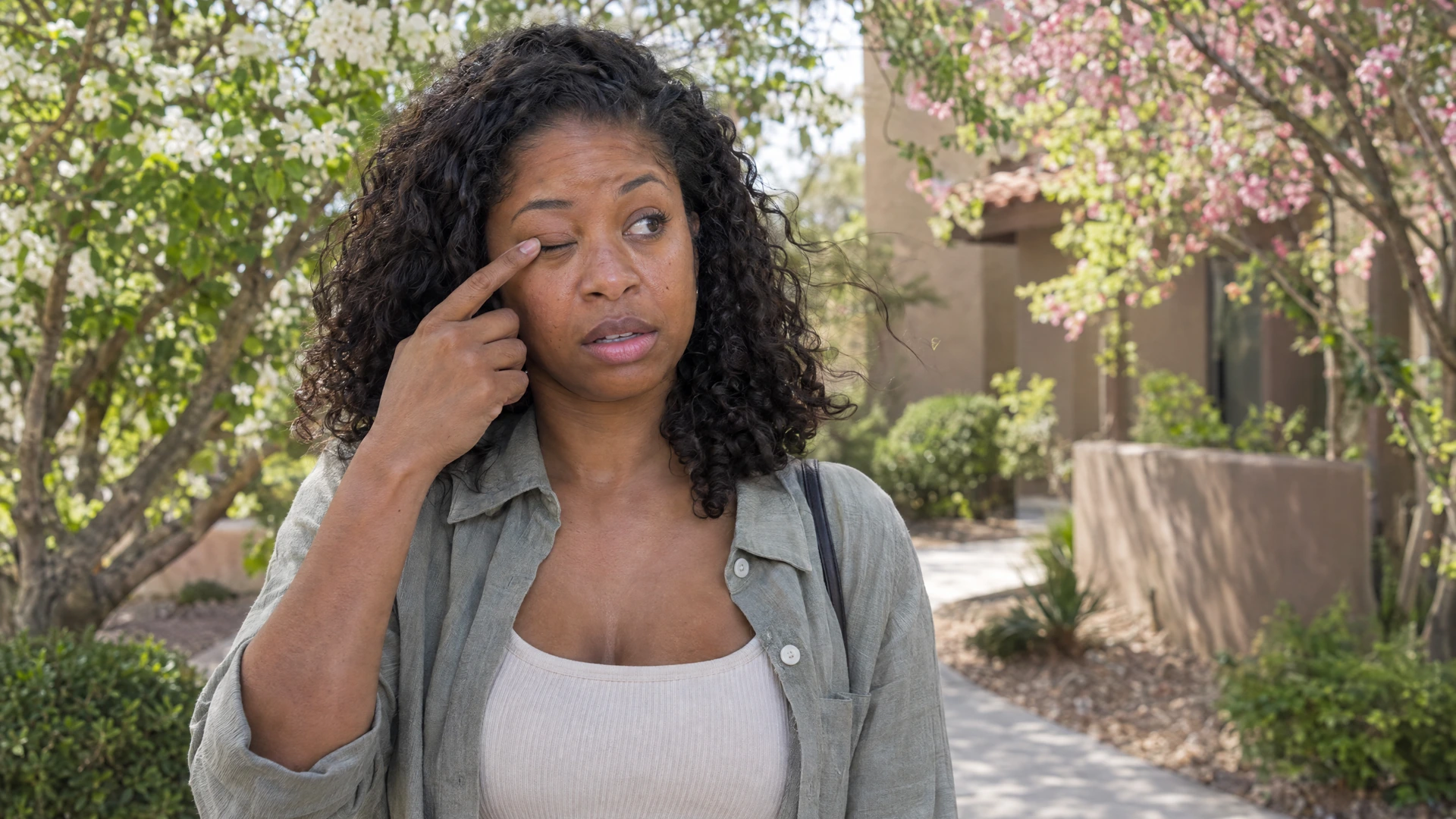
    Black woman rubbing an itchy eye by blooming desert trees, dry eye vs allergies

    TLDR: The useful distinction in dry eye vs allergies is your pattern of symptoms: itching is the strongest allergy clue, while burning points neither way on its own. Symptoms overlap, and both problems sometimes occur together. An eye exam sorts out the cause so your care fits it.

    Answer: Eye allergies usually make your eyes itch, often alongside sneezing, while dry eye often brings burning or a gritty feeling. In Las Vegas, pollen and dusty air complicate the picture. Burning alone does not separate them, and allergy medicine sometimes adds dryness. Your symptom history and an examination help distinguish allergy, dryness and overlapping problems.

    You step onto a Las Vegas patio and start rubbing your eyes. Later, indoors, they feel sandy instead. Before buying another bottle, notice which feeling troubles you most and when it starts. Those details give an optometrist more to work with than the word irritation.

    I reviewed 88 primary sources across five research lenses for this guide, and dry eye and blepharitis share symptoms with eye allergies. The American Optometric Association recommends a comprehensive eye exam to distinguish these causes of your discomfort. My approach to dry eye care starts with understanding what needs treatment. A guess between allergy and dry eye costs you weeks of the wrong drops.

    Dry Eye vs Allergies: What Do Your Symptoms Suggest?

    White man squinting on a dusty Las Vegas sidewalk with palms, dry eye vs allergies
    A dusty-day flare does not establish pollen allergy.

    Start with the itch. AAPOS identifies itching as the main symptom of allergic conjunctivitis, although your eyes also sometimes burn, sting or tear. Allergic conjunctivitis means allergy-related inflammation of the tissue covering the white of the eye and lining the eyelids. Burning does not settle the question.

    Your description matters more than finding the perfect medical word. Say whether you want to rub your eyes, blink away a gritty feeling or wipe away tears. Mention a stuffy nose or sneezing, too. Use the comparison below to organize what you notice before your visit.

    What You NoticeWhat It SuggestsWhat It Does Not Settle
    Itching is the strongest complaintAllergy deserves considerationDry eye and eyelid inflammation also cause itch
    Burning or stingingDryness or allergyThe sensation alone does not identify the cause
    Grittiness or a scratchy feelingDry eye belongs in the evaluationA symptom description does not replace an examination
    Sneezing or an itchy, stuffy nose with eye symptomsAn allergy patternDryness still needs consideration
    Symptoms during a dusty outingIrritation or exposure worth reportingDust exposure does not establish pollen allergy

    Your whole pattern belongs in the appointment. Describe the strongest symptom first, then the others, even when they seem unrelated. Include whether the discomfort starts outdoors, follows a medicine or stays with you indoors. A useful history describes what happened before you decided what to call it.

    Do Allergy Pills or Eye Drops Add Dryness?

    Latina woman using an unbranded eye drop by a sunny kitchen window, dry eye vs allergies
    Include eye drops in your medication review.

    An allergy pill can stop the itch and still dry your eyes. The American Academy of Ophthalmology notes that oral antihistamines sometimes dry your eyes and worsen eye allergy symptoms despite helping itch. Report both changes when they happen together. Less itching does not explain new grittiness.

    Eye drops need review, too. The 2017 TFOS DEWS II report links topical medicines and some preservatives to dry eye through effects on your ocular surface, the exposed surface of the eye. With an antihistamine drop, review the full formulation and your response rather than assuming every drop has the same drying effect. A pill and a drop are different decisions.

    Bring your bottles or a written list. Include allergy pills, eye drops and medicines you buy without a prescription, with a note about when each started. Keep prescription changes with the prescriber, and report new discomfort instead of stopping treatment yourself. My guide to medications linked to dry eye explains that review in more detail.

    Make your notes specific. Record what improved, what persisted and what appeared after a new medicine. Keep the product names on your list even when the packaging calls several bottles allergy relief. At the visit, ask what each medicine is meant to treat and which changes need a call.

    When Does Southern Nevada Pollen Matter?

    East Asian man sneezing into his elbow by a Summerlin flowering shrub, dry eye vs allergies
    Sneezing alongside eye symptoms belongs in your allergy history.

    Spring in the valley is tree pollen season, and your calendar is a clue. A UNLV pollen study observed the main tree season from February to June and higher weed pollen from March to May and August to October across five Las Vegas Valley sites during April 2015 to April 2016. The study covered one year, with differences between sites, so use those months as an observed pattern rather than a fixed calendar for your neighborhood. Report your own timing.

    A dusty afternoon calls for a separate question. The CDC distinguishes allergens such as pollen from irritants such as dust, so your reaction to blowing desert dust does not prove allergy. Describe what was in the air and what your eyes felt. Windblown desert dust irritates your eyes. Irritation is not allergy.

    Think about your usual route through Summerlin. Note whether discomfort starts beside flowering plants in your yard, during a dusty walk or after you return indoors. Include uneventful outings as well as uncomfortable ones. For practical changes involving wind and indoor air, see why Las Vegas air dries out your eyes.

    Dry Eye vs Allergies: What If Both Are Involved?

    You do not have to choose a diagnosis before booking. Dryness and allergy sometimes coexist, and blepharitis adds another source of similar symptoms. Your appointment should address the whole complaint, including symptoms left over after treatment. I want your plan to explain the discomfort you still have.

    Keep a short record before your visit. Use ordinary language and include your current treatment. Follow this sequence to make the discussion useful without turning it into homework.

    1. Name the main feeling: itch, burning, grittiness or watering.
    2. Record when it starts and whether one eye or both feel affected.
    3. Note the setting, such as your backyard, a dusty sidewalk or an indoor workspace.
    4. List the medicines and drops used before and after symptoms began.
    5. Describe what improved and what still interrupts your day.

    Book an evaluation when recurring discomfort leaves you uncertain about what to use. Explain the problem when arranging your visit, especially when a previous allergy label no longer describes it well. Your history matters even if your eyes feel better that morning. For a broader look at visits and follow-up, read when to see an optometrist for dry eye.

    Which Red Eyes Cannot Wait Out Allergy Season?

    Red or painful eyes do not wait out allergy season: contact an eye care provider right away, as MedlinePlus instructs. Its warning signs also include flaking, discharge or a sore on your eye or eyelid, an eye injury, a bulging eye or a drooping lid. Get care right away for those signs rather than waiting for a routine allergy appointment. See a provider for pink eye with eye pain, light sensitivity, intense redness or blurred vision that stays after you wipe away discharge, the CDC advises.

    Describe your symptoms when you call. Say when they began and whether they are getting worse, and identify any drops already used. A familiar pollen season is no reason to postpone evaluation of these warning signs.

    How I Sort Allergy From Dryness at Vision by Amel

    Filipino woman in an eye exam chair with clinician hands holding a light, dry eye vs allergies
    An examination helps distinguish causes of eye discomfort.

    Your visit should separate allergy from dryness. As Dr. Amel Youssef, OD, I use your symptom history and my evaluation to shape your plan at Vision by Amel. Your symptom notes and medicine list put the details in front of us. Our eye exams include patient history, digital diagnostics, my evaluation and your plan.

    When dryness shows up in your findings, your dry eye treatment depends on your eyes: artificial tears, targeted prescription drops, warm compresses or eyelid hygiene, with care for meibomian gland dysfunction or blepharitis, chosen to sit beside your allergy care. My guide to dry eye treatment in Las Vegas explains those options. Your visit gives those choices a purpose.

    My office sits in Downtown Summerlin at Festival Plaza, 2010 Festival Plaza Dr, Suite 195. No referral is needed for an eye exam. Book online or call with your symptoms and the questions you want answered. Leave knowing which problem you have and what calms it, so your eye health stays protected.

    Frequently Asked Questions About Dry Eye and Eye Allergies

    Will I Need Allergy Testing for Itchy Eyes?

    Allergy testing is rarely needed to diagnose allergic conjunctivitis, according to the AAPOS guidance cited above. Your history and eye examination usually guide the diagnosis. Details about your exposures and symptoms come before arranging testing on your own.

    Are Allergic Eyes Contagious?

    Allergic conjunctivitis is not contagious, and neither is irritation from dust. The CDC distinguishes both from viral and bacterial causes of pink eye. Your red eye still needs a diagnosis before you assume allergy explains it.

    Should I Rub My Eyes When They Itch?

    Avoid rubbing your eyes. Rubbing adds irritation and swelling, even when the urge feels hard to resist. Mention persistent itching during your evaluation so the plan addresses the reason you keep reaching for your eyes.

    Do Artificial Tears Help Eye Allergies?

    Artificial tears temporarily wash allergens from your eyes and relieve dryness. That overlap in uses means relief from a lubricating drop does not identify which condition you have. Record the response and bring it to your visit.

    How Long Should I Use Redness-Relief Drops?

    The American Academy of Ophthalmology advises you not to use decongestant redness-relief drops for more than two to three days because longer use worsens symptoms. Check which kind of drop you have. Bring recurring redness for evaluation instead of repeatedly restarting the bottle.

    Book My Eye Exam Call (702) 858-4362

    Like this article? Add Vision by Amel as a preferred source, and you are more likely to see our articles in Google’s Top Stories.

    Add as a preferred source on Google

  • Blepharitis: Why Your Eyelids Itch, Crust and Burn

    Blepharitis: Why Your Eyelids Itch, Crust and Burn

    Blepharitis: Why Your Eyelids Itch, Crust and Burn

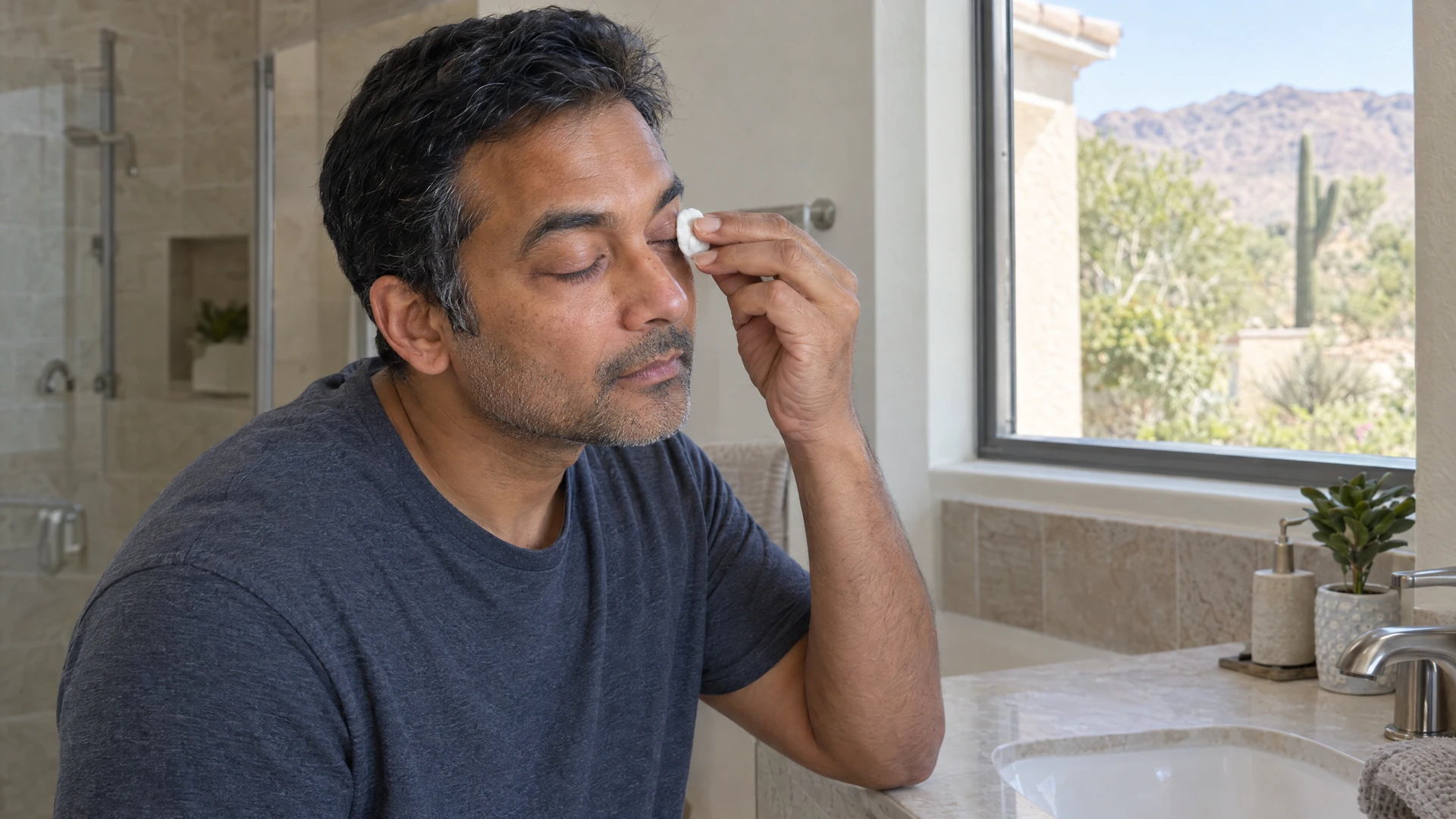
    South Asian man gently cleaning his eyelid with a soft pad for blepharitis care

    TLDR: Blepharitis is eyelid inflammation that leaves your lids itchy, crusty or burning. Gentle daily eyelid hygiene helps control symptoms, while persistent inflammation needs an exam to identify its cause and guide prescription care.

    Answer: Blepharitis affects the lash line, the inner eyelid edge or both, causing crusts and irritation around your eyes. Bacteria, skin conditions, poorly working oil glands and Demodex mites are possible contributors. For adults in Las Vegas, care starts with identifying the type, then choosing a lid-cleaning routine and any prescription treatment your findings require.

    You notice flakes before breakfast. Your eyelids burn while you get ready for work in Summerlin, and washing your face has not settled the problem. As an optometrist, I want you to understand what those changes mean, and book an exam before you buy another bottle of eye drops.

    I reviewed 88 primary sources across five research lenses for this guide, and blepharitis often needs ongoing care to keep symptoms under control. Your lids also matter to dry eye, so I consider them when planning dry eye treatment. My dry eye care page explains the broader options, while this guide focuses on the inflamed eyelid itself.

    Where Does Blepharitis Start?

    White woman looking closely at her eyelids in a lighted bathroom mirror, illustrating blepharitis symptoms
    The location of eyelid inflammation matters.

    Where the crust sits tells me where to start. According to the National Eye Institute, anterior blepharitis affects your lash line, posterior blepharitis affects the inner lid edge, and both types sometimes occur together. Crusts on waking, itching and burning belong to the symptom picture.

    TypeWhere It HappensCommon Contributors
    Anterior blepharitisOuter lid edge where lashes attachSkin bacteria and dandruff from the scalp or eyebrows
    Posterior blepharitisInner lid edge beside the eyeClogged oil glands, with rosacea or scalp dandruff as contributors
    Both types togetherOuter and inner lid edgesOverlapping causes that need attention in the same care plan

    Posterior blepharitis often travels with meibomian gland dysfunction, but the TFOS MGD Workshop says the two terms are not interchangeable, so your exam checks both.

    Your lid symptoms belong in the same conversation as dryness. Blepharitis is associated with dry eye, so mention both the irritated lid edge and how the eye itself feels. For a closer look at gland function and the tear film, read my guide to meibomian gland dysfunction. Include both concerns in your eye exam, even when the flakes seem more obvious than the dryness.

    Why Are Your Lids Inflamed?

    Your scalp and skin hold clues your lids cannot show alone. Your scalp dandruff, facial rosacea, oily skin or allergies affecting the lashes are useful clues to the cause. Mention changes in these areas alongside your eyelid symptoms, including what you already use on your skin.

    Demodex deserves a careful look. A review in Cornea describes sleeve-like debris at the lash base as a clue to Demodex blepharitis, microscopic confirmation of suspected cases, and mites in people with and without symptoms. That means a mite finding alone does not explain your discomfort.

    Persistent symptoms call for another look at the cause. Tell me when your current routine has stopped helping, or when it never made a difference. Bring your treatment history to the visit, including what helped, what stung and what you stopped using.

    I prefer a clear cause over a crowded bathroom shelf. You should know why each part of your routine belongs there. A product chosen for a different eyelid problem adds work without answering why your own lids stay inflamed.

    Does Eyelid Hygiene Help Blepharitis?

    Black man holding a warm washcloth over his closed eyes as part of blepharitis care
    Warm compresses are part of an eyelid hygiene routine.

    Gentle cleaning aims to ease crusting and discomfort. A Cochrane review, with searches ending in February 2012, found possible symptom relief from lid hygiene but no strong evidence of lasting elimination from the treatments studied. For you, that supports a practical goal: manage discomfort and crusting while checking whether the plan fits the cause.

    A clear routine gives you steps to follow. Warm compresses and eyelid cleansing are basic parts of blepharitis care, but more products do not make the instructions easier to follow. My dry eye treatment guide covers the detailed warm-compress and cleaning methods.

    1. Write down your current lid-care routine, including the cleanser, compress and any drops.
    2. Bring the routine to your exam so we match it to the cause of your symptoms.
    3. Follow the agreed method and record whether crusting, itching or burning changes.
    4. At your follow-up, explain which symptoms remain and which steps are hard to follow.

    Make room for the routine in your actual day. After a hospital shift and the drive home on the 215, you need more than a vague instruction to clean your lids. Before you leave the visit, make sure you know what to use, where to use it and which changes warrant a call.

    When Does Blepharitis Need Prescription Care?

    Eye doctor hands holding a small magnifier near a woman’s eyelid during a blepharitis examination
    An exam helps guide care for eyelid inflammation.

    Prescription care depends on the cause. Antibiotic drops, ointments or pills are options for bacterial blepharitis, while steroid drops are sometimes used to control inflammation. Your symptoms alone do not select the medicine, and treatment also needs to address any contributing skin condition.

    A steroid prescription includes follow-up. The American Academy of Ophthalmology recommends a recheck within a few weeks, including eye pressure measurement, when steroid treatment is prescribed. Keep that appointment even when your lids feel better.

    Your skin history helps guide treatment, too. When rosacea or dandruff drives your blepharitis, treating the skin condition helps address that contributor. A plan focused only on the lashes leaves that part of the history unexplored.

    Put your questions beside the prescription. What problem is the medicine treating, how should you use it, and what happens at the recheck? Clear instructions are part of good eye care, especially when the plan includes both lid cleaning and medication.

    Why Does Blepharitis Keep Coming Back?

    East Asian woman calmly washing her face at a sink, illustrating a daily routine alongside blepharitis care
    Ongoing blepharitis care belongs in a manageable daily routine.

    Blepharitis is often chronic. Your symptoms might settle while the tendency toward lid inflammation remains, which is why daily cleaning often becomes an ongoing habit. Judge the plan by symptom control and the findings at follow-up, rather than a promise of permanent disappearance.

    A routine you keep beats a perfect routine you skip. Your plan should fit the morning you have, with instructions you remember when you are tired. Say when a step feels confusing, uncomfortable or hard to fit around work so we have something specific to discuss.

    A calm week is good news, not a finish line. So is a flare after a stretch of calmer lids, especially when you have kept to the agreed routine. Note the change and bring it to the next discussion about your plan.

    Crusts back after a calm stretch? Bring me that detail. Your notes about crusting, burning and the treatments used help keep the conversation focused. Repeating the same purchase without reviewing the cause leaves the most useful question unanswered: what needs to change in your care?

    Which Eyelid Changes Need Care Right Away?

    Contact an eye care provider right away for red or painful eyes, flaking, discharge, or a sore on your eye or eyelid, as MedlinePlus advises. An inflamed eyelid lesion that looks suspicious for cancer needs a specialist, the AAO guideline cited above says, and I refer you to one when your lid needs it. Describe the symptoms when you call so the team knows what has changed.

    Keep your eye health ahead of the label. A previous blepharitis diagnosis does not explain every new eye problem. My guide to when to seek dry eye care explains the broader warning signs and referral decisions.

    How I Approach Your Eyelid Concerns at Vision by Amel

    Your history helps me match eyelid care to the problem. At Vision by Amel, my evaluation and your plan follow the history and digital diagnostic steps in the exam. For eyelid concerns, bring the names of your drops and cleansers, any skin diagnoses and a clear account of how the symptoms have changed.

    Depending on your eyes, my plans include eyelid hygiene, warm compresses, care for blepharitis and meibomian gland dysfunction, or targeted prescription eye drops including anti-inflammatory medication. Each part of your plan needs a clear purpose. You should leave knowing its purpose and the next step.

    My office sits in Downtown Summerlin at Festival Plaza, 2010 Festival Plaza Dr, Suite 195. Book online or call my team at (702) 858-4362, with no referral needed for an eye exam. Visit the eye exams page to prepare for your visit.

    Frequently Asked Questions About Blepharitis

    Is Blepharitis Something I Pass to My Family?

    Blepharitis itself is not contagious. You do not pass the condition to your family through ordinary contact. Its relationship to skin bacteria does not make it a contagious eye infection.

    Are My Repeated Eyelid Bumps Related?

    Styes and chalazia are among the problems associated with blepharitis. Your recurring bumps belong in the history even when the itching is what prompted your visit. Mention where they appear and whether the same area keeps bothering you.

    Should I Use Baby Shampoo on My Eyelids?

    The AAO EyeSmart guide describes baby shampoo diluted in warm water and gentle cleaning at the lash base as one lid-hygiene method. That is a specific diluted method, rather than undiluted shampoo applied to your eyes. Review the cleaning method with me so you understand what belongs in your routine.

    Is Tea Tree Oil a Good Home Treatment?

    Do not start tea tree oil on your eyelids without my advice. A Cochrane tea tree oil review found uncertain short-term effectiveness for Demodex blepharitis and noted the risk of eye irritation. An online recipe does not establish a suitable concentration or method for your eyes.

    Will Blepharitis Damage My Eyes Permanently?

    Blepharitis usually causes no lasting eye damage. In severe cases, blepharitis can damage the cornea, the clear front surface of your eye, so persistent or changing symptoms need evaluation. Keep the distinction in mind: an ongoing condition still needs follow-up when its symptoms change.

    Book My Eye Exam Call (702) 858-4362

    Like this article? Add Vision by Amel as a preferred source, and you are more likely to see our articles in Google’s Top Stories.

    Add as a preferred source on Google

  • How to Choose a Dry Eye Doctor in Las Vegas

    How to Choose a Dry Eye Doctor in Las Vegas

    How to Choose a Dry Eye Doctor in Las Vegas

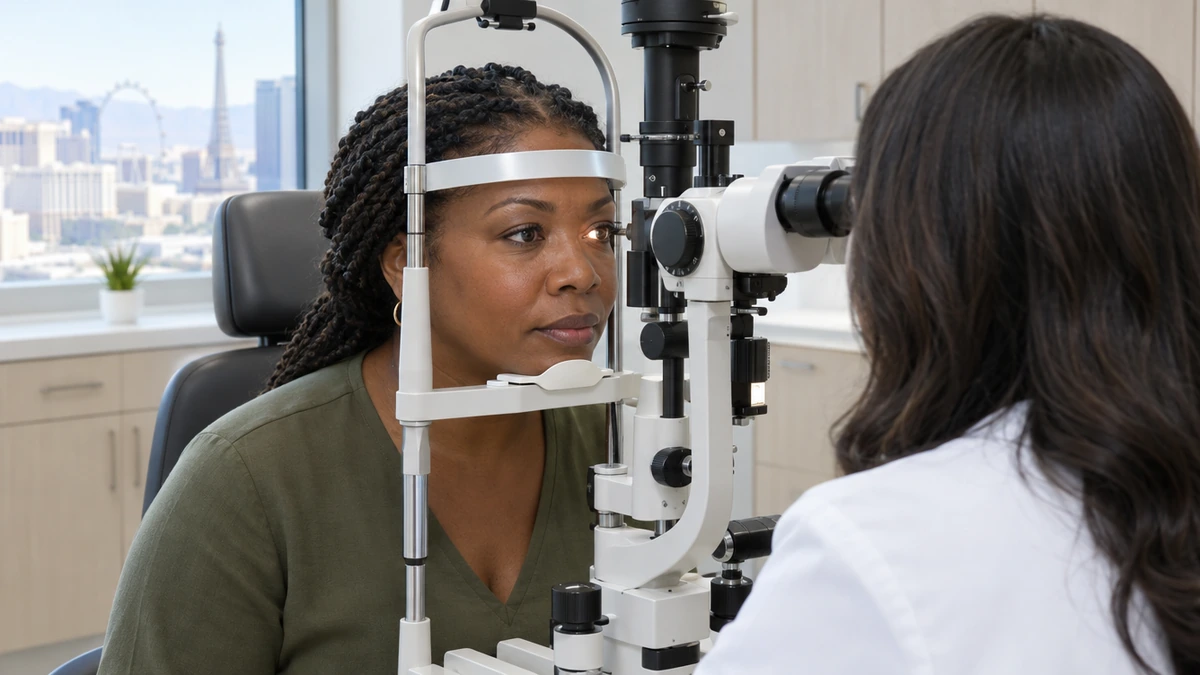
    Woman seated across from a dry eye doctor seen from behind in a bright consultation room

    TLDR: Choose a dry eye doctor who explains your findings, treatment choices and next steps. In Las Vegas, compare the evaluation, follow-up plan and referral approach, then check your insurance benefits before booking.

    Answer: To choose a dry eye doctor in Las Vegas, look for an optometrist or ophthalmologist who evaluates your symptoms, eyelids and tears. Request a clear explanation of the findings and a plan for reviewing progress. Check how the office handles ophthalmology referrals and whether your visit will be billed to medical or vision insurance.

    You want an explanation you understand. You have tried three bottles of drops. Your eyes still burn on the drive home along the 215. My approach to treating dry eye starts with understanding what your eyes need, before choosing a product.

    I reviewed 88 primary sources across five research lenses for this guide, and a dry eye diagnosis needs more than an isolated test result. For your evaluation, the American Academy of Ophthalmology says no single test establishes the diagnosis. I value a clear explanation more than a long equipment list.

    How Do You Compare Dry Eye Doctors?

    Man with reading glasses preparing questions in a notebook for a dry eye doctor visit
    Write down what you want answered.

    Start with the care you need. For general eye care, the National Eye Institute considers either an optometrist or ophthalmologist a good option, with ophthalmologists offering additional treatments such as surgery for serious eye problems. Both professions examine eyes and prescribe medicines within their scope of practice.

    You might search for a “dry eye specialist” or “dry eye clinic” when ordinary drops have disappointed you. A search hands you names. The first visit shows you who explains, who listens and who plans ahead. On that call, find out what the evaluation covers, who explains your results and what happens when you need more care.

    One call tells you a lot. Say why you want an eye exam and what you have already tried. Then listen: does the office ask about your symptoms, or only about your insurance?

    Compare explanations as well as availability. Write down what you want answered before you arrive. Afterward, consider whether the explanations made sense, whether you had time for questions and whether you felt rushed. Choose someone you feel able to work with.

    What Should a Dry Eye Doctor Evaluate?

    Woman seated at a slit lamp with a dry eye doctor visible only from behind
    Discuss what the examination shows.

    Your daily symptoms should guide the evaluation. The American Optometric Association describes a workup covering symptoms, general health, medications and environment, along with examination of the lids, blinking, cornea and tear quantity and quality. Bring the names of your medicines and eye drops, plus notes about what you have already tried.

    Make those notes specific. Describe what happens during your afternoon computer work in Summerlin or after a long shift under hospital air conditioning. Include when the problem began and what interrupts your day. A brief account in your own words is more useful than a collection of search results.

    Use this table to prepare your questions. It turns broad examination terms into points to discuss during the visit. The key question is how those findings fit together for you.

    Part of the EvaluationWhat to DiscussA Useful Question
    Symptom and health historyYour symptoms, medicines, general health and environmentWhich details in my history matter here?
    Eyelids and blinkingLid structure and how your eyes blinkWhat did you notice about my lids?
    Magnified examinationThe lids and ocular surface, including the corneaWhat did the close examination show?
    Tear assessmentTear quantity and qualityHow do these findings explain my symptoms?

    A comprehensive eye exam should leave you understanding why a test matters. The 2017 TFOS DEWS II report explains that symptoms plus a positive tear film test support diagnosis without the full test battery, while negative available tests sometimes require referral for further testing. Each proposed test needs a reason tied to your care: what would its result change?

    Which Questions Make the Visit More Useful?

    Leave with a plan you understand. Keep your questions on paper so nothing important gets lost in the conversation. Work through them in this order, beginning with the findings and ending with follow-up.

    1. Start with the explanation: “What did you find, and how does it relate to what I feel?”
    2. Clarify the first step: “Why are you recommending this option for my eyes?”
    3. Discuss practical use: “How do I fit the plan into my workday, and what problems should I report?”
    4. Set the review: “When should we assess progress, and what should I track until then?”
    5. Establish the referral plan: “What findings would mean I need an ophthalmologist?”

    Your questions should include treatment you found online. For example, ask why artificial tears, warm compresses or prescription eye drops belong in your proposed plan. My guide to treating dry eyes in Las Vegas explains the options in more detail. Name the specific option you want to discuss.

    Be candid about what feels manageable. Tell me when a proposed routine conflicts with your work schedule or when an instruction is unclear. Repeat the plan back in your own words and request clarification where needed. I consider a plan unfinished until you understand the next step.

    When Should You Seek Care or an Ophthalmology Referral?

    Stop comparing offices the moment your eyes turn red or painful, and contact an eye care provider right away, as MedlinePlus advises. Put the provider comparison aside while you seek care. My guide to when to seek care for dry eyes covers the broader warning signs.

    I refer you to an ophthalmologist when your eyes need one. The AAO dry eye guideline calls for ophthalmologist evaluation for moderate or severe pain, lack of response to treatment, corneal infiltration or ulceration, progressive conjunctival scarring, or vision loss. Referral belongs in the discussion when choosing ongoing care.

    Before leaving a visit with a referral, establish the next step. Confirm whom you should contact, how soon you should be seen and which records to bring. Before you leave, clarify how to follow your current treatment while waiting. Keep the referral details with your care plan.

    What Should You Check About Insurance Before Booking?

    Couple reviewing a plain folder at a boutique front desk before a dry eye doctor visit
    Keep your appointment questions together.

    Know how your visit will be billed before you arrive. The American Optometric Association tells optometrists to say it up front: care for an eye complaint is billed to your medical plan, not your vision plan. Payment still depends on your plan, deductible, network and medical necessity. Describe your symptoms when booking so the office understands what care you are seeking.

    Keep both insurance cards handy. Ask your insurer whether the provider is in network for the medical visit and which benefits apply. Confirm whether your plan requires a referral or authorization. Write down the answer and the date of your call.

    Your question to the office should be specific. Say, “I am booking for persistent eye discomfort and want to understand how this visit will be billed.” Confirm what the planned evaluation includes and how any separate services are billed. Settle billing on the phone, so your visit stays about your eyes.

    How I Approach Your Visit at Vision by Amel

    Man walking across a Downtown Summerlin plaza toward a boutique for a dry eye doctor visit
    A man walks across an open-air plaza in Downtown Summerlin.

    Your visit here starts with your concerns. I am Dr. Amel Youssef, an optometrist and the founder of Vision by Amel. You will find us at 2010 Festival Plaza Dr, Suite 195, Las Vegas, NV 89135, in Downtown Summerlin at Festival Plaza. Book online or call my team to arrange your visit.

    Your visit runs in four steps: your history, digital diagnostics, my evaluation and your plan. We discuss how the findings relate to the concerns you brought. Our medical eye care page introduces the care available for your eye health.

    Your dry eye treatment plan depends on your eyes. Options include artificial tears, targeted prescription drops, warm compresses and eyelid hygiene, with care for meibomian gland dysfunction and blepharitis. Punctal plugs are another option within a plan. Bring your questions about which steps fit your findings.

    My team verifies your insurance benefits by phone before the visit. Have your plan details ready when you call. You do not need a referral to book an eye exam here. We are open seven days, Monday to Saturday 9 am to 6 pm and Sunday 11 am to 5 pm, so your visit fits your week.

    Frequently Asked Questions About Choosing a Dry Eye Doctor

    Is a Nevada Optometrist Allowed to Prescribe Dry Eye Medicine?

    Yes, with the required state certificate: the Nevada Legislature includes drug treatment within optometric practice and requires a certificate for prescribing treatment drugs beyond diagnostic agents. That certificate covers the treatment drugs your plan might need, beyond the drops used for diagnosis. Ask me what the proposed medicine does and why it belongs in your plan.

    What Should I Bring From a Previous Eye Appointment?

    Request a copy of your previous findings and treatment instructions. Bring the names of products you used and your notes about the experience. Mark anything you stopped using so we discuss what happened.

    Should I See an Optometrist or an Ophthalmologist for Dry Eye?

    Either can be a good choice for your general eye care, the National Eye Institute says, and both prescribe medicines. The difference is surgery. Nevada optometry excludes procedures that cut or burn tissue, so when your eyes need surgery, an ophthalmologist takes that part of your care.

    How Do I Explain What I Want From Treatment?

    Name the activity you want to discuss, such as reading an evening newspaper or wearing your contacts through a workday. Describe what interrupts it and what you have tried. Use that specific concern to begin the discussion about treatment goals.

    How Do I Judge Whether the Visit Was a Good Fit?

    Try explaining the visit to someone at home. You should be able to describe the findings, the proposed plan and the next contact. Write down unanswered questions and request clarification before deciding how to continue care.

    Book My Eye Exam Call (702) 858-4362

    Like this article? Add Vision by Amel as a preferred source, and you are more likely to see our articles in Google’s Top Stories.

    Add as a preferred source on Google

  • Screens, Contact Lenses and Dry Eye: Daily Habits That Help

    Screens, Contact Lenses and Dry Eye: Daily Habits That Help

    Screens, Contact Lenses and Dry Eye: Daily Habits That Help

    Woman resting her gaze out a home office window beside a laptop, illustrating screen time and dry eye

    TLDR: Better blinking, a lower monitor and regular breaks give you a practical starting point for screen time and dry eye. Pair those habits with careful contact lens care, and let an optometrist evaluate recurring discomfort.

    Answer: Three habits help with screen-related dry eye: full blinks, distance breaks and a monitor below eye level. For your workday in Las Vegas, keep glasses within reach and follow your lens care instructions. Recurring discomfort calls for an eye exam focused on both your eyes and your lenses.

    Your laptop closes. Your eyes still feel gritty. You spent the afternoon answering messages at home in Summerlin, and your contacts stayed in through dinner. Sound familiar? Give your eye health a place in the workday before another late laptop session begins.

    I reviewed 51 primary sources across five research lenses for this guide, and reduced blinking during screen work is a recognized dry eye aggravator. Full blinks, regular breaks and a screen below your eye level are practical habits from the AAO Preferred Practice Pattern, a guideline. Those habits belong alongside dry eye treatment when discomfort persists.

    Where Should Your Screen Sit for Dry Eye Comfort?

    Man lowering his monitor below eye level on an adjustable arm, a screen time and dry eye habit
    The monitor center sits below his eye level.

    Lower beats higher. Set the center of your screen below eye level. The American Optometric Association recommends a screen center 15 to 20 degrees below eye level and 20 to 28 inches from your eyes. Start from your normal seated position.

    The center is your reference point. Find it before adjusting the stand. A monitor with its top below eye level also puts its center below your gaze, but check the actual distance and angle. The goal is a comfortable downward view.

    You need no new furniture, but you need an honest look at your real day. Check the desk in your spare room, the laptop on the kitchen table and the monitor at work, then set each up for the way you sit.

    Your SetupThe Useful ChangePut It Into Practice
    Monitor above your gazeSet the center below eye levelAdjust while seated in your usual chair
    Laptop tucked behind other equipmentMake room at your intended viewing distanceMove the clutter before moving your chair closer
    Breaks spent scrollingChoose a distant viewLeave the phone beside the keyboard
    Contacts through a long device sessionKeep prescription glasses accessibleMake switching part of your workday plan

    Leave your chair and display where you intend to use them, then check the view when you sit down. A shared desk needs another look after someone else adjusts it.

    What Should Your Contact Lens Care Routine Include?

    Woman holding a contact lens case at a clean bathroom counter, illustrating screen time and dry eye
    A contact lens case stays away from the faucet.

    Protect your eyes with a dependable routine. Under CDC lens care guidance, wash and dry your hands before handling lenses, keep lenses away from water, remove them before showering or swimming, never mix fresh and old solution, and replace your case at least every three months. Make those steps part of the day even when work runs late.

    1. Start with clean, dry hands before touching your lenses.
    2. Take lenses out before a shower or swim.
    3. Use fresh solution for reusable lenses according to your care instructions.
    4. Keep the case replacement date in your calendar.

    Daily care should fit real life. A Summerlin morning often means answering messages before you have finished getting ready, then rushing out with your lens case still on the counter. Pause long enough to follow the routine. Your next meeting does not change the care instructions.

    Tell me about the messy days too. Travel, late meetings and overnight stays bend your lens routine, and they matter. Explain which step gets difficult when you are away from home or working late. I want a useful eye care conversation grounded in what you do.

    I believe your lens routine should be simple enough to follow on your busiest day. Keep your prescribed instructions together so you have a clear reference at home and when you travel. Ask my team when a step is unclear. A direct answer beats guessing over the bathroom sink.

    Why Do Screen Time and Dry Eye Go Together?

    Your blinking changes at a screen. According to the AAO computer-use guide, you normally blink about 15 times a minute, compared with roughly 5 to 7 during screen use. These are approximate rates, varying by person. Screens do not permanently damage your eyes, though long sessions leave some eyes uncomfortable and dry.

    Finish the blink. In a study published in Optometry and Vision Science involving 21 people, incomplete blinks tracked with symptoms, while increasing blink frequency alone did not improve symptoms. For you, the practical point is full eyelid closure. Chasing a faster blink count misses part of the problem.

    Give that habit a clear cue. When you finish a message or look away from a spreadsheet, notice whether your lids meet as you blink. Let the pause interrupt the long stretch of staring. You do not need to count every blink through every meeting.

    Count every screen in your day. Include the phone while you ride as a passenger on the 215, the recipe tablet and the late laptop session. Your work calendar captures only part of that time. For the air around those screens, read my guide to Las Vegas air and dry eyes.

    How Do You Build a Screen Break That Works?

    Man looking toward distant mountains from an office patio, illustrating screen time and dry eye
    Use a screen break to look into the distance.

    Give your eyes a distant view. The American Optometric Association recommends the 20-20-20 rule: every 20 minutes, look 20 feet away for 20 seconds. From a Summerlin office window, your view might be the red rock ridgeline. Leave the next message until the break ends.

    A phone swap keeps you looking close. Set the device down beside your keyboard and choose something farther away before the next task starts. On an office patio, let the mountains hold your attention for the pause. The view is already there.

    Make room for glasses, too. The AAO computer-use guide advises switching to glasses during long device sessions and avoiding sleep in contact lenses. Keep your glasses somewhere easy to reach before settling into evening work.

    End your lens day on purpose. Glasses and case on the desk before the after-dinner laptop opens. Lenses out before a late session turns into sleep.

    When Do Screen or Lens Symptoms Need Care Today?

    Seek care right away when your eye is red, painful and your vision is blurred: MedlinePlus identifies that combination as a medical emergency. Another screen break is no reason to delay care.

    Remove your contacts and call your eye doctor immediately for irritated red eyes, worsening pain even after lens removal, light sensitivity, sudden blur, unusual watering or discharge, as CDC infection guidance directs. When your eyes need an ophthalmologist, I refer you to one. My guide to when dry eye symptoms need care covers other warning signs.

    How I Approach Your Lens Comfort at Vision by Amel

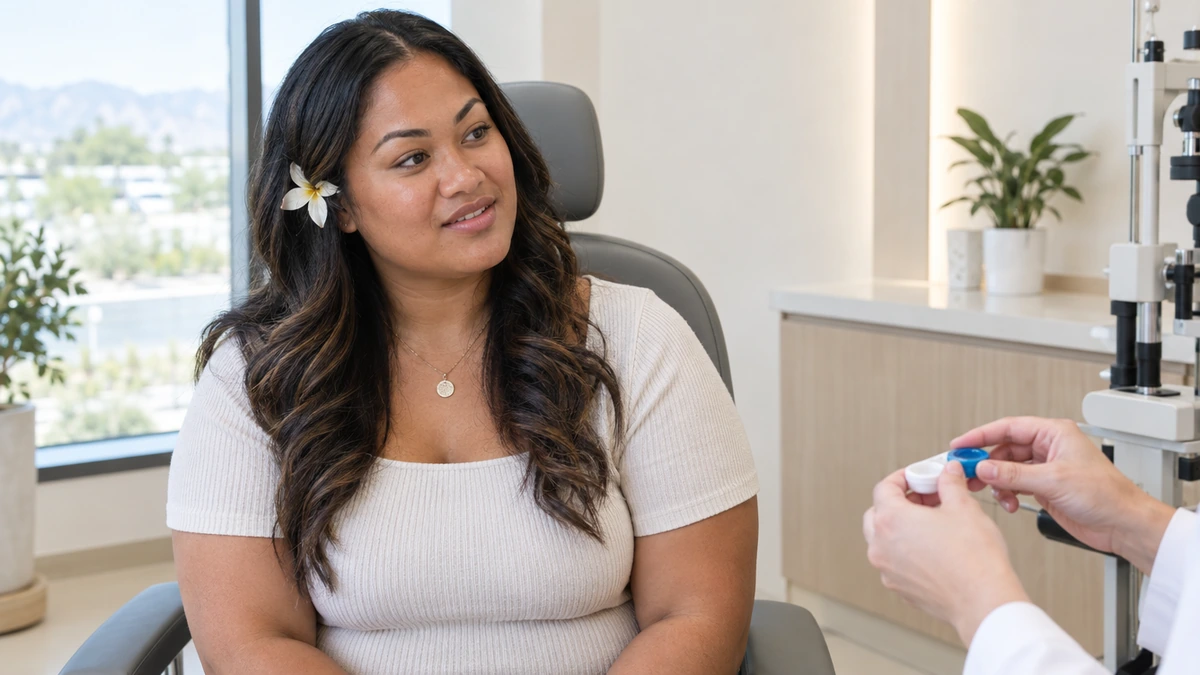
    Woman seated for a contact lens fitting with doctor hands holding a case, illustrating screen time and dry eye
    Bring your lens comfort questions to your contact lens fitting.

    Your lens fit belongs in the discussion. At Vision by Amel, a contact lens fitting includes options from daily disposables onward, with changes to material, wear schedule or fit for discomfort. Tell me what you need from your contacts across desk work, errands and evenings out. I believe your workday deserves a lens plan you understand.

    Your comprehensive eye exam gives us time to discuss comfort alongside prescription needs. Bring the routine into that conversation: when you put lenses in, the screen tasks you spend time on and when you switch to glasses. I want to understand what you need from dry eye treatment alongside your lens plan.

    Make the concern concrete: are you removing lenses earlier than you want, or leaving them in through another uncomfortable evening? Mention whether the same feeling occurs with glasses. We will discuss lens choices with your actual day in mind.

    You will find my practice at Festival Plaza in Downtown Summerlin. Book online or call, with no referral needed for an eye exam. Let my team know you want to discuss lens comfort as well as your prescription.

    Frequently Asked Questions About Screens, Contact Lenses and Dry Eye

    How Much Less Do We Blink on Screens?

    In a study published in Graefe’s Archive, 30 participants with dry eye averaged 16.8 complete blinks per minute during conversation and 6.6 when screen work began. This small study measured complete blinks specifically. It gives you a concrete example of the change during focused work.

    Can Contact Lenses Cause Dry Eye?

    Yes. The AAO computer-use guide lists dry eye as a possible ongoing problem when you wear contacts through long device sessions. But a dry feeling in your contacts also occurs with normal tear function, according to the AAO. I distinguish lens discomfort from a tear film problem rather than treating the sensation alone as a diagnosis.

    Do Screens Damage Your Eyes?

    The AAO computer-use guide says screens do not permanently damage your eyes. For a more comfortable setup, that guide recommends sitting about 25 inches away, roughly arm’s length, with your gaze angled slightly downward. Use that distance when checking the space between your chair and screen.

    Can Screens Cause Dry Eye?

    Screen work contributes to dryness through reduced and incomplete blinking. Reading and driving also involve sustained visual effort linked with reduced blinking in the AAO guideline. Tell me when your symptoms appear during those activities, too.

    How Should I Care for Contact Lenses When My Eyes Feel Dry?

    Keep following the care instructions for your prescribed lens type, and use glasses for a break during long device sessions. Daily disposables and reusable lenses need different routines, so tell me which you wear. Fit, material and wear schedule are all part of the discussion when your usual lenses feel uncomfortable.

    Book My Eye Exam Call (702) 858-4362

    Like this article? Add Vision by Amel as a preferred source, and you are more likely to see our articles in Google’s Top Stories.
    Add as a preferred source on Google

  • Common Eye Problems Assisted Living Staff Should Watch For

    Common Eye Problems Assisted Living Staff Should Watch For

    Common Eye Problems Assisted Living Staff Should Watch For

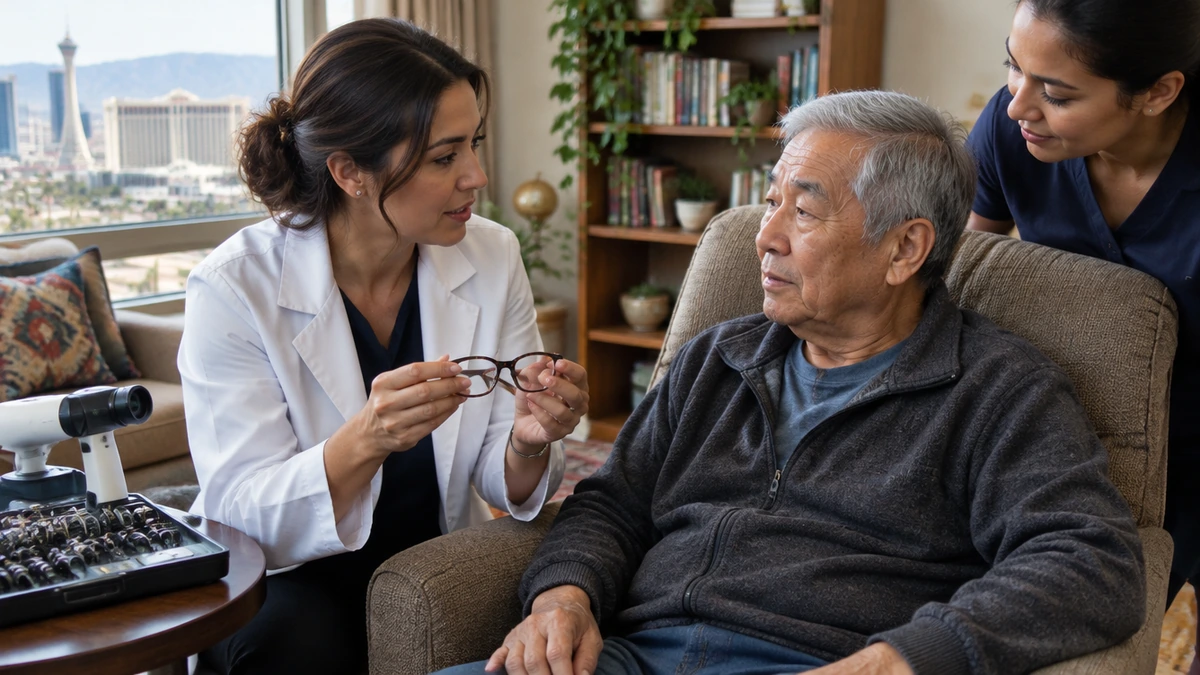
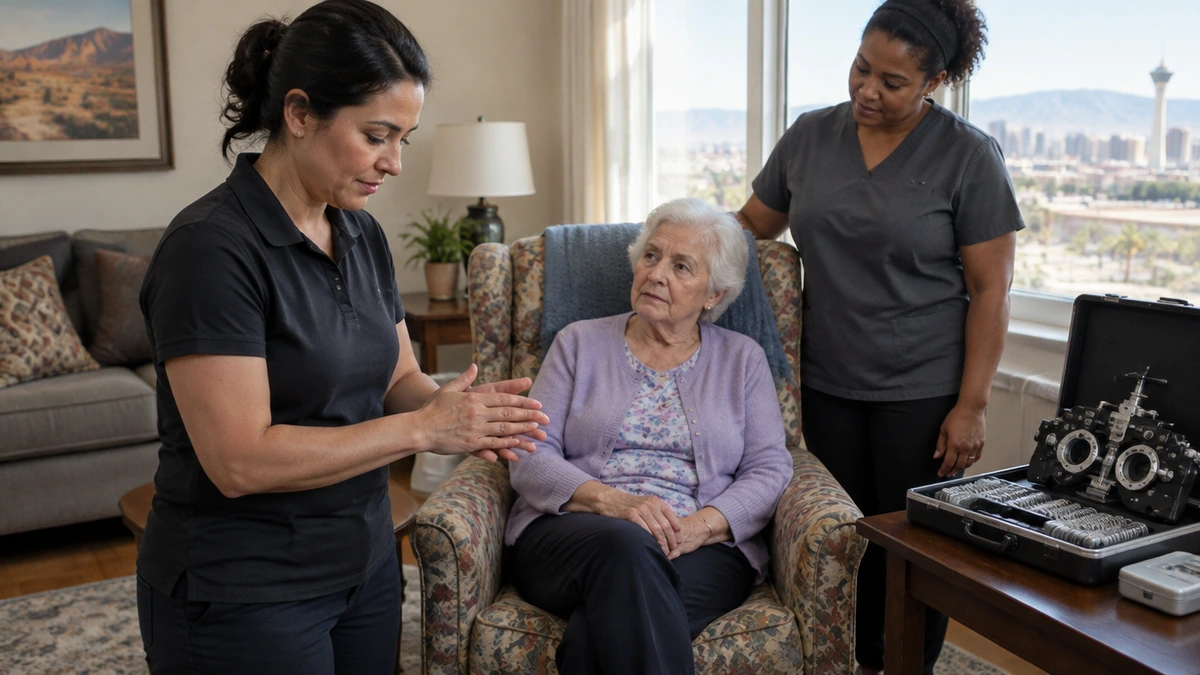
    Eye doctor listens to a resident beside a caregiver for common eye problems in assisted living residents

    TLDR: Give your staff a clear reporting task: record vision changes, find existing eye care instructions, and send observations to me for the planned visit. Sudden new flashes, floaters, or a dark curtain need immediate assessment, as described by the National Eye Institute. Keep urgent symptoms out of the routine vision day queue.

    Answer: For common eye problems in assisted living residents, your Las Vegas team needs clear reporting and follow-up. Record changes, gather established diagnoses, and arrange an eye exam for ongoing concerns. Include cataracts, glaucoma, diabetic retinopathy, macular degeneration, dry eye, and irritation in my review, and send sudden changes for urgent assessment.

    Your caregivers notice daily tasks. For example, a resident stops reading a favorite book, asks for help finding glasses, or reports discomfort during breakfast. Record what changed and when, then give me a usable description rather than assigning a diagnosis from the dining room.

    Give each concern a next step. As an owner or care director, you need someone responsible for resident consent, records, and appointments. Start with on-site eye care for assisted living residents and name that contact. Build assisted living eye exams into the care plan, with a separate route for urgent symptoms.

    Common Eye Problems in Assisted Living Residents: Start With Cataracts

    Eye doctor reviews glasses with a seated resident for common eye problems in assisted living residents
    Eye doctor reviews glasses with a seated resident.

    Bring the glasses and prior advice. When you gather the resident’s history, include known cataracts and previous recommendations, because MedlinePlus explains that glasses and better lighting sometimes help early cataract difficulties, while surgery is the only way to remove a cataract. Put the current prescription glasses beside those records for me, your visiting optometrist. The next decision starts with what the resident uses and what earlier care established.

    Name the task your resident finds hard. Write down trouble reading a page, finding an object, or using the glasses prescribed for that activity. Include the resident’s own words and the circumstances staff saw. I handle diagnosis, treatment, and any surgical referral.

    Explain the next appointment plainly. I examine, diagnose, manage, and co-manage eye conditions, with referral when needed. If surgery enters your resident’s plan, name the receiving surgical specialist and the staff contact booking the appointment. Keep those details beside the referral instructions for the family conversation.

    What Should Staff Report About Glaucoma?

    Find your resident’s current glaucoma instructions. Check the resident’s existing treating eye doctor’s name, prescribed eye medicines, and follow-up already requested. A medication entry without the requested appointment leaves work unfinished. Send missing instructions to the resident’s existing treating team for clarification before creating a facility schedule.

    Act on sudden symptoms now. Your team needs immediate medical care when this combination occurs: The National Eye Institute identifies sudden intense eye pain, redness, blurred vision, and nausea as possible angle-closure glaucoma symptoms requiring immediate medical care. Contact the resident’s treating eye doctor or emergency department for immediate care. Keep the resident’s symptom description ready for the call and follow the instructions returned.

    Send your observation note with the resident. Include when symptoms began, the resident’s words, and actions already taken under the home’s response process. Write down who received the call and the instructions returned. The incoming caregiver needs that record at the shift handoff.

    How Should You Handle Diabetes and Macular Degeneration?

    Caregiver and eye doctor discuss care with a resident for common eye problems in assisted living residents
    Caregiver and eye doctor discuss care with a resident.

    Find the retinal follow-up plan. Your resident’s lack of a complaint does not settle the question, because The National Eye Institute states that early diabetic retinopathy usually has no symptoms. Locate the existing retinal assessment and instructions even when the resident still reads comfortably. Keep any missing report visible for my review.

    Put known macular degeneration in your handoff. Gather prior findings, the resident’s existing treating eye doctor’s contact details, and instructions for reporting a change. If reading a familiar page becomes difficult, describe the task and what changed. Leave the cause to the resident’s treating eye doctor’s assessment.

    Track both tasks in your resident’s plan. The glasses order and disease follow-up each need a next action and a responsible contact. A prescription review leaves an unresolved clinical referral open. The guide to coordinating diabetic eye care helps your staff prepare records and follow through.

    How Should You Respond to Dry Eye, Irritation, or Suspected Infection?

    Eye doctor cleans her hands before approaching a resident for common eye problems in assisted living residents
    Eye doctor cleans her hands before approaching a resident.

    Use your resident’s description of discomfort. Record when it began, whether either eye or both are affected, and existing treatment instructions. A report of irritation at breakfast gives me a concrete starting point. Send it for assessment without naming dry eye or infection from appearance alone.

    Prepare the room before residents arrive. For your examination setup, CDC’s core practices call for hand hygiene and appropriate reprocessing of reusable equipment between patients or when soiled. Work through my team’s cleaning steps and assign responsibility for shared surfaces and equipment. Staff need to know who handles the examination table and room between appointments.

    Tell my team about infection concerns before the visit. Send your description through secure intake and settle any needed changes to the appointment schedule or room. Give staff the revised instructions. Keep medical details off the sign-up sheet, communal calendar, and marketing form.

    Which Sudden Changes Belong Outside the Routine Schedule?

    Resident describes a visual concern to an eye doctor for common eye problems in assisted living residents
    Resident describes a visual concern to an eye doctor.

    Keep sudden changes off your waiting list. New flashes, floaters, or a curtain across vision need the immediate assessment described in the guidance above. Use the home’s urgent response process while the resident’s account is fresh. A future group appointment leaves that urgent need unanswered.

    Start your call with what happened. State when it began and whether the resident reports pain or changed vision, using their own words when available. Write down instructions from the eye doctor handling urgent care and carry out the next step. Give the incoming caregiver the same facts and directions.

    Observation or record findingStaff actionHandoff detail
    Sudden flashes, floaters, or a dark curtainArrange immediate assessmentOnset and resident’s description
    Sudden intense eye pain with redness, blur, and nauseaSeek immediate medical careSymptoms and actions already taken
    Ongoing difficulty with a familiar taskRequest my reviewTask, glasses used, and observed change
    Existing diagnosis with missing follow-up instructionsContact the resident’s treating teamLast available report and unresolved action

    Keep the care instructions beside your phone. Use this table to organize the report while clinical staff direct care. Read back the resident’s description, onset, and actions already taken. A short factual account is more useful than a guessed disease name.

    Turn Common Eye Problems in Assisted Living Residents Into Clear Handoffs

    I reviewed 69 primary sources across five research lenses for this series, and aging alone does not cause low vision. You have a reason to act when a resident stops reading a familiar book, consistent with the National Eye Institute’s low-vision guidance. Record the change instead of dismissing it as age. Name the person taking the next step.

    Make your handoff ready for the next shift. Keep observations, resident consent, clinical instructions, and appointment status in the secure care record. After a comprehensive eye exam or referral, turn the report into tasks staff understand. A pending appointment needs an owner as much as a missing pair of glasses does.

    1. Record the resident’s complaint or the observed change.
    2. Route sudden symptoms through the urgent response process.
    3. Gather current glasses, medication information, and previous eye reports.
    4. Confirm consent and any representative’s authority before the visit.
    5. Assign responsibility for results, referrals, and eyewear follow-up.

    Track completion in your appointment record. The on-site examination process helps you plan registration through results with the facility contact. When further assessment is requested, keep the task open until the receiving service and next step are confirmed. A call requesting an appointment is the start of that work.

    Arrange a Facility-Coordinated Vision Day With Vision by Amel

    Plan your vision day with me. I am Dr. Amel Youssef, OD, founder of my practice, Vision by Amel, in Downtown Summerlin. My team and I serve assisted living homes, Residential Facilities for Groups, memory care communities, adult day care programs, and senior living communities in the Las Vegas Valley. Bring your resident concerns to the planning call. Discuss the examination scope alongside the glasses, records, and support each resident needs.

    Start with your resident interest list. Participation is voluntary. My team and I review consent, representative authority, and insurance documents, and I verify benefits before service. Prepare a private room with electrical access and an examination schedule with my team. Benefits depend on each resident’s eligibility and plan terms.

    Keep your plan open after the examination. My team and I coordinate eyeglass selection, measurements, delivery, adjustments, and clinical follow-up with you. I arrange testing or referrals beyond the on-site visit when needed. Review medical eye care services during the planning call. Connect each staff observation with the next appointment or instruction it needs.

    Frequently Asked Questions About Common Resident Eye Problems

    What should I ask a resident who has stopped reading?

    Ask what makes reading difficult and whether the change is new. Have your team record the answer alongside the reading material and glasses being used. Include whether the resident still wants to read, so I receive the resident’s priorities as well as the observation.

    How should I handle conflicting reports from different shifts?

    Keep both reports with their times and settings. Your morning and evening caregivers need to describe what each saw without changing either account to match. Send both to me, especially when the change comes and goes or the resident struggles to explain it.

    What if the resident already has an outside eye doctor?

    Keep the resident’s chosen eye doctor and active instructions in your plan. With appropriate permission, obtain relevant reports and tell my team about appointments already booked. Discuss the resident’s preferences before adding another examination.

    What should I record when glasses are missing?

    Record the missing pair’s purpose and last known location. Have your contact check for another current pair or an available prescription record. Keep the replacement task separate from a new visual complaint needing my assessment.

    How do I brief temporary staff about eye health concerns?

    Give temporary staff your current reporting instructions at handoff. Name the person receiving an eye health concern and show staff where urgent response instructions are kept. Include the resident’s assistance plan in the private care record.

    Schedule an On-Site Vision Day Speak With Dr. Amel’s Team: (702) 858-4362

    Like this article? Add Vision by Amel as a preferred source, and you are more likely to see our articles in Google’s Top Stories.
    Add as a preferred source on Google