
What Information Is Needed Before an Assisted Living Eye Exam?
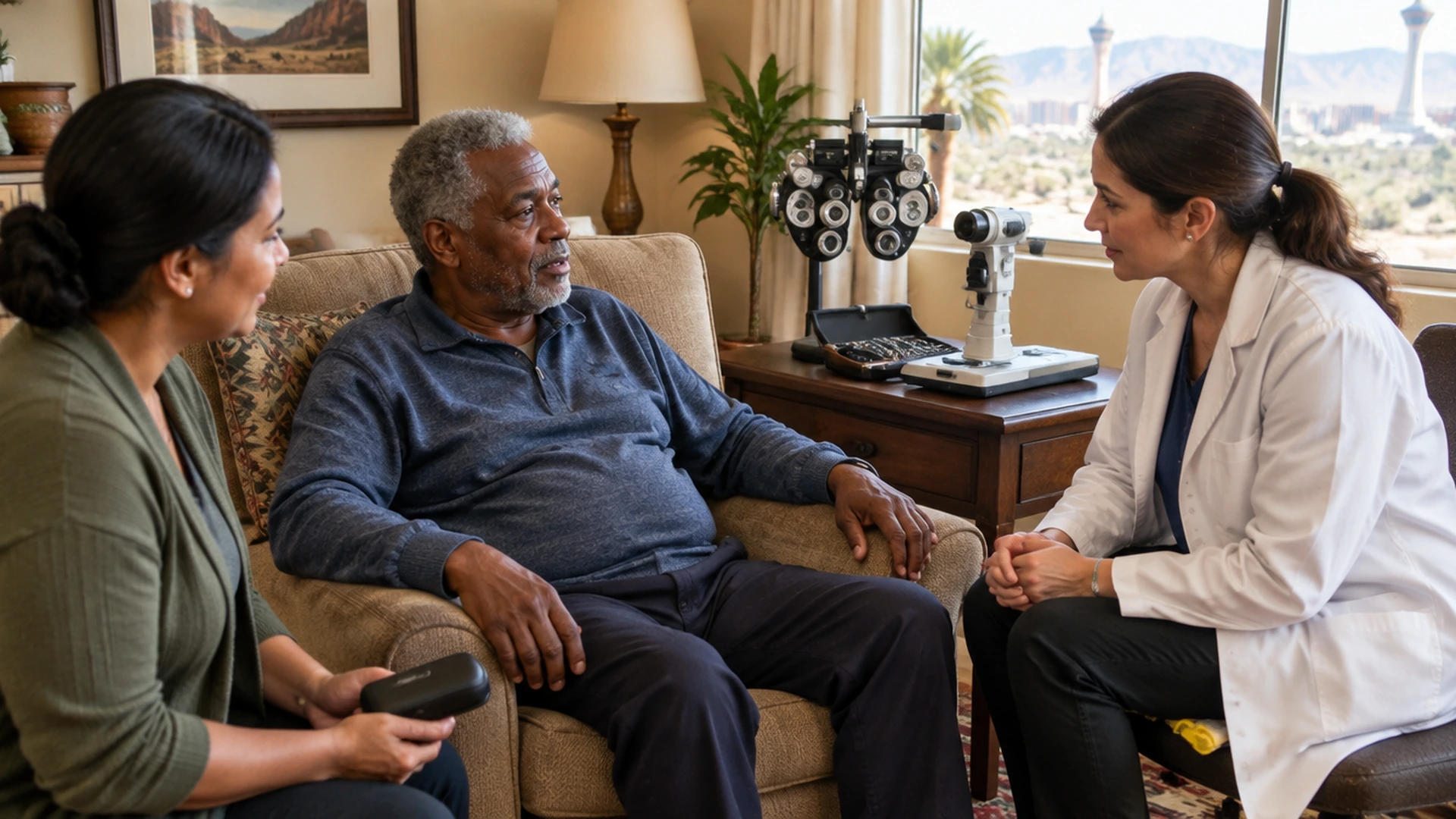
TLDR: Gather the documents needed for senior eye exam registration before setting your resident schedule. Gather identification, current insurance cards, health history, medication details, existing glasses, and consent or representative records. Use my team’s current forms and secure intake method.
Answer: Before an assisted living eye exam in Las Vegas, gather your resident’s current identification, insurance cards, health and medication history, glasses, and consent records. Include current guardian or healthcare representative documents when needed. My team and I use those records to prepare your visit, verify benefits before service, and handle health information securely.
For example, your resident is ready for the visit. The medication list is in the care record, the insurance card is with a family member, and the glasses are in a bedside drawer. Give those tasks an owner before the appointment reaches the calendar.
Give the paperwork a named owner. For assisted living eye exams, your contact gathers current records and gets them to my team before the visit. Start your assisted living vision day with voluntary interest and my team’s current intake forms. Keep missing items visible until someone supplies the answer.
Documents Needed for Senior Eye Exam: What Belongs in the Packet?
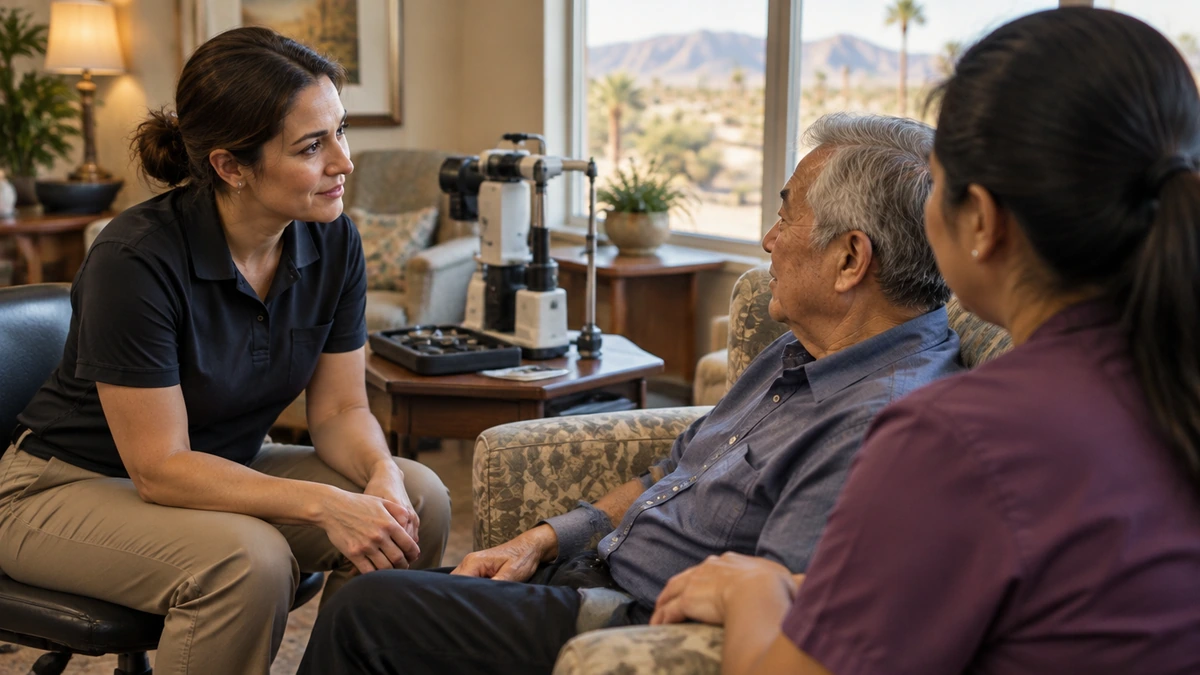
Make your packet easy to read. Keep identity, insurance, health history, and permission records in clearly identified sections, with the current medication list ready to find. As your visiting optometrist, I ask you to collect the requested details. Leave unrelated records out of the packet.
| Preparation item | What to assemble | Your check before sending |
|---|---|---|
| Identification | Resident’s current identifying details and requested identification | Match the name and date of birth across records. |
| Insurance | Current medical and vision cards or requested plan information | Ask whether any card has been replaced. |
| Health history | Relevant eye conditions, procedures, and current concerns | Identify where each item came from. |
| Medication list | Current list, eye drops, and recorded allergies | Confirm which version is current. |
| Glasses | Pairs in use and available prescription records | Note the purpose of each pair. |
| Consent and authority | Requested consent forms and applicable representative documents | Check completeness and arrange my review. |
| Follow-up contacts | Results recipients and ways to reach them | Confirm who handles the next action. |
Mark missing items plainly in your preparation record. Write unknown when a date or detail is unavailable, then assign someone to seek the answer. An honest gap gives my team a useful question, while a guessed date looks like a settled fact.
Keep resident records off the public form. Your facility name, type, address, contact details, approximate resident count, interest level, and preferred month belong there. Patient names, cards, diagnoses, and medical histories go through my team’s secure intake method. A scheduling form is for planning the visit.
How Should You Gather Identification and Insurance Information?

Match your names before sending. Check spelling and date of birth against the current insurance card, especially when a resident uses a different preferred name. Include the identification requested on the intake forms. Flag an unavailable item for my team rather than filling its place with a guess.
Send the cards currently in use. Gather your resident’s Medicare, Medicaid, Medicare Advantage, or other plan details, including a separate vision card when present. I verify benefits before service. Copy the exact plan name and contact details from the card.
Send your resident’s actual payer information. CMS distinguishes partial-benefit and full-benefit dual eligibility, so the label alone does not establish full Medicaid ocular benefits. Keep those details ready for the benefit review rather than relying on a label in the care record. The Medicare and Medicaid eye care guide helps you prepare questions about the exam.
Give each missing card an owner. Your resident or representative needs a clear request for the card they hold and a next contact. If a replacement is pending, tell my team which information is available. Keep the remaining residents’ visit preparation moving.
What Health History, Medication Details, and Glasses Help?
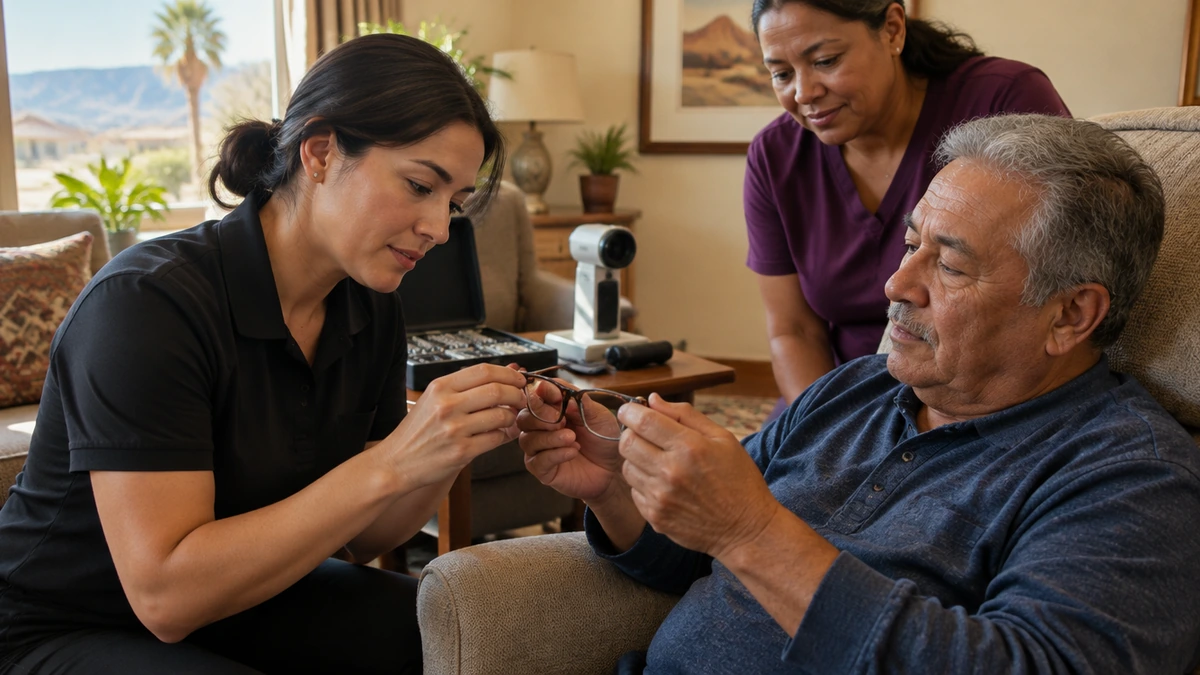
Lead with your resident’s concern. Include documented cataracts, glaucoma, diabetic retinopathy, macular degeneration, or dry eye when relevant to my review. Place the resident’s words beside staff observations. Both belong in the history.
Write what your caregiver saw. For example, a resident moves closer to the television, stops reading a favorite magazine, or needs help finding glasses. Record the change and when staff noticed it. I interpret what it means for eye health.
Send the current medication list. Include your resident’s recorded allergies and eye drops, with the name of the person who keeps the list up to date. Flag an older version supplied by the family. Resolve the difference in the care record before sending the packet.
Bring your resident’s glasses, including reading glasses and other pairs still in use. Note which pair the resident chooses for reading, television, or moving around the home. Include an available prior prescription or examination report, and say when its date is uncertain.
Keep the current frames within reach. For your Nevada Medicaid adult eyewear questions, the ocular manual generally conditions lens replacement on significant refractive change and calls for existing frames to be reused when possible. Gather the glasses and known replacement history for review before discussing new prescription eyewear. Add missing details to the intake question list.
Describe how your resident takes part. Note the wheelchair, the request for a familiar caregiver, or the need for slowly spoken instructions. Put those details in the packet and review them with my team. Leave testing decisions and visit length to the examination plan.
Which Consent and Representative Records Should You Check?

Keep your resident’s choice visible. Use my team’s current consent forms and instructions, with time for the resident’s questions before signing. An interest list helps plan the room and schedule. Consent concerns the person receiving care.
When reviewing your resident’s healthcare power of attorney, Nevada law makes the document effective when executed unless it specifies a future date or incapacity trigger, with the latter requiring the statutory written or recorded determination. Supply the complete current document for my review of representative authority. Flag activation language, missing pages, and unresolved contact details before requesting a signature.
For your resident with a guardian, Nevada law authorizes a guardian of the person to approve medical care unless the court orders otherwise and identifies that guardian as the protected person’s HIPAA personal representative. Provide the current court order for review. Record any later documents or competing authority claims and bring them to me before the examination.
Flag overlapping documents early. Your coordinator needs to identify an existing healthcare power of attorney when guardianship papers arrive, because appointment of a Nevada guardian of the person suspends an existing durable healthcare power of attorney. Send the documents for my review before selecting a signer. The resident consent coordination guide helps you organize the unresolved questions.
Documents Needed for Senior Eye Exam: How Should You Transfer Them?
Choose the recipient before sending. Establish your secure intake method, the member of my team receiving the packet, and how receipt is recorded. Keep paper copies in a locked folder while staff prepare the handoff. Leave resident records out of the public marketing form and shared activity messages.
Send records for the care requested. For your handoff to me, HIPAA permits a covered entity to use or disclose health information for its own treatment, payment, or healthcare operations and to disclose it for another provider’s treatment activities. Follow the approved access process and include the information my team needs. Treat a relative’s request for results as a separate communication task.
I reviewed 69 primary sources across five research lenses for this series, and permitted family disclosures are limited to information directly relevant to the person’s involvement in care or payment. Check your intended recipient and permission before sending the family update. Write the contact and agreed way to reach them in the restricted record. The staff member handling results needs that answer before the phone call.
- Use my team’s current forms and secure intake method.
- Assign collection tasks to the resident, representative, or appropriate staff member.
- Check identity, current versions, and missing information.
- Send the requested packet through secure intake.
- Confirm receipt and resolve my team’s outstanding questions.
- Record who will receive findings and arrange follow-up.
Name your follow-up contact before the exam. A published Canadian facility optometry program tracked follow-up timing and sent examination reports to residents’ family physicians. For your vision day, record who receives reports, arranges referrals, and checks pending appointments. Put those names beside the tasks in the resident’s care record.
Prepare Your Facility’s Vision Day With Vision by Amel
Plan your vision day with me. I am Dr. Amel Youssef, OD, founder of my practice, Vision by Amel, in Downtown Summerlin. I bring on-site eye care to assisted living homes, Residential Facilities for Groups, memory care communities, adult day care programs, and senior living communities across the Las Vegas Valley. Start with your resident list. Review the practice’s eye examination services while preparing the visit and resident questions.
You begin with voluntary resident interest, consent, representative authority, and secure transfer of requested records. Arrange a private room with electrical access and agree on the examination schedule. I verify insurance benefits before service, and participation remains voluntary. Benefits depend on each resident’s eligibility and plan terms.
Plan past your paperwork handoff. Use this list and my team’s current preparation materials during the planning call. My team and I coordinate eyeglass selection, measurements, delivery, adjustments, and follow-up responsibilities with you. I arrange referrals for care beyond the on-site visit.
Frequently Asked Questions About Preparing Eye Exam Information
What if the resident has no previous eye examination report?
Mark the prior report as missing in your packet. Record the previous eye doctor’s name if the resident or representative remembers it, then request the report through the records process. A missing copy does not mean the resident has never been examined.
Should we send the resident’s entire facility record?
Send the records requested for your resident’s visit. Keep unrelated administrative material out of the examination packet and use my team’s secure intake method. Include a staff contact for additional records requests.
What if the family brings glasses after the packet was sent?
Add the arriving glasses to your handoff note. Identify the pair and keep it with the resident’s visit belongings where staff will find them. Preserve the earlier note and explain what changed.
What if medication information changes on examination morning?
Give me the corrected list before your resident’s exam. Identify the staff member who verified it and clearly mark the earlier copy as replaced. Follow my team’s intake instructions for sending the updated record.
How do we keep several residents’ packets from getting mixed up?
Check your resident’s name against every item before sending the packet. Match the contents to the intended resident and recipient using the approved identification process. Keep a restricted receipt log showing which packets still need attention.
Schedule an On-Site Vision Day Speak With Dr. Amel’s Team: (702) 858-4362
Like this article? Add Vision by Amel as a preferred source, and you are more likely to see our articles in Google’s Top Stories.
