Category: Coverage, Consent and Records

Medicare and Medicaid coverage, resident consent, and the records your facility needs before an on-site eye exam.

  • Resident Consent for On-Site Eye Care: A Facility Coordinator’s Guide
    Resident Consent for On-Site Eye Care: A Facility Coordinator’s Guide

    Resident Consent for On-Site Eye Care: A Facility Coordinator’s Guide

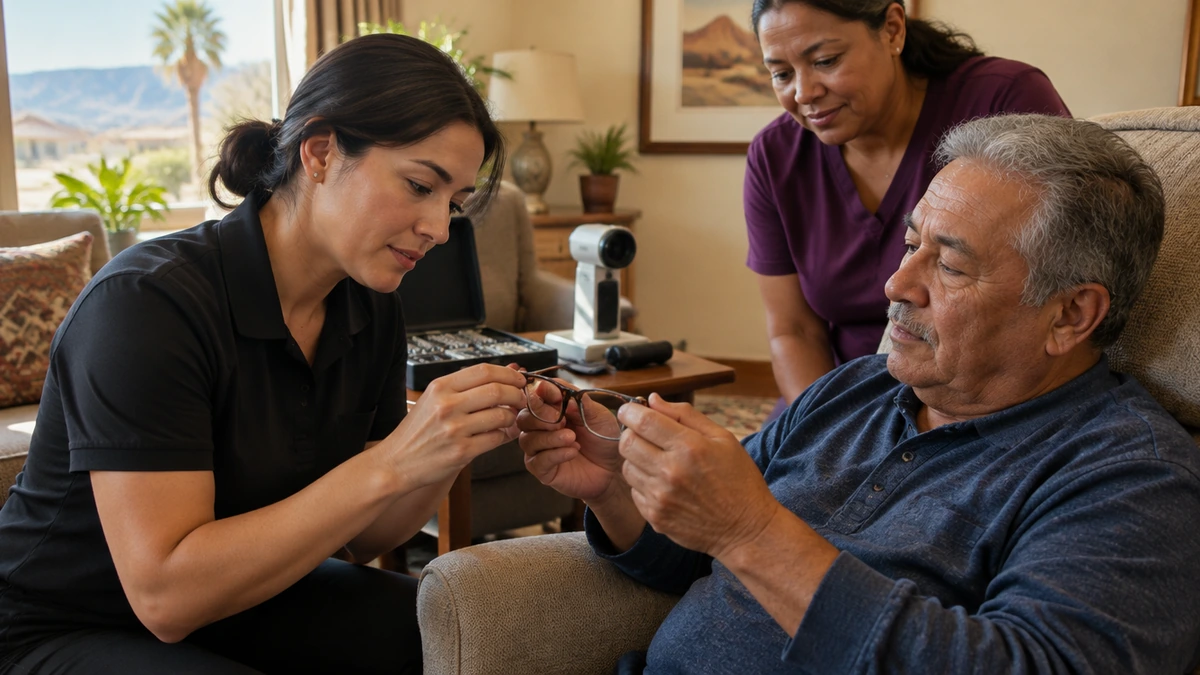
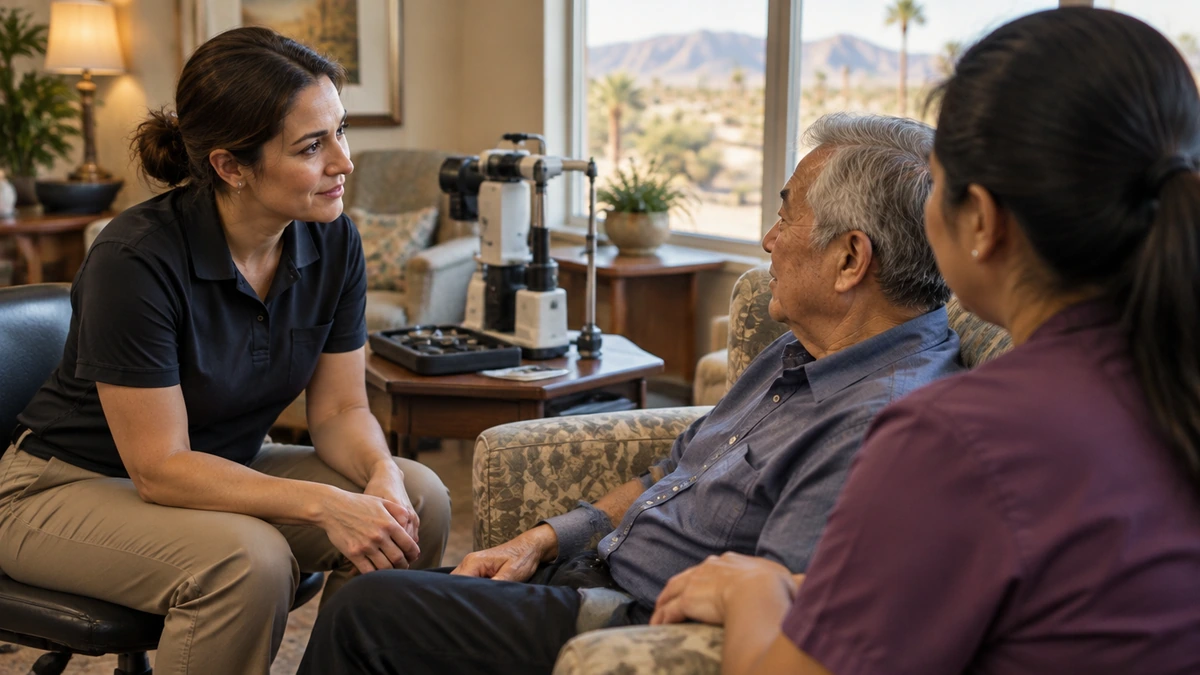
    Eye doctor listening to a resident's choice for assisted living resident consent eye exam

    TLDR: Start with your resident’s choice. I help you explain the forms, review representative documents, and keep participation voluntary throughout the eye exam.

    Answer: Assisted living resident consent for an eye exam in Nevada starts with the resident’s decision. You prepare an accessible explanation and current representative documents for my review. Address treatment permission, information sharing, claims paperwork, and results separately, then recheck the resident’s wishes before care.

    You book the room, I bring the exam, and the resident still decides. A consent form signed by a relative in a hurry does not settle who had the authority to sign it, and a resident who nodded in the hallway has not agreed to anything. Explain the visit, invite each resident privately, and record the answer in the resident’s own words.

    Name your coordinator before the invitations go out. Review how on-site eye examinations for senior living work, gather each resident’s questions, and keep every open authority question on one restricted list. Your staff then knows exactly whose consent is complete and whose is still pending.

    Assisted Living Resident Consent Eye Exam: Start With Resident Choice

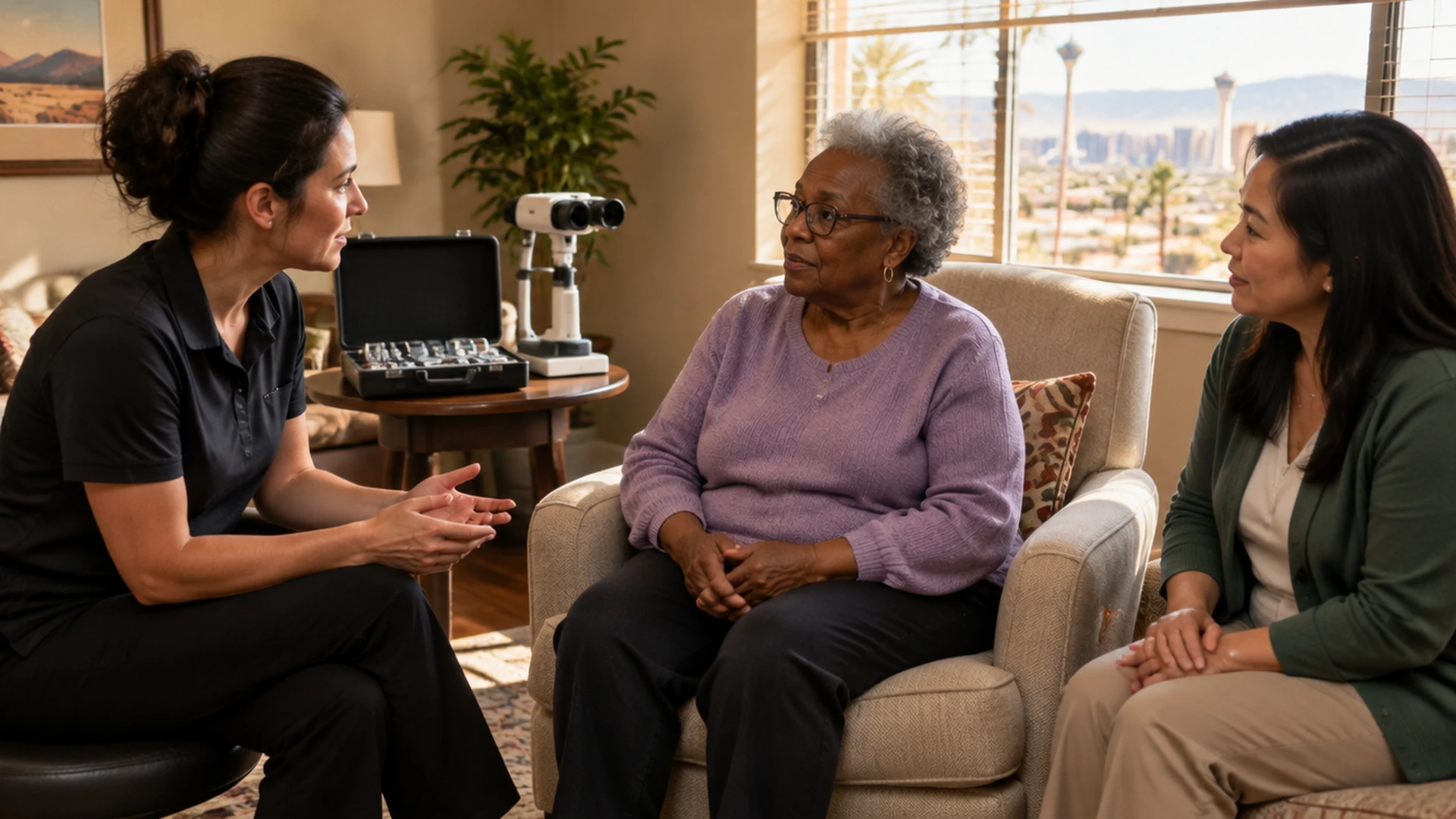
    Private conversation between a resident and eye doctor for assisted living resident consent eye exam
    Explain the proposed visit in a private setting.

    I reviewed 69 primary sources across five research lenses for this series, and Nevada requires residential facility service contracts to affirm residents’ choice of providers without a facility contract. Explain my visiting service as an option your residents are invited to consider. Ask whether they want the appointment and whether they already have an eye doctor they prefer to see.

    Tell your resident what to expect. Describe the exam, the private room, and the people who will be present. Name me as the contact for questions about care. Leave time for answers before requesting a decision.

    When arranging your visit, remember that Nevada protects refusal of treatment to the extent permitted by law and medical-care privacy, including consent to the presence of people not directly involved in care. Ask whom the resident wants nearby during the explanation and examination. Keep conversations about health history away from the group waiting area.

    Make your invitation easy to decline. Record interest, uncertainty, or a declined visit on the restricted planning list. Silence leaves a question open. If the resident changes their mind, tell my team and update the appointment promptly.

    How Should You Support the Resident’s Own Decision?
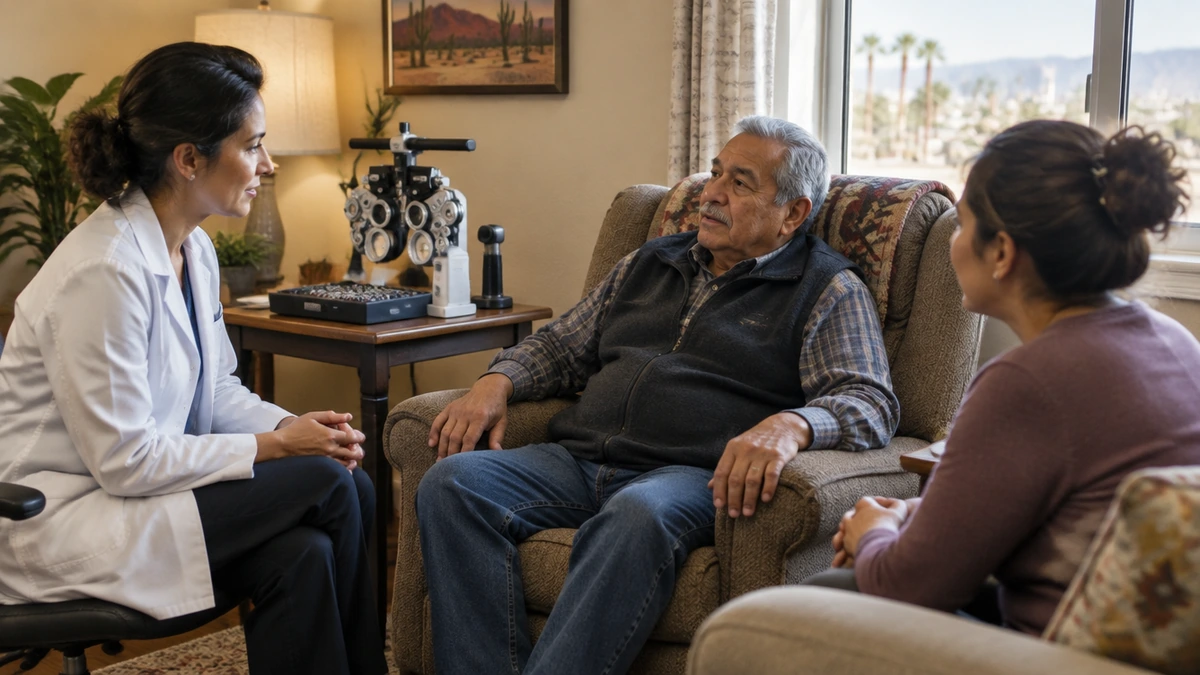
    Caregiver supporting a resident’s discussion with an eye doctor for assisted living resident consent eye exam
    Arrange communication support for the consent conversation.

    Speak to your resident first. Use their preferred name and explain the eye exam in plain words, then leave room for their questions. If decision-making ability for this care is uncertain, bring me in for assessment. A diagnosis or staff impression does not settle the decision.

    Put communication needs on your visit plan. In a memory care wing, that means hearing needs, preferred language, a familiar caregiver, and a comfortable pace for explanations. As your visiting optometrist, I need those details before the conversation starts. Give the resident support suited to the task.

    Leave room for your resident’s response. A Canadian facility optometry program reported that some residents with dementia needed assessment across several days or help from a family member. Plan with my team for pauses and another discussion when needed. Keep the approach specific to the resident instead of assigning the same pace to every appointment.

    Write down your resident’s words. Record questions, requested support, and expressed wishes without labeling the person difficult or uncooperative. If the resident looks uncomfortable or asks to stop, pause. Bring me into the conversation before the next step.

    Which Representative Documents Need Review?

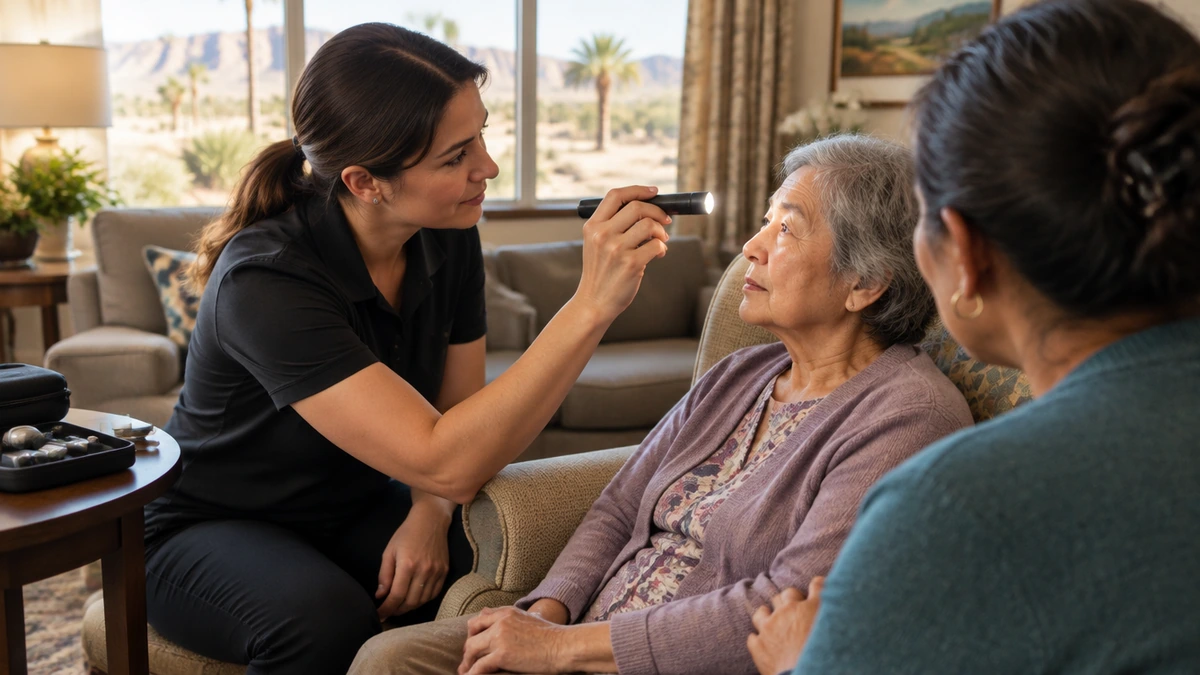
    Resident and family member discussing care with an eye doctor for assisted living resident consent eye exam
    Include the appropriate representative in the conversation.

    Get the whole authority document. Your team needs the current pages showing scope, activation, and limits before requesting a representative’s signature. An emergency-contact entry gives you a phone number. I still need the document establishing healthcare decision-making authority.

    Read your resident’s activation terms. For a healthcare power of attorney, Nevada law makes the authority effective when executed unless the document specifies a future date or incapacity trigger, with that trigger requiring the statutory written or recorded determination. Flag the relevant language for my review of authority. Gather the supporting determination required by the document and review process before seeking a signature.

    Send the current court order. When your resident has a guardian, Nevada law permits a guardian of the person to authorize medical care unless the court orders otherwise and recognizes that guardian as the protected person’s HIPAA personal representative. Use my team’s secure intake method and highlight restrictions or later orders. Keep the full document available for review instead of relying on a contact-list label.

    Flag the overlap in your file. If both documents are present, appointment of a Nevada guardian of the person suspends an existing durable healthcare power of attorney. Have me resolve current authority before consent is obtained. Record the resolution with the visit notes so the next shift reaches the right person.

    Bring disputed paperwork forward early. Your notes need the relative’s name, the concern raised, and the document supplied. Send the unanswered question to me before the signature conversation. An available signer does not settle a family dispute.

    What Do Treatment, Information Sharing, and Claims Forms Address?
    Resident, caregiver, and eye doctor in a private room for assisted living resident consent eye exam
    Agree on communication and follow-up arrangements.

    Explain the form in your hand. Tell the resident whether it concerns the exam, a disclosure, a representative’s role, or billing. Use my team’s current forms. Give each purpose its own explanation before requesting a signature.

    Administrative taskQuestion to resolveYour coordination step
    Treatment consentWhat care is planned and who is deciding?Arrange my explanation and document review.
    Representative authorityWhich current document establishes the person’s role?Send complete documents and flag limitations.
    Health information sharingWho is the recipient and what is the purpose?Have my team check the permission for sharing.
    Claims paperworkWhat billing action does this form address?Request a plain-language explanation from my team.
    Results communicationWho receives the findings and handles follow-up?Record the agreed recipient and contact route.

    Keep the record’s purpose clear. For your clinical and billing handoff, HIPAA permits a covered entity to use or disclose health information for its own treatment, payment, or healthcare operations and to disclose it for another provider’s treatment activities. Follow my team’s forms and disclosure process for the actual request. Explain the examination consent separately from the reason records are being sent.

    Choose the right recipient for results. For your family updates, HIPAA permits disclosures to identified family members, relatives, close friends, or other identified people, limited to information directly relevant to their involvement in care or payment. Check the recipient and applicable permission before sharing findings. A family group message is not a reason to send every contact the same medical details.

    Explain the billing form directly. Your resident or representative needs to know which permission or acknowledgment my team requests for submitting claims. Leave time for questions before signing. Send benefit questions to my verification team and record the answer with the billing paperwork.

    Assisted Living Resident Consent Eye Exam: What Is Your Visit-Day Process?

    Check your list before residents arrive. Record each person’s current wishes, document-review status, and requested communication support. Keep an unresolved signature question visible to my team. An open appointment slot does not settle consent.

    1. Invite the resident and explain the eye exam.
    2. Arrange communication support and my decision-making assessment when needed.
    3. Submit current representative documents for review when applicable.
    4. Complete my consent and administrative process.
    5. Confirm who will attend and how results will be communicated.
    6. Recheck the resident’s wishes on the day and report changes to me.

    Prepare your private room first. Give my team electrical access and the space agreed for the exam, with consent discussions kept away from the waiting area. Keep the public schedule limited to appointment logistics. Name the staff members escorting residents, answering questions, and calling representatives.

    Name the person handling your results. Record who receives clinical instructions, books referrals, and tracks eyewear decisions or adjustments before the appointment ends. Use the resident information preparation list to check the packet. The resident preparation guide supports the resident conversation.

    Review the Vision Day Process With Vision by Amel

    Bring your resident questions to me. I am Dr. Amel Youssef, OD, founder of my practice, Vision by Amel, in Downtown Summerlin. My team and I serve assisted living homes, Residential Facilities for Groups, memory care communities, adult day care programs, and senior living communities across the Las Vegas Valley. Review the eye examination services as you plan assisted living eye exams in Las Vegas.

    You start with voluntary resident interest, consent, current representative authority, and securely handled insurance information. Plan the examination schedule with my team and prepare your private room with a power outlet. I verify insurance benefits before service. Benefits depend on each resident’s eligibility and plan terms.

    Keep your resident’s choices visible after the exam. As part of on-site eye care, my team and I plan eyeglass selection, measurements, delivery, adjustments, and follow-up with you. I arrange referrals for needs beyond the visit’s scope. Participation stays voluntary through later prescription eyewear decisions.

    Frequently Asked Questions About Resident Consent for Eye Care

    What should we do if a resident wants to read the forms later?

    Leave your resident’s consent marked pending while they read. Give them time and agree on a follow-up conversation about their questions. Mark consent complete only after my team’s process is finished.

    What if a family member signs before we obtain the authority documents?

    Mark your authority review incomplete even if a form is signed. Gather the current documents and send the earlier signature to me for review. Keep that signature in the record while my team decides whether a replacement form is needed.

    How should a coordinator hand off an unresolved issue to another shift?

    Write the unanswered question, responsible person, and next action in your restricted handoff record. Tell the incoming coordinator where the supporting papers are stored. Keep copies out of general staff messages.

    What if a resident wants a different caregiver in the room?

    Update your support plan with the resident’s preferred caregiver. Check availability and tell me before the appointment starts. Discuss attendance privately so the originally assigned caregiver does not enter out of habit.

    How should we respond when a resident asks to decide about glasses later?

    Leave eyewear selection pending in your visit record. Note the resident’s questions and preferred contact for a later conversation with my eyewear team. A completed exam does not require a completed glasses decision.

    Schedule an On-Site Vision Day Speak With Dr. Amel’s Team: (702) 858-4362

    Like this article? Add Vision by Amel as a preferred source, and you are more likely to see our articles in Google’s Top Stories.


    Add as a preferred source on Google

  • What Information Is Needed Before an Assisted Living Eye Exam?

    What Information Is Needed Before an Assisted Living Eye Exam?

    What Information Is Needed Before an Assisted Living Eye Exam?

    Resident, caregiver, and eye doctor preparing for a visit for documents needed for senior eye exam

    TLDR: Gather the documents needed for senior eye exam registration before setting your resident schedule. Gather identification, current insurance cards, health history, medication details, existing glasses, and consent or representative records. Use my team’s current forms and secure intake method.

    Answer: Before an assisted living eye exam in Las Vegas, gather your resident’s current identification, insurance cards, health and medication history, glasses, and consent records. Include current guardian or healthcare representative documents when needed. My team and I use those records to prepare your visit, verify benefits before service, and handle health information securely.

    For example, your resident is ready for the visit. The medication list is in the care record, the insurance card is with a family member, and the glasses are in a bedside drawer. Give those tasks an owner before the appointment reaches the calendar.

    Give the paperwork a named owner. For assisted living eye exams, your contact gathers current records and gets them to my team before the visit. Start your assisted living vision day with voluntary interest and my team’s current intake forms. Keep missing items visible until someone supplies the answer.

    Documents Needed for Senior Eye Exam: What Belongs in the Packet?

    Eye doctor greeting a resident and caregiver for documents needed for senior eye exam
    Coordinate the intake handoff before the appointment.

    Make your packet easy to read. Keep identity, insurance, health history, and permission records in clearly identified sections, with the current medication list ready to find. As your visiting optometrist, I ask you to collect the requested details. Leave unrelated records out of the packet.

    Preparation itemWhat to assembleYour check before sending
    IdentificationResident’s current identifying details and requested identificationMatch the name and date of birth across records.
    InsuranceCurrent medical and vision cards or requested plan informationAsk whether any card has been replaced.
    Health historyRelevant eye conditions, procedures, and current concernsIdentify where each item came from.
    Medication listCurrent list, eye drops, and recorded allergiesConfirm which version is current.
    GlassesPairs in use and available prescription recordsNote the purpose of each pair.
    Consent and authorityRequested consent forms and applicable representative documentsCheck completeness and arrange my review.
    Follow-up contactsResults recipients and ways to reach themConfirm who handles the next action.

    Mark missing items plainly in your preparation record. Write unknown when a date or detail is unavailable, then assign someone to seek the answer. An honest gap gives my team a useful question, while a guessed date looks like a settled fact.

    Keep resident records off the public form. Your facility name, type, address, contact details, approximate resident count, interest level, and preferred month belong there. Patient names, cards, diagnoses, and medical histories go through my team’s secure intake method. A scheduling form is for planning the visit.

    How Should You Gather Identification and Insurance Information?

    Resident and coordinator talking with an eye doctor for documents needed for senior eye exam
    Confirm the resident information requested by my team.

    Match your names before sending. Check spelling and date of birth against the current insurance card, especially when a resident uses a different preferred name. Include the identification requested on the intake forms. Flag an unavailable item for my team rather than filling its place with a guess.

    Send the cards currently in use. Gather your resident’s Medicare, Medicaid, Medicare Advantage, or other plan details, including a separate vision card when present. I verify benefits before service. Copy the exact plan name and contact details from the card.

    Send your resident’s actual payer information. CMS distinguishes partial-benefit and full-benefit dual eligibility, so the label alone does not establish full Medicaid ocular benefits. Keep those details ready for the benefit review rather than relying on a label in the care record. The Medicare and Medicaid eye care guide helps you prepare questions about the exam.

    Give each missing card an owner. Your resident or representative needs a clear request for the card they hold and a next contact. If a replacement is pending, tell my team which information is available. Keep the remaining residents’ visit preparation moving.

    What Health History, Medication Details, and Glasses Help?

    Eye doctor looking at a resident’s current glasses for documents needed for senior eye exam
    Bring the glasses the resident uses.

    Lead with your resident’s concern. Include documented cataracts, glaucoma, diabetic retinopathy, macular degeneration, or dry eye when relevant to my review. Place the resident’s words beside staff observations. Both belong in the history.

    Write what your caregiver saw. For example, a resident moves closer to the television, stops reading a favorite magazine, or needs help finding glasses. Record the change and when staff noticed it. I interpret what it means for eye health.

    Send the current medication list. Include your resident’s recorded allergies and eye drops, with the name of the person who keeps the list up to date. Flag an older version supplied by the family. Resolve the difference in the care record before sending the packet.

    Bring your resident’s glasses, including reading glasses and other pairs still in use. Note which pair the resident chooses for reading, television, or moving around the home. Include an available prior prescription or examination report, and say when its date is uncertain.

    Keep the current frames within reach. For your Nevada Medicaid adult eyewear questions, the ocular manual generally conditions lens replacement on significant refractive change and calls for existing frames to be reused when possible. Gather the glasses and known replacement history for review before discussing new prescription eyewear. Add missing details to the intake question list.

    Describe how your resident takes part. Note the wheelchair, the request for a familiar caregiver, or the need for slowly spoken instructions. Put those details in the packet and review them with my team. Leave testing decisions and visit length to the examination plan.

    Which Consent and Representative Records Should You Check?

    Resident and family member speaking with an eye doctor for documents needed for senior eye exam
    Arrange the consent and representative conversation.

    Keep your resident’s choice visible. Use my team’s current consent forms and instructions, with time for the resident’s questions before signing. An interest list helps plan the room and schedule. Consent concerns the person receiving care.

    When reviewing your resident’s healthcare power of attorney, Nevada law makes the document effective when executed unless it specifies a future date or incapacity trigger, with the latter requiring the statutory written or recorded determination. Supply the complete current document for my review of representative authority. Flag activation language, missing pages, and unresolved contact details before requesting a signature.

    For your resident with a guardian, Nevada law authorizes a guardian of the person to approve medical care unless the court orders otherwise and identifies that guardian as the protected person’s HIPAA personal representative. Provide the current court order for review. Record any later documents or competing authority claims and bring them to me before the examination.

    Flag overlapping documents early. Your coordinator needs to identify an existing healthcare power of attorney when guardianship papers arrive, because appointment of a Nevada guardian of the person suspends an existing durable healthcare power of attorney. Send the documents for my review before selecting a signer. The resident consent coordination guide helps you organize the unresolved questions.

    Documents Needed for Senior Eye Exam: How Should You Transfer Them?

    Choose the recipient before sending. Establish your secure intake method, the member of my team receiving the packet, and how receipt is recorded. Keep paper copies in a locked folder while staff prepare the handoff. Leave resident records out of the public marketing form and shared activity messages.

    Send records for the care requested. For your handoff to me, HIPAA permits a covered entity to use or disclose health information for its own treatment, payment, or healthcare operations and to disclose it for another provider’s treatment activities. Follow the approved access process and include the information my team needs. Treat a relative’s request for results as a separate communication task.

    I reviewed 69 primary sources across five research lenses for this series, and permitted family disclosures are limited to information directly relevant to the person’s involvement in care or payment. Check your intended recipient and permission before sending the family update. Write the contact and agreed way to reach them in the restricted record. The staff member handling results needs that answer before the phone call.

    1. Use my team’s current forms and secure intake method.
    2. Assign collection tasks to the resident, representative, or appropriate staff member.
    3. Check identity, current versions, and missing information.
    4. Send the requested packet through secure intake.
    5. Confirm receipt and resolve my team’s outstanding questions.
    6. Record who will receive findings and arrange follow-up.

    Name your follow-up contact before the exam. A published Canadian facility optometry program tracked follow-up timing and sent examination reports to residents’ family physicians. For your vision day, record who receives reports, arranges referrals, and checks pending appointments. Put those names beside the tasks in the resident’s care record.

    Prepare Your Facility’s Vision Day With Vision by Amel

    Plan your vision day with me. I am Dr. Amel Youssef, OD, founder of my practice, Vision by Amel, in Downtown Summerlin. I bring on-site eye care to assisted living homes, Residential Facilities for Groups, memory care communities, adult day care programs, and senior living communities across the Las Vegas Valley. Start with your resident list. Review the practice’s eye examination services while preparing the visit and resident questions.

    You begin with voluntary resident interest, consent, representative authority, and secure transfer of requested records. Arrange a private room with electrical access and agree on the examination schedule. I verify insurance benefits before service, and participation remains voluntary. Benefits depend on each resident’s eligibility and plan terms.

    Plan past your paperwork handoff. Use this list and my team’s current preparation materials during the planning call. My team and I coordinate eyeglass selection, measurements, delivery, adjustments, and follow-up responsibilities with you. I arrange referrals for care beyond the on-site visit.

    Frequently Asked Questions About Preparing Eye Exam Information

    What if the resident has no previous eye examination report?

    Mark the prior report as missing in your packet. Record the previous eye doctor’s name if the resident or representative remembers it, then request the report through the records process. A missing copy does not mean the resident has never been examined.

    Should we send the resident’s entire facility record?

    Send the records requested for your resident’s visit. Keep unrelated administrative material out of the examination packet and use my team’s secure intake method. Include a staff contact for additional records requests.

    What if the family brings glasses after the packet was sent?

    Add the arriving glasses to your handoff note. Identify the pair and keep it with the resident’s visit belongings where staff will find them. Preserve the earlier note and explain what changed.

    What if medication information changes on examination morning?

    Give me the corrected list before your resident’s exam. Identify the staff member who verified it and clearly mark the earlier copy as replaced. Follow my team’s intake instructions for sending the updated record.

    How do we keep several residents’ packets from getting mixed up?

    Check your resident’s name against every item before sending the packet. Match the contents to the intended resident and recipient using the approved identification process. Keep a restricted receipt log showing which packets still need attention.

    Schedule an On-Site Vision Day Speak With Dr. Amel’s Team: (702) 858-4362

    Like this article? Add Vision by Amel as a preferred source, and you are more likely to see our articles in Google’s Top Stories.
    Add as a preferred source on Google

  • Medicare and Medicaid Eye Care for Assisted Living Residents in Nevada

    Medicare and Medicaid Eye Care for Assisted Living Residents in Nevada

    Medicare and Medicaid Eye Care for Assisted Living Residents in Nevada

    Eye doctor and resident discussing the visit for Medicaid eye exams assisted living Nevada

    TLDR: I start with your resident’s actual plan, not the logo on the card. Medicaid eye exams for assisted living residents in Nevada need benefit verification before service, a separate answer for eyewear, and a named person to explain the verified result to the resident or representative.

    Answer: For Medicare and Medicaid eye care in Nevada assisted living homes, your team gathers current insurance records securely. I verify benefits before service. My team and I check eligibility, examinations, eyewear, provider participation, and authorization, then explain findings and unresolved questions to residents.

    You need answers before a family asks. One resident holds a Medicare card, another a Nevada Medicaid card, and a third a Medicare Advantage card with a D-SNP label, and each one answers a different question about the visit. Give me the cards in hand and the current plan name exactly as printed. The rest of the verification follows from that first step.

    Plan your facility-coordinated vision day around that review. Gather consent and current insurance records through secure intake, keep appointment details private, and give my team the planned services one line at a time. Your staff then has a clear answer for each resident instead of a guess.

    Medicaid Eye Exams Assisted Living Nevada: Where Should You Start?

    Eye doctor listening to a resident beside a caregiver for Medicaid eye exams assisted living Nevada
    Start planning with the resident and the reason for the visit.

    Put each service on its own line. Your eye exam, prescription check, additional testing, and prescription eyewear need separate entries in the benefit request. Ask me, your optometrist, to identify the planned care before staff discuss coverage with a family. A card on the desk starts the review, it does not finish it.

    Your resident’s Medicare card does not establish a routine glasses-prescription benefit, because Original Medicare excludes routine eye examinations for prescribing glasses or contact lenses. Describe the reason for seeking care in the resident’s own words. Send existing diagnoses and appointment records for clinical review instead of assigning a medical label to the visit yourself.

    Information to gatherQuestion for my teamYour next action
    Current insurance cardsWhich plan applies to each planned service?Confirm the resident’s identifying details.
    Reason for the appointmentWhat examination and testing are planned?Send the concern for clinical review.
    Previous examination and eyewear historyWhat prior service information is needed?Request missing dates through secure intake.
    Existing glasses and lens preferencesWhat needs a separate eyewear review?Keep frame fitting and lens choices on the follow-up list.
    Representative contact and authorityWho should receive the explanation?Check the current documents before requesting a signature.

    Give your staff the examination picture. The eye examination service explains the appointment itself and helps you prepare for assisted living eye exams in Las Vegas. Review the planned parts of a comprehensive eye exam and my referral steps for care outside your home before I arrive as your mobile optometrist.

    Which Medicare Medical Benefits Need a Separate Check?

    Eye doctor examining a seated resident for Medicaid eye exams assisted living Nevada
    Plan each resident appointment with the clinical team.

    Keep your dates beside the care plan. For a resident with diabetes, Medicare Part B covers a diabetic retinopathy eye examination once a year when a legally authorized eye doctor performs it. Send the previous examination date when available, with follow-up instructions from the eye doctor who performed that previous examination. A benefit calendar belongs in the insurance file, while that treating eye doctor’s instructions guide the next care appointment.

    Check your resident’s screening history. Part B covers glaucoma screening once every 12 months for people with diabetes, a family history of glaucoma, African American beneficiaries aged 50 or older, or Hispanic beneficiaries aged 65 or older. Include the facility address in my team’s billing review before describing the appointment as covered. Record the individual answer beside the resident’s name on the restricted interest list.

    Give your resident a clear prescription explanation. Original Medicare excludes eye refractions regardless of practitioner or purpose, including when other medical eye care is covered. List refraction separately when I explain the planned services and benefits. Keep the question about reading glasses beside the medical reason for the appointment so neither gets lost.

    Write what you know. Your handoff needs the resident’s words, the existing record, and plainly marked gaps. Include cataracts, glaucoma, diabetic retinopathy, or dry eye when documented in the history. I choose the examination and assess eye health.

    How Should You Check Eyeglass Benefits?

    Resident and eye doctor comparing eyeglass frames for Medicaid eye exams assisted living Nevada
    Discuss eyewear choices as part of the individual visit.

    If your resident recently had cataract surgery, Part B generally excludes ordinary eyewear but covers one standard-frame pair of glasses or one contact-lens set after each cataract operation implanting an intraocular lens, subject to supplier and cost-sharing conditions and added charges for upgrades. Gather the surgery information for review. Get the glasses and benefit explanation before your resident chooses frames or lenses.

    Bring the pair your resident wears. Describe the actual problem: reading a newspaper, a loose frame, a missing pair, or lenses the resident dislikes. Put the glasses beside the available prescription record for the appointment. Leave the replacement and lens decision open until the examination and discussion.

    Track the glasses past frame selection. Your list needs the chosen frame, prescription lenses, progressive lenses if requested, measurements, delivery, and later adjustments. Record my team’s eyewear answers and name the staff member helping the resident after the exam. A frame choice alone leaves the rest unfinished.

    Medicaid Eye Exams Assisted Living Nevada: Which Limits Need Review?

    Resident discussing care with an eye doctor for Medicaid eye exams assisted living Nevada
    Prepare resident-specific questions before the visit.

    Check your resident’s benefit details. For Nevada Medicaid, state ocular manual limits routine examinations to once every 12 months with prior authorization for exceptions, bases medical ocular examinations within an optometrist’s scope on medical necessity without prior authorization, and generally requires significant refractive change and frame reuse where possible for adult lens replacement, with prior authorization beyond the 12-month lens limit for adults aged 21 or older. I need the resident’s delivery system, actual plan, and planned services for that review. Leave a specific replacement allowance or service question open for the plan’s answer when it remains unresolved.

    Keep your verification notes readable. List separately billed testing and eyewear alongside the examination, with any authorization steps for those services. Give the authorization response, eligibility response, and final claim status separate entries in the follow-up record. Staff need to see which answer is still missing.

    Leave unknown dates marked unknown. Your resident’s glasses belong beside the last known examination date, replacement history, and available prescription. Seek the missing report instead of guessing when those lenses arrived. The record needs an answer the next shift is able to trace.

    How Do Medicare Advantage and Dual Eligibility Affect Planning?

    Copy the exact plan name. For your Medicare Advantage resident, plans must cover medically necessary Original Medicare services and sometimes add vision benefits, with plan-specific networks, referrals, authorization, and costs. Send the card details rather than a family’s recollection of the insurer. Include D-SNP when it appears on the card and keep the review specific to each planned service.

    I reviewed 69 primary sources across five research lenses for this series, and CMS distinguishes partial-benefit from full-benefit dual eligibility. Record your resident’s actual eligibility category beside the payer details. The words dual eligible leave an important question unanswered. Keep the verified benefit response where your staff will find it during the family conversation.

    Check your resident’s Qualified Medicare Beneficiary status explicitly. Ask my team to explain the result to the resident and record it with the payer information. Name the contact in my practice handling billing questions. Send a disputed bill for review before requesting payment from the resident or family.

    1. Invite residents to participate voluntarily and record interest.
    2. Gather current cards, relevant history, and representative documents through secure intake.
    3. Complete benefit verification for planned services, provider participation, the facility address, and authorization steps.
    4. Explain the verified response to the resident or authorized representative before service.
    5. Track remaining questions, eyewear choices, and follow-up responsibilities.

    Give your coordinator a place to record the date of the verification response and the person responsible for unresolved questions. Use the facility vision day checklist to connect that work with room and appointment planning. The on-site examination process helps explain the visit to staff before invitations go out.

    Ask Vision by Amel About Facility Benefit Verification

    Plan your visit with me. I am Dr. Amel Youssef, OD, founder of my practice, Vision by Amel, in Downtown Summerlin. I serve assisted living homes, Residential Facilities for Groups, memory care communities, adult day care programs, and senior living communities across the Las Vegas Valley. Start your vision day with an interest list, resident consent, representative documents, and secure handling of requested records.

    You arrange a private room with electrical access and an examination schedule with me. Participation is voluntary, and I verify insurance benefits before service. Benefits depend on each resident’s eligibility and plan terms.

    Keep your plan moving after the exam. My team and I review eyeglass selection, measurements, delivery, adjustments, and follow-up with you on the planning call. I arrange referrals for needs beyond the scope of your on-site eye care visit. Use the facility form for contact details and scheduling, with resident records sent through my team’s secure intake method.

    Frequently Asked Questions About Assisted Living Eye Care Coverage

    What should staff say when a family asks for a coverage answer immediately?

    Tell your family contact coverage needs the current cards and a service review. Identify who holds the cards and send them securely to my team. Record the family’s exact question so the response explains the service they are asking about.

    What if the insurance card changes after registration?

    Send the new card details before your resident receives the planned service. Mark the old entry as replaced and request a fresh benefit review. Name the contact who will explain the updated answer to the resident.

    Should we place insurance details on the shared appointment board?

    Put appointment logistics on your shared board. Keep payer details and benefit responses in the restricted resident record. Name the staff contact who handles scheduling questions needing information beyond the board.

    How should we prepare for a resident arriving after verification is complete?

    Put the new resident on your pending review list. Gather the requested documents and check space in the examination schedule before adding an appointment. Record that resident’s participation decision and benefit response individually.

    Who should handle an unresolved eyewear question after the visit?

    Your facility contact sends the specific frame or lens question to my eyewear team. Include the resident’s preferred way to receive the answer. Keep the task open until the resident or authorized representative has enough information to decide.

    Schedule an On-Site Vision Day Speak With Dr. Amel’s Team: (702) 858-4362

    Like this article? Add Vision by Amel as a preferred source, and you are more likely to see our articles in Google’s Top Stories.

    Add as a preferred source on Google