
How to Choose Artificial Tears for Dry Eye in Las Vegas

TLDR: Choose artificial tears for lubrication, with the thickness and preservative status suited to your day. Liquid drops suit daytime use, while thicker gels and ointments suit bedtime. Frequent use calls for a look at preservatives, and persistent dry eye calls for an evaluation.
Answer: To choose artificial tears in Las Vegas, compare liquid drops, gels and ointments, then check whether they contain preservatives. Your daytime tasks, contact lenses and frequency of use matter. Choose lubrication over redness relief, use clean drop technique, and arrange an eye exam when regular drops leave you uncomfortable.
Your bathroom shelf in Summerlin tells the story: a bottle for the morning drive, a gel for bedtime, a half-used box you forgot about. Your eyes still feel gritty at dinner. The answer starts with a smarter choice, matched to what each drop does and when you need it.
I reviewed 123 primary sources across five research lenses for this guide, and some people need a combination of drops, not one perfect bottle. The 2016 Cochrane review found low-quality evidence suggesting similar effects among many tears, with inconsistent studies limiting firm comparisons. Your choice still matters, and my approach to dry eye treatment starts with the cause, as outlined on our dry eye care page.
How Do You Put Artificial Tears In Correctly?
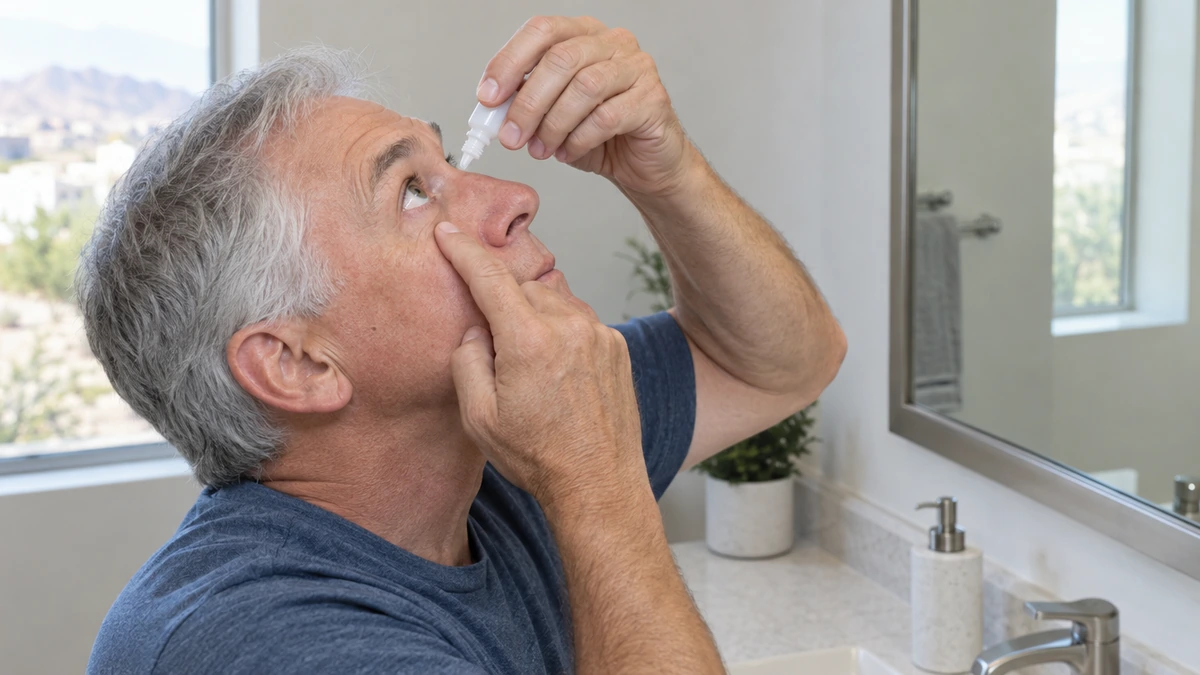
Give the drop a clean path. At your bathroom mirror, set the bottle within reach before you tilt your head back. Use this sequence without rushing, especially when squeezing the bottle or holding your eyelid feels awkward.
- Wash your hands with soap and water before handling the drops.
- Tilt your head back and look up. Gently pull your lower eyelid down and away from the eye to make a pocket.
- Hold the bottle above the pocket. Put in the directed amount without touching the tip to your eye, eyelid or fingers.
- Close your eye and press lightly at the inner corner for at least one minute, then wait at least five minutes before a different type of drop, following National Eye Institute guidance.
Your technique belongs in the conversation about relief. Describe whether the drop lands in the pocket, runs down your cheek or takes repeated attempts. A bottle you struggle to squeeze matters as much as its ingredients.
Which Artificial Tears Fit Your Day?
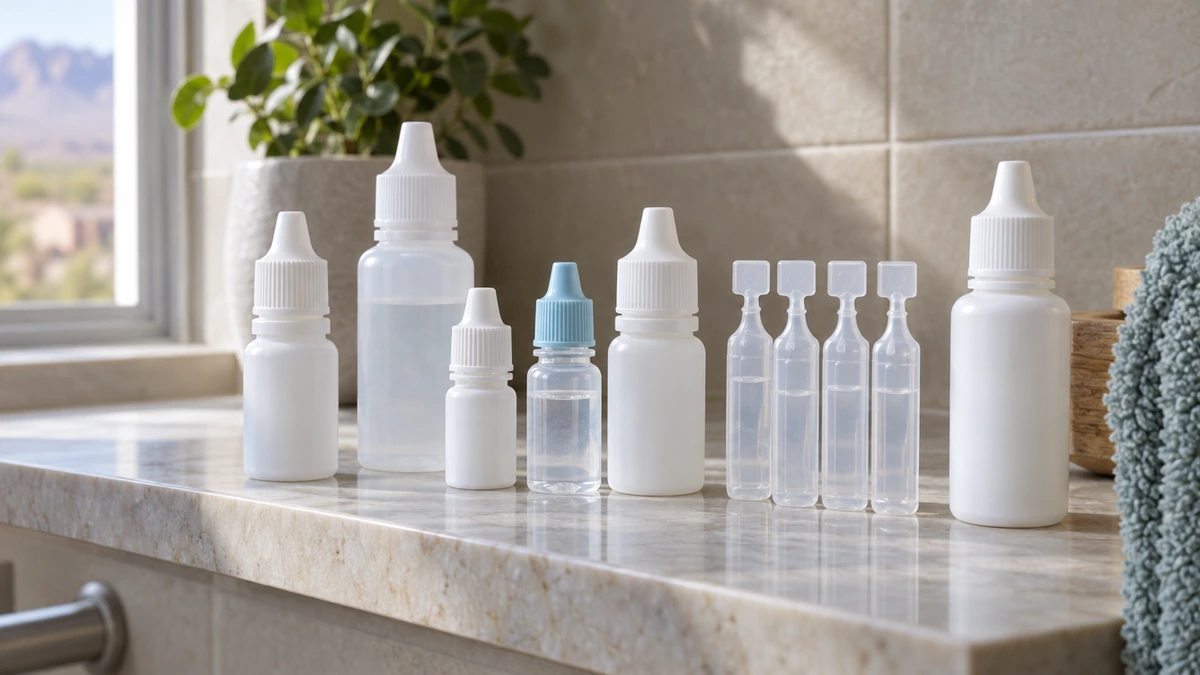
Match thickness to your next task. The American Academy of Ophthalmology explains that gels and ointments stay on the eye longer than liquid drops but also cause temporary blur. Before choosing a thicker product, consider whether you are about to drive, read at work or go to bed.
| Type | Where It Fits | Main Tradeoff |
|---|---|---|
| Liquid lubricating drops | Daytime use and tasks requiring clear vision | Less staying power than thicker products |
| Lubricating gel | Longer lubrication, often at bedtime | Temporary blur after application |
| Lubricating ointment | Bedtime use when thicker lubrication is appropriate | Blur makes it a poor fit before driving |
I value a drop you use correctly over a shelf full of half-used bottles. Write down the product type, how it feels and what you were doing when discomfort returned.
Redness relief is a different job, and it is not a dry eye treatment. Decongestant drops shrink surface blood vessels for a while, then rebound redness builds, and the AAO guide to redness-relieving drops says to use them only occasionally and briefly. Skip them entirely if you have narrow-angle glaucoma, because they raise the risk of angle-closure glaucoma, an emergency. Judge your drops by comfort, never by a whiter-looking eye.
You also have choices within liquid tears. Drops with oil-based ingredients help thicken the tear film, the thin layer covering your eye, and slow evaporation, the AAO lubricant guide notes. When blocked oil glands drive your dryness, my meibomian gland dysfunction guide shows you what helps.
Preserved or Nonpreserved: How Often Do You Need Drops?

Check the preservative status first. Nonpreserved means the drops contain no preservatives, a useful distinction when you reach for them repeatedly. Occasional use of a preserved lubricant is different from relying on it throughout every workday.
Use drops about four or more times a day, or feel a preserved drop sting? That is your cue to ask me about nonpreserved tears. The AAO lubricant guide recommends nonpreserved drops when you lubricate more than four times a day over a long period, and other AAO pages draw the line at four or even six. Treat the number as practical guidance, not a toxicity cutoff.
Your frequency tells me a lot. After the morning walk only? All through the workday? Again after dinner? Count the bedtime gel too, because the gel and the liquid share one routine.
Nonpreserved lubricating drops are generally suitable as often as needed. Follow your product directions and the plan we discuss, while paying attention to whether you remain comfortable between uses. A rising need for drops calls for an exam, even when the bottle contains no preservatives.
What Changes for a Las Vegas Day?

Your surroundings shape how often you reach for the bottle. The National Eye Institute recommends avoiding wind and air conditioning exposure and wearing wraparound sunglasses outside. On a breezy Las Vegas sidewalk, put those glasses on before the wind reaches your eyes.
At a Summerlin office desk, you might reach for drops after every stretch beneath the ceiling vent. Find where the air hits your face, then move your seat or angle the vent away. Did your eyes settle once you moved? That answer gives your next visit the setting as well as the symptom.
Plan your drops around your real day. Liquid before the afternoon meeting, ointment at lights out. For more on vents, wind and indoor air, read why Las Vegas air dries out your eyes.
When Should You Stop Shopping and Get Care?
Red or Painful Eyes Need Care Right Away
Put the bottle down when your eyes turn red or painful. Contact an eye care provider right away, as MedlinePlus directs, instead of testing one more lubricant. Stop any drop and see a doctor right away if it brings itching, swelling, trouble breathing or dizziness, the allergic reaction signs the AAO lubricating drops guide lists.
Persistent discomfort also deserves a diagnosis. When regular tears leave your eyes gritty or burning, arrange an evaluation instead of rotating through more bottles. Brief comfort after a drop does not establish what is causing the problem.
Your next step depends on the findings. Lubricants, eyelid care and prescription treatment have different roles, which our Las Vegas dry eye treatment guide explains in detail. For help deciding how to seek care, read when to seek dry eye care in Summerlin.
How I Approach Your Drop Routine at Vision by Amel
Bring the bottles you use. I am Dr. Amel Youssef, your optometrist at Vision by Amel, and your history helps put those choices in context. Note which drops sting, which blur your vision and which leave you reaching for the bottle again.
Your eye care plan depends on your eyes. Options include lubricants, targeted prescription drops including anti-inflammatory medication, warm compresses, eyelid hygiene and care for meibomian gland dysfunction or blepharitis. Our eye exams page explains the visit, from your history through evaluation and a plan for your eye health.
Your bottles come with you to 2010 Festival Plaza Dr, Suite 195, at Festival Plaza in Downtown Summerlin. You need no referral for an eye exam. Book online or call (702) 858-4362. Start with the concern that brought you here, whether it is choosing your first lubricant or understanding why the current one is falling short.
Frequently Asked Questions About Artificial Tears
What Is the Difference Between Drops, Gels and Ointments?
They differ in thickness and how long they stay on your eye. A liquid for daytime and a thicker product for bedtime sometimes belong in the same plan, rather than replacing each other. When discussing that combination, include every eye product you already use so the timing is clear.
Can I Use Artificial Tears Too Often?
The American Academy of Ophthalmology reports no evidence that regular artificial tear use reduces your natural tear production. Watch your preservatives and lingering symptoms instead of worrying about dependence. Record your use honestly instead of cutting back to make the pattern look better.
Are All Artificial Tears the Same?
No, and similar average results in studies do not make every formula interchangeable for your eyes. Ingredient type, thickness and preservative status remain meaningful differences. When you compare products, write those features down rather than relying on the package color or a stronger-sounding description.
Can I Use Artificial Tears With Contact Lenses?
Only use drops with lenses in when the product is explicitly labeled for that use and fits your eye care instructions. Without that label, take your lenses out first, as the AAO lubricant guide advises, and my guide to contact lenses and dry eyes covers the wait before they go back in. The absence of preservatives alone does not establish lens compatibility, so show me the exact product rather than describing it as a gentle drop.
When Should I See a Doctor Instead of Buying More Drops?
Book an exam once you need lubricating drops more than two or three times a day, the point where an AAO cornea specialist advises a full eye exam. Drops buy you brief relief, but the condition underneath still needs its own treatment. Tell me whether relief fades during one task or returns even at rest, because that pattern points to the cause.
Book My Eye Exam Call (702) 858-4362
Like this article? Add Vision by Amel as a preferred source, and you are more likely to see our articles in Google’s Top Stories.
