Category: Dry Eye Treatments

Drops, punctal plugs, lid therapy and the other options I use or refer for, and how to know which one fits you.

  • How to Choose Artificial Tears for Dry Eye in Las Vegas

    How to Choose Artificial Tears for Dry Eye in Las Vegas

    How to Choose Artificial Tears for Dry Eye in Las Vegas

    Filipino woman holding an unbranded artificial tears bottle at a sunny kitchen window

    TLDR: Choose artificial tears for lubrication, with the thickness and preservative status suited to your day. Liquid drops suit daytime use, while thicker gels and ointments suit bedtime. Frequent use calls for a look at preservatives, and persistent dry eye calls for an evaluation.

    Answer: To choose artificial tears in Las Vegas, compare liquid drops, gels and ointments, then check whether they contain preservatives. Your daytime tasks, contact lenses and frequency of use matter. Choose lubrication over redness relief, use clean drop technique, and arrange an eye exam when regular drops leave you uncomfortable.

    Your bathroom shelf in Summerlin tells the story: a bottle for the morning drive, a gel for bedtime, a half-used box you forgot about. Your eyes still feel gritty at dinner. The answer starts with a smarter choice, matched to what each drop does and when you need it.

    I reviewed 123 primary sources across five research lenses for this guide, and some people need a combination of drops, not one perfect bottle. The 2016 Cochrane review found low-quality evidence suggesting similar effects among many tears, with inconsistent studies limiting firm comparisons. Your choice still matters, and my approach to dry eye treatment starts with the cause, as outlined on our dry eye care page.

    How Do You Put Artificial Tears In Correctly?
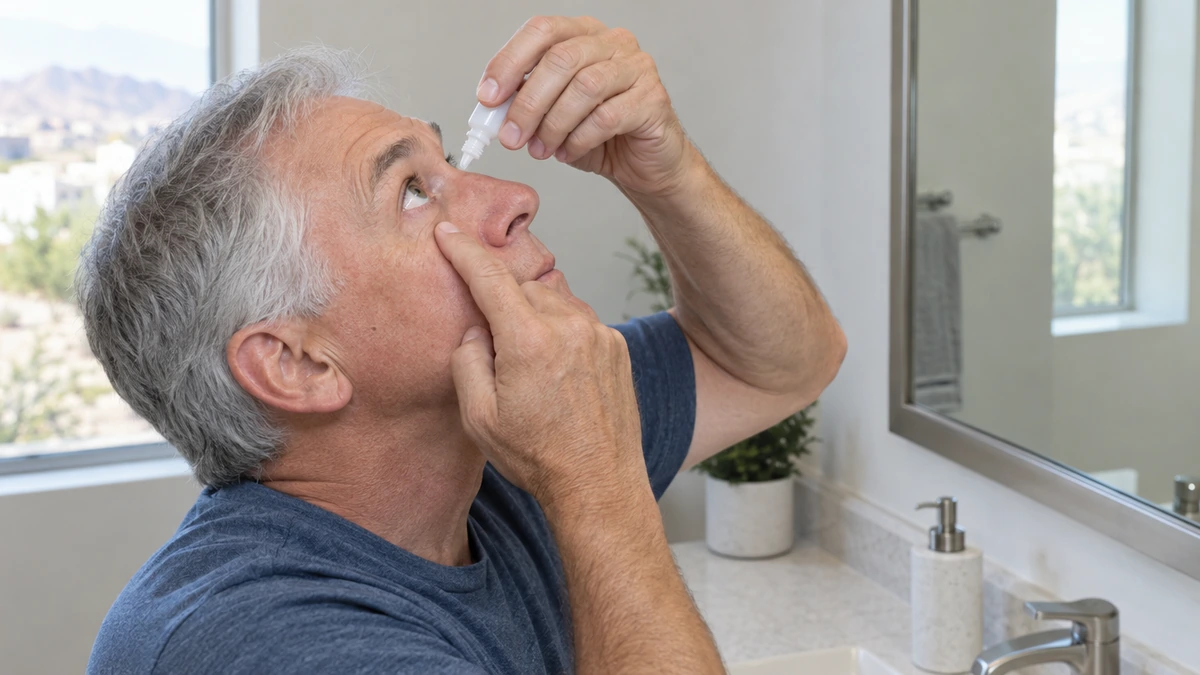
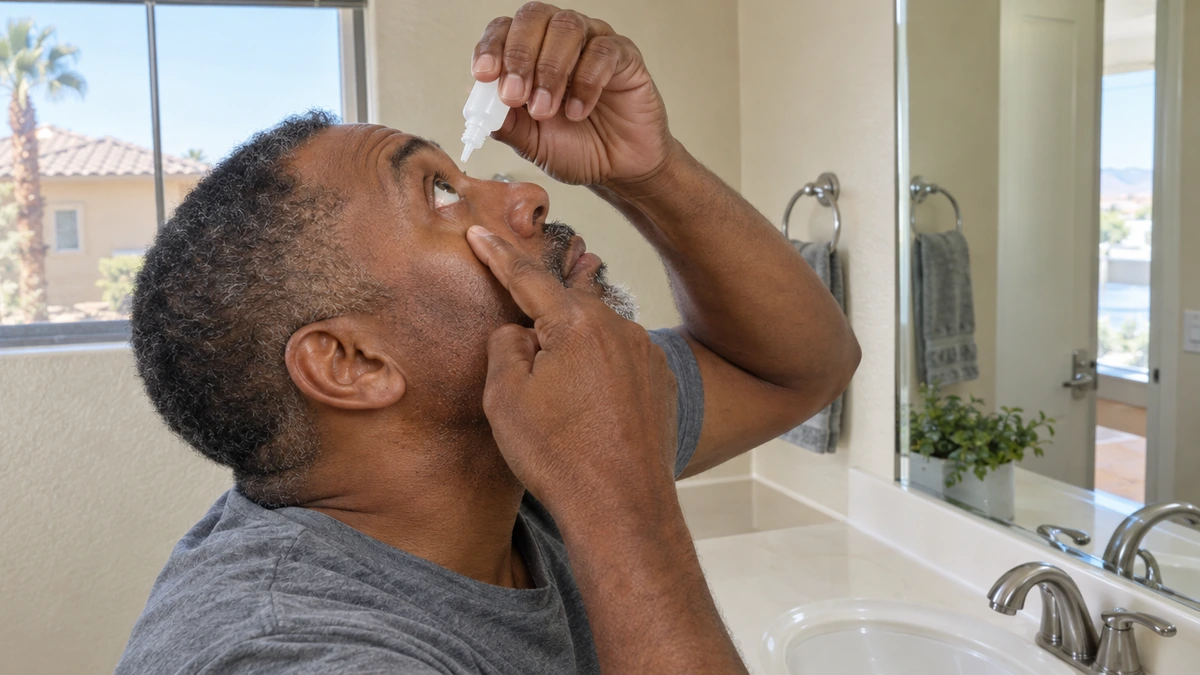
    White man applying artificial tears at a bathroom mirror with his lower eyelid gently pulled down
    Pulling the lower lid down creates a pocket for the drop.

    Give the drop a clean path. At your bathroom mirror, set the bottle within reach before you tilt your head back. Use this sequence without rushing, especially when squeezing the bottle or holding your eyelid feels awkward.

    1. Wash your hands with soap and water before handling the drops.
    2. Tilt your head back and look up. Gently pull your lower eyelid down and away from the eye to make a pocket.
    3. Hold the bottle above the pocket. Put in the directed amount without touching the tip to your eye, eyelid or fingers.
    4. Close your eye and press lightly at the inner corner for at least one minute, then wait at least five minutes before a different type of drop, following National Eye Institute guidance.

    Your technique belongs in the conversation about relief. Describe whether the drop lands in the pocket, runs down your cheek or takes repeated attempts. A bottle you struggle to squeeze matters as much as its ingredients.

    Which Artificial Tears Fit Your Day?
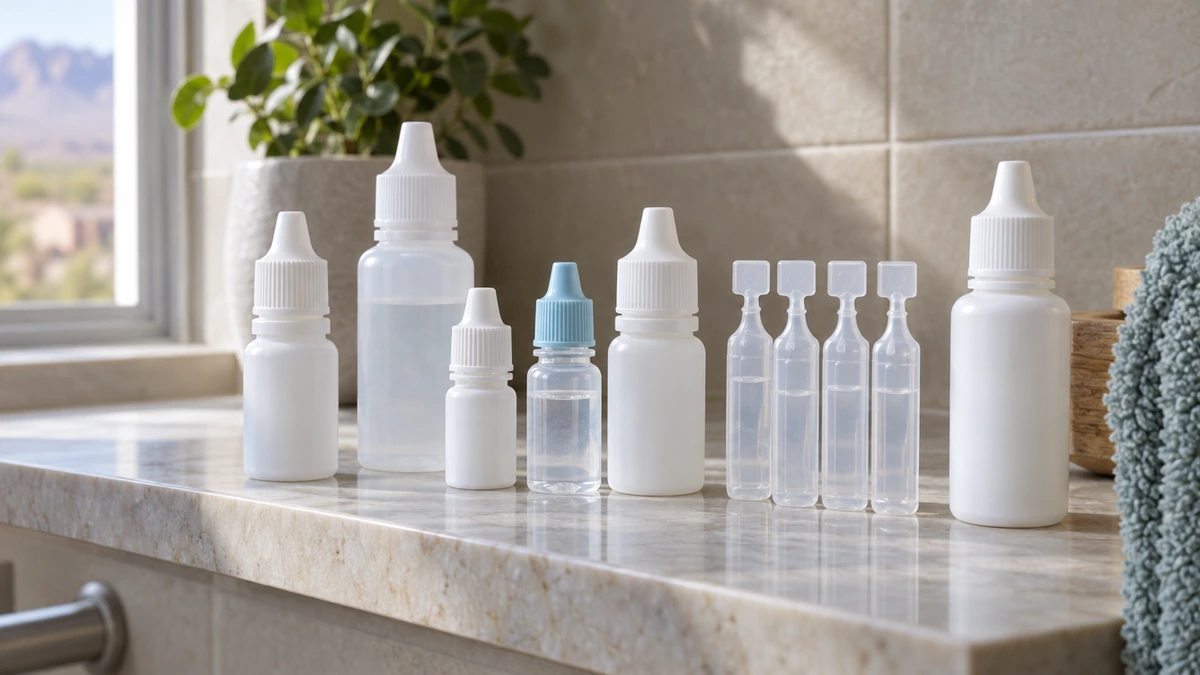
    Plain unlabeled artificial tears bottles and single-use vials on a bathroom shelf
    Plain dropper bottles and single-use vials stand on a bathroom shelf.

    Match thickness to your next task. The American Academy of Ophthalmology explains that gels and ointments stay on the eye longer than liquid drops but also cause temporary blur. Before choosing a thicker product, consider whether you are about to drive, read at work or go to bed.

    TypeWhere It FitsMain Tradeoff
    Liquid lubricating dropsDaytime use and tasks requiring clear visionLess staying power than thicker products
    Lubricating gelLonger lubrication, often at bedtimeTemporary blur after application
    Lubricating ointmentBedtime use when thicker lubrication is appropriateBlur makes it a poor fit before driving

    I value a drop you use correctly over a shelf full of half-used bottles. Write down the product type, how it feels and what you were doing when discomfort returned.

    Redness relief is a different job, and it is not a dry eye treatment. Decongestant drops shrink surface blood vessels for a while, then rebound redness builds, and the AAO guide to redness-relieving drops says to use them only occasionally and briefly. Skip them entirely if you have narrow-angle glaucoma, because they raise the risk of angle-closure glaucoma, an emergency. Judge your drops by comfort, never by a whiter-looking eye.

    You also have choices within liquid tears. Drops with oil-based ingredients help thicken the tear film, the thin layer covering your eye, and slow evaporation, the AAO lubricant guide notes. When blocked oil glands drive your dryness, my meibomian gland dysfunction guide shows you what helps.

    Preserved or Nonpreserved: How Often Do You Need Drops?

    Black woman applying artificial tears at her office desk beside a window, laptop seen edge-on
    A woman puts in an eye drop at her office desk by a window.

    Check the preservative status first. Nonpreserved means the drops contain no preservatives, a useful distinction when you reach for them repeatedly. Occasional use of a preserved lubricant is different from relying on it throughout every workday.

    Use drops about four or more times a day, or feel a preserved drop sting? That is your cue to ask me about nonpreserved tears. The AAO lubricant guide recommends nonpreserved drops when you lubricate more than four times a day over a long period, and other AAO pages draw the line at four or even six. Treat the number as practical guidance, not a toxicity cutoff.

    Your frequency tells me a lot. After the morning walk only? All through the workday? Again after dinner? Count the bedtime gel too, because the gel and the liquid share one routine.

    Nonpreserved lubricating drops are generally suitable as often as needed. Follow your product directions and the plan we discuss, while paying attention to whether you remain comfortable between uses. A rising need for drops calls for an exam, even when the bottle contains no preservatives.

    What Changes for a Las Vegas Day?

    Latino man in wraparound sunglasses on a breezy, palm-lined Las Vegas sidewalk, artificial tears routine outdoors
    Wraparound sunglasses belong in your outdoor dry eye routine.

    Your surroundings shape how often you reach for the bottle. The National Eye Institute recommends avoiding wind and air conditioning exposure and wearing wraparound sunglasses outside. On a breezy Las Vegas sidewalk, put those glasses on before the wind reaches your eyes.

    At a Summerlin office desk, you might reach for drops after every stretch beneath the ceiling vent. Find where the air hits your face, then move your seat or angle the vent away. Did your eyes settle once you moved? That answer gives your next visit the setting as well as the symptom.

    Plan your drops around your real day. Liquid before the afternoon meeting, ointment at lights out. For more on vents, wind and indoor air, read why Las Vegas air dries out your eyes.

    When Should You Stop Shopping and Get Care?

    Red or Painful Eyes Need Care Right Away

    Put the bottle down when your eyes turn red or painful. Contact an eye care provider right away, as MedlinePlus directs, instead of testing one more lubricant. Stop any drop and see a doctor right away if it brings itching, swelling, trouble breathing or dizziness, the allergic reaction signs the AAO lubricating drops guide lists.

    Persistent discomfort also deserves a diagnosis. When regular tears leave your eyes gritty or burning, arrange an evaluation instead of rotating through more bottles. Brief comfort after a drop does not establish what is causing the problem.

    Your next step depends on the findings. Lubricants, eyelid care and prescription treatment have different roles, which our Las Vegas dry eye treatment guide explains in detail. For help deciding how to seek care, read when to seek dry eye care in Summerlin.

    How I Approach Your Drop Routine at Vision by Amel

    Bring the bottles you use. I am Dr. Amel Youssef, your optometrist at Vision by Amel, and your history helps put those choices in context. Note which drops sting, which blur your vision and which leave you reaching for the bottle again.

    Your eye care plan depends on your eyes. Options include lubricants, targeted prescription drops including anti-inflammatory medication, warm compresses, eyelid hygiene and care for meibomian gland dysfunction or blepharitis. Our eye exams page explains the visit, from your history through evaluation and a plan for your eye health.

    Your bottles come with you to 2010 Festival Plaza Dr, Suite 195, at Festival Plaza in Downtown Summerlin. You need no referral for an eye exam. Book online or call (702) 858-4362. Start with the concern that brought you here, whether it is choosing your first lubricant or understanding why the current one is falling short.

    Frequently Asked Questions About Artificial Tears

    What Is the Difference Between Drops, Gels and Ointments?

    They differ in thickness and how long they stay on your eye. A liquid for daytime and a thicker product for bedtime sometimes belong in the same plan, rather than replacing each other. When discussing that combination, include every eye product you already use so the timing is clear.

    Can I Use Artificial Tears Too Often?

    The American Academy of Ophthalmology reports no evidence that regular artificial tear use reduces your natural tear production. Watch your preservatives and lingering symptoms instead of worrying about dependence. Record your use honestly instead of cutting back to make the pattern look better.

    Are All Artificial Tears the Same?

    No, and similar average results in studies do not make every formula interchangeable for your eyes. Ingredient type, thickness and preservative status remain meaningful differences. When you compare products, write those features down rather than relying on the package color or a stronger-sounding description.

    Can I Use Artificial Tears With Contact Lenses?

    Only use drops with lenses in when the product is explicitly labeled for that use and fits your eye care instructions. Without that label, take your lenses out first, as the AAO lubricant guide advises, and my guide to contact lenses and dry eyes covers the wait before they go back in. The absence of preservatives alone does not establish lens compatibility, so show me the exact product rather than describing it as a gentle drop.

    When Should I See a Doctor Instead of Buying More Drops?

    Book an exam once you need lubricating drops more than two or three times a day, the point where an AAO cornea specialist advises a full eye exam. Drops buy you brief relief, but the condition underneath still needs its own treatment. Tell me whether relief fades during one task or returns even at rest, because that pattern points to the cause.

    Book My Eye Exam Call (702) 858-4362

    Like this article? Add Vision by Amel as a preferred source, and you are more likely to see our articles in Google’s Top Stories.


    Add as a preferred source on Google

  • Contact Lenses When You Have Dry Eyes: What Can Help

    Contact Lenses When You Have Dry Eyes: What Can Help

    Contact Lenses When You Have Dry Eyes: What Can Help

    Black woman pausing beside an edge-on laptop by a window, contact lenses for dry eyes

    TLDR: Choosing contact lenses for dry eyes starts with your symptoms, lens fit and wearing routine. A different lens, shorter wearing time or compatible drops are options to discuss at your visit. Remove your contacts and call an eye doctor right away for redness, pain, irritation or blurred vision while wearing them.

    Answer: Contact lenses for dry eyes need an individual plan. In Las Vegas, I review your lens material, fit, replacement schedule and care solution alongside your symptoms. Daily disposables and breaks in glasses are options. Use only drops approved for contact lens wear with lenses in, and have persistent discomfort assessed before extending your wearing time.

    It is 4 pm at your home desk in Summerlin. The laptop is still open, dinner is an hour away, and your contacts feel gritty and tight. Your glasses sit across the room. That exact hour is the most useful clue you bring to your eye exam.

    As your optometrist, I want to understand the whole day you spend in lenses. I reviewed 123 primary sources across five research lenses for this guide, and contact lens discomfort has several possible causes beyond the lens itself. The TFOS contact lens discomfort report explains why your symptoms call for a look beyond the lens. My approach to dry eye treatment starts with that distinction, which also guides our dry eye care.

    Why Do Contact Lenses Feel Dry?

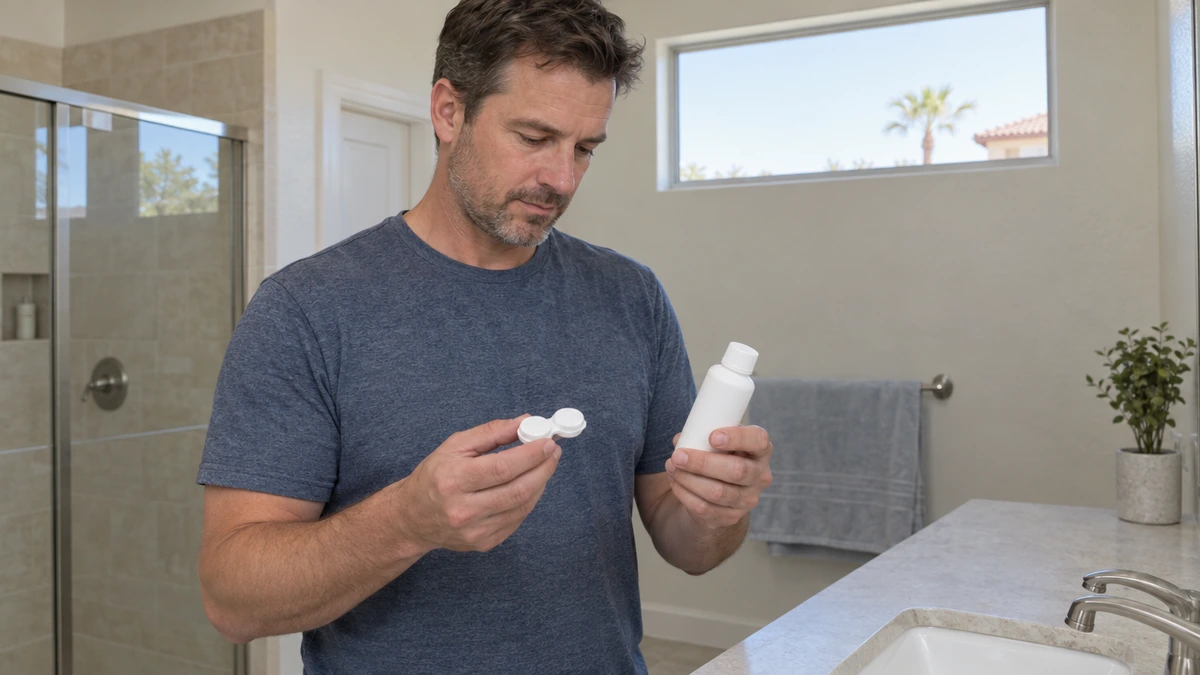
    White man holding a plain lens case and bottle at a bathroom counter, contact lenses for dry eyes
    A man holds his lens case and a plain bottle at the bathroom counter.

    Pin down your pattern first. Does the lens scratch the moment it goes in, or does comfort fade after lunch? Both eyes or one? Glasses days too? Your answers point me to the lens, the tear film or both.

    Lens discomfort and dry eye disease overlap, but feeling dry does not establish a diagnosis. The TFOS report links discomfort with changes in the tear film, including reduced stability and faster evaporation. It also identifies other sources of symptoms, including eyelid disease, allergies and medicines. Your lens is part of the picture.

    Your bathroom counter tells me the rest. Show me the lens box, the solution in your case and every bottle of drops you reach for. When did you open this pair, and when does it get replaced? Plain answers beat any guess at a diagnosis.

    Which Contact Lenses for Dry Eyes Are Worth Discussing?

    Clinician hands showing a lens to a Latina woman at a fitting, contact lenses for dry eyes
    An eye doctor's hands show a contact lens to a woman at her fitting.

    A useful lens change has a purpose. The TFOS clinical summary lists material, wearing schedule, care solution, replacement frequency and design among options for managing your discomfort after other causes are assessed. These options have variable results. The table shows what each discussion covers.

    OptionWhat ChangesWhat to Discuss
    Lens materialA different material and surfaceHow the proposed lens differs from your current one
    Daily disposablesA fresh lens for each day of wearWhether moving away from a reusable lens routine suits you
    Wearing scheduleLess time with lenses on your eyesWhich parts of your day work well in glasses
    Fit and designThe way the lens sits and interacts with your eyeWhether the current lens needs a fitting review
    Care solutionThe care products used with reusable lensesWhich system matches your prescribed lenses
    Replacement frequencyWhen you discard a lens and open anotherWhether your actual routine matches the prescribed schedule

    Give every lens change one clear target: comfort through the afternoon meeting, then glasses for the evening. Your follow-up runs on specifics, such as which activity made the new lens fade, not a verdict on the whole week.

    I would rather build your lens plan around a comfortable day than chase the longest wearing time. Your work, errands and evenings shape that plan. Describe the activities for which you prefer contacts and the times glasses suit you well. That gives the fitting conversation a practical goal.

    Which Drops Belong With Your Contact Lenses?

    Read the bottle before using it. The American Optometric Association says to use only eye drops approved for contact lens wear while your lenses are in and to avoid redness-relief drops with lenses. A bottle labeled artificial tears still needs a contact lens compatibility check. The words on the label matter more than the size or shape of the bottle.

    Rewetting drops are a comfort option with uncertain benefit. A Cochrane review found very low-certainty evidence of improvement over no drops and no clear advantage over saline in short trials, leaving long-term benefit and safety uncertain for your decision. Treat that uncertainty as a reason to review the full lens plan when discomfort persists. Repeated dosing should not become your way of extending an uncomfortable day.

    Your cleaning solution has a separate job. Rewetting drops and saline do not disinfect lenses, as the AOA lens-care guidance explains. Follow the care system prescribed for your reusable lenses. Set the bottles side by side at home and read their uses before your next lens-care routine.

    When Should You Switch to Glasses?

    Asian woman wearing glasses at an evening desk beside a closed lens case, contact lenses for dry eyes
    A woman in glasses sits at her desk at dusk, her lens case closed beside her.

    Give glasses a planned place in your day. The 2017 TFOS DEWS II report includes reducing wearing time or stopping lens wear among strategies with some evidence for lens-related dry eye. Discuss a shorter schedule when comfort repeatedly fades. The next step is a plan you follow, with a review of how your eyes respond.

    1. Have your glasses available before you put contacts in.
    2. Follow the wearing schedule agreed at your fitting, including the planned time to switch to glasses.
    3. Record discomfort and the activity underway when it starts.
    4. Arrange a review when the schedule no longer feels comfortable, and follow the urgent instructions below for warning signs.

    Your glasses are a tool, not a defeat. Close the lens case after a long Las Vegas workday, slip your glasses on, and finish the evening in comfort. Save your contacts for the hours you want them most: the client lunch, the pickleball game, the night out. You win the day when your eyes still feel good at 9 pm.

    How Do Screens and Desert Air Change Your Lens Day?

    Middle Eastern man walking in wraparound sunglasses in Downtown Summerlin, contact lenses for dry eyes
    A man in wraparound sunglasses walks through a Downtown Summerlin plaza.

    Screen hours and lens hours stack up on the same pair of eyes. My guide to screens, contact lenses and daily habits covers the blink facts, the monitor setup and the break routine, so this page skips them. Here, you track one number: the hour your comfort drops. That hour tells me more than a weekly average ever will.

    You finish laptop work, walk outside in Downtown Summerlin wearing wraparound sunglasses, then get into a car with air blowing toward your face. Each switch, screen to sunlight to car vent, tests your lenses in a new way. For the vents, wind and dry air themselves, read how Las Vegas air dries your eyes.

    When Should Your Lenses Come Out Right Away?

    Take your lenses out and call an eye doctor right away if your eye turns red and irritated, pain keeps building after the lenses come out, light starts to hurt, your vision blurs suddenly, or you notice unusual watering or discharge. The CDC lists these as signs of a possible contact lens infection. Do not wait for the next routine fitting. Tell the office you wear contacts and name the symptom when you call.

    These signs need an assessment. Contact lens wear raises the risk of keratitis, which is inflammation of the cornea, and infection is one cause. The CDC links infection risk with lenses worn too long or cared for incorrectly. Protect your eye health by acting on the symptoms, even when dryness has happened before.

    How I Approach Contact Lenses for Dry Eyes

    At Vision by Amel, your contact lens fitting is the place to discuss material, wearing schedule and fit. I fit lenses from daily disposables onward, and when your lenses fight your eyes, I change the material, the wear schedule or the fit. Tell me what you wear now and which part of the day has become difficult. Include the exact care products you use.

    Your eye care plan also depends on the eyes beneath the lenses. Depending on your eyes, your plan draws on artificial tears, prescription eye drops, warm compresses, eyelid hygiene or care for meibomian gland dysfunction and blepharitis. When your lids are part of the problem, my guide to meibomian gland dysfunction walks you through the oil glands. Your symptoms and exam findings guide those choices.

    Your fitting happens at 2010 Festival Plaza Dr, Suite 195, Las Vegas, NV 89135, in Downtown Summerlin at Festival Plaza. Book online or call (702) 858-4362 for an appointment. You do not need a referral for an eye exam. Mention contact lens discomfort when you book so the reason for your visit is clear.

    Frequently Asked Questions About Contact Lenses and Dry Eyes

    Why Do My Contacts Feel Dry by the End of the Day?

    You have plenty of company. The TFOS workshop estimated in 2013 that up to half of contact lens wearers feel lens discomfort at some point, and it links that discomfort with shorter wearing time and people giving up lenses altogether. Comfort that fades by evening points me to your tear film, your lens and your schedule together, so tell me the hour it starts.

    Can I Keep Wearing Contacts If I Have Dry Eye?

    You have options before you give lenses up. A shorter lens day, a different lens or a full pause from lenses all stay on the table, depending on what your exam shows. Severe dry eye changes the math: the AAO dry eye guideline warns it raises your risk of lens intolerance and lens complications.

    Do Daily Disposable Lenses Help Dry Eyes?

    They are an option worth discussing for your comfort. Daily disposables remove exposure to a reusable-lens care solution, but TFOS notes that the solution inside the blister pack itself is a possible source of discomfort. Report discomfort at insertion as well as discomfort later in the day.

    Does the Lens Material Matter?

    Material is one consideration in your fitting. TFOS cautions that material effects are difficult to separate from lens design and surface effects, so evidence does not establish a single best material. Compare the whole proposed lens and your response to it.

    Are Rewetting Drops Safe With Contacts, and Do They Work?

    Your lenses stay in only for a drop labeled for contact lens wear, and the AAO lubricant guide favors one without preservatives for that job. For any other drop, take your lenses out, wait five minutes, put the drop in, then give your eyes another 10 to 15 minutes before the lenses go back in. Track how long your relief lasts, because that number tells me whether the drop earns its place.

    Book My Eye Exam Call (702) 858-4362

    Like this article? Add Vision by Amel as a preferred source, and you are more likely to see our articles in Google’s Top Stories.
    Add as a preferred source on Google

  • Punctal Plugs for Dry Eye: What Las Vegas Patients Should Know

    Punctal Plugs for Dry Eye: What Las Vegas Patients Should Know

    Punctal Plugs for Dry Eye: What Las Vegas Patients Should Know

    Black woman in her 60s seated in an optometry exam chair, accompanying a guide to punctal plugs

    TLDR: Punctal plugs slow tear drainage to keep your own tears on your eyes longer. They are an option for dry eye, especially when you have too few watery tears, with dissolving and longer-lasting removable designs. Trial benefits remain uncertain, and plugs need follow-up for comfort, watering and fit.

    Answer: Punctal plugs are tiny devices placed in tear drain openings to conserve your tears. For Las Vegas patients, the decision starts with why the eyes feel dry and whether inflammation needs treatment first. An optometrist evaluates those needs before discussing plugs, their uncertain average benefit, and risks such as irritation, watering, loss and infection.

    You want your evening back. Dinner is over at your home in Summerlin, and you reach for the drop bottle beside your bed again. Punctal plugs sound appealing when moisture never seems to stay put. The smart question is whether conserving tears belongs in your dry eye treatment.

    I reviewed 51 primary sources across five research lenses for this guide, and trial evidence for punctal plug benefits remains inconclusive. For you, the Cochrane review supports an honest discussion of uncertain benefit. My approach to dry eye care starts with your symptoms and the findings from your eye exam. Small device, clear job. Know the job before you say yes.

    What Are Punctal Plugs, and Which Type Fits Your Plan?

    Woman in her 60s walking comfortably through an open-air plaza in Summerlin, a guide to punctal plugs
    Punctal plugs aim to keep more of your own tears on your eyes.

    Punctal plugs keep your own tears on your eyes longer. Your tears normally drain through tiny openings called puncta. A plug sits in that drain and slows the exit. It conserves moisture already on the ocular surface, the exposed surface of your eye.

    Start with the material and location. You will hear temporary for dissolving plugs and semi-permanent for longer-lasting, removable plugs. Designs differ, including plugs at the drainage opening and others deeper in the drainage channel. Know which design is being considered before deciding whether it suits your care.

    Plug TypeWhat Happens to ItWhat Matters to You
    Temporary, dissolvingOften made from collagen and absorbed over timeA trial of tear retention before considering a longer-lasting device
    Semi-permanent, removableOften silicone or acrylic, designed for longer useComfort, fit, follow-up and the removal method

    Get three answers before any plug goes in your eye. What is it made of? Where will it sit? How does it come out? Those details make the choice more concrete than the word plugs alone.

    Who Should Consider Punctal Plugs?

    Older Hispanic man and his wife listening during a consultation, illustrating a discussion of punctal plugs
    An older couple listens during a consultation.

    Too few watery tears give plugs a clear job. That shortage is called aqueous deficiency. Holding moisture on your eye addresses tear loss through drainage. Plugs enter the discussion when artificial tears or other drops have not provided enough relief.

    Your dryness might have several causes. Tears also evaporate, and some eyes have both low tear volume and fast evaporation. Meibomian gland dysfunction involves eyelid oil glands working poorly, which leaves the tear film more vulnerable to evaporation. Retaining watery tears leaves that oil-gland problem to address separately.

    Calm the inflammation first. For your eyes, the 2017 TFOS DEWS II management report recommends treating surface inflammation before plugging because retained tears also hold inflammatory proteins. Then a plug has a clear job to do. Treatment order matters as much as the device.

    I want every step in your plan to earn its place. A plug needs a specific purpose, such as retaining watery tears when drops have fallen short. Every added step adds work for you. Name the benefit first, then decide.

    What Happens When a Plug Is Placed?

    You should know the steps beforehand. Placement begins with an examination to choose the plug’s type and size. The eye doctor performing the procedure selects the drainage opening and discusses whether numbing is needed. Bring up any worries about placement during planning, so you have answers before deciding.

    1. The eye doctor examines your eyes and selects a suitable plug.
    2. Your eye doctor numbs the area when needed.
    3. Your eye doctor places the plug in the chosen tear drain opening.
    4. You receive instructions for care and follow-up.

    Most people resume normal activities right afterward, according to the AAO plug guide. Read your instructions before leaving, and confirm the next appointment and the contact for a problem after placement.

    What Happens If a Plug Falls Out?

    A lost plug calls for a fit review. The 2017 TFOS DEWS II complication review identifies spontaneous plug loss as the most common complication, reported in up to 60 percent of cases. Your own risk varies. It is a practical reason to discuss follow-up before placement.

    A lost plug does not mean your whole plan failed. Tell me when you noticed the change and whether dryness returned. A fit check, a different device or a new approach belongs in that discussion. Keep your hands away from the plug, since rubbing contributes to movement or loss.

    New watering is another reason to check your plug. A plug sometimes retains more tears than your eye comfortably handles, and a different type might be needed. Infections are uncommon but sometimes require antibiotics or removal. Report a suspected infection to your eye doctor right away.

    How Do Plugs Fit With Drops and Eyelid Care?

    Woman in her 50s applying eye drops while seated on her bed, illustrating care alongside punctal plugs
    A woman applies eye drops while seated on her bed.

    Each part of your plan needs a purpose. Artificial tears add moisture, while plugs slow drainage. Targeted prescription eye drops address inflammation when appropriate. Keeping those roles clear helps you understand why a plan sometimes includes both drops and plugs.

    Your eyelids still matter. Warm compresses and eyelid hygiene address needs beyond tear retention, including care for meibomian gland dysfunction and blepharitis. A plug leaves those needs in place. My guide to dry eye treatment in Las Vegas explains the treatment steps and their methods.

    You need a routine you understand. Picture the plain bottle beside your bed before an early start across Las Vegas. Adding a plug should come with clear instructions about which drops and eyelid steps continue. Tell me when the plan becomes confusing so we sort out the purpose of each step.

    What Does the Evidence Say About Comfort?

    Asian man in his 60s reading a hardcover book in an armchair, accompanying a guide to punctal plugs
    A man reads a hardcover book in a living room armchair.

    Your comfort is the reason to consider treatment. In three trials reporting symptoms, the 2017 Cochrane review found little or no symptom improvement with plugs compared with no plugs, with very low-certainty evidence. The overall benefit remains uncertain. Your decision needs both the clinical reason and the research.

    Make your goal concrete: less irritation while you prepare dinner at home in Summerlin, or a more comfortable evening afterward. Those are aims to discuss, alongside unwanted watering or scratchiness, rather than results to assume before a trial.

    I judge your plan by what improves in your day. A plug staying in place tells us about retention. Your comfort tells us something different. Follow-up should consider both, along with the eye’s condition and whether the rest of your care still fits.

    Which Plug Symptoms Need Care Right Away?

    With plugs in place, contact your eye doctor right away about eye pain, scratchiness or suspected infection, as the AAO plug safety guide advises. Do not wait for your planned follow-up. My guide to when dry eyes need care covers the broader warning signs that call for urgent evaluation.

    How I Discuss Punctal Plugs at Vision by Amel

    Your plug decision includes what happens next. I am Dr. Amel Youssef, OD, founder of Vision by Amel. Depending on your eyes, punctal plugs belong among the options in a care plan. During your evaluation, I discuss the purpose of tear retention and what we need to reassess afterward.

    During your evaluation, describe any plugs placed by a treating eye doctor and what changed afterward. Less dryness, extra watering and an irritating sensation lead to different questions about your eye care. Persistent symptoms need reassessment. Following AAO referral guidance, I refer you to an ophthalmologist when your eyes need one, including for non-response, moderate or severe pain, corneal ulceration or vision loss.

    You will find Vision by Amel at Festival Plaza in Downtown Summerlin. Your evaluation includes digital diagnostics. My eye exams page explains the appointment. Book online or call my team, with no referral needed for an eye exam.

    Frequently Asked Questions About Punctal Plugs

    Do Punctal Plugs Hurt?

    You might feel pressure during insertion. Numbing is sometimes used, but some placements do not require it. A scratchy feeling near the eye’s corner is the most common side effect and often fades, though you should report it right away.

    Are Punctal Plugs Permanent?

    No. Temporary plugs dissolve, while semi-permanent plugs are designed for longer use and are removable when needed. Permanently closing your tear drain is a separate surgical procedure, as the American Optometric Association explains.

    Do Punctal Plugs Really Work?

    Plugs have a clear purpose: keeping your watery tears on the eye longer. Research has not established a reliable average improvement in symptoms. That distinction explains why a reasonable trial still needs a goal and a review of your response.

    Will a Temporary Plug Help Me Decide About a Longer-Lasting One?

    A dissolving plug offers a trial of retaining your tears. I would weigh improved comfort alongside excess watering before discussing a longer-lasting design. The temporary device is absorbed, so the next decision includes whether continued tear retention suits your eyes.

    How Are Punctal Plugs Removed?

    Removal depends on where your plug sits. Silicone plugs are removed with forceps or flushing, while plugs deeper in the drainage channel require surgery for removal. Establish the removal method before placement and leave removal to the eye doctor performing it.

    Book My Eye Exam Call (702) 858-4362

    Like this article? Add Vision by Amel as a preferred source, and you are more likely to see our articles in Google’s Top Stories.

    Add as a preferred source on Google

  • Dry Eye Treatment in Las Vegas: What Helps and What to Expect

    Dry Eye Treatment in Las Vegas: What Helps and What to Expect

    Dry Eye Treatment in Las Vegas: What Helps and What to Expect

    Woman relaxing on a sofa with a warm eye compress mask for dry eye treatment

    TLDR: Smart dry eye treatment starts with finding why your eyes feel gritty, tired or sore. Artificial tears add moisture, eyelid care tackles blocked oils and debris, and prescription drops address inflammation. Your exam findings decide which steps earn a place in the plan.

    Answer: Dry eye treatment in Las Vegas starts with the cause of your discomfort. As your optometrist, I match artificial tears, warm compresses and eyelid hygiene to your findings. Prescription anti-inflammatory drops enter the discussion when your exam calls for them. Follow-up checks both your comfort and the condition of your eye surface.

    You leave work, join traffic on the 215 and reach for the drops in your bag again. By dinner, the grit is back. Your eyes are telling you something. Persistent dry eye has a cause, and my approach to dry eye care starts by finding yours.

    I am Dr. Amel Youssef, OD, founder of Vision by Amel in Downtown Summerlin. I reviewed 51 primary sources across five research lenses for this guide, and treatment improves dry eye symptoms and signs, but long-term care is usually needed. That finding in the AAO dry eye guideline sets a realistic goal for your eye care: improvement that we assess over time. You deserve a plan with a reason behind each step.

    Where Does Dry Eye Treatment Start?

    Man applying artificial tears at a bathroom mirror for dry eye treatment
    A man applies an eye drop at his bathroom mirror.

    Artificial tears are the usual first treatment for mild dry eye. They support the tear film, the thin coating over your ocular surface, by adding lubrication. Still reaching for the bottle with little to show for it? Then drops alone are not your whole plan. Your response helps me decide what to examine next.

    Your choice of drops depends partly on how often you use them. Occasional use of a preserved drop is likely safe, but choose drops without preservatives when lubricating more than four times a day over a long period, as the AAO lubricant guide advises. Check the label for preservatives before choosing your bottle.

    Artificial tears lubricate, while other treatments address eyelid problems or inflammation. At your eye exam, tell me when drops help and when the discomfort returns. Those details help connect the bottle you use with the problem we need to treat.

    Treatment StepIts JobWhat Guides Your Choice
    Artificial tearsLubricate the eye surfaceYour symptoms, frequency of use and response
    Warm compressesSoften blocked eyelid gland oilsOil gland findings and a workable home routine
    Eyelid hygieneGently remove debris along the lash lineInflammation and crusting at the eyelid margins
    Prescription anti-inflammatory dropsAddress inflammationSeverity, earlier treatment and follow-up findings
    Punctal plugsSlow tear drainageWhether conserving your tears fits the problem

    How Do I Choose Your Next Treatment Step?

    Woman seated at a slit lamp with an eye doctor behind it during a dry eye treatment evaluation
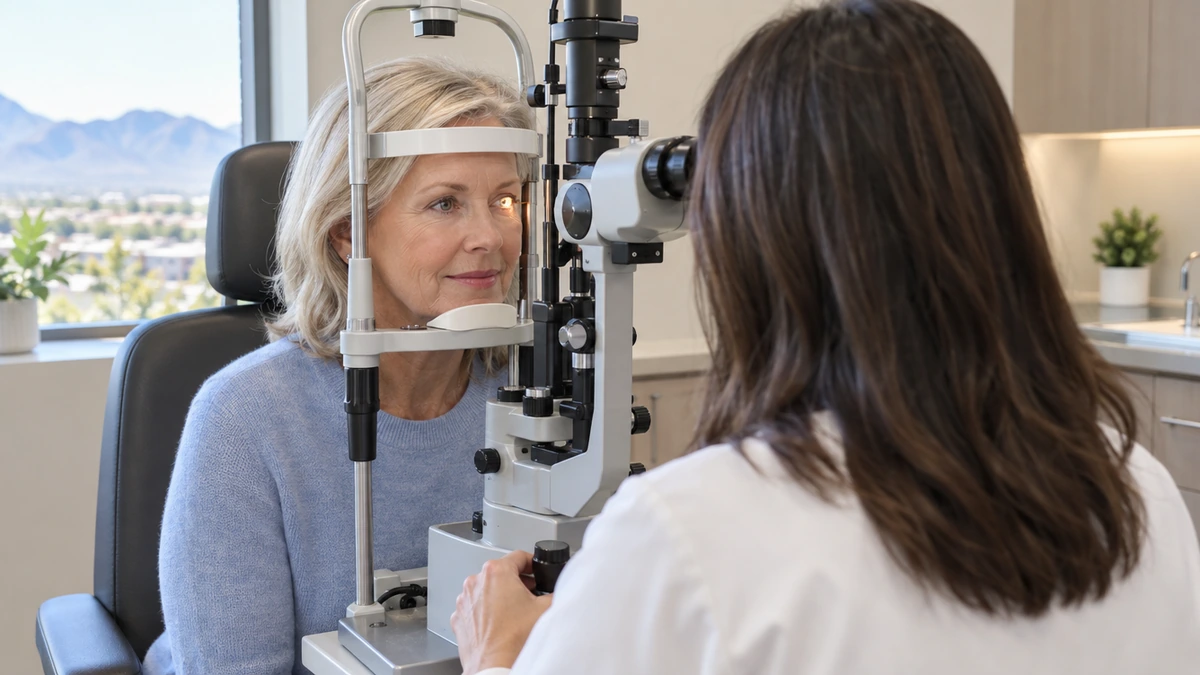
    A woman rests her chin at a slit lamp during an eye examination.

    Too few watery tears and tears evaporating too quickly often occur together. Your treatment needs to account for both, with a comprehensive eye exam placing the tear and eyelid findings in the context of your broader eye health.

    One bottle rarely explains the whole picture. I check your tears and eyelids alongside your symptoms, because most people with dry eye have several contributing factors. A drop might help the surface while an eyelid problem remains, which is a reason to refine your plan.

    I favor the simplest plan with a clear job for every step. You should understand what each part is meant to change before making room for it in your day. A longer shopping list is no substitute for a clear explanation of warmth, cleaning or medication.

    Think back to the grit that followed you home from the 215. Getting through dinner without that familiar discomfort is a useful comfort goal to discuss. I also evaluate the eye surface, because treatment decisions include both how you feel and what the examination shows. What would a worthwhile change look like in your evening? Bring that goal into our discussion. It gives us something concrete to assess at follow-up.

    How Do You Use Warm Compresses and Clean Your Lids?

    Man gently cleaning his eyelid margin with a cleansing pad as part of dry eye treatment
    A man gently cleans his eyelid margin with a pad.

    Your eyelid oil glands affect how quickly tears evaporate. Meibomian gland dysfunction means the eyelid oil glands are blocked or working poorly, leaving the tear film more prone to evaporation. Warmth helps soften blocked gland oils. Gentle cleaning addresses debris along the lashes, especially with blepharitis, or eyelid inflammation.

    Your lids need two things: warmth to soften blocked oil and a gentle clean along the lash line. Here is the method from the AAO blepharitis guide, step by step.

    1. Wet a clean washcloth with warm water and wring it out, then hold it over your closed eyes for at least one minute and rewarm it as needed.
    2. For the cleaning step, soak a washcloth, cotton swab or pad that leaves no lint in baby shampoo diluted in warm water and gently scrub at the base of your eyelashes.
    3. Use gentle contact along the lash line, keeping pressure off your eye.

    The bathroom sink after brushing your teeth gives the routine a place in your day. Put the clean washcloth where you will see it, then follow the warming and cleaning instructions we discussed. A routine that looks simple on paper still has to work in your bathroom. Tell me when a step feels awkward so I know which instructions to clarify.

    Blepharitis care centers on keeping your eyelid margins clean. We will discuss how that care fits the problem I find and where it belongs alongside your drops. At follow-up, describe which steps you managed and which you struggled with. I want to understand the routine you used, including anything you left out.

    When Does Dry Eye Treatment Need Prescriptions or Plugs?

    Persistent symptoms are a reason to review your treatment. For more serious dry eye, the National Eye Institute names cyclosporine and lifitegrast as prescription drops that help your eyes make more tears. I choose the next step from your findings and treatment history.

    Prescription treatment needs a clear timetable. Anti-inflammatory drops address inflammation involved in dry eye, and some plans include a short course of steroid drops with monitoring for increased eye pressure and cataract. Follow your prescribed duration and keep the monitoring visit. Before leaving, make sure you know which bottle the instructions refer to and when I want to see you again. Keep that plan beside your usual routine so the next step is clear.

    Punctal plugs slow drainage through the small openings where tears leave your eyes. The 2017 TFOS DEWS II management report finds no large, high-level studies proving their benefit.

    A stalled plan needs review. Continued discomfort after treatment is a reason to reassess what your eyes need. For non-response or severe disease, I refer you to an ophthalmologist when your eyes need one. Repeating an unsuccessful routine should never become the goal.

    When Should You Stop Treating Dry Eye at Home?

    Seek emergency eye care right away when your eye is red and painful with blurred vision, a medical emergency described by MedlinePlus. Stop trying another bottle for a red eye: you need a diagnosis, as the AAO lubricant guide explains. Do not wait for your routine dry eye follow-up.

    How I Build Your Plan at Vision by Amel

    Couple listening to an eye doctor seen from behind during a dry eye treatment consultation
    A couple listens during a consultation with an eye doctor seen from behind.

    You should leave knowing what each treatment is for. My dry eye plans address the findings in front of me, including meibomian gland dysfunction and blepharitis when present. Depending on your eyes, the plan includes artificial tears, targeted prescription drops, warm compresses or eyelid hygiene.

    Your eye examinations give me the findings needed to explain a treatment choice. During our discussion, I connect what I find with the care we are considering and the changes you want to see. Leave room for questions about a step that feels unclear. I would rather explain it during your visit than have you guess at home.

    Every step in your plan earns its place. When a product sounds tempting, ask three questions. What problem does it solve? What evidence backs it? How will we know it works for you?

    Plan your visit around your week. You will find me at Vision by Amel, 2010 Festival Plaza Dr, Suite 195, Las Vegas, NV 89135, in Downtown Summerlin at Festival Plaza. Book online or call, with no referral needed for an eye exam. My Dry Eye Treatment topic page offers more reading before your visit.

    Frequently Asked Questions About Dry Eye Treatment

    Does Dry Eye Go Away for Good?

    Usually, dry eye needs ongoing management. Treatment aims to improve your symptoms and the condition of your eye surface, and long-term care is typical. A short course of drops rarely ends the problem permanently.

    Does Fish Oil Help Dry Eye?

    You should not count on fish oil as a proven dry eye treatment. The DREAM trial followed 535 people with moderate to severe dry eye for 12 months and found no significantly better outcomes with omega-3 supplements than with an olive oil placebo. Both groups improved. That is exactly why a placebo comparison matters.

    Do Artificial Tears Actually Work?

    Often, especially when your dry eye is mild. A Cochrane review of 43 trials and 3,497 people found over-the-counter tears may be safe and effective, though the evidence quality was low. No formula is proven best for everyone, so your response still matters.

    How Long Until Dry Eye Treatment Works?

    Expect a timetable tied to your treatment. Before you leave, I explain what change we are looking for and when I want to assess it. Your follow-up gives us a chance to compare that goal with what happened at home. I set your treatment goal and follow-up around your findings.

    When Do I Need Prescription Eye Drops for Dry Eye?

    More serious dry eye is a reason to discuss prescription treatment. Anti-inflammatory therapy sometimes accompanies tear supplementation, so your plan might include both. A prescription does not automatically replace every other step.

    Book My Eye Exam Call (702) 858-4362

    Like this article? Add Vision by Amel as a preferred source, and you are more likely to see our articles in Google’s Top Stories.

    Add as a preferred source on Google