Tag: resident choice

  • Eye Care for Nevada Residential Facilities for Groups

    Eye Care for Nevada Residential Facilities for Groups

    Eye Care for Nevada Residential Facilities for Groups

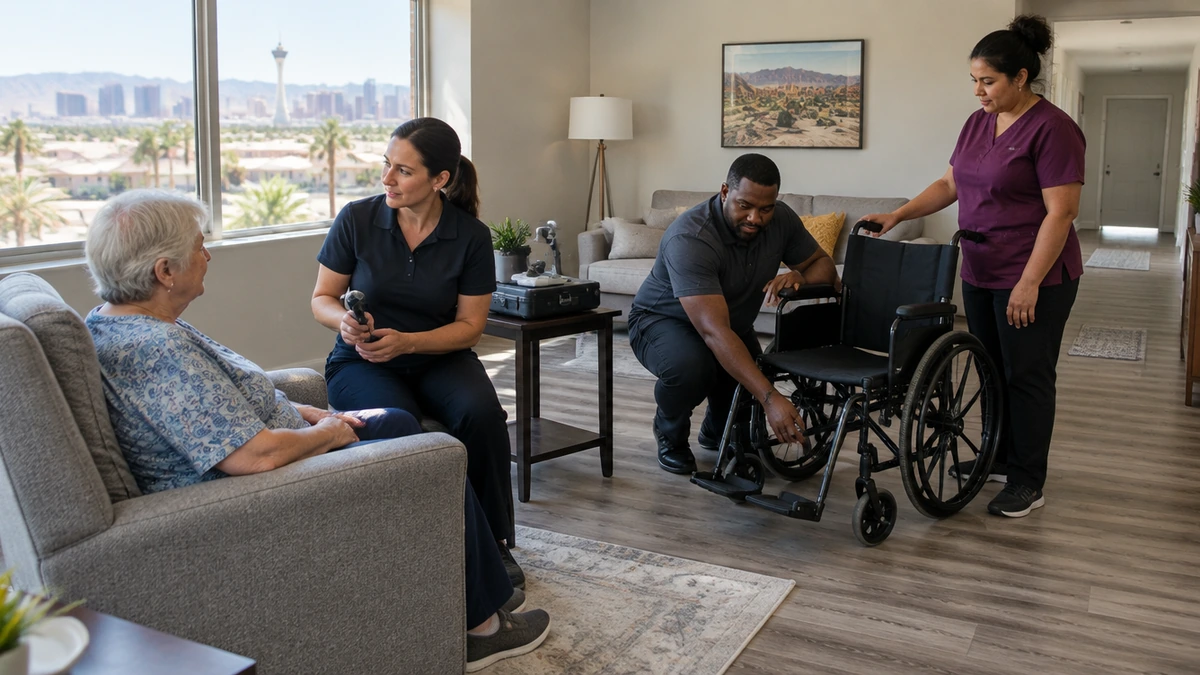
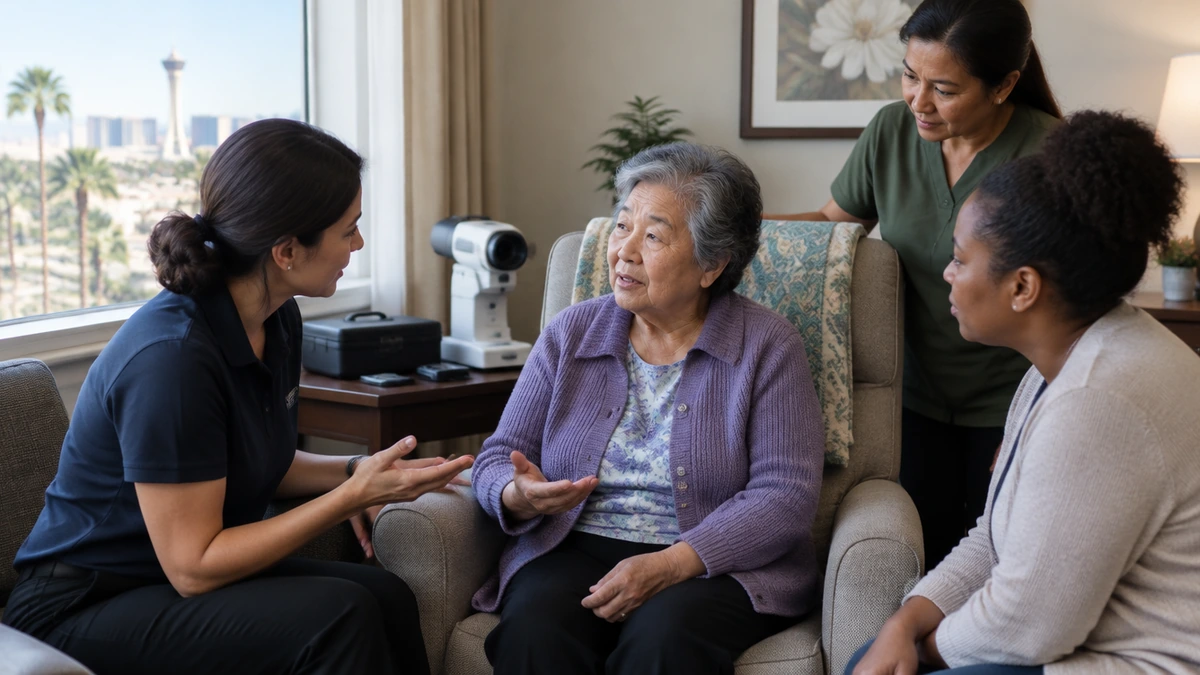
    Clinician visiting a resident in a group home, eye care residential facilities for groups Nevada

    TLDR: I help you plan eye care for Nevada Residential Facilities for Groups around the home’s license and the residents who want an examination. Your preparation list needs voluntary participation, verified mobile-practice credentials, benefits, and a private room. Assign results, eyewear, and referral tasks before scheduling the visit.

    Answer: Eye care for Nevada Residential Facilities for Groups starts with your facility type, resident interest, and a check of my practice’s credentials and service scope. I coordinate planned examinations and eyewear services through a facility-coordinated vision day at your home. Prepare consent and insurance records, a private room with a power outlet, and named contacts for results, glasses delivery, and referrals.

    Give every preparation task a name. Your staff needs to know who handles consent, where I examine residents, and who follows up afterward. Put those decisions on the visit plan with a contact from my practice for unresolved questions. A caregiver carrying glasses to the room needs clear instructions before the exam starts.

    Describe the home before setting a date. Use on-site eye examinations for senior living to plan around your facility type, location, and resident support needs. Review the services available in your Las Vegas home and the route to additional assessment elsewhere. Keep the resident’s choice central when building the schedule.

    What Are Nevada Residential Facilities for Groups?

    Resident and visiting clinician in a residential home, eye care residential facilities for groups Nevada
    Resident and visiting clinician in a residential home.

    Start with the home’s licensed classification. Under Nevada’s statutory definition of a residential facility for groups, the category covers establishments supplying meals, housing, assistance and limited supervision to people who are aged, infirm or have intellectual or physical disabilities, subject to the statute’s exclusions. It includes assisted living facilities. Give me your actual classification from the facility record before describing the rooms and residents involved.

    Use the right plan for day care. Nevada’s facility definitions exclude establishments providing care only during the day from the RFG category and separately define adult-day-care facilities. Tell my team which setting you operate before planning the visit. A day program’s arrival and departure list needs its own attendance and handoff review.

    Have the license record ready. I reviewed 69 primary sources across five research lenses for this series, and Nevada treats assisted living and dementia-care endorsements as specific facility requirements. Nevada’s residential facility regulations address an assisted-living endorsement and an endorsement for care of residents with Alzheimer’s disease or related dementia. Read your home’s actual license and endorsements when describing its services to my team.

    How Should You Plan Eye Care for Residential Facilities for Groups in Nevada?
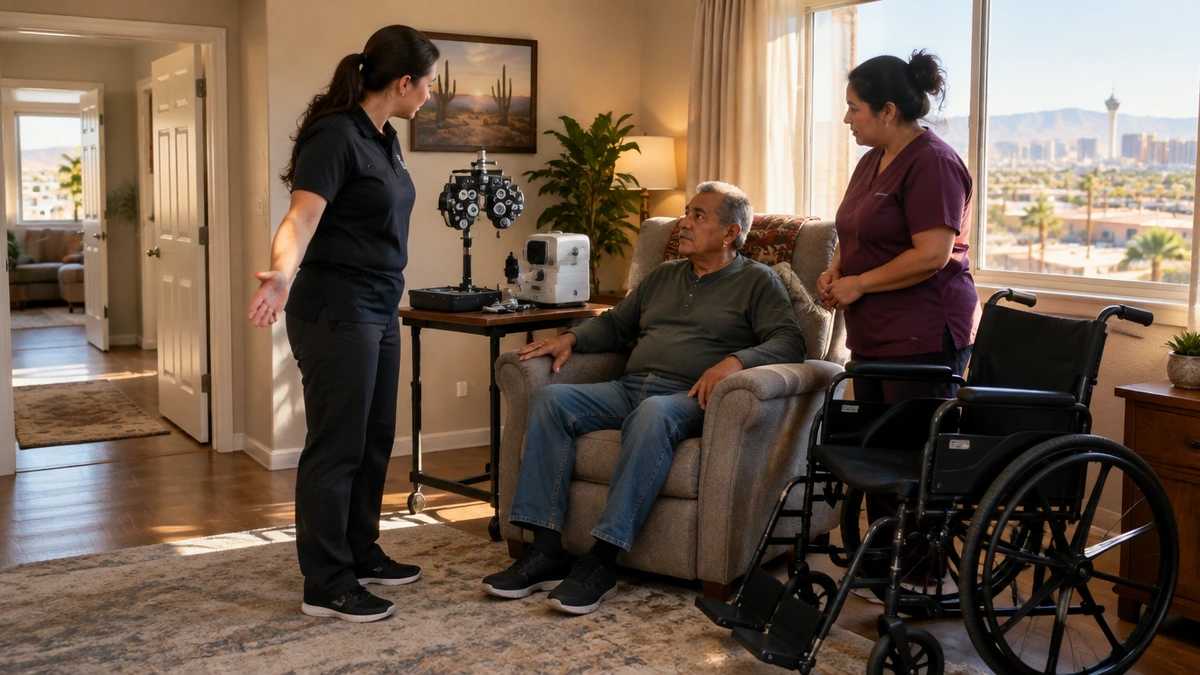
    Caregiver and clinician planning access beside a resident, eye care residential facilities for groups Nevada
    Caregiver and clinician planning access beside a resident.

    Begin with the resident’s reason. Record who wants an eye exam, who has current glasses to review, and who has an unfinished follow-up request. Send your resident’s concerns through private intake before the visit. A note about trouble reading at the table gives me a concern to assess without staff assigning a diagnosis.

    Describe the help each resident needs. Tell my team about the wheelchair, escort, or familiar caregiver your resident will need before reserving appointment times. Review positioning and communication needs alongside the staff assistance available at your home. Put the support plan with the resident’s visit details so the escort knows what to do.

    Walk from the bedroom to the exam room. Check your route for access, then review privacy, the power outlet, and space for portable examination equipment with my team. Get the room layout settled before the visit. Keep a scheduling alternative ready for residents unavailable at their planned time.

    Plan the trip after the referral. During your initial call, identify which needs the visit addresses and how appointments elsewhere are booked. Name who helps the resident or representative arrange travel when needed. Include that person in the referral handoff before an outside appointment becomes an open task.

    What Resident Choice and Consent Steps Belong in Your Plan?

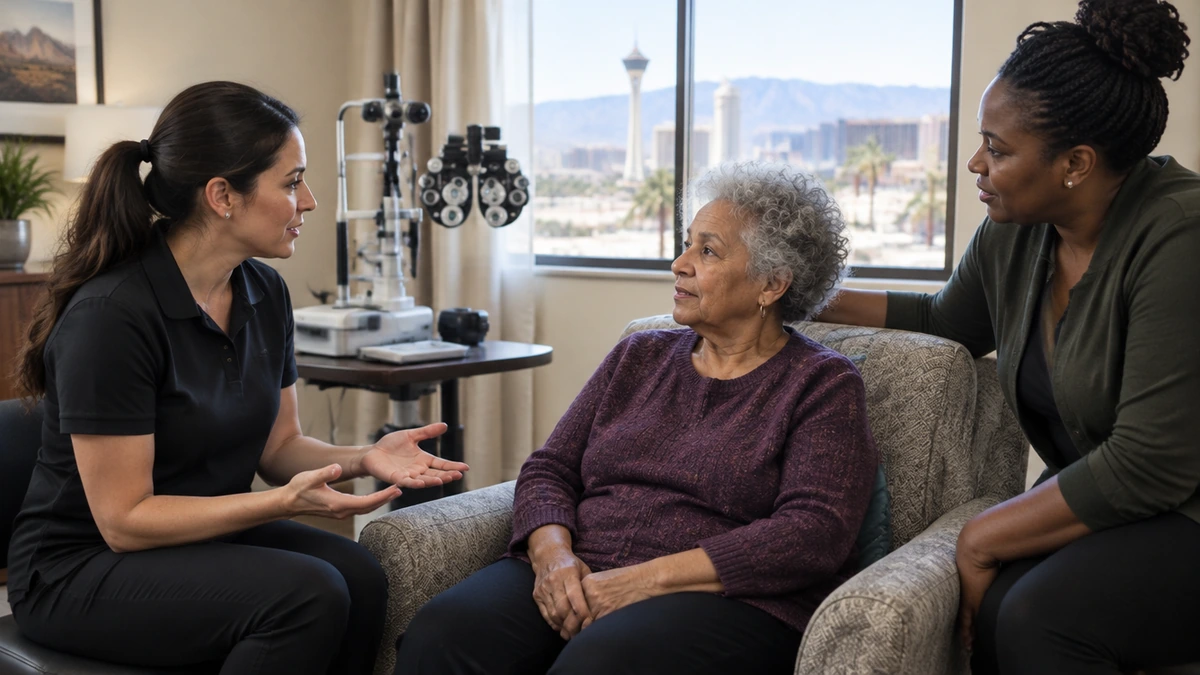
    Clinician listening to a resident and caregiver, eye care residential facilities for groups Nevada
    Clinician listening to a resident and caregiver.

    Keep the invitation voluntary. Nevada’s residential service-contract requirements protect residents’ choice to obtain services from providers without a facility contract. Explain your vision day option while respecting the eye doctor and appointments a resident already has. I put the resident’s decision ahead of filling your facility schedule.

    Complete consent before assigning signatures. Use my team’s intake process to review current guardian or healthcare power of attorney documents where a representative is involved. Your staff needs the person’s actual authority clear before requesting a signature. Keep transport and scheduling tasks separate from the resident’s decision to receive care.

    Record a refusal privately. Nevada’s rule on rejection of medical care recognizes a resident’s rejection and requires documentation. Follow your facility’s process and tell my team the appointment has changed. Keep that response in the appropriate record and out of the common room’s schedule or discussion.

    Set who receives each update. Record your resident’s preferred contacts for scheduling, then use my team’s clinical communication process for results and health records. Send personal information through secure intake, away from public forms and visitor areas. Use the resident consent planning guide to prepare questions about signatures and sharing information.

    How Do Mobile Credentials and Facility Responsibilities Fit Together?
    Care director and clinician coordinating a resident visit, eye care residential facilities for groups Nevada
    Care director and clinician coordinating a resident visit.

    Verify the mobile clinic’s requirements. Nevada’s mobile optometry statute establishes certification, specified service populations including patients with impaired or restricted mobility, and licensee direction and final examination requirements. Ask me to explain how your visit meets those requirements before invitations go out. A residential address alone does not establish each resident’s eligibility for that service population.

    Confirm who leads your visit. Confirm my role as your visiting optometrist, verify the mobile clinic’s credentials, and settle the examination scope while your home prepares the private room. I determine the assessment and explain the referral process. Keep a named contact beside unresolved scope questions before staff invite residents to register.

    Planning taskYour facility’s roleProvider confirmation
    Visit suitabilityDescribe the setting and resident access needsMobile-clinic credentials and examination scope
    ParticipationGather interest and name resident contactsConsent and representative documentation
    BenefitsSend requested records through secure intakeResident-specific verification before service
    Examination spaceOffer privacy, access and electrical supplySuitability for the planned assessment
    Follow-upTrack outstanding actionsReports, eyewear and referral instructions

    Build the schedule around staff support. Set how your team escorts residents and supplies caregiver help during the visit. Name who updates the schedule when someone is late or needs a different appointment time. Use a private attendance list with no clinical reasons displayed beside resident names.

    How Do Benefits and Recurring Eye Care for Nevada RFGs Work?

    I arrange benefit verification before service. Send your resident’s actual Medicare, Medicaid, or Medicare Advantage details through secure intake for my team to review. Keep examination benefits and prescription eyewear choices clear in that conversation. An insurance card belongs with intake records, and individual plan questions belong outside the general facility announcement.

    Follow my clinical timing between visits. Your next group vision day belongs on the facility calendar, while each resident’s next clinical appointment follows the examination instructions. Track unfinished assessments and referrals before selecting another group date. Review which actions need attention now so they do not wait for the next facility visit.

    1. Review open examination, referral and eyewear tasks from the previous visit.
    2. Gather current resident interest and confirm the contact list.
    3. Arrange updated consent and benefit verification through my team.
    4. Confirm the room, staff availability and resident schedule.
    5. Agree how results and outstanding tasks will reach the next shift.

    Check open tasks before booking again. Use the facility vision day checklist to prepare your next planning call and review what staff have completed. Name who contacts residents or representatives about glasses, adjustments, and further appointments. Close each task when the assigned contact confirms completion, with the update recorded for the next shift.

    Keep concerns with the resident’s record. Share the changes your staff observed and follow my assessment instructions. Review medical eye care services when discussing whether a comprehensive eye exam fits the resident’s needs. Record which services require another setting alongside the next appointment or referral task.

    Schedule a Vision Day for Your RFG With Me

    Plan the exam around your home with me. I am Dr. Amel Youssef, OD, founder of my practice, Vision by Amel, in Downtown Summerlin. I bring on-site eye care to Nevada Residential Facilities for Groups and assisted living homes across the Las Vegas Valley. Bring resident interest, consent questions, insurance documents, and the room layout to your planning call so I review examination scope, eyewear selection, measurements, and referrals with you before building the schedule.

    Prepare your private room with electrical access and name your staff contact. My team provides the secure intake route and coordinates the follow-up list with you. Participation is voluntary, and I arrange insurance benefit verification before service. Benefits depend on each resident’s eligibility and plan terms. My team and I review results, eyewear delivery, adjustments, and clinical follow-up with you before the visit ends.

    Frequently Asked Questions About Eye Care for Nevada RFGs

    What should we include in the first facility planning request?

    Provide your contact details, role, facility type, address and preferred month. Use approximate interest information to start the scheduling conversation. Keep resident names, insurance cards and medical histories out of the public marketing form.

    How should an operator coordinate visits across several homes?

    Make a separate room, contact, and schedule plan for each home. Review each address with my team before setting visit dates for your residents. Keep attendance and follow-up tasks assigned to a local staff contact who knows that home’s residents and layout.

    What if the planned private room becomes unavailable?

    Ask me to review the alternative room before moving equipment or residents. Describe your replacement space, privacy, access, and power outlet against the planned services. Update the schedule after I confirm the new layout.

    How should we hand over coordination when an administrator leaves?

    Give the replacement administrator my practice contact and open task list through your internal handoff process. Update my practice’s facility contact record so reports and order questions reach the right person. Assign ongoing reports, eyewear requests, and referrals before the outgoing administrator leaves.

    What should a resident’s representative know before attending?

    Explain why the representative is attending, when to arrive, and which authority documents need review. Set those details with my team before adding the appointment to your final schedule. Give the representative the private intake route for documents and questions.

    Schedule an On-Site Vision Day Speak With Dr. Amel’s Team: (702) 858-4362

    Like this article? Add Vision by Amel as a preferred source, and you are more likely to see our articles in Google’s Top Stories.

    Add as a preferred source on Google

  • Assisted Living Vision Day Checklist for Facility Operators

    Assisted Living Vision Day Checklist for Facility Operators

    Assisted Living Vision Day Checklist for Facility Operators

    Optometrist and coordinator welcoming a seated resident, assisted living vision day checklist

    TLDR: I use this assisted living vision day checklist to help you give every preparation task a name and a deadline. You need voluntary enrollment, completed consent, insurance documents, a private accessible room, and an examination schedule built around your residents. Assign results, eyewear, and referrals before the visit ends.

    Answer: An assisted living vision day checklist gives your Las Vegas facility a plan for resident interest, consent, secure intake, benefit verification, space, and staffing. Prepare a private room with a power outlet and an accessible route. Set the examination order with me, assign resident escorts, and name who handles follow-up, glasses delivery, adjustments, and referrals.

    Your calendar entry needs an owner. I need to know which residents are interested, who requires assistance, and where private conversations will happen. Use this guide when planning an assisted living vision day for your home. Turn each item into a task someone accepts.

    Download the Facility Vision Day Checklist (PDF) and review it with your care director. Keep the planning checklist separate from resident medical records. Record owners and task status without placing health information on a shared noticeboard. Use my team’s secure intake process for personal details.

    Assisted Living Vision Day Checklist: Resident Interest and Choice

    Resident discussing participation with an optometrist, assisted living vision day checklist
    Invite residents to choose whether to participate

    Invite residents before assigning appointments. Explain the eye exam in plain language, then record who wants to participate and who needs help with registration. Your interest list should include the resident’s preferred way to be contacted. Leave the decision open for someone who wants more information before adding a name to the schedule.

    Your residents keep their provider choices. Nevada requires residential-facility service contracts to affirm residents’ freedom to obtain services from providers without a facility contract. Present the vision day as an option when you explain the visit. Keep existing appointments on your planning sheet unless the resident chooses to change them.

    Keep the interest list current. Mark interested, awaiting information, registered, and declined so your staff knows the next task without making residents’ choices public. Set a process with my team for late requests and cancellations before examination day. Update the active schedule as decisions change, and complete consent separately from the interest list.

    • Name the facility coordinator and backup contact.
    • Explain voluntary participation to each invited resident.
    • Record interest and the requested contact method.
    • Identify communication, mobility, and representative needs.
    • Confirm registration status before assigning a final place.

    Which Consent and Insurance Tasks Come Before Scheduling?

    Resident and representative meeting with an optometrist, assisted living vision day checklist
    Resolve representative arrangements before the visit

    Check authority before collecting signatures. Flag guardian and healthcare power of attorney documents for review so your staff knows whose consent is needed. A facility booking does not complete the resident’s consent process. Use the resident consent coordination guide alongside my team’s consent instructions when preparing the resident’s paperwork.

    Read the document’s effective terms. Nevada makes a healthcare power of attorney effective when executed unless its terms specify a future date or incapacity trigger. When you receive the paperwork, flag any later court order for review before relying on it. Keep unresolved authority questions on the facility contact’s task list so an unsigned form does not disappear among completed registrations.

    Give my team the actual plan. Collect your resident’s insurance information through secure intake, including Medicare, Nevada Medicaid, or Medicare Advantage details where applicable. I verify benefits before service and explain outstanding questions to the resident or appropriate representative. The name on an insurance card starts the check, but does not complete it.

    Keep paperwork out of public view. Name who on your staff handles the schedule and who needs access to clinical records. Set the secure route for sending documents and receiving results before collecting insurance cards. Use the public facility scheduling form for facility details, and keep resident names and medical histories in secure intake.

    Assisted Living Vision Day Checklist: Room and Accessibility

    Caregiver and optometrist checking space beside a resident, assisted living vision day checklist
    Check access and seating with the visiting team

    Walk the route to the room. Describe its seating, doorways, power outlet, and nearby household activity so my team knows what your space supports. AOA guidance bases facility examination arrangements on available space, facility size, visit frequency, and residents’ needs. Review the private room’s layout with me before assigning it to examinations.

    Write down who needs an escort. As your mobile optometrist, I need accessibility notes identifying wheelchairs, positioning help, and other support before I arrive. Review those needs and any assessment limits with me during planning. Base resident transfers on the equipment and staff available for the visit.

    Check credentials alongside examination scope. Nevada has mobile-optometry certification and service-population requirements, including provisions for patients with impaired or restricted mobility. Ask me to confirm the requirements applying to your residents and visit before finalizing the booking. The room’s address does not establish eligibility for every service, so keep that check on the preparation list.

    Room checkWhat to prepareQuestion to resolve
    PrivacyA room away from group activitiesHow will entry and conversations be managed?
    AccessA clear route and suitable seatingWhich residents need assistance?
    Electrical accessIdentify available power accessDoes the layout fit my team’s setup?
    Staff supportA coordinator and backupWho escorts residents and covers care routines?
    Setup between residentsKeep the space available to my teamWhat preparation and cleaning time does my team need?

    How Do You Build the Examination Schedule?

    Caregiver introducing a resident to an optometrist, assisted living vision day checklist
    Make each resident handoff clear and private

    Protect your residents’ daily routines. Set the examination order around meals, personal care, activities, and available escorts before agreeing on arrival time. Leave room for a slower explanation or a break when a resident needs one. Use timing from me instead of assigning the same examination length to everyone.

    Share a concise handoff before each resident enters. Your escort should know the resident’s preferred name, requested support, and any new concern to report privately. Bring the glasses and information requested during intake. Keep the next resident ready without creating a queue inside the examination room.

    Describe what your staff has noticed. Trouble reading an activity sheet, discomfort with existing glasses, and questions about eye health give me concrete concerns to assess. Review the planned comprehensive eye exam and its scope before describing it to residents. Use the on-site examination process to prepare staff for the visit and leave diagnosis to me.

    How Should Refreshments and Community Activities Fit?

    Keep the common room social. Your usual refreshments belong there under the home’s existing meal and care routines, with the examination room kept private. Welcome residents to the activity whether or not they register for an exam. Joining neighbors for refreshments does not mean agreeing to receive care.

    Plan the afternoon around examination instructions. NEI explains that blurry vision and light sensitivity sometimes last several hours after a dilated examination. If dilation is being considered, review preparation and support needs with me while you build the schedule. Keep staff available and leave room to follow instructions suited to each resident’s next activities.

    Who Owns Follow-Up After the Vision Day?

    Assign follow-up before changing shifts. I reviewed 69 primary sources across five research lenses for this series, and a published Canadian facility program tracked follow-up timing and sent examination reports to family physicians. Use your planning call to settle who receives reports and tracks follow-up timing, then put those names on the task list before the facility contact returns to other duties.

    Put a name beside each action. Record my timing for results, another exam, an outside referral, or glasses delivery and adjustment on your follow-up list. Keep clinical details in the resident’s secure care record. Review open tasks at staff handoff so the next shift knows which call or appointment still needs attention.

    Plan who receives the glasses. Name the staff contact for delivery and fitting, then give your team a clear route for reporting missing eyewear or an uncomfortable frame. Review my prescription lens options before the eyewear conversation. Keep the resident’s prescription and preferences at the center of that discussion.

    Coordinate Your Vision Day With Vision by Amel

    Plan your visit with me. I am Dr. Amel Youssef, OD, founder of my practice, Vision by Amel, in Downtown Summerlin. I plan on-site eye care for assisted living homes, memory care communities, and other senior living settings across the Las Vegas Valley. Share your facility type, address, accessibility notes, and estimated interest. My team and I help organize registration, examinations, eyewear selection, measurements, delivery, adjustments, follow-up, and referrals.

    Your residents choose to participate. I plan your facility-coordinated vision day around voluntary participation and verify insurance benefits before service. Benefits depend on each resident’s eligibility and plan terms. Review your private room with electrical access, secure intake channel, and staff contact with me before finalizing the schedule, then finish each open checklist task.

    Frequently Asked Questions About the Assisted Living Vision Day Checklist

    How should I plan visits across several homes?

    Prepare a separate room and access plan for each address. Name a local staff contact at every home so your central contact and my team know whom to reach. Review each location’s plan before circulating visit dates.

    What if the facility coordinator is absent?

    Give your backup contact the current task status and my team’s contact information. Walk through unresolved items before the scheduled visit. Keep access to resident information within the facility’s assigned roles.

    Should I put the resident schedule on the activities board?

    Post a general invitation, with directions to your facility contact. Keep the resident appointment list with the staff handling the visit. Give participants their times and instructions privately instead of putting medical appointments on the activities board.

    What should I do when insurance documents arrive late?

    Send the documents through secure intake and keep the appointment pending until verification is resolved. Your task is to get the updated status from my team and tell the resident or authorized contact directly. Update the schedule once the remaining verification tasks are settled.

    How do I know the checklist is finished?

    The checklist is finished when each assigned person has completed the task and resolved its open questions. Review registration, the room, staffing, and follow-up with your staff contact before the visit. Keep unfinished items marked open and give my team the latest status.

    Schedule an On-Site Vision Day Speak With Dr. Amel’s Team: (702) 858-4362

    Like this article? Add Vision by Amel as a preferred source, and you are more likely to see our articles in Google’s Top Stories.
    Add as a preferred source on Google