Category: Facility Operator Guides

How on-site eye care works for the people who run assisted living homes, group homes and adult day programs: what to expect, what to ask, and how to choose a mobile optometrist.

  • On-Site Eye Care for Adult Day Care Programs in Las Vegas

    On-Site Eye Care for Adult Day Care Programs in Las Vegas

    On-Site Eye Care for Adult Day Care Programs in Las Vegas

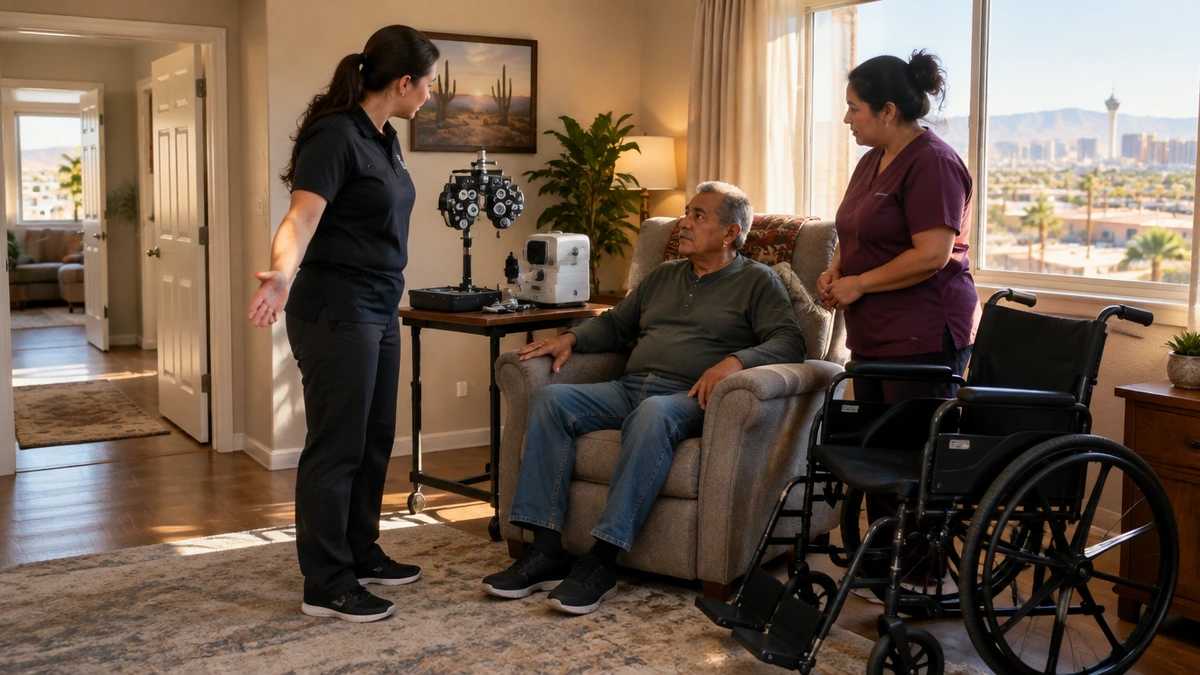
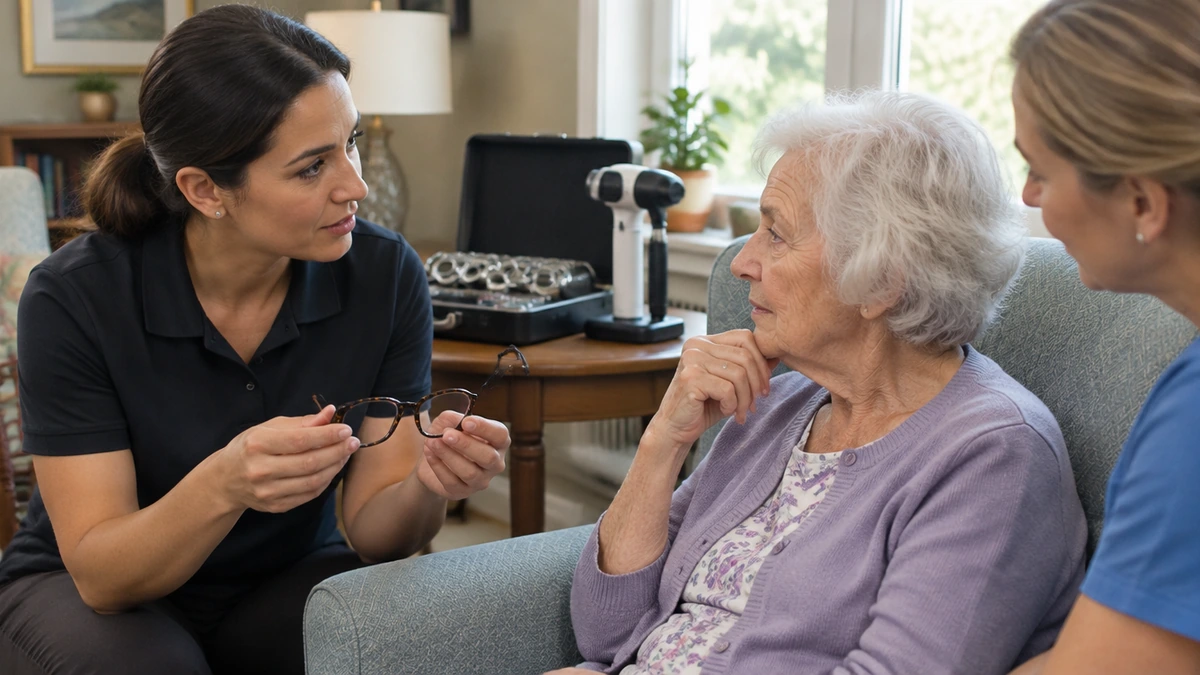
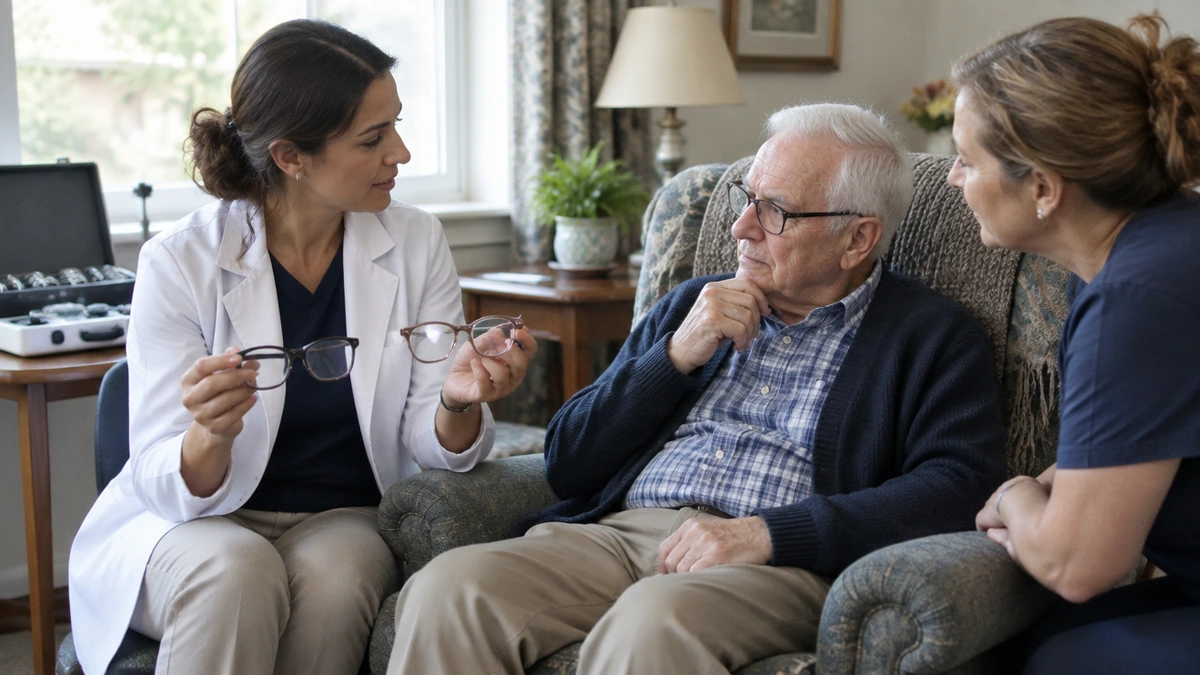
    Woman eye doctor greeting an older participant with a caregiver nearby, adult day care eye exams Las Vegas

    TLDR: I help you fit adult day care eye exams in Las Vegas around attendance and the ride home. You need consent, insurance review, a private examination room, and a named person to receive instructions after each participant leaves. Keep participation voluntary and settle the visit plan before inviting families.

    Answer: I plan on-site eye care with your Las Vegas adult day care program by reviewing participant interest, consent, representative authority, and benefit verification before service. Your schedule needs a private room, available escorts, and appointments within attendance hours. Set eyewear decisions, departure help, family communication, and follow-up contacts with my team before examination day.

    Plan the ride home from the start. Your participants arrive from different homes and leave on different schedules, so the visit needs to fit those departure times. Use the service overview for a facility-coordinated vision day to begin planning. Match the day’s appointments and family contacts to your program’s attendance list.

    Get the glasses and contacts ready. Your preparation list needs each participant’s current pair, a reachable representative where involved, and a clear departure plan. Assign those tasks before I arrive as your visiting optometrist. Give staff a name for each follow-up action so the examination fits the program’s daily routine.

    Who Should You Invite for Adult Day Care Eye Exams in Las Vegas?

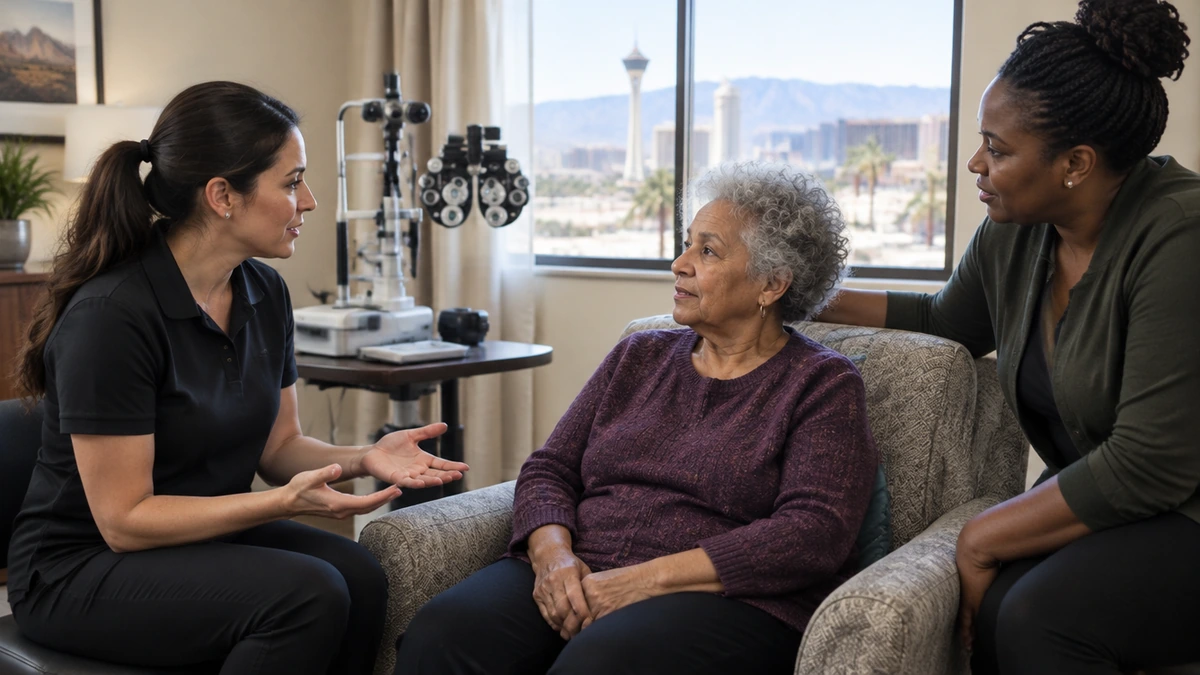
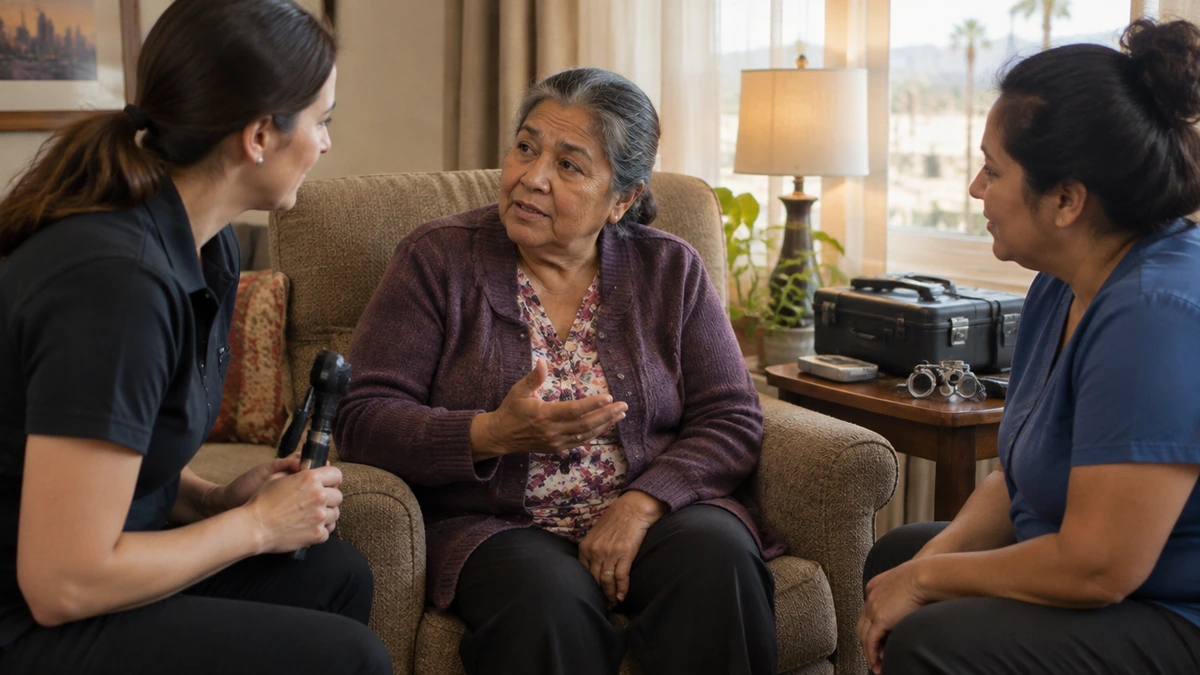
    Woman eye doctor listening to an older participant beside an armchair, adult day care eye exams Las Vegas
    Illustration of a participant discussing the proposed visit with the eye doctor.

    Identify your program before setting dates. Nevada defines and licenses adult day care separately and excludes establishments providing care only during the day from Residential Facilities for Groups. Describe the setting accurately when speaking with my team. Use the arrival list and pickup times to shape appointments instead of copying an overnight home’s schedule.

    Invite interest before scheduling an eye exam. Record your participant’s existing eye doctor and appointments already booked alongside the reason for joining the visit. Bring concerns about reading, glasses, or known conditions to me. Enrollment at your program does not establish examination consent or tell staff what diagnosis explains a concern.

    Name who receives the handoff home. When you compare assisted living eye exams with an adult day visit, departure makes that handoff a practical priority. Your staff needs a contact for instructions and for booking another appointment if recommended. Set the participants and location with my team before announcing a date.

    How Do Registration and Consent Work?
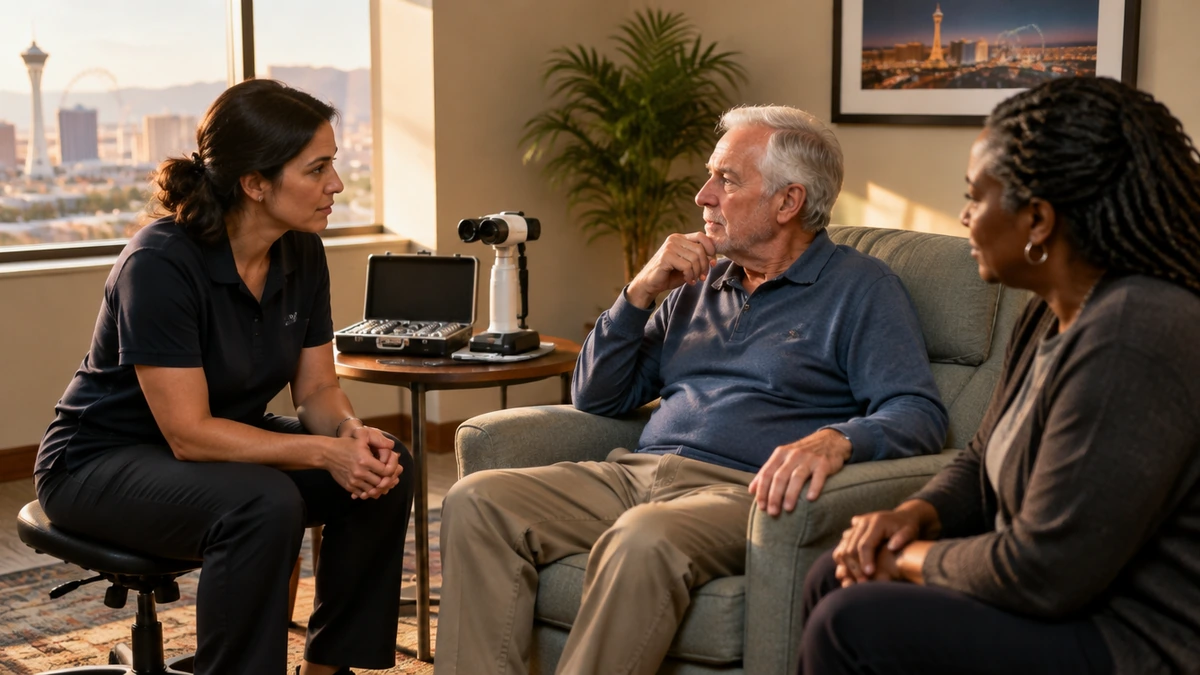
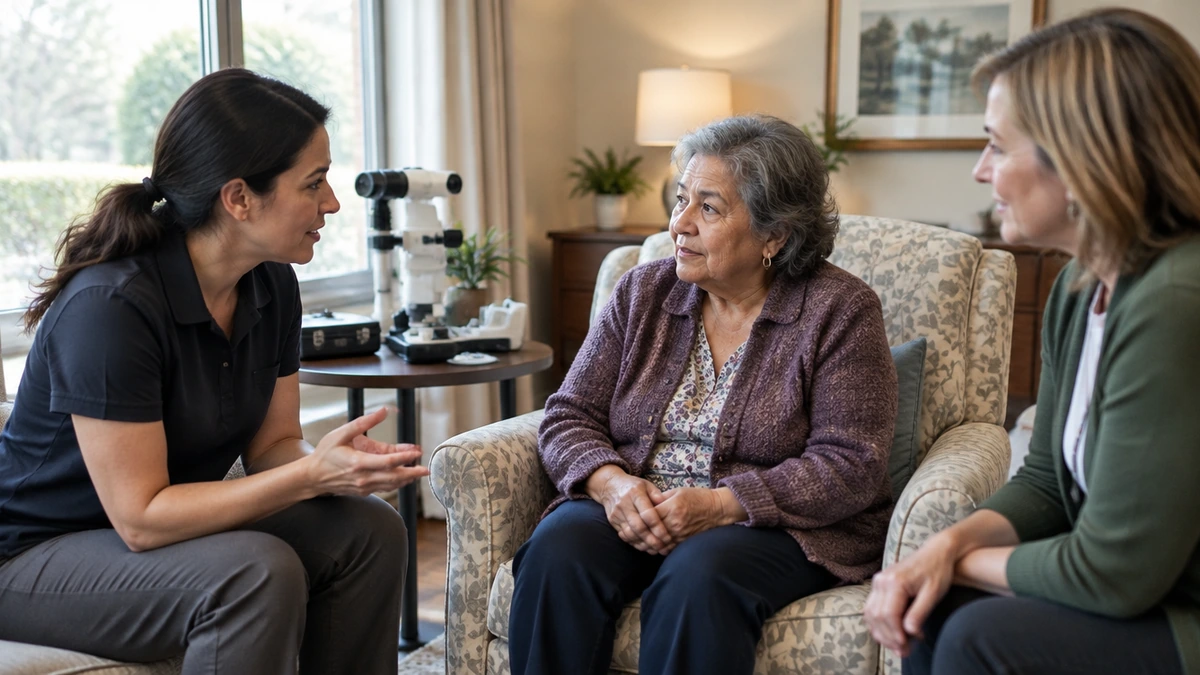
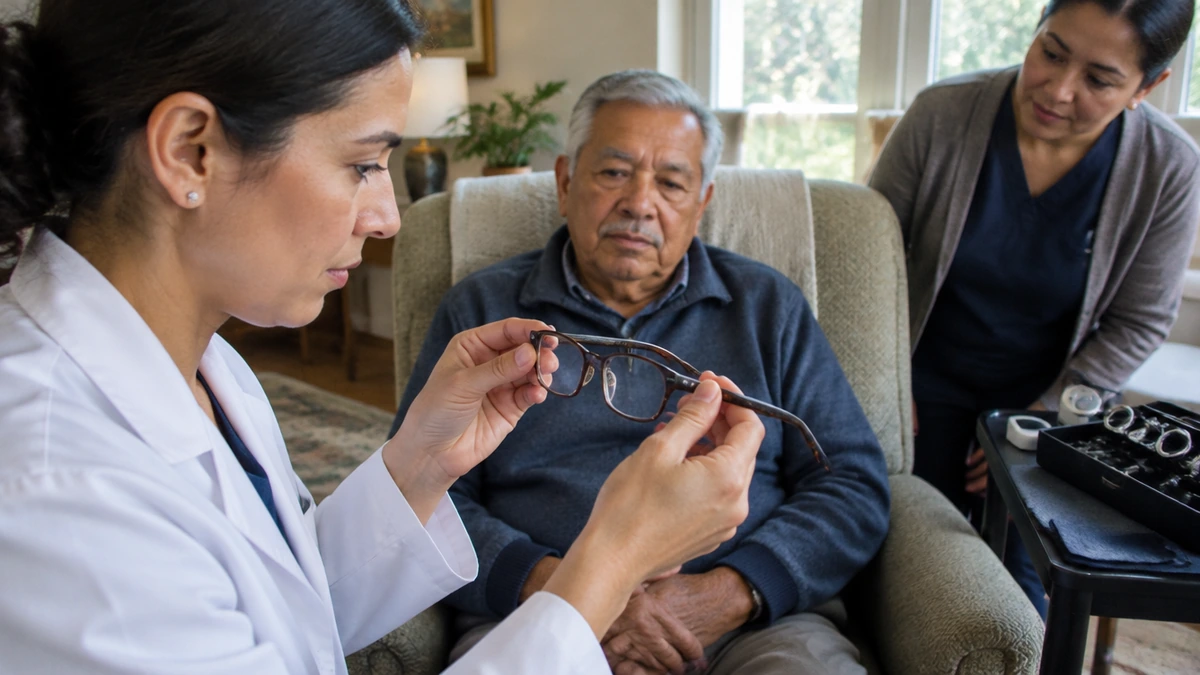
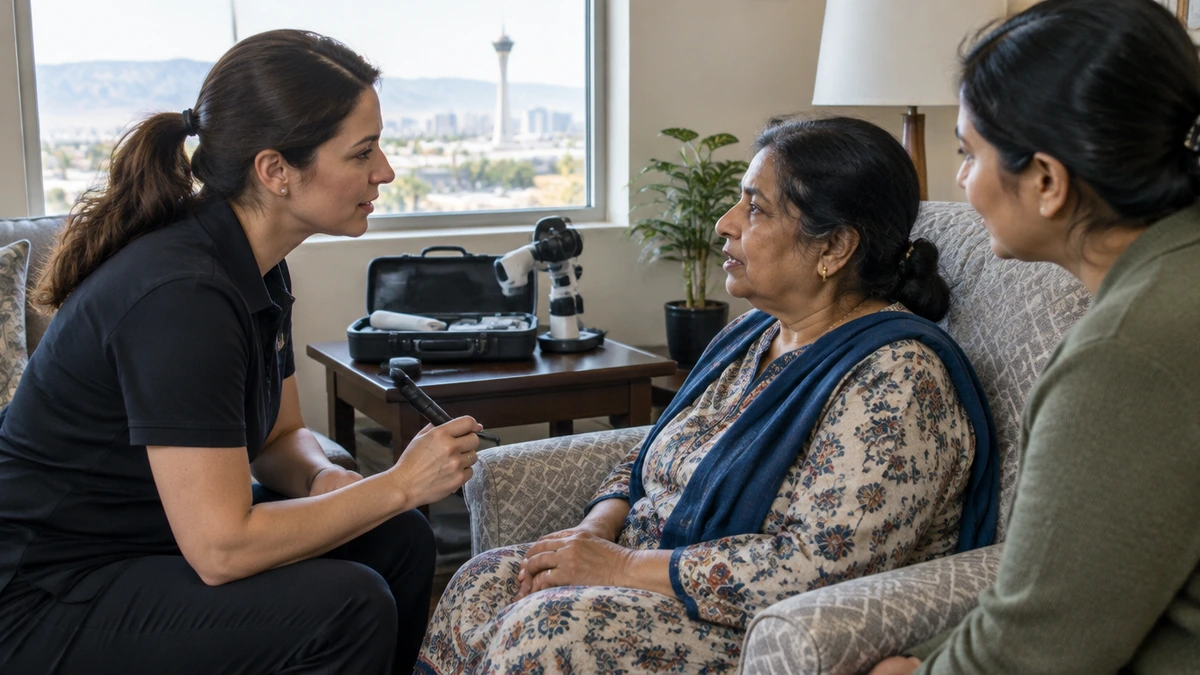
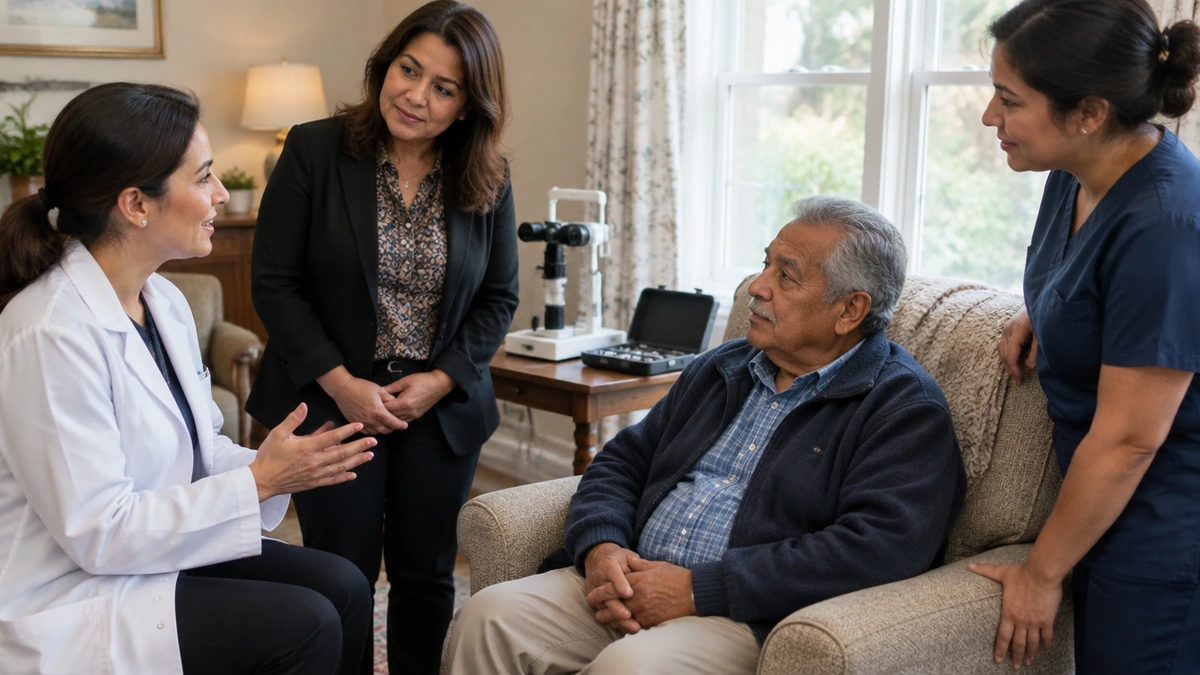
    Woman eye doctor speaking with a participant and a support person, adult day care eye exams Las Vegas
    Illustration of a private conversation about participation and support preferences.

    Start with the interest list. Get my team’s registration materials and secure intake route before your staff gathers individual records. Use the public facility inquiry form for program details only. Participant names, insurance cards, diagnoses, and medical histories belong in secure intake, away from the reception desk’s shared paperwork.

    1. Ask each interested participant about joining the visit.
    2. Confirm attendance, arrival time, departure time, and communication needs.
    3. Arrange consent review and provide current representative documents when applicable.
    4. Gather the insurance information and health history requested by my team.
    5. Confirm the contact responsible for follow-up after the participant leaves.

    Treat consent as a separate task. Use the resident consent process even when your program calls the people attending participants. The relative who drives someone home is a useful contact, but my team still needs to review that person’s decision-making authority. Identify any guardian or healthcare power of attorney and supply current documents before the visit.

    Plan who enters the private room. Nevada protects medical-care privacy and refusal of treatment to the extent permitted by law, including consent to people present who are not directly involved in care. Record your participants’ support preferences before deciding who accompanies them during the examination. Use the facility coordinator’s consent guide to prepare questions for my team about participation and room access.

    What Should You Gather for Benefit Verification?

    Send the actual insurance details. Gather current cards through secure intake and tell your contact about Medicare, Medicaid, Medicare Advantage, or multiple plans reported by the participant. I arrange verification of eligibility, service benefits, and participation before service. Keep any unresolved plan question with the intake task instead of treating the card as a coverage decision.

    Explain exam and eyewear benefits separately. Original Medicare excludes routine examinations for prescribing glasses or contact lenses. Use your participant’s verified benefits when discussing the planned services and their responsibility with my team. Give families the individual explanation before proceeding, with the general program invitation kept to the visit details.

    Give missing paperwork a staff contact. Track incomplete registration and missing insurance cards on your preparation list without displaying health information to the whole program. Bring clinical decisions to me and billing questions to my team. Resolve the items needed for an appointment before moving the participant onto the final schedule.

    How Do You Fit Adult Day Care Eye Exams in Las Vegas Into the Program?
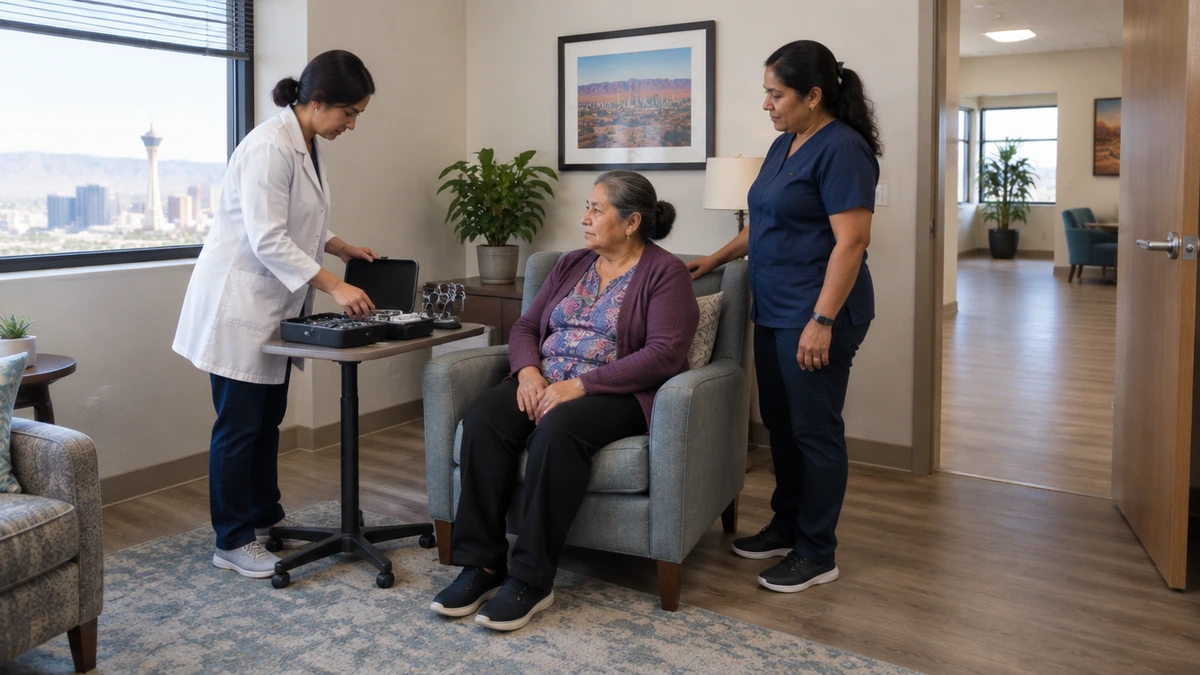
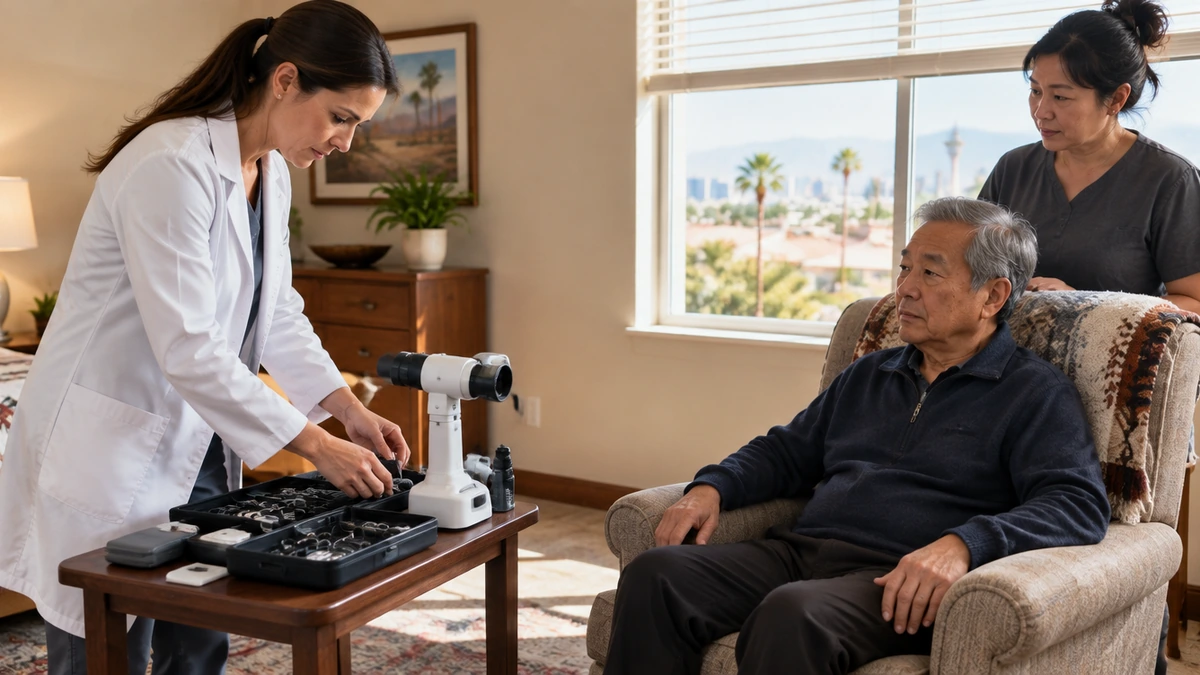
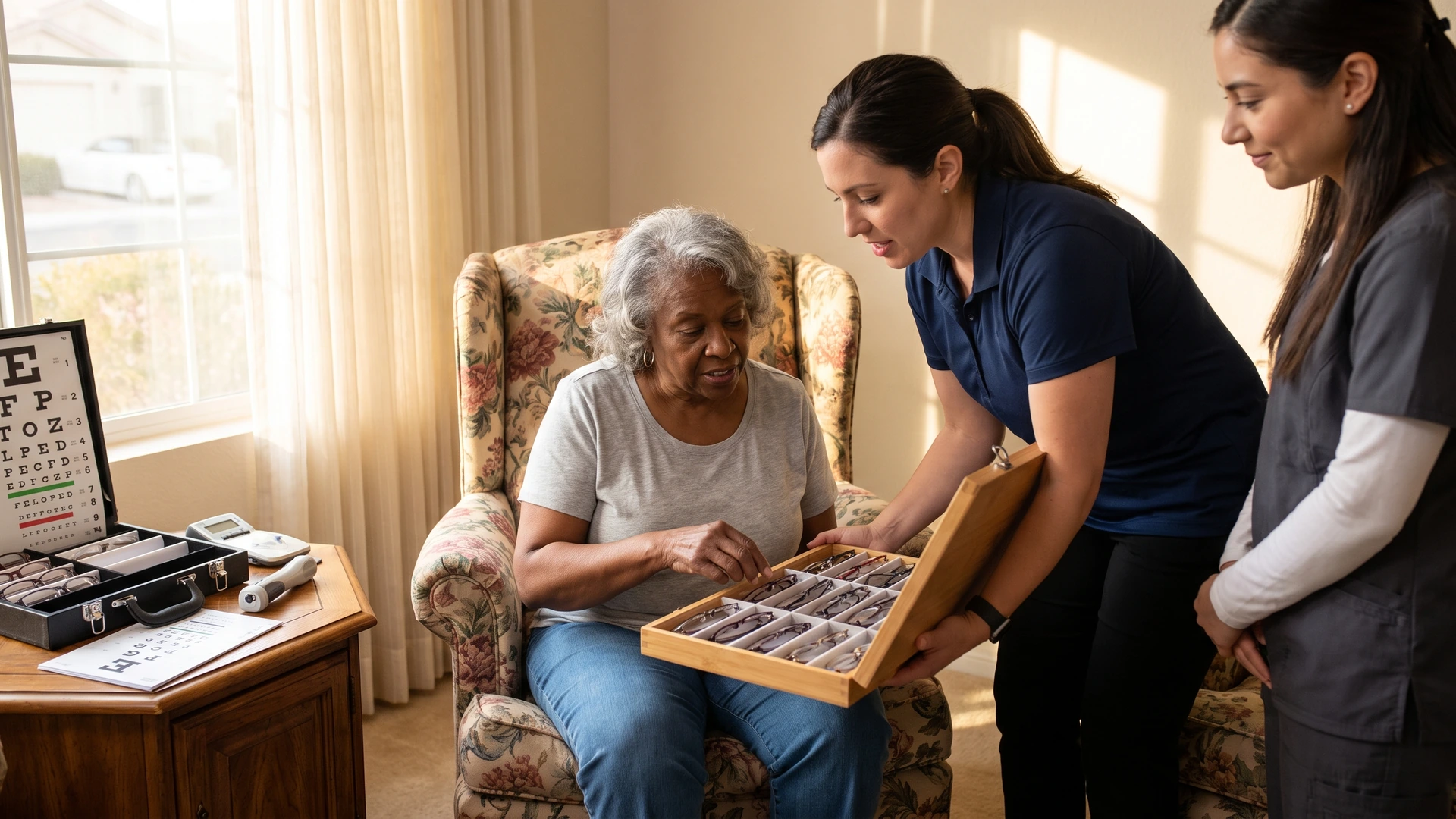
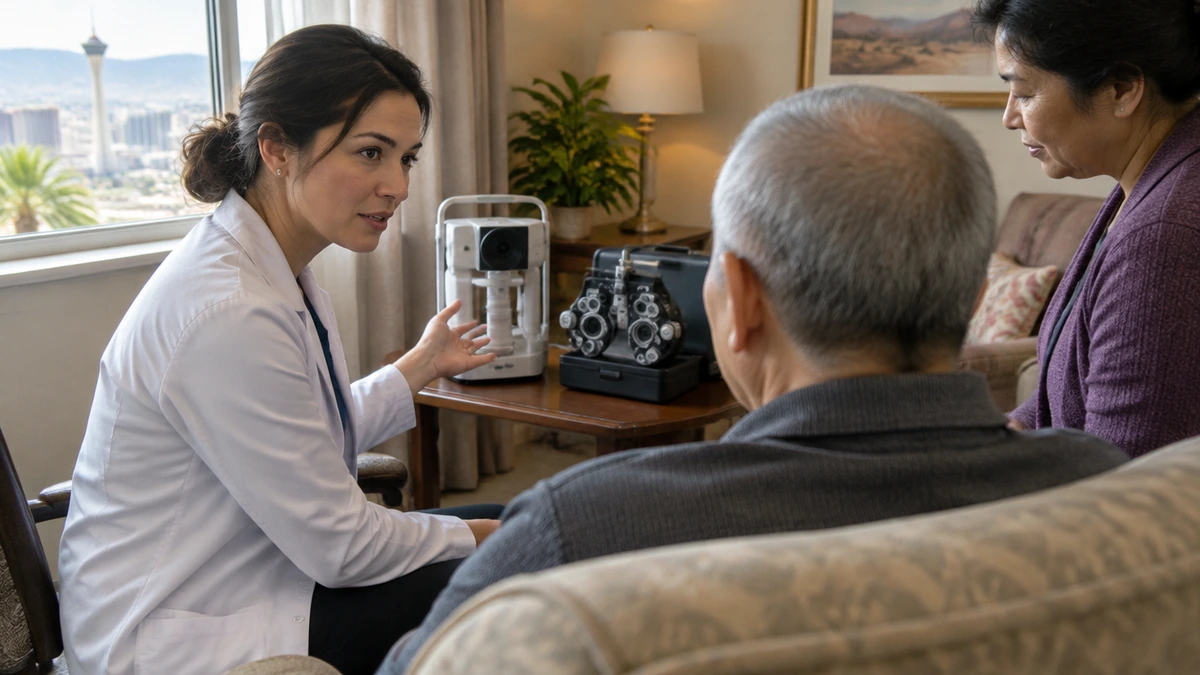
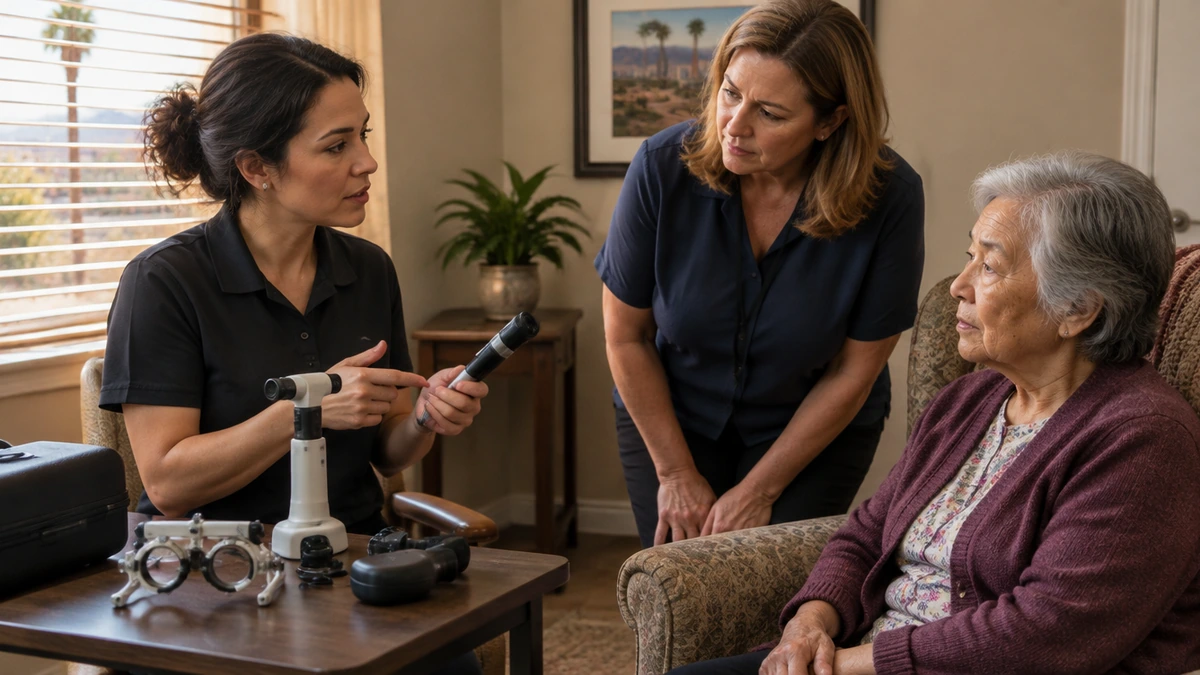
    Woman eye doctor arranging portable equipment near a seated participant, adult day care eye exams Las Vegas
    Illustration of a private examination space with room for participant assistance.

    Keep the path to the room clear. Reserve your private room with electrical access, then review seating, portable examination equipment, and the route from the activity area with my team. The AOA’s facility-care guidance ties examination arrangements to space and resident needs, rather than a universal room layout. Settle that setup before finalizing appointments.

    Start with arrival and pickup times. Put meals, activities, mobility help, and periods when a participant is unavailable beside your attendance list. Set the appointment order with my team around those limits. Leave room for breaks and schedule changes instead of assigning the same examination length to everyone.

    Planning pointProgram responsibilityReview with my team
    ArrivalCheck attendance and current glassesWhether preparation is complete
    Examination spaceReserve privacy, seating, and electrical accessRoom suitability and equipment setup
    Participant sequenceShare attendance windows and assistance needsAppointment order and breaks
    DepartureIdentify the pickup contact and support planIndividual aftercare instructions
    After the visitTrack the agreed communication handoffEyewear, referral, and follow-up tasks

    Keep your usual activity space available to participants waiting for their appointment. Bring people to the room when my team is ready instead of assembling a group outside the door. Tell the coordinator promptly when transportation changes so the schedule reflects who is still present.

    What Should Participants Expect During the Examination?

    Tell families which examination is planned. A comprehensive eye exam assesses overall eye health, while vision screening identifies some problems and misses others. Use the reviewed service description in your invitation before participants register. I select the tests, and your staff prepares people for the service described in the visit plan.

    Bring the participant’s everyday concerns. Have your staff supply current prescription glasses and requested history, with communication and positioning help planned in advance. A participant struggling to read an activity sheet gives me a concrete concern to explore. Get the findings, unfinished testing, and next steps clear at the examination handoff.

    Prepare the pickup contact for aftercare. Your departure plan needs room for examination instructions because dilation sometimes leaves vision blurry and eyes sensitive to light for several hours. If dilation is planned, get my instructions for that participant and the support needed afterward. Share those instructions with the authorized pickup contact before the person leaves the program.

    Set the route to further care. Review the testing available at your program and the next step for findings needing an outside appointment. My practice’s eye examination service overview gives you a starting point for that conversation. Record the services planned for your room and name who follows up on care in another setting.

    How Do Eyeglasses and Family Follow-Up Continue After Departure?
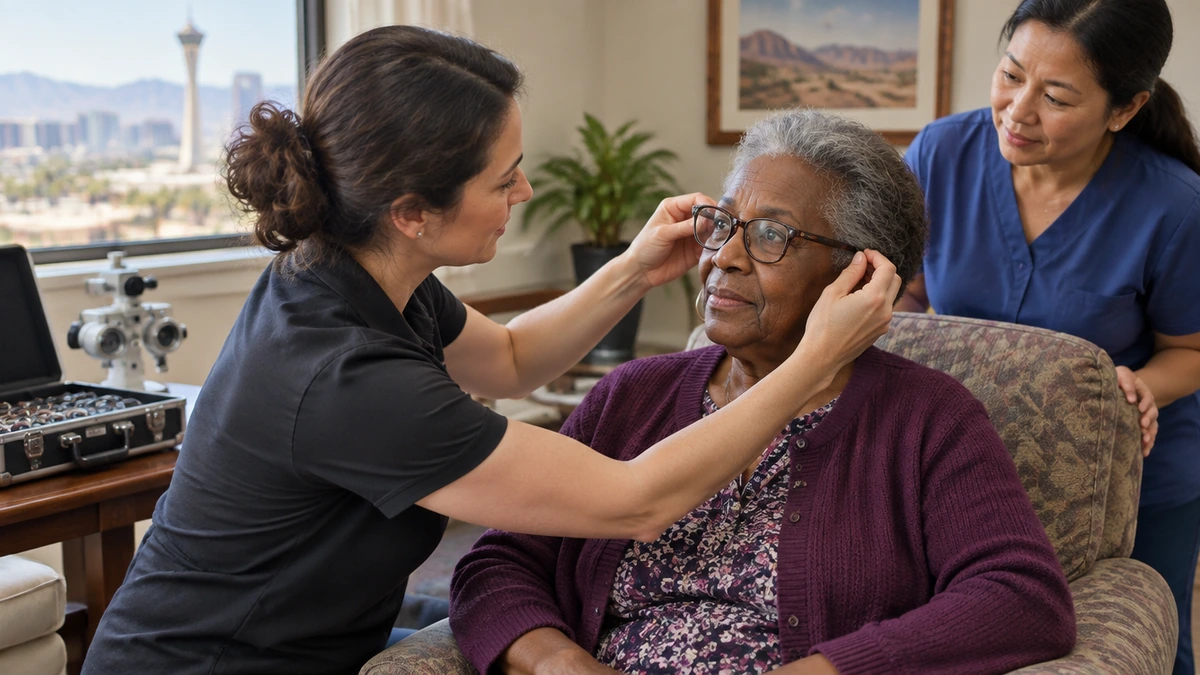
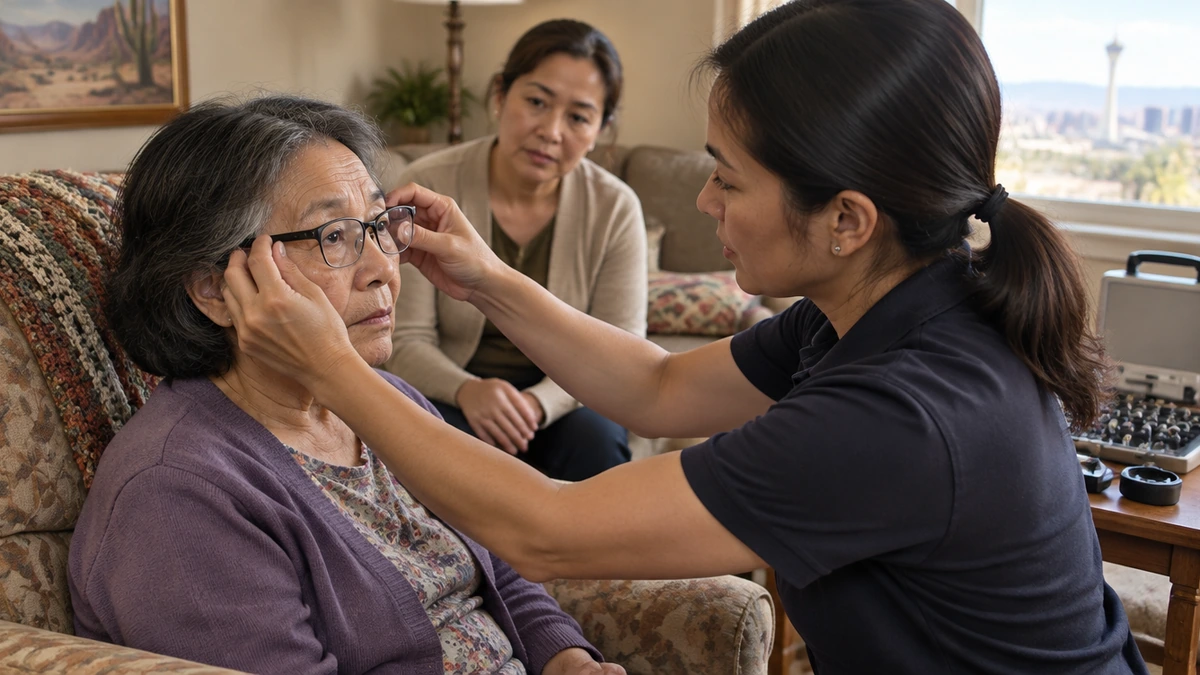
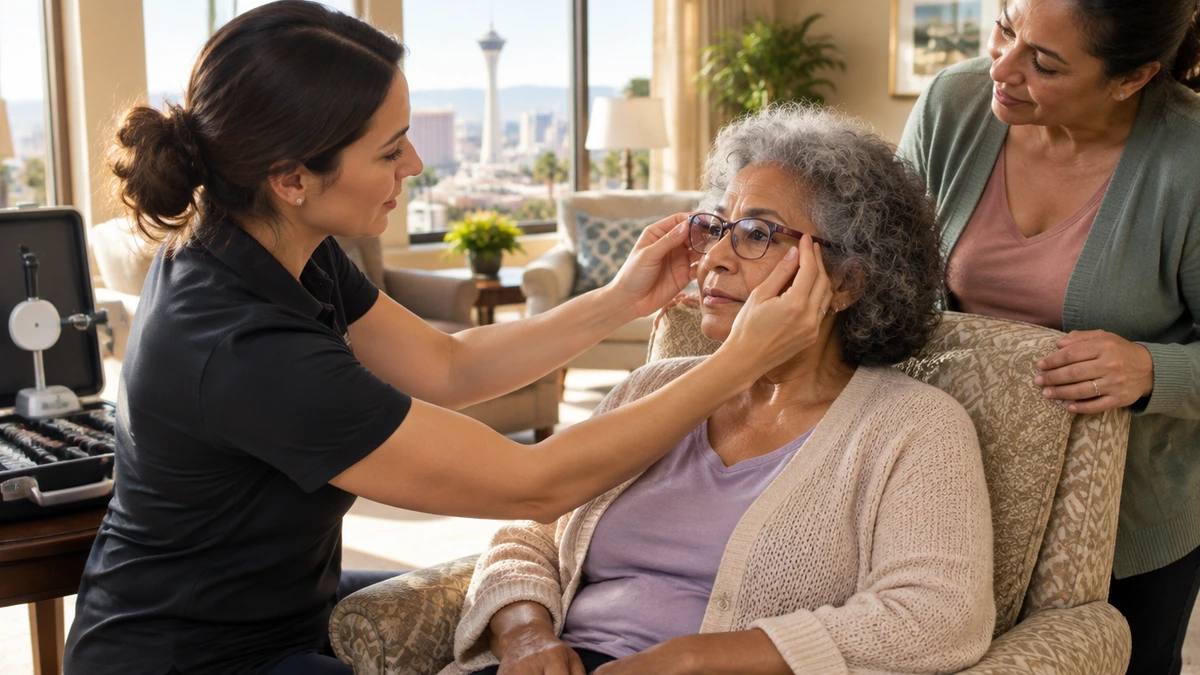
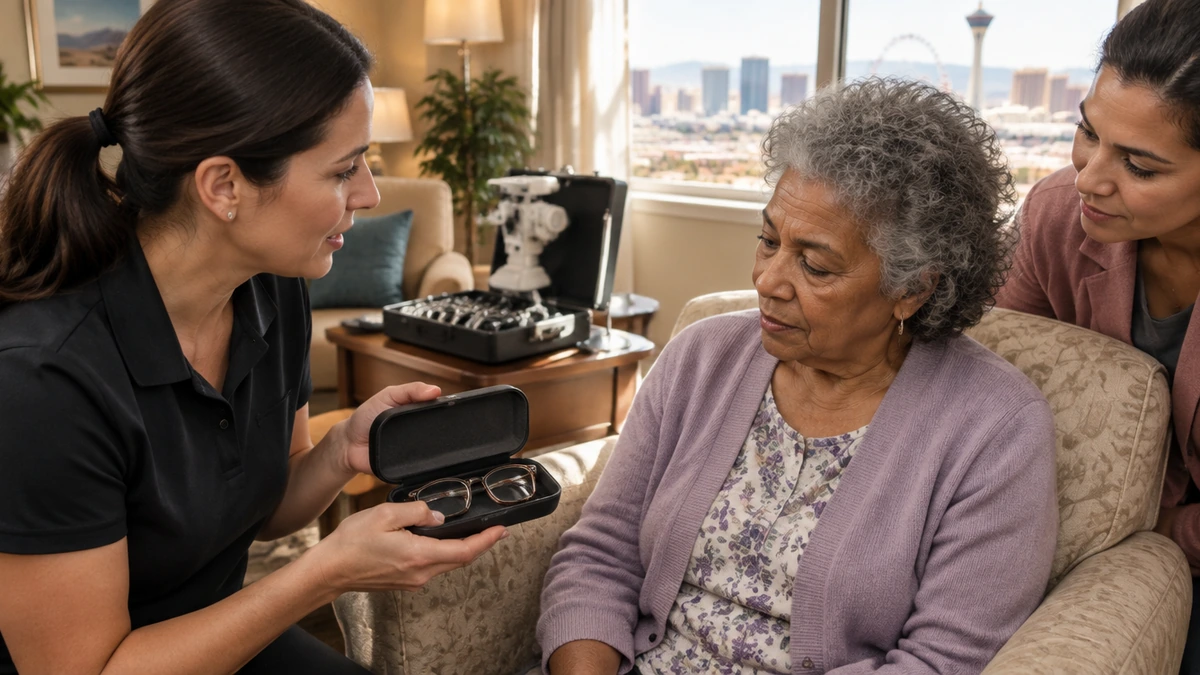
    Woman eye doctor helping a participant try on glasses with a caregiver nearby, adult day care eye exams Las Vegas
    Illustration of an eyewear discussion with the participant and a support person.

    Set the glasses handoff before ordering. My team and I review frame selection, measurements, lens choices, and verified benefits with your participant choosing eyewear. Name who receives your participant’s order updates and where delivery and adjustments will happen. Get the delivery details from my team before giving a family an expected arrival date.

    Keep follow-up active after pickup. I reviewed 69 primary sources across five research lenses for this series, and published facility programs tracked follow-up after examinations. A Canadian facility optometry program tracked reassessment timing and sent reports to family physicians. Name who receives your program’s clinical messages and who checks whether the next appointment has been booked.

    Finish the handoff before closing the task. Record whether instructions reached your assigned contact, what administrative questions remain, and who handles each next action. Use the glasses fitting and delivery guide to prepare questions about adjustments and ongoing support. Keep any unanswered delivery or fitting question on the follow-up list after the participant leaves.

    Plan Your Adult Day Care Vision Day With Me

    Build the visit around your attendance list with me. I am Dr. Amel Youssef, OD, founder of my practice, Vision by Amel, in Downtown Summerlin. I serve adult day care programs, assisted living homes, memory care communities, and senior living communities across the Las Vegas Valley. Bring your facility type, pickup pattern, and preferred month to the planning call.

    Your participants choose to take part. I start the facility-coordinated vision day with interest, consent review, and insurance benefits verified before service. Benefits depend on each resident’s eligibility and plan terms. My team and I review your private room with electrical access, examination order, eyewear selection, measurements, delivery, adjustments, and referral contacts before confirming the day. I keep participation voluntary and confirm who receives follow-up instructions after departure.

    Frequently Asked Questions About Adult Day Care Vision Days

    What should I put in the facility inquiry form?

    Use your role, program address, facility type, contact details, preferred month, and approximate interested participant count. Include the number of homes operated if relevant to your organization. Save individual registration information for the secure process arranged with my team.

    How should I handle participants who attend on different days?

    Find the attendance days shared by interested participants before proposing a visit date. Give your staff contact a backup way to reach people absent when plans are confirmed. Recheck attendance before distributing appointment details so the list reflects who expects to be there.

    What if a participant arrives without their glasses?

    Tell my team which glasses are missing and find out whether they are available before departure. You or the authorized contact should report what the participant normally uses that pair for. I decide how to proceed and what information I still need for the assessment.

    Should family members wait at the program all day?

    Set a specific availability plan instead of asking family members to wait all day. Identify why the representative is involved and when your team needs that person available for questions or decisions. Give the representative a contact route for changes before the visit.

    What if someone changes their attendance after registering?

    Update your staff contact and appointment list as soon as attendance changes. My team settles the revised time or next step with the participant or authorized representative. Keep registration status and actual attendance aligned before the visit begins.

    Schedule an On-Site Vision Day Speak With Dr. Amel’s Team: (702) 858-4362

    Like this article? Add Vision by Amel as a preferred source, and you are more likely to see our articles in Google’s Top Stories.


    Add as a preferred source on Google

  • How to Choose a Mobile Optometrist for an Assisted Living Facility

    How to Choose a Mobile Optometrist for an Assisted Living Facility

    How to Choose a Mobile Optometrist for an Assisted Living Facility

    Administrator discussing care with a visiting clinician, choose mobile optometrist assisted living

    TLDR: I advise you to choose a mobile optometrist for assisted living by verifying who examines residents, what the examination covers, and who follows up. Your review starts with Nevada credentials and mobile-clinic requirements. Set benefits, voluntary consent, eyewear delivery, and secure record handling before residents go onto the schedule.

    Answer: To choose a mobile optometrist for an assisted living facility in Las Vegas, verify the candidate’s doctor’s Nevada credentials and the mobile clinic’s registration or certification. Compare examination scope, resident consent, benefit verification, eyewear delivery, and referrals. Get written answers for your residents and location, with named contacts for preparation and unfinished tasks after the visit.

    An open date is not enough. Your residents need to understand the examination, while staff need contacts for preparation, results, and unfinished tasks. I recommend you compare each practice using the same questions before setting the schedule. A caregiver with an unanswered glasses request needs a name and contact route after examination day.

    Put responsibilities beside the visit plan. Use a facility-coordinated vision day to review who leads the examination, what your facility supplies, and who handles follow-up. I use those same planning questions with you to define the services for your home and resident group. Keep unanswered questions open on the selection checklist until the candidate’s practice supplies a clear response.

    How Do You Choose a Mobile Optometrist for Assisted Living?

    Care director meeting a visiting clinician, choose mobile optometrist assisted living
    Care director meeting a visiting clinician.

    Start with the candidate’s doctor’s full name. The Nevada Board of Optometry’s verification policy identifies its online license verification as a primary source for license status and certification information. Use that process to review your prospective doctor rather than relying on a name in a brochure. Keep the verification with the facility’s selection records.

    I urge you to check the mobile clinic, too. I reviewed 69 primary sources across five research lenses for this series, and Nevada regulates mobile-clinic arrangements separately from the clinician’s license. Nevada’s mobile optometry requirements establish certification, specified service populations including patients with impaired or restricted mobility, and licensee direction and final examination. Get the candidate’s explanation of how your residents and location meet those requirements before setting a date.

    Keep location credentials with the booking. Nevada’s practice-location rule prohibits practice at an unregistered office or uncertified mobile clinic. Have the candidate’s practice identify the registration or certification for your facility visit. Store the supporting information with the provider records so the person reviewing the booking has it in hand.

    Name each contact before examination day. Your contact sheet needs the responsible optometrist and the roles of the people attending with the candidate’s doctor. Identify who answers clinical questions and who handles scheduling or eyewear orders. Update the sheet if your candidate’s assigned team changes.

    What Examination Scope Should You Confirm?

    Clinician explaining the planned assessment setup, choose mobile optometrist assisted living
    Clinician explaining the planned assessment setup.

    I recommend you get the examination scope in writing. Nevada’s comprehensive-examination definition specifies in-person components and permits a comparable-data alternative when a component cannot be performed. Review how the candidate’s practice records your resident’s completed eye exam and any remaining needs. Use the planned scope when explaining the visit to residents, with unfinished testing kept on the follow-up list.

    I ask you to review the room alongside the planned equipment. Describe your private space, power outlet, and residents’ positioning needs before the candidate’s practice decides whether the setup suits the examination. Portable examination equipment does not establish an identical kit for every visit. Record the next step for assessment requiring another setting.

    Know which service residents are choosing. Review the difference between examination and screening before comparing proposals for your home. The service description needs to name screening, a comprehensive eye exam, or another defined assessment and explain how refraction and eye health findings enter the plan. Use the candidate’s reviewed wording in the resident invitation.

    Describe the resident using the room. Include your residents’ mobility needs, communication preferences, and requested caregiver support when reviewing examination scope. Set the process for incomplete testing or a different appointment time before booking. Leave an assessment open until the candidate’s doctor has explained the next step for any unfinished work.

    How Do You Compare Insurance and Resident Consent Processes?

    Resident discussing the visit with clinician and caregiver, choose mobile optometrist assisted living
    Resident discussing the visit with clinician and caregiver.

    I want you to know what starts the benefits check. Get the document list, secure intake route, and name of the person explaining the response to your resident. Review how unresolved coverage questions are handled before the appointment. Include prescription eyewear in that conversation so order questions stay visible alongside examination benefits.

    Verify the resident’s actual plan. For Medicare Advantage, CMS’s plan guidance supports checking benefits, provider networks and authorization requirements against the individual plan. Review the candidate’s process for checking your resident’s planned services and name the benefits contact. Keep the insurer list separate from the response for the insurance card in front of you.

    Review consent before selecting the candidate’s practice. Your residents need a clear explanation of the service and a private route for questions about signatures and information sharing. Check how each candidate’s team reviews a guardian’s or healthcare representative’s authority. Include the steps for declining or changing an appointment in the visit plan.

    Name the contact for billing questions. Your staff needs to know who handles Medicare and Medicaid administration and identifies the service behind a resident’s question. Get the route for correcting incomplete or inaccurate information before intake starts. Keep financial and clinical details in the resident’s private records throughout that review.

    Selection areaQuestion for your candidateEvidence to request
    CredentialsWho is responsible for the clinical visit?Doctor identification and current Board verification
    Mobile practiceWhich mobile-clinic credentials apply here?Relevant registration or certification information
    ExaminationWhat is included and how are limits handled?Written scope and follow-up process
    Benefits and consentHow are residents prepared individually?Intake, verification and signature workflow
    EyewearWho handles the order after selection?Delivery, fitting and adjustment contacts
    Records and referralsWho tracks the next action?Secure handoff and escalation process

    Who Handles Eyewear Fulfillment and Referrals?

    Resident receiving glasses with caregiver support, choose mobile optometrist assisted living
    Resident receiving glasses with caregiver support.

    I advise you to follow the order beyond frame selection. Get the names of the contacts handling prescription review, measurements, and your resident’s frame and lens choices. Review delivery updates and the fitting check with the person responsible for the order. Include adjustments, repairs, and replacement questions before a new pair reaches the home.

    Give delivery updates a clear destination. Your order notes need a current estimate, an update contact, and instructions for a resident who is away when glasses arrive. Set how changes in the expected handoff reach staff and the resident. Use the prescription glasses fitting and delivery guide to prepare those questions for the candidate.

    Make the referral process concrete. A published Canadian facility optometry program recommended ophthalmology referrals, showing outside care remained part of its service. Name who books the next appointment and sends the findings for your residents. Verify the candidate’s proposed referral contacts directly, since another program’s published results do not describe that practice’s network.

    I want your next action clear. Review how the candidate’s practice sends the candidate’s doctor’s recommended timing and records unfinished testing for your staff. Identify who answers questions after the candidate’s visit team leaves. Assign a facility contact to track each open task until the responsible person reports it complete.

    How Do Privacy Practices Help You Choose a Mobile Optometrist for Assisted Living?

    I recommend you trace a document from intake to results. Review where your staff sends registration details, consent forms, and insurance records, and how clinical messages return. Identify the people authorized to handle each kind of information. Keep resident records out of public marketing forms and away from visitors in the common room.

    Plan privacy before assigning the room. Set how your staff brings residents in, handles caregiver attendance, and manages interruptions during the examination. Name who alerts the candidate’s doctor when the next resident is ready and identify where residents wait. Review privacy and access again if the room changes.

    Use references to check the working process. Request facility references when available and authorized for sharing, then discuss preparation, communication, and unfinished tasks with your reference contact. Keep identifiable resident cases out of that conversation. Review those practical answers alongside the credentials and examination scope before selecting the candidate’s practice.

    • Did the provider explain what the facility needed to prepare?
    • Was there a clear contact for schedule changes?
    • How were unresolved eyewear or report requests handled?
    • Did the facility know who tracked referrals after the visit?
    • What would the coordinator clarify before another visit?

    Compare candidates on the same checklist. Mark what each practice has confirmed and which questions still need an answer for your home. Resolve those gaps before telling residents what to expect. Choose based on a documented process suited to the residents, staff, and space you have described.

    Speak With Me About Your Facility Vision Day

    Bring your checklist to a planning call with me. I bring on-site eye care to assisted living homes, memory care communities, and senior living communities across the Las Vegas Valley. I am Founder Dr. Amel Youssef, OD, and my practice, Vision by Amel, is in Downtown Summerlin. Review credentials, examination scope, and your private room with me while working through the selection questions.

    Set the tasks with me before the date. My team helps you prepare resident interest, consent, insurance records, a private room with electrical access, and the examination schedule. Resident participation is voluntary, and I arrange insurance benefit verification before service. Benefits depend on each resident’s eligibility and plan terms. My team and I review secure record handling, eyewear selection, measurements, delivery, adjustments, clinical follow-up, and referrals with you before residents attend.

    Frequently Asked Questions About Choosing a Mobile Optometrist

    What if a provider changes the clinician assigned to our visit?

    Repeat the credential review for your chosen provider’s newly assigned doctor and update your contact sheet. Name who now holds responsibility for the clinical plan and follow-up. Complete those checks before residents attend the changed visit.

    How should we assess a provider without shareable facility references?

    Review blank process materials, named contacts, and credential evidence directly. Compare examination scope and follow-up against your checklist without treating an unavailable reference as proof of the working process. Record the reference gap alongside the evidence the practice supplied.

    What should our agreement say about canceled appointments?

    Record your chosen practice’s cancellation and rescheduling terms, including who notifies residents. Your visit plan also needs instructions for pending documents and open glasses orders. Put the agreed contact route beside those terms so staff know whom to call.

    What if a provider requests resident details through a public form?

    Use your chosen practice’s private intake channel for health records. Keep your public planning request to facility contact details and general scheduling needs. Get the intended recipient and secure route clear before sending resident documents.

    How should we review the partnership after the visit?

    Check whether reports, eyewear updates, and referral contacts reached the people assigned to act on them. Compare your actual handoff with the agreed process and list unfinished tasks. Have your chosen practice address those items before planning another facility date.

    Schedule an On-Site Vision Day Speak With Dr. Amel’s Team: (702) 858-4362

    Like this article? Add Vision by Amel as a preferred source, and you are more likely to see our articles in Google’s Top Stories.
    Add as a preferred source on Google

  • Eye Care for Nevada Residential Facilities for Groups

    Eye Care for Nevada Residential Facilities for Groups

    Eye Care for Nevada Residential Facilities for Groups

    Clinician visiting a resident in a group home, eye care residential facilities for groups Nevada

    TLDR: I help you plan eye care for Nevada Residential Facilities for Groups around the home’s license and the residents who want an examination. Your preparation list needs voluntary participation, verified mobile-practice credentials, benefits, and a private room. Assign results, eyewear, and referral tasks before scheduling the visit.

    Answer: Eye care for Nevada Residential Facilities for Groups starts with your facility type, resident interest, and a check of my practice’s credentials and service scope. I coordinate planned examinations and eyewear services through a facility-coordinated vision day at your home. Prepare consent and insurance records, a private room with a power outlet, and named contacts for results, glasses delivery, and referrals.

    Give every preparation task a name. Your staff needs to know who handles consent, where I examine residents, and who follows up afterward. Put those decisions on the visit plan with a contact from my practice for unresolved questions. A caregiver carrying glasses to the room needs clear instructions before the exam starts.

    Describe the home before setting a date. Use on-site eye examinations for senior living to plan around your facility type, location, and resident support needs. Review the services available in your Las Vegas home and the route to additional assessment elsewhere. Keep the resident’s choice central when building the schedule.

    What Are Nevada Residential Facilities for Groups?

    Resident and visiting clinician in a residential home, eye care residential facilities for groups Nevada
    Resident and visiting clinician in a residential home.

    Start with the home’s licensed classification. Under Nevada’s statutory definition of a residential facility for groups, the category covers establishments supplying meals, housing, assistance and limited supervision to people who are aged, infirm or have intellectual or physical disabilities, subject to the statute’s exclusions. It includes assisted living facilities. Give me your actual classification from the facility record before describing the rooms and residents involved.

    Use the right plan for day care. Nevada’s facility definitions exclude establishments providing care only during the day from the RFG category and separately define adult-day-care facilities. Tell my team which setting you operate before planning the visit. A day program’s arrival and departure list needs its own attendance and handoff review.

    Have the license record ready. I reviewed 69 primary sources across five research lenses for this series, and Nevada treats assisted living and dementia-care endorsements as specific facility requirements. Nevada’s residential facility regulations address an assisted-living endorsement and an endorsement for care of residents with Alzheimer’s disease or related dementia. Read your home’s actual license and endorsements when describing its services to my team.

    How Should You Plan Eye Care for Residential Facilities for Groups in Nevada?

    Caregiver and clinician planning access beside a resident, eye care residential facilities for groups Nevada
    Caregiver and clinician planning access beside a resident.

    Begin with the resident’s reason. Record who wants an eye exam, who has current glasses to review, and who has an unfinished follow-up request. Send your resident’s concerns through private intake before the visit. A note about trouble reading at the table gives me a concern to assess without staff assigning a diagnosis.

    Describe the help each resident needs. Tell my team about the wheelchair, escort, or familiar caregiver your resident will need before reserving appointment times. Review positioning and communication needs alongside the staff assistance available at your home. Put the support plan with the resident’s visit details so the escort knows what to do.

    Walk from the bedroom to the exam room. Check your route for access, then review privacy, the power outlet, and space for portable examination equipment with my team. Get the room layout settled before the visit. Keep a scheduling alternative ready for residents unavailable at their planned time.

    Plan the trip after the referral. During your initial call, identify which needs the visit addresses and how appointments elsewhere are booked. Name who helps the resident or representative arrange travel when needed. Include that person in the referral handoff before an outside appointment becomes an open task.

    What Resident Choice and Consent Steps Belong in Your Plan?

    Clinician listening to a resident and caregiver, eye care residential facilities for groups Nevada
    Clinician listening to a resident and caregiver.

    Keep the invitation voluntary. Nevada’s residential service-contract requirements protect residents’ choice to obtain services from providers without a facility contract. Explain your vision day option while respecting the eye doctor and appointments a resident already has. I put the resident’s decision ahead of filling your facility schedule.

    Complete consent before assigning signatures. Use my team’s intake process to review current guardian or healthcare power of attorney documents where a representative is involved. Your staff needs the person’s actual authority clear before requesting a signature. Keep transport and scheduling tasks separate from the resident’s decision to receive care.

    Record a refusal privately. Nevada’s rule on rejection of medical care recognizes a resident’s rejection and requires documentation. Follow your facility’s process and tell my team the appointment has changed. Keep that response in the appropriate record and out of the common room’s schedule or discussion.

    Set who receives each update. Record your resident’s preferred contacts for scheduling, then use my team’s clinical communication process for results and health records. Send personal information through secure intake, away from public forms and visitor areas. Use the resident consent planning guide to prepare questions about signatures and sharing information.

    How Do Mobile Credentials and Facility Responsibilities Fit Together?

    Care director and clinician coordinating a resident visit, eye care residential facilities for groups Nevada
    Care director and clinician coordinating a resident visit.

    Verify the mobile clinic’s requirements. Nevada’s mobile optometry statute establishes certification, specified service populations including patients with impaired or restricted mobility, and licensee direction and final examination requirements. Ask me to explain how your visit meets those requirements before invitations go out. A residential address alone does not establish each resident’s eligibility for that service population.

    Confirm who leads your visit. Confirm my role as your visiting optometrist, verify the mobile clinic’s credentials, and settle the examination scope while your home prepares the private room. I determine the assessment and explain the referral process. Keep a named contact beside unresolved scope questions before staff invite residents to register.

    Planning taskYour facility’s roleProvider confirmation
    Visit suitabilityDescribe the setting and resident access needsMobile-clinic credentials and examination scope
    ParticipationGather interest and name resident contactsConsent and representative documentation
    BenefitsSend requested records through secure intakeResident-specific verification before service
    Examination spaceOffer privacy, access and electrical supplySuitability for the planned assessment
    Follow-upTrack outstanding actionsReports, eyewear and referral instructions

    Build the schedule around staff support. Set how your team escorts residents and supplies caregiver help during the visit. Name who updates the schedule when someone is late or needs a different appointment time. Use a private attendance list with no clinical reasons displayed beside resident names.

    How Do Benefits and Recurring Eye Care for Nevada RFGs Work?

    I arrange benefit verification before service. Send your resident’s actual Medicare, Medicaid, or Medicare Advantage details through secure intake for my team to review. Keep examination benefits and prescription eyewear choices clear in that conversation. An insurance card belongs with intake records, and individual plan questions belong outside the general facility announcement.

    Follow my clinical timing between visits. Your next group vision day belongs on the facility calendar, while each resident’s next clinical appointment follows the examination instructions. Track unfinished assessments and referrals before selecting another group date. Review which actions need attention now so they do not wait for the next facility visit.

    1. Review open examination, referral and eyewear tasks from the previous visit.
    2. Gather current resident interest and confirm the contact list.
    3. Arrange updated consent and benefit verification through my team.
    4. Confirm the room, staff availability and resident schedule.
    5. Agree how results and outstanding tasks will reach the next shift.

    Check open tasks before booking again. Use the facility vision day checklist to prepare your next planning call and review what staff have completed. Name who contacts residents or representatives about glasses, adjustments, and further appointments. Close each task when the assigned contact confirms completion, with the update recorded for the next shift.

    Keep concerns with the resident’s record. Share the changes your staff observed and follow my assessment instructions. Review medical eye care services when discussing whether a comprehensive eye exam fits the resident’s needs. Record which services require another setting alongside the next appointment or referral task.

    Schedule a Vision Day for Your RFG With Me

    Plan the exam around your home with me. I am Dr. Amel Youssef, OD, founder of my practice, Vision by Amel, in Downtown Summerlin. I bring on-site eye care to Nevada Residential Facilities for Groups and assisted living homes across the Las Vegas Valley. Bring resident interest, consent questions, insurance documents, and the room layout to your planning call so I review examination scope, eyewear selection, measurements, and referrals with you before building the schedule.

    Prepare your private room with electrical access and name your staff contact. My team provides the secure intake route and coordinates the follow-up list with you. Participation is voluntary, and I arrange insurance benefit verification before service. Benefits depend on each resident’s eligibility and plan terms. My team and I review results, eyewear delivery, adjustments, and clinical follow-up with you before the visit ends.

    Frequently Asked Questions About Eye Care for Nevada RFGs

    What should we include in the first facility planning request?

    Provide your contact details, role, facility type, address and preferred month. Use approximate interest information to start the scheduling conversation. Keep resident names, insurance cards and medical histories out of the public marketing form.

    How should an operator coordinate visits across several homes?

    Make a separate room, contact, and schedule plan for each home. Review each address with my team before setting visit dates for your residents. Keep attendance and follow-up tasks assigned to a local staff contact who knows that home’s residents and layout.

    What if the planned private room becomes unavailable?

    Ask me to review the alternative room before moving equipment or residents. Describe your replacement space, privacy, access, and power outlet against the planned services. Update the schedule after I confirm the new layout.

    How should we hand over coordination when an administrator leaves?

    Give the replacement administrator my practice contact and open task list through your internal handoff process. Update my practice’s facility contact record so reports and order questions reach the right person. Assign ongoing reports, eyewear requests, and referrals before the outgoing administrator leaves.

    What should a resident’s representative know before attending?

    Explain why the representative is attending, when to arrive, and which authority documents need review. Set those details with my team before adding the appointment to your final schedule. Give the representative the private intake route for documents and questions.

    Schedule an On-Site Vision Day Speak With Dr. Amel’s Team: (702) 858-4362

    Like this article? Add Vision by Amel as a preferred source, and you are more likely to see our articles in Google’s Top Stories.
    Add as a preferred source on Google

  • Mobile Eye Exam Versus Vision Screening: What Facility Operators Should Know

    Mobile Eye Exam Versus Vision Screening: What Facility Operators Should Know

    Mobile Eye Exam Versus Vision Screening: What Facility Operators Should Know

    Clinician explaining an assessment to a resident, eye exam versus vision screening seniors

    TLDR: I help you compare an eye exam versus vision screening for seniors by what gets checked. Screening identifies selected vision concerns, while a comprehensive examination also evaluates overall eye health. Your visit plan needs the examination scope, a record of findings, and the next step for anything unresolved.

    Answer: For a mobile eye exam, I bring planned examination services to your assisted living facility in Las Vegas. Vision screening checks selected aspects of vision, leaving other questions for a fuller assessment. Choose the service by its tests, prescription process, findings, and follow-up, then prepare residents and the room for that specific visit.

    I want you to know the service scope before booking. You need to know what residents receive, what staff prepare, and what happens if testing remains incomplete. Put those details beside the schedule before inviting residents. A resident asking about blurred print needs a clear explanation of what the appointment will address.

    Match the room to the assessment. A facility-coordinated vision day joins preparation, examination, and follow-up in your visit plan. As your mobile optometrist, I explain the service and its limits, whether residents sit in your private room or attend another appointment. The location alone does not tell you how complete the examination will be.

    Eye Exam Versus Vision Screening for Seniors: What Changes?

    Resident and care director discussing an assessment, eye exam versus vision screening seniors
    Resident and care director discussing an assessment.

    A screening has a limited purpose. MedlinePlus explains screening limitations: screening identifies some common problems but misses other disorders, while a comprehensive eye exam also evaluates overall eye health. When comparing providers, check which measurements your proposed screening includes before putting it on the schedule. I do not treat a passing chart result as a complete assessment of a resident’s eyes.

    Give the appointment its correct name. Identify whether your booking is for screening, refraction, a comprehensive examination, or another defined service before comparing appointment slots. I explain the purpose of the visual acuity measurement in your visit description. Keep the planned service and completed work in the resident’s follow-up record.

    Check components before accepting the label. I reviewed 69 primary sources across five research lenses for this series, and Nevada defines comprehensive examinations by their components. Nevada’s comprehensive-examination statute specifies in-person elements and permits an alternative obtaining comparable data when a component cannot be performed. When comparing providers, review the planned components and documentation of incomplete testing with the optometrist offering your proposed service. The same statute distinguishes non-comprehensive examinations.

    Your comparison questionVision screeningComprehensive examination
    What is the purpose?Identify selected vision concernsAssess vision and overall eye health
    What should the proposal describe?Measurements and screening criteriaPlanned examination components
    What documentation should you request?Result and recommended next stepFindings, completion limits and clinical plan
    What about glasses?Identify whether refraction needs a separate appointmentConfirm the prescription and dispensing process
    How do you track follow-up?Record who arranges further assessmentRecord who handles clinical follow-up and referrals

    Eye Exam Versus Vision Screening for Seniors: What Should You Verify?

    Clinician preparing portable examination equipment, eye exam versus vision screening seniors
    Clinician preparing portable examination equipment.

    Put the scope in writing. Your visit description should identify what addresses vision correction, what assesses the health of the eye, and what the facility setting supports. Review those limits with me before your planning call ends. Give staff the description so they prepare the room and residents for the actual examination.

    Describe omitted services accurately. Nevada’s examination advertising rule requires a specific disclosure when an advertised examination omits a listed service, including subjective refraction or dilated fundus examination. When comparing providers, use the selected practice’s reviewed examination wording in your resident invitation. Keep the approved description with the visit plan before staff distribute the invitation.

    Set the location for retinal assessment. The AOA diabetes guideline recommends examining the retina through dilated pupils for diabetic retinopathy and treats retinal photography as a separate consideration. For your resident with diabetes, I clarify where the clinically indicated examination will happen. Record the next appointment when the needed assessment extends beyond the facility visit.

    Describe the resident in the chair. For your on-site eye care visit, I need positioning and communication details, including staff help, a familiar caregiver, or flexible scheduling. Supply those needs before booking without promising completion of every test. I determine the assessment and record its limits.

    How Do Prescriptions Differ From an Eye Health Assessment?

    Clinician and resident discussing current glasses, eye exam versus vision screening seniors
    Clinician and resident discussing current glasses.

    Bring both sets of concerns. For example, your resident wants replacement glasses, while the caregiver has noticed a change in reading or another familiar activity. Give me those observations alongside the prescription question. Before the visit ends, get the next steps for refraction, findings, and any further evaluation clear in the care record.

    Track glasses and clinical follow-up separately. I explain the prescription, and my eyewear team handles selection, frame fitting, and the order through delivery. Keep any additional clinical appointment on your follow-up list under its own contact. A glasses delivery update leaves pending examination findings for me to address.

    Prepare the glasses and relevant history. Review Vision by Amel’s eye examination services before your planning call so you have specific questions about the facility examination and services needing another setting. Supply the requested records through secure intake. Use the resulting instructions to assign staff follow-through after the examination.

    My team and I check benefits before service. Identify your resident’s actual Medicare, Medicaid, or Medicare Advantage plan for verification against the planned care. Review examination benefits and eyewear choices separately with my team. Keep the plan’s response in the resident’s private administrative record so staff know which questions remain open.

    What Should Clinical Documentation and Referrals Include?

    Resident and caregiver discussing follow-up, eye exam versus vision screening seniors
    Resident and caregiver discussing follow-up.

    Name who receives the findings. Plan how your resident, authorized representative, and appropriate care contacts receive reports before the exam begins. Set the secure channel for records and assign a facility contact to track instructions. Your contact follows up on missing reports, and I interpret the examination findings.

    Give missing reports a follow-up contact. A Canadian facility optometry program tracked follow-up timing and supplied examination reports to family physicians. Use those published tasks to prepare your own communication plan with my team. Record who checks for the report and who calls when an expected document has not arrived.

    Keep unfinished testing on the list. Your record needs the pending assessment, the person booking it, and the way the resident receives the plan. Record my intended timing alongside the task. Bring open actions to the next staff handoff instead of marking the visit complete because the resident attended.

    Make the referral ready to act on. Name who contacts the outside doctor receiving the referral, who sends the relevant records securely, and who helps your resident attend. Include the contact route for questions beside the referral entry. Check completion in the resident’s private care record so staff know whether the appointment happened.

    How Do You Choose the Right Service for Residents?

    Start with the resident’s reason for coming. Describe prescription questions, existing follow-up requests, and reported changes so I recommend the appropriate service for each person. If your resident holds a book away from the chair, describe that concern plainly. A shared address does not give everyone the same examination needs.

    1. Gather resident interest and the reason each person wants an appointment.
    2. Verify resident consent and any representative’s authority through the intake process.
    3. Request the planned examination scope and identify needs requiring another setting.
    4. Confirm benefits, private space, electrical access and the resident schedule.
    5. Assign responsibility for reports, eyewear questions and referral follow-up.

    Give staff a practical preparation list. Use the on-site examination workflow to organize your resident handoff before and after the visit. Apply the mobile optometrist selection questions when reviewing credentials, scope, and follow-up. Get answers tied to the room and residents involved in your facility’s appointment plan.

    Make the invitation match the service. Describe what your residents are choosing, voluntary participation, and how to raise questions before scheduling. Use my reviewed wording for the examination when you plan a visit with me. Keep the service name clear instead of calling every appointment a vision check.

    Request Comprehensive On-Site Eye Care With Vision by Amel

    Plan around your residents’ needs. I am Dr. Amel Youssef, OD, founder of my practice, Vision by Amel, in Downtown Summerlin. I invite you to plan a visit for your assisted living home, memory care community, or senior living community in the Las Vegas Valley. Bring the resident interest list and a description of the private room to the planning call. Review examination scope before building the schedule.

    Prepare the visit with my team. Your facility contact gathers resident interest, consent, and insurance documents and prepares a private room with electrical access. Participation is voluntary. My team and I verify insurance benefits before service. Benefits depend on each resident’s eligibility and plan terms.

    Plan your eyewear handoff with me. My team and I coordinate secure intake, eyewear selection, measurements, delivery, and adjustments. I review responsibility for follow-up or referral with you before the visit.

    Frequently Asked Questions About Mobile Examinations and Vision Screening

    What should we request if a proposal only says vision check?

    Get a service description naming the examination, its purpose, and the expected next steps. Keep it with your facility visit plan before circulating the invitation. Staff then have the same wording when a resident asks what the appointment includes.

    How should we handle residents already seeing another eye doctor?

    Keep existing follow-up appointments in the plan and let each resident choose whether to participate. Record what your resident wants the visit to address and send current care details through private intake. Set how your resident wants me and their existing eye doctor to share the relevant information.

    What if a resident changes their mind on examination day?

    Respect the decision and update your schedule. Tell my team the appointment has changed through the visit’s scheduling process. Offer information about another opportunity only if the resident wants it, with participation still voluntary.

    What should we do with old screening results?

    Keep old results available, with their source and date, for my review. Send the requested records through your secure intake channel once I identify which are useful. The date helps me see what the earlier screening describes.

    Who should explain an unfamiliar term in the examination report?

    I explain terms in my examination report and any action they call for. Send your question through the clinical contact route, quoting the report accurately. Record the explanation and resulting task in the resident’s care record.

    Schedule an On-Site Vision Day Speak With Dr. Amel’s Team: (702) 858-4362

    Like this article? Add Vision by Amel as a preferred source, and you are more likely to see our articles in Google’s Top Stories.

    Add as a preferred source on Google

  • How Prescription Glasses Are Fitted and Delivered to Assisted Living Residents

    How Prescription Glasses Are Fitted and Delivered to Assisted Living Residents

    How Prescription Glasses Are Fitted and Delivered to Assisted Living Residents

    Resident and clinician discussing eyewear, glasses for assisted living residents

    TLDR: I help you plan glasses for assisted living residents through the last fitting check, starting with prescription review and ending with follow-up. Your list needs verified benefits, ordering choices, a delivery contact, and a route for adjustments before residents select eyewear. Participation and purchasing stay voluntary.

    Answer: Prescription glasses for assisted living residents in Las Vegas begin with an eye exam and review of visual needs. Your facility contact helps plan frame selection, measurements, benefit verification, delivery, and adjustments with my team. Record the delivery estimate, identify whose glasses are arriving, and keep fitting or repair requests open until the assigned contact responds.

    I plan the eyewear handoff with you before examination day. For example, a resident chooses a frame, a representative requests an update and a caregiver needs to know which glasses belong beside the armchair. Treat these as planned handoffs. A clear eyewear record gives everyone an agreed place to check the next action.

    Plan the order before announcing the visit. Start with a facility-coordinated vision day built around your residents’ choices, with me as your visiting optometrist, my eyewear team, and your facility contact in the conversation. Your on-site eye care plan needs time for prescription questions, frame fitting, and follow-up instructions. Put a staff name beside each step before the visit goes on the calendar.

    How Do You Start Glasses for Assisted Living Residents?

    Clinician reviewing a resident's glasses, glasses for assisted living residents
    Clinician reviewing a resident's glasses.

    Begin with the resident’s current glasses. Ask your staff to note whether the resident uses them for reading, television or another familiar activity. Bring me concerns about fit, missing glasses and changing vision at the examination. Describe what staff observed without deciding which prescription the resident needs.

    Give each next step a contact. As your mobile optometrist, I review visual needs during the planned visit and explain the prescription and any further evaluation I recommend. Use the assisted living examination process to prepare the handoff from examination to eyewear. Track the glasses order and clinical follow-up separately so neither task closes before its work is done.

    Plan support beyond the new frame. I reviewed 69 primary sources across five research lenses for this series, and ongoing adjustments and identification belong in facility eyewear planning. The AOA’s nursing-home guidance recommends providing or arranging refraction and dispensing, routine adjustments and identification of residents’ glasses. Put those tasks on your planning list and establish who handles them for your home.

    Make the prescription clear to residents. Explain which activities the glasses are intended to support and how the new order relates to the current pair, using my instructions. Give your resident time for questions before choosing a frame. Direct prescription questions to me and order questions to my eyewear contact.

    What Should Frame Selection and Measurements Cover?

    Resident trying a frame with a clinician, glasses for assisted living residents
    Resident trying a frame with a clinician.

    Let the resident choose the frame. Explain the selection appointment and settle whether a representative will attend before your resident begins looking at glasses. Report a frame slipping during meals or glasses repeatedly removed during an activity. My eyewear team assesses fit with your resident.

    Keep the frame with the measurements. My team handles eyeglass selection and measurements as part of the vision day process. Review your resident’s frame and lens choice through the private order channel, including who checks the order and handles changes before submission. Keep that record available for questions when the glasses arrive.

    Describe the resident’s daily use. Tell my team whether your resident reads in an armchair, joins table activities, or asks for help locating glasses. The eyewear conversation starts with the individual examination, activities, and preferences. Review the recommendation for that resident before choosing a lens option for the order.

    • Bring current prescription glasses and describe how the resident uses them.
    • Confirm the resident’s frame choice and the person authorized to discuss the order.
    • Name who takes measurements and checks the submitted order.
    • Record the delivery contact and the route for requesting an adjustment.

    How Do You Verify Benefits and Choose Lenses?

    Clinician discussing glasses with a resident, glasses for assisted living residents
    Clinician discussing glasses with a resident.

    Verify benefits before the order. Keep the examination, prescription eyewear, and selected upgrades clear in your resident’s intake notes. My team and I review verified benefits and ordering choices with you before proceeding. Use the Medicare and Medicaid eye benefits guide to prepare focused questions and keep unresolved items with the benefit review.

    Check the exception against the order. Original Medicare generally excludes ordinary eyewear, but its post-cataract eyewear benefit covers one standard-frame pair of glasses or one set of contact lenses after each cataract operation implanting an intraocular lens, subject to supplier and cost-sharing conditions and extra charges for upgrades. My team’s benefit review for your resident needs the surgery history and supplier check to establish whether this exception applies.

    Bring the existing frames into review. For adult lens replacement, Nevada Medicaid’s ocular manual generally requires significant refractive change and reuse of existing frames when possible, with prior authorization for exceeding the 12-month lens limit for adults aged 21 or older. Show my team your resident’s current pair. Complete the resident-specific benefit review before treating replacement as an approved order.

    Match lenses to the resident’s routine. I offer premium prescription lenses, including progressives and Transitions. Review the explanation of the proposed choice against your resident’s prescription, activities, and preferences. Record the final selection after the resident or authorized decision-maker has reviewed it in everyday language. Use the table below to direct prescription questions to me and eyewear questions to my team.

    DecisionWhat your coordinator confirmsWho answers
    PrescriptionIntended use and clinical follow-upExamining doctor
    Frame and lensesSelected frame, measurements and lens optionEyewear team
    BenefitsResident-specific order eligibility and termsBenefit verification contact
    DeliveryCurrent estimate and fitting planOrder contact
    Ongoing supportAdjustment, repair and replacement routeNamed follow-up contact

    How Are Glasses for Assisted Living Residents Delivered and Adjusted?

    Clinician checking delivered glasses on a resident, glasses for assisted living residents
    Clinician checking delivered glasses on a resident.

    Get the delivery plan when ordering. My team reviews the current estimate, how updates reach your staff, and whether the resident needs to attend a fitting appointment. Set the handoff around the resident’s availability. Share changes with the representative through the chosen contact method so everyone works from the same order notes.

    Arrival still needs a fitting check. Match the resident and order before your staff hands over a new pair of glasses. Follow my team’s plan for checking fit and explaining use at delivery. Keep discomfort or other unanswered concerns on the open task list until my eyewear team responds.

    Get wear and care instructions. A published nursing-home intervention included instruction for residents and nursing assistants when glasses were supplied. Use that finding to prepare your staff’s questions at the handoff. Name who explains the instructions again if the resident or a caregiver missed the original conversation.

    Describe the fit problem plainly. Tell my eyewear contact whether your resident reports pressure, slipping, or trouble using the glasses for the intended activity. Send that concern to my team for review before anyone bends the frame or changes the prescription. Obtain the resident’s next instructions while the problem is being reviewed.

    Who Handles Repairs and Replacement Planning?

    Keep each pair easy to identify. Record where your resident prefers to keep the glasses and whom staff contact about a problem in the resident’s care notes. Review suitable identification methods with my eyewear team. Keep personal information away from public displays and visitor areas when labeling or storing eyewear.

    Set the repair contact in advance. Record how your staff requests an assessment, where the broken frame goes, and how the resident receives updates. Review replacement as a separate decision from repair. Complete a fresh check of benefits and ordering choices when my team proposes a replacement pair.

    Keep visual concerns on the list. Report ongoing difficulty to me even after your resident’s frame has been adjusted, so I address unresolved eye health questions. Get the next instruction for another assessment or referral. Keep the clinical follow-up task open separately from the eyewear order.

    Bring Eye Exams and Eyewear to Your Facility With Vision by Amel

    Plan the glasses handoff with the exam. I am Dr. Amel Youssef, OD, founder of my practice, Vision by Amel, in Downtown Summerlin. I invite you to arrange a vision day for your assisted living home or senior living community in the Las Vegas Valley. I review resident interest, consent, insurance documents, and the examination schedule on your planning call. My team and I coordinate selection, measurements, delivery, and adjustments while you assign staff responsibilities.

    Prepare your private room and contact. The room needs electrical access, and the facility contact needs the secure intake route and follow-up tasks. Resident participation is voluntary. My team and I verify insurance benefits before service. Benefits depend on each resident’s eligibility and plan terms. I include referrals when reviewing the next steps after the visit with you.

    Frequently Asked Questions About Prescription Glasses in Assisted Living

    What should staff do when glasses arrive while the resident is away?

    Hold the glasses according to the storage instructions and arrange the resident’s fitting handoff. Tell my order contact your resident is away, and record who received the pair and where it is held. Keep the order open for the fitting check when the resident is available.

    How should we manage a resident who uses different pairs?

    Use the intended purpose of each pair in the resident’s instructions to guide storage and identification. Have your care team follow the same identification method, then show the resident where each pair belongs. Record unanswered questions for my eyewear team before changing those instructions.

    What if the family changes its frame preference after ordering?

    Keep the original order in place until my eyewear team confirms whether a revision is available. Send my team your order details through the secure channel and record the requested change. Have the resident or authorized decision-maker review the response before proceeding.

    What happens to an open order if the resident moves?

    Notify my eyewear team promptly and transfer the open task to the resident’s new contact. Set who receives updates and where the fitting handoff will happen through your private order channel. Update the former home’s visit list so the order has a clear owner after the move.

    What should our weekend staff know about eyewear questions?

    Give your weekend team my practice’s contact route and the resident’s current instructions. Explain where to record a concern and who checks for a response. Include unresolved requests in the next staff handoff so they stay visible.

    Schedule an On-Site Vision Day Speak With Dr. Amel’s Team: (702) 858-4362

    Like this article? Add Vision by Amel as a preferred source, and you are more likely to see our articles in Google’s Top Stories.
    Add as a preferred source on Google

  • How On-Site Eye Exams Work at Assisted Living Homes

    How On-Site Eye Exams Work at Assisted Living Homes

    How On-Site Eye Exams Work at Assisted Living Homes

    Optometrist speaking with a resident and caregiver, how assisted living eye exams work

    TLDR: Here is how assisted living eye exams work: residents choose to participate, your staff prepares the room and records, and my team and I handle consent checks, benefit verification, and examinations. You plan eyewear delivery and outside appointments before the visit ends. Each unfinished task needs a named contact.

    Answer: I bring on-site examinations to your assisted living home in Las Vegas for a facility-coordinated vision day. You gather resident interest, prepare consent and insurance records for secure intake, and set aside an accessible private room with a power outlet. I verify benefits before service and plan examinations, prescription eyewear, follow-up, and referrals with my team.

    Your residents have different reasons for seeking eye care. Someone needs help with existing prescription glasses, while another resident wants to discuss a change in vision. I start with those concerns when you explore on-site eye care for assisted living residents. A useful visit leaves each participating resident with a clear next step.

    You need more than an arrival date. Someone must handle registration, prepare the room, and receive follow-up instructions while the rest of the home keeps running. I explain how assisted living eye exams work from the interest list through glasses delivery and referrals. Use this guide to give your staff clear jobs before examination day.

    How Assisted Living Eye Exams Work: Examination Scope

    Optometrist explaining an examination to a seated resident, how assisted living eye exams work
    Start with examination purpose and scope

    Know what your eye exam covers. MedlinePlus explains that vision screening identifies some vision problems but misses other eye disorders, while a comprehensive eye exam also evaluates overall eye health. As your optometrist, I explain the assessment and its limits before you describe the visit to residents. A resident reading letters on an eye chart still needs an assessment matched to the concern behind the appointment.

    Put your residents’ concerns on paper. Include questions about visual acuity, refraction, cataracts, glaucoma, or dry eye so I know what needs attention. Nevada defines comprehensive examinations by their components and permits comparable-data alternatives when a component cannot be performed. Review the examination scope before inviting residents, and describe only the services planned for your home.

    Unfinished testing needs a next step. Your planning call should cover how I record an unsuccessful measurement, explain the unresolved concern, and handle referral to another setting. Review my eye examination services before the call. Match the services to your residents’ needs and the room available for the exam.

    How Do Residents Register and Have Benefits Verified?

    Resident and optometrist discussing participation, how assisted living eye exams work
    Discuss participation before adding an appointment

    Start with your residents’ interest. Explain voluntary participation directly, and note who wants a representative involved before you fill the examination schedule. Use my team’s registration instructions and secure intake channel for personal records. An insurance card belongs in that intake channel, never in the public facility inquiry form.

    Interest is the starting point. Your registration list also needs completed resident consent and a clear record of who makes the healthcare decision. Review any representative’s current authority, since a family name on the contact sheet does not establish signing authority. Settle unanswered consent questions before adding the resident to the confirmed schedule.

    I verify benefits before service. Send your resident’s insurance details through secure intake so my team has the plan information needed for the check. Original Medicare excludes routine examinations for prescribing glasses or contact lenses. Keep the examination, refraction, medical testing, and eyewear clear in the benefits conversation, and use the resident’s actual plan instead of relying on the card’s logo.

    1. Invite residents to express interest and record their preferred way to be contacted.
    2. Complete my team’s registration and resident consent process.
    3. Provide insurance documents and relevant history through secure intake.
    4. Confirm benefit verification and resolve outstanding questions.
    5. Set the examination order around residents’ support needs.

    What Does Your Facility Provide?

    Optometrist and caregiver checking a room layout, how assisted living eye exams work
    Confirm the room layout before the visit

    Give the exam a private room. Your staff should walk the route to it, check the power outlet, and describe doors, seating, and mobility needs to my team. Review the layout before moving furniture or seating residents nearby. Keep the path accessible and ordinary household traffic outside the examination space.

    Put a name beside attendance. Your facility contact needs to know where residents are, who needs assistance, and which registration questions remain open. Assign a backup while I direct the assessment. Describe the home clearly during planning, including the memory care wing or common room my team and I will pass through.

    Planning itemFacility preparationConfirm with my team
    Resident readinessRecord interest and assistance needsRegistration and consent completion
    Examination spaceOffer privacy, seating, and electrical accessUsable layout and equipment placement
    Resident recordsIdentify the authorized contactSecure intake and results channels
    Daily scheduleNote meals and care routinesArrival time and resident order
    After the visitName the follow-up coordinatorEyewear, adjustments, and referral tasks

    Keep your staffing plan practical. Identify who escorts residents, who remains available for assistance, and who covers the coordinator’s usual duties. Use the assisted living vision day checklist to turn those decisions into assigned tasks. An unassigned task is still unfinished preparation.

    How Assisted Living Eye Exams Work on Examination Day

    Optometrist attending to a resident beside a caregiver, how assisted living eye exams work
    Coordinate the handoff before each examination

    Set up before residents arrive. Review the room, resident order, and changes since registration with me while your staff prepares the first resident. Tell me about new communication or mobility needs before the next person enters. Keep the waiting area comfortable and the examination room private.

    Let the resident speak first. As your mobile optometrist, I direct the exam and explain findings, while you supply requested assistance and useful observations. Bring current glasses and the medication information requested during intake. Report trouble reading an activity sheet in plain words, and leave the diagnosis to me.

    Leave room for a pause. Your resident’s need for extra assessment or support takes priority over keeping every appointment to a fixed slot. During planning, identify who explains unfinished testing and the next step to the resident. Keep conversations about findings private while staff help the residents still waiting.

    What Happens With Eyeglass Selection and Delivery?

    Start eyewear decisions with the findings. My team handles eyeglass selection, measurements, delivery, and adjustments as part of the vision day process. Tell my team how your resident uses glasses, whether for an activity sheet or reading in an armchair. Keep the choice voluntary and leave time for the resident’s questions before an order.

    Plan for glasses after delivery, too. AOA guidance for nursing-home residents recommends arranging dispensing services, routine glasses adjustments, and identification of residents’ glasses. Name the person your staff will contact about an order or frame fitting. Get the expected delivery timing once the order details are known, then keep it with the resident’s eyewear notes for the next shift.

    Know where each pair belongs. Your staff needs the resident’s name, the handoff plan, and a contact for fit problems before glasses arrive. The guide to prescription glasses fitting and delivery explains those steps. Record an adjustment request when a frame feels uncomfortable so it stays visible to the person responsible for follow-up.

    Who Handles Follow-Up and Referrals?

    Give each referral a named contact. I reviewed 69 primary sources across five research lenses for this series, and facility-based assessment still led to ophthalmology referrals in a published Canadian program. Put outside appointments on your follow-up list while the visit is being planned, and keep that published program’s results separate from expectations for your own residents.

    Follow the referral through. Keep my next action and timing in your resident’s care record, with access limited to the people handling the task. Name who tells the resident or authorized representative and who books any outside appointment. Check the appointment record to see whether the action happened, rather than stopping at a sent message.

    Plan Your Facility-Coordinated Vision Day With Vision by Amel

    Plan your visit with me. I am Dr. Amel Youssef, OD, founder of my practice, Vision by Amel, in Downtown Summerlin. I bring facility-coordinated vision days to assisted living homes and senior living communities across the Las Vegas Valley. Tell me about your private room with electrical access, accessibility needs, interested residents, and preferred month. My team and I plan registration, examinations, eyewear selection, measurements, delivery, adjustments, follow-up, and referrals with you.

    Your residents choose to take part. I plan for voluntary participation and verify insurance benefits before service. Benefits depend on each resident’s eligibility and plan terms. My team reviews the visit and preparation tasks with your facility contact before residents go onto the final schedule.

    Frequently Asked Questions About On-Site Assisted Living Eye Exams

    What should I do if a resident already has an eye doctor?

    Keep the resident’s existing care in view and let the resident choose whether to participate. Record outside appointments on your planning list so staff do not duplicate follow-up tasks. Include previous records requested for the current concern in the resident’s intake documents.

    Should I promise residents they will receive new glasses?

    No, an examination does not mean a resident will order glasses. You leave the prescription decision to me and the purchase decision to the resident or authorized decision-maker. Include residents who want an examination without an eyewear order on your interest list.

    What if a resident changes their mind on the day?

    Notify my team and update your attendance record. Ask whether the resident wants another conversation or prefers no further scheduling contact. Keep the change out of announcements made to other residents.

    How should I handle a family member arriving during an examination?

    Keep the examination private while my team handles the visitor’s entry. You handle questions about the visitor’s role and the resident’s preferences outside the room. Let the resident finish speaking with me before interrupting with administrative details.

    What information belongs in the facility consultation request?

    Provide your contact details, facility address, facility type, approximate resident count, and preferred month. Describe the number of homes you operate and estimated interest without identifying individual residents. Save insurance cards, diagnoses, and medical histories for my team’s secure intake process.

    Schedule an On-Site Vision Day Speak With Dr. Amel’s Team: (702) 858-4362

    Like this article? Add Vision by Amel as a preferred source, and you are more likely to see our articles in Google’s Top Stories.

    Add as a preferred source on Google