
Sun Protection for Kids’ Eyes in Summerlin: UV, Sunglasses and Outdoor Play
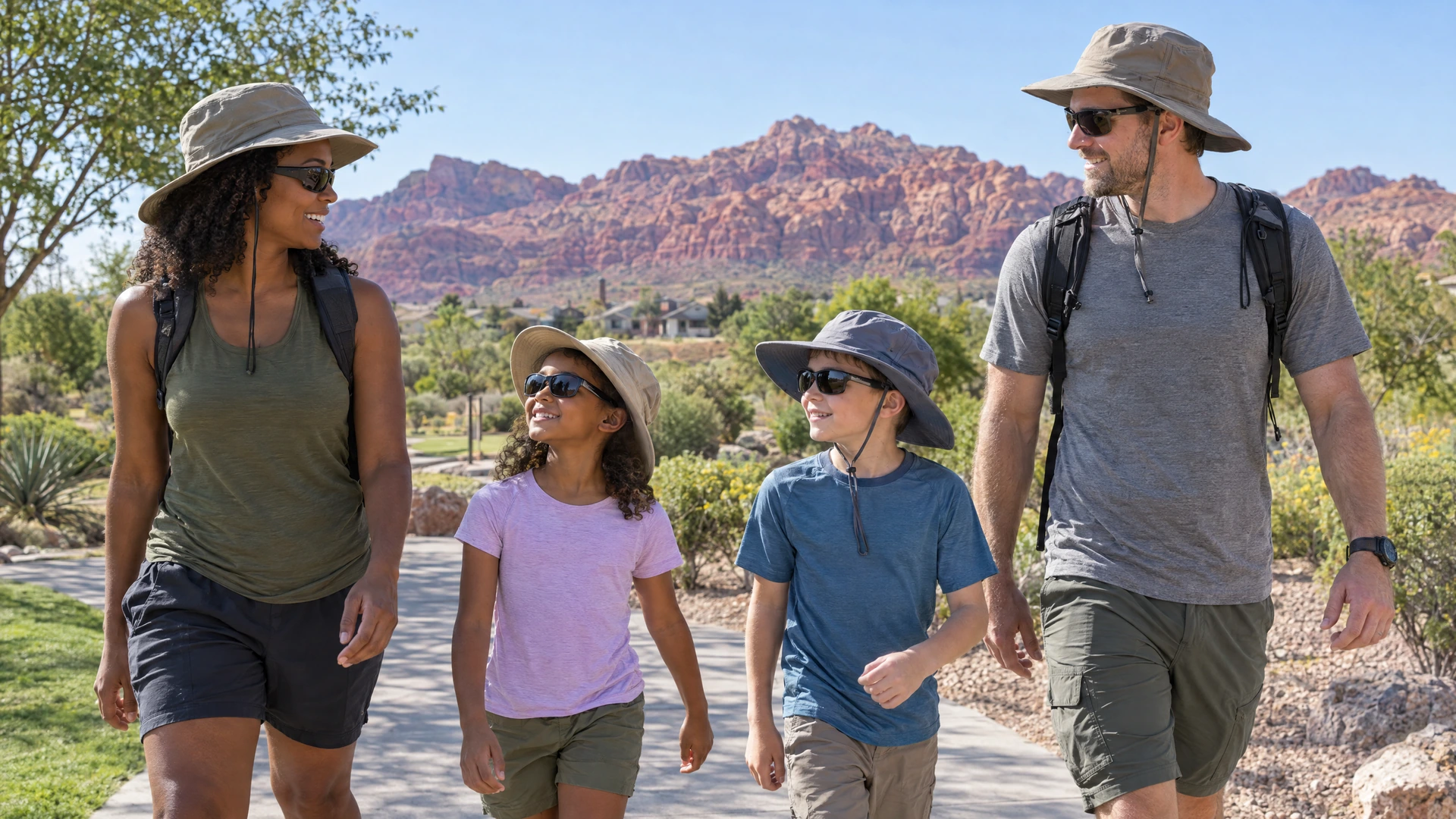
TLDR: Make UV protection for kids’ eyes part of your outdoor routine in Summerlin, with sunglasses, a broad-brimmed hat and planned shade. Check the lens protection label before choosing a frame. For sports, match eye protection to the activity.
Answer: Sun protection for children in Las Vegas starts with sunglasses selected for UV protection, a hat and a plan for outdoor time. Your child’s everyday sunglasses and sports eye protection serve different purposes. Read the lens label, check the fit and choose equipment for the activity before heading to a park or Red Rock trail.
Your child wants the playground. You want a morning outside without another argument over a hat. Put eye health on the packing list now, while the sunglasses are still within reach on the kitchen counter.
I am Dr. Amel Youssef, an optometrist and the founder of Vision by Amel. I reviewed 73 primary sources across five research lenses for this guide, and the sources distinguish sun protection from sports eye protection. Bring your questions about outdoor eye care to an eye exam, along with the eyewear your child already uses, and explore our eye exam services.
Why Does UV Protection for Kids’ Eyes Start Early?
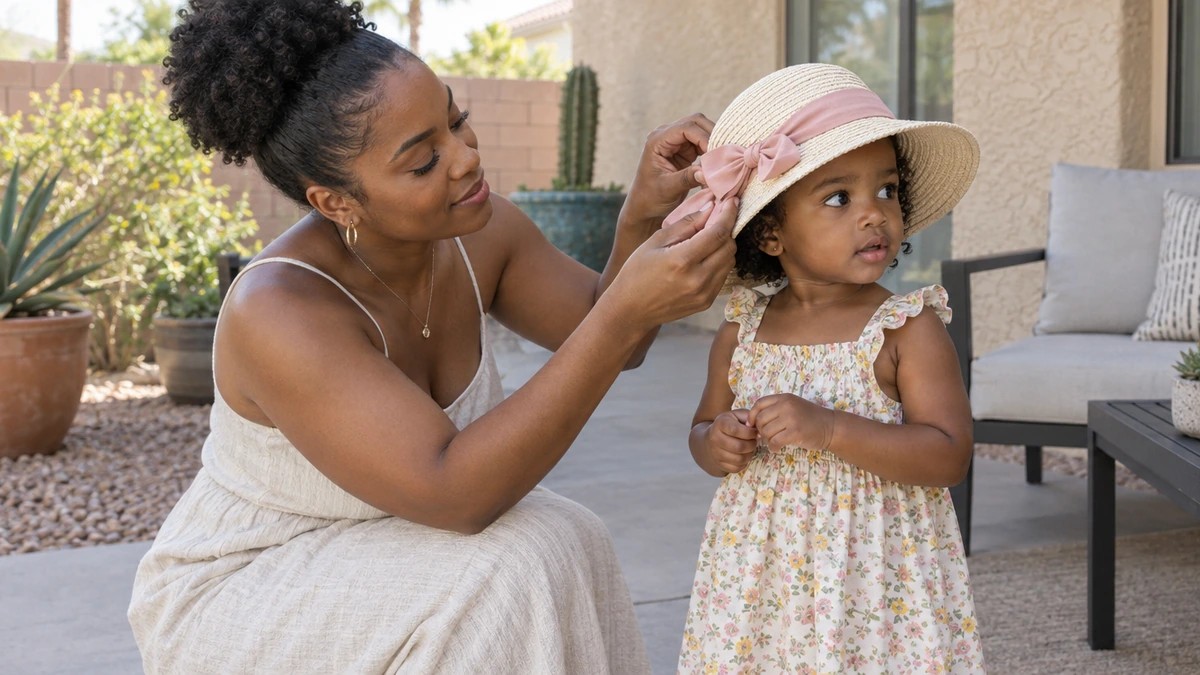
Start protecting your child’s eyes now. The Environmental Protection Agency links UV radiation to a greater likelihood of certain cataracts. That supports reducing exposure from childhood, without predicting your child’s future risk. The hat and sunglasses belong in the toddler bag, right next to the sunscreen.
Eye protection matters for today’s outing, too. The EPA UV Index guide describes painful corneal burns from excess UV, stronger UV at higher elevations and around reflective sand or water, and a seasonal peak from April through August followed by a fall decline and winter low. Make protection part of your usual departure routine, whether you are walking around the neighborhood or spending the morning near Red Rock. Start with the things you control: the gear, the timing and the shade.
A hat your child wears beats perfect sunglasses left on the counter. That is my practical starting point for children’s vision care outdoors. Keep working toward a comfortable pair of sunglasses alongside the hat, and let your child choose a color after you check the protection details. Cooperation starts before the front door opens.
How Does Las Vegas UV Change With the Seasons?
Plan by the season. Then check the day’s UV forecast before you leave. Use the EPA guide’s seasonal pattern above to plan ahead, then use the daily forecast to choose the time. Your October soccer schedule deserves a fresh check, even when the air finally feels cool.
| Season | Midday UV Window | Your Outdoor Plan |
|---|---|---|
| Spring | In the continental US, the CDC identifies the strongest UV window as 10 am to 4 pm daylight saving time, or 9 am to 3 pm standard time. | Check whether daylight saving time has begun before choosing your playground time. Check last season’s sunglasses and hats ahead of the EPA peak period described above. |
| Summer | Choose outings outside the daylight saving time window. Plan a shade stop before you leave for the park. | |
| Fall | Check whether standard time has resumed before choosing an outing time. Revisit your soccer sideline plans after the clock change, even when the air feels cool. | |
| Winter | Plan desert walks outside the standard time window when possible. Check the day’s forecast and take your hat and sunglasses. |
Use timing to reduce exposure. Early and late outings still get the hat and the sunglasses. Put them on your child before leaving for the playground. A quieter morning departure gives you room to check the fit before the slide wins everyone’s attention.
Pack the plan before you pack the car. Decide where your family will pause and where the glasses case will ride. Put it within your reach, above the spare clothes and snacks. Check before departure, while you are still beside the car.
What Eye Protection Does Your Child Need for Sports?
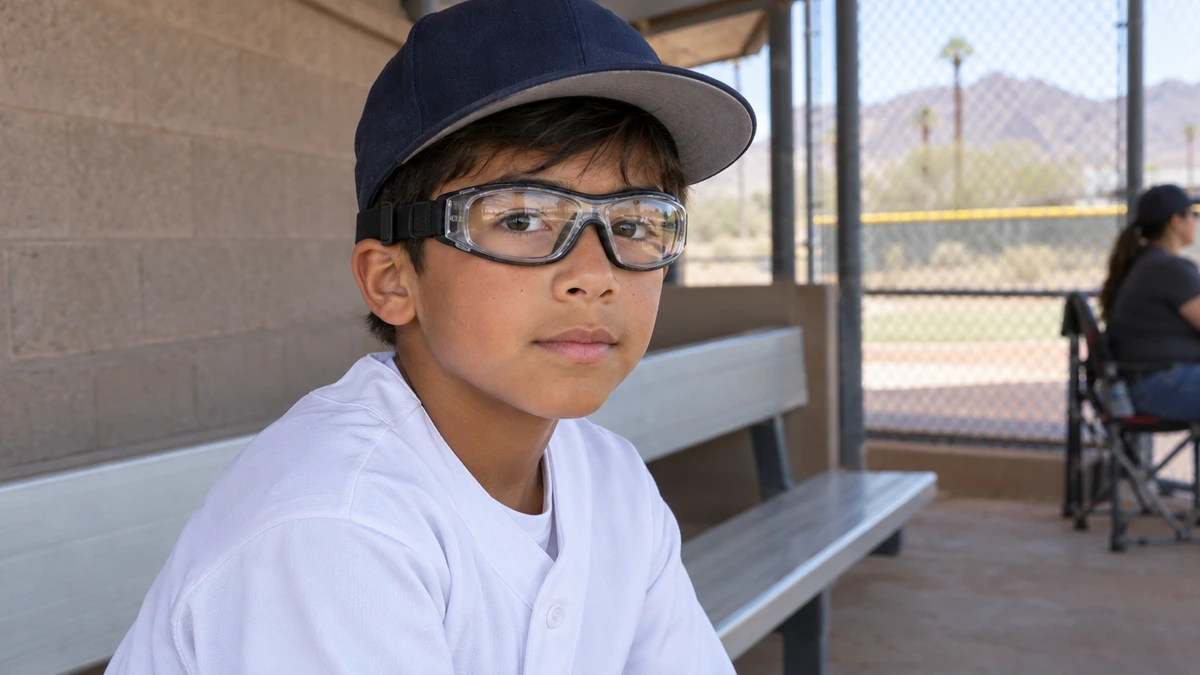
Match the protector to the game. Prevent Blindness recommends sport-specific protectors with polycarbonate lenses meeting the current applicable ASTM standard, because ordinary prescription glasses and sunglasses provide inadequate sports protection. Tell me which sport your child plays so we discuss the right protection question. The supplier should show you the applicable standard for the product you are considering.
Bring the helmet when you shop for the protector. Have your child wear the equipment together and point out anything that presses or shifts. Work through those fit problems with the seller before practice starts. A helmet change is a reason to check the combination again.
Shop with three facts: the sport, the prescription, indoors or out. Give the seller your details before looking at frame colors. For outdoor play, get separate confirmation of the sports standard and the UV protection. A sporty shape answers neither question.
Sunglasses are for the sun. Sports protectors are for the ball. Your child needs the right pair for each. For a child who already wears prescription glasses, bring the prescription information when shopping. My guide to signs your child needs glasses covers the everyday vision concerns to discuss with me.
How Do You Choose UV Protection for Kids’ Eyes?
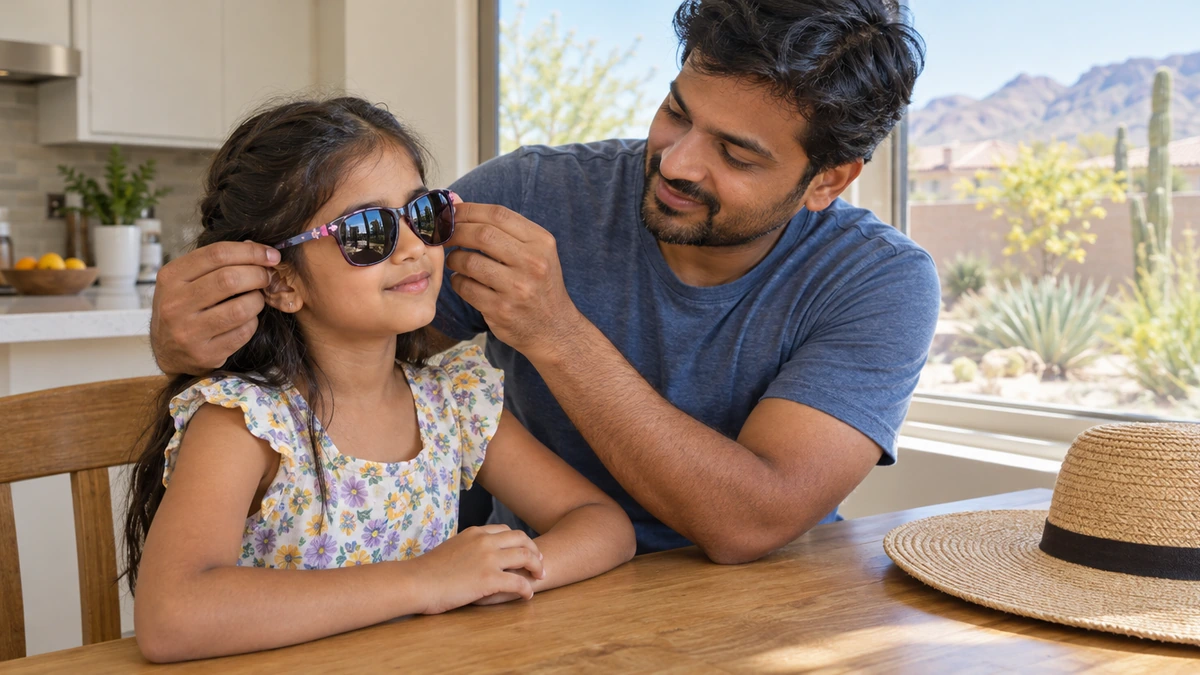
Read the label first. The US Food and Drug Administration says to choose UV400 or 100 percent UV protection on the label for protection against UVA and UVB, while warning that dark tint does not establish UV protection and toy sunglasses lack assured protection. Get the protection statement for the exact pair before your child falls in love with the frame.
Make comfort part of the decision. Let your child look down and turn their head while you watch the frame. Listen for pinching behind the ears or pressure around the nose, then try the hat alongside the glasses. The mirror shows the color, but the try-on reveals what needs attention.
- Check the protection statement for the exact lenses. Save the product information with your purchase records.
- Try the frame on your child. Let them point to any pressure instead of settling for a quick nod.
- Add the hat. Watch whether the brim or hatband pushes the glasses out of position.
- Name the intended activity. A park walk and a baseball practice call for different equipment decisions.
- Check the full setup before leaving. Let your child show you how the hat and glasses sit together.
Give your child a real choice. Set out the suitable options and let them pick a favorite. Then rehearse the departure at home, with shoes, hat and glasses together. Save the final decision until you have watched the whole setup in use.
How Do You Prepare for Summerlin Parks and Red Rock?
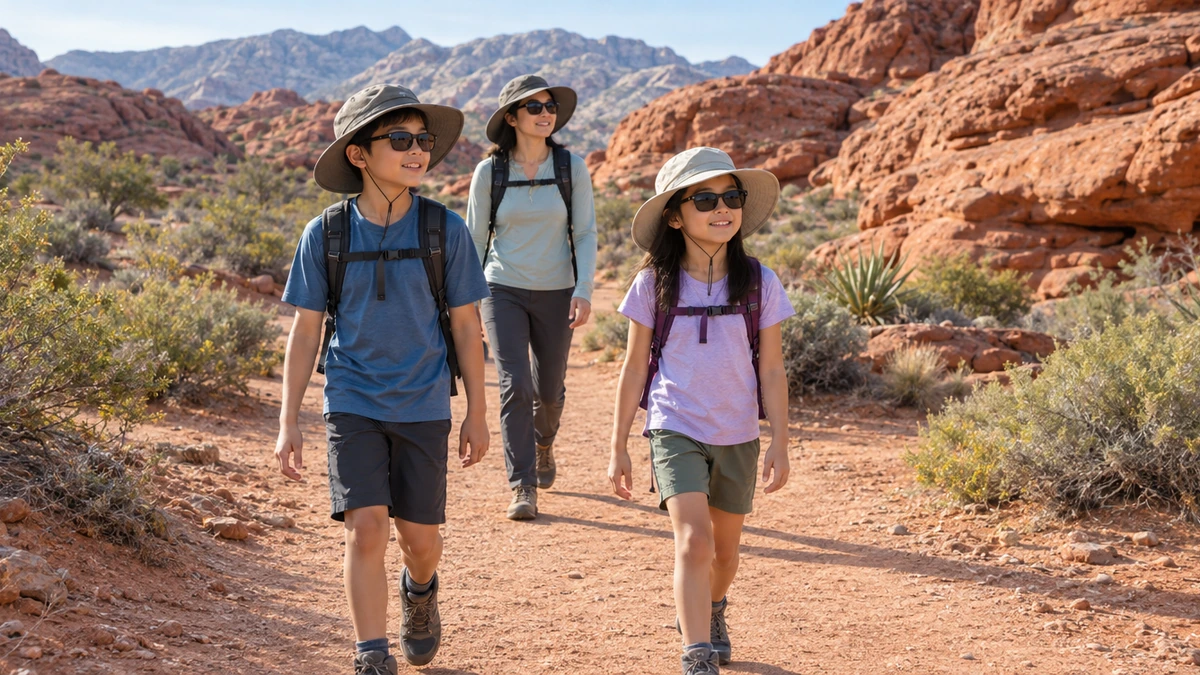
The trail matters as much as the forecast. Use the EPA guide’s elevation and reflection guidance above when planning your stops. Build shade stops into your route before leaving home. Look at where you will rest as carefully as where you will walk.
Get ready before the playground takes over. At a Summerlin park, put your child’s hat and sunglasses on before opening the car door for the dash to the swings. For Red Rock, check them alongside shoes and water at the trailhead. A familiar sequence makes the preparation clear.
Pack for every activity on your itinerary. A family walk followed by sports practice needs the appropriate eyewear for each. Put your walking gear and sports equipment together for a final check before leaving home. Gear left in the garage protects no one.
What to Bring Me About Your Child’s Outdoor Eyewear
Bring me the pair your child wears outside. Add its lens information and the name of any sport they play, so our conversation starts with specifics. At your pediatric eye exam, describe what slips, what pinches and what you want to understand about the prescription.
Start with the outing you have in mind. Describe the moment the glasses come off, whether your child removes them before the playground or leaves them behind before practice. Point to the part of the frame that bothers them instead of settling for a general complaint about comfort. Bring those details into our conversation about outdoor eyewear.
Bring me your questions about a comprehensive eye exam and the glasses your child uses outdoors. For the visit itself, my first eye exam guide explains how to prepare. Use our Downtown Summerlin page to plan your visit.
Frequently Asked Questions About Kids’ Sun Protection
What If My Toddler Refuses to Wear Sunglasses?
Start with the hat your child will keep on. The National Eye Institute identifies a hat as a practical option when sunglasses will not stay on. Treat it as a workable start while you keep trying sunglasses, rather than equal protection. Offer the glasses during a calm moment at home, before the excitement of the park.
Are Polarized Sunglasses Better for My Child’s UV Protection?
Read past the glare feature. The CDC travel guidance explains that polarization reduces glare but polarized or mirrored lenses provide no extra UV protection. Compare the UV protection statement separately when you shop, even when a product description leads with polarization.
What If I Cannot Find My Child’s Lens Information?
Contact the seller with your order details and ask for the lens material and UV protection statement. Request information for the exact lenses your child received, including any prescription replacement lenses. Keep that reply with the product records before deciding what to buy next.
What Should I Ask Before Buying Sunglasses Online?
Get the protection information for the exact frame and lens combination in your cart. Check the child sizing details and the seller’s process for handling a poor fit. Save the product description with your order, then compare it with the pair you receive.
How High Is the UV Index in Las Vegas, and When Is It Worst?
NOAA’s 2025 Las Vegas chart records 142 Very High or Extreme forecast days, peaks around 12 in June and July, and Low levels from roughly mid-November through January. These are city forecasts, separate from your child’s eye exposure. Use the seasonal pattern to choose an outing time, then check the day’s forecast before leaving.
Book My Eye Exam Call (702) 858-4362
Like this article? Add Vision by Amel as a preferred source, and you are more likely to see our articles in Google’s Top Stories.
