Category: Children’s Eye Conditions

Lazy eye, crossed or wandering eyes and other common childhood eye conditions, explained for Las Vegas and Summerlin parents.

  • Eye Injuries in Kids: First Aid Every Las Vegas Parent Should Know
    Eye Injuries in Kids: First Aid Every Las Vegas Parent Should Know

    Eye Injuries in Kids: First Aid Every Las Vegas Parent Should Know

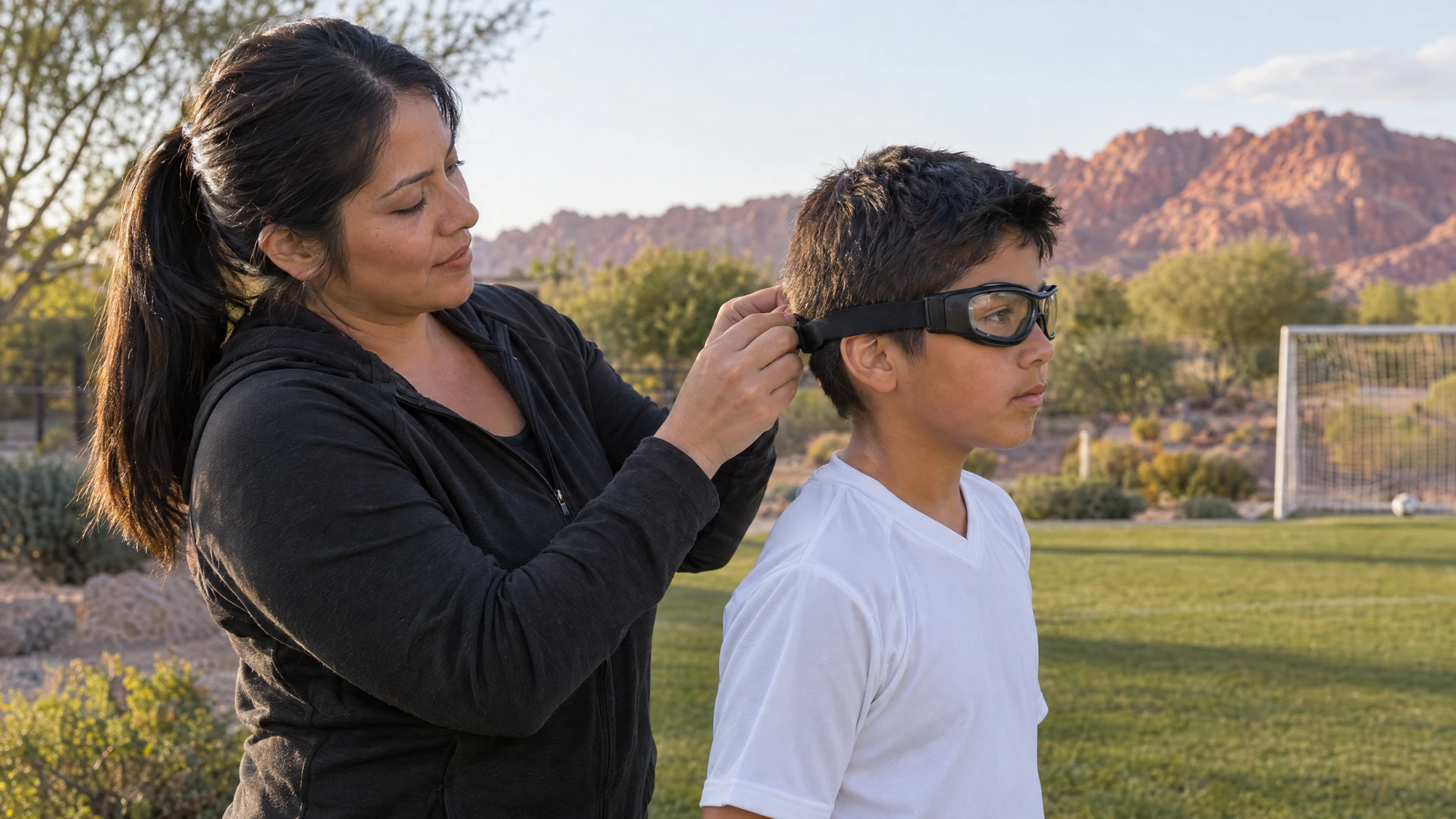
    Mother adjusts a Latino boy's sports goggles on a soccer field, prevention of eye injuries in kids

    TLDR: For chemical eye injuries in kids, flush your child’s eye with water right away and get emergency care. For a cut, puncture or embedded object, protect the eye without pressure, do not rinse or remove the object, and go to the ER right away. Vision changes after an injury also need the ER right away.

    Answer: First aid for eye injuries in kids depends on what happened. Flush a chemical splash with water right away, for at least 15 minutes. Never rinse a cut, a puncture or a fireworks injury, and leave any stuck object in place. Use a cold compress without pressure after a blow. In Las Vegas, take your child to the ER right away for any serious injury.

    You are on the soccer sideline in Summerlin when a ball catches your child in the face. The game stops, and you need a clear next step. I reviewed 168 primary sources across five research lenses for this guide, and chemical splashes and punctures require different first aid.

    Get emergency help right away if your child has any of these serious injury signs listed by the American Academy of Ophthalmology: ongoing pain, trouble seeing, cut eyelid, one eye not moving as well, one eye sticking out, odd pupil, blood in the eye, something that will not come out. Go to the ER rather than waiting for a routine eye exam. Once the emergency is handled, my eye exams overview explains the follow-up visit.

    What Should You Do After a Chemical Splash?
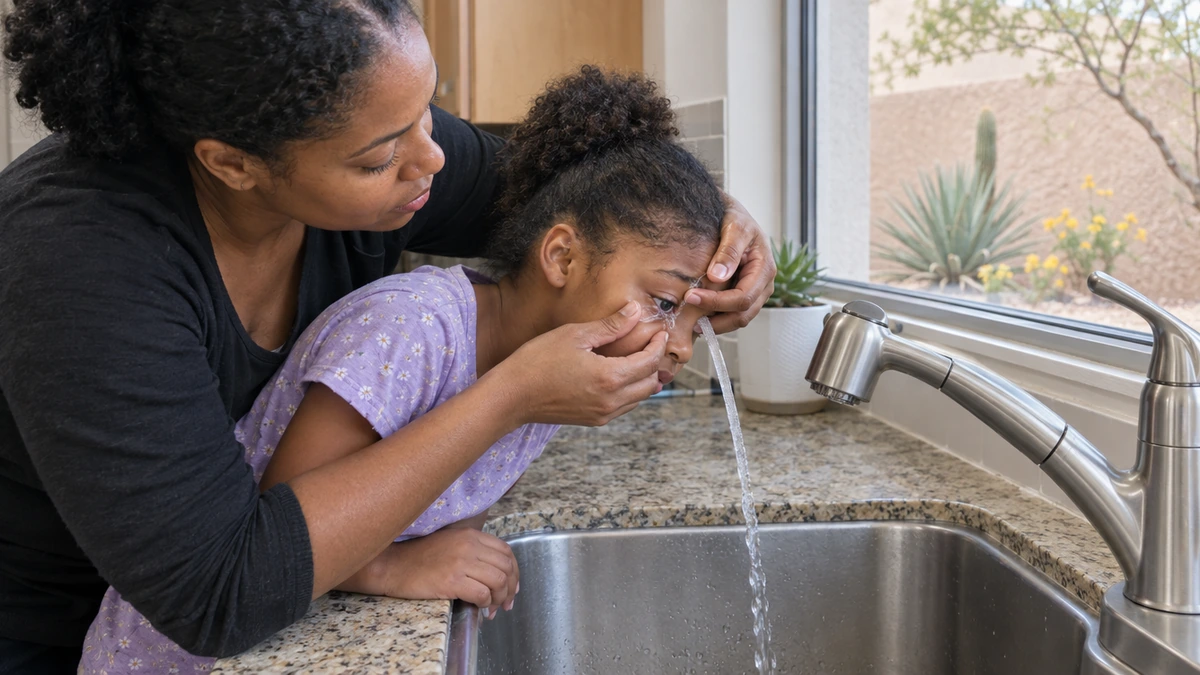
    Black mother rinses her daughter's eye at a kitchen sink, first aid for chemical eye injuries in kids
    A mother rinses her daughter's eye under a gentle stream at the kitchen sink.

    Start flushing right away. Hold your child’s eye open under a faucet or shower, and continue flushing with water for at least 15 minutes, as Prevent Blindness directs. Get emergency care right away after flushing. Do not delay rinsing to find special eyewash or book a visit.

    1. Move straight to running water, the kitchen sink or the shower. At a park or in the car, use bottled water or any drinkable liquid.
    2. Hold the affected eye open so water reaches it. Start rinsing before searching for the product’s ingredients.
    3. Keep flushing for at least 15 minutes by the clock. Another adult calls for emergency help while you stay with your child.
    4. Leave the eye unbandaged. Head for emergency care once flushing is complete.

    A spray bottle tips while you clean a Las Vegas kitchen, and your child cries out beside the sink. Your first job is getting water into the affected eye. The bottle and phone wait while you start flushing. A second adult is useful here: one stays at the sink, the other handles the next steps.

    Prevention starts under your sink. Chemical products were the leading cause (34.2%) of product-related eye injuries in children younger than 5 treated in US emergency rooms from 1997 to 2019, a study in Ophthalmic Epidemiology found. Lock cleaners up high and out of your child’s reach. A sharp object or a fireworks injury needs the different steps below.

    Which First Aid Fits Eye Injuries in Kids?
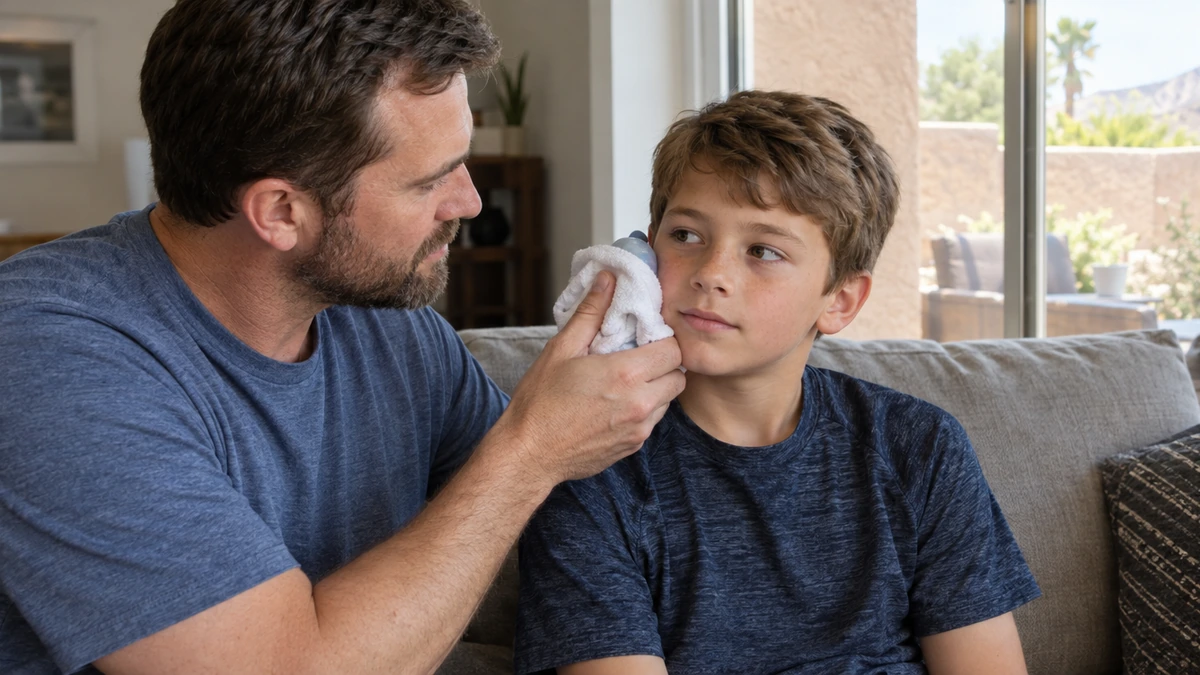
    White father holds a wrapped cold pack near his son's cheek, first aid for eye injuries in kids
    A father holds a cloth-wrapped cold pack near his son's cheek, away from the eye.

    Match your response to the injury. The American Academy of Ophthalmology recommends a cold compress without pressure after a blow, a shield without rinsing for a puncture, and prompt examination even when an injury seems minor. A toy edge, a flying fragment and a loose grain of dust call for different decisions. Use this table to choose the first action, then follow the emergency signs above.

    What HappenedYour First ActionWhen to Get Help
    Loose sand or dustEncourage blinking and let tears wash it out. Do not rub or use tweezers.Get help right away when the speck stays or the feeling persists.
    Ball, elbow or toy hits the eyeApply a small cold compress without pressure.Go to the ER right away for pain, blurry vision, one eye sticking out, blood inside the eye or a black eye.
    Cut, puncture or object embedded in the eyeProtect with a rigid shield without pressure. Do not rinse or remove the object.Go to the ER right away.
    Possible scratch after contact with a toy or fingerPrevent rubbing. Do not put ointment or medication into the eye yourself.Arrange examination as soon as possible. Serious injury signs mean emergency help right away.

    Loose dust often washes away with tears. Metal, glass and other man-made fragments are more serious than dust, because they sometimes embed in the eye. Your role is to prevent rubbing and get help, not to explore beneath the eyelid with a household tool. Do not attempt to remove an embedded fragment.

    For a cut or puncture, never rinse the eye, never rub it and never pull out a stuck object. Tape a rigid shield, or the bottom half of a paper cup, to your child’s brow and cheekbone so nothing presses on the eye. Then go to the ER right away.

    A cold compress is first aid, not permission to resume the game. Your child still needs emergency care right away for the warning signs in the table. I would rather interrupt a game than let a child’s wish to play decide whether an injured eye gets checked.

    What Changes After a Fireworks Injury?

    South Asian family on a Summerlin patio at dusk, children in safety glasses, eye injuries in kids
    A family stands together on a Summerlin patio at dusk, the children in safety glasses.

    A fireworks eye injury is an emergency: call 911 or get emergency care right away, following the American Academy of Ophthalmology guidance. Do not rub, rinse, press or remove anything stuck in your child’s eye. These instructions apply even when you think a burn or chemical caused the problem. Follow the emergency dispatcher’s directions.

    The safest July 4 plan for your family is a professional show, says the American Academy of Ophthalmology, which warns that bystanders, especially children, are at high risk around home fireworks. Safety glasses and a few extra steps of distance do not make a backyard show safe for your child. Planning a Summerlin patio evening anyway? Decide in daylight who stays with the children and who makes the 911 call.

    You do not need to identify the exact injury before seeking help. Describe the firework, where your child was standing and what happened next. Do not spend that time searching for drops or trying to wash away debris. Get emergency help right away.

    How Do You Protect Eyes Before Play Starts?
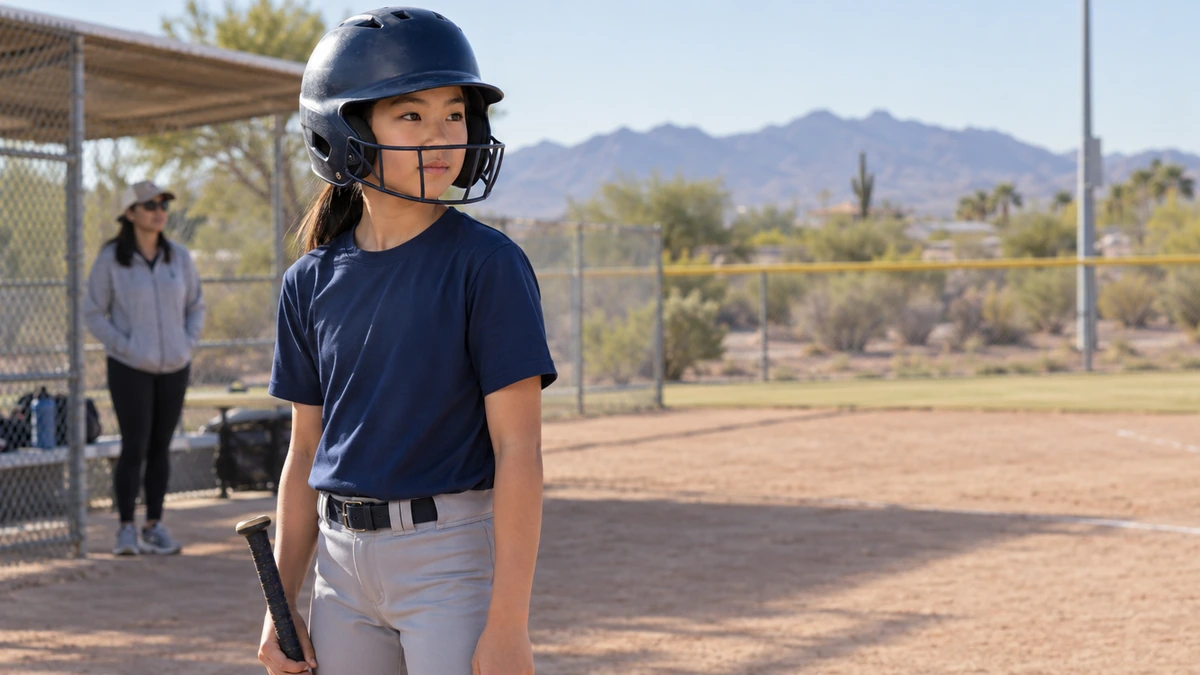
    East Asian girl wears a batting helmet with a face guard at practice, prevention of eye injuries in kids
    A girl in a batting helmet with a face guard waits at baseball practice.

    Choose protection for the sport. Sports eyewear has to meet that sport’s own requirements, says the American Academy of Ophthalmology, and everyday glasses do not protect against impact. No safety eyewear is foolproof, the AAO adds, yet the right pair lowers your child’s risk. My guide to sun and sports eyewear for kids covers lens and frame choices.

    At a youth baseball practice, your child has a helmet, a glove and a bag full of equipment. Put eye protection on that packing list before leaving home. Ask which protection fits the sport and works with the helmet or face guard. I consider protective eyewear part of getting dressed for sport.

    • Name the activity when choosing protection, whether soccer, basketball or baseball.
    • Check the protector’s sport labeling instead of relying on its appearance.
    • Include prescription needs in the discussion.
    • Pack the protection with the equipment your child already takes to practice.

    How I Approach Your Child’s Follow-Up at Vision by Amel

    The ER handles the emergency. Routine eye care comes after, and that is where I fit in for your child. I am Dr. Amel Youssef, founder and optometrist at Vision by Amel in Downtown Summerlin at Festival Plaza, and children’s eye care is central to my work. Follow the treating team’s plan first, then book your child’s follow-up visit with me.

    Your child’s story comes first: what happened, what the ER did and what still worries you. Then I examine your child’s eyes with digital diagnostics and walk you through a plan for your child’s eye health. You leave knowing what to watch for and when to come back.

    For a non-urgent pediatric eye exam, my team accepts online bookings or phone calls. You do not need a referral for an eye exam. Lens wearers need their own rules, and my contact lens guide for kids and teens lays them out for your family. Save the booking options below for planned care after urgent needs have been addressed.

    Frequently Asked Questions About Eye Injuries in Kids

    My Child Got a Chemical in Their Eye. What Should I Do?

    Flush with water right away, then get emergency care right away. When your child wears a contact lens, start flushing over it immediately rather than stopping to remove it, as Prevent Blindness advises. Take the chemical label to the ER if possible, without delaying care.

    Something Is Stuck in My Child’s Eye. Should I Rinse It or Go to the ER?

    Loose dust and an embedded object need different responses. For a loose speck, blinking and tears are appropriate, but an object stuck in your child’s eye needs protection without rinsing or removal and the ER right away. A lingering feeling of something in the eye still needs help right away even when you no longer see a speck.

    My Child Got Hit in the Eye. When Should We Go to the ER?

    Go right away for pain, blurry vision, one eye sticking out, blood inside the eye or a black eye. A light blow still deserves attention because even a small impact risks serious internal injury. Use a cold compress without pressure while getting help for your child, and avoid steaks or other food against the eye because they introduce bacteria.

    Are Sparklers and Fireworks Safe for Kids?

    No. Sparklers burn at about 2,000 degrees Fahrenheit, the American Academy of Ophthalmology notes, and young children should never handle them. Watching nearby still carries a risk of injury, which is why the AAO points your family to a professional show. Plan the celebration around that choice.

    Does My Child Need Different Eye Protection for Each Sport?

    Your child needs protection made and labeled for the specific sport, including when wearing contacts. The Prevent Blindness sports guide lists different standards for different activities, so check the current requirement with your eye doctor or league. Name each sport your child plays rather than assuming one protector suits them all.

    Book My Eye Exam Call (702) 858-4362

    Like this article? Add Vision by Amel as a preferred source, and you are more likely to see our articles in Google’s Top Stories.

    Add as a preferred source on Google

  • Color Blindness in Children: Signs, Testing and School Tips

    Color Blindness in Children: Signs, Testing and School Tips

    Color Blindness in Children: Signs, Testing and School Tips

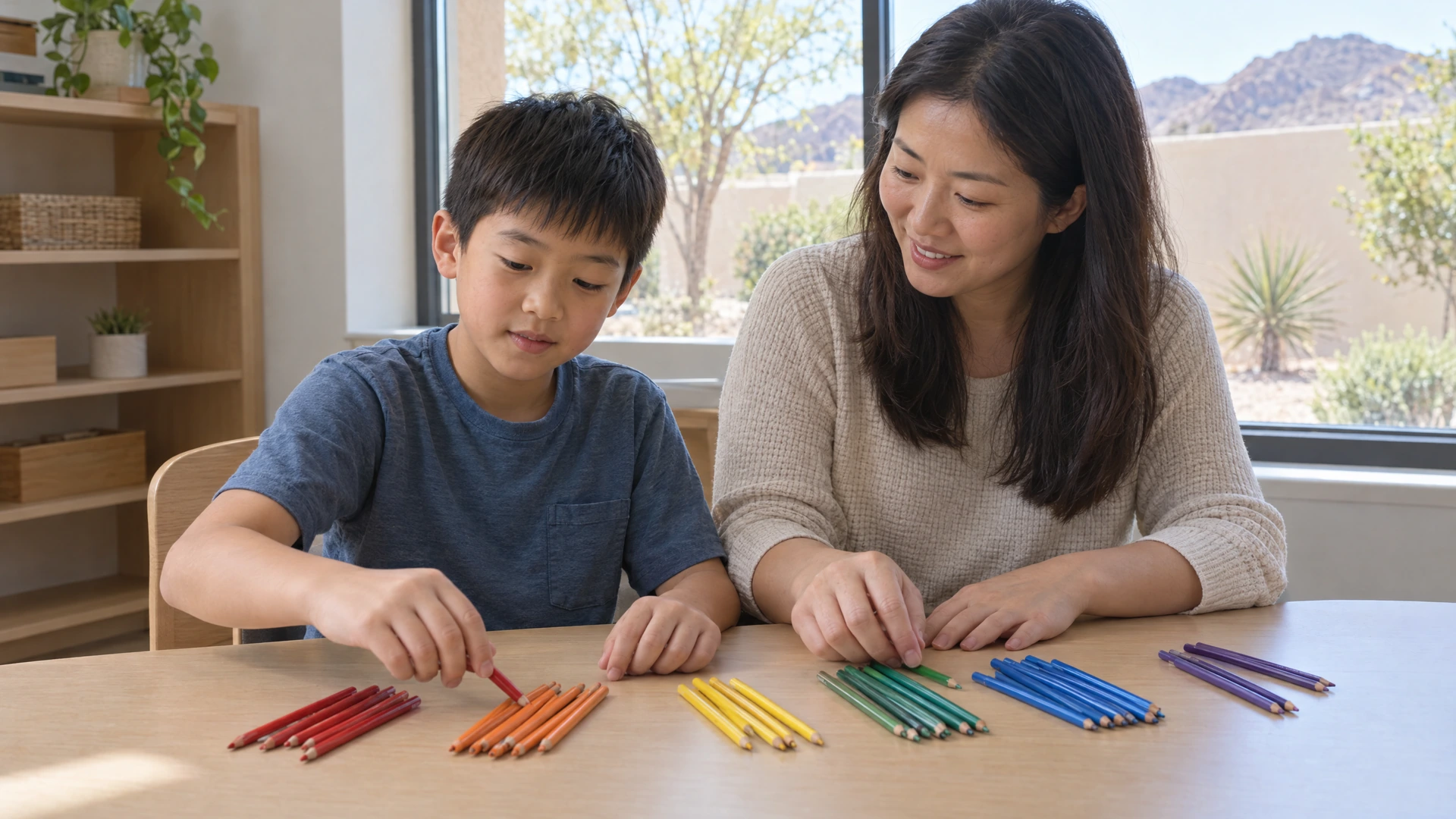
    Mother helping her son sort colored pencils at a table, color blindness in children

    TLDR: Repeated color mix-ups deserve attention: color blindness in children usually means difficulty telling certain colors apart. An eye exam helps identify what your child sees, while clear labels and classroom changes make color-based tasks easier to follow.

    Answer: Color blindness in children usually shows up as the same color mix-ups, again and again, often while your child is learning colors. In Las Vegas, an eye exam with a color vision test tells you what your child sees. Inherited color blindness has no cure and lasts for life, yet simple school changes help. A new change in color vision needs an eye exam promptly.

    Your child reaches for a brown pencil when the worksheet asks for green. You explain the instruction again, yet the same mix-up returns tomorrow. As an optometrist, I read a repeated mix-up as a clue, never as careless work. A comprehensive eye exam gives us a place to investigate, and our eye exams page explains the visit.

    I reviewed 168 primary sources across five research lenses for this guide, and inherited color vision deficiency is lifelong. The National Eye Institute recommends testing when your child struggles to learn colors or has a family history of color vision deficiency. For parents in Summerlin, those details help me understand what prompted your visit. Good children’s vision care starts with understanding the task your child finds hard.

    What Signs Suggest Color Blindness in Children?

    Father and son pointing at fruit in a produce aisle, color blindness in children
    A father and son point at apples in a grocery produce aisle.

    One mix-up means nothing. A pattern means something. You ask for a green apple at the Las Vegas grocery store after school pickup, and your child hovers between the red and the green. Point to the right one, keep shopping, and watch whether the same pair trips your child up with pencils, socks or worksheets.

    Unusual coloring choices are a possible clue: AAPOS describes children drawing orange grass or a purple sky, and notes that most people with a color deficit still see some colors and often do not know they see differently. Let your child tell you about the drawing. Start with a neutral question about the picture. Let your child explain whether the choice was deliberate or whether the pencils looked alike.

    • Which colors trip your child up, again and again?
    • Did the mix-ups start early, or are they new?
    • Does anyone in the family have color blindness?
    • Do they show up in color-coded schoolwork?

    Leave room for creativity. Your child is allowed to invent orange grass without defending it. I would rather hear about a repeated difficulty than judge a child by a drawing. Let the picture stay play, so every art project does not become another test.

    What Does Color Blindness in Children Mean?

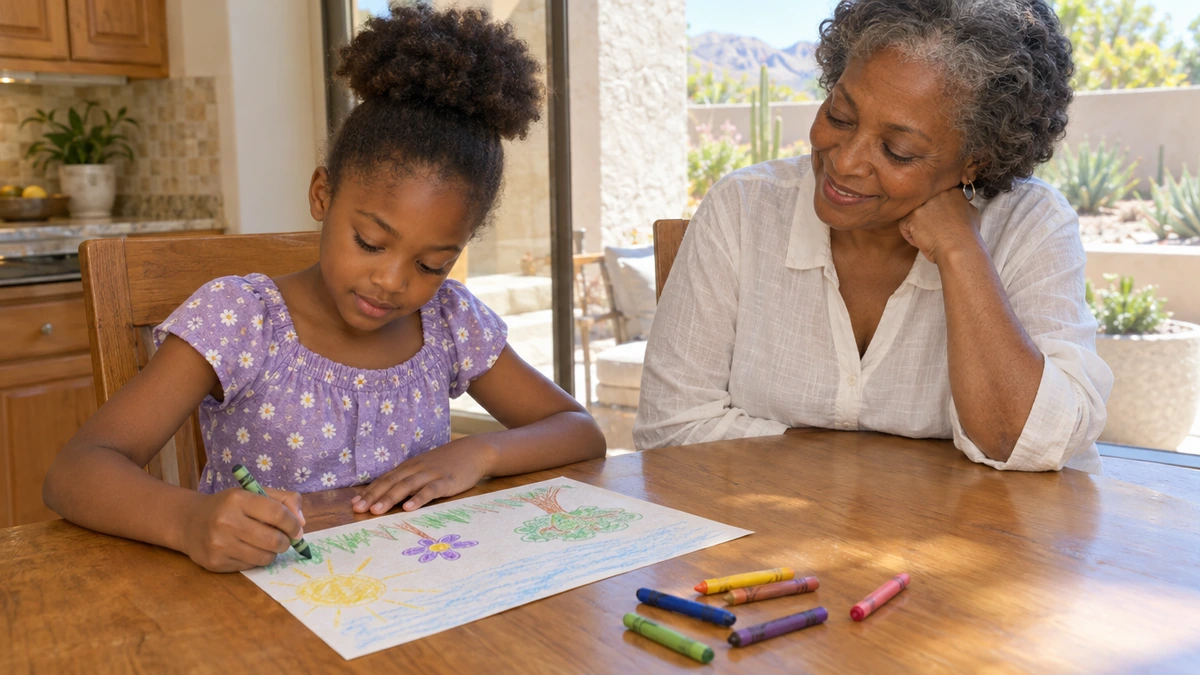
    Girl drawing with crayons as her grandmother watches at a kitchen table, color blindness in children
    A girl draws with crayons while her grandmother watches.

    Color vision deficiency is the more precise name. Your child sees color and uses the same color words you do, yet some pairs of shades look alike. The term describes a difference in perception, never a lack of effort from your child.

    Inherited red-green deficiency is more common in boys because it passes through the X chromosome, as the National Eye Institute explains. Other inherited types, including blue-yellow and complete color vision deficiency, affect the sexes equally. Your daughter’s repeated color confusion needs attention too. Sex alone does not settle the question.

    Inherited color differences remain stable throughout life. You do not need to turn practice with color names into a daily drill intended to change them. At a sunny Summerlin kitchen table, let your child describe the picture they are drawing before you sort the crayons together. Use the activity to learn which materials need clearer identification.

    How Is Color Vision Tested?

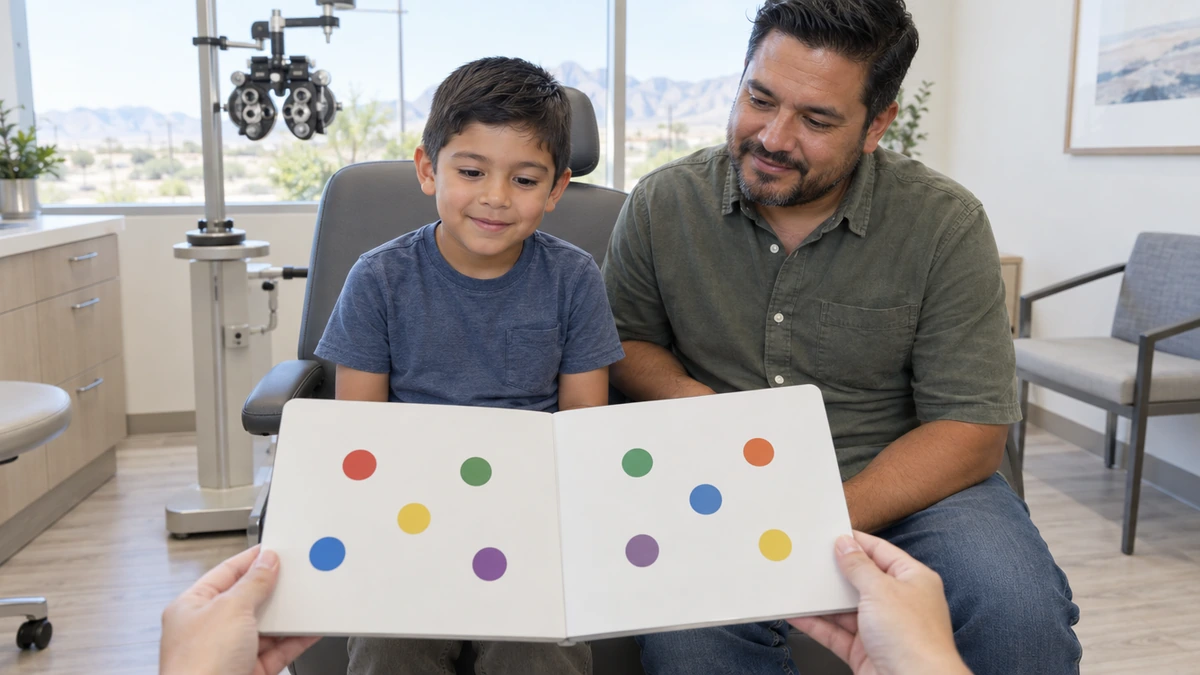
    Clinician hands holding a color plate book before a boy beside his father, color blindness in children
    An eye doctor's hands hold a color plate book for a boy and his father.

    A color vision test asks about color differences directly. The National Eye Institute describes a plate test with a shape hidden among colored dots, followed by other tests when results are unclear. Your child’s task is to describe what they see. There is no benefit in rehearsing the answers.

    Open your child’s pediatric eye exam with the color question. Name the exact task: the crayon, the colored chart, the sorting game. What did your child do before you stepped in? One real example tells me more than a general worry about colors.

    A home color check raises a question, never a final diagnosis. Age matters too. In the MEPEDS study, only 17% of children younger than 37 months finished a color test, against 98% at 61 to 72 months, so a toddler’s shaky result is not a diagnosis. Our guide to school screening and a comprehensive exam explains what a school screening covers, and what to expect at your child’s first exam walks you through the visit.

    What If Colors Suddenly Look Different?

    A new change in how your child sees color is a different problem from inherited color blindness, and it needs an eye exam promptly. The American Academy of Ophthalmology says anyone with a significant change in color perception should see an ophthalmologist, because an acquired change sometimes signals a more serious condition. I check for the cause and refer you to an ophthalmologist when your child needs one. Never explain it away as the color difference a relative has.

    Acquired changes come from other causes, including some diseases, some medicines and injury to the retina, optic nerve or brain, and the National Eye Institute says the doctor then treats the condition behind the change. Share when your child first noticed it, whether it affects one eye or both, and any recent illness, injury or new medicine. That timeline points the exam in the right direction.

    Color and sharpness are separate jobs. Blur, squinting at the board or headaches each need their own answer for your child. A known color difference never explains away a new eye complaint.

    How Do You Make School and Daily Life Easier?

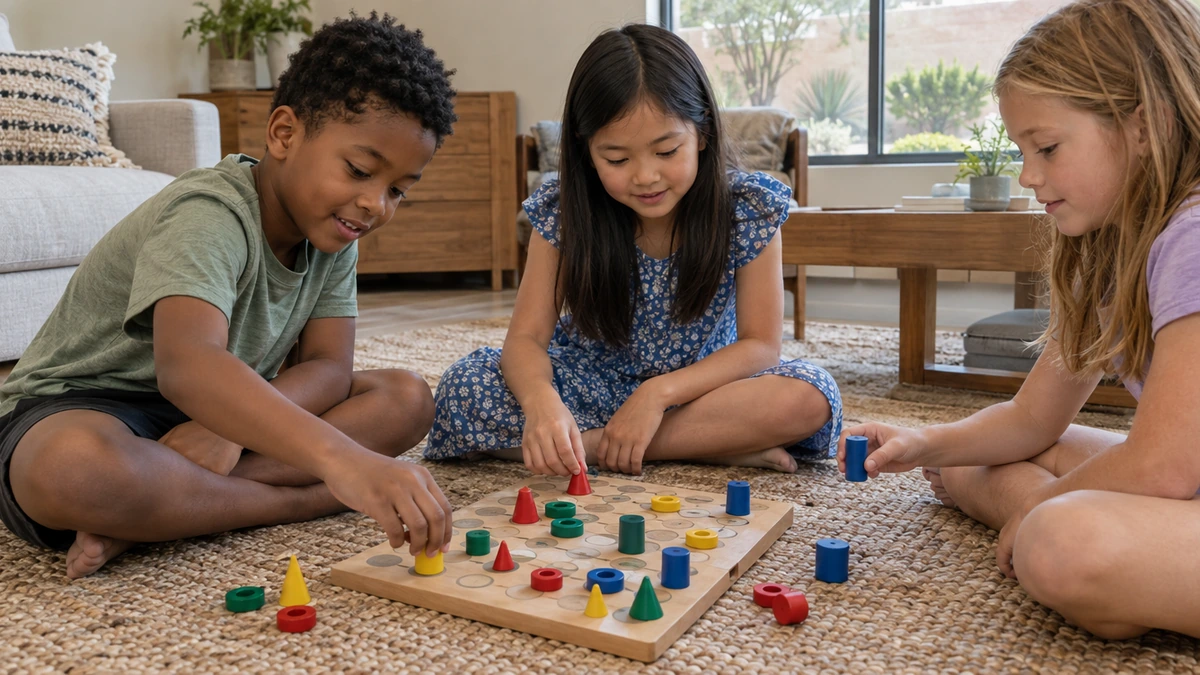
    Three children playing a board game with colored pieces on a rug, color blindness in children
    Three children play a board game with pieces in different shapes.

    Give your child another way to identify things. AAPOS recommends informing teachers, labeling coloring tools and using black ink on white reading paper. Start with the materials your child already uses. The changes below put those principles into everyday tasks.

    Color-Based TaskPractical AdjustmentExample to Try
    Choosing pencils or crayonsAdd readable color namesLabel the green pencil so your child has a written cue.
    Reading a worksheetUse black text on white paperReplace pale colored instructions with a clear black printout.
    Following a chartAdd names or distinct patternsIdentify a group by its name as well as its colored box.
    Playing a board gameChoose pieces with different shapesLet your child use the cone while another player uses the ring.
    Finding a school folderAdd a subject labelWrite the subject on the front instead of relying on folder color.

    Hand the teacher the worksheet that tripped your child up. Point to the color cue, agree on a word or a shape to replace it, and the fix is done. I want classroom instructions to reward understanding rather than color guessing.

    1. Share the confirmed color vision finding with your child’s teacher.
    2. Review an actual task together, including its key or instructions.
    3. Add words, shapes or patterns wherever color carries the answer.
    4. Check back with your child about which changes help them follow the task.

    Use the same approach at home. On the living room rug, choose game pieces by shape and let your child name their piece before play begins. During a Summerlin school morning, identify the homework folder by its subject label instead of calling across the room for the red one. These are practical ways to make instructions clearer, with no promise about grades.

    How I Approach Color Vision Concerns at Vision by Amel

    Your examples belong in the history. At Vision by Amel, my evaluation includes binocular vision, a color vision test where needed and eye disease screening. My Visionix digital diagnostics back up that evaluation, and I explain each finding to you in plain language. The visit connects your concern with a plan for your child’s eye health.

    You do not need to arrive with a diagnosis. Bring the work sample, your observations and any relevant family history. My team and I offer eye care for children, and a color concern is worth mentioning when you book. For a routine exam about longstanding color mix-ups, no referral is needed.

    Your visit is at 2010 Festival Plaza Dr, Suite 195, Las Vegas, NV 89135, inside Festival Plaza at my Downtown Summerlin office. Book online or call (702) 858-4362, and name color vision as the concern so I know what brought you in.

    Frequently Asked Questions About Color Blindness in Children

    How Do I Know If My Child Is Color Blind?

    Repeated mix-ups while your child learns colors, or a family history of color blindness, are reasons to test, says the National Eye Institute, and some children hide the difficulty. Color blindness rarely blurs vision: except in the most severe form, sharpness stays normal, the American Academy of Ophthalmology notes. A child who squints at the board needs a separate check.

    How Common Is Color Blindness in Boys and Girls?

    In the MEPEDS study of Southern California preschoolers, color vision deficiency showed up in 1.4% of Black boys, 3.1% of Asian boys, 2.6% of Hispanic boys and 5.6% of non-Hispanic white boys. Red-green color blindness is rare in girls, because a girl needs the gene on both X chromosomes, the National Eye Institute explains, while blue-yellow and complete types affect boys and girls equally. These are study figures, not Las Vegas rates or a forecast for your child.

    Can Color Blindness Be Cured?

    No cure exists for inherited color blindness, the National Eye Institute says, and most people adjust to it, with no trouble in everyday activities. When another health problem causes a change in color vision, the doctor treats that cause. For your child, put the effort into the tasks that rely on color.

    How Do Eye Doctors Test Kids for Color Blindness?

    Eye doctors use a color plate test, a shape hidden among colored dots, and add other tests when the result is unclear. By about age 4, most children are able to finish a color test, the MEPEDS study found, so a preschool exam is a good time to check your child. A recent drawing or worksheet that shows the mix-up helps too.

    How Can I Help My Color Blind Child at School?

    Share the finding with adults who teach your child beyond the main classroom, including art and physical education teachers. Review instructions for group assignments and activities as well as reading pages. A group name, spoken direction or distinct shape gives your child another way to follow along.

    Book My Eye Exam Call (702) 858-4362

    Like this article? Add Vision by Amel as a preferred source, and you are more likely to see our articles in Google’s Top Stories.

    Add as a preferred source on Google

  • Styes and Eyelid Bumps in Kids: When to Treat at Home and When to Call

    Styes and Eyelid Bumps in Kids: When to Treat at Home and When to Call

    Styes and Eyelid Bumps in Kids: When to Treat at Home and When to Call

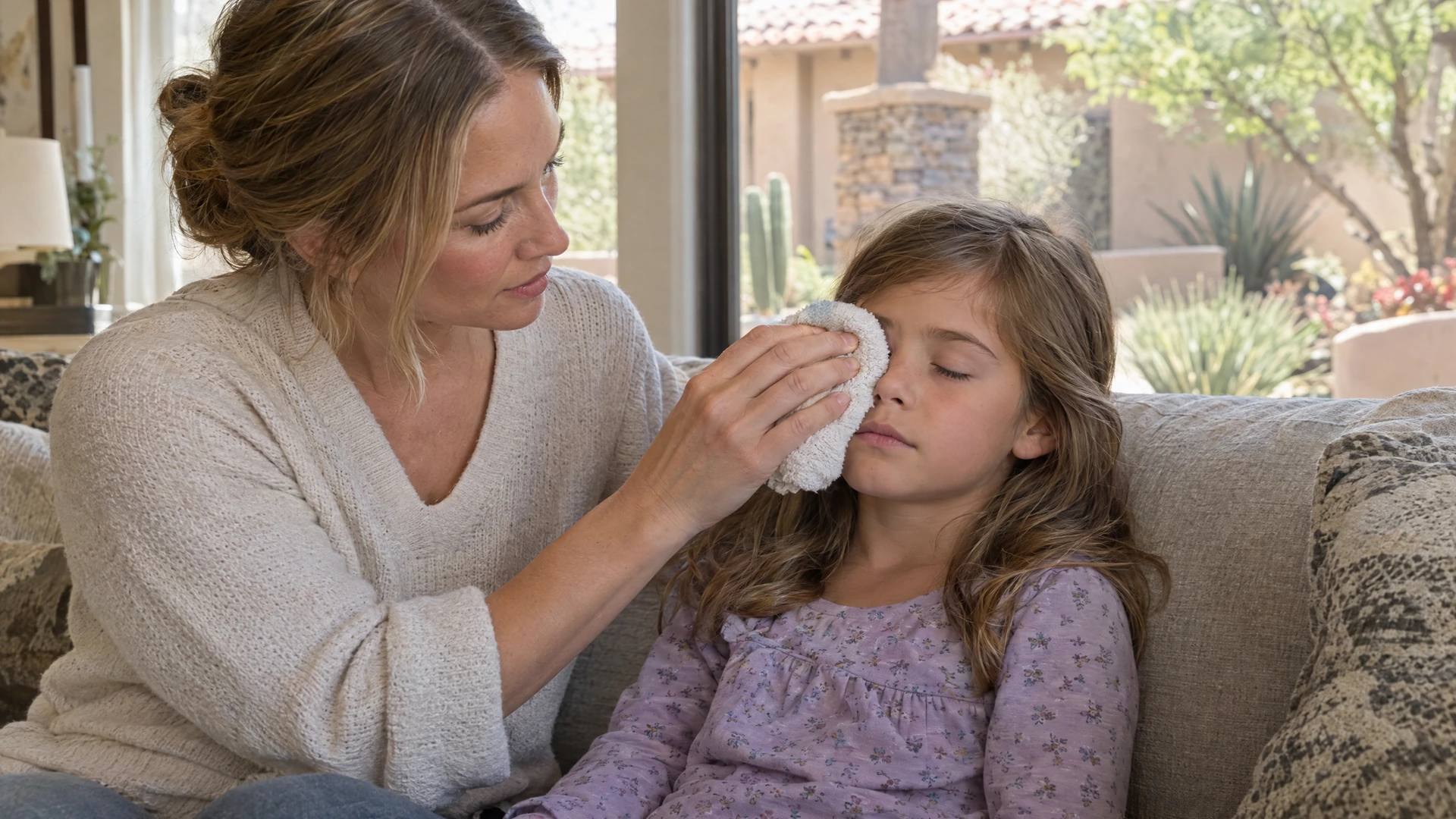
    White mother holding a warm washcloth to her daughter's closed eye for stye in kids care

    TLDR: A stye in kids needs gentle care: a clean warm compress, no squeezing, and attention to changes in your child’s symptoms. Call for an eye exam when a bump persists or returns. Get care right away for spreading redness or swelling around the eye, fever, vision change, or pain moving the eye.

    Answer: For families in Las Vegas, a small eyelid bump without warning signs often starts with warm compresses at home. A stye involves infection, while a chalazion involves a blocked oil gland. Arrange an exam for a lasting or recurring bump, and seek care right away when your child has spreading swelling, fever, vision change, or pain moving the eye.

    You’re getting ready for school in Summerlin when your child points to a bump in the bathroom mirror. Shoes are waiting by the door. You need to know whether to reach for a washcloth, call for an appointment, or leave for urgent care.

    I reviewed 168 primary sources across five research lenses for this guide, and a blocked eyelid gland is different from an infected one. That distinction helps you understand the next step. My eye examination service gives you a place to start for a persistent bump without emergency symptoms.

    Is It a Stye in Kids or a Chalazion?

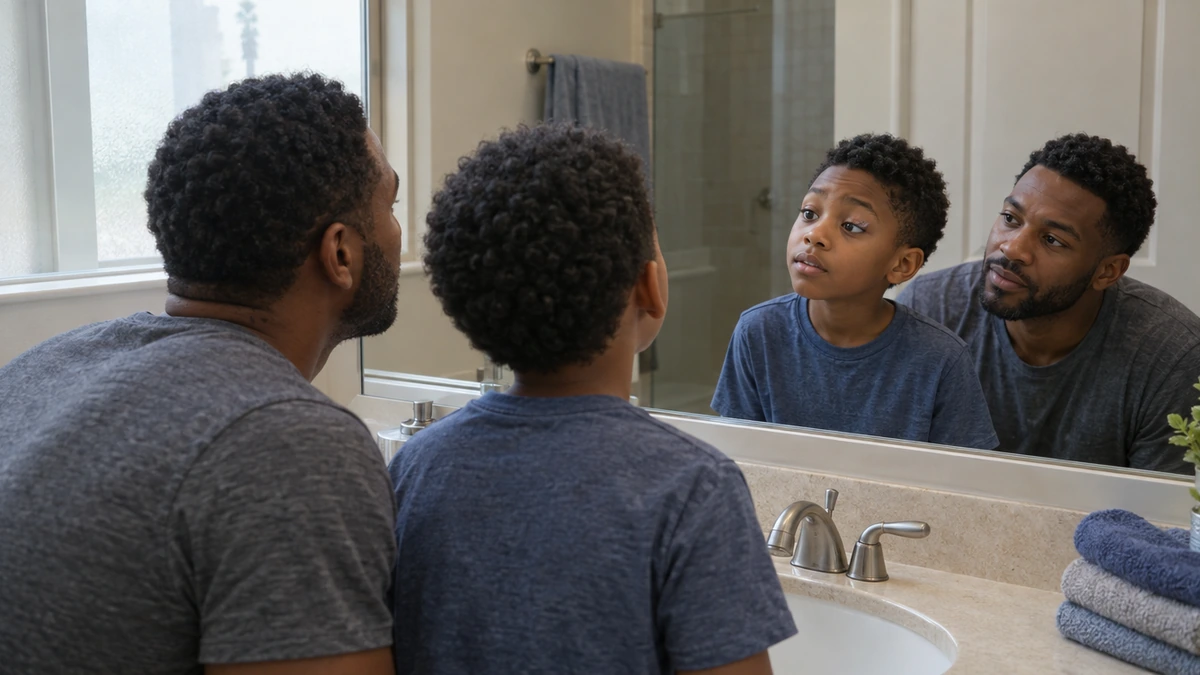
    Black boy looking at his eyelid in a bathroom mirror beside his father, illustrating stye in kids
    A father stays beside his son as he looks at his eyelid.

    A bump is a sign, not a diagnosis. A chalazion is a blocked oil gland, while a stye, also called a hordeolum, is an infected eyelid gland, as AAPOS explains. Most styes start with a bacterial infection, says the American Academy of Ophthalmology, and the AAO adds that the two are sometimes hard to tell apart. Your child’s bump gets its real name at an eye exam.

    Skip the mirror diagnosis. Notice where the bump is, when it appeared, and whether your child reports pain or a change in sight. Those observations are more useful than choosing a label from a photograph.

    What You’re ConsideringWhat It MeansWhat to Do
    Stye, or hordeolumAn infected eyelid glandUse gentle warm compresses when there are no warning signs. Never squeeze.
    ChalazionA blocked eyelid oil glandArrange an exam when it is large, persistent, or returning.
    Spreading swelling or changed visionSigns that need care right away, whatever the bump is calledGet care right away. Eye movement pain or reduced vision means emergency care.

    Listen to your child even when the bump looks small. Tell me in their own words whether the lid hurts or the view across the room has changed. A photo records appearance, but it does not replace an examination. For redness elsewhere in the eye, our guide to pink eye in children addresses that separate concern.

    How Do You Care for a Stye in Kids at Home?

    Indian-American girl resting with a warm compress over one eye for stye in kids care
    A girl rests with a warm compress over her closed eye.

    Start with gentle warmth. The American Academy of Ophthalmology recommends holding a warm compress against the eyelid for 10 to 15 minutes, 3 to 5 times a day, without burning your child’s skin. Published schedules differ, so follow the plan given for your child. Treat this as a care routine, not a deadline for the bump to disappear.

    1. Wash your hands and choose a clean washcloth.
    2. Wet it with warm water. Check the temperature yourself so the cloth feels comfortably warm, not hot.
    3. Help your child settle with the affected eye closed. Rest the cloth gently against the lid without pressing on the bump.
    4. Rewarm the cloth as it cools, checking the temperature again before replacing it.
    5. Leave the bump alone afterward. Do not squeeze, pop, or puncture it.

    Make the setup simple for your child. After a Las Vegas school pickup, set the backpack down and settle together on the couch with the clean washcloth. Let your child choose a story to hear while you hold it gently in place. A familiar routine makes the instructions easier to follow.

    The AAO says never squeeze or pop a stye or chalazion, because squeezing risks spreading the infection into the eyelid, and to skip eye makeup and contact lenses until the bump is gone. Your fingers hold the cloth, never the lump. For a teen who wears lenses, my guide to contact lenses for kids and teens covers the everyday lens habits.

    I prefer a calm, repeatable care plan over a crowded shelf of remedies. You should leave the visit knowing what to do and what change means you need help. Share the plan with everyone caring for your child, from the parent handling breakfast to the grandparent taking over after school. Walk through the cloth placement together so the next adult knows exactly what you mean.

    Which Eyelid Warning Signs Send You Straight to Care?

    Get care right away if your child has spreading redness or swelling around the eye, fever, vision change, or pain moving the eye. The American Optometric Association says redness and swelling extending beyond the eyelid to the cheek or face require an immediate call to your eye doctor. Stop the home-care routine and describe the spreading redness or swelling when you call.

    Go to the emergency room right away for a swollen, red eyelid with pain when your child moves the eye, trouble moving the eye, a bulging eye, double or reduced vision, or fever. Those signs point to orbital cellulitis, an infection of the eye socket, which MedlinePlus calls a medical emergency and warns sometimes gets worse fast in children. Skip the online booking form and go.

    Skip the home test. Whether the infection stays in the lid or reaches deeper around the eye is a call for a doctor to make in person, right away. A home eye-movement check never proves that waiting is safe for your child.

    What Should You Do When Eyelid Bumps Return?

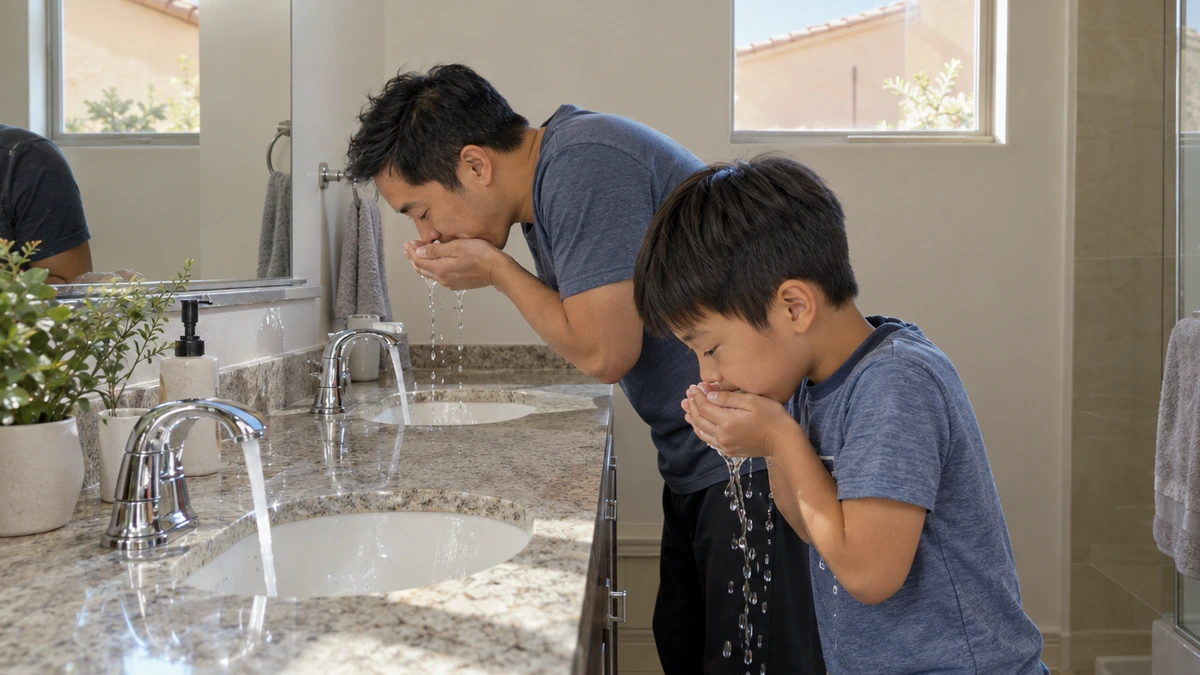
    Vietnamese-American father and son washing their faces at a double sink, illustrating stye in kids care
    A father and son wash their faces before the day begins.

    A returning bump needs a fresh look. Tell me whether your child has had the same problem before and what care you used. Mention any past diagnosis of blepharitis, an inflammation of the eyelid edges. When blepharitis is part of the picture, your child’s plan often includes an eyelid hygiene routine, and my medical eye care page explains how I approach eyelid inflammation.

    Mornings tell the story. At the double sink in your Summerlin bathroom, while you both wash up before school, take one look at the lid. Bigger, smaller, redder? Snap a photo, skip the poking, and show me at the visit.

    Give me the plain version. “It shrank, then it came back on the same lid” is exactly what I want to hear. Share what you tried and whether it helped, and your child’s visit starts in the right place.

    When Should You Book an Exam for a Lasting Bump?

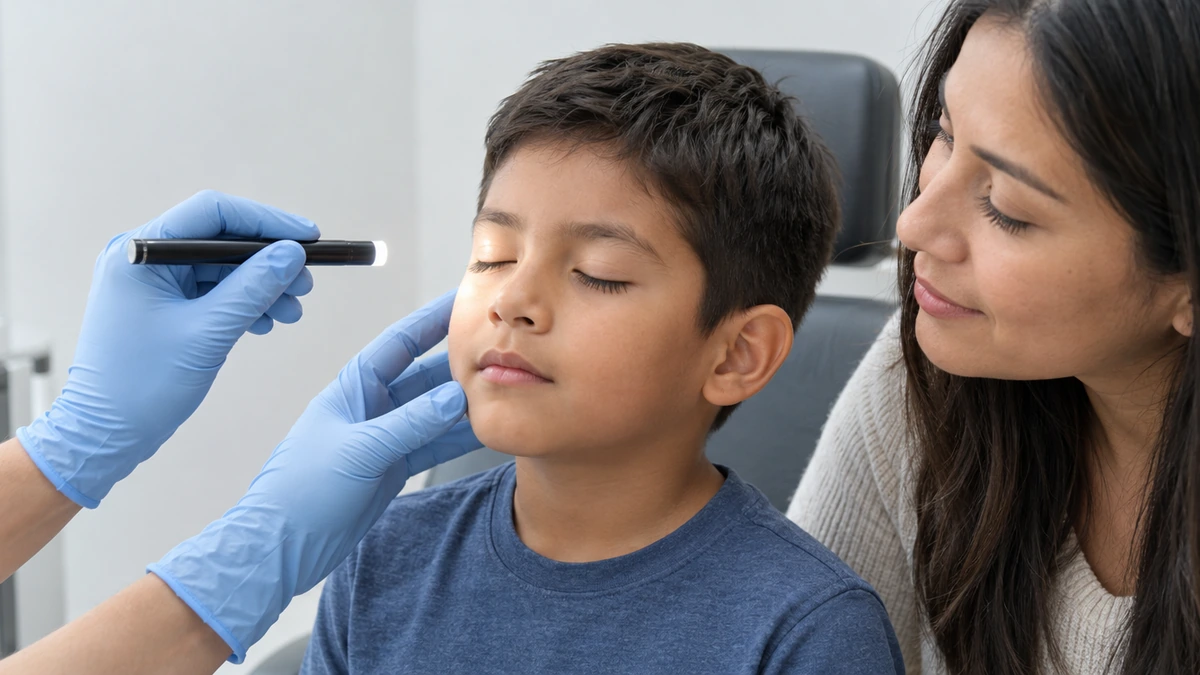
    Gloved hands holding a penlight near a Latino boy's closed eye, mother beside him, for stye in kids
    An eye doctor's gloved hands check a boy's eyelid as his mother sits beside him.

    Book for a large, persistent, or recurring bump even without emergency symptoms. The American Optometric Association advises contacting an optometrist if a chalazion has not drained and healed within a month. You do not need to wait that long when the bump is growing or you are concerned. Changed vision belongs in the right-away guidance above.

    Protecting your child’s eye health means looking past how the lid looks. Report any change in sight right away, even if your child says the bump looks better. A smaller bump is good news, and clear vision is the news that counts.

    A pediatric eye exam gives the whole story room. Bring any earlier care instructions and the products you have used near your child’s eye, and I sort out what helped from what did not. Nothing you tried is a wrong answer.

    How I Approach Your Child’s Eyelid Concern

    I’m Dr. Amel Youssef, your optometrist at Vision by Amel, and your story about the bump opens the visit. When it started, what you tried, what changed. Then I examine the lid, explain what I see in plain English and hand you a plan for the days ahead. Clear instructions are part of your child’s eye care.

    My team sees families from Summerlin every week, and children’s vision is central to the questions parents bring us. For your child’s non-urgent visit, explain whether the concern is a lid bump, a comprehensive eye exam, or both when you book. I put your account together with the examination findings and explain what they mean for the concern you came in with. Before you leave, we go over the next step and the symptoms that mean you should seek care sooner.

    Bring your child to Suite 195 at 2010 Festival Plaza Dr, Las Vegas, NV 89135, inside Festival Plaza in Downtown Summerlin. No referral is needed for an eye exam. Book online or call for a non-urgent appointment, and describe the eyelid concern when arranging the visit. Use emergency care right away for the warning signs above.

    Frequently Asked Questions About Styes and Eyelid Bumps in Kids

    Is the Bump on My Child’s Eyelid a Stye or a Chalazion?

    A stye is an infected eyelid gland, and a chalazion is a blocked oil gland. Chalazia show up more often in adults than in children, the American Optometric Association notes, most often between ages 30 and 50. Your child’s bump still gets its name at an eye exam, because the two sometimes look alike.

    How Do I Treat My Child’s Stye at Home?

    Use the warm compress routine above, and never squeeze the bump. In most cases a stye goes away on its own, says the American Optometric Association, though no fixed timeline fits every child. Call me if your child’s bump keeps growing, and get care right away for the warning signs above.

    Does a Stye Need Antibiotics?

    Not always. Most styes clear on their own, the American Optometric Association notes, and the American Academy of Ophthalmology says an ophthalmologist might prescribe an antibiotic for an infected stye, a decision made at the exam. Before you leave with drops or ointment, know the dose, where it goes and how many days it runs.

    When Does an Eyelid Bump Need a Doctor?

    Book an exam for a bump that is large, lasts or keeps coming back, and get care right away if your child’s vision changes. A large chalazion sometimes presses on the eye and blurs vision, the AAO notes, and AAPOS warns that a big chalazion that does not go away sometimes causes eye problems, especially in young children. When surgery is the answer, children usually need anesthesia, says AAPOS, and I refer you to an ophthalmologist for it.

    My Child’s Eyelid Is Swollen and Red. When Is It an Emergency?

    A swollen, red eyelid with pain when your child moves the eye, trouble moving the eye, a bulging eye, double or reduced vision, or fever needs emergency care right away. Your child’s lack of fever does not rule out orbital cellulitis, as AAO EyeWiki notes. Go to the emergency room rather than waiting for every sign to appear.

    Book My Eye Exam Call (702) 858-4362

    Like this article? Add Vision by Amel as a preferred source, and you are more likely to see our articles in Google’s Top Stories.
    Add as a preferred source on Google

  • Crossed or Wandering Eyes in Children: What Strabismus Means

    Crossed or Wandering Eyes in Children: What Strabismus Means

    Crossed or Wandering Eyes in Children: What Strabismus Means

    Father and daughter at a Summerlin park, illustrating crossed eyes in children guidance

    TLDR: An eye turn deserves attention, even when it comes and goes. An examination checks whether your child’s eyes line up, how each eye sees, and which treatment fits the findings.

    Answer: True crossed eyes in children are a form of strabismus, meaning the eyes do not line up. An eye might turn inward, outward, upward or downward. For your family in Las Vegas, the next step is an eye exam to identify the type and assess vision, followed by glasses, patching or a surgical referral when indicated.

    You notice it while scrolling through photos from a Summerlin park. Your toddler smiles toward the camera, but an eye seems to point somewhere else. Then you look up, and both eyes appear straight. You have something worth checking, even when the next picture looks different.

    I reviewed 113 primary sources across five research lenses for this guide, and strabismus and amblyopia are different problems that sometimes occur together. For your child, eye misalignment also carries a risk of amblyopia, as AAPOS explains. I take a parent’s repeated concern about an eye turn seriously. My eye examination service is a place to discuss what you have noticed.

    What Do Crossed Eyes in Children Look Like?

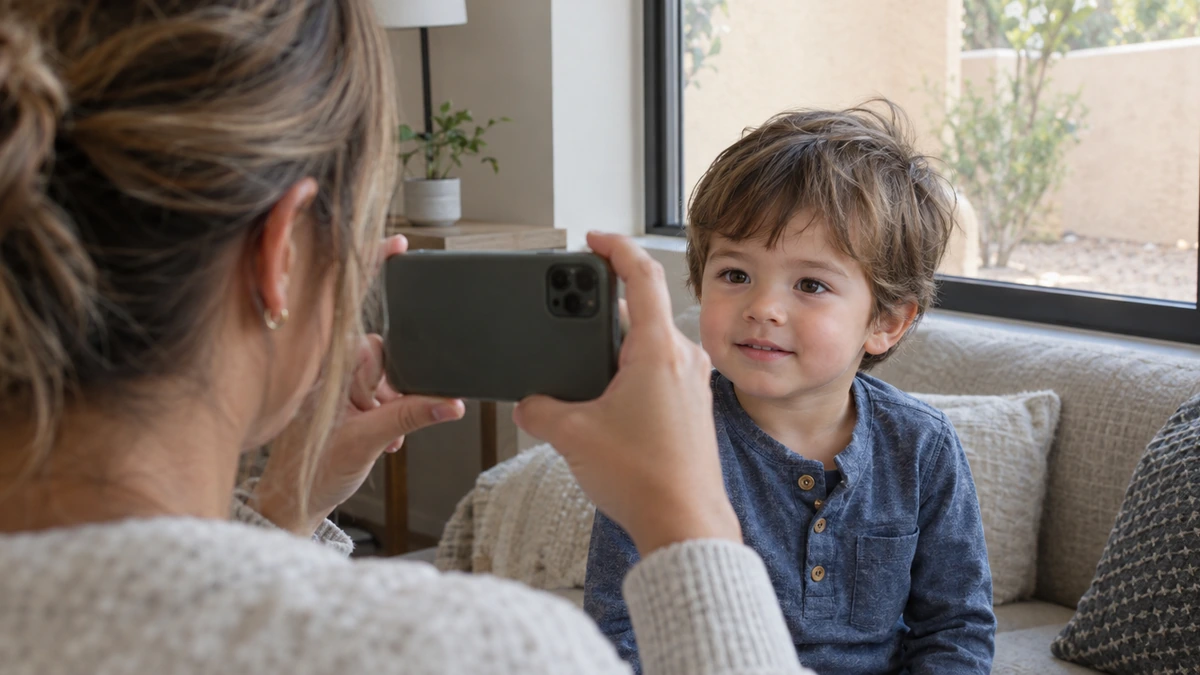
    Mother photographing her toddler by a window for a crossed eyes in children discussion
    A mother takes a casual photo of her toddler in window light at home.

    Tell me which way the eye turns. In or out, up or down, that one detail starts the exam ahead. Esotropia means an inward turn toward the nose, while exotropia means an outward turn toward the ear. For a vertical turn, use plain words when you call, even before you know the medical name.

    TermWhat It DescribesWhat to Record
    EsotropiaAn eye turns inwardWhich eye looks closer to the nose
    ExotropiaAn eye turns outwardWhich eye drifts toward the ear
    IntermittentThe turn comes and goesWhen you notice it and when the eyes look straight
    ConstantThe turn stays presentWhen you first noticed the persistent turn

    An occasional outward drift still matters. Your child’s eyes might look straight for much of the day, then drift when tired or sick, a pattern described by AAPOS. The word intermittent describes timing. It does not tell you to dismiss the concern.

    How to Bring Useful Photos

    Your everyday photos give us a place to begin. A casual picture near a window or a short video of ordinary play gives you something concrete to show me. Save the original files and note what was happening. Collecting pictures should never postpone the examination.

    1. Choose an existing photo that shows your child’s face and both eyes clearly. Include the date with it.
    2. For a new picture, use comfortable natural light and hold the phone near your child’s eye level. Let your child look naturally toward you.
    3. Save the original without filters, red-eye correction or other edits. Save a wider view as well as any close-up.
    4. Write down whether you noticed the turn during play, before a nap or during illness. Include what you saw in person.

    Have your child see an eye doctor right away for a white or gray-white glow in the pupil, in person or in a flash photo, as AAPOS advises. Several conditions cause this reflection, and some are serious. Do not wait for another photo to confirm it.

    When Is Newborn Eye Wandering Normal?

    Brief, on-and-off inward turns are common in babies younger than about 4 to 5 months, says AAPOS. An eye that turns all the time, at any age, needs an eye exam right away. Children do not outgrow true strabismus, the American Optometric Association says, and any child older than 4 months whose eyes are not straight all the time needs an exam. For your baby, describe constant crossing when you call so the need for care is clear.

    Some babies only look cross-eyed. A wide nasal bridge or folds of skin near the inner corners sometimes create that appearance, called pseudostrabismus, which children sometimes outgrow, according to the American Academy of Ophthalmology. An eye exam tells you which one your child has.

    You do not need to settle the diagnosis at home. Describe the direction, the pattern and when you first noticed it, then arrange the recommended evaluation. For the wider infant schedule, read your baby’s first eye exam guide. Address the crossing concern before planning routine checkups.

    How Are Crossed Eyes in Children Evaluated?

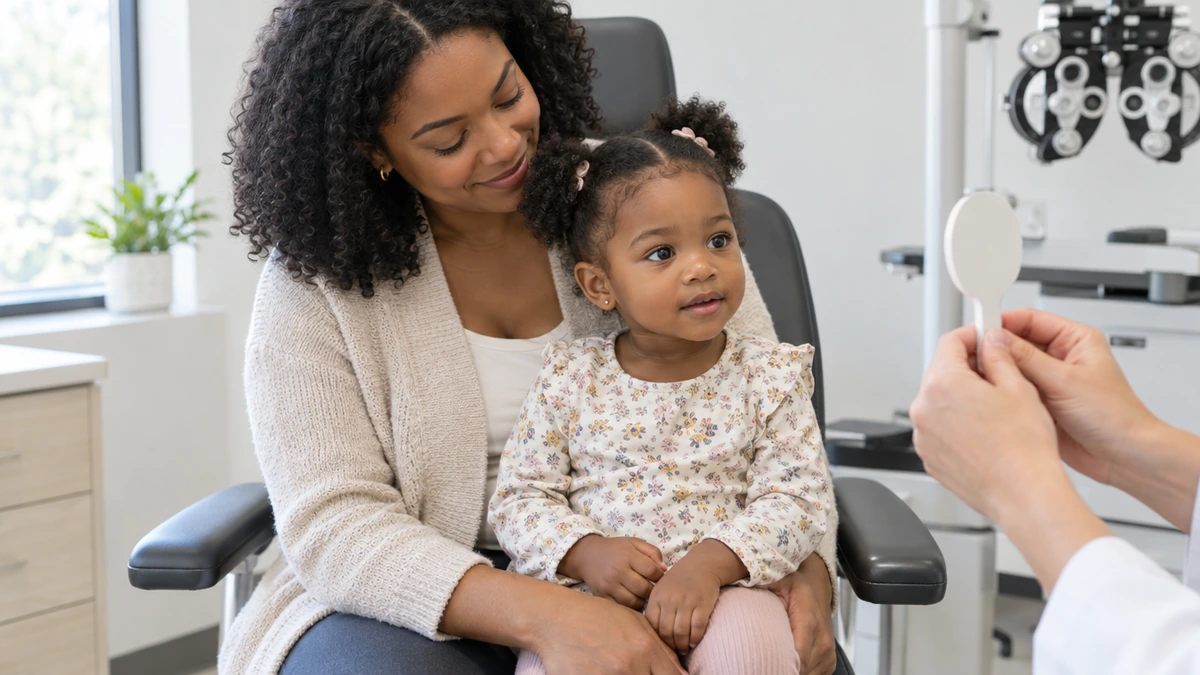
    Toddler on her motherโ€™s lap watching a toy during an exam for crossed eyes in children
    The examination approach adapts to your childโ€™s age and cooperation.

    A comprehensive eye exam looks beyond the photograph. The American Academy of Ophthalmology describes an assessment of your child’s history, visual acuity or fixation, eye movements, alignment, binocular vision, refraction and eye health. Refraction measures the focusing prescription, while binocular testing examines how the eyes work together. The approach adapts to your child’s age and cooperation.

    Your history speeds everything up. Bring past results, any screening note, current glasses and every treatment already prescribed. Note whether relatives have had an eye turn or childhood vision treatment. At a Las Vegas preschool pickup, you might notice the turn while your child looks up from fastening a backpack. That ordinary detail belongs in our conversation, even without a photograph.

    You deserve an explanation in everyday language. Before leaving, request the name of the finding, the next step and the reason for any referral. Use what to expect at a child’s first examination for general visit preparation. Here, keep your questions focused on alignment and vision in each eye.

    How Is Strabismus Related to Lazy Eye?

    Your child’s eye position and vision are separate findings. Strabismus describes misalignment, while amblyopia, often called lazy eye, describes a problem with vision development. Misalignment is one possible cause of amblyopia. That connection is why an eye turn deserves more than a comment about appearance.

    Two words, two jobs. Your child’s plan should say which one each step treats: the turn, the lazy eye, or both. My lazy eye guide explains the vision-development side in more detail. I want you to understand the reason for each step before you leave.

    What Treatments Help Crossed Eyes in Children?

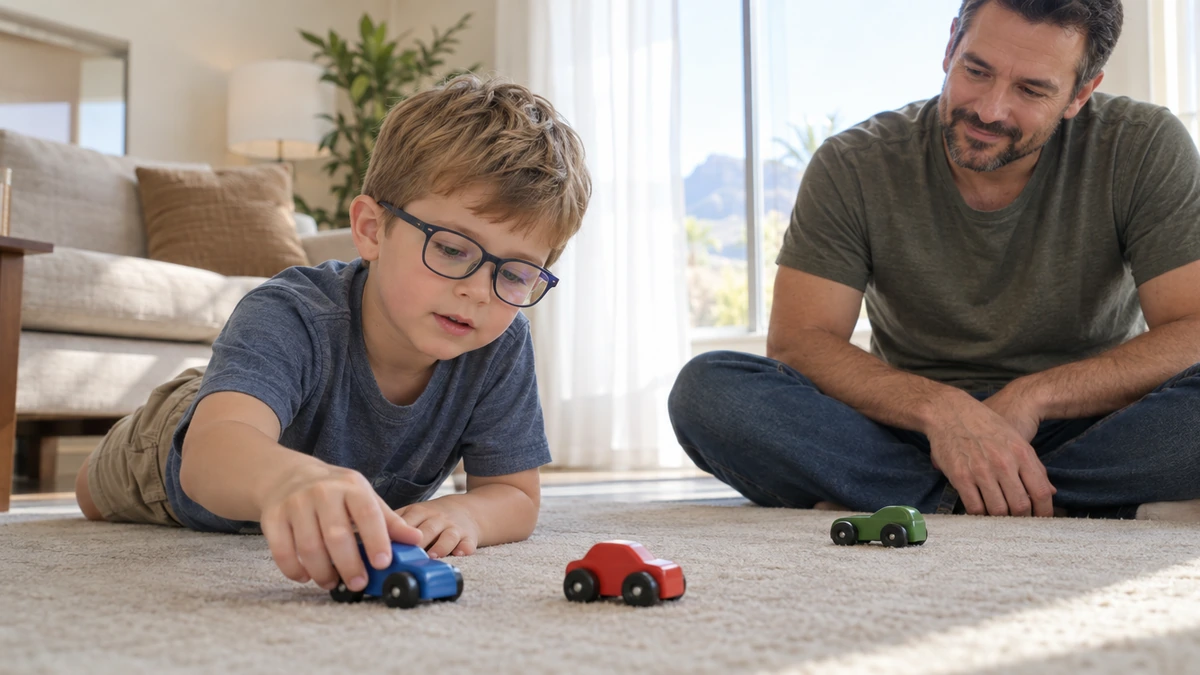
    Boy wearing glasses and playing with toy cars, illustrating care for crossed eyes in children
    A boy in new glasses plays with toy cars while his father watches.

    The treatment follows the type. Prescription glasses help align some children’s eyes, and a pediatric ophthalmologist performs eye muscle surgery when indicated, as the American Academy of Ophthalmology explains. Surgery does not replace glasses or patching when these are also prescribed for your child. When your child needs eye muscle surgery, I refer you to a pediatric ophthalmologist and coordinate the care around it.

    Glasses and Patching Have Different Jobs

    Glasses address the focusing prescription. In some forms of inward crossing, correcting that prescription also improves alignment. Your child’s examination determines whether this approach fits. Get clear instructions about when to wear the glasses and when to return.

    Patching treats the lazy eye that a turn can cause, and my lazy eye guide covers how it works. Your instructions should make the purpose of patching clear. Discuss resistance or missed sessions at follow-up before changing the prescribed plan.

    Make Shared Care Clear

    Two doctors, one plan. Co-management means your optometrist and your child’s pediatric ophthalmologist share the work, and you always know who handles what. I explain my part in your child’s care and the reason for an ophthalmology referral. Before you leave, we should be clear about who handles glasses, who directs any patching and who reviews surgical decisions.

    How I Approach Your Child’s Eye Turn at Vision by Amel

    Parents and toddler talking with an eye doctor about crossed eyes in children
    Parents talk through their toddler's eye exam with an eye doctor.

    Bring me the photo that worried you. I look at the turn you saw, then I check how each eye sees and how both eyes work together. I am Dr. Amel Youssef, your optometrist at Vision by Amel. My pediatric eye exam process includes patient history, digital diagnostics, an evaluation of binocular vision and a plan.

    A Sunday visit at Festival Plaza should leave you with a clear next step. Picture sitting beside your child while we go over the photo saved on your phone, then naming the question you most want answered. Is the eye turning, does each eye see well, or is an ophthalmology referral needed? Those questions guide our discussion.

    My team offers eye care in Downtown Summerlin at 2010 Festival Plaza Dr, Suite 195, Las Vegas, NV 89135. You need no referral to book an eye exam. For questions about insurance, call before the visit so my team has time to verify your benefits by phone. Share any existing ophthalmology appointment when arranging the visit.

    Frequently Asked Questions About Strabismus in Children

    Should I Cancel If My Child’s Eyes Look Straight Today?

    Keep the appointment and explain what changed. Your observations from other days still belong in the history, especially when the original concern was an intermittent turn. Show me both the concerning pictures and a note about the days you saw no turn.

    Will My Child Grow Out of Crossed Eyes?

    No, your child will not outgrow true strabismus. Some babies only look cross-eyed because of the shape of the nose bridge or nearby skin folds, and they sometimes outgrow that appearance, called pseudostrabismus. An exam distinguishes the two. Strabismus usually shows up in babies and young children, most often by age 3, says the AOA.

    What Is the Difference Between Esotropia and Exotropia?

    Esotropia means your child’s eye turns inward, while exotropia means it turns outward. Upward and downward misalignment are called hypertropia and hypotropia. An outward drift that appears when your child is tired or sick fits the intermittent pattern, with straight-looking eyes at other times.

    Can Crossed Eyes Cause Lazy Eye?

    Yes, an eye turn sometimes leads to amblyopia, or lazy eye, as vision develops. With esotropia, your child also risks losing stereopsis, or 3-D vision, and the ability to use both eyes together, according to AAPOS. That is why the assessment looks at vision and how the eyes work together as well as their position.

    Does My Child Need Surgery for Crossed Eyes?

    Not always: some inward crossing improves with glasses, and prisms are another treatment option for certain types of strabismus. Your child’s findings determine whether a pediatric ophthalmologist recommends surgery, which does not replace prescribed glasses or patching. The American Academy of Ophthalmology says most children resume routines in about 2 to 3 days after surgery. Follow your child’s surgical team’s instructions about returning to preschool and play.

    Book My Eye Exam Call (702) 858-4362

    Like this article? Add Vision by Amel as a preferred source, and you are more likely to see our articles in Google’s Top Stories.
    Add as a preferred source on Google

  • Lazy Eye (Amblyopia) in Children: Signs, Causes and Treatment

    Lazy Eye (Amblyopia) in Children: Signs, Causes and Treatment

    Lazy Eye (Amblyopia) in Children: Signs, Causes and Treatment

    Boy with a patch and round glasses stacking blocks with his mother, illustrating lazy eye in children

    TLDR: Lazy eye in children, or amblyopia, affects developing vision and sometimes has no visible signs. Your child’s treatment starts with an eye doctor’s assessment and often includes prescription glasses, with patching when prescribed. An eye that turns all the time, at any age, needs an eye exam right away.

    Answer: Amblyopia means vision has not developed properly in an eye, even when the eyes look straight. Causes include unequal prescriptions, eye misalignment, or an obstruction to clear sight. For your child in Las Vegas, an eye exam identifies the problem so treatment, such as glasses or prescribed patching, addresses the cause and the weaker vision.

    On a shaded bench at a Summerlin park, your child points out tiny pictures in a book. Then a screening note mentions weaker vision in an eye. That mismatch deserves attention. Amblyopia concerns how vision develops, so everyday confidence gives you only part of the picture.

    I reviewed 113 primary sources across five research lenses for this guide, and amblyopia sometimes goes unnoticed until an eye exam. The National Eye Institute reports that up to 3 in 100 children have amblyopia. Your next step is to understand each eye’s vision. My eye examination service explains how I assess vision and help you understand the findings.

    What Signs Suggest Lazy Eye in Children?

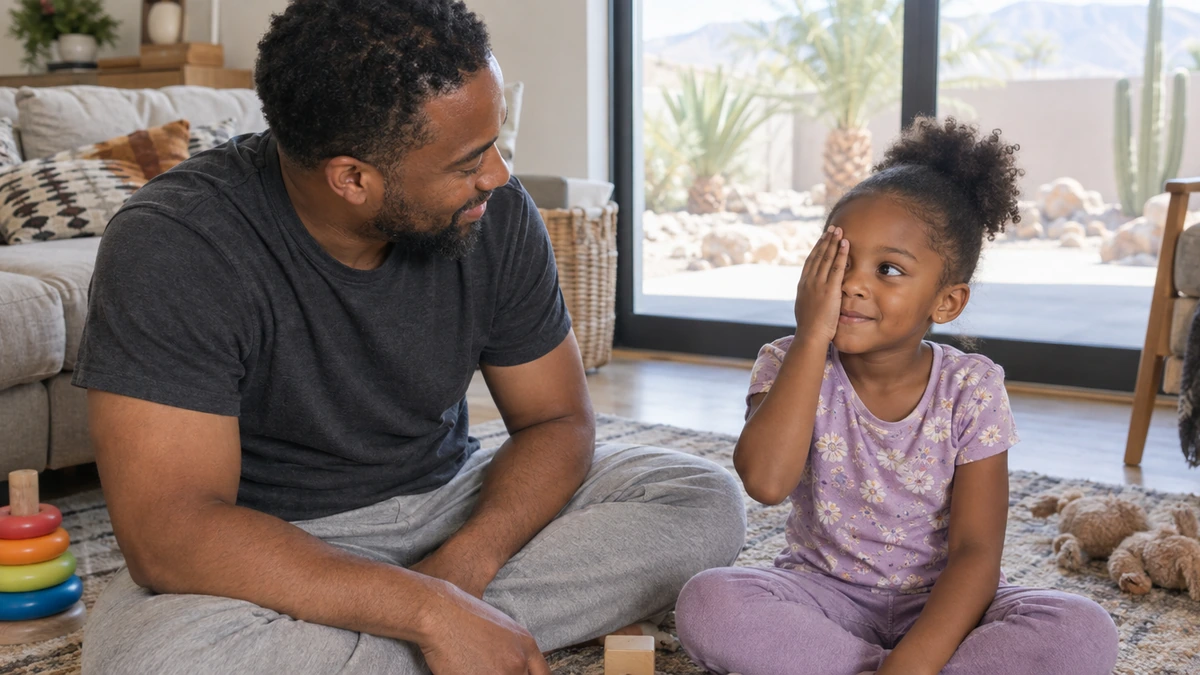
    Girl covering one eye while playing with her father, illustrating a discussion of lazy eye in children
    A father and daughter share a playful moment.

    Lazy eye hides well. Squinting, tilting the head or covering one eye are signs to have checked, according to the American Optometric Association. An eye that turns in or out all the time needs an eye exam right away. You do not need to name the problem before seeking care.

    Your observations help me understand the concern. A child covering an eye during a game is different from repeatedly doing it to see. Describe what happened, which eye was involved, and whether you noticed it during reading, play, or looking across the room. The useful detail is what you saw.

    For broader concerns, use my checklist of signs your child needs glasses. Bring your observations to a pediatric eye exam, along with any screening result. I would rather you bring a small concern than wait for a dramatic sign.

    A white or gray-white glow in the pupil, in person or in a flash photo, means your child sees an eye doctor right away, as AAPOS advises.

    What Causes Lazy Eye in Children?

    The cause shapes treatment. AAPOS describes refractive, strabismic, and deprivational amblyopia and warns of permanent vision loss without treatment. Unequal prescriptions and eye alignment problems affect the visual input reaching the developing brain. A blocked view creates a different problem requiring attention to the obstruction. Arrange your child’s assessment early, even when the eyes look normal.

    CauseWhat It MeansWhat to Discuss at Your Visit
    Refractive amblyopiaBlur during development, including when one eye needs a stronger prescription than the other.The prescription in each eye and the glasses plan.
    Strabismic amblyopiaMisaligned eyes interfere with normal vision development.Both eye alignment and vision in each eye.
    Deprivational amblyopiaA cataract, drooping lid, or corneal scar obstructs clear sight.How the obstruction and developing vision will be addressed.

    The diagnosis tells you what needs treatment. Strabismus names the alignment problem. Amblyopia names the problem with developing vision. Your child needs an explanation of which is present and what each part of the treatment plan addresses.

    Leave the visit knowing the cause. Request the diagnosis in plain language, alongside the medical term. For unequal prescriptions, have the difference explained using your child’s own results. For an obstruction, clarify the next assessment and who will provide it.

    How Do Glasses Help With Amblyopia?

    Mother helping her daughter put on glasses at a mirror, illustrating care for lazy eye in children
    A mother helps her daughter put on glasses.

    Glasses often lead the plan. In a PEDIG study of 84 children aged 3 to under 7 with untreated anisometropic amblyopia, glasses alone improved weaker-eye vision by at least 2 chart lines in 77%, with improvement taking up to 30 weeks. That study covered one type of lazy eye and had no untreated group, so read it as a signal, not a forecast for your child.

    For many children, glasses alone are not enough, says AAPOS, and patching follows when your eye doctor prescribes it. The goal is better vision in the weaker eye. Your follow-up measurements show whether glasses alone are doing enough.

    Give the glasses a place in your morning. In your Las Vegas kitchen, the cereal bowl, backpack and glasses case share the counter before school. Set the glasses beside the morning essentials so putting them on becomes part of getting ready. Share the prescribed wearing instructions with anyone helping your child start the day.

    Report problems plainly. Explain whether your child removes the glasses during meals, complains about the frame, or repeatedly loses them between home and school. The glasses belong at the next visit, too. A specific account gives the conversation more value than saying the week went badly.

    Watch the chart, not the calendar. The prescription is the lens. Visual acuity is how well your child’s eye sees, and that number tells you whether treatment is working. New glasses begin a plan whose progress needs review.

    What Does Prescribed Patching Involve?

    Boy with an eye patch drawing beside his grandmother, illustrating prescribed care for lazy eye in children
    A grandmother sits beside her grandson as he draws.

    Patching covers the stronger eye to encourage use of the weaker eye. Your eye doctor prescribes which eye to cover, how long to patch, and when to review progress. Get those instructions in writing. Follow the prescribed schedule rather than borrowing another family’s routine.

    More hours are not automatically better. A PEDIG randomized trial involving 189 children under 7 with moderate amblyopia found the same average improvement with 2 or 6 daily patching hours after 4 months, with at least 1 hour of near activities in both groups. This finding applies to the studied moderate cases. Your child’s prescription still governs the schedule.

    A familiar activity gives patch time a place in your day. Choose a time with room for the prescribed session. Drawing, blocks, or shared reading give you activities to discuss when the patching plan is explained. Match the activity and its timing to the instructions you receive.

    1. Confirm which eye to patch and the prescribed daily duration before starting.
    2. Check how glasses fit into the patching instructions.
    3. Record completed sessions and any practical difficulties.
    4. Call your eye doctor about skin irritation or a child who keeps fighting the patch.
    5. Keep every follow-up visit. Only your eye doctor changes the patching hours.

    A difficult afternoon deserves a useful conversation. Describe what your child found hard, how much of the session was completed, and what you tried. A short note about a difficult session gives you something concrete to discuss at follow-up. I value an honest treatment diary more than a perfect-looking one.

    Why Do Screening Results and Follow-Up Both Matter?

    Boy wearing glasses reading with his mother on a porch swing, illustrating lazy eye in children
    A mother and son read together on a porch swing.

    Your next step needs to be clear. After a vision screening flags a concern, arrange a comprehensive eye exam and take the actual result with you. My guide to school screening and comprehensive eye exams explains the difference. At your visit, I check vision and eye health and explain the findings.

    Follow-up puts the focus on each eye’s progress. Your current glasses, prescribed schedule and account of home treatment belong in that conversation. Request an explanation of each eye’s measured vision and whether the plan changes. Leave with the next review date written down.

    Your afternoon is already full: Summerlin school pickup, dinner, homework. Fit the patch into what you already do, like the drawing table or the bedtime book. Share the treatment instructions with caregivers so everyone follows the same plan. When the routine breaks down, raise the difficulty before making your own changes.

    How I Approach Your Child’s Exam at Vision by Amel

    I am Dr. Amel Youssef, an optometrist and the founder of Vision by Amel. For your visit about possible amblyopia, bring prior prescriptions, screening results, and any existing treatment instructions. My evaluation includes binocular vision and eye disease screening, with digital refraction among our Visionix diagnostics. Your history gives those findings context.

    My practice provides pediatric eye care at 2010 Festival Plaza Dr, Suite 195, Las Vegas, NV 89135. You will find us at Festival Plaza in Downtown Summerlin. No referral is needed for an eye exam. Book online or call with your child’s exam needs.

    Your questions about children’s vision deserve time at the visit. Tell me what worries you most, whether it is the diagnosis, the prescription, or understanding an existing plan. My team verifies insurance benefits by phone before your visit. Have your plan information ready for that conversation.

    Frequently Asked Questions About Lazy Eye in Children

    Is My Child Too Old to Start Treatment?

    Treatment works best when it starts young, and older children and teens can still improve, especially if they were never treated before. The American Academy of Ophthalmology advises offering treatment regardless of age when the visual system is structurally sound, with potential benefit in older children and adolescents, especially those previously untreated. Bring your child’s treatment history so the discussion reflects what has already been tried.

    Will Lazy Eye Hurt My Child’s Grades?

    The American Academy of Ophthalmology finds insufficient evidence that amblyopia in one eye harms school or career performance. Your child’s treatment addresses vision itself. Discuss school concerns on their own terms, without assuming lazy eye explains every difficulty in class.

    How Many Hours a Day Will My Child Wear a Patch?

    The National Eye Institute describes schedules ranging from 2 hours a day to all waking hours. Your eye doctor sets the patching time and adjusts it at follow-up visits. The PEDIG trial above compared schedules for moderate amblyopia, so its results are not a patching prescription for your child.

    Can My Child Have Lazy Eye if Their Eyes Look Straight?

    Yes, your child might have amblyopia even when the eyes look straight, as AAPOS explains. The National Eye Institute notes that many parents learn of the problem only at an eye exam. You do not need to spot an eye turn for the finding to deserve attention.

    What Should I Say to My Child About the Diagnosis?

    Keep your explanation calm and concrete. Describe the glasses or patch using the instructions you received, then invite questions about the daily routine. Choose words about practicing the routine together, and praise the effort your child puts into following it.

    Book My Eye Exam Call (702) 858-4362

    Like this article? Add Vision by Amel as a preferred source, and you are more likely to see our articles in Google’s Top Stories.
    Add as a preferred source on Google