
How to Choose a Dry Eye Doctor in Las Vegas
TLDR: Choose a dry eye doctor who explains your findings, treatment choices and next steps. In Las Vegas, compare the evaluation, follow-up plan and referral approach, then check your insurance benefits before booking.
Answer: To choose a dry eye doctor in Las Vegas, look for an optometrist or ophthalmologist who evaluates your symptoms, eyelids and tears. Request a clear explanation of the findings and a plan for reviewing progress. Check how the office handles ophthalmology referrals and whether your visit will be billed to medical or vision insurance.
You want an explanation you understand. You have tried three bottles of drops. Your eyes still burn on the drive home along the 215. My approach to treating dry eye starts with understanding what your eyes need, before choosing a product.
I reviewed 88 primary sources across five research lenses for this guide, and a dry eye diagnosis needs more than an isolated test result. For your evaluation, the American Academy of Ophthalmology says no single test establishes the diagnosis. I value a clear explanation more than a long equipment list.
How Do You Compare Dry Eye Doctors?

Start with the care you need. For general eye care, the National Eye Institute considers either an optometrist or ophthalmologist a good option, with ophthalmologists offering additional treatments such as surgery for serious eye problems. Both professions examine eyes and prescribe medicines within their scope of practice.
You might search for a “dry eye specialist” or “dry eye clinic” when ordinary drops have disappointed you. A search hands you names. The first visit shows you who explains, who listens and who plans ahead. On that call, find out what the evaluation covers, who explains your results and what happens when you need more care.
One call tells you a lot. Say why you want an eye exam and what you have already tried. Then listen: does the office ask about your symptoms, or only about your insurance?
Compare explanations as well as availability. Write down what you want answered before you arrive. Afterward, consider whether the explanations made sense, whether you had time for questions and whether you felt rushed. Choose someone you feel able to work with.
What Should a Dry Eye Doctor Evaluate?
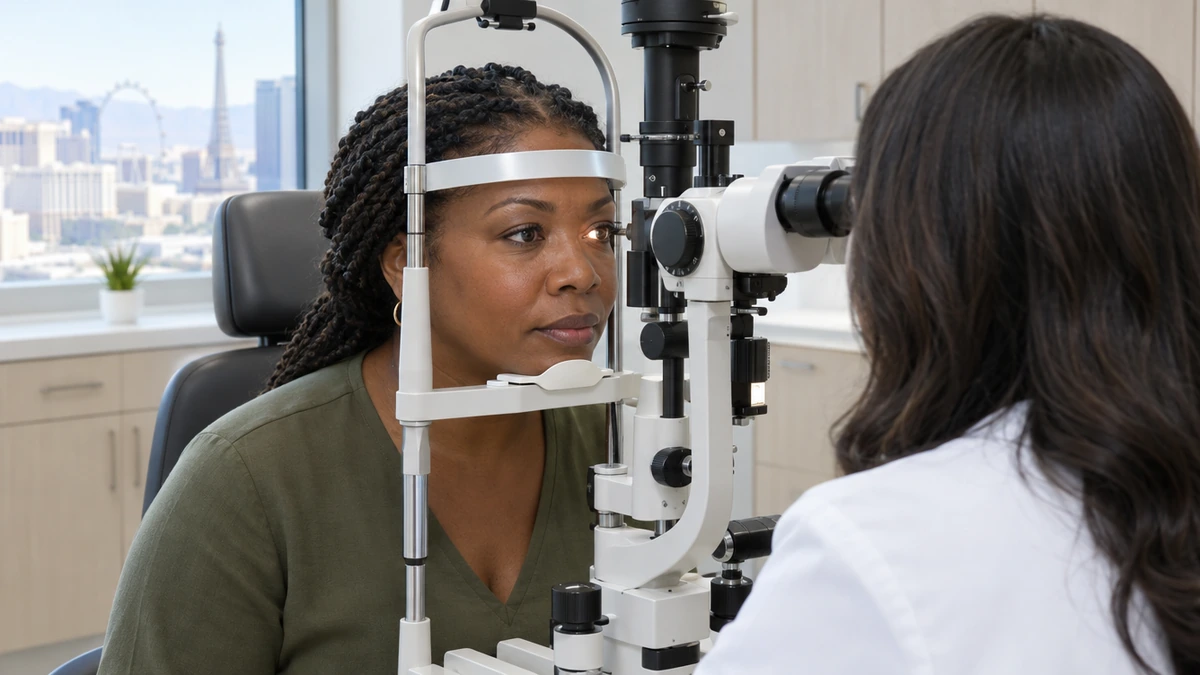
Your daily symptoms should guide the evaluation. The American Optometric Association describes a workup covering symptoms, general health, medications and environment, along with examination of the lids, blinking, cornea and tear quantity and quality. Bring the names of your medicines and eye drops, plus notes about what you have already tried.
Make those notes specific. Describe what happens during your afternoon computer work in Summerlin or after a long shift under hospital air conditioning. Include when the problem began and what interrupts your day. A brief account in your own words is more useful than a collection of search results.
Use this table to prepare your questions. It turns broad examination terms into points to discuss during the visit. The key question is how those findings fit together for you.
| Part of the Evaluation | What to Discuss | A Useful Question |
|---|---|---|
| Symptom and health history | Your symptoms, medicines, general health and environment | Which details in my history matter here? |
| Eyelids and blinking | Lid structure and how your eyes blink | What did you notice about my lids? |
| Magnified examination | The lids and ocular surface, including the cornea | What did the close examination show? |
| Tear assessment | Tear quantity and quality | How do these findings explain my symptoms? |
A comprehensive eye exam should leave you understanding why a test matters. The 2017 TFOS DEWS II report explains that symptoms plus a positive tear film test support diagnosis without the full test battery, while negative available tests sometimes require referral for further testing. Each proposed test needs a reason tied to your care: what would its result change?
Which Questions Make the Visit More Useful?
Leave with a plan you understand. Keep your questions on paper so nothing important gets lost in the conversation. Work through them in this order, beginning with the findings and ending with follow-up.
- Start with the explanation: “What did you find, and how does it relate to what I feel?”
- Clarify the first step: “Why are you recommending this option for my eyes?”
- Discuss practical use: “How do I fit the plan into my workday, and what problems should I report?”
- Set the review: “When should we assess progress, and what should I track until then?”
- Establish the referral plan: “What findings would mean I need an ophthalmologist?”
Your questions should include treatment you found online. For example, ask why artificial tears, warm compresses or prescription eye drops belong in your proposed plan. My guide to treating dry eyes in Las Vegas explains the options in more detail. Name the specific option you want to discuss.
Be candid about what feels manageable. Tell me when a proposed routine conflicts with your work schedule or when an instruction is unclear. Repeat the plan back in your own words and request clarification where needed. I consider a plan unfinished until you understand the next step.
When Should You Seek Care or an Ophthalmology Referral?
Stop comparing offices the moment your eyes turn red or painful, and contact an eye care provider right away, as MedlinePlus advises. Put the provider comparison aside while you seek care. My guide to when to seek care for dry eyes covers the broader warning signs.
I refer you to an ophthalmologist when your eyes need one. The AAO dry eye guideline calls for ophthalmologist evaluation for moderate or severe pain, lack of response to treatment, corneal infiltration or ulceration, progressive conjunctival scarring, or vision loss. Referral belongs in the discussion when choosing ongoing care.
Before leaving a visit with a referral, establish the next step. Confirm whom you should contact, how soon you should be seen and which records to bring. Before you leave, clarify how to follow your current treatment while waiting. Keep the referral details with your care plan.
What Should You Check About Insurance Before Booking?

Know how your visit will be billed before you arrive. The American Optometric Association tells optometrists to say it up front: care for an eye complaint is billed to your medical plan, not your vision plan. Payment still depends on your plan, deductible, network and medical necessity. Describe your symptoms when booking so the office understands what care you are seeking.
Keep both insurance cards handy. Ask your insurer whether the provider is in network for the medical visit and which benefits apply. Confirm whether your plan requires a referral or authorization. Write down the answer and the date of your call.
Your question to the office should be specific. Say, “I am booking for persistent eye discomfort and want to understand how this visit will be billed.” Confirm what the planned evaluation includes and how any separate services are billed. Settle billing on the phone, so your visit stays about your eyes.
How I Approach Your Visit at Vision by Amel

Your visit here starts with your concerns. I am Dr. Amel Youssef, an optometrist and the founder of Vision by Amel. You will find us at 2010 Festival Plaza Dr, Suite 195, Las Vegas, NV 89135, in Downtown Summerlin at Festival Plaza. Book online or call my team to arrange your visit.
Your visit runs in four steps: your history, digital diagnostics, my evaluation and your plan. We discuss how the findings relate to the concerns you brought. Our medical eye care page introduces the care available for your eye health.
Your dry eye treatment plan depends on your eyes. Options include artificial tears, targeted prescription drops, warm compresses and eyelid hygiene, with care for meibomian gland dysfunction and blepharitis. Punctal plugs are another option within a plan. Bring your questions about which steps fit your findings.
My team verifies your insurance benefits by phone before the visit. Have your plan details ready when you call. You do not need a referral to book an eye exam here. We are open seven days, Monday to Saturday 9 am to 6 pm and Sunday 11 am to 5 pm, so your visit fits your week.
Frequently Asked Questions About Choosing a Dry Eye Doctor
Is a Nevada Optometrist Allowed to Prescribe Dry Eye Medicine?
Yes, with the required state certificate: the Nevada Legislature includes drug treatment within optometric practice and requires a certificate for prescribing treatment drugs beyond diagnostic agents. That certificate covers the treatment drugs your plan might need, beyond the drops used for diagnosis. Ask me what the proposed medicine does and why it belongs in your plan.
What Should I Bring From a Previous Eye Appointment?
Request a copy of your previous findings and treatment instructions. Bring the names of products you used and your notes about the experience. Mark anything you stopped using so we discuss what happened.
Should I See an Optometrist or an Ophthalmologist for Dry Eye?
Either can be a good choice for your general eye care, the National Eye Institute says, and both prescribe medicines. The difference is surgery. Nevada optometry excludes procedures that cut or burn tissue, so when your eyes need surgery, an ophthalmologist takes that part of your care.
How Do I Explain What I Want From Treatment?
Name the activity you want to discuss, such as reading an evening newspaper or wearing your contacts through a workday. Describe what interrupts it and what you have tried. Use that specific concern to begin the discussion about treatment goals.
How Do I Judge Whether the Visit Was a Good Fit?
Try explaining the visit to someone at home. You should be able to describe the findings, the proposed plan and the next contact. Write down unanswered questions and request clarification before deciding how to continue care.
Book My Eye Exam Call (702) 858-4362
Like this article? Add Vision by Amel as a preferred source, and you are more likely to see our articles in Google’s Top Stories.

Leave a Reply