Tag: contact lens fitting

  • Contact Lenses When You Have Dry Eyes: What Can Help

    Contact Lenses When You Have Dry Eyes: What Can Help

    Contact Lenses When You Have Dry Eyes: What Can Help

    Black woman pausing beside an edge-on laptop by a window, contact lenses for dry eyes

    TLDR: Choosing contact lenses for dry eyes starts with your symptoms, lens fit and wearing routine. A different lens, shorter wearing time or compatible drops are options to discuss at your visit. Remove your contacts and call an eye doctor right away for redness, pain, irritation or blurred vision while wearing them.

    Answer: Contact lenses for dry eyes need an individual plan. In Las Vegas, I review your lens material, fit, replacement schedule and care solution alongside your symptoms. Daily disposables and breaks in glasses are options. Use only drops approved for contact lens wear with lenses in, and have persistent discomfort assessed before extending your wearing time.

    It is 4 pm at your home desk in Summerlin. The laptop is still open, dinner is an hour away, and your contacts feel gritty and tight. Your glasses sit across the room. That exact hour is the most useful clue you bring to your eye exam.

    As your optometrist, I want to understand the whole day you spend in lenses. I reviewed 123 primary sources across five research lenses for this guide, and contact lens discomfort has several possible causes beyond the lens itself. The TFOS contact lens discomfort report explains why your symptoms call for a look beyond the lens. My approach to dry eye treatment starts with that distinction, which also guides our dry eye care.

    Why Do Contact Lenses Feel Dry?
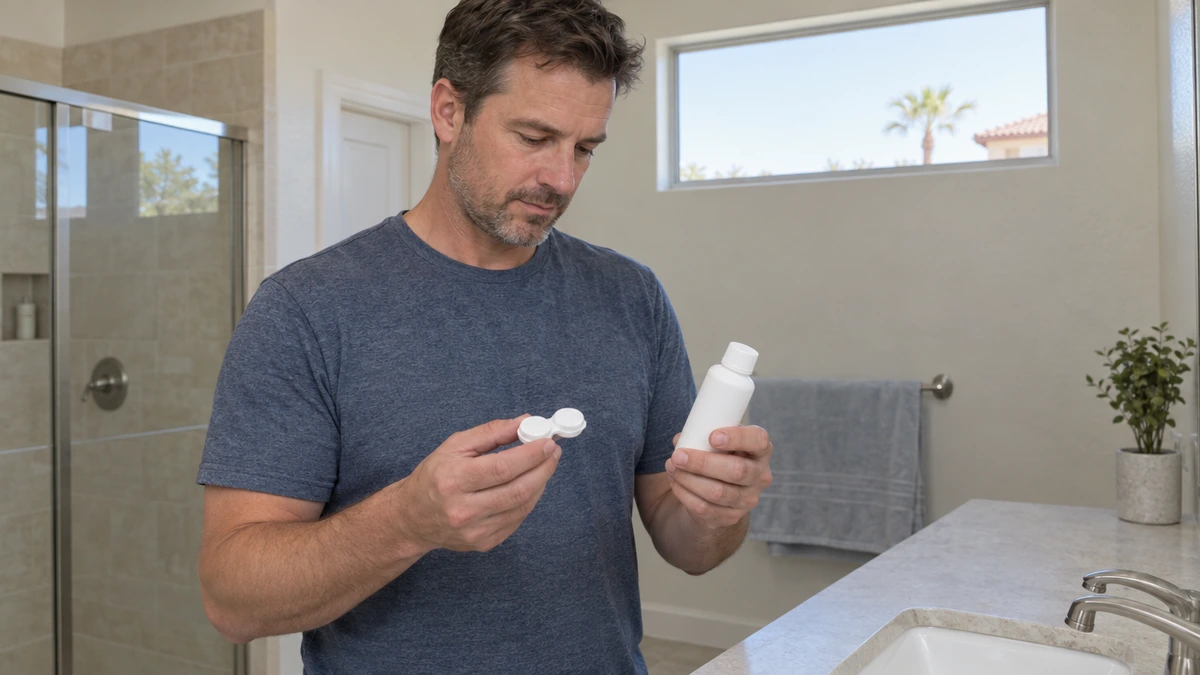
    White man holding a plain lens case and bottle at a bathroom counter, contact lenses for dry eyes
    A man holds his lens case and a plain bottle at the bathroom counter.

    Pin down your pattern first. Does the lens scratch the moment it goes in, or does comfort fade after lunch? Both eyes or one? Glasses days too? Your answers point me to the lens, the tear film or both.

    Lens discomfort and dry eye disease overlap, but feeling dry does not establish a diagnosis. The TFOS report links discomfort with changes in the tear film, including reduced stability and faster evaporation. It also identifies other sources of symptoms, including eyelid disease, allergies and medicines. Your lens is part of the picture.

    Your bathroom counter tells me the rest. Show me the lens box, the solution in your case and every bottle of drops you reach for. When did you open this pair, and when does it get replaced? Plain answers beat any guess at a diagnosis.

    Which Contact Lenses for Dry Eyes Are Worth Discussing?
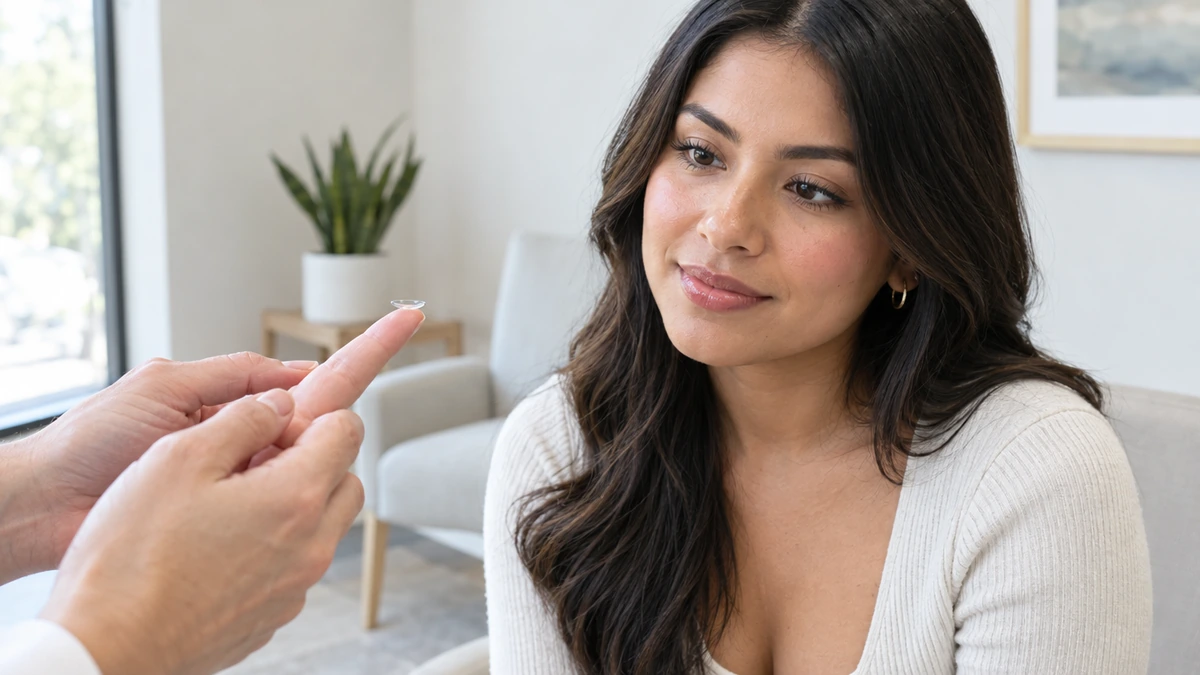
    Clinician hands showing a lens to a Latina woman at a fitting, contact lenses for dry eyes
    An eye doctor's hands show a contact lens to a woman at her fitting.

    A useful lens change has a purpose. The TFOS clinical summary lists material, wearing schedule, care solution, replacement frequency and design among options for managing your discomfort after other causes are assessed. These options have variable results. The table shows what each discussion covers.

    OptionWhat ChangesWhat to Discuss
    Lens materialA different material and surfaceHow the proposed lens differs from your current one
    Daily disposablesA fresh lens for each day of wearWhether moving away from a reusable lens routine suits you
    Wearing scheduleLess time with lenses on your eyesWhich parts of your day work well in glasses
    Fit and designThe way the lens sits and interacts with your eyeWhether the current lens needs a fitting review
    Care solutionThe care products used with reusable lensesWhich system matches your prescribed lenses
    Replacement frequencyWhen you discard a lens and open anotherWhether your actual routine matches the prescribed schedule

    Give every lens change one clear target: comfort through the afternoon meeting, then glasses for the evening. Your follow-up runs on specifics, such as which activity made the new lens fade, not a verdict on the whole week.

    I would rather build your lens plan around a comfortable day than chase the longest wearing time. Your work, errands and evenings shape that plan. Describe the activities for which you prefer contacts and the times glasses suit you well. That gives the fitting conversation a practical goal.

    Which Drops Belong With Your Contact Lenses?

    Read the bottle before using it. The American Optometric Association says to use only eye drops approved for contact lens wear while your lenses are in and to avoid redness-relief drops with lenses. A bottle labeled artificial tears still needs a contact lens compatibility check. The words on the label matter more than the size or shape of the bottle.

    Rewetting drops are a comfort option with uncertain benefit. A Cochrane review found very low-certainty evidence of improvement over no drops and no clear advantage over saline in short trials, leaving long-term benefit and safety uncertain for your decision. Treat that uncertainty as a reason to review the full lens plan when discomfort persists. Repeated dosing should not become your way of extending an uncomfortable day.

    Your cleaning solution has a separate job. Rewetting drops and saline do not disinfect lenses, as the AOA lens-care guidance explains. Follow the care system prescribed for your reusable lenses. Set the bottles side by side at home and read their uses before your next lens-care routine.

    When Should You Switch to Glasses?

    Asian woman wearing glasses at an evening desk beside a closed lens case, contact lenses for dry eyes
    A woman in glasses sits at her desk at dusk, her lens case closed beside her.

    Give glasses a planned place in your day. The 2017 TFOS DEWS II report includes reducing wearing time or stopping lens wear among strategies with some evidence for lens-related dry eye. Discuss a shorter schedule when comfort repeatedly fades. The next step is a plan you follow, with a review of how your eyes respond.

    1. Have your glasses available before you put contacts in.
    2. Follow the wearing schedule agreed at your fitting, including the planned time to switch to glasses.
    3. Record discomfort and the activity underway when it starts.
    4. Arrange a review when the schedule no longer feels comfortable, and follow the urgent instructions below for warning signs.

    Your glasses are a tool, not a defeat. Close the lens case after a long Las Vegas workday, slip your glasses on, and finish the evening in comfort. Save your contacts for the hours you want them most: the client lunch, the pickleball game, the night out. You win the day when your eyes still feel good at 9 pm.

    How Do Screens and Desert Air Change Your Lens Day?
    Middle Eastern man walking in wraparound sunglasses in Downtown Summerlin, contact lenses for dry eyes
    A man in wraparound sunglasses walks through a Downtown Summerlin plaza.

    Screen hours and lens hours stack up on the same pair of eyes. My guide to screens, contact lenses and daily habits covers the blink facts, the monitor setup and the break routine, so this page skips them. Here, you track one number: the hour your comfort drops. That hour tells me more than a weekly average ever will.

    You finish laptop work, walk outside in Downtown Summerlin wearing wraparound sunglasses, then get into a car with air blowing toward your face. Each switch, screen to sunlight to car vent, tests your lenses in a new way. For the vents, wind and dry air themselves, read how Las Vegas air dries your eyes.

    When Should Your Lenses Come Out Right Away?

    Take your lenses out and call an eye doctor right away if your eye turns red and irritated, pain keeps building after the lenses come out, light starts to hurt, your vision blurs suddenly, or you notice unusual watering or discharge. The CDC lists these as signs of a possible contact lens infection. Do not wait for the next routine fitting. Tell the office you wear contacts and name the symptom when you call.

    These signs need an assessment. Contact lens wear raises the risk of keratitis, which is inflammation of the cornea, and infection is one cause. The CDC links infection risk with lenses worn too long or cared for incorrectly. Protect your eye health by acting on the symptoms, even when dryness has happened before.

    How I Approach Contact Lenses for Dry Eyes

    At Vision by Amel, your contact lens fitting is the place to discuss material, wearing schedule and fit. I fit lenses from daily disposables onward, and when your lenses fight your eyes, I change the material, the wear schedule or the fit. Tell me what you wear now and which part of the day has become difficult. Include the exact care products you use.

    Your eye care plan also depends on the eyes beneath the lenses. Depending on your eyes, your plan draws on artificial tears, prescription eye drops, warm compresses, eyelid hygiene or care for meibomian gland dysfunction and blepharitis. When your lids are part of the problem, my guide to meibomian gland dysfunction walks you through the oil glands. Your symptoms and exam findings guide those choices.

    Your fitting happens at 2010 Festival Plaza Dr, Suite 195, Las Vegas, NV 89135, in Downtown Summerlin at Festival Plaza. Book online or call (702) 858-4362 for an appointment. You do not need a referral for an eye exam. Mention contact lens discomfort when you book so the reason for your visit is clear.

    Frequently Asked Questions About Contact Lenses and Dry Eyes

    Why Do My Contacts Feel Dry by the End of the Day?

    You have plenty of company. The TFOS workshop estimated in 2013 that up to half of contact lens wearers feel lens discomfort at some point, and it links that discomfort with shorter wearing time and people giving up lenses altogether. Comfort that fades by evening points me to your tear film, your lens and your schedule together, so tell me the hour it starts.

    Can I Keep Wearing Contacts If I Have Dry Eye?

    You have options before you give lenses up. A shorter lens day, a different lens or a full pause from lenses all stay on the table, depending on what your exam shows. Severe dry eye changes the math: the AAO dry eye guideline warns it raises your risk of lens intolerance and lens complications.

    Do Daily Disposable Lenses Help Dry Eyes?

    They are an option worth discussing for your comfort. Daily disposables remove exposure to a reusable-lens care solution, but TFOS notes that the solution inside the blister pack itself is a possible source of discomfort. Report discomfort at insertion as well as discomfort later in the day.

    Does the Lens Material Matter?

    Material is one consideration in your fitting. TFOS cautions that material effects are difficult to separate from lens design and surface effects, so evidence does not establish a single best material. Compare the whole proposed lens and your response to it.

    Are Rewetting Drops Safe With Contacts, and Do They Work?

    Your lenses stay in only for a drop labeled for contact lens wear, and the AAO lubricant guide favors one without preservatives for that job. For any other drop, take your lenses out, wait five minutes, put the drop in, then give your eyes another 10 to 15 minutes before the lenses go back in. Track how long your relief lasts, because that number tells me whether the drop earns its place.

    Book My Eye Exam Call (702) 858-4362

    Like this article? Add Vision by Amel as a preferred source, and you are more likely to see our articles in Google’s Top Stories.


    Add as a preferred source on Google

  • Contact Lenses for Kids and Teens in Las Vegas: Is Your Child Ready?

    Contact Lenses for Kids and Teens in Las Vegas: Is Your Child Ready?

    Contact Lenses for Kids and Teens in Las Vegas: Is Your Child Ready?

    Teen girl holding a contact lens case beside her mother at a kitchen table, contact lenses for kids

    TLDR: Readiness for contact lenses for kids rests on hygiene, motivation and your supervision, with no fixed starting age. A contact lens fitting and a dependable care routine come before regular wear. A painful red eye in a lens wearer means remove the lenses and get care right away.

    Answer: No single birthday makes your child ready for contact lenses. Maturity, hygiene and motivation decide, and your supervision matters. In Las Vegas, an eye exam and a contact lens fitting show whether your child is ready. Daily disposables reduce some risks, yet water, sleep and a painful red eye still need firm rules.

    Your teen wants contacts before basketball season. You want to know who will remember the handwashing when practice runs late and homework waits at home. As an optometrist, I start with those ordinary decisions. I value a reliable routine more than an eager promise.

    I reviewed 168 primary sources across five research lenses for this guide, and readiness for contacts depends on maturity, hygiene and motivation. The American Optometric Association identifies those factors, sets no universal starting age and emphasizes your supervision. Start during your child’s comprehensive eye exam, using our eye exam services page to plan the visit.

    Are Contact Lenses for Kids a Good Fit for Your Family?

    Black teen boy dribbling on a Summerlin basketball court without glasses, contact lenses for kids
    A boy dribbles a basketball on a Summerlin court, no glasses on.

    Readiness shows up on a rushed school morning. Does your child wash up without bargaining over every step? Does your child speak up when something feels wrong? Those two answers tell you more than any birthday.

    On a Summerlin outdoor basketball court, your child stops mid-drill to push slipping glasses back up their nose. Contacts appeal because there is no everyday frame to adjust during play. Eye protection still belongs in the sports bag, and my sun and sports eyewear guide shows what to pack. The American Academy of Ophthalmology and American Academy of Pediatrics state that contact lenses offer no protection, so your athlete needs sport-appropriate protective eyewear over them.

    Use this table to check whether your child is ready. It translates readiness into things you have already seen at home. Work through the hesitant answers together before making contacts the next morning’s expectation.

    Readiness QuestionA Useful SignA Reason to Pause
    Who wants contacts?Your child wants to learn.The pressure comes from friends or adults.
    How does hygiene go?Your child follows the whole routine.Handwashing becomes a daily argument.
    How do they handle trouble?Your child speaks up and accepts help.They hide discomfort to stay in the game.
    Who supervises?You have a clear role at home and away.Each adult assumes someone else checked.

    A hesitant child deserves room to decide. You might be ready to move beyond glasses before your child wants to touch a lens. Let them explain what appeals to them and what worries them. I would rather revisit contacts later than turn lens handling into a daily argument.

    What Comes Before the First Pair?

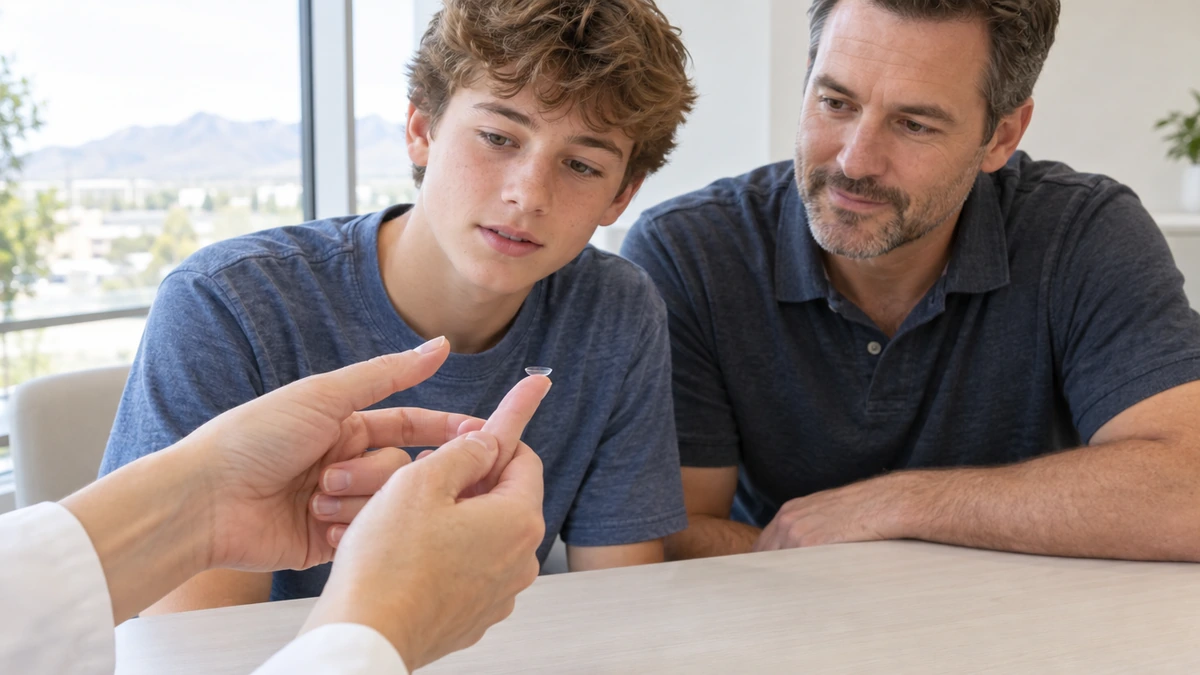
    Eye doctor hands showing a white teen and his father a lens on a fingertip, contact lenses for kids
    An eye doctor's hands show a teen and his father how to hold a lens.

    The fitting is where the plan gets real. Vision by Amel offers contact lens fittings, including daily disposables, and I weigh every lens choice against your child’s eye health. Sports, school or weekends only? Your child’s real week shapes the lens and the schedule.

    Use your visit to discuss the lens prescription and care instructions together. Start with what your child finds difficult. Your child needs room to speak, especially about touching their eyes or removing a lens. Let them describe the difficult part in their own words.

    The Food and Drug Administration says daily disposables reduce some risks because your child starts with a fresh pair each day. That benefit has limits. Handling habits still matter, even when there is no reusable lens to clean overnight.

    Daily disposable means use once and discard, according to the CDC, so your child should never save that pair for another day. Make disposal part of the routine before the first wear. A lens that looks clean has still been used. Agree who checks supplies before school trips and weekends away.

    Your child’s first visit deserves its own preparation. Our guide to a child’s first eye exam explains what to expect without crowding this contact lens decision. Read it together if the appointment itself feels unfamiliar. Leave time for your child to name their questions.

    Which Contact Lens Symptoms Need Care Right Away?

    A painful red eye in a lens wearer means one thing: take the lenses out and get care right away. Irritated red eyes, worsening pain, light sensitivity, sudden blurry vision, unusual watering or discharge all count, says the CDC, and each one means you call your eye doctor right away. Leave the lenses out until your eye doctor clears your child to wear them again.

    Explain this before the first game in contacts. Your child needs to know that eye pain ends lens wear, even during warmups or a close match. Skip the debate over whether they should finish practice. Getting care takes priority.

    When you call, describe the symptoms and say your child wears contacts. Tell me when the trouble started and whether lenses were worn during sleep or around water. Our pink eye guide for parents offers background on red eyes, but reading it should never delay care for these symptoms.

    Which Habits Matter Most With Contact Lenses for Kids?

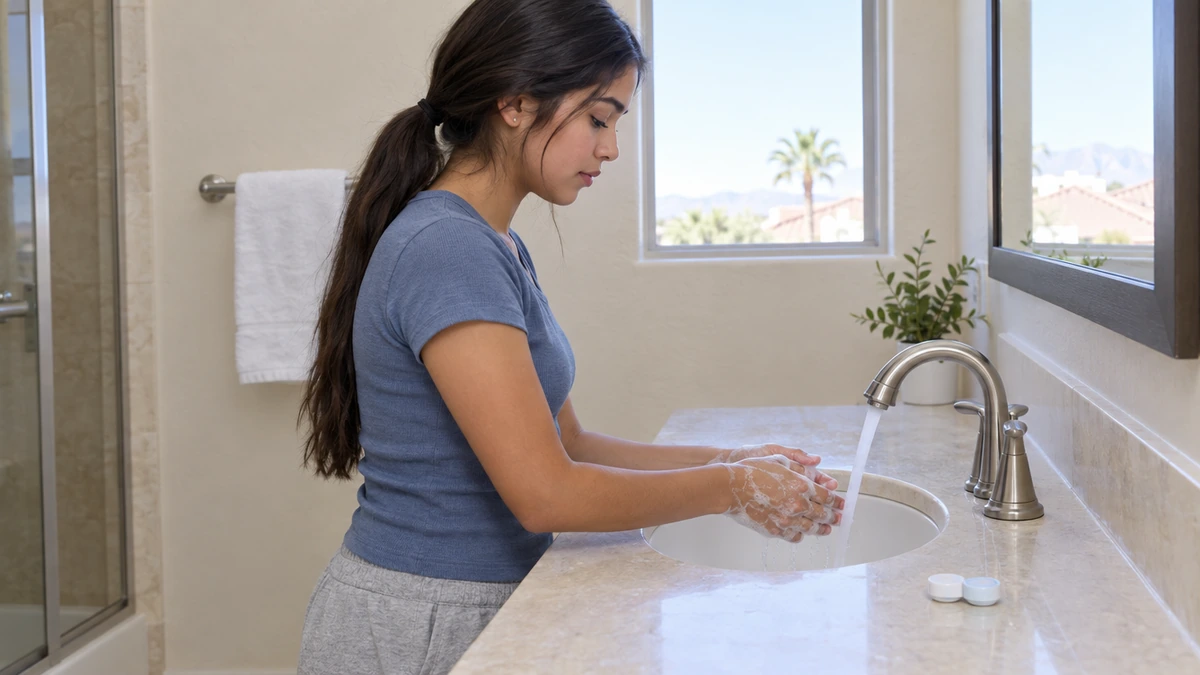
    Latina teen washing hands beside an untouched plain lens case, contact lenses for kids
    A teen washes her hands before she touches her lens case.

    Set the routine before the busy day. Your child needs clear instructions for hands, water, sleep and storage. Follow the sequence below with them until everyone knows their part. Give each step enough time.

    1. Wash hands with soap and water, then dry them completely with a clean cloth before touching lenses.
    2. Handle lenses with clean, dry hands. Follow the wear instructions given with the fitting.
    3. Remove lenses before swimming or showering. Keep lenses away from all water, including tap water used as a rinse.
    4. Take lenses out before sleep, including naps.
    5. For reusable lenses, follow the prescribed cleaning routine and use fresh solution. Never add fresh solution to old solution in the case.
    6. Replace a reusable lens case at least once every three months.

    These handwashing, water, sleep, solution and case rules come from CDC guidance for your child’s contact lens routine. Make the order easy to remember at home. The bathroom sink is for washing hands. Lenses stay clear of the running water.

    Put the case date on the family calendar, right beside the practice schedule, so your child’s case never outlives its three months. Review the cleaning steps together before every sleepover bag gets packed. Small habits, repeated daily, protect your child’s eyes.

    How Do You Share Responsibility With a Teen?

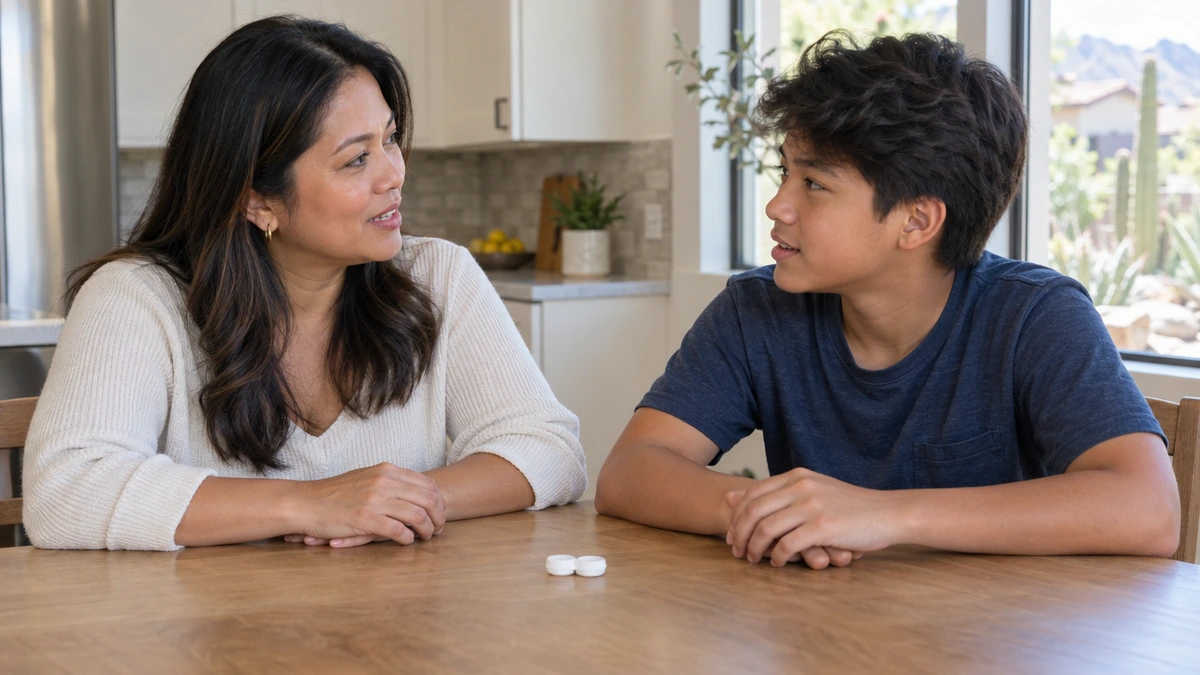
    Filipino-American mother and son talking beside a plain lens case, contact lenses for kids
    A mother and her son talk through the lens routine at the kitchen table.

    Make the plan fit a real evening. Your teen gets home from practice in Las Vegas, drops a gym bag beside the kitchen table and heads toward the shower. This is the moment to remember lens removal. Decide on that order together while nobody is tired or rushed.

    Give your teen ownership of the routine while keeping your role clear. Agree who notices supplies running low and who checks the bag before a sleepover. Talk through what happens when plans change and swimming gets added to a friend’s afternoon. The answer needs to be settled before everyone reaches the pool.

    Leave room for honest reports. Your child should feel comfortable saying they forgot a step, struggled with removal or felt something unusual. Start with what happened, then address it together. Treat speaking up as part of responsible eye care.

    How I Approach Your Child’s Contact Lens Visit

    I am Dr. Amel Youssef, founder and eye doctor at Vision by Amel. My practice offers pediatric eye exams and contact lens fittings, from daily disposables onward. Your child gets the exam first, then a fitting planned around school, sports and your home routine.

    Your child’s exam uses Visionix digital diagnostics, and I walk you through every result. When a lens feels wrong, your child tells me, and I adjust the lens material, the wear schedule or the fit. A painful red eye never waits for a routine visit: follow the steps above.

    You will find us at 2010 Festival Plaza Dr, Suite 195, Las Vegas, NV 89135. Our Downtown Summerlin location is at Festival Plaza. For a routine exam and contact lens fitting, book online or call. Include your child’s interest in contacts when arranging the visit.

    Frequently Asked Questions About Contact Lenses for Kids

    How Old Does My Child Have to Be to Wear Contacts?

    No birthday decides it. The American Optometric Association sets no single starting age, and your child’s maturity, hygiene and motivation matter more. Younger children often need more practice: in the CLIP study, children aged 8 to 12 needed about 42 minutes of insertion and removal training, against about 30 for teens. That was a short, 3-month study, so read it as a guide to patience, not a rule.

    Are Daily Disposable Contacts Safer for Kids?

    Daily disposables reduce some risks, because your child starts each day with a fresh pair, yet no lens is infection-proof. A 2023 review of seven studies by Bullimore and Richdale found serious corneal infection no more common in children wearing soft lenses than in adults. Those are study rates, not your child’s own odds, so the water, sleep and handwashing rules apply every single day.

    Can My Teen Swim, Shower or Sleep in Contacts?

    No. Take the lenses out before the pool, the shower or bed, because water carries germs and sleeping in lenses raises the chance of a serious eye infection. Eye care professionals generally do not recommend overnight lenses for kids and teens, the Food and Drug Administration says, since they raise the rate of corneal ulcers. Pack the lens case and backup glasses in your teen’s sleepover bag.

    My Child’s Eye Is Red and Hurts With Contacts In. What Do I Do?

    Take the lenses out now and call your eye doctor right away. Leave them out until your eye doctor says your child is ready to wear them again. The most severe lens-related infections sometimes lead to blindness or a corneal transplant, the CDC warns, which is why this call never waits for morning.

    Can Kids Wear Colored or Costume Contacts?

    Only with a prescription. The Food and Drug Administration treats lenses without corrective power as medical devices, so Halloween lenses from a costume shop are off the table for your child. Never let your child share a friend’s lenses or wet a lens with saliva.

    Book My Eye Exam Call (702) 858-4362

    Like this article? Add Vision by Amel as a preferred source, and you are more likely to see our articles in Google’s Top Stories.
    Add as a preferred source on Google