Tag: dry eyes

  • Contact Lenses When You Have Dry Eyes: What Can Help

    Contact Lenses When You Have Dry Eyes: What Can Help

    Contact Lenses When You Have Dry Eyes: What Can Help

    Black woman pausing beside an edge-on laptop by a window, contact lenses for dry eyes

    TLDR: Choosing contact lenses for dry eyes starts with your symptoms, lens fit and wearing routine. A different lens, shorter wearing time or compatible drops are options to discuss at your visit. Remove your contacts and call an eye doctor right away for redness, pain, irritation or blurred vision while wearing them.

    Answer: Contact lenses for dry eyes need an individual plan. In Las Vegas, I review your lens material, fit, replacement schedule and care solution alongside your symptoms. Daily disposables and breaks in glasses are options. Use only drops approved for contact lens wear with lenses in, and have persistent discomfort assessed before extending your wearing time.

    It is 4 pm at your home desk in Summerlin. The laptop is still open, dinner is an hour away, and your contacts feel gritty and tight. Your glasses sit across the room. That exact hour is the most useful clue you bring to your eye exam.

    As your optometrist, I want to understand the whole day you spend in lenses. I reviewed 123 primary sources across five research lenses for this guide, and contact lens discomfort has several possible causes beyond the lens itself. The TFOS contact lens discomfort report explains why your symptoms call for a look beyond the lens. My approach to dry eye treatment starts with that distinction, which also guides our dry eye care.

    Why Do Contact Lenses Feel Dry?
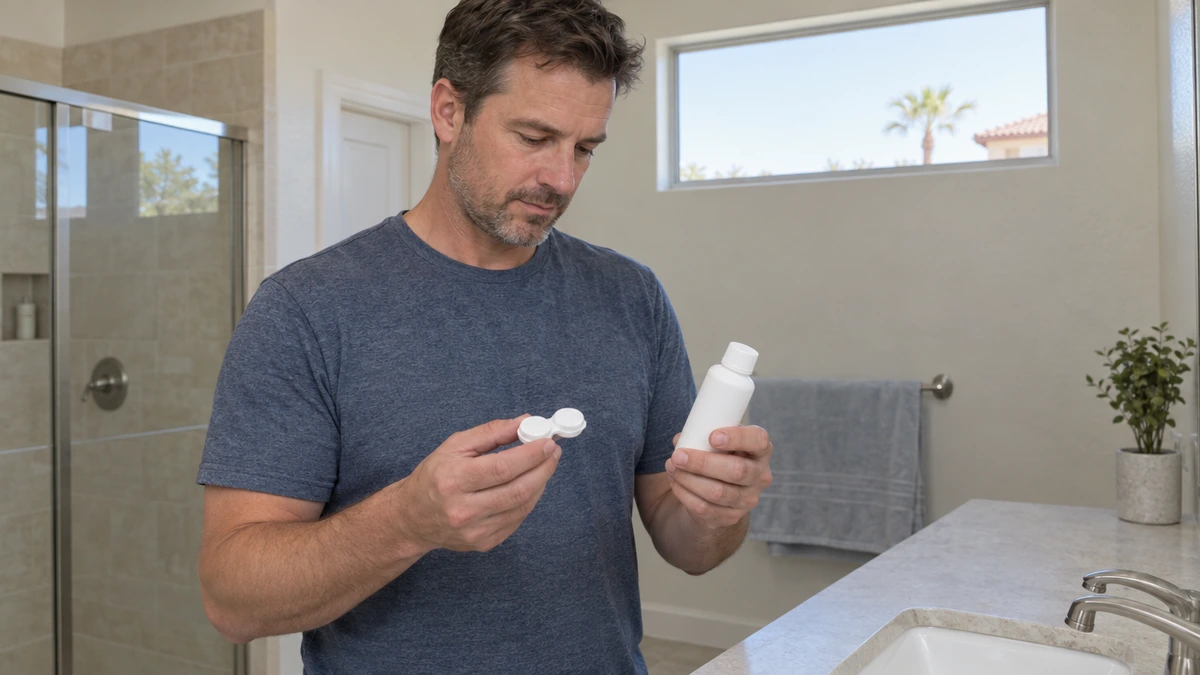
    White man holding a plain lens case and bottle at a bathroom counter, contact lenses for dry eyes
    A man holds his lens case and a plain bottle at the bathroom counter.

    Pin down your pattern first. Does the lens scratch the moment it goes in, or does comfort fade after lunch? Both eyes or one? Glasses days too? Your answers point me to the lens, the tear film or both.

    Lens discomfort and dry eye disease overlap, but feeling dry does not establish a diagnosis. The TFOS report links discomfort with changes in the tear film, including reduced stability and faster evaporation. It also identifies other sources of symptoms, including eyelid disease, allergies and medicines. Your lens is part of the picture.

    Your bathroom counter tells me the rest. Show me the lens box, the solution in your case and every bottle of drops you reach for. When did you open this pair, and when does it get replaced? Plain answers beat any guess at a diagnosis.

    Which Contact Lenses for Dry Eyes Are Worth Discussing?

    Clinician hands showing a lens to a Latina woman at a fitting, contact lenses for dry eyes
    An eye doctor's hands show a contact lens to a woman at her fitting.

    A useful lens change has a purpose. The TFOS clinical summary lists material, wearing schedule, care solution, replacement frequency and design among options for managing your discomfort after other causes are assessed. These options have variable results. The table shows what each discussion covers.

    OptionWhat ChangesWhat to Discuss
    Lens materialA different material and surfaceHow the proposed lens differs from your current one
    Daily disposablesA fresh lens for each day of wearWhether moving away from a reusable lens routine suits you
    Wearing scheduleLess time with lenses on your eyesWhich parts of your day work well in glasses
    Fit and designThe way the lens sits and interacts with your eyeWhether the current lens needs a fitting review
    Care solutionThe care products used with reusable lensesWhich system matches your prescribed lenses
    Replacement frequencyWhen you discard a lens and open anotherWhether your actual routine matches the prescribed schedule

    Give every lens change one clear target: comfort through the afternoon meeting, then glasses for the evening. Your follow-up runs on specifics, such as which activity made the new lens fade, not a verdict on the whole week.

    I would rather build your lens plan around a comfortable day than chase the longest wearing time. Your work, errands and evenings shape that plan. Describe the activities for which you prefer contacts and the times glasses suit you well. That gives the fitting conversation a practical goal.

    Which Drops Belong With Your Contact Lenses?

    Read the bottle before using it. The American Optometric Association says to use only eye drops approved for contact lens wear while your lenses are in and to avoid redness-relief drops with lenses. A bottle labeled artificial tears still needs a contact lens compatibility check. The words on the label matter more than the size or shape of the bottle.

    Rewetting drops are a comfort option with uncertain benefit. A Cochrane review found very low-certainty evidence of improvement over no drops and no clear advantage over saline in short trials, leaving long-term benefit and safety uncertain for your decision. Treat that uncertainty as a reason to review the full lens plan when discomfort persists. Repeated dosing should not become your way of extending an uncomfortable day.

    Your cleaning solution has a separate job. Rewetting drops and saline do not disinfect lenses, as the AOA lens-care guidance explains. Follow the care system prescribed for your reusable lenses. Set the bottles side by side at home and read their uses before your next lens-care routine.

    When Should You Switch to Glasses?

    Asian woman wearing glasses at an evening desk beside a closed lens case, contact lenses for dry eyes
    A woman in glasses sits at her desk at dusk, her lens case closed beside her.

    Give glasses a planned place in your day. The 2017 TFOS DEWS II report includes reducing wearing time or stopping lens wear among strategies with some evidence for lens-related dry eye. Discuss a shorter schedule when comfort repeatedly fades. The next step is a plan you follow, with a review of how your eyes respond.

    1. Have your glasses available before you put contacts in.
    2. Follow the wearing schedule agreed at your fitting, including the planned time to switch to glasses.
    3. Record discomfort and the activity underway when it starts.
    4. Arrange a review when the schedule no longer feels comfortable, and follow the urgent instructions below for warning signs.

    Your glasses are a tool, not a defeat. Close the lens case after a long Las Vegas workday, slip your glasses on, and finish the evening in comfort. Save your contacts for the hours you want them most: the client lunch, the pickleball game, the night out. You win the day when your eyes still feel good at 9 pm.

    How Do Screens and Desert Air Change Your Lens Day?

    Middle Eastern man walking in wraparound sunglasses in Downtown Summerlin, contact lenses for dry eyes
    A man in wraparound sunglasses walks through a Downtown Summerlin plaza.

    Screen hours and lens hours stack up on the same pair of eyes. My guide to screens, contact lenses and daily habits covers the blink facts, the monitor setup and the break routine, so this page skips them. Here, you track one number: the hour your comfort drops. That hour tells me more than a weekly average ever will.

    You finish laptop work, walk outside in Downtown Summerlin wearing wraparound sunglasses, then get into a car with air blowing toward your face. Each switch, screen to sunlight to car vent, tests your lenses in a new way. For the vents, wind and dry air themselves, read how Las Vegas air dries your eyes.

    When Should Your Lenses Come Out Right Away?

    Take your lenses out and call an eye doctor right away if your eye turns red and irritated, pain keeps building after the lenses come out, light starts to hurt, your vision blurs suddenly, or you notice unusual watering or discharge. The CDC lists these as signs of a possible contact lens infection. Do not wait for the next routine fitting. Tell the office you wear contacts and name the symptom when you call.

    These signs need an assessment. Contact lens wear raises the risk of keratitis, which is inflammation of the cornea, and infection is one cause. The CDC links infection risk with lenses worn too long or cared for incorrectly. Protect your eye health by acting on the symptoms, even when dryness has happened before.

    How I Approach Contact Lenses for Dry Eyes

    At Vision by Amel, your contact lens fitting is the place to discuss material, wearing schedule and fit. I fit lenses from daily disposables onward, and when your lenses fight your eyes, I change the material, the wear schedule or the fit. Tell me what you wear now and which part of the day has become difficult. Include the exact care products you use.

    Your eye care plan also depends on the eyes beneath the lenses. Depending on your eyes, your plan draws on artificial tears, prescription eye drops, warm compresses, eyelid hygiene or care for meibomian gland dysfunction and blepharitis. When your lids are part of the problem, my guide to meibomian gland dysfunction walks you through the oil glands. Your symptoms and exam findings guide those choices.

    Your fitting happens at 2010 Festival Plaza Dr, Suite 195, Las Vegas, NV 89135, in Downtown Summerlin at Festival Plaza. Book online or call (702) 858-4362 for an appointment. You do not need a referral for an eye exam. Mention contact lens discomfort when you book so the reason for your visit is clear.

    Frequently Asked Questions About Contact Lenses and Dry Eyes

    Why Do My Contacts Feel Dry by the End of the Day?

    You have plenty of company. The TFOS workshop estimated in 2013 that up to half of contact lens wearers feel lens discomfort at some point, and it links that discomfort with shorter wearing time and people giving up lenses altogether. Comfort that fades by evening points me to your tear film, your lens and your schedule together, so tell me the hour it starts.

    Can I Keep Wearing Contacts If I Have Dry Eye?

    You have options before you give lenses up. A shorter lens day, a different lens or a full pause from lenses all stay on the table, depending on what your exam shows. Severe dry eye changes the math: the AAO dry eye guideline warns it raises your risk of lens intolerance and lens complications.

    Do Daily Disposable Lenses Help Dry Eyes?

    They are an option worth discussing for your comfort. Daily disposables remove exposure to a reusable-lens care solution, but TFOS notes that the solution inside the blister pack itself is a possible source of discomfort. Report discomfort at insertion as well as discomfort later in the day.

    Does the Lens Material Matter?

    Material is one consideration in your fitting. TFOS cautions that material effects are difficult to separate from lens design and surface effects, so evidence does not establish a single best material. Compare the whole proposed lens and your response to it.

    Are Rewetting Drops Safe With Contacts, and Do They Work?

    Your lenses stay in only for a drop labeled for contact lens wear, and the AAO lubricant guide favors one without preservatives for that job. For any other drop, take your lenses out, wait five minutes, put the drop in, then give your eyes another 10 to 15 minutes before the lenses go back in. Track how long your relief lasts, because that number tells me whether the drop earns its place.

    Book My Eye Exam Call (702) 858-4362

    Like this article? Add Vision by Amel as a preferred source, and you are more likely to see our articles in Google’s Top Stories.


    Add as a preferred source on Google

  • Why Las Vegas Air Dries Out Your Eyes, and What You Can Do

    Why Las Vegas Air Dries Out Your Eyes, and What You Can Do

    Why Las Vegas Air Dries Out Your Eyes, and What You Can Do

    Middle Eastern woman squinting in wind on a palm-lined sidewalk, illustrating dry eyes in Las Vegas

    TLDR: Desert air and wind speed tear evaporation, making dry eyes in Las Vegas harder to ignore. Point your vents away, consider a humidifier at home and wear wraparound sunglasses outdoors. Persistent discomfort deserves an eye exam.

    Answer: Low humidity in Las Vegas speeds moisture loss from your tear film, and wind adds airflow across your eyes. Start with the air you control: redirect car vents, move out of household drafts and consider a humidifier. Wear wraparound sunglasses outside, and have persistent symptoms evaluated so the weather does not become your only explanation.

    The sidewalk is windy. Your car is cool. Yet your eyes sting through both parts of the trip home to Summerlin. You cannot change the desert, but you have control over the air hitting your face from the driver’s seat to your pillow.

    I reviewed 51 primary sources across five research lenses for this guide, and low humidity increases tear evaporation. The 2017 TFOS DEWS II report adds that moving air across your ocular surface, the exposed surface of the eye, speeds that loss too. My approach to dry eye treatment puts those everyday conditions alongside your symptoms.

    Your desert climate has numbers behind it: NOAA’s Las Vegas climate summary gives 1991 to 2020 airport humidity normals of 17% in June, falling to 11% at 4 p.m. local standard time, compared with 31% annually and 48% in January. These are long-term airport figures, not readings for Summerlin homes. The same summary describes Las Vegas as the driest major metro in the continental United States, storm gusts most often in spring and fall, dust and sand in strong winds, and airport winds near 10 mph from April through June. The wind speed is a 40-year mean.

    Why Do Dry Eyes in Las Vegas Flare Up in the Car?

    Man in a parked car angling the dashboard vent away from his face, a habit for dry eyes in Las Vegas
    Angle the vent away from your face while you are still parked.

    Turn the vent away from your face. A cool cabin still has moving air, and a dashboard vent puts the stream close to your eyes. On the 215, cooling down after a hot parking lot walk feels welcome. Keep the cool air and change its direction.

    You have a practical place to start: the American Academy of Ophthalmology says changing airflow at home, at work and in the car may help dry eye, along with humidifying the air and blocking drafts with side shields on your glasses. Pointing vents away from your face applies that advice to the driver’s seat. Make the adjustment while parked. Then give the road your full attention.

    1. Sit in your usual driving position before setting off.
    2. Feel where the dashboard air lands, including the vent nearest the side window.
    3. Angle the vents away from your eyes while keeping the cabin comfortably cool.
    4. Check the open window too, since it changes the airflow around your face.

    Hunt down the drafts in your day. Start with the car, then check the chair where you read and the fan aimed at your pillow. The aim is simple: stop sitting directly in the stream. Use the table to make a targeted change where you spend time.

    Everyday SettingAirflow to CheckPractical Adjustment
    Driving across Las VegasDashboard vents pointed at eye levelRedirect them before driving
    Reading at homeA nearby fan or overhead ventMove your chair out of the stream
    Settling into bedAir blowing toward your pillowChange the fan’s direction
    Walking outsideWind reaching around your glassesChoose wraparound coverage

    Same trip, same scratchy eyes? Check the seat you sit in. Your usual vent setting might feel different when someone else drives and you sit closer to the side outlet. Adjust the air for the seat you occupy before the car moves.

    Does a Humidifier Help Your Eyes at Home?

    Older white man asleep beside a small humidifier, illustrating dry eyes in Las Vegas
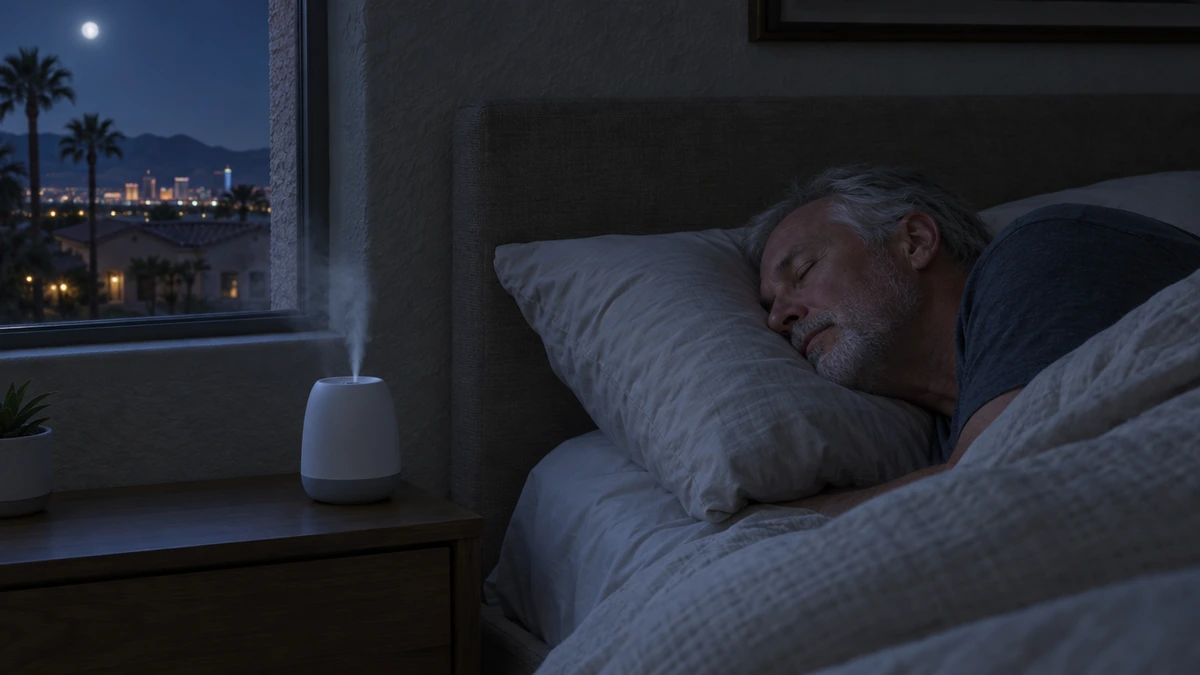
    A bedside humidifier releases mist while a man sleeps.

    A humidifier puts moisture back into dry bedroom air. Treat it as a comfort tool alongside your care plan. Start with the room where you want that extra moisture, rather than treating the entire house as one space. A quiet bedroom and a living room with a running fan have different setups.

    The evidence for adding a humidifier to your dry eye treatment plan has limits: the 2017 TFOS DEWS II management report identified only one controlled study supporting local humidifying devices at that time. That dated review is a reason to keep expectations modest, not a count of all research published since.

    Start at pillow level. Lie where you normally sleep and notice whether the fan blows across your face, then check the nearest vent. Follow the humidifier’s cleaning and placement instructions. Give the device a suitable place of its own instead of crowding it against your bedding.

    What did researchers measure? In a randomized crossover trial of 44 computer users published in Optometry and Vision Science, one hour beside a desktop humidifier improved reported comfort for 36% of participants, compared with 5% without it, and lengthened median tear breakup time by 4.0 seconds. The study shows short-term comfort and tear stability, not what a humidifier will do for your eyes over months. I favor changes you will keep using. Think about filling, cleaning and placement before choosing where it goes.

    How Should You Protect Your Eyes From Las Vegas Wind?

    Latino hiker wearing wraparound sunglasses on a red rock trail, illustrating dry eyes in Las Vegas
    Wraparound sunglasses provide coverage around the sides of your eyes.

    Take the wind seriously on ordinary errands. The airport wind figures above give your outdoor plans some local context, but you need no wind-speed measurement to notice air blowing around your glasses. Have your outdoor coverage ready before you leave.

    Put your wraparounds beside your keys. A walk across an exposed Summerlin parking lot counts as time outdoors, even when a red rock trail is nowhere on the day’s agenda. Look for coverage around the sides as well as the front. Wind reaches your eyes from more than straight ahead.

    Fit matters in daily eye care. Turn your head while trying the frame and check how it sits beside your temples. A close shape needs to feel comfortable enough for the walks you take. Choose with your ordinary day in mind, from errands at Festival Plaza to the path back to your car.

    What Changes Help Dry Eyes in Las Vegas Between Stops?

    Filipino woman drinking water at an office desk by a sunny window, illustrating dry eyes in Las Vegas
    A woman pauses for water beside a sunny office window.

    Your office air runs dry too: the American Academy of Ophthalmology explains that indoor humidity drops when heating or air conditioning works harder against outdoor temperature extremes. Use your next water break to find the vent aimed at your chair. Keep the room cool while moving out of its direct draft.

    A short stay in dry air matters in the research: the 2017 TFOS DEWS II pathophysiology report describes increased blink rate, discomfort and inflammatory markers in tears after as little as 90 minutes in low humidity. That finding gives you a reason to consider time indoors as well as time outside. It is an exposure-study result, not a countdown to symptoms for everyone who enters an office.

    Look at the room where you spend that time. An open-plan office, a shared living room and a bedroom each leave you different choices about where to sit and which vent to adjust. Moving a chair away from a fan takes less planning than rearranging an entire room. Leave room for the people sharing that space. I want your home adjustments to solve a specific problem you have noticed.

    A turned vent is a start. A sting that keeps coming back needs an exam. My guide to dry eye treatment options explains the next part of the conversation about your eye health.

    When Does Desert Dryness Need Care Today?

    Do not wait for a less windy day when your eye is red or painful, or you notice discharge or a sore on the eye or lid: contact an eye care provider right away, as MedlinePlus advises. Its separate advice for eyes that fail to improve with self-care within a few days is to contact your provider promptly. Give those symptoms priority over another change to the room.

    How I Connect Your Symptoms With Your Surroundings

    Your commute belongs in the conversation. As your optometrist, I start with your history, including the car vents, the fan at home and the places where discomfort interrupts your day. Tell me what happens in plain language. “The air hits my face all the way home” gives us a concrete starting point.

    Your comprehensive eye exam gives us time to connect the findings with the symptoms you describe. Environment habits are among the options I consider when we discuss your plan at an eye exam visit.

    You will find me at Vision by Amel in Downtown Summerlin, at 2010 Festival Plaza Dr, Suite 195, Las Vegas, NV 89135. My team takes bookings online or by phone, with no referral needed for an eye exam. Choose a visit so we have time to examine your eyes and discuss what comes next.

    Frequently Asked Questions About Dry Eyes in Las Vegas

    What Is the Average Humidity in Las Vegas?

    NOAA’s annual airport normal is 31%, but the June and January figures above show why you should specify the season. For your own room, record the location and hour alongside a humidity reading before comparing it with those outdoor figures. Keep an afternoon reading separate from a monthly average.

    Do Humidifiers Help Dry Eyes?

    It is a reasonable comfort measure to discuss for your room, with the short trial above setting the limits of the evidence. Before choosing one, decide where it would sit and who would keep up with its care. Follow its cleaning instructions, and judge the effort alongside the rest of your care plan.

    Is Las Vegas Wind Bad for Dry Eyes?

    Yes, moving air speeds evaporation from your tear film. A gusty walk and a steady household draft both put air across your eyes, so consider each when you change your surroundings. Wind protection matters on ordinary errands as well as longer outings.

    Should I Turn Off My Air Conditioning If My Eyes Feel Dry?

    No. Keep your room cool and point the vents away from your face. Check the outlet above or behind your usual seat too, where the source of a draft is easier to miss. Move the chair when the vent itself is hard to redirect.

    Do Wraparound Sunglasses Help Dry Eye?

    They help shield your eyes from wind coming around the sides. When you wear prescription glasses, discuss a wraparound shape or side protection suited to your lenses. Try the fit while looking sideways as well as straight ahead.

    Does Living in Las Vegas Mean I Have Dry Eye?

    No. Your ZIP code is not a diagnosis. Tell me when your symptoms hit and when they ease, including time away from drafts. Your surroundings belong in the history, and I evaluate your eyes before choosing a plan.

    Book My Eye Exam Call (702) 858-4362

    Like this article? Add Vision by Amel as a preferred source, and you are more likely to see our articles in Google’s Top Stories.

    Add as a preferred source on Google