Eye Injuries in Kids: First Aid Every Las Vegas Parent Should Know
TLDR: For chemical eye injuries in kids, flush your child’s eye with water right away and get emergency care. For a cut, puncture or embedded object, protect the eye without pressure, do not rinse or remove the object, and go to the ER right away. Vision changes after an injury also need the ER right away.
Answer: First aid for eye injuries in kids depends on what happened. Flush a chemical splash with water right away, for at least 15 minutes. Never rinse a cut, a puncture or a fireworks injury, and leave any stuck object in place. Use a cold compress without pressure after a blow. In Las Vegas, take your child to the ER right away for any serious injury.
You are on the soccer sideline in Summerlin when a ball catches your child in the face. The game stops, and you need a clear next step. I reviewed 168 primary sources across five research lenses for this guide, and chemical splashes and punctures require different first aid.
Get emergency help right away if your child has any of these serious injury signs listed by the American Academy of Ophthalmology: ongoing pain, trouble seeing, cut eyelid, one eye not moving as well, one eye sticking out, odd pupil, blood in the eye, something that will not come out. Go to the ER rather than waiting for a routine eye exam. Once the emergency is handled, my eye exams overview explains the follow-up visit.
What Should You Do After a Chemical Splash?
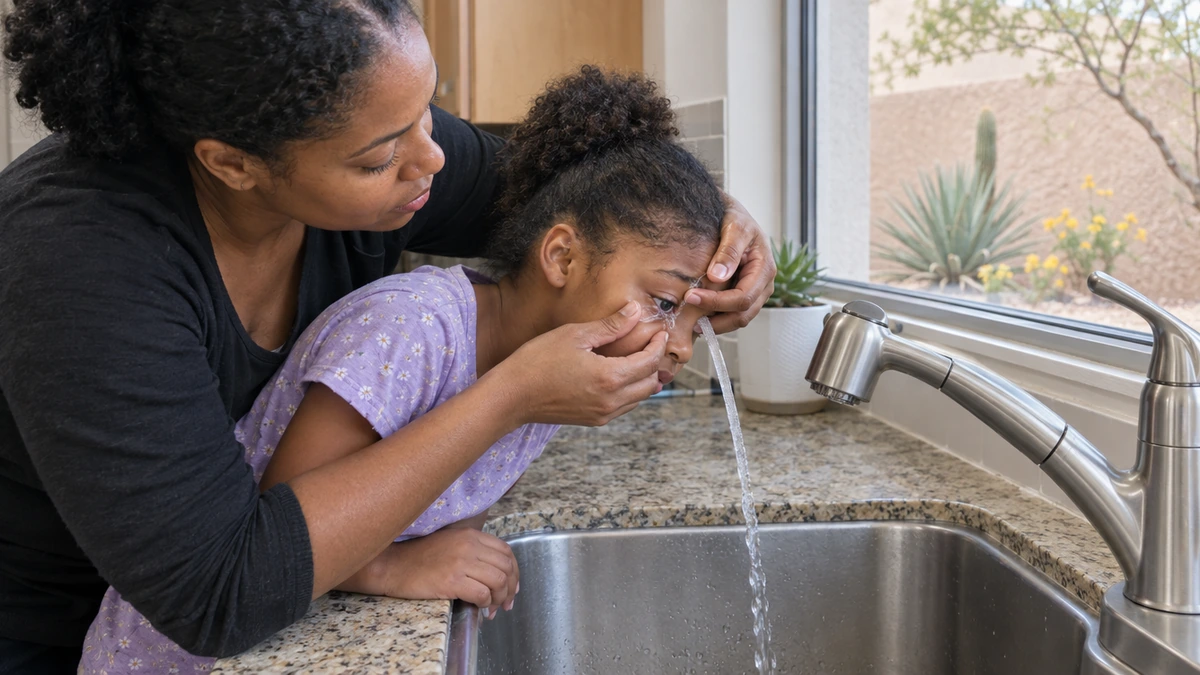
Start flushing right away. Hold your child’s eye open under a faucet or shower, and continue flushing with water for at least 15 minutes, as Prevent Blindness directs. Get emergency care right away after flushing. Do not delay rinsing to find special eyewash or book a visit.
- Move straight to running water, the kitchen sink or the shower. At a park or in the car, use bottled water or any drinkable liquid.
- Hold the affected eye open so water reaches it. Start rinsing before searching for the product’s ingredients.
- Keep flushing for at least 15 minutes by the clock. Another adult calls for emergency help while you stay with your child.
- Leave the eye unbandaged. Head for emergency care once flushing is complete.
A spray bottle tips while you clean a Las Vegas kitchen, and your child cries out beside the sink. Your first job is getting water into the affected eye. The bottle and phone wait while you start flushing. A second adult is useful here: one stays at the sink, the other handles the next steps.
Prevention starts under your sink. Chemical products were the leading cause (34.2%) of product-related eye injuries in children younger than 5 treated in US emergency rooms from 1997 to 2019, a study in Ophthalmic Epidemiology found. Lock cleaners up high and out of your child’s reach. A sharp object or a fireworks injury needs the different steps below.
Which First Aid Fits Eye Injuries in Kids?
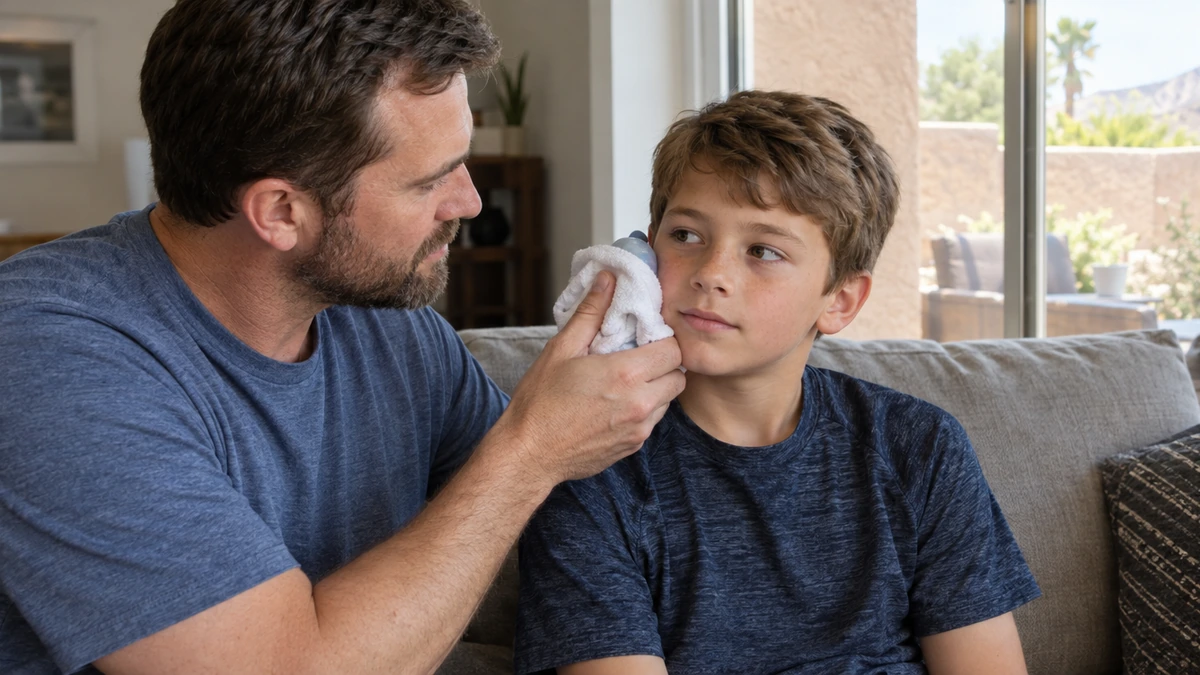
Match your response to the injury. The American Academy of Ophthalmology recommends a cold compress without pressure after a blow, a shield without rinsing for a puncture, and prompt examination even when an injury seems minor. A toy edge, a flying fragment and a loose grain of dust call for different decisions. Use this table to choose the first action, then follow the emergency signs above.
| What Happened | Your First Action | When to Get Help |
|---|---|---|
| Loose sand or dust | Encourage blinking and let tears wash it out. Do not rub or use tweezers. | Get help right away when the speck stays or the feeling persists. |
| Ball, elbow or toy hits the eye | Apply a small cold compress without pressure. | Go to the ER right away for pain, blurry vision, one eye sticking out, blood inside the eye or a black eye. |
| Cut, puncture or object embedded in the eye | Protect with a rigid shield without pressure. Do not rinse or remove the object. | Go to the ER right away. |
| Possible scratch after contact with a toy or finger | Prevent rubbing. Do not put ointment or medication into the eye yourself. | Arrange examination as soon as possible. Serious injury signs mean emergency help right away. |
Loose dust often washes away with tears. Metal, glass and other man-made fragments are more serious than dust, because they sometimes embed in the eye. Your role is to prevent rubbing and get help, not to explore beneath the eyelid with a household tool. Do not attempt to remove an embedded fragment.
For a cut or puncture, never rinse the eye, never rub it and never pull out a stuck object. Tape a rigid shield, or the bottom half of a paper cup, to your child’s brow and cheekbone so nothing presses on the eye. Then go to the ER right away.
A cold compress is first aid, not permission to resume the game. Your child still needs emergency care right away for the warning signs in the table. I would rather interrupt a game than let a child’s wish to play decide whether an injured eye gets checked.
What Changes After a Fireworks Injury?

A fireworks eye injury is an emergency: call 911 or get emergency care right away, following the American Academy of Ophthalmology guidance. Do not rub, rinse, press or remove anything stuck in your child’s eye. These instructions apply even when you think a burn or chemical caused the problem. Follow the emergency dispatcher’s directions.
The safest July 4 plan for your family is a professional show, says the American Academy of Ophthalmology, which warns that bystanders, especially children, are at high risk around home fireworks. Safety glasses and a few extra steps of distance do not make a backyard show safe for your child. Planning a Summerlin patio evening anyway? Decide in daylight who stays with the children and who makes the 911 call.
You do not need to identify the exact injury before seeking help. Describe the firework, where your child was standing and what happened next. Do not spend that time searching for drops or trying to wash away debris. Get emergency help right away.
How Do You Protect Eyes Before Play Starts?
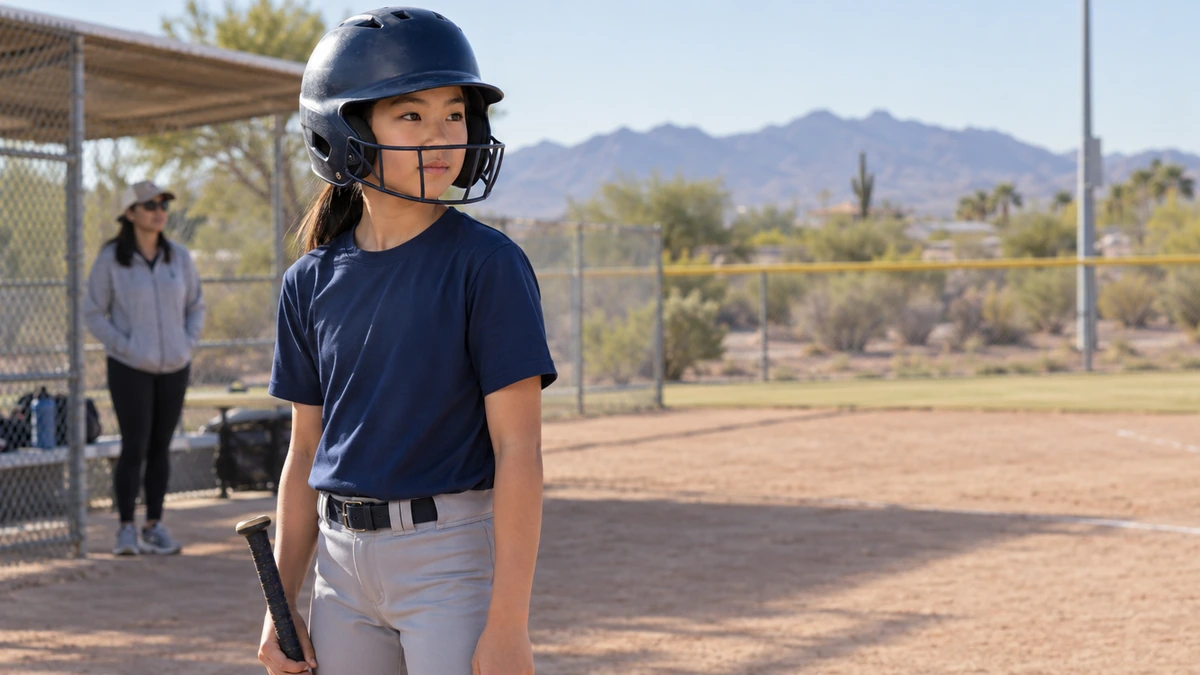
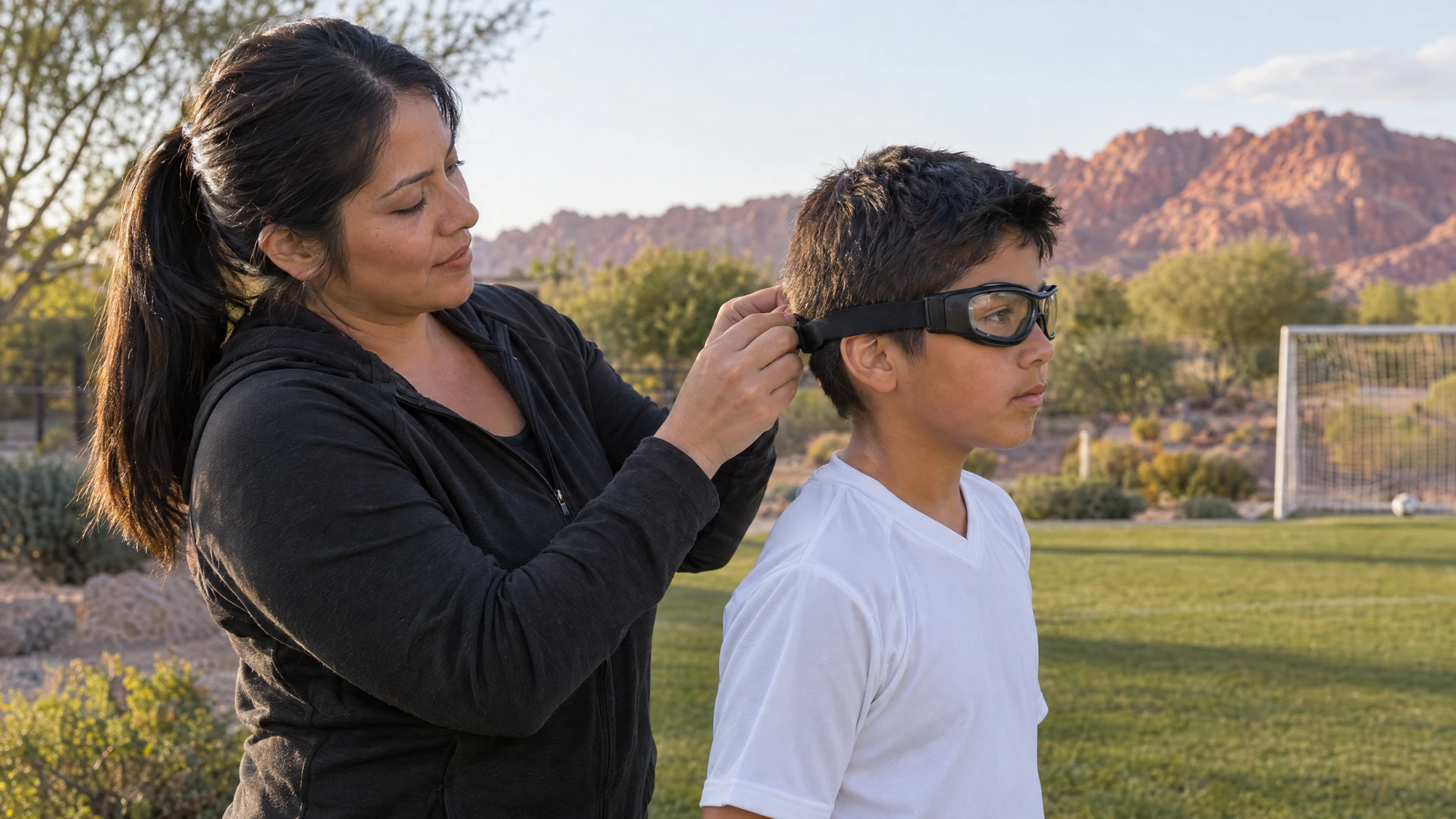
Choose protection for the sport. Sports eyewear has to meet that sport’s own requirements, says the American Academy of Ophthalmology, and everyday glasses do not protect against impact. No safety eyewear is foolproof, the AAO adds, yet the right pair lowers your child’s risk. My guide to sun and sports eyewear for kids covers lens and frame choices.
At a youth baseball practice, your child has a helmet, a glove and a bag full of equipment. Put eye protection on that packing list before leaving home. Ask which protection fits the sport and works with the helmet or face guard. I consider protective eyewear part of getting dressed for sport.
- Name the activity when choosing protection, whether soccer, basketball or baseball.
- Check the protector’s sport labeling instead of relying on its appearance.
- Include prescription needs in the discussion.
- Pack the protection with the equipment your child already takes to practice.
How I Approach Your Child’s Follow-Up at Vision by Amel
The ER handles the emergency. Routine eye care comes after, and that is where I fit in for your child. I am Dr. Amel Youssef, founder and optometrist at Vision by Amel in Downtown Summerlin at Festival Plaza, and children’s eye care is central to my work. Follow the treating team’s plan first, then book your child’s follow-up visit with me.
Your child’s story comes first: what happened, what the ER did and what still worries you. Then I examine your child’s eyes with digital diagnostics and walk you through a plan for your child’s eye health. You leave knowing what to watch for and when to come back.
For a non-urgent pediatric eye exam, my team accepts online bookings or phone calls. You do not need a referral for an eye exam. Lens wearers need their own rules, and my contact lens guide for kids and teens lays them out for your family. Save the booking options below for planned care after urgent needs have been addressed.
Frequently Asked Questions About Eye Injuries in Kids
My Child Got a Chemical in Their Eye. What Should I Do?
Flush with water right away, then get emergency care right away. When your child wears a contact lens, start flushing over it immediately rather than stopping to remove it, as Prevent Blindness advises. Take the chemical label to the ER if possible, without delaying care.
Something Is Stuck in My Child’s Eye. Should I Rinse It or Go to the ER?
Loose dust and an embedded object need different responses. For a loose speck, blinking and tears are appropriate, but an object stuck in your child’s eye needs protection without rinsing or removal and the ER right away. A lingering feeling of something in the eye still needs help right away even when you no longer see a speck.
My Child Got Hit in the Eye. When Should We Go to the ER?
Go right away for pain, blurry vision, one eye sticking out, blood inside the eye or a black eye. A light blow still deserves attention because even a small impact risks serious internal injury. Use a cold compress without pressure while getting help for your child, and avoid steaks or other food against the eye because they introduce bacteria.
Are Sparklers and Fireworks Safe for Kids?
No. Sparklers burn at about 2,000 degrees Fahrenheit, the American Academy of Ophthalmology notes, and young children should never handle them. Watching nearby still carries a risk of injury, which is why the AAO points your family to a professional show. Plan the celebration around that choice.
Does My Child Need Different Eye Protection for Each Sport?
Your child needs protection made and labeled for the specific sport, including when wearing contacts. The Prevent Blindness sports guide lists different standards for different activities, so check the current requirement with your eye doctor or league. Name each sport your child plays rather than assuming one protector suits them all.
Book My Eye Exam Call (702) 858-4362
Like this article? Add Vision by Amel as a preferred source, and you are more likely to see our articles in Google’s Top Stories.