
Pediatric Eye Exams in Las Vegas: A Parent’s Guide to Timing
TLDR: Your child needs a full eye exam after a failed screening, at the first sign of a vision problem, and on a regular schedule as school demands grow. A passed school screening does not rule out a problem, so your child’s eye exam fills the gap.
Answer: Book a pediatric eye exam in Las Vegas whenever your child fails a screening, squints, tilts their head or struggles with reading. The American Optometric Association recommends a first exam at about 6 months, another between ages 3 and 5, one before school starts, then every year. Pediatric groups rely on screenings and send your child for an exam when a screening flags a problem.
Your child rarely tells you the board looks blurry. Kids assume everyone sees the way they do. That is why I treat your child’s eye exam as the one visit that answers what a quick screening only guesses at. As an optometrist in Downtown Summerlin, I see pediatric eye exams as part of the comprehensive eye exams I give your whole family.
This guide gives you the schedules the experts publish, the signs to watch for, what happens in the chair and how coverage works in Nevada. I reviewed 38 primary sources across five research lenses for this guide, and the eye care and pediatric groups agree on one rule: a child who fails a screening, shows symptoms or struggles to see needs a full eye exam. Use this page to decide when your child’s next visit belongs on the calendar.
When Should Your Child Have a First Pediatric Eye Exam?
Two respected camps answer this question differently, and you deserve both answers. The American Optometric Association recommends a first thorough exam at about 6 months, an in-person exam between ages 3 and 5, another as school starts and then an eye examination every year from 6 to 18. That schedule puts a doctor’s eyes on your child before problems show up in class.
The American Academy of Pediatrics, the American Academy of Ophthalmology and AAPOS take a screening-first route. Your pediatrician checks the red reflex at birth, tries instrument-based screening between 12 months and 3 years, and tests reading-chart vision around age 4. The 2022 joint statement from AAPOS and the American Academy of Ophthalmology calls for repeat screening every 1 to 2 years after age 5 and an eye exam for any child who fails. The same statement says routine comprehensive exams in children with no symptoms have no proven medical benefit. Under this route, your child gets screened at checkups and examined when something turns up.
Here is where I stand. For school-age kids, I follow the AOA’s yearly schedule, because schoolwork asks more of your child’s eyes every year and screenings miss some children with real problems. Both camps agree on the moments that matter most, so never skip an exam after a failed screening, a new symptom or a family history of crossed or lazy eyes.
School Vision Screening vs a Comprehensive Eye Exam

A vision screening is a quick filter. It checks whether your child reads a chart or passes an instrument test, then sorts children into pass and refer. A comprehensive eye exam is a diagnosis. Nevada law even defines a comprehensive examination as an in-person visit covering history, eye alignment, visual acuity, pupils and the front and back of your child’s eyes.
| What it covers | School or pediatrician screening | Comprehensive eye exam |
|---|---|---|
| Who performs it | School nurse, staff or pediatric office | Optometrist or ophthalmologist |
| Purpose | Flag children who need a closer look | Diagnose and plan treatment |
| Eye alignment and focusing | Partly, depending on the test | Yes |
| Eye health inside the eye | Limited to a red reflex check in infancy | Yes, front and back of the eye |
| Glasses prescription | No | Yes |
Screenings miss children. In the Vision In Preschoolers study of 2,588 children, the best screening tests run by trained eye care professionals caught only about two-thirds of children with a target condition, though they caught nearly 90 percent of the most serious ones. Prevent Blindness notes that passing a vision screening does not mean there is no chance your child has a vision disorder.
Follow-up often breaks down too. A 2026 review of 30 studies found a median of only 43.1 percent of children who failed a school screening got the follow-up care they needed. If your child brings home a referral note, book the exam that week.
What Nevada Schools Check
Under NRS 392.420, Nevada schools with a school nurse check your child for vision problems before the end of the first year of elementary school, in at least one more elementary grade, and once each in middle school and high school. Children in special programs or repeating a grade get an extra check, and you receive a notice with a recommendation if something turns up. You also have the right to opt your child out in writing.
Signs Your Child Needs a Pediatric Eye Exam Now
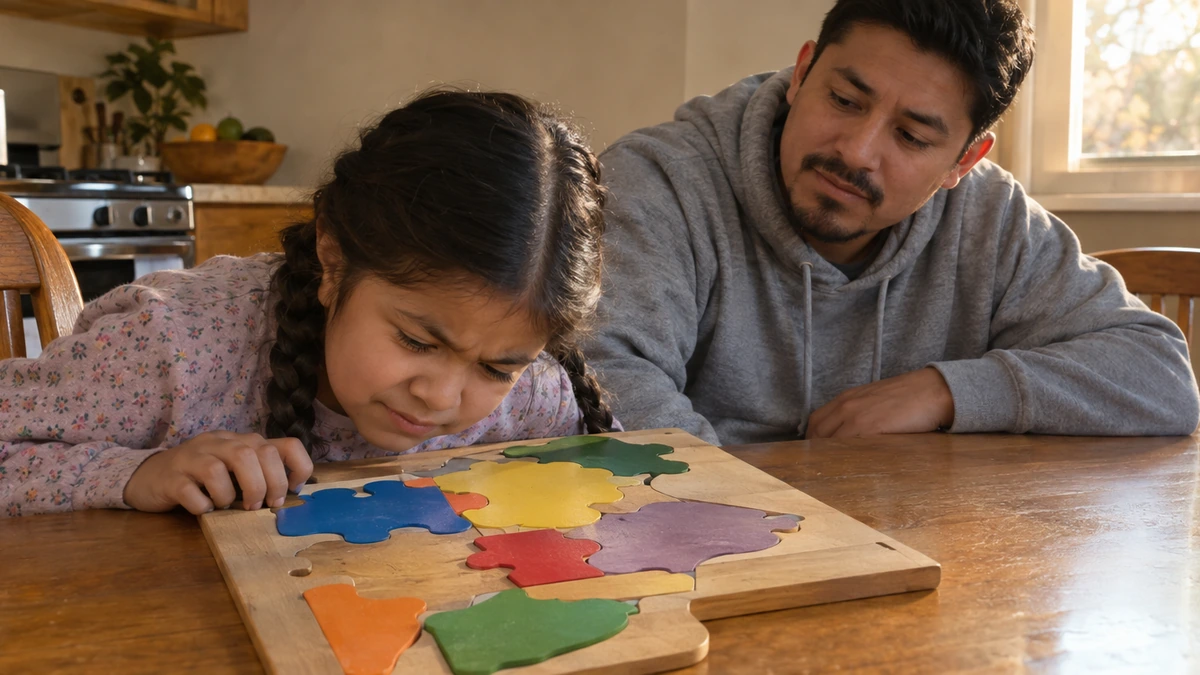
Your child’s habits often tell you more than any chart. The American Optometric Association lists warning signs worth an exam even if your child passed a recent screening. Watch for these at home and ask your child’s teacher about them too:
- Sitting close to the TV or holding a book close to the face
- Squinting, tilting the head or covering one eye
- Rubbing the eyes often or complaining of headaches
- An eye that turns in, out, up or down
- Losing their place while reading or skipping lines
- Avoiding coloring, puzzles or close-up games
- Unusual sensitivity to light
Lazy Eye and Crossed Eyes
Amblyopia, often called lazy eye, affects up to 3 in 100 children according to the National Eye Institute, and the sooner treatment starts the better. Large studies of preschool children found eye misalignment, called strabismus, in roughly 2 to 3 percent of kids. Your child rarely notices either one, which is exactly why your eyes and an exam matter.
Reading Trouble and Vision
Uncorrected farsightedness is linked to weaker early literacy scores in studies of 4 and 5 year olds. That is a real reason to check your child’s eyes when reading feels hard. A joint statement from the American Academy of Pediatrics, the American Academy of Ophthalmology and AAPOS also states vision problems do not cause dyslexia or learning disabilities, so your child’s exam rules vision in or out while the school evaluates learning.
What Happens During a Pediatric Eye Exam in Las Vegas
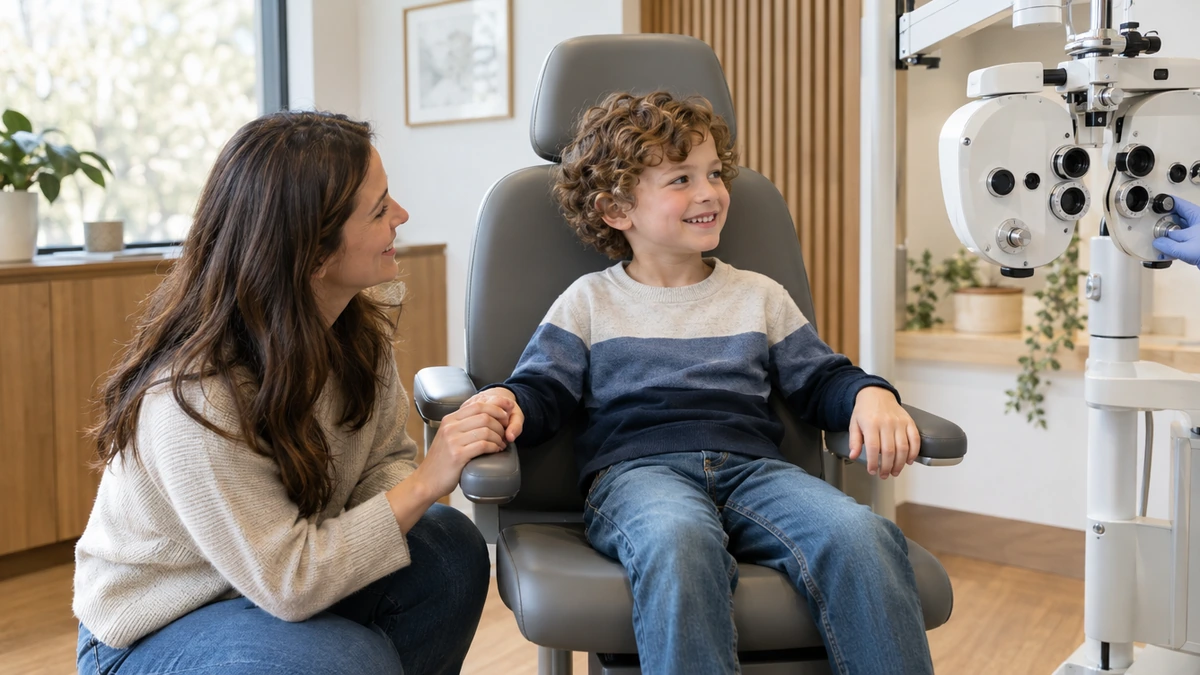
Your child does not need to know letters or how to read to have an eye exam. The AOA suggests allowing about an hour, booking early in the day when your child is fresh, and talking the visit through beforehand. Tell your child they will look at pictures and lights while you stay close by.
The exam covers the whole visual system. I check how clearly each eye sees, how well the eyes line up and move together, whether your child needs glasses for nearsightedness, farsightedness or astigmatism, and the health of each eye from front to back. Visionix digital diagnostics measure your child’s eyes in seconds, which keeps the visit moving for short attention spans.
Dilating drops are not routine in my exam room. If your child’s eye health calls for them, I explain why before any drops go in. The American Academy of Ophthalmology notes dilation lasts longer in children, so bring sunglasses and plan a quiet afternoon for your child.
Screens, Homework and Your Child’s Eyes
Screens tire your child’s eyes, and the tiredness passes. The American Academy of Ophthalmology states there is no scientific evidence screen light damages eyes, and dry eyes, blur and headaches from screens are temporary. Its guide to screen use for kids points parents to pediatric guidance on how much screen time fits each age.
Comfort habits help your child most. Use the AOA’s 20-20-20 rule: every 20 minutes, look at something 20 feet away for 20 seconds. Keep tablets at arm’s length, remind your child to blink and set a timer for homework breaks. If headaches or squinting continue after those changes, book your child’s exam.
How Coverage Works for Your Child’s Eye Exam
Children’s vision gets better protection than adult vision under federal law. HealthCare.gov lists pediatric vision care as an essential health benefit, so every Marketplace plan includes vision coverage for your child. Employer plans vary, so check your own benefits.
Nevada Medicaid covers children under 21 through the Healthy Kids program. Under the state’s ocular services manual, optometrists examine Healthy Kids members without a referral or prior authorization, routine exams are covered once every 12 months, and glasses are replaced after a prescription change or when they are lost or broken. Nevada Check Up covers children under 19 in families with income up to 205 percent of the Federal Poverty Level, so check whether your household qualifies.
My team accepts Nevada Medicaid along with Anthem, Aetna, UMR, Humana, United Healthcare, Tricare, EyeMed, Spectera, Davis and VSP. We verify your child’s plan by phone before the visit. You know what to expect before you walk in.
Why Las Vegas Parents Book Pediatric Eye Exams With Dr. Amel
You get one boutique for your whole family’s eyes. I built my practice at 2010 Festival Plaza Dr, Suite 195, in Downtown Summerlin, open seven days a week, so weekend appointments fit around your child’s school week. Your child gets a doctor who explains every step, and you leave knowing exactly what I found.
Book now if your child has never had a full eye exam, failed a screening or shows any sign on the list above. Learn more about Dr. Amel and the boutique, browse the Children’s Vision guides and protect your child’s eye health before the next school year asks more of their eyes.
Frequently Asked Questions
At what age should my child have their first eye exam?
The American Optometric Association recommends a first exam at about 6 months, another between 3 and 5, and one before school starts. The American Academy of Pediatrics relies on screenings at well visits and sends your child for an exam when a screening flags a concern. Either way, a failed screening or a symptom means your child needs an exam now.
Is a school vision screening enough?
A screening sorts children, and an exam diagnoses them. Screenings check far fewer things than a comprehensive exam and miss some children with real problems. Treat a pass as good news and keep your child’s regular exam on the calendar.
How long does a pediatric eye exam take?
Plan on about an hour, the AOA suggests, especially for a first visit. Book a morning slot when your child is rested. Bring your child’s current glasses and any school screening notice.
Does Nevada Medicaid cover my child’s glasses?
Yes, for Healthy Kids members under 21. Nevada Medicaid covers a routine exam every 12 months and replaces glasses after a prescription change or when they are lost or broken. Call my team and we confirm your child’s coverage before the visit.
Do screens damage my child’s eyes?
The American Academy of Ophthalmology finds no scientific evidence that screen light damages your child’s eyes. Screen time causes temporary strain, dryness and headaches. Regular breaks and blinking keep your child comfortable.
My child has type 1 diabetes. When do they need an eye exam?
The American Diabetes Association recommends a first dilated diabetes eye exam once your child has had type 1 diabetes for three to five years and is 11 or older or has started puberty. Read my guide to diabetic eye exam timing for the full schedule. Keep your child’s regular vision exams going in the meantime.
Book My Eye Exam Call (702) 858-4362
Like this article? Add Vision by Amel as a preferred source, and you are more likely to see our articles in Google’s Top Stories.
