Tag: portable examinations

  • What a Las Vegas Assisted Living Vision Day Looks Like, Hour by Hour
    What a Las Vegas Assisted Living Vision Day Looks Like, Hour by Hour

    What a Las Vegas Assisted Living Vision Day Looks Like, Hour by Hour

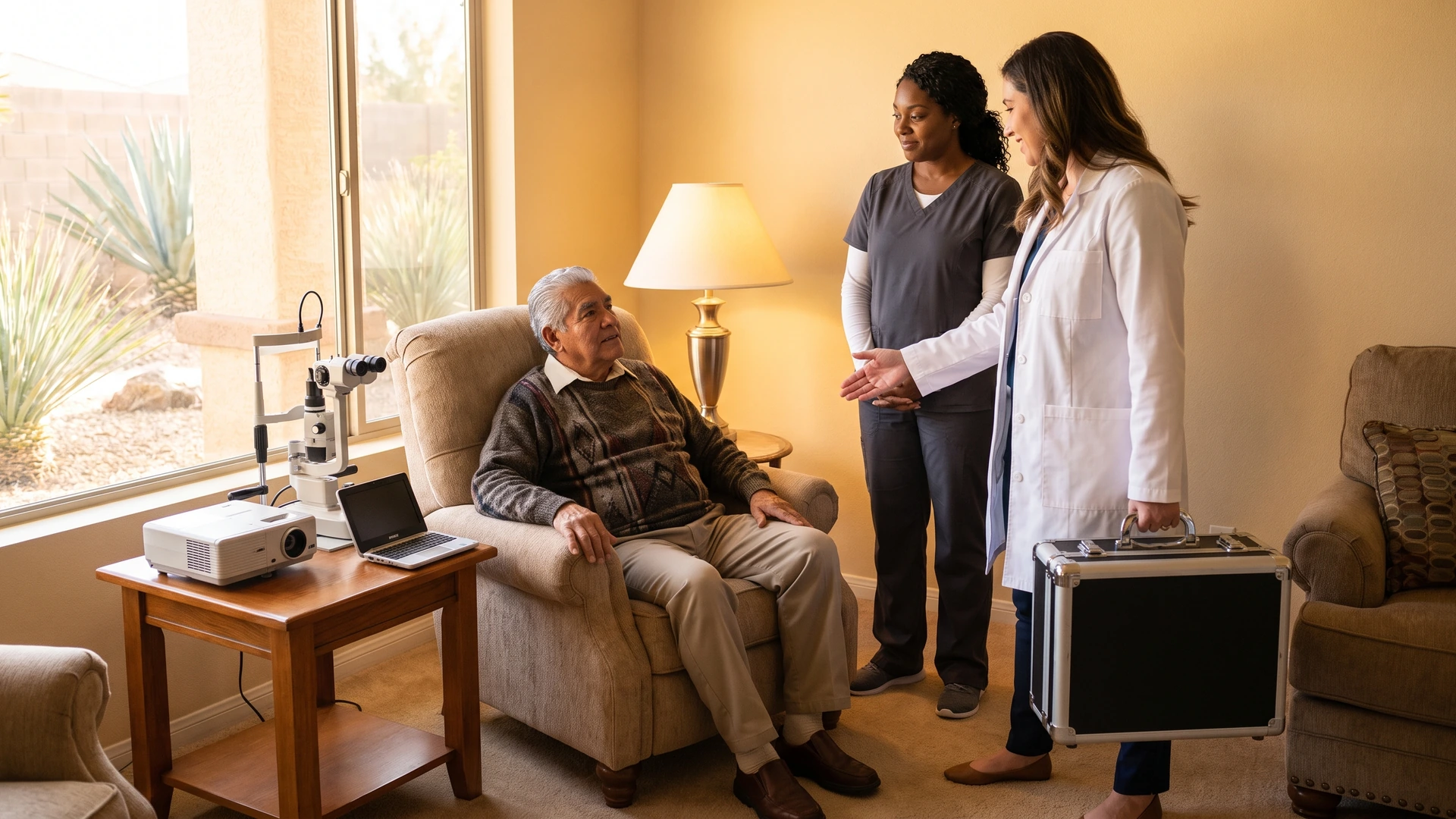
    Woman eye doctor and caregiver greeting a resident in an armchair, assisted living vision day Las Vegas

    TLDR: I use this assisted living vision day in Las Vegas sample to help you plan around a ten-resident home’s routine. The hours are placeholders, and the home’s size is an example rather than a participation count. Set actual timing, services, and follow-up with my team before inviting residents.

    Answer: An assisted living vision day in Las Vegas starts with preparation, a private room, and voluntary participation. Your staff helps residents reach the exam room, takes care of breaks, and tracks eyewear discussions and individual follow-up. I show you the sequence hour by hour in this ten-resident home example, with timing adjusted to residents’ needs and the planned services.

    Start with the home’s daily routine. I use this sample to assign tasks to your staff, my team, and residents across a vision day in a ten-resident home. It illustrates a plan, with no completed facility visit or resident outcomes represented. Use the sequence to decide who needs to be ready for each step.

    Put meals and support on the schedule. Start with the overview of an assisted living vision day, then bring your home’s routines to the planning call. Include mobility help, private space, and resident preferences in the on-site eye care plan. Give each next step a responsible contact before assigning resident times.

    Before the Visit: Your Assisted Living Vision Day in Las Vegas Sample Plan
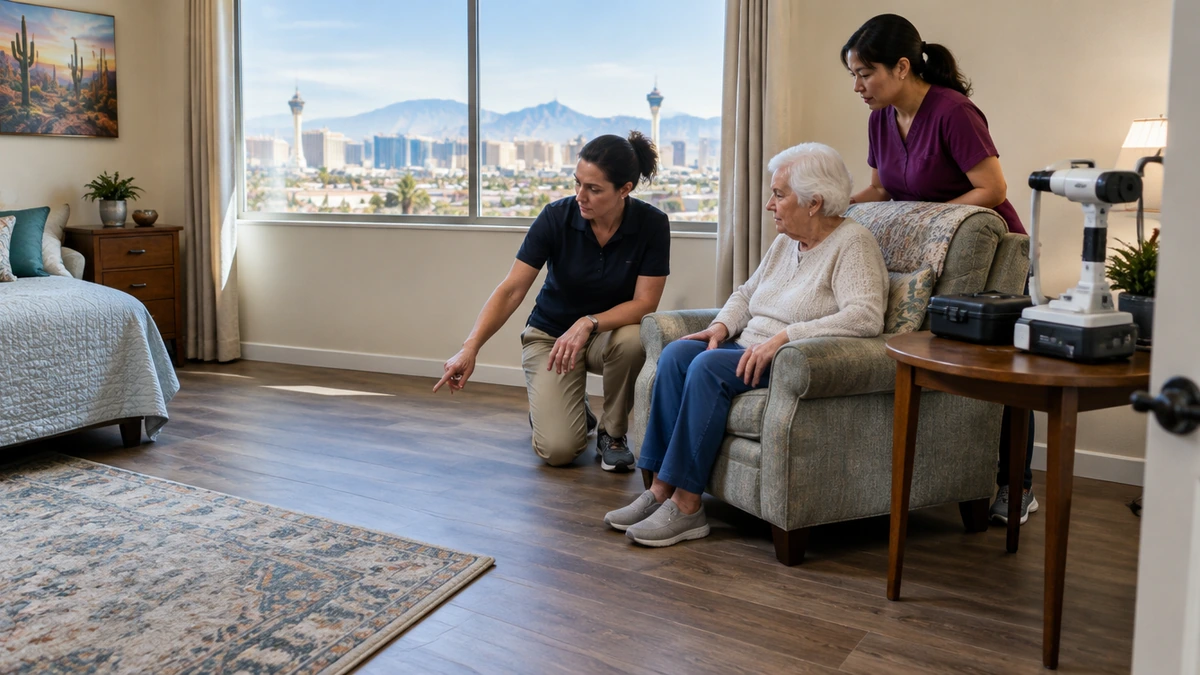
    Woman eye doctor and caregiver reviewing space beside a seated resident, assisted living vision day Las Vegas
    Illustration of preparation for the sample plan, not an observed visit.

    Finish preparation before assigning exam times. Your list needs resident interest, consent review, representative documents where applicable, current insurance information, and benefit verification before service. Use the operator’s vision day checklist to assign those tasks. Keep the home’s resident count separate from the number of people choosing to participate.

    Walk through your room plan first. Review the power outlet, seating, and route from bedrooms with me as your visiting optometrist. I reviewed 69 primary sources across five research lenses for this series, and facility examination arrangements depend on space and resident needs. The AOA’s facility-care guidance describes choosing arrangements around those needs.

    Treat the table as a draft. Each clock time illustrates a place in your agenda, with no promised start, finish, or examination duration. Move, extend, or split the blocks after I review interested residents and planned services with you. Keep the table beside your home’s meal and care schedule while making those decisions.

    Illustrative hourProposed activityYour coordination task
    8 a.m.Arrival and room setupShow my team the agreed space and review changes
    9 a.m.Begin resident appointmentsBring residents when requested, with glasses and needed support
    10 a.m.Continue examinations and adjust pacingPlan breaks and keep waiting residents comfortable
    11 a.m.Review findings and next steps as readyConnect my team with authorized contacts
    NoonProtect the meal and rest routineReview individual aftercare needs with my team
    1 p.m.Discuss eyewear where appropriateSupport voluntary selection and confirm update contacts
    2 p.m.Review outstanding tasksAssign owners for follow-up and unfinished tasks

    8 a.m.: Welcome My Team and Check the Room
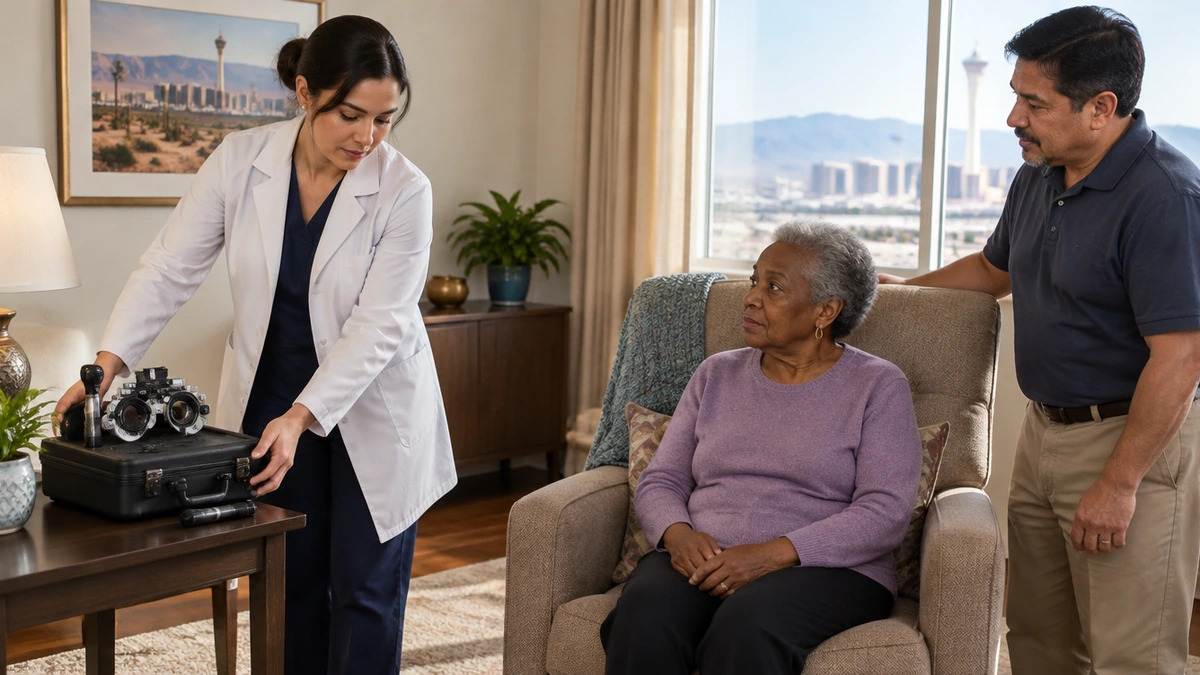
    Woman eye doctor placing portable equipment on a side table, assisted living vision day Las Vegas
    Illustration of the sample setup block, with no actual visit time represented.

    Set up before bringing residents in. In this sample, you meet my team at the private room and review where portable examination equipment will go. Check the path for walking aids and the seating layout. Name the staff contact available to help before the first resident leaves the common area.

    Review what changed since the call. Your list needs the latest decisions from residents who declined or changed appointments, along with new support needs. Share relevant updates directly with my team through private intake. Keep identifying information with the staff handling the visit instead of displaying it in the waiting area.

    Leave time between resident arrivals. Set who prepares the space between appointments and how your staff hears when the room is ready. Identify the waiting area before anyone starts bringing residents down the hallway. Protect setup and cleaning time when adjusting the sample schedule.

    9 a.m.: Begin Appointments With Consent and Privacy

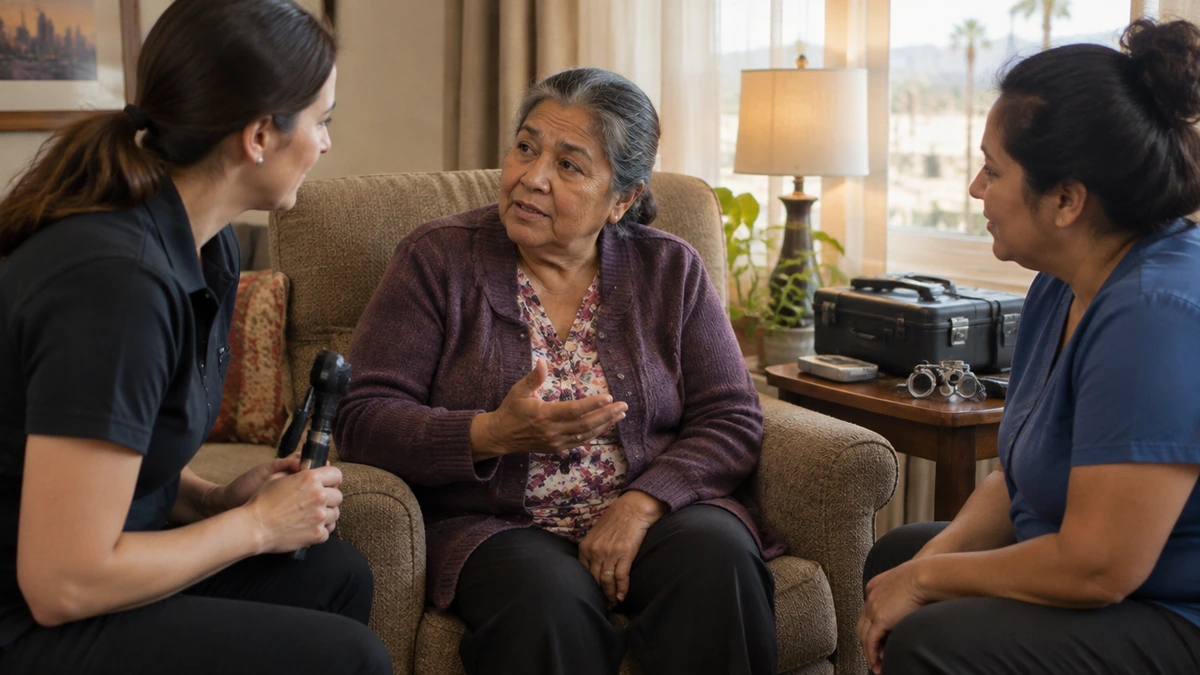
    Woman eye doctor listening to a resident with a caregiver nearby, assisted living vision day Las Vegas
    Illustration of a private appointment in the sample plan, not a clinical record.

    Bring the glasses with the resident. Have your requested preparation records ready through secure intake, then escort the person to the room when my team calls. Introduce any caregiver attending for support. I check the resident’s preferences before beginning the eye exam.

    The resident still chooses to participate. Nevada protects medical-care privacy and refusal of treatment to the extent permitted by law, including consent to the presence of people not directly involved in care. Your facility booking does not replace resident consent. If someone declines, update the staff contact and help the resident return to the usual daily routine.

    Stay reachable while I examine your resident. In this sample, your staff contact supplies practical help while keeping the room private. Discuss findings away from residents waiting nearby. Use the clinical communication plan for those conversations and keep the common room available for ordinary activities.

    10 a.m.: Adjust the Pace to the Resident

    Follow the resident’s pace. Change your appointment order when someone needs a break, extra communication help, or another session. Keep meals and care routines on the staff contact’s schedule so changes reach the people providing support. A resident pausing in the chair matters more than a completed appointment tally beside the clock.

    Make room for unfinished testing. Published experience supports flexibility: some residents with dementia in a Canadian facility optometry program needed assessment across several days or help from family. During your planning call, review how I record incomplete measurements and plan further assessment. Explain that next step to families without promising every test will be finished during the visit.

    Get the completed findings clear. A comprehensive eye exam evaluates overall eye health, whereas vision screening detects some problems but misses others. Use the planned examination description when you discuss the visit with residents. I explain to you what I assessed, what remains needed, and which clinical questions need follow-up.

    11 a.m. and Noon: Assisted Living Vision Day in Las Vegas Handoffs

    Woman eye doctor explaining next steps to a resident and caregiver, assisted living vision day Las Vegas
    Illustration of a sample aftercare conversation, with no treatment outcome implied.

    Start handoffs as findings are ready. In this sample, your staff begins connecting residents and authorized representatives with me while others still wait for appointments. Keep the timetable open as those conversations happen. Get the next steps clear before a resident returns to the armchair in the common room.

    Name who handles aftercare. Discuss individual support because dilation sometimes causes blurry vision and light sensitivity for several hours. Your plan needs the person receiving instructions and the staff member supplying the agreed assistance. I decide whether dilation is indicated and explain the next steps for your resident.

    Keep the usual noon routine. This sample protects your home’s meal and rest time, with staff checking the next appointment before moving a resident away from lunch or an activity. Adjust the order around the people present and their instructions. The sample clock guides the conversation rather than fixing every appointment.

    • Confirm who receives each resident’s clinical instructions.
    • Ask which testing or assessment remains incomplete.
    • Identify outside appointments recommended by me.
    • Agree who contacts the resident’s authorized representative.
    • Record administrative next steps in the private follow-up record.

    1 p.m. and 2 p.m.: Discuss Glasses and Assign Follow-Up

    Use the afternoon for eyewear discussions. For residents considering glasses, the sample block covers selection, measurements, and fitting planned with my team. Put your order contact and the delivery and adjustment plan beside the resident’s eyewear notes. An examination leaves the resident’s purchase decision voluntary.

    Connect lens choices to daily use. My practice offers premium lenses including progressive lenses, and my premium lens overview helps prepare your questions. Describe reading in an armchair or joining table activities during the eyewear conversation. Review my individual recommendation and verified benefits before the resident decides.

    Assign follow-up before my team leaves. A published Canadian program tracked reassessment timing and sent examination reports to family physicians, illustrating work continuing beyond the appointment. Name who receives your home’s reports, books recommended visits, and checks unresolved tasks. Keep those names with the follow-up list for the staff member taking over after the visit.

    Give each task its own contact. Track your eyewear update separately from the clinical referral, with a clear route for reporting progress on both. The prescription glasses fitting and delivery guide helps prepare questions about fitting, adjustments, and continued support. Keep unanswered items open for the next staff handoff.

    End the sample with assigned next steps. The plan includes no invented count of completed examinations or glasses orders. Record whether your resident needs more time, another session, or an outside appointment after my review. Keep each task open until the people responsible have received and understood what happens next.

    Create Your Facility-Coordinated Vision Day With Me

    Bring your home’s routine to a call with me. I am Dr. Amel Youssef, OD, founder of my practice, Vision by Amel, in Downtown Summerlin, serving the Las Vegas Valley. My team and I plan visits for assisted living homes, Residential Facilities for Groups, memory care communities, adult day care programs, and senior living communities. Describe your private room with electrical access, resident needs, and usual meal and care schedule.

    Set the preparation with me before the timetable. I start your visit planning with interest, registration, consent, and insurance benefits verified before service. Participation is voluntary. Benefits depend on each resident’s eligibility and plan terms. My team and I review your private room, examination order, eyewear selection, measurements, delivery, adjustments, and referral process with you before choosing the final schedule.

    Frequently Asked Questions About an Assisted Living Vision Day Sample Plan

    Does a ten-resident home need everyone to join?

    No, each resident chooses whether to participate. The ten-resident home is a planning example, so give my team your estimated interest when discussing the visit. Keep residents who decline involved in their usual activities.

    What should the staff handoff include if a shift changes?

    Give the incoming contact the appointment order, open tasks, and my team’s contact details. Identify where your staff stores instructions securely and who is currently speaking with my team. Complete that handoff before the outgoing contact leaves.

    What if the guardian is unreachable when questions arise?

    Keep unanswered decisions pending and tell me the guardian is unreachable. Use your established contact process to reach the authorized person and identify what must be resolved before proceeding. Update the appointment plan after the authorized person and I have settled those questions.

    Should I photograph residents during the sample activities?

    Keep photography outside the examination plan unless permissions and a suitable plan have been agreed separately. This sample includes no original visit photographs for you to treat as a record of a real event. Identify illustrative images as illustrations when using them with the sample.

    How do I plan another vision day after this one?

    Review unfinished follow-up before proposing another group date. Identify which residents need individual appointments and which want a future facility visit during your conversation with my team. Build the next interest list from those choices instead of repeating the home’s roster.

    Schedule an On-Site Vision Day Speak With Dr. Amel’s Team: (702) 858-4362

    Like this article? Add Vision by Amel as a preferred source, and you are more likely to see our articles in Google’s Top Stories.

    Add as a preferred source on Google

  • How On-Site Eye Exams Work at Assisted Living Homes

    How On-Site Eye Exams Work at Assisted Living Homes

    How On-Site Eye Exams Work at Assisted Living Homes

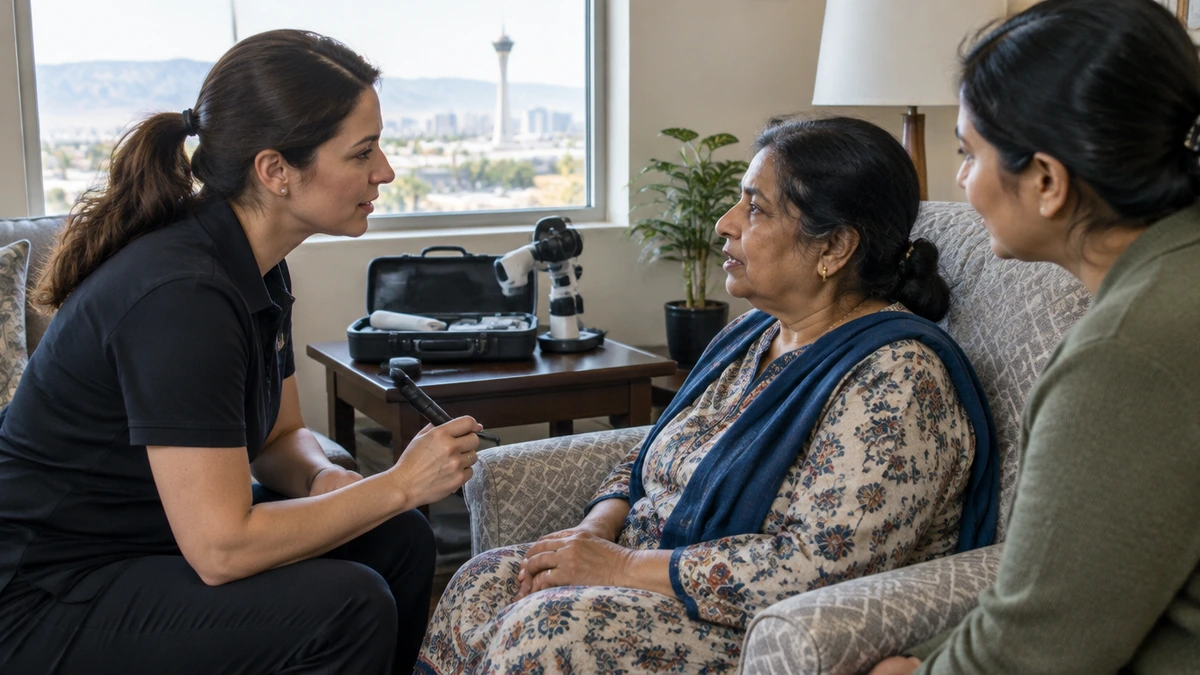
    Optometrist speaking with a resident and caregiver, how assisted living eye exams work

    TLDR: Here is how assisted living eye exams work: residents choose to participate, your staff prepares the room and records, and my team and I handle consent checks, benefit verification, and examinations. You plan eyewear delivery and outside appointments before the visit ends. Each unfinished task needs a named contact.

    Answer: I bring on-site examinations to your assisted living home in Las Vegas for a facility-coordinated vision day. You gather resident interest, prepare consent and insurance records for secure intake, and set aside an accessible private room with a power outlet. I verify benefits before service and plan examinations, prescription eyewear, follow-up, and referrals with my team.

    Your residents have different reasons for seeking eye care. Someone needs help with existing prescription glasses, while another resident wants to discuss a change in vision. I start with those concerns when you explore on-site eye care for assisted living residents. A useful visit leaves each participating resident with a clear next step.

    You need more than an arrival date. Someone must handle registration, prepare the room, and receive follow-up instructions while the rest of the home keeps running. I explain how assisted living eye exams work from the interest list through glasses delivery and referrals. Use this guide to give your staff clear jobs before examination day.

    How Assisted Living Eye Exams Work: Examination Scope

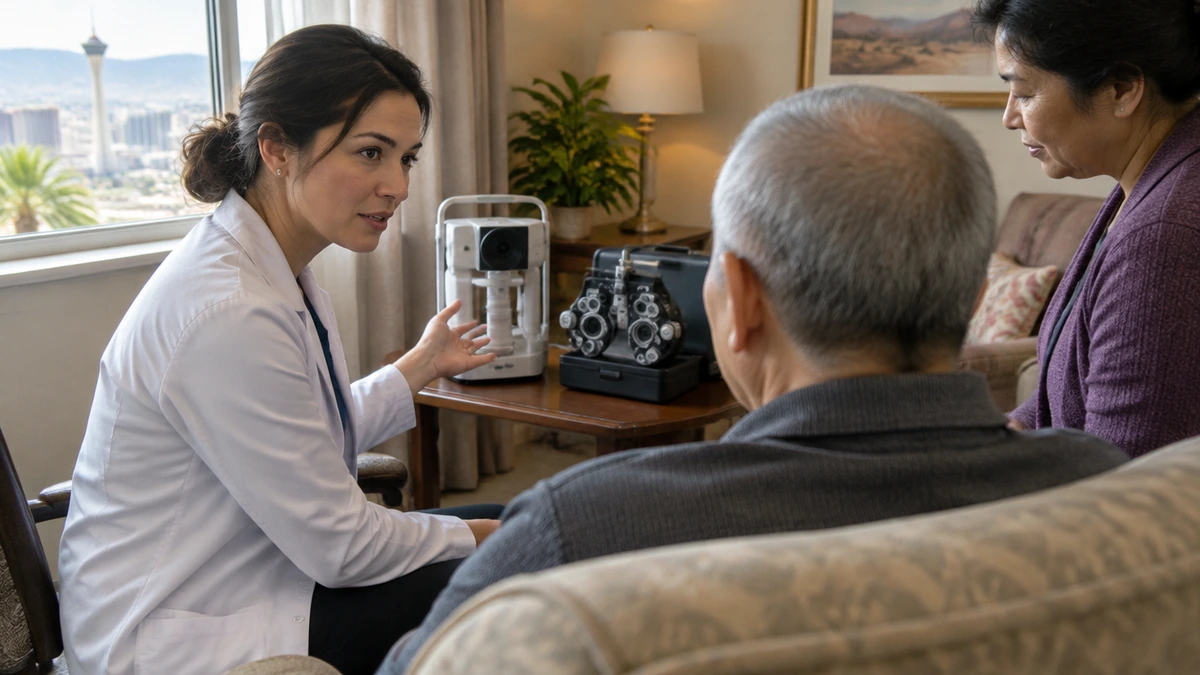
    Optometrist explaining an examination to a seated resident, how assisted living eye exams work
    Start with examination purpose and scope

    Know what your eye exam covers. MedlinePlus explains that vision screening identifies some vision problems but misses other eye disorders, while a comprehensive eye exam also evaluates overall eye health. As your optometrist, I explain the assessment and its limits before you describe the visit to residents. A resident reading letters on an eye chart still needs an assessment matched to the concern behind the appointment.

    Put your residents’ concerns on paper. Include questions about visual acuity, refraction, cataracts, glaucoma, or dry eye so I know what needs attention. Nevada defines comprehensive examinations by their components and permits comparable-data alternatives when a component cannot be performed. Review the examination scope before inviting residents, and describe only the services planned for your home.

    Unfinished testing needs a next step. Your planning call should cover how I record an unsuccessful measurement, explain the unresolved concern, and handle referral to another setting. Review my eye examination services before the call. Match the services to your residents’ needs and the room available for the exam.

    How Do Residents Register and Have Benefits Verified?

    Resident and optometrist discussing participation, how assisted living eye exams work
    Discuss participation before adding an appointment

    Start with your residents’ interest. Explain voluntary participation directly, and note who wants a representative involved before you fill the examination schedule. Use my team’s registration instructions and secure intake channel for personal records. An insurance card belongs in that intake channel, never in the public facility inquiry form.

    Interest is the starting point. Your registration list also needs completed resident consent and a clear record of who makes the healthcare decision. Review any representative’s current authority, since a family name on the contact sheet does not establish signing authority. Settle unanswered consent questions before adding the resident to the confirmed schedule.

    I verify benefits before service. Send your resident’s insurance details through secure intake so my team has the plan information needed for the check. Original Medicare excludes routine examinations for prescribing glasses or contact lenses. Keep the examination, refraction, medical testing, and eyewear clear in the benefits conversation, and use the resident’s actual plan instead of relying on the card’s logo.

    1. Invite residents to express interest and record their preferred way to be contacted.
    2. Complete my team’s registration and resident consent process.
    3. Provide insurance documents and relevant history through secure intake.
    4. Confirm benefit verification and resolve outstanding questions.
    5. Set the examination order around residents’ support needs.

    What Does Your Facility Provide?

    Optometrist and caregiver checking a room layout, how assisted living eye exams work
    Confirm the room layout before the visit

    Give the exam a private room. Your staff should walk the route to it, check the power outlet, and describe doors, seating, and mobility needs to my team. Review the layout before moving furniture or seating residents nearby. Keep the path accessible and ordinary household traffic outside the examination space.

    Put a name beside attendance. Your facility contact needs to know where residents are, who needs assistance, and which registration questions remain open. Assign a backup while I direct the assessment. Describe the home clearly during planning, including the memory care wing or common room my team and I will pass through.

    Planning itemFacility preparationConfirm with my team
    Resident readinessRecord interest and assistance needsRegistration and consent completion
    Examination spaceOffer privacy, seating, and electrical accessUsable layout and equipment placement
    Resident recordsIdentify the authorized contactSecure intake and results channels
    Daily scheduleNote meals and care routinesArrival time and resident order
    After the visitName the follow-up coordinatorEyewear, adjustments, and referral tasks

    Keep your staffing plan practical. Identify who escorts residents, who remains available for assistance, and who covers the coordinator’s usual duties. Use the assisted living vision day checklist to turn those decisions into assigned tasks. An unassigned task is still unfinished preparation.

    How Assisted Living Eye Exams Work on Examination Day

    Optometrist attending to a resident beside a caregiver, how assisted living eye exams work
    Coordinate the handoff before each examination

    Set up before residents arrive. Review the room, resident order, and changes since registration with me while your staff prepares the first resident. Tell me about new communication or mobility needs before the next person enters. Keep the waiting area comfortable and the examination room private.

    Let the resident speak first. As your mobile optometrist, I direct the exam and explain findings, while you supply requested assistance and useful observations. Bring current glasses and the medication information requested during intake. Report trouble reading an activity sheet in plain words, and leave the diagnosis to me.

    Leave room for a pause. Your resident’s need for extra assessment or support takes priority over keeping every appointment to a fixed slot. During planning, identify who explains unfinished testing and the next step to the resident. Keep conversations about findings private while staff help the residents still waiting.

    What Happens With Eyeglass Selection and Delivery?

    Start eyewear decisions with the findings. My team handles eyeglass selection, measurements, delivery, and adjustments as part of the vision day process. Tell my team how your resident uses glasses, whether for an activity sheet or reading in an armchair. Keep the choice voluntary and leave time for the resident’s questions before an order.

    Plan for glasses after delivery, too. AOA guidance for nursing-home residents recommends arranging dispensing services, routine glasses adjustments, and identification of residents’ glasses. Name the person your staff will contact about an order or frame fitting. Get the expected delivery timing once the order details are known, then keep it with the resident’s eyewear notes for the next shift.

    Know where each pair belongs. Your staff needs the resident’s name, the handoff plan, and a contact for fit problems before glasses arrive. The guide to prescription glasses fitting and delivery explains those steps. Record an adjustment request when a frame feels uncomfortable so it stays visible to the person responsible for follow-up.

    Who Handles Follow-Up and Referrals?

    Give each referral a named contact. I reviewed 69 primary sources across five research lenses for this series, and facility-based assessment still led to ophthalmology referrals in a published Canadian program. Put outside appointments on your follow-up list while the visit is being planned, and keep that published program’s results separate from expectations for your own residents.

    Follow the referral through. Keep my next action and timing in your resident’s care record, with access limited to the people handling the task. Name who tells the resident or authorized representative and who books any outside appointment. Check the appointment record to see whether the action happened, rather than stopping at a sent message.

    Plan Your Facility-Coordinated Vision Day With Vision by Amel

    Plan your visit with me. I am Dr. Amel Youssef, OD, founder of my practice, Vision by Amel, in Downtown Summerlin. I bring facility-coordinated vision days to assisted living homes and senior living communities across the Las Vegas Valley. Tell me about your private room with electrical access, accessibility needs, interested residents, and preferred month. My team and I plan registration, examinations, eyewear selection, measurements, delivery, adjustments, follow-up, and referrals with you.

    Your residents choose to take part. I plan for voluntary participation and verify insurance benefits before service. Benefits depend on each resident’s eligibility and plan terms. My team reviews the visit and preparation tasks with your facility contact before residents go onto the final schedule.

    Frequently Asked Questions About On-Site Assisted Living Eye Exams

    What should I do if a resident already has an eye doctor?

    Keep the resident’s existing care in view and let the resident choose whether to participate. Record outside appointments on your planning list so staff do not duplicate follow-up tasks. Include previous records requested for the current concern in the resident’s intake documents.

    Should I promise residents they will receive new glasses?

    No, an examination does not mean a resident will order glasses. You leave the prescription decision to me and the purchase decision to the resident or authorized decision-maker. Include residents who want an examination without an eyewear order on your interest list.

    What if a resident changes their mind on the day?

    Notify my team and update your attendance record. Ask whether the resident wants another conversation or prefers no further scheduling contact. Keep the change out of announcements made to other residents.

    How should I handle a family member arriving during an examination?

    Keep the examination private while my team handles the visitor’s entry. You handle questions about the visitor’s role and the resident’s preferences outside the room. Let the resident finish speaking with me before interrupting with administrative details.

    What information belongs in the facility consultation request?

    Provide your contact details, facility address, facility type, approximate resident count, and preferred month. Describe the number of homes you operate and estimated interest without identifying individual residents. Save insurance cards, diagnoses, and medical histories for my team’s secure intake process.

    Schedule an On-Site Vision Day Speak With Dr. Amel’s Team: (702) 858-4362

    Like this article? Add Vision by Amel as a preferred source, and you are more likely to see our articles in Google’s Top Stories.
    Add as a preferred source on Google