
What a Las Vegas Assisted Living Vision Day Looks Like, Hour by Hour
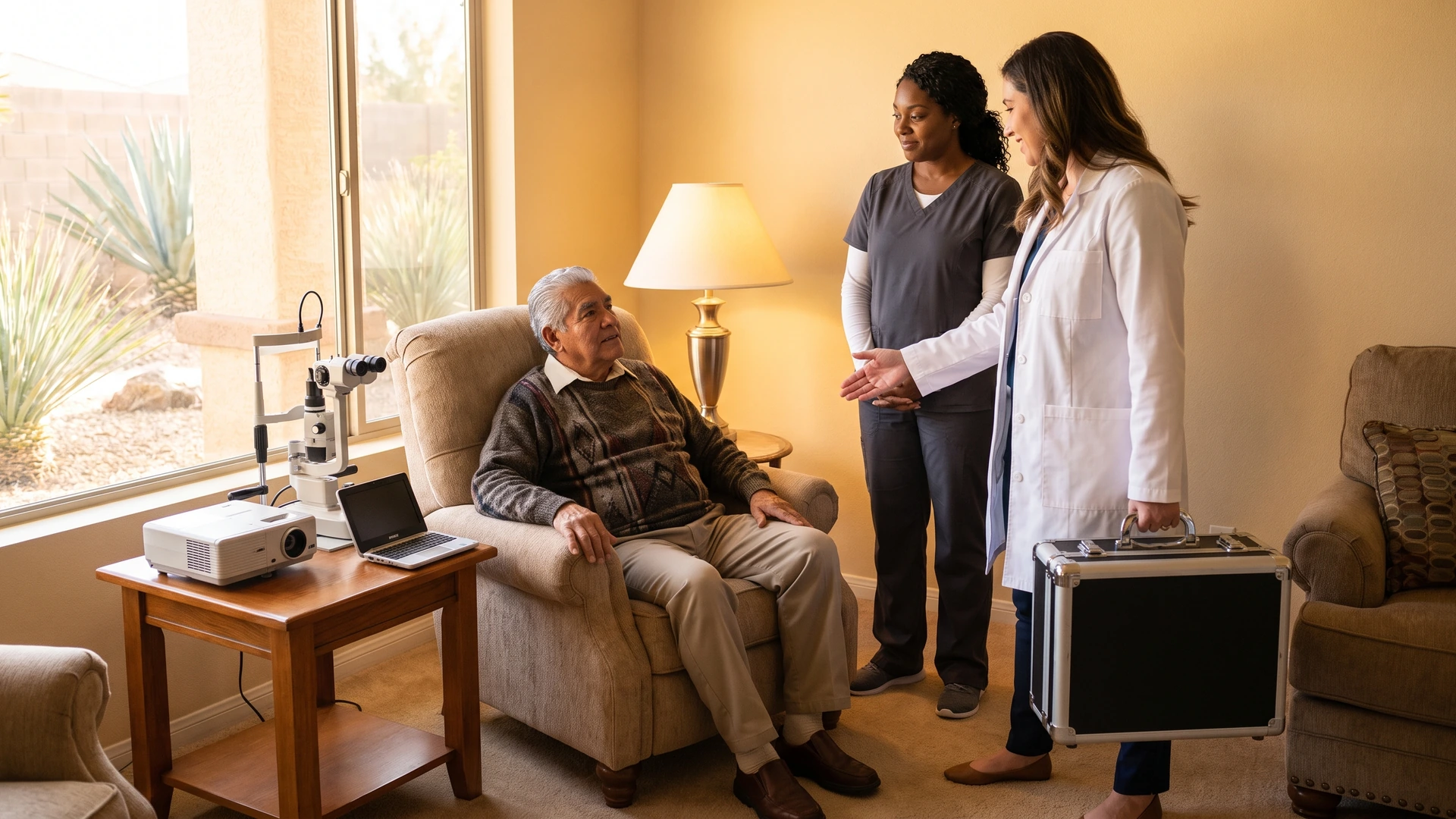
TLDR: I use this assisted living vision day in Las Vegas sample to help you plan around a ten-resident home’s routine. The hours are placeholders, and the home’s size is an example rather than a participation count. Set actual timing, services, and follow-up with my team before inviting residents.
Answer: An assisted living vision day in Las Vegas starts with preparation, a private room, and voluntary participation. Your staff helps residents reach the exam room, takes care of breaks, and tracks eyewear discussions and individual follow-up. I show you the sequence hour by hour in this ten-resident home example, with timing adjusted to residents’ needs and the planned services.
Start with the home’s daily routine. I use this sample to assign tasks to your staff, my team, and residents across a vision day in a ten-resident home. It illustrates a plan, with no completed facility visit or resident outcomes represented. Use the sequence to decide who needs to be ready for each step.
Put meals and support on the schedule. Start with the overview of an assisted living vision day, then bring your home’s routines to the planning call. Include mobility help, private space, and resident preferences in the on-site eye care plan. Give each next step a responsible contact before assigning resident times.
Before the Visit: Your Assisted Living Vision Day in Las Vegas Sample Plan
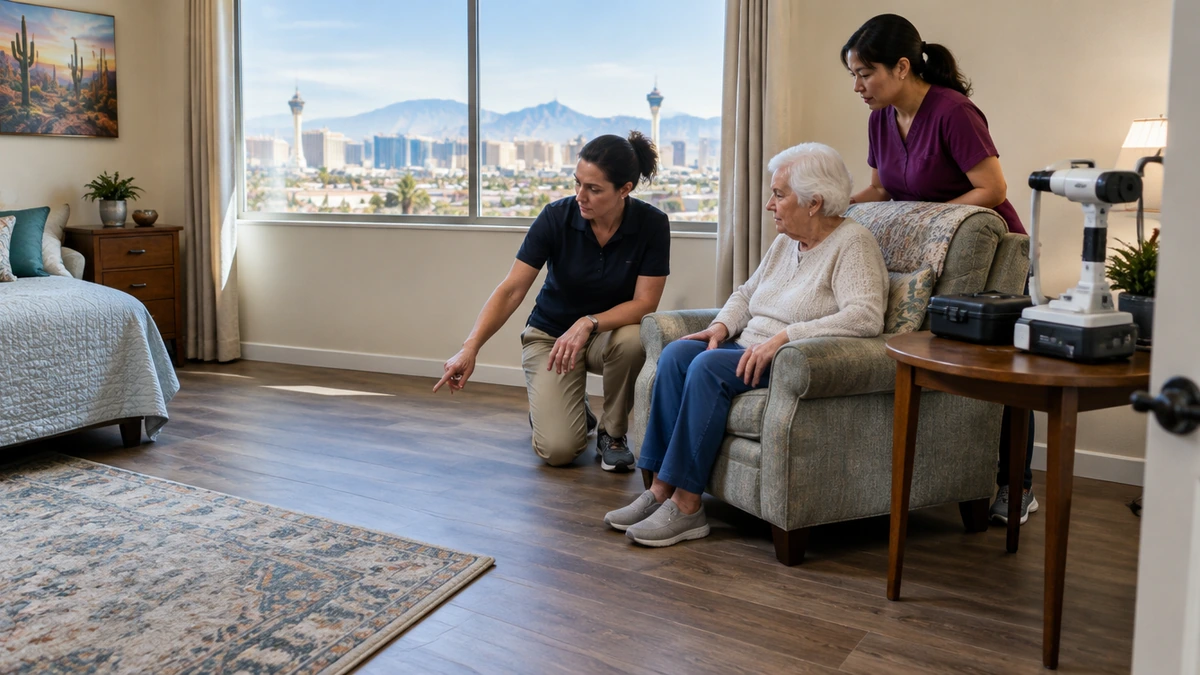
Finish preparation before assigning exam times. Your list needs resident interest, consent review, representative documents where applicable, current insurance information, and benefit verification before service. Use the operator’s vision day checklist to assign those tasks. Keep the home’s resident count separate from the number of people choosing to participate.
Walk through your room plan first. Review the power outlet, seating, and route from bedrooms with me as your visiting optometrist. I reviewed 69 primary sources across five research lenses for this series, and facility examination arrangements depend on space and resident needs. The AOA’s facility-care guidance describes choosing arrangements around those needs.
Treat the table as a draft. Each clock time illustrates a place in your agenda, with no promised start, finish, or examination duration. Move, extend, or split the blocks after I review interested residents and planned services with you. Keep the table beside your home’s meal and care schedule while making those decisions.
| Illustrative hour | Proposed activity | Your coordination task |
|---|---|---|
| 8 a.m. | Arrival and room setup | Show my team the agreed space and review changes |
| 9 a.m. | Begin resident appointments | Bring residents when requested, with glasses and needed support |
| 10 a.m. | Continue examinations and adjust pacing | Plan breaks and keep waiting residents comfortable |
| 11 a.m. | Review findings and next steps as ready | Connect my team with authorized contacts |
| Noon | Protect the meal and rest routine | Review individual aftercare needs with my team |
| 1 p.m. | Discuss eyewear where appropriate | Support voluntary selection and confirm update contacts |
| 2 p.m. | Review outstanding tasks | Assign owners for follow-up and unfinished tasks |
8 a.m.: Welcome My Team and Check the Room
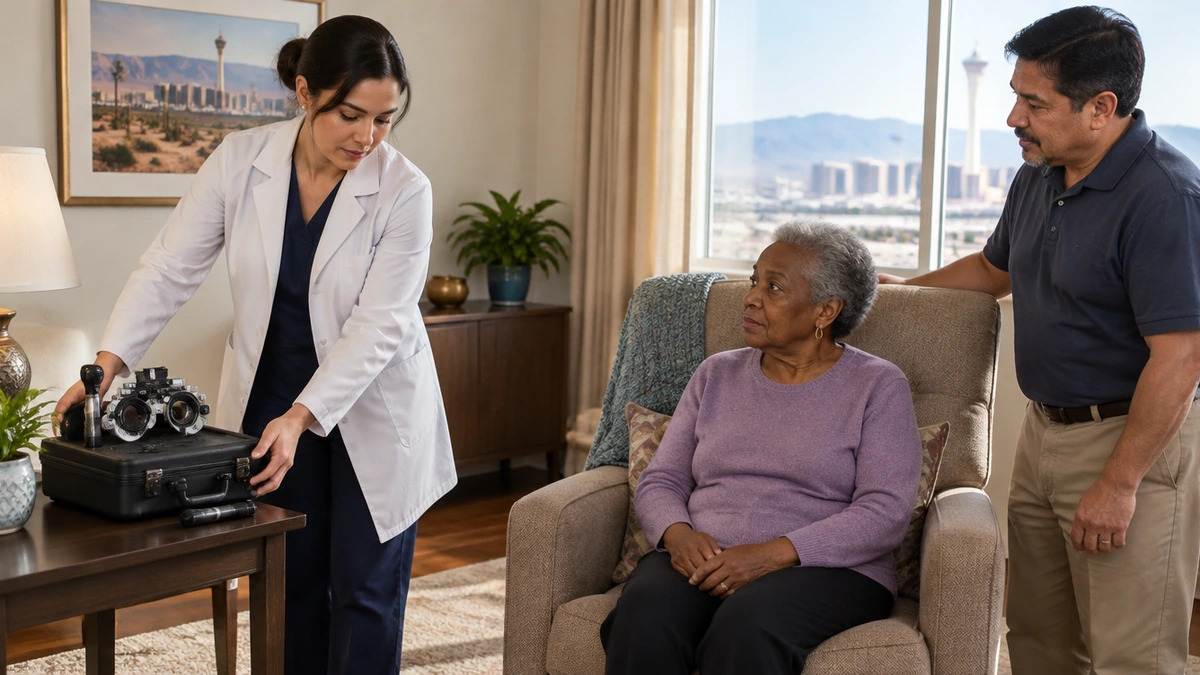
Set up before bringing residents in. In this sample, you meet my team at the private room and review where portable examination equipment will go. Check the path for walking aids and the seating layout. Name the staff contact available to help before the first resident leaves the common area.
Review what changed since the call. Your list needs the latest decisions from residents who declined or changed appointments, along with new support needs. Share relevant updates directly with my team through private intake. Keep identifying information with the staff handling the visit instead of displaying it in the waiting area.
Leave time between resident arrivals. Set who prepares the space between appointments and how your staff hears when the room is ready. Identify the waiting area before anyone starts bringing residents down the hallway. Protect setup and cleaning time when adjusting the sample schedule.
9 a.m.: Begin Appointments With Consent and Privacy
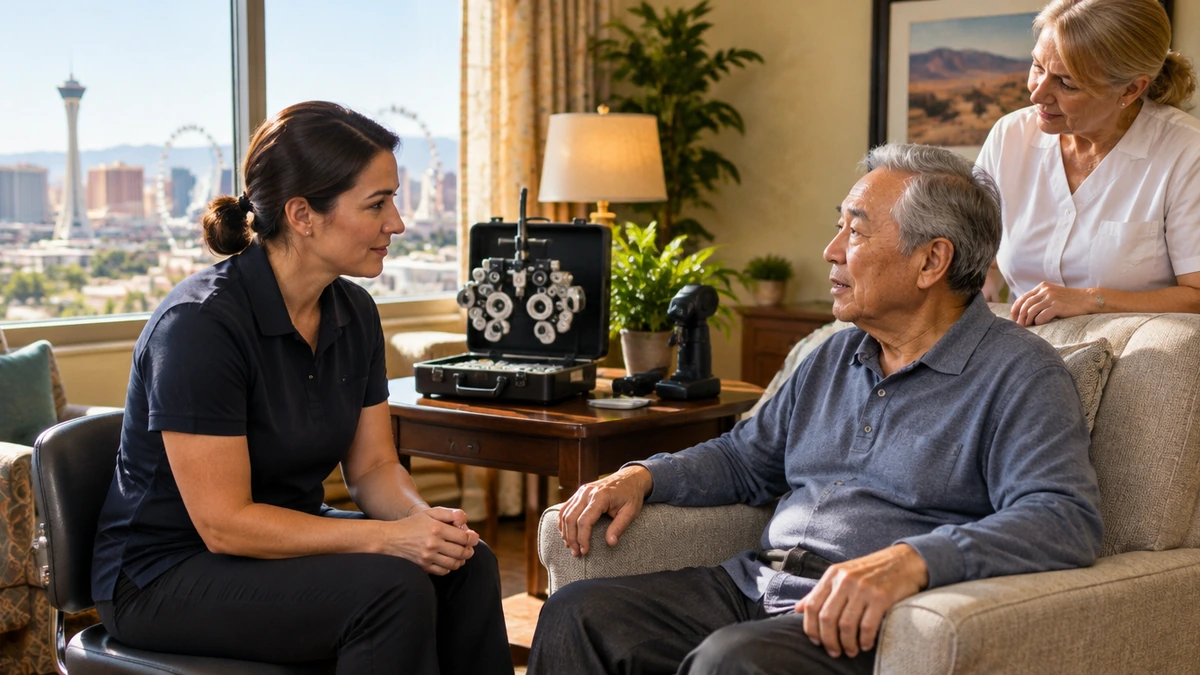
Bring the glasses with the resident. Have your requested preparation records ready through secure intake, then escort the person to the room when my team calls. Introduce any caregiver attending for support. I check the resident’s preferences before beginning the eye exam.
The resident still chooses to participate. Nevada protects medical-care privacy and refusal of treatment to the extent permitted by law, including consent to the presence of people not directly involved in care. Your facility booking does not replace resident consent. If someone declines, update the staff contact and help the resident return to the usual daily routine.
Stay reachable while I examine your resident. In this sample, your staff contact supplies practical help while keeping the room private. Discuss findings away from residents waiting nearby. Use the clinical communication plan for those conversations and keep the common room available for ordinary activities.
10 a.m.: Adjust the Pace to the Resident
Follow the resident’s pace. Change your appointment order when someone needs a break, extra communication help, or another session. Keep meals and care routines on the staff contact’s schedule so changes reach the people providing support. A resident pausing in the chair matters more than a completed appointment tally beside the clock.
Make room for unfinished testing. Published experience supports flexibility: some residents with dementia in a Canadian facility optometry program needed assessment across several days or help from family. During your planning call, review how I record incomplete measurements and plan further assessment. Explain that next step to families without promising every test will be finished during the visit.
Get the completed findings clear. A comprehensive eye exam evaluates overall eye health, whereas vision screening detects some problems but misses others. Use the planned examination description when you discuss the visit with residents. I explain to you what I assessed, what remains needed, and which clinical questions need follow-up.
11 a.m. and Noon: Assisted Living Vision Day in Las Vegas Handoffs
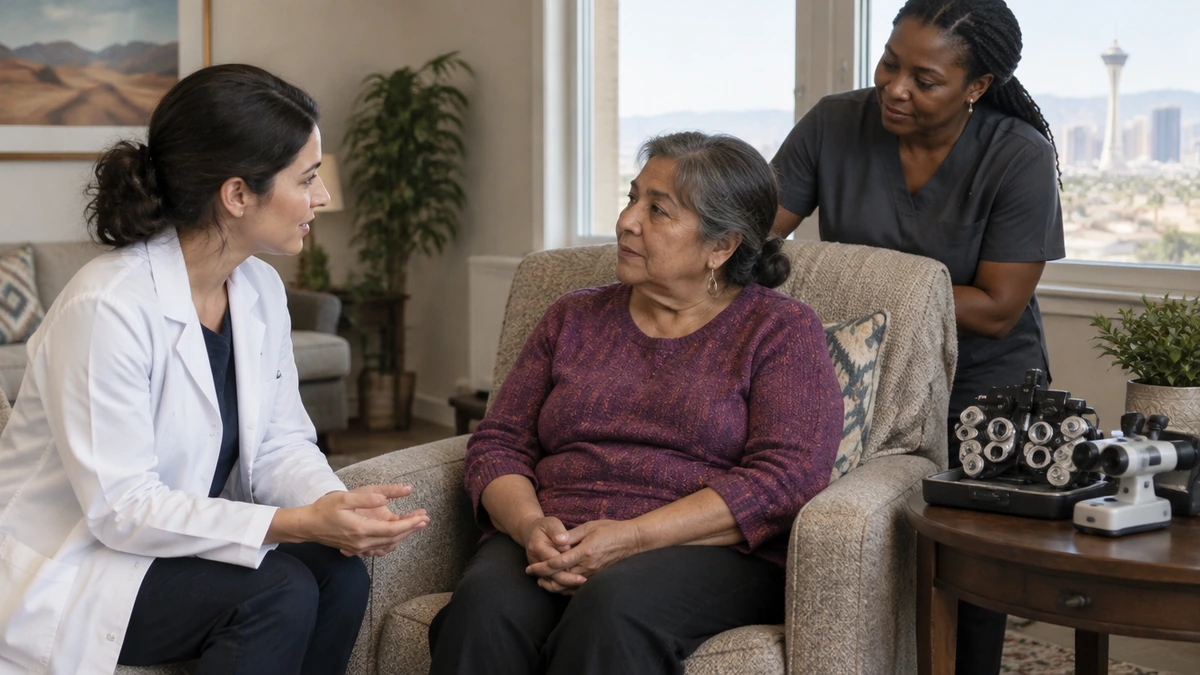
Start handoffs as findings are ready. In this sample, your staff begins connecting residents and authorized representatives with me while others still wait for appointments. Keep the timetable open as those conversations happen. Get the next steps clear before a resident returns to the armchair in the common room.
Name who handles aftercare. Discuss individual support because dilation sometimes causes blurry vision and light sensitivity for several hours. Your plan needs the person receiving instructions and the staff member supplying the agreed assistance. I decide whether dilation is indicated and explain the next steps for your resident.
Keep the usual noon routine. This sample protects your home’s meal and rest time, with staff checking the next appointment before moving a resident away from lunch or an activity. Adjust the order around the people present and their instructions. The sample clock guides the conversation rather than fixing every appointment.
- Confirm who receives each resident’s clinical instructions.
- Ask which testing or assessment remains incomplete.
- Identify outside appointments recommended by me.
- Agree who contacts the resident’s authorized representative.
- Record administrative next steps in the private follow-up record.
1 p.m. and 2 p.m.: Discuss Glasses and Assign Follow-Up
Use the afternoon for eyewear discussions. For residents considering glasses, the sample block covers selection, measurements, and fitting planned with my team. Put your order contact and the delivery and adjustment plan beside the resident’s eyewear notes. An examination leaves the resident’s purchase decision voluntary.
Connect lens choices to daily use. My practice offers premium lenses including progressive lenses, and my premium lens overview helps prepare your questions. Describe reading in an armchair or joining table activities during the eyewear conversation. Review my individual recommendation and verified benefits before the resident decides.
Assign follow-up before my team leaves. A published Canadian program tracked reassessment timing and sent examination reports to family physicians, illustrating work continuing beyond the appointment. Name who receives your home’s reports, books recommended visits, and checks unresolved tasks. Keep those names with the follow-up list for the staff member taking over after the visit.
Give each task its own contact. Track your eyewear update separately from the clinical referral, with a clear route for reporting progress on both. The prescription glasses fitting and delivery guide helps prepare questions about fitting, adjustments, and continued support. Keep unanswered items open for the next staff handoff.
End the sample with assigned next steps. The plan includes no invented count of completed examinations or glasses orders. Record whether your resident needs more time, another session, or an outside appointment after my review. Keep each task open until the people responsible have received and understood what happens next.
Create Your Facility-Coordinated Vision Day With Me
Bring your home’s routine to a call with me. I am Dr. Amel Youssef, OD, founder of my practice, Vision by Amel, in Downtown Summerlin, serving the Las Vegas Valley. My team and I plan visits for assisted living homes, Residential Facilities for Groups, memory care communities, adult day care programs, and senior living communities. Describe your private room with electrical access, resident needs, and usual meal and care schedule.
Set the preparation with me before the timetable. I start your visit planning with interest, registration, consent, and insurance benefits verified before service. Participation is voluntary. Benefits depend on each resident’s eligibility and plan terms. My team and I review your private room, examination order, eyewear selection, measurements, delivery, adjustments, and referral process with you before choosing the final schedule.
Frequently Asked Questions About an Assisted Living Vision Day Sample Plan
Does a ten-resident home need everyone to join?
No, each resident chooses whether to participate. The ten-resident home is a planning example, so give my team your estimated interest when discussing the visit. Keep residents who decline involved in their usual activities.
What should the staff handoff include if a shift changes?
Give the incoming contact the appointment order, open tasks, and my team’s contact details. Identify where your staff stores instructions securely and who is currently speaking with my team. Complete that handoff before the outgoing contact leaves.
What if the guardian is unreachable when questions arise?
Keep unanswered decisions pending and tell me the guardian is unreachable. Use your established contact process to reach the authorized person and identify what must be resolved before proceeding. Update the appointment plan after the authorized person and I have settled those questions.
Should I photograph residents during the sample activities?
Keep photography outside the examination plan unless permissions and a suitable plan have been agreed separately. This sample includes no original visit photographs for you to treat as a record of a real event. Identify illustrative images as illustrations when using them with the sample.
How do I plan another vision day after this one?
Review unfinished follow-up before proposing another group date. Identify which residents need individual appointments and which want a future facility visit during your conversation with my team. Build the next interest list from those choices instead of repeating the home’s roster.
Schedule an On-Site Vision Day Speak With Dr. Amel’s Team: (702) 858-4362
Like this article? Add Vision by Amel as a preferred source, and you are more likely to see our articles in Google’s Top Stories.

Leave a Reply