Tag: prescription glasses

  • Lazy Eye (Amblyopia) in Children: Signs, Causes and Treatment

    Lazy Eye (Amblyopia) in Children: Signs, Causes and Treatment

    Lazy Eye (Amblyopia) in Children: Signs, Causes and Treatment

    Boy with a patch and round glasses stacking blocks with his mother, illustrating lazy eye in children

    TLDR: Lazy eye in children, or amblyopia, affects developing vision and sometimes has no visible signs. Your child’s treatment starts with an eye doctor’s assessment and often includes prescription glasses, with patching when prescribed. An eye that turns all the time, at any age, needs an eye exam right away.

    Answer: Amblyopia means vision has not developed properly in an eye, even when the eyes look straight. Causes include unequal prescriptions, eye misalignment, or an obstruction to clear sight. For your child in Las Vegas, an eye exam identifies the problem so treatment, such as glasses or prescribed patching, addresses the cause and the weaker vision.

    On a shaded bench at a Summerlin park, your child points out tiny pictures in a book. Then a screening note mentions weaker vision in an eye. That mismatch deserves attention. Amblyopia concerns how vision develops, so everyday confidence gives you only part of the picture.

    I reviewed 113 primary sources across five research lenses for this guide, and amblyopia sometimes goes unnoticed until an eye exam. The National Eye Institute reports that up to 3 in 100 children have amblyopia. Your next step is to understand each eye’s vision. My eye examination service explains how I assess vision and help you understand the findings.

    What Signs Suggest Lazy Eye in Children?

    Girl covering one eye while playing with her father, illustrating a discussion of lazy eye in children
    A father and daughter share a playful moment.

    Lazy eye hides well. Squinting, tilting the head or covering one eye are signs to have checked, according to the American Optometric Association. An eye that turns in or out all the time needs an eye exam right away. You do not need to name the problem before seeking care.

    Your observations help me understand the concern. A child covering an eye during a game is different from repeatedly doing it to see. Describe what happened, which eye was involved, and whether you noticed it during reading, play, or looking across the room. The useful detail is what you saw.

    For broader concerns, use my checklist of signs your child needs glasses. Bring your observations to a pediatric eye exam, along with any screening result. I would rather you bring a small concern than wait for a dramatic sign.

    A white or gray-white glow in the pupil, in person or in a flash photo, means your child sees an eye doctor right away, as AAPOS advises.

    What Causes Lazy Eye in Children?

    The cause shapes treatment. AAPOS describes refractive, strabismic, and deprivational amblyopia and warns of permanent vision loss without treatment. Unequal prescriptions and eye alignment problems affect the visual input reaching the developing brain. A blocked view creates a different problem requiring attention to the obstruction. Arrange your child’s assessment early, even when the eyes look normal.

    CauseWhat It MeansWhat to Discuss at Your Visit
    Refractive amblyopiaBlur during development, including when one eye needs a stronger prescription than the other.The prescription in each eye and the glasses plan.
    Strabismic amblyopiaMisaligned eyes interfere with normal vision development.Both eye alignment and vision in each eye.
    Deprivational amblyopiaA cataract, drooping lid, or corneal scar obstructs clear sight.How the obstruction and developing vision will be addressed.

    The diagnosis tells you what needs treatment. Strabismus names the alignment problem. Amblyopia names the problem with developing vision. Your child needs an explanation of which is present and what each part of the treatment plan addresses.

    Leave the visit knowing the cause. Request the diagnosis in plain language, alongside the medical term. For unequal prescriptions, have the difference explained using your child’s own results. For an obstruction, clarify the next assessment and who will provide it.

    How Do Glasses Help With Amblyopia?
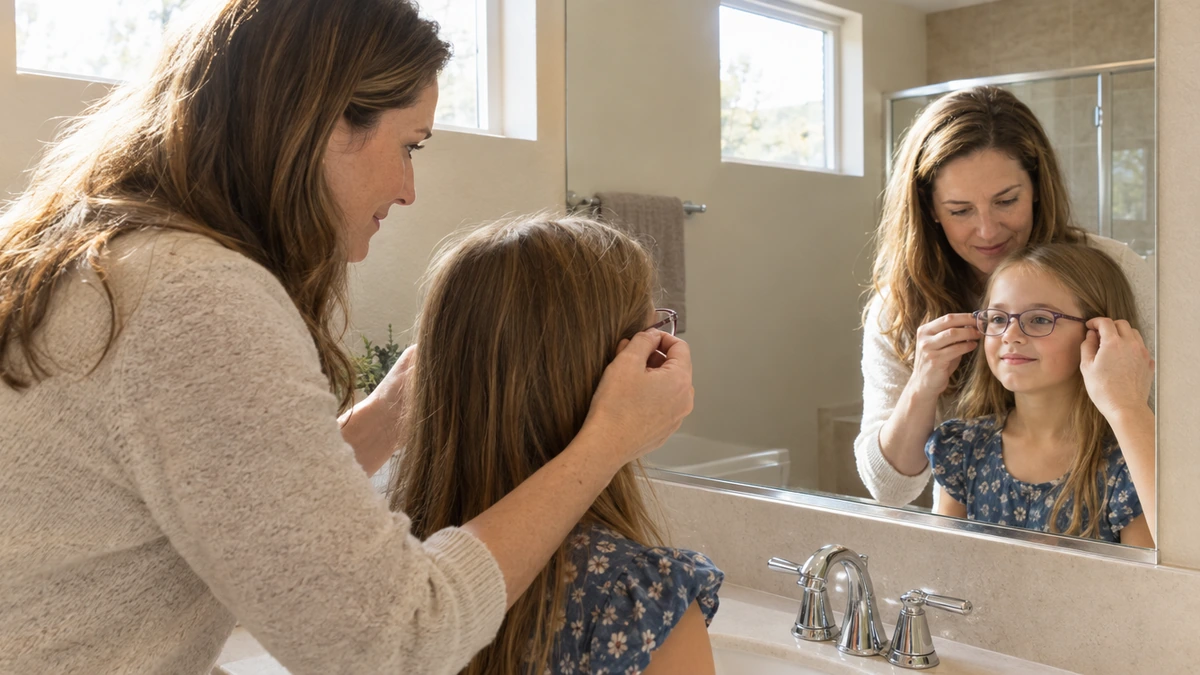
    Mother helping her daughter put on glasses at a mirror, illustrating care for lazy eye in children
    A mother helps her daughter put on glasses.

    Glasses often lead the plan. In a PEDIG study of 84 children aged 3 to under 7 with untreated anisometropic amblyopia, glasses alone improved weaker-eye vision by at least 2 chart lines in 77%, with improvement taking up to 30 weeks. That study covered one type of lazy eye and had no untreated group, so read it as a signal, not a forecast for your child.

    For many children, glasses alone are not enough, says AAPOS, and patching follows when your eye doctor prescribes it. The goal is better vision in the weaker eye. Your follow-up measurements show whether glasses alone are doing enough.

    Give the glasses a place in your morning. In your Las Vegas kitchen, the cereal bowl, backpack and glasses case share the counter before school. Set the glasses beside the morning essentials so putting them on becomes part of getting ready. Share the prescribed wearing instructions with anyone helping your child start the day.

    Report problems plainly. Explain whether your child removes the glasses during meals, complains about the frame, or repeatedly loses them between home and school. The glasses belong at the next visit, too. A specific account gives the conversation more value than saying the week went badly.

    Watch the chart, not the calendar. The prescription is the lens. Visual acuity is how well your child’s eye sees, and that number tells you whether treatment is working. New glasses begin a plan whose progress needs review.

    What Does Prescribed Patching Involve?

    Boy with an eye patch drawing beside his grandmother, illustrating prescribed care for lazy eye in children
    A grandmother sits beside her grandson as he draws.

    Patching covers the stronger eye to encourage use of the weaker eye. Your eye doctor prescribes which eye to cover, how long to patch, and when to review progress. Get those instructions in writing. Follow the prescribed schedule rather than borrowing another family’s routine.

    More hours are not automatically better. A PEDIG randomized trial involving 189 children under 7 with moderate amblyopia found the same average improvement with 2 or 6 daily patching hours after 4 months, with at least 1 hour of near activities in both groups. This finding applies to the studied moderate cases. Your child’s prescription still governs the schedule.

    A familiar activity gives patch time a place in your day. Choose a time with room for the prescribed session. Drawing, blocks, or shared reading give you activities to discuss when the patching plan is explained. Match the activity and its timing to the instructions you receive.

    1. Confirm which eye to patch and the prescribed daily duration before starting.
    2. Check how glasses fit into the patching instructions.
    3. Record completed sessions and any practical difficulties.
    4. Call your eye doctor about skin irritation or a child who keeps fighting the patch.
    5. Keep every follow-up visit. Only your eye doctor changes the patching hours.

    A difficult afternoon deserves a useful conversation. Describe what your child found hard, how much of the session was completed, and what you tried. A short note about a difficult session gives you something concrete to discuss at follow-up. I value an honest treatment diary more than a perfect-looking one.

    Why Do Screening Results and Follow-Up Both Matter?

    Boy wearing glasses reading with his mother on a porch swing, illustrating lazy eye in children
    A mother and son read together on a porch swing.

    Your next step needs to be clear. After a vision screening flags a concern, arrange a comprehensive eye exam and take the actual result with you. My guide to school screening and comprehensive eye exams explains the difference. At your visit, I check vision and eye health and explain the findings.

    Follow-up puts the focus on each eye’s progress. Your current glasses, prescribed schedule and account of home treatment belong in that conversation. Request an explanation of each eye’s measured vision and whether the plan changes. Leave with the next review date written down.

    Your afternoon is already full: Summerlin school pickup, dinner, homework. Fit the patch into what you already do, like the drawing table or the bedtime book. Share the treatment instructions with caregivers so everyone follows the same plan. When the routine breaks down, raise the difficulty before making your own changes.

    How I Approach Your Child’s Exam at Vision by Amel

    I am Dr. Amel Youssef, an optometrist and the founder of Vision by Amel. For your visit about possible amblyopia, bring prior prescriptions, screening results, and any existing treatment instructions. My evaluation includes binocular vision and eye disease screening, with digital refraction among our Visionix diagnostics. Your history gives those findings context.

    My practice provides pediatric eye care at 2010 Festival Plaza Dr, Suite 195, Las Vegas, NV 89135. You will find us at Festival Plaza in Downtown Summerlin. No referral is needed for an eye exam. Book online or call with your child’s exam needs.

    Your questions about children’s vision deserve time at the visit. Tell me what worries you most, whether it is the diagnosis, the prescription, or understanding an existing plan. My team verifies insurance benefits by phone before your visit. Have your plan information ready for that conversation.

    Frequently Asked Questions About Lazy Eye in Children

    Is My Child Too Old to Start Treatment?

    Treatment works best when it starts young, and older children and teens can still improve, especially if they were never treated before. The American Academy of Ophthalmology advises offering treatment regardless of age when the visual system is structurally sound, with potential benefit in older children and adolescents, especially those previously untreated. Bring your child’s treatment history so the discussion reflects what has already been tried.

    Will Lazy Eye Hurt My Child’s Grades?

    The American Academy of Ophthalmology finds insufficient evidence that amblyopia in one eye harms school or career performance. Your child’s treatment addresses vision itself. Discuss school concerns on their own terms, without assuming lazy eye explains every difficulty in class.

    How Many Hours a Day Will My Child Wear a Patch?

    The National Eye Institute describes schedules ranging from 2 hours a day to all waking hours. Your eye doctor sets the patching time and adjusts it at follow-up visits. The PEDIG trial above compared schedules for moderate amblyopia, so its results are not a patching prescription for your child.

    Can My Child Have Lazy Eye if Their Eyes Look Straight?

    Yes, your child might have amblyopia even when the eyes look straight, as AAPOS explains. The National Eye Institute notes that many parents learn of the problem only at an eye exam. You do not need to spot an eye turn for the finding to deserve attention.

    What Should I Say to My Child About the Diagnosis?

    Keep your explanation calm and concrete. Describe the glasses or patch using the instructions you received, then invite questions about the daily routine. Choose words about practicing the routine together, and praise the effort your child puts into following it.

    Book My Eye Exam Call (702) 858-4362

    Like this article? Add Vision by Amel as a preferred source, and you are more likely to see our articles in Google’s Top Stories.

    Add as a preferred source on Google

  • How Prescription Glasses Are Fitted and Delivered to Assisted Living Residents

    How Prescription Glasses Are Fitted and Delivered to Assisted Living Residents

    How Prescription Glasses Are Fitted and Delivered to Assisted Living Residents

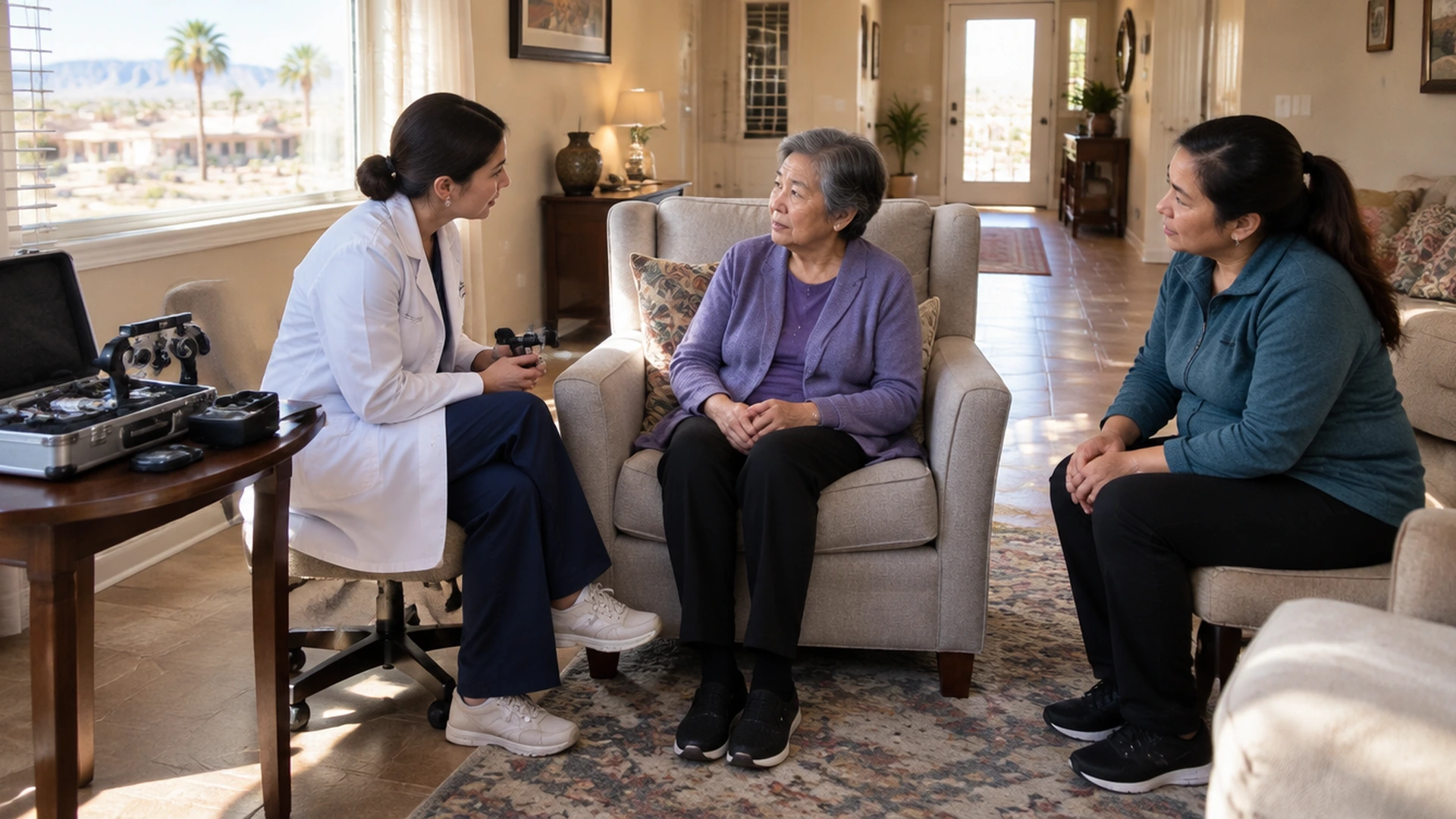
    Resident and clinician discussing eyewear, glasses for assisted living residents

    TLDR: I help you plan glasses for assisted living residents through the last fitting check, starting with prescription review and ending with follow-up. Your list needs verified benefits, ordering choices, a delivery contact, and a route for adjustments before residents select eyewear. Participation and purchasing stay voluntary.

    Answer: Prescription glasses for assisted living residents in Las Vegas begin with an eye exam and review of visual needs. Your facility contact helps plan frame selection, measurements, benefit verification, delivery, and adjustments with my team. Record the delivery estimate, identify whose glasses are arriving, and keep fitting or repair requests open until the assigned contact responds.

    I plan the eyewear handoff with you before examination day. For example, a resident chooses a frame, a representative requests an update and a caregiver needs to know which glasses belong beside the armchair. Treat these as planned handoffs. A clear eyewear record gives everyone an agreed place to check the next action.

    Plan the order before announcing the visit. Start with a facility-coordinated vision day built around your residents’ choices, with me as your visiting optometrist, my eyewear team, and your facility contact in the conversation. Your on-site eye care plan needs time for prescription questions, frame fitting, and follow-up instructions. Put a staff name beside each step before the visit goes on the calendar.

    How Do You Start Glasses for Assisted Living Residents?

    Clinician reviewing a resident's glasses, glasses for assisted living residents
    Clinician reviewing a resident's glasses.

    Begin with the resident’s current glasses. Ask your staff to note whether the resident uses them for reading, television or another familiar activity. Bring me concerns about fit, missing glasses and changing vision at the examination. Describe what staff observed without deciding which prescription the resident needs.

    Give each next step a contact. As your mobile optometrist, I review visual needs during the planned visit and explain the prescription and any further evaluation I recommend. Use the assisted living examination process to prepare the handoff from examination to eyewear. Track the glasses order and clinical follow-up separately so neither task closes before its work is done.

    Plan support beyond the new frame. I reviewed 69 primary sources across five research lenses for this series, and ongoing adjustments and identification belong in facility eyewear planning. The AOA’s nursing-home guidance recommends providing or arranging refraction and dispensing, routine adjustments and identification of residents’ glasses. Put those tasks on your planning list and establish who handles them for your home.

    Make the prescription clear to residents. Explain which activities the glasses are intended to support and how the new order relates to the current pair, using my instructions. Give your resident time for questions before choosing a frame. Direct prescription questions to me and order questions to my eyewear contact.

    What Should Frame Selection and Measurements Cover?

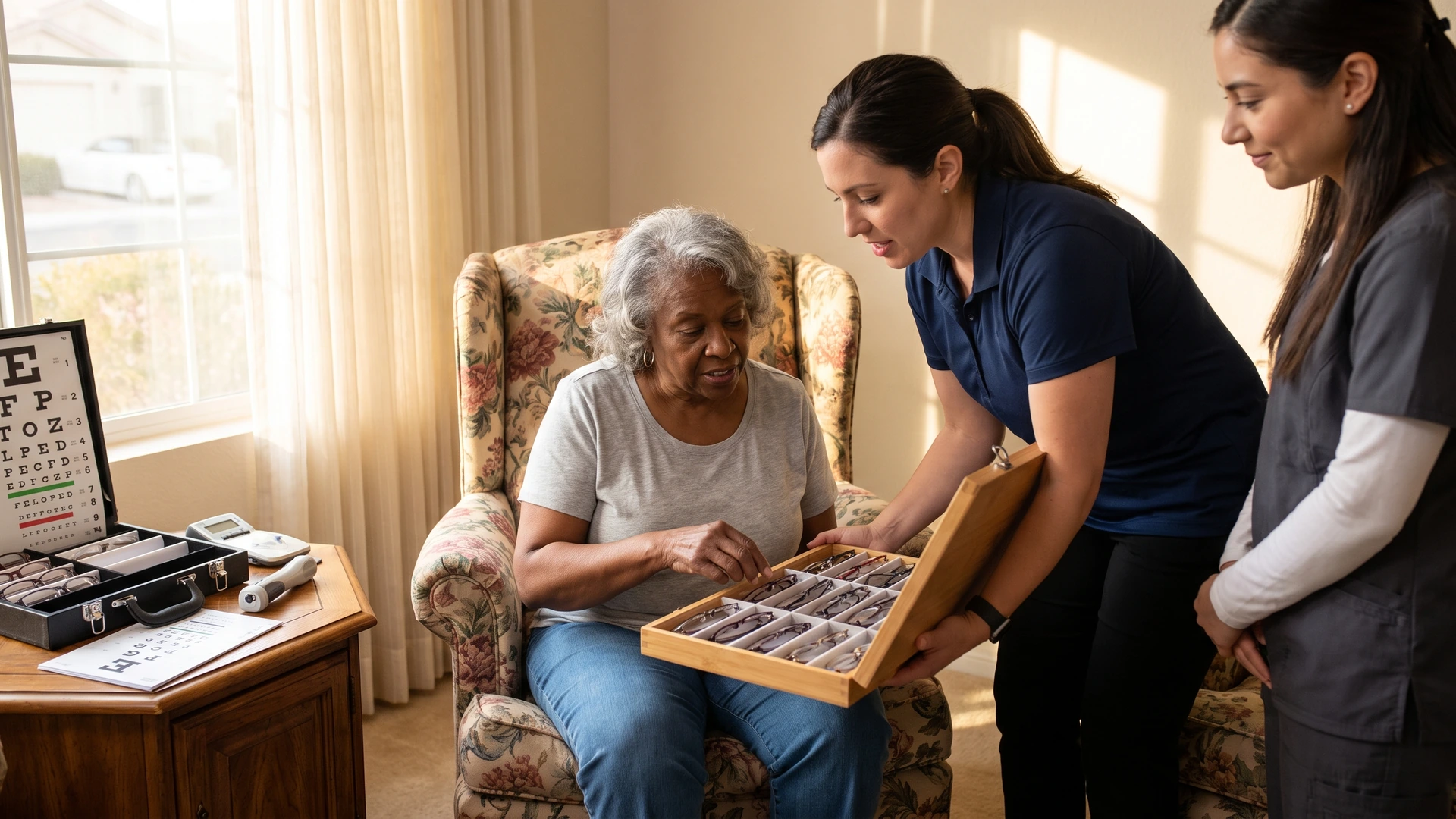
    Resident trying a frame with a clinician, glasses for assisted living residents
    Resident trying a frame with a clinician.

    Let the resident choose the frame. Explain the selection appointment and settle whether a representative will attend before your resident begins looking at glasses. Report a frame slipping during meals or glasses repeatedly removed during an activity. My eyewear team assesses fit with your resident.

    Keep the frame with the measurements. My team handles eyeglass selection and measurements as part of the vision day process. Review your resident’s frame and lens choice through the private order channel, including who checks the order and handles changes before submission. Keep that record available for questions when the glasses arrive.

    Describe the resident’s daily use. Tell my team whether your resident reads in an armchair, joins table activities, or asks for help locating glasses. The eyewear conversation starts with the individual examination, activities, and preferences. Review the recommendation for that resident before choosing a lens option for the order.

    • Bring current prescription glasses and describe how the resident uses them.
    • Confirm the resident’s frame choice and the person authorized to discuss the order.
    • Name who takes measurements and checks the submitted order.
    • Record the delivery contact and the route for requesting an adjustment.

    How Do You Verify Benefits and Choose Lenses?

    Clinician discussing glasses with a resident, glasses for assisted living residents
    Clinician discussing glasses with a resident.

    Verify benefits before the order. Keep the examination, prescription eyewear, and selected upgrades clear in your resident’s intake notes. My team and I review verified benefits and ordering choices with you before proceeding. Use the Medicare and Medicaid eye benefits guide to prepare focused questions and keep unresolved items with the benefit review.

    Check the exception against the order. Original Medicare generally excludes ordinary eyewear, but its post-cataract eyewear benefit covers one standard-frame pair of glasses or one set of contact lenses after each cataract operation implanting an intraocular lens, subject to supplier and cost-sharing conditions and extra charges for upgrades. My team’s benefit review for your resident needs the surgery history and supplier check to establish whether this exception applies.

    Bring the existing frames into review. For adult lens replacement, Nevada Medicaid’s ocular manual generally requires significant refractive change and reuse of existing frames when possible, with prior authorization for exceeding the 12-month lens limit for adults aged 21 or older. Show my team your resident’s current pair. Complete the resident-specific benefit review before treating replacement as an approved order.

    Match lenses to the resident’s routine. I offer premium prescription lenses, including progressives and Transitions. Review the explanation of the proposed choice against your resident’s prescription, activities, and preferences. Record the final selection after the resident or authorized decision-maker has reviewed it in everyday language. Use the table below to direct prescription questions to me and eyewear questions to my team.

    DecisionWhat your coordinator confirmsWho answers
    PrescriptionIntended use and clinical follow-upExamining doctor
    Frame and lensesSelected frame, measurements and lens optionEyewear team
    BenefitsResident-specific order eligibility and termsBenefit verification contact
    DeliveryCurrent estimate and fitting planOrder contact
    Ongoing supportAdjustment, repair and replacement routeNamed follow-up contact

    How Are Glasses for Assisted Living Residents Delivered and Adjusted?

    Clinician checking delivered glasses on a resident, glasses for assisted living residents
    Clinician checking delivered glasses on a resident.

    Get the delivery plan when ordering. My team reviews the current estimate, how updates reach your staff, and whether the resident needs to attend a fitting appointment. Set the handoff around the resident’s availability. Share changes with the representative through the chosen contact method so everyone works from the same order notes.

    Arrival still needs a fitting check. Match the resident and order before your staff hands over a new pair of glasses. Follow my team’s plan for checking fit and explaining use at delivery. Keep discomfort or other unanswered concerns on the open task list until my eyewear team responds.

    Get wear and care instructions. A published nursing-home intervention included instruction for residents and nursing assistants when glasses were supplied. Use that finding to prepare your staff’s questions at the handoff. Name who explains the instructions again if the resident or a caregiver missed the original conversation.

    Describe the fit problem plainly. Tell my eyewear contact whether your resident reports pressure, slipping, or trouble using the glasses for the intended activity. Send that concern to my team for review before anyone bends the frame or changes the prescription. Obtain the resident’s next instructions while the problem is being reviewed.

    Who Handles Repairs and Replacement Planning?

    Keep each pair easy to identify. Record where your resident prefers to keep the glasses and whom staff contact about a problem in the resident’s care notes. Review suitable identification methods with my eyewear team. Keep personal information away from public displays and visitor areas when labeling or storing eyewear.

    Set the repair contact in advance. Record how your staff requests an assessment, where the broken frame goes, and how the resident receives updates. Review replacement as a separate decision from repair. Complete a fresh check of benefits and ordering choices when my team proposes a replacement pair.

    Keep visual concerns on the list. Report ongoing difficulty to me even after your resident’s frame has been adjusted, so I address unresolved eye health questions. Get the next instruction for another assessment or referral. Keep the clinical follow-up task open separately from the eyewear order.

    Bring Eye Exams and Eyewear to Your Facility With Vision by Amel

    Plan the glasses handoff with the exam. I am Dr. Amel Youssef, OD, founder of my practice, Vision by Amel, in Downtown Summerlin. I invite you to arrange a vision day for your assisted living home or senior living community in the Las Vegas Valley. I review resident interest, consent, insurance documents, and the examination schedule on your planning call. My team and I coordinate selection, measurements, delivery, and adjustments while you assign staff responsibilities.

    Prepare your private room and contact. The room needs electrical access, and the facility contact needs the secure intake route and follow-up tasks. Resident participation is voluntary. My team and I verify insurance benefits before service. Benefits depend on each resident’s eligibility and plan terms. I include referrals when reviewing the next steps after the visit with you.

    Frequently Asked Questions About Prescription Glasses in Assisted Living

    What should staff do when glasses arrive while the resident is away?

    Hold the glasses according to the storage instructions and arrange the resident’s fitting handoff. Tell my order contact your resident is away, and record who received the pair and where it is held. Keep the order open for the fitting check when the resident is available.

    How should we manage a resident who uses different pairs?

    Use the intended purpose of each pair in the resident’s instructions to guide storage and identification. Have your care team follow the same identification method, then show the resident where each pair belongs. Record unanswered questions for my eyewear team before changing those instructions.

    What if the family changes its frame preference after ordering?

    Keep the original order in place until my eyewear team confirms whether a revision is available. Send my team your order details through the secure channel and record the requested change. Have the resident or authorized decision-maker review the response before proceeding.

    What happens to an open order if the resident moves?

    Notify my eyewear team promptly and transfer the open task to the resident’s new contact. Set who receives updates and where the fitting handoff will happen through your private order channel. Update the former home’s visit list so the order has a clear owner after the move.

    What should our weekend staff know about eyewear questions?

    Give your weekend team my practice’s contact route and the resident’s current instructions. Explain where to record a concern and who checks for a response. Include unresolved requests in the next staff handoff so they stay visible.

    Schedule an On-Site Vision Day Speak With Dr. Amel’s Team: (702) 858-4362

    Like this article? Add Vision by Amel as a preferred source, and you are more likely to see our articles in Google’s Top Stories.
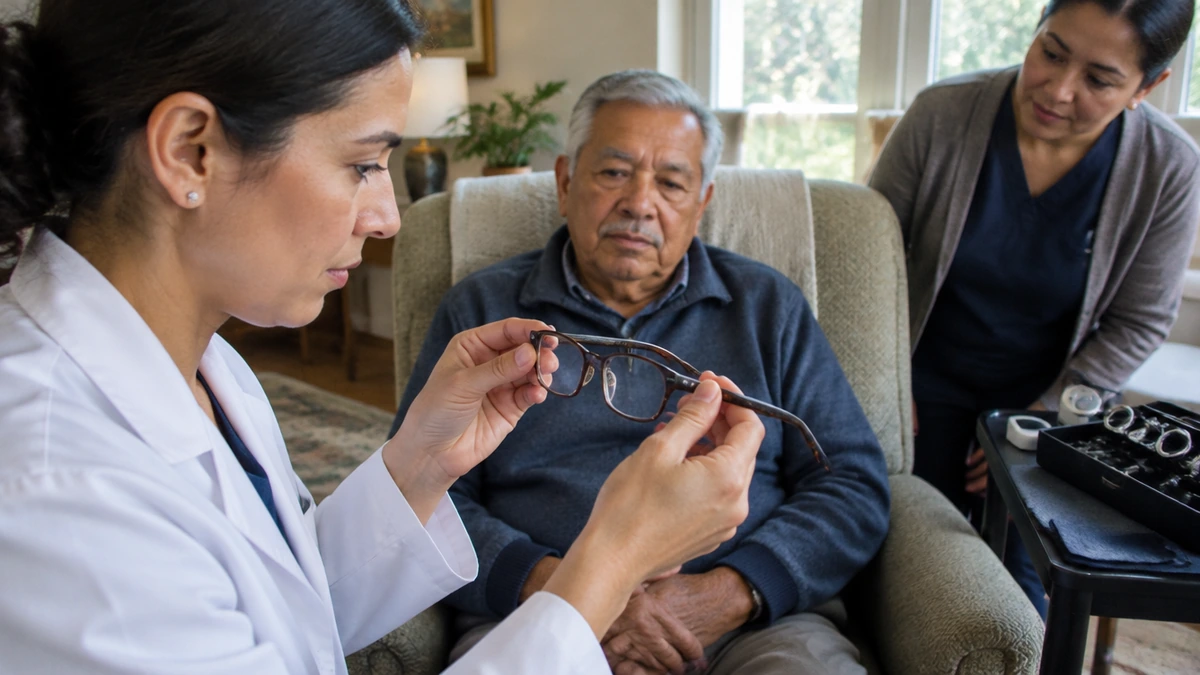
    Add as a preferred source on Google

  • Eye Exams for Residents With Dementia or Limited Mobility

    Eye Exams for Residents With Dementia or Limited Mobility

    Eye Exams for Residents With Dementia or Limited Mobility

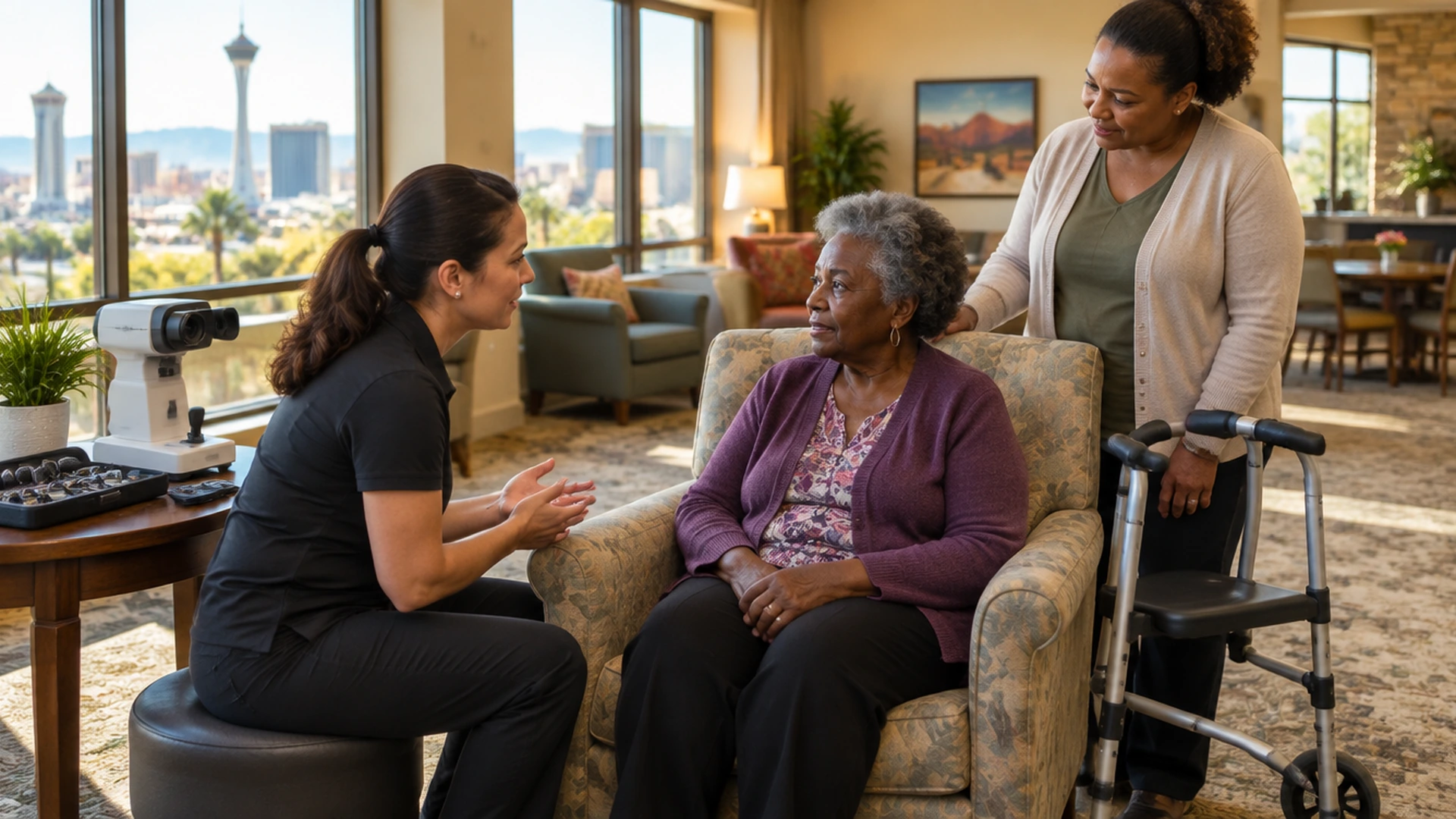
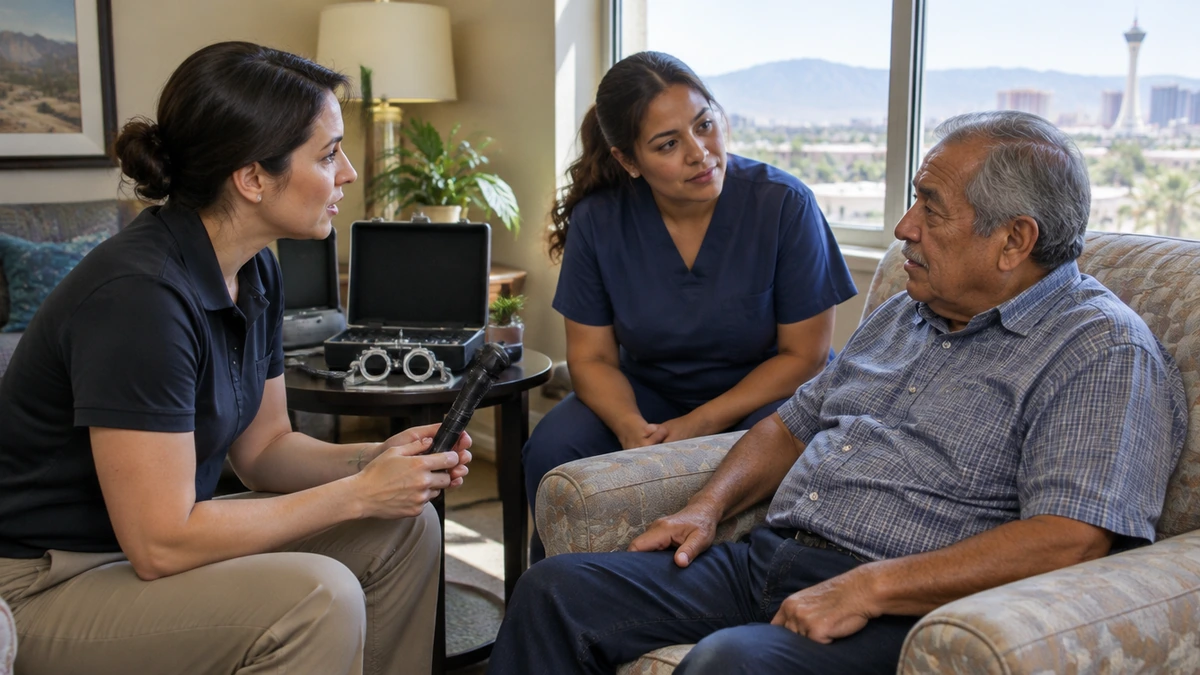
    Eye doctor speaks with a resident beside a mobility aid for eye exams for seniors with dementia

    TLDR: I plan eye exams for seniors with dementia around your resident’s communication, mobility, and decision-making needs. Prepare consent, support, examination scope, and follow-up with me before the visit. Discuss a familiar room, flexible pacing, and further assessment when needed.

    Answer: For eye exams for seniors with dementia in Nevada assisted living communities, give me your resident’s communication preferences, mobility needs, current glasses, and prior eye care instructions. Prepare consent and representative documents, then plan the room and assistance. Keep incomplete testing and referrals on the follow-up list after the exam.

    Give me a useful picture. Your resident’s discomfort signals, daily routine, and usual assistance belong in the visit notes. I need to know who helps with familiar activities and how the resident responds. A diagnosis alone leaves those practical details unanswered.

    Plan the people alongside your appointments. In Las Vegas, use an assisted living vision day call with me to settle access, privacy, consent, and examination scope. On-site eye care needs a suitable room and the right support. Include the next steps for further testing and referrals before the visit.

    How Should You Prepare Eye Exams for Seniors With Dementia?

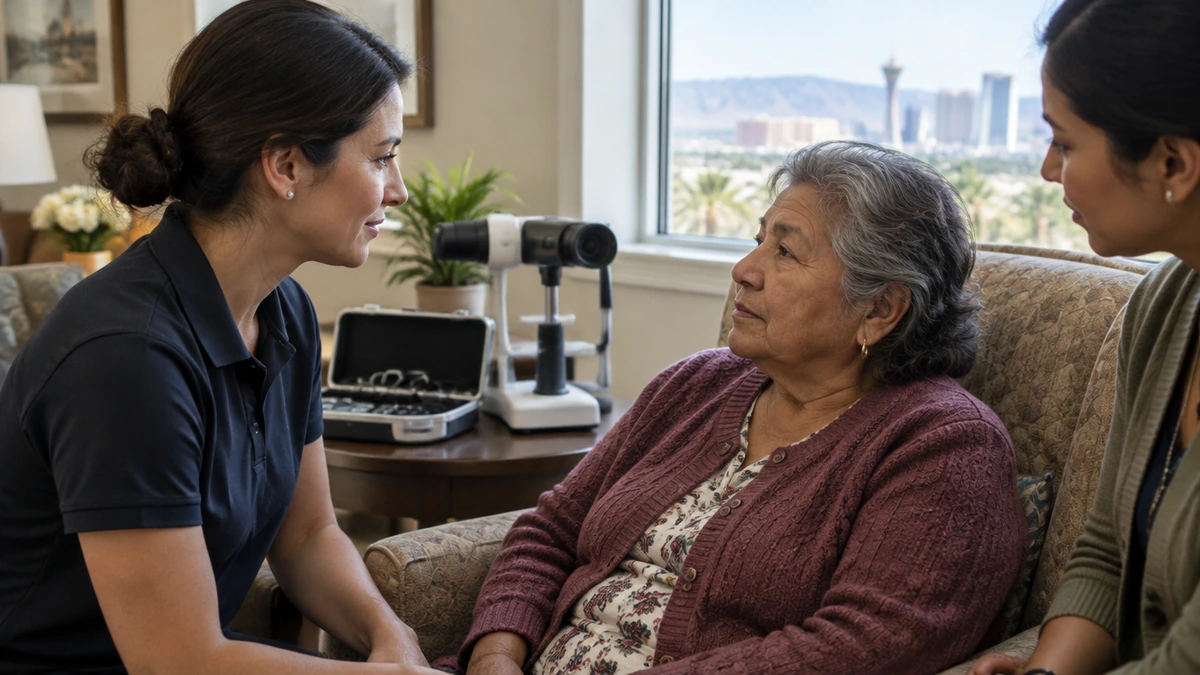
    Resident and caregiver meet an eye doctor in a sitting room for eye exams for seniors with dementia
    Resident and caregiver meet an eye doctor in a sitting room.

    Start with your resident’s routine. Note the practical time and setting, the person they want nearby, and what helps explain an unfamiliar activity. Discuss using a familiar room with me. Treat it as a possible accommodation without predicting comfort or more accurate findings.

    Leave room to adjust your plan. A published Canadian facility optometry program described some residents with dementia needing assessment across several days or help from a family member. I plan pacing around your resident’s response and identify further assessment when testing is unfinished. An examination slot does not establish every task will be completed during that visit.

    Bring the glasses your resident uses. Gather available eye examination reports and describe changes in familiar activities, such as reading or watching television. Include the glasses still needing adjustment and any pending referral. Put unfinished care beside the current concern for my review.

    Which Communication Arrangements Should Staff Discuss?

    Eye doctor pauses while a seated resident responds for eye exams for seniors with dementia
    Eye doctor pauses while a seated resident responds.

    Share the words your resident uses. Describe familiar task names, signs of discomfort, and whether a trusted caregiver helps explain activities. Give me that account before the examination. Settle the caregiver’s role while planning support for the resident.

    Give your resident time to respond. Explain who is visiting and the activity about to happen in simple, concrete words. I guide the pace and pauses. Let the resident hear a clear instruction without several people talking at once.

    Keep your resident’s preference visible. Record whom they want present and protect privacy in the examination room. If the resident becomes distressed or declines a step, pause. I address the next action with you before testing continues.

    Write down what helped your conversation. Describe what the resident understood or found difficult during the task, using concrete observations. An unfinished task does not describe every ability. Identify my assessment and your staff’s observations separately in the handoff.

    How Do You Confirm Guardian or Representative Involvement?

    Start with your resident’s participation. Establish who is making the care decision and gather the documents supporting any representative’s role. A relative’s name on the contact sheet does not establish consent authority. Keep the review separate from booking the room.

    Read the document in your file. For a healthcare power of attorney, Nevada law makes a health-care power of attorney effective when executed unless its terms specify a future date or incapacity trigger, with the required determination for that trigger. Share scope and activation terms with my team while preparing the representative’s role. Flag unanswered questions before seeking a signature.

    Send your current guardianship order for review. Under Nevada law, a guardian of the person generally authorizes medical care and serves as the protected person’s HIPAA personal representative unless the court orders otherwise. Have the responsible care-team contact check the actual appointment and any restrictions in the order. Settle consent and records authority from those documents before assigning decisions to the guardian.

    Flag overlapping papers before your visit. Nevada law suspends an existing durable health-care power of attorney when a guardian of the person is appointed. The resident consent coordination guide helps you collect the documents and identify the unresolved authority question. Keep the question visible for review with my team before routine examination scheduling proceeds.

    What Mobility Accommodations Should You Confirm?

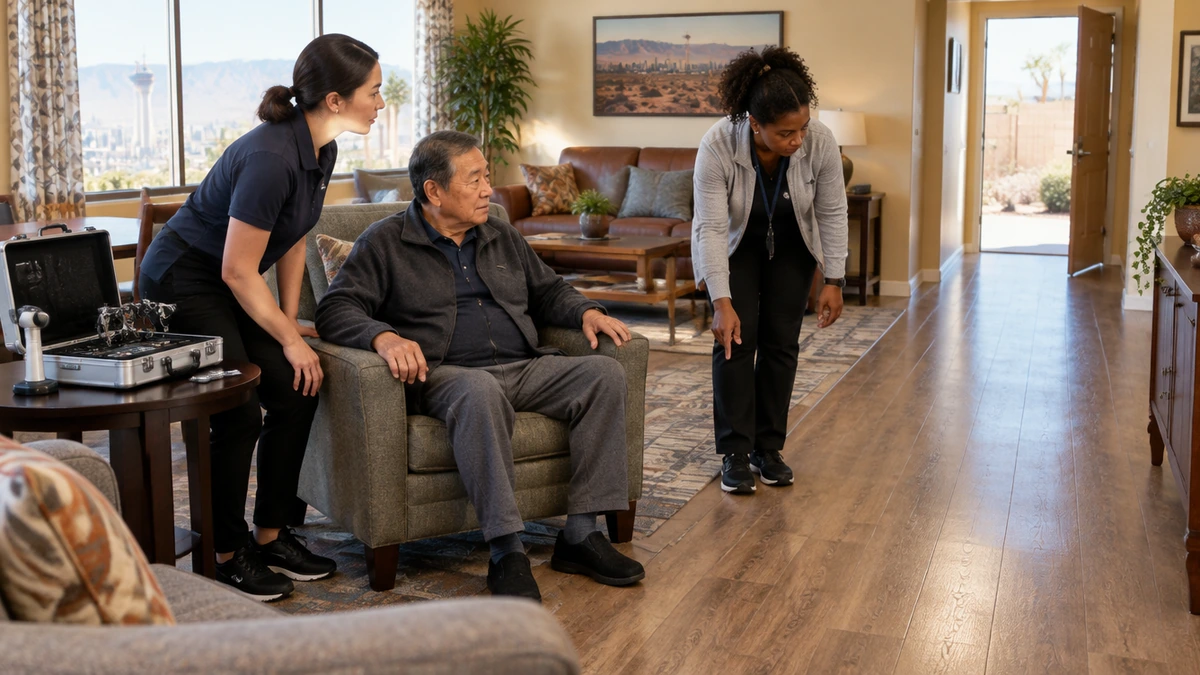
    Eye doctor and caregiver check space around resident seating for eye exams for seniors with dementia
    Eye doctor and caregiver check space around resident seating.

    Describe the chair your resident uses. Include the mobility device and usual assistance before settling the setup, since A published Delaware facility study documented examinations in chairs, wheelchairs, or at bedside. Those study settings show possible approaches. I still need to match the examination position to your resident and room.

    Walk your route before examination day. Check the doorway, space around the resident’s seating, privacy, and a power outlet for my setup. Name the staff member providing any agreed assistance. Leave no transfer dependent on a caregiver who has not been assigned.

    Raise positioning needs on your planning call. I review the room and portable examination equipment with you against the assessment planned for the resident. Identify a different setup or location when a component requires it. Keep that next step in the visit notes until resolved.

    Planning areaInformation to shareArrangement to confirm
    CommunicationResident’s preferences and discomfort signalsExplanation, pacing, and caregiver support
    Decision-makingRelevant consent and current authority documentsWho participates in each decision
    MobilitySeating, device, and assistance needsAccess and positioning for planned testing
    ExaminationPrevious findings and current concernsScope, limitations, and next assessment
    Follow-upProvider contacts and open tasksNamed staff owner for each action

    What Should You Expect From Adapted Testing?

    Eye doctor offers a pause during a resident assessment for eye exams for seniors with dementia
    Eye doctor offers a pause during a resident assessment.

    Get a clear account of your testing plan. As your visiting optometrist, I report what I assessed, and Nevada’s comprehensive-examination definition permits an alternative method for an unperformable component when it obtains comparable data. Record the findings obtained and the method used when relevant to the handoff. An unfinished assessment needs an explicit next step.

    I reviewed 69 primary sources across five research lenses for this series, and some residents with dementia needed assessment over several days in a published facility program. Put your resident’s pacing and support needs in the examination notes. Keep incomplete measurements visible in the report. I need to see what remains unresolved, as does any outside eye doctor receiving a referral.

    Record the examination your resident received. For a comprehensive eye exam, I identify completed parts, unfinished testing, and any referral or further appointment. Keep those details beside the next instruction. An ended appointment or recorded vision screening result does not establish a complete examination.

    How Do You Follow Through After Eye Exams for Seniors With Dementia?

    Locate your resident’s glasses first. Access belongs alongside prescription review, because A study of residents with probable Alzheimer’s disease at St. Louis nursing facilities identified unused glasses associated with inability to request them, lost or broken pairs, and inadequate prescriptions. Have staff find the correct pair and report fit or condition concerns. Record any need for reassessment with the eyewear task.

    Put names beside your next steps. Track prescription eyewear, delivery, adjustments, testing, and referral appointments as separate actions. At shift change, identify what is open and the provider or authorized contact receiving updates. A glasses case on the desk needs a clear destination.

    1. Obtain the examination findings and any limitations.
    2. Confirm the next assessment or referral instruction.
    3. Assign a contact for eyewear questions and adjustments.
    4. Send relevant instructions securely to the named recipient.
    5. Check that each requested action has been completed.

    Describe the care your resident received. An examination and usable glasses address eye health and vision needs without establishing a change in dementia or independence. Put the resident’s priorities beside my recommendations. Keep predictions out of the results handoff.

    Discuss Accessibility Needs With Vision by Amel

    Bring your accessibility notes to the call. I am Dr. Amel Youssef, OD, founder of my practice, Vision by Amel, in Downtown Summerlin. I invite you to plan a visit for your assisted living home, Residential Facility for Groups, memory care community, adult day care program, or senior living community in the Las Vegas Valley. Describe communication, mobility, and representative needs before settling the room and schedule.

    Build your voluntary resident interest list. Gather consent, representative documents, and insurance information. My team and I verify benefits before service. Prepare a private room with electrical access and the examination schedule with my team. Benefits depend on each resident’s eligibility and plan terms.

    Plan your visit through follow-up. Review eye examination services and the on-site examination process with the facility contact, including on-site limits and secure records. My team and I coordinate eyeglass selection, measurements, delivery, and adjustments. I use the accessibility call with you to identify support needs and the next steps for further assessment or referrals.

    Frequently Asked Questions About Accessible Resident Eye Exams

    What should I do if the resident uses different names for familiar objects?

    Give me your resident’s familiar words and their meanings before testing. Describe how the words are used in daily activities without coaching examination answers. I guide communication during each task.

    How should I arrange the caregiver’s role during testing?

    Assign a caregiver who knows your resident’s support needs when their involvement is appropriate. Agree with me where that person sits and when to help. Leave the resident space to respond directly.

    What if the resident arrives without the mobility device listed in the plan?

    Pause the planned setup and tell me what changed. Give your staff the assistance instructions already in the resident’s care plan. I reassess positioning before proceeding, so you do not need to improvise a transfer.

    How do I document an unfinished examination?

    Record completed tests, unfinished tests, and my next instruction. Name your staff contact arranging each follow-up action. Keep the report ready for the next appointment so the unanswered measurement stays visible.

    What information belongs in the initial accessibility call?

    Describe your facility type, room, and residents’ support needs in the initial call. My team and I establish secure intake with you for resident-specific details. Keep personal diagnoses, identity documents, and insurance records off the public marketing form.

    Schedule an On-Site Vision Day Speak With Dr. Amel’s Team: (702) 858-4362

    Like this article? Add Vision by Amel as a preferred source, and you are more likely to see our articles in Google’s Top Stories.
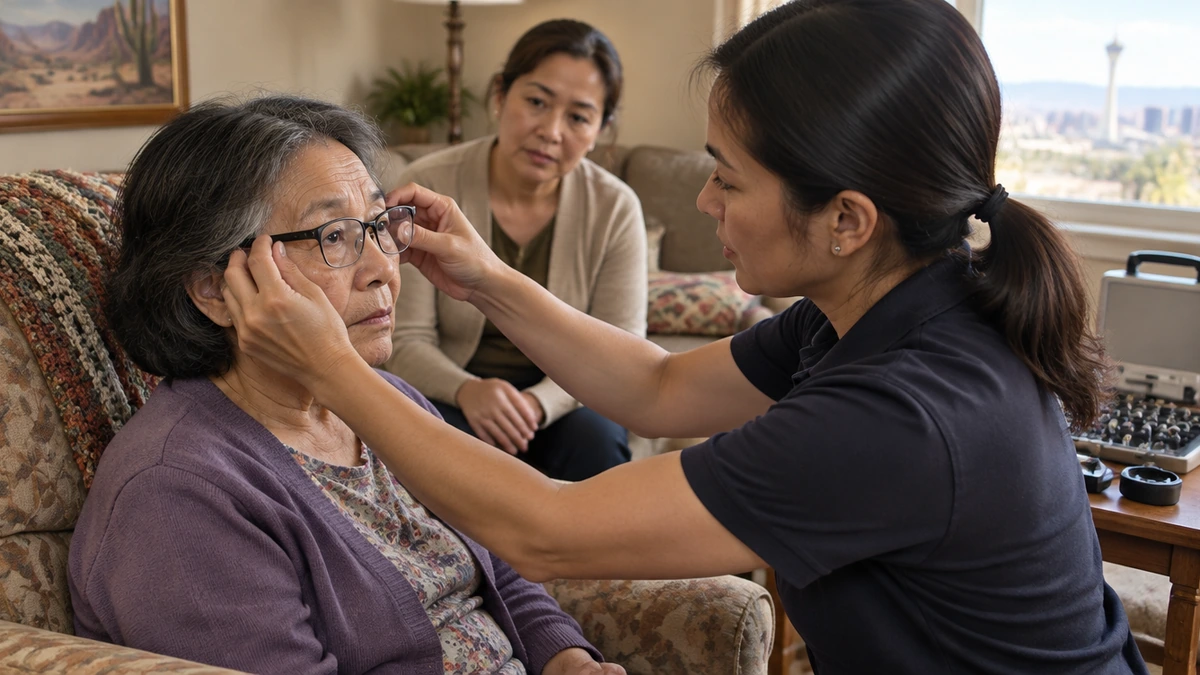
    Add as a preferred source on Google

  • How Vision Problems Affect Fall Risk in Senior Living Communities

    How Vision Problems Affect Fall Risk in Senior Living Communities

    How Vision Problems Affect Fall Risk in Senior Living Communities

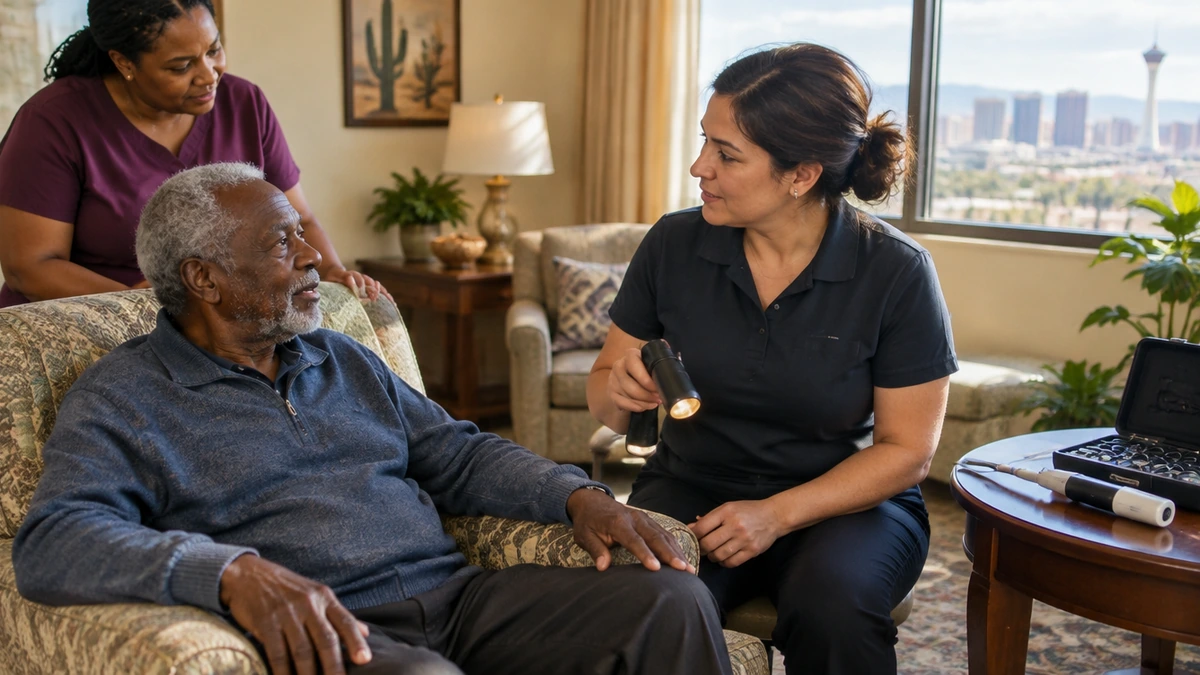
    Eye doctor discusses daily activities with a resident for vision problems and falls in seniors

    TLDR: Put vision on your resident safety checklist alongside the care plan and conditions in the home. Research links visual impairment with falls, but a vision day does not establish a fall-prevention benefit. I help you plan the assessment, glasses follow-up, and staff handoff around each resident.

    Answer: Address vision problems and falls in seniors together in your Nevada assisted living safety review. Record difficulty judging steps, seeing edges, or using glasses, then arrange an eye exam and care-plan review. Include lighting, medication review, mobility support, and follow-up, with clear tasks for staff and no predicted reduction in falls from the visit.

    Your incident report tells part of the story. Add what the resident was doing, the glasses being worn, and the conditions in the room or walkway. Those details give your care team and me a better starting point than assuming every stumble has a visual cause.

    Give your caregivers a clear reporting route. In Las Vegas, a facility-coordinated vision day adds assessment and follow-up to the home’s existing safety work. Plan on-site eye care around each resident’s support needs. Keep the eye report with the care instructions staff use during daily activities.

    What Does Research Say About Vision Problems and Falls in Seniors?

    Eye doctor and caregiver listen to a seated resident for vision problems and falls in seniors
    Eye doctor and caregiver listen to a seated resident.

    Read the figures for what they measure. Your incident log and this study describe different groups: CDC’s analysis of the 2014 BRFSS, published in 2016, found that 46.7% of noninstitutionalized adults aged 65 or older with severe vision impairment reported a fall, compared with 27.7% without severe vision impairment. The figures describe an association in the study population. They do not predict your home’s fall rate or the result of changing a resident’s glasses.

    Keep treatment findings in view too. For your safety review, A 2007 randomized trial of 616 frail community-dwelling adults aged at least 70 found that 65% receiving a vision intervention versus 50% receiving usual care fell at least once, with a fall-rate ratio of 1.57 and a 95% confidence interval of 1.20 to 2.05. The percentages count participants who fell, while the ratio measures fall rates. Keep those measures distinct when explaining the study, which does not establish all eye care causes falls.

    Give your program a concrete task. Identify visual concerns, arrange assessment, and put the resulting instructions where caregivers will use them. Track your own incident reports and unfinished follow-up separately. A published study does not tell you what will happen in the hallway at your home.

    Why Discuss Depth Perception and Contrast Sensitivity?

    Eye doctor watches a resident reach toward a contrasting cup for vision problems and falls in seniors
    Eye doctor watches a resident reach toward a contrasting cup.

    Look beyond the printed page. When your resident struggles to judge an object’s position or see its edge, note the task, because A prospective study published in 2001 identified impaired depth perception, contrast sensitivity, and low-contrast visual acuity as the strongest visual risk factors for multiple falls in its community-dwelling sample. Include those observations even if ordinary print remains clear. Bring the activity into the examination history.

    Give me your account of the scene. Record hesitation at a step, difficulty finding a chair edge, or trouble locating an object against a similar color. Name the location and activity staff observed. I interpret those details with the resident’s history before identifying a visual deficit.

    Keep findings separate from impressions. As your visiting optometrist, I provide measured results for the handoff alongside the caregiver’s observations and unresolved questions. If the resident did not complete a task, record the limitation and next instruction. An empty result line needs follow-up, not a normal label.

    What Should You Do About Old Prescriptions and Multifocal Glasses?

    Resident holds glasses during a conversation with an eye doctor for vision problems and falls in seniors
    Resident holds glasses during a conversation with an eye doctor.

    Bring the glasses your resident wears. Include other available pairs and label their usual purpose, such as reading or watching television. Request a prescription and fit review when staff report difficulty. The age of a frame alone does not identify the cause of a fall.

    Match lens advice to your resident’s activities. The 2010 VISIBLE trial found no significant overall fall reduction from single-vision distance glasses plus counseling, with benefit in the active-outdoors subgroup and increased outdoor falls in the less-active subgroup. A resident’s outdoor routine belongs in the discussion about lenses and use. Keep the decision individual instead of setting a home-wide rule about multifocals or progressive lenses.

    Make wear instructions easy to find. Your caregiver needs to know which glasses the resident uses for each activity, with unclear directions sent back for explanation. Use the guide to prescription glasses fitting and delivery to plan measurements, delivery, and adjustments. Keep the resident’s questions beside the eyewear task.

    How Should You Review Lighting, the Environment, and Medicines?

    Caregiver and eye doctor review the route beside a seated resident for vision problems and falls in seniors
    Caregiver and eye doctor review the route beside a seated resident.

    Walk the route in your incident report. With the responsible care staff, record the lighting, glare, furniture, and objects where the resident moved. Have the care team decide what needs changing and assign each action. The note needs a person responsible for the furniture or lighting review.

    Check the setting at the relevant time. Your brightly lit hallway at another hour does not describe the activity the resident found difficult. Record the actual light, glasses worn, and usual mobility support used. Give me the scene staff observed.

    Name the person reviewing your medication list. Send the nurse or prescribing doctor the current medicines, recent changes, and symptom timing. Keep my findings beside those details for review. The resident’s prescribing team directs medicine changes.

    Review areaInformation to gatherNext staff action
    Vision and daily tasksResident’s description and observed difficultyRequest eye assessment
    GlassesPair worn, purpose, fit concernsObtain wear and adjustment instructions
    EnvironmentLighting and route at the timeAssign a care-team review
    MedicinesCurrent list and recent changesSend to the nurse or prescribing doctor
    Follow-upOpen referrals and pending instructionsName the person closing each task

    When Should Your Team Request an Eye Evaluation?

    Report a new difficulty promptly. Your note needs the resident’s words or the changed activity staff observed, with documented cataracts, glaucoma, or macular degeneration included when present. Bring the concern to me for diagnosis. Staff do not need another incident before requesting clinical direction.

    Send sudden symptoms for immediate assessment. For your urgent response plan, The National Eye Institute directs immediate eye-doctor or emergency-department assessment for sudden new floaters, flashes, or a dark curtain or shadow suggesting retinal detachment. Tell the eye doctor handling the urgent assessment when the change began and what the resident described. Keep that call out of the routine vision day queue.

    Give your referral a specific question. Describe the step, chair edge, or other task the resident struggled with and request assessment and assistance instructions. For a comprehensive eye exam, I explain the tests planned and any limitations needing another visit. Put the next appointment and staff responsibilities in the care record.

    Build a Follow-Up Process for Vision Problems and Falls in Seniors

    I reviewed 69 primary sources across five research lenses for this series, and vision intervention studies do not support a uniform fall-prevention promise. Use the trial findings above to set your goals around assessment and follow-through. Put the examination instructions beside the resident’s safety plan. A finished appointment does not establish that fall risk is gone.

    Turn the examination report into tasks your staff understand. Record whether there is a glasses order, an adjustment request, further testing, or a referral. Keep the resident’s existing mobility and safety instructions active while the care team reviews changes to the care plan.

    1. Gather the incident details and the resident’s account.
    2. Route urgent symptoms for immediate assessment.
    3. Prepare glasses, medication information, and previous eye reports.
    4. Prepare consent, the examination room, and resident assistance.
    5. Record results and assign responsibility for each next step.
    6. Check completion and report new concerns to me or the resident’s outside treating team.

    Count the tasks your staff finished. Check whether reports arrived, referrals were booked, and glasses questions were answered. Review incidents within the wider safety program, alongside the resident’s care and surroundings. Do not assign a change in falls to the eye visit alone.

    Add Vision by Amel to Your Resident Safety Planning

    Plan your vision day with me. I am Dr. Amel Youssef, OD, founder of my practice, Vision by Amel, in Downtown Summerlin. My team and I serve assisted living homes, Residential Facilities for Groups, memory care communities, adult day care programs, and senior living communities across the Las Vegas Valley. Bring your resident list to the planning call. Describe support needs before settling the room and examination schedule.

    Keep your resident participation voluntary. Gather consent, representative documents, and insurance information for my review. I verify benefits before service. Prepare a private room with electrical access and agree on the examination schedule. Benefits depend on each resident’s eligibility and plan terms.

    Plan for the work after your visit. My team and I coordinate prescription eyewear selection, measurements, delivery, and adjustments with you. I arrange clinical referrals and explain each next step. Review eye examination services and the facility examination workflow before the vision day. I explain on-site testing limits and secure record handling for your resident safety plan.

    Frequently Asked Questions About Vision and Resident Fall Risk

    What should I ask after a near miss without a fall?

    Ask the resident what they noticed and what they were trying to do. Record your staff’s observations through the usual care reporting process, including the location and glasses being worn. Send recurring or new visual concerns to me even when the event did not result in an injury.

    Should we put every resident into the same kind of glasses?

    Use individual eyewear instructions for your residents. Record each person’s activities, preferences, and difficulty with current glasses for my review. Keep clear wear directions with every replacement or additional pair.

    How should I handle a resident who dislikes a new pair?

    Record what your resident finds difficult and when it happens. Send that description to my eyewear team for fit, use, or reassessment instructions. Keep the concern in the care handoff until it is resolved, even after the glasses have arrived.

    What belongs in our vision-related safety audit?

    Check whether your reported concerns reached me or the resident’s outside eye doctor and requested follow-up occurred. Identify missing reports, unresolved glasses problems, and tasks without a staff owner. Use the findings to improve the handoff without treating completed paperwork as a clinical outcome.

    What if a family asks whether the visit will stop falls?

    A vision day does not establish that your resident will stop falling. Explain the planned assessment and how findings enter the resident’s wider care plan. Name the follow-up tasks without predicting a fall reduction.

    Schedule an On-Site Vision Day Speak With Dr. Amel’s Team: (702) 858-4362

    Like this article? Add Vision by Amel as a preferred source, and you are more likely to see our articles in Google’s Top Stories.
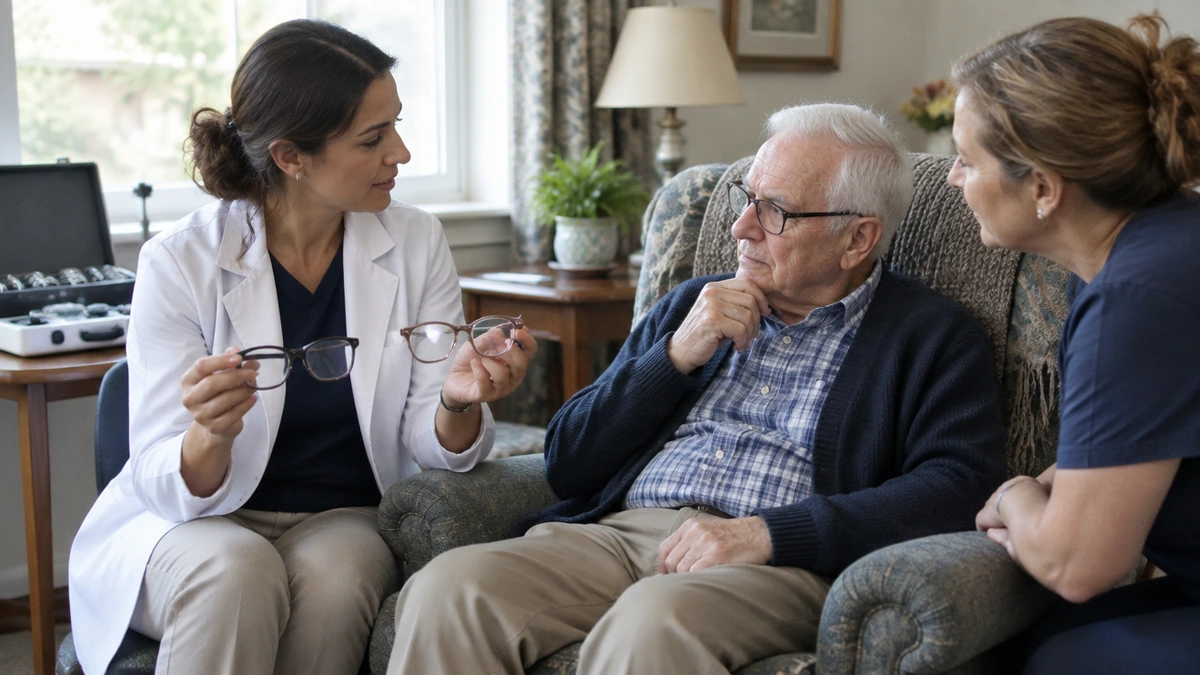
    Add as a preferred source on Google