Tag: sports eyewear

  • Eye Injuries in Kids: First Aid Every Las Vegas Parent Should Know
    Eye Injuries in Kids: First Aid Every Las Vegas Parent Should Know

    Eye Injuries in Kids: First Aid Every Las Vegas Parent Should Know

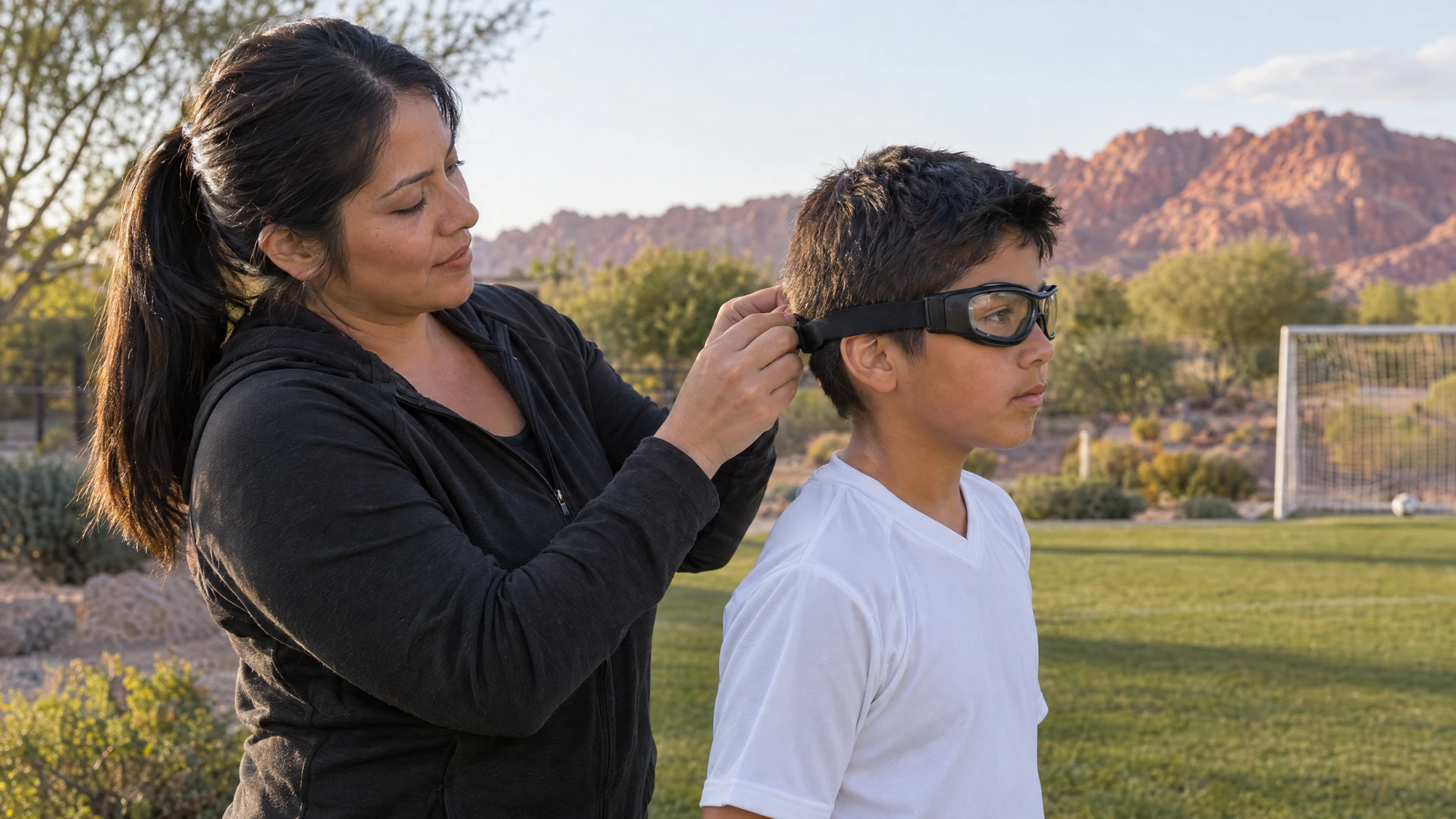
    Mother adjusts a Latino boy's sports goggles on a soccer field, prevention of eye injuries in kids

    TLDR: For chemical eye injuries in kids, flush your child’s eye with water right away and get emergency care. For a cut, puncture or embedded object, protect the eye without pressure, do not rinse or remove the object, and go to the ER right away. Vision changes after an injury also need the ER right away.

    Answer: First aid for eye injuries in kids depends on what happened. Flush a chemical splash with water right away, for at least 15 minutes. Never rinse a cut, a puncture or a fireworks injury, and leave any stuck object in place. Use a cold compress without pressure after a blow. In Las Vegas, take your child to the ER right away for any serious injury.

    You are on the soccer sideline in Summerlin when a ball catches your child in the face. The game stops, and you need a clear next step. I reviewed 168 primary sources across five research lenses for this guide, and chemical splashes and punctures require different first aid.

    Get emergency help right away if your child has any of these serious injury signs listed by the American Academy of Ophthalmology: ongoing pain, trouble seeing, cut eyelid, one eye not moving as well, one eye sticking out, odd pupil, blood in the eye, something that will not come out. Go to the ER rather than waiting for a routine eye exam. Once the emergency is handled, my eye exams overview explains the follow-up visit.

    What Should You Do After a Chemical Splash?
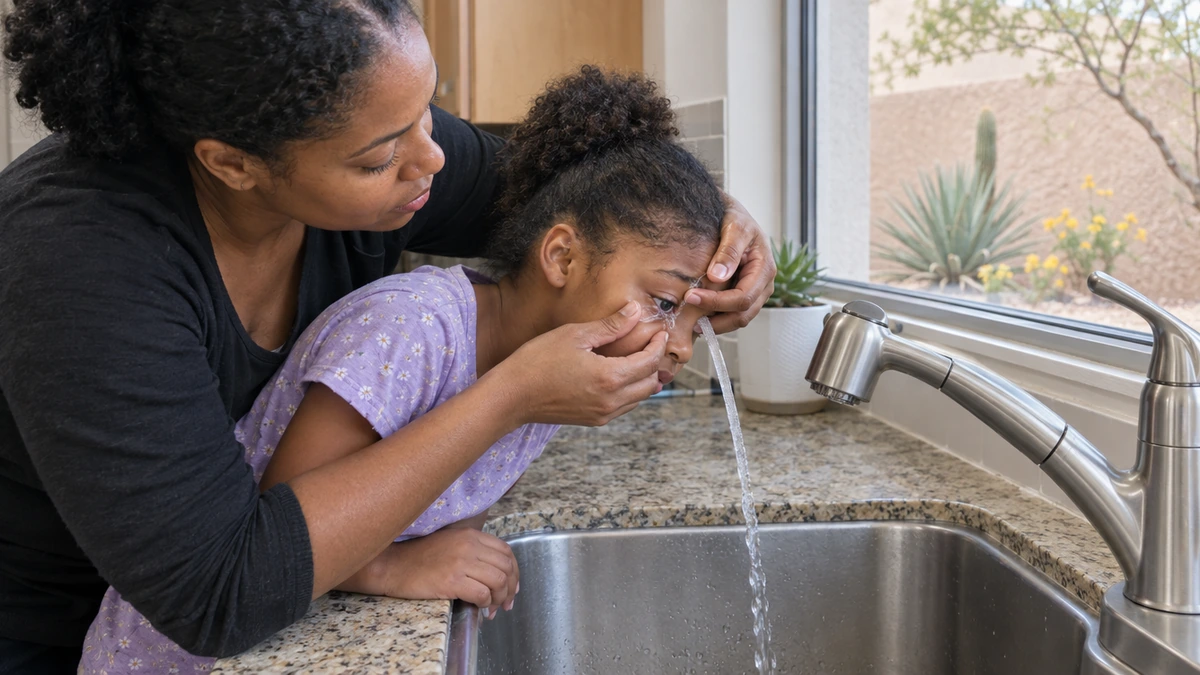
    Black mother rinses her daughter's eye at a kitchen sink, first aid for chemical eye injuries in kids
    A mother rinses her daughter's eye under a gentle stream at the kitchen sink.

    Start flushing right away. Hold your child’s eye open under a faucet or shower, and continue flushing with water for at least 15 minutes, as Prevent Blindness directs. Get emergency care right away after flushing. Do not delay rinsing to find special eyewash or book a visit.

    1. Move straight to running water, the kitchen sink or the shower. At a park or in the car, use bottled water or any drinkable liquid.
    2. Hold the affected eye open so water reaches it. Start rinsing before searching for the product’s ingredients.
    3. Keep flushing for at least 15 minutes by the clock. Another adult calls for emergency help while you stay with your child.
    4. Leave the eye unbandaged. Head for emergency care once flushing is complete.

    A spray bottle tips while you clean a Las Vegas kitchen, and your child cries out beside the sink. Your first job is getting water into the affected eye. The bottle and phone wait while you start flushing. A second adult is useful here: one stays at the sink, the other handles the next steps.

    Prevention starts under your sink. Chemical products were the leading cause (34.2%) of product-related eye injuries in children younger than 5 treated in US emergency rooms from 1997 to 2019, a study in Ophthalmic Epidemiology found. Lock cleaners up high and out of your child’s reach. A sharp object or a fireworks injury needs the different steps below.

    Which First Aid Fits Eye Injuries in Kids?
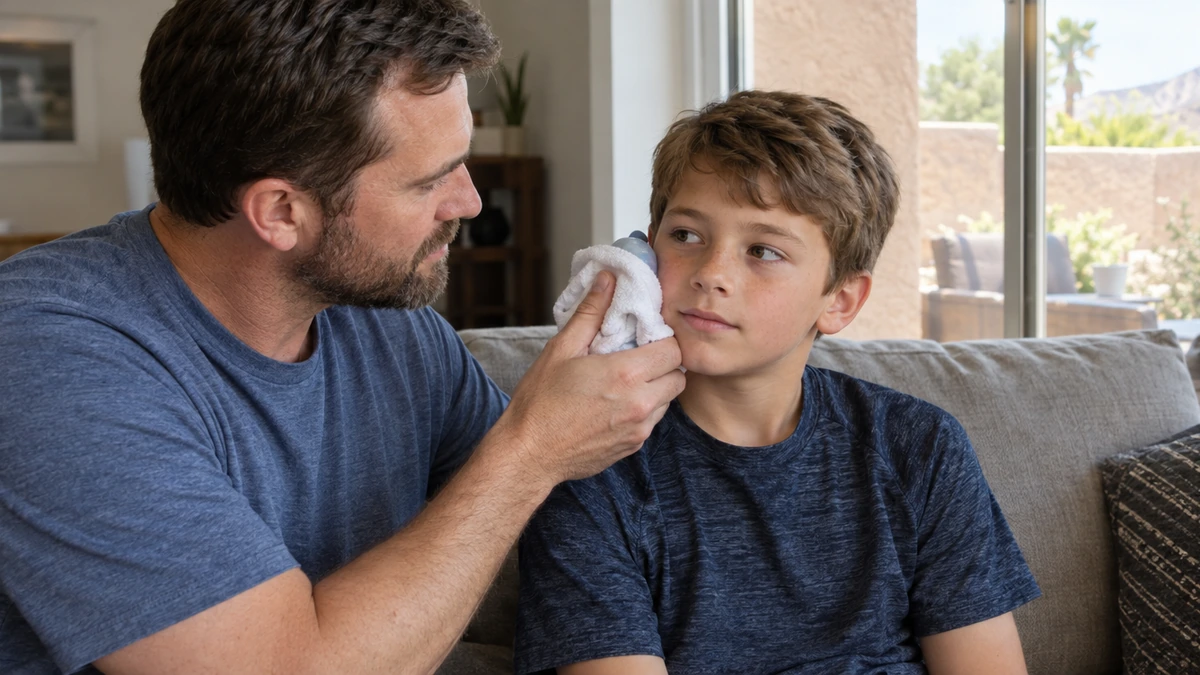
    White father holds a wrapped cold pack near his son's cheek, first aid for eye injuries in kids
    A father holds a cloth-wrapped cold pack near his son's cheek, away from the eye.

    Match your response to the injury. The American Academy of Ophthalmology recommends a cold compress without pressure after a blow, a shield without rinsing for a puncture, and prompt examination even when an injury seems minor. A toy edge, a flying fragment and a loose grain of dust call for different decisions. Use this table to choose the first action, then follow the emergency signs above.

    What HappenedYour First ActionWhen to Get Help
    Loose sand or dustEncourage blinking and let tears wash it out. Do not rub or use tweezers.Get help right away when the speck stays or the feeling persists.
    Ball, elbow or toy hits the eyeApply a small cold compress without pressure.Go to the ER right away for pain, blurry vision, one eye sticking out, blood inside the eye or a black eye.
    Cut, puncture or object embedded in the eyeProtect with a rigid shield without pressure. Do not rinse or remove the object.Go to the ER right away.
    Possible scratch after contact with a toy or fingerPrevent rubbing. Do not put ointment or medication into the eye yourself.Arrange examination as soon as possible. Serious injury signs mean emergency help right away.

    Loose dust often washes away with tears. Metal, glass and other man-made fragments are more serious than dust, because they sometimes embed in the eye. Your role is to prevent rubbing and get help, not to explore beneath the eyelid with a household tool. Do not attempt to remove an embedded fragment.

    For a cut or puncture, never rinse the eye, never rub it and never pull out a stuck object. Tape a rigid shield, or the bottom half of a paper cup, to your child’s brow and cheekbone so nothing presses on the eye. Then go to the ER right away.

    A cold compress is first aid, not permission to resume the game. Your child still needs emergency care right away for the warning signs in the table. I would rather interrupt a game than let a child’s wish to play decide whether an injured eye gets checked.

    What Changes After a Fireworks Injury?

    South Asian family on a Summerlin patio at dusk, children in safety glasses, eye injuries in kids
    A family stands together on a Summerlin patio at dusk, the children in safety glasses.

    A fireworks eye injury is an emergency: call 911 or get emergency care right away, following the American Academy of Ophthalmology guidance. Do not rub, rinse, press or remove anything stuck in your child’s eye. These instructions apply even when you think a burn or chemical caused the problem. Follow the emergency dispatcher’s directions.

    The safest July 4 plan for your family is a professional show, says the American Academy of Ophthalmology, which warns that bystanders, especially children, are at high risk around home fireworks. Safety glasses and a few extra steps of distance do not make a backyard show safe for your child. Planning a Summerlin patio evening anyway? Decide in daylight who stays with the children and who makes the 911 call.

    You do not need to identify the exact injury before seeking help. Describe the firework, where your child was standing and what happened next. Do not spend that time searching for drops or trying to wash away debris. Get emergency help right away.

    How Do You Protect Eyes Before Play Starts?
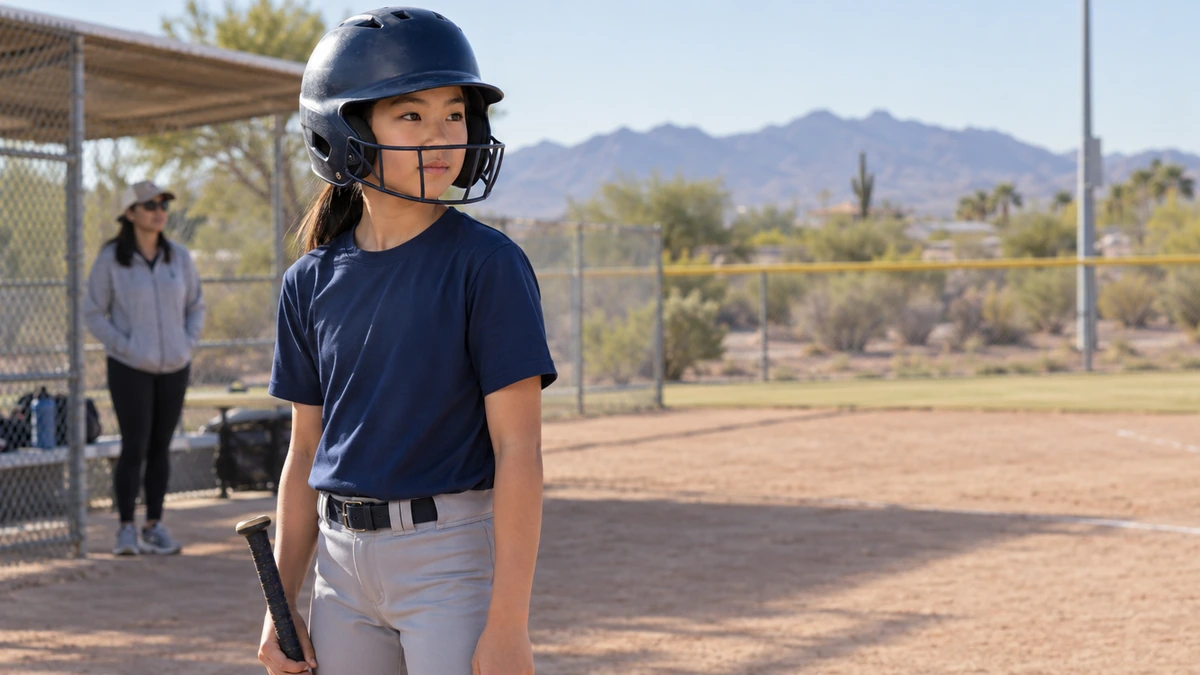
    East Asian girl wears a batting helmet with a face guard at practice, prevention of eye injuries in kids
    A girl in a batting helmet with a face guard waits at baseball practice.

    Choose protection for the sport. Sports eyewear has to meet that sport’s own requirements, says the American Academy of Ophthalmology, and everyday glasses do not protect against impact. No safety eyewear is foolproof, the AAO adds, yet the right pair lowers your child’s risk. My guide to sun and sports eyewear for kids covers lens and frame choices.

    At a youth baseball practice, your child has a helmet, a glove and a bag full of equipment. Put eye protection on that packing list before leaving home. Ask which protection fits the sport and works with the helmet or face guard. I consider protective eyewear part of getting dressed for sport.

    • Name the activity when choosing protection, whether soccer, basketball or baseball.
    • Check the protector’s sport labeling instead of relying on its appearance.
    • Include prescription needs in the discussion.
    • Pack the protection with the equipment your child already takes to practice.

    How I Approach Your Child’s Follow-Up at Vision by Amel

    The ER handles the emergency. Routine eye care comes after, and that is where I fit in for your child. I am Dr. Amel Youssef, founder and optometrist at Vision by Amel in Downtown Summerlin at Festival Plaza, and children’s eye care is central to my work. Follow the treating team’s plan first, then book your child’s follow-up visit with me.

    Your child’s story comes first: what happened, what the ER did and what still worries you. Then I examine your child’s eyes with digital diagnostics and walk you through a plan for your child’s eye health. You leave knowing what to watch for and when to come back.

    For a non-urgent pediatric eye exam, my team accepts online bookings or phone calls. You do not need a referral for an eye exam. Lens wearers need their own rules, and my contact lens guide for kids and teens lays them out for your family. Save the booking options below for planned care after urgent needs have been addressed.

    Frequently Asked Questions About Eye Injuries in Kids

    My Child Got a Chemical in Their Eye. What Should I Do?

    Flush with water right away, then get emergency care right away. When your child wears a contact lens, start flushing over it immediately rather than stopping to remove it, as Prevent Blindness advises. Take the chemical label to the ER if possible, without delaying care.

    Something Is Stuck in My Child’s Eye. Should I Rinse It or Go to the ER?

    Loose dust and an embedded object need different responses. For a loose speck, blinking and tears are appropriate, but an object stuck in your child’s eye needs protection without rinsing or removal and the ER right away. A lingering feeling of something in the eye still needs help right away even when you no longer see a speck.

    My Child Got Hit in the Eye. When Should We Go to the ER?

    Go right away for pain, blurry vision, one eye sticking out, blood inside the eye or a black eye. A light blow still deserves attention because even a small impact risks serious internal injury. Use a cold compress without pressure while getting help for your child, and avoid steaks or other food against the eye because they introduce bacteria.

    Are Sparklers and Fireworks Safe for Kids?

    No. Sparklers burn at about 2,000 degrees Fahrenheit, the American Academy of Ophthalmology notes, and young children should never handle them. Watching nearby still carries a risk of injury, which is why the AAO points your family to a professional show. Plan the celebration around that choice.

    Does My Child Need Different Eye Protection for Each Sport?

    Your child needs protection made and labeled for the specific sport, including when wearing contacts. The Prevent Blindness sports guide lists different standards for different activities, so check the current requirement with your eye doctor or league. Name each sport your child plays rather than assuming one protector suits them all.

    Book My Eye Exam Call (702) 858-4362

    Like this article? Add Vision by Amel as a preferred source, and you are more likely to see our articles in Google’s Top Stories.

    Add as a preferred source on Google

  • Signs Your Child Needs Glasses: A Las Vegas Parent’s Checklist

    Signs Your Child Needs Glasses: A Las Vegas Parent’s Checklist

    Signs Your Child Needs Glasses: A Las Vegas Parent’s Checklist

    South Asian girl holding a picture book close as her mother watches from a doorway, signs your child needs glasses

    TLDR: Common signs your child needs glasses include squinting, holding books close, tilting the head and avoiding reading. Book an eye exam to find out what those habits mean for your child. Start with the behavior you notice, then let the findings guide the prescription.

    Answer: For parents in Las Vegas, repeated squinting, eye rubbing, headaches during schoolwork, covering an eye and losing place while reading are reasons to arrange a comprehensive eye exam. As your child’s optometrist, I check the cause before recommending glasses. An eye turning inward or outward also needs attention, even when your child reports clear vision.

    Your second grader squints at the whiteboard. Back home in Summerlin, a picture book comes close enough to hide their face. When these habits interrupt the school day or bedtime reading, move children’s vision up your list.

    I reviewed 73 primary sources across five research lenses for this guide, and a child with a vision problem does not always report difficulty seeing. Your notes hand me a head start before the exam even begins. My eye exams in Downtown Summerlin start with patient history, so tell me what caught your attention.

    What Are the Signs Your Child Needs Glasses at Different Ages?

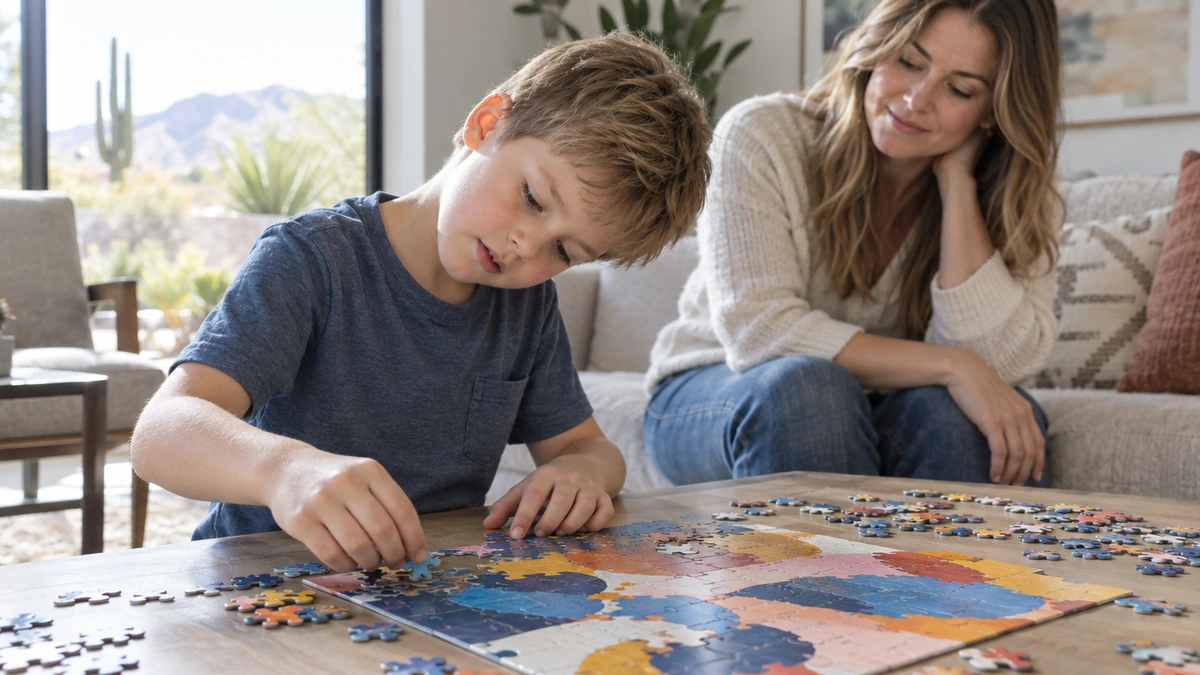
    White boy tilting his head while fitting a puzzle piece, signs your child needs glasses
    Include head tilting in your observation notes.

    Watch the everyday moments. The American Optometric Association lists close viewing, squinting, head tilting and avoiding puzzles among preschool warning signs, and notes amblyopia sometimes develops without noticeable signs. Your child’s puzzle abandoned on the coffee table deserves a closer look before anyone calls it laziness.

    StageWhat You Might NoticeDetails Worth Sharing
    Preschool playA book held close, a tilted head, covering an eye or avoiding coloring and puzzlesThe activity, head position and whether the behavior repeats
    Early elementary schoolSquinting toward the board, rubbing eyes during homework or losing place while readingWhether the trouble happens looking across the room or down at a page
    Older school childrenHeadaches with schoolwork, reading avoidance, visual fatigue or reports of double visionWhich tasks bring on the discomfort and what makes the child stop

    Use this table as your watch list. It tells you what to look for. The exam tells you what it means.

    Notice the pattern without staging a test. During an ordinary evening at home, does your child pull the book closer, cover an eye or leave the puzzle unfinished? Describe the moment as it happened, including whether you have seen it before. There is no need to repeat an uncomfortable task for proof.

    I treat a repeated squint as a reason to investigate. The prescription comes from the exam. You have already done something useful by noticing the change and arranging a visit.

    Which Signs Your Child Needs Glasses Show Up in Class?

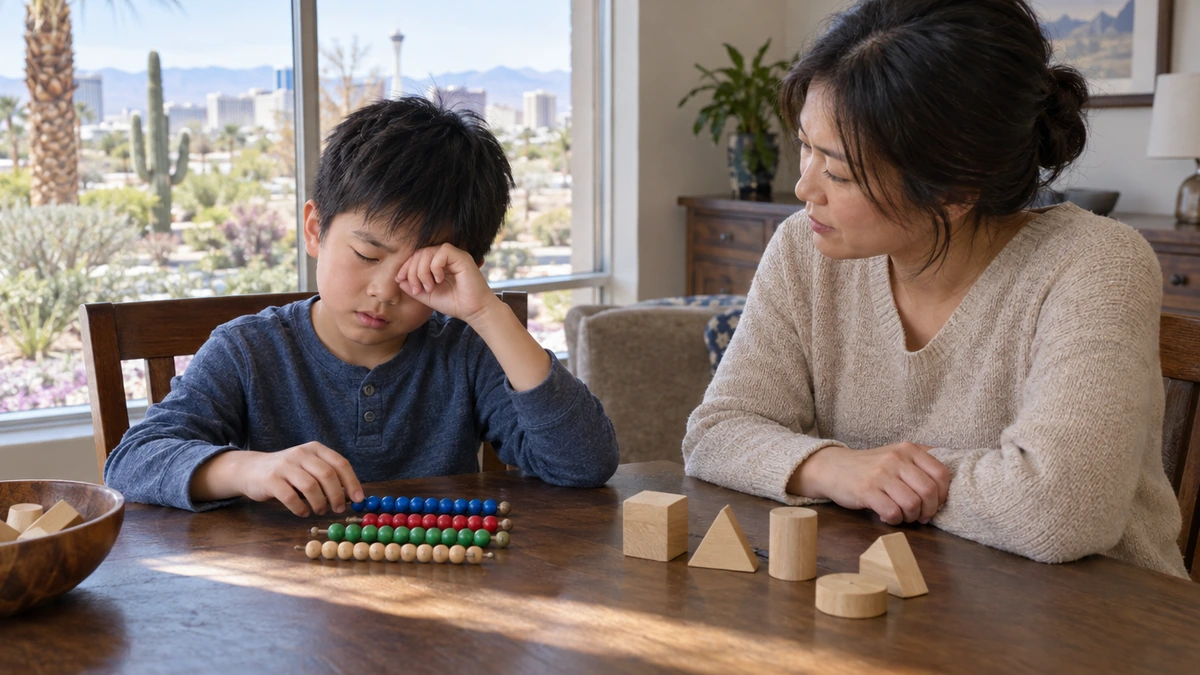
    East Asian boy rubbing one eye during homework by a window, signs your child needs glasses
    Describe when eye rubbing interrupts homework.

    Look beyond the report card. The AOA school-age guidance includes headaches, eye rubbing, reading avoidance, double vision and losing place, and explains children sometimes assume everyone sees as they do. Your child’s silence proves nothing. Watch what they do, not what they say.

    Compare the whiteboard with the homework page. Trouble copying from across the classroom and rubbing eyes over a book are different details for me to hear. Bring the teacher’s words and your own. Leave the diagnosis to the exam.

    Does Reading Trouble Mean a Learning Disability?

    Treat reading trouble and vision as two separate questions. Chase both answers. The AAP, AAO, AAPOS and AACO joint statement explains vision problems sometimes interfere with learning but do not cause dyslexia or other learning disabilities. Your child’s eye findings and educational assessment serve different purposes.

    Keep educational support moving while you arrange the visit. Describe whether your child struggles to see the page, recognize words or understand a passage. Glasses help your child see the page. Reading support helps them read it. Chase both.

    What Do an Eye Turn or Other Red Flags Mean?

    Report an eye turn when you arrange care. An eye turning inward or outward is called strabismus, while amblyopia, often called lazy eye, involves reduced vision developing in childhood. The National Eye Institute emphasizes starting amblyopia treatment early. Give your child’s eye alignment attention even when seeing seems easy to them.

    Tell me when the turn appears. You might notice it during reading, while your child looks across the living room or during several different activities. I check binocular vision as part of my evaluation and explain the findings alongside the rest of the exam. Your job is to describe what you see.

    A White Pupil Needs Immediate Attention

    A white pupil or white pupil reflection in your child’s photograph needs action right away because AAPOS warns it sometimes signals serious disease. Call your child’s eye doctor or pediatrician today and say the words “white pupil” to arrange an immediate eye assessment. Do not wait for a routine appointment. Skip further photo checks and seek care now.

    How Do You Help Your Child Wear New Glasses?

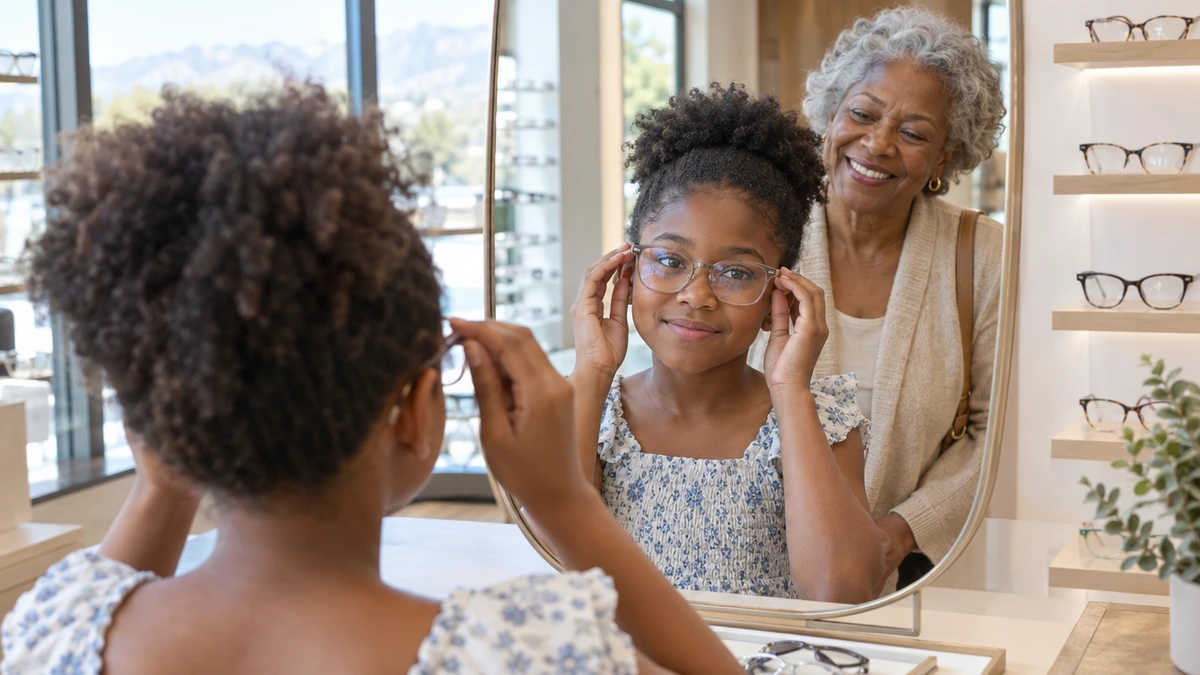
    Black girl trying on glasses in a mirror with her grandmother, signs your child needs glasses
    Ask your child how the new frames feel.

    Fit first, color second. Ask your child what presses, slips or pinches before anyone mentions purple frames. For everyday glasses, AAPOS fitting guidance recommends polycarbonate lenses and frames with eyes centered in the lenses, clear of cheeks and eyelashes. Have whoever fits the glasses show you those checks on your child’s face.

    Give adjustment time and a clear follow-up point: AAPOS says most children adjust within two weeks, and a prescription recheck may be needed when resistance continues after a few weeks. Some children need longer. Call my team to review the fit and prescription when your child keeps fighting the glasses. Pain or a pinching frame deserves a call sooner.

    I put comfort ahead of coaxing. A complaint about the frame deserves attention before another reminder to wear it. You learn more by finding the spot behind the ear that pinches than by debating whether the glasses look nice.

    1. Start with the fit. Have whoever fits the glasses adjust slipping frames or pressure points before you settle on a pair.
    2. Give your child a choice among suitable frames, then confirm the impact-resistant lens recommendation.
    3. Get the prescribed wear schedule from me so you know when the glasses belong on.
    4. Choose a regular place for the case when the glasses come off, away from the rush of backpacks and shoes.
    5. Encourage wearing the glasses and report persistent resistance so I know the plan needs another look.

    Make the morning routine practical. Before the Las Vegas school run, backpacks loaded and breakfast unfinished, check where the glasses belong under the prescribed schedule. Give your child a calm reminder and time to describe discomfort. A rushed departure is a poor moment to settle a fit problem.

    Make the next conversation specific. Tell me whether your child pushes the frames up, points to a sore spot or takes them off during a particular activity. Mention what happens with the glasses on as well as off. Those details help us address the complaint without turning every removal into an argument.

    Are Everyday Glasses Enough for Sports?

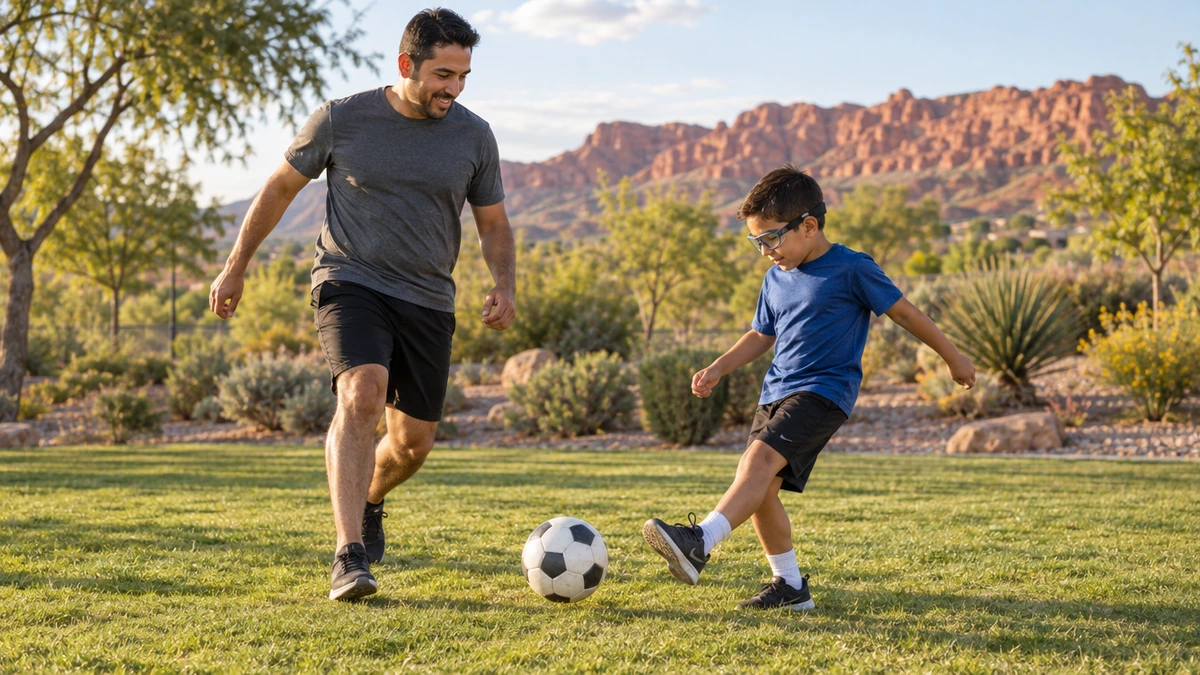
    Latino father and son kicking a soccer ball, boy wearing sports glasses, signs your child needs glasses
    Ask about protection matched to your child's sport.

    Everyday glasses are not soccer gear. Before your child’s next practice at a Summerlin park, follow Prevent Blindness guidance to choose sport-specific protective eyewear with polycarbonate lenses meeting the applicable ASTM standard. Bring the sport and the prescription when you shop for the protector.

    What Should You Do Before the Appointment?

    Give me the reason for your visit. A brief account of the squinting, reading trouble or frame discomfort gets us started. For a school referral, my guide to school screening and comprehensive exams explains what the screening result means and how to follow through.

    What I Check When You Report Squinting at Vision by Amel

    When you report squinting, I measure refraction, check whether both eyes team up and assess your child’s eye health in the same visit. Bring the concern back into the conversation as we discuss the findings. Keep asking until you understand what they mean for the moment that worried you.

    Use your pediatric eye exam to get the next step clear. Does the plan call for glasses, and when should your child wear them? Before you leave, confirm which changes to report and when to follow up.

    Make room for eye care in your school-week plans in Downtown Summerlin. Choose a visit you will be able to attend without rushing through the conversation. Keep your main concern in view from the first question to the last.

    Frequently Asked Questions About Signs Your Child Needs Glasses

    Will Glasses Make My Child’s Eyes Weaker?

    No, AAPOS explains glasses do not weaken your child’s eyesight or create dependence. Going without prescribed glasses sometimes harms normal vision development. I will explain the purpose of your child’s prescription so you understand why the wear schedule matters.

    What Should I Ask If My Child Already Has Glasses?

    Tell me whether your child’s symptoms happen with the current pair on, off or both. Use the pair worn at school for the discussion, including any bent or damaged frame. We will review the fit and prescription alongside the symptoms instead of assuming every complaint means stronger lenses.

    How Do I Get My Toddler to Keep Their Glasses On?

    Keep encouragement positive and check comfort first. AAPOS suggests books about children wearing glasses and family members modeling comfortable wear to help your toddler accept them. When slipping gets in the way, discuss a retaining strap or silicone temple tips with whoever fits your child’s glasses.

    Do I Need a Referral, and Does Vision by Amel Accept Nevada Medicaid?

    You do not need a referral for an eye exam at Vision by Amel, and we accept Nevada Medicaid. Give my team your plan details when you book online or call. We will help you check which benefits apply to the exam and any prescribed eyewear.

    What Should I Tell a Grandparent Who Helps With Glasses?

    Share your child’s prescribed wear schedule and the office contact information. Explain which concerns I want to hear about, including uncomfortable frames or continued resistance. Have the grandparent pass those concerns to you so we address them together before anyone changes the schedule.

    Book My Eye Exam Call (702) 858-4362

    Like this article? Add Vision by Amel as a preferred source, and you are more likely to see our articles in Google’s Top Stories.
    Add as a preferred source on Google