Tag: strabismus

  • Crossed or Wandering Eyes in Children: What Strabismus Means

    Crossed or Wandering Eyes in Children: What Strabismus Means

    Crossed or Wandering Eyes in Children: What Strabismus Means

    Father and daughter at a Summerlin park, illustrating crossed eyes in children guidance

    TLDR: An eye turn deserves attention, even when it comes and goes. An examination checks whether your child’s eyes line up, how each eye sees, and which treatment fits the findings.

    Answer: True crossed eyes in children are a form of strabismus, meaning the eyes do not line up. An eye might turn inward, outward, upward or downward. For your family in Las Vegas, the next step is an eye exam to identify the type and assess vision, followed by glasses, patching or a surgical referral when indicated.

    You notice it while scrolling through photos from a Summerlin park. Your toddler smiles toward the camera, but an eye seems to point somewhere else. Then you look up, and both eyes appear straight. You have something worth checking, even when the next picture looks different.

    I reviewed 113 primary sources across five research lenses for this guide, and strabismus and amblyopia are different problems that sometimes occur together. For your child, eye misalignment also carries a risk of amblyopia, as AAPOS explains. I take a parent’s repeated concern about an eye turn seriously. My eye examination service is a place to discuss what you have noticed.

    What Do Crossed Eyes in Children Look Like?
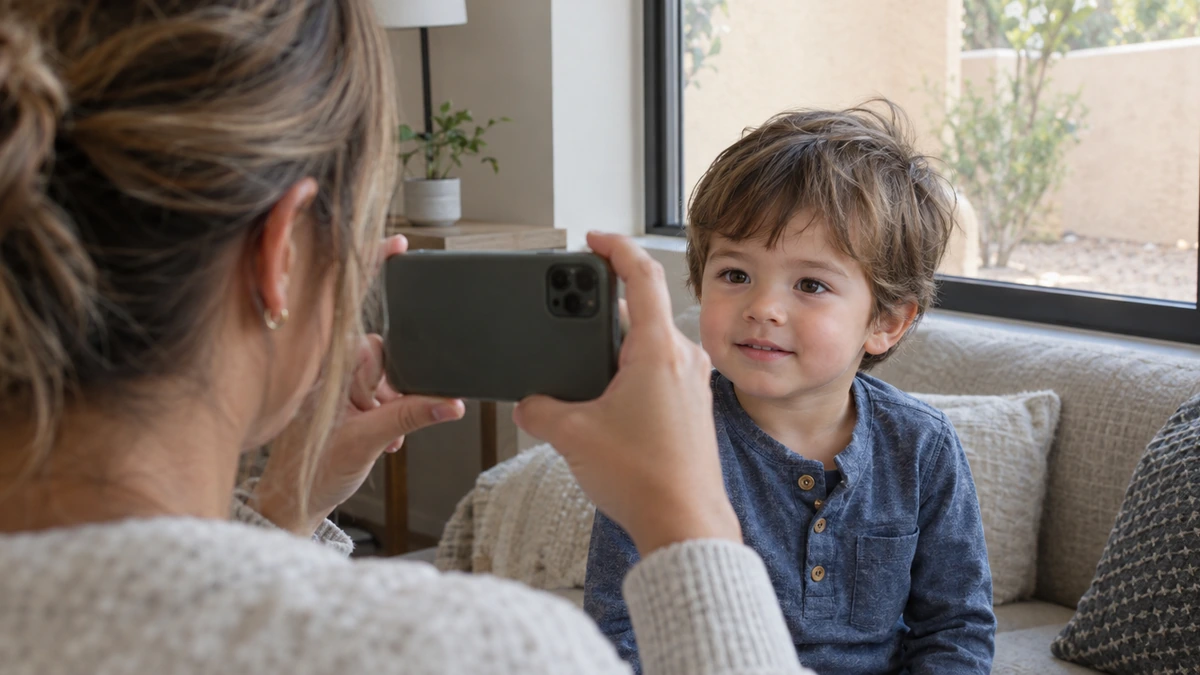
    Mother photographing her toddler by a window for a crossed eyes in children discussion
    A mother takes a casual photo of her toddler in window light at home.

    Tell me which way the eye turns. In or out, up or down, that one detail starts the exam ahead. Esotropia means an inward turn toward the nose, while exotropia means an outward turn toward the ear. For a vertical turn, use plain words when you call, even before you know the medical name.

    TermWhat It DescribesWhat to Record
    EsotropiaAn eye turns inwardWhich eye looks closer to the nose
    ExotropiaAn eye turns outwardWhich eye drifts toward the ear
    IntermittentThe turn comes and goesWhen you notice it and when the eyes look straight
    ConstantThe turn stays presentWhen you first noticed the persistent turn

    An occasional outward drift still matters. Your child’s eyes might look straight for much of the day, then drift when tired or sick, a pattern described by AAPOS. The word intermittent describes timing. It does not tell you to dismiss the concern.

    How to Bring Useful Photos

    Your everyday photos give us a place to begin. A casual picture near a window or a short video of ordinary play gives you something concrete to show me. Save the original files and note what was happening. Collecting pictures should never postpone the examination.

    1. Choose an existing photo that shows your child’s face and both eyes clearly. Include the date with it.
    2. For a new picture, use comfortable natural light and hold the phone near your child’s eye level. Let your child look naturally toward you.
    3. Save the original without filters, red-eye correction or other edits. Save a wider view as well as any close-up.
    4. Write down whether you noticed the turn during play, before a nap or during illness. Include what you saw in person.

    Have your child see an eye doctor right away for a white or gray-white glow in the pupil, in person or in a flash photo, as AAPOS advises. Several conditions cause this reflection, and some are serious. Do not wait for another photo to confirm it.

    When Is Newborn Eye Wandering Normal?

    Brief, on-and-off inward turns are common in babies younger than about 4 to 5 months, says AAPOS. An eye that turns all the time, at any age, needs an eye exam right away. Children do not outgrow true strabismus, the American Optometric Association says, and any child older than 4 months whose eyes are not straight all the time needs an exam. For your baby, describe constant crossing when you call so the need for care is clear.

    Some babies only look cross-eyed. A wide nasal bridge or folds of skin near the inner corners sometimes create that appearance, called pseudostrabismus, which children sometimes outgrow, according to the American Academy of Ophthalmology. An eye exam tells you which one your child has.

    You do not need to settle the diagnosis at home. Describe the direction, the pattern and when you first noticed it, then arrange the recommended evaluation. For the wider infant schedule, read your baby’s first eye exam guide. Address the crossing concern before planning routine checkups.

    How Are Crossed Eyes in Children Evaluated?
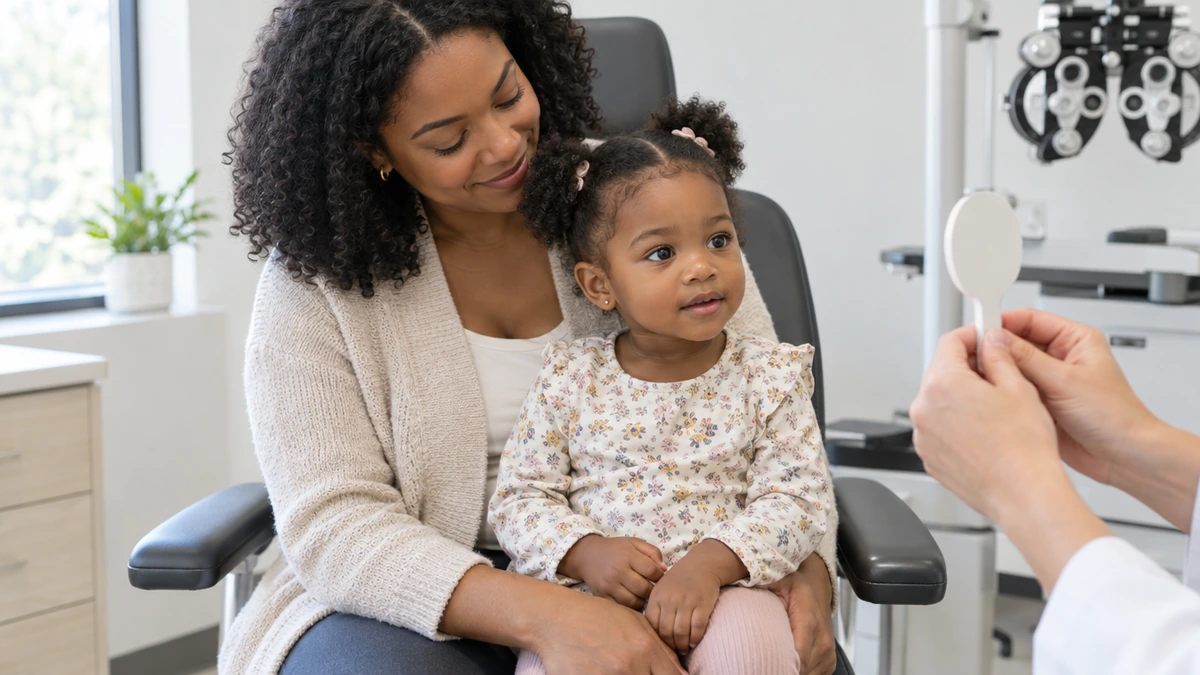
    Toddler on her motherโ€™s lap watching a toy during an exam for crossed eyes in children
    The examination approach adapts to your childโ€™s age and cooperation.

    A comprehensive eye exam looks beyond the photograph. The American Academy of Ophthalmology describes an assessment of your child’s history, visual acuity or fixation, eye movements, alignment, binocular vision, refraction and eye health. Refraction measures the focusing prescription, while binocular testing examines how the eyes work together. The approach adapts to your child’s age and cooperation.

    Your history speeds everything up. Bring past results, any screening note, current glasses and every treatment already prescribed. Note whether relatives have had an eye turn or childhood vision treatment. At a Las Vegas preschool pickup, you might notice the turn while your child looks up from fastening a backpack. That ordinary detail belongs in our conversation, even without a photograph.

    You deserve an explanation in everyday language. Before leaving, request the name of the finding, the next step and the reason for any referral. Use what to expect at a child’s first examination for general visit preparation. Here, keep your questions focused on alignment and vision in each eye.

    How Is Strabismus Related to Lazy Eye?

    Your child’s eye position and vision are separate findings. Strabismus describes misalignment, while amblyopia, often called lazy eye, describes a problem with vision development. Misalignment is one possible cause of amblyopia. That connection is why an eye turn deserves more than a comment about appearance.

    Two words, two jobs. Your child’s plan should say which one each step treats: the turn, the lazy eye, or both. My lazy eye guide explains the vision-development side in more detail. I want you to understand the reason for each step before you leave.

    What Treatments Help Crossed Eyes in Children?
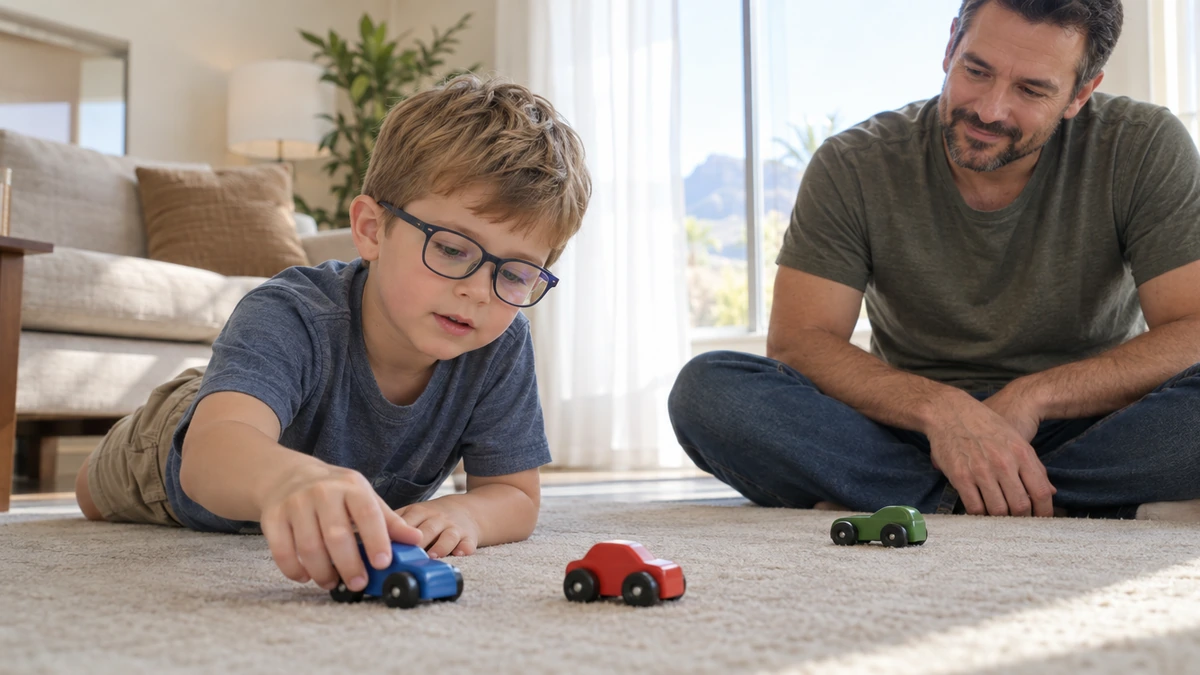
    Boy wearing glasses and playing with toy cars, illustrating care for crossed eyes in children
    A boy in new glasses plays with toy cars while his father watches.

    The treatment follows the type. Prescription glasses help align some children’s eyes, and a pediatric ophthalmologist performs eye muscle surgery when indicated, as the American Academy of Ophthalmology explains. Surgery does not replace glasses or patching when these are also prescribed for your child. When your child needs eye muscle surgery, I refer you to a pediatric ophthalmologist and coordinate the care around it.

    Glasses and Patching Have Different Jobs

    Glasses address the focusing prescription. In some forms of inward crossing, correcting that prescription also improves alignment. Your child’s examination determines whether this approach fits. Get clear instructions about when to wear the glasses and when to return.

    Patching treats the lazy eye that a turn can cause, and my lazy eye guide covers how it works. Your instructions should make the purpose of patching clear. Discuss resistance or missed sessions at follow-up before changing the prescribed plan.

    Make Shared Care Clear

    Two doctors, one plan. Co-management means your optometrist and your child’s pediatric ophthalmologist share the work, and you always know who handles what. I explain my part in your child’s care and the reason for an ophthalmology referral. Before you leave, we should be clear about who handles glasses, who directs any patching and who reviews surgical decisions.

    How I Approach Your Child’s Eye Turn at Vision by Amel
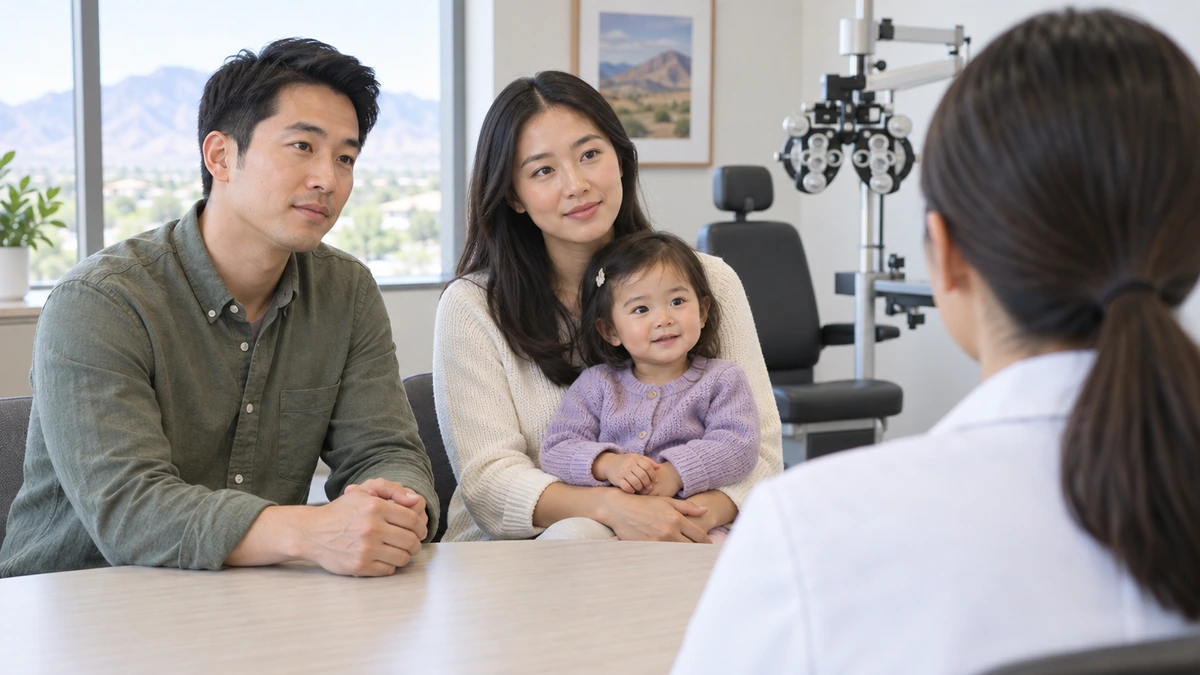
    Parents and toddler talking with an eye doctor about crossed eyes in children
    Parents talk through their toddler's eye exam with an eye doctor.

    Bring me the photo that worried you. I look at the turn you saw, then I check how each eye sees and how both eyes work together. I am Dr. Amel Youssef, your optometrist at Vision by Amel. My pediatric eye exam process includes patient history, digital diagnostics, an evaluation of binocular vision and a plan.

    A Sunday visit at Festival Plaza should leave you with a clear next step. Picture sitting beside your child while we go over the photo saved on your phone, then naming the question you most want answered. Is the eye turning, does each eye see well, or is an ophthalmology referral needed? Those questions guide our discussion.

    My team offers eye care in Downtown Summerlin at 2010 Festival Plaza Dr, Suite 195, Las Vegas, NV 89135. You need no referral to book an eye exam. For questions about insurance, call before the visit so my team has time to verify your benefits by phone. Share any existing ophthalmology appointment when arranging the visit.

    Frequently Asked Questions About Strabismus in Children

    Should I Cancel If My Child’s Eyes Look Straight Today?

    Keep the appointment and explain what changed. Your observations from other days still belong in the history, especially when the original concern was an intermittent turn. Show me both the concerning pictures and a note about the days you saw no turn.

    Will My Child Grow Out of Crossed Eyes?

    No, your child will not outgrow true strabismus. Some babies only look cross-eyed because of the shape of the nose bridge or nearby skin folds, and they sometimes outgrow that appearance, called pseudostrabismus. An exam distinguishes the two. Strabismus usually shows up in babies and young children, most often by age 3, says the AOA.

    What Is the Difference Between Esotropia and Exotropia?

    Esotropia means your child’s eye turns inward, while exotropia means it turns outward. Upward and downward misalignment are called hypertropia and hypotropia. An outward drift that appears when your child is tired or sick fits the intermittent pattern, with straight-looking eyes at other times.

    Can Crossed Eyes Cause Lazy Eye?

    Yes, an eye turn sometimes leads to amblyopia, or lazy eye, as vision develops. With esotropia, your child also risks losing stereopsis, or 3-D vision, and the ability to use both eyes together, according to AAPOS. That is why the assessment looks at vision and how the eyes work together as well as their position.

    Does My Child Need Surgery for Crossed Eyes?

    Not always: some inward crossing improves with glasses, and prisms are another treatment option for certain types of strabismus. Your child’s findings determine whether a pediatric ophthalmologist recommends surgery, which does not replace prescribed glasses or patching. The American Academy of Ophthalmology says most children resume routines in about 2 to 3 days after surgery. Follow your child’s surgical team’s instructions about returning to preschool and play.

    Book My Eye Exam Call (702) 858-4362

    Like this article? Add Vision by Amel as a preferred source, and you are more likely to see our articles in Google’s Top Stories.

    Add as a preferred source on Google

  • Signs Your Child Needs Glasses: A Las Vegas Parent’s Checklist

    Signs Your Child Needs Glasses: A Las Vegas Parent’s Checklist

    Signs Your Child Needs Glasses: A Las Vegas Parent’s Checklist

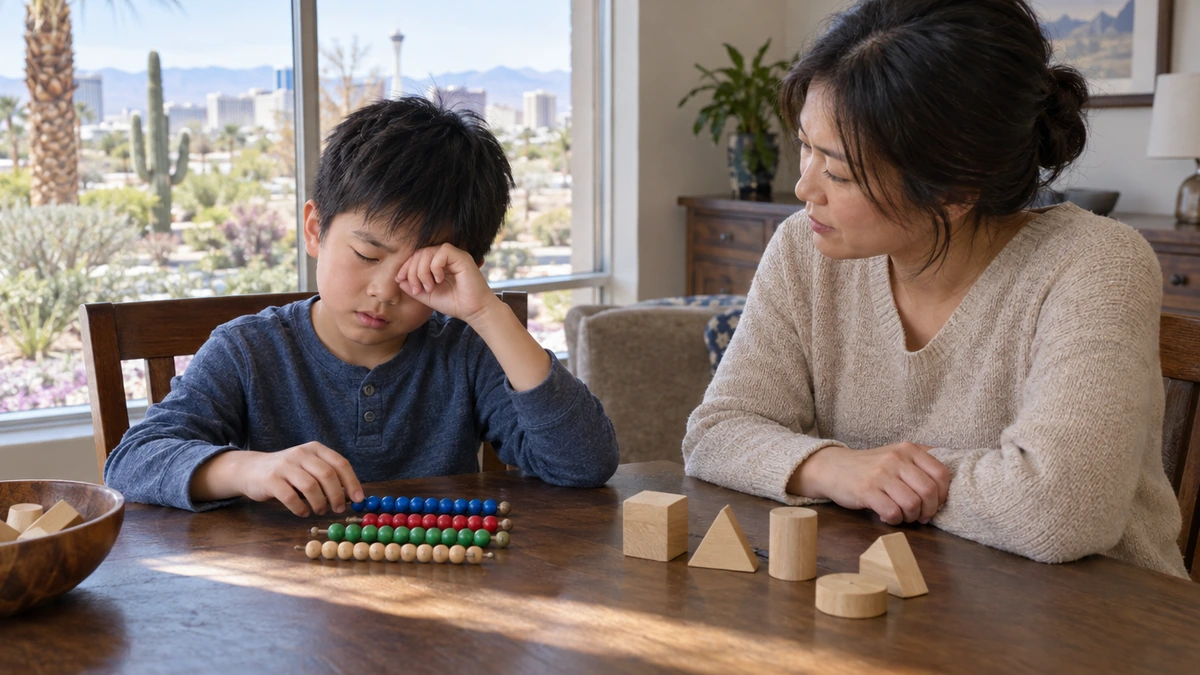
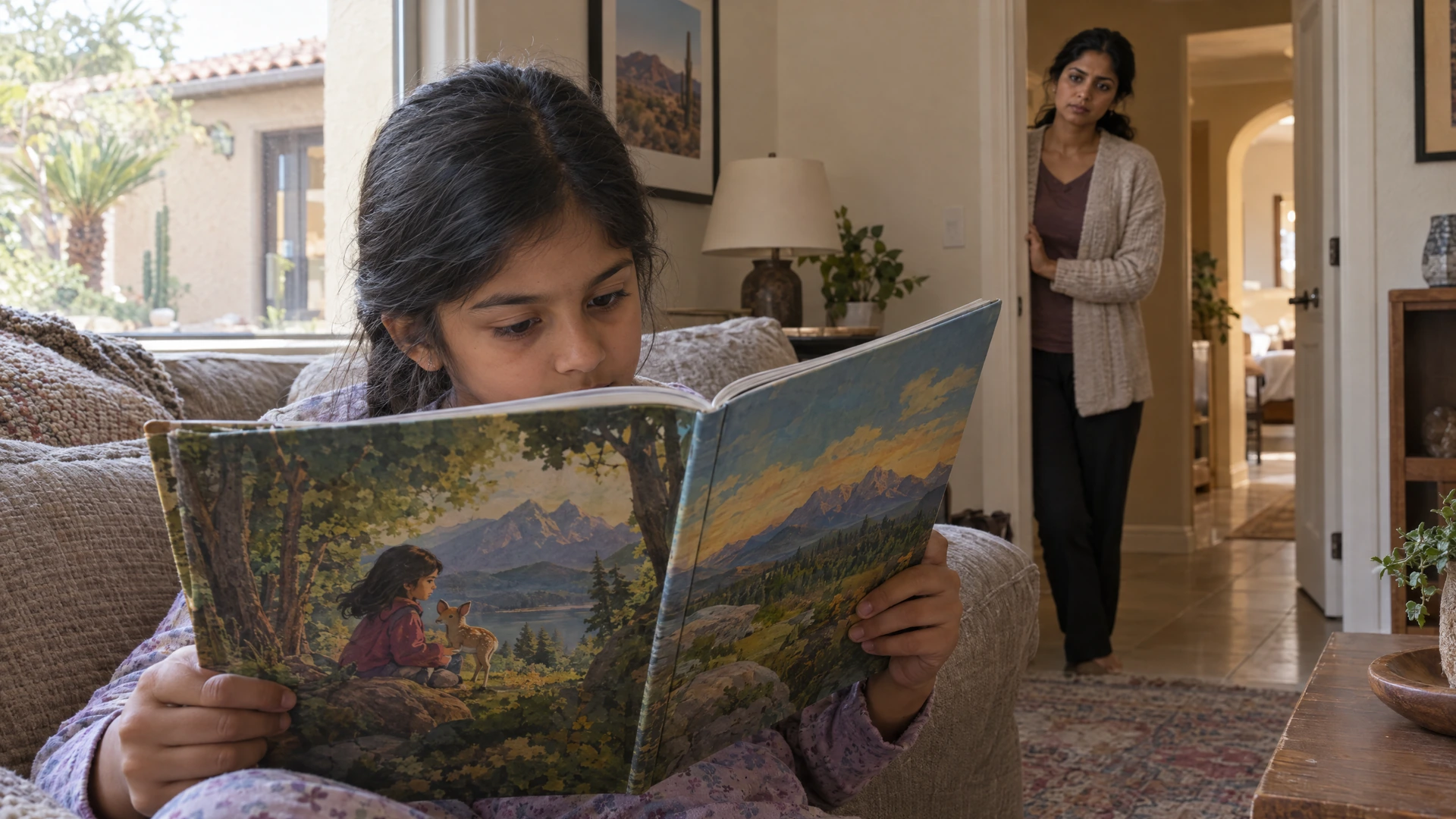
    South Asian girl holding a picture book close as her mother watches from a doorway, signs your child needs glasses

    TLDR: Common signs your child needs glasses include squinting, holding books close, tilting the head and avoiding reading. Book an eye exam to find out what those habits mean for your child. Start with the behavior you notice, then let the findings guide the prescription.

    Answer: For parents in Las Vegas, repeated squinting, eye rubbing, headaches during schoolwork, covering an eye and losing place while reading are reasons to arrange a comprehensive eye exam. As your child’s optometrist, I check the cause before recommending glasses. An eye turning inward or outward also needs attention, even when your child reports clear vision.

    Your second grader squints at the whiteboard. Back home in Summerlin, a picture book comes close enough to hide their face. When these habits interrupt the school day or bedtime reading, move children’s vision up your list.

    I reviewed 73 primary sources across five research lenses for this guide, and a child with a vision problem does not always report difficulty seeing. Your notes hand me a head start before the exam even begins. My eye exams in Downtown Summerlin start with patient history, so tell me what caught your attention.

    What Are the Signs Your Child Needs Glasses at Different Ages?

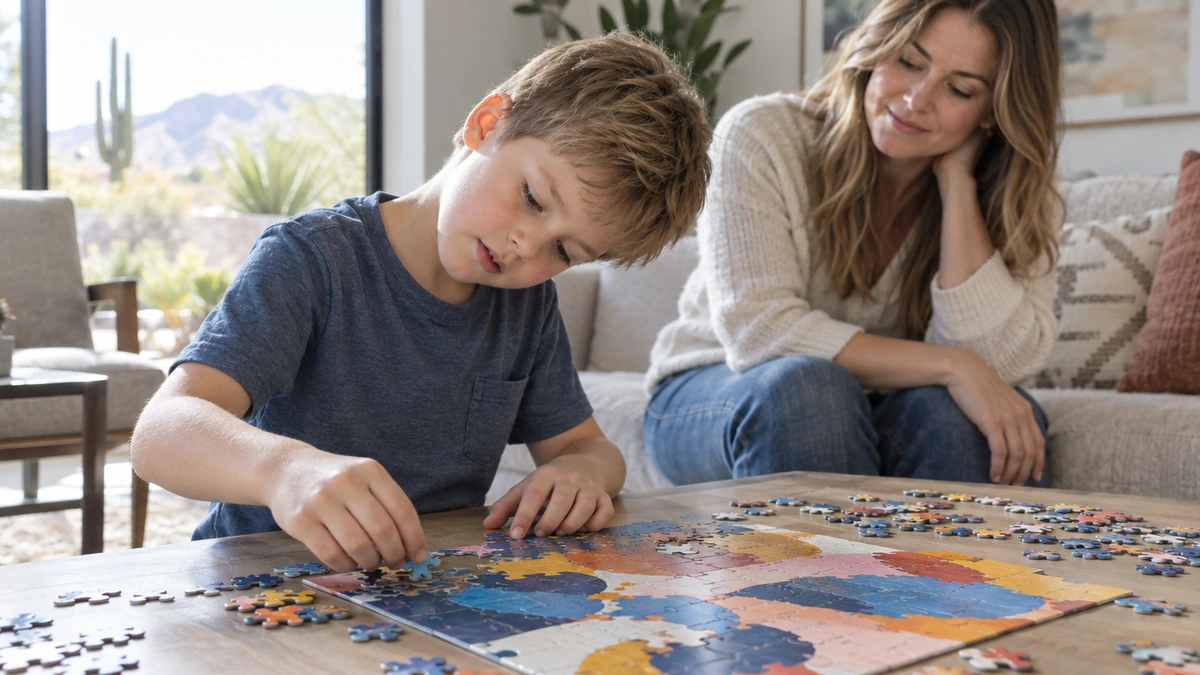
    White boy tilting his head while fitting a puzzle piece, signs your child needs glasses
    Include head tilting in your observation notes.

    Watch the everyday moments. The American Optometric Association lists close viewing, squinting, head tilting and avoiding puzzles among preschool warning signs, and notes amblyopia sometimes develops without noticeable signs. Your child’s puzzle abandoned on the coffee table deserves a closer look before anyone calls it laziness.

    StageWhat You Might NoticeDetails Worth Sharing
    Preschool playA book held close, a tilted head, covering an eye or avoiding coloring and puzzlesThe activity, head position and whether the behavior repeats
    Early elementary schoolSquinting toward the board, rubbing eyes during homework or losing place while readingWhether the trouble happens looking across the room or down at a page
    Older school childrenHeadaches with schoolwork, reading avoidance, visual fatigue or reports of double visionWhich tasks bring on the discomfort and what makes the child stop

    Use this table as your watch list. It tells you what to look for. The exam tells you what it means.

    Notice the pattern without staging a test. During an ordinary evening at home, does your child pull the book closer, cover an eye or leave the puzzle unfinished? Describe the moment as it happened, including whether you have seen it before. There is no need to repeat an uncomfortable task for proof.

    I treat a repeated squint as a reason to investigate. The prescription comes from the exam. You have already done something useful by noticing the change and arranging a visit.

    Which Signs Your Child Needs Glasses Show Up in Class?

    East Asian boy rubbing one eye during homework by a window, signs your child needs glasses
    Describe when eye rubbing interrupts homework.

    Look beyond the report card. The AOA school-age guidance includes headaches, eye rubbing, reading avoidance, double vision and losing place, and explains children sometimes assume everyone sees as they do. Your child’s silence proves nothing. Watch what they do, not what they say.

    Compare the whiteboard with the homework page. Trouble copying from across the classroom and rubbing eyes over a book are different details for me to hear. Bring the teacher’s words and your own. Leave the diagnosis to the exam.

    Does Reading Trouble Mean a Learning Disability?

    Treat reading trouble and vision as two separate questions. Chase both answers. The AAP, AAO, AAPOS and AACO joint statement explains vision problems sometimes interfere with learning but do not cause dyslexia or other learning disabilities. Your child’s eye findings and educational assessment serve different purposes.

    Keep educational support moving while you arrange the visit. Describe whether your child struggles to see the page, recognize words or understand a passage. Glasses help your child see the page. Reading support helps them read it. Chase both.

    What Do an Eye Turn or Other Red Flags Mean?

    Report an eye turn when you arrange care. An eye turning inward or outward is called strabismus, while amblyopia, often called lazy eye, involves reduced vision developing in childhood. The National Eye Institute emphasizes starting amblyopia treatment early. Give your child’s eye alignment attention even when seeing seems easy to them.

    Tell me when the turn appears. You might notice it during reading, while your child looks across the living room or during several different activities. I check binocular vision as part of my evaluation and explain the findings alongside the rest of the exam. Your job is to describe what you see.

    A White Pupil Needs Immediate Attention

    A white pupil or white pupil reflection in your child’s photograph needs action right away because AAPOS warns it sometimes signals serious disease. Call your child’s eye doctor or pediatrician today and say the words “white pupil” to arrange an immediate eye assessment. Do not wait for a routine appointment. Skip further photo checks and seek care now.

    How Do You Help Your Child Wear New Glasses?

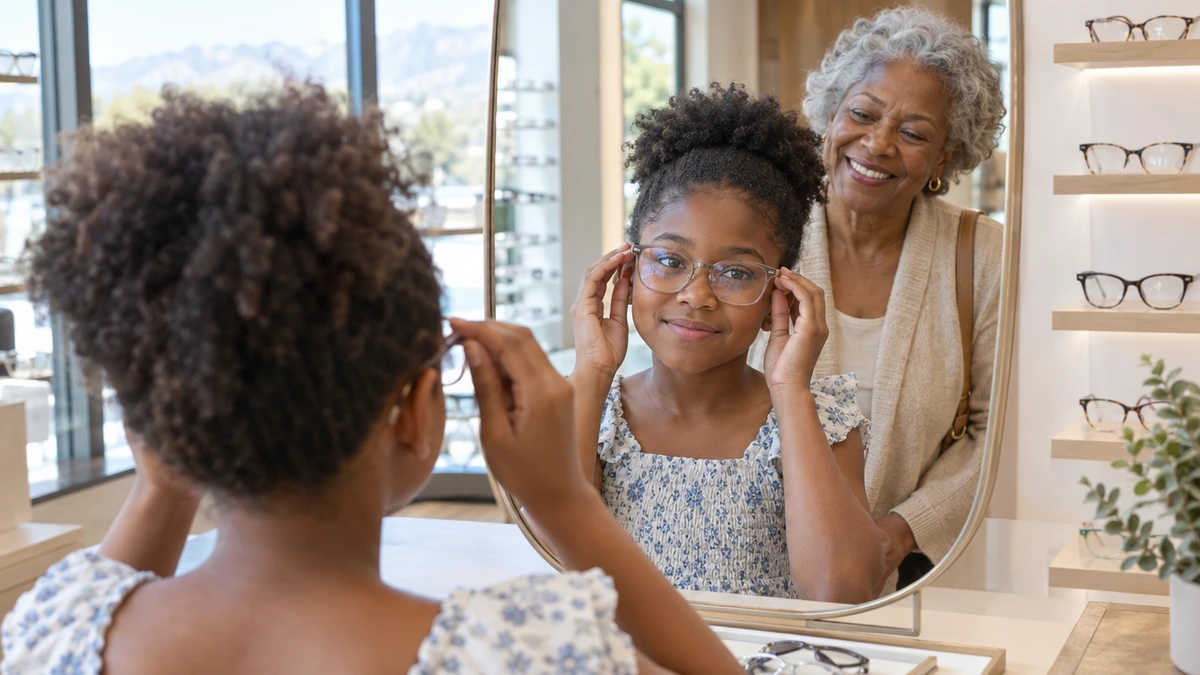
    Black girl trying on glasses in a mirror with her grandmother, signs your child needs glasses
    Ask your child how the new frames feel.

    Fit first, color second. Ask your child what presses, slips or pinches before anyone mentions purple frames. For everyday glasses, AAPOS fitting guidance recommends polycarbonate lenses and frames with eyes centered in the lenses, clear of cheeks and eyelashes. Have whoever fits the glasses show you those checks on your child’s face.

    Give adjustment time and a clear follow-up point: AAPOS says most children adjust within two weeks, and a prescription recheck may be needed when resistance continues after a few weeks. Some children need longer. Call my team to review the fit and prescription when your child keeps fighting the glasses. Pain or a pinching frame deserves a call sooner.

    I put comfort ahead of coaxing. A complaint about the frame deserves attention before another reminder to wear it. You learn more by finding the spot behind the ear that pinches than by debating whether the glasses look nice.

    1. Start with the fit. Have whoever fits the glasses adjust slipping frames or pressure points before you settle on a pair.
    2. Give your child a choice among suitable frames, then confirm the impact-resistant lens recommendation.
    3. Get the prescribed wear schedule from me so you know when the glasses belong on.
    4. Choose a regular place for the case when the glasses come off, away from the rush of backpacks and shoes.
    5. Encourage wearing the glasses and report persistent resistance so I know the plan needs another look.

    Make the morning routine practical. Before the Las Vegas school run, backpacks loaded and breakfast unfinished, check where the glasses belong under the prescribed schedule. Give your child a calm reminder and time to describe discomfort. A rushed departure is a poor moment to settle a fit problem.

    Make the next conversation specific. Tell me whether your child pushes the frames up, points to a sore spot or takes them off during a particular activity. Mention what happens with the glasses on as well as off. Those details help us address the complaint without turning every removal into an argument.

    Are Everyday Glasses Enough for Sports?

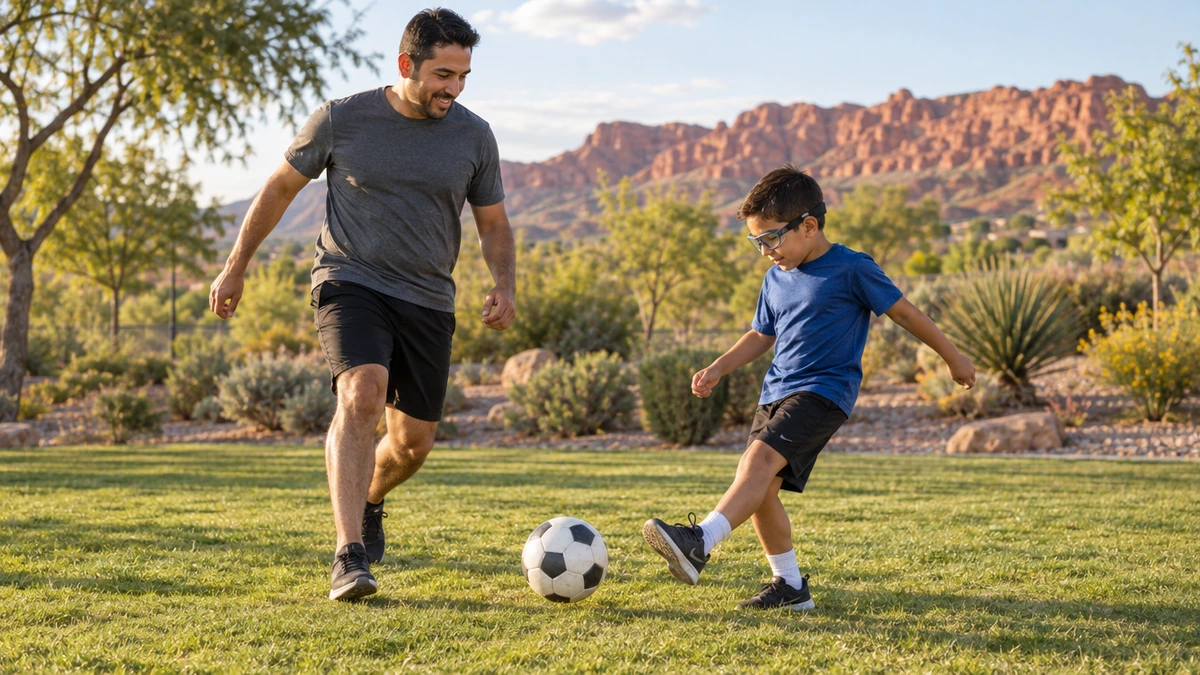
    Latino father and son kicking a soccer ball, boy wearing sports glasses, signs your child needs glasses
    Ask about protection matched to your child's sport.

    Everyday glasses are not soccer gear. Before your child’s next practice at a Summerlin park, follow Prevent Blindness guidance to choose sport-specific protective eyewear with polycarbonate lenses meeting the applicable ASTM standard. Bring the sport and the prescription when you shop for the protector.

    What Should You Do Before the Appointment?

    Give me the reason for your visit. A brief account of the squinting, reading trouble or frame discomfort gets us started. For a school referral, my guide to school screening and comprehensive exams explains what the screening result means and how to follow through.

    What I Check When You Report Squinting at Vision by Amel

    When you report squinting, I measure refraction, check whether both eyes team up and assess your child’s eye health in the same visit. Bring the concern back into the conversation as we discuss the findings. Keep asking until you understand what they mean for the moment that worried you.

    Use your pediatric eye exam to get the next step clear. Does the plan call for glasses, and when should your child wear them? Before you leave, confirm which changes to report and when to follow up.

    Make room for eye care in your school-week plans in Downtown Summerlin. Choose a visit you will be able to attend without rushing through the conversation. Keep your main concern in view from the first question to the last.

    Frequently Asked Questions About Signs Your Child Needs Glasses

    Will Glasses Make My Child’s Eyes Weaker?

    No, AAPOS explains glasses do not weaken your child’s eyesight or create dependence. Going without prescribed glasses sometimes harms normal vision development. I will explain the purpose of your child’s prescription so you understand why the wear schedule matters.

    What Should I Ask If My Child Already Has Glasses?

    Tell me whether your child’s symptoms happen with the current pair on, off or both. Use the pair worn at school for the discussion, including any bent or damaged frame. We will review the fit and prescription alongside the symptoms instead of assuming every complaint means stronger lenses.

    How Do I Get My Toddler to Keep Their Glasses On?

    Keep encouragement positive and check comfort first. AAPOS suggests books about children wearing glasses and family members modeling comfortable wear to help your toddler accept them. When slipping gets in the way, discuss a retaining strap or silicone temple tips with whoever fits your child’s glasses.

    Do I Need a Referral, and Does Vision by Amel Accept Nevada Medicaid?

    You do not need a referral for an eye exam at Vision by Amel, and we accept Nevada Medicaid. Give my team your plan details when you book online or call. We will help you check which benefits apply to the exam and any prescribed eyewear.

    What Should I Tell a Grandparent Who Helps With Glasses?

    Share your child’s prescribed wear schedule and the office contact information. Explain which concerns I want to hear about, including uncomfortable frames or continued resistance. Have the grandparent pass those concerns to you so we address them together before anyone changes the schedule.

    Book My Eye Exam Call (702) 858-4362

    Like this article? Add Vision by Amel as a preferred source, and you are more likely to see our articles in Google’s Top Stories.
    Add as a preferred source on Google