Tag: tear film

  • Dry Eye After LASIK or Cataract Surgery: What to Expect
    Dry Eye After LASIK or Cataract Surgery: What to Expect

    Dry Eye After LASIK or Cataract Surgery: What to Expect

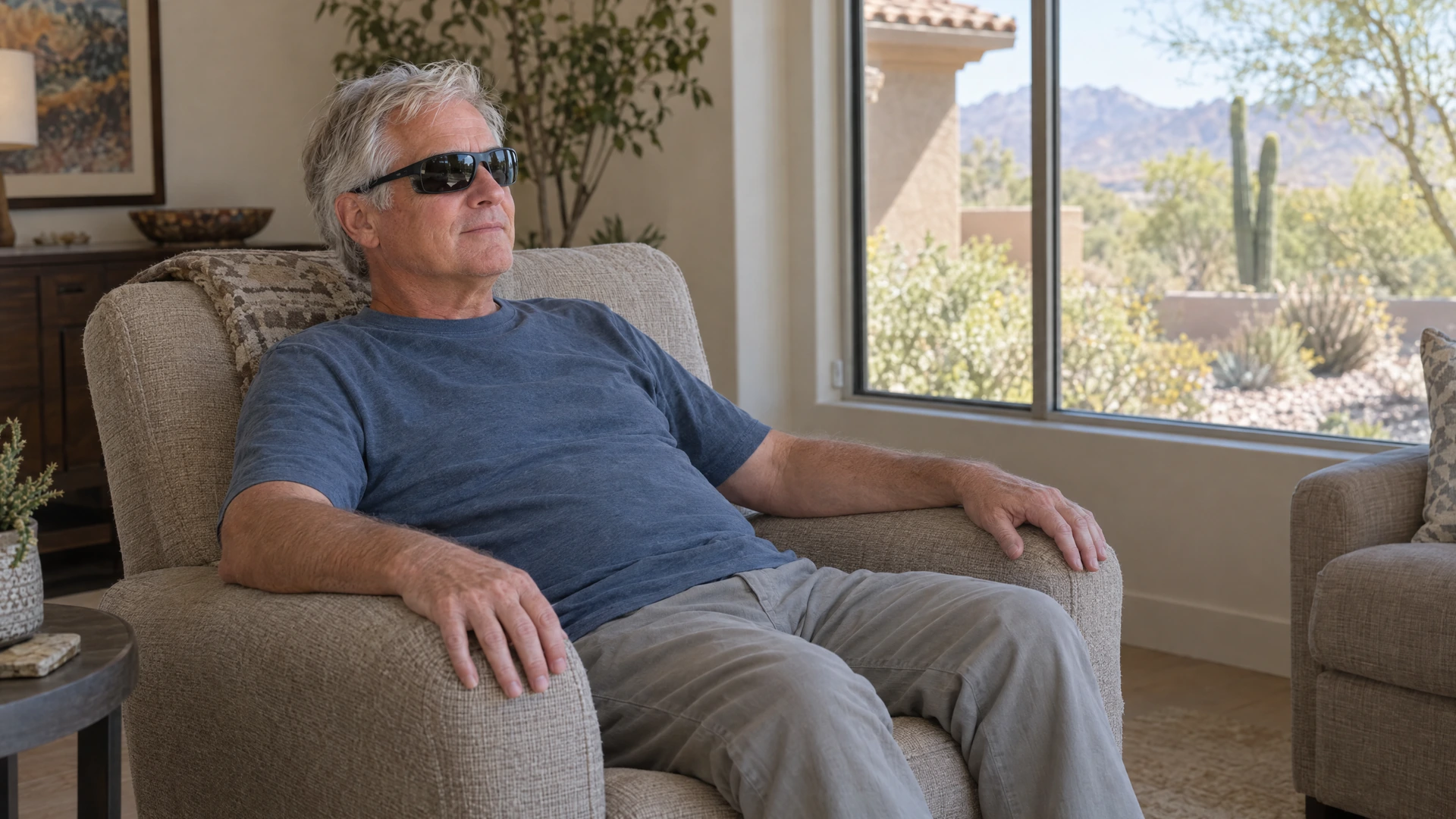
    White man wearing protective sunglasses in an armchair at home, dry eye after LASIK recovery

    TLDR: Your dry eye after LASIK or cataract surgery often improves as you heal, but some symptoms last longer. Follow your surgeon’s recovery plan, address dryness before surgery, and call the surgeon right away for postoperative warning signs.

    Answer: Dryness after LASIK or cataract surgery is common because surgery affects the eye’s surface and its nerves. Your recovery needs a plan for drops, follow-up visits and symptoms worth reporting. In Las Vegas, I help you address the tear film before and after surgery through co-management, while your surgeon performs the procedure and directs surgical recovery.

    You expected crisp, easy sight. Instead you sit at your kitchen table in Summerlin, recovery sheet beside your coffee, eyes gritty by 8 am. The surgery went well. Your comfort still counts, and it goes on the agenda at your follow-up visit.

    Your dry eye history belongs in the conversation before an operation, too. I reviewed 123 primary sources across five research lenses for this guide, and treating the eye’s surface before surgery supports surgical planning. My approach to dry eye care starts with the cause of your symptoms. For the broader range of dry eye treatment options, read my Las Vegas treatment guide.

    Why Does Dry Eye After LASIK or Cataract Surgery Happen?
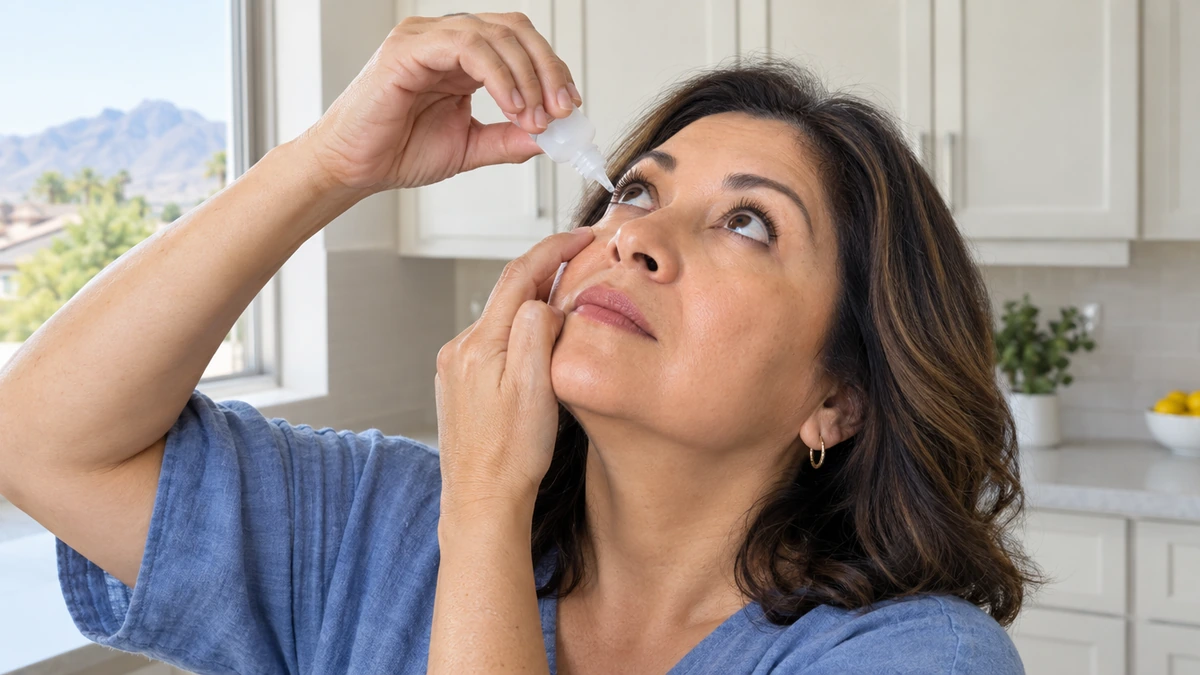
    Latina woman applying an eye drop in a bright kitchen, dry eye after LASIK care
    A woman puts in an eye drop in her bright Summerlin kitchen.

    Surgery touches the corneal nerves that help run your tear film. The 2017 TFOS DEWS II report links temporary dryness after LASIK to effects on corneal nerves and describes cataract surgery as a trigger for new or worsened dryness. The cornea is the clear front surface of your eye. Surgery affects more than the part responsible for your glasses prescription.

    Start with what changed for you. Did the grit arrive with surgery, or was it already part of your day? Does one eye feel worse than the other? Show me every drop you use, even the bottle you grabbed at the pharmacy, and your recovery plan gets the full picture.

    How Long Does Dry Eye After LASIK or Cataract Surgery Last?

    You need a useful expectation, not a countdown. Early discomfort, changing vision and persistent dryness describe different parts of recovery. Read the time frames below as patterns from published guidance. Your follow-up examination decides what needs to happen next.

    ProcedureWhat the Evidence SaysWhat It Means for You
    LASIKThe American Academy of Ophthalmology says almost everyone has dryness and fluctuating vision right afterward, usually fading within a month, though symptoms sometimes last longer or remain.Report persistent symptoms at follow-up rather than treating the usual recovery window as a deadline.
    Cataract surgeryThe AAO cataract guide describes some dryness in almost all patients, says the small corneal nerves generally heal in about three months, and says artificial tears without preservatives help mild dryness.Nerve healing and comfortable vision do not follow an identical schedule for every person.

    Those patterns come with real numbers. In the PROWL studies run by the U.S. Food and Drug Administration, up to 28% of people with no dry eye symptoms before LASIK reported symptoms three months after surgery. That figure counts new symptoms at three months, not permanent dry eye. After cataract surgery, the AAO dry eye guideline reports that about one person in three still has symptoms past the usual three-month recovery. I would rather hear what interrupts your day than have you struggle to choose a medical term.

    A quiet morning does not settle every question. At home in Las Vegas, you might feel comfortable over breakfast, then struggle to read the grocery list while seated in a parked car before leaving for errands. Describe both situations at your visit, including whether a vent was blowing toward your face. My guide to Las Vegas air and dry eyes covers the everyday environment in more detail.

    Why Treat the Tear Film Before Surgery?

    Eye doctor seen from behind consulting with a Black man and his wife, dry eye after LASIK planning
    A man and his wife talk with an eye doctor, seen from behind.

    Your surgical plan starts before the procedure. The same TFOS DEWS II report recommends treating ocular surface disease before cataract surgery to support the measurements used to choose lens implant power. Ocular surface means the eye’s exposed surface and its tear film. Getting it ready is part of planning for sight.

    I consider surface preparation part of responsible surgical planning. For you, that means making room for treatment and reassessment before committing to a schedule. Discuss who will check the surface again and who will decide when the measurements are ready. Leave with a next step you understand.

    Your preparation should reflect your eyes. Share previous trouble with contact lenses, your current drop routine, and any treatment for meibomian gland dysfunction or blepharitis. Use the names on your medication list rather than relying on bottle colors. Let the surgeon decide which treatment to use and how long to use it before measurements.

    How Should You Care for Your Eyes During Recovery?

    East Asian woman resting with eyes closed beside a glass of water, dry eye after LASIK recovery
    A woman rests on her sofa, eyes closed, a glass of water beside her.

    Your written surgical instructions come first. For cataract recovery, the AAO recovery guide advises a new sterile bottle of lubricant drops, at least five minutes between lubricants and prescription drops, and waiting a week before warm compresses or lid scrubs. Those lid treatments put pressure on the eye and risk spreading bacteria. Confirm the restart date with your surgeon before resuming your usual eyelid hygiene routine.

    1. Check the plan before using a bottle. Match each medication to the correct eye, dose and schedule on your surgical instructions.
    2. Separate comfort drops from prescribed recovery medicines. Get the surgeon’s approval for any lubricant you want to add.
    3. Jot down missed doses, trouble getting drops in and any symptom that interrupts your day.
    4. Attend the planned follow-up visits. Call the surgical team right away for any warning sign in the next section, and before your next visit for a recovery problem you do not understand.

    Make the routine workable at home. Set your instructions where you use your drops, and have a family member read them with you when the schedule feels confusing. A bottle from an earlier procedure belongs in the conversation before it goes into your eye. Resolve uncertainty before the next dose is due.

    Resist the urge to experiment. Rest your eyes when a task wears on them, then tell me about it at follow-up. One change at a time, cleared by your surgical team, keeps your recovery easy to read. A clean record gives you and me a plan we trust.

    Which Changes Need Your Surgeon Right Away?

    Call your surgeon right away after cataract surgery for extreme light sensitivity, for redness that comes with pain, light sensitivity or a change in vision, or for a burst of floaters, flashes, or a shadow or curtain in your side vision. The AAO cataract guide lists those signs, and the National Eye Institute adds vision loss, bad pain that medicine does not relieve and very red eyes. After LASIK, call your surgeon right away for any warning sign on your own recovery sheet. Extra lubricant drops never stand in for that call.

    Your call needs the essential facts. State which operation you had, which eye is affected and when the change began. Read the symptom list from your recovery sheet if you are struggling to describe the problem. Reach the surgical team before returning to your errands.

    How I Approach Your Care Before and After Surgery

    South Asian man reading a hardcover book by a window, dry eye after LASIK follow-up context
    A man reads a hardcover book by a sunny window.

    You should know who handles each part of your eye care. I am Dr. Amel Youssef, an optometrist, and I provide surgical co-management at Vision by Amel. I do not perform LASIK or cataract surgery. Your surgeon performs the operation and directs the surgical recovery plan.

    At your eye exam, bring the surgical instructions, your medication list and the questions you want answered. My role includes dry eye care before and after surgery, with a plan suited to your eyes. My team and I help you understand that plan alongside your surgical instructions. Clear responsibilities make recovery easier to follow.

    My office sits at Festival Plaza in Downtown Summerlin, 2010 Festival Plaza Dr, Suite 195, Las Vegas, NV 89135. You need no referral for an exam. When booking, tell my team whether you are preparing for surgery or seeking follow-up care. Read about our medical eye care services, then book online or call.

    Frequently Asked Questions About Dry Eye After Surgery

    Will LASIK Make My Eyes Dry?

    Almost everyone has dry eyes and shifting vision right after LASIK, the AAO LASIK guide says, and those symptoms usually fade within a month. Dryness you already have going in sometimes gets worse afterward. That is why I want your surface checked and treated before you pick a surgery date.

    Is Dry Eye After Surgery Permanent?

    Usually not. Early dryness after LASIK usually fades, though for some people it lingers or stays, per the AAO LASIK guide. The TFOS DEWS II report advises continuing dry eye treatment for at least six to eight months after refractive surgery, a management plan rather than a deadline for your recovery.

    Why Should I Treat Dry Eye Before Cataract Surgery?

    Because the AAO dry eye guideline says every patient having cataract surgery should be checked and managed for dry eye before and after the operation. A calm, healthy surface supports more reliable planning, and your surgeon picks the treatment and its timing. Through co-management, I help you follow that plan.

    Is PRK or LASIK Better If I Have Dry Eyes?

    You should not choose between them on a dryness promise. The TFOS DEWS II report found conflicting studies on which procedure produces less dry eye. One rule holds either way: the AAO dry eye guideline calls uncontrolled dry eye a reason not to have laser vision surgery, so your surface comes first.

    Which Eye Drops Can I Use After Surgery?

    Use only the drops your surgical team has cleared. For comfort drops during recovery, the AAO lubricant guide points you to drops without preservatives, to lower the risk of toxicity, and to thinner liquid drops that blur less. After cataract surgery, open a brand-new sterile bottle and space it at least five minutes from your prescription drops.

    Book My Eye Exam Call (702) 858-4362

    Like this article? Add Vision by Amel as a preferred source, and you are more likely to see our articles in Google’s Top Stories.


    Add as a preferred source on Google

  • Contact Lenses When You Have Dry Eyes: What Can Help

    Contact Lenses When You Have Dry Eyes: What Can Help

    Contact Lenses When You Have Dry Eyes: What Can Help

    Black woman pausing beside an edge-on laptop by a window, contact lenses for dry eyes

    TLDR: Choosing contact lenses for dry eyes starts with your symptoms, lens fit and wearing routine. A different lens, shorter wearing time or compatible drops are options to discuss at your visit. Remove your contacts and call an eye doctor right away for redness, pain, irritation or blurred vision while wearing them.

    Answer: Contact lenses for dry eyes need an individual plan. In Las Vegas, I review your lens material, fit, replacement schedule and care solution alongside your symptoms. Daily disposables and breaks in glasses are options. Use only drops approved for contact lens wear with lenses in, and have persistent discomfort assessed before extending your wearing time.

    It is 4 pm at your home desk in Summerlin. The laptop is still open, dinner is an hour away, and your contacts feel gritty and tight. Your glasses sit across the room. That exact hour is the most useful clue you bring to your eye exam.

    As your optometrist, I want to understand the whole day you spend in lenses. I reviewed 123 primary sources across five research lenses for this guide, and contact lens discomfort has several possible causes beyond the lens itself. The TFOS contact lens discomfort report explains why your symptoms call for a look beyond the lens. My approach to dry eye treatment starts with that distinction, which also guides our dry eye care.

    Why Do Contact Lenses Feel Dry?

    White man holding a plain lens case and bottle at a bathroom counter, contact lenses for dry eyes
    A man holds his lens case and a plain bottle at the bathroom counter.

    Pin down your pattern first. Does the lens scratch the moment it goes in, or does comfort fade after lunch? Both eyes or one? Glasses days too? Your answers point me to the lens, the tear film or both.

    Lens discomfort and dry eye disease overlap, but feeling dry does not establish a diagnosis. The TFOS report links discomfort with changes in the tear film, including reduced stability and faster evaporation. It also identifies other sources of symptoms, including eyelid disease, allergies and medicines. Your lens is part of the picture.

    Your bathroom counter tells me the rest. Show me the lens box, the solution in your case and every bottle of drops you reach for. When did you open this pair, and when does it get replaced? Plain answers beat any guess at a diagnosis.

    Which Contact Lenses for Dry Eyes Are Worth Discussing?

    Clinician hands showing a lens to a Latina woman at a fitting, contact lenses for dry eyes
    An eye doctor's hands show a contact lens to a woman at her fitting.

    A useful lens change has a purpose. The TFOS clinical summary lists material, wearing schedule, care solution, replacement frequency and design among options for managing your discomfort after other causes are assessed. These options have variable results. The table shows what each discussion covers.

    OptionWhat ChangesWhat to Discuss
    Lens materialA different material and surfaceHow the proposed lens differs from your current one
    Daily disposablesA fresh lens for each day of wearWhether moving away from a reusable lens routine suits you
    Wearing scheduleLess time with lenses on your eyesWhich parts of your day work well in glasses
    Fit and designThe way the lens sits and interacts with your eyeWhether the current lens needs a fitting review
    Care solutionThe care products used with reusable lensesWhich system matches your prescribed lenses
    Replacement frequencyWhen you discard a lens and open anotherWhether your actual routine matches the prescribed schedule

    Give every lens change one clear target: comfort through the afternoon meeting, then glasses for the evening. Your follow-up runs on specifics, such as which activity made the new lens fade, not a verdict on the whole week.

    I would rather build your lens plan around a comfortable day than chase the longest wearing time. Your work, errands and evenings shape that plan. Describe the activities for which you prefer contacts and the times glasses suit you well. That gives the fitting conversation a practical goal.

    Which Drops Belong With Your Contact Lenses?

    Read the bottle before using it. The American Optometric Association says to use only eye drops approved for contact lens wear while your lenses are in and to avoid redness-relief drops with lenses. A bottle labeled artificial tears still needs a contact lens compatibility check. The words on the label matter more than the size or shape of the bottle.

    Rewetting drops are a comfort option with uncertain benefit. A Cochrane review found very low-certainty evidence of improvement over no drops and no clear advantage over saline in short trials, leaving long-term benefit and safety uncertain for your decision. Treat that uncertainty as a reason to review the full lens plan when discomfort persists. Repeated dosing should not become your way of extending an uncomfortable day.

    Your cleaning solution has a separate job. Rewetting drops and saline do not disinfect lenses, as the AOA lens-care guidance explains. Follow the care system prescribed for your reusable lenses. Set the bottles side by side at home and read their uses before your next lens-care routine.

    When Should You Switch to Glasses?

    Asian woman wearing glasses at an evening desk beside a closed lens case, contact lenses for dry eyes
    A woman in glasses sits at her desk at dusk, her lens case closed beside her.

    Give glasses a planned place in your day. The 2017 TFOS DEWS II report includes reducing wearing time or stopping lens wear among strategies with some evidence for lens-related dry eye. Discuss a shorter schedule when comfort repeatedly fades. The next step is a plan you follow, with a review of how your eyes respond.

    1. Have your glasses available before you put contacts in.
    2. Follow the wearing schedule agreed at your fitting, including the planned time to switch to glasses.
    3. Record discomfort and the activity underway when it starts.
    4. Arrange a review when the schedule no longer feels comfortable, and follow the urgent instructions below for warning signs.

    Your glasses are a tool, not a defeat. Close the lens case after a long Las Vegas workday, slip your glasses on, and finish the evening in comfort. Save your contacts for the hours you want them most: the client lunch, the pickleball game, the night out. You win the day when your eyes still feel good at 9 pm.

    How Do Screens and Desert Air Change Your Lens Day?

    Middle Eastern man walking in wraparound sunglasses in Downtown Summerlin, contact lenses for dry eyes
    A man in wraparound sunglasses walks through a Downtown Summerlin plaza.

    Screen hours and lens hours stack up on the same pair of eyes. My guide to screens, contact lenses and daily habits covers the blink facts, the monitor setup and the break routine, so this page skips them. Here, you track one number: the hour your comfort drops. That hour tells me more than a weekly average ever will.

    You finish laptop work, walk outside in Downtown Summerlin wearing wraparound sunglasses, then get into a car with air blowing toward your face. Each switch, screen to sunlight to car vent, tests your lenses in a new way. For the vents, wind and dry air themselves, read how Las Vegas air dries your eyes.

    When Should Your Lenses Come Out Right Away?

    Take your lenses out and call an eye doctor right away if your eye turns red and irritated, pain keeps building after the lenses come out, light starts to hurt, your vision blurs suddenly, or you notice unusual watering or discharge. The CDC lists these as signs of a possible contact lens infection. Do not wait for the next routine fitting. Tell the office you wear contacts and name the symptom when you call.

    These signs need an assessment. Contact lens wear raises the risk of keratitis, which is inflammation of the cornea, and infection is one cause. The CDC links infection risk with lenses worn too long or cared for incorrectly. Protect your eye health by acting on the symptoms, even when dryness has happened before.

    How I Approach Contact Lenses for Dry Eyes

    At Vision by Amel, your contact lens fitting is the place to discuss material, wearing schedule and fit. I fit lenses from daily disposables onward, and when your lenses fight your eyes, I change the material, the wear schedule or the fit. Tell me what you wear now and which part of the day has become difficult. Include the exact care products you use.

    Your eye care plan also depends on the eyes beneath the lenses. Depending on your eyes, your plan draws on artificial tears, prescription eye drops, warm compresses, eyelid hygiene or care for meibomian gland dysfunction and blepharitis. When your lids are part of the problem, my guide to meibomian gland dysfunction walks you through the oil glands. Your symptoms and exam findings guide those choices.

    Your fitting happens at 2010 Festival Plaza Dr, Suite 195, Las Vegas, NV 89135, in Downtown Summerlin at Festival Plaza. Book online or call (702) 858-4362 for an appointment. You do not need a referral for an eye exam. Mention contact lens discomfort when you book so the reason for your visit is clear.

    Frequently Asked Questions About Contact Lenses and Dry Eyes

    Why Do My Contacts Feel Dry by the End of the Day?

    You have plenty of company. The TFOS workshop estimated in 2013 that up to half of contact lens wearers feel lens discomfort at some point, and it links that discomfort with shorter wearing time and people giving up lenses altogether. Comfort that fades by evening points me to your tear film, your lens and your schedule together, so tell me the hour it starts.

    Can I Keep Wearing Contacts If I Have Dry Eye?

    You have options before you give lenses up. A shorter lens day, a different lens or a full pause from lenses all stay on the table, depending on what your exam shows. Severe dry eye changes the math: the AAO dry eye guideline warns it raises your risk of lens intolerance and lens complications.

    Do Daily Disposable Lenses Help Dry Eyes?

    They are an option worth discussing for your comfort. Daily disposables remove exposure to a reusable-lens care solution, but TFOS notes that the solution inside the blister pack itself is a possible source of discomfort. Report discomfort at insertion as well as discomfort later in the day.

    Does the Lens Material Matter?

    Material is one consideration in your fitting. TFOS cautions that material effects are difficult to separate from lens design and surface effects, so evidence does not establish a single best material. Compare the whole proposed lens and your response to it.

    Are Rewetting Drops Safe With Contacts, and Do They Work?

    Your lenses stay in only for a drop labeled for contact lens wear, and the AAO lubricant guide favors one without preservatives for that job. For any other drop, take your lenses out, wait five minutes, put the drop in, then give your eyes another 10 to 15 minutes before the lenses go back in. Track how long your relief lasts, because that number tells me whether the drop earns its place.

    Book My Eye Exam Call (702) 858-4362

    Like this article? Add Vision by Amel as a preferred source, and you are more likely to see our articles in Google’s Top Stories.
    Add as a preferred source on Google

  • Dry Eye Care in Summerlin: When to See an Optometrist

    Dry Eye Care in Summerlin: When to See an Optometrist

    Dry Eye Care in Summerlin: When to See an Optometrist

    South Asian woman rubbing one eye beside a coffee mug, dry eye care in Summerlin

    TLDR: Book dry eye care in Summerlin when discomfort keeps returning or interrupts your reading and work. An optometrist checks the cause and decides whether you need treatment or referral. Red or painful eyes and sudden vision changes need care right away.

    Answer: Arrange an eye exam in Summerlin when burning or grittiness keeps returning despite self-care. Your symptoms, tear function and eyelids help me decide the next step. Seek care right away for red or painful eyes, sudden vision changes, light sensitivity with pain, or sudden intense eye pain with nausea.

    You close your book halfway through a chapter. At breakfast in your Summerlin kitchen, the coffee sits untouched while you rub a stinging eye. Stop shopping the eye drop aisle for an answer. Your discomfort keeps coming back for a reason, and an exam is how we investigate it.

    I reviewed 51 primary sources across five research lenses for this guide, and no single test establishes a dry eye diagnosis. Your symptoms and examination belong together, as the AAO Dry Eye Preferred Practice Pattern explains below. My approach to dry eye treatment starts with a clear decision: what needs attention now, and what belongs in an ongoing plan.

    When Is It Time for Dry Eye Care in Summerlin?

    White man blinking hard while reading by a window, dry eye care in Summerlin
    A man pauses over a book beside a window.

    Book when discomfort keeps interrupting you, whether it is the book you put down, the work you leave unfinished, or the afternoon you spend blinking hard. You need no medical words to book. “My eyes burn and I stop reading” tells me plenty.

    Give self-care a clear stopping point. Contact an eye care provider promptly when your eyes fail to improve within a few days, as MedlinePlus dry eye guidance advises below. Repeatedly buying another bottle puts off the evaluation. Make the call and explain what keeps happening.

    Your call starts with the problem. “I need new glasses” leaves out the burning which brought you to the phone. A direct description helps my team understand why you want a visit. These details are enough to begin:

    • What you feel, such as grittiness or burning.
    • When the discomfort began and whether it keeps returning.
    • Whether it interrupts reading, work or another part of your day.
    • Which eye drops you have tried and whether they helped.

    You deserve an explanation for recurring discomfort. I believe a useful visit starts with what your eyes are costing you in daily life. Whether you are reading at home in The Paseos or finishing work before dinner in Downtown Summerlin, name the interruption. That gives our conversation a purpose.

    When Should Your Symptoms Bypass a Routine Visit?

    Your next step is immediate care when an eye turns red or painful. MedlinePlus dry eye guidance also advises contacting a provider right away for flaking, discharge or a sore on the eye or eyelid, an eye injury, a bulging eye or a drooping lid. Wearing contacts? Take them out and get care right away when your eyes turn light sensitive or painful. These changes belong outside the routine appointment queue.

    Sudden intense eye pain, nausea, a red eye or blurry vision are warning signs of angle-closure glaucoma, according to the National Eye Institute glaucoma guide, and any of these symptoms means you should go to a doctor or emergency room right away. Do not wait for the whole pattern to appear.

    A red, painful eye with blurred vision is a medical emergency, as MedlinePlus vision guidance explains. Get emergency help right away when this happens to you.

    What Does the Optometrist Check?

    Black woman in an exam chair with a doctor’s hands holding a small light, dry eye care in Summerlin
    A clinician holds a small light near a seated woman’s eye.

    Your examination should explain the next step. A comprehensive eye exam reaches beyond the glasses prescription. I put your history beside the findings, then explain what they mean for your eye health. The goal is a decision you understand.

    Your tear film is the thin coating over your eye. I check how it behaves and how your eyelids look, side by side. The National Eye Institute dry eye guide describes checks of tear quantity, evaporation and eyelid structure, and warns that untreated severe dry eye sometimes damages the cornea. Most people with dry eye have discomfort without vision loss.

    The details of your day matter. A chapter read beside a window in Sun City and a long work session in Las Vegas give me useful context for your symptoms. I want to know what interrupts each activity and what helps you resume it. For the environmental side, my guide explains why Las Vegas air dries out your eyes.

    Part of Your EvaluationWhat It Helps Me UnderstandWhat You Gain
    Symptoms and historyWhen discomfort occurs and what makes it worse.A visit focused on your daily problem.
    Tears and eyelidsTear quantity, evaporation and eyelid structure.An explanation of the findings behind your plan.
    Response to previous careWhether treatment has helped and whether referral is needed.A clear next step when symptoms persist.

    Your care needs a next step when treatment fails. Under the AAO Dry Eye Preferred Practice Pattern, moderate or severe pain, lack of treatment response, corneal ulceration or vision loss calls for evaluation by an ophthalmologist. I refer you to an ophthalmologist when your eyes need one. Referral belongs in good eye care.

    You should leave knowing what comes next. I want every recommendation to have a clear reason and every referral to have a clear purpose. Before you leave, we should be able to name the problem being addressed and the next decision. An unexplained list of products leaves too much work to you.

    Does Dry Eye Point to Something Else?

    Your general health belongs in this conversation. The National Eye Institute causes guide identifies diabetes, thyroid problems, lupus and Sjögren syndrome as possible causes of dry eye, along with some medicines for colds, allergies, depression and high blood pressure. Tell me about your diagnoses and medicines. The desert is only part of the history.

    Your dry mouth matters too. Dry eye together with daily dry mouth for over 3 months should prompt referral for possible Sjögren syndrome, according to the 2017 TFOS DEWS II diagnostic report. Tell me when this is happening to you. A symptom outside the eye still belongs in your eye history.

    Keep taking prescribed medicines as directed. A suspected side effect needs a conversation with your prescriber before any change. The medicine name and when you started it give that conversation a useful starting point. We need the whole picture.

    Your persistent symptoms need a broader look. Suspected systemic disease or moderate to severe dry eye which fails to respond warrants timely referral. Depending on your findings, that evaluation involves an ophthalmologist and sometimes a rheumatologist or internist. Tell me about dry mouth and joint pain, swelling or stiffness promptly.

    Does Medical or Vision Insurance Apply?

    Couple speaking with a front desk team member seen from behind, dry eye care in Summerlin
    A couple talks with a team member at the front desk.

    Start with why you need the visit. According to Prevent Blindness insurance guidance, glasses and contact prescriptions generally fall under vision benefits, while disease-related eye care generally goes through medical insurance. Payment still depends on your plan, network, deductible and medical necessity. Burning eyes belong in the booking conversation. Lead with the concern you want evaluated.

    Get the benefit details before your visit. My team verifies benefits by phone, using your specific plan information. My team accepts medical and vision plans including Medicare, Anthem, Aetna, United Healthcare, VSP and EyeMed. Your individual benefits determine what applies.

    Exam coverage and treatment coverage are two separate questions. My team checks each one. Give my team both medical and vision insurance details when you have both. Then work through the questions in order:

    1. Explain the symptoms prompting your visit.
    2. Confirm which plan applies to the planned examination.
    3. Clarify the benefits for any proposed treatment separately.
    4. Resolve outstanding benefit questions before assuming a service is included.

    Still unsure? Ask my team what they still need to confirm with your plan. You should hear which service is covered and what is still open.

    How I Approach Dry Eye Care in Summerlin at Festival Plaza

    Woman walking toward a glass-front boutique in Downtown Summerlin, dry eye care in Summerlin
    A woman walks toward a glass-front boutique in a Summerlin plaza.

    Your visit starts with your story. I am Dr. Amel Youssef, OD, founder and optometrist at Vision by Amel, and my exam moves from patient history through digital diagnostics to my evaluation and your plan. Visionix diagnostics include digital refraction, eye pressure measurement, retinal imaging and corneal mapping. I connect those findings to the concern which brought you in.

    I plan dry eye treatment around your eyes. Artificial tears or targeted prescription eye drops are among the options in my plans, depending on your findings. The appointment is the place to understand why a recommendation fits. My dry eye treatment guide explains the treatment options in more detail.

    Set your map to 2010 Festival Plaza Dr, Suite 195, Las Vegas, NV 89135, for my Downtown Summerlin location at Festival Plaza. My practice sits minutes from The Vistas, The Paseos, Sun City and Red Rock Country Club.

    Fit the visit into your week. My office is open seven days, Monday to Saturday 9 am to 6 pm and Sunday 11 am to 5 pm. Book online or call (702) 858-4362.

    Frequently Asked Questions About Dry Eye Care in Summerlin

    Which Eye Symptoms Are an Emergency?

    A red, painful eye with blurred vision needs emergency care right away. Any red eye needs a diagnosis, so contact your eye doctor right away instead of treating it yourself. Your next step is an examination, not another bottle of drops.

    Can Dry Eye Be a Sign of Another Disease?

    Yes, it sometimes accompanies diabetes, thyroid disease or autoimmune illness. Repeated salivary gland swelling or needing liquids to swallow dry food are additional clues for possible Sjögren syndrome. Tell me about either symptom so your evaluation includes the right referral decision.

    Can My Medications Cause Dry Eyes?

    Yes, some cold, allergy, depression and blood pressure medicines cause dryness as a side effect. A change in medicine is a prescriber decision, so keep taking yours as directed until you discuss it. Include nonprescription products in that conversation too.

    Why Do My Eyes Water If They Feel Dry?

    Excess tearing sometimes follows periods of dryness. Both sensations belong in your symptom history. Explain whether watering follows the gritty feeling so I hear the sequence as well as the symptoms.

    Do I Need a Referral to Book an Eye Exam?

    You do not need a referral to book an eye exam at Vision by Amel. Contact my team directly, even when you have never had dry eye evaluated before. A referral I arrange after examining your eyes serves a different purpose: getting the additional evaluation your findings require.

    Book My Eye Exam Call (702) 858-4362

    Like this article? Add Vision by Amel as a preferred source, and you are more likely to see our articles in Google’s Top Stories.

    Add as a preferred source on Google