
How to Prepare Residents for an On-Site Eye Examination
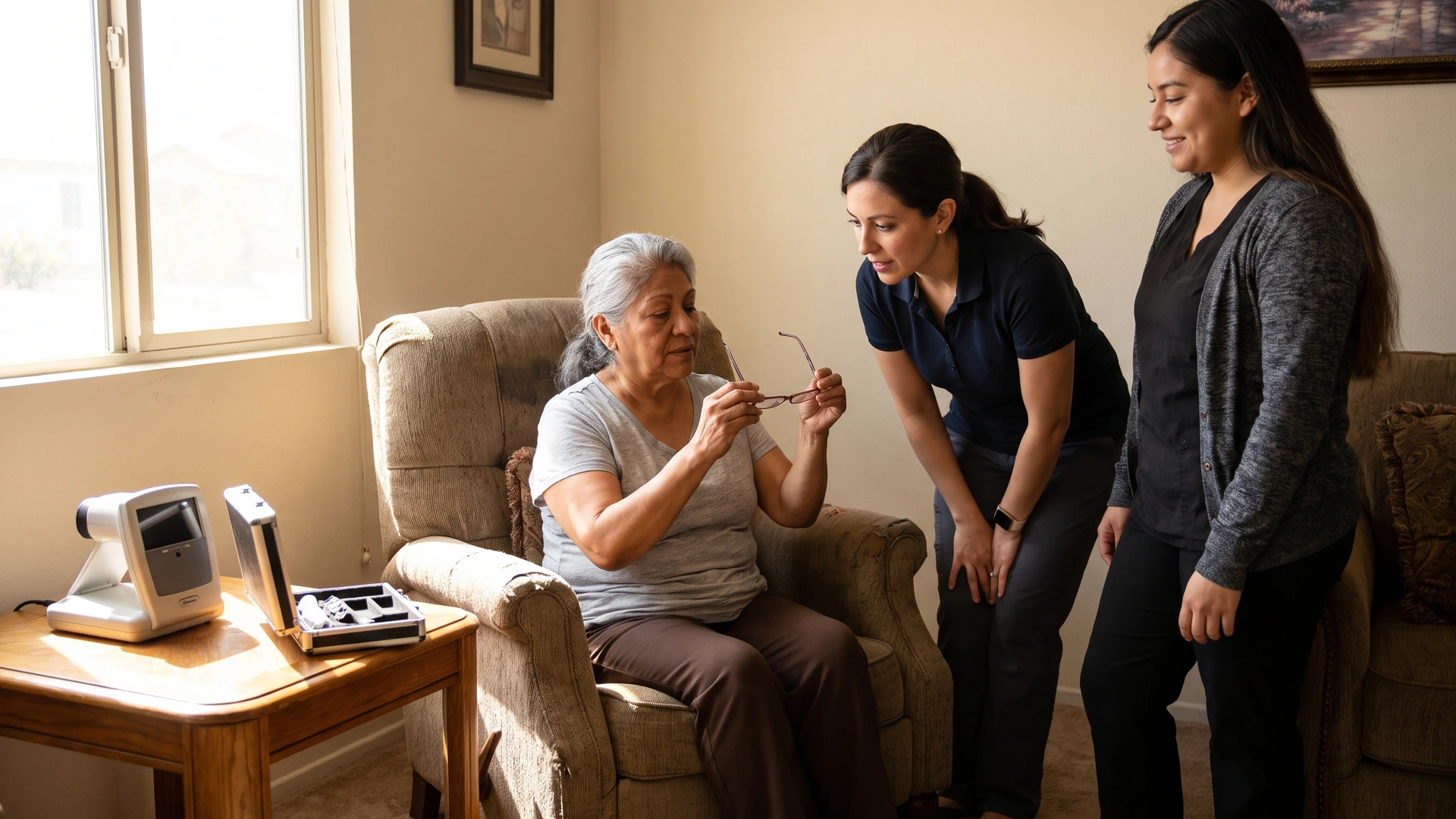
TLDR: I help you prepare assisted living residents for an eye exam by explaining the visit, recording their choice to participate, and gathering the requested information. Bring current glasses, plan communication and mobility support, and settle representative involvement before examination day. Leave time for each resident’s questions and follow-up instructions.
Answer: You prepare assisted living residents for an eye exam in Las Vegas by starting with their concerns and choice to participate. Gather consent documents, current glasses, medication information, and insurance details for secure intake. Tell me who needs communication or mobility support, involve the authorized representative where needed, and assign staff to help with examination and aftercare instructions.
I ask you to begin with the resident’s concern. Someone wants help reading a favorite book, while another person is worried about uncomfortable glasses. Ask what they want to discuss before you explain the schedule. A clear purpose gives the resident something useful to bring to the conversation.
Prepare the staff helping your residents. Planning on-site eye examinations for senior living includes a clear handoff to me and private space for the resident to speak. Use this guide to prepare assisted living residents for an eye exam around their questions, glasses, and support needs. Keep the pace personal when the home schedules a group visit.
Prepare Assisted Living Residents for an Eye Exam: Explain the Plan

Explain the visit before the paperwork. As your optometrist, I come to your home to discuss vision concerns and perform the planned examination. Tell the resident which room they will use, who will help them get there, and when to ask questions. Describe the examination scope agreed during planning, without promising additional tests.
Keep the resident’s own words. If someone says their glasses feel awkward, write it down so you bring that concern to me without turning it into a diagnosis. Let me ask follow-up questions about vision and eye health. Put staff observations alongside the resident’s account and leave room for the resident to explain.
Give the visit a clear purpose. Your resident needs to know how an examination, an eyewear conversation, and an outside referral fit the plan. Review the eye examination service information before explaining those steps. Take unanswered questions about the examination scope to the planning call so staff have clear answers for residents.
How Do You Respect Choice and Arrange Representative Participation?

Make room for the resident’s choice. Nevada protects refusal of treatment to the extent permitted by law and medical-care privacy, including consent to the presence of people not directly involved in care. Explain voluntary participation before you enter a name on the schedule, and record whom the resident wants involved. Hold the consent conversation away from the common room’s activity.
Check the representative’s actual authority. Nevada gives a guardian of the person authority to authorize medical care unless the court orders otherwise. Send current guardian or healthcare representative documents through secure intake, and flag restrictions or later orders when you submit them. A family relationship or name on an emergency-contact sheet does not establish the person’s role in the healthcare decision.
Resolve overlapping documents before examination day. Nevada suspends an existing durable healthcare power of attorney when a guardian of the person is appointed. If both documents appear in your resident’s record, identify both for my team’s review. Use the resident consent planning guide to prepare questions about authority and participation before the schedule is final.
Keep the resident in the conversation. Plan extra explanation time with me when your resident needs it, while completing the required consent process. Set whether the authorized representative will attend or be available by the agreed contact method. Check that person’s availability before the appointment goes onto the final schedule.
What Should Residents Bring to the Examination?
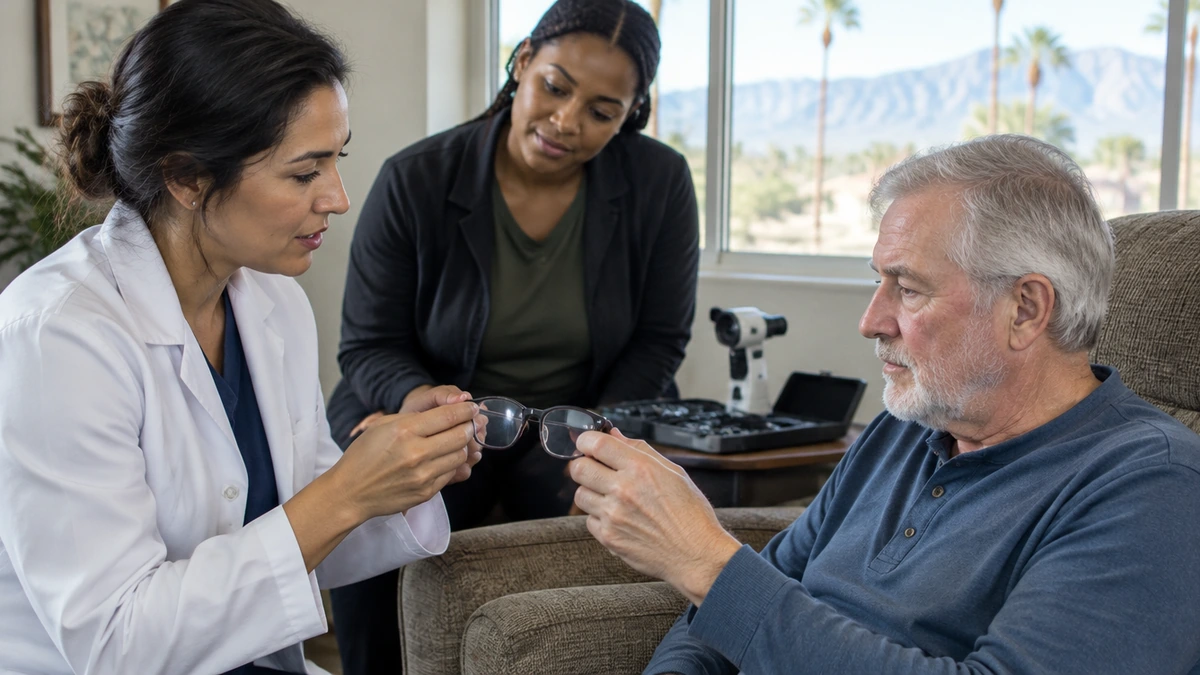
Gather the items the resident uses. Bring current glasses and the medication information requested at intake, along with relevant details from previous eye appointments. Include your resident’s concerns and instructions from the resident’s existing outside eye doctor. Send requested records through secure intake and keep them out of the shared activity folder.
Check the bedside table for glasses. Bring the reading pair and other everyday pairs requested by my team, including glasses your resident finds uncomfortable. Report missing or damaged eyewear during intake so I have the full picture. Keep each resident’s belongings together and never substitute someone else’s pair.
Send insurance documents before the visit. Flag incomplete or changed plan details on your preparation list until my team resolves them. Supply the requested Medicare, Medicaid, or Medicare Advantage records for benefit verification before service. Keep that conversation private and let me explain the verified details to the resident.
| Preparation item | What to gather | What to tell my team |
|---|---|---|
| Current eyewear | The glasses the resident uses | Discomfort, damage, or missing pairs |
| Medication information | The current list requested at intake | Changes since information was submitted |
| Vision concerns | The resident’s own description | When the change was first noticed |
| Representative contact and authority | Relevant current authority documents | Availability and unresolved questions |
| Communication and mobility | Communication and mobility support | Help needed to reach and use the room |
Check the preparation list again when you confirm attendance. A completed form does not tell your escort where the resident’s glasses are stored. Assign someone to gather the agreed items and return them afterward. Keep possessions with the correct resident throughout the visit.
Prepare Assisted Living Residents for an Eye Exam: Adapt the Support
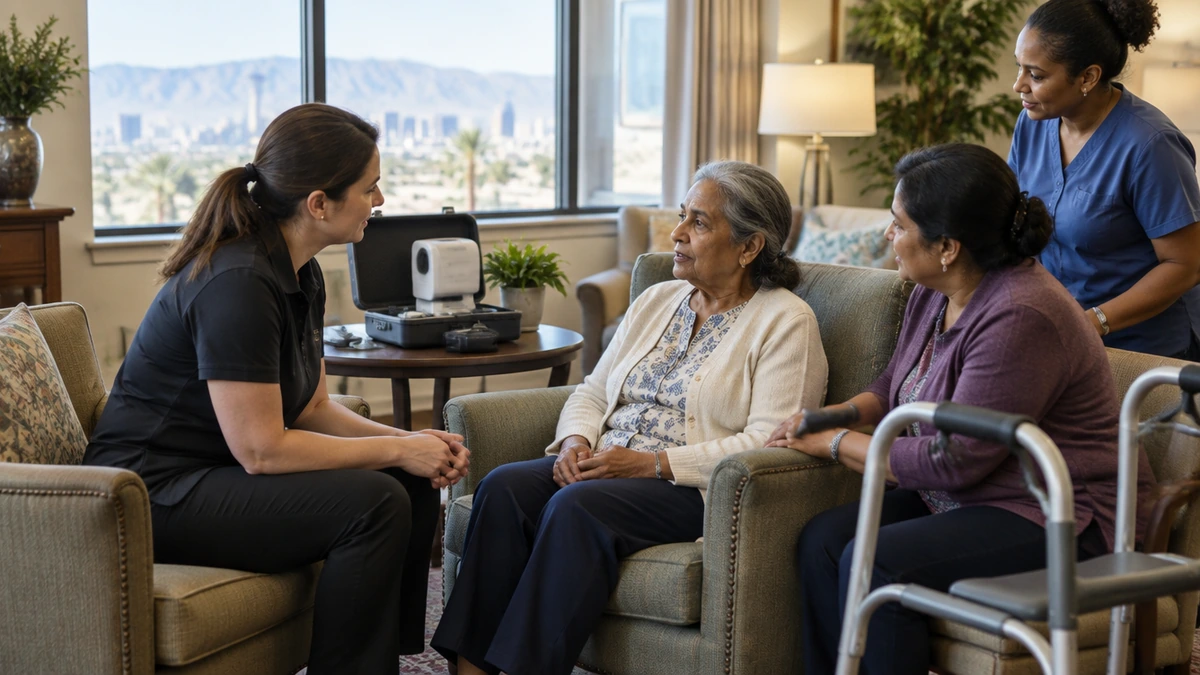
Describe the support your resident needs. I reviewed 69 primary sources across five research lenses for this series, and some residents with dementia in a published Canadian facility program needed family assistance or assessment over several days. Bring the person’s communication and mobility needs to the planning call, with the familiar caregiver’s availability, so I have concrete information before setting the examination plan.
Give the resident time to answer. Tell me your resident’s preferred language, communication aids, and who helps explain an unfamiliar activity. Identify whether a familiar caregiver will be available during the visit. Speak directly to the resident and resolve any need for additional communication support before the examination.
Plan around the wheelchair or walker. Describe escorts and positioning help before your room is set up so I understand the resident’s needs. Review the available support before planning transfers or changing usual assistance. Include the next step for incomplete testing or outside assessment if the room does not support the required examination.
- Ask the resident what support they want.
- Tell me about communication and mobility needs during planning.
- Confirm the escort, room access, and representative availability.
- Give me a private handoff before the assessment.
- Record the next step if the resident needs a pause or another appointment.
Watch for the need to pause. A familiar room does not settle how your memory care resident will feel or whether testing will be completed. Have staff report signs the resident wants a break while I direct the assessment. Use the guide to examinations with dementia or limited mobility to prepare specific questions about support.
Which Questions and Aftercare Needs Should You Prepare For?
Bring concerns without rehearsing answers. Record what your resident says about reading, watching television, recognizing people, or wearing glasses. Keep staff observations separate from the resident’s words so I know who noticed what. A caregiver’s note about an unread book gives me a concrete starting point for questions.
Let the resident ask for clarification. Tell your staff to leave time for answers instead of speaking for the resident to keep the schedule moving. At the handoff, identify which instructions need reinforcement after the appointment. Name who will explain those instructions to an authorized contact if requested.
Plan support after dilation. NEI describes blurred vision and light sensitivity lasting several hours after a dilated examination. If dilation is anticipated, review your resident’s planned activities and available assistance with me before the visit. Follow the individual instructions given at the examination when helping the resident return to the day’s routine.
Sudden changes need attention now. New sudden floaters, flashes, or a dark curtain or shadow warrant immediate assessment by an eye doctor or emergency department. Act promptly when your resident reports these symptoms instead of waiting for the scheduled vision day. Give the clinician providing that immediate assessment the resident’s description and when the change began.
Request a Vision Day Planning Call With Vision by Amel
Plan your visit with me. I am Dr. Amel Youssef, OD, founder of my practice, Vision by Amel, in Downtown Summerlin. I bring on-site eye care to assisted living homes, memory care communities, and senior living communities across the Las Vegas Valley. Discuss resident interest, consent, secure intake, and the route to your private room with electrical access. I review examination scope, eyewear steps, staff support, and referrals with you on the planning call.
Your residents participate voluntarily. My team and I coordinate preparation, examinations, eyewear selection, measurements, delivery, adjustments, and follow-up for your vision day, with insurance benefits verified before service. Benefits depend on each resident’s eligibility and plan terms. Give the preparation instructions to the staff helping each resident gather glasses and get to the room.
Frequently Asked Questions About Preparing Residents for On-Site Eye Examinations
What if a resident cannot find their glasses before the visit?
Report the missing pair and what the resident uses it for while staff continue searching. Keep your resident’s concerns ready for me so the conversation still starts with what needs attention. I determine how the missing glasses affect the planned assessment.
Should I ask residents to change their medication routine?
Use my preparation instructions for your resident’s examination. Pass any question about changing medication to the resident’s prescribing doctor before the visit. Obtain clear instructions and share them with the staff responsible for that resident’s care.
How do I prepare a resident who is worried about the visit?
Explain the room, who will be there, and what the visit involves, then listen to the resident’s concern. Bring unanswered clinical questions to me so you have an accurate response. Give the resident another conversation before requesting a scheduling decision.
What should I do if the resident speaks a different language?
Record the resident’s preferred language during registration and settle communication support before final scheduling. Your plan needs to cover the examination conversation and the explanation of written or spoken aftercare instructions. Name who will help the resident understand those instructions.
What if a representative cannot attend in person?
Set the representative’s contact method, document requirements, and availability before the appointment. Keep unanswered consent questions open on your preparation list until my team resolves them. An unanswered message is still an unfinished consent task.
Schedule an On-Site Vision Day Speak With Dr. Amel’s Team: (702) 858-4362
Like this article? Add Vision by Amel as a preferred source, and you are more likely to see our articles in Google’s Top Stories.

Leave a Reply