Category: Dry Eye Treatment

Why Las Vegas air dries your eyes, the symptoms I look for, and the treatment options I use and refer for.

  • How to Choose Artificial Tears for Dry Eye in Las Vegas
    How to Choose Artificial Tears for Dry Eye in Las Vegas

    How to Choose Artificial Tears for Dry Eye in Las Vegas

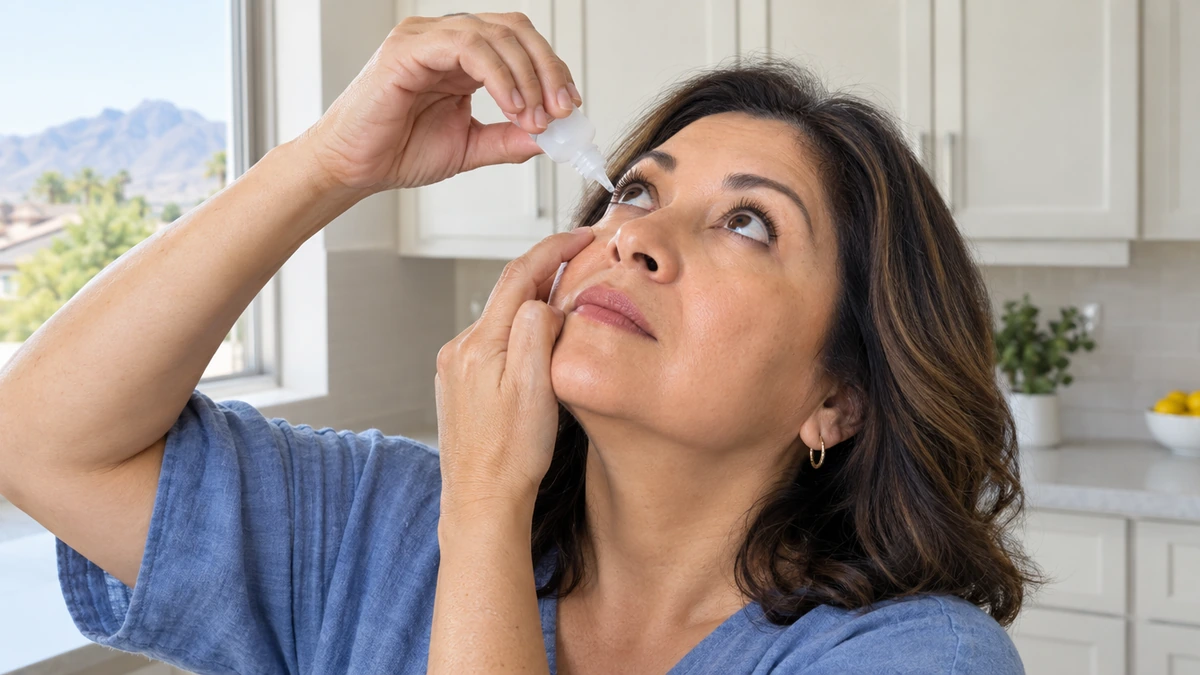
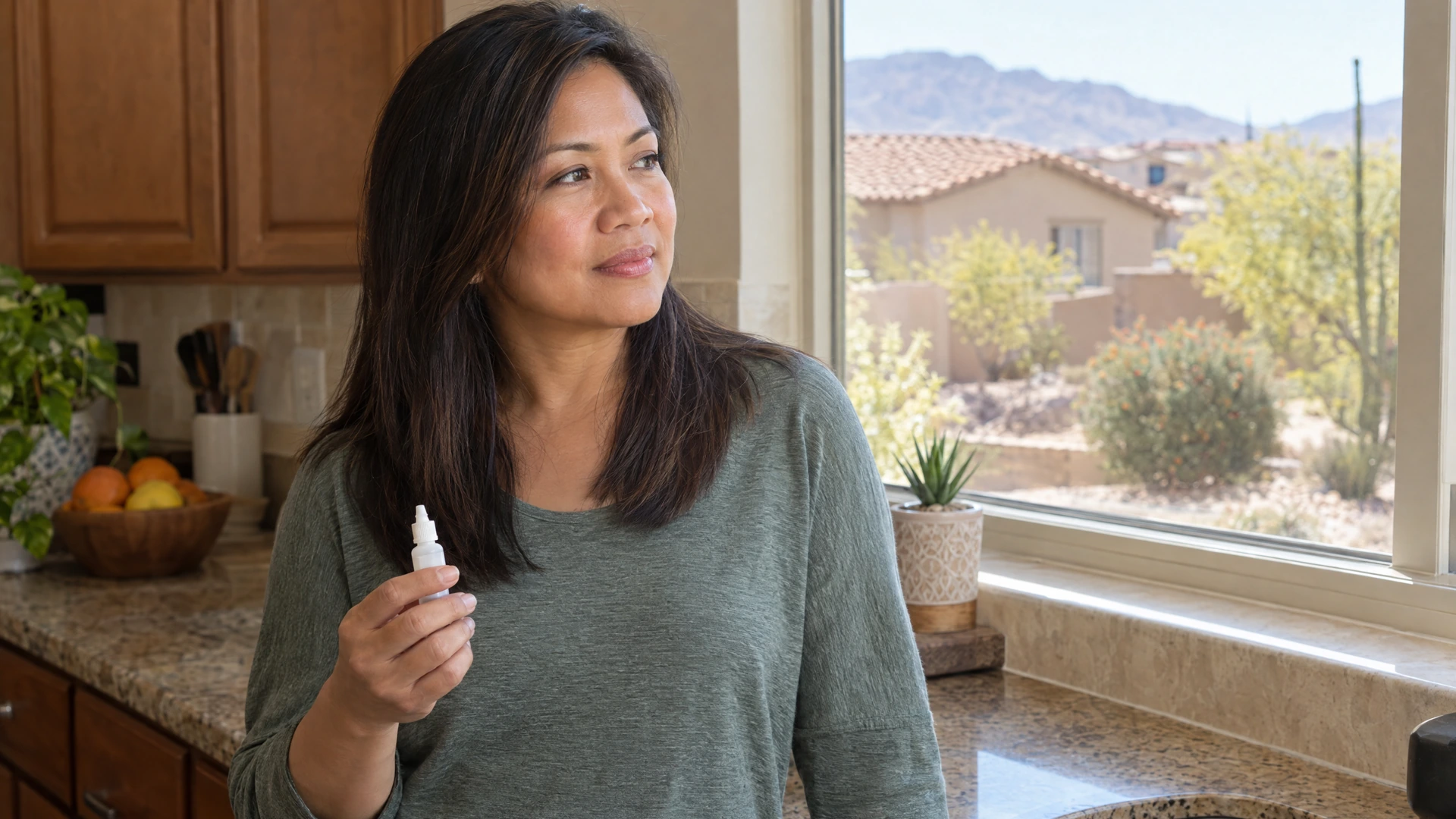
    Filipino woman holding an unbranded artificial tears bottle at a sunny kitchen window

    TLDR: Choose artificial tears for lubrication, with the thickness and preservative status suited to your day. Liquid drops suit daytime use, while thicker gels and ointments suit bedtime. Frequent use calls for a look at preservatives, and persistent dry eye calls for an evaluation.

    Answer: To choose artificial tears in Las Vegas, compare liquid drops, gels and ointments, then check whether they contain preservatives. Your daytime tasks, contact lenses and frequency of use matter. Choose lubrication over redness relief, use clean drop technique, and arrange an eye exam when regular drops leave you uncomfortable.

    Your bathroom shelf in Summerlin tells the story: a bottle for the morning drive, a gel for bedtime, a half-used box you forgot about. Your eyes still feel gritty at dinner. The answer starts with a smarter choice, matched to what each drop does and when you need it.

    I reviewed 123 primary sources across five research lenses for this guide, and some people need a combination of drops, not one perfect bottle. The 2016 Cochrane review found low-quality evidence suggesting similar effects among many tears, with inconsistent studies limiting firm comparisons. Your choice still matters, and my approach to dry eye treatment starts with the cause, as outlined on our dry eye care page.

    How Do You Put Artificial Tears In Correctly?
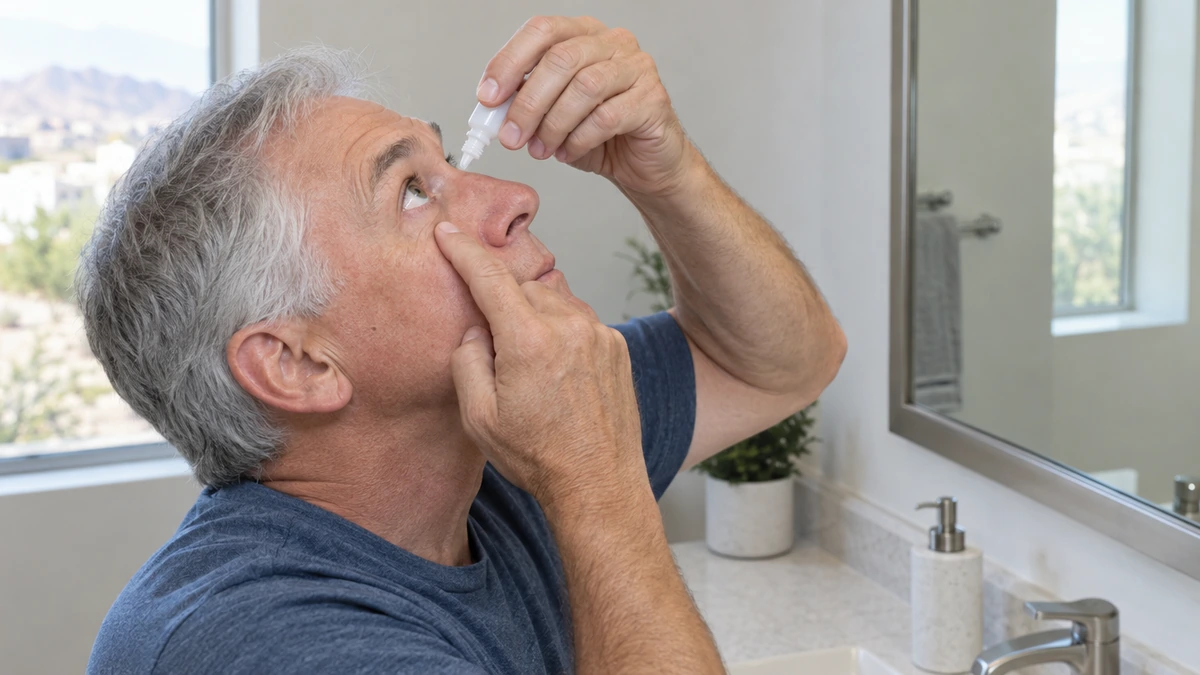
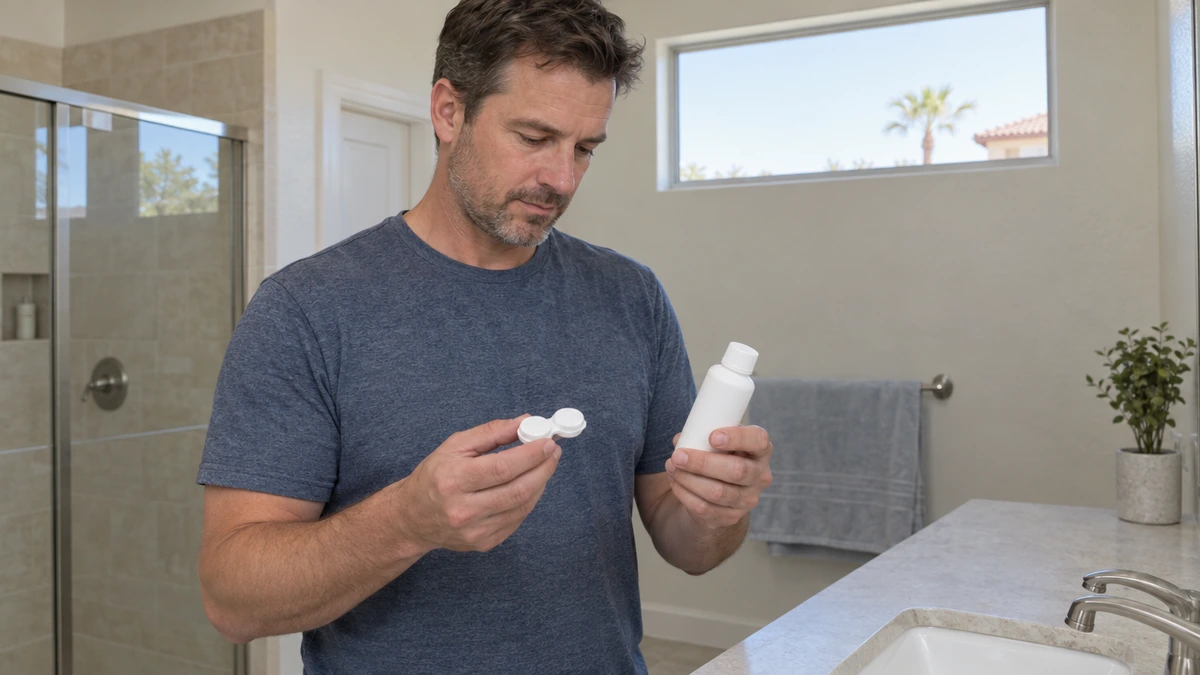
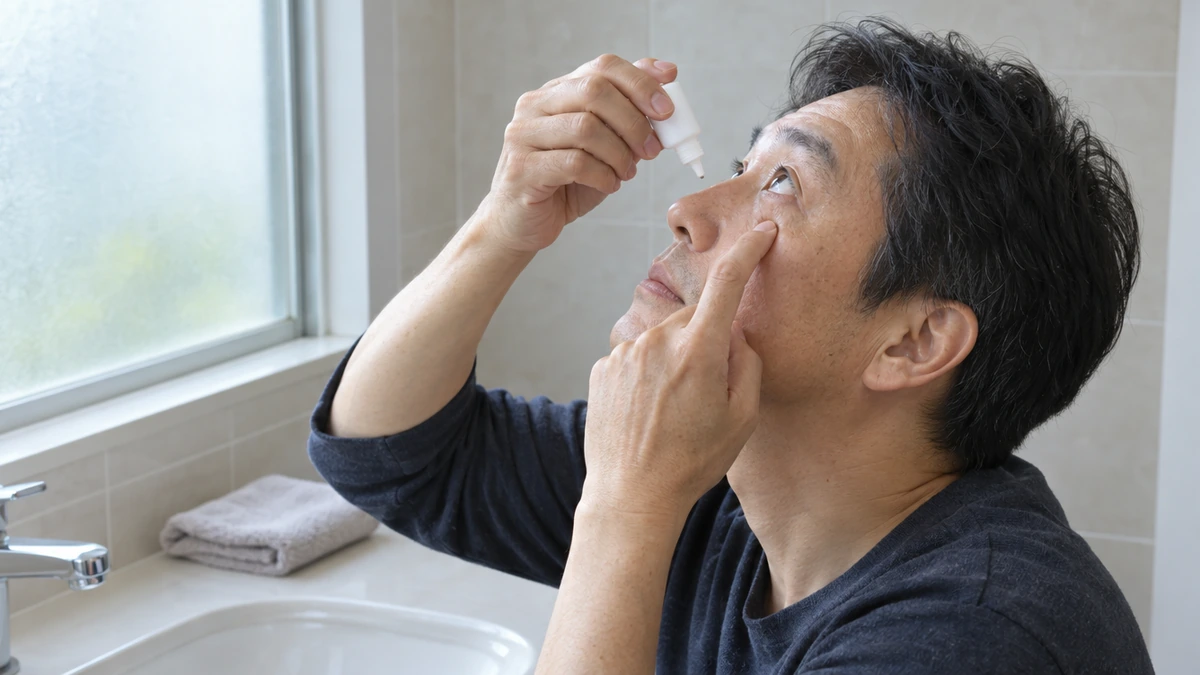
    White man applying artificial tears at a bathroom mirror with his lower eyelid gently pulled down
    Pulling the lower lid down creates a pocket for the drop.

    Give the drop a clean path. At your bathroom mirror, set the bottle within reach before you tilt your head back. Use this sequence without rushing, especially when squeezing the bottle or holding your eyelid feels awkward.

    1. Wash your hands with soap and water before handling the drops.
    2. Tilt your head back and look up. Gently pull your lower eyelid down and away from the eye to make a pocket.
    3. Hold the bottle above the pocket. Put in the directed amount without touching the tip to your eye, eyelid or fingers.
    4. Close your eye and press lightly at the inner corner for at least one minute, then wait at least five minutes before a different type of drop, following National Eye Institute guidance.

    Your technique belongs in the conversation about relief. Describe whether the drop lands in the pocket, runs down your cheek or takes repeated attempts. A bottle you struggle to squeeze matters as much as its ingredients.

    Which Artificial Tears Fit Your Day?
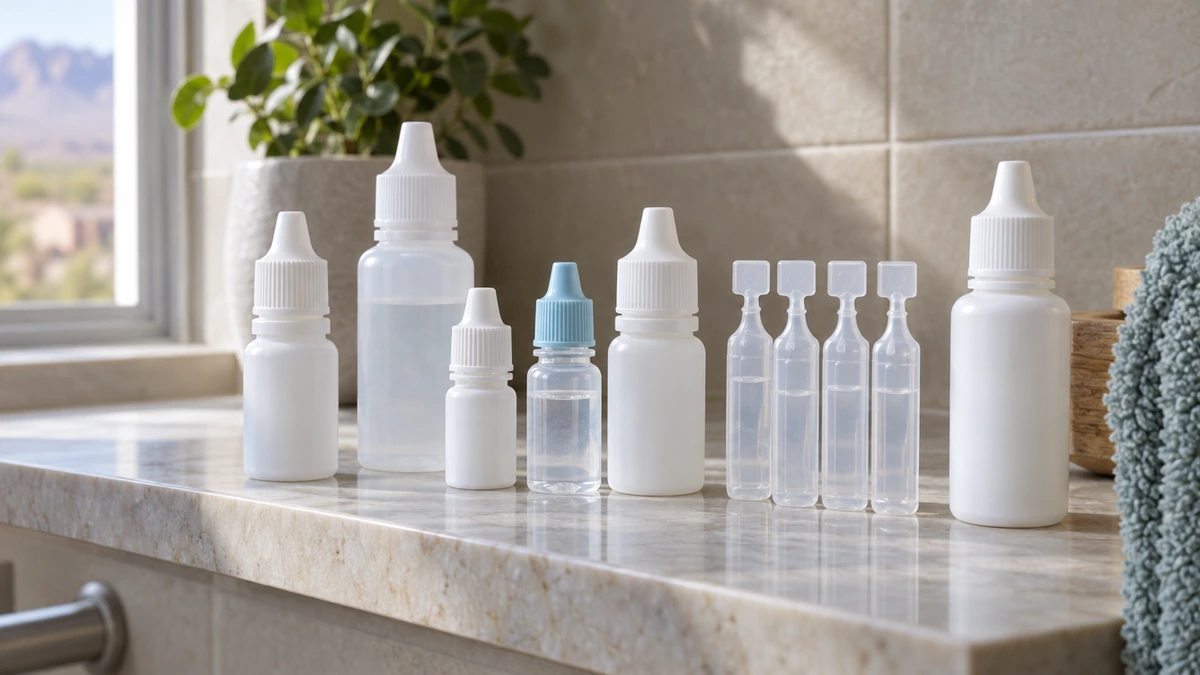
    Plain unlabeled artificial tears bottles and single-use vials on a bathroom shelf
    Plain dropper bottles and single-use vials stand on a bathroom shelf.

    Match thickness to your next task. The American Academy of Ophthalmology explains that gels and ointments stay on the eye longer than liquid drops but also cause temporary blur. Before choosing a thicker product, consider whether you are about to drive, read at work or go to bed.

    TypeWhere It FitsMain Tradeoff
    Liquid lubricating dropsDaytime use and tasks requiring clear visionLess staying power than thicker products
    Lubricating gelLonger lubrication, often at bedtimeTemporary blur after application
    Lubricating ointmentBedtime use when thicker lubrication is appropriateBlur makes it a poor fit before driving

    I value a drop you use correctly over a shelf full of half-used bottles. Write down the product type, how it feels and what you were doing when discomfort returned.

    Redness relief is a different job, and it is not a dry eye treatment. Decongestant drops shrink surface blood vessels for a while, then rebound redness builds, and the AAO guide to redness-relieving drops says to use them only occasionally and briefly. Skip them entirely if you have narrow-angle glaucoma, because they raise the risk of angle-closure glaucoma, an emergency. Judge your drops by comfort, never by a whiter-looking eye.

    You also have choices within liquid tears. Drops with oil-based ingredients help thicken the tear film, the thin layer covering your eye, and slow evaporation, the AAO lubricant guide notes. When blocked oil glands drive your dryness, my meibomian gland dysfunction guide shows you what helps.

    Preserved or Nonpreserved: How Often Do You Need Drops?
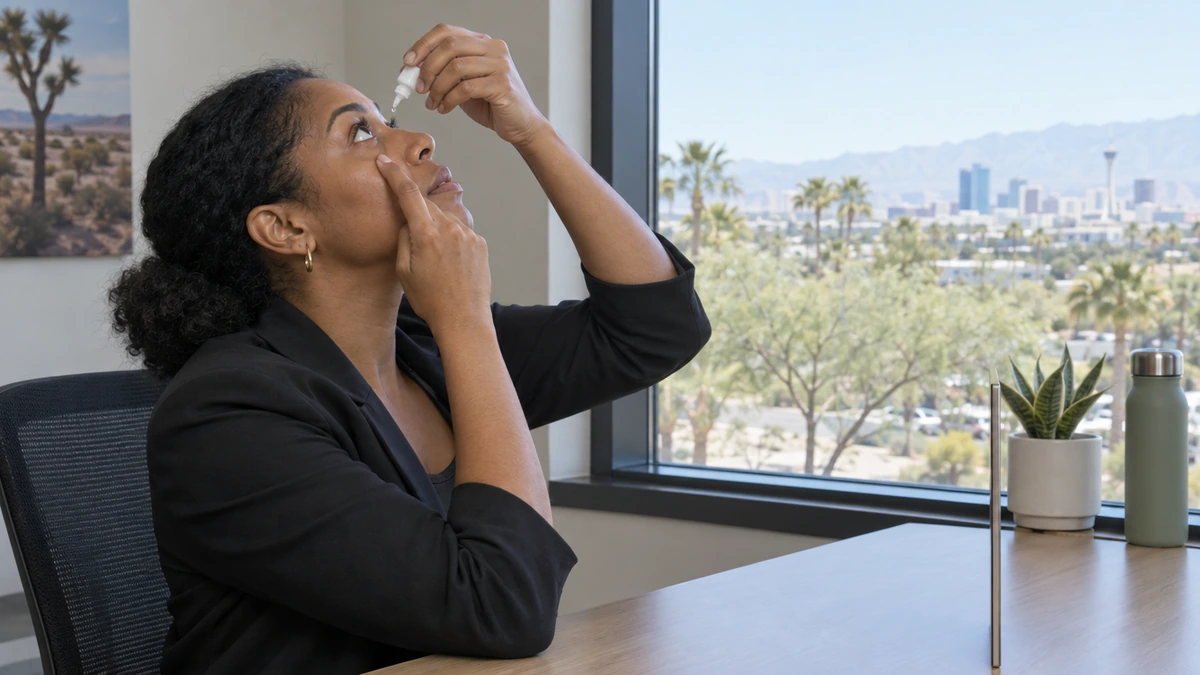
    Black woman applying artificial tears at her office desk beside a window, laptop seen edge-on
    A woman puts in an eye drop at her office desk by a window.

    Check the preservative status first. Nonpreserved means the drops contain no preservatives, a useful distinction when you reach for them repeatedly. Occasional use of a preserved lubricant is different from relying on it throughout every workday.

    Use drops about four or more times a day, or feel a preserved drop sting? That is your cue to ask me about nonpreserved tears. The AAO lubricant guide recommends nonpreserved drops when you lubricate more than four times a day over a long period, and other AAO pages draw the line at four or even six. Treat the number as practical guidance, not a toxicity cutoff.

    Your frequency tells me a lot. After the morning walk only? All through the workday? Again after dinner? Count the bedtime gel too, because the gel and the liquid share one routine.

    Nonpreserved lubricating drops are generally suitable as often as needed. Follow your product directions and the plan we discuss, while paying attention to whether you remain comfortable between uses. A rising need for drops calls for an exam, even when the bottle contains no preservatives.

    What Changes for a Las Vegas Day?

    Latino man in wraparound sunglasses on a breezy, palm-lined Las Vegas sidewalk, artificial tears routine outdoors
    Wraparound sunglasses belong in your outdoor dry eye routine.

    Your surroundings shape how often you reach for the bottle. The National Eye Institute recommends avoiding wind and air conditioning exposure and wearing wraparound sunglasses outside. On a breezy Las Vegas sidewalk, put those glasses on before the wind reaches your eyes.

    At a Summerlin office desk, you might reach for drops after every stretch beneath the ceiling vent. Find where the air hits your face, then move your seat or angle the vent away. Did your eyes settle once you moved? That answer gives your next visit the setting as well as the symptom.

    Plan your drops around your real day. Liquid before the afternoon meeting, ointment at lights out. For more on vents, wind and indoor air, read why Las Vegas air dries out your eyes.

    When Should You Stop Shopping and Get Care?

    Red or Painful Eyes Need Care Right Away

    Put the bottle down when your eyes turn red or painful. Contact an eye care provider right away, as MedlinePlus directs, instead of testing one more lubricant. Stop any drop and see a doctor right away if it brings itching, swelling, trouble breathing or dizziness, the allergic reaction signs the AAO lubricating drops guide lists.

    Persistent discomfort also deserves a diagnosis. When regular tears leave your eyes gritty or burning, arrange an evaluation instead of rotating through more bottles. Brief comfort after a drop does not establish what is causing the problem.

    Your next step depends on the findings. Lubricants, eyelid care and prescription treatment have different roles, which our Las Vegas dry eye treatment guide explains in detail. For help deciding how to seek care, read when to seek dry eye care in Summerlin.

    How I Approach Your Drop Routine at Vision by Amel

    Bring the bottles you use. I am Dr. Amel Youssef, your optometrist at Vision by Amel, and your history helps put those choices in context. Note which drops sting, which blur your vision and which leave you reaching for the bottle again.

    Your eye care plan depends on your eyes. Options include lubricants, targeted prescription drops including anti-inflammatory medication, warm compresses, eyelid hygiene and care for meibomian gland dysfunction or blepharitis. Our eye exams page explains the visit, from your history through evaluation and a plan for your eye health.

    Your bottles come with you to 2010 Festival Plaza Dr, Suite 195, at Festival Plaza in Downtown Summerlin. You need no referral for an eye exam. Book online or call (702) 858-4362. Start with the concern that brought you here, whether it is choosing your first lubricant or understanding why the current one is falling short.

    Frequently Asked Questions About Artificial Tears

    What Is the Difference Between Drops, Gels and Ointments?

    They differ in thickness and how long they stay on your eye. A liquid for daytime and a thicker product for bedtime sometimes belong in the same plan, rather than replacing each other. When discussing that combination, include every eye product you already use so the timing is clear.

    Can I Use Artificial Tears Too Often?

    The American Academy of Ophthalmology reports no evidence that regular artificial tear use reduces your natural tear production. Watch your preservatives and lingering symptoms instead of worrying about dependence. Record your use honestly instead of cutting back to make the pattern look better.

    Are All Artificial Tears the Same?

    No, and similar average results in studies do not make every formula interchangeable for your eyes. Ingredient type, thickness and preservative status remain meaningful differences. When you compare products, write those features down rather than relying on the package color or a stronger-sounding description.

    Can I Use Artificial Tears With Contact Lenses?

    Only use drops with lenses in when the product is explicitly labeled for that use and fits your eye care instructions. Without that label, take your lenses out first, as the AAO lubricant guide advises, and my guide to contact lenses and dry eyes covers the wait before they go back in. The absence of preservatives alone does not establish lens compatibility, so show me the exact product rather than describing it as a gentle drop.

    When Should I See a Doctor Instead of Buying More Drops?

    Book an exam once you need lubricating drops more than two or three times a day, the point where an AAO cornea specialist advises a full eye exam. Drops buy you brief relief, but the condition underneath still needs its own treatment. Tell me whether relief fades during one task or returns even at rest, because that pattern points to the cause.

    Book My Eye Exam Call (702) 858-4362

    Like this article? Add Vision by Amel as a preferred source, and you are more likely to see our articles in Google’s Top Stories.


    Add as a preferred source on Google

  • Sjögren’s and Autoimmune Dry Eye: Signs Worth Checking

    Sjögren’s and Autoimmune Dry Eye: Signs Worth Checking

    Sjögren’s and Autoimmune Dry Eye: Signs Worth Checking

    Woman holding water and touching her closed eyelid at a kitchen table, Sjögren’s and dry eye

    TLDR: Sjögren’s and dry eye deserve a closer look when you also have persistent dry mouth. An eye exam helps identify eye findings for your physician to investigate. Treatment addresses your eye symptoms while a physician investigates the wider cause.

    Answer: Sjögren’s is an autoimmune disease that affects tear and saliva glands, often causing dry eyes and dry mouth. In Las Vegas, persistent symptoms in both places need more than another bottle of drops. Your optometrist looks for eye signs and recommends physician evaluation when needed, while a physician combines findings and tests to diagnose Sjögren’s.

    Toast, a tall glass of water, eye drops beside the plate. That is breakfast in your Las Vegas kitchen now. Your mouth stays dry and your eyes stay gritty, no matter how much you sip. I want both halves of that story.

    I reviewed 123 primary sources across five research lenses for this guide, and persistent dry eyes with dry mouth call for evaluation for possible Sjögren’s. You do not need to decide which diagnosis fits before seeking eye care. My dry eye treatment approach begins with your symptoms and eye findings, as outlined on our dry eye care page.

    What Links Sjögren’s and Dry Eye?

    Woman sipping water on a shaded Summerlin walking path, Sjögren’s and dry eye
    A woman pauses for water on a shaded Summerlin path.

    Sjögren’s goes after your moisture glands. Sjögren’s is a chronic autoimmune disease in which the immune system attacks tear and saliva glands, explains NIH NIAMS. Dry eyes and dry mouth are its main symptoms. Include fatigue and aching joints or muscles in the health history you share.

    The term aqueous-deficient dry eye means your eyes have too little watery tear fluid. Evaporative dryness means tears dry up too quickly, and both problems sometimes occur together. The distinction matters because treatment needs to match the problem. A symptom such as burning alone does not identify its cause.

    You pause for water on a shaded Summerlin walking path, with red rock in the distance. Later, back indoors, your mouth still feels dry and your eyes still sting. Include both settings when you describe the symptoms. I would rather hear an ordinary detail twice than miss a symptom you thought belonged at another appointment.

    Why Does Dry Mouth Change the Conversation?

    Woman speaking with a physician seen from behind in a bright clinic office, Sjögren’s and dry eye
    A woman talks with her physician, seen from behind, in a bright office.

    Persistent mouth dryness gives your eye symptoms more context. The 2017 TFOS DEWS II report recommends referral for possible Sjögren’s when dry eye occurs with daily dry mouth for over three months, recurrent swollen salivary glands, or needing liquids to swallow dry food. Count how long your mouth has felt this dry. That duration is a referral clue, not a reason to postpone a visit.

    An evaluation connects your symptoms with test findings. According to NIH NIAMS, a physician diagnoses Sjögren’s using symptom history, gland function and evidence of autoimmunity, with no single test providing the diagnosis. Eye findings contribute to that evaluation. A rheumatologist is a physician who evaluates autoimmune disease.

    Part of the EvaluationWhat It AddsWhat to Share
    Eye assessmentInformation about tears and the eye surfaceYour dryness, irritation and response to drops
    Mouth and salivary gland assessmentInformation about saliva production and gland healthYour mouth dryness and swallowing difficulties
    Physician assessmentSymptoms and test results considered togetherYour medical history, medicines and existing diagnoses

    A comprehensive eye exam helps identify signs worth investigating further. Your physician decides which additional tests fit the findings. Those include blood tests and, when appropriate, salivary gland tests, imaging or biopsy. The next step should answer a specific question about your health.

    What Other Autoimmune Conditions Affect Your Eyes?

    Your existing diagnoses help focus the eye evaluation. The National Eye Institute lists lupus, Sjögren’s and thyroid problems among health conditions linked to dry eye. Sjögren’s also occurs alongside rheumatoid arthritis or lupus. These conditions do not all produce the same eye findings.

    Use the diagnosis your physician gave you. For example, name your thyroid condition exactly as your physician wrote it. A thyroid problem on your chart does not, by itself, explain why your eyes feel dry. Eye symptoms still need their own assessment.

    Your medicines count here, too. Some worsen eye and mouth dryness, so your full list matters even when the appointment is about your eyes. The full drug review lives in my guide to medicines that dry the eyes. Discuss prescription changes with the prescriber before making them.

    How Is Tear-Deficient Dry Eye Managed?

    Man applying a lubricating eye drop at a bathroom sink, Sjögren’s and dry eye
    A man puts in a lubricating eye drop at his bathroom sink.

    Your eyes need care while the wider medical evaluation proceeds. NIAMS treatment guidance describes artificial tears, prescription anti-inflammatory drops, nighttime ointment and tear duct plugs as options for Sjögren’s eye symptoms. Treatment depends on the findings and your response. Eye symptom relief and whole-body disease care have different jobs.

    Artificial tears add lubrication to your ocular surface, the exposed surface of the eye. Prescription anti-inflammatory eye drops address inflammation when that treatment fits. Ointments are thicker and usually suited to bedtime because they blur vision. Use the schedule agreed for your eyes, and report discomfort or difficulty following it.

    Punctal plugs conserve tears by slowing drainage, but their average symptom benefit remains uncertain. My guide to punctal plugs explains selection, inflammation control and possible problems if you are considering them. Treatment choices also account for eyelid findings. Warm compresses and eyelid hygiene address associated lid problems such as meibomian gland dysfunction or blepharitis when present.

    A treatment review needs more than the phrase “still dry.” Explain which part of your day is difficult and what happened after each treatment. Perhaps the drops feel comfortable, yet you still struggle through an afternoon meeting. I value a plan you understand well enough to describe what helped and what did not.

    What Should You Note Before Your Visit?

    Woman making a symptom note in a small notebook at a dining table, Sjögren’s and dry eye
    A woman writes in a small notebook at her dining table.

    Five minutes at your Summerlin dining table pays off at every appointment. Jot down what bothered you at breakfast, at work and on the drive home. Plain words win. A sharp symptom history beats a medical label every time.

    1. Write when your eye dryness began and whether mouth dryness started around the same time.
    2. Note when swallowing dry food needs a sip of water and whether salivary glands have swollen repeatedly.
    3. List your medicines, supplements and eye drops, including how you use them.
    4. Add existing autoimmune or thyroid diagnoses and the physicians involved in your care.
    5. Record what has helped, what has irritated your eyes and which activities remain difficult.

    Share the same history at your eye and medical appointments. Consistent details help each clinician understand what has already been discussed. Include previous test results when you have them. A clear account saves you from trying to reconstruct the sequence during the visit.

    Which Eye Symptoms Cannot Wait for a Rheumatology Visit?

    Your Sjögren’s workup runs on its own clock, and a red or painful eye does not wait for it. Contact an eye care provider right away for red or painful eyes, as MedlinePlus advises, and tell the office when the change began.

    Go to an emergency room right away if you develop sudden intense eye pain, nausea, red eye or blurry vision, the warning symptoms listed by the National Eye Institute. Do not assume these symptoms are your usual dryness. The rest of the urgent list lives in my urgent signs and referral guide.

    How I Approach Sjögren’s and Dry Eye at Vision by Amel

    I start with your history. That includes your eye symptoms, the treatments you use and health concerns beyond your eyes. At Vision by Amel, your exam moves from patient history through digital diagnostics and my evaluation to your plan. You have room to explain the dry mouth alongside the gritty eyes.

    Your eye health plan follows the findings. Depending on your eyes, it includes lubricating drops, targeted prescription drops, lid care or consideration of punctal plugs. When findings suggest a systemic condition, I recommend evaluation by your physician or a rheumatologist. When your eyes need an ophthalmologist’s care, I make that referral.

    Look for Vision by Amel at Festival Plaza in Downtown Summerlin, 2010 Festival Plaza Dr, Suite 195. No referral is needed for an eye exam. Book online or call my team, and mention persistent dry eyes together with mouth dryness when arranging your visit. Our medical eye care page explains the broader service.

    Frequently Asked Questions About Sjögren’s and Dry Eye

    What Is Sjögren’s and How Does It Affect the Eyes?

    Sjögren’s is an autoimmune disease involving moisture-producing glands, including your tear glands. Beyond dryness, the American Academy of Ophthalmology lists contact lens discomfort and blepharitis among its eye-related symptoms. Mention changes in lens comfort even when your glasses still seem fine.

    Could My Dry Eyes and Dry Mouth Be Sjögren’s?

    That pairing earns a closer medical look for possible Sjögren’s. Add joint pain, swelling or stiffness to the history you share, especially alongside dry mouth. MedlinePlus advises prompt care for that combination, so include those symptoms when arranging the medical visit.

    How Is Sjögren’s Diagnosed, and Can an Eye Exam Detect It?

    A comprehensive eye exam sometimes detects the first signs, the AAO says, and those findings support your physician’s evaluation. Antibody blood tests also contribute, but healthy people and people with other disorders sometimes have the same antibodies. Your physician interprets the results with gland function and symptoms, rather than treating a positive antibody result as the diagnosis.

    Who Gets Sjögren’s?

    Nine of 10 people with Sjögren’s are women between 40 and 60, the American Academy of Ophthalmology reports, yet it affects men and other ages too. NIAMS puts the most common start in the 40s and 50s. Your age and sex never rule out a check of persistent symptoms.

    Is Sjögren’s Serious?

    Yes. It calls for medical follow-up because it sometimes affects organs beyond your eyes and mouth, including the lungs, kidneys and nervous system. People with Sjögren’s also face a higher, though still low, chance of lymphoma, NIAMS notes. Your physician directs the wider evaluation while eye care addresses your eye findings and symptoms.

    Book My Eye Exam Call (702) 858-4362

    Like this article? Add Vision by Amel as a preferred source, and you are more likely to see our articles in Google’s Top Stories.

    Add as a preferred source on Google

  • Dry Eye, Hormones and Menopause: Why Women Feel It More

    Dry Eye, Hormones and Menopause: Why Women Feel It More

    Dry Eye, Hormones and Menopause: Why Women Feel It More

    Hispanic woman wearing wraparound sunglasses on a Summerlin trail, dry eye and menopause

    TLDR: The link between dry eye and menopause involves hormones, aging and your individual eye findings. Women have more dry eye, but menopause alone is not a proven cause. Start with an eye exam, and leave hormone therapy changes to your prescriber.

    Answer: Women experience dry eye more often than men, with hormones among several contributors. For you in Las Vegas, the useful question is what your eyes need now. Androgen changes matter to eyelid oil glands, while estrogen findings remain mixed. Treatment should address your tear film and daily exposures alongside a review of medicines.

    Breakfast is done, the Summerlin sun fills your office window, and the first emails are waiting. By lunch, your eyes burn. Menopause feels like the obvious culprit, and it might be part of the story. Your eyes need the whole story, not a label that ends the search.

    I reviewed 123 primary sources across five research lenses for this guide, and definitive evidence that menopause itself causes dry eye is still lacking. Your symptoms need a closer look than a label based on age. As an optometrist, I want your eye care to address the problem an exam finds. My approach to dry eye care begins with your history and an individual plan.

    Why Are Dry Eye and Menopause Linked?

    White woman blinking at a desk beside a bright window, dry eye and menopause
    A woman pauses with her eyes closed at a bright Summerlin desk.

    Women carry more of the dry eye load, and the numbers show it. A national survey conducted in 2013 reported diagnosed dry eye in 8.8% of women and 4.5% of men, as described in the American Journal of Ophthalmology. Those are historical national figures for diagnosed disease, not your personal odds or a Summerlin rate. That gap is why your question matters.

    Your hormone story involves more than estrogen. The 2017 TFOS DEWS II report links androgen deficiency with meibomian gland dysfunction, describes inconsistent estrogen and progesterone findings, and finds definitive evidence for menopause itself lacking. Dry eye prevalence rises gradually with age in both sexes, a pattern more consistent with declining androgens than a sudden estrogen drop. That distinction matters when you are offered a simple hormone explanation for a complicated symptom.

    Timing still belongs in your history. Write down whether discomfort began before your periods changed, during that transition or after a medicine change. Add what you notice during reading, computer work and time outdoors. I consider the sequence alongside your eye findings, without treating the calendar as a diagnosis.

    I believe your comfort deserves more than an age-based explanation. You should leave with a plan specific enough to follow at home. For the gland side of your hormone history, see my guide to meibomian gland dysfunction. Use it when that term appears in your plan, so the reason for each step stays clear.

    What Helps With Dry Eye and Menopause?

    Black woman using an eye drop at a bathroom mirror, dry eye and menopause
    A woman puts in an eye drop at her bathroom mirror.

    Match care to your eyes. The National Eye Institute describes artificial tears as the usual treatment for mild dry eye and bases treatment on the cause. An assessment considers tear amount, how quickly tears dry and eyelid structure. That gives your dry eye treatment a clearer direction than choosing a bottle because it mentions aging.

    No step stays in your plan without a reason. Before you head home, you know what each step targets and when we check it. Daily care and occasional comfort measures sit on separate lines of your plan. My dry eye treatment guide covers the broader options, including warm compresses, eyelid hygiene and prescription care.

    What You NoticeWhat to RecordWhat to Discuss
    Discomfort began around a hormone changeApproximate dates and the symptoms you noticed firstHow the timing fits your eye findings
    You reach for eye drops throughout the dayThe bottle name, frequency and how your eyes feel afterwardWhether the current plan needs review
    Your contact lenses feel less comfortableWhen you put them in and when discomfort beginsLens material, fit and wear schedule
    You struggle most at your desk or outdoorsThe task, surroundings and time of dayWhich daily habit to address first

    Use this table as a record, not a self-diagnosis. You do not need a perfect symptom diary to book an appointment. A few clear examples are enough to begin the conversation. Include the activity you miss most, whether it is wearing contacts to dinner or working comfortably through the afternoon.

    What Do Hormone Therapy Studies Show?

    Asian woman speaking with a clinician seen from behind, dry eye and menopause
    A woman talks with a clinician, seen from behind, in a bright consultation room.

    The hormone therapy finding needs its context. In an observational cohort of 25,665 postmenopausal women, the Women’s Health Study reported adjusted odds ratios of 1.69 for estrogen alone and 1.29 for estrogen plus progestin, compared with no hormone therapy, for diagnosed dry eye or severe symptoms. These are odds ratios, not absolute risk or proof of cause. You cannot use them to calculate what will happen to your own eyes.

    Leave treatment changes with your prescriber. MedlinePlus advises talking to your provider before you stop any medicine. For hormone therapy, that means discussing any proposed start, stop, dose change or switch with the person managing it. An eye symptom is information to share, not an instruction to alter a prescription yourself.

    Make that discussion concrete. Bring the hormone name, dose, start date and any recent changes, alongside your other medicines and eye drops. Record whether dryness began before or after a change, including symptoms present beforehand. My article on medicines linked with dry eye explains why the full list matters.

    Your priorities count too. What is the hormone prescription meant to fix, and what is your eye discomfort keeping you from? Put both answers beside the timeline, and neither concern gets lost. I favor a clear eye plan and a clear prescriber conversation over guessing which medicine to blame.

    How Do You Fit Eye Care Into a Las Vegas Day?

    Middle Eastern woman drinking water on a shaded patio, dry eye and menopause
    A woman sips water on a shaded patio beside desert plants.

    Your day holds the clues. A morning walk on a Summerlin trail, then a glass of water on a shaded patio among the desert plants. Later, a drive across Las Vegas with cool air blowing toward your face. Which moment set your eyes burning? That answer tells me more than a note that your eyes felt bad all day.

    1. Choose one recurring activity to describe, such as your afternoon computer work.
    2. Note when discomfort starts and what you are doing, including contact lens wear.
    3. List the care you used and how your eyes felt afterward.
    4. Share the pattern at your follow-up and agree on the next adjustment.

    Make the plan fit the day you live. Set your care supplies where you will remember the prescribed routine, and leave the instructions somewhere easy to find. Wind, car vents and dry indoor air get their own guide: desert air and your eyes. Use that detail to support the plan you already have.

    Which Eye Changes Should Never Wait for a Hormone Review?

    A red or painful eye skips the symptom diary. Contact an eye care provider right away, the step MedlinePlus gives for red or painful eyes, and say what changed when you call. My guide to dry eye warning signs in Summerlin lists the other symptoms that need care right away.

    How I Approach Dry Eye Around Menopause

    Your visit starts with your history. At Vision by Amel, I consider what you report during my evaluation and explain the plan. A comprehensive eye exam gives us time to address your concerns about comfort and eye health. Mention the menopause timeline and hormone medicines at the beginning so they remain part of the conversation.

    Your plan draws on what your exam shows: artificial tears, targeted prescription eye drops including anti-inflammatory medication, warm compresses or eyelid hygiene, depending on your eyes. Care for meibomian gland dysfunction and blepharitis also belongs among the available approaches. We discuss the steps relevant to your findings and how they fit your routine. For contact lens discomfort, options include adjusting the lens material, wear schedule or fit.

    You reach me at 2010 Festival Plaza Dr, Suite 195, Las Vegas, NV 89135, inside Festival Plaza in Downtown Summerlin, minutes from The Vistas, The Paseos, Sun City and Red Rock Country Club. You need no referral for an eye exam. Book online or call (702) 858-4362, and mention your dry eye concerns when scheduling. See our eye exam page for more about the visit.

    Frequently Asked Questions About Dry Eye and Menopause

    Why Do Women Get Dry Eye More Than Men?

    Sex hormones explain much of the gap, along with genetic and other biological factors, the TFOS report says. In the Beaver Dam Study of 3,703 U.S. adults, age-adjusted dry eye prevalence ran 16.7% in women versus 11.4% in men, a study figure, not a Las Vegas rate. Your sex is one clue, and your own exam findings still decide your plan.

    Does Menopause Cause Dry Eye?

    Menopause alone is not an established cause, even when your symptoms begin during the transition. The practical point is to include the timing without letting it replace an eye evaluation. You do not need to settle the hormone question before seeking help for discomfort.

    What Do Hormones Have to Do With My Oil Glands?

    Low androgen levels are linked with meibomian gland dysfunction, so the eyelids belong in a conversation about your hormone history. That link does not establish your personal hormone level. When gland care appears in your plan, ask which finding it addresses and how to follow the routine.

    Will Hormone Therapy Help My Dry Eyes?

    A Menopause meta-analysis published in 2020 combined nine randomized trials with 612 women and reported improvements in tear tests and symptoms, while calling effectiveness controversial. The TFOS report adds that none of the studies showing symptom relief used a placebo, and of three placebo-controlled studies, one found symptoms worse and two found no change. Hormone therapy is not a proven treatment for your dry eye. Discuss eye treatment separately from the reasons your prescriber recommends hormone therapy.

    Do Birth Control Pills Cause Dry Eye?

    The TFOS hormone report describes case reports of dry eye symptoms and contact lens intolerance with birth control pills, but formal investigations have not confirmed the link. Record a change in comfort if you notice one after starting a pill. Share it with me and your prescriber, including whether you also changed contact lenses or other medicines.

    Should I Change My Hormone Therapy Because of My Eyes?

    Any change belongs with your prescriber. For that conversation, include what prompted the hormone prescription as well as what bothers your eyes now. After an eye visit, take your care plan to the next prescribing appointment so both discussions use the same information.

    Book My Eye Exam Call (702) 858-4362

    Like this article? Add Vision by Amel as a preferred source, and you are more likely to see our articles in Google’s Top Stories.

    Add as a preferred source on Google

  • Dry Eye After LASIK or Cataract Surgery: What to Expect

    Dry Eye After LASIK or Cataract Surgery: What to Expect

    Dry Eye After LASIK or Cataract Surgery: What to Expect

    White man wearing protective sunglasses in an armchair at home, dry eye after LASIK recovery

    TLDR: Your dry eye after LASIK or cataract surgery often improves as you heal, but some symptoms last longer. Follow your surgeon’s recovery plan, address dryness before surgery, and call the surgeon right away for postoperative warning signs.

    Answer: Dryness after LASIK or cataract surgery is common because surgery affects the eye’s surface and its nerves. Your recovery needs a plan for drops, follow-up visits and symptoms worth reporting. In Las Vegas, I help you address the tear film before and after surgery through co-management, while your surgeon performs the procedure and directs surgical recovery.

    You expected crisp, easy sight. Instead you sit at your kitchen table in Summerlin, recovery sheet beside your coffee, eyes gritty by 8 am. The surgery went well. Your comfort still counts, and it goes on the agenda at your follow-up visit.

    Your dry eye history belongs in the conversation before an operation, too. I reviewed 123 primary sources across five research lenses for this guide, and treating the eye’s surface before surgery supports surgical planning. My approach to dry eye care starts with the cause of your symptoms. For the broader range of dry eye treatment options, read my Las Vegas treatment guide.

    Why Does Dry Eye After LASIK or Cataract Surgery Happen?

    Latina woman applying an eye drop in a bright kitchen, dry eye after LASIK care
    A woman puts in an eye drop in her bright Summerlin kitchen.

    Surgery touches the corneal nerves that help run your tear film. The 2017 TFOS DEWS II report links temporary dryness after LASIK to effects on corneal nerves and describes cataract surgery as a trigger for new or worsened dryness. The cornea is the clear front surface of your eye. Surgery affects more than the part responsible for your glasses prescription.

    Start with what changed for you. Did the grit arrive with surgery, or was it already part of your day? Does one eye feel worse than the other? Show me every drop you use, even the bottle you grabbed at the pharmacy, and your recovery plan gets the full picture.

    How Long Does Dry Eye After LASIK or Cataract Surgery Last?

    You need a useful expectation, not a countdown. Early discomfort, changing vision and persistent dryness describe different parts of recovery. Read the time frames below as patterns from published guidance. Your follow-up examination decides what needs to happen next.

    ProcedureWhat the Evidence SaysWhat It Means for You
    LASIKThe American Academy of Ophthalmology says almost everyone has dryness and fluctuating vision right afterward, usually fading within a month, though symptoms sometimes last longer or remain.Report persistent symptoms at follow-up rather than treating the usual recovery window as a deadline.
    Cataract surgeryThe AAO cataract guide describes some dryness in almost all patients, says the small corneal nerves generally heal in about three months, and says artificial tears without preservatives help mild dryness.Nerve healing and comfortable vision do not follow an identical schedule for every person.

    Those patterns come with real numbers. In the PROWL studies run by the U.S. Food and Drug Administration, up to 28% of people with no dry eye symptoms before LASIK reported symptoms three months after surgery. That figure counts new symptoms at three months, not permanent dry eye. After cataract surgery, the AAO dry eye guideline reports that about one person in three still has symptoms past the usual three-month recovery. I would rather hear what interrupts your day than have you struggle to choose a medical term.

    A quiet morning does not settle every question. At home in Las Vegas, you might feel comfortable over breakfast, then struggle to read the grocery list while seated in a parked car before leaving for errands. Describe both situations at your visit, including whether a vent was blowing toward your face. My guide to Las Vegas air and dry eyes covers the everyday environment in more detail.

    Why Treat the Tear Film Before Surgery?

    Eye doctor seen from behind consulting with a Black man and his wife, dry eye after LASIK planning
    A man and his wife talk with an eye doctor, seen from behind.

    Your surgical plan starts before the procedure. The same TFOS DEWS II report recommends treating ocular surface disease before cataract surgery to support the measurements used to choose lens implant power. Ocular surface means the eye’s exposed surface and its tear film. Getting it ready is part of planning for sight.

    I consider surface preparation part of responsible surgical planning. For you, that means making room for treatment and reassessment before committing to a schedule. Discuss who will check the surface again and who will decide when the measurements are ready. Leave with a next step you understand.

    Your preparation should reflect your eyes. Share previous trouble with contact lenses, your current drop routine, and any treatment for meibomian gland dysfunction or blepharitis. Use the names on your medication list rather than relying on bottle colors. Let the surgeon decide which treatment to use and how long to use it before measurements.

    How Should You Care for Your Eyes During Recovery?

    East Asian woman resting with eyes closed beside a glass of water, dry eye after LASIK recovery
    A woman rests on her sofa, eyes closed, a glass of water beside her.

    Your written surgical instructions come first. For cataract recovery, the AAO recovery guide advises a new sterile bottle of lubricant drops, at least five minutes between lubricants and prescription drops, and waiting a week before warm compresses or lid scrubs. Those lid treatments put pressure on the eye and risk spreading bacteria. Confirm the restart date with your surgeon before resuming your usual eyelid hygiene routine.

    1. Check the plan before using a bottle. Match each medication to the correct eye, dose and schedule on your surgical instructions.
    2. Separate comfort drops from prescribed recovery medicines. Get the surgeon’s approval for any lubricant you want to add.
    3. Jot down missed doses, trouble getting drops in and any symptom that interrupts your day.
    4. Attend the planned follow-up visits. Call the surgical team right away for any warning sign in the next section, and before your next visit for a recovery problem you do not understand.

    Make the routine workable at home. Set your instructions where you use your drops, and have a family member read them with you when the schedule feels confusing. A bottle from an earlier procedure belongs in the conversation before it goes into your eye. Resolve uncertainty before the next dose is due.

    Resist the urge to experiment. Rest your eyes when a task wears on them, then tell me about it at follow-up. One change at a time, cleared by your surgical team, keeps your recovery easy to read. A clean record gives you and me a plan we trust.

    Which Changes Need Your Surgeon Right Away?

    Call your surgeon right away after cataract surgery for extreme light sensitivity, for redness that comes with pain, light sensitivity or a change in vision, or for a burst of floaters, flashes, or a shadow or curtain in your side vision. The AAO cataract guide lists those signs, and the National Eye Institute adds vision loss, bad pain that medicine does not relieve and very red eyes. After LASIK, call your surgeon right away for any warning sign on your own recovery sheet. Extra lubricant drops never stand in for that call.

    Your call needs the essential facts. State which operation you had, which eye is affected and when the change began. Read the symptom list from your recovery sheet if you are struggling to describe the problem. Reach the surgical team before returning to your errands.

    How I Approach Your Care Before and After Surgery

    South Asian man reading a hardcover book by a window, dry eye after LASIK follow-up context
    A man reads a hardcover book by a sunny window.

    You should know who handles each part of your eye care. I am Dr. Amel Youssef, an optometrist, and I provide surgical co-management at Vision by Amel. I do not perform LASIK or cataract surgery. Your surgeon performs the operation and directs the surgical recovery plan.

    At your eye exam, bring the surgical instructions, your medication list and the questions you want answered. My role includes dry eye care before and after surgery, with a plan suited to your eyes. My team and I help you understand that plan alongside your surgical instructions. Clear responsibilities make recovery easier to follow.

    My office sits at Festival Plaza in Downtown Summerlin, 2010 Festival Plaza Dr, Suite 195, Las Vegas, NV 89135. You need no referral for an exam. When booking, tell my team whether you are preparing for surgery or seeking follow-up care. Read about our medical eye care services, then book online or call.

    Frequently Asked Questions About Dry Eye After Surgery

    Will LASIK Make My Eyes Dry?

    Almost everyone has dry eyes and shifting vision right after LASIK, the AAO LASIK guide says, and those symptoms usually fade within a month. Dryness you already have going in sometimes gets worse afterward. That is why I want your surface checked and treated before you pick a surgery date.

    Is Dry Eye After Surgery Permanent?

    Usually not. Early dryness after LASIK usually fades, though for some people it lingers or stays, per the AAO LASIK guide. The TFOS DEWS II report advises continuing dry eye treatment for at least six to eight months after refractive surgery, a management plan rather than a deadline for your recovery.

    Why Should I Treat Dry Eye Before Cataract Surgery?

    Because the AAO dry eye guideline says every patient having cataract surgery should be checked and managed for dry eye before and after the operation. A calm, healthy surface supports more reliable planning, and your surgeon picks the treatment and its timing. Through co-management, I help you follow that plan.

    Is PRK or LASIK Better If I Have Dry Eyes?

    You should not choose between them on a dryness promise. The TFOS DEWS II report found conflicting studies on which procedure produces less dry eye. One rule holds either way: the AAO dry eye guideline calls uncontrolled dry eye a reason not to have laser vision surgery, so your surface comes first.

    Which Eye Drops Can I Use After Surgery?

    Use only the drops your surgical team has cleared. For comfort drops during recovery, the AAO lubricant guide points you to drops without preservatives, to lower the risk of toxicity, and to thinner liquid drops that blur less. After cataract surgery, open a brand-new sterile bottle and space it at least five minutes from your prescription drops.

    Book My Eye Exam Call (702) 858-4362

    Like this article? Add Vision by Amel as a preferred source, and you are more likely to see our articles in Google’s Top Stories.
    Add as a preferred source on Google

  • Contact Lenses When You Have Dry Eyes: What Can Help

    Contact Lenses When You Have Dry Eyes: What Can Help

    Contact Lenses When You Have Dry Eyes: What Can Help

    Black woman pausing beside an edge-on laptop by a window, contact lenses for dry eyes

    TLDR: Choosing contact lenses for dry eyes starts with your symptoms, lens fit and wearing routine. A different lens, shorter wearing time or compatible drops are options to discuss at your visit. Remove your contacts and call an eye doctor right away for redness, pain, irritation or blurred vision while wearing them.

    Answer: Contact lenses for dry eyes need an individual plan. In Las Vegas, I review your lens material, fit, replacement schedule and care solution alongside your symptoms. Daily disposables and breaks in glasses are options. Use only drops approved for contact lens wear with lenses in, and have persistent discomfort assessed before extending your wearing time.

    It is 4 pm at your home desk in Summerlin. The laptop is still open, dinner is an hour away, and your contacts feel gritty and tight. Your glasses sit across the room. That exact hour is the most useful clue you bring to your eye exam.

    As your optometrist, I want to understand the whole day you spend in lenses. I reviewed 123 primary sources across five research lenses for this guide, and contact lens discomfort has several possible causes beyond the lens itself. The TFOS contact lens discomfort report explains why your symptoms call for a look beyond the lens. My approach to dry eye treatment starts with that distinction, which also guides our dry eye care.

    Why Do Contact Lenses Feel Dry?

    White man holding a plain lens case and bottle at a bathroom counter, contact lenses for dry eyes
    A man holds his lens case and a plain bottle at the bathroom counter.

    Pin down your pattern first. Does the lens scratch the moment it goes in, or does comfort fade after lunch? Both eyes or one? Glasses days too? Your answers point me to the lens, the tear film or both.

    Lens discomfort and dry eye disease overlap, but feeling dry does not establish a diagnosis. The TFOS report links discomfort with changes in the tear film, including reduced stability and faster evaporation. It also identifies other sources of symptoms, including eyelid disease, allergies and medicines. Your lens is part of the picture.

    Your bathroom counter tells me the rest. Show me the lens box, the solution in your case and every bottle of drops you reach for. When did you open this pair, and when does it get replaced? Plain answers beat any guess at a diagnosis.

    Which Contact Lenses for Dry Eyes Are Worth Discussing?

    Clinician hands showing a lens to a Latina woman at a fitting, contact lenses for dry eyes
    An eye doctor's hands show a contact lens to a woman at her fitting.

    A useful lens change has a purpose. The TFOS clinical summary lists material, wearing schedule, care solution, replacement frequency and design among options for managing your discomfort after other causes are assessed. These options have variable results. The table shows what each discussion covers.

    OptionWhat ChangesWhat to Discuss
    Lens materialA different material and surfaceHow the proposed lens differs from your current one
    Daily disposablesA fresh lens for each day of wearWhether moving away from a reusable lens routine suits you
    Wearing scheduleLess time with lenses on your eyesWhich parts of your day work well in glasses
    Fit and designThe way the lens sits and interacts with your eyeWhether the current lens needs a fitting review
    Care solutionThe care products used with reusable lensesWhich system matches your prescribed lenses
    Replacement frequencyWhen you discard a lens and open anotherWhether your actual routine matches the prescribed schedule

    Give every lens change one clear target: comfort through the afternoon meeting, then glasses for the evening. Your follow-up runs on specifics, such as which activity made the new lens fade, not a verdict on the whole week.

    I would rather build your lens plan around a comfortable day than chase the longest wearing time. Your work, errands and evenings shape that plan. Describe the activities for which you prefer contacts and the times glasses suit you well. That gives the fitting conversation a practical goal.

    Which Drops Belong With Your Contact Lenses?

    Read the bottle before using it. The American Optometric Association says to use only eye drops approved for contact lens wear while your lenses are in and to avoid redness-relief drops with lenses. A bottle labeled artificial tears still needs a contact lens compatibility check. The words on the label matter more than the size or shape of the bottle.

    Rewetting drops are a comfort option with uncertain benefit. A Cochrane review found very low-certainty evidence of improvement over no drops and no clear advantage over saline in short trials, leaving long-term benefit and safety uncertain for your decision. Treat that uncertainty as a reason to review the full lens plan when discomfort persists. Repeated dosing should not become your way of extending an uncomfortable day.

    Your cleaning solution has a separate job. Rewetting drops and saline do not disinfect lenses, as the AOA lens-care guidance explains. Follow the care system prescribed for your reusable lenses. Set the bottles side by side at home and read their uses before your next lens-care routine.

    When Should You Switch to Glasses?

    Asian woman wearing glasses at an evening desk beside a closed lens case, contact lenses for dry eyes
    A woman in glasses sits at her desk at dusk, her lens case closed beside her.

    Give glasses a planned place in your day. The 2017 TFOS DEWS II report includes reducing wearing time or stopping lens wear among strategies with some evidence for lens-related dry eye. Discuss a shorter schedule when comfort repeatedly fades. The next step is a plan you follow, with a review of how your eyes respond.

    1. Have your glasses available before you put contacts in.
    2. Follow the wearing schedule agreed at your fitting, including the planned time to switch to glasses.
    3. Record discomfort and the activity underway when it starts.
    4. Arrange a review when the schedule no longer feels comfortable, and follow the urgent instructions below for warning signs.

    Your glasses are a tool, not a defeat. Close the lens case after a long Las Vegas workday, slip your glasses on, and finish the evening in comfort. Save your contacts for the hours you want them most: the client lunch, the pickleball game, the night out. You win the day when your eyes still feel good at 9 pm.

    How Do Screens and Desert Air Change Your Lens Day?

    Middle Eastern man walking in wraparound sunglasses in Downtown Summerlin, contact lenses for dry eyes
    A man in wraparound sunglasses walks through a Downtown Summerlin plaza.

    Screen hours and lens hours stack up on the same pair of eyes. My guide to screens, contact lenses and daily habits covers the blink facts, the monitor setup and the break routine, so this page skips them. Here, you track one number: the hour your comfort drops. That hour tells me more than a weekly average ever will.

    You finish laptop work, walk outside in Downtown Summerlin wearing wraparound sunglasses, then get into a car with air blowing toward your face. Each switch, screen to sunlight to car vent, tests your lenses in a new way. For the vents, wind and dry air themselves, read how Las Vegas air dries your eyes.

    When Should Your Lenses Come Out Right Away?

    Take your lenses out and call an eye doctor right away if your eye turns red and irritated, pain keeps building after the lenses come out, light starts to hurt, your vision blurs suddenly, or you notice unusual watering or discharge. The CDC lists these as signs of a possible contact lens infection. Do not wait for the next routine fitting. Tell the office you wear contacts and name the symptom when you call.

    These signs need an assessment. Contact lens wear raises the risk of keratitis, which is inflammation of the cornea, and infection is one cause. The CDC links infection risk with lenses worn too long or cared for incorrectly. Protect your eye health by acting on the symptoms, even when dryness has happened before.

    How I Approach Contact Lenses for Dry Eyes

    At Vision by Amel, your contact lens fitting is the place to discuss material, wearing schedule and fit. I fit lenses from daily disposables onward, and when your lenses fight your eyes, I change the material, the wear schedule or the fit. Tell me what you wear now and which part of the day has become difficult. Include the exact care products you use.

    Your eye care plan also depends on the eyes beneath the lenses. Depending on your eyes, your plan draws on artificial tears, prescription eye drops, warm compresses, eyelid hygiene or care for meibomian gland dysfunction and blepharitis. When your lids are part of the problem, my guide to meibomian gland dysfunction walks you through the oil glands. Your symptoms and exam findings guide those choices.

    Your fitting happens at 2010 Festival Plaza Dr, Suite 195, Las Vegas, NV 89135, in Downtown Summerlin at Festival Plaza. Book online or call (702) 858-4362 for an appointment. You do not need a referral for an eye exam. Mention contact lens discomfort when you book so the reason for your visit is clear.

    Frequently Asked Questions About Contact Lenses and Dry Eyes

    Why Do My Contacts Feel Dry by the End of the Day?

    You have plenty of company. The TFOS workshop estimated in 2013 that up to half of contact lens wearers feel lens discomfort at some point, and it links that discomfort with shorter wearing time and people giving up lenses altogether. Comfort that fades by evening points me to your tear film, your lens and your schedule together, so tell me the hour it starts.

    Can I Keep Wearing Contacts If I Have Dry Eye?

    You have options before you give lenses up. A shorter lens day, a different lens or a full pause from lenses all stay on the table, depending on what your exam shows. Severe dry eye changes the math: the AAO dry eye guideline warns it raises your risk of lens intolerance and lens complications.

    Do Daily Disposable Lenses Help Dry Eyes?

    They are an option worth discussing for your comfort. Daily disposables remove exposure to a reusable-lens care solution, but TFOS notes that the solution inside the blister pack itself is a possible source of discomfort. Report discomfort at insertion as well as discomfort later in the day.

    Does the Lens Material Matter?

    Material is one consideration in your fitting. TFOS cautions that material effects are difficult to separate from lens design and surface effects, so evidence does not establish a single best material. Compare the whole proposed lens and your response to it.

    Are Rewetting Drops Safe With Contacts, and Do They Work?

    Your lenses stay in only for a drop labeled for contact lens wear, and the AAO lubricant guide favors one without preservatives for that job. For any other drop, take your lenses out, wait five minutes, put the drop in, then give your eyes another 10 to 15 minutes before the lenses go back in. Track how long your relief lasts, because that number tells me whether the drop earns its place.

    Book My Eye Exam Call (702) 858-4362

    Like this article? Add Vision by Amel as a preferred source, and you are more likely to see our articles in Google’s Top Stories.

    Add as a preferred source on Google

  • Dry Eye or Eye Allergies? Telling Them Apart in Las Vegas

    Dry Eye or Eye Allergies? Telling Them Apart in Las Vegas

    Dry Eye or Eye Allergies? Telling Them Apart in Las Vegas

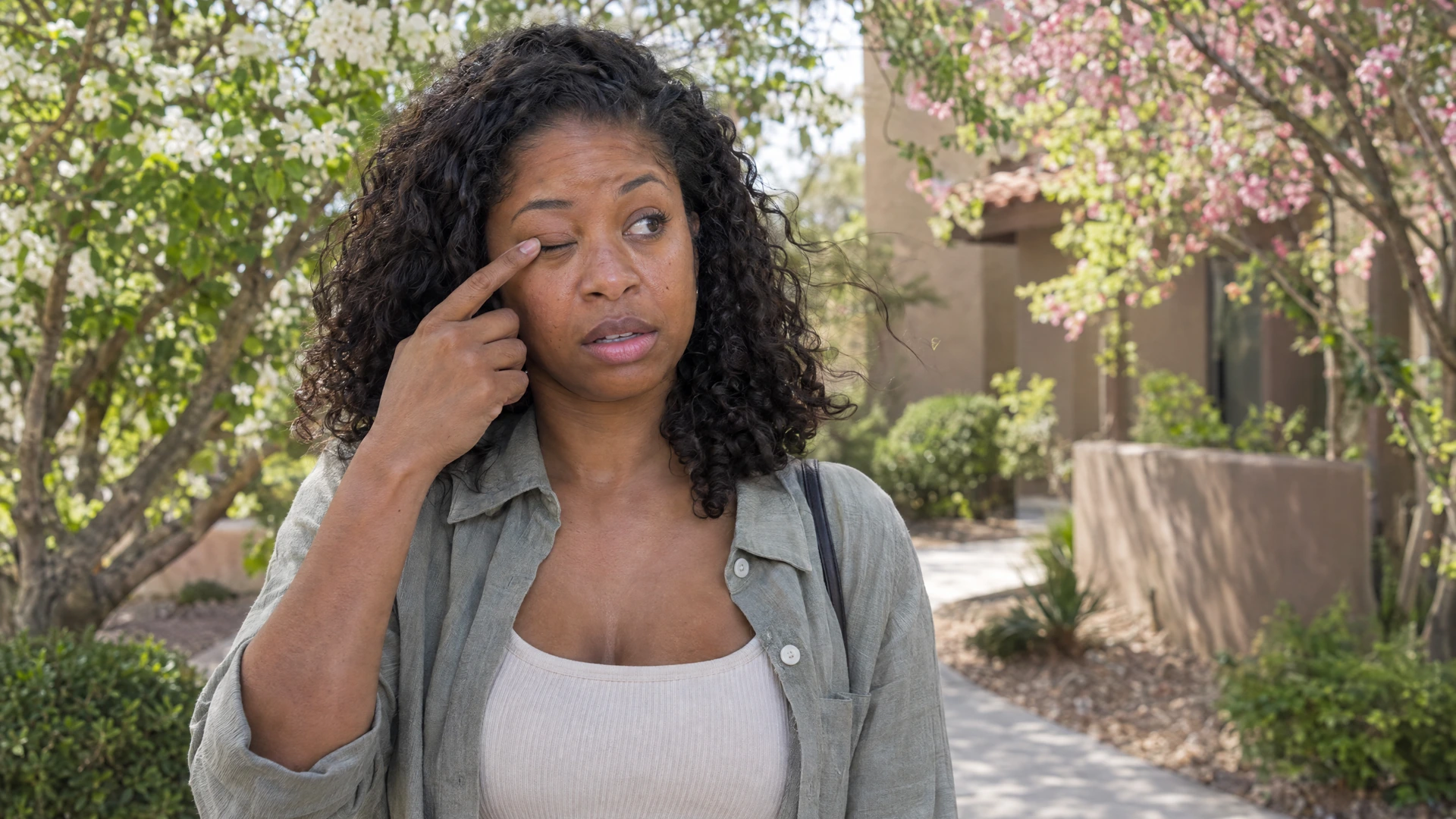
    Black woman rubbing an itchy eye by blooming desert trees, dry eye vs allergies

    TLDR: The useful distinction in dry eye vs allergies is your pattern of symptoms: itching is the strongest allergy clue, while burning points neither way on its own. Symptoms overlap, and both problems sometimes occur together. An eye exam sorts out the cause so your care fits it.

    Answer: Eye allergies usually make your eyes itch, often alongside sneezing, while dry eye often brings burning or a gritty feeling. In Las Vegas, pollen and dusty air complicate the picture. Burning alone does not separate them, and allergy medicine sometimes adds dryness. Your symptom history and an examination help distinguish allergy, dryness and overlapping problems.

    You step onto a Las Vegas patio and start rubbing your eyes. Later, indoors, they feel sandy instead. Before buying another bottle, notice which feeling troubles you most and when it starts. Those details give an optometrist more to work with than the word irritation.

    I reviewed 88 primary sources across five research lenses for this guide, and dry eye and blepharitis share symptoms with eye allergies. The American Optometric Association recommends a comprehensive eye exam to distinguish these causes of your discomfort. My approach to dry eye care starts with understanding what needs treatment. A guess between allergy and dry eye costs you weeks of the wrong drops.

    Dry Eye vs Allergies: What Do Your Symptoms Suggest?

    White man squinting on a dusty Las Vegas sidewalk with palms, dry eye vs allergies
    A dusty-day flare does not establish pollen allergy.

    Start with the itch. AAPOS identifies itching as the main symptom of allergic conjunctivitis, although your eyes also sometimes burn, sting or tear. Allergic conjunctivitis means allergy-related inflammation of the tissue covering the white of the eye and lining the eyelids. Burning does not settle the question.

    Your description matters more than finding the perfect medical word. Say whether you want to rub your eyes, blink away a gritty feeling or wipe away tears. Mention a stuffy nose or sneezing, too. Use the comparison below to organize what you notice before your visit.

    What You NoticeWhat It SuggestsWhat It Does Not Settle
    Itching is the strongest complaintAllergy deserves considerationDry eye and eyelid inflammation also cause itch
    Burning or stingingDryness or allergyThe sensation alone does not identify the cause
    Grittiness or a scratchy feelingDry eye belongs in the evaluationA symptom description does not replace an examination
    Sneezing or an itchy, stuffy nose with eye symptomsAn allergy patternDryness still needs consideration
    Symptoms during a dusty outingIrritation or exposure worth reportingDust exposure does not establish pollen allergy

    Your whole pattern belongs in the appointment. Describe the strongest symptom first, then the others, even when they seem unrelated. Include whether the discomfort starts outdoors, follows a medicine or stays with you indoors. A useful history describes what happened before you decided what to call it.

    Do Allergy Pills or Eye Drops Add Dryness?

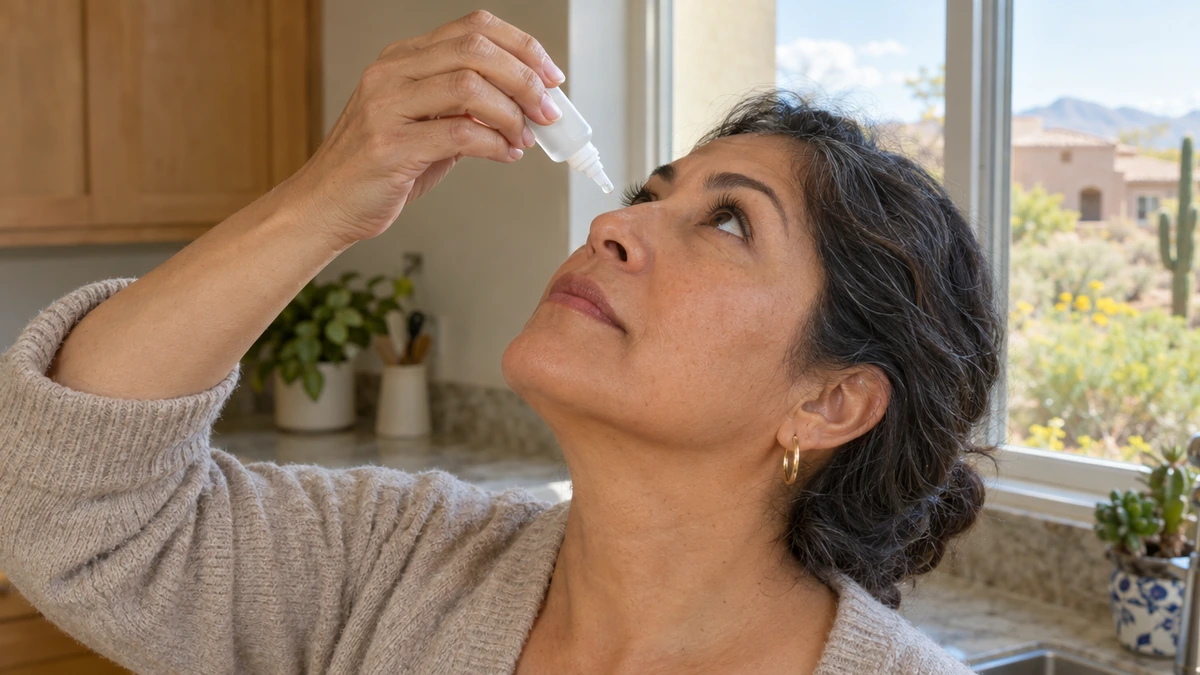
    Latina woman using an unbranded eye drop by a sunny kitchen window, dry eye vs allergies
    Include eye drops in your medication review.

    An allergy pill can stop the itch and still dry your eyes. The American Academy of Ophthalmology notes that oral antihistamines sometimes dry your eyes and worsen eye allergy symptoms despite helping itch. Report both changes when they happen together. Less itching does not explain new grittiness.

    Eye drops need review, too. The 2017 TFOS DEWS II report links topical medicines and some preservatives to dry eye through effects on your ocular surface, the exposed surface of the eye. With an antihistamine drop, review the full formulation and your response rather than assuming every drop has the same drying effect. A pill and a drop are different decisions.

    Bring your bottles or a written list. Include allergy pills, eye drops and medicines you buy without a prescription, with a note about when each started. Keep prescription changes with the prescriber, and report new discomfort instead of stopping treatment yourself. My guide to medications linked to dry eye explains that review in more detail.

    Make your notes specific. Record what improved, what persisted and what appeared after a new medicine. Keep the product names on your list even when the packaging calls several bottles allergy relief. At the visit, ask what each medicine is meant to treat and which changes need a call.

    When Does Southern Nevada Pollen Matter?

    East Asian man sneezing into his elbow by a Summerlin flowering shrub, dry eye vs allergies
    Sneezing alongside eye symptoms belongs in your allergy history.

    Spring in the valley is tree pollen season, and your calendar is a clue. A UNLV pollen study observed the main tree season from February to June and higher weed pollen from March to May and August to October across five Las Vegas Valley sites during April 2015 to April 2016. The study covered one year, with differences between sites, so use those months as an observed pattern rather than a fixed calendar for your neighborhood. Report your own timing.

    A dusty afternoon calls for a separate question. The CDC distinguishes allergens such as pollen from irritants such as dust, so your reaction to blowing desert dust does not prove allergy. Describe what was in the air and what your eyes felt. Windblown desert dust irritates your eyes. Irritation is not allergy.

    Think about your usual route through Summerlin. Note whether discomfort starts beside flowering plants in your yard, during a dusty walk or after you return indoors. Include uneventful outings as well as uncomfortable ones. For practical changes involving wind and indoor air, see why Las Vegas air dries out your eyes.

    Dry Eye vs Allergies: What If Both Are Involved?

    You do not have to choose a diagnosis before booking. Dryness and allergy sometimes coexist, and blepharitis adds another source of similar symptoms. Your appointment should address the whole complaint, including symptoms left over after treatment. I want your plan to explain the discomfort you still have.

    Keep a short record before your visit. Use ordinary language and include your current treatment. Follow this sequence to make the discussion useful without turning it into homework.

    1. Name the main feeling: itch, burning, grittiness or watering.
    2. Record when it starts and whether one eye or both feel affected.
    3. Note the setting, such as your backyard, a dusty sidewalk or an indoor workspace.
    4. List the medicines and drops used before and after symptoms began.
    5. Describe what improved and what still interrupts your day.

    Book an evaluation when recurring discomfort leaves you uncertain about what to use. Explain the problem when arranging your visit, especially when a previous allergy label no longer describes it well. Your history matters even if your eyes feel better that morning. For a broader look at visits and follow-up, read when to see an optometrist for dry eye.

    Which Red Eyes Cannot Wait Out Allergy Season?

    Red or painful eyes do not wait out allergy season: contact an eye care provider right away, as MedlinePlus instructs. Its warning signs also include flaking, discharge or a sore on your eye or eyelid, an eye injury, a bulging eye or a drooping lid. Get care right away for those signs rather than waiting for a routine allergy appointment. See a provider for pink eye with eye pain, light sensitivity, intense redness or blurred vision that stays after you wipe away discharge, the CDC advises.

    Describe your symptoms when you call. Say when they began and whether they are getting worse, and identify any drops already used. A familiar pollen season is no reason to postpone evaluation of these warning signs.

    How I Sort Allergy From Dryness at Vision by Amel

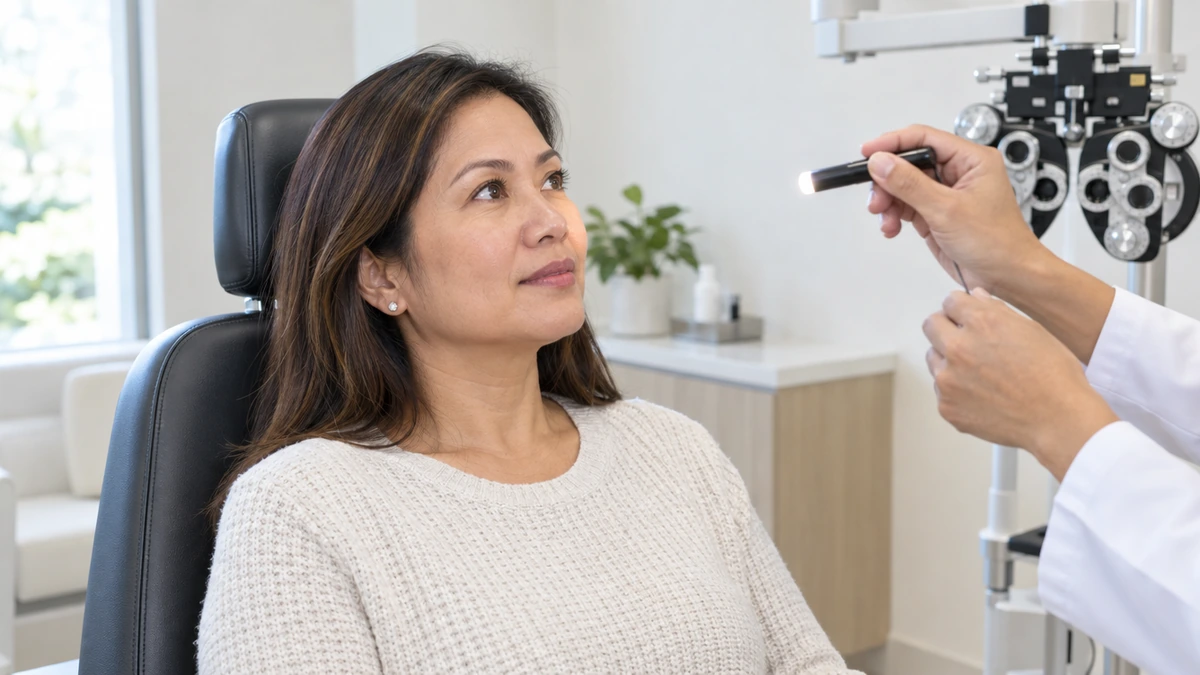
    Filipino woman in an eye exam chair with clinician hands holding a light, dry eye vs allergies
    An examination helps distinguish causes of eye discomfort.

    Your visit should separate allergy from dryness. As Dr. Amel Youssef, OD, I use your symptom history and my evaluation to shape your plan at Vision by Amel. Your symptom notes and medicine list put the details in front of us. Our eye exams include patient history, digital diagnostics, my evaluation and your plan.

    When dryness shows up in your findings, your dry eye treatment depends on your eyes: artificial tears, targeted prescription drops, warm compresses or eyelid hygiene, with care for meibomian gland dysfunction or blepharitis, chosen to sit beside your allergy care. My guide to dry eye treatment in Las Vegas explains those options. Your visit gives those choices a purpose.

    My office sits in Downtown Summerlin at Festival Plaza, 2010 Festival Plaza Dr, Suite 195. No referral is needed for an eye exam. Book online or call with your symptoms and the questions you want answered. Leave knowing which problem you have and what calms it, so your eye health stays protected.

    Frequently Asked Questions About Dry Eye and Eye Allergies

    Will I Need Allergy Testing for Itchy Eyes?

    Allergy testing is rarely needed to diagnose allergic conjunctivitis, according to the AAPOS guidance cited above. Your history and eye examination usually guide the diagnosis. Details about your exposures and symptoms come before arranging testing on your own.

    Are Allergic Eyes Contagious?

    Allergic conjunctivitis is not contagious, and neither is irritation from dust. The CDC distinguishes both from viral and bacterial causes of pink eye. Your red eye still needs a diagnosis before you assume allergy explains it.

    Should I Rub My Eyes When They Itch?

    Avoid rubbing your eyes. Rubbing adds irritation and swelling, even when the urge feels hard to resist. Mention persistent itching during your evaluation so the plan addresses the reason you keep reaching for your eyes.

    Do Artificial Tears Help Eye Allergies?

    Artificial tears temporarily wash allergens from your eyes and relieve dryness. That overlap in uses means relief from a lubricating drop does not identify which condition you have. Record the response and bring it to your visit.

    How Long Should I Use Redness-Relief Drops?

    The American Academy of Ophthalmology advises you not to use decongestant redness-relief drops for more than two to three days because longer use worsens symptoms. Check which kind of drop you have. Bring recurring redness for evaluation instead of repeatedly restarting the bottle.

    Book My Eye Exam Call (702) 858-4362

    Like this article? Add Vision by Amel as a preferred source, and you are more likely to see our articles in Google’s Top Stories.

    Add as a preferred source on Google

  • Medications That Can Cause Dry Eye, and What to Do About It

    Medications That Can Cause Dry Eye, and What to Do About It

    Medications That Can Cause Dry Eye, and What to Do About It

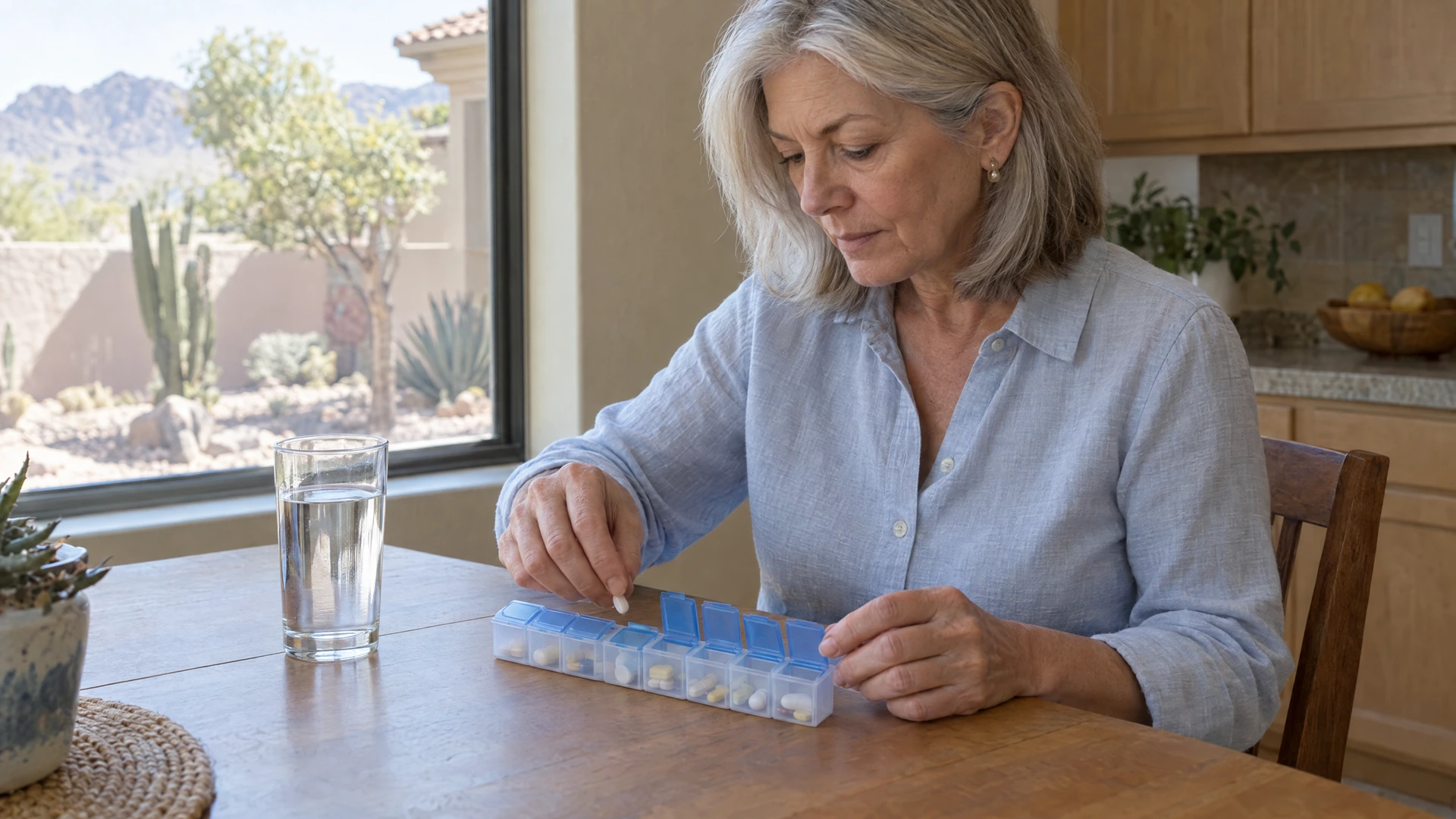
    White woman sorting a pill organizer beside water, for a guide to medications that cause dry eye

    TLDR: Reviewing medications that cause dry eye starts with your full medicine list, including allergy tablets and eye drops. Never stop or change a prescribed medicine without your prescriber, and bring the list to an eye appointment so we address dryness alongside your other health needs.

    Answer: Antihistamines, decongestants, antidepressants, some blood pressure medicines, isotretinoin and hormone therapy are linked to dry eye. Your medicine is a clue, not a diagnosis. In Las Vegas, an eye exam helps identify contributing factors and guide treatment while your prescriber decides whether a prescription needs changing.

    You fill the pill organizer at your Summerlin kitchen table. Then you reach past your breakfast cup for eye drops. When dryness appears after a new prescription, bring that timing to me, your optometrist, along with the medicine name. My priority is an eye care plan you understand, with a clear next step for both your eyes and your prescriptions.

    I reviewed 88 primary sources across five research lenses for this guide, and some medicines for allergies, depression and high blood pressure are linked to dry eye. The National Eye Institute identifies these medicine groups among possible causes of your symptoms. My dry eye treatment approach starts with the whole picture, as outlined on our dry eye care page. Bring your questions, including the ones you have hesitated to ask.

    Which Medications That Cause Dry Eye Belong on Your List?

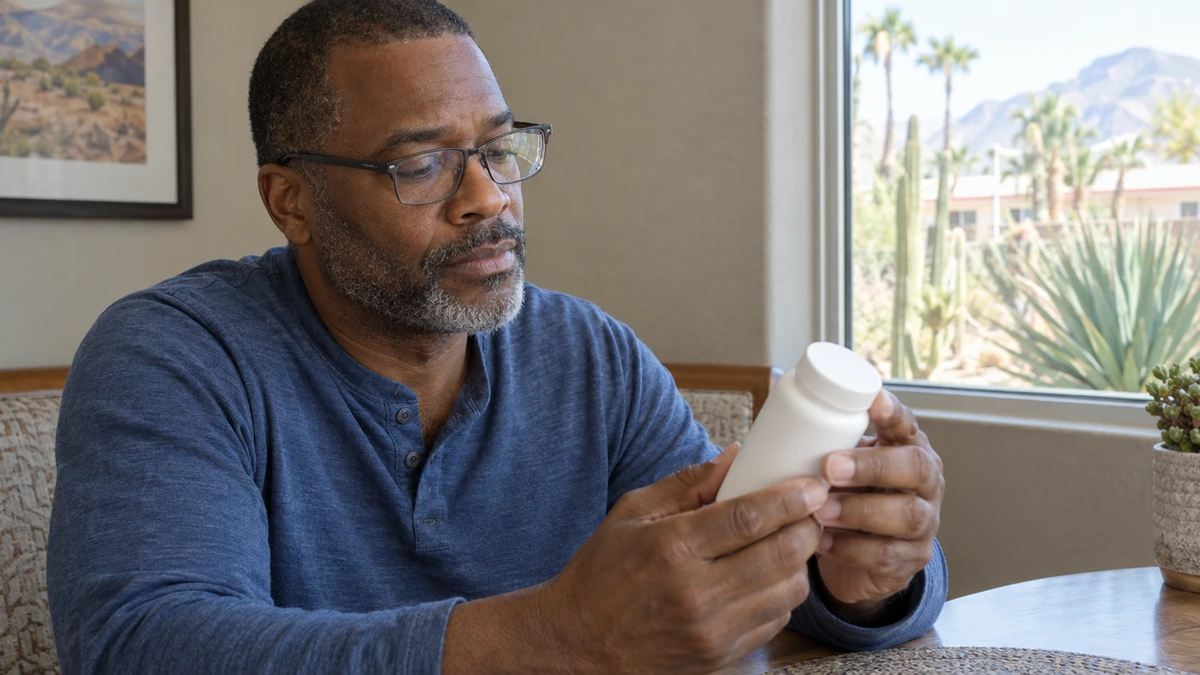
    Black man reading a medicine container with glasses, for a guide to medications that cause dry eye
    Bring the medicine container when you are unsure of its name.

    Names beat categories. “Blood pressure pill” tells me little. The name on the bottle tells me plenty. The 2017 TFOS DEWS II report links the groups below to dry eye through effects on your tears or eyelid oil glands. These links describe possible contributors, with effects differing by medicine and person.

    Medicine GroupLink to Dry EyeWhat to Bring Up
    AntihistaminesSome have drying effects, and oral use is associated with dry eye.Your allergy tablets, including occasional use.
    DecongestantsIncluded among medicine groups with drying effects.Cold remedies and products with several ingredients.
    Antidepressants and anti-anxiety medicinesUse is associated with dry eye in observational research.The exact prescription and any recent changes.
    Some blood pressure medicinesDiuretics and beta-blockers have links to dry eye.The medicine name, rather than its purpose alone.
    IsotretinoinLinked to changes in eyelid oil glands and tear film stability.Current or past acne treatment and when symptoms began.
    Hormone therapyMenopausal hormone therapy, especially estrogen alone, is associated with dry eye.The type of hormone therapy you use.

    Use this table to prepare. Bring the actual package when you do not know which group a medicine belongs to. Include treatments prescribed elsewhere, even when their purpose seems unrelated to your eyes. I would rather review an extra bottle than have you leave out a medicine because it seemed irrelevant.

    How Does Dry Eye Care Work Around Your Medicines?

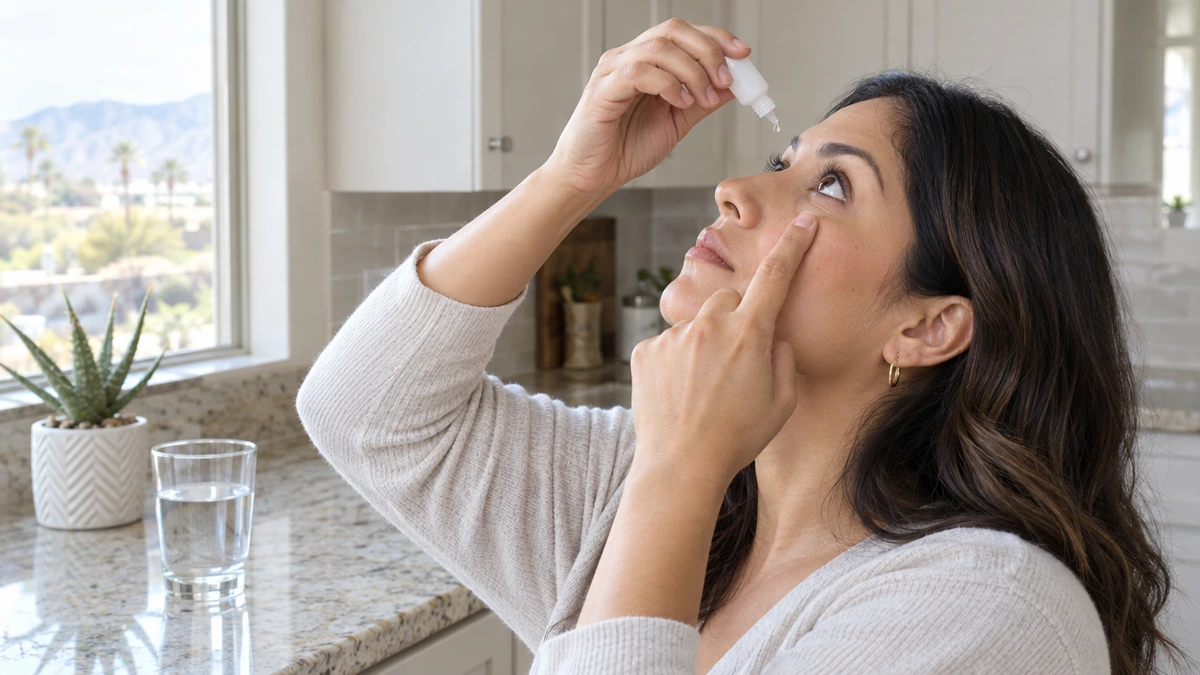
    Latina woman using eye drops at a kitchen counter, for a guide to medications that cause dry eye
    Include eye drops when you review your medicines.

    You keep your treatment. We work on your comfort. Depending on your eyes, my plan includes artificial tears, targeted prescription eye drops for inflammation, warm compresses, eyelid hygiene or punctal plugs to conserve tears. Care for meibomian gland dysfunction and blepharitis also belongs in the discussion when those conditions are present. The choice follows your evaluation.

    Your home plan needs clear instructions. Before you leave, ask which drops to use, how to use them and what should prompt a call. My guide to dry eye treatment in Las Vegas explains the treatment options in more detail. A drop schedule needs to fit your day, whether you are heading to a shift off the 215 or caring for a parent at home. Tell me which step feels difficult so we address it before you leave.

    Write down whether your concern is discomfort, difficulty using the drops or uncertainty about the instructions. Keep prescribed medicines on their assigned schedule while you seek advice about changes. I want your eye treatment to fit into a plan you understand, rather than become another bottle you feel unsure about.

    What Should You Bring to Your Eye Appointment?

    Older Asian couple with a medicine pouch at a front desk, for a guide to medications that cause dry eye
    Bring your medicine containers when you need help completing the list.

    A complete list saves you guesswork at the visit. Include daily prescriptions, occasional tablets and everything you put in your eyes. A bottle tucked into a travel bag still belongs on that list, even when you rarely use it. Gather the containers before your drive to Festival Plaza, while the pill organizer and bathroom shelf are still within reach.

    1. Record each medicine’s name, strength and schedule exactly as shown on its container. Add the reason you take it and the prescriber’s name.
    2. Include nonprescription cold and allergy remedies, vitamins, supplements and eye drops. Record how often you actually use each product.
    3. Note when dryness began and any prescription starts or dose changes near that time. Mark uncertain dates as approximate.
    4. Describe a difficult moment in your day, such as reading at the kitchen table or wearing contacts through a shift. Explain what you tried afterward.
    5. Bring the list to both visits. Use the same version with me and your prescriber, then update it after an agreed change.

    Missing a detail is easy. A partner who fills your pill organizer might know the names better than you do. That person or the containers help fill the gaps, along with recently stopped medicines and their stop dates. You do not need to decide which item matters before you arrive.

    Specific timing gives your concern a clear focus. “My eyes started burning after this prescription changed” gives us more to discuss than “my eyes feel bad.” Describe the timing without deciding the cause yourself. Save the main concern at the top of your list so it gets discussed before the visit ends.

    What Should You Ask About Medications That Cause Dry Eye?

    Middle Eastern woman on the phone beside a notepad, for a guide to medications that cause dry eye
    Discuss symptoms with your prescriber before changing a prescription.

    Never stop or change your prescribed medicine without your prescriber. MedlinePlus advises discussing side effects before stopping, with dose adjustments or a different medicine among the options your prescriber considers. Start the conversation with the symptom, the medicine and the timing. Your request is simple: help with the discomfort, with no break in your treatment.

    You do not need to propose a replacement. Ask whether the medicine is a plausible contributor and whether an alternative makes sense for your health needs. Explain any eye treatment already prescribed so the discussion includes both plans. Leave with clear instructions about what to continue and whom to contact with questions.

    Keep your mental health care in that conversation. Finding an antidepressant in the table is a reason to discuss symptoms, not to experiment with missed doses. The same instruction applies to blood pressure treatment and hormone therapy. Your prescriber should direct any change.

    Use a short note during the call. Include the medicine name, when symptoms appeared, what your eyes feel like and what you need clarified. Record the advice in your own words and read it back when anything sounds uncertain. One clear call to your prescriber beats a month of guessing.

    When Should You Get Help Right Away?

    A red or painful eye comes before any medication question: contact an eye care provider right away, as MedlinePlus advises. Do not wait for a routine medication review to report those symptoms. Tell the person taking your call about the eye symptoms first, then the medicine you suspect.

    Your suspected side effect is still a symptom that needs an exam. My guide to when dry eyes need an appointment covers the broader signs and referral discussion.

    How I Approach Your Medication Questions at Vision by Amel

    Your medicine list gives us a clear place to begin your comprehensive eye exam. At Vision by Amel, your visit includes a patient history, digital diagnostics, my evaluation and your plan. Use the history discussion to raise changes in prescriptions and the discomfort you want addressed. The eye exam page explains the visit before you arrive.

    Your eye health plan should make sense at home. Your medicines stay in your prescriber’s hands, and I build your eye plan around them. With your current drop bottles in front of us, we discuss the products you use at the kitchen counter or keep in your work bag. My priority is a workable eye plan with prescription changes directed by the prescriber responsible for that medicine.

    You will find Vision by Amel in Downtown Summerlin at Festival Plaza, 2010 Festival Plaza Dr, Suite 195, Las Vegas, NV 89135. No referral is needed for an eye exam. Book online or call (702) 858-4362, and mention the medication question when arranging your visit. Tuck your medicine list beside your keys before you leave home.

    Frequently Asked Questions About Medications and Dry Eye

    Why Do My Allergy Tablets Help Itching but Leave My Eyes Dry?

    Both effects are possible with oral antihistamines, according to the American Academy of Ophthalmology. Relief from itching does not tell you whether the treatment suits your dryness. Describe each symptom separately when we discuss your allergy medicines.

    Will My Eyes Return to Normal After Isotretinoin?

    A small uncontrolled study in Ophthalmology and Therapy found gland changes judged reversible, but symptoms remained above baseline a month after treatment stopped. That finding does not establish a recovery date for your eyes. Arrange an eye assessment for dryness during treatment or symptoms persisting afterward.

    Do My Glaucoma Drops Belong on the List Too?

    Yes, include their names and schedules because the 2017 TFOS DEWS II report describes irritation of the ocular surface and dry eye linked to topical medicines and their preservatives. Keep using your glaucoma prescription as directed while you raise the concern with its prescriber. Include which drop stings and whether the sensation continues after you use it.

    Does a Medicine Missing From This Table Need Mentioning?

    Yes, the AAO Preferred Practice Pattern includes additional medicines in its history checklist, such as heart rhythm drugs and chemotherapy. Your list should be complete even when this article does not name the treatment. Include the prescribing team’s contact details with an unfamiliar medication.

    What Should I Do When Different Offices Give Me Different Instructions?

    Request clarification before changing your prescription. Write down each instruction and contact the prescriber responsible for the medicine, explaining where the advice differs. At your next eye visit, share the clarified plan so we are discussing the same schedule.

    Book My Eye Exam Call (702) 858-4362

    Like this article? Add Vision by Amel as a preferred source, and you are more likely to see our articles in Google’s Top Stories.

    Add as a preferred source on Google

  • Blepharitis: Why Your Eyelids Itch, Crust and Burn

    Blepharitis: Why Your Eyelids Itch, Crust and Burn

    Blepharitis: Why Your Eyelids Itch, Crust and Burn

    South Asian man gently cleaning his eyelid with a soft pad for blepharitis care

    TLDR: Blepharitis is eyelid inflammation that leaves your lids itchy, crusty or burning. Gentle daily eyelid hygiene helps control symptoms, while persistent inflammation needs an exam to identify its cause and guide prescription care.

    Answer: Blepharitis affects the lash line, the inner eyelid edge or both, causing crusts and irritation around your eyes. Bacteria, skin conditions, poorly working oil glands and Demodex mites are possible contributors. For adults in Las Vegas, care starts with identifying the type, then choosing a lid-cleaning routine and any prescription treatment your findings require.

    You notice flakes before breakfast. Your eyelids burn while you get ready for work in Summerlin, and washing your face has not settled the problem. As an optometrist, I want you to understand what those changes mean, and book an exam before you buy another bottle of eye drops.

    I reviewed 88 primary sources across five research lenses for this guide, and blepharitis often needs ongoing care to keep symptoms under control. Your lids also matter to dry eye, so I consider them when planning dry eye treatment. My dry eye care page explains the broader options, while this guide focuses on the inflamed eyelid itself.

    Where Does Blepharitis Start?

    White woman looking closely at her eyelids in a lighted bathroom mirror, illustrating blepharitis symptoms
    The location of eyelid inflammation matters.

    Where the crust sits tells me where to start. According to the National Eye Institute, anterior blepharitis affects your lash line, posterior blepharitis affects the inner lid edge, and both types sometimes occur together. Crusts on waking, itching and burning belong to the symptom picture.

    TypeWhere It HappensCommon Contributors
    Anterior blepharitisOuter lid edge where lashes attachSkin bacteria and dandruff from the scalp or eyebrows
    Posterior blepharitisInner lid edge beside the eyeClogged oil glands, with rosacea or scalp dandruff as contributors
    Both types togetherOuter and inner lid edgesOverlapping causes that need attention in the same care plan

    Posterior blepharitis often travels with meibomian gland dysfunction, but the TFOS MGD Workshop says the two terms are not interchangeable, so your exam checks both.

    Your lid symptoms belong in the same conversation as dryness. Blepharitis is associated with dry eye, so mention both the irritated lid edge and how the eye itself feels. For a closer look at gland function and the tear film, read my guide to meibomian gland dysfunction. Include both concerns in your eye exam, even when the flakes seem more obvious than the dryness.

    Why Are Your Lids Inflamed?

    Your scalp and skin hold clues your lids cannot show alone. Your scalp dandruff, facial rosacea, oily skin or allergies affecting the lashes are useful clues to the cause. Mention changes in these areas alongside your eyelid symptoms, including what you already use on your skin.

    Demodex deserves a careful look. A review in Cornea describes sleeve-like debris at the lash base as a clue to Demodex blepharitis, microscopic confirmation of suspected cases, and mites in people with and without symptoms. That means a mite finding alone does not explain your discomfort.

    Persistent symptoms call for another look at the cause. Tell me when your current routine has stopped helping, or when it never made a difference. Bring your treatment history to the visit, including what helped, what stung and what you stopped using.

    I prefer a clear cause over a crowded bathroom shelf. You should know why each part of your routine belongs there. A product chosen for a different eyelid problem adds work without answering why your own lids stay inflamed.

    Does Eyelid Hygiene Help Blepharitis?

    Black man holding a warm washcloth over his closed eyes as part of blepharitis care
    Warm compresses are part of an eyelid hygiene routine.

    Gentle cleaning aims to ease crusting and discomfort. A Cochrane review, with searches ending in February 2012, found possible symptom relief from lid hygiene but no strong evidence of lasting elimination from the treatments studied. For you, that supports a practical goal: manage discomfort and crusting while checking whether the plan fits the cause.

    A clear routine gives you steps to follow. Warm compresses and eyelid cleansing are basic parts of blepharitis care, but more products do not make the instructions easier to follow. My dry eye treatment guide covers the detailed warm-compress and cleaning methods.

    1. Write down your current lid-care routine, including the cleanser, compress and any drops.
    2. Bring the routine to your exam so we match it to the cause of your symptoms.
    3. Follow the agreed method and record whether crusting, itching or burning changes.
    4. At your follow-up, explain which symptoms remain and which steps are hard to follow.

    Make room for the routine in your actual day. After a hospital shift and the drive home on the 215, you need more than a vague instruction to clean your lids. Before you leave the visit, make sure you know what to use, where to use it and which changes warrant a call.

    When Does Blepharitis Need Prescription Care?

    Eye doctor hands holding a small magnifier near a woman’s eyelid during a blepharitis examination
    An exam helps guide care for eyelid inflammation.

    Prescription care depends on the cause. Antibiotic drops, ointments or pills are options for bacterial blepharitis, while steroid drops are sometimes used to control inflammation. Your symptoms alone do not select the medicine, and treatment also needs to address any contributing skin condition.

    A steroid prescription includes follow-up. The American Academy of Ophthalmology recommends a recheck within a few weeks, including eye pressure measurement, when steroid treatment is prescribed. Keep that appointment even when your lids feel better.

    Your skin history helps guide treatment, too. When rosacea or dandruff drives your blepharitis, treating the skin condition helps address that contributor. A plan focused only on the lashes leaves that part of the history unexplored.

    Put your questions beside the prescription. What problem is the medicine treating, how should you use it, and what happens at the recheck? Clear instructions are part of good eye care, especially when the plan includes both lid cleaning and medication.

    Why Does Blepharitis Keep Coming Back?

    East Asian woman calmly washing her face at a sink, illustrating a daily routine alongside blepharitis care
    Ongoing blepharitis care belongs in a manageable daily routine.

    Blepharitis is often chronic. Your symptoms might settle while the tendency toward lid inflammation remains, which is why daily cleaning often becomes an ongoing habit. Judge the plan by symptom control and the findings at follow-up, rather than a promise of permanent disappearance.

    A routine you keep beats a perfect routine you skip. Your plan should fit the morning you have, with instructions you remember when you are tired. Say when a step feels confusing, uncomfortable or hard to fit around work so we have something specific to discuss.

    A calm week is good news, not a finish line. So is a flare after a stretch of calmer lids, especially when you have kept to the agreed routine. Note the change and bring it to the next discussion about your plan.

    Crusts back after a calm stretch? Bring me that detail. Your notes about crusting, burning and the treatments used help keep the conversation focused. Repeating the same purchase without reviewing the cause leaves the most useful question unanswered: what needs to change in your care?

    Which Eyelid Changes Need Care Right Away?

    Contact an eye care provider right away for red or painful eyes, flaking, discharge, or a sore on your eye or eyelid, as MedlinePlus advises. An inflamed eyelid lesion that looks suspicious for cancer needs a specialist, the AAO guideline cited above says, and I refer you to one when your lid needs it. Describe the symptoms when you call so the team knows what has changed.

    Keep your eye health ahead of the label. A previous blepharitis diagnosis does not explain every new eye problem. My guide to when to seek dry eye care explains the broader warning signs and referral decisions.

    How I Approach Your Eyelid Concerns at Vision by Amel

    Your history helps me match eyelid care to the problem. At Vision by Amel, my evaluation and your plan follow the history and digital diagnostic steps in the exam. For eyelid concerns, bring the names of your drops and cleansers, any skin diagnoses and a clear account of how the symptoms have changed.

    Depending on your eyes, my plans include eyelid hygiene, warm compresses, care for blepharitis and meibomian gland dysfunction, or targeted prescription eye drops including anti-inflammatory medication. Each part of your plan needs a clear purpose. You should leave knowing its purpose and the next step.

    My office sits in Downtown Summerlin at Festival Plaza, 2010 Festival Plaza Dr, Suite 195. Book online or call my team at (702) 858-4362, with no referral needed for an eye exam. Visit the eye exams page to prepare for your visit.

    Frequently Asked Questions About Blepharitis

    Is Blepharitis Something I Pass to My Family?

    Blepharitis itself is not contagious. You do not pass the condition to your family through ordinary contact. Its relationship to skin bacteria does not make it a contagious eye infection.

    Are My Repeated Eyelid Bumps Related?

    Styes and chalazia are among the problems associated with blepharitis. Your recurring bumps belong in the history even when the itching is what prompted your visit. Mention where they appear and whether the same area keeps bothering you.

    Should I Use Baby Shampoo on My Eyelids?

    The AAO EyeSmart guide describes baby shampoo diluted in warm water and gentle cleaning at the lash base as one lid-hygiene method. That is a specific diluted method, rather than undiluted shampoo applied to your eyes. Review the cleaning method with me so you understand what belongs in your routine.

    Is Tea Tree Oil a Good Home Treatment?

    Do not start tea tree oil on your eyelids without my advice. A Cochrane tea tree oil review found uncertain short-term effectiveness for Demodex blepharitis and noted the risk of eye irritation. An online recipe does not establish a suitable concentration or method for your eyes.

    Will Blepharitis Damage My Eyes Permanently?

    Blepharitis usually causes no lasting eye damage. In severe cases, blepharitis can damage the cornea, the clear front surface of your eye, so persistent or changing symptoms need evaluation. Keep the distinction in mind: an ongoing condition still needs follow-up when its symptoms change.

    Book My Eye Exam Call (702) 858-4362

    Like this article? Add Vision by Amel as a preferred source, and you are more likely to see our articles in Google’s Top Stories.
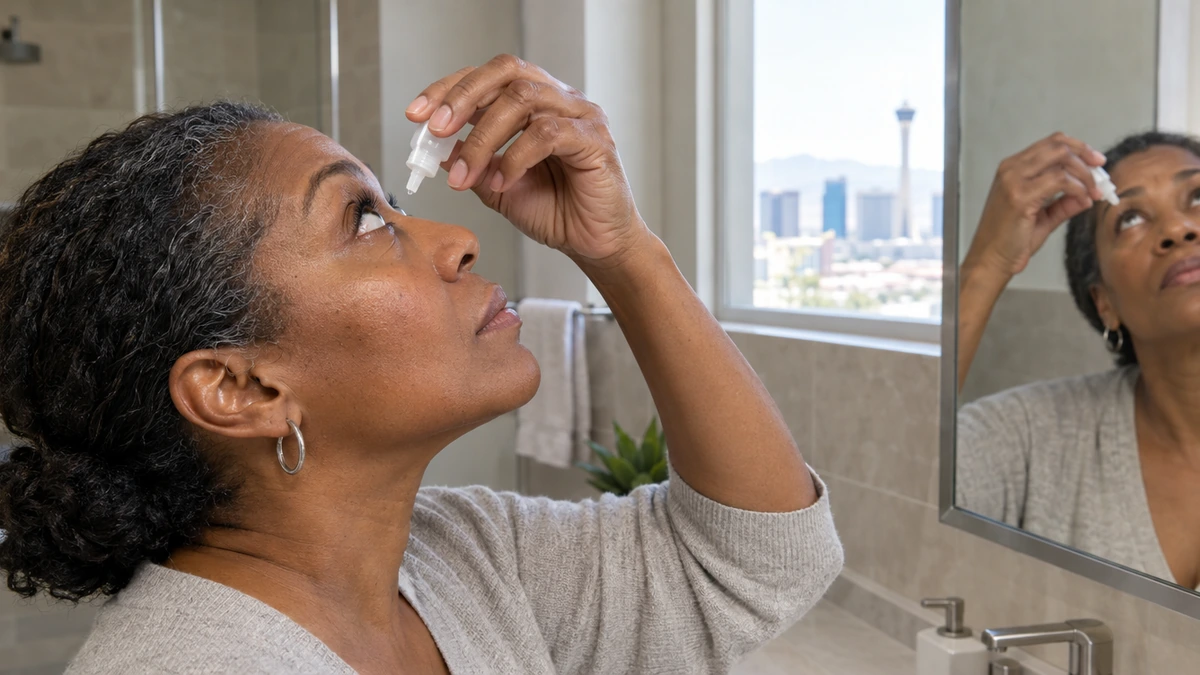
    Add as a preferred source on Google

  • Meibomian Gland Dysfunction: The Oil Problem Behind Dry Eye

    Meibomian Gland Dysfunction: The Oil Problem Behind Dry Eye

    Meibomian Gland Dysfunction: The Oil Problem Behind Dry Eye

    White woman holding a warm mask over closed eyes for meibomian gland dysfunction care

    TLDR: Meibomian gland dysfunction affects the oil glands in your eyelids and contributes to dry eye by disrupting the tear film. An eye exam helps identify the gland problem, while gentle home care and selected prescription treatment address your symptoms.

    Answer: Meibomian gland dysfunction, or MGD, is a chronic problem involving blocked eyelid oil glands, altered oil, or both. Your tears need this oil to limit evaporation, especially in dry Las Vegas air. Treatment focuses on gland function, eyelid care and inflammation, with an exam guiding which steps fit your eyes.

    You finish a shift under office air conditioning with gritty eyes, then reach for another bottle of drops. The missing question is simple: what is happening at your eyelids? Understanding their oil glands gives you a clearer reason for each step in dry eye treatment, beyond choosing another drop.

    I reviewed 88 primary sources across five research lenses for this guide, and oil-gland dysfunction involves more than blocked openings. The TFOS MGD Workshop defines MGD as a chronic, widespread gland abnormality involving blocked outlets, changed oil quality or amount, or a combination. For you, this explains why my approach to dry eye care starts with identifying the problem.

    What Is Meibomian Gland Dysfunction?

    Gloved hands gently lifting an upper eyelid near a slit lamp during a meibomian gland dysfunction exam
    The eyelid glands are part of an MGD evaluation.

    Your eyelids contain meibomian glands whose oil contributes to the tear film, the coating over the front of your eye. When gland function changes, the tear film loses part of its protection against evaporation. Thin oil, fast evaporation, burning eyes. That is the chain MGD sets off.

    You might notice burning, itching, a sandy feeling, watering or blur that comes and goes, all symptoms listed by AAPOS. Early MGD sometimes produces no noticeable symptoms. The useful detail is whether your discomfort interrupts work or returns after drops. Your description matters even when the problem comes and goes.

    MGD is common, but the numbers need context: the TFOS epidemiology report found published estimates from 3.5% to almost 70%, depending on the population and definition. Those figures do not establish your risk in Summerlin. The useful question is whether your own glands are functioning well.

    You might also hear the term blepharitis during an eyelid evaluation. MGD describes gland dysfunction, while posterior blepharitis describes inflammation along the back edge of the lid. The problems often occur together, but the terms mean different things. That distinction shapes how you read your treatment plan.

    How Is Meibomian Gland Dysfunction Found?

    Your symptoms start the evaluation. An optometrist also needs to assess the lids, gland secretions and tear film to understand what is happening at the ocular surface. For a comprehensive eye exam, bring the names of your drops and describe what changes after you use them. Include what remains uncomfortable.

    The 2017 TFOS diagnostic report explains why oil quantity, quality and ease of expression matter to your evaluation, and why gland imaging alone is insufficient for diagnosis. Gentle pressure helps assess the secretions. A picture adds information, but the findings need to fit together. You should leave understanding what each finding means for your plan.

    Part of the EvaluationWhat It Helps EstablishWhat to Discuss
    Symptom historyYour discomfort and its patternWhich tasks bring symptoms to your notice
    Gland secretion assessmentThe amount, appearance and ease of oil expressionWhether the findings support MGD
    Tear film and surface assessmentTear stability and signs on the eye surfaceHow the findings shape your care
    Gland imaging, when usedStructural information alongside other findingsWhy imaging alone does not settle the diagnosis

    Your exam should explain the next step. You do not need to arrive with a diagnosis selected online. Ask which finding supports MGD and which part of the plan addresses it. A gland problem needs gland care, not a fourth bottle of drops.

    What Does Home Care Do for Your Glands?

    Filipino man gently massaging closed eyelids at a bathroom mirror for meibomian gland dysfunction care
    Keep your eyelid care gentle and follow your plan.

    Warmth softens stubborn gland oil. That is the whole point of a compress. The 2017 TFOS management report includes warm compresses and eyelid hygiene in MGD care, with heat helping soften obstructed secretions in your glands. The best temperature and duration remain unsettled. More heat and harder pressure are poor substitutes for a clear routine.

    1. Review your routine at the exam. Get clear instructions for warmth, duration, cleaning and whether gentle lid massage belongs in your plan.
    2. Use gentle warmth over closed eyes. Follow the instructions for your compress and keep it comfortably warm, never hot.
    3. Keep eyelid cleaning gentle. Follow the method chosen for your lids rather than adding vigorous scrubbing.
    4. Report what happens. Note comfort, irritation and any difficulty keeping up with the routine so your plan stays workable.

    Consistency matters, but expectations matter too. A 2024 Ophthalmology and Therapy review found repeated warm compress use relieved MGD symptoms, describing its role as symptom relief rather than permanent resolution of your gland condition. The studies did not yield a single pooled estimate of benefit. Your response needs follow-up, not a promise.

    Build the routine around your actual day. A quiet stretch after work beats a rushed morning before your commute. Write down any step you find confusing and bring it to your visit. My preference is a simple routine you will follow consistently.

    Why Does Desert Air Matter When Oil Is the Problem?

    Black woman mid-blink at a bright window desk, a workday detail for a meibomian gland dysfunction history
    Your work environment belongs in the symptom history.

    Your eyelid care and your surroundings both matter. Low humidity and moving air increase evaporation and tear instability, as described in the TFOS management report cited above. Picture your desk beside an air vent or the car fan aimed at your face on the 215. Those details belong in your symptom history.

    Make the workday detail specific: gritty eyes at a Summerlin desk beneath the vent, or burning on the drive home. Record where you notice discomfort, then discuss whether the exam points to MGD, another contributor or both. For practical changes around wind and cooling, read why Las Vegas air dries out your eyes. Choose the changes that fit your home, commute and workplace, then note what happens.

    When Does MGD Need Prescription Care?

    Mild MGD and stubborn MGD get different plans. The AAPOS guidance cited above lists artificial tears, warm compresses and selected prescription antibiotic or steroid eye drops, with oral antibiotics among other options. The list describes choices, not a prescription for every person with MGD. Review what each proposed medicine is intended to address in your care.

    Keep the distinction between comfort and gland care clear. When you discuss eye drops, ask whether their role is lubrication or treatment of inflammation, and how they fit with eyelid care. Bring the bottles you already use so the conversation stays specific. Avoid building a plan by collecting products with overlapping purposes.

    You also need a way to review the plan. Record which symptoms remain, what interferes with the routine and what questions arise after you start. The broader Las Vegas dry eye treatment guide explains how treatment options fit together. Use it to prepare questions about your next step.

    When Should You Skip the Compress and Call?

    Skip tonight’s compress and call: red or painful eyes need me or another eye care provider right away, as MedlinePlus directs. Do not wait for the next compress session to decide whether to call. Describe the change when you call so it is clear why you need care.

    Your home routine belongs alongside clear instructions about changes in symptoms. Save my number with your care plan, so you never hunt for it when you are worried. My guide to when to seek dry eye care in Summerlin covers the broader triage questions. Read it before you need it.

    How I Approach Your MGD Care at Vision by Amel

    Latina woman smiling with relaxed eyes on a shaded Summerlin patio, for a meibomian gland dysfunction guide
    Your MGD plan should be clear enough to use at home.

    I am Dr. Amel Youssef, founder of Vision by Amel. My eye care plans include care for MGD and blepharitis, with warm compresses, eyelid hygiene or targeted prescription drops depending on your eyes. Your current routine gives us something concrete to discuss, from the compress you use after work to the drops you reach for before driving home. Your eye health plan should be clear enough to use at home.

    My office sits in Downtown Summerlin at Festival Plaza, 2010 Festival Plaza Dr, Suite 195. Book online or call (702) 858-4362, with no referral needed for an eye exam. My eye exam page explains the visit framework. Your questions about gland function, drops and the steps you struggle to keep up with belong in that visit.

    Frequently Asked Questions About Meibomian Gland Dysfunction

    Can MGD Be Resolved Permanently?

    Plan on long-term care, because the TFOS MGD Workshop defines MGD as a chronic condition. The 2024 review of 20 warm compress studies calls compresses symptom relief, not permanent resolution, so your plan aims at steady control you keep up for the long term.

    How Do I Explain Symptoms That Change During the Day?

    Use a concrete example from your own schedule. Describe what you were doing when discomfort started, whether it interrupted the task and what you tried next. A short account of your morning and evening gives us more to discuss than a label such as mild or severe.

    Is a Hotter Compress Better for MGD?

    No. Hotter is not better: the TFOS management report cited above warns against heating your eyelid skin above 45 °C, because extra heat risks thermal damage. Keep your cloth warm, never hot, and stop if it feels too hot on your skin.

    What If I Struggle to Keep Up With Eyelid Care?

    Tell me what gets in your way, whether it is timing, unclear instructions or an uncomfortable step. Write down which part you complete and which part you skip. That gives us a useful conversation about your routine instead of leaving you with instructions you are not using.

    Why Should I Avoid Rubbing My Eyes After a Compress?

    The TFOS management report warns that rubbing your eye while the cornea is warm risks changing its shape and blurring vision. Gentle eyelid care requires a different approach from rubbing the eye itself. Get the massage instructions clear before adding that step to your routine.

    Book My Eye Exam Call (702) 858-4362

    Like this article? Add Vision by Amel as a preferred source, and you are more likely to see our articles in Google’s Top Stories.

    Add as a preferred source on Google

  • How to Choose a Dry Eye Doctor in Las Vegas

    How to Choose a Dry Eye Doctor in Las Vegas

    How to Choose a Dry Eye Doctor in Las Vegas

    Woman seated across from a dry eye doctor seen from behind in a bright consultation room

    TLDR: Choose a dry eye doctor who explains your findings, treatment choices and next steps. In Las Vegas, compare the evaluation, follow-up plan and referral approach, then check your insurance benefits before booking.

    Answer: To choose a dry eye doctor in Las Vegas, look for an optometrist or ophthalmologist who evaluates your symptoms, eyelids and tears. Request a clear explanation of the findings and a plan for reviewing progress. Check how the office handles ophthalmology referrals and whether your visit will be billed to medical or vision insurance.

    You want an explanation you understand. You have tried three bottles of drops. Your eyes still burn on the drive home along the 215. My approach to treating dry eye starts with understanding what your eyes need, before choosing a product.

    I reviewed 88 primary sources across five research lenses for this guide, and a dry eye diagnosis needs more than an isolated test result. For your evaluation, the American Academy of Ophthalmology says no single test establishes the diagnosis. I value a clear explanation more than a long equipment list.

    How Do You Compare Dry Eye Doctors?

    Man with reading glasses preparing questions in a notebook for a dry eye doctor visit
    Write down what you want answered.

    Start with the care you need. For general eye care, the National Eye Institute considers either an optometrist or ophthalmologist a good option, with ophthalmologists offering additional treatments such as surgery for serious eye problems. Both professions examine eyes and prescribe medicines within their scope of practice.

    You might search for a “dry eye specialist” or “dry eye clinic” when ordinary drops have disappointed you. A search hands you names. The first visit shows you who explains, who listens and who plans ahead. On that call, find out what the evaluation covers, who explains your results and what happens when you need more care.

    One call tells you a lot. Say why you want an eye exam and what you have already tried. Then listen: does the office ask about your symptoms, or only about your insurance?

    Compare explanations as well as availability. Write down what you want answered before you arrive. Afterward, consider whether the explanations made sense, whether you had time for questions and whether you felt rushed. Choose someone you feel able to work with.

    What Should a Dry Eye Doctor Evaluate?

    Woman seated at a slit lamp with a dry eye doctor visible only from behind
    Discuss what the examination shows.

    Your daily symptoms should guide the evaluation. The American Optometric Association describes a workup covering symptoms, general health, medications and environment, along with examination of the lids, blinking, cornea and tear quantity and quality. Bring the names of your medicines and eye drops, plus notes about what you have already tried.

    Make those notes specific. Describe what happens during your afternoon computer work in Summerlin or after a long shift under hospital air conditioning. Include when the problem began and what interrupts your day. A brief account in your own words is more useful than a collection of search results.

    Use this table to prepare your questions. It turns broad examination terms into points to discuss during the visit. The key question is how those findings fit together for you.

    Part of the EvaluationWhat to DiscussA Useful Question
    Symptom and health historyYour symptoms, medicines, general health and environmentWhich details in my history matter here?
    Eyelids and blinkingLid structure and how your eyes blinkWhat did you notice about my lids?
    Magnified examinationThe lids and ocular surface, including the corneaWhat did the close examination show?
    Tear assessmentTear quantity and qualityHow do these findings explain my symptoms?

    A comprehensive eye exam should leave you understanding why a test matters. The 2017 TFOS DEWS II report explains that symptoms plus a positive tear film test support diagnosis without the full test battery, while negative available tests sometimes require referral for further testing. Each proposed test needs a reason tied to your care: what would its result change?

    Which Questions Make the Visit More Useful?

    Leave with a plan you understand. Keep your questions on paper so nothing important gets lost in the conversation. Work through them in this order, beginning with the findings and ending with follow-up.

    1. Start with the explanation: “What did you find, and how does it relate to what I feel?”
    2. Clarify the first step: “Why are you recommending this option for my eyes?”
    3. Discuss practical use: “How do I fit the plan into my workday, and what problems should I report?”
    4. Set the review: “When should we assess progress, and what should I track until then?”
    5. Establish the referral plan: “What findings would mean I need an ophthalmologist?”

    Your questions should include treatment you found online. For example, ask why artificial tears, warm compresses or prescription eye drops belong in your proposed plan. My guide to treating dry eyes in Las Vegas explains the options in more detail. Name the specific option you want to discuss.

    Be candid about what feels manageable. Tell me when a proposed routine conflicts with your work schedule or when an instruction is unclear. Repeat the plan back in your own words and request clarification where needed. I consider a plan unfinished until you understand the next step.

    When Should You Seek Care or an Ophthalmology Referral?

    Stop comparing offices the moment your eyes turn red or painful, and contact an eye care provider right away, as MedlinePlus advises. Put the provider comparison aside while you seek care. My guide to when to seek care for dry eyes covers the broader warning signs.

    I refer you to an ophthalmologist when your eyes need one. The AAO dry eye guideline calls for ophthalmologist evaluation for moderate or severe pain, lack of response to treatment, corneal infiltration or ulceration, progressive conjunctival scarring, or vision loss. Referral belongs in the discussion when choosing ongoing care.

    Before leaving a visit with a referral, establish the next step. Confirm whom you should contact, how soon you should be seen and which records to bring. Before you leave, clarify how to follow your current treatment while waiting. Keep the referral details with your care plan.

    What Should You Check About Insurance Before Booking?

    Couple reviewing a plain folder at a boutique front desk before a dry eye doctor visit
    Keep your appointment questions together.

    Know how your visit will be billed before you arrive. The American Optometric Association tells optometrists to say it up front: care for an eye complaint is billed to your medical plan, not your vision plan. Payment still depends on your plan, deductible, network and medical necessity. Describe your symptoms when booking so the office understands what care you are seeking.

    Keep both insurance cards handy. Ask your insurer whether the provider is in network for the medical visit and which benefits apply. Confirm whether your plan requires a referral or authorization. Write down the answer and the date of your call.

    Your question to the office should be specific. Say, “I am booking for persistent eye discomfort and want to understand how this visit will be billed.” Confirm what the planned evaluation includes and how any separate services are billed. Settle billing on the phone, so your visit stays about your eyes.

    How I Approach Your Visit at Vision by Amel

    Man walking across a Downtown Summerlin plaza toward a boutique for a dry eye doctor visit
    A man walks across an open-air plaza in Downtown Summerlin.

    Your visit here starts with your concerns. I am Dr. Amel Youssef, an optometrist and the founder of Vision by Amel. You will find us at 2010 Festival Plaza Dr, Suite 195, Las Vegas, NV 89135, in Downtown Summerlin at Festival Plaza. Book online or call my team to arrange your visit.

    Your visit runs in four steps: your history, digital diagnostics, my evaluation and your plan. We discuss how the findings relate to the concerns you brought. Our medical eye care page introduces the care available for your eye health.

    Your dry eye treatment plan depends on your eyes. Options include artificial tears, targeted prescription drops, warm compresses and eyelid hygiene, with care for meibomian gland dysfunction and blepharitis. Punctal plugs are another option within a plan. Bring your questions about which steps fit your findings.

    My team verifies your insurance benefits by phone before the visit. Have your plan details ready when you call. You do not need a referral to book an eye exam here. We are open seven days, Monday to Saturday 9 am to 6 pm and Sunday 11 am to 5 pm, so your visit fits your week.

    Frequently Asked Questions About Choosing a Dry Eye Doctor

    Is a Nevada Optometrist Allowed to Prescribe Dry Eye Medicine?

    Yes, with the required state certificate: the Nevada Legislature includes drug treatment within optometric practice and requires a certificate for prescribing treatment drugs beyond diagnostic agents. That certificate covers the treatment drugs your plan might need, beyond the drops used for diagnosis. Ask me what the proposed medicine does and why it belongs in your plan.

    What Should I Bring From a Previous Eye Appointment?

    Request a copy of your previous findings and treatment instructions. Bring the names of products you used and your notes about the experience. Mark anything you stopped using so we discuss what happened.

    Should I See an Optometrist or an Ophthalmologist for Dry Eye?

    Either can be a good choice for your general eye care, the National Eye Institute says, and both prescribe medicines. The difference is surgery. Nevada optometry excludes procedures that cut or burn tissue, so when your eyes need surgery, an ophthalmologist takes that part of your care.

    How Do I Explain What I Want From Treatment?

    Name the activity you want to discuss, such as reading an evening newspaper or wearing your contacts through a workday. Describe what interrupts it and what you have tried. Use that specific concern to begin the discussion about treatment goals.

    How Do I Judge Whether the Visit Was a Good Fit?

    Try explaining the visit to someone at home. You should be able to describe the findings, the proposed plan and the next contact. Write down unanswered questions and request clarification before deciding how to continue care.

    Book My Eye Exam Call (702) 858-4362

    Like this article? Add Vision by Amel as a preferred source, and you are more likely to see our articles in Google’s Top Stories.

    Add as a preferred source on Google