
Mobile Eye Exam Versus Vision Screening: What Facility Operators Should Know

TLDR: I help you compare an eye exam versus vision screening for seniors by what gets checked. Screening identifies selected vision concerns, while a comprehensive examination also evaluates overall eye health. Your visit plan needs the examination scope, a record of findings, and the next step for anything unresolved.
Answer: For a mobile eye exam, I bring planned examination services to your assisted living facility in Las Vegas. Vision screening checks selected aspects of vision, leaving other questions for a fuller assessment. Choose the service by its tests, prescription process, findings, and follow-up, then prepare residents and the room for that specific visit.
I want you to know the service scope before booking. You need to know what residents receive, what staff prepare, and what happens if testing remains incomplete. Put those details beside the schedule before inviting residents. A resident asking about blurred print needs a clear explanation of what the appointment will address.
Match the room to the assessment. A facility-coordinated vision day joins preparation, examination, and follow-up in your visit plan. As your mobile optometrist, I explain the service and its limits, whether residents sit in your private room or attend another appointment. The location alone does not tell you how complete the examination will be.
Eye Exam Versus Vision Screening for Seniors: What Changes?
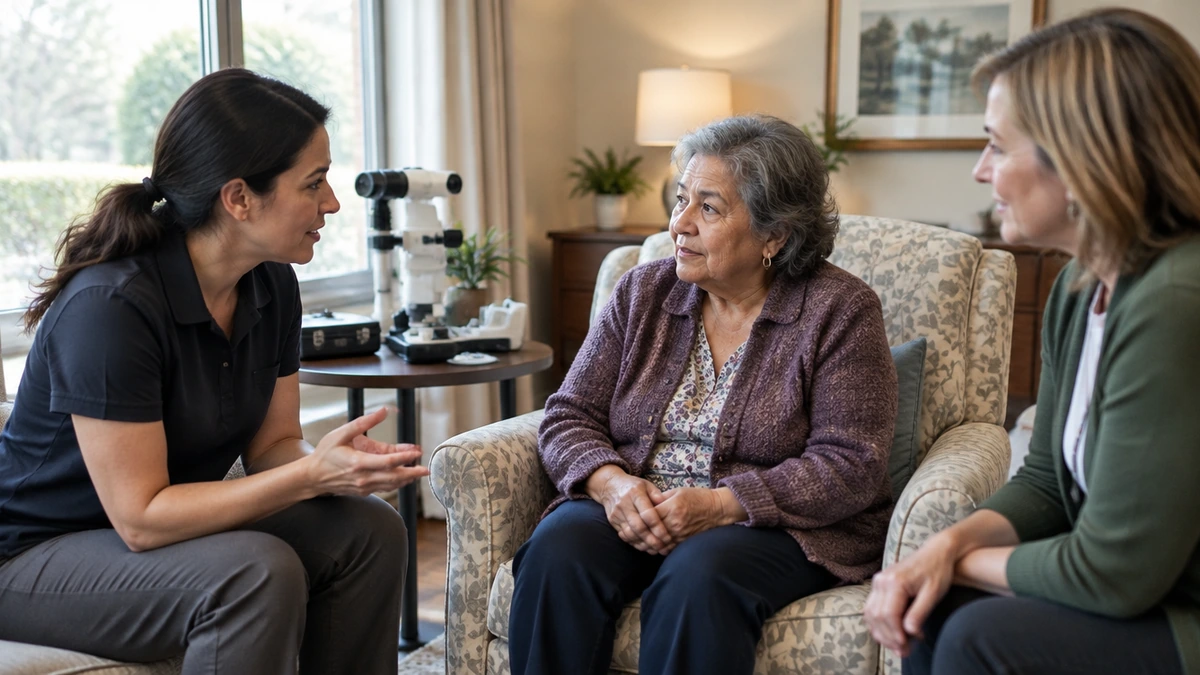
A screening has a limited purpose. MedlinePlus explains screening limitations: screening identifies some common problems but misses other disorders, while a comprehensive eye exam also evaluates overall eye health. When comparing providers, check which measurements your proposed screening includes before putting it on the schedule. I do not treat a passing chart result as a complete assessment of a resident’s eyes.
Give the appointment its correct name. Identify whether your booking is for screening, refraction, a comprehensive examination, or another defined service before comparing appointment slots. I explain the purpose of the visual acuity measurement in your visit description. Keep the planned service and completed work in the resident’s follow-up record.
Check components before accepting the label. I reviewed 69 primary sources across five research lenses for this series, and Nevada defines comprehensive examinations by their components. Nevada’s comprehensive-examination statute specifies in-person elements and permits an alternative obtaining comparable data when a component cannot be performed. When comparing providers, review the planned components and documentation of incomplete testing with the optometrist offering your proposed service. The same statute distinguishes non-comprehensive examinations.
| Your comparison question | Vision screening | Comprehensive examination |
|---|---|---|
| What is the purpose? | Identify selected vision concerns | Assess vision and overall eye health |
| What should the proposal describe? | Measurements and screening criteria | Planned examination components |
| What documentation should you request? | Result and recommended next step | Findings, completion limits and clinical plan |
| What about glasses? | Identify whether refraction needs a separate appointment | Confirm the prescription and dispensing process |
| How do you track follow-up? | Record who arranges further assessment | Record who handles clinical follow-up and referrals |
Eye Exam Versus Vision Screening for Seniors: What Should You Verify?

Put the scope in writing. Your visit description should identify what addresses vision correction, what assesses the health of the eye, and what the facility setting supports. Review those limits with me before your planning call ends. Give staff the description so they prepare the room and residents for the actual examination.
Describe omitted services accurately. Nevada’s examination advertising rule requires a specific disclosure when an advertised examination omits a listed service, including subjective refraction or dilated fundus examination. When comparing providers, use the selected practice’s reviewed examination wording in your resident invitation. Keep the approved description with the visit plan before staff distribute the invitation.
Set the location for retinal assessment. The AOA diabetes guideline recommends examining the retina through dilated pupils for diabetic retinopathy and treats retinal photography as a separate consideration. For your resident with diabetes, I clarify where the clinically indicated examination will happen. Record the next appointment when the needed assessment extends beyond the facility visit.
Describe the resident in the chair. For your on-site eye care visit, I need positioning and communication details, including staff help, a familiar caregiver, or flexible scheduling. Supply those needs before booking without promising completion of every test. I determine the assessment and record its limits.
How Do Prescriptions Differ From an Eye Health Assessment?
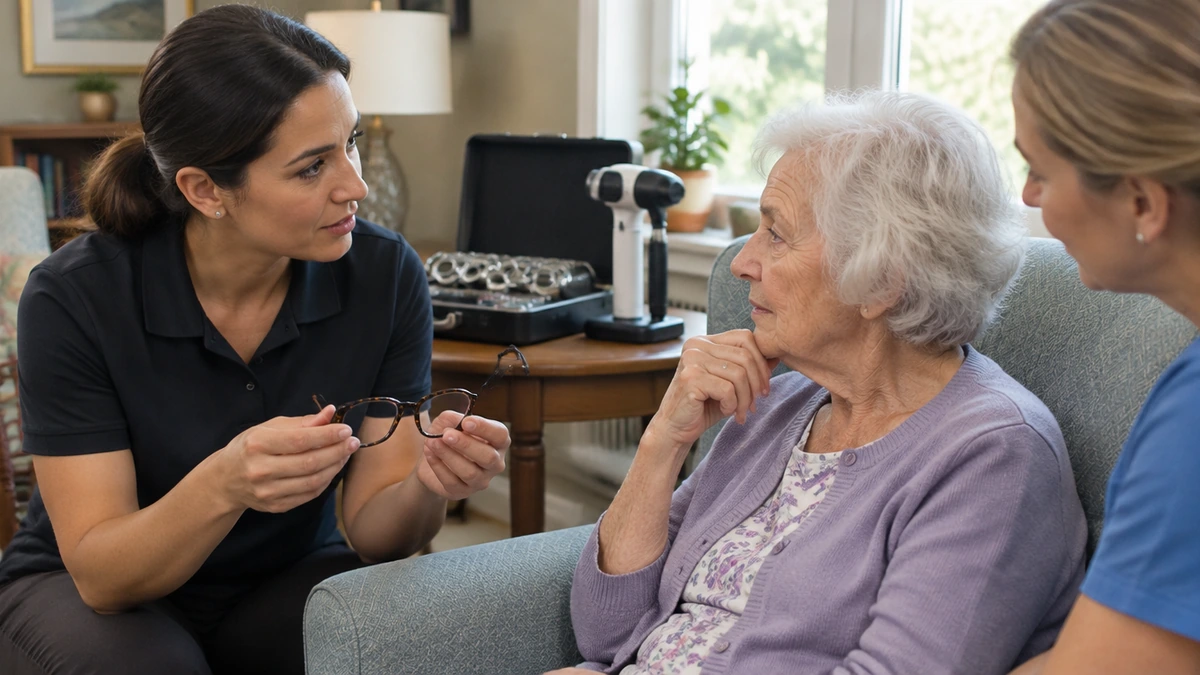
Bring both sets of concerns. For example, your resident wants replacement glasses, while the caregiver has noticed a change in reading or another familiar activity. Give me those observations alongside the prescription question. Before the visit ends, get the next steps for refraction, findings, and any further evaluation clear in the care record.
Track glasses and clinical follow-up separately. I explain the prescription, and my eyewear team handles selection, frame fitting, and the order through delivery. Keep any additional clinical appointment on your follow-up list under its own contact. A glasses delivery update leaves pending examination findings for me to address.
Prepare the glasses and relevant history. Review Vision by Amel’s eye examination services before your planning call so you have specific questions about the facility examination and services needing another setting. Supply the requested records through secure intake. Use the resulting instructions to assign staff follow-through after the examination.
My team and I check benefits before service. Identify your resident’s actual Medicare, Medicaid, or Medicare Advantage plan for verification against the planned care. Review examination benefits and eyewear choices separately with my team. Keep the plan’s response in the resident’s private administrative record so staff know which questions remain open.
What Should Clinical Documentation and Referrals Include?

Name who receives the findings. Plan how your resident, authorized representative, and appropriate care contacts receive reports before the exam begins. Set the secure channel for records and assign a facility contact to track instructions. Your contact follows up on missing reports, and I interpret the examination findings.
Give missing reports a follow-up contact. A Canadian facility optometry program tracked follow-up timing and supplied examination reports to family physicians. Use those published tasks to prepare your own communication plan with my team. Record who checks for the report and who calls when an expected document has not arrived.
Keep unfinished testing on the list. Your record needs the pending assessment, the person booking it, and the way the resident receives the plan. Record my intended timing alongside the task. Bring open actions to the next staff handoff instead of marking the visit complete because the resident attended.
Make the referral ready to act on. Name who contacts the outside doctor receiving the referral, who sends the relevant records securely, and who helps your resident attend. Include the contact route for questions beside the referral entry. Check completion in the resident’s private care record so staff know whether the appointment happened.
How Do You Choose the Right Service for Residents?
Start with the resident’s reason for coming. Describe prescription questions, existing follow-up requests, and reported changes so I recommend the appropriate service for each person. If your resident holds a book away from the chair, describe that concern plainly. A shared address does not give everyone the same examination needs.
- Gather resident interest and the reason each person wants an appointment.
- Verify resident consent and any representative’s authority through the intake process.
- Request the planned examination scope and identify needs requiring another setting.
- Confirm benefits, private space, electrical access and the resident schedule.
- Assign responsibility for reports, eyewear questions and referral follow-up.
Give staff a practical preparation list. Use the on-site examination workflow to organize your resident handoff before and after the visit. Apply the mobile optometrist selection questions when reviewing credentials, scope, and follow-up. Get answers tied to the room and residents involved in your facility’s appointment plan.
Make the invitation match the service. Describe what your residents are choosing, voluntary participation, and how to raise questions before scheduling. Use my reviewed wording for the examination when you plan a visit with me. Keep the service name clear instead of calling every appointment a vision check.
Request Comprehensive On-Site Eye Care With Vision by Amel
Plan around your residents’ needs. I am Dr. Amel Youssef, OD, founder of my practice, Vision by Amel, in Downtown Summerlin. I invite you to plan a visit for your assisted living home, memory care community, or senior living community in the Las Vegas Valley. Bring the resident interest list and a description of the private room to the planning call. Review examination scope before building the schedule.
Prepare the visit with my team. Your facility contact gathers resident interest, consent, and insurance documents and prepares a private room with electrical access. Participation is voluntary. My team and I verify insurance benefits before service. Benefits depend on each resident’s eligibility and plan terms.
Plan your eyewear handoff with me. My team and I coordinate secure intake, eyewear selection, measurements, delivery, and adjustments. I review responsibility for follow-up or referral with you before the visit.
Frequently Asked Questions About Mobile Examinations and Vision Screening
What should we request if a proposal only says vision check?
Get a service description naming the examination, its purpose, and the expected next steps. Keep it with your facility visit plan before circulating the invitation. Staff then have the same wording when a resident asks what the appointment includes.
How should we handle residents already seeing another eye doctor?
Keep existing follow-up appointments in the plan and let each resident choose whether to participate. Record what your resident wants the visit to address and send current care details through private intake. Set how your resident wants me and their existing eye doctor to share the relevant information.
What if a resident changes their mind on examination day?
Respect the decision and update your schedule. Tell my team the appointment has changed through the visit’s scheduling process. Offer information about another opportunity only if the resident wants it, with participation still voluntary.
What should we do with old screening results?
Keep old results available, with their source and date, for my review. Send the requested records through your secure intake channel once I identify which are useful. The date helps me see what the earlier screening describes.
Who should explain an unfamiliar term in the examination report?
I explain terms in my examination report and any action they call for. Send your question through the clinical contact route, quoting the report accurately. Record the explanation and resulting task in the resident’s care record.
Schedule an On-Site Vision Day Speak With Dr. Amel’s Team: (702) 858-4362
Like this article? Add Vision by Amel as a preferred source, and you are more likely to see our articles in Google’s Top Stories.

Leave a Reply