Tag: vision screening

  • Lazy Eye (Amblyopia) in Children: Signs, Causes and Treatment

    Lazy Eye (Amblyopia) in Children: Signs, Causes and Treatment

    Lazy Eye (Amblyopia) in Children: Signs, Causes and Treatment

    Boy with a patch and round glasses stacking blocks with his mother, illustrating lazy eye in children

    TLDR: Lazy eye in children, or amblyopia, affects developing vision and sometimes has no visible signs. Your child’s treatment starts with an eye doctor’s assessment and often includes prescription glasses, with patching when prescribed. An eye that turns all the time, at any age, needs an eye exam right away.

    Answer: Amblyopia means vision has not developed properly in an eye, even when the eyes look straight. Causes include unequal prescriptions, eye misalignment, or an obstruction to clear sight. For your child in Las Vegas, an eye exam identifies the problem so treatment, such as glasses or prescribed patching, addresses the cause and the weaker vision.

    On a shaded bench at a Summerlin park, your child points out tiny pictures in a book. Then a screening note mentions weaker vision in an eye. That mismatch deserves attention. Amblyopia concerns how vision develops, so everyday confidence gives you only part of the picture.

    I reviewed 113 primary sources across five research lenses for this guide, and amblyopia sometimes goes unnoticed until an eye exam. The National Eye Institute reports that up to 3 in 100 children have amblyopia. Your next step is to understand each eye’s vision. My eye examination service explains how I assess vision and help you understand the findings.

    What Signs Suggest Lazy Eye in Children?
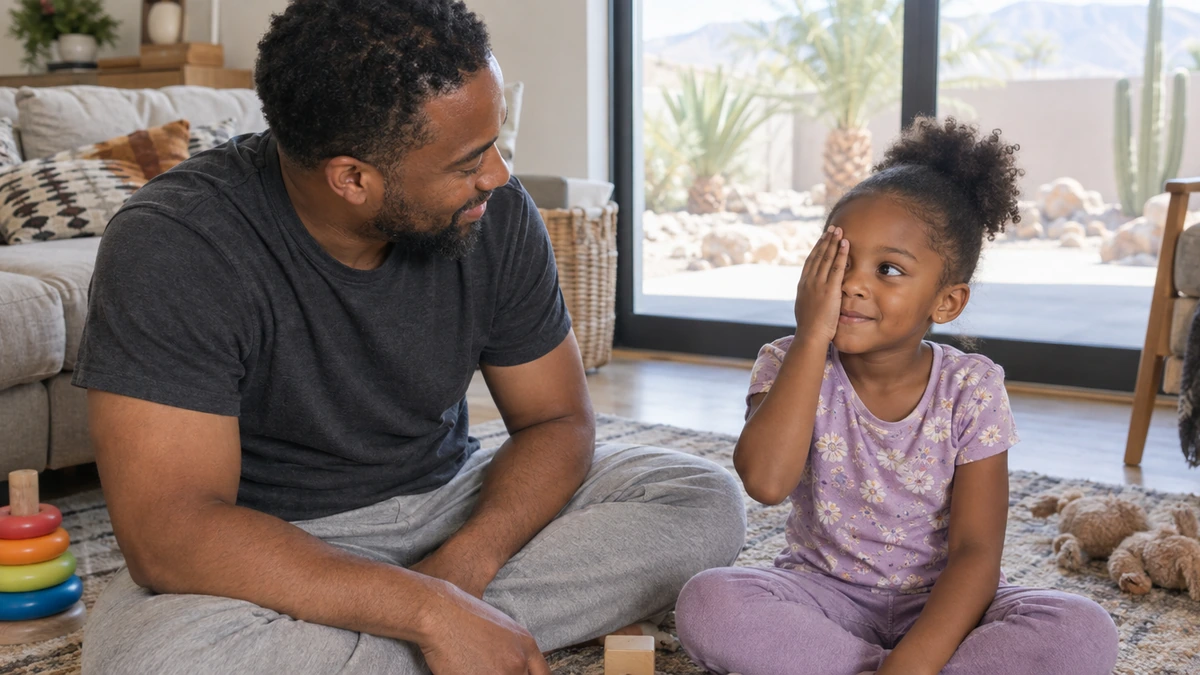
    Girl covering one eye while playing with her father, illustrating a discussion of lazy eye in children
    A father and daughter share a playful moment.

    Lazy eye hides well. Squinting, tilting the head or covering one eye are signs to have checked, according to the American Optometric Association. An eye that turns in or out all the time needs an eye exam right away. You do not need to name the problem before seeking care.

    Your observations help me understand the concern. A child covering an eye during a game is different from repeatedly doing it to see. Describe what happened, which eye was involved, and whether you noticed it during reading, play, or looking across the room. The useful detail is what you saw.

    For broader concerns, use my checklist of signs your child needs glasses. Bring your observations to a pediatric eye exam, along with any screening result. I would rather you bring a small concern than wait for a dramatic sign.

    A white or gray-white glow in the pupil, in person or in a flash photo, means your child sees an eye doctor right away, as AAPOS advises.

    What Causes Lazy Eye in Children?

    The cause shapes treatment. AAPOS describes refractive, strabismic, and deprivational amblyopia and warns of permanent vision loss without treatment. Unequal prescriptions and eye alignment problems affect the visual input reaching the developing brain. A blocked view creates a different problem requiring attention to the obstruction. Arrange your child’s assessment early, even when the eyes look normal.

    CauseWhat It MeansWhat to Discuss at Your Visit
    Refractive amblyopiaBlur during development, including when one eye needs a stronger prescription than the other.The prescription in each eye and the glasses plan.
    Strabismic amblyopiaMisaligned eyes interfere with normal vision development.Both eye alignment and vision in each eye.
    Deprivational amblyopiaA cataract, drooping lid, or corneal scar obstructs clear sight.How the obstruction and developing vision will be addressed.

    The diagnosis tells you what needs treatment. Strabismus names the alignment problem. Amblyopia names the problem with developing vision. Your child needs an explanation of which is present and what each part of the treatment plan addresses.

    Leave the visit knowing the cause. Request the diagnosis in plain language, alongside the medical term. For unequal prescriptions, have the difference explained using your child’s own results. For an obstruction, clarify the next assessment and who will provide it.

    How Do Glasses Help With Amblyopia?
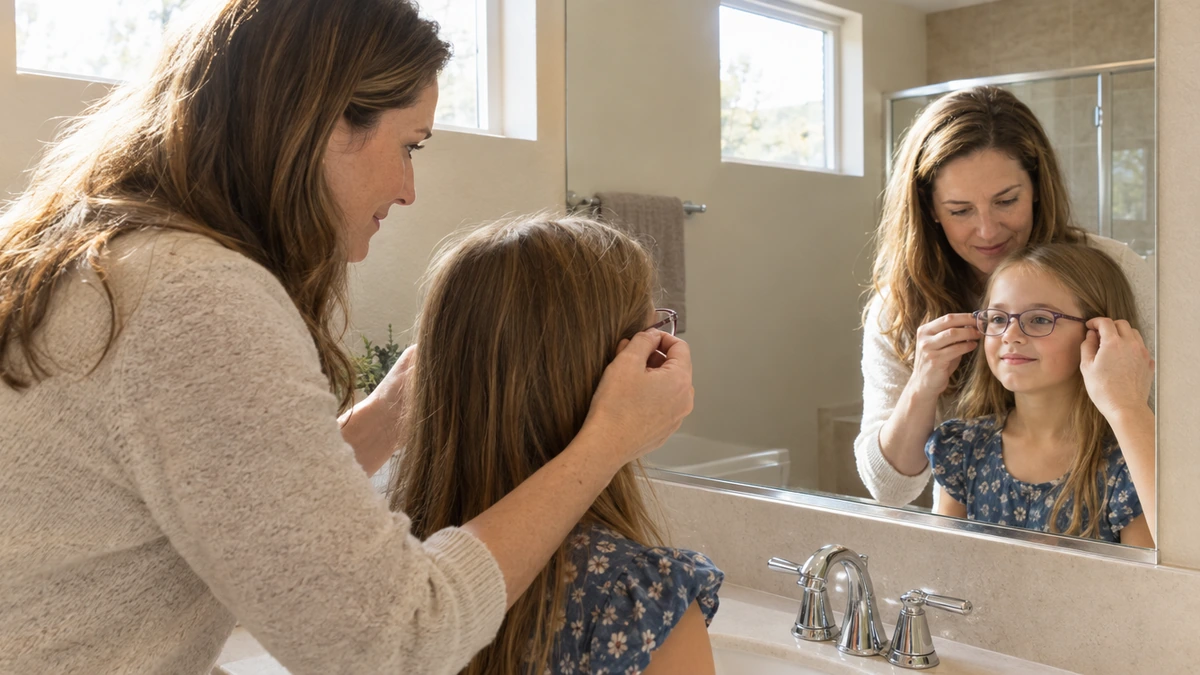
    Mother helping her daughter put on glasses at a mirror, illustrating care for lazy eye in children
    A mother helps her daughter put on glasses.

    Glasses often lead the plan. In a PEDIG study of 84 children aged 3 to under 7 with untreated anisometropic amblyopia, glasses alone improved weaker-eye vision by at least 2 chart lines in 77%, with improvement taking up to 30 weeks. That study covered one type of lazy eye and had no untreated group, so read it as a signal, not a forecast for your child.

    For many children, glasses alone are not enough, says AAPOS, and patching follows when your eye doctor prescribes it. The goal is better vision in the weaker eye. Your follow-up measurements show whether glasses alone are doing enough.

    Give the glasses a place in your morning. In your Las Vegas kitchen, the cereal bowl, backpack and glasses case share the counter before school. Set the glasses beside the morning essentials so putting them on becomes part of getting ready. Share the prescribed wearing instructions with anyone helping your child start the day.

    Report problems plainly. Explain whether your child removes the glasses during meals, complains about the frame, or repeatedly loses them between home and school. The glasses belong at the next visit, too. A specific account gives the conversation more value than saying the week went badly.

    Watch the chart, not the calendar. The prescription is the lens. Visual acuity is how well your child’s eye sees, and that number tells you whether treatment is working. New glasses begin a plan whose progress needs review.

    What Does Prescribed Patching Involve?
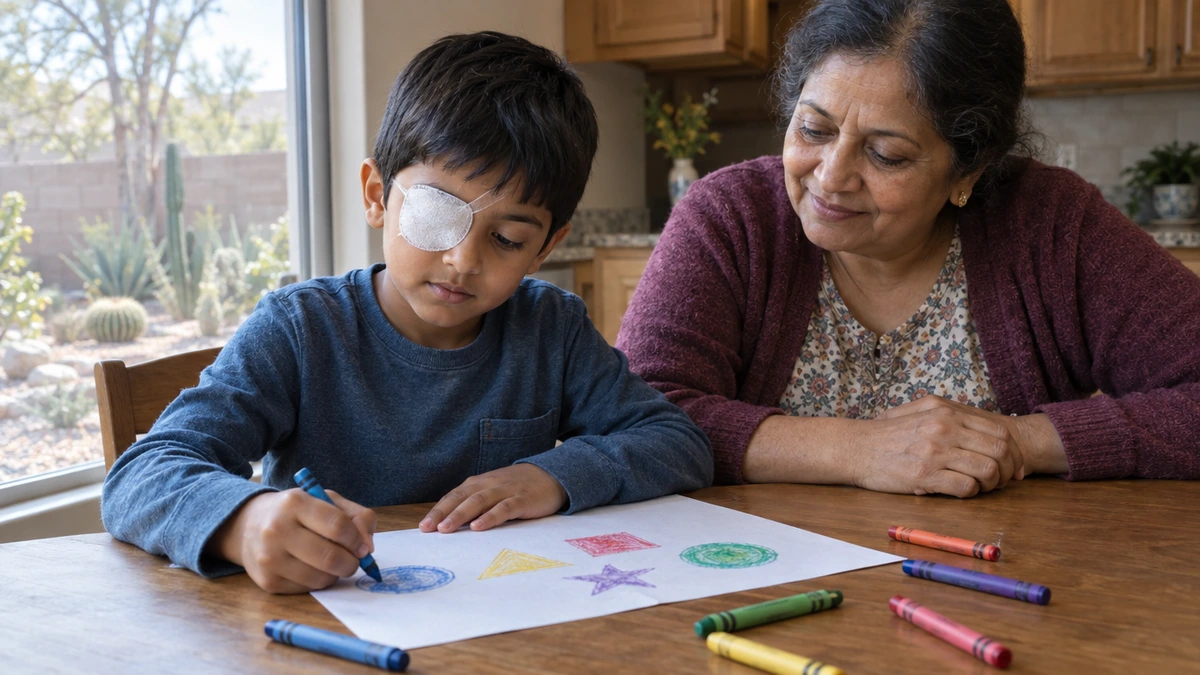
    Boy with an eye patch drawing beside his grandmother, illustrating prescribed care for lazy eye in children
    A grandmother sits beside her grandson as he draws.

    Patching covers the stronger eye to encourage use of the weaker eye. Your eye doctor prescribes which eye to cover, how long to patch, and when to review progress. Get those instructions in writing. Follow the prescribed schedule rather than borrowing another family’s routine.

    More hours are not automatically better. A PEDIG randomized trial involving 189 children under 7 with moderate amblyopia found the same average improvement with 2 or 6 daily patching hours after 4 months, with at least 1 hour of near activities in both groups. This finding applies to the studied moderate cases. Your child’s prescription still governs the schedule.

    A familiar activity gives patch time a place in your day. Choose a time with room for the prescribed session. Drawing, blocks, or shared reading give you activities to discuss when the patching plan is explained. Match the activity and its timing to the instructions you receive.

    1. Confirm which eye to patch and the prescribed daily duration before starting.
    2. Check how glasses fit into the patching instructions.
    3. Record completed sessions and any practical difficulties.
    4. Call your eye doctor about skin irritation or a child who keeps fighting the patch.
    5. Keep every follow-up visit. Only your eye doctor changes the patching hours.

    A difficult afternoon deserves a useful conversation. Describe what your child found hard, how much of the session was completed, and what you tried. A short note about a difficult session gives you something concrete to discuss at follow-up. I value an honest treatment diary more than a perfect-looking one.

    Why Do Screening Results and Follow-Up Both Matter?
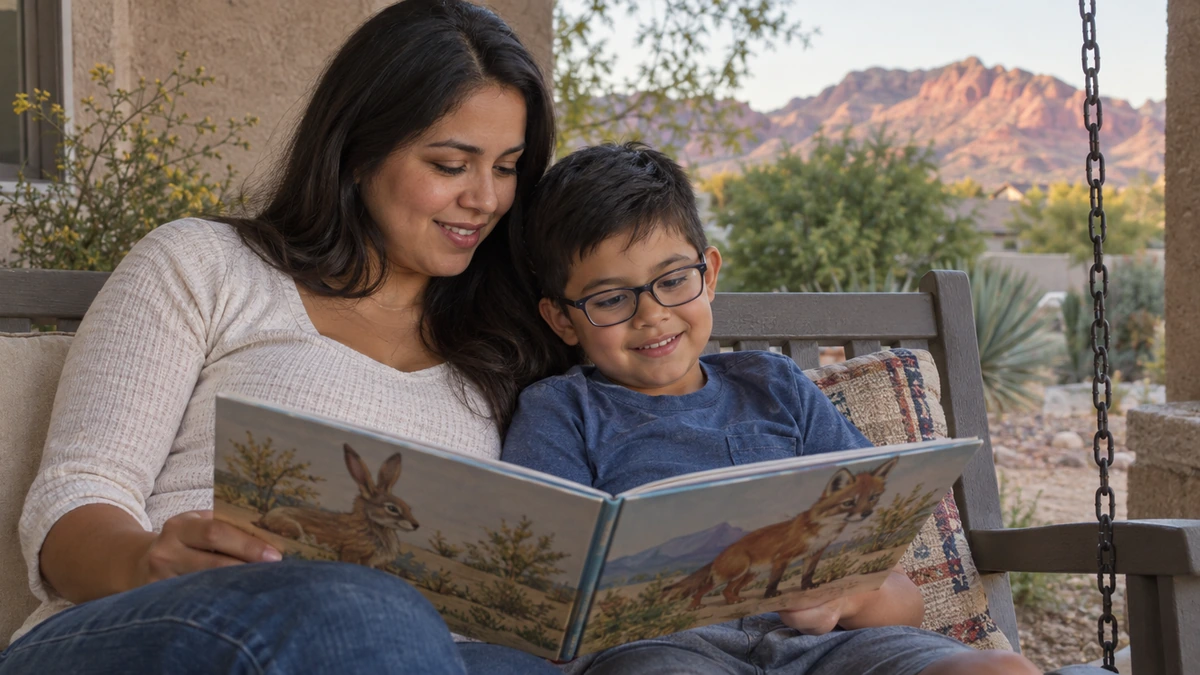
    Boy wearing glasses reading with his mother on a porch swing, illustrating lazy eye in children
    A mother and son read together on a porch swing.

    Your next step needs to be clear. After a vision screening flags a concern, arrange a comprehensive eye exam and take the actual result with you. My guide to school screening and comprehensive eye exams explains the difference. At your visit, I check vision and eye health and explain the findings.

    Follow-up puts the focus on each eye’s progress. Your current glasses, prescribed schedule and account of home treatment belong in that conversation. Request an explanation of each eye’s measured vision and whether the plan changes. Leave with the next review date written down.

    Your afternoon is already full: Summerlin school pickup, dinner, homework. Fit the patch into what you already do, like the drawing table or the bedtime book. Share the treatment instructions with caregivers so everyone follows the same plan. When the routine breaks down, raise the difficulty before making your own changes.

    How I Approach Your Child’s Exam at Vision by Amel

    I am Dr. Amel Youssef, an optometrist and the founder of Vision by Amel. For your visit about possible amblyopia, bring prior prescriptions, screening results, and any existing treatment instructions. My evaluation includes binocular vision and eye disease screening, with digital refraction among our Visionix diagnostics. Your history gives those findings context.

    My practice provides pediatric eye care at 2010 Festival Plaza Dr, Suite 195, Las Vegas, NV 89135. You will find us at Festival Plaza in Downtown Summerlin. No referral is needed for an eye exam. Book online or call with your child’s exam needs.

    Your questions about children’s vision deserve time at the visit. Tell me what worries you most, whether it is the diagnosis, the prescription, or understanding an existing plan. My team verifies insurance benefits by phone before your visit. Have your plan information ready for that conversation.

    Frequently Asked Questions About Lazy Eye in Children

    Is My Child Too Old to Start Treatment?

    Treatment works best when it starts young, and older children and teens can still improve, especially if they were never treated before. The American Academy of Ophthalmology advises offering treatment regardless of age when the visual system is structurally sound, with potential benefit in older children and adolescents, especially those previously untreated. Bring your child’s treatment history so the discussion reflects what has already been tried.

    Will Lazy Eye Hurt My Child’s Grades?

    The American Academy of Ophthalmology finds insufficient evidence that amblyopia in one eye harms school or career performance. Your child’s treatment addresses vision itself. Discuss school concerns on their own terms, without assuming lazy eye explains every difficulty in class.

    How Many Hours a Day Will My Child Wear a Patch?

    The National Eye Institute describes schedules ranging from 2 hours a day to all waking hours. Your eye doctor sets the patching time and adjusts it at follow-up visits. The PEDIG trial above compared schedules for moderate amblyopia, so its results are not a patching prescription for your child.

    Can My Child Have Lazy Eye if Their Eyes Look Straight?

    Yes, your child might have amblyopia even when the eyes look straight, as AAPOS explains. The National Eye Institute notes that many parents learn of the problem only at an eye exam. You do not need to spot an eye turn for the finding to deserve attention.

    What Should I Say to My Child About the Diagnosis?

    Keep your explanation calm and concrete. Describe the glasses or patch using the instructions you received, then invite questions about the daily routine. Choose words about practicing the routine together, and praise the effort your child puts into following it.

    Book My Eye Exam Call (702) 858-4362

    Like this article? Add Vision by Amel as a preferred source, and you are more likely to see our articles in Google’s Top Stories.

    Add as a preferred source on Google

  • How to Choose a Pediatric Eye Doctor in Las Vegas

    How to Choose a Pediatric Eye Doctor in Las Vegas

    How to Choose a Pediatric Eye Doctor in Las Vegas

    Father and daughter walking toward an optometry boutique, choosing a pediatric eye doctor

    TLDR: Choose a pediatric eye doctor who examines children your child’s age and explains the next step clearly. An optometrist offers exams and treatment within optometry’s scope, while a pediatric ophthalmologist provides specialist medical and surgical care. Match the appointment to your child’s needs.

    Answer: To choose a pediatric eye doctor in Las Vegas, check experience with your child’s age, the purpose of the eye exam, and the approach to referrals. For a failed screening, look for an optometrist or ophthalmologist experienced with children. For surgical needs or complex disease, seek pediatric ophthalmology care.

    Choose the visit that answers your child’s question. At school pickup in Summerlin, your child hands you a vision screening note before climbing into the car, and now you need to know whom to call. Start with the reason for the visit, then choose the professional equipped to address it.

    I reviewed 113 primary sources across five research lenses for this guide, and a failed screening needs follow-up even when you notice no problems. The American Academy of Pediatrics names an ophthalmologist or optometrist experienced with children for that follow-up. For your local appointment options, explore our eye exams in Downtown Summerlin.

    Which Pediatric Eye Doctor Fits Your Child’s Needs?

    Mother beside her coloring son, with laptop lid visible, considering a pediatric eye doctor
    A mother considers an appointment beside her son.

    You searched “pediatric optometrist” or “pediatric specialist” because you want someone great with kids. Good instinct. Those words describe a search, not a license, so check the degree behind the name.

    ProviderRole in Your Child’s CareWhat to Clarify Before Booking
    PediatricianChecks eyes and vision during well-child care, including screening and referral when needed, per the AAP.What did the screening show, and what follow-up was recommended?
    Optometrist, ODExamines, diagnoses, treats and manages eye diseases and disorders, as described by the American Optometric Association.Does this practice examine children your child’s age and handle the reason for this visit?
    Pediatric ophthalmologistA medical doctor with ophthalmology training and pediatric fellowship training who provides exams, glasses and medical or surgical treatment, according to the American Academy of Pediatrics.Does your child need evaluation for a complex condition or possible surgery?

    Experience deserves a direct question. Prevent Blindness notes that some optometrists focus on working with young children. For your family, confirm who will perform the examination and whether the appointment fits your child’s age and concern.

    A title tells you about training. A clear explanation tells you about care. You should understand why this appointment is appropriate before you reserve it. A useful answer names the examination, the concern it addresses and the next step if another professional is needed.

    What Should Your Child’s Eye Exam Include?

    Grandfather beside his grandson in an exam chair, an eye doctor seen from behind
    A grandfather stays beside his grandson in the exam room.

    Know what you are booking. A screening sorts. A comprehensive eye exam diagnoses. Your confirmation should name which one your child gets.

    Your examination has a defined scope: the Nevada Legislature defines a comprehensive examination as an in-person examination including history, eye alignment, visual acuity, pupils and examinations of the front and back of the eyes. When comparing appointments, ask how your child’s visit addresses those areas. Unfamiliar terms deserve plain answers before you agree to the plan.

    The screening note gives you a useful first question: what needs checking? You do not need to translate its abbreviations before calling my team. Our guide to school vision screening and comprehensive exams explains the distinction in more detail.

    Your child’s comfort belongs in the conversation, too. Describe worries about unfamiliar equipment, communication needs or a previous difficult visit. Tell my team what made the earlier visit difficult so we discuss your concerns before you arrive.

    When Does Your Child Need a Pediatric Ophthalmologist?

    Eye muscle surgery belongs to ophthalmology. Nevada law bars optometrists from any procedure that cuts tissue, so when your child’s misaligned eyes need surgery, I refer you to a pediatric ophthalmologist and coordinate your child’s care around it. You should know who handles the surgical assessment and where your follow-up belongs.

    A premature baby or a family history of childhood eye disease changes who should examine your baby first, and my baby eye exam guide lists those histories. Lead with that history when arranging care. A family concern belongs in the first conversation, even when you do not know its medical name.

    An eye that crosses all the time needs an eye exam right away, at any age, and AAPOS sends constant crossing to a pediatric ophthalmologist. Describe whether your child’s eye turns constantly or comes and goes when you call. Use those observations to explain the concern, without trying to name the condition yourself.

    A referral should leave you with clear instructions. My explanation should name the reason, the recommended timing and the service you need to contact. For complex disease, bring any existing diagnosis and treatment plan into that conversation so the next appointment addresses the actual problem.

    What Should You Ask a Pediatric Eye Doctor?

    Mother holding her daughter's hand while asking questions at an optometry front desk
    A mother asks questions while her daughter holds her hand.

    Skip “Do you see kids?” Every office says yes. These questions tell you how your child’s visit will go.

    1. Does this office examine children my child’s age for this concern? Give the age and reason for the visit together.
    2. Who will examine my child, and what is their training and experience with children? Listen for the name and qualification.
    3. Is this a comprehensive examination or a visit for a particular eye concern? Match the answer to your screening note or referral.
    4. How should I explain my child’s communication or sensory needs? Describe what helps your child understand a new situation.
    5. How will I get referral instructions if another service is needed? The answer should cover the reason, timing and next contact.
    6. Which insurance details and previous records do you need? Have the relevant information beside you while you call.

    Listen for a specific answer. “We see children” answers less than a discussion of your child’s age, history and reason for coming. Keep your school report or previous prescription in front of you during the call so the details stay accurate.

    Leave with the result and the next step. Before you leave my exam room, I want you to understand the findings and the follow-up plan. Write down what you need to do, who to contact and when to return.

    How Do You Compare Appointment Options?

    Fit first, then the drive. A Sunday slot after soccer at a Summerlin park means nothing if the visit cannot answer your child’s real question. While your child packs dusty cleats beside the field, settle what the appointment needs to accomplish before checking the route.

    Use the same details for each call. Give your child’s age, the concern and any existing referral, then record the answers together. This keeps a routine examination and a specialist consultation from looking interchangeable because both appear in the same search.

    Consider what happens after the visit. Ask how you would request an explanation of findings or send a question about the plan. For your child who already wears prescription glasses or has an amblyopia treatment plan, bring the current instructions and clarify which earlier records the receiving practice wants.

    Your child also deserves a simple explanation of where you are going. Keep it factual, and let the team explain any unfamiliar examination steps. Our first eye exam guide for Summerlin families covers preparation, so you do not have to work it out during the drive.

    How I Approach Your Child’s Eye Care

    Mexican-American family of four smiling outside an optometry office in desert sunlight
    A family leaves an optometry office together.

    I am Dr. Amel Youssef, OD, founder and optometrist at Vision by Amel. My practice offers pediatric eye care, and I see families from Summerlin every week. At Vision by Amel, you get an optometrist who explains every finding, a team that verifies your benefits by phone before the visit, and a clear plan, including a referral when your child needs one.

    My examination process moves from patient history through digital diagnostics, my evaluation and your plan. Every visit runs on Visionix digital diagnostics, and I review the findings with you myself, in plain language. I check how both eyes work together, test color vision where your child needs it, and screen for eye disease before we set your child’s plan. Your questions about eye health belong in that discussion.

    Saturday at Festival Plaza looks like this: your child beside you, the screening note in your bag, the visit already booked. You will find us at 2010 Festival Plaza Dr, Suite 195, Las Vegas, NV 89135, in Downtown Summerlin at Festival Plaza. We are open Monday to Saturday, 9 am to 6 pm, and Sunday, 11 am to 5 pm. Book online or call (702) 858-4362 to arrange your pediatric eye exam.

    Frequently Asked Questions About Choosing a Pediatric Eye Doctor

    Should My Child See an Optometrist, a Pediatric Ophthalmologist or the Pediatrician?

    Your pediatrician screens for vision problems during well-child care. After a failed screening, the AAP recommends follow-up with an optometrist or ophthalmologist experienced with children, even when you notice no problems. Both examine and diagnose eye conditions, while eye muscle surgery belongs to ophthalmology. Take the screening result to the appointment so the finding that prompted it gets addressed.

    What Is the Difference Between a Pediatric Optometrist and a Pediatric Ophthalmologist?

    Prevent Blindness describes some optometrists as focusing on work with young children. A pediatric ophthalmologist is a medical and surgical eye doctor whose training, according to the AAP, includes at least 4 years of medical school, 1 year of internship, at least 3 years of ophthalmology residency and at least 1 year of pediatric fellowship. For your child, choose by the care needed and the provider’s experience with that age and concern.

    Can an Optometrist Treat My Child’s Eye Infection?

    Yes, treating eye infections falls within Nevada optometry’s scope. Nevada law includes prescribing medication to treat an abnormality of the eye. Your child’s examination determines the diagnosis and appropriate treatment, so describe the symptoms when arranging care.

    Will My Child’s Optometrist Work With a Pediatric Ophthalmologist?

    When your child needs a pediatric ophthalmologist, I refer you and coordinate care around that evaluation. Co-management means I remain your home base for eye care while the ophthalmologist handles the specialty care your child needs. You always know which office books the next visit and which one answers each question.

    What Should I Check About Insurance Before Choosing an Appointment?

    My team verifies your benefits by phone before the visit, and Vision by Amel accepts plans including VSP, EyeMed and Nevada Medicaid. Your own plan determines the coverage available. Have your insurance details ready when you call. You do not need a referral to book an eye exam.

    Book My Eye Exam Call (702) 858-4362

    Like this article? Add Vision by Amel as a preferred source, and you are more likely to see our articles in Google’s Top Stories.

    Add as a preferred source on Google

  • Your Child’s First Eye Exam in Summerlin: What to Expect

    Your Child’s First Eye Exam in Summerlin: What to Expect

    Your Child’s First Eye Exam in Summerlin: What to Expect

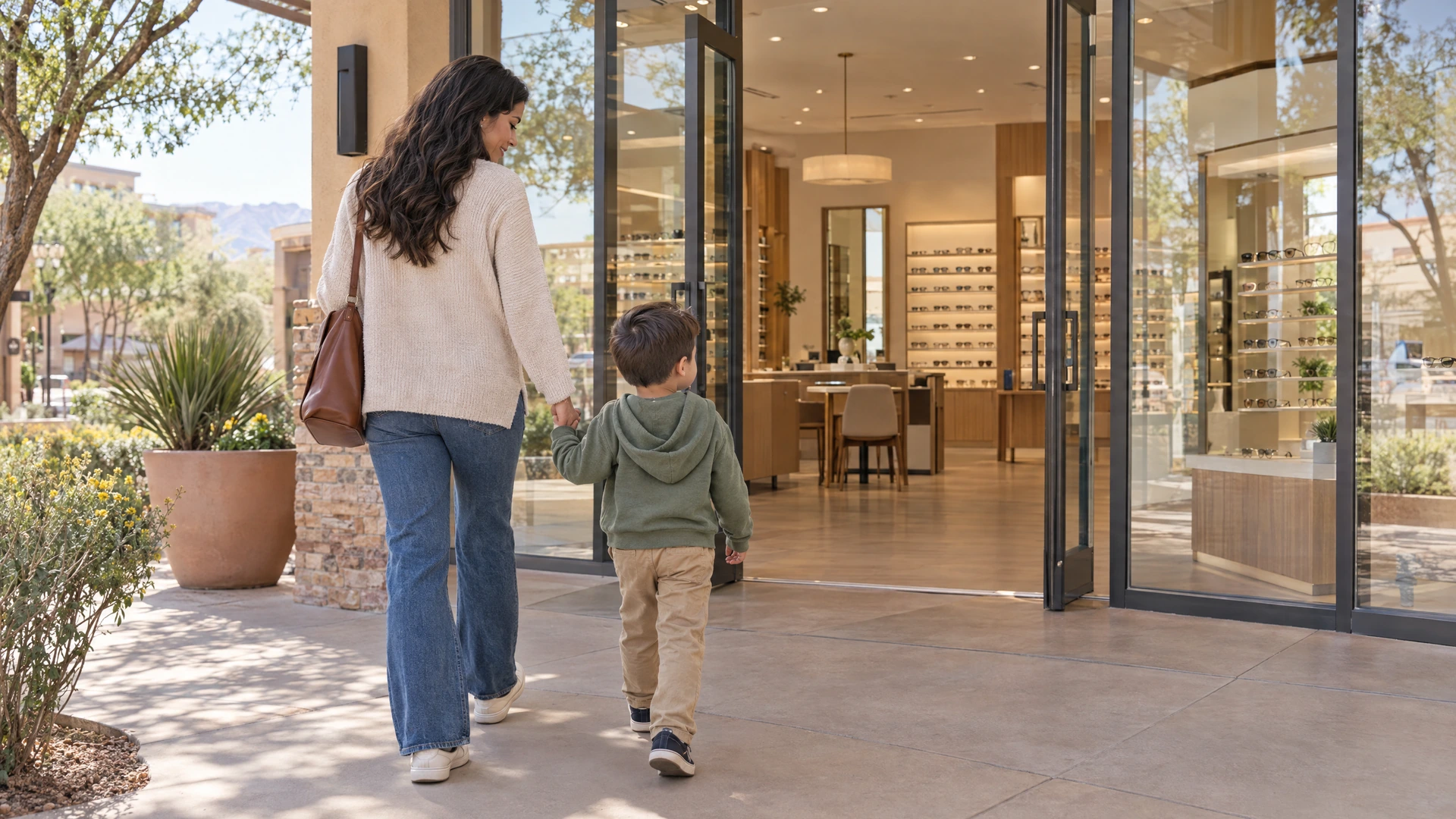
    Mother and son entering a boutique for a child's first eye exam

    TLDR: Your child’s first eye exam in Summerlin starts with your concerns and ends with a clear next step. Talk through the visit, pack previous screening results, and leave time to hear the findings. Vision by Amel offers weekend appointments at Festival Plaza.

    Answer: At your child’s first eye exam in Summerlin, I review health history, check vision and eye health, and explain the findings. A comprehensive eye exam includes how the eyes focus and work together. As your optometrist, I use those findings to explain whether glasses, further assessment, or a return visit belongs in the plan.

    First visits come with questions. What is that machine, and what will my child need to do? Between preschool pickup and a weekend soccer game, you want clear answers before adding another appointment. My eye examination services page explains how I examine your eyes, and this guide walks you through your child’s visit.

    I start with your concerns. You leave with a next step. Whether you are driving across Las Vegas or coming from a nearby Summerlin neighborhood, preparation starts with knowing what you want to understand about your child’s eye health. I believe good eye care leaves parents with a plan they know how to use.

    How Do You Prepare for Your Child’s First Eye Exam?

    A father and his young son cover one eye in a playful game to prepare for a child's first eye exam
    A father and son share a playful one-eye game at home.

    Keep the explanation small. Your child needs a sense of what comes next. I reviewed 73 primary sources across five research lenses for this guide, and the AOA recommends talking through the visit beforehand with your child.

    Start with a conversation at home. The AOA recommends talking about the examination beforehand, inviting your child’s questions, and allowing about an hour for a preschool exam. Sitting together on the bedroom rug gives you a simple place to begin. Say, “We are going to have your eyes checked, and you get to ask questions too.”

    Pack once, then stop rehearsing. Put the records and questions together before you head toward Festival Plaza. Use this list to prepare for your pediatric eye exam while leaving the testing to me.

    • Previous vision screening results, a referral note, and any earlier eye records.
    • Current prescription glasses, if your child already wears them.
    • Medicines, allergies, relevant health history, and known family eye conditions.
    • Your main concern, with a concrete example of when it happens.
    • A familiar comfort item and the questions you most want answered.

    Tell my team about your child’s communication preferences, sensory concerns, or worries about unfamiliar rooms. Be specific about the worry. A child nervous about a machine needs a different explanation from a child worried about giving a wrong answer. Help me understand the worry before your child walks in.

    When Should You Book Your Child’s First Eye Exam?

    You deserve to see the timing advice side by side. The experts split on routine children’s vision checks. The table separates the American Optometric Association’s examination schedule from the screening approach of the American Academy of Ophthalmology and the American Association for Pediatric Ophthalmology and Strabismus.

    ApproachPublished GuidanceWhat to Discuss
    AOA, infancyThe AOA infant guidance recommends a first thorough examination at about age 6 months, even without apparent problems.Your baby’s previous checks and health history.
    AOA, preschoolThe AOA preschool guidance recommends an in-person examination between ages 3 and 5, then another around school entry at age 5.What your child has already had checked.
    AOA, school yearsThe AOA school-age guidance recommends annual examinations for school-age children, with more frequent visits for problems or risk factors.Your child’s individual follow-up plan.
    AAO and AAPOS, screening firstThe AAO and AAPOS joint statement supports screening and referral after a failed screen, while finding no proven medical benefit from routine comprehensive examinations in otherwise normal children without symptoms.Your child’s screening results, symptoms, and risk factors.

    Start with the checks your child has already had. Let my team know whether you are arranging a routine first visit or following up on a concern. The pediatric eye exam guide covers timing, Medicaid, and school screenings to give you more context for that conversation.

    What Happens During the Exam, Step by Step?

    Mother holding her daughter during a child's first eye exam
    A child sits on her mother's lap during an eye examination.

    Your child’s age shapes the examination. The AAO’s pediatric evaluation guidance describes history, vision and eye health checks, with techniques and order adapted to age, development, and cooperation. Here is the visit in five steps. The order bends to your child.

    1. Start with the history. Tell me why you booked and what you want answered. We review earlier results, medicines, and family eye history, including any known amblyopia or strabismus. Share the diagnosis as you received it.
    2. Check clarity of sight. Visual acuity describes how clearly your child sees. Let me explain the task, then give your child space to respond. You do not need to supply an answer when they hesitate.
    3. Look at teamwork. I check eye alignment and movement as part of evaluating how the eyes work together. Point out any instruction that seems unclear so I know what needs explaining.
    4. Assess focus and eye health. Refraction measures the need for a glasses prescription. I also evaluate the eyes themselves and explain the findings relevant to the concern you brought.
    5. Set the next step. We discuss what the findings mean, whether more assessment is needed, and what to do next. Before leaving, confirm how and when to follow the plan.

    You matter in that room. Share what helps your child communicate, then leave room for their response. Say so when they need a pause or do not understand an instruction. I value an honest “I don’t know” more than a coached answer.

    What Should You Do After the Visit?

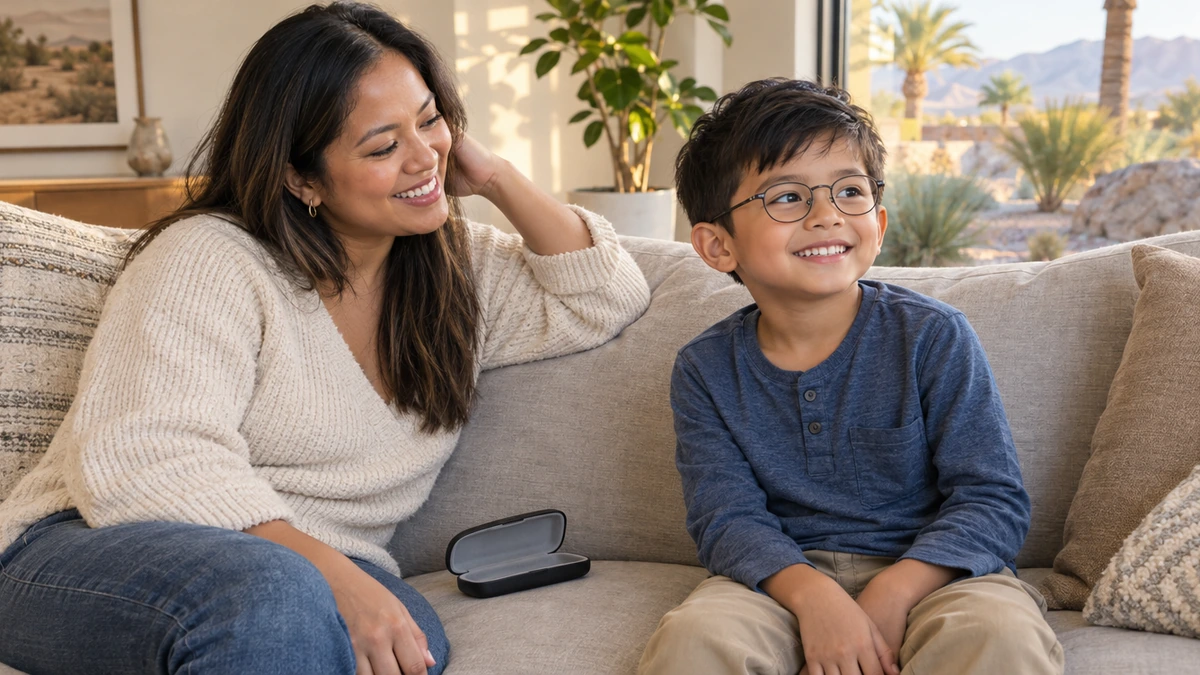
    A mother and her young son on the sofa at home as he wears his new glasses after his first eye exam
    Know when your child should wear new glasses before you leave the visit.

    Leave with a clear next step. You should know whether the plan involves glasses, further evaluation, or a return visit. Ask me to explain any unfamiliar term before you head back to the parking area. Skip the jargon. Leave with one clear next step.

    When glasses are prescribed, settle the wear instructions first. You need to know when your child should wear them and what follow-up I recommend. During frame selection, invite your child to describe what presses at the nose or behind the ears. Discuss lens choices, including polycarbonate lenses and UV protection, in relation to the prescription.

    Keep the plan within reach. Save your visit information with the records you brought, so the next appointment starts with the previous findings available. Before leaving, repeat the next step back to me and clear up anything you are unsure about. Leave knowing what happens next and who to contact with questions.

    How Do You Plan the Trip to Festival Plaza?

    Family walking toward their car after a child's first eye exam
    A family walks together toward their car at a sunny plaza.

    Plan the arrival before you leave home. Vision by Amel is at 2010 Festival Plaza Dr, Suite 195, Las Vegas, NV 89135, in Downtown Summerlin at Festival Plaza. My office sits minutes from The Vistas, The Paseos, Sun City and Red Rock Country Club. Use the Downtown Summerlin location page to plan your route, with time to park and walk to the suite.

    Weekend hours give you options beyond school pickup. My office opens seven days a week, Monday to Saturday from 9 am to 6 pm and Sunday from 11 am to 5 pm. Check available appointment times with my team when you book. Choose a time you can reach without rushing from the last stop.

    Leave space around your visit. Do not stack soccer practice right after. Give yourself time to hear the findings before packing everyone back into the car under the desert sun. Block the morning and keep it calm.

    How I Walk You Through a First Visit at Vision by Amel

    Your first visit starts with why you came. I am Dr. Amel Youssef, OD, the optometrist who founded Vision by Amel, and I guide you through your child’s eye examination. My team welcomes Summerlin families every week, and you do not need a referral to book an eye exam. Tell us your child’s age and your main concern when you call (702) 858-4362 or book online.

    You get an explanation alongside the equipment. The office uses Visionix digital diagnostics, from digital refraction and eye-pressure measurement with tonometry to retinal imaging and corneal mapping. My evaluation includes binocular vision, color vision testing where needed, and screening for eye disease. I perform a dilated eye exam only when I see a medical reason for one.

    The findings lead to your plan. We move from your child’s history through diagnostics and my evaluation to the next step. Prescription glasses are available from my gallery when they belong in that plan. Have me explain anything unclear about the prescription before you choose frames.

    Sort out benefits before the first visit. Before you arrive, my team uses your plan details to verify benefits by phone. Vision by Amel accepts Nevada Medicaid, VSP, EyeMed, Aetna, and other plans on our accepted list. Your individual plan determines the benefits, so have its details ready when you call.

    Frequently Asked Questions About Your Child’s First Eye Exam

    What Should I Say If My Child Is Afraid of Getting an Answer Wrong?

    Try saying, “You are here to show us what you see.” A blurry view is useful information to share, so let your child say when something looks unclear. Avoid praising a guessed answer as correct, and let me explain a task again when needed.

    Does My Child Need to Know Their Letters?

    No, the AOA preschool exam guidance confirms children do not need the alphabet or reading skills for an eye examination and recommends booking early in the day. Use that advice to plan your first visit. When you call, discuss an available time that fits your child’s usual routine.

    Can My 3-Year-Old Do an Eye Exam If They Won’t Sit Still?

    A restless child still deserves an assessment suited to their development. The AAO explains that cooperation helps determine the examination order. Tell me what is difficult for your child, then confirm which parts were completed and whether anything needs another visit.

    What If I Do Not Know Our Family’s Eye History?

    Share what you know and mark the gaps. A relative’s diagnosis is useful even when you do not know the treatment details. I will help you identify which missing information is worth gathering, rather than asking you to guess at a family condition.

    What Should I Ask When Booking a Visit for a Young Child?

    Give my team your child’s age and reason for coming, then confirm the appointment details. Check whether there are instructions to follow before arrival. Mention language or accessibility needs during the call, so you know what to expect before you set out.

    Book My Eye Exam Call (702) 858-4362

    Like this article? Add Vision by Amel as a preferred source, and you are more likely to see our articles in Google’s Top Stories.
    Add as a preferred source on Google

  • Mobile Eye Exam Versus Vision Screening: What Facility Operators Should Know

    Mobile Eye Exam Versus Vision Screening: What Facility Operators Should Know

    Mobile Eye Exam Versus Vision Screening: What Facility Operators Should Know

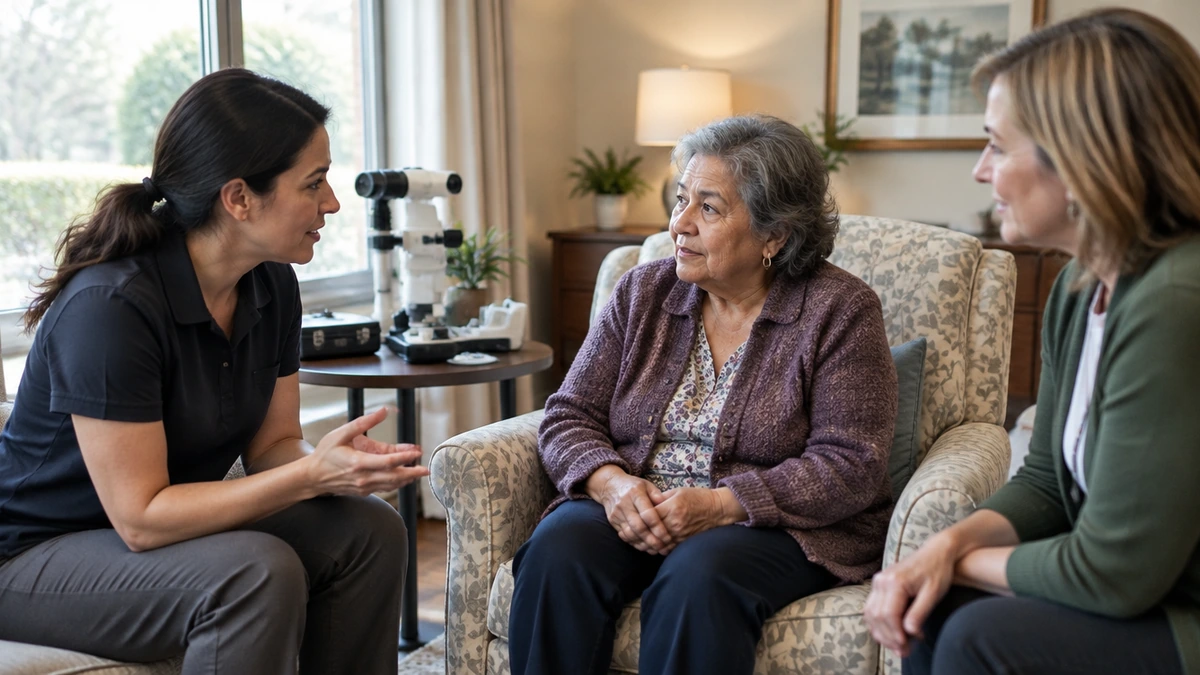
    Clinician explaining an assessment to a resident, eye exam versus vision screening seniors

    TLDR: I help you compare an eye exam versus vision screening for seniors by what gets checked. Screening identifies selected vision concerns, while a comprehensive examination also evaluates overall eye health. Your visit plan needs the examination scope, a record of findings, and the next step for anything unresolved.

    Answer: For a mobile eye exam, I bring planned examination services to your assisted living facility in Las Vegas. Vision screening checks selected aspects of vision, leaving other questions for a fuller assessment. Choose the service by its tests, prescription process, findings, and follow-up, then prepare residents and the room for that specific visit.

    I want you to know the service scope before booking. You need to know what residents receive, what staff prepare, and what happens if testing remains incomplete. Put those details beside the schedule before inviting residents. A resident asking about blurred print needs a clear explanation of what the appointment will address.

    Match the room to the assessment. A facility-coordinated vision day joins preparation, examination, and follow-up in your visit plan. As your mobile optometrist, I explain the service and its limits, whether residents sit in your private room or attend another appointment. The location alone does not tell you how complete the examination will be.

    Eye Exam Versus Vision Screening for Seniors: What Changes?

    Resident and care director discussing an assessment, eye exam versus vision screening seniors
    Resident and care director discussing an assessment.

    A screening has a limited purpose. MedlinePlus explains screening limitations: screening identifies some common problems but misses other disorders, while a comprehensive eye exam also evaluates overall eye health. When comparing providers, check which measurements your proposed screening includes before putting it on the schedule. I do not treat a passing chart result as a complete assessment of a resident’s eyes.

    Give the appointment its correct name. Identify whether your booking is for screening, refraction, a comprehensive examination, or another defined service before comparing appointment slots. I explain the purpose of the visual acuity measurement in your visit description. Keep the planned service and completed work in the resident’s follow-up record.

    Check components before accepting the label. I reviewed 69 primary sources across five research lenses for this series, and Nevada defines comprehensive examinations by their components. Nevada’s comprehensive-examination statute specifies in-person elements and permits an alternative obtaining comparable data when a component cannot be performed. When comparing providers, review the planned components and documentation of incomplete testing with the optometrist offering your proposed service. The same statute distinguishes non-comprehensive examinations.

    Your comparison questionVision screeningComprehensive examination
    What is the purpose?Identify selected vision concernsAssess vision and overall eye health
    What should the proposal describe?Measurements and screening criteriaPlanned examination components
    What documentation should you request?Result and recommended next stepFindings, completion limits and clinical plan
    What about glasses?Identify whether refraction needs a separate appointmentConfirm the prescription and dispensing process
    How do you track follow-up?Record who arranges further assessmentRecord who handles clinical follow-up and referrals

    Eye Exam Versus Vision Screening for Seniors: What Should You Verify?

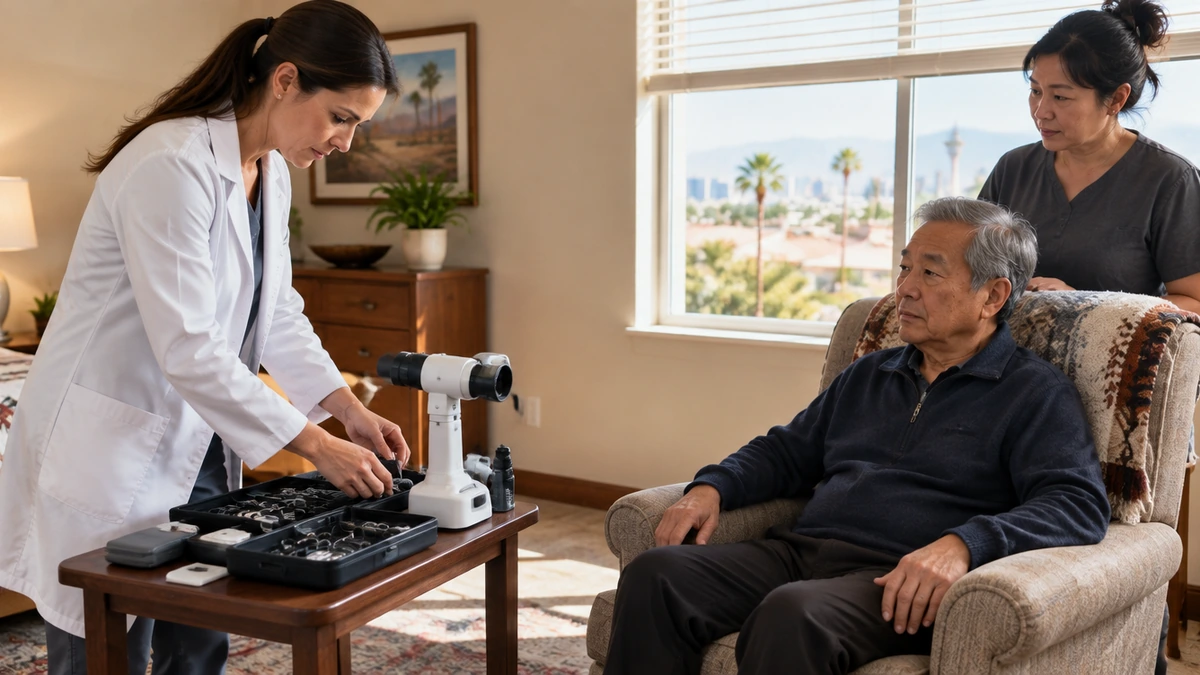
    Clinician preparing portable examination equipment, eye exam versus vision screening seniors
    Clinician preparing portable examination equipment.

    Put the scope in writing. Your visit description should identify what addresses vision correction, what assesses the health of the eye, and what the facility setting supports. Review those limits with me before your planning call ends. Give staff the description so they prepare the room and residents for the actual examination.

    Describe omitted services accurately. Nevada’s examination advertising rule requires a specific disclosure when an advertised examination omits a listed service, including subjective refraction or dilated fundus examination. When comparing providers, use the selected practice’s reviewed examination wording in your resident invitation. Keep the approved description with the visit plan before staff distribute the invitation.

    Set the location for retinal assessment. The AOA diabetes guideline recommends examining the retina through dilated pupils for diabetic retinopathy and treats retinal photography as a separate consideration. For your resident with diabetes, I clarify where the clinically indicated examination will happen. Record the next appointment when the needed assessment extends beyond the facility visit.

    Describe the resident in the chair. For your on-site eye care visit, I need positioning and communication details, including staff help, a familiar caregiver, or flexible scheduling. Supply those needs before booking without promising completion of every test. I determine the assessment and record its limits.

    How Do Prescriptions Differ From an Eye Health Assessment?

    Clinician and resident discussing current glasses, eye exam versus vision screening seniors
    Clinician and resident discussing current glasses.

    Bring both sets of concerns. For example, your resident wants replacement glasses, while the caregiver has noticed a change in reading or another familiar activity. Give me those observations alongside the prescription question. Before the visit ends, get the next steps for refraction, findings, and any further evaluation clear in the care record.

    Track glasses and clinical follow-up separately. I explain the prescription, and my eyewear team handles selection, frame fitting, and the order through delivery. Keep any additional clinical appointment on your follow-up list under its own contact. A glasses delivery update leaves pending examination findings for me to address.

    Prepare the glasses and relevant history. Review Vision by Amel’s eye examination services before your planning call so you have specific questions about the facility examination and services needing another setting. Supply the requested records through secure intake. Use the resulting instructions to assign staff follow-through after the examination.

    My team and I check benefits before service. Identify your resident’s actual Medicare, Medicaid, or Medicare Advantage plan for verification against the planned care. Review examination benefits and eyewear choices separately with my team. Keep the plan’s response in the resident’s private administrative record so staff know which questions remain open.

    What Should Clinical Documentation and Referrals Include?

    Resident and caregiver discussing follow-up, eye exam versus vision screening seniors
    Resident and caregiver discussing follow-up.

    Name who receives the findings. Plan how your resident, authorized representative, and appropriate care contacts receive reports before the exam begins. Set the secure channel for records and assign a facility contact to track instructions. Your contact follows up on missing reports, and I interpret the examination findings.

    Give missing reports a follow-up contact. A Canadian facility optometry program tracked follow-up timing and supplied examination reports to family physicians. Use those published tasks to prepare your own communication plan with my team. Record who checks for the report and who calls when an expected document has not arrived.

    Keep unfinished testing on the list. Your record needs the pending assessment, the person booking it, and the way the resident receives the plan. Record my intended timing alongside the task. Bring open actions to the next staff handoff instead of marking the visit complete because the resident attended.

    Make the referral ready to act on. Name who contacts the outside doctor receiving the referral, who sends the relevant records securely, and who helps your resident attend. Include the contact route for questions beside the referral entry. Check completion in the resident’s private care record so staff know whether the appointment happened.

    How Do You Choose the Right Service for Residents?

    Start with the resident’s reason for coming. Describe prescription questions, existing follow-up requests, and reported changes so I recommend the appropriate service for each person. If your resident holds a book away from the chair, describe that concern plainly. A shared address does not give everyone the same examination needs.

    1. Gather resident interest and the reason each person wants an appointment.
    2. Verify resident consent and any representative’s authority through the intake process.
    3. Request the planned examination scope and identify needs requiring another setting.
    4. Confirm benefits, private space, electrical access and the resident schedule.
    5. Assign responsibility for reports, eyewear questions and referral follow-up.

    Give staff a practical preparation list. Use the on-site examination workflow to organize your resident handoff before and after the visit. Apply the mobile optometrist selection questions when reviewing credentials, scope, and follow-up. Get answers tied to the room and residents involved in your facility’s appointment plan.

    Make the invitation match the service. Describe what your residents are choosing, voluntary participation, and how to raise questions before scheduling. Use my reviewed wording for the examination when you plan a visit with me. Keep the service name clear instead of calling every appointment a vision check.

    Request Comprehensive On-Site Eye Care With Vision by Amel

    Plan around your residents’ needs. I am Dr. Amel Youssef, OD, founder of my practice, Vision by Amel, in Downtown Summerlin. I invite you to plan a visit for your assisted living home, memory care community, or senior living community in the Las Vegas Valley. Bring the resident interest list and a description of the private room to the planning call. Review examination scope before building the schedule.

    Prepare the visit with my team. Your facility contact gathers resident interest, consent, and insurance documents and prepares a private room with electrical access. Participation is voluntary. My team and I verify insurance benefits before service. Benefits depend on each resident’s eligibility and plan terms.

    Plan your eyewear handoff with me. My team and I coordinate secure intake, eyewear selection, measurements, delivery, and adjustments. I review responsibility for follow-up or referral with you before the visit.

    Frequently Asked Questions About Mobile Examinations and Vision Screening

    What should we request if a proposal only says vision check?

    Get a service description naming the examination, its purpose, and the expected next steps. Keep it with your facility visit plan before circulating the invitation. Staff then have the same wording when a resident asks what the appointment includes.

    How should we handle residents already seeing another eye doctor?

    Keep existing follow-up appointments in the plan and let each resident choose whether to participate. Record what your resident wants the visit to address and send current care details through private intake. Set how your resident wants me and their existing eye doctor to share the relevant information.

    What if a resident changes their mind on examination day?

    Respect the decision and update your schedule. Tell my team the appointment has changed through the visit’s scheduling process. Offer information about another opportunity only if the resident wants it, with participation still voluntary.

    What should we do with old screening results?

    Keep old results available, with their source and date, for my review. Send the requested records through your secure intake channel once I identify which are useful. The date helps me see what the earlier screening describes.

    Who should explain an unfamiliar term in the examination report?

    I explain terms in my examination report and any action they call for. Send your question through the clinical contact route, quoting the report accurately. Record the explanation and resulting task in the resident’s care record.

    Schedule an On-Site Vision Day Speak With Dr. Amel’s Team: (702) 858-4362

    Like this article? Add Vision by Amel as a preferred source, and you are more likely to see our articles in Google’s Top Stories.
    Add as a preferred source on Google