Tag: Nevada Medicaid

  • Your Baby’s First Eye Exam in Las Vegas: What Parents Should Know

    Your Baby’s First Eye Exam in Las Vegas: What Parents Should Know

    Your Baby’s First Eye Exam in Las Vegas: What Parents Should Know

    A Black mother cradling her baby girl on a sofa, accompanying a baby eye exam guide.

    TLDR: Your baby’s eye care starts in the first days of life. This baby eye exam guide shows you when the first full exam fits, what it checks, and the warning signs that mean you call an eye doctor right away.

    Answer: The American Optometric Association recommends your baby’s first comprehensive eye exam between 6 and 12 months of age. Your pediatrician checks your baby’s eyes from birth with a red reflex test. In Las Vegas, call an eye doctor right away for a white pupil, an eye that turns all the time, or discharge and puffy red eyelids in a newborn.

    Your baby cannot read an eye chart, and does not need to. You bring the birth history and what you have seen at home, from the stroller walk to the 2 am feed. That is where a great first visit starts. At home in Las Vegas, you settle into a bedroom chair for that feed while a bottle warms nearby. Those quiet moments give you something specific to describe when you call.

    I reviewed 113 primary sources across five research lenses for this guide, and infant eye screening starts at birth. Start the booking conversation with your baby’s age and history. My eye examination page explains our practice’s general exam process, while this guide stays focused on infancy.

    When Should You Plan a Baby Eye Exam?

    A white father holding his infant son and a colorful toy, accompanying baby eye exam guidance.
    A father holds his infant son while moving a colorful toy.

    The American Optometric Association recommends your baby’s first comprehensive eye exam between 6 and 12 months of age, even when nothing looks wrong. Put that recommendation on your list for the next well-child visit. Include any existing screening results in the discussion.

    AAO and AAPOS instead emphasize screening from the newborn nursery, including a red reflex check, and referral for concerning findings or risk factors rather than routine comprehensive exams for every healthy child without symptoms. File your pediatrician’s screening record alongside any eye examination report. Keep both available when discussing follow-up.

    At a newborn red reflex check, a trained clinician looks for the reflection of light from inside your baby’s eyes. An abnormal red reflex needs urgent consultation, so follow the referral right away. Under the same AAO and AAPOS guidance, an ophthalmologist should examine high-risk infants, including those at risk of retinopathy of prematurity or with a family history of childhood cataract, glaucoma or retinoblastoma.

    Born early? Family history of childhood eye disease? Tell your pediatrician first, because those babies need an ophthalmologist’s exam, not a routine date. Mention any existing referral when you call an eye care office. I would rather hear your concern early than have you wait for the perfect appointment age.

    How Do You Prepare Your Baby for the Visit?

    A Vietnamese-American couple seated with their baby in a boutique waiting area before a baby eye exam.
    Parents sit together with their baby in a waiting area.

    Pack for your baby first. A diaper bag, familiar comfort item and feeding supplies belong beside the insurance card. When arranging the visit, describe your baby’s usual nap and feeding pattern and ask how much time to reserve.

    1. Share the basics. Your baby’s age and the reason for the visit help my team pick the right appointment.
    2. Gather the history. Bring birth records you already have, screening results, medication details and any referral instructions.
    3. Describe what you noticed. Note which eye, when the change began and whether it happens constantly or comes and goes.
    4. Plan the trip. Leave room in your schedule for feeding, changing and settling your baby after the drive.
    5. Write your questions. Include who will examine your baby, what the visit covers and how follow-up will be arranged.

    Share the load. On a shaded path at a Summerlin park, you push the stroller while a grandparent leans down to greet your baby. Later, compare what each of you noticed, such as whether your baby watched that familiar face. When you come together for the visit, agree on who will describe the concern and who will hold the bag.

    Skip the rehearsal. Bring your baby as they are, with the information the office requested. For an older sibling accompanying you, my guide to a child’s first visit in Summerlin offers preparation aimed at children old enough to discuss the appointment.

    What Does a Baby Eye Exam Check?
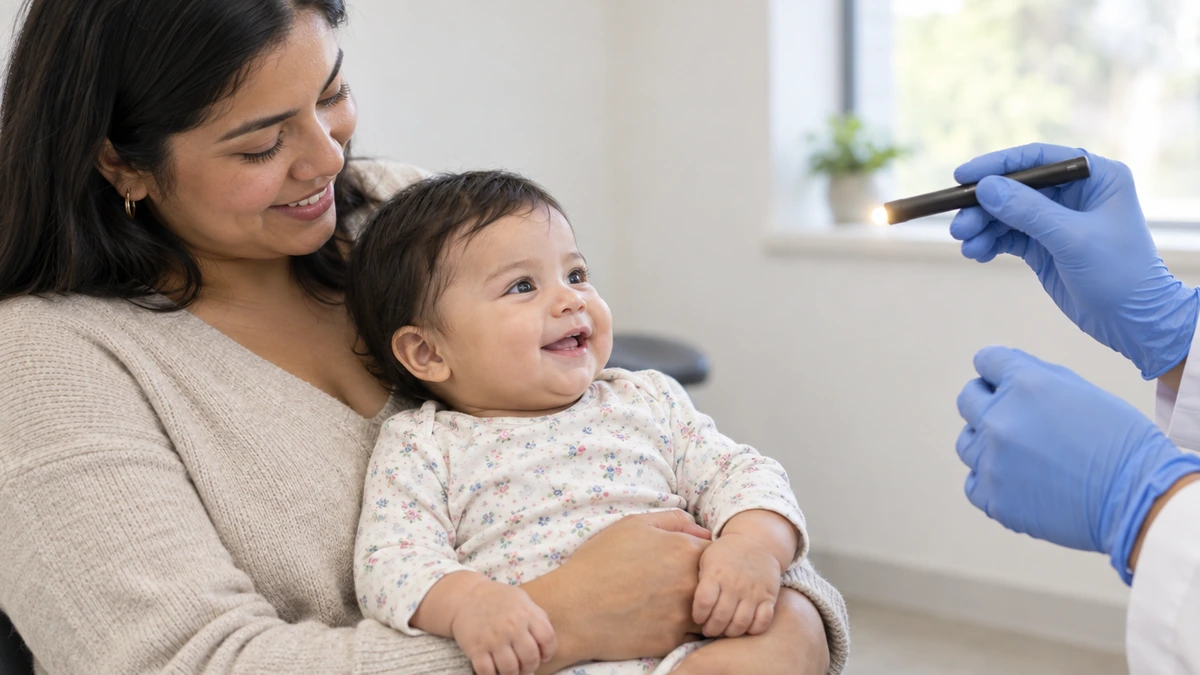
    Gloved hands holding a penlight near a smiling infant on a Latina mother's lap during a baby eye exam.
    A mother holds her infant while a penlight is held nearby.

    The AOA infant vision guide describes checks for nearsightedness, farsightedness, astigmatism, eye movement, alignment and overall eye health during your baby’s exam. Use those areas to organize your questions. Start with the concern you brought from home, then ask what the findings mean.

    Area of the ExamWhat to Ask About Your Baby
    Focusing and refractionDid the check find a focusing issue, and what happens next?
    Eye movementWhat did you observe as my baby’s eyes moved?
    AlignmentDid the eyes appear aligned during the examination?
    Overall eye healthWas anything found that needs further evaluation?
    Follow-up planWho should we see next, and when should we arrange it?

    You deserve plain English. Visual acuity, refraction, amblyopia and strabismus should each come with what it means for your baby, today. Before leaving, repeat the next step aloud so everyone has the same plan.

    Leave space for your questions in a pediatric eye exam. Write down any recommendation for prescription glasses, another examination or an ophthalmology appointment, including who will arrange it. My broader pediatric eye exam guide covers the wider picture of children’s vision as your child grows.

    Which Eye Changes Need Prompt Care?

    Call an eye doctor right away if your baby has a white or gray-white glow in the pupil, in person or in a flash photo, because it has several possible causes and some are serious, as AAPOS explains. Save the photo to show at the examination. Seek care now rather than waiting to collect more pictures.

    Discharge from your baby’s eye or puffy red eyelids means you call a doctor now, says the National Eye Institute. Say it is urgent, and skip the online booking form. Mention when the discharge or swelling began.

    Brief, on-and-off wandering is common in your baby’s first few months. Any crossing after about 4 months needs a check, and constant crossing is worrisome at any age, says AAPOS. An eye that turns all the time, at any age, needs an eye exam right away. Describe whether the eye stays turned or straightens between episodes.

    Have your baby’s tracking checked promptly if they do not follow well after 3 months, the referral threshold in AAPOS screening recommendations. Explain what you see when your baby watches a face or moving toy. That observation is a reason for assessment, not a diagnosis you need to make at home.

    Call an eye doctor right away if your baby turns away from ordinary light or squeezes both eyes shut indoors. The AOA lists extreme light sensitivity among infant warning signs, along with excessive tearing and red or crusted lids. Describe what happens in the room’s usual light when you call.

    How Do You Handle Coverage and the Next Visit?
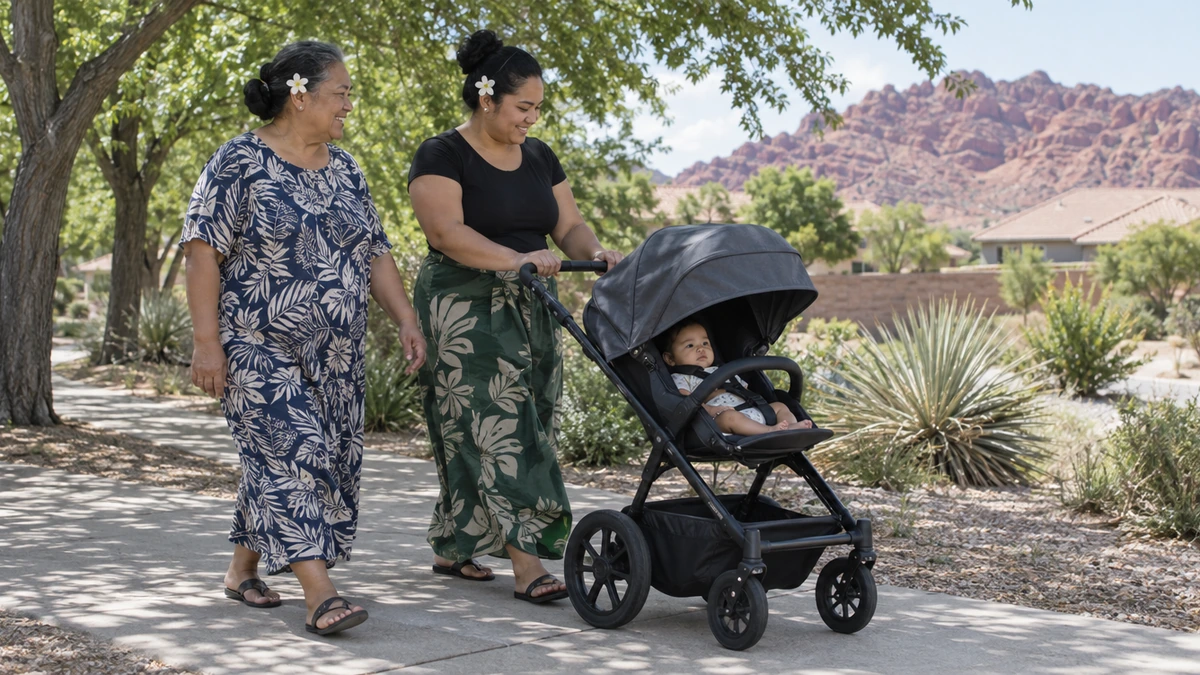
    A Pacific Islander mother and grandmother walking with a baby in a stroller, accompanying baby eye exam guidance.
    A mother and grandmother walk beside a stroller under shade trees.

    Check benefits before the trip. Vision by Amel accepts Nevada Medicaid, and my school screening guide explains how Healthy Kids handles referrals. Have your child’s member information ready for the benefits check.

    With any plan, get specific. Confirm your baby’s enrollment, the participating provider and which benefit applies to the proposed visit. Request an explanation of your share of the bill and whether further testing needs separate approval.

    Make the next step easy to find. Store your visit summary with the pediatric records, and put any follow-up date in the calendar you share with other caregivers. Back home after a stroller walk, you should have the next appointment and contact details within reach.

    I favor a written next step over a vague instruction to watch and wait. Before leaving, make sure your plan says what to watch, whom to contact and when to return. Keep the contact details beside those instructions.

    How I Approach Your Family’s Visit at Vision by Amel

    I am Dr. Amel Youssef, founder and optometrist at Vision by Amel. Children’s eye care is central to my practice, and Summerlin families visit every week. Tell my team your baby’s age and any note from your pediatrician when you call, and we will tell you the right next step for a baby that age.

    My team verifies your benefits by phone before the visit, and we accept Nevada Medicaid along with several medical and vision plans. Benefits vary with your plan. Have your baby’s insurance details available when you call, and bring the same information to the appointment.

    You will find us at 2010 Festival Plaza Dr, Suite 195, Las Vegas, NV 89135, in Downtown Summerlin at Festival Plaza. Book online or call (702) 858-4362, seven days a week. We open Monday to Saturday, 9 am to 6 pm, and Sunday, 11 am to 5 pm.

    Picture your Sunday at Festival Plaza: the stroller is folded in the trunk, the diaper bag is on your shoulder, and your baby is ready for a feed. Leave room for that pause when you plan a routine visit. My team will give you the appointment details before you make the trip.

    Frequently Asked Questions About Baby Eye Exams

    How Do You Check a Baby’s Eyes if They Can’t Talk or Read?

    No letters are needed for your baby’s eye examination. Focus, eye movement and alignment help assess vision, alongside checks of eye health. Even before speech, the newborn red reflex check looks for reflected light from inside the eyes.

    When Should My Baby Start Following Toys With Their Eyes?

    Around three months, your baby should begin following moving objects with their eyes and reaching for things, according to the AOA. AAPOS recommends having poor tracking checked after 3 months. Note whether you see the same response to a face and a moving toy, and share those observations at the assessment.

    Why Does My Baby’s Eye Water All the Time?

    Excessive tearing can point to a blocked tear duct, according to the AOA. An assessment of your baby’s watering helps identify the cause. Discharge or puffy red eyelids means you call a doctor now, as the National Eye Institute advises.

    Should I Bring a Video of the Eye Movement?

    Bring an existing video or photo and note when you took it. Keep the original available, and tell me what you noticed when you recorded it. Describe what happened before and after the recording so our discussion includes more than a single moment.

    Does Nevada Medicaid Cover My Baby’s Eye Care?

    Vision by Amel accepts Nevada Medicaid, and my team verifies your benefits by phone before the visit. Your plan determines the benefits available for the proposed appointment. For Healthy Kids referral rules, read my guide to school screening and eye exams.

    Book My Eye Exam Call (702) 858-4362

    Like this article? Add Vision by Amel as a preferred source, and you are more likely to see our articles in Google’s Top Stories.


    Add as a preferred source on Google

  • Pediatric Eye Exams in Las Vegas: A Parent’s Guide to Timing

    Pediatric Eye Exams in Las Vegas: A Parent’s Guide to Timing

    Pediatric Eye Exams in Las Vegas: A Parent’s Guide to Timing

    A mother and her young daughter smile together on a sunny Las Vegas sidewalk on the way to an eye appointment

    TLDR: Your child needs a full eye exam after a failed screening, at the first sign of a vision problem, and on a regular schedule as school demands grow. A passed school screening does not rule out a problem, so your child’s eye exam fills the gap.

    Answer: Book a pediatric eye exam in Las Vegas whenever your child fails a screening, squints, tilts their head or struggles with reading. The American Optometric Association recommends a first exam at about 6 months, another between ages 3 and 5, one before school starts, then every year. Pediatric groups rely on screenings and send your child for an exam when a screening flags a problem.

    Your child rarely tells you the board looks blurry. Kids assume everyone sees the way they do. That is why I treat your child’s eye exam as the one visit that answers what a quick screening only guesses at. As an optometrist in Downtown Summerlin, I see pediatric eye exams as part of the comprehensive eye exams I give your whole family.

    This guide gives you the schedules the experts publish, the signs to watch for, what happens in the chair and how coverage works in Nevada. I reviewed 38 primary sources across five research lenses for this guide, and the eye care and pediatric groups agree on one rule: a child who fails a screening, shows symptoms or struggles to see needs a full eye exam. Use this page to decide when your child’s next visit belongs on the calendar.

    When Should Your Child Have a First Pediatric Eye Exam?

    A father holds his toddler son on his lap in a bright living room, both laughing
    Expert schedules differ, and both agree a child with symptoms needs an exam.

    Two respected camps answer this question differently, and you deserve both answers. The American Optometric Association recommends a first thorough exam at about 6 months, an in-person exam between ages 3 and 5, another as school starts and then an eye examination every year from 6 to 18. That schedule puts a doctor’s eyes on your child before problems show up in class.

    The American Academy of Pediatrics, the American Academy of Ophthalmology and AAPOS take a screening-first route. Your pediatrician checks the red reflex at birth, tries instrument-based screening between 12 months and 3 years, and tests reading-chart vision around age 4. The 2022 joint statement from AAPOS and the American Academy of Ophthalmology calls for repeat screening every 1 to 2 years after age 5 and an eye exam for any child who fails. The same statement says routine comprehensive exams in children with no symptoms have no proven medical benefit. Under this route, your child gets screened at checkups and examined when something turns up.

    Here is where I stand. For school-age kids, I follow the AOA’s yearly schedule, because schoolwork asks more of your child’s eyes every year and screenings miss some children with real problems. Both camps agree on the moments that matter most, so never skip an exam after a failed screening, a new symptom or a family history of crossed or lazy eyes.

    School Vision Screening vs a Comprehensive Eye Exam

    A boy with a backpack waves goodbye to his mother at the school drop-off line
    Passing a school screening does not rule out a vision problem.

    A vision screening is a quick filter. It checks whether your child reads a chart or passes an instrument test, then sorts children into pass and refer. A comprehensive eye exam is a diagnosis. Nevada law even defines a comprehensive examination as an in-person visit covering history, eye alignment, visual acuity, pupils and the front and back of your child’s eyes.

    What it coversSchool or pediatrician screeningComprehensive eye exam
    Who performs itSchool nurse, staff or pediatric officeOptometrist or ophthalmologist
    PurposeFlag children who need a closer lookDiagnose and plan treatment
    Eye alignment and focusingPartly, depending on the testYes
    Eye health inside the eyeLimited to a red reflex check in infancyYes, front and back of the eye
    Glasses prescriptionNoYes

    Screenings miss children. In the Vision In Preschoolers study of 2,588 children, the best screening tests run by trained eye care professionals caught only about two-thirds of children with a target condition, though they caught nearly 90 percent of the most serious ones. Prevent Blindness notes that passing a vision screening does not mean there is no chance your child has a vision disorder.

    Follow-up often breaks down too. A 2026 review of 30 studies found a median of only 43.1 percent of children who failed a school screening got the follow-up care they needed. If your child brings home a referral note, book the exam that week.

    What Nevada Schools Check

    Under NRS 392.420, Nevada schools with a school nurse check your child for vision problems before the end of the first year of elementary school, in at least one more elementary grade, and once each in middle school and high school. Children in special programs or repeating a grade get an extra check, and you receive a notice with a recommendation if something turns up. You also have the right to opt your child out in writing.

    Signs Your Child Needs a Pediatric Eye Exam Now

    A young girl squints and leans close while working on a puzzle at a kitchen table as her father watches
    Squinting, head tilting and sitting too close are worth an exam.

    Your child’s habits often tell you more than any chart. The American Optometric Association lists warning signs worth an exam even if your child passed a recent screening. Watch for these at home and ask your child’s teacher about them too:

    • Sitting close to the TV or holding a book close to the face
    • Squinting, tilting the head or covering one eye
    • Rubbing the eyes often or complaining of headaches
    • An eye that turns in, out, up or down
    • Losing their place while reading or skipping lines
    • Avoiding coloring, puzzles or close-up games
    • Unusual sensitivity to light

    Lazy Eye and Crossed Eyes

    Amblyopia, often called lazy eye, affects up to 3 in 100 children according to the National Eye Institute, and the sooner treatment starts the better. Large studies of preschool children found eye misalignment, called strabismus, in roughly 2 to 3 percent of kids. Your child rarely notices either one, which is exactly why your eyes and an exam matter.

    Reading Trouble and Vision

    Uncorrected farsightedness is linked to weaker early literacy scores in studies of 4 and 5 year olds. That is a real reason to check your child’s eyes when reading feels hard. A joint statement from the American Academy of Pediatrics, the American Academy of Ophthalmology and AAPOS also states vision problems do not cause dyslexia or learning disabilities, so your child’s exam rules vision in or out while the school evaluates learning.

    What Happens During a Pediatric Eye Exam in Las Vegas

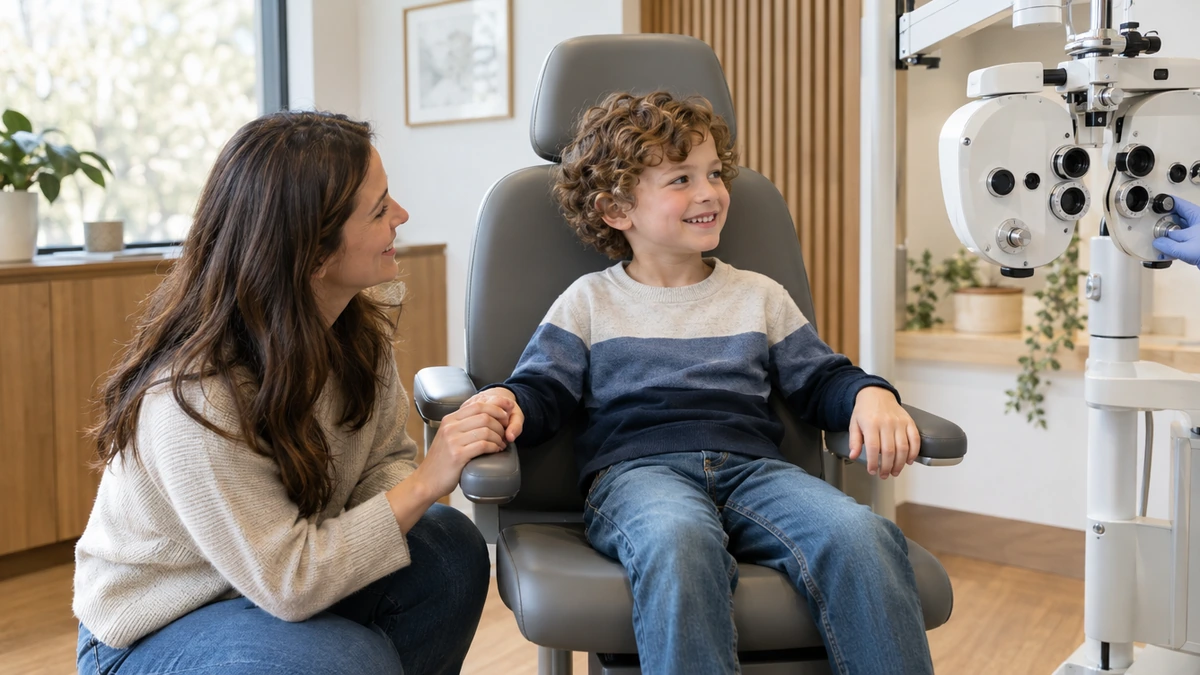
    A smiling boy sits in an eye exam chair holding his mother's hand during a pediatric eye exam
    Your child does not need to know letters to have a full eye exam.

    Your child does not need to know letters or how to read to have an eye exam. The AOA suggests allowing about an hour, booking early in the day when your child is fresh, and talking the visit through beforehand. Tell your child they will look at pictures and lights while you stay close by.

    The exam covers the whole visual system. I check how clearly each eye sees, how well the eyes line up and move together, whether your child needs glasses for nearsightedness, farsightedness or astigmatism, and the health of each eye from front to back. Visionix digital diagnostics measure your child’s eyes in seconds, which keeps the visit moving for short attention spans.

    Dilating drops are not routine in my exam room. If your child’s eye health calls for them, I explain why before any drops go in. The American Academy of Ophthalmology notes dilation lasts longer in children, so bring sunglasses and plan a quiet afternoon for your child.

    Screens, Homework and Your Child’s Eyes

    Screens tire your child’s eyes, and the tiredness passes. The American Academy of Ophthalmology states there is no scientific evidence screen light damages eyes, and dry eyes, blur and headaches from screens are temporary. Its guide to screen use for kids points parents to pediatric guidance on how much screen time fits each age.

    Comfort habits help your child most. Use the AOA’s 20-20-20 rule: every 20 minutes, look at something 20 feet away for 20 seconds. Keep tablets at arm’s length, remind your child to blink and set a timer for homework breaks. If headaches or squinting continue after those changes, book your child’s exam.

    How Coverage Works for Your Child’s Eye Exam

    Children’s vision gets better protection than adult vision under federal law. HealthCare.gov lists pediatric vision care as an essential health benefit, so every Marketplace plan includes vision coverage for your child. Employer plans vary, so check your own benefits.

    Nevada Medicaid covers children under 21 through the Healthy Kids program. Under the state’s ocular services manual, optometrists examine Healthy Kids members without a referral or prior authorization, routine exams are covered once every 12 months, and glasses are replaced after a prescription change or when they are lost or broken. Nevada Check Up covers children under 19 in families with income up to 205 percent of the Federal Poverty Level, so check whether your household qualifies.

    My team accepts Nevada Medicaid along with Anthem, Aetna, UMR, Humana, United Healthcare, Tricare, EyeMed, Spectera, Davis and VSP. We verify your child’s plan by phone before the visit. You know what to expect before you walk in.

    Why Las Vegas Parents Book Pediatric Eye Exams With Dr. Amel

    You get one boutique for your whole family’s eyes. I built my practice at 2010 Festival Plaza Dr, Suite 195, in Downtown Summerlin, open seven days a week, so weekend appointments fit around your child’s school week. Your child gets a doctor who explains every step, and you leave knowing exactly what I found.

    Book now if your child has never had a full eye exam, failed a screening or shows any sign on the list above. Learn more about Dr. Amel and the boutique, browse the Children’s Vision guides and protect your child’s eye health before the next school year asks more of their eyes.

    Frequently Asked Questions

    At what age should my child have their first eye exam?

    The American Optometric Association recommends a first exam at about 6 months, another between 3 and 5, and one before school starts. The American Academy of Pediatrics relies on screenings at well visits and sends your child for an exam when a screening flags a concern. Either way, a failed screening or a symptom means your child needs an exam now.

    Is a school vision screening enough?

    A screening sorts children, and an exam diagnoses them. Screenings check far fewer things than a comprehensive exam and miss some children with real problems. Treat a pass as good news and keep your child’s regular exam on the calendar.

    How long does a pediatric eye exam take?

    Plan on about an hour, the AOA suggests, especially for a first visit. Book a morning slot when your child is rested. Bring your child’s current glasses and any school screening notice.

    Does Nevada Medicaid cover my child’s glasses?

    Yes, for Healthy Kids members under 21. Nevada Medicaid covers a routine exam every 12 months and replaces glasses after a prescription change or when they are lost or broken. Call my team and we confirm your child’s coverage before the visit.

    Do screens damage my child’s eyes?

    The American Academy of Ophthalmology finds no scientific evidence that screen light damages your child’s eyes. Screen time causes temporary strain, dryness and headaches. Regular breaks and blinking keep your child comfortable.

    My child has type 1 diabetes. When do they need an eye exam?

    The American Diabetes Association recommends a first dilated diabetes eye exam once your child has had type 1 diabetes for three to five years and is 11 or older or has started puberty. Read my guide to diabetic eye exam timing for the full schedule. Keep your child’s regular vision exams going in the meantime.

    Book My Eye Exam Call (702) 858-4362

    Like this article? Add Vision by Amel as a preferred source, and you are more likely to see our articles in Google’s Top Stories.

    Add as a preferred source on Google

  • Medicare and Medicaid Eye Care for Assisted Living Residents in Nevada

    Medicare and Medicaid Eye Care for Assisted Living Residents in Nevada

    Medicare and Medicaid Eye Care for Assisted Living Residents in Nevada

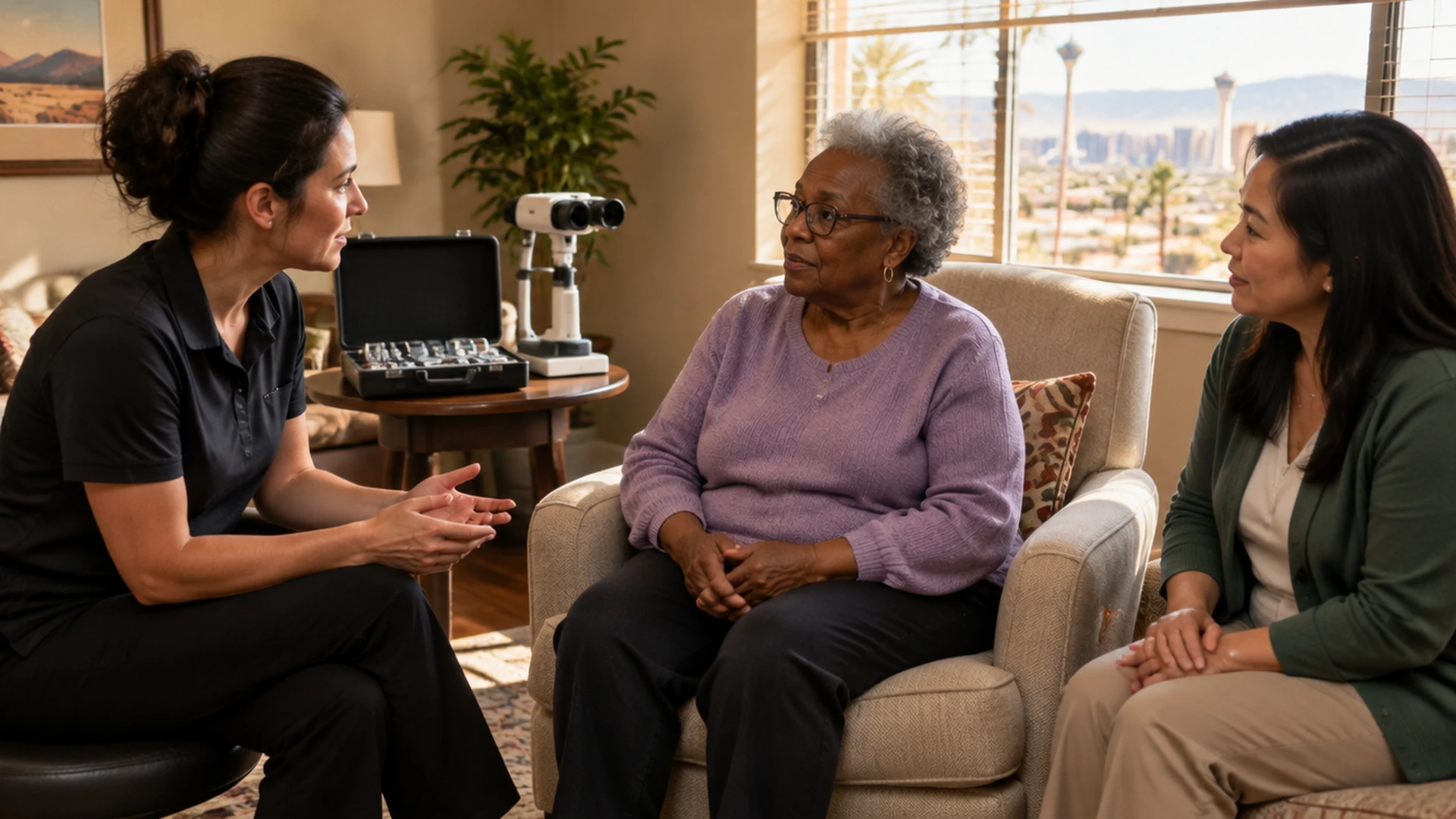
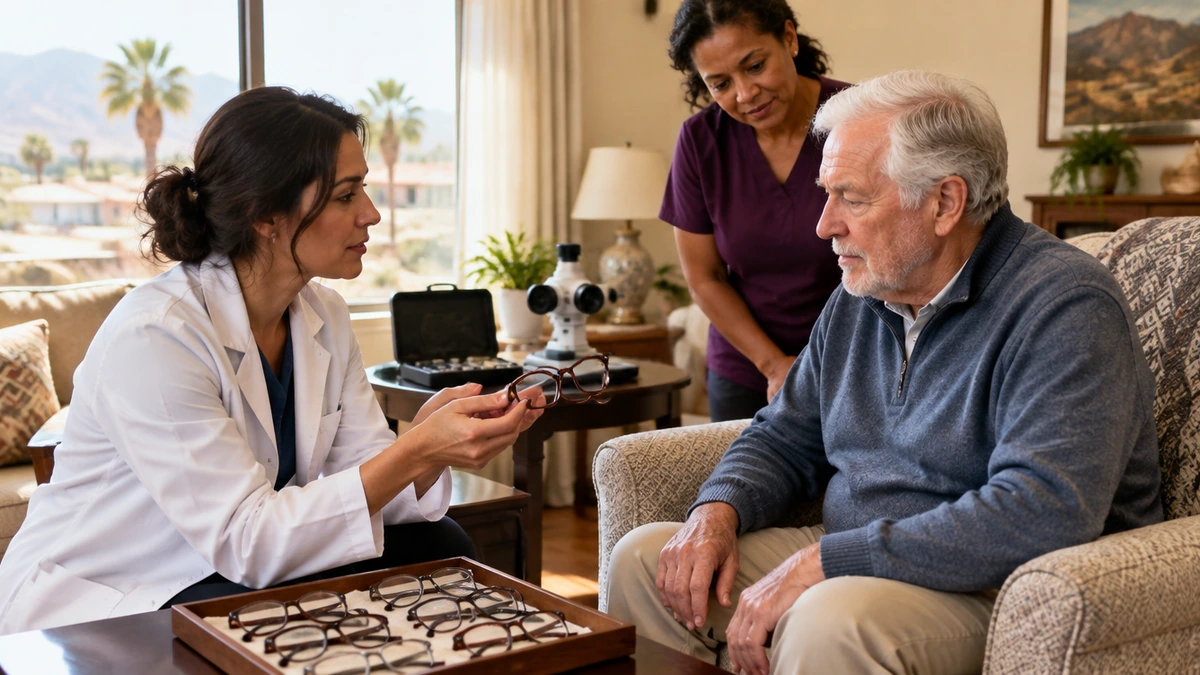
    Eye doctor and resident discussing the visit for Medicaid eye exams assisted living Nevada

    TLDR: I start with your resident’s actual plan, not the logo on the card. Medicaid eye exams for assisted living residents in Nevada need benefit verification before service, a separate answer for eyewear, and a named person to explain the verified result to the resident or representative.

    Answer: For Medicare and Medicaid eye care in Nevada assisted living homes, your team gathers current insurance records securely. I verify benefits before service. My team and I check eligibility, examinations, eyewear, provider participation, and authorization, then explain findings and unresolved questions to residents.

    You need answers before a family asks. One resident holds a Medicare card, another a Nevada Medicaid card, and a third a Medicare Advantage card with a D-SNP label, and each one answers a different question about the visit. Give me the cards in hand and the current plan name exactly as printed. The rest of the verification follows from that first step.

    Plan your facility-coordinated vision day around that review. Gather consent and current insurance records through secure intake, keep appointment details private, and give my team the planned services one line at a time. Your staff then has a clear answer for each resident instead of a guess.

    Medicaid Eye Exams Assisted Living Nevada: Where Should You Start?

    Eye doctor listening to a resident beside a caregiver for Medicaid eye exams assisted living Nevada
    Start planning with the resident and the reason for the visit.

    Put each service on its own line. Your eye exam, prescription check, additional testing, and prescription eyewear need separate entries in the benefit request. Ask me, your optometrist, to identify the planned care before staff discuss coverage with a family. A card on the desk starts the review, it does not finish it.

    Your resident’s Medicare card does not establish a routine glasses-prescription benefit, because Original Medicare excludes routine eye examinations for prescribing glasses or contact lenses. Describe the reason for seeking care in the resident’s own words. Send existing diagnoses and appointment records for clinical review instead of assigning a medical label to the visit yourself.

    Information to gatherQuestion for my teamYour next action
    Current insurance cardsWhich plan applies to each planned service?Confirm the resident’s identifying details.
    Reason for the appointmentWhat examination and testing are planned?Send the concern for clinical review.
    Previous examination and eyewear historyWhat prior service information is needed?Request missing dates through secure intake.
    Existing glasses and lens preferencesWhat needs a separate eyewear review?Keep frame fitting and lens choices on the follow-up list.
    Representative contact and authorityWho should receive the explanation?Check the current documents before requesting a signature.

    Give your staff the examination picture. The eye examination service explains the appointment itself and helps you prepare for assisted living eye exams in Las Vegas. Review the planned parts of a comprehensive eye exam and my referral steps for care outside your home before I arrive as your mobile optometrist.

    Which Medicare Medical Benefits Need a Separate Check?

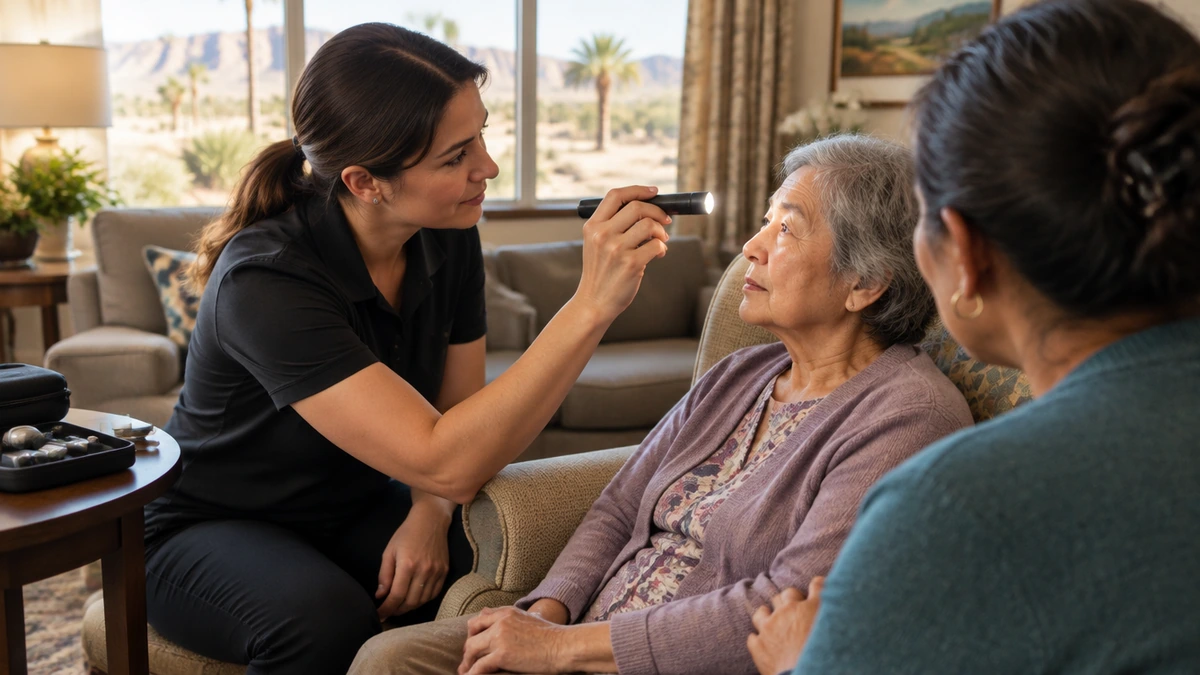
    Eye doctor examining a seated resident for Medicaid eye exams assisted living Nevada
    Plan each resident appointment with the clinical team.

    Keep your dates beside the care plan. For a resident with diabetes, Medicare Part B covers a diabetic retinopathy eye examination once a year when a legally authorized eye doctor performs it. Send the previous examination date when available, with follow-up instructions from the eye doctor who performed that previous examination. A benefit calendar belongs in the insurance file, while that treating eye doctor’s instructions guide the next care appointment.

    Check your resident’s screening history. Part B covers glaucoma screening once every 12 months for people with diabetes, a family history of glaucoma, African American beneficiaries aged 50 or older, or Hispanic beneficiaries aged 65 or older. Include the facility address in my team’s billing review before describing the appointment as covered. Record the individual answer beside the resident’s name on the restricted interest list.

    Give your resident a clear prescription explanation. Original Medicare excludes eye refractions regardless of practitioner or purpose, including when other medical eye care is covered. List refraction separately when I explain the planned services and benefits. Keep the question about reading glasses beside the medical reason for the appointment so neither gets lost.

    Write what you know. Your handoff needs the resident’s words, the existing record, and plainly marked gaps. Include cataracts, glaucoma, diabetic retinopathy, or dry eye when documented in the history. I choose the examination and assess eye health.

    How Should You Check Eyeglass Benefits?

    Resident and eye doctor comparing eyeglass frames for Medicaid eye exams assisted living Nevada
    Discuss eyewear choices as part of the individual visit.

    If your resident recently had cataract surgery, Part B generally excludes ordinary eyewear but covers one standard-frame pair of glasses or one contact-lens set after each cataract operation implanting an intraocular lens, subject to supplier and cost-sharing conditions and added charges for upgrades. Gather the surgery information for review. Get the glasses and benefit explanation before your resident chooses frames or lenses.

    Bring the pair your resident wears. Describe the actual problem: reading a newspaper, a loose frame, a missing pair, or lenses the resident dislikes. Put the glasses beside the available prescription record for the appointment. Leave the replacement and lens decision open until the examination and discussion.

    Track the glasses past frame selection. Your list needs the chosen frame, prescription lenses, progressive lenses if requested, measurements, delivery, and later adjustments. Record my team’s eyewear answers and name the staff member helping the resident after the exam. A frame choice alone leaves the rest unfinished.

    Medicaid Eye Exams Assisted Living Nevada: Which Limits Need Review?

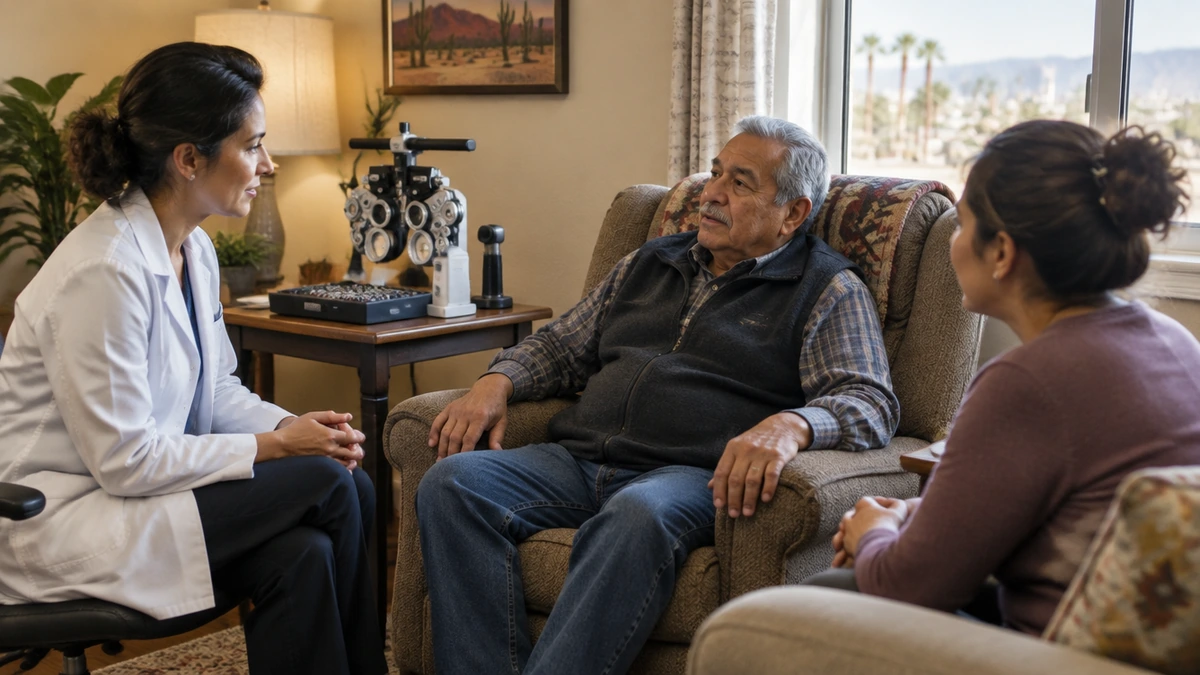
    Resident discussing care with an eye doctor for Medicaid eye exams assisted living Nevada
    Prepare resident-specific questions before the visit.

    Check your resident’s benefit details. For Nevada Medicaid, state ocular manual limits routine examinations to once every 12 months with prior authorization for exceptions, bases medical ocular examinations within an optometrist’s scope on medical necessity without prior authorization, and generally requires significant refractive change and frame reuse where possible for adult lens replacement, with prior authorization beyond the 12-month lens limit for adults aged 21 or older. I need the resident’s delivery system, actual plan, and planned services for that review. Leave a specific replacement allowance or service question open for the plan’s answer when it remains unresolved.

    Keep your verification notes readable. List separately billed testing and eyewear alongside the examination, with any authorization steps for those services. Give the authorization response, eligibility response, and final claim status separate entries in the follow-up record. Staff need to see which answer is still missing.

    Leave unknown dates marked unknown. Your resident’s glasses belong beside the last known examination date, replacement history, and available prescription. Seek the missing report instead of guessing when those lenses arrived. The record needs an answer the next shift is able to trace.

    How Do Medicare Advantage and Dual Eligibility Affect Planning?

    Copy the exact plan name. For your Medicare Advantage resident, plans must cover medically necessary Original Medicare services and sometimes add vision benefits, with plan-specific networks, referrals, authorization, and costs. Send the card details rather than a family’s recollection of the insurer. Include D-SNP when it appears on the card and keep the review specific to each planned service.

    I reviewed 69 primary sources across five research lenses for this series, and CMS distinguishes partial-benefit from full-benefit dual eligibility. Record your resident’s actual eligibility category beside the payer details. The words dual eligible leave an important question unanswered. Keep the verified benefit response where your staff will find it during the family conversation.

    Check your resident’s Qualified Medicare Beneficiary status explicitly. Ask my team to explain the result to the resident and record it with the payer information. Name the contact in my practice handling billing questions. Send a disputed bill for review before requesting payment from the resident or family.

    1. Invite residents to participate voluntarily and record interest.
    2. Gather current cards, relevant history, and representative documents through secure intake.
    3. Complete benefit verification for planned services, provider participation, the facility address, and authorization steps.
    4. Explain the verified response to the resident or authorized representative before service.
    5. Track remaining questions, eyewear choices, and follow-up responsibilities.

    Give your coordinator a place to record the date of the verification response and the person responsible for unresolved questions. Use the facility vision day checklist to connect that work with room and appointment planning. The on-site examination process helps explain the visit to staff before invitations go out.

    Ask Vision by Amel About Facility Benefit Verification

    Plan your visit with me. I am Dr. Amel Youssef, OD, founder of my practice, Vision by Amel, in Downtown Summerlin. I serve assisted living homes, Residential Facilities for Groups, memory care communities, adult day care programs, and senior living communities across the Las Vegas Valley. Start your vision day with an interest list, resident consent, representative documents, and secure handling of requested records.

    You arrange a private room with electrical access and an examination schedule with me. Participation is voluntary, and I verify insurance benefits before service. Benefits depend on each resident’s eligibility and plan terms.

    Keep your plan moving after the exam. My team and I review eyeglass selection, measurements, delivery, adjustments, and follow-up with you on the planning call. I arrange referrals for needs beyond the scope of your on-site eye care visit. Use the facility form for contact details and scheduling, with resident records sent through my team’s secure intake method.

    Frequently Asked Questions About Assisted Living Eye Care Coverage

    What should staff say when a family asks for a coverage answer immediately?

    Tell your family contact coverage needs the current cards and a service review. Identify who holds the cards and send them securely to my team. Record the family’s exact question so the response explains the service they are asking about.

    What if the insurance card changes after registration?

    Send the new card details before your resident receives the planned service. Mark the old entry as replaced and request a fresh benefit review. Name the contact who will explain the updated answer to the resident.

    Should we place insurance details on the shared appointment board?

    Put appointment logistics on your shared board. Keep payer details and benefit responses in the restricted resident record. Name the staff contact who handles scheduling questions needing information beyond the board.

    How should we prepare for a resident arriving after verification is complete?

    Put the new resident on your pending review list. Gather the requested documents and check space in the examination schedule before adding an appointment. Record that resident’s participation decision and benefit response individually.

    Who should handle an unresolved eyewear question after the visit?

    Your facility contact sends the specific frame or lens question to my eyewear team. Include the resident’s preferred way to receive the answer. Keep the task open until the resident or authorized representative has enough information to decide.

    Schedule an On-Site Vision Day Speak With Dr. Amel’s Team: (702) 858-4362

    Like this article? Add Vision by Amel as a preferred source, and you are more likely to see our articles in Google’s Top Stories.

    Add as a preferred source on Google