Tag: pediatric eye exams

  • Styes and Eyelid Bumps in Kids: When to Treat at Home and When to Call
    Styes and Eyelid Bumps in Kids: When to Treat at Home and When to Call

    Styes and Eyelid Bumps in Kids: When to Treat at Home and When to Call

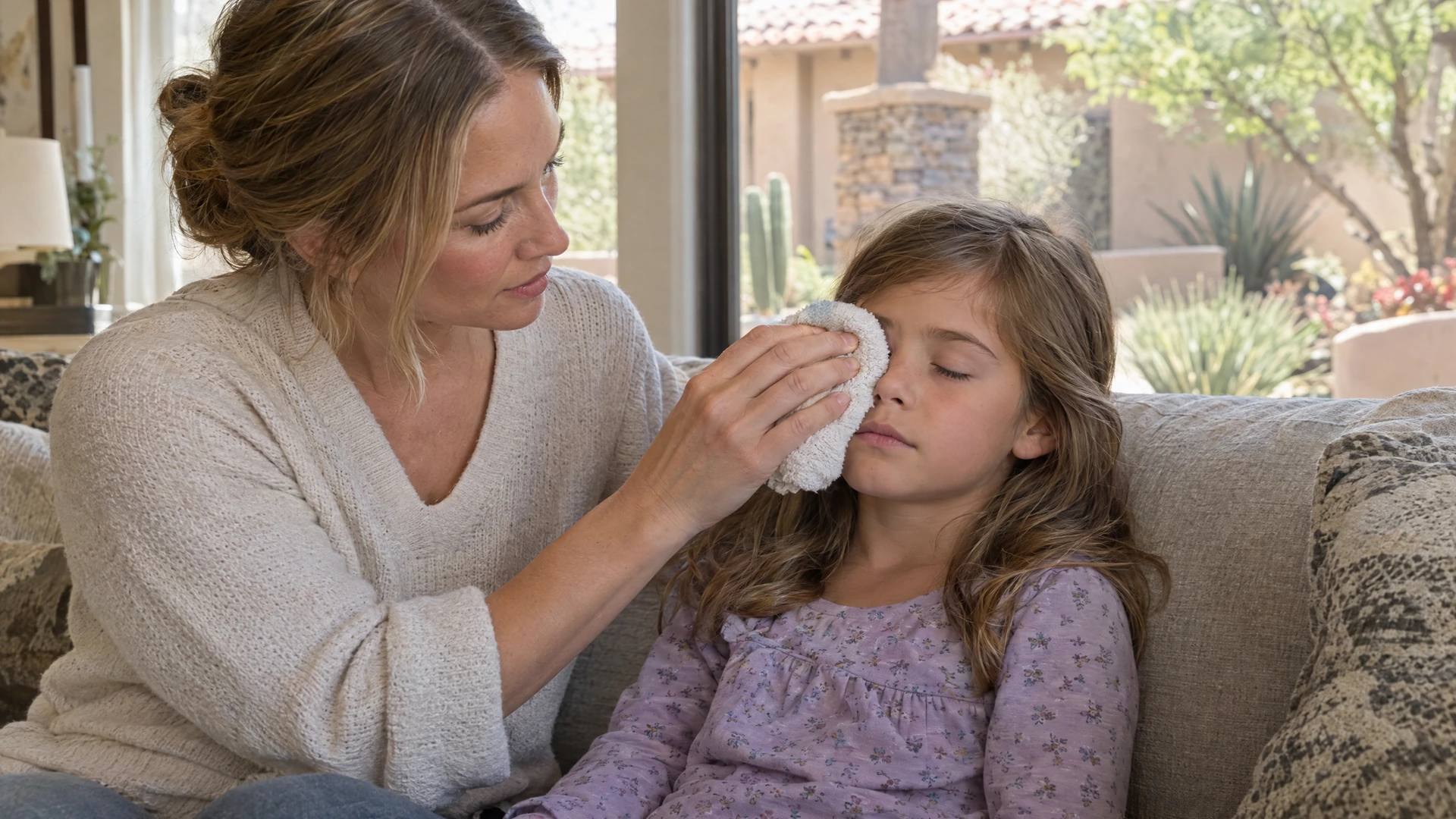
    White mother holding a warm washcloth to her daughter's closed eye for stye in kids care

    TLDR: A stye in kids needs gentle care: a clean warm compress, no squeezing, and attention to changes in your child’s symptoms. Call for an eye exam when a bump persists or returns. Get care right away for spreading redness or swelling around the eye, fever, vision change, or pain moving the eye.

    Answer: For families in Las Vegas, a small eyelid bump without warning signs often starts with warm compresses at home. A stye involves infection, while a chalazion involves a blocked oil gland. Arrange an exam for a lasting or recurring bump, and seek care right away when your child has spreading swelling, fever, vision change, or pain moving the eye.

    You’re getting ready for school in Summerlin when your child points to a bump in the bathroom mirror. Shoes are waiting by the door. You need to know whether to reach for a washcloth, call for an appointment, or leave for urgent care.

    I reviewed 168 primary sources across five research lenses for this guide, and a blocked eyelid gland is different from an infected one. That distinction helps you understand the next step. My eye examination service gives you a place to start for a persistent bump without emergency symptoms.

    Is It a Stye in Kids or a Chalazion?
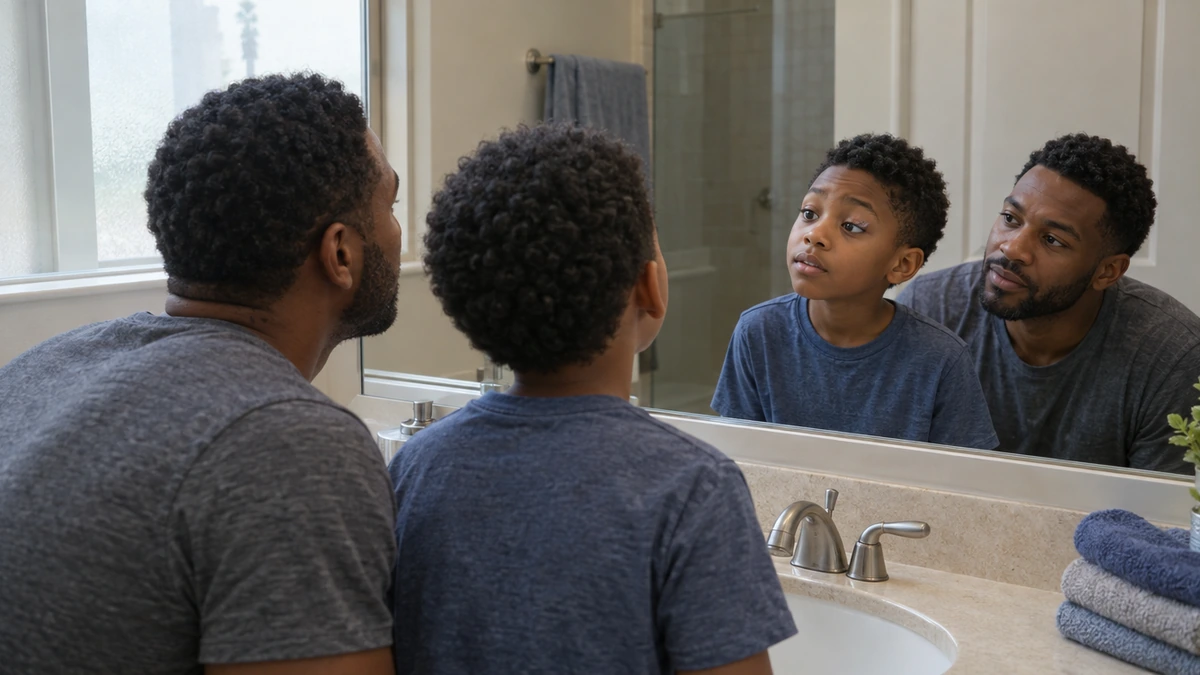
    Black boy looking at his eyelid in a bathroom mirror beside his father, illustrating stye in kids
    A father stays beside his son as he looks at his eyelid.

    A bump is a sign, not a diagnosis. A chalazion is a blocked oil gland, while a stye, also called a hordeolum, is an infected eyelid gland, as AAPOS explains. Most styes start with a bacterial infection, says the American Academy of Ophthalmology, and the AAO adds that the two are sometimes hard to tell apart. Your child’s bump gets its real name at an eye exam.

    Skip the mirror diagnosis. Notice where the bump is, when it appeared, and whether your child reports pain or a change in sight. Those observations are more useful than choosing a label from a photograph.

    What You’re ConsideringWhat It MeansWhat to Do
    Stye, or hordeolumAn infected eyelid glandUse gentle warm compresses when there are no warning signs. Never squeeze.
    ChalazionA blocked eyelid oil glandArrange an exam when it is large, persistent, or returning.
    Spreading swelling or changed visionSigns that need care right away, whatever the bump is calledGet care right away. Eye movement pain or reduced vision means emergency care.

    Listen to your child even when the bump looks small. Tell me in their own words whether the lid hurts or the view across the room has changed. A photo records appearance, but it does not replace an examination. For redness elsewhere in the eye, our guide to pink eye in children addresses that separate concern.

    How Do You Care for a Stye in Kids at Home?

    Indian-American girl resting with a warm compress over one eye for stye in kids care
    A girl rests with a warm compress over her closed eye.

    Start with gentle warmth. The American Academy of Ophthalmology recommends holding a warm compress against the eyelid for 10 to 15 minutes, 3 to 5 times a day, without burning your child’s skin. Published schedules differ, so follow the plan given for your child. Treat this as a care routine, not a deadline for the bump to disappear.

    1. Wash your hands and choose a clean washcloth.
    2. Wet it with warm water. Check the temperature yourself so the cloth feels comfortably warm, not hot.
    3. Help your child settle with the affected eye closed. Rest the cloth gently against the lid without pressing on the bump.
    4. Rewarm the cloth as it cools, checking the temperature again before replacing it.
    5. Leave the bump alone afterward. Do not squeeze, pop, or puncture it.

    Make the setup simple for your child. After a Las Vegas school pickup, set the backpack down and settle together on the couch with the clean washcloth. Let your child choose a story to hear while you hold it gently in place. A familiar routine makes the instructions easier to follow.

    The AAO says never squeeze or pop a stye or chalazion, because squeezing risks spreading the infection into the eyelid, and to skip eye makeup and contact lenses until the bump is gone. Your fingers hold the cloth, never the lump. For a teen who wears lenses, my guide to contact lenses for kids and teens covers the everyday lens habits.

    I prefer a calm, repeatable care plan over a crowded shelf of remedies. You should leave the visit knowing what to do and what change means you need help. Share the plan with everyone caring for your child, from the parent handling breakfast to the grandparent taking over after school. Walk through the cloth placement together so the next adult knows exactly what you mean.

    Which Eyelid Warning Signs Send You Straight to Care?

    Get care right away if your child has spreading redness or swelling around the eye, fever, vision change, or pain moving the eye. The American Optometric Association says redness and swelling extending beyond the eyelid to the cheek or face require an immediate call to your eye doctor. Stop the home-care routine and describe the spreading redness or swelling when you call.

    Go to the emergency room right away for a swollen, red eyelid with pain when your child moves the eye, trouble moving the eye, a bulging eye, double or reduced vision, or fever. Those signs point to orbital cellulitis, an infection of the eye socket, which MedlinePlus calls a medical emergency and warns sometimes gets worse fast in children. Skip the online booking form and go.

    Skip the home test. Whether the infection stays in the lid or reaches deeper around the eye is a call for a doctor to make in person, right away. A home eye-movement check never proves that waiting is safe for your child.

    What Should You Do When Eyelid Bumps Return?
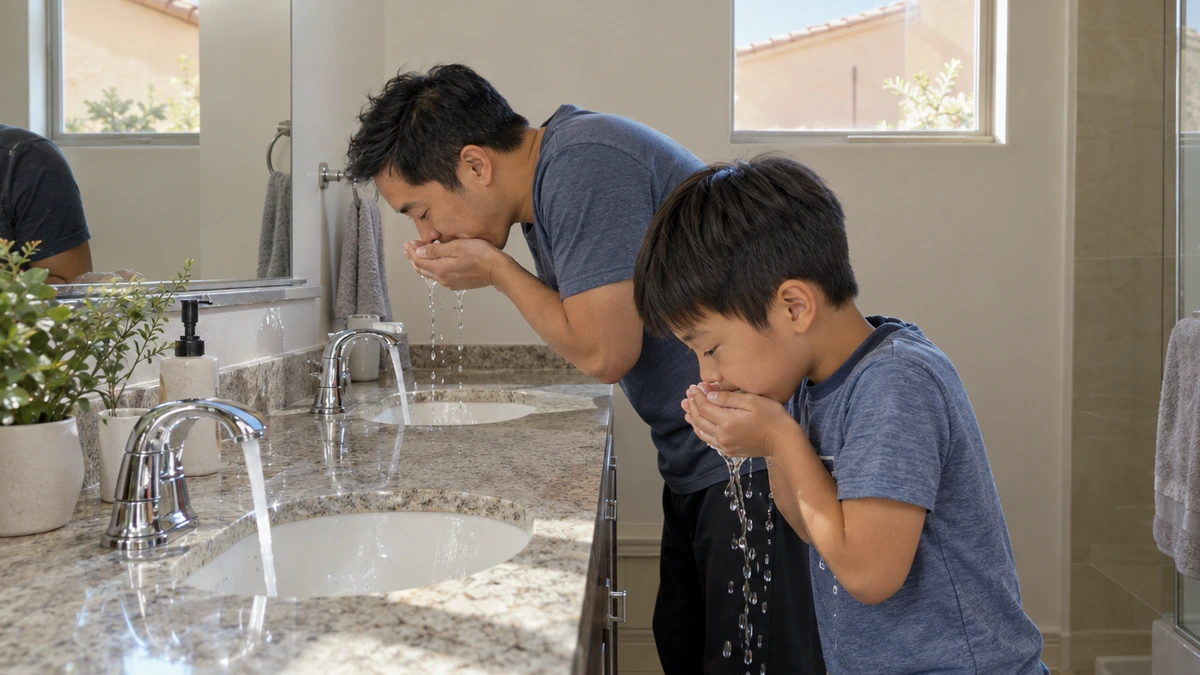
    Vietnamese-American father and son washing their faces at a double sink, illustrating stye in kids care
    A father and son wash their faces before the day begins.

    A returning bump needs a fresh look. Tell me whether your child has had the same problem before and what care you used. Mention any past diagnosis of blepharitis, an inflammation of the eyelid edges. When blepharitis is part of the picture, your child’s plan often includes an eyelid hygiene routine, and my medical eye care page explains how I approach eyelid inflammation.

    Mornings tell the story. At the double sink in your Summerlin bathroom, while you both wash up before school, take one look at the lid. Bigger, smaller, redder? Snap a photo, skip the poking, and show me at the visit.

    Give me the plain version. “It shrank, then it came back on the same lid” is exactly what I want to hear. Share what you tried and whether it helped, and your child’s visit starts in the right place.

    When Should You Book an Exam for a Lasting Bump?
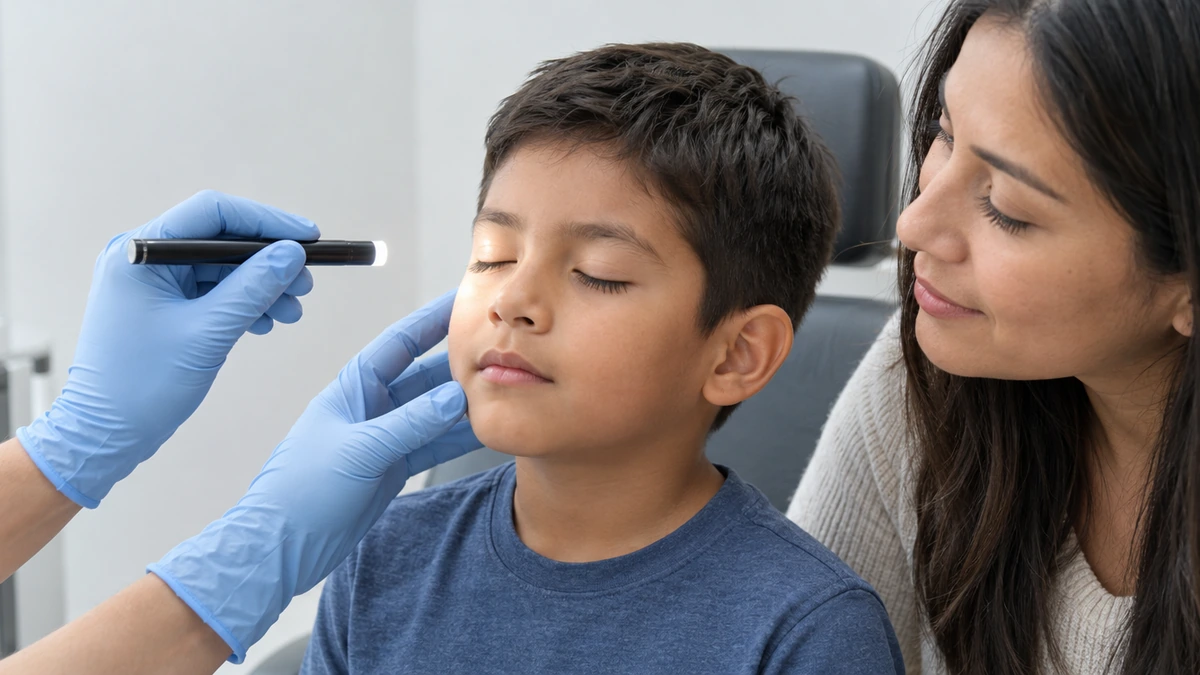
    Gloved hands holding a penlight near a Latino boy's closed eye, mother beside him, for stye in kids
    An eye doctor's gloved hands check a boy's eyelid as his mother sits beside him.

    Book for a large, persistent, or recurring bump even without emergency symptoms. The American Optometric Association advises contacting an optometrist if a chalazion has not drained and healed within a month. You do not need to wait that long when the bump is growing or you are concerned. Changed vision belongs in the right-away guidance above.

    Protecting your child’s eye health means looking past how the lid looks. Report any change in sight right away, even if your child says the bump looks better. A smaller bump is good news, and clear vision is the news that counts.

    A pediatric eye exam gives the whole story room. Bring any earlier care instructions and the products you have used near your child’s eye, and I sort out what helped from what did not. Nothing you tried is a wrong answer.

    How I Approach Your Child’s Eyelid Concern

    I’m Dr. Amel Youssef, your optometrist at Vision by Amel, and your story about the bump opens the visit. When it started, what you tried, what changed. Then I examine the lid, explain what I see in plain English and hand you a plan for the days ahead. Clear instructions are part of your child’s eye care.

    My team sees families from Summerlin every week, and children’s vision is central to the questions parents bring us. For your child’s non-urgent visit, explain whether the concern is a lid bump, a comprehensive eye exam, or both when you book. I put your account together with the examination findings and explain what they mean for the concern you came in with. Before you leave, we go over the next step and the symptoms that mean you should seek care sooner.

    Bring your child to Suite 195 at 2010 Festival Plaza Dr, Las Vegas, NV 89135, inside Festival Plaza in Downtown Summerlin. No referral is needed for an eye exam. Book online or call for a non-urgent appointment, and describe the eyelid concern when arranging the visit. Use emergency care right away for the warning signs above.

    Frequently Asked Questions About Styes and Eyelid Bumps in Kids

    Is the Bump on My Child’s Eyelid a Stye or a Chalazion?

    A stye is an infected eyelid gland, and a chalazion is a blocked oil gland. Chalazia show up more often in adults than in children, the American Optometric Association notes, most often between ages 30 and 50. Your child’s bump still gets its name at an eye exam, because the two sometimes look alike.

    How Do I Treat My Child’s Stye at Home?

    Use the warm compress routine above, and never squeeze the bump. In most cases a stye goes away on its own, says the American Optometric Association, though no fixed timeline fits every child. Call me if your child’s bump keeps growing, and get care right away for the warning signs above.

    Does a Stye Need Antibiotics?

    Not always. Most styes clear on their own, the American Optometric Association notes, and the American Academy of Ophthalmology says an ophthalmologist might prescribe an antibiotic for an infected stye, a decision made at the exam. Before you leave with drops or ointment, know the dose, where it goes and how many days it runs.

    When Does an Eyelid Bump Need a Doctor?

    Book an exam for a bump that is large, lasts or keeps coming back, and get care right away if your child’s vision changes. A large chalazion sometimes presses on the eye and blurs vision, the AAO notes, and AAPOS warns that a big chalazion that does not go away sometimes causes eye problems, especially in young children. When surgery is the answer, children usually need anesthesia, says AAPOS, and I refer you to an ophthalmologist for it.

    My Child’s Eyelid Is Swollen and Red. When Is It an Emergency?

    A swollen, red eyelid with pain when your child moves the eye, trouble moving the eye, a bulging eye, double or reduced vision, or fever needs emergency care right away. Your child’s lack of fever does not rule out orbital cellulitis, as AAO EyeWiki notes. Go to the emergency room rather than waiting for every sign to appear.

    Book My Eye Exam Call (702) 858-4362

    Like this article? Add Vision by Amel as a preferred source, and you are more likely to see our articles in Google’s Top Stories.

    Add as a preferred source on Google

  • Pink Eye in Kids: When to See an Eye Doctor in Summerlin

    Pink Eye in Kids: When to See an Eye Doctor in Summerlin

    Pink Eye in Kids: When to See an Eye Doctor in Summerlin

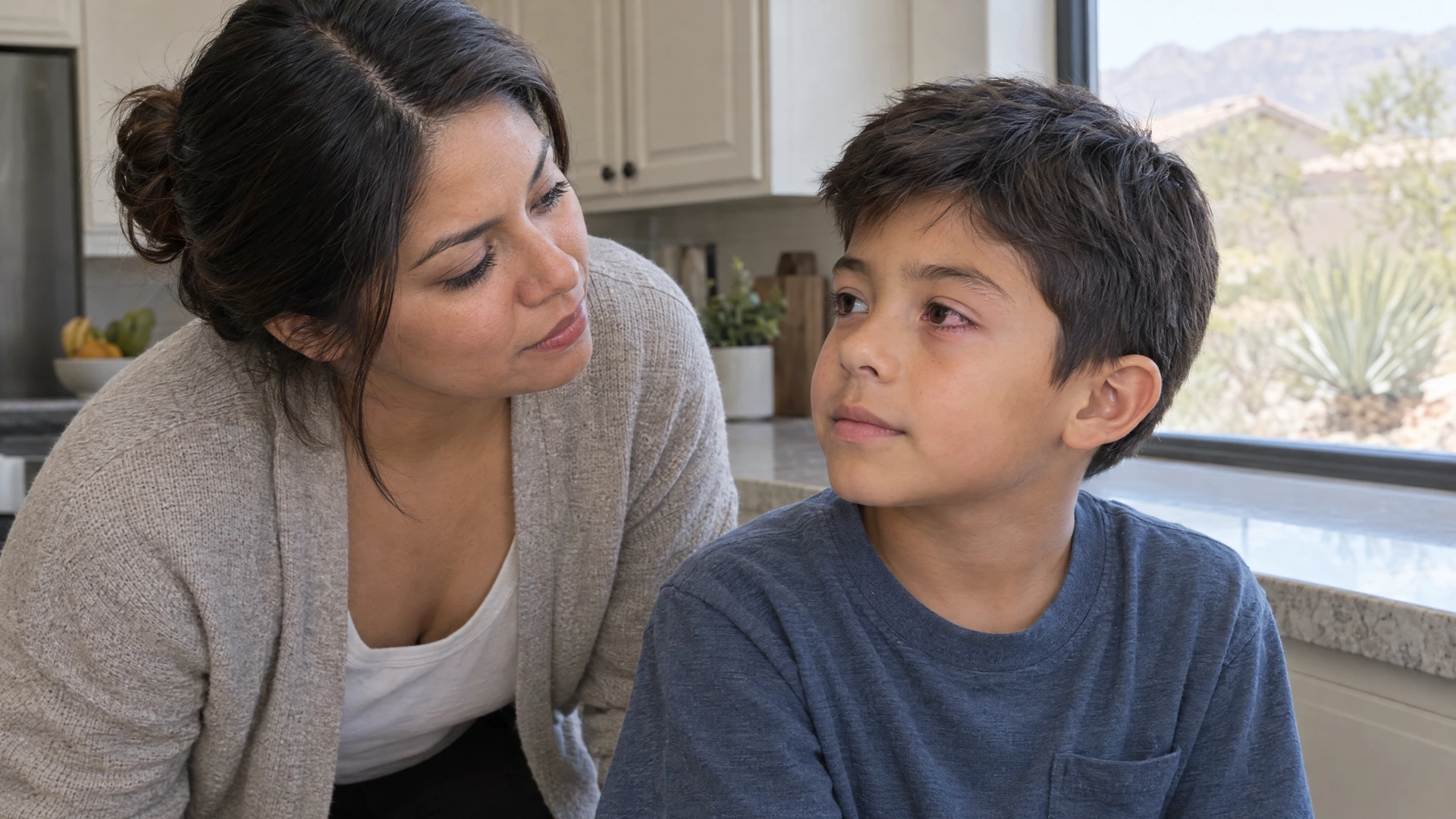
    Latina mother checking her son's slightly red eye at a kitchen counter, illustrating pink eye in kids

    TLDR: With pink eye in kids, your first decisions are whether your child needs prompt care and how to limit spread. Get care right away for the warning signs below, and check the school or daycare policy before sending your child back.

    Answer: Seek an eye doctor right away in Summerlin for your child’s pink eye with pain, light sensitivity or blurred vision that persists after discharge is wiped away. A newborn with pink eye symptoms, or a contact lens wearer with a red, painful eye, needs care right away too. For other concerns, call to arrange an eye exam and discuss school return.

    Your child wakes up with one red, sticky eye. The lunch is packed, the carpool leaves at 7:40, and you have five minutes to decide. Start with how your child feels, then sort out school. At your Summerlin kitchen counter, the car keys sit beside an untouched bowl of cereal.

    I reviewed 113 primary sources across five research lenses for this guide, and the cause of pink eye is sometimes hard to tell from symptoms alone. You do not need to name the infection before calling for help. As an optometrist in Las Vegas, I want your first call to describe what changed and how your child feels. Our eye exam service page explains the broader exam process.

    What Should You Do First for Pink Eye in Kids?

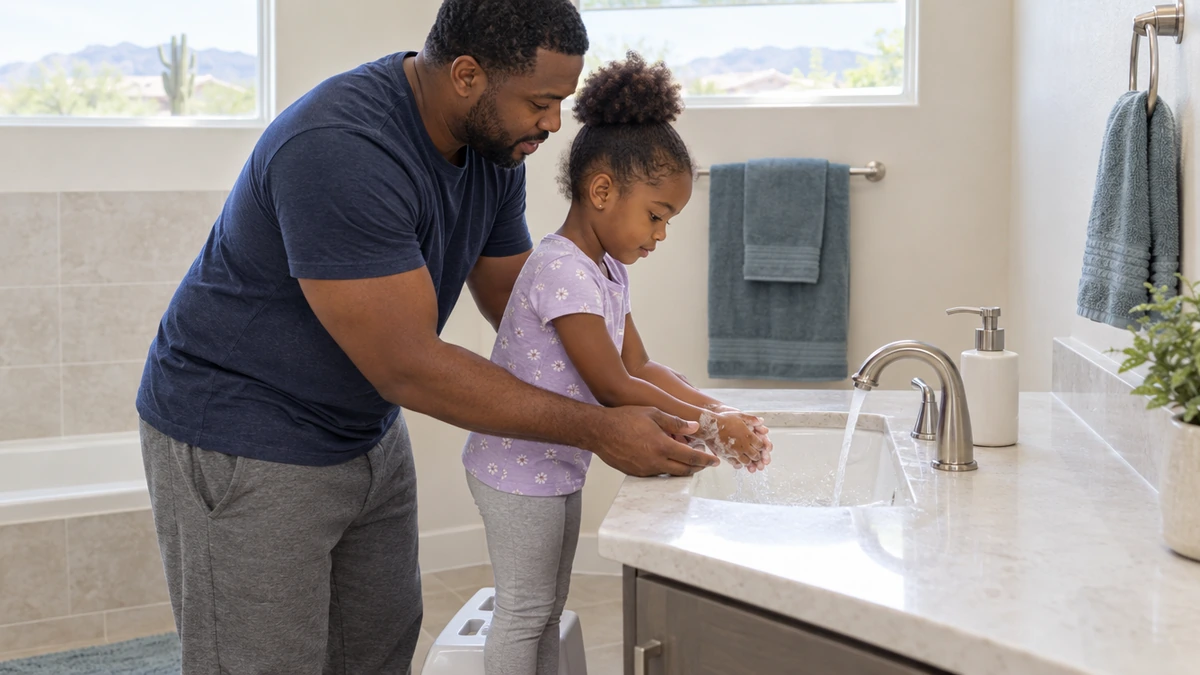
    Black father helping his daughter wash her hands at a bathroom sink, a hygiene step for pink eye in kids
    A father helps his daughter wash her hands with soap at the sink.

    Start at the sink. Wash your hands often with soap and water for at least 20 seconds, as the CDC recommends to limit spread. Help your child follow these hygiene steps while you arrange any needed eye care.

    1. Wash your own hands and help your child wash theirs.
    2. Discourage touching and rubbing the eyes.
    3. Set aside separate towels, washcloths and pillows.
    4. Keep eye drops for the person using them, without sharing bottles.
    5. Wash used linens in hot water, then wash your hands after handling them.

    Make the routine easy to follow. Put your child’s towel where they reach for it, and show siblings which towel belongs to them. Explain the plan to the adult handling pickup or bedtime. A clear handoff keeps everyone following the same steps.

    When Does Pink Eye in Kids Need Care Right Away?

    Eye pain, light sensitivity and blurred vision that does not clear when you wipe away the discharge are on the CDC list of reasons to see a provider. With pink eye, I want your child seen for those right away. The CDC also wants a provider to check intense redness, symptoms that get worse or do not improve, bacterial pink eye that is not better after 24 hours of antibiotics, and any child with a weakened immune system. Say which sign you noticed when you call. Do not wait for a routine appointment slot.

    Have your newborn seen right away for pink eye symptoms, as the CDC directs. Start the call with your baby’s age and symptoms. This call takes priority over planning your routine infant visit.

    Wear contacts? Take them out now. A red, painful eye in a contact lens wearer needs care right away. The CDC warns that bacterial pink eye in lens wearers raises the risk of bacterial keratitis and calls for antibiotics plus a prompt ophthalmologist exam. Mention your child’s contact lenses when calling for care.

    Is Your Child’s Pink Eye Viral, Bacterial or Allergic?

    The cause matters. Viral and bacterial pink eye spread between people, allergic pink eye does not, and overlapping symptoms complicate identifying your child’s cause, according to the CDC. Use this comparison to understand those distinctions before discussing treatment.

    TypeDoes It Spread Between People?What It Means for Your Family
    ViralYesFollow the handwashing and separate towel routine.
    BacterialYesFollow the same hygiene routine and discuss treatment.
    AllergicNoDiscuss allergy care once the cause has been assessed.

    Describe what you see without trying to label it. Note when the redness began, whether an eye is draining and what your child says about discomfort. Include anything already used on the eye. I would rather hear your child’s own words than a guessed diagnosis.

    One red eye, one question. Save the glasses and screening questions for another day, and read my pediatric eye exam guide once the redness clears. Your notes about today’s redness deserve their own space.

    How Do You Keep Pink Eye From Spreading at Home?

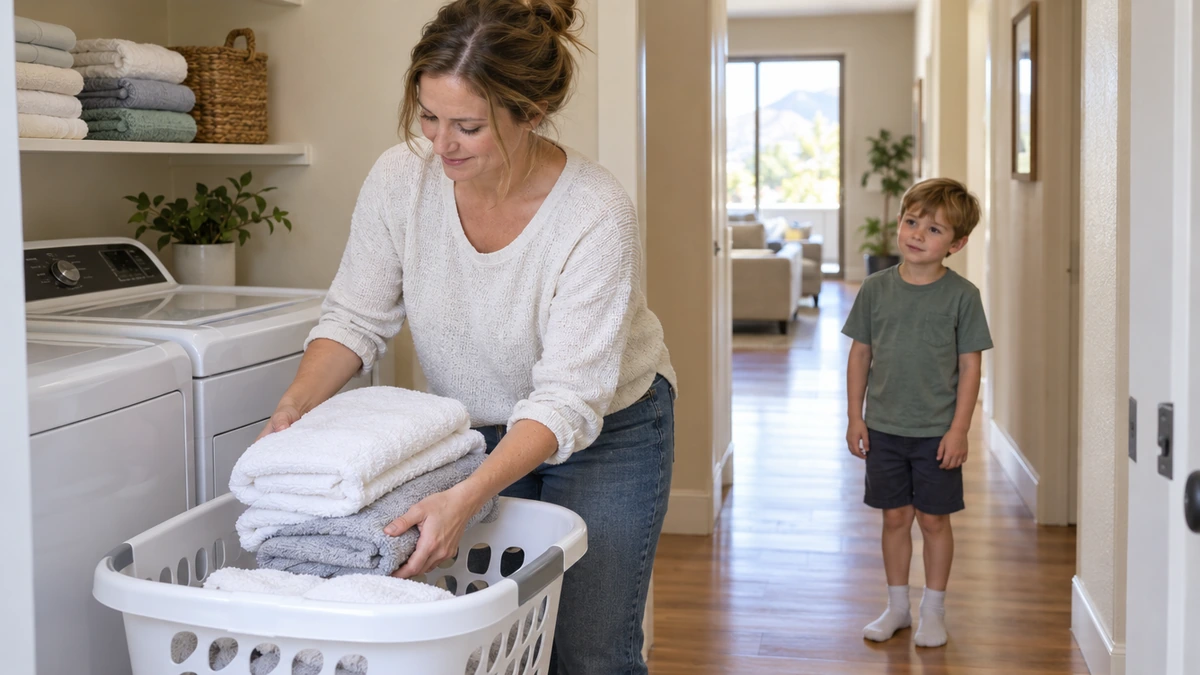
    White mother placing fresh towels in a laundry basket as her son watches, home hygiene for pink eye in kids
    A mother sets out fresh towels while her son watches from the hallway.

    One towel per person. That single rule protects your whole household, including whoever does the laundry. Set clean towels within reach and put used ones straight into the laundry basket. Avoid leaving a damp washcloth beside the shared hand towel.

    Your child needs a simple explanation. Try, “This towel is yours while we look after your eye.” Show them where it belongs instead of repeating a warning from across the room. When another caregiver takes over, point out the towels and explain the handwashing routine.

    At a Las Vegas school pickup, your child climbs into the back seat rubbing an eye while another parent waits behind you. Park before calling about the symptoms. Tell the teacher or daycare staff what symptoms you noticed and what guidance you received. Explain whether your child still needs help keeping hands away from the eyes. That detail belongs in the return discussion alongside the attendance policy.

    What Helps Your Child Feel More Comfortable?

    South Asian girl resting with a cool damp washcloth over closed eyes beside her mother, comfort for pink eye in kids
    A cool compress is a comfort measure for pink eye.

    Match your child’s care to the cause. Antibiotics do nothing for viral pink eye, mild bacterial pink eye often clears without them, and cold compresses with artificial tears ease the irritation, says the CDC. For allergic pink eye, the same guidance points to allergy medicine or antihistamine eye drops. Discuss which drops fit your child’s symptoms before choosing a bottle.

    Your child’s treatment decision belongs with the assessment. Bring the school policy to that discussion, along with the symptoms you have observed. Describe what has changed since the morning, including anything your child says feels worse.

    Make your questions practical. Write down what to use, how to use it and when to check back. Repeat those instructions to anyone helping with care so the plan stays consistent. I want you to leave with instructions you understand and know how to follow.

    When Should Your Child Return to School or Daycare?

    Rules depend on the type of pink eye and on your child’s school or daycare. Nevada’s state health guidance does not require keeping your child home for clear, watery pink eye without fever, eye pain or red eyelids, unless your child cannot keep hands away from the eyes, says the Nevada OSE provider sheet. Thick white or yellow discharge with eye pain means a provider exam and approval before your child goes back.

    The Nevada OSE parent sheet says your child needs to stay home for fever or being too unwell for routine activities, and says antibiotics or a provider note are not required for return. These are health guidance documents. Confirm how your school or daycare handles the differing instructions.

    Ask staff for their written policy. Explain the symptoms, the assessment and any treatment instructions rather than promising a return date before the visit. Save the response with your child’s care notes. I believe a clear return plan is part of caring for the whole family.

    How I Approach Your Child’s Visit at Vision by Amel

    Mother and son walking from a parked car toward a glass-front optometry boutique, a visit for pink eye in kids
    A mother and son walk toward an optometry boutique on a late Sunday morning.

    Call with the red eye first. Tell my team your child’s age, when the redness started and whether your child wears contacts. Act on the urgent signs above before making a routine booking request. Your child’s eye health comes before finding the most convenient appointment.

    I am Dr. Amel Youssef, OD, founder of Vision by Amel. You are welcome to book a pediatric eye exam without a referral. For visit preparation, our guide to your child’s first eye exam in Summerlin walks through what to expect. List your red eye questions ahead of any broader vision concerns. My medical eye care page explains how my team handles red, irritated eyes.

    You will find our Summerlin office at 2010 Festival Plaza Dr, Suite 195, Las Vegas, NV 89135, in Downtown Summerlin at Festival Plaza. We open seven days, Monday to Saturday 9 am to 6 pm and Sunday 11 am to 5 pm. Book online or call (702) 858-4362. Use the weekend hours to plan a visit, while acting right away on urgent symptoms.

    On a Sunday at Festival Plaza, your child holds your hand as you cross the walkway from the parked car. Before heading over, call with the symptoms and your visit questions. Put the care instructions beside the car keys so whoever takes your child has the same information. The next step should be clear before you leave home.

    Frequently Asked Questions About Pink Eye in Kids

    How Long Is Pink Eye Contagious?

    For infectious pink eye, Nevada’s provider sheet lists the contagious period as the time symptoms are present. It lists symptom onset 1 to 12 days after exposure, usually 1 to 3 days. Your child’s symptom timeline helps you explain when the redness began, but it does not establish who passed the infection along.

    How Long Does Pink Eye Last in Kids?

    Most children improve after 5 or 6 days without antibiotics, according to Nevada’s parent sheet. The CDC says mild bacterial pink eye usually clears in 2 to 5 days, though complete recovery sometimes takes 2 weeks. Your child’s return date still needs its own discussion with the school or daycare.

    Should My Child Stop Wearing Contact Lenses With Pink Eye?

    Yes, stop your child’s contact lenses until symptoms are gone or I say wearing them again is appropriate, following the CDC prevention guidance. Make the restart instruction part of your care notes. A school return date does not settle when to put the lenses back in.

    What Should I Ask My Child’s School About a Return Note?

    Request the exact wording of the policy and find out who handles return decisions. Bring any form your school wants completed to the visit. Keep a copy of the instructions so the adult taking your child back has the same information.

    Why Does My Newborn Have Pink Eye?

    The CDC lists a blocked tear duct, irritation from antimicrobial drops given at birth, and infection passed during birth among the causes. You do not need to identify which one applies before seeking help. Have your newborn seen right away for pink eye symptoms.

    Book My Eye Exam Call (702) 858-4362

    Like this article? Add Vision by Amel as a preferred source, and you are more likely to see our articles in Google’s Top Stories.
    Add as a preferred source on Google

  • Crossed or Wandering Eyes in Children: What Strabismus Means

    Crossed or Wandering Eyes in Children: What Strabismus Means

    Crossed or Wandering Eyes in Children: What Strabismus Means

    Father and daughter at a Summerlin park, illustrating crossed eyes in children guidance

    TLDR: An eye turn deserves attention, even when it comes and goes. An examination checks whether your child’s eyes line up, how each eye sees, and which treatment fits the findings.

    Answer: True crossed eyes in children are a form of strabismus, meaning the eyes do not line up. An eye might turn inward, outward, upward or downward. For your family in Las Vegas, the next step is an eye exam to identify the type and assess vision, followed by glasses, patching or a surgical referral when indicated.

    You notice it while scrolling through photos from a Summerlin park. Your toddler smiles toward the camera, but an eye seems to point somewhere else. Then you look up, and both eyes appear straight. You have something worth checking, even when the next picture looks different.

    I reviewed 113 primary sources across five research lenses for this guide, and strabismus and amblyopia are different problems that sometimes occur together. For your child, eye misalignment also carries a risk of amblyopia, as AAPOS explains. I take a parent’s repeated concern about an eye turn seriously. My eye examination service is a place to discuss what you have noticed.

    What Do Crossed Eyes in Children Look Like?

    Mother photographing her toddler by a window for a crossed eyes in children discussion
    A mother takes a casual photo of her toddler in window light at home.

    Tell me which way the eye turns. In or out, up or down, that one detail starts the exam ahead. Esotropia means an inward turn toward the nose, while exotropia means an outward turn toward the ear. For a vertical turn, use plain words when you call, even before you know the medical name.

    TermWhat It DescribesWhat to Record
    EsotropiaAn eye turns inwardWhich eye looks closer to the nose
    ExotropiaAn eye turns outwardWhich eye drifts toward the ear
    IntermittentThe turn comes and goesWhen you notice it and when the eyes look straight
    ConstantThe turn stays presentWhen you first noticed the persistent turn

    An occasional outward drift still matters. Your child’s eyes might look straight for much of the day, then drift when tired or sick, a pattern described by AAPOS. The word intermittent describes timing. It does not tell you to dismiss the concern.

    How to Bring Useful Photos

    Your everyday photos give us a place to begin. A casual picture near a window or a short video of ordinary play gives you something concrete to show me. Save the original files and note what was happening. Collecting pictures should never postpone the examination.

    1. Choose an existing photo that shows your child’s face and both eyes clearly. Include the date with it.
    2. For a new picture, use comfortable natural light and hold the phone near your child’s eye level. Let your child look naturally toward you.
    3. Save the original without filters, red-eye correction or other edits. Save a wider view as well as any close-up.
    4. Write down whether you noticed the turn during play, before a nap or during illness. Include what you saw in person.

    Have your child see an eye doctor right away for a white or gray-white glow in the pupil, in person or in a flash photo, as AAPOS advises. Several conditions cause this reflection, and some are serious. Do not wait for another photo to confirm it.

    When Is Newborn Eye Wandering Normal?

    Brief, on-and-off inward turns are common in babies younger than about 4 to 5 months, says AAPOS. An eye that turns all the time, at any age, needs an eye exam right away. Children do not outgrow true strabismus, the American Optometric Association says, and any child older than 4 months whose eyes are not straight all the time needs an exam. For your baby, describe constant crossing when you call so the need for care is clear.

    Some babies only look cross-eyed. A wide nasal bridge or folds of skin near the inner corners sometimes create that appearance, called pseudostrabismus, which children sometimes outgrow, according to the American Academy of Ophthalmology. An eye exam tells you which one your child has.

    You do not need to settle the diagnosis at home. Describe the direction, the pattern and when you first noticed it, then arrange the recommended evaluation. For the wider infant schedule, read your baby’s first eye exam guide. Address the crossing concern before planning routine checkups.

    How Are Crossed Eyes in Children Evaluated?

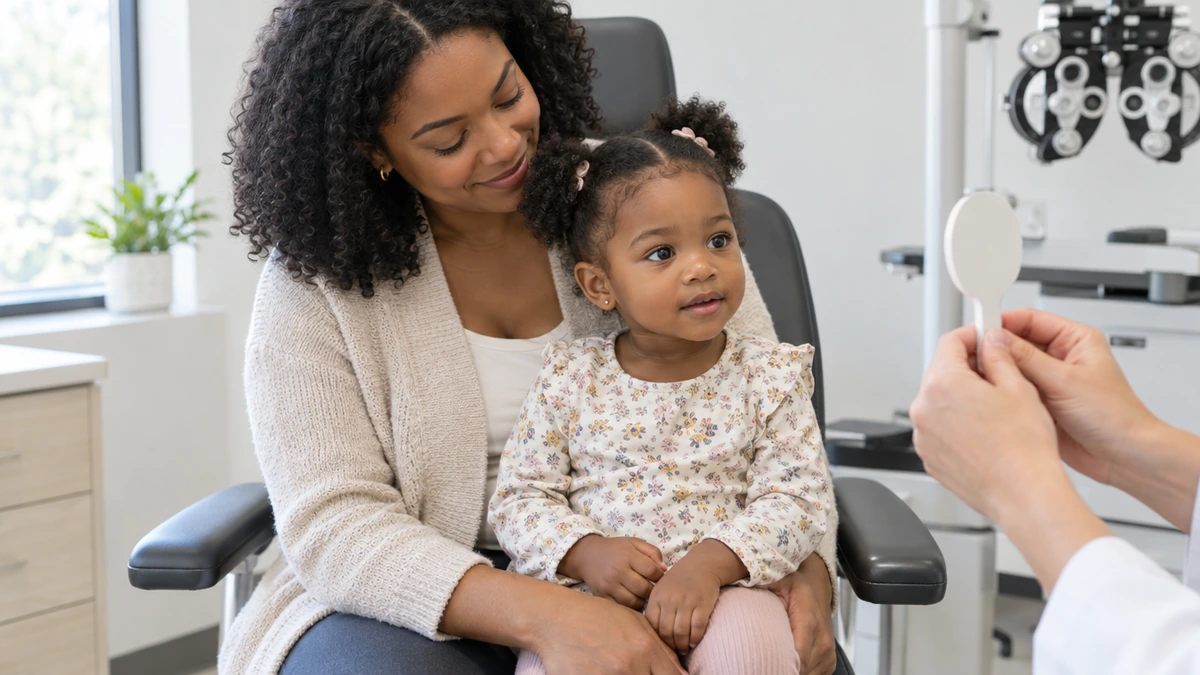
    Toddler on her motherโ€™s lap watching a toy during an exam for crossed eyes in children
    The examination approach adapts to your childโ€™s age and cooperation.

    A comprehensive eye exam looks beyond the photograph. The American Academy of Ophthalmology describes an assessment of your child’s history, visual acuity or fixation, eye movements, alignment, binocular vision, refraction and eye health. Refraction measures the focusing prescription, while binocular testing examines how the eyes work together. The approach adapts to your child’s age and cooperation.

    Your history speeds everything up. Bring past results, any screening note, current glasses and every treatment already prescribed. Note whether relatives have had an eye turn or childhood vision treatment. At a Las Vegas preschool pickup, you might notice the turn while your child looks up from fastening a backpack. That ordinary detail belongs in our conversation, even without a photograph.

    You deserve an explanation in everyday language. Before leaving, request the name of the finding, the next step and the reason for any referral. Use what to expect at a child’s first examination for general visit preparation. Here, keep your questions focused on alignment and vision in each eye.

    How Is Strabismus Related to Lazy Eye?

    Your child’s eye position and vision are separate findings. Strabismus describes misalignment, while amblyopia, often called lazy eye, describes a problem with vision development. Misalignment is one possible cause of amblyopia. That connection is why an eye turn deserves more than a comment about appearance.

    Two words, two jobs. Your child’s plan should say which one each step treats: the turn, the lazy eye, or both. My lazy eye guide explains the vision-development side in more detail. I want you to understand the reason for each step before you leave.

    What Treatments Help Crossed Eyes in Children?

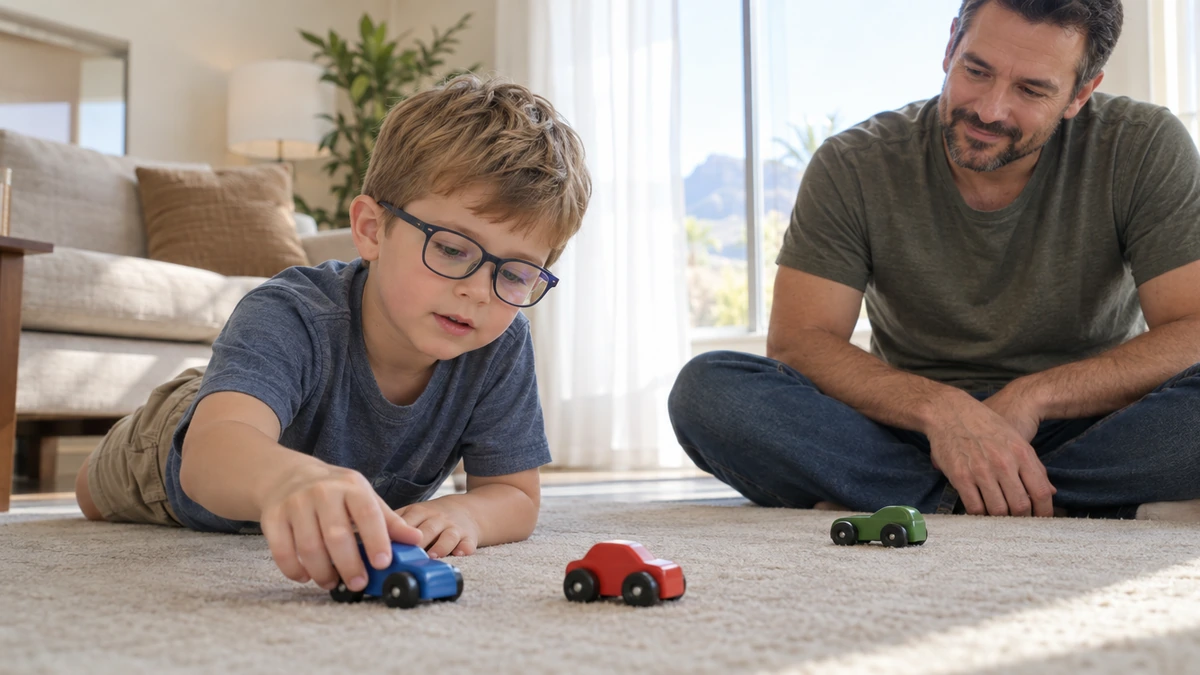
    Boy wearing glasses and playing with toy cars, illustrating care for crossed eyes in children
    A boy in new glasses plays with toy cars while his father watches.

    The treatment follows the type. Prescription glasses help align some children’s eyes, and a pediatric ophthalmologist performs eye muscle surgery when indicated, as the American Academy of Ophthalmology explains. Surgery does not replace glasses or patching when these are also prescribed for your child. When your child needs eye muscle surgery, I refer you to a pediatric ophthalmologist and coordinate the care around it.

    Glasses and Patching Have Different Jobs

    Glasses address the focusing prescription. In some forms of inward crossing, correcting that prescription also improves alignment. Your child’s examination determines whether this approach fits. Get clear instructions about when to wear the glasses and when to return.

    Patching treats the lazy eye that a turn can cause, and my lazy eye guide covers how it works. Your instructions should make the purpose of patching clear. Discuss resistance or missed sessions at follow-up before changing the prescribed plan.

    Make Shared Care Clear

    Two doctors, one plan. Co-management means your optometrist and your child’s pediatric ophthalmologist share the work, and you always know who handles what. I explain my part in your child’s care and the reason for an ophthalmology referral. Before you leave, we should be clear about who handles glasses, who directs any patching and who reviews surgical decisions.

    How I Approach Your Child’s Eye Turn at Vision by Amel

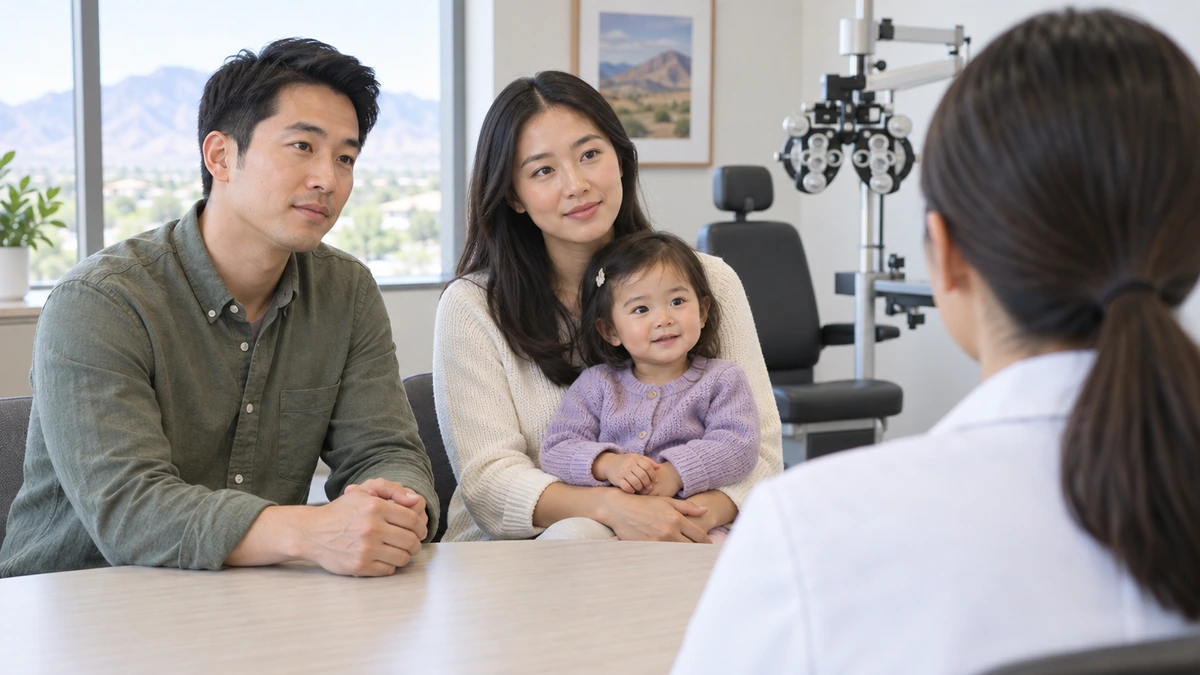
    Parents and toddler talking with an eye doctor about crossed eyes in children
    Parents talk through their toddler's eye exam with an eye doctor.

    Bring me the photo that worried you. I look at the turn you saw, then I check how each eye sees and how both eyes work together. I am Dr. Amel Youssef, your optometrist at Vision by Amel. My pediatric eye exam process includes patient history, digital diagnostics, an evaluation of binocular vision and a plan.

    A Sunday visit at Festival Plaza should leave you with a clear next step. Picture sitting beside your child while we go over the photo saved on your phone, then naming the question you most want answered. Is the eye turning, does each eye see well, or is an ophthalmology referral needed? Those questions guide our discussion.

    My team offers eye care in Downtown Summerlin at 2010 Festival Plaza Dr, Suite 195, Las Vegas, NV 89135. You need no referral to book an eye exam. For questions about insurance, call before the visit so my team has time to verify your benefits by phone. Share any existing ophthalmology appointment when arranging the visit.

    Frequently Asked Questions About Strabismus in Children

    Should I Cancel If My Child’s Eyes Look Straight Today?

    Keep the appointment and explain what changed. Your observations from other days still belong in the history, especially when the original concern was an intermittent turn. Show me both the concerning pictures and a note about the days you saw no turn.

    Will My Child Grow Out of Crossed Eyes?

    No, your child will not outgrow true strabismus. Some babies only look cross-eyed because of the shape of the nose bridge or nearby skin folds, and they sometimes outgrow that appearance, called pseudostrabismus. An exam distinguishes the two. Strabismus usually shows up in babies and young children, most often by age 3, says the AOA.

    What Is the Difference Between Esotropia and Exotropia?

    Esotropia means your child’s eye turns inward, while exotropia means it turns outward. Upward and downward misalignment are called hypertropia and hypotropia. An outward drift that appears when your child is tired or sick fits the intermittent pattern, with straight-looking eyes at other times.

    Can Crossed Eyes Cause Lazy Eye?

    Yes, an eye turn sometimes leads to amblyopia, or lazy eye, as vision develops. With esotropia, your child also risks losing stereopsis, or 3-D vision, and the ability to use both eyes together, according to AAPOS. That is why the assessment looks at vision and how the eyes work together as well as their position.

    Does My Child Need Surgery for Crossed Eyes?

    Not always: some inward crossing improves with glasses, and prisms are another treatment option for certain types of strabismus. Your child’s findings determine whether a pediatric ophthalmologist recommends surgery, which does not replace prescribed glasses or patching. The American Academy of Ophthalmology says most children resume routines in about 2 to 3 days after surgery. Follow your child’s surgical team’s instructions about returning to preschool and play.

    Book My Eye Exam Call (702) 858-4362

    Like this article? Add Vision by Amel as a preferred source, and you are more likely to see our articles in Google’s Top Stories.
    Add as a preferred source on Google

  • Lazy Eye (Amblyopia) in Children: Signs, Causes and Treatment

    Lazy Eye (Amblyopia) in Children: Signs, Causes and Treatment

    Lazy Eye (Amblyopia) in Children: Signs, Causes and Treatment

    Boy with a patch and round glasses stacking blocks with his mother, illustrating lazy eye in children

    TLDR: Lazy eye in children, or amblyopia, affects developing vision and sometimes has no visible signs. Your child’s treatment starts with an eye doctor’s assessment and often includes prescription glasses, with patching when prescribed. An eye that turns all the time, at any age, needs an eye exam right away.

    Answer: Amblyopia means vision has not developed properly in an eye, even when the eyes look straight. Causes include unequal prescriptions, eye misalignment, or an obstruction to clear sight. For your child in Las Vegas, an eye exam identifies the problem so treatment, such as glasses or prescribed patching, addresses the cause and the weaker vision.

    On a shaded bench at a Summerlin park, your child points out tiny pictures in a book. Then a screening note mentions weaker vision in an eye. That mismatch deserves attention. Amblyopia concerns how vision develops, so everyday confidence gives you only part of the picture.

    I reviewed 113 primary sources across five research lenses for this guide, and amblyopia sometimes goes unnoticed until an eye exam. The National Eye Institute reports that up to 3 in 100 children have amblyopia. Your next step is to understand each eye’s vision. My eye examination service explains how I assess vision and help you understand the findings.

    What Signs Suggest Lazy Eye in Children?

    Girl covering one eye while playing with her father, illustrating a discussion of lazy eye in children
    A father and daughter share a playful moment.

    Lazy eye hides well. Squinting, tilting the head or covering one eye are signs to have checked, according to the American Optometric Association. An eye that turns in or out all the time needs an eye exam right away. You do not need to name the problem before seeking care.

    Your observations help me understand the concern. A child covering an eye during a game is different from repeatedly doing it to see. Describe what happened, which eye was involved, and whether you noticed it during reading, play, or looking across the room. The useful detail is what you saw.

    For broader concerns, use my checklist of signs your child needs glasses. Bring your observations to a pediatric eye exam, along with any screening result. I would rather you bring a small concern than wait for a dramatic sign.

    A white or gray-white glow in the pupil, in person or in a flash photo, means your child sees an eye doctor right away, as AAPOS advises.

    What Causes Lazy Eye in Children?

    The cause shapes treatment. AAPOS describes refractive, strabismic, and deprivational amblyopia and warns of permanent vision loss without treatment. Unequal prescriptions and eye alignment problems affect the visual input reaching the developing brain. A blocked view creates a different problem requiring attention to the obstruction. Arrange your child’s assessment early, even when the eyes look normal.

    CauseWhat It MeansWhat to Discuss at Your Visit
    Refractive amblyopiaBlur during development, including when one eye needs a stronger prescription than the other.The prescription in each eye and the glasses plan.
    Strabismic amblyopiaMisaligned eyes interfere with normal vision development.Both eye alignment and vision in each eye.
    Deprivational amblyopiaA cataract, drooping lid, or corneal scar obstructs clear sight.How the obstruction and developing vision will be addressed.

    The diagnosis tells you what needs treatment. Strabismus names the alignment problem. Amblyopia names the problem with developing vision. Your child needs an explanation of which is present and what each part of the treatment plan addresses.

    Leave the visit knowing the cause. Request the diagnosis in plain language, alongside the medical term. For unequal prescriptions, have the difference explained using your child’s own results. For an obstruction, clarify the next assessment and who will provide it.

    How Do Glasses Help With Amblyopia?

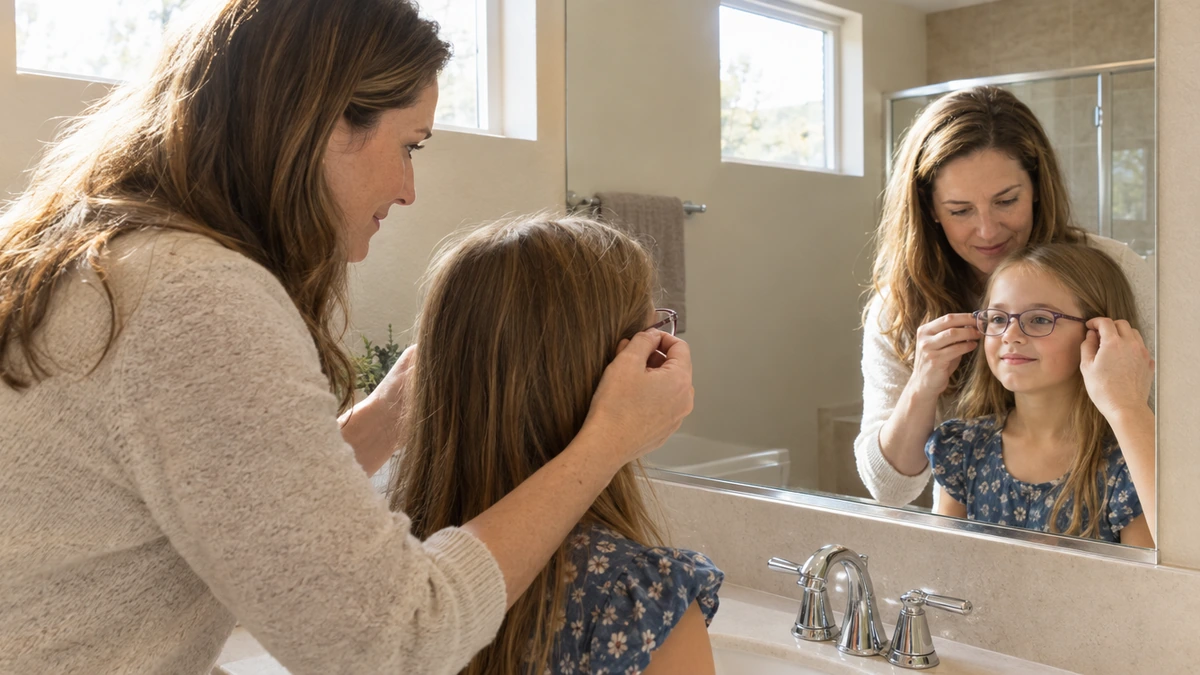
    Mother helping her daughter put on glasses at a mirror, illustrating care for lazy eye in children
    A mother helps her daughter put on glasses.

    Glasses often lead the plan. In a PEDIG study of 84 children aged 3 to under 7 with untreated anisometropic amblyopia, glasses alone improved weaker-eye vision by at least 2 chart lines in 77%, with improvement taking up to 30 weeks. That study covered one type of lazy eye and had no untreated group, so read it as a signal, not a forecast for your child.

    For many children, glasses alone are not enough, says AAPOS, and patching follows when your eye doctor prescribes it. The goal is better vision in the weaker eye. Your follow-up measurements show whether glasses alone are doing enough.

    Give the glasses a place in your morning. In your Las Vegas kitchen, the cereal bowl, backpack and glasses case share the counter before school. Set the glasses beside the morning essentials so putting them on becomes part of getting ready. Share the prescribed wearing instructions with anyone helping your child start the day.

    Report problems plainly. Explain whether your child removes the glasses during meals, complains about the frame, or repeatedly loses them between home and school. The glasses belong at the next visit, too. A specific account gives the conversation more value than saying the week went badly.

    Watch the chart, not the calendar. The prescription is the lens. Visual acuity is how well your child’s eye sees, and that number tells you whether treatment is working. New glasses begin a plan whose progress needs review.

    What Does Prescribed Patching Involve?

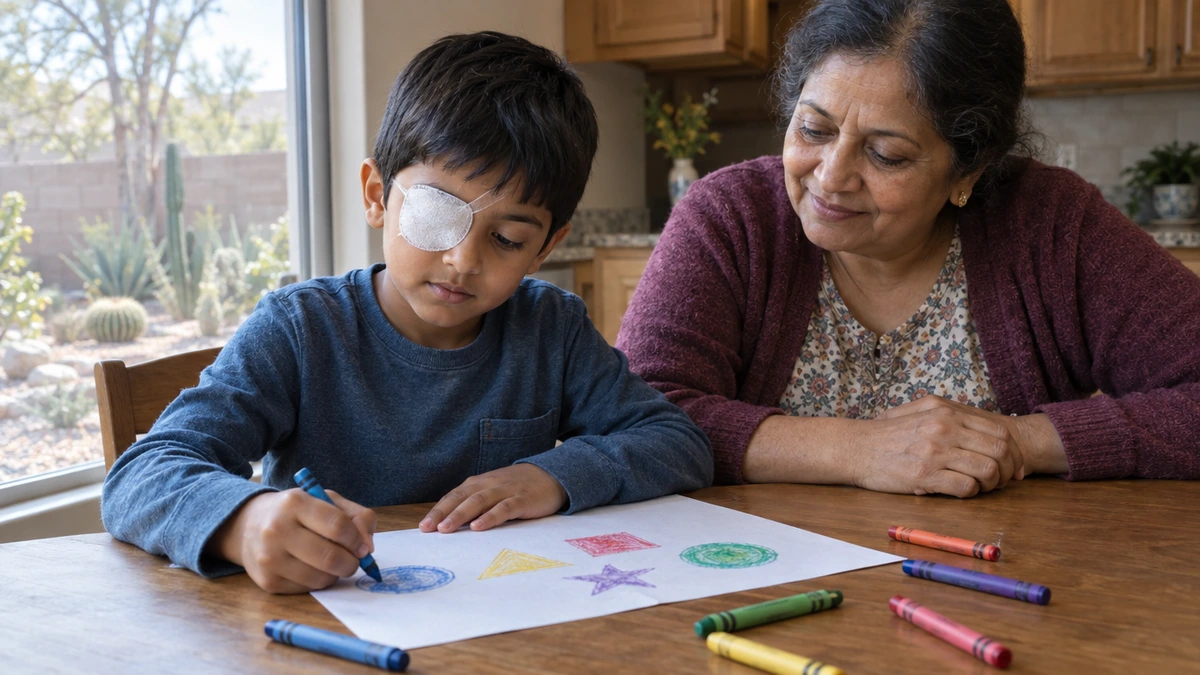
    Boy with an eye patch drawing beside his grandmother, illustrating prescribed care for lazy eye in children
    A grandmother sits beside her grandson as he draws.

    Patching covers the stronger eye to encourage use of the weaker eye. Your eye doctor prescribes which eye to cover, how long to patch, and when to review progress. Get those instructions in writing. Follow the prescribed schedule rather than borrowing another family’s routine.

    More hours are not automatically better. A PEDIG randomized trial involving 189 children under 7 with moderate amblyopia found the same average improvement with 2 or 6 daily patching hours after 4 months, with at least 1 hour of near activities in both groups. This finding applies to the studied moderate cases. Your child’s prescription still governs the schedule.

    A familiar activity gives patch time a place in your day. Choose a time with room for the prescribed session. Drawing, blocks, or shared reading give you activities to discuss when the patching plan is explained. Match the activity and its timing to the instructions you receive.

    1. Confirm which eye to patch and the prescribed daily duration before starting.
    2. Check how glasses fit into the patching instructions.
    3. Record completed sessions and any practical difficulties.
    4. Call your eye doctor about skin irritation or a child who keeps fighting the patch.
    5. Keep every follow-up visit. Only your eye doctor changes the patching hours.

    A difficult afternoon deserves a useful conversation. Describe what your child found hard, how much of the session was completed, and what you tried. A short note about a difficult session gives you something concrete to discuss at follow-up. I value an honest treatment diary more than a perfect-looking one.

    Why Do Screening Results and Follow-Up Both Matter?

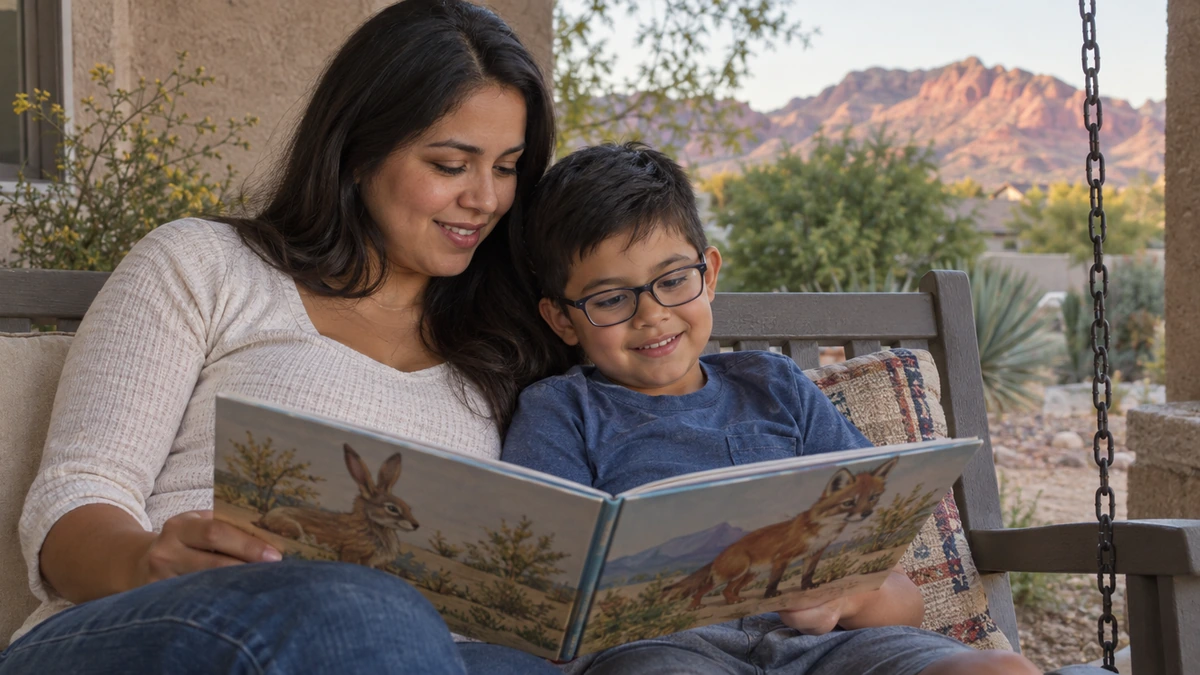
    Boy wearing glasses reading with his mother on a porch swing, illustrating lazy eye in children
    A mother and son read together on a porch swing.

    Your next step needs to be clear. After a vision screening flags a concern, arrange a comprehensive eye exam and take the actual result with you. My guide to school screening and comprehensive eye exams explains the difference. At your visit, I check vision and eye health and explain the findings.

    Follow-up puts the focus on each eye’s progress. Your current glasses, prescribed schedule and account of home treatment belong in that conversation. Request an explanation of each eye’s measured vision and whether the plan changes. Leave with the next review date written down.

    Your afternoon is already full: Summerlin school pickup, dinner, homework. Fit the patch into what you already do, like the drawing table or the bedtime book. Share the treatment instructions with caregivers so everyone follows the same plan. When the routine breaks down, raise the difficulty before making your own changes.

    How I Approach Your Child’s Exam at Vision by Amel

    I am Dr. Amel Youssef, an optometrist and the founder of Vision by Amel. For your visit about possible amblyopia, bring prior prescriptions, screening results, and any existing treatment instructions. My evaluation includes binocular vision and eye disease screening, with digital refraction among our Visionix diagnostics. Your history gives those findings context.

    My practice provides pediatric eye care at 2010 Festival Plaza Dr, Suite 195, Las Vegas, NV 89135. You will find us at Festival Plaza in Downtown Summerlin. No referral is needed for an eye exam. Book online or call with your child’s exam needs.

    Your questions about children’s vision deserve time at the visit. Tell me what worries you most, whether it is the diagnosis, the prescription, or understanding an existing plan. My team verifies insurance benefits by phone before your visit. Have your plan information ready for that conversation.

    Frequently Asked Questions About Lazy Eye in Children

    Is My Child Too Old to Start Treatment?

    Treatment works best when it starts young, and older children and teens can still improve, especially if they were never treated before. The American Academy of Ophthalmology advises offering treatment regardless of age when the visual system is structurally sound, with potential benefit in older children and adolescents, especially those previously untreated. Bring your child’s treatment history so the discussion reflects what has already been tried.

    Will Lazy Eye Hurt My Child’s Grades?

    The American Academy of Ophthalmology finds insufficient evidence that amblyopia in one eye harms school or career performance. Your child’s treatment addresses vision itself. Discuss school concerns on their own terms, without assuming lazy eye explains every difficulty in class.

    How Many Hours a Day Will My Child Wear a Patch?

    The National Eye Institute describes schedules ranging from 2 hours a day to all waking hours. Your eye doctor sets the patching time and adjusts it at follow-up visits. The PEDIG trial above compared schedules for moderate amblyopia, so its results are not a patching prescription for your child.

    Can My Child Have Lazy Eye if Their Eyes Look Straight?

    Yes, your child might have amblyopia even when the eyes look straight, as AAPOS explains. The National Eye Institute notes that many parents learn of the problem only at an eye exam. You do not need to spot an eye turn for the finding to deserve attention.

    What Should I Say to My Child About the Diagnosis?

    Keep your explanation calm and concrete. Describe the glasses or patch using the instructions you received, then invite questions about the daily routine. Choose words about practicing the routine together, and praise the effort your child puts into following it.

    Book My Eye Exam Call (702) 858-4362

    Like this article? Add Vision by Amel as a preferred source, and you are more likely to see our articles in Google’s Top Stories.
    Add as a preferred source on Google

  • Your Child’s First Eye Exam in Summerlin: What to Expect

    Your Child’s First Eye Exam in Summerlin: What to Expect

    Your Child’s First Eye Exam in Summerlin: What to Expect

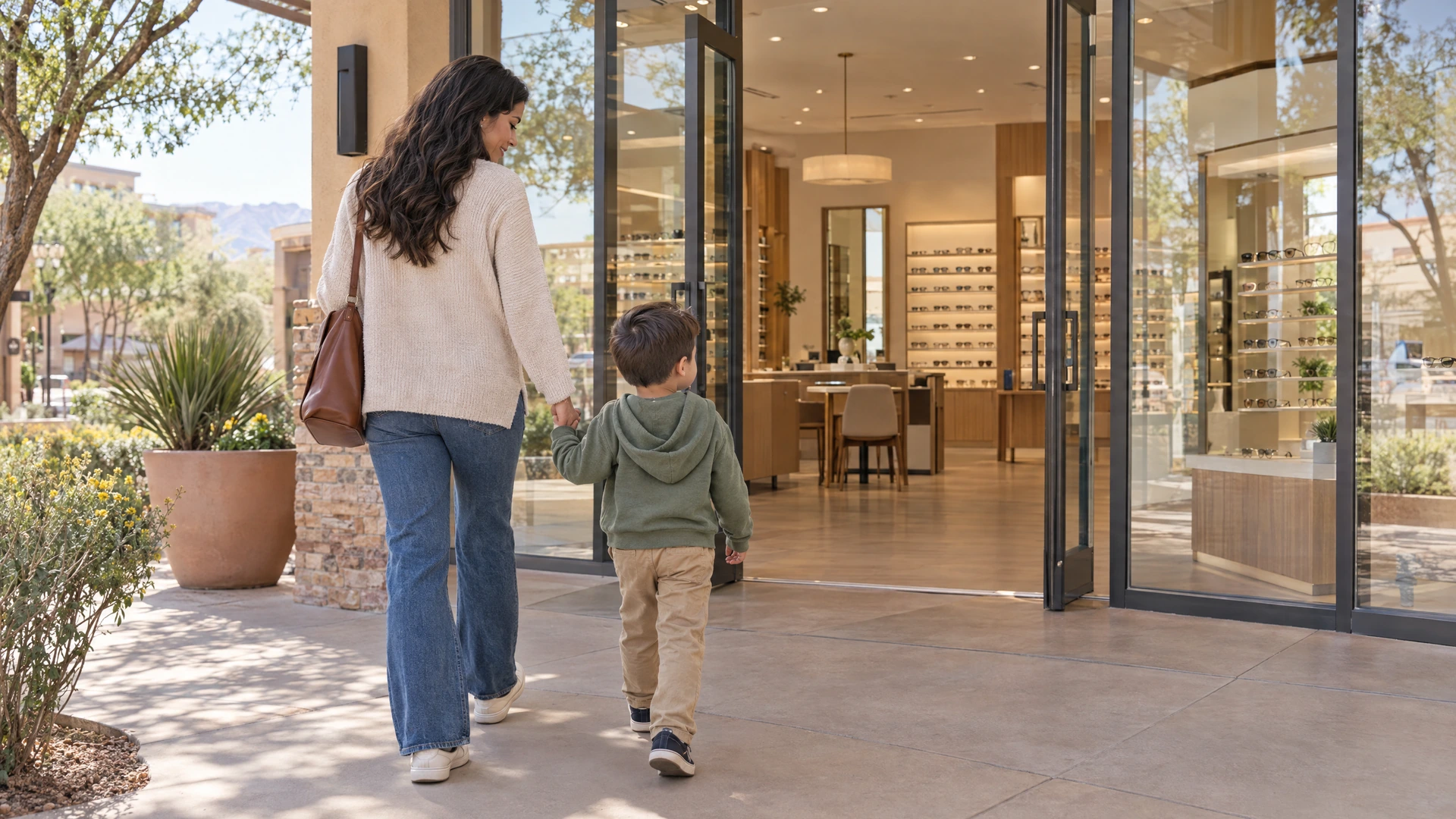
    Mother and son entering a boutique for a child's first eye exam

    TLDR: Your child’s first eye exam in Summerlin starts with your concerns and ends with a clear next step. Talk through the visit, pack previous screening results, and leave time to hear the findings. Vision by Amel offers weekend appointments at Festival Plaza.

    Answer: At your child’s first eye exam in Summerlin, I review health history, check vision and eye health, and explain the findings. A comprehensive eye exam includes how the eyes focus and work together. As your optometrist, I use those findings to explain whether glasses, further assessment, or a return visit belongs in the plan.

    First visits come with questions. What is that machine, and what will my child need to do? Between preschool pickup and a weekend soccer game, you want clear answers before adding another appointment. My eye examination services page explains how I examine your eyes, and this guide walks you through your child’s visit.

    I start with your concerns. You leave with a next step. Whether you are driving across Las Vegas or coming from a nearby Summerlin neighborhood, preparation starts with knowing what you want to understand about your child’s eye health. I believe good eye care leaves parents with a plan they know how to use.

    How Do You Prepare for Your Child’s First Eye Exam?

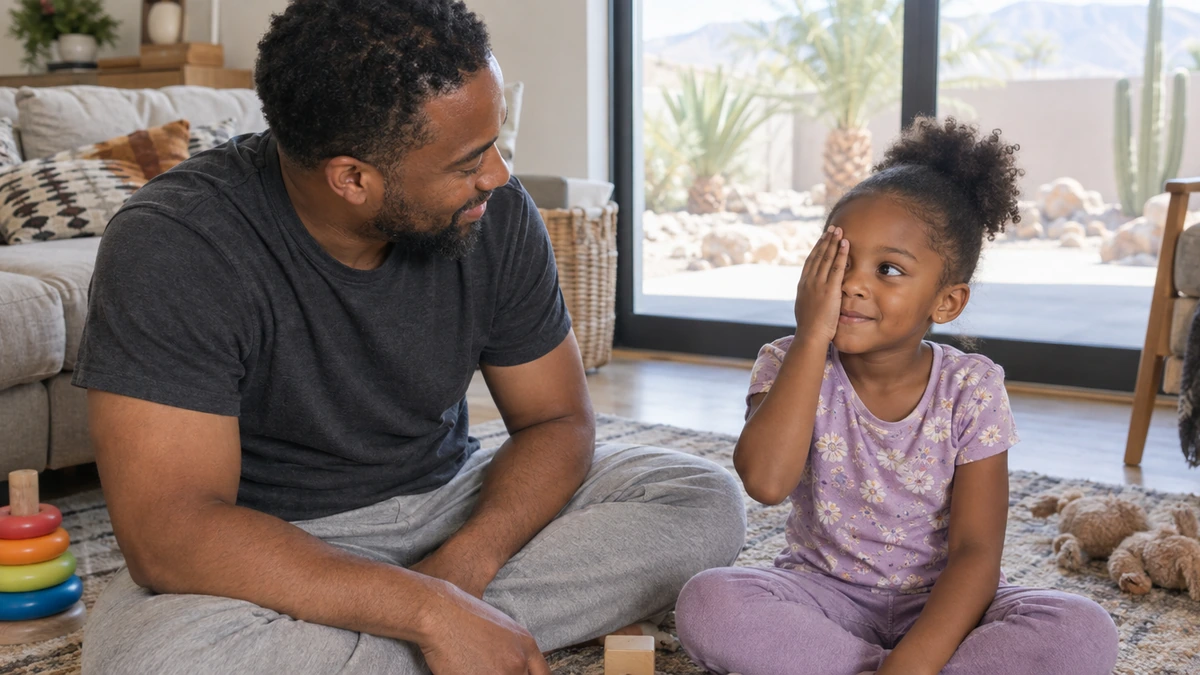
    A father and his young son cover one eye in a playful game to prepare for a child's first eye exam
    A father and son share a playful one-eye game at home.

    Keep the explanation small. Your child needs a sense of what comes next. I reviewed 73 primary sources across five research lenses for this guide, and the AOA recommends talking through the visit beforehand with your child.

    Start with a conversation at home. The AOA recommends talking about the examination beforehand, inviting your child’s questions, and allowing about an hour for a preschool exam. Sitting together on the bedroom rug gives you a simple place to begin. Say, “We are going to have your eyes checked, and you get to ask questions too.”

    Pack once, then stop rehearsing. Put the records and questions together before you head toward Festival Plaza. Use this list to prepare for your pediatric eye exam while leaving the testing to me.

    • Previous vision screening results, a referral note, and any earlier eye records.
    • Current prescription glasses, if your child already wears them.
    • Medicines, allergies, relevant health history, and known family eye conditions.
    • Your main concern, with a concrete example of when it happens.
    • A familiar comfort item and the questions you most want answered.

    Tell my team about your child’s communication preferences, sensory concerns, or worries about unfamiliar rooms. Be specific about the worry. A child nervous about a machine needs a different explanation from a child worried about giving a wrong answer. Help me understand the worry before your child walks in.

    When Should You Book Your Child’s First Eye Exam?

    You deserve to see the timing advice side by side. The experts split on routine children’s vision checks. The table separates the American Optometric Association’s examination schedule from the screening approach of the American Academy of Ophthalmology and the American Association for Pediatric Ophthalmology and Strabismus.

    ApproachPublished GuidanceWhat to Discuss
    AOA, infancyThe AOA infant guidance recommends a first thorough examination at about age 6 months, even without apparent problems.Your baby’s previous checks and health history.
    AOA, preschoolThe AOA preschool guidance recommends an in-person examination between ages 3 and 5, then another around school entry at age 5.What your child has already had checked.
    AOA, school yearsThe AOA school-age guidance recommends annual examinations for school-age children, with more frequent visits for problems or risk factors.Your child’s individual follow-up plan.
    AAO and AAPOS, screening firstThe AAO and AAPOS joint statement supports screening and referral after a failed screen, while finding no proven medical benefit from routine comprehensive examinations in otherwise normal children without symptoms.Your child’s screening results, symptoms, and risk factors.

    Start with the checks your child has already had. Let my team know whether you are arranging a routine first visit or following up on a concern. The pediatric eye exam guide covers timing, Medicaid, and school screenings to give you more context for that conversation.

    What Happens During the Exam, Step by Step?

    Mother holding her daughter during a child's first eye exam
    A child sits on her mother's lap during an eye examination.

    Your child’s age shapes the examination. The AAO’s pediatric evaluation guidance describes history, vision and eye health checks, with techniques and order adapted to age, development, and cooperation. Here is the visit in five steps. The order bends to your child.

    1. Start with the history. Tell me why you booked and what you want answered. We review earlier results, medicines, and family eye history, including any known amblyopia or strabismus. Share the diagnosis as you received it.
    2. Check clarity of sight. Visual acuity describes how clearly your child sees. Let me explain the task, then give your child space to respond. You do not need to supply an answer when they hesitate.
    3. Look at teamwork. I check eye alignment and movement as part of evaluating how the eyes work together. Point out any instruction that seems unclear so I know what needs explaining.
    4. Assess focus and eye health. Refraction measures the need for a glasses prescription. I also evaluate the eyes themselves and explain the findings relevant to the concern you brought.
    5. Set the next step. We discuss what the findings mean, whether more assessment is needed, and what to do next. Before leaving, confirm how and when to follow the plan.

    You matter in that room. Share what helps your child communicate, then leave room for their response. Say so when they need a pause or do not understand an instruction. I value an honest “I don’t know” more than a coached answer.

    What Should You Do After the Visit?

    A mother and her young son on the sofa at home as he wears his new glasses after his first eye exam
    Know when your child should wear new glasses before you leave the visit.

    Leave with a clear next step. You should know whether the plan involves glasses, further evaluation, or a return visit. Ask me to explain any unfamiliar term before you head back to the parking area. Skip the jargon. Leave with one clear next step.

    When glasses are prescribed, settle the wear instructions first. You need to know when your child should wear them and what follow-up I recommend. During frame selection, invite your child to describe what presses at the nose or behind the ears. Discuss lens choices, including polycarbonate lenses and UV protection, in relation to the prescription.

    Keep the plan within reach. Save your visit information with the records you brought, so the next appointment starts with the previous findings available. Before leaving, repeat the next step back to me and clear up anything you are unsure about. Leave knowing what happens next and who to contact with questions.

    How Do You Plan the Trip to Festival Plaza?

    Family walking toward their car after a child's first eye exam
    A family walks together toward their car at a sunny plaza.

    Plan the arrival before you leave home. Vision by Amel is at 2010 Festival Plaza Dr, Suite 195, Las Vegas, NV 89135, in Downtown Summerlin at Festival Plaza. My office sits minutes from The Vistas, The Paseos, Sun City and Red Rock Country Club. Use the Downtown Summerlin location page to plan your route, with time to park and walk to the suite.

    Weekend hours give you options beyond school pickup. My office opens seven days a week, Monday to Saturday from 9 am to 6 pm and Sunday from 11 am to 5 pm. Check available appointment times with my team when you book. Choose a time you can reach without rushing from the last stop.

    Leave space around your visit. Do not stack soccer practice right after. Give yourself time to hear the findings before packing everyone back into the car under the desert sun. Block the morning and keep it calm.

    How I Walk You Through a First Visit at Vision by Amel

    Your first visit starts with why you came. I am Dr. Amel Youssef, OD, the optometrist who founded Vision by Amel, and I guide you through your child’s eye examination. My team welcomes Summerlin families every week, and you do not need a referral to book an eye exam. Tell us your child’s age and your main concern when you call (702) 858-4362 or book online.

    You get an explanation alongside the equipment. The office uses Visionix digital diagnostics, from digital refraction and eye-pressure measurement with tonometry to retinal imaging and corneal mapping. My evaluation includes binocular vision, color vision testing where needed, and screening for eye disease. I perform a dilated eye exam only when I see a medical reason for one.

    The findings lead to your plan. We move from your child’s history through diagnostics and my evaluation to the next step. Prescription glasses are available from my gallery when they belong in that plan. Have me explain anything unclear about the prescription before you choose frames.

    Sort out benefits before the first visit. Before you arrive, my team uses your plan details to verify benefits by phone. Vision by Amel accepts Nevada Medicaid, VSP, EyeMed, Aetna, and other plans on our accepted list. Your individual plan determines the benefits, so have its details ready when you call.

    Frequently Asked Questions About Your Child’s First Eye Exam

    What Should I Say If My Child Is Afraid of Getting an Answer Wrong?

    Try saying, “You are here to show us what you see.” A blurry view is useful information to share, so let your child say when something looks unclear. Avoid praising a guessed answer as correct, and let me explain a task again when needed.

    Does My Child Need to Know Their Letters?

    No, the AOA preschool exam guidance confirms children do not need the alphabet or reading skills for an eye examination and recommends booking early in the day. Use that advice to plan your first visit. When you call, discuss an available time that fits your child’s usual routine.

    Can My 3-Year-Old Do an Eye Exam If They Won’t Sit Still?

    A restless child still deserves an assessment suited to their development. The AAO explains that cooperation helps determine the examination order. Tell me what is difficult for your child, then confirm which parts were completed and whether anything needs another visit.

    What If I Do Not Know Our Family’s Eye History?

    Share what you know and mark the gaps. A relative’s diagnosis is useful even when you do not know the treatment details. I will help you identify which missing information is worth gathering, rather than asking you to guess at a family condition.

    What Should I Ask When Booking a Visit for a Young Child?

    Give my team your child’s age and reason for coming, then confirm the appointment details. Check whether there are instructions to follow before arrival. Mention language or accessibility needs during the call, so you know what to expect before you set out.

    Book My Eye Exam Call (702) 858-4362

    Like this article? Add Vision by Amel as a preferred source, and you are more likely to see our articles in Google’s Top Stories.
    Add as a preferred source on Google

  • Screen Time and Your Child’s Eyes: Healthy Habits for Las Vegas Families

    Screen Time and Your Child’s Eyes: Healthy Habits for Las Vegas Families

    Screen Time and Your Child’s Eyes: Healthy Habits for Las Vegas Families

    Girl doing homework beside a window with her brother nearby, kids screen time eye strain

    TLDR: Here is the good news on kids screen time eye strain: the American Academy of Ophthalmology describes temporary discomfort without permanent eye damage. Start with regular breaks, blinking reminders and a comfortable homework setup. Book your eye exam when discomfort keeps returning.

    Answer: Healthy screen habits give your child a practical way to manage digital eye strain during homework in Las Vegas. Build in looking-away breaks, adjust the device position and remind them to blink. Recurring headaches or blur deserve a comprehensive eye exam, even after you improve the desk setup.

    Your child finishes an online assignment, rubs tired eyes and asks to stop reading. You still have dinner to make and a backpack to check. Start with the next homework session. I favor a routine your family repeats over a rule everyone forgets.

    I reviewed 73 primary sources across five research lenses for this guide, and regular breaks are a central recommendation for screen comfort. As an optometrist, I want you to leave with habits worth using tonight and a clear reason to book when discomfort returns. See how I approach your eye care on my eye exams page. Complaints that keep coming back earn an exam.

    What Does Screen Time Eye Strain Feel Like in Kids?

    Boy rubbing his eyes on a couch beside a face-down tablet, kids screen time eye strain
    A boy pauses on the couch with his tablet face-down beside him.

    Digital eye strain is the dry, itchy, blurry, headachy feeling your child gets after a long stretch on a screen. The assignment ends, but the discomfort interrupts the evening. Pause the task and find out what hurts. Give your child room to explain before suggesting an answer.

    Take the complaint seriously. Your child still has a book to read and a school bag to pack. Resist the urge to bargain for another page while their eyes feel uncomfortable. Stop, notice the circumstances and decide whether this is becoming a pattern.

    A blink reminder earns its place beside your break reminder. The AAO reports that people generally blink about 15 times a minute, falling to about 5 to 7 during screen use. Those are general figures. Try a calm cue during homework: “Pause, blink, look away.”

    Which Breaks Ease Kids’ Screen Time Eye Strain?

    Mother and son looking toward distant red rock mountains, kids screen time eye strain
    A mother and son share a looking-away break by the window.

    Give your child somewhere else to look. Choose a distant object before the laptop opens, such as the red rock ridgeline beyond your window. Use the 20-20-20 rule in the steps below. Set up the cue before homework gets absorbing.

    1. Choose the view together. Pick an object beyond the window and agree on where your child will look when the reminder sounds.
    2. Follow AAPOS: set a timer for every 20 minutes, then have your child look at something 20 feet away for 20 seconds.
    3. Pause the assignment when the reminder sounds. Look toward the chosen object together until the timed pause ends.
    4. Before returning, check whether your child feels comfortable. Include a blink reminder, then pick up the assignment where you stopped.

    Join the pause when you are nearby. Put your own phone down and turn toward the window with your child. Looking at another device keeps the close-up task going. Make the distance break part of homework from the start.

    Make the cue easy to follow. A complicated reward chart adds another task to your evening. Let the cue do the reminding. Choose a cue you are willing to use when dinner is late and the backpack is still empty.

    How Should You Set Up the Homework Space?

    Start with distance, then tackle glare. For your child’s desk, AAO homework guidance recommends an arm’s-length viewing distance, a slight downward angle and adjustments for glare, brightness and contrast. Sit beside your child before moving anything. The reflection you miss while standing is easier to spot from the chair.

    Check the desk during actual homework. Your child should show you the position they settle into once they start reading, including the tablet creeping toward the edge of the table. Use the checks below to make a deliberate adjustment. Then let them show you whether the words feel comfortable to view.

    What You NoticeWhat to AdjustWhat to Ask Your Child
    The device sits close to the faceAbout an arm’s length, at or a little below eye levelAre the words comfortable to read here?
    A window reflects across the displayReposition the desk or adjust the shadeIs the reflection still across your work?
    Your child bends over a tablet on the couchMove the assignment to an upright seated setupDoes this position feel comfortable?
    The display looks harsh or dimAdjust brightness and contrast for the roomWhich setting feels easier to view?
    Discomfort returns after adjustmentsDescribe the recurring symptoms at an examWhat still bothers your eyes?

    Watch the light change in your Summerlin home. A window beside the homework desk offers a distant view, yet its reflection still needs checking. Look again when afternoon homework stretches into an evening under the kitchen lights. Let your child help restore the setup after someone else uses the desk.

    How Do You Make Room for Longer Breaks?

    Three children riding bikes on a Summerlin path in late afternoon light, kids screen time eye strain
    Children ride bicycles along a Summerlin neighborhood path.

    Build a proper step away into your homework plan. The American Academy of Pediatrics recommends that children leave the screen for at least 10 minutes every hour, alongside brief looking-away breaks. Pick the activity before the assignment starts. The rule is simple: the screen stays behind.

    July at 4 pm? Keep your child’s break indoors. A snack at the kitchen counter counts. On a cooler afternoon, a walk together or a bike ride along a Summerlin neighborhood path gives the pause a different setting.

    Make returning straightforward, too. Mark the stopping point in your child’s assignment. Put the device down without filling the pause with another video. The break ends and the assignment picks up right there.

    When Does Recurring Strain Need an Eye Exam?

    Book when the same discomfort keeps interrupting your child’s homework. In its general computer-vision guidance, the AOA notes that uncorrected vision problems can make digital eye strain worse. Tell me when desk changes and breaks have left the complaint unresolved. I take recurring discomfort seriously, even when homework still gets finished.

    Bring the pattern into focus. Describe which task brings on your child’s discomfort, which device they use and whether printed reading brings the same complaint. Include whether the discomfort settles after stopping or stays with them. Those details tell me more than a screen-time total.

    You do not need to solve the cause before booking a pediatric eye exam. Your job is to notice the pattern and describe it. My checklist of signs a child needs glasses covers observations beyond device use. We will put those concerns about children’s vision alongside the exam findings before deciding whether prescription glasses belong in the plan.

    How I Investigate Recurring Screen Strain at Vision by Amel

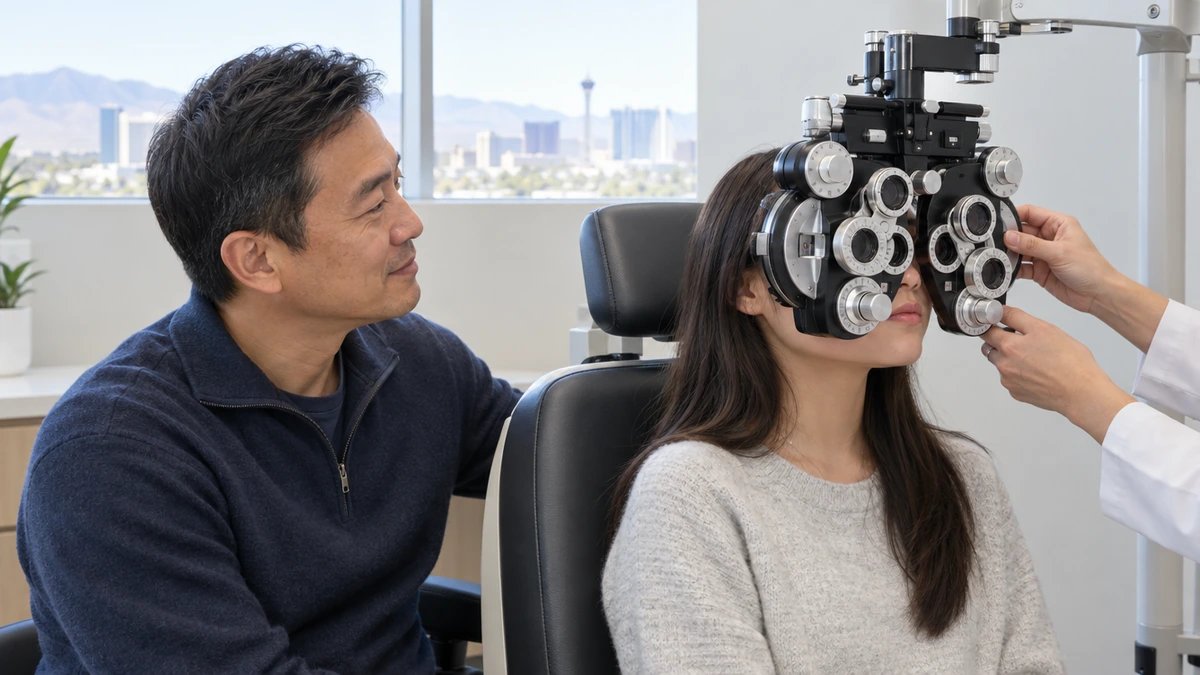
    Teen girl with her father during a phoropter adjustment, kids screen time eye strain
    A father stays beside his daughter during an eye examination.

    Bring your concerns about your child’s eye health into the conversation. I take that history and use Visionix digital refraction to measure the prescription. Start with the task that keeps bringing the complaint back, then describe what changed after breaks or desk adjustments. Keep the focus on what your child experiences while doing the work.

    Leave room to discuss what the findings mean for homework. Tell me which change you want explained before you leave, whether it concerns the viewing setup or prescription glasses. The exam findings guide that conversation. My aim is a plan you understand well enough to use at the desk that evening.

    Plan your trip with my Downtown Summerlin page. Choose an appointment that fits around homework and school pickup. For broader timing and screening questions, see my pediatric eye exam guide.

    Frequently Asked Questions About Kids and Screen Time

    Should I Buy Blue Light Glasses for My Child?

    The AAO does not recommend blue light glasses for computer use and cautions against screen use close to bedtime because of its effect on sleep quality. Give your evening device routine a place in the conversation. Start by deciding where the devices go when homework ends and bedtime approaches.

    My Child Passed the School Vision Screening. Should I Still Mention Screen Discomfort?

    Yes, tell me about your child’s current discomfort. My guide to school screening explains what a pass covers.

    What If My Child Forgets Every Looking-Away Break?

    Make the reminder visible to you, too. Start the cue while your child learns the routine, then invite them to take the lead. Rehearse the pause before opening the assignment so everyone knows what the reminder means.

    What Should I Tell the Teacher About Headaches During Homework?

    Describe the task your child was doing when the headache started and whether stopping helped. Find out whether similar complaints happen during class and where a looking-away break fits into a live lesson. A specific question about the assignment gives the teacher something practical to answer.

    What Is the 20-20-20 Rule for Kids?

    Every 20 minutes, your child looks at something 20 feet away for 20 seconds. Use a view through the window when your hallway is too short for 20 feet. Choose the object before homework starts so your child knows where to look. Alongside those brief pauses, the American Academy of Pediatrics recommends leaving the screen for at least 10 minutes every hour.

    Book My Eye Exam Call (702) 858-4362

    Like this article? Add Vision by Amel as a preferred source, and you are more likely to see our articles in Google’s Top Stories.

    Add as a preferred source on Google

  • School Vision Screening vs a Comprehensive Eye Exam in Las Vegas

    School Vision Screening vs a Comprehensive Eye Exam in Las Vegas

    School Vision Screening vs a Comprehensive Eye Exam in Las Vegas

    Father and daughter arriving at elementary school for a school vision screening article

    TLDR: A school vision screening flags possible vision problems, while an eye exam investigates your child’s vision and determines the next step. Book the exam when a referral note comes home, even when your child seems to see well. A passing screening does not rule out a vision problem.

    Answer: In Las Vegas, school vision screening helps identify children who need further evaluation. A comprehensive eye exam examines your child’s vision and eye health in more detail, including eye alignment and the structures of the eyes. Take a school referral to an optometrist or ophthalmologist for evaluation and a plan based on the findings.

    A referral note slides out beside the lunchbox. Your child swears the board looks fine. Trust the note anyway. Book the exam first, then gather what the school sent. My eye exams at Vision by Amel page explains the visit and booking options.

    I reviewed 73 primary sources across five research lenses for this guide, and passing a screening does not rule out a vision disorder. As Prevent Blindness explains, a screening flags a concern, while an eye doctor diagnoses the problem. That difference decides your next move.

    What Does a School Vision Screening Check in Nevada?

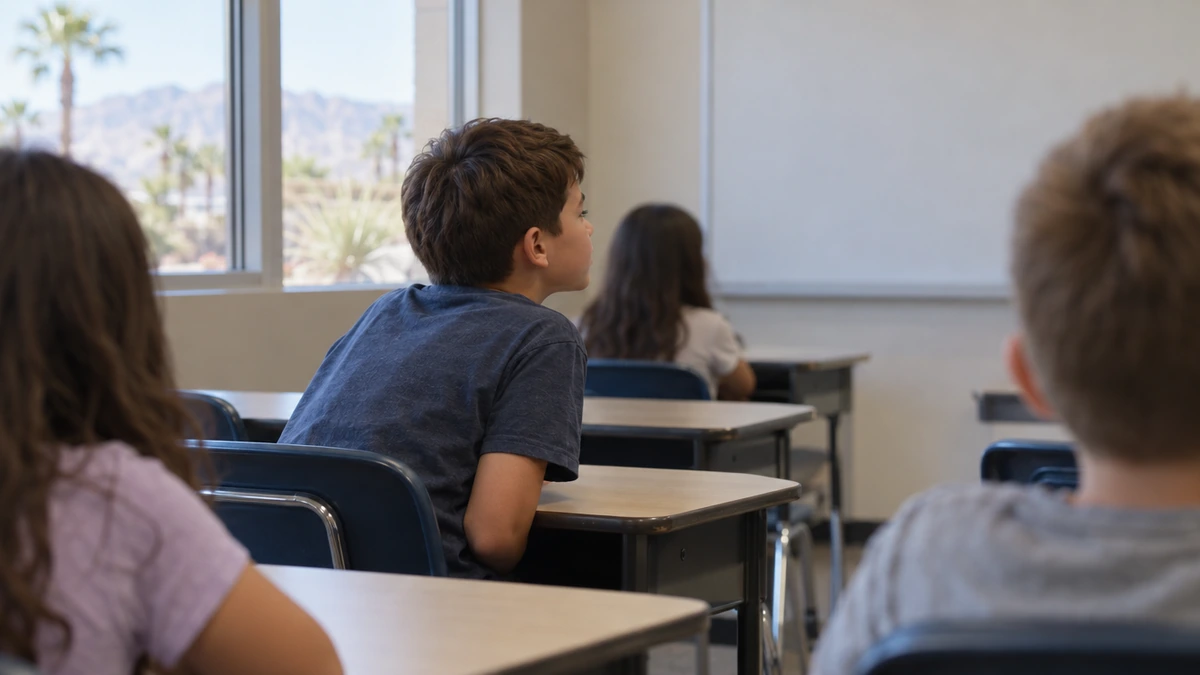
    Boy leaning forward toward a classroom board, illustrating school vision screening concerns
    A boy leans forward and squints toward the classroom board.

    Your child’s screening looks for signs worth investigating. A chart-based check measures visual acuity, meaning how clearly your child sees the chart, while other screenings use an instrument. The school nurse has the details about the method and result. A screening report is a snapshot of one morning’s check of children’s vision. Your child’s vision deserves the full picture.

    Nevada sets a school screening schedule so your child’s vision gets attention during the school years. Under NRS 392.420, schools with a school nurse check for visual problems before the end of the first elementary year, in at least one additional elementary grade, and in one middle and one high school grade, with parent notification of concerns and an option to decline in writing. The requirement covers school checks. A referral tells you to take the next step toward an exam.

    Get the result directly. An empty backpack tells you nothing about whether your child completed the screening or needs follow-up. Contact the nurse for the recorded outcome and any instructions sent home. On a busy Las Vegas pickup afternoon, a quick call beats searching through another pile of school papers.

    What Should You Do With a School Referral Note?

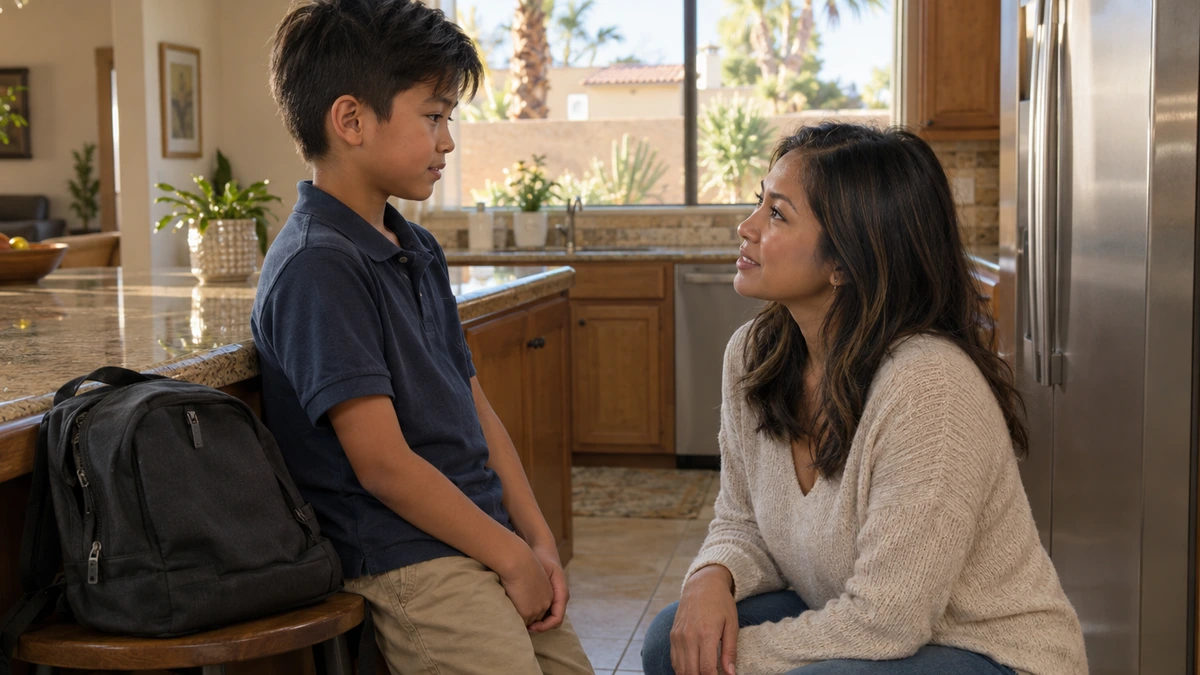
    Mother kneeling beside her son at a kitchen counter after school vision screening
    Ask your child about the screening and bring questions to the exam.

    Book the follow-up. The American Academy of Pediatrics advises an eye exam after a failed screening, even when you have noticed no problem. The exam determines whether your child needs glasses or other care. Your child has done nothing wrong.

    1. Read the requested action. Find the screening result, the eye involved and the follow-up instructions. Have the nurse explain any unfamiliar abbreviation.
    2. Arrange the exam. Explain to my team that a school screening prompted your call, and mention concerns from home or the classroom.
    3. Check the paperwork route. Find out which form the school wants back and who should receive it after the visit.
    4. Confirm your benefits. Give my team your insurance details before the appointment so we have the information needed to check them.
    5. Finish the handoff. Return the requested information after the exam and save a copy with the original screening result.

    Give the note a job. Put it beside your appointment details so it reaches the exam room instead of disappearing under homework. Let your child describe the screening without rehearsing chart answers or trying to prove the result wrong. The useful question is what the exam finds.

    What Happens When You Book a Comprehensive Eye Exam?

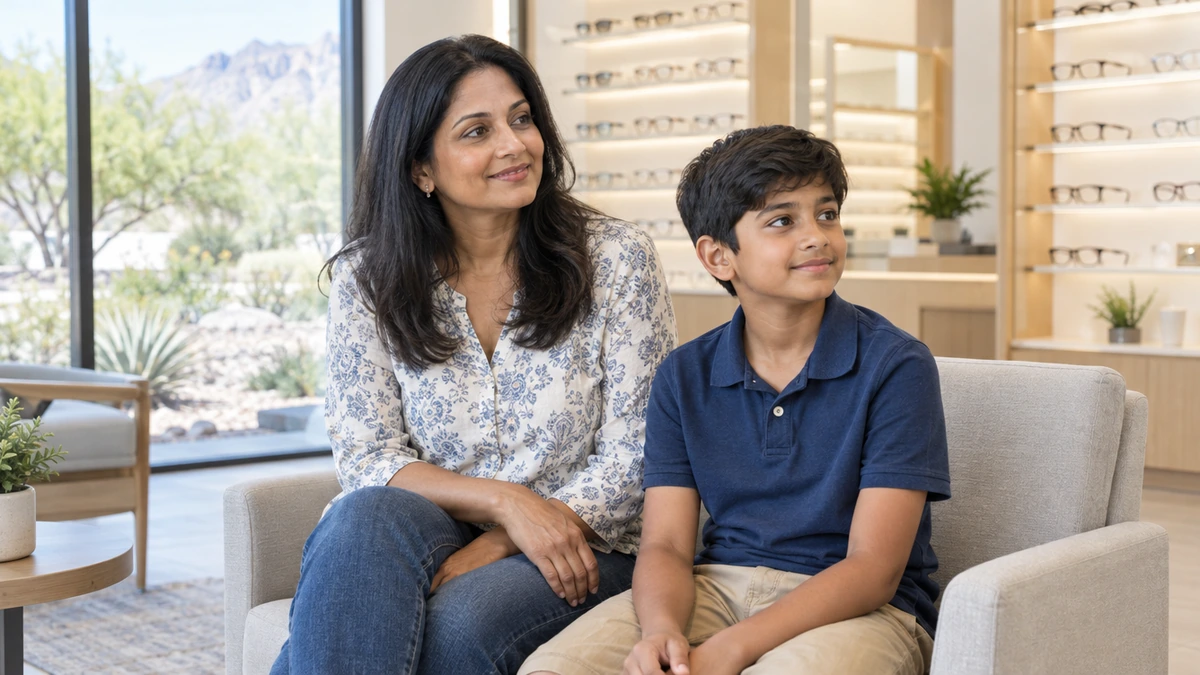
    Mother and son in an optometry waiting area for follow-up after school vision screening
    Bring the school referral and your questions to the appointment.

    A screening is a sorting tool. An eye exam is a diagnosis. Your child’s chart result belongs alongside the history, eye alignment and examination findings. I use those pieces to decide what care is needed and explain the next step.

    Your QuestionSchool ScreeningComprehensive Exam
    What is its purpose?Flag a possible vision problem needing follow-up.Evaluate vision and eye health and determine a plan.
    What does a chart result show?How clearly your child sees the chart during that check.Visual acuity interpreted with history and other findings.
    Does it diagnose a condition?The result identifies a concern for evaluation.I evaluate the findings to make a diagnosis.
    Does it prescribe glasses?The screening supplies no glasses prescription.I determine whether prescription glasses or other care are needed.
    What happens afterward?You complete the recommended follow-up.You follow the individual plan and return requested information to school.

    Leave knowing what the findings mean. A pediatric eye exam gives us room to discuss the concern behind the referral, beyond the letters your child read during screening. Tell me whether the difficult task is seeing the front board, reading a book or finishing homework comfortably. A specific example gives our conversation a clear starting point.

    You do not need a diagnosis before booking. Previous records sometimes contain terms such as amblyopia or strabismus, and I want to hear about those findings when we discuss your child’s history. Have me explain any unfamiliar terms. Leave the visit knowing what the findings mean for the school referral and what happens next.

    What Does a Passing School Vision Screening Miss?

    A pass is good news. Your child’s complaints still win the argument. In the 2004 Vision In Preschoolers study of 2,588 Head Start children aged 3 to 5, the best tests run by eye care professionals at 90% specificity detected about two-thirds of children with an eye condition targeted by the study and nearly 90% of those with the most important conditions. Those results describe the study’s preschool tests. Book the exam when those complaints keep coming.

    Homework discomfort deserves its own answer. The American Optometric Association’s parent guidance says school screenings look for amblyopia and its risk factors but do not check for most vision conditions behind digital eye strain. Your child reading the classroom chart does not settle a complaint about uncomfortable screen work at the kitchen counter. Tell me when the discomfort starts and which task brings it on.

    Watch what happens after the reassuring result. Your second grader still leaning toward the whiteboard gives us a concern to investigate. A parent in Summerlin hearing another complaint over evening homework has a reason to arrange an exam. My pediatric eye exam guide covers timing, Medicaid and school screenings when you need the wider overview.

    Why Does Completing the Follow-Up Matter?

    The referral needs a finished follow-up. A 2026 BMJ Open Ophthalmology review of 30 studies reported a median follow-up rate of 43.1% after school vision screening referrals. That median spans those studies. Make sure your child lands on the follow-through side of it.

    Choose a date you will keep. Check transportation and your work schedule before confirming the visit, especially when pickup and an afternoon shift compete for the same hour. A change of plans calls for a replacement date during the same phone call. Keep the school informed when arranging follow-up takes longer than expected.

    Showing up is half the job. Walking out with a plan you understand is the other half. Before you leave, confirm what the findings mean for the referral, whether your child needs glasses or other care, and when to return. A clear next step belongs beside the appointment on your calendar.

    Close the paperwork loop. Check the school’s instructions before sending the completed form, and keep your copy somewhere easier to find than the bottom of a backpack. Report continuing concerns to me even after the form is returned. The paperwork records the visit, while the plan guides your child’s care.

    How I Follow Up on Your School Referral at Vision by Amel

    Doctor's hands holding an occluder at a boy's left eye during school vision screening follow-up
    The eye exam evaluates the concern raised by screening.

    You do not need a referral for an eye exam at Vision by Amel, and we accept Nevada Medicaid. Mention the school screening when you book. A missing form need not delay that call.

    Put your main concern first when we talk. Start with what prompted the school referral, then describe anything you have noticed since the screening. Leave room for your child to explain what feels difficult, too.

    Plan your route to Festival Plaza in Downtown Summerlin before the appointment. Choose a time around your family’s school and work commitments. Keep the school’s contact details handy for returning the requested findings after the visit.

    Frequently Asked Questions About School Vision Screening

    What If I Lost the Referral Note From School?

    Request a replacement from your school nurse, including the screening date and recorded results. Tell my team you are waiting for the copy when you book. Confirm whether the school also has a separate form for the exam findings, so the replacement packet includes what you need.

    Should I Buy Glasses Based on the School Eye Test?

    Wait for my findings before buying prescription glasses for your child. The screening note supplies a reason to investigate, while the exam determines whether glasses belong in the plan. During the visit, have me explain what any prescription means and how the glasses should be worn.

    Which Grades Get Vision Screening in Clark County Schools?

    The Clark County School District screening schedule lists kindergarten and grades 4, 7 and 10, plus students new to the district, repeating a grade or with disabilities. Your child’s grade is therefore only part of the answer. Check with the school nurse about your child’s screening status and follow-up instructions.

    Does Nevada Medicaid Need Prior Approval for the Follow-Up Exam?

    No, Nevada Medicaid’s ocular services manual allows optometrists to examine Healthy Kids members without a referral or prior authorization and covers routine exams once every 12 months. Give my team your child’s plan details when you arrange the follow-up. Confirm the coverage for the planned visit before you arrive.

    Are Weekend Appointments Available at Vision by Amel?

    Yes, you have weekend booking options because my office opens seven days. Our hours are Monday to Saturday 9 am to 6 pm and Sunday 11 am to 5 pm. Call or use online booking to check appointment availability for your child.

    Book My Eye Exam Call (702) 858-4362

    Like this article? Add Vision by Amel as a preferred source, and you are more likely to see our articles in Google’s Top Stories.
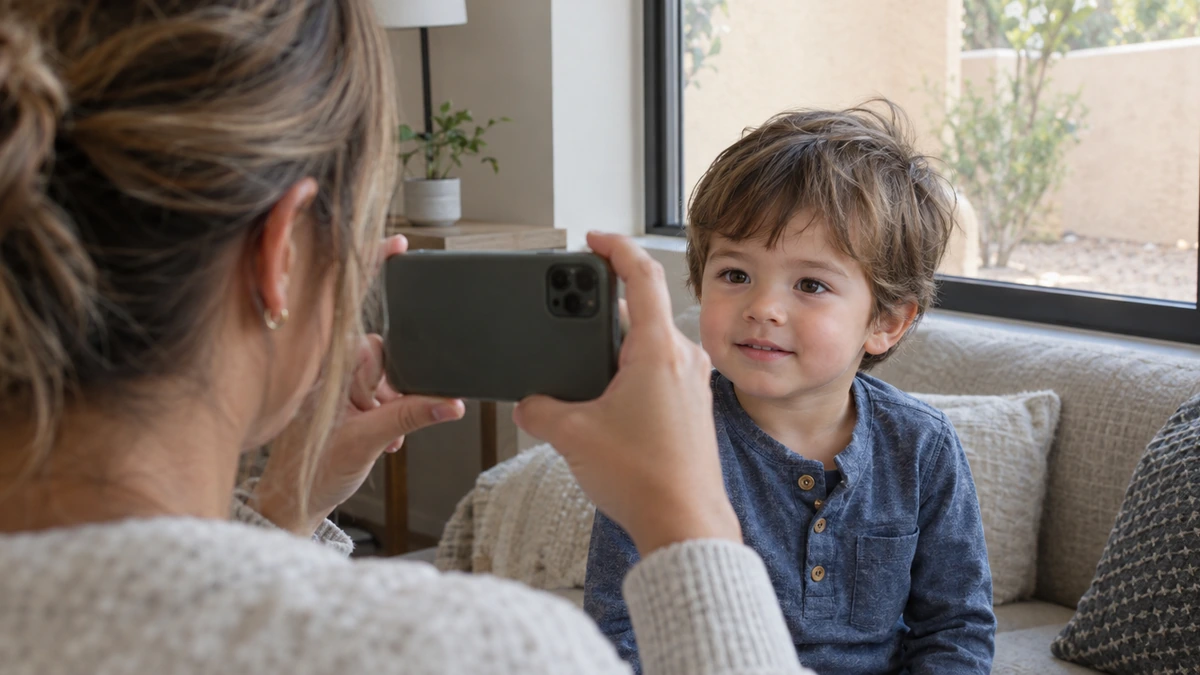
    Add as a preferred source on Google