Tag: resident consent

  • What a Las Vegas Assisted Living Vision Day Looks Like, Hour by Hour
    What a Las Vegas Assisted Living Vision Day Looks Like, Hour by Hour

    What a Las Vegas Assisted Living Vision Day Looks Like, Hour by Hour

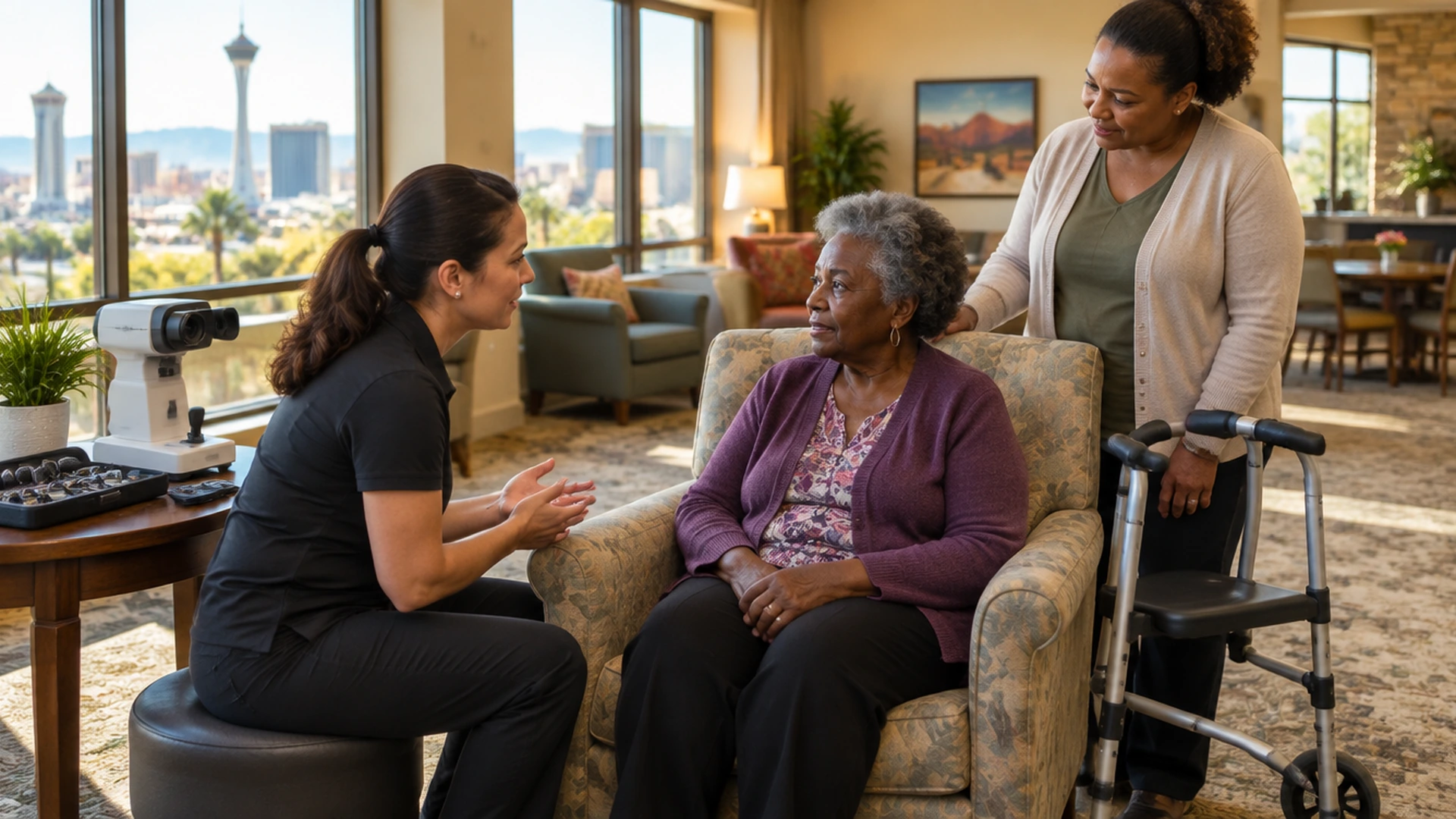
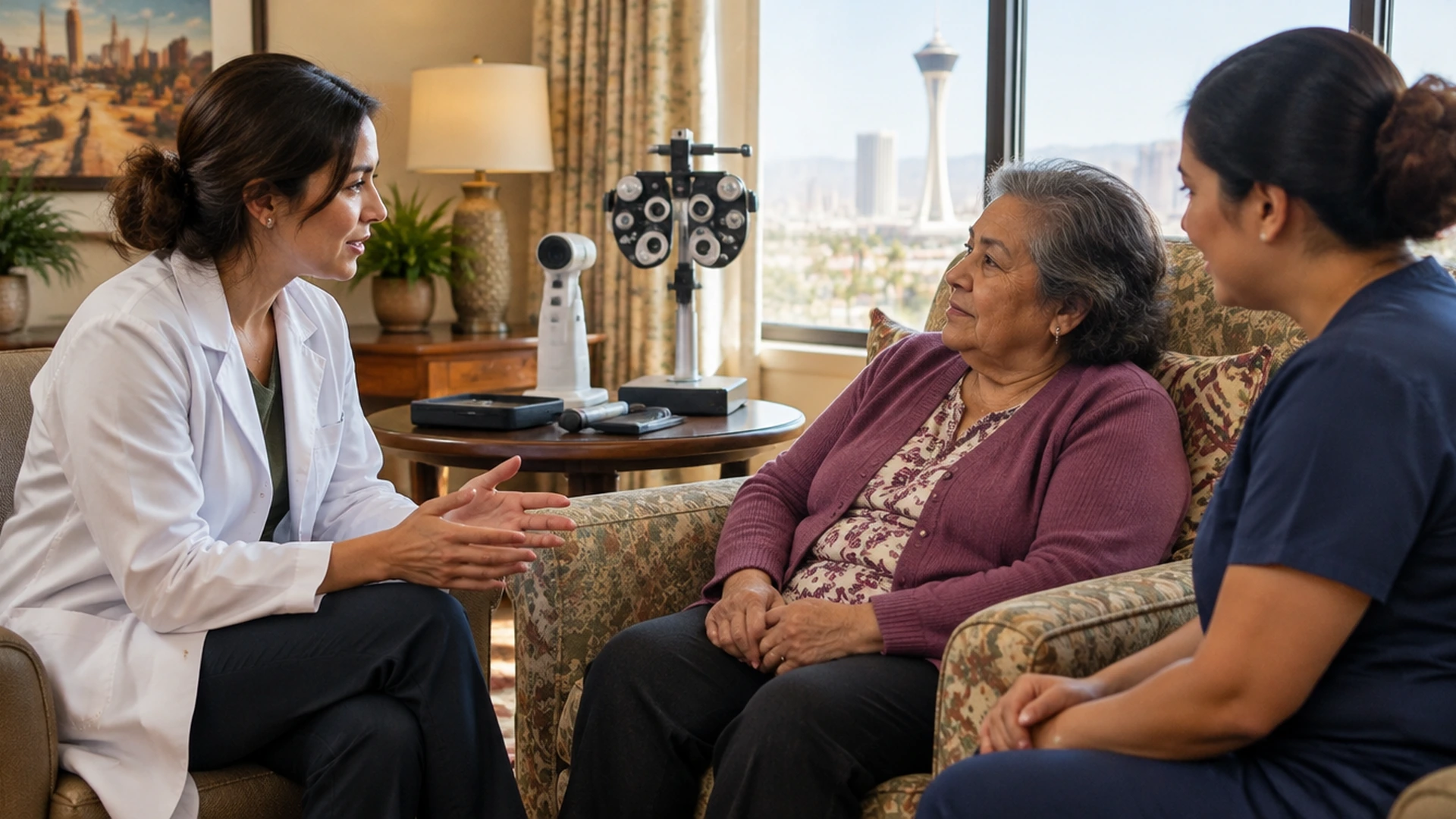
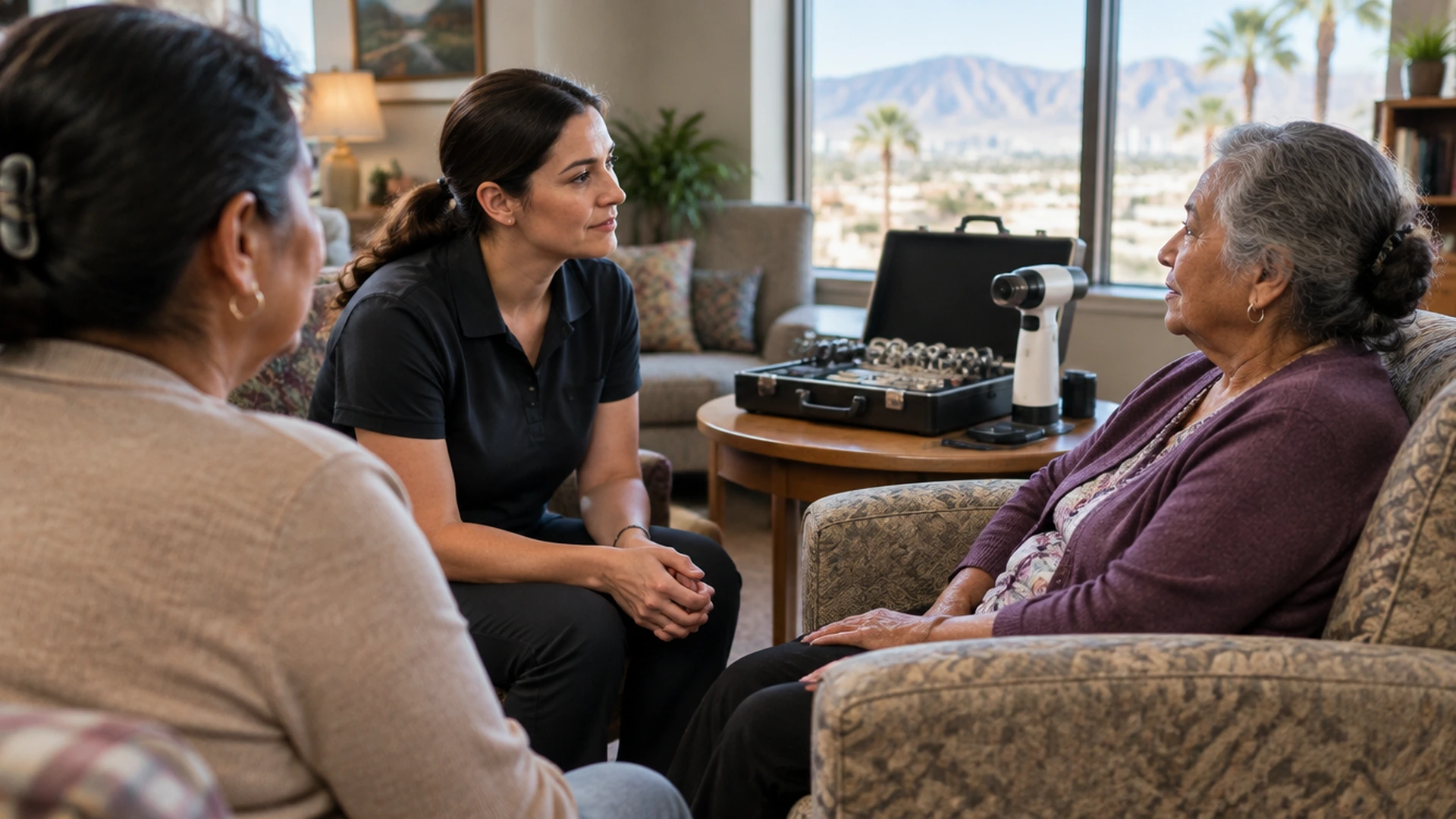
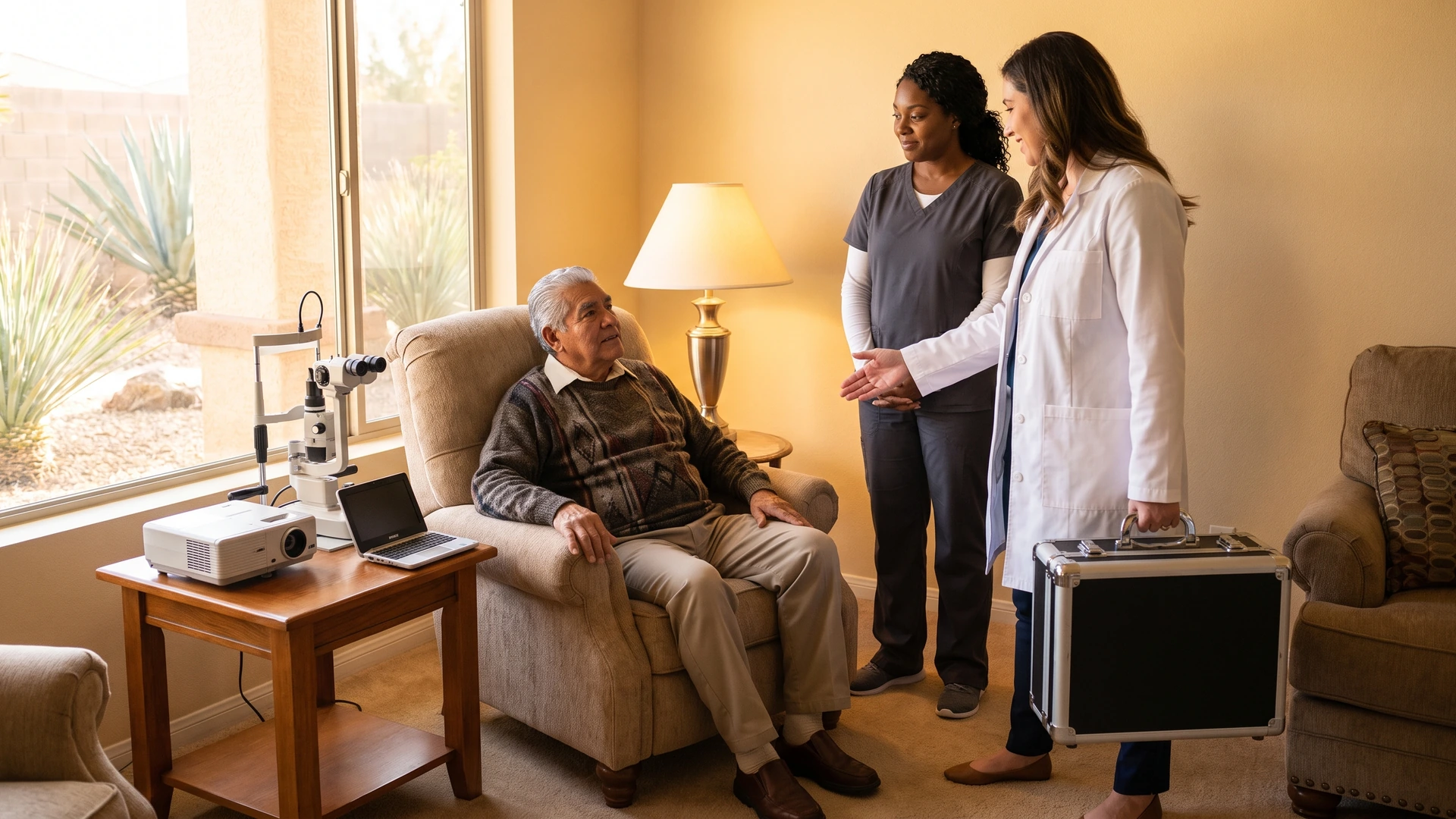
    Woman eye doctor and caregiver greeting a resident in an armchair, assisted living vision day Las Vegas

    TLDR: I use this assisted living vision day in Las Vegas sample to help you plan around a ten-resident home’s routine. The hours are placeholders, and the home’s size is an example rather than a participation count. Set actual timing, services, and follow-up with my team before inviting residents.

    Answer: An assisted living vision day in Las Vegas starts with preparation, a private room, and voluntary participation. Your staff helps residents reach the exam room, takes care of breaks, and tracks eyewear discussions and individual follow-up. I show you the sequence hour by hour in this ten-resident home example, with timing adjusted to residents’ needs and the planned services.

    Start with the home’s daily routine. I use this sample to assign tasks to your staff, my team, and residents across a vision day in a ten-resident home. It illustrates a plan, with no completed facility visit or resident outcomes represented. Use the sequence to decide who needs to be ready for each step.

    Put meals and support on the schedule. Start with the overview of an assisted living vision day, then bring your home’s routines to the planning call. Include mobility help, private space, and resident preferences in the on-site eye care plan. Give each next step a responsible contact before assigning resident times.

    Before the Visit: Your Assisted Living Vision Day in Las Vegas Sample Plan
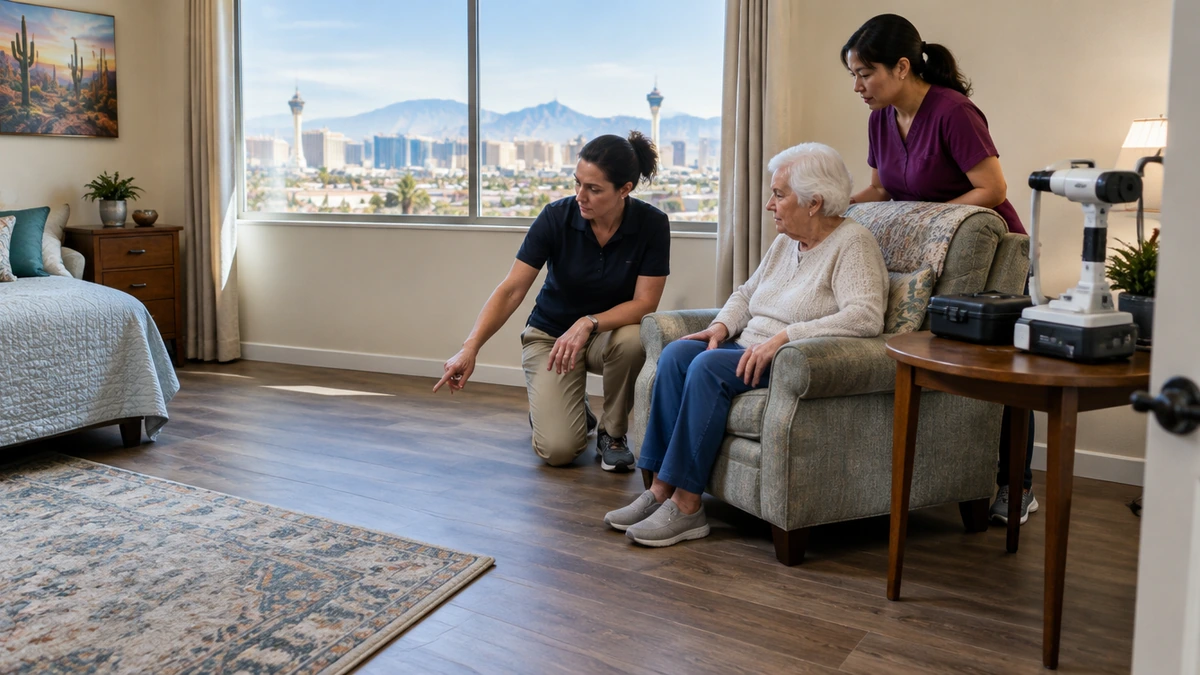
    Woman eye doctor and caregiver reviewing space beside a seated resident, assisted living vision day Las Vegas
    Illustration of preparation for the sample plan, not an observed visit.

    Finish preparation before assigning exam times. Your list needs resident interest, consent review, representative documents where applicable, current insurance information, and benefit verification before service. Use the operator’s vision day checklist to assign those tasks. Keep the home’s resident count separate from the number of people choosing to participate.

    Walk through your room plan first. Review the power outlet, seating, and route from bedrooms with me as your visiting optometrist. I reviewed 69 primary sources across five research lenses for this series, and facility examination arrangements depend on space and resident needs. The AOA’s facility-care guidance describes choosing arrangements around those needs.

    Treat the table as a draft. Each clock time illustrates a place in your agenda, with no promised start, finish, or examination duration. Move, extend, or split the blocks after I review interested residents and planned services with you. Keep the table beside your home’s meal and care schedule while making those decisions.

    Illustrative hourProposed activityYour coordination task
    8 a.m.Arrival and room setupShow my team the agreed space and review changes
    9 a.m.Begin resident appointmentsBring residents when requested, with glasses and needed support
    10 a.m.Continue examinations and adjust pacingPlan breaks and keep waiting residents comfortable
    11 a.m.Review findings and next steps as readyConnect my team with authorized contacts
    NoonProtect the meal and rest routineReview individual aftercare needs with my team
    1 p.m.Discuss eyewear where appropriateSupport voluntary selection and confirm update contacts
    2 p.m.Review outstanding tasksAssign owners for follow-up and unfinished tasks

    8 a.m.: Welcome My Team and Check the Room
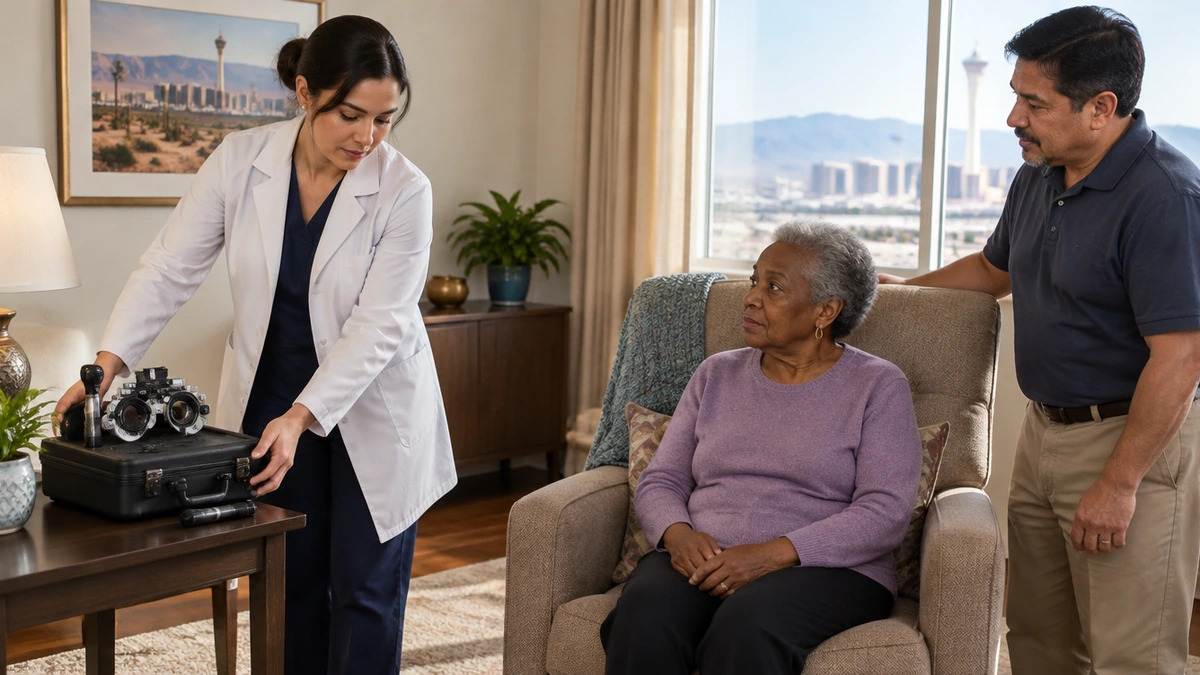
    Woman eye doctor placing portable equipment on a side table, assisted living vision day Las Vegas
    Illustration of the sample setup block, with no actual visit time represented.

    Set up before bringing residents in. In this sample, you meet my team at the private room and review where portable examination equipment will go. Check the path for walking aids and the seating layout. Name the staff contact available to help before the first resident leaves the common area.

    Review what changed since the call. Your list needs the latest decisions from residents who declined or changed appointments, along with new support needs. Share relevant updates directly with my team through private intake. Keep identifying information with the staff handling the visit instead of displaying it in the waiting area.

    Leave time between resident arrivals. Set who prepares the space between appointments and how your staff hears when the room is ready. Identify the waiting area before anyone starts bringing residents down the hallway. Protect setup and cleaning time when adjusting the sample schedule.

    9 a.m.: Begin Appointments With Consent and Privacy

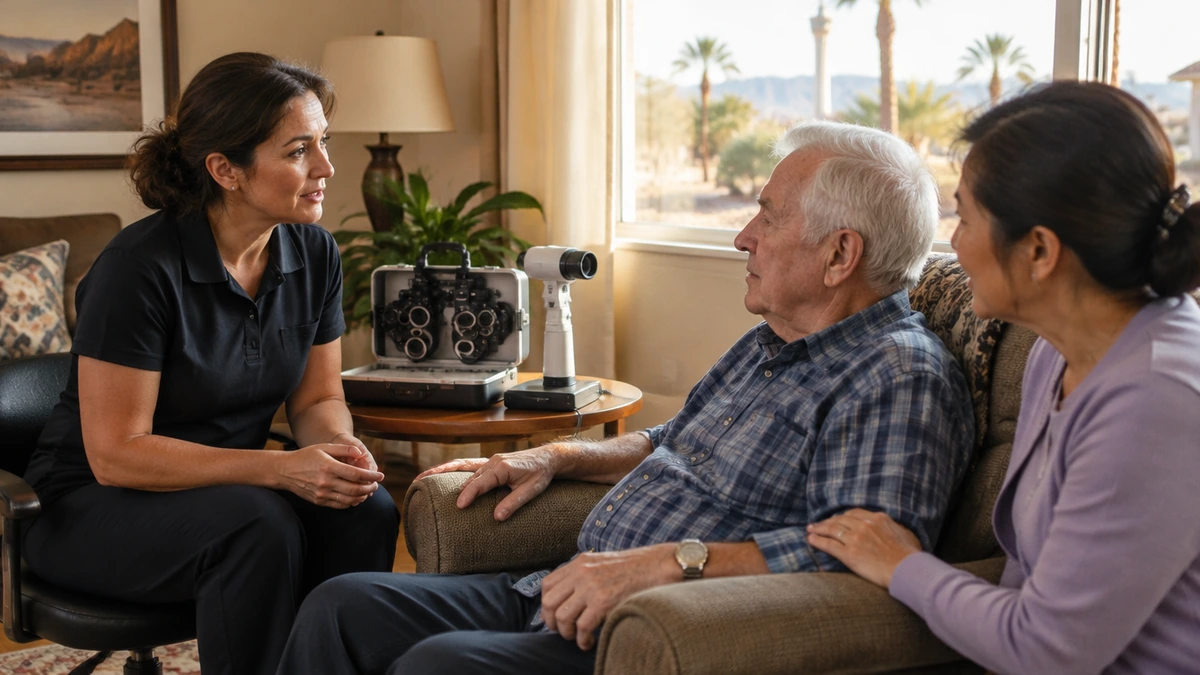
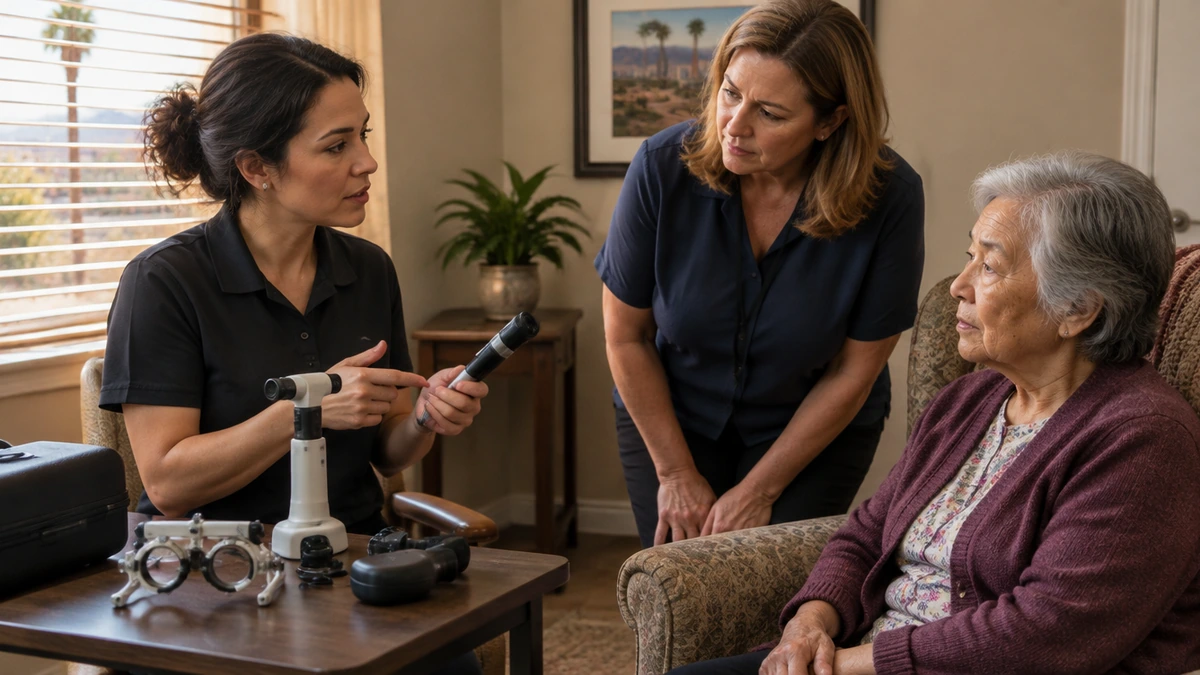
    Woman eye doctor listening to a resident with a caregiver nearby, assisted living vision day Las Vegas
    Illustration of a private appointment in the sample plan, not a clinical record.

    Bring the glasses with the resident. Have your requested preparation records ready through secure intake, then escort the person to the room when my team calls. Introduce any caregiver attending for support. I check the resident’s preferences before beginning the eye exam.

    The resident still chooses to participate. Nevada protects medical-care privacy and refusal of treatment to the extent permitted by law, including consent to the presence of people not directly involved in care. Your facility booking does not replace resident consent. If someone declines, update the staff contact and help the resident return to the usual daily routine.

    Stay reachable while I examine your resident. In this sample, your staff contact supplies practical help while keeping the room private. Discuss findings away from residents waiting nearby. Use the clinical communication plan for those conversations and keep the common room available for ordinary activities.

    10 a.m.: Adjust the Pace to the Resident

    Follow the resident’s pace. Change your appointment order when someone needs a break, extra communication help, or another session. Keep meals and care routines on the staff contact’s schedule so changes reach the people providing support. A resident pausing in the chair matters more than a completed appointment tally beside the clock.

    Make room for unfinished testing. Published experience supports flexibility: some residents with dementia in a Canadian facility optometry program needed assessment across several days or help from family. During your planning call, review how I record incomplete measurements and plan further assessment. Explain that next step to families without promising every test will be finished during the visit.

    Get the completed findings clear. A comprehensive eye exam evaluates overall eye health, whereas vision screening detects some problems but misses others. Use the planned examination description when you discuss the visit with residents. I explain to you what I assessed, what remains needed, and which clinical questions need follow-up.

    11 a.m. and Noon: Assisted Living Vision Day in Las Vegas Handoffs
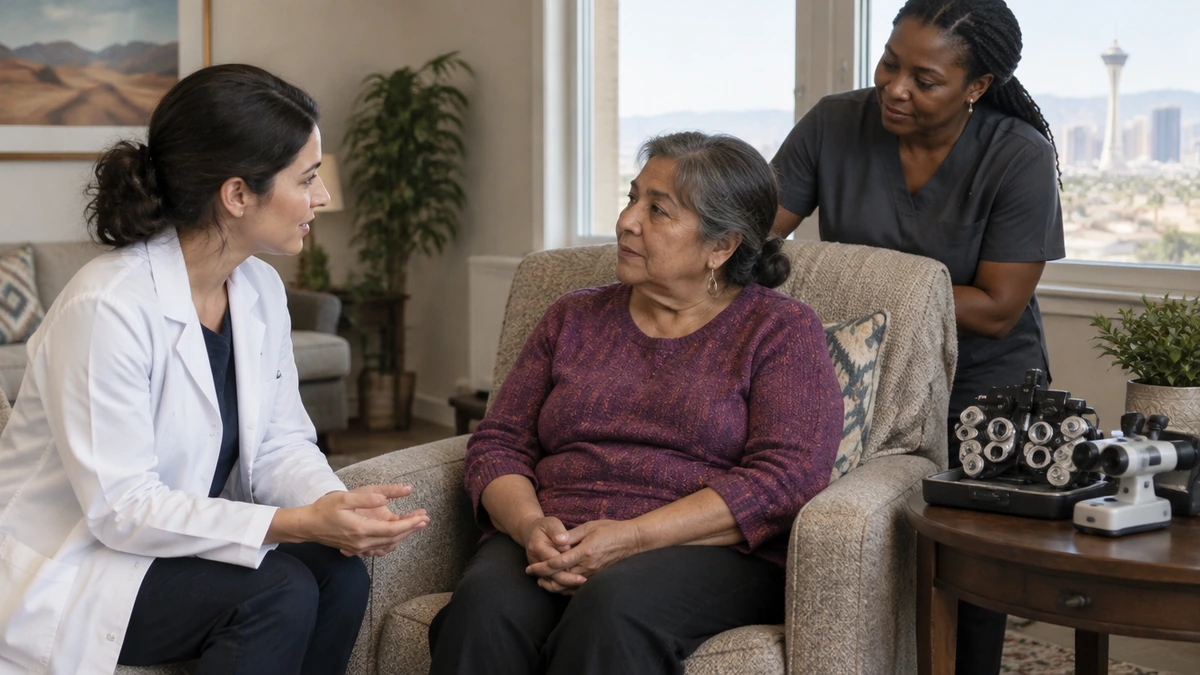
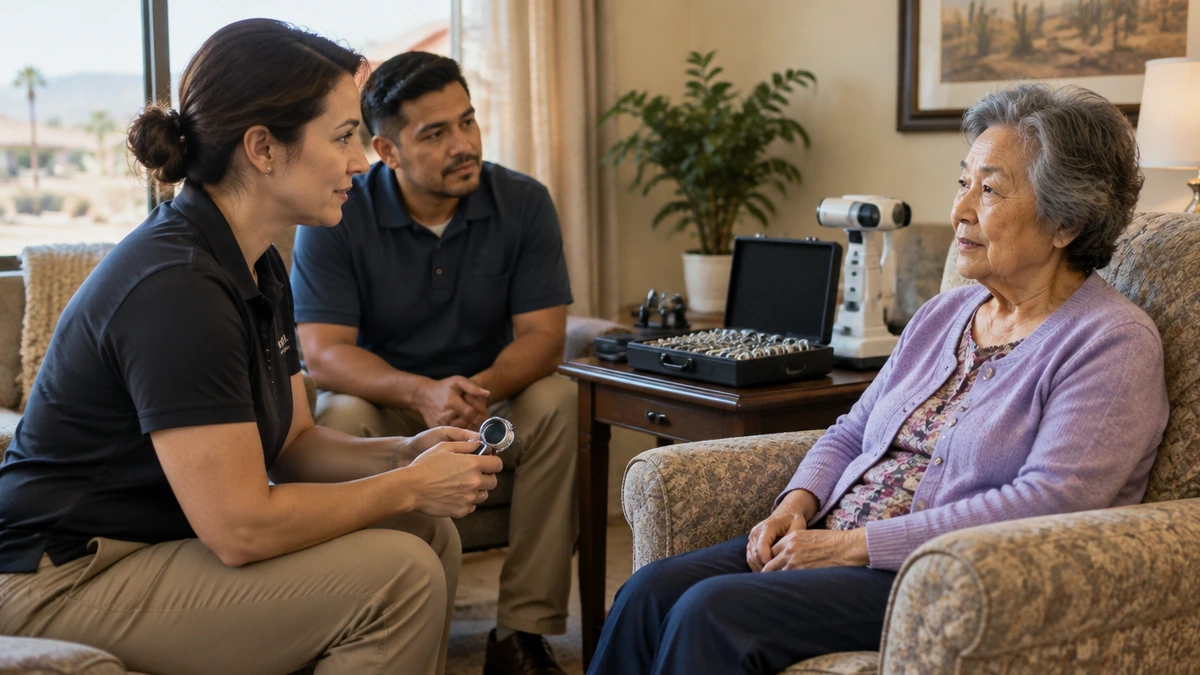
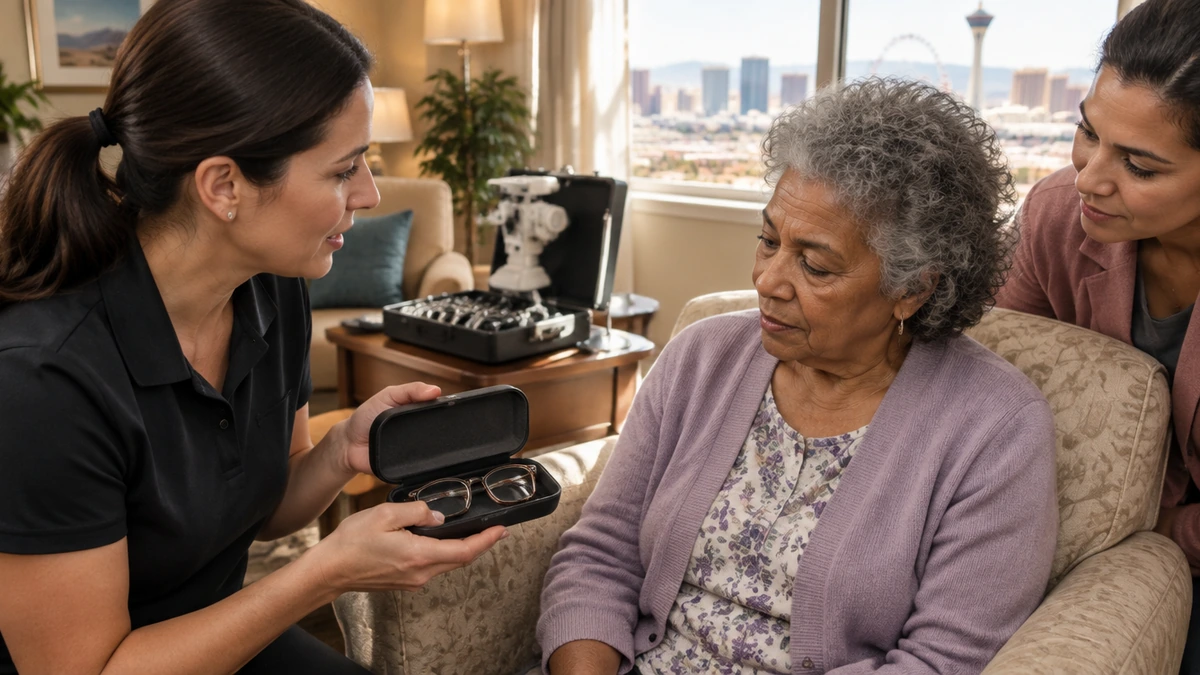
    Woman eye doctor explaining next steps to a resident and caregiver, assisted living vision day Las Vegas
    Illustration of a sample aftercare conversation, with no treatment outcome implied.

    Start handoffs as findings are ready. In this sample, your staff begins connecting residents and authorized representatives with me while others still wait for appointments. Keep the timetable open as those conversations happen. Get the next steps clear before a resident returns to the armchair in the common room.

    Name who handles aftercare. Discuss individual support because dilation sometimes causes blurry vision and light sensitivity for several hours. Your plan needs the person receiving instructions and the staff member supplying the agreed assistance. I decide whether dilation is indicated and explain the next steps for your resident.

    Keep the usual noon routine. This sample protects your home’s meal and rest time, with staff checking the next appointment before moving a resident away from lunch or an activity. Adjust the order around the people present and their instructions. The sample clock guides the conversation rather than fixing every appointment.

    • Confirm who receives each resident’s clinical instructions.
    • Ask which testing or assessment remains incomplete.
    • Identify outside appointments recommended by me.
    • Agree who contacts the resident’s authorized representative.
    • Record administrative next steps in the private follow-up record.

    1 p.m. and 2 p.m.: Discuss Glasses and Assign Follow-Up

    Use the afternoon for eyewear discussions. For residents considering glasses, the sample block covers selection, measurements, and fitting planned with my team. Put your order contact and the delivery and adjustment plan beside the resident’s eyewear notes. An examination leaves the resident’s purchase decision voluntary.

    Connect lens choices to daily use. My practice offers premium lenses including progressive lenses, and my premium lens overview helps prepare your questions. Describe reading in an armchair or joining table activities during the eyewear conversation. Review my individual recommendation and verified benefits before the resident decides.

    Assign follow-up before my team leaves. A published Canadian program tracked reassessment timing and sent examination reports to family physicians, illustrating work continuing beyond the appointment. Name who receives your home’s reports, books recommended visits, and checks unresolved tasks. Keep those names with the follow-up list for the staff member taking over after the visit.

    Give each task its own contact. Track your eyewear update separately from the clinical referral, with a clear route for reporting progress on both. The prescription glasses fitting and delivery guide helps prepare questions about fitting, adjustments, and continued support. Keep unanswered items open for the next staff handoff.

    End the sample with assigned next steps. The plan includes no invented count of completed examinations or glasses orders. Record whether your resident needs more time, another session, or an outside appointment after my review. Keep each task open until the people responsible have received and understood what happens next.

    Create Your Facility-Coordinated Vision Day With Me

    Bring your home’s routine to a call with me. I am Dr. Amel Youssef, OD, founder of my practice, Vision by Amel, in Downtown Summerlin, serving the Las Vegas Valley. My team and I plan visits for assisted living homes, Residential Facilities for Groups, memory care communities, adult day care programs, and senior living communities. Describe your private room with electrical access, resident needs, and usual meal and care schedule.

    Set the preparation with me before the timetable. I start your visit planning with interest, registration, consent, and insurance benefits verified before service. Participation is voluntary. Benefits depend on each resident’s eligibility and plan terms. My team and I review your private room, examination order, eyewear selection, measurements, delivery, adjustments, and referral process with you before choosing the final schedule.

    Frequently Asked Questions About an Assisted Living Vision Day Sample Plan

    Does a ten-resident home need everyone to join?

    No, each resident chooses whether to participate. The ten-resident home is a planning example, so give my team your estimated interest when discussing the visit. Keep residents who decline involved in their usual activities.

    What should the staff handoff include if a shift changes?

    Give the incoming contact the appointment order, open tasks, and my team’s contact details. Identify where your staff stores instructions securely and who is currently speaking with my team. Complete that handoff before the outgoing contact leaves.

    What if the guardian is unreachable when questions arise?

    Keep unanswered decisions pending and tell me the guardian is unreachable. Use your established contact process to reach the authorized person and identify what must be resolved before proceeding. Update the appointment plan after the authorized person and I have settled those questions.

    Should I photograph residents during the sample activities?

    Keep photography outside the examination plan unless permissions and a suitable plan have been agreed separately. This sample includes no original visit photographs for you to treat as a record of a real event. Identify illustrative images as illustrations when using them with the sample.

    How do I plan another vision day after this one?

    Review unfinished follow-up before proposing another group date. Identify which residents need individual appointments and which want a future facility visit during your conversation with my team. Build the next interest list from those choices instead of repeating the home’s roster.

    Schedule an On-Site Vision Day Speak With Dr. Amel’s Team: (702) 858-4362

    Like this article? Add Vision by Amel as a preferred source, and you are more likely to see our articles in Google’s Top Stories.


    Add as a preferred source on Google

  • How to Choose a Mobile Optometrist for an Assisted Living Facility

    How to Choose a Mobile Optometrist for an Assisted Living Facility

    How to Choose a Mobile Optometrist for an Assisted Living Facility

    Administrator discussing care with a visiting clinician, choose mobile optometrist assisted living

    TLDR: I advise you to choose a mobile optometrist for assisted living by verifying who examines residents, what the examination covers, and who follows up. Your review starts with Nevada credentials and mobile-clinic requirements. Set benefits, voluntary consent, eyewear delivery, and secure record handling before residents go onto the schedule.

    Answer: To choose a mobile optometrist for an assisted living facility in Las Vegas, verify the candidate’s doctor’s Nevada credentials and the mobile clinic’s registration or certification. Compare examination scope, resident consent, benefit verification, eyewear delivery, and referrals. Get written answers for your residents and location, with named contacts for preparation and unfinished tasks after the visit.

    An open date is not enough. Your residents need to understand the examination, while staff need contacts for preparation, results, and unfinished tasks. I recommend you compare each practice using the same questions before setting the schedule. A caregiver with an unanswered glasses request needs a name and contact route after examination day.

    Put responsibilities beside the visit plan. Use a facility-coordinated vision day to review who leads the examination, what your facility supplies, and who handles follow-up. I use those same planning questions with you to define the services for your home and resident group. Keep unanswered questions open on the selection checklist until the candidate’s practice supplies a clear response.

    How Do You Choose a Mobile Optometrist for Assisted Living?

    Care director meeting a visiting clinician, choose mobile optometrist assisted living
    Care director meeting a visiting clinician.

    Start with the candidate’s doctor’s full name. The Nevada Board of Optometry’s verification policy identifies its online license verification as a primary source for license status and certification information. Use that process to review your prospective doctor rather than relying on a name in a brochure. Keep the verification with the facility’s selection records.

    I urge you to check the mobile clinic, too. I reviewed 69 primary sources across five research lenses for this series, and Nevada regulates mobile-clinic arrangements separately from the clinician’s license. Nevada’s mobile optometry requirements establish certification, specified service populations including patients with impaired or restricted mobility, and licensee direction and final examination. Get the candidate’s explanation of how your residents and location meet those requirements before setting a date.

    Keep location credentials with the booking. Nevada’s practice-location rule prohibits practice at an unregistered office or uncertified mobile clinic. Have the candidate’s practice identify the registration or certification for your facility visit. Store the supporting information with the provider records so the person reviewing the booking has it in hand.

    Name each contact before examination day. Your contact sheet needs the responsible optometrist and the roles of the people attending with the candidate’s doctor. Identify who answers clinical questions and who handles scheduling or eyewear orders. Update the sheet if your candidate’s assigned team changes.

    What Examination Scope Should You Confirm?

    Clinician explaining the planned assessment setup, choose mobile optometrist assisted living
    Clinician explaining the planned assessment setup.

    I recommend you get the examination scope in writing. Nevada’s comprehensive-examination definition specifies in-person components and permits a comparable-data alternative when a component cannot be performed. Review how the candidate’s practice records your resident’s completed eye exam and any remaining needs. Use the planned scope when explaining the visit to residents, with unfinished testing kept on the follow-up list.

    I ask you to review the room alongside the planned equipment. Describe your private space, power outlet, and residents’ positioning needs before the candidate’s practice decides whether the setup suits the examination. Portable examination equipment does not establish an identical kit for every visit. Record the next step for assessment requiring another setting.

    Know which service residents are choosing. Review the difference between examination and screening before comparing proposals for your home. The service description needs to name screening, a comprehensive eye exam, or another defined assessment and explain how refraction and eye health findings enter the plan. Use the candidate’s reviewed wording in the resident invitation.

    Describe the resident using the room. Include your residents’ mobility needs, communication preferences, and requested caregiver support when reviewing examination scope. Set the process for incomplete testing or a different appointment time before booking. Leave an assessment open until the candidate’s doctor has explained the next step for any unfinished work.

    How Do You Compare Insurance and Resident Consent Processes?

    Resident discussing the visit with clinician and caregiver, choose mobile optometrist assisted living
    Resident discussing the visit with clinician and caregiver.

    I want you to know what starts the benefits check. Get the document list, secure intake route, and name of the person explaining the response to your resident. Review how unresolved coverage questions are handled before the appointment. Include prescription eyewear in that conversation so order questions stay visible alongside examination benefits.

    Verify the resident’s actual plan. For Medicare Advantage, CMS’s plan guidance supports checking benefits, provider networks and authorization requirements against the individual plan. Review the candidate’s process for checking your resident’s planned services and name the benefits contact. Keep the insurer list separate from the response for the insurance card in front of you.

    Review consent before selecting the candidate’s practice. Your residents need a clear explanation of the service and a private route for questions about signatures and information sharing. Check how each candidate’s team reviews a guardian’s or healthcare representative’s authority. Include the steps for declining or changing an appointment in the visit plan.

    Name the contact for billing questions. Your staff needs to know who handles Medicare and Medicaid administration and identifies the service behind a resident’s question. Get the route for correcting incomplete or inaccurate information before intake starts. Keep financial and clinical details in the resident’s private records throughout that review.

    Selection areaQuestion for your candidateEvidence to request
    CredentialsWho is responsible for the clinical visit?Doctor identification and current Board verification
    Mobile practiceWhich mobile-clinic credentials apply here?Relevant registration or certification information
    ExaminationWhat is included and how are limits handled?Written scope and follow-up process
    Benefits and consentHow are residents prepared individually?Intake, verification and signature workflow
    EyewearWho handles the order after selection?Delivery, fitting and adjustment contacts
    Records and referralsWho tracks the next action?Secure handoff and escalation process

    Who Handles Eyewear Fulfillment and Referrals?

    Resident receiving glasses with caregiver support, choose mobile optometrist assisted living
    Resident receiving glasses with caregiver support.

    I advise you to follow the order beyond frame selection. Get the names of the contacts handling prescription review, measurements, and your resident’s frame and lens choices. Review delivery updates and the fitting check with the person responsible for the order. Include adjustments, repairs, and replacement questions before a new pair reaches the home.

    Give delivery updates a clear destination. Your order notes need a current estimate, an update contact, and instructions for a resident who is away when glasses arrive. Set how changes in the expected handoff reach staff and the resident. Use the prescription glasses fitting and delivery guide to prepare those questions for the candidate.

    Make the referral process concrete. A published Canadian facility optometry program recommended ophthalmology referrals, showing outside care remained part of its service. Name who books the next appointment and sends the findings for your residents. Verify the candidate’s proposed referral contacts directly, since another program’s published results do not describe that practice’s network.

    I want your next action clear. Review how the candidate’s practice sends the candidate’s doctor’s recommended timing and records unfinished testing for your staff. Identify who answers questions after the candidate’s visit team leaves. Assign a facility contact to track each open task until the responsible person reports it complete.

    How Do Privacy Practices Help You Choose a Mobile Optometrist for Assisted Living?

    I recommend you trace a document from intake to results. Review where your staff sends registration details, consent forms, and insurance records, and how clinical messages return. Identify the people authorized to handle each kind of information. Keep resident records out of public marketing forms and away from visitors in the common room.

    Plan privacy before assigning the room. Set how your staff brings residents in, handles caregiver attendance, and manages interruptions during the examination. Name who alerts the candidate’s doctor when the next resident is ready and identify where residents wait. Review privacy and access again if the room changes.

    Use references to check the working process. Request facility references when available and authorized for sharing, then discuss preparation, communication, and unfinished tasks with your reference contact. Keep identifiable resident cases out of that conversation. Review those practical answers alongside the credentials and examination scope before selecting the candidate’s practice.

    • Did the provider explain what the facility needed to prepare?
    • Was there a clear contact for schedule changes?
    • How were unresolved eyewear or report requests handled?
    • Did the facility know who tracked referrals after the visit?
    • What would the coordinator clarify before another visit?

    Compare candidates on the same checklist. Mark what each practice has confirmed and which questions still need an answer for your home. Resolve those gaps before telling residents what to expect. Choose based on a documented process suited to the residents, staff, and space you have described.

    Speak With Me About Your Facility Vision Day

    Bring your checklist to a planning call with me. I bring on-site eye care to assisted living homes, memory care communities, and senior living communities across the Las Vegas Valley. I am Founder Dr. Amel Youssef, OD, and my practice, Vision by Amel, is in Downtown Summerlin. Review credentials, examination scope, and your private room with me while working through the selection questions.

    Set the tasks with me before the date. My team helps you prepare resident interest, consent, insurance records, a private room with electrical access, and the examination schedule. Resident participation is voluntary, and I arrange insurance benefit verification before service. Benefits depend on each resident’s eligibility and plan terms. My team and I review secure record handling, eyewear selection, measurements, delivery, adjustments, clinical follow-up, and referrals with you before residents attend.

    Frequently Asked Questions About Choosing a Mobile Optometrist

    What if a provider changes the clinician assigned to our visit?

    Repeat the credential review for your chosen provider’s newly assigned doctor and update your contact sheet. Name who now holds responsibility for the clinical plan and follow-up. Complete those checks before residents attend the changed visit.

    How should we assess a provider without shareable facility references?

    Review blank process materials, named contacts, and credential evidence directly. Compare examination scope and follow-up against your checklist without treating an unavailable reference as proof of the working process. Record the reference gap alongside the evidence the practice supplied.

    What should our agreement say about canceled appointments?

    Record your chosen practice’s cancellation and rescheduling terms, including who notifies residents. Your visit plan also needs instructions for pending documents and open glasses orders. Put the agreed contact route beside those terms so staff know whom to call.

    What if a provider requests resident details through a public form?

    Use your chosen practice’s private intake channel for health records. Keep your public planning request to facility contact details and general scheduling needs. Get the intended recipient and secure route clear before sending resident documents.

    How should we review the partnership after the visit?

    Check whether reports, eyewear updates, and referral contacts reached the people assigned to act on them. Compare your actual handoff with the agreed process and list unfinished tasks. Have your chosen practice address those items before planning another facility date.

    Schedule an On-Site Vision Day Speak With Dr. Amel’s Team: (702) 858-4362

    Like this article? Add Vision by Amel as a preferred source, and you are more likely to see our articles in Google’s Top Stories.
    Add as a preferred source on Google

  • Eye Exams for Residents With Dementia or Limited Mobility

    Eye Exams for Residents With Dementia or Limited Mobility

    Eye Exams for Residents With Dementia or Limited Mobility

    Eye doctor speaks with a resident beside a mobility aid for eye exams for seniors with dementia

    TLDR: I plan eye exams for seniors with dementia around your resident’s communication, mobility, and decision-making needs. Prepare consent, support, examination scope, and follow-up with me before the visit. Discuss a familiar room, flexible pacing, and further assessment when needed.

    Answer: For eye exams for seniors with dementia in Nevada assisted living communities, give me your resident’s communication preferences, mobility needs, current glasses, and prior eye care instructions. Prepare consent and representative documents, then plan the room and assistance. Keep incomplete testing and referrals on the follow-up list after the exam.

    Give me a useful picture. Your resident’s discomfort signals, daily routine, and usual assistance belong in the visit notes. I need to know who helps with familiar activities and how the resident responds. A diagnosis alone leaves those practical details unanswered.

    Plan the people alongside your appointments. In Las Vegas, use an assisted living vision day call with me to settle access, privacy, consent, and examination scope. On-site eye care needs a suitable room and the right support. Include the next steps for further testing and referrals before the visit.

    How Should You Prepare Eye Exams for Seniors With Dementia?

    Resident and caregiver meet an eye doctor in a sitting room for eye exams for seniors with dementia
    Resident and caregiver meet an eye doctor in a sitting room.

    Start with your resident’s routine. Note the practical time and setting, the person they want nearby, and what helps explain an unfamiliar activity. Discuss using a familiar room with me. Treat it as a possible accommodation without predicting comfort or more accurate findings.

    Leave room to adjust your plan. A published Canadian facility optometry program described some residents with dementia needing assessment across several days or help from a family member. I plan pacing around your resident’s response and identify further assessment when testing is unfinished. An examination slot does not establish every task will be completed during that visit.

    Bring the glasses your resident uses. Gather available eye examination reports and describe changes in familiar activities, such as reading or watching television. Include the glasses still needing adjustment and any pending referral. Put unfinished care beside the current concern for my review.

    Which Communication Arrangements Should Staff Discuss?

    Eye doctor pauses while a seated resident responds for eye exams for seniors with dementia
    Eye doctor pauses while a seated resident responds.

    Share the words your resident uses. Describe familiar task names, signs of discomfort, and whether a trusted caregiver helps explain activities. Give me that account before the examination. Settle the caregiver’s role while planning support for the resident.

    Give your resident time to respond. Explain who is visiting and the activity about to happen in simple, concrete words. I guide the pace and pauses. Let the resident hear a clear instruction without several people talking at once.

    Keep your resident’s preference visible. Record whom they want present and protect privacy in the examination room. If the resident becomes distressed or declines a step, pause. I address the next action with you before testing continues.

    Write down what helped your conversation. Describe what the resident understood or found difficult during the task, using concrete observations. An unfinished task does not describe every ability. Identify my assessment and your staff’s observations separately in the handoff.

    How Do You Confirm Guardian or Representative Involvement?

    Start with your resident’s participation. Establish who is making the care decision and gather the documents supporting any representative’s role. A relative’s name on the contact sheet does not establish consent authority. Keep the review separate from booking the room.

    Read the document in your file. For a healthcare power of attorney, Nevada law makes a health-care power of attorney effective when executed unless its terms specify a future date or incapacity trigger, with the required determination for that trigger. Share scope and activation terms with my team while preparing the representative’s role. Flag unanswered questions before seeking a signature.

    Send your current guardianship order for review. Under Nevada law, a guardian of the person generally authorizes medical care and serves as the protected person’s HIPAA personal representative unless the court orders otherwise. Have the responsible care-team contact check the actual appointment and any restrictions in the order. Settle consent and records authority from those documents before assigning decisions to the guardian.

    Flag overlapping papers before your visit. Nevada law suspends an existing durable health-care power of attorney when a guardian of the person is appointed. The resident consent coordination guide helps you collect the documents and identify the unresolved authority question. Keep the question visible for review with my team before routine examination scheduling proceeds.

    What Mobility Accommodations Should You Confirm?

    Eye doctor and caregiver check space around resident seating for eye exams for seniors with dementia
    Eye doctor and caregiver check space around resident seating.

    Describe the chair your resident uses. Include the mobility device and usual assistance before settling the setup, since A published Delaware facility study documented examinations in chairs, wheelchairs, or at bedside. Those study settings show possible approaches. I still need to match the examination position to your resident and room.

    Walk your route before examination day. Check the doorway, space around the resident’s seating, privacy, and a power outlet for my setup. Name the staff member providing any agreed assistance. Leave no transfer dependent on a caregiver who has not been assigned.

    Raise positioning needs on your planning call. I review the room and portable examination equipment with you against the assessment planned for the resident. Identify a different setup or location when a component requires it. Keep that next step in the visit notes until resolved.

    Planning areaInformation to shareArrangement to confirm
    CommunicationResident’s preferences and discomfort signalsExplanation, pacing, and caregiver support
    Decision-makingRelevant consent and current authority documentsWho participates in each decision
    MobilitySeating, device, and assistance needsAccess and positioning for planned testing
    ExaminationPrevious findings and current concernsScope, limitations, and next assessment
    Follow-upProvider contacts and open tasksNamed staff owner for each action

    What Should You Expect From Adapted Testing?

    Eye doctor offers a pause during a resident assessment for eye exams for seniors with dementia
    Eye doctor offers a pause during a resident assessment.

    Get a clear account of your testing plan. As your visiting optometrist, I report what I assessed, and Nevada’s comprehensive-examination definition permits an alternative method for an unperformable component when it obtains comparable data. Record the findings obtained and the method used when relevant to the handoff. An unfinished assessment needs an explicit next step.

    I reviewed 69 primary sources across five research lenses for this series, and some residents with dementia needed assessment over several days in a published facility program. Put your resident’s pacing and support needs in the examination notes. Keep incomplete measurements visible in the report. I need to see what remains unresolved, as does any outside eye doctor receiving a referral.

    Record the examination your resident received. For a comprehensive eye exam, I identify completed parts, unfinished testing, and any referral or further appointment. Keep those details beside the next instruction. An ended appointment or recorded vision screening result does not establish a complete examination.

    How Do You Follow Through After Eye Exams for Seniors With Dementia?

    Locate your resident’s glasses first. Access belongs alongside prescription review, because A study of residents with probable Alzheimer’s disease at St. Louis nursing facilities identified unused glasses associated with inability to request them, lost or broken pairs, and inadequate prescriptions. Have staff find the correct pair and report fit or condition concerns. Record any need for reassessment with the eyewear task.

    Put names beside your next steps. Track prescription eyewear, delivery, adjustments, testing, and referral appointments as separate actions. At shift change, identify what is open and the provider or authorized contact receiving updates. A glasses case on the desk needs a clear destination.

    1. Obtain the examination findings and any limitations.
    2. Confirm the next assessment or referral instruction.
    3. Assign a contact for eyewear questions and adjustments.
    4. Send relevant instructions securely to the named recipient.
    5. Check that each requested action has been completed.

    Describe the care your resident received. An examination and usable glasses address eye health and vision needs without establishing a change in dementia or independence. Put the resident’s priorities beside my recommendations. Keep predictions out of the results handoff.

    Discuss Accessibility Needs With Vision by Amel

    Bring your accessibility notes to the call. I am Dr. Amel Youssef, OD, founder of my practice, Vision by Amel, in Downtown Summerlin. I invite you to plan a visit for your assisted living home, Residential Facility for Groups, memory care community, adult day care program, or senior living community in the Las Vegas Valley. Describe communication, mobility, and representative needs before settling the room and schedule.

    Build your voluntary resident interest list. Gather consent, representative documents, and insurance information. My team and I verify benefits before service. Prepare a private room with electrical access and the examination schedule with my team. Benefits depend on each resident’s eligibility and plan terms.

    Plan your visit through follow-up. Review eye examination services and the on-site examination process with the facility contact, including on-site limits and secure records. My team and I coordinate eyeglass selection, measurements, delivery, and adjustments. I use the accessibility call with you to identify support needs and the next steps for further assessment or referrals.

    Frequently Asked Questions About Accessible Resident Eye Exams

    What should I do if the resident uses different names for familiar objects?

    Give me your resident’s familiar words and their meanings before testing. Describe how the words are used in daily activities without coaching examination answers. I guide communication during each task.

    How should I arrange the caregiver’s role during testing?

    Assign a caregiver who knows your resident’s support needs when their involvement is appropriate. Agree with me where that person sits and when to help. Leave the resident space to respond directly.

    What if the resident arrives without the mobility device listed in the plan?

    Pause the planned setup and tell me what changed. Give your staff the assistance instructions already in the resident’s care plan. I reassess positioning before proceeding, so you do not need to improvise a transfer.

    How do I document an unfinished examination?

    Record completed tests, unfinished tests, and my next instruction. Name your staff contact arranging each follow-up action. Keep the report ready for the next appointment so the unanswered measurement stays visible.

    What information belongs in the initial accessibility call?

    Describe your facility type, room, and residents’ support needs in the initial call. My team and I establish secure intake with you for resident-specific details. Keep personal diagnoses, identity documents, and insurance records off the public marketing form.

    Schedule an On-Site Vision Day Speak With Dr. Amel’s Team: (702) 858-4362

    Like this article? Add Vision by Amel as a preferred source, and you are more likely to see our articles in Google’s Top Stories.
    Add as a preferred source on Google

  • Diabetic Eye Care for Assisted Living Residents

    Diabetic Eye Care for Assisted Living Residents

    Diabetic Eye Care for Assisted Living Residents

    Eye doctor discusses care with a resident and caregiver for diabetic eye exams assisted living

    TLDR: I help you plan your residents’ diabetic eye assessments and follow-up. Gather prior findings, report changes, and track referrals, with clinical timing separate from benefits.

    Answer: Diabetic eye exams for assisted living residents in Las Vegas need consent, previous retinal findings, current medicines, and follow-up. Your team gathers records and support needs. I clarify examination scope and further testing with you. Confirm results contacts and report new symptoms before the next group visit.

    Find the instructions before the visit. For example, your resident has an outside eye doctor’s note in the record, a retinal photograph from a clinic visit two years ago, or a follow-up appointment nobody booked. Check your eye care records for those three things first. Unfinished appointments belong on a list with a name beside each one.

    Name your facility contact, then plan with me for on-site eye examinations for senior living around the residents whose diabetes care already has instructions attached. Track registration and results in one restricted record so the clinic report, the examination date and the referral status sit together. Your staff then sees what is done and what still needs a call.

    Diabetic Eye Exams Assisted Living Teams Should Plan Around

    Eye doctor listens to a resident describe previous care for diabetic eye exams assisted living
    Eye doctor listens to a resident describe previous care.

    Find the retinal assessment instructions. Your resident’s lack of a complaint leaves the question open, because The National Eye Institute states that early diabetic retinopathy usually has no symptoms. As your visiting optometrist, I need diabetes included in the history you send me, with previous retinal findings and requested follow-up. Keep missing reports on the preparation list.

    Send both concerns to me. Your resident’s glasses question and diabetic eye assessment each belong in the visit plan when relevant. Include known cataracts, glaucoma, macular degeneration, and other established diagnoses in the history. I assess the cause of a new difficulty during the examination.

    Make your resident’s history easy to follow. Include diabetes type, available diagnosis history, previous retinal findings, and the doctors already involved. Put those details beside the resident’s current concern. Send me the relevant records securely so I have them when planning assessment and follow-up.

    How Do You Confirm the Resident’s Examination Schedule?

    Caregiver supports a resident during a care planning discussion for diabetic eye exams assisted living
    Caregiver supports a resident during a care planning discussion.

    Find your resident’s next examination instruction. Start with the most recent report and the resident’s treating eye doctor’s reason for that timing. If the due date is unclear or the report is missing, get that question resolved. A date on the home’s group calendar does not establish when the resident needs care.

    Keep your appointment record current. Write down my name or the treating specialist’s name, according to who supplied the instruction, when it arrived, and the action required. When new findings lead to another appointment, update the schedule and notify the person booking it. Leave the next step visible at shift change.

    Keep your benefit review beside the care plan. Medicare Part B covers a diabetic-retinopathy eye examination once a year for beneficiaries with diabetes when performed by a legally authorized eye doctor. The benefit describes coverage, while instructions from me or the resident’s treating specialist set the follow-up schedule. New symptoms need assessment without waiting for the next benefit date.

    Plan the appointment your resident needs. My team and I review services and benefits with you before finalizing the routine visit schedule. Keep clinical instructions beside coverage details so staff see both. When follow-up falls outside the vision day, book the appropriate appointment through the outside treating team’s office.

    What Does a Diabetic Retinal Assessment Require?

    Eye doctor explains portable equipment to a seated resident for diabetic eye exams assisted living
    Eye doctor explains portable equipment to a seated resident.

    Set out the retinal examination clearly. On your planning call with me, address dilation, because The American Optometric Association’s diabetes guideline recommends retinal examinations through dilated pupils and separately recommends considering retinal photography to identify lesions and document retinal status. Describe the planned assessment in the resident’s visit record. I do not treat photography alone as a replacement for clinically indicated dilation.

    Check the room and positioning needs. I explain which parts of your resident’s assessment take place at the home and which require another setting. Portable examination equipment does not establish every measurement or treatment is available there. Keep incomplete findings and additional testing on the follow-up list.

    I reviewed 69 primary sources across five research lenses for this series, and retinal photography does not replace the guideline’s recommendation for a dilated retinal examination. Give your family contact an accurate description of the exam. Leave an unanswered scope question visible in the visit notes. Resolve it with me before describing the planned assessment as settled.

    Plan your resident’s aftercare before activities resume. The National Eye Institute notes that blurred vision and light sensitivity sometimes last several hours after a dilated eye examination. Get my aftercare instructions and assign the staff member providing the requested help. Include those instructions in the handoff for the resident’s next activity.

    Which Changes Should Staff Report?

    Resident describes an eye concern with caregiver support for diabetic eye exams assisted living
    Resident describes an eye concern with caregiver support.

    Report the task your resident finds difficult. Describe a new visual complaint or a change while reading, including the resident’s own words and when it began. Give me that account for assessment. I assess the cause rather than assume the change comes from blood sugar, an old prescription, or diabetic retinopathy.

    Act on sudden changes now. For your urgent response process, The National Eye Institute identifies sudden new floaters, flashes, or a dark curtain or shadow as possible retinal detachment symptoms requiring immediate assessment by an eye doctor or emergency department. Tell the eye doctor receiving the urgent referral when symptoms began and what the resident said. A routine diabetic eye appointment does not meet that immediate need.

    Write what your caregiver observed. If the resident struggles to explain, describe the changed activity and whether glasses were worn. Send me those facts and record the instructions I return. Name the staff member taking the next step before the shift ends.

    Information to sendWhat to includeWhy it belongs in the handoff
    Diabetes historyType and available diagnosis historyProvides clinical context
    Previous eye findingsLast report and requested follow-upIdentifies unfinished care
    Current medicinesMedication list and recent changesInforms the treating doctors
    New concernOnset and resident’s exact descriptionSupports clinical triage
    Access needsMobility, communication, and representative needsSupports visit preparation

    How Should You Coordinate Medicines, Records, and Consent?

    Send your current medication list. Include prescribing contacts, relevant medical history, and requested care instructions through secure intake. Flag recent changes for my review. Your resident’s prescribing doctors direct medicine changes, independent of what suits the vision day schedule.

    Keep your resident’s choice visible. Record how they wish to participate and who is involved in decisions, then gather consent and representative documents when needed. Resolve unclear paperwork with my team before the routine exam. A place on the interest list leaves those steps unfinished.

    Keep private records out of your public form. Use the resident information checklist to prepare current glasses, medication details, and the requested paperwork for assisted living eye exams. The facility form takes contact and scheduling information. Send clinical records through my team’s secure intake method.

    1. Locate prior retinal findings and the current follow-up instruction.
    2. Gather medication information, current glasses, and relevant history.
    3. Check consent, representative documents, and accessibility needs.
    4. Verify benefits and agree on the examination scope.
    5. Assign responsibility for results and any further appointment.

    How Do You Close the Loop After Diabetic Eye Exams Assisted Living Residents Receive?

    Turn your report into next steps. I document the assessment completed, its limits, and the next clinical action for your care record. Name the person arranging further testing or an ophthalmology referral. Record how findings will return to your care team before closing the handoff.

    Give report receipt a named owner. Your home needs someone watching for the examination report, and A Canadian facility optometry program tracked follow-up timing and supplied examination reports to residents’ family physicians. Assign staff to receive findings, book appointments, and pass instructions to the right contacts. Put each responsibility beside the pending action in the care record.

    Keep both tasks on your list. Eyeglass selection, measurements, delivery, and adjustments belong beside pending retinal assessment and referral work. A delivered pair of glasses leaves the clinical referral open. Mark each requested action finished only after it occurs and the next instruction is available.

    Plan your shift handoff before the visit. Review the on-site examination process with the facility contact and decide who carries unfinished tasks into the next shift. Name the person calling a receiving clinic when an appointment remains unresolved. Keep an owner on the referral through its final handoff.

    Schedule a Resident Eye Care Visit With Vision by Amel

    Bring your residents’ needs to the call. I am Dr. Amel Youssef, OD, founder of my practice, Vision by Amel, in Downtown Summerlin. I invite you to plan a visit for your assisted living home, Residential Facility for Groups, memory care community, adult day care program, or senior living community in the Las Vegas Valley. Have diabetes care instructions and access needs ready for visit planning.

    Start with your voluntary interest list. Gather consent, representative documents, and insurance information. My team and I verify benefits before service. Prepare a private room with electrical access and an examination schedule with my team. Benefits depend on each resident’s eligibility and plan terms.

    Plan your on-site eye care through follow-up. Review medical eye care services alongside the planned assessment and referrals beyond the visit’s scope. My team and I coordinate prescription eyewear selection, measurements, delivery, and adjustments when needed. I review secure record handling and responsibility for each next step with you before the vision day.

    Frequently Asked Questions About Diabetic Eye Care Coordination

    What should I do if the resident’s last report is unavailable?

    Mark the report as missing in your examination packet. Have the resident or authorized representative identify the previous practice, then request the report through secure records intake. Tell me what remains unavailable.

    How should I prepare a resident who already sees a retinal specialist?

    Bring the specialist’s current instructions and booked appointments into your visit plan. Tell my team about that active care before another assessment is arranged. I clarify my assessment’s purpose with you, and you confirm the specialist’s appointment purpose with that office.

    What happens if the resident declines the planned visit?

    Respect your resident’s decision and notify my team and your facility’s care contact. Record the declined visit and any request to discuss another option. Keep existing care instructions and unresolved follow-up visible for my next direction or instructions from the resident’s existing specialist.

    Should the public scheduling form include diabetes records?

    Keep diabetes records off your public scheduling form. Use it for facility contact details and planning needs, with resident names, diagnoses, insurance cards, and medical histories sent through secure intake. Establish the recipient and transfer method before sending those records.

    How do I manage follow-up when a resident moves?

    List your resident’s open appointments, missing reports, and unfinished eyewear tasks before the move. Send relevant instructions and provider contacts securely to the receiving care team. Name the next action and responsible contact in the transfer note.

    Schedule an On-Site Vision Day Speak With Dr. Amel’s Team: (702) 858-4362

    Like this article? Add Vision by Amel as a preferred source, and you are more likely to see our articles in Google’s Top Stories.

    Add as a preferred source on Google

  • Resident Consent for On-Site Eye Care: A Facility Coordinator’s Guide

    Resident Consent for On-Site Eye Care: A Facility Coordinator’s Guide

    Resident Consent for On-Site Eye Care: A Facility Coordinator’s Guide

    Eye doctor listening to a resident's choice for assisted living resident consent eye exam

    TLDR: Start with your resident’s choice. I help you explain the forms, review representative documents, and keep participation voluntary throughout the eye exam.

    Answer: Assisted living resident consent for an eye exam in Nevada starts with the resident’s decision. You prepare an accessible explanation and current representative documents for my review. Address treatment permission, information sharing, claims paperwork, and results separately, then recheck the resident’s wishes before care.

    You book the room, I bring the exam, and the resident still decides. A consent form signed by a relative in a hurry does not settle who had the authority to sign it, and a resident who nodded in the hallway has not agreed to anything. Explain the visit, invite each resident privately, and record the answer in the resident’s own words.

    Name your coordinator before the invitations go out. Review how on-site eye examinations for senior living work, gather each resident’s questions, and keep every open authority question on one restricted list. Your staff then knows exactly whose consent is complete and whose is still pending.

    Assisted Living Resident Consent Eye Exam: Start With Resident Choice

    Private conversation between a resident and eye doctor for assisted living resident consent eye exam
    Explain the proposed visit in a private setting.

    I reviewed 69 primary sources across five research lenses for this series, and Nevada requires residential facility service contracts to affirm residents’ choice of providers without a facility contract. Explain my visiting service as an option your residents are invited to consider. Ask whether they want the appointment and whether they already have an eye doctor they prefer to see.

    Tell your resident what to expect. Describe the exam, the private room, and the people who will be present. Name me as the contact for questions about care. Leave time for answers before requesting a decision.

    When arranging your visit, remember that Nevada protects refusal of treatment to the extent permitted by law and medical-care privacy, including consent to the presence of people not directly involved in care. Ask whom the resident wants nearby during the explanation and examination. Keep conversations about health history away from the group waiting area.

    Make your invitation easy to decline. Record interest, uncertainty, or a declined visit on the restricted planning list. Silence leaves a question open. If the resident changes their mind, tell my team and update the appointment promptly.

    How Should You Support the Resident’s Own Decision?

    Caregiver supporting a resident’s discussion with an eye doctor for assisted living resident consent eye exam
    Arrange communication support for the consent conversation.

    Speak to your resident first. Use their preferred name and explain the eye exam in plain words, then leave room for their questions. If decision-making ability for this care is uncertain, bring me in for assessment. A diagnosis or staff impression does not settle the decision.

    Put communication needs on your visit plan. In a memory care wing, that means hearing needs, preferred language, a familiar caregiver, and a comfortable pace for explanations. As your visiting optometrist, I need those details before the conversation starts. Give the resident support suited to the task.

    Leave room for your resident’s response. A Canadian facility optometry program reported that some residents with dementia needed assessment across several days or help from a family member. Plan with my team for pauses and another discussion when needed. Keep the approach specific to the resident instead of assigning the same pace to every appointment.

    Write down your resident’s words. Record questions, requested support, and expressed wishes without labeling the person difficult or uncooperative. If the resident looks uncomfortable or asks to stop, pause. Bring me into the conversation before the next step.

    Which Representative Documents Need Review?

    Resident and family member discussing care with an eye doctor for assisted living resident consent eye exam
    Include the appropriate representative in the conversation.

    Get the whole authority document. Your team needs the current pages showing scope, activation, and limits before requesting a representative’s signature. An emergency-contact entry gives you a phone number. I still need the document establishing healthcare decision-making authority.

    Read your resident’s activation terms. For a healthcare power of attorney, Nevada law makes the authority effective when executed unless the document specifies a future date or incapacity trigger, with that trigger requiring the statutory written or recorded determination. Flag the relevant language for my review of authority. Gather the supporting determination required by the document and review process before seeking a signature.

    Send the current court order. When your resident has a guardian, Nevada law permits a guardian of the person to authorize medical care unless the court orders otherwise and recognizes that guardian as the protected person’s HIPAA personal representative. Use my team’s secure intake method and highlight restrictions or later orders. Keep the full document available for review instead of relying on a contact-list label.

    Flag the overlap in your file. If both documents are present, appointment of a Nevada guardian of the person suspends an existing durable healthcare power of attorney. Have me resolve current authority before consent is obtained. Record the resolution with the visit notes so the next shift reaches the right person.

    Bring disputed paperwork forward early. Your notes need the relative’s name, the concern raised, and the document supplied. Send the unanswered question to me before the signature conversation. An available signer does not settle a family dispute.

    What Do Treatment, Information Sharing, and Claims Forms Address?

    Resident, caregiver, and eye doctor in a private room for assisted living resident consent eye exam
    Agree on communication and follow-up arrangements.

    Explain the form in your hand. Tell the resident whether it concerns the exam, a disclosure, a representative’s role, or billing. Use my team’s current forms. Give each purpose its own explanation before requesting a signature.

    Administrative taskQuestion to resolveYour coordination step
    Treatment consentWhat care is planned and who is deciding?Arrange my explanation and document review.
    Representative authorityWhich current document establishes the person’s role?Send complete documents and flag limitations.
    Health information sharingWho is the recipient and what is the purpose?Have my team check the permission for sharing.
    Claims paperworkWhat billing action does this form address?Request a plain-language explanation from my team.
    Results communicationWho receives the findings and handles follow-up?Record the agreed recipient and contact route.

    Keep the record’s purpose clear. For your clinical and billing handoff, HIPAA permits a covered entity to use or disclose health information for its own treatment, payment, or healthcare operations and to disclose it for another provider’s treatment activities. Follow my team’s forms and disclosure process for the actual request. Explain the examination consent separately from the reason records are being sent.

    Choose the right recipient for results. For your family updates, HIPAA permits disclosures to identified family members, relatives, close friends, or other identified people, limited to information directly relevant to their involvement in care or payment. Check the recipient and applicable permission before sharing findings. A family group message is not a reason to send every contact the same medical details.

    Explain the billing form directly. Your resident or representative needs to know which permission or acknowledgment my team requests for submitting claims. Leave time for questions before signing. Send benefit questions to my verification team and record the answer with the billing paperwork.

    Assisted Living Resident Consent Eye Exam: What Is Your Visit-Day Process?

    Check your list before residents arrive. Record each person’s current wishes, document-review status, and requested communication support. Keep an unresolved signature question visible to my team. An open appointment slot does not settle consent.

    1. Invite the resident and explain the eye exam.
    2. Arrange communication support and my decision-making assessment when needed.
    3. Submit current representative documents for review when applicable.
    4. Complete my consent and administrative process.
    5. Confirm who will attend and how results will be communicated.
    6. Recheck the resident’s wishes on the day and report changes to me.

    Prepare your private room first. Give my team electrical access and the space agreed for the exam, with consent discussions kept away from the waiting area. Keep the public schedule limited to appointment logistics. Name the staff members escorting residents, answering questions, and calling representatives.

    Name the person handling your results. Record who receives clinical instructions, books referrals, and tracks eyewear decisions or adjustments before the appointment ends. Use the resident information preparation list to check the packet. The resident preparation guide supports the resident conversation.

    Review the Vision Day Process With Vision by Amel

    Bring your resident questions to me. I am Dr. Amel Youssef, OD, founder of my practice, Vision by Amel, in Downtown Summerlin. My team and I serve assisted living homes, Residential Facilities for Groups, memory care communities, adult day care programs, and senior living communities across the Las Vegas Valley. Review the eye examination services as you plan assisted living eye exams in Las Vegas.

    You start with voluntary resident interest, consent, current representative authority, and securely handled insurance information. Plan the examination schedule with my team and prepare your private room with a power outlet. I verify insurance benefits before service. Benefits depend on each resident’s eligibility and plan terms.

    Keep your resident’s choices visible after the exam. As part of on-site eye care, my team and I plan eyeglass selection, measurements, delivery, adjustments, and follow-up with you. I arrange referrals for needs beyond the visit’s scope. Participation stays voluntary through later prescription eyewear decisions.

    Frequently Asked Questions About Resident Consent for Eye Care

    What should we do if a resident wants to read the forms later?

    Leave your resident’s consent marked pending while they read. Give them time and agree on a follow-up conversation about their questions. Mark consent complete only after my team’s process is finished.

    What if a family member signs before we obtain the authority documents?

    Mark your authority review incomplete even if a form is signed. Gather the current documents and send the earlier signature to me for review. Keep that signature in the record while my team decides whether a replacement form is needed.

    How should a coordinator hand off an unresolved issue to another shift?

    Write the unanswered question, responsible person, and next action in your restricted handoff record. Tell the incoming coordinator where the supporting papers are stored. Keep copies out of general staff messages.

    What if a resident wants a different caregiver in the room?

    Update your support plan with the resident’s preferred caregiver. Check availability and tell me before the appointment starts. Discuss attendance privately so the originally assigned caregiver does not enter out of habit.

    How should we respond when a resident asks to decide about glasses later?

    Leave eyewear selection pending in your visit record. Note the resident’s questions and preferred contact for a later conversation with my eyewear team. A completed exam does not require a completed glasses decision.

    Schedule an On-Site Vision Day Speak With Dr. Amel’s Team: (702) 858-4362

    Like this article? Add Vision by Amel as a preferred source, and you are more likely to see our articles in Google’s Top Stories.
    Add as a preferred source on Google