
Lazy Eye (Amblyopia) in Children: Signs, Causes and Treatment

TLDR: Lazy eye in children, or amblyopia, affects developing vision and sometimes has no visible signs. Your child’s treatment starts with an eye doctor’s assessment and often includes prescription glasses, with patching when prescribed. An eye that turns all the time, at any age, needs an eye exam right away.
Answer: Amblyopia means vision has not developed properly in an eye, even when the eyes look straight. Causes include unequal prescriptions, eye misalignment, or an obstruction to clear sight. For your child in Las Vegas, an eye exam identifies the problem so treatment, such as glasses or prescribed patching, addresses the cause and the weaker vision.
On a shaded bench at a Summerlin park, your child points out tiny pictures in a book. Then a screening note mentions weaker vision in an eye. That mismatch deserves attention. Amblyopia concerns how vision develops, so everyday confidence gives you only part of the picture.
I reviewed 113 primary sources across five research lenses for this guide, and amblyopia sometimes goes unnoticed until an eye exam. The National Eye Institute reports that up to 3 in 100 children have amblyopia. Your next step is to understand each eye’s vision. My eye examination service explains how I assess vision and help you understand the findings.
What Signs Suggest Lazy Eye in Children?
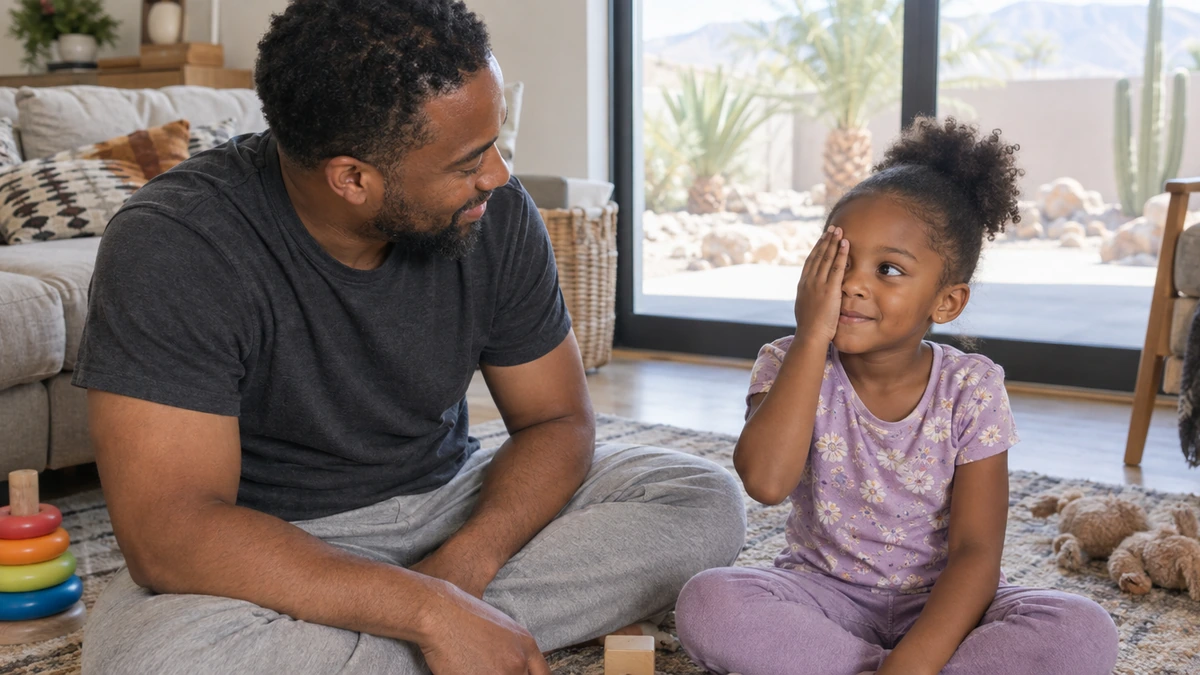
Lazy eye hides well. Squinting, tilting the head or covering one eye are signs to have checked, according to the American Optometric Association. An eye that turns in or out all the time needs an eye exam right away. You do not need to name the problem before seeking care.
Your observations help me understand the concern. A child covering an eye during a game is different from repeatedly doing it to see. Describe what happened, which eye was involved, and whether you noticed it during reading, play, or looking across the room. The useful detail is what you saw.
For broader concerns, use my checklist of signs your child needs glasses. Bring your observations to a pediatric eye exam, along with any screening result. I would rather you bring a small concern than wait for a dramatic sign.
A white or gray-white glow in the pupil, in person or in a flash photo, means your child sees an eye doctor right away, as AAPOS advises.
What Causes Lazy Eye in Children?
The cause shapes treatment. AAPOS describes refractive, strabismic, and deprivational amblyopia and warns of permanent vision loss without treatment. Unequal prescriptions and eye alignment problems affect the visual input reaching the developing brain. A blocked view creates a different problem requiring attention to the obstruction. Arrange your child’s assessment early, even when the eyes look normal.
| Cause | What It Means | What to Discuss at Your Visit |
|---|---|---|
| Refractive amblyopia | Blur during development, including when one eye needs a stronger prescription than the other. | The prescription in each eye and the glasses plan. |
| Strabismic amblyopia | Misaligned eyes interfere with normal vision development. | Both eye alignment and vision in each eye. |
| Deprivational amblyopia | A cataract, drooping lid, or corneal scar obstructs clear sight. | How the obstruction and developing vision will be addressed. |
The diagnosis tells you what needs treatment. Strabismus names the alignment problem. Amblyopia names the problem with developing vision. Your child needs an explanation of which is present and what each part of the treatment plan addresses.
Leave the visit knowing the cause. Request the diagnosis in plain language, alongside the medical term. For unequal prescriptions, have the difference explained using your child’s own results. For an obstruction, clarify the next assessment and who will provide it.
How Do Glasses Help With Amblyopia?
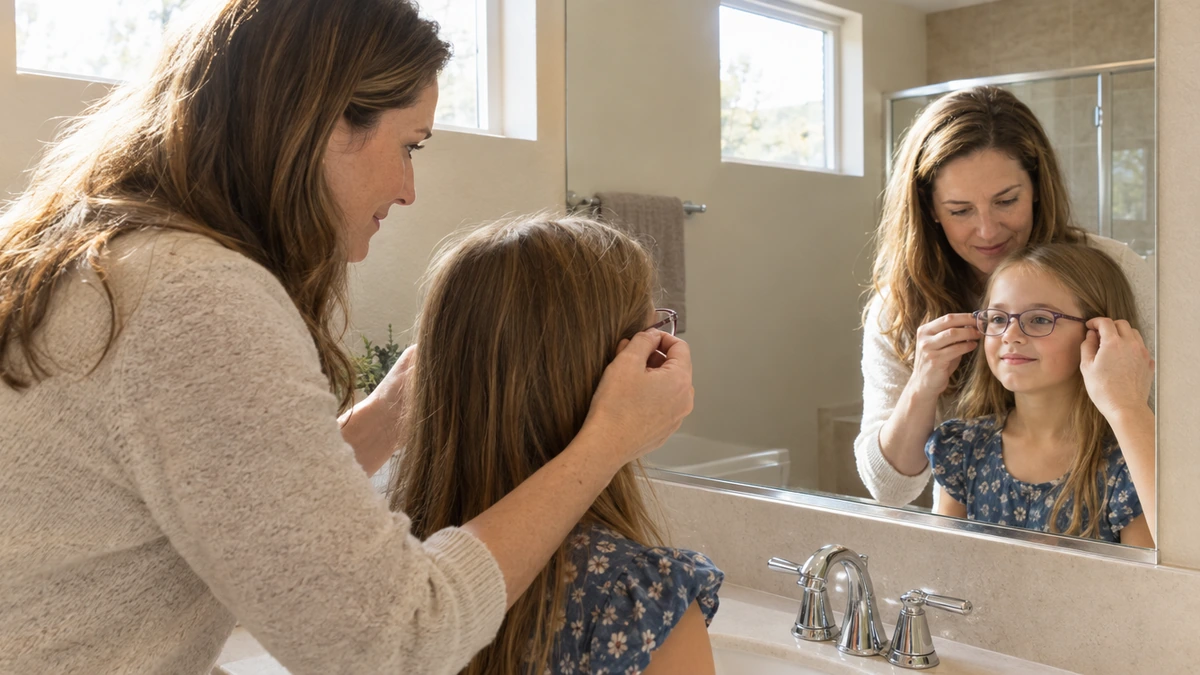
Glasses often lead the plan. In a PEDIG study of 84 children aged 3 to under 7 with untreated anisometropic amblyopia, glasses alone improved weaker-eye vision by at least 2 chart lines in 77%, with improvement taking up to 30 weeks. That study covered one type of lazy eye and had no untreated group, so read it as a signal, not a forecast for your child.
For many children, glasses alone are not enough, says AAPOS, and patching follows when your eye doctor prescribes it. The goal is better vision in the weaker eye. Your follow-up measurements show whether glasses alone are doing enough.
Give the glasses a place in your morning. In your Las Vegas kitchen, the cereal bowl, backpack and glasses case share the counter before school. Set the glasses beside the morning essentials so putting them on becomes part of getting ready. Share the prescribed wearing instructions with anyone helping your child start the day.
Report problems plainly. Explain whether your child removes the glasses during meals, complains about the frame, or repeatedly loses them between home and school. The glasses belong at the next visit, too. A specific account gives the conversation more value than saying the week went badly.
Watch the chart, not the calendar. The prescription is the lens. Visual acuity is how well your child’s eye sees, and that number tells you whether treatment is working. New glasses begin a plan whose progress needs review.
What Does Prescribed Patching Involve?
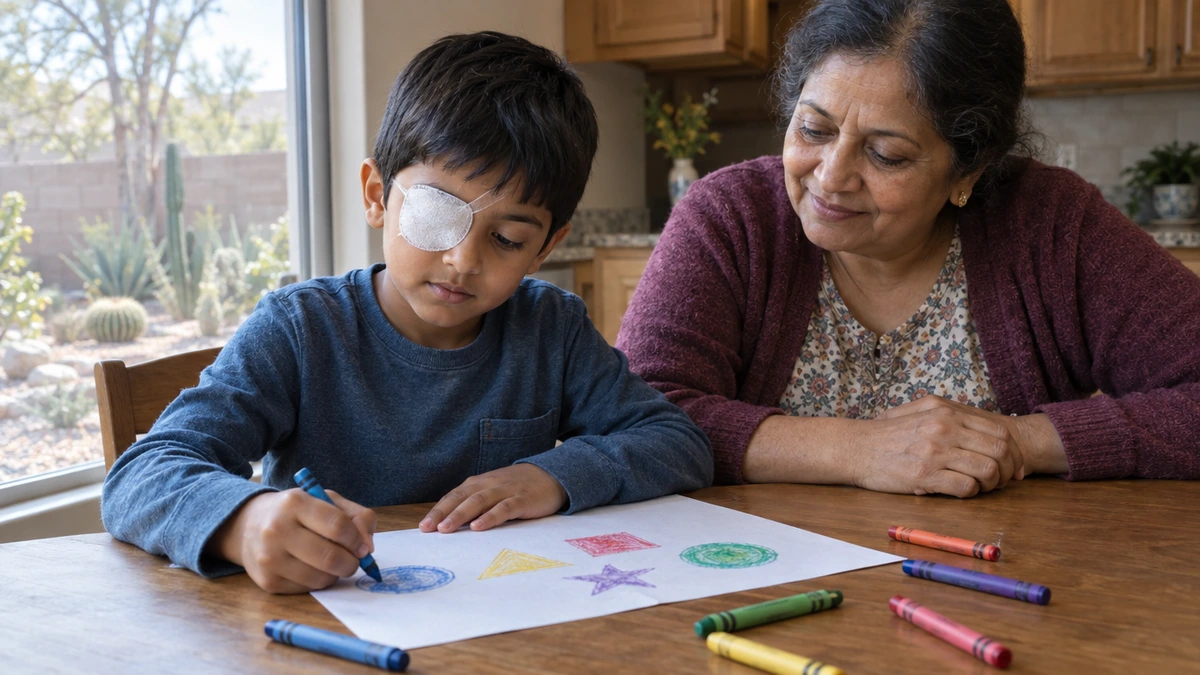
Patching covers the stronger eye to encourage use of the weaker eye. Your eye doctor prescribes which eye to cover, how long to patch, and when to review progress. Get those instructions in writing. Follow the prescribed schedule rather than borrowing another family’s routine.
More hours are not automatically better. A PEDIG randomized trial involving 189 children under 7 with moderate amblyopia found the same average improvement with 2 or 6 daily patching hours after 4 months, with at least 1 hour of near activities in both groups. This finding applies to the studied moderate cases. Your child’s prescription still governs the schedule.
A familiar activity gives patch time a place in your day. Choose a time with room for the prescribed session. Drawing, blocks, or shared reading give you activities to discuss when the patching plan is explained. Match the activity and its timing to the instructions you receive.
- Confirm which eye to patch and the prescribed daily duration before starting.
- Check how glasses fit into the patching instructions.
- Record completed sessions and any practical difficulties.
- Call your eye doctor about skin irritation or a child who keeps fighting the patch.
- Keep every follow-up visit. Only your eye doctor changes the patching hours.
A difficult afternoon deserves a useful conversation. Describe what your child found hard, how much of the session was completed, and what you tried. A short note about a difficult session gives you something concrete to discuss at follow-up. I value an honest treatment diary more than a perfect-looking one.
Why Do Screening Results and Follow-Up Both Matter?

Your next step needs to be clear. After a vision screening flags a concern, arrange a comprehensive eye exam and take the actual result with you. My guide to school screening and comprehensive eye exams explains the difference. At your visit, I check vision and eye health and explain the findings.
Follow-up puts the focus on each eye’s progress. Your current glasses, prescribed schedule and account of home treatment belong in that conversation. Request an explanation of each eye’s measured vision and whether the plan changes. Leave with the next review date written down.
Your afternoon is already full: Summerlin school pickup, dinner, homework. Fit the patch into what you already do, like the drawing table or the bedtime book. Share the treatment instructions with caregivers so everyone follows the same plan. When the routine breaks down, raise the difficulty before making your own changes.
How I Approach Your Child’s Exam at Vision by Amel
I am Dr. Amel Youssef, an optometrist and the founder of Vision by Amel. For your visit about possible amblyopia, bring prior prescriptions, screening results, and any existing treatment instructions. My evaluation includes binocular vision and eye disease screening, with digital refraction among our Visionix diagnostics. Your history gives those findings context.
My practice provides pediatric eye care at 2010 Festival Plaza Dr, Suite 195, Las Vegas, NV 89135. You will find us at Festival Plaza in Downtown Summerlin. No referral is needed for an eye exam. Book online or call with your child’s exam needs.
Your questions about children’s vision deserve time at the visit. Tell me what worries you most, whether it is the diagnosis, the prescription, or understanding an existing plan. My team verifies insurance benefits by phone before your visit. Have your plan information ready for that conversation.
Frequently Asked Questions About Lazy Eye in Children
Is My Child Too Old to Start Treatment?
Treatment works best when it starts young, and older children and teens can still improve, especially if they were never treated before. The American Academy of Ophthalmology advises offering treatment regardless of age when the visual system is structurally sound, with potential benefit in older children and adolescents, especially those previously untreated. Bring your child’s treatment history so the discussion reflects what has already been tried.
Will Lazy Eye Hurt My Child’s Grades?
The American Academy of Ophthalmology finds insufficient evidence that amblyopia in one eye harms school or career performance. Your child’s treatment addresses vision itself. Discuss school concerns on their own terms, without assuming lazy eye explains every difficulty in class.
How Many Hours a Day Will My Child Wear a Patch?
The National Eye Institute describes schedules ranging from 2 hours a day to all waking hours. Your eye doctor sets the patching time and adjusts it at follow-up visits. The PEDIG trial above compared schedules for moderate amblyopia, so its results are not a patching prescription for your child.
Can My Child Have Lazy Eye if Their Eyes Look Straight?
Yes, your child might have amblyopia even when the eyes look straight, as AAPOS explains. The National Eye Institute notes that many parents learn of the problem only at an eye exam. You do not need to spot an eye turn for the finding to deserve attention.
What Should I Say to My Child About the Diagnosis?
Keep your explanation calm and concrete. Describe the glasses or patch using the instructions you received, then invite questions about the daily routine. Choose words about practicing the routine together, and praise the effort your child puts into following it.
Book My Eye Exam Call (702) 858-4362
Like this article? Add Vision by Amel as a preferred source, and you are more likely to see our articles in Google’s Top Stories.

Leave a Reply