Category: Vision Care for Children

Vision care for children in Las Vegas and Summerlin: eye exams for kids, what school screenings miss, the signs a child needs glasses, screens and sun protection. Plain guidance from an optometrist for Las Vegas parents.

  • Sun Protection for Kids’ Eyes in Summerlin: UV, Sunglasses and Outdoor Play
    Sun Protection for Kids’ Eyes in Summerlin: UV, Sunglasses and Outdoor Play

    Sun Protection for Kids’ Eyes in Summerlin: UV, Sunglasses and Outdoor Play

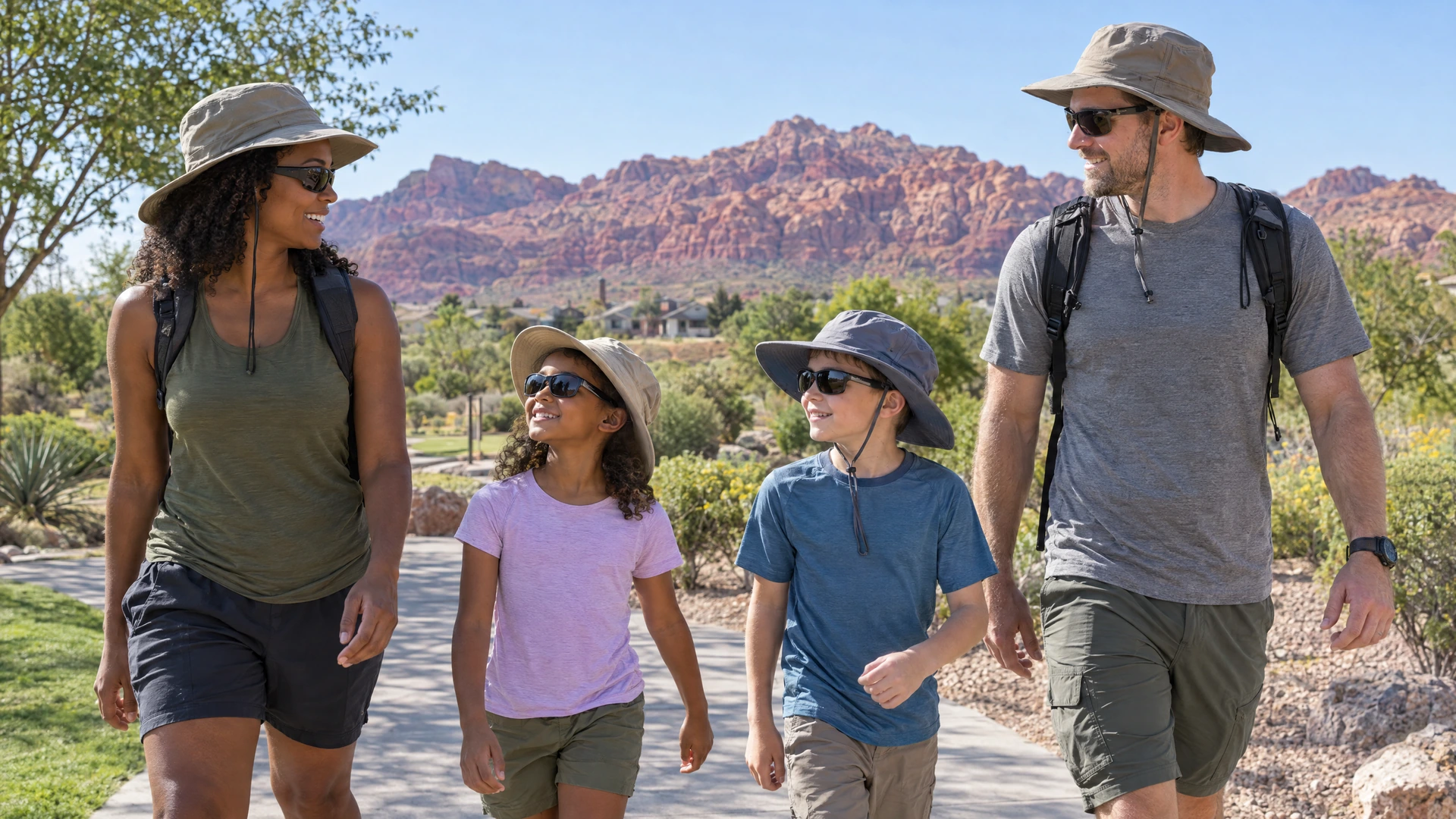
    Family in hats and sunglasses at a Summerlin park, UV protection for kids' eyes

    TLDR: Make UV protection for kids’ eyes part of your outdoor routine in Summerlin, with sunglasses, a broad-brimmed hat and planned shade. Check the lens protection label before choosing a frame. For sports, match eye protection to the activity.

    Answer: Sun protection for children in Las Vegas starts with sunglasses selected for UV protection, a hat and a plan for outdoor time. Your child’s everyday sunglasses and sports eye protection serve different purposes. Read the lens label, check the fit and choose equipment for the activity before heading to a park or Red Rock trail.

    Your child wants the playground. You want a morning outside without another argument over a hat. Put eye health on the packing list now, while the sunglasses are still within reach on the kitchen counter.

    I am Dr. Amel Youssef, an optometrist and the founder of Vision by Amel. I reviewed 73 primary sources across five research lenses for this guide, and the sources distinguish sun protection from sports eye protection. Bring your questions about outdoor eye care to an eye exam, along with the eyewear your child already uses, and explore our eye exam services.

    Why Does UV Protection for Kids’ Eyes Start Early?
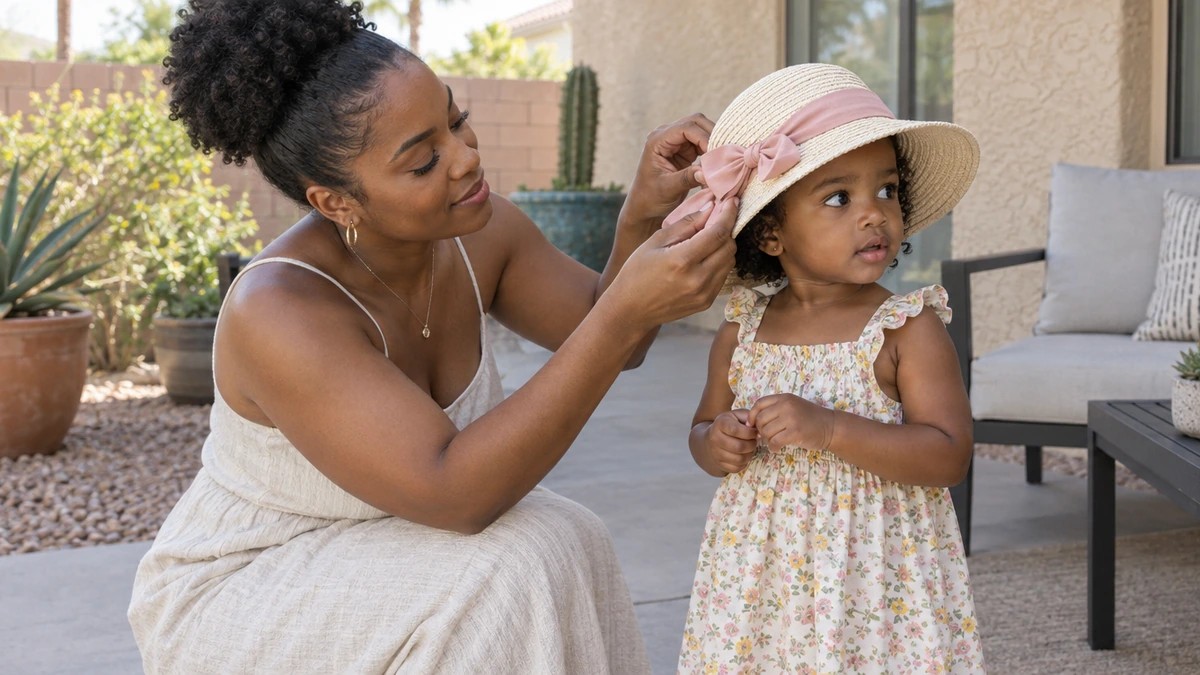
    Mother tying her toddler's sun hat on a patio, UV protection for kids' eyes
    A mother helps her toddler put on a wide-brim sun hat.

    Start protecting your child’s eyes now. The Environmental Protection Agency links UV radiation to a greater likelihood of certain cataracts. That supports reducing exposure from childhood, without predicting your child’s future risk. The hat and sunglasses belong in the toddler bag, right next to the sunscreen.

    Eye protection matters for today’s outing, too. The EPA UV Index guide describes painful corneal burns from excess UV, stronger UV at higher elevations and around reflective sand or water, and a seasonal peak from April through August followed by a fall decline and winter low. Make protection part of your usual departure routine, whether you are walking around the neighborhood or spending the morning near Red Rock. Start with the things you control: the gear, the timing and the shade.

    A hat your child wears beats perfect sunglasses left on the counter. That is my practical starting point for children’s vision care outdoors. Keep working toward a comfortable pair of sunglasses alongside the hat, and let your child choose a color after you check the protection details. Cooperation starts before the front door opens.

    How Does Las Vegas UV Change With the Seasons?

    Plan by the season. Then check the day’s UV forecast before you leave. Use the EPA guide’s seasonal pattern above to plan ahead, then use the daily forecast to choose the time. Your October soccer schedule deserves a fresh check, even when the air finally feels cool.

    SeasonMidday UV WindowYour Outdoor Plan
    SpringIn the continental US, the CDC identifies the strongest UV window as 10 am to 4 pm daylight saving time, or 9 am to 3 pm standard time.Check whether daylight saving time has begun before choosing your playground time. Check last season’s sunglasses and hats ahead of the EPA peak period described above.
    SummerChoose outings outside the daylight saving time window. Plan a shade stop before you leave for the park.
    FallCheck whether standard time has resumed before choosing an outing time. Revisit your soccer sideline plans after the clock change, even when the air feels cool.
    WinterPlan desert walks outside the standard time window when possible. Check the day’s forecast and take your hat and sunglasses.

    Use timing to reduce exposure. Early and late outings still get the hat and the sunglasses. Put them on your child before leaving for the playground. A quieter morning departure gives you room to check the fit before the slide wins everyone’s attention.

    Pack the plan before you pack the car. Decide where your family will pause and where the glasses case will ride. Put it within your reach, above the spare clothes and snacks. Check before departure, while you are still beside the car.

    What Eye Protection Does Your Child Need for Sports?
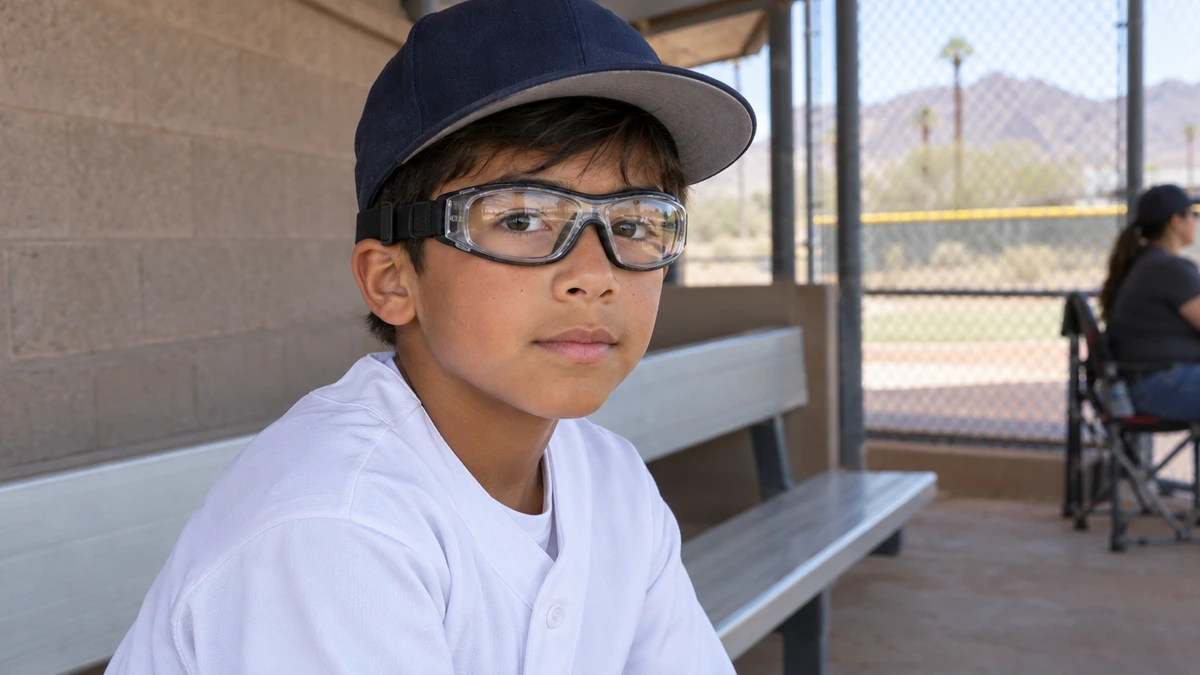
    Latino boy in baseball uniform wearing protective sports goggles before practice, sports eye protection for kids
    A young baseball player wears protective sports goggles before practice.

    Match the protector to the game. Prevent Blindness recommends sport-specific protectors with polycarbonate lenses meeting the current applicable ASTM standard, because ordinary prescription glasses and sunglasses provide inadequate sports protection. Tell me which sport your child plays so we discuss the right protection question. The supplier should show you the applicable standard for the product you are considering.

    Bring the helmet when you shop for the protector. Have your child wear the equipment together and point out anything that presses or shifts. Work through those fit problems with the seller before practice starts. A helmet change is a reason to check the combination again.

    Shop with three facts: the sport, the prescription, indoors or out. Give the seller your details before looking at frame colors. For outdoor play, get separate confirmation of the sports standard and the UV protection. A sporty shape answers neither question.

    Sunglasses are for the sun. Sports protectors are for the ball. Your child needs the right pair for each. For a child who already wears prescription glasses, bring the prescription information when shopping. My guide to signs your child needs glasses covers the everyday vision concerns to discuss with me.

    How Do You Choose UV Protection for Kids’ Eyes?
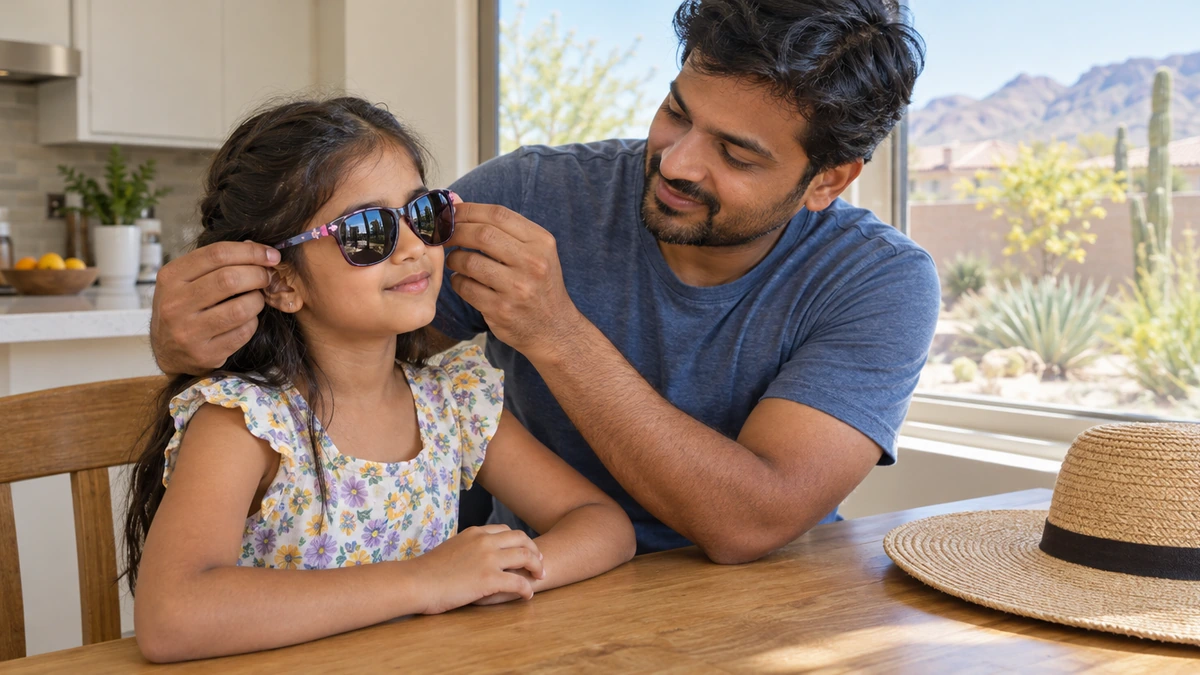
    Father helping his daughter try sunglasses at a kitchen table, UV protection for kids' eyes
    A father helps his daughter try on sunglasses at home.

    Read the label first. The US Food and Drug Administration says to choose UV400 or 100 percent UV protection on the label for protection against UVA and UVB, while warning that dark tint does not establish UV protection and toy sunglasses lack assured protection. Get the protection statement for the exact pair before your child falls in love with the frame.

    Make comfort part of the decision. Let your child look down and turn their head while you watch the frame. Listen for pinching behind the ears or pressure around the nose, then try the hat alongside the glasses. The mirror shows the color, but the try-on reveals what needs attention.

    1. Check the protection statement for the exact lenses. Save the product information with your purchase records.
    2. Try the frame on your child. Let them point to any pressure instead of settling for a quick nod.
    3. Add the hat. Watch whether the brim or hatband pushes the glasses out of position.
    4. Name the intended activity. A park walk and a baseball practice call for different equipment decisions.
    5. Check the full setup before leaving. Let your child show you how the hat and glasses sit together.

    Give your child a real choice. Set out the suitable options and let them pick a favorite. Then rehearse the departure at home, with shoes, hat and glasses together. Save the final decision until you have watched the whole setup in use.

    How Do You Prepare for Summerlin Parks and Red Rock?

    East Asian siblings hiking in hats and sunglasses with a parent, UV protection for kids' eyes
    Siblings wear hats and sunglasses on a Red Rock trail.

    The trail matters as much as the forecast. Use the EPA guide’s elevation and reflection guidance above when planning your stops. Build shade stops into your route before leaving home. Look at where you will rest as carefully as where you will walk.

    Get ready before the playground takes over. At a Summerlin park, put your child’s hat and sunglasses on before opening the car door for the dash to the swings. For Red Rock, check them alongside shoes and water at the trailhead. A familiar sequence makes the preparation clear.

    Pack for every activity on your itinerary. A family walk followed by sports practice needs the appropriate eyewear for each. Put your walking gear and sports equipment together for a final check before leaving home. Gear left in the garage protects no one.

    What to Bring Me About Your Child’s Outdoor Eyewear

    Bring me the pair your child wears outside. Add its lens information and the name of any sport they play, so our conversation starts with specifics. At your pediatric eye exam, describe what slips, what pinches and what you want to understand about the prescription.

    Start with the outing you have in mind. Describe the moment the glasses come off, whether your child removes them before the playground or leaves them behind before practice. Point to the part of the frame that bothers them instead of settling for a general complaint about comfort. Bring those details into our conversation about outdoor eyewear.

    Bring me your questions about a comprehensive eye exam and the glasses your child uses outdoors. For the visit itself, my first eye exam guide explains how to prepare. Use our Downtown Summerlin page to plan your visit.

    Frequently Asked Questions About Kids’ Sun Protection

    What If My Toddler Refuses to Wear Sunglasses?

    Start with the hat your child will keep on. The National Eye Institute identifies a hat as a practical option when sunglasses will not stay on. Treat it as a workable start while you keep trying sunglasses, rather than equal protection. Offer the glasses during a calm moment at home, before the excitement of the park.

    Are Polarized Sunglasses Better for My Child’s UV Protection?

    Read past the glare feature. The CDC travel guidance explains that polarization reduces glare but polarized or mirrored lenses provide no extra UV protection. Compare the UV protection statement separately when you shop, even when a product description leads with polarization.

    What If I Cannot Find My Child’s Lens Information?

    Contact the seller with your order details and ask for the lens material and UV protection statement. Request information for the exact lenses your child received, including any prescription replacement lenses. Keep that reply with the product records before deciding what to buy next.

    What Should I Ask Before Buying Sunglasses Online?

    Get the protection information for the exact frame and lens combination in your cart. Check the child sizing details and the seller’s process for handling a poor fit. Save the product description with your order, then compare it with the pair you receive.

    How High Is the UV Index in Las Vegas, and When Is It Worst?

    NOAA’s 2025 Las Vegas chart records 142 Very High or Extreme forecast days, peaks around 12 in June and July, and Low levels from roughly mid-November through January. These are city forecasts, separate from your child’s eye exposure. Use the seasonal pattern to choose an outing time, then check the day’s forecast before leaving.

    Book My Eye Exam Call (702) 858-4362

    Like this article? Add Vision by Amel as a preferred source, and you are more likely to see our articles in Google’s Top Stories.

    Add as a preferred source on Google

  • Your Child’s First Eye Exam in Summerlin: What to Expect

    Your Child’s First Eye Exam in Summerlin: What to Expect

    Your Child’s First Eye Exam in Summerlin: What to Expect

    Mother and son entering a boutique for a child's first eye exam

    TLDR: Your child’s first eye exam in Summerlin starts with your concerns and ends with a clear next step. Talk through the visit, pack previous screening results, and leave time to hear the findings. Vision by Amel offers weekend appointments at Festival Plaza.

    Answer: At your child’s first eye exam in Summerlin, I review health history, check vision and eye health, and explain the findings. A comprehensive eye exam includes how the eyes focus and work together. As your optometrist, I use those findings to explain whether glasses, further assessment, or a return visit belongs in the plan.

    First visits come with questions. What is that machine, and what will my child need to do? Between preschool pickup and a weekend soccer game, you want clear answers before adding another appointment. My eye examination services page explains how I examine your eyes, and this guide walks you through your child’s visit.

    I start with your concerns. You leave with a next step. Whether you are driving across Las Vegas or coming from a nearby Summerlin neighborhood, preparation starts with knowing what you want to understand about your child’s eye health. I believe good eye care leaves parents with a plan they know how to use.

    How Do You Prepare for Your Child’s First Eye Exam?

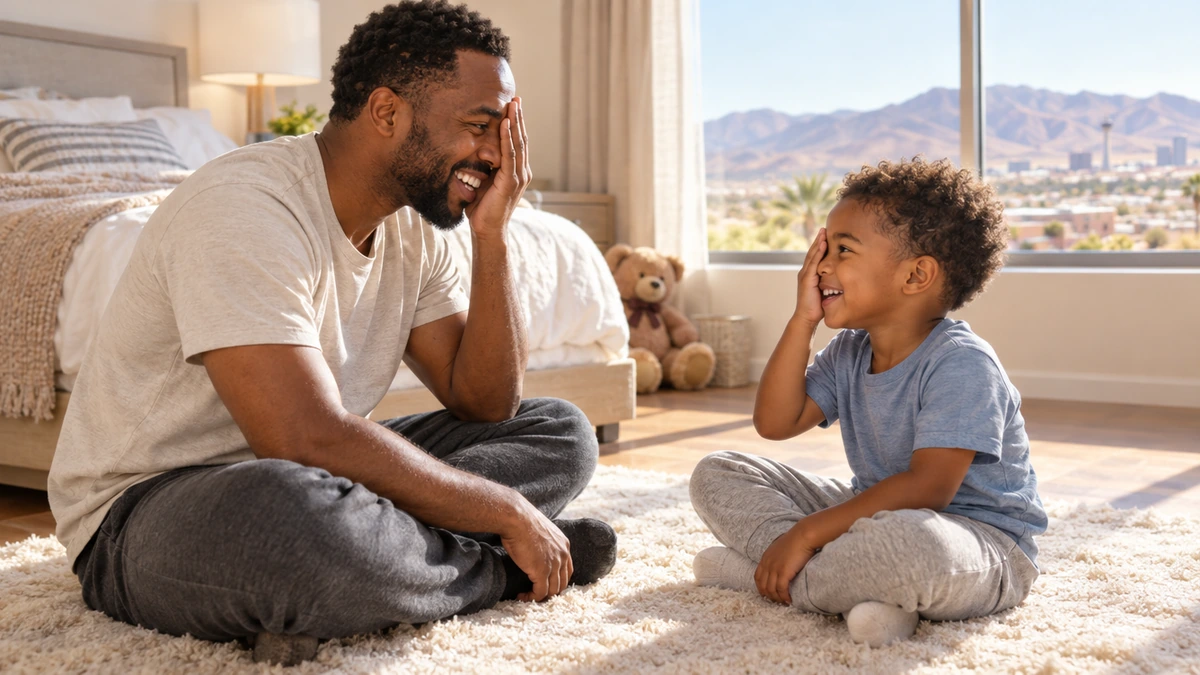
    A father and his young son cover one eye in a playful game to prepare for a child's first eye exam
    A father and son share a playful one-eye game at home.

    Keep the explanation small. Your child needs a sense of what comes next. I reviewed 73 primary sources across five research lenses for this guide, and the AOA recommends talking through the visit beforehand with your child.

    Start with a conversation at home. The AOA recommends talking about the examination beforehand, inviting your child’s questions, and allowing about an hour for a preschool exam. Sitting together on the bedroom rug gives you a simple place to begin. Say, “We are going to have your eyes checked, and you get to ask questions too.”

    Pack once, then stop rehearsing. Put the records and questions together before you head toward Festival Plaza. Use this list to prepare for your pediatric eye exam while leaving the testing to me.

    • Previous vision screening results, a referral note, and any earlier eye records.
    • Current prescription glasses, if your child already wears them.
    • Medicines, allergies, relevant health history, and known family eye conditions.
    • Your main concern, with a concrete example of when it happens.
    • A familiar comfort item and the questions you most want answered.

    Tell my team about your child’s communication preferences, sensory concerns, or worries about unfamiliar rooms. Be specific about the worry. A child nervous about a machine needs a different explanation from a child worried about giving a wrong answer. Help me understand the worry before your child walks in.

    When Should You Book Your Child’s First Eye Exam?

    You deserve to see the timing advice side by side. The experts split on routine children’s vision checks. The table separates the American Optometric Association’s examination schedule from the screening approach of the American Academy of Ophthalmology and the American Association for Pediatric Ophthalmology and Strabismus.

    ApproachPublished GuidanceWhat to Discuss
    AOA, infancyThe AOA infant guidance recommends a first thorough examination at about age 6 months, even without apparent problems.Your baby’s previous checks and health history.
    AOA, preschoolThe AOA preschool guidance recommends an in-person examination between ages 3 and 5, then another around school entry at age 5.What your child has already had checked.
    AOA, school yearsThe AOA school-age guidance recommends annual examinations for school-age children, with more frequent visits for problems or risk factors.Your child’s individual follow-up plan.
    AAO and AAPOS, screening firstThe AAO and AAPOS joint statement supports screening and referral after a failed screen, while finding no proven medical benefit from routine comprehensive examinations in otherwise normal children without symptoms.Your child’s screening results, symptoms, and risk factors.

    Start with the checks your child has already had. Let my team know whether you are arranging a routine first visit or following up on a concern. The pediatric eye exam guide covers timing, Medicaid, and school screenings to give you more context for that conversation.

    What Happens During the Exam, Step by Step?

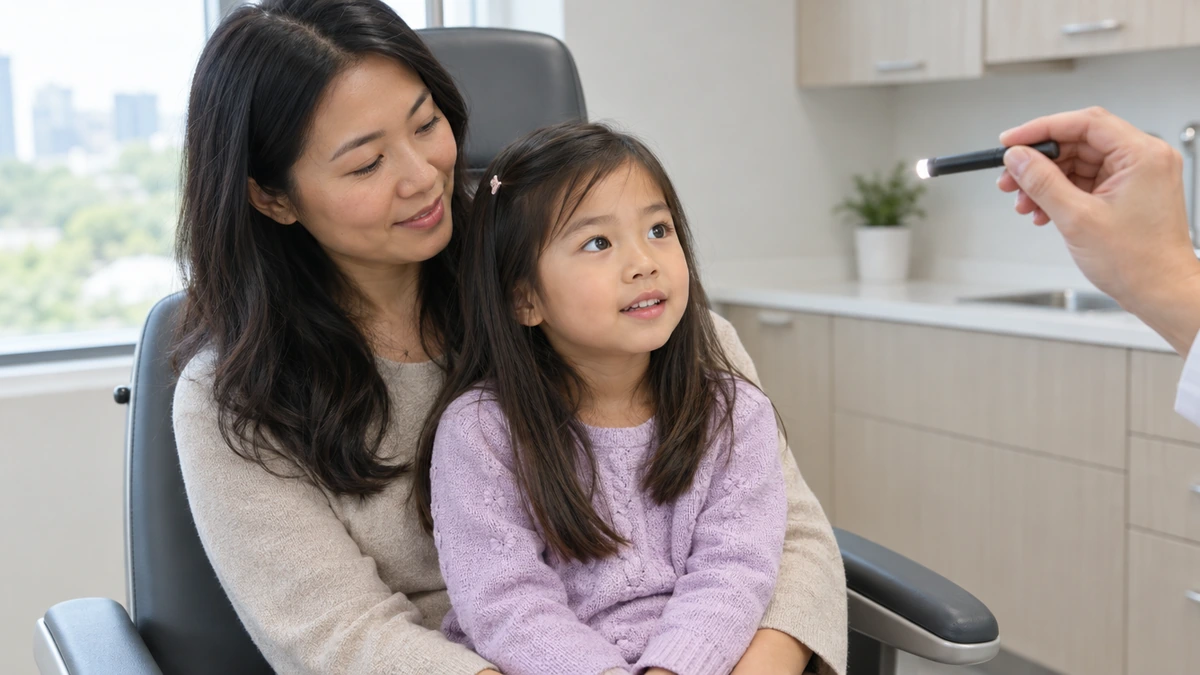
    Mother holding her daughter during a child's first eye exam
    A child sits on her mother's lap during an eye examination.

    Your child’s age shapes the examination. The AAO’s pediatric evaluation guidance describes history, vision and eye health checks, with techniques and order adapted to age, development, and cooperation. Here is the visit in five steps. The order bends to your child.

    1. Start with the history. Tell me why you booked and what you want answered. We review earlier results, medicines, and family eye history, including any known amblyopia or strabismus. Share the diagnosis as you received it.
    2. Check clarity of sight. Visual acuity describes how clearly your child sees. Let me explain the task, then give your child space to respond. You do not need to supply an answer when they hesitate.
    3. Look at teamwork. I check eye alignment and movement as part of evaluating how the eyes work together. Point out any instruction that seems unclear so I know what needs explaining.
    4. Assess focus and eye health. Refraction measures the need for a glasses prescription. I also evaluate the eyes themselves and explain the findings relevant to the concern you brought.
    5. Set the next step. We discuss what the findings mean, whether more assessment is needed, and what to do next. Before leaving, confirm how and when to follow the plan.

    You matter in that room. Share what helps your child communicate, then leave room for their response. Say so when they need a pause or do not understand an instruction. I value an honest “I don’t know” more than a coached answer.

    What Should You Do After the Visit?

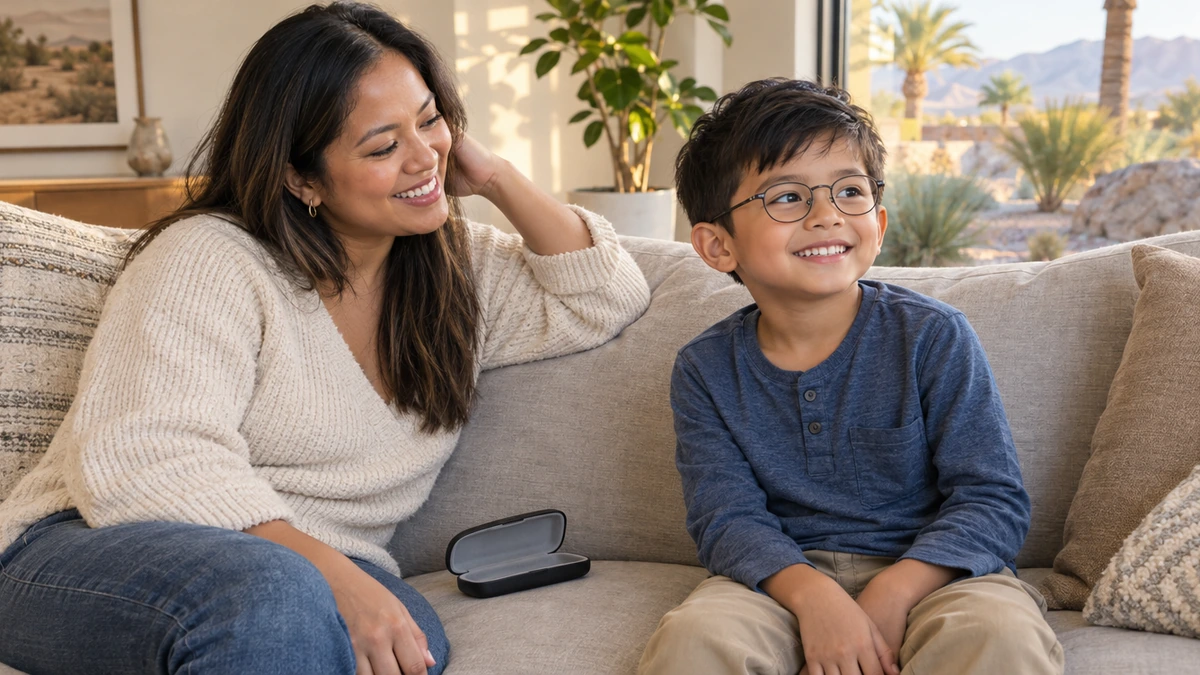
    A mother and her young son on the sofa at home as he wears his new glasses after his first eye exam
    Know when your child should wear new glasses before you leave the visit.

    Leave with a clear next step. You should know whether the plan involves glasses, further evaluation, or a return visit. Ask me to explain any unfamiliar term before you head back to the parking area. Skip the jargon. Leave with one clear next step.

    When glasses are prescribed, settle the wear instructions first. You need to know when your child should wear them and what follow-up I recommend. During frame selection, invite your child to describe what presses at the nose or behind the ears. Discuss lens choices, including polycarbonate lenses and UV protection, in relation to the prescription.

    Keep the plan within reach. Save your visit information with the records you brought, so the next appointment starts with the previous findings available. Before leaving, repeat the next step back to me and clear up anything you are unsure about. Leave knowing what happens next and who to contact with questions.

    How Do You Plan the Trip to Festival Plaza?

    Family walking toward their car after a child's first eye exam
    A family walks together toward their car at a sunny plaza.

    Plan the arrival before you leave home. Vision by Amel is at 2010 Festival Plaza Dr, Suite 195, Las Vegas, NV 89135, in Downtown Summerlin at Festival Plaza. My office sits minutes from The Vistas, The Paseos, Sun City and Red Rock Country Club. Use the Downtown Summerlin location page to plan your route, with time to park and walk to the suite.

    Weekend hours give you options beyond school pickup. My office opens seven days a week, Monday to Saturday from 9 am to 6 pm and Sunday from 11 am to 5 pm. Check available appointment times with my team when you book. Choose a time you can reach without rushing from the last stop.

    Leave space around your visit. Do not stack soccer practice right after. Give yourself time to hear the findings before packing everyone back into the car under the desert sun. Block the morning and keep it calm.

    How I Walk You Through a First Visit at Vision by Amel

    Your first visit starts with why you came. I am Dr. Amel Youssef, OD, the optometrist who founded Vision by Amel, and I guide you through your child’s eye examination. My team welcomes Summerlin families every week, and you do not need a referral to book an eye exam. Tell us your child’s age and your main concern when you call (702) 858-4362 or book online.

    You get an explanation alongside the equipment. The office uses Visionix digital diagnostics, from digital refraction and eye-pressure measurement with tonometry to retinal imaging and corneal mapping. My evaluation includes binocular vision, color vision testing where needed, and screening for eye disease. I perform a dilated eye exam only when I see a medical reason for one.

    The findings lead to your plan. We move from your child’s history through diagnostics and my evaluation to the next step. Prescription glasses are available from my gallery when they belong in that plan. Have me explain anything unclear about the prescription before you choose frames.

    Sort out benefits before the first visit. Before you arrive, my team uses your plan details to verify benefits by phone. Vision by Amel accepts Nevada Medicaid, VSP, EyeMed, Aetna, and other plans on our accepted list. Your individual plan determines the benefits, so have its details ready when you call.

    Frequently Asked Questions About Your Child’s First Eye Exam

    What Should I Say If My Child Is Afraid of Getting an Answer Wrong?

    Try saying, “You are here to show us what you see.” A blurry view is useful information to share, so let your child say when something looks unclear. Avoid praising a guessed answer as correct, and let me explain a task again when needed.

    Does My Child Need to Know Their Letters?

    No, the AOA preschool exam guidance confirms children do not need the alphabet or reading skills for an eye examination and recommends booking early in the day. Use that advice to plan your first visit. When you call, discuss an available time that fits your child’s usual routine.

    Can My 3-Year-Old Do an Eye Exam If They Won’t Sit Still?

    A restless child still deserves an assessment suited to their development. The AAO explains that cooperation helps determine the examination order. Tell me what is difficult for your child, then confirm which parts were completed and whether anything needs another visit.

    What If I Do Not Know Our Family’s Eye History?

    Share what you know and mark the gaps. A relative’s diagnosis is useful even when you do not know the treatment details. I will help you identify which missing information is worth gathering, rather than asking you to guess at a family condition.

    What Should I Ask When Booking a Visit for a Young Child?

    Give my team your child’s age and reason for coming, then confirm the appointment details. Check whether there are instructions to follow before arrival. Mention language or accessibility needs during the call, so you know what to expect before you set out.

    Book My Eye Exam Call (702) 858-4362

    Like this article? Add Vision by Amel as a preferred source, and you are more likely to see our articles in Google’s Top Stories.
    Add as a preferred source on Google

  • Screen Time and Your Child’s Eyes: Healthy Habits for Las Vegas Families

    Screen Time and Your Child’s Eyes: Healthy Habits for Las Vegas Families

    Screen Time and Your Child’s Eyes: Healthy Habits for Las Vegas Families

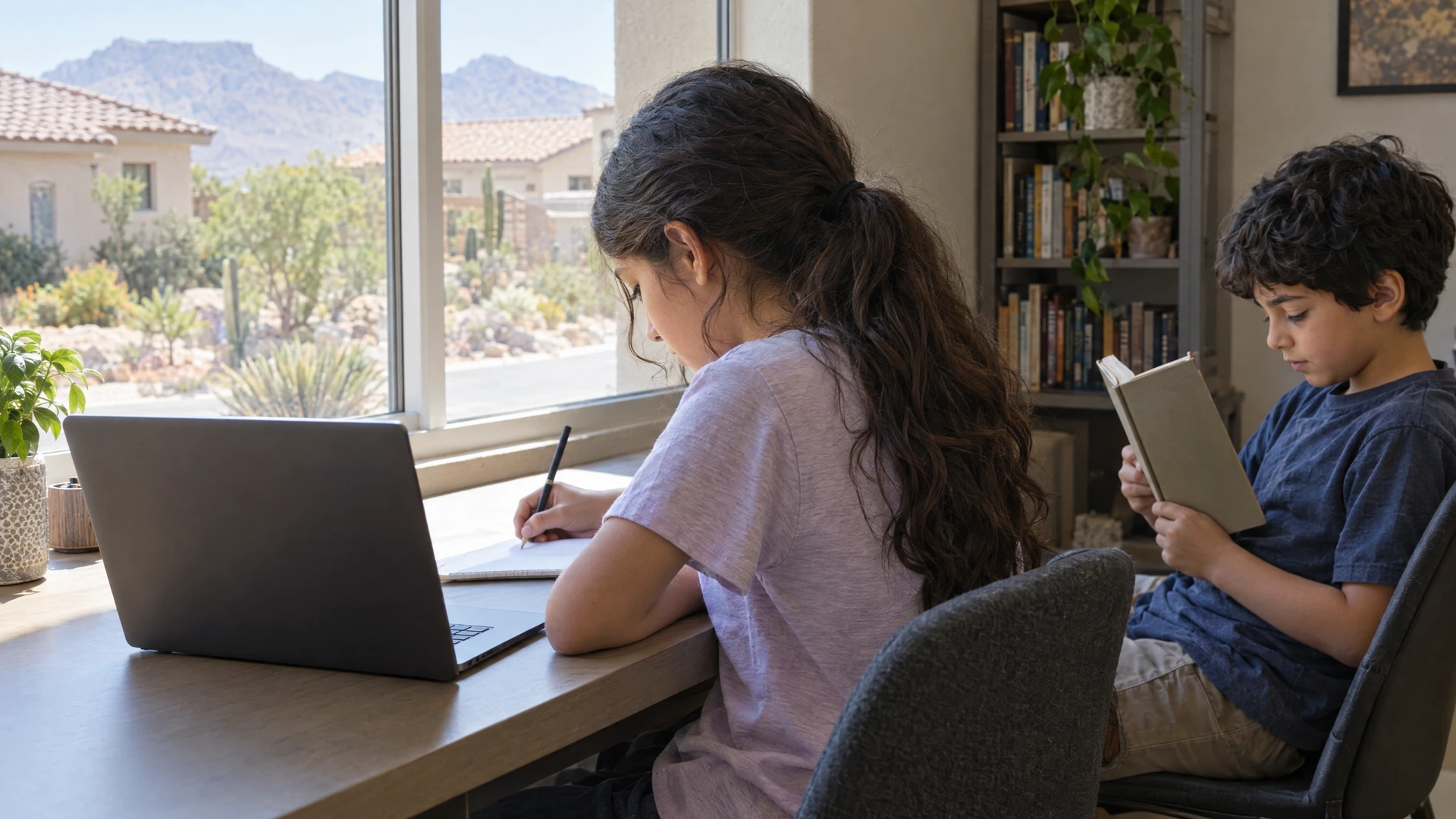
    Girl doing homework beside a window with her brother nearby, kids screen time eye strain

    TLDR: Here is the good news on kids screen time eye strain: the American Academy of Ophthalmology describes temporary discomfort without permanent eye damage. Start with regular breaks, blinking reminders and a comfortable homework setup. Book your eye exam when discomfort keeps returning.

    Answer: Healthy screen habits give your child a practical way to manage digital eye strain during homework in Las Vegas. Build in looking-away breaks, adjust the device position and remind them to blink. Recurring headaches or blur deserve a comprehensive eye exam, even after you improve the desk setup.

    Your child finishes an online assignment, rubs tired eyes and asks to stop reading. You still have dinner to make and a backpack to check. Start with the next homework session. I favor a routine your family repeats over a rule everyone forgets.

    I reviewed 73 primary sources across five research lenses for this guide, and regular breaks are a central recommendation for screen comfort. As an optometrist, I want you to leave with habits worth using tonight and a clear reason to book when discomfort returns. See how I approach your eye care on my eye exams page. Complaints that keep coming back earn an exam.

    What Does Screen Time Eye Strain Feel Like in Kids?

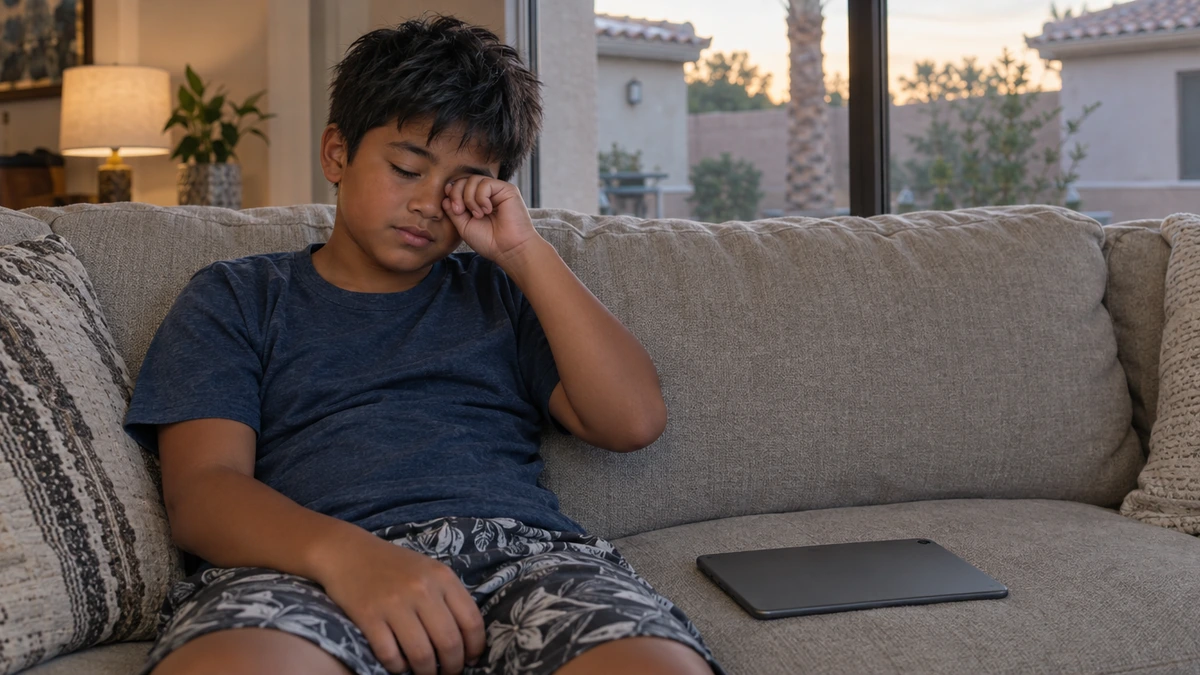
    Boy rubbing his eyes on a couch beside a face-down tablet, kids screen time eye strain
    A boy pauses on the couch with his tablet face-down beside him.

    Digital eye strain is the dry, itchy, blurry, headachy feeling your child gets after a long stretch on a screen. The assignment ends, but the discomfort interrupts the evening. Pause the task and find out what hurts. Give your child room to explain before suggesting an answer.

    Take the complaint seriously. Your child still has a book to read and a school bag to pack. Resist the urge to bargain for another page while their eyes feel uncomfortable. Stop, notice the circumstances and decide whether this is becoming a pattern.

    A blink reminder earns its place beside your break reminder. The AAO reports that people generally blink about 15 times a minute, falling to about 5 to 7 during screen use. Those are general figures. Try a calm cue during homework: “Pause, blink, look away.”

    Which Breaks Ease Kids’ Screen Time Eye Strain?

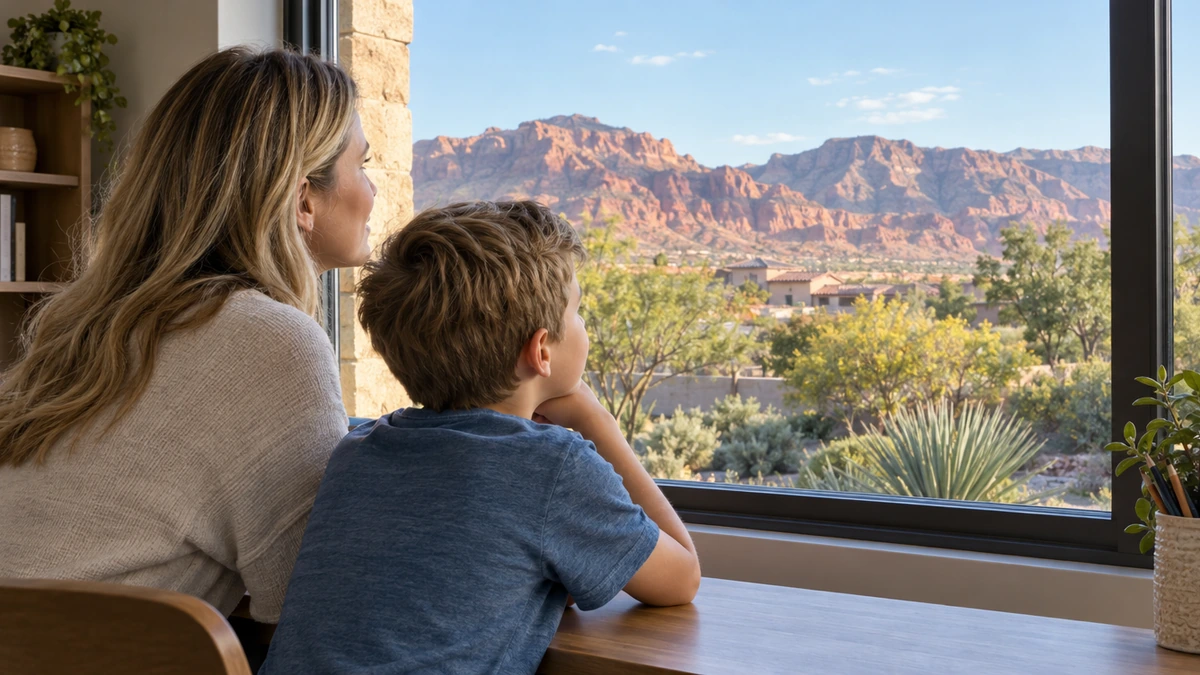
    Mother and son looking toward distant red rock mountains, kids screen time eye strain
    A mother and son share a looking-away break by the window.

    Give your child somewhere else to look. Choose a distant object before the laptop opens, such as the red rock ridgeline beyond your window. Use the 20-20-20 rule in the steps below. Set up the cue before homework gets absorbing.

    1. Choose the view together. Pick an object beyond the window and agree on where your child will look when the reminder sounds.
    2. Follow AAPOS: set a timer for every 20 minutes, then have your child look at something 20 feet away for 20 seconds.
    3. Pause the assignment when the reminder sounds. Look toward the chosen object together until the timed pause ends.
    4. Before returning, check whether your child feels comfortable. Include a blink reminder, then pick up the assignment where you stopped.

    Join the pause when you are nearby. Put your own phone down and turn toward the window with your child. Looking at another device keeps the close-up task going. Make the distance break part of homework from the start.

    Make the cue easy to follow. A complicated reward chart adds another task to your evening. Let the cue do the reminding. Choose a cue you are willing to use when dinner is late and the backpack is still empty.

    How Should You Set Up the Homework Space?

    Start with distance, then tackle glare. For your child’s desk, AAO homework guidance recommends an arm’s-length viewing distance, a slight downward angle and adjustments for glare, brightness and contrast. Sit beside your child before moving anything. The reflection you miss while standing is easier to spot from the chair.

    Check the desk during actual homework. Your child should show you the position they settle into once they start reading, including the tablet creeping toward the edge of the table. Use the checks below to make a deliberate adjustment. Then let them show you whether the words feel comfortable to view.

    What You NoticeWhat to AdjustWhat to Ask Your Child
    The device sits close to the faceAbout an arm’s length, at or a little below eye levelAre the words comfortable to read here?
    A window reflects across the displayReposition the desk or adjust the shadeIs the reflection still across your work?
    Your child bends over a tablet on the couchMove the assignment to an upright seated setupDoes this position feel comfortable?
    The display looks harsh or dimAdjust brightness and contrast for the roomWhich setting feels easier to view?
    Discomfort returns after adjustmentsDescribe the recurring symptoms at an examWhat still bothers your eyes?

    Watch the light change in your Summerlin home. A window beside the homework desk offers a distant view, yet its reflection still needs checking. Look again when afternoon homework stretches into an evening under the kitchen lights. Let your child help restore the setup after someone else uses the desk.

    How Do You Make Room for Longer Breaks?

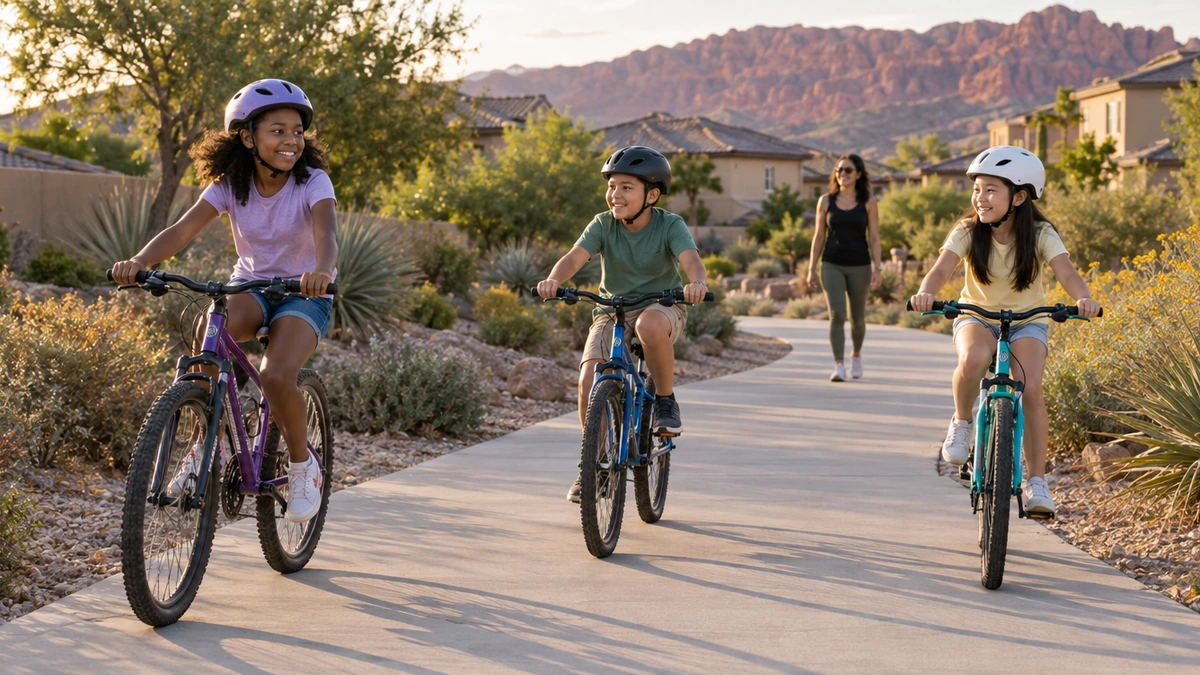
    Three children riding bikes on a Summerlin path in late afternoon light, kids screen time eye strain
    Children ride bicycles along a Summerlin neighborhood path.

    Build a proper step away into your homework plan. The American Academy of Pediatrics recommends that children leave the screen for at least 10 minutes every hour, alongside brief looking-away breaks. Pick the activity before the assignment starts. The rule is simple: the screen stays behind.

    July at 4 pm? Keep your child’s break indoors. A snack at the kitchen counter counts. On a cooler afternoon, a walk together or a bike ride along a Summerlin neighborhood path gives the pause a different setting.

    Make returning straightforward, too. Mark the stopping point in your child’s assignment. Put the device down without filling the pause with another video. The break ends and the assignment picks up right there.

    When Does Recurring Strain Need an Eye Exam?

    Book when the same discomfort keeps interrupting your child’s homework. In its general computer-vision guidance, the AOA notes that uncorrected vision problems can make digital eye strain worse. Tell me when desk changes and breaks have left the complaint unresolved. I take recurring discomfort seriously, even when homework still gets finished.

    Bring the pattern into focus. Describe which task brings on your child’s discomfort, which device they use and whether printed reading brings the same complaint. Include whether the discomfort settles after stopping or stays with them. Those details tell me more than a screen-time total.

    You do not need to solve the cause before booking a pediatric eye exam. Your job is to notice the pattern and describe it. My checklist of signs a child needs glasses covers observations beyond device use. We will put those concerns about children’s vision alongside the exam findings before deciding whether prescription glasses belong in the plan.

    How I Investigate Recurring Screen Strain at Vision by Amel

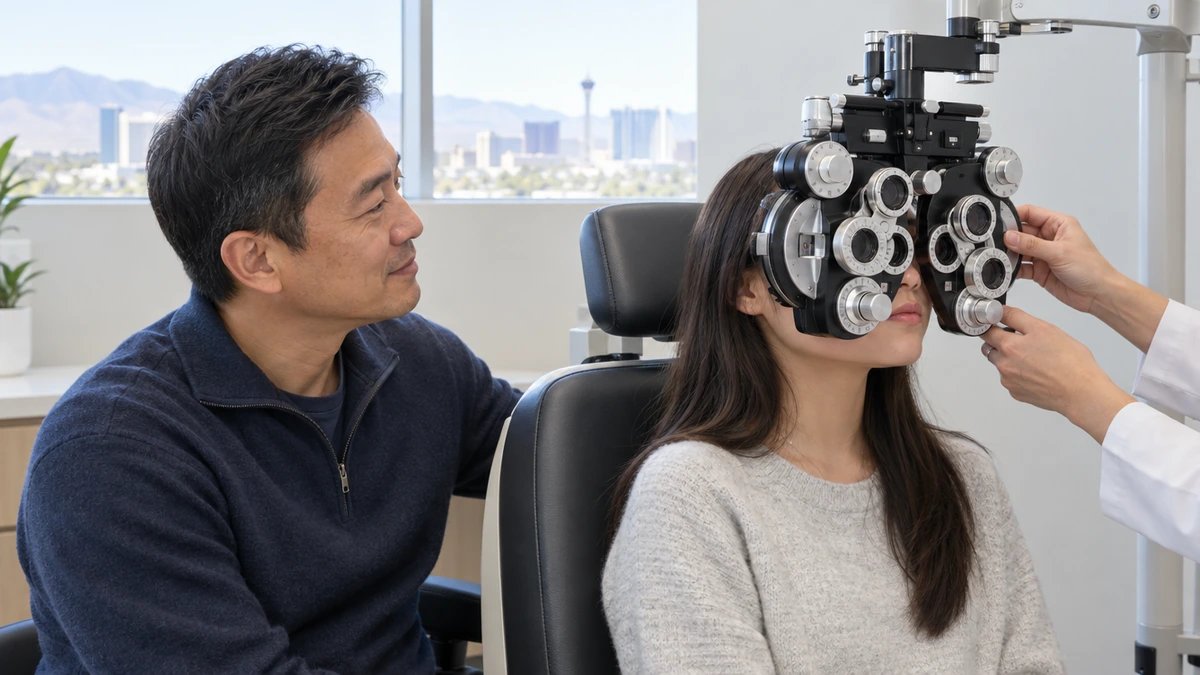
    Teen girl with her father during a phoropter adjustment, kids screen time eye strain
    A father stays beside his daughter during an eye examination.

    Bring your concerns about your child’s eye health into the conversation. I take that history and use Visionix digital refraction to measure the prescription. Start with the task that keeps bringing the complaint back, then describe what changed after breaks or desk adjustments. Keep the focus on what your child experiences while doing the work.

    Leave room to discuss what the findings mean for homework. Tell me which change you want explained before you leave, whether it concerns the viewing setup or prescription glasses. The exam findings guide that conversation. My aim is a plan you understand well enough to use at the desk that evening.

    Plan your trip with my Downtown Summerlin page. Choose an appointment that fits around homework and school pickup. For broader timing and screening questions, see my pediatric eye exam guide.

    Frequently Asked Questions About Kids and Screen Time

    Should I Buy Blue Light Glasses for My Child?

    The AAO does not recommend blue light glasses for computer use and cautions against screen use close to bedtime because of its effect on sleep quality. Give your evening device routine a place in the conversation. Start by deciding where the devices go when homework ends and bedtime approaches.

    My Child Passed the School Vision Screening. Should I Still Mention Screen Discomfort?

    Yes, tell me about your child’s current discomfort. My guide to school screening explains what a pass covers.

    What If My Child Forgets Every Looking-Away Break?

    Make the reminder visible to you, too. Start the cue while your child learns the routine, then invite them to take the lead. Rehearse the pause before opening the assignment so everyone knows what the reminder means.

    What Should I Tell the Teacher About Headaches During Homework?

    Describe the task your child was doing when the headache started and whether stopping helped. Find out whether similar complaints happen during class and where a looking-away break fits into a live lesson. A specific question about the assignment gives the teacher something practical to answer.

    What Is the 20-20-20 Rule for Kids?

    Every 20 minutes, your child looks at something 20 feet away for 20 seconds. Use a view through the window when your hallway is too short for 20 feet. Choose the object before homework starts so your child knows where to look. Alongside those brief pauses, the American Academy of Pediatrics recommends leaving the screen for at least 10 minutes every hour.

    Book My Eye Exam Call (702) 858-4362

    Like this article? Add Vision by Amel as a preferred source, and you are more likely to see our articles in Google’s Top Stories.
    Add as a preferred source on Google

  • Signs Your Child Needs Glasses: A Las Vegas Parent’s Checklist

    Signs Your Child Needs Glasses: A Las Vegas Parent’s Checklist

    Signs Your Child Needs Glasses: A Las Vegas Parent’s Checklist

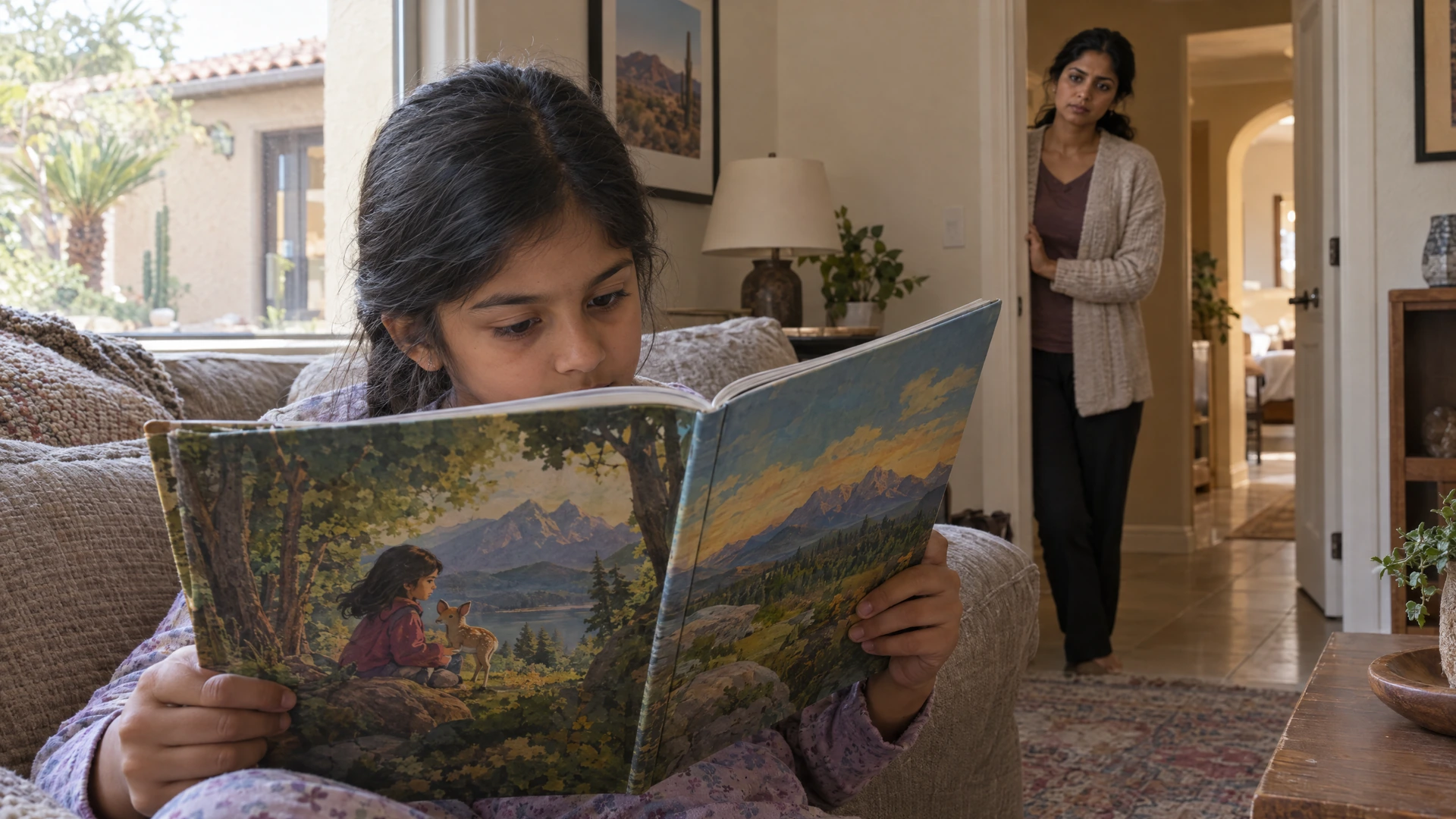
    South Asian girl holding a picture book close as her mother watches from a doorway, signs your child needs glasses

    TLDR: Common signs your child needs glasses include squinting, holding books close, tilting the head and avoiding reading. Book an eye exam to find out what those habits mean for your child. Start with the behavior you notice, then let the findings guide the prescription.

    Answer: For parents in Las Vegas, repeated squinting, eye rubbing, headaches during schoolwork, covering an eye and losing place while reading are reasons to arrange a comprehensive eye exam. As your child’s optometrist, I check the cause before recommending glasses. An eye turning inward or outward also needs attention, even when your child reports clear vision.

    Your second grader squints at the whiteboard. Back home in Summerlin, a picture book comes close enough to hide their face. When these habits interrupt the school day or bedtime reading, move children’s vision up your list.

    I reviewed 73 primary sources across five research lenses for this guide, and a child with a vision problem does not always report difficulty seeing. Your notes hand me a head start before the exam even begins. My eye exams in Downtown Summerlin start with patient history, so tell me what caught your attention.

    What Are the Signs Your Child Needs Glasses at Different Ages?

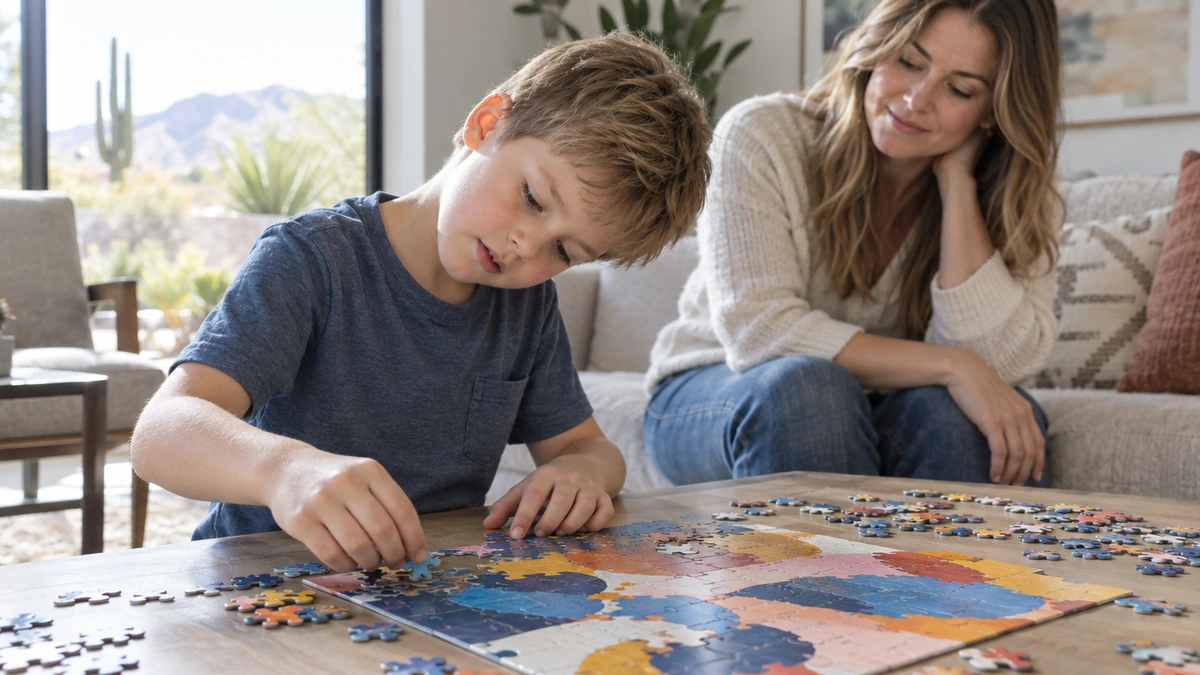
    White boy tilting his head while fitting a puzzle piece, signs your child needs glasses
    Include head tilting in your observation notes.

    Watch the everyday moments. The American Optometric Association lists close viewing, squinting, head tilting and avoiding puzzles among preschool warning signs, and notes amblyopia sometimes develops without noticeable signs. Your child’s puzzle abandoned on the coffee table deserves a closer look before anyone calls it laziness.

    StageWhat You Might NoticeDetails Worth Sharing
    Preschool playA book held close, a tilted head, covering an eye or avoiding coloring and puzzlesThe activity, head position and whether the behavior repeats
    Early elementary schoolSquinting toward the board, rubbing eyes during homework or losing place while readingWhether the trouble happens looking across the room or down at a page
    Older school childrenHeadaches with schoolwork, reading avoidance, visual fatigue or reports of double visionWhich tasks bring on the discomfort and what makes the child stop

    Use this table as your watch list. It tells you what to look for. The exam tells you what it means.

    Notice the pattern without staging a test. During an ordinary evening at home, does your child pull the book closer, cover an eye or leave the puzzle unfinished? Describe the moment as it happened, including whether you have seen it before. There is no need to repeat an uncomfortable task for proof.

    I treat a repeated squint as a reason to investigate. The prescription comes from the exam. You have already done something useful by noticing the change and arranging a visit.

    Which Signs Your Child Needs Glasses Show Up in Class?

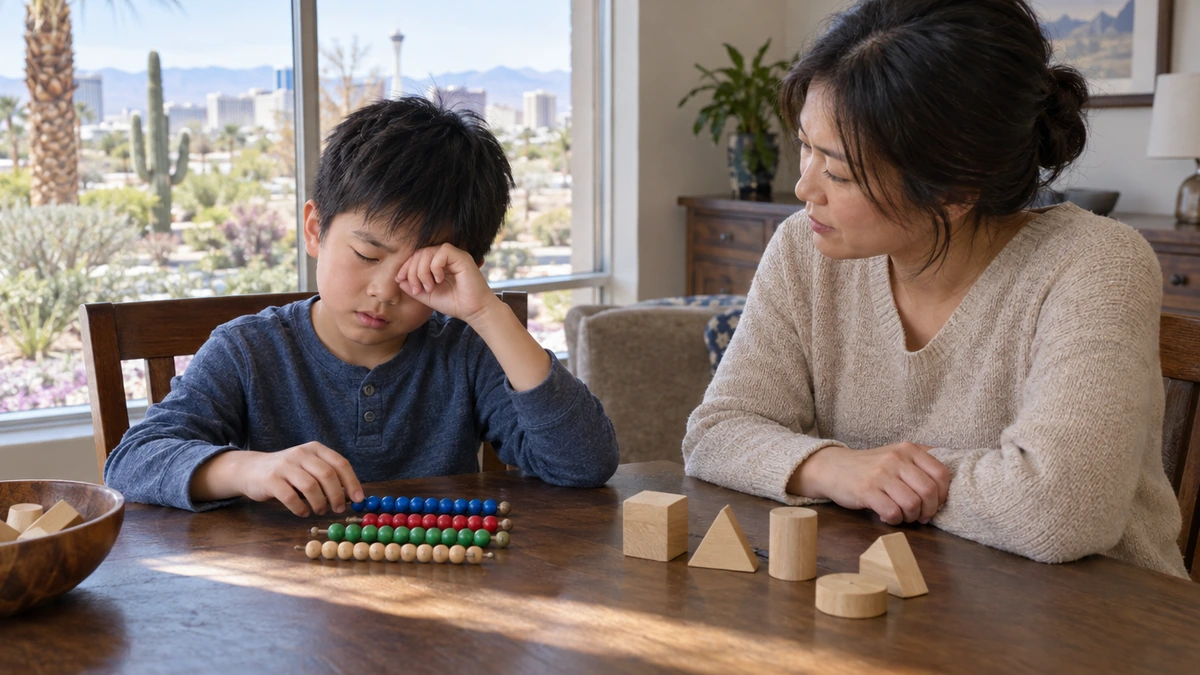
    East Asian boy rubbing one eye during homework by a window, signs your child needs glasses
    Describe when eye rubbing interrupts homework.

    Look beyond the report card. The AOA school-age guidance includes headaches, eye rubbing, reading avoidance, double vision and losing place, and explains children sometimes assume everyone sees as they do. Your child’s silence proves nothing. Watch what they do, not what they say.

    Compare the whiteboard with the homework page. Trouble copying from across the classroom and rubbing eyes over a book are different details for me to hear. Bring the teacher’s words and your own. Leave the diagnosis to the exam.

    Does Reading Trouble Mean a Learning Disability?

    Treat reading trouble and vision as two separate questions. Chase both answers. The AAP, AAO, AAPOS and AACO joint statement explains vision problems sometimes interfere with learning but do not cause dyslexia or other learning disabilities. Your child’s eye findings and educational assessment serve different purposes.

    Keep educational support moving while you arrange the visit. Describe whether your child struggles to see the page, recognize words or understand a passage. Glasses help your child see the page. Reading support helps them read it. Chase both.

    What Do an Eye Turn or Other Red Flags Mean?

    Report an eye turn when you arrange care. An eye turning inward or outward is called strabismus, while amblyopia, often called lazy eye, involves reduced vision developing in childhood. The National Eye Institute emphasizes starting amblyopia treatment early. Give your child’s eye alignment attention even when seeing seems easy to them.

    Tell me when the turn appears. You might notice it during reading, while your child looks across the living room or during several different activities. I check binocular vision as part of my evaluation and explain the findings alongside the rest of the exam. Your job is to describe what you see.

    A White Pupil Needs Immediate Attention

    A white pupil or white pupil reflection in your child’s photograph needs action right away because AAPOS warns it sometimes signals serious disease. Call your child’s eye doctor or pediatrician today and say the words “white pupil” to arrange an immediate eye assessment. Do not wait for a routine appointment. Skip further photo checks and seek care now.

    How Do You Help Your Child Wear New Glasses?

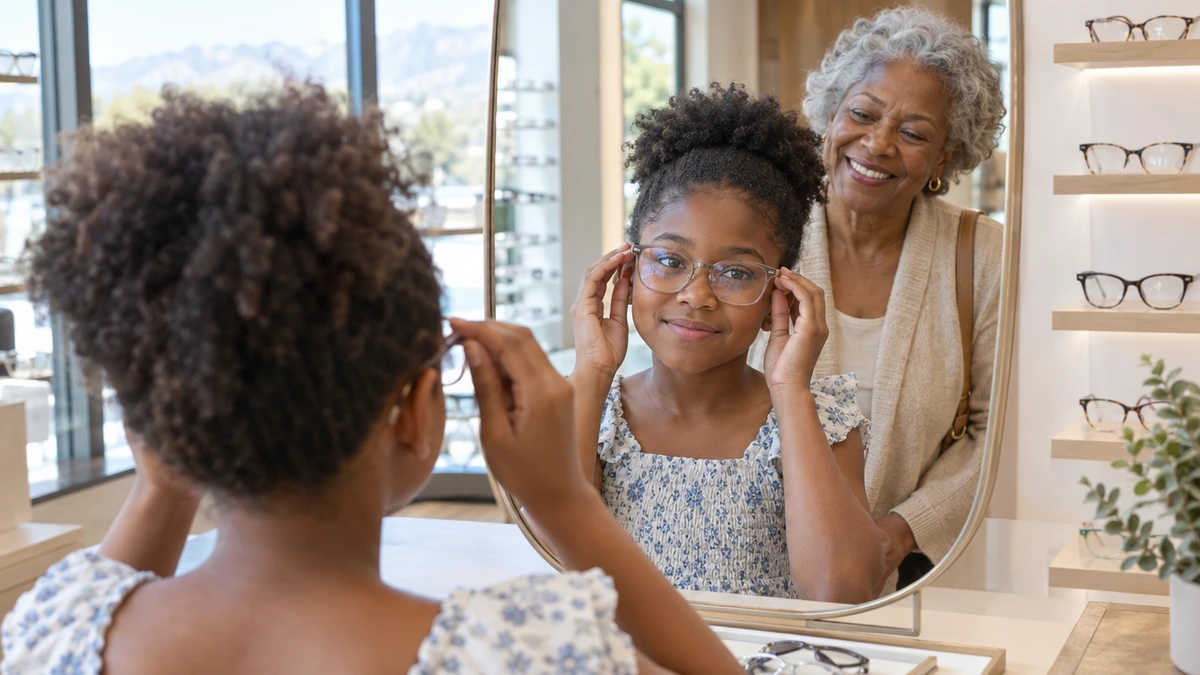
    Black girl trying on glasses in a mirror with her grandmother, signs your child needs glasses
    Ask your child how the new frames feel.

    Fit first, color second. Ask your child what presses, slips or pinches before anyone mentions purple frames. For everyday glasses, AAPOS fitting guidance recommends polycarbonate lenses and frames with eyes centered in the lenses, clear of cheeks and eyelashes. Have whoever fits the glasses show you those checks on your child’s face.

    Give adjustment time and a clear follow-up point: AAPOS says most children adjust within two weeks, and a prescription recheck may be needed when resistance continues after a few weeks. Some children need longer. Call my team to review the fit and prescription when your child keeps fighting the glasses. Pain or a pinching frame deserves a call sooner.

    I put comfort ahead of coaxing. A complaint about the frame deserves attention before another reminder to wear it. You learn more by finding the spot behind the ear that pinches than by debating whether the glasses look nice.

    1. Start with the fit. Have whoever fits the glasses adjust slipping frames or pressure points before you settle on a pair.
    2. Give your child a choice among suitable frames, then confirm the impact-resistant lens recommendation.
    3. Get the prescribed wear schedule from me so you know when the glasses belong on.
    4. Choose a regular place for the case when the glasses come off, away from the rush of backpacks and shoes.
    5. Encourage wearing the glasses and report persistent resistance so I know the plan needs another look.

    Make the morning routine practical. Before the Las Vegas school run, backpacks loaded and breakfast unfinished, check where the glasses belong under the prescribed schedule. Give your child a calm reminder and time to describe discomfort. A rushed departure is a poor moment to settle a fit problem.

    Make the next conversation specific. Tell me whether your child pushes the frames up, points to a sore spot or takes them off during a particular activity. Mention what happens with the glasses on as well as off. Those details help us address the complaint without turning every removal into an argument.

    Are Everyday Glasses Enough for Sports?

    Latino father and son kicking a soccer ball, boy wearing sports glasses, signs your child needs glasses
    Ask about protection matched to your child's sport.

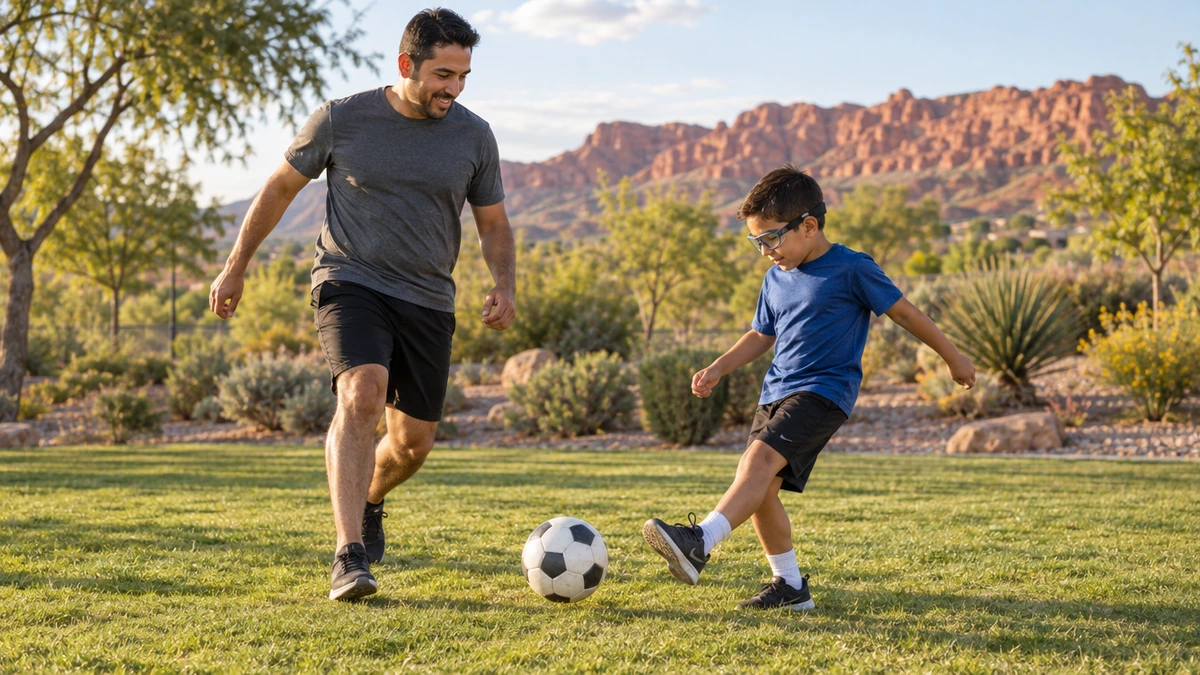
    Everyday glasses are not soccer gear. Before your child’s next practice at a Summerlin park, follow Prevent Blindness guidance to choose sport-specific protective eyewear with polycarbonate lenses meeting the applicable ASTM standard. Bring the sport and the prescription when you shop for the protector.

    What Should You Do Before the Appointment?

    Give me the reason for your visit. A brief account of the squinting, reading trouble or frame discomfort gets us started. For a school referral, my guide to school screening and comprehensive exams explains what the screening result means and how to follow through.

    What I Check When You Report Squinting at Vision by Amel

    When you report squinting, I measure refraction, check whether both eyes team up and assess your child’s eye health in the same visit. Bring the concern back into the conversation as we discuss the findings. Keep asking until you understand what they mean for the moment that worried you.

    Use your pediatric eye exam to get the next step clear. Does the plan call for glasses, and when should your child wear them? Before you leave, confirm which changes to report and when to follow up.

    Make room for eye care in your school-week plans in Downtown Summerlin. Choose a visit you will be able to attend without rushing through the conversation. Keep your main concern in view from the first question to the last.

    Frequently Asked Questions About Signs Your Child Needs Glasses

    Will Glasses Make My Child’s Eyes Weaker?

    No, AAPOS explains glasses do not weaken your child’s eyesight or create dependence. Going without prescribed glasses sometimes harms normal vision development. I will explain the purpose of your child’s prescription so you understand why the wear schedule matters.

    What Should I Ask If My Child Already Has Glasses?

    Tell me whether your child’s symptoms happen with the current pair on, off or both. Use the pair worn at school for the discussion, including any bent or damaged frame. We will review the fit and prescription alongside the symptoms instead of assuming every complaint means stronger lenses.

    How Do I Get My Toddler to Keep Their Glasses On?

    Keep encouragement positive and check comfort first. AAPOS suggests books about children wearing glasses and family members modeling comfortable wear to help your toddler accept them. When slipping gets in the way, discuss a retaining strap or silicone temple tips with whoever fits your child’s glasses.

    Do I Need a Referral, and Does Vision by Amel Accept Nevada Medicaid?

    You do not need a referral for an eye exam at Vision by Amel, and we accept Nevada Medicaid. Give my team your plan details when you book online or call. We will help you check which benefits apply to the exam and any prescribed eyewear.

    What Should I Tell a Grandparent Who Helps With Glasses?

    Share your child’s prescribed wear schedule and the office contact information. Explain which concerns I want to hear about, including uncomfortable frames or continued resistance. Have the grandparent pass those concerns to you so we address them together before anyone changes the schedule.

    Book My Eye Exam Call (702) 858-4362

    Like this article? Add Vision by Amel as a preferred source, and you are more likely to see our articles in Google’s Top Stories.
    Add as a preferred source on Google

  • School Vision Screening vs a Comprehensive Eye Exam in Las Vegas

    School Vision Screening vs a Comprehensive Eye Exam in Las Vegas

    School Vision Screening vs a Comprehensive Eye Exam in Las Vegas

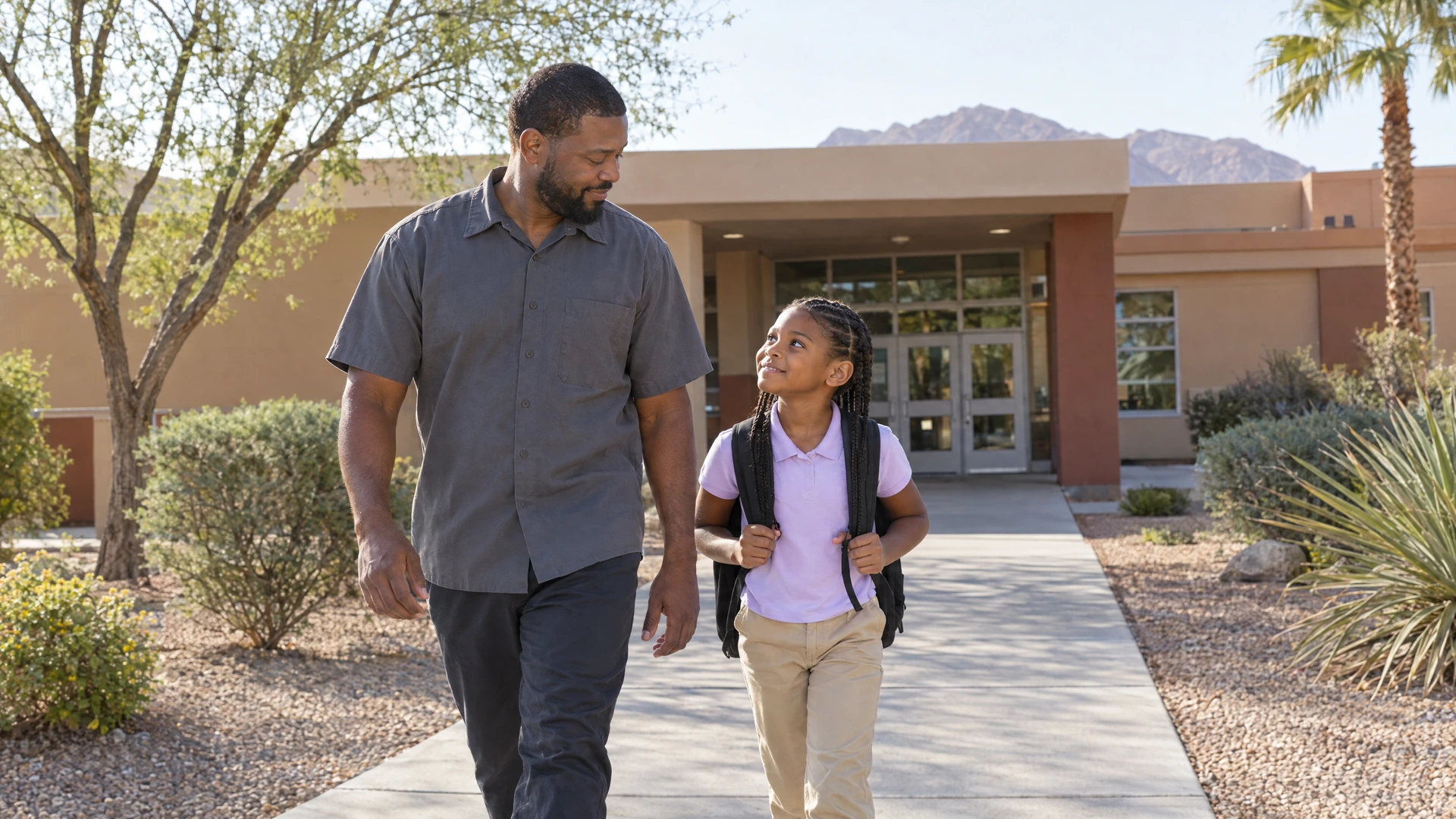
    Father and daughter arriving at elementary school for a school vision screening article

    TLDR: A school vision screening flags possible vision problems, while an eye exam investigates your child’s vision and determines the next step. Book the exam when a referral note comes home, even when your child seems to see well. A passing screening does not rule out a vision problem.

    Answer: In Las Vegas, school vision screening helps identify children who need further evaluation. A comprehensive eye exam examines your child’s vision and eye health in more detail, including eye alignment and the structures of the eyes. Take a school referral to an optometrist or ophthalmologist for evaluation and a plan based on the findings.

    A referral note slides out beside the lunchbox. Your child swears the board looks fine. Trust the note anyway. Book the exam first, then gather what the school sent. My eye exams at Vision by Amel page explains the visit and booking options.

    I reviewed 73 primary sources across five research lenses for this guide, and passing a screening does not rule out a vision disorder. As Prevent Blindness explains, a screening flags a concern, while an eye doctor diagnoses the problem. That difference decides your next move.

    What Does a School Vision Screening Check in Nevada?

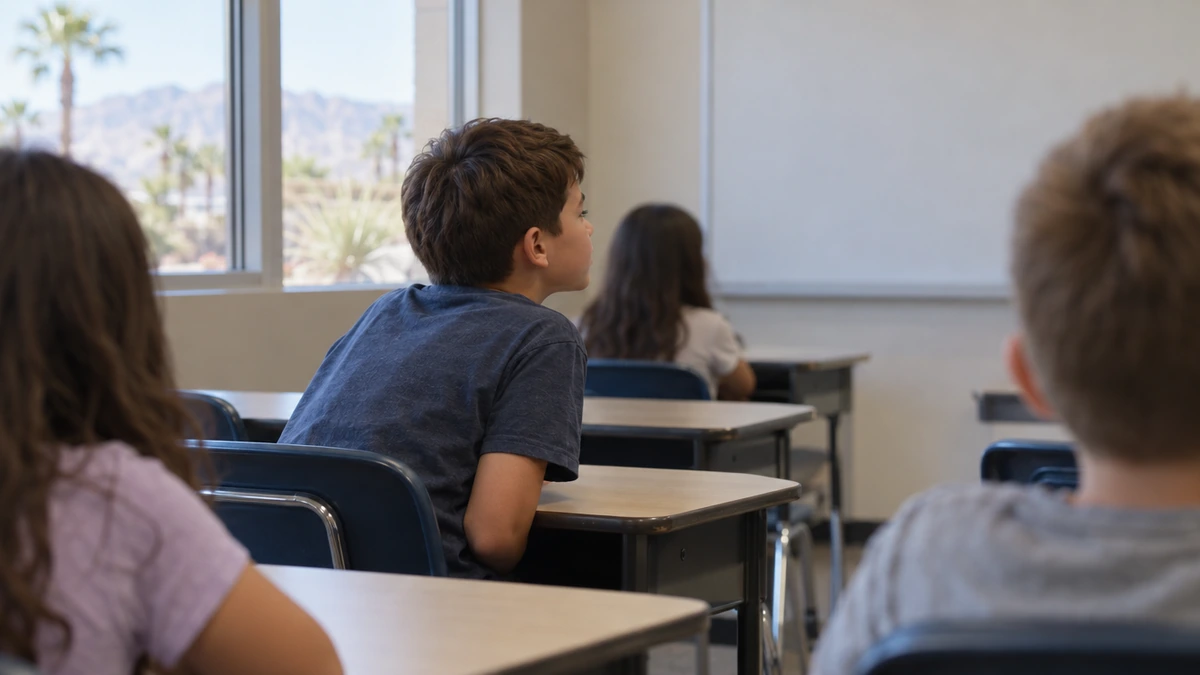
    Boy leaning forward toward a classroom board, illustrating school vision screening concerns
    A boy leans forward and squints toward the classroom board.

    Your child’s screening looks for signs worth investigating. A chart-based check measures visual acuity, meaning how clearly your child sees the chart, while other screenings use an instrument. The school nurse has the details about the method and result. A screening report is a snapshot of one morning’s check of children’s vision. Your child’s vision deserves the full picture.

    Nevada sets a school screening schedule so your child’s vision gets attention during the school years. Under NRS 392.420, schools with a school nurse check for visual problems before the end of the first elementary year, in at least one additional elementary grade, and in one middle and one high school grade, with parent notification of concerns and an option to decline in writing. The requirement covers school checks. A referral tells you to take the next step toward an exam.

    Get the result directly. An empty backpack tells you nothing about whether your child completed the screening or needs follow-up. Contact the nurse for the recorded outcome and any instructions sent home. On a busy Las Vegas pickup afternoon, a quick call beats searching through another pile of school papers.

    What Should You Do With a School Referral Note?

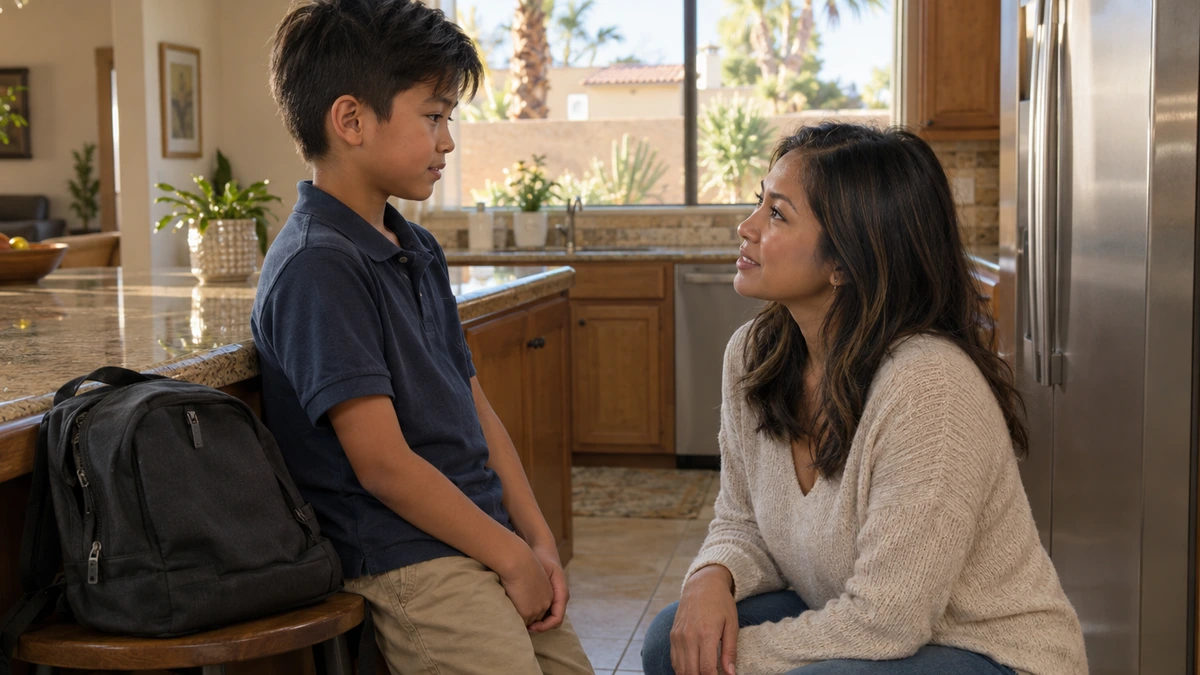
    Mother kneeling beside her son at a kitchen counter after school vision screening
    Ask your child about the screening and bring questions to the exam.

    Book the follow-up. The American Academy of Pediatrics advises an eye exam after a failed screening, even when you have noticed no problem. The exam determines whether your child needs glasses or other care. Your child has done nothing wrong.

    1. Read the requested action. Find the screening result, the eye involved and the follow-up instructions. Have the nurse explain any unfamiliar abbreviation.
    2. Arrange the exam. Explain to my team that a school screening prompted your call, and mention concerns from home or the classroom.
    3. Check the paperwork route. Find out which form the school wants back and who should receive it after the visit.
    4. Confirm your benefits. Give my team your insurance details before the appointment so we have the information needed to check them.
    5. Finish the handoff. Return the requested information after the exam and save a copy with the original screening result.

    Give the note a job. Put it beside your appointment details so it reaches the exam room instead of disappearing under homework. Let your child describe the screening without rehearsing chart answers or trying to prove the result wrong. The useful question is what the exam finds.

    What Happens When You Book a Comprehensive Eye Exam?

    Mother and son in an optometry waiting area for follow-up after school vision screening
    Bring the school referral and your questions to the appointment.

    A screening is a sorting tool. An eye exam is a diagnosis. Your child’s chart result belongs alongside the history, eye alignment and examination findings. I use those pieces to decide what care is needed and explain the next step.

    Your QuestionSchool ScreeningComprehensive Exam
    What is its purpose?Flag a possible vision problem needing follow-up.Evaluate vision and eye health and determine a plan.
    What does a chart result show?How clearly your child sees the chart during that check.Visual acuity interpreted with history and other findings.
    Does it diagnose a condition?The result identifies a concern for evaluation.I evaluate the findings to make a diagnosis.
    Does it prescribe glasses?The screening supplies no glasses prescription.I determine whether prescription glasses or other care are needed.
    What happens afterward?You complete the recommended follow-up.You follow the individual plan and return requested information to school.

    Leave knowing what the findings mean. A pediatric eye exam gives us room to discuss the concern behind the referral, beyond the letters your child read during screening. Tell me whether the difficult task is seeing the front board, reading a book or finishing homework comfortably. A specific example gives our conversation a clear starting point.

    You do not need a diagnosis before booking. Previous records sometimes contain terms such as amblyopia or strabismus, and I want to hear about those findings when we discuss your child’s history. Have me explain any unfamiliar terms. Leave the visit knowing what the findings mean for the school referral and what happens next.

    What Does a Passing School Vision Screening Miss?

    A pass is good news. Your child’s complaints still win the argument. In the 2004 Vision In Preschoolers study of 2,588 Head Start children aged 3 to 5, the best tests run by eye care professionals at 90% specificity detected about two-thirds of children with an eye condition targeted by the study and nearly 90% of those with the most important conditions. Those results describe the study’s preschool tests. Book the exam when those complaints keep coming.

    Homework discomfort deserves its own answer. The American Optometric Association’s parent guidance says school screenings look for amblyopia and its risk factors but do not check for most vision conditions behind digital eye strain. Your child reading the classroom chart does not settle a complaint about uncomfortable screen work at the kitchen counter. Tell me when the discomfort starts and which task brings it on.

    Watch what happens after the reassuring result. Your second grader still leaning toward the whiteboard gives us a concern to investigate. A parent in Summerlin hearing another complaint over evening homework has a reason to arrange an exam. My pediatric eye exam guide covers timing, Medicaid and school screenings when you need the wider overview.

    Why Does Completing the Follow-Up Matter?

    The referral needs a finished follow-up. A 2026 BMJ Open Ophthalmology review of 30 studies reported a median follow-up rate of 43.1% after school vision screening referrals. That median spans those studies. Make sure your child lands on the follow-through side of it.

    Choose a date you will keep. Check transportation and your work schedule before confirming the visit, especially when pickup and an afternoon shift compete for the same hour. A change of plans calls for a replacement date during the same phone call. Keep the school informed when arranging follow-up takes longer than expected.

    Showing up is half the job. Walking out with a plan you understand is the other half. Before you leave, confirm what the findings mean for the referral, whether your child needs glasses or other care, and when to return. A clear next step belongs beside the appointment on your calendar.

    Close the paperwork loop. Check the school’s instructions before sending the completed form, and keep your copy somewhere easier to find than the bottom of a backpack. Report continuing concerns to me even after the form is returned. The paperwork records the visit, while the plan guides your child’s care.

    How I Follow Up on Your School Referral at Vision by Amel

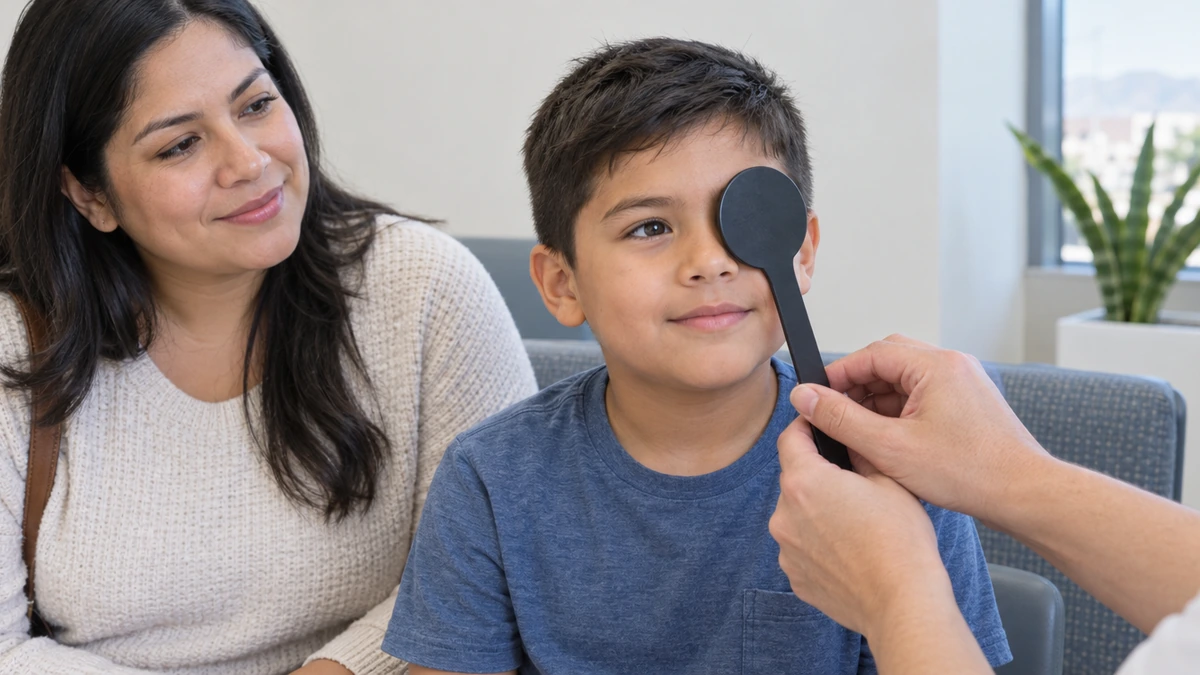
    Doctor's hands holding an occluder at a boy's left eye during school vision screening follow-up
    The eye exam evaluates the concern raised by screening.

    You do not need a referral for an eye exam at Vision by Amel, and we accept Nevada Medicaid. Mention the school screening when you book. A missing form need not delay that call.

    Put your main concern first when we talk. Start with what prompted the school referral, then describe anything you have noticed since the screening. Leave room for your child to explain what feels difficult, too.

    Plan your route to Festival Plaza in Downtown Summerlin before the appointment. Choose a time around your family’s school and work commitments. Keep the school’s contact details handy for returning the requested findings after the visit.

    Frequently Asked Questions About School Vision Screening

    What If I Lost the Referral Note From School?

    Request a replacement from your school nurse, including the screening date and recorded results. Tell my team you are waiting for the copy when you book. Confirm whether the school also has a separate form for the exam findings, so the replacement packet includes what you need.

    Should I Buy Glasses Based on the School Eye Test?

    Wait for my findings before buying prescription glasses for your child. The screening note supplies a reason to investigate, while the exam determines whether glasses belong in the plan. During the visit, have me explain what any prescription means and how the glasses should be worn.

    Which Grades Get Vision Screening in Clark County Schools?

    The Clark County School District screening schedule lists kindergarten and grades 4, 7 and 10, plus students new to the district, repeating a grade or with disabilities. Your child’s grade is therefore only part of the answer. Check with the school nurse about your child’s screening status and follow-up instructions.

    Does Nevada Medicaid Need Prior Approval for the Follow-Up Exam?

    No, Nevada Medicaid’s ocular services manual allows optometrists to examine Healthy Kids members without a referral or prior authorization and covers routine exams once every 12 months. Give my team your child’s plan details when you arrange the follow-up. Confirm the coverage for the planned visit before you arrive.

    Are Weekend Appointments Available at Vision by Amel?

    Yes, you have weekend booking options because my office opens seven days. Our hours are Monday to Saturday 9 am to 6 pm and Sunday 11 am to 5 pm. Call or use online booking to check appointment availability for your child.

    Book My Eye Exam Call (702) 858-4362

    Like this article? Add Vision by Amel as a preferred source, and you are more likely to see our articles in Google’s Top Stories.

    Add as a preferred source on Google

  • Pediatric Eye Exams in Las Vegas: A Parent’s Guide to Timing

    Pediatric Eye Exams in Las Vegas: A Parent’s Guide to Timing

    Pediatric Eye Exams in Las Vegas: A Parent’s Guide to Timing

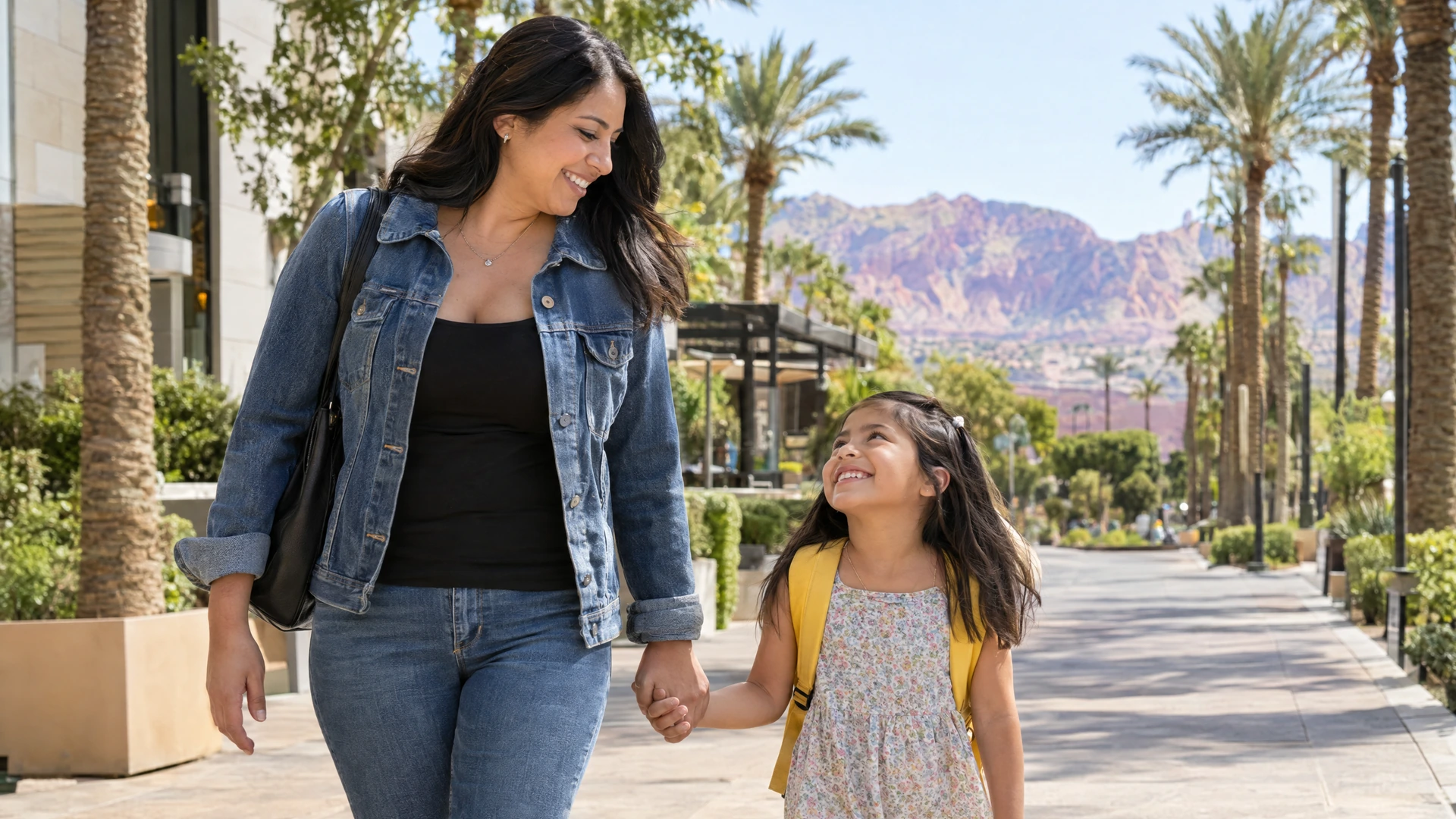
    A mother and her young daughter smile together on a sunny Las Vegas sidewalk on the way to an eye appointment

    TLDR: Your child needs a full eye exam after a failed screening, at the first sign of a vision problem, and on a regular schedule as school demands grow. A passed school screening does not rule out a problem, so your child’s eye exam fills the gap.

    Answer: Book a pediatric eye exam in Las Vegas whenever your child fails a screening, squints, tilts their head or struggles with reading. The American Optometric Association recommends a first exam at about 6 months, another between ages 3 and 5, one before school starts, then every year. Pediatric groups rely on screenings and send your child for an exam when a screening flags a problem.

    Your child rarely tells you the board looks blurry. Kids assume everyone sees the way they do. That is why I treat your child’s eye exam as the one visit that answers what a quick screening only guesses at. As an optometrist in Downtown Summerlin, I see pediatric eye exams as part of the comprehensive eye exams I give your whole family.

    This guide gives you the schedules the experts publish, the signs to watch for, what happens in the chair and how coverage works in Nevada. I reviewed 38 primary sources across five research lenses for this guide, and the eye care and pediatric groups agree on one rule: a child who fails a screening, shows symptoms or struggles to see needs a full eye exam. Use this page to decide when your child’s next visit belongs on the calendar.

    When Should Your Child Have a First Pediatric Eye Exam?

    A father holds his toddler son on his lap in a bright living room, both laughing
    Expert schedules differ, and both agree a child with symptoms needs an exam.

    Two respected camps answer this question differently, and you deserve both answers. The American Optometric Association recommends a first thorough exam at about 6 months, an in-person exam between ages 3 and 5, another as school starts and then an eye examination every year from 6 to 18. That schedule puts a doctor’s eyes on your child before problems show up in class.

    The American Academy of Pediatrics, the American Academy of Ophthalmology and AAPOS take a screening-first route. Your pediatrician checks the red reflex at birth, tries instrument-based screening between 12 months and 3 years, and tests reading-chart vision around age 4. The 2022 joint statement from AAPOS and the American Academy of Ophthalmology calls for repeat screening every 1 to 2 years after age 5 and an eye exam for any child who fails. The same statement says routine comprehensive exams in children with no symptoms have no proven medical benefit. Under this route, your child gets screened at checkups and examined when something turns up.

    Here is where I stand. For school-age kids, I follow the AOA’s yearly schedule, because schoolwork asks more of your child’s eyes every year and screenings miss some children with real problems. Both camps agree on the moments that matter most, so never skip an exam after a failed screening, a new symptom or a family history of crossed or lazy eyes.

    School Vision Screening vs a Comprehensive Eye Exam

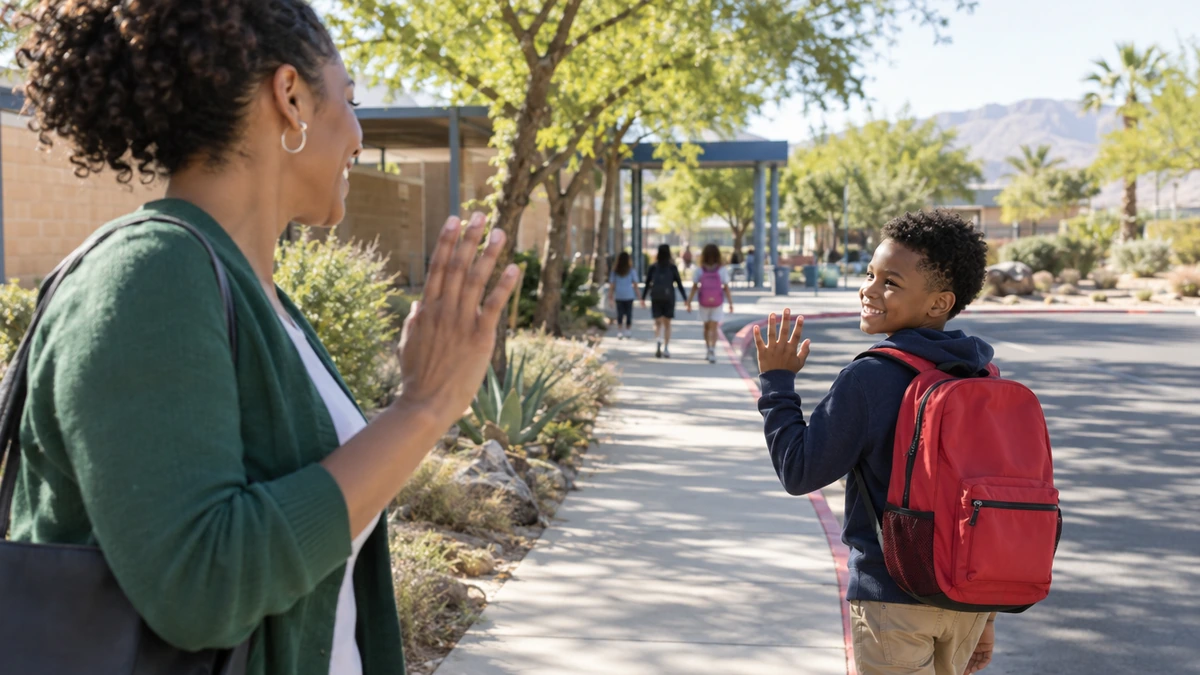
    A boy with a backpack waves goodbye to his mother at the school drop-off line
    Passing a school screening does not rule out a vision problem.

    A vision screening is a quick filter. It checks whether your child reads a chart or passes an instrument test, then sorts children into pass and refer. A comprehensive eye exam is a diagnosis. Nevada law even defines a comprehensive examination as an in-person visit covering history, eye alignment, visual acuity, pupils and the front and back of your child’s eyes.

    What it coversSchool or pediatrician screeningComprehensive eye exam
    Who performs itSchool nurse, staff or pediatric officeOptometrist or ophthalmologist
    PurposeFlag children who need a closer lookDiagnose and plan treatment
    Eye alignment and focusingPartly, depending on the testYes
    Eye health inside the eyeLimited to a red reflex check in infancyYes, front and back of the eye
    Glasses prescriptionNoYes

    Screenings miss children. In the Vision In Preschoolers study of 2,588 children, the best screening tests run by trained eye care professionals caught only about two-thirds of children with a target condition, though they caught nearly 90 percent of the most serious ones. Prevent Blindness notes that passing a vision screening does not mean there is no chance your child has a vision disorder.

    Follow-up often breaks down too. A 2026 review of 30 studies found a median of only 43.1 percent of children who failed a school screening got the follow-up care they needed. If your child brings home a referral note, book the exam that week.

    What Nevada Schools Check

    Under NRS 392.420, Nevada schools with a school nurse check your child for vision problems before the end of the first year of elementary school, in at least one more elementary grade, and once each in middle school and high school. Children in special programs or repeating a grade get an extra check, and you receive a notice with a recommendation if something turns up. You also have the right to opt your child out in writing.

    Signs Your Child Needs a Pediatric Eye Exam Now

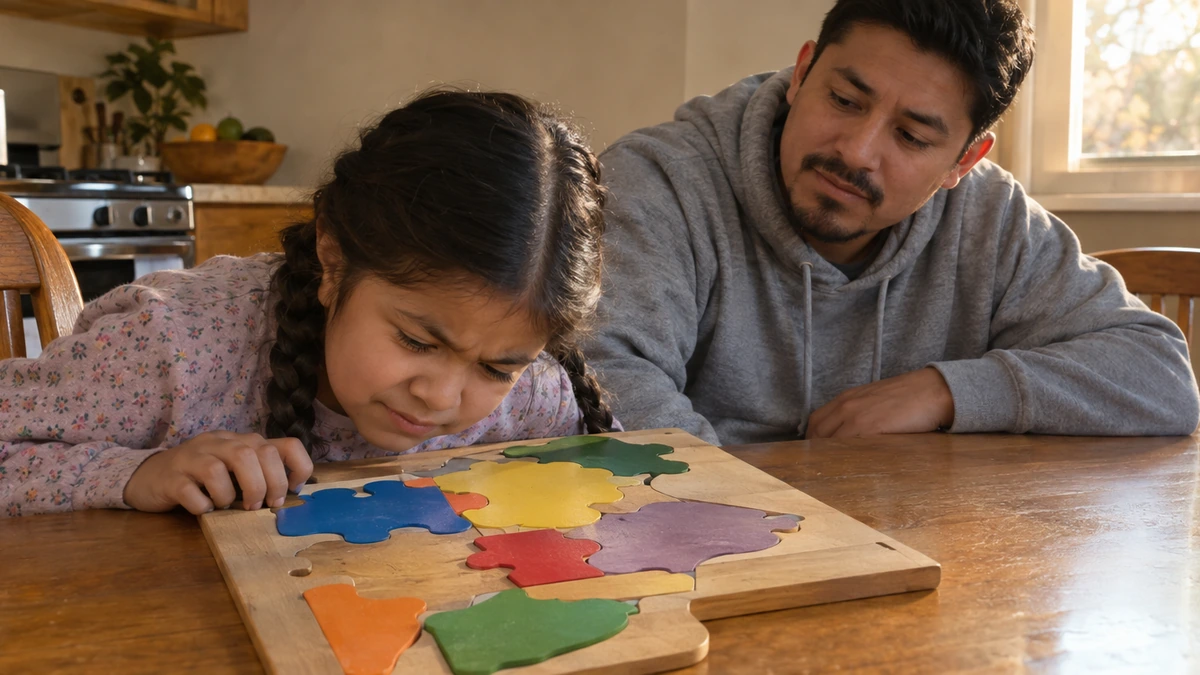
    A young girl squints and leans close while working on a puzzle at a kitchen table as her father watches
    Squinting, head tilting and sitting too close are worth an exam.

    Your child’s habits often tell you more than any chart. The American Optometric Association lists warning signs worth an exam even if your child passed a recent screening. Watch for these at home and ask your child’s teacher about them too:

    • Sitting close to the TV or holding a book close to the face
    • Squinting, tilting the head or covering one eye
    • Rubbing the eyes often or complaining of headaches
    • An eye that turns in, out, up or down
    • Losing their place while reading or skipping lines
    • Avoiding coloring, puzzles or close-up games
    • Unusual sensitivity to light

    Lazy Eye and Crossed Eyes

    Amblyopia, often called lazy eye, affects up to 3 in 100 children according to the National Eye Institute, and the sooner treatment starts the better. Large studies of preschool children found eye misalignment, called strabismus, in roughly 2 to 3 percent of kids. Your child rarely notices either one, which is exactly why your eyes and an exam matter.

    Reading Trouble and Vision

    Uncorrected farsightedness is linked to weaker early literacy scores in studies of 4 and 5 year olds. That is a real reason to check your child’s eyes when reading feels hard. A joint statement from the American Academy of Pediatrics, the American Academy of Ophthalmology and AAPOS also states vision problems do not cause dyslexia or learning disabilities, so your child’s exam rules vision in or out while the school evaluates learning.

    What Happens During a Pediatric Eye Exam in Las Vegas

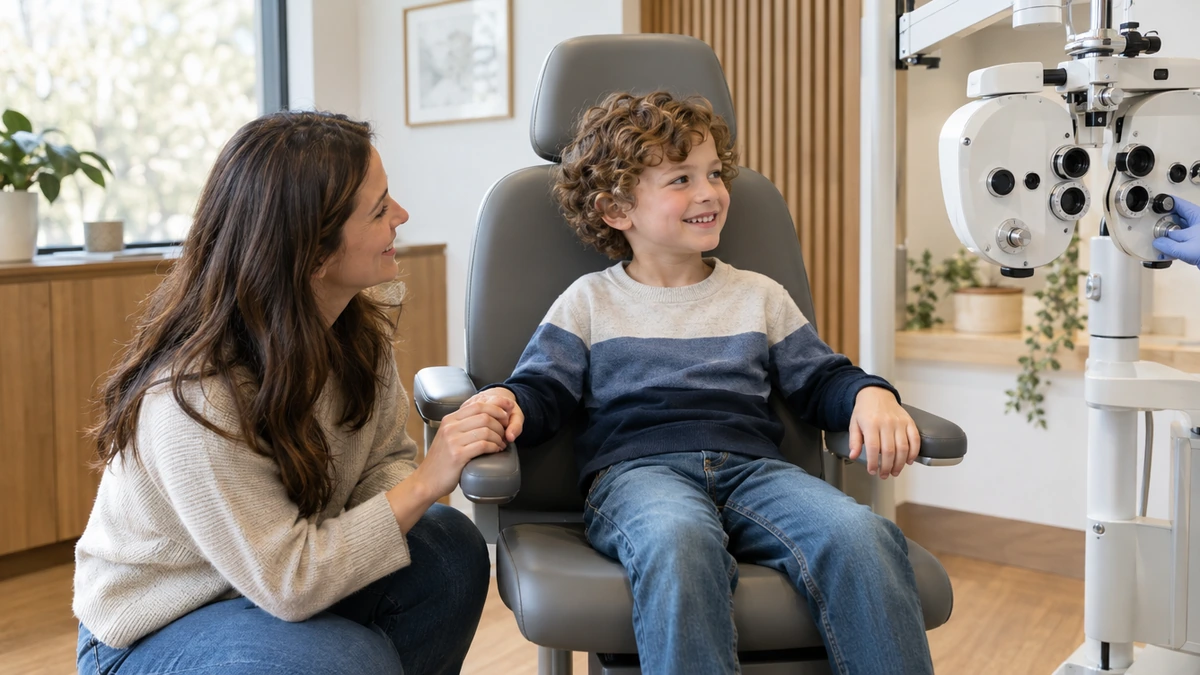
    A smiling boy sits in an eye exam chair holding his mother's hand during a pediatric eye exam
    Your child does not need to know letters to have a full eye exam.

    Your child does not need to know letters or how to read to have an eye exam. The AOA suggests allowing about an hour, booking early in the day when your child is fresh, and talking the visit through beforehand. Tell your child they will look at pictures and lights while you stay close by.

    The exam covers the whole visual system. I check how clearly each eye sees, how well the eyes line up and move together, whether your child needs glasses for nearsightedness, farsightedness or astigmatism, and the health of each eye from front to back. Visionix digital diagnostics measure your child’s eyes in seconds, which keeps the visit moving for short attention spans.

    Dilating drops are not routine in my exam room. If your child’s eye health calls for them, I explain why before any drops go in. The American Academy of Ophthalmology notes dilation lasts longer in children, so bring sunglasses and plan a quiet afternoon for your child.

    Screens, Homework and Your Child’s Eyes

    Screens tire your child’s eyes, and the tiredness passes. The American Academy of Ophthalmology states there is no scientific evidence screen light damages eyes, and dry eyes, blur and headaches from screens are temporary. Its guide to screen use for kids points parents to pediatric guidance on how much screen time fits each age.

    Comfort habits help your child most. Use the AOA’s 20-20-20 rule: every 20 minutes, look at something 20 feet away for 20 seconds. Keep tablets at arm’s length, remind your child to blink and set a timer for homework breaks. If headaches or squinting continue after those changes, book your child’s exam.

    How Coverage Works for Your Child’s Eye Exam

    Children’s vision gets better protection than adult vision under federal law. HealthCare.gov lists pediatric vision care as an essential health benefit, so every Marketplace plan includes vision coverage for your child. Employer plans vary, so check your own benefits.

    Nevada Medicaid covers children under 21 through the Healthy Kids program. Under the state’s ocular services manual, optometrists examine Healthy Kids members without a referral or prior authorization, routine exams are covered once every 12 months, and glasses are replaced after a prescription change or when they are lost or broken. Nevada Check Up covers children under 19 in families with income up to 205 percent of the Federal Poverty Level, so check whether your household qualifies.

    My team accepts Nevada Medicaid along with Anthem, Aetna, UMR, Humana, United Healthcare, Tricare, EyeMed, Spectera, Davis and VSP. We verify your child’s plan by phone before the visit. You know what to expect before you walk in.

    Why Las Vegas Parents Book Pediatric Eye Exams With Dr. Amel

    You get one boutique for your whole family’s eyes. I built my practice at 2010 Festival Plaza Dr, Suite 195, in Downtown Summerlin, open seven days a week, so weekend appointments fit around your child’s school week. Your child gets a doctor who explains every step, and you leave knowing exactly what I found.

    Book now if your child has never had a full eye exam, failed a screening or shows any sign on the list above. Learn more about Dr. Amel and the boutique, browse the Children’s Vision guides and protect your child’s eye health before the next school year asks more of their eyes.

    Frequently Asked Questions

    At what age should my child have their first eye exam?

    The American Optometric Association recommends a first exam at about 6 months, another between 3 and 5, and one before school starts. The American Academy of Pediatrics relies on screenings at well visits and sends your child for an exam when a screening flags a concern. Either way, a failed screening or a symptom means your child needs an exam now.

    Is a school vision screening enough?

    A screening sorts children, and an exam diagnoses them. Screenings check far fewer things than a comprehensive exam and miss some children with real problems. Treat a pass as good news and keep your child’s regular exam on the calendar.

    How long does a pediatric eye exam take?

    Plan on about an hour, the AOA suggests, especially for a first visit. Book a morning slot when your child is rested. Bring your child’s current glasses and any school screening notice.

    Does Nevada Medicaid cover my child’s glasses?

    Yes, for Healthy Kids members under 21. Nevada Medicaid covers a routine exam every 12 months and replaces glasses after a prescription change or when they are lost or broken. Call my team and we confirm your child’s coverage before the visit.

    Do screens damage my child’s eyes?

    The American Academy of Ophthalmology finds no scientific evidence that screen light damages your child’s eyes. Screen time causes temporary strain, dryness and headaches. Regular breaks and blinking keep your child comfortable.

    My child has type 1 diabetes. When do they need an eye exam?

    The American Diabetes Association recommends a first dilated diabetes eye exam once your child has had type 1 diabetes for three to five years and is 11 or older or has started puberty. Read my guide to diabetic eye exam timing for the full schedule. Keep your child’s regular vision exams going in the meantime.

    Book My Eye Exam Call (702) 858-4362

    Like this article? Add Vision by Amel as a preferred source, and you are more likely to see our articles in Google’s Top Stories.
    Add as a preferred source on Google