Author: Dr. Amel Youssef, OD

  • What a Las Vegas Assisted Living Vision Day Looks Like, Hour by Hour
    What a Las Vegas Assisted Living Vision Day Looks Like, Hour by Hour

    What a Las Vegas Assisted Living Vision Day Looks Like, Hour by Hour

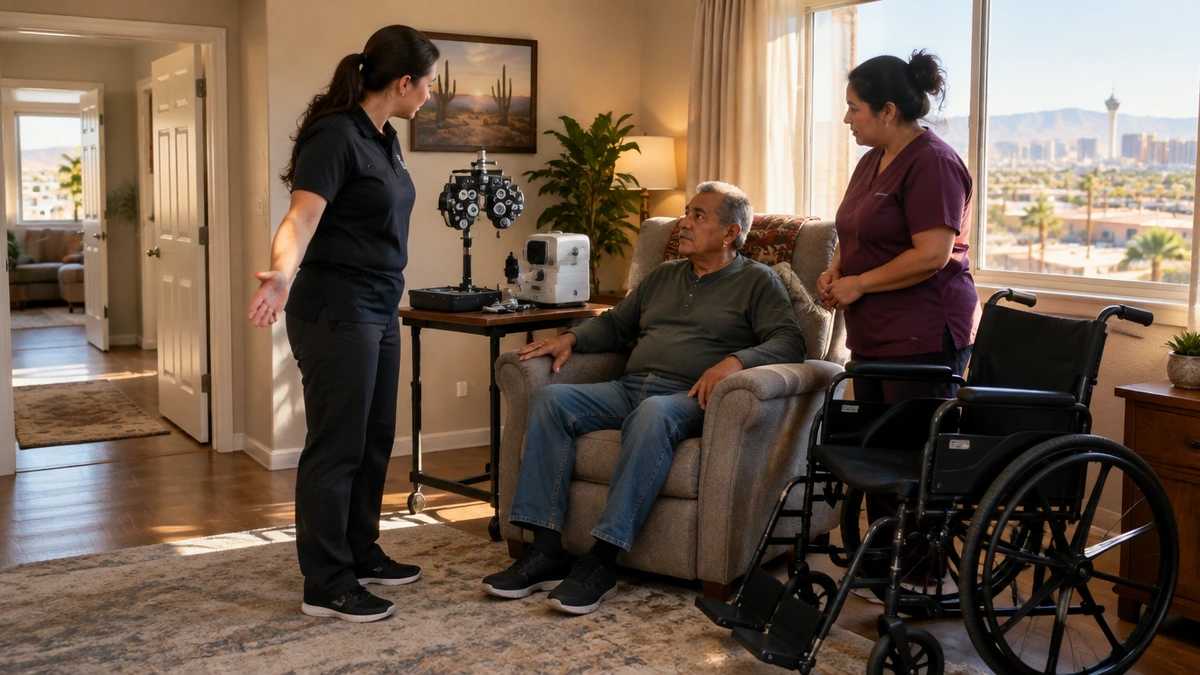
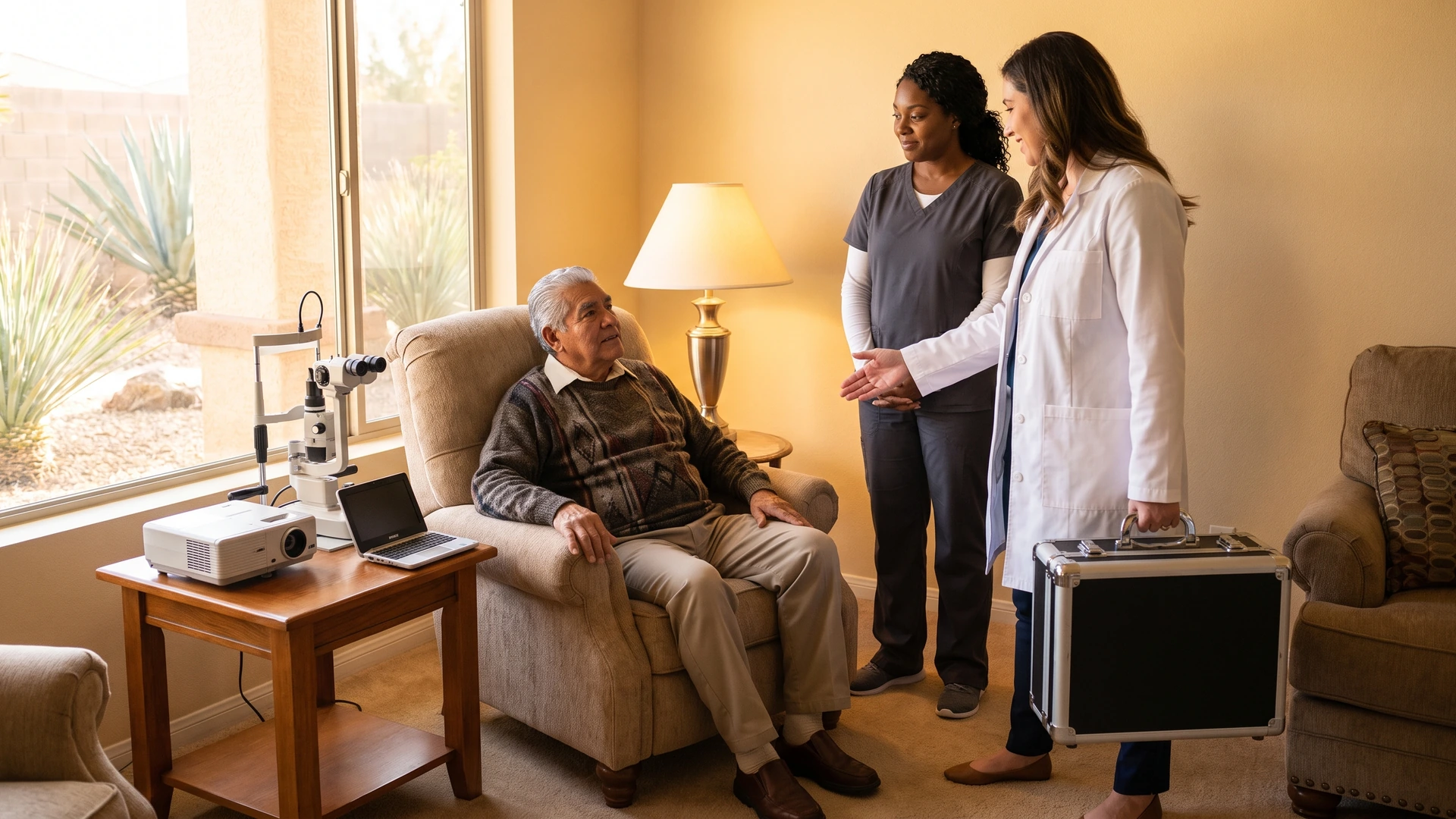
    Woman eye doctor and caregiver greeting a resident in an armchair, assisted living vision day Las Vegas

    TLDR: I use this assisted living vision day in Las Vegas sample to help you plan around a ten-resident home’s routine. The hours are placeholders, and the home’s size is an example rather than a participation count. Set actual timing, services, and follow-up with my team before inviting residents.

    Answer: An assisted living vision day in Las Vegas starts with preparation, a private room, and voluntary participation. Your staff helps residents reach the exam room, takes care of breaks, and tracks eyewear discussions and individual follow-up. I show you the sequence hour by hour in this ten-resident home example, with timing adjusted to residents’ needs and the planned services.

    Start with the home’s daily routine. I use this sample to assign tasks to your staff, my team, and residents across a vision day in a ten-resident home. It illustrates a plan, with no completed facility visit or resident outcomes represented. Use the sequence to decide who needs to be ready for each step.

    Put meals and support on the schedule. Start with the overview of an assisted living vision day, then bring your home’s routines to the planning call. Include mobility help, private space, and resident preferences in the on-site eye care plan. Give each next step a responsible contact before assigning resident times.

    Before the Visit: Your Assisted Living Vision Day in Las Vegas Sample Plan
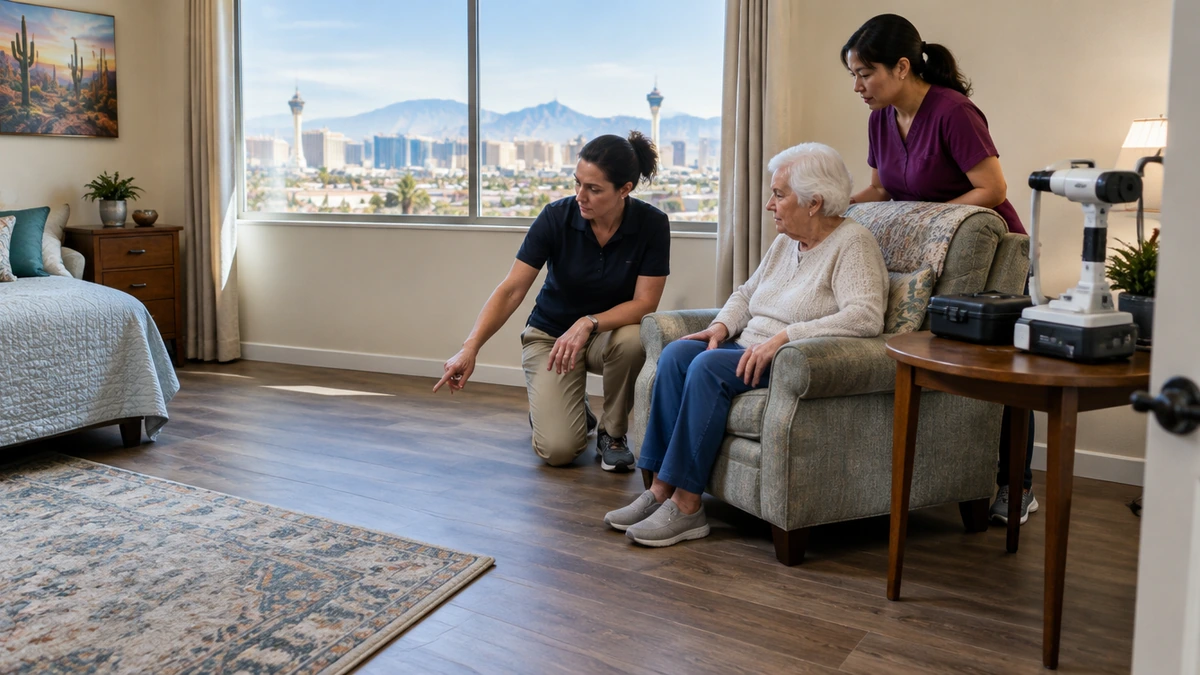
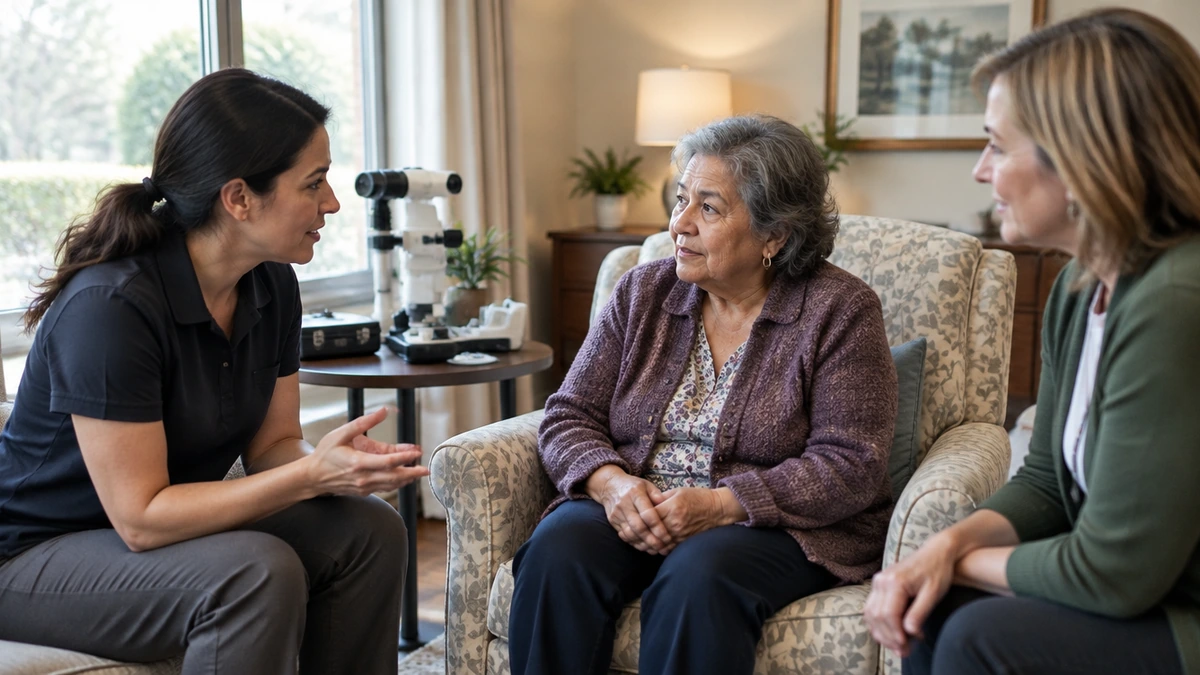
    Woman eye doctor and caregiver reviewing space beside a seated resident, assisted living vision day Las Vegas
    Illustration of preparation for the sample plan, not an observed visit.

    Finish preparation before assigning exam times. Your list needs resident interest, consent review, representative documents where applicable, current insurance information, and benefit verification before service. Use the operator’s vision day checklist to assign those tasks. Keep the home’s resident count separate from the number of people choosing to participate.

    Walk through your room plan first. Review the power outlet, seating, and route from bedrooms with me as your visiting optometrist. I reviewed 69 primary sources across five research lenses for this series, and facility examination arrangements depend on space and resident needs. The AOA’s facility-care guidance describes choosing arrangements around those needs.

    Treat the table as a draft. Each clock time illustrates a place in your agenda, with no promised start, finish, or examination duration. Move, extend, or split the blocks after I review interested residents and planned services with you. Keep the table beside your home’s meal and care schedule while making those decisions.

    Illustrative hourProposed activityYour coordination task
    8 a.m.Arrival and room setupShow my team the agreed space and review changes
    9 a.m.Begin resident appointmentsBring residents when requested, with glasses and needed support
    10 a.m.Continue examinations and adjust pacingPlan breaks and keep waiting residents comfortable
    11 a.m.Review findings and next steps as readyConnect my team with authorized contacts
    NoonProtect the meal and rest routineReview individual aftercare needs with my team
    1 p.m.Discuss eyewear where appropriateSupport voluntary selection and confirm update contacts
    2 p.m.Review outstanding tasksAssign owners for follow-up and unfinished tasks

    8 a.m.: Welcome My Team and Check the Room
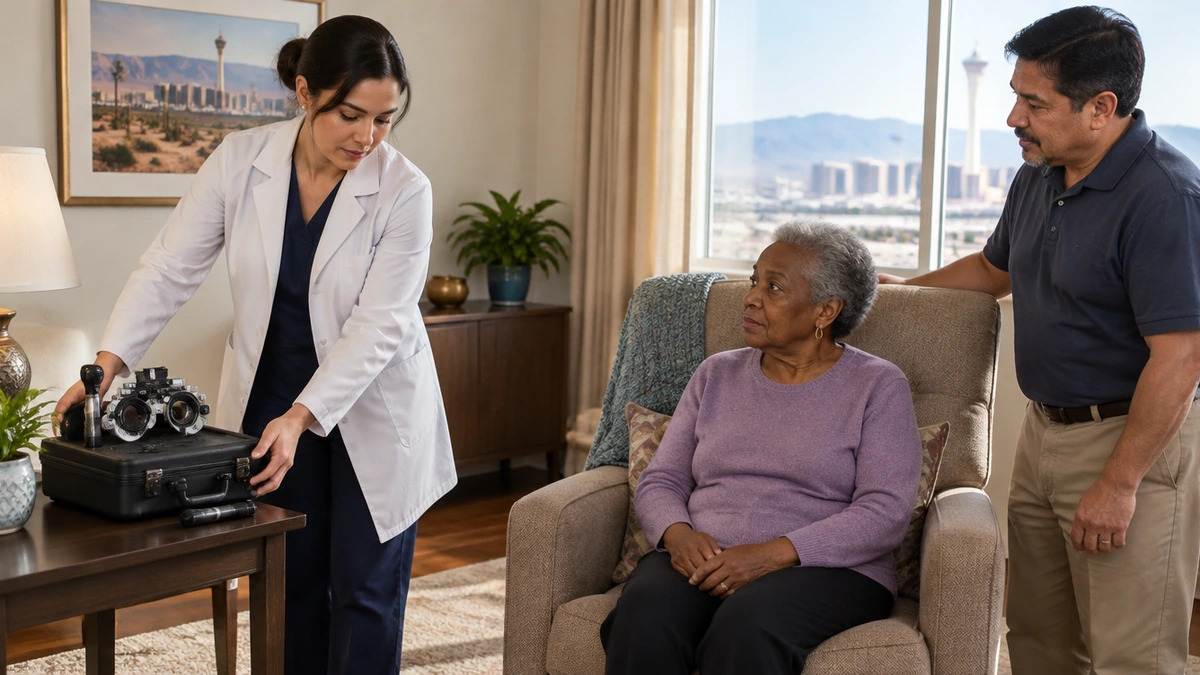
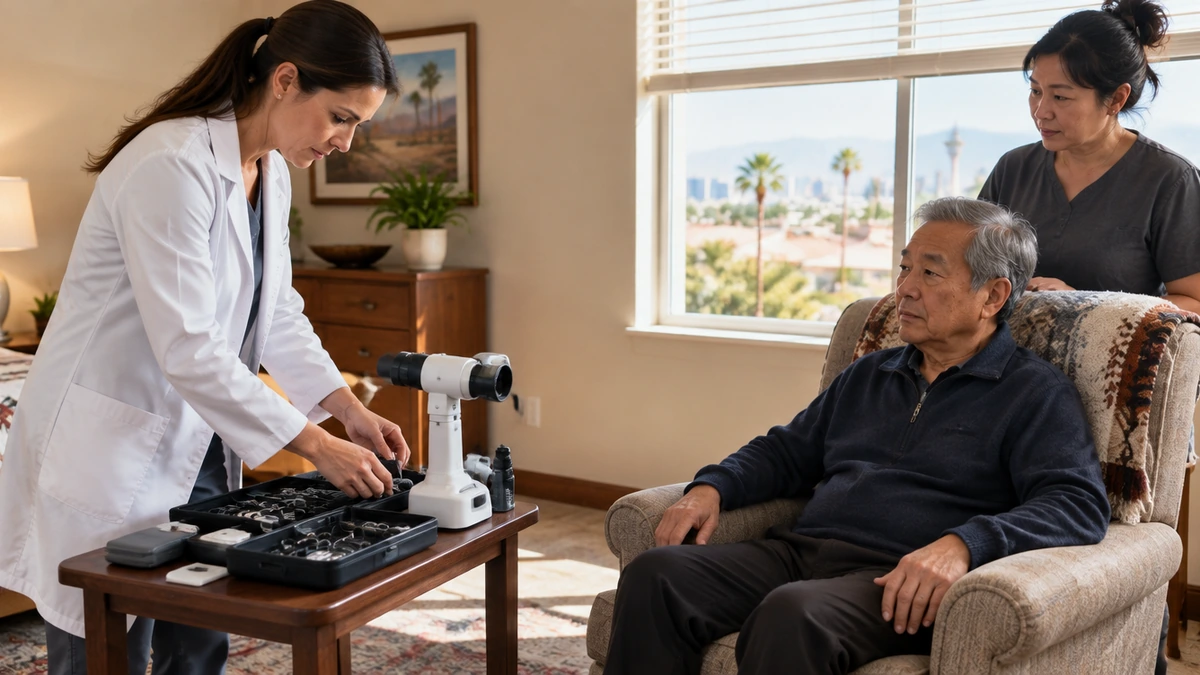
    Woman eye doctor placing portable equipment on a side table, assisted living vision day Las Vegas
    Illustration of the sample setup block, with no actual visit time represented.

    Set up before bringing residents in. In this sample, you meet my team at the private room and review where portable examination equipment will go. Check the path for walking aids and the seating layout. Name the staff contact available to help before the first resident leaves the common area.

    Review what changed since the call. Your list needs the latest decisions from residents who declined or changed appointments, along with new support needs. Share relevant updates directly with my team through private intake. Keep identifying information with the staff handling the visit instead of displaying it in the waiting area.

    Leave time between resident arrivals. Set who prepares the space between appointments and how your staff hears when the room is ready. Identify the waiting area before anyone starts bringing residents down the hallway. Protect setup and cleaning time when adjusting the sample schedule.

    9 a.m.: Begin Appointments With Consent and Privacy
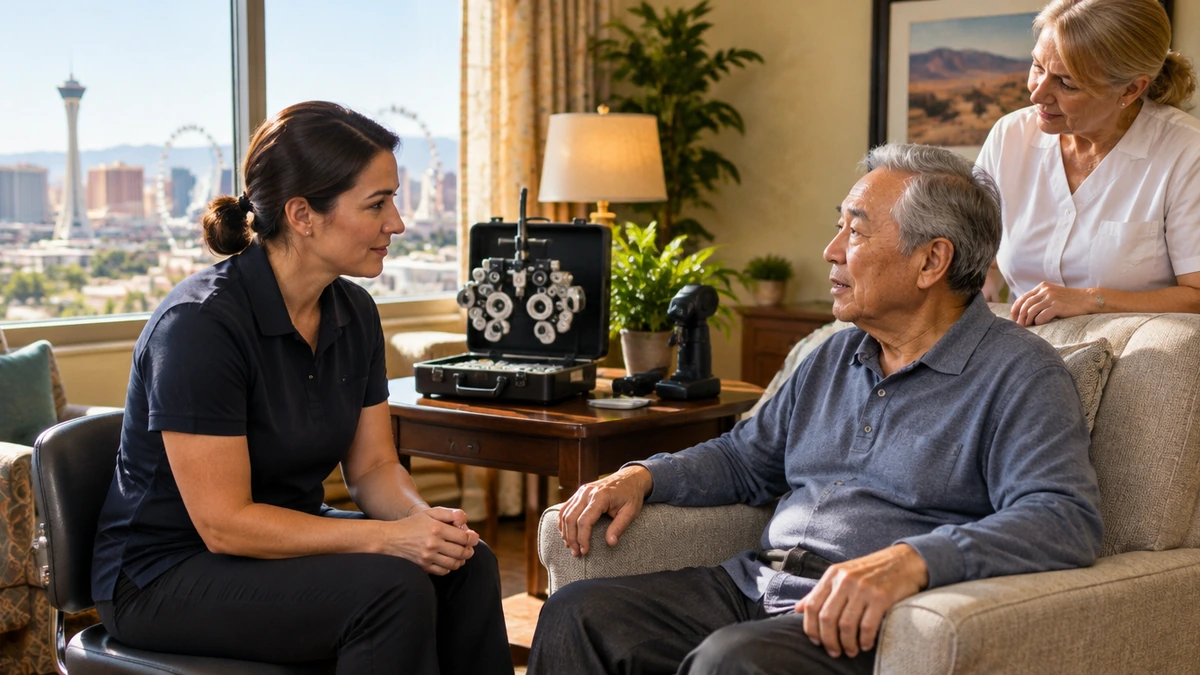
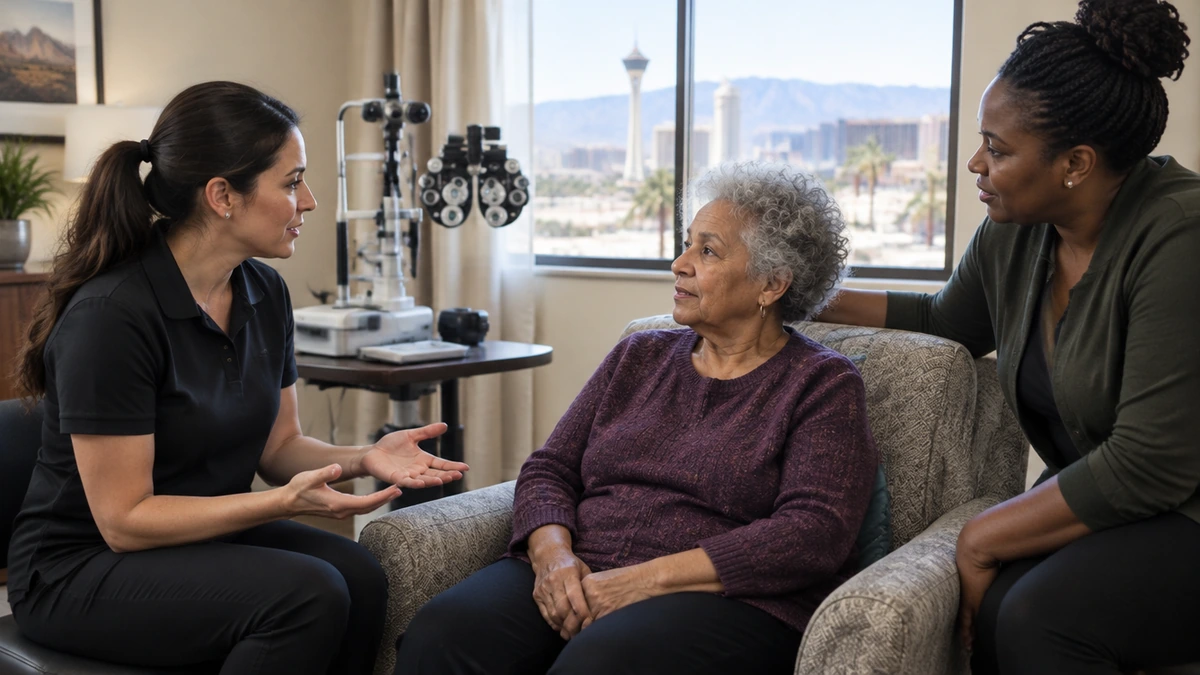
    Woman eye doctor listening to a resident with a caregiver nearby, assisted living vision day Las Vegas
    Illustration of a private appointment in the sample plan, not a clinical record.

    Bring the glasses with the resident. Have your requested preparation records ready through secure intake, then escort the person to the room when my team calls. Introduce any caregiver attending for support. I check the resident’s preferences before beginning the eye exam.

    The resident still chooses to participate. Nevada protects medical-care privacy and refusal of treatment to the extent permitted by law, including consent to the presence of people not directly involved in care. Your facility booking does not replace resident consent. If someone declines, update the staff contact and help the resident return to the usual daily routine.

    Stay reachable while I examine your resident. In this sample, your staff contact supplies practical help while keeping the room private. Discuss findings away from residents waiting nearby. Use the clinical communication plan for those conversations and keep the common room available for ordinary activities.

    10 a.m.: Adjust the Pace to the Resident

    Follow the resident’s pace. Change your appointment order when someone needs a break, extra communication help, or another session. Keep meals and care routines on the staff contact’s schedule so changes reach the people providing support. A resident pausing in the chair matters more than a completed appointment tally beside the clock.

    Make room for unfinished testing. Published experience supports flexibility: some residents with dementia in a Canadian facility optometry program needed assessment across several days or help from family. During your planning call, review how I record incomplete measurements and plan further assessment. Explain that next step to families without promising every test will be finished during the visit.

    Get the completed findings clear. A comprehensive eye exam evaluates overall eye health, whereas vision screening detects some problems but misses others. Use the planned examination description when you discuss the visit with residents. I explain to you what I assessed, what remains needed, and which clinical questions need follow-up.

    11 a.m. and Noon: Assisted Living Vision Day in Las Vegas Handoffs
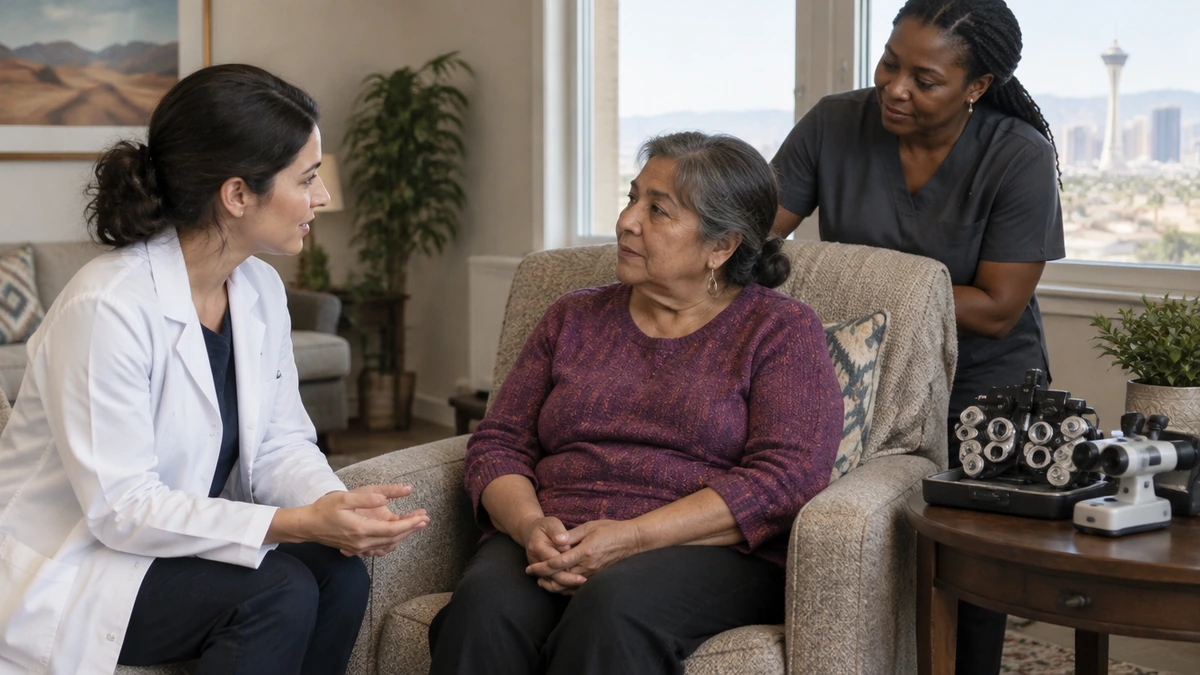
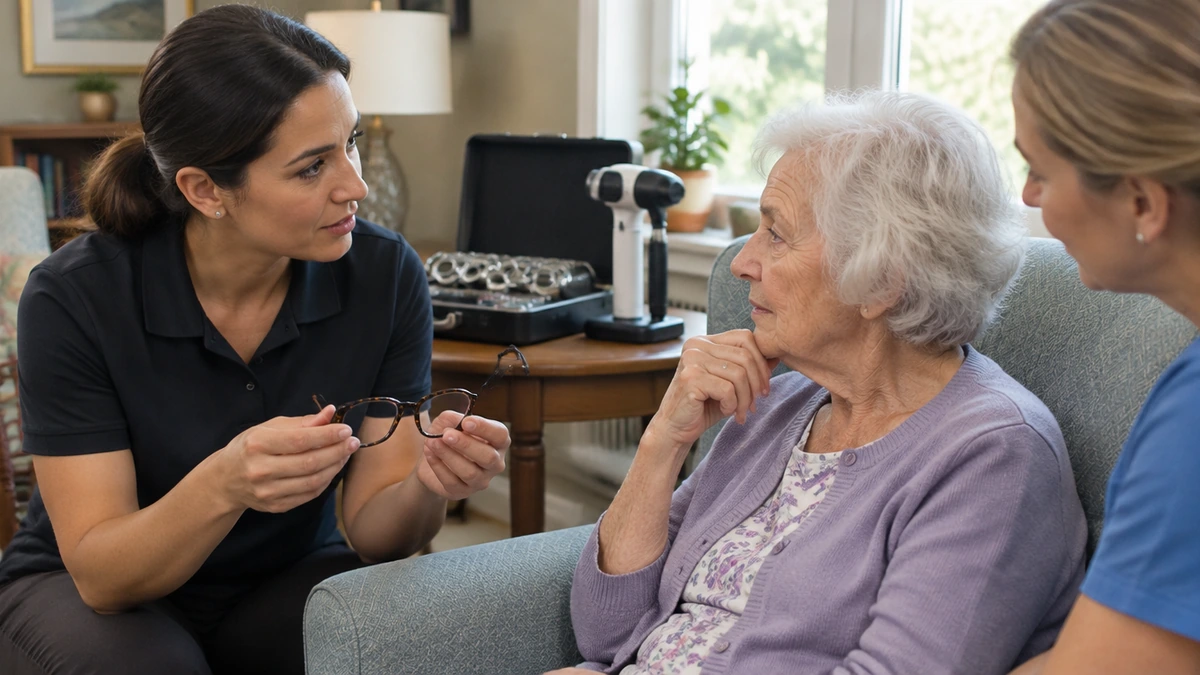
    Woman eye doctor explaining next steps to a resident and caregiver, assisted living vision day Las Vegas
    Illustration of a sample aftercare conversation, with no treatment outcome implied.

    Start handoffs as findings are ready. In this sample, your staff begins connecting residents and authorized representatives with me while others still wait for appointments. Keep the timetable open as those conversations happen. Get the next steps clear before a resident returns to the armchair in the common room.

    Name who handles aftercare. Discuss individual support because dilation sometimes causes blurry vision and light sensitivity for several hours. Your plan needs the person receiving instructions and the staff member supplying the agreed assistance. I decide whether dilation is indicated and explain the next steps for your resident.

    Keep the usual noon routine. This sample protects your home’s meal and rest time, with staff checking the next appointment before moving a resident away from lunch or an activity. Adjust the order around the people present and their instructions. The sample clock guides the conversation rather than fixing every appointment.

    • Confirm who receives each resident’s clinical instructions.
    • Ask which testing or assessment remains incomplete.
    • Identify outside appointments recommended by me.
    • Agree who contacts the resident’s authorized representative.
    • Record administrative next steps in the private follow-up record.

    1 p.m. and 2 p.m.: Discuss Glasses and Assign Follow-Up

    Use the afternoon for eyewear discussions. For residents considering glasses, the sample block covers selection, measurements, and fitting planned with my team. Put your order contact and the delivery and adjustment plan beside the resident’s eyewear notes. An examination leaves the resident’s purchase decision voluntary.

    Connect lens choices to daily use. My practice offers premium lenses including progressive lenses, and my premium lens overview helps prepare your questions. Describe reading in an armchair or joining table activities during the eyewear conversation. Review my individual recommendation and verified benefits before the resident decides.

    Assign follow-up before my team leaves. A published Canadian program tracked reassessment timing and sent examination reports to family physicians, illustrating work continuing beyond the appointment. Name who receives your home’s reports, books recommended visits, and checks unresolved tasks. Keep those names with the follow-up list for the staff member taking over after the visit.

    Give each task its own contact. Track your eyewear update separately from the clinical referral, with a clear route for reporting progress on both. The prescription glasses fitting and delivery guide helps prepare questions about fitting, adjustments, and continued support. Keep unanswered items open for the next staff handoff.

    End the sample with assigned next steps. The plan includes no invented count of completed examinations or glasses orders. Record whether your resident needs more time, another session, or an outside appointment after my review. Keep each task open until the people responsible have received and understood what happens next.

    Create Your Facility-Coordinated Vision Day With Me

    Bring your home’s routine to a call with me. I am Dr. Amel Youssef, OD, founder of my practice, Vision by Amel, in Downtown Summerlin, serving the Las Vegas Valley. My team and I plan visits for assisted living homes, Residential Facilities for Groups, memory care communities, adult day care programs, and senior living communities. Describe your private room with electrical access, resident needs, and usual meal and care schedule.

    Set the preparation with me before the timetable. I start your visit planning with interest, registration, consent, and insurance benefits verified before service. Participation is voluntary. Benefits depend on each resident’s eligibility and plan terms. My team and I review your private room, examination order, eyewear selection, measurements, delivery, adjustments, and referral process with you before choosing the final schedule.

    Frequently Asked Questions About an Assisted Living Vision Day Sample Plan

    Does a ten-resident home need everyone to join?

    No, each resident chooses whether to participate. The ten-resident home is a planning example, so give my team your estimated interest when discussing the visit. Keep residents who decline involved in their usual activities.

    What should the staff handoff include if a shift changes?

    Give the incoming contact the appointment order, open tasks, and my team’s contact details. Identify where your staff stores instructions securely and who is currently speaking with my team. Complete that handoff before the outgoing contact leaves.

    What if the guardian is unreachable when questions arise?

    Keep unanswered decisions pending and tell me the guardian is unreachable. Use your established contact process to reach the authorized person and identify what must be resolved before proceeding. Update the appointment plan after the authorized person and I have settled those questions.

    Should I photograph residents during the sample activities?

    Keep photography outside the examination plan unless permissions and a suitable plan have been agreed separately. This sample includes no original visit photographs for you to treat as a record of a real event. Identify illustrative images as illustrations when using them with the sample.

    How do I plan another vision day after this one?

    Review unfinished follow-up before proposing another group date. Identify which residents need individual appointments and which want a future facility visit during your conversation with my team. Build the next interest list from those choices instead of repeating the home’s roster.

    Schedule an On-Site Vision Day Speak With Dr. Amel’s Team: (702) 858-4362

    Like this article? Add Vision by Amel as a preferred source, and you are more likely to see our articles in Google’s Top Stories.


    Add as a preferred source on Google

  • On-Site Eye Care for Adult Day Care Programs in Las Vegas

    On-Site Eye Care for Adult Day Care Programs in Las Vegas

    On-Site Eye Care for Adult Day Care Programs in Las Vegas

    Woman eye doctor greeting an older participant with a caregiver nearby, adult day care eye exams Las Vegas

    TLDR: I help you fit adult day care eye exams in Las Vegas around attendance and the ride home. You need consent, insurance review, a private examination room, and a named person to receive instructions after each participant leaves. Keep participation voluntary and settle the visit plan before inviting families.

    Answer: I plan on-site eye care with your Las Vegas adult day care program by reviewing participant interest, consent, representative authority, and benefit verification before service. Your schedule needs a private room, available escorts, and appointments within attendance hours. Set eyewear decisions, departure help, family communication, and follow-up contacts with my team before examination day.

    Plan the ride home from the start. Your participants arrive from different homes and leave on different schedules, so the visit needs to fit those departure times. Use the service overview for a facility-coordinated vision day to begin planning. Match the day’s appointments and family contacts to your program’s attendance list.

    Get the glasses and contacts ready. Your preparation list needs each participant’s current pair, a reachable representative where involved, and a clear departure plan. Assign those tasks before I arrive as your visiting optometrist. Give staff a name for each follow-up action so the examination fits the program’s daily routine.

    Who Should You Invite for Adult Day Care Eye Exams in Las Vegas?

    Woman eye doctor listening to an older participant beside an armchair, adult day care eye exams Las Vegas
    Illustration of a participant discussing the proposed visit with the eye doctor.

    Identify your program before setting dates. Nevada defines and licenses adult day care separately and excludes establishments providing care only during the day from Residential Facilities for Groups. Describe the setting accurately when speaking with my team. Use the arrival list and pickup times to shape appointments instead of copying an overnight home’s schedule.

    Invite interest before scheduling an eye exam. Record your participant’s existing eye doctor and appointments already booked alongside the reason for joining the visit. Bring concerns about reading, glasses, or known conditions to me. Enrollment at your program does not establish examination consent or tell staff what diagnosis explains a concern.

    Name who receives the handoff home. When you compare assisted living eye exams with an adult day visit, departure makes that handoff a practical priority. Your staff needs a contact for instructions and for booking another appointment if recommended. Set the participants and location with my team before announcing a date.

    How Do Registration and Consent Work?

    Woman eye doctor speaking with a participant and a support person, adult day care eye exams Las Vegas
    Illustration of a private conversation about participation and support preferences.

    Start with the interest list. Get my team’s registration materials and secure intake route before your staff gathers individual records. Use the public facility inquiry form for program details only. Participant names, insurance cards, diagnoses, and medical histories belong in secure intake, away from the reception desk’s shared paperwork.

    1. Ask each interested participant about joining the visit.
    2. Confirm attendance, arrival time, departure time, and communication needs.
    3. Arrange consent review and provide current representative documents when applicable.
    4. Gather the insurance information and health history requested by my team.
    5. Confirm the contact responsible for follow-up after the participant leaves.

    Treat consent as a separate task. Use the resident consent process even when your program calls the people attending participants. The relative who drives someone home is a useful contact, but my team still needs to review that person’s decision-making authority. Identify any guardian or healthcare power of attorney and supply current documents before the visit.

    Plan who enters the private room. Nevada protects medical-care privacy and refusal of treatment to the extent permitted by law, including consent to people present who are not directly involved in care. Record your participants’ support preferences before deciding who accompanies them during the examination. Use the facility coordinator’s consent guide to prepare questions for my team about participation and room access.

    What Should You Gather for Benefit Verification?

    Send the actual insurance details. Gather current cards through secure intake and tell your contact about Medicare, Medicaid, Medicare Advantage, or multiple plans reported by the participant. I arrange verification of eligibility, service benefits, and participation before service. Keep any unresolved plan question with the intake task instead of treating the card as a coverage decision.

    Explain exam and eyewear benefits separately. Original Medicare excludes routine examinations for prescribing glasses or contact lenses. Use your participant’s verified benefits when discussing the planned services and their responsibility with my team. Give families the individual explanation before proceeding, with the general program invitation kept to the visit details.

    Give missing paperwork a staff contact. Track incomplete registration and missing insurance cards on your preparation list without displaying health information to the whole program. Bring clinical decisions to me and billing questions to my team. Resolve the items needed for an appointment before moving the participant onto the final schedule.

    How Do You Fit Adult Day Care Eye Exams in Las Vegas Into the Program?

    Woman eye doctor arranging portable equipment near a seated participant, adult day care eye exams Las Vegas
    Illustration of a private examination space with room for participant assistance.

    Keep the path to the room clear. Reserve your private room with electrical access, then review seating, portable examination equipment, and the route from the activity area with my team. The AOA’s facility-care guidance ties examination arrangements to space and resident needs, rather than a universal room layout. Settle that setup before finalizing appointments.

    Start with arrival and pickup times. Put meals, activities, mobility help, and periods when a participant is unavailable beside your attendance list. Set the appointment order with my team around those limits. Leave room for breaks and schedule changes instead of assigning the same examination length to everyone.

    Planning pointProgram responsibilityReview with my team
    ArrivalCheck attendance and current glassesWhether preparation is complete
    Examination spaceReserve privacy, seating, and electrical accessRoom suitability and equipment setup
    Participant sequenceShare attendance windows and assistance needsAppointment order and breaks
    DepartureIdentify the pickup contact and support planIndividual aftercare instructions
    After the visitTrack the agreed communication handoffEyewear, referral, and follow-up tasks

    Keep your usual activity space available to participants waiting for their appointment. Bring people to the room when my team is ready instead of assembling a group outside the door. Tell the coordinator promptly when transportation changes so the schedule reflects who is still present.

    What Should Participants Expect During the Examination?

    Tell families which examination is planned. A comprehensive eye exam assesses overall eye health, while vision screening identifies some problems and misses others. Use the reviewed service description in your invitation before participants register. I select the tests, and your staff prepares people for the service described in the visit plan.

    Bring the participant’s everyday concerns. Have your staff supply current prescription glasses and requested history, with communication and positioning help planned in advance. A participant struggling to read an activity sheet gives me a concrete concern to explore. Get the findings, unfinished testing, and next steps clear at the examination handoff.

    Prepare the pickup contact for aftercare. Your departure plan needs room for examination instructions because dilation sometimes leaves vision blurry and eyes sensitive to light for several hours. If dilation is planned, get my instructions for that participant and the support needed afterward. Share those instructions with the authorized pickup contact before the person leaves the program.

    Set the route to further care. Review the testing available at your program and the next step for findings needing an outside appointment. My practice’s eye examination service overview gives you a starting point for that conversation. Record the services planned for your room and name who follows up on care in another setting.

    How Do Eyeglasses and Family Follow-Up Continue After Departure?

    Woman eye doctor helping a participant try on glasses with a caregiver nearby, adult day care eye exams Las Vegas
    Illustration of an eyewear discussion with the participant and a support person.

    Set the glasses handoff before ordering. My team and I review frame selection, measurements, lens choices, and verified benefits with your participant choosing eyewear. Name who receives your participant’s order updates and where delivery and adjustments will happen. Get the delivery details from my team before giving a family an expected arrival date.

    Keep follow-up active after pickup. I reviewed 69 primary sources across five research lenses for this series, and published facility programs tracked follow-up after examinations. A Canadian facility optometry program tracked reassessment timing and sent reports to family physicians. Name who receives your program’s clinical messages and who checks whether the next appointment has been booked.

    Finish the handoff before closing the task. Record whether instructions reached your assigned contact, what administrative questions remain, and who handles each next action. Use the glasses fitting and delivery guide to prepare questions about adjustments and ongoing support. Keep any unanswered delivery or fitting question on the follow-up list after the participant leaves.

    Plan Your Adult Day Care Vision Day With Me

    Build the visit around your attendance list with me. I am Dr. Amel Youssef, OD, founder of my practice, Vision by Amel, in Downtown Summerlin. I serve adult day care programs, assisted living homes, memory care communities, and senior living communities across the Las Vegas Valley. Bring your facility type, pickup pattern, and preferred month to the planning call.

    Your participants choose to take part. I start the facility-coordinated vision day with interest, consent review, and insurance benefits verified before service. Benefits depend on each resident’s eligibility and plan terms. My team and I review your private room with electrical access, examination order, eyewear selection, measurements, delivery, adjustments, and referral contacts before confirming the day. I keep participation voluntary and confirm who receives follow-up instructions after departure.

    Frequently Asked Questions About Adult Day Care Vision Days

    What should I put in the facility inquiry form?

    Use your role, program address, facility type, contact details, preferred month, and approximate interested participant count. Include the number of homes operated if relevant to your organization. Save individual registration information for the secure process arranged with my team.

    How should I handle participants who attend on different days?

    Find the attendance days shared by interested participants before proposing a visit date. Give your staff contact a backup way to reach people absent when plans are confirmed. Recheck attendance before distributing appointment details so the list reflects who expects to be there.

    What if a participant arrives without their glasses?

    Tell my team which glasses are missing and find out whether they are available before departure. You or the authorized contact should report what the participant normally uses that pair for. I decide how to proceed and what information I still need for the assessment.

    Should family members wait at the program all day?

    Set a specific availability plan instead of asking family members to wait all day. Identify why the representative is involved and when your team needs that person available for questions or decisions. Give the representative a contact route for changes before the visit.

    What if someone changes their attendance after registering?

    Update your staff contact and appointment list as soon as attendance changes. My team settles the revised time or next step with the participant or authorized representative. Keep registration status and actual attendance aligned before the visit begins.

    Schedule an On-Site Vision Day Speak With Dr. Amel’s Team: (702) 858-4362

    Like this article? Add Vision by Amel as a preferred source, and you are more likely to see our articles in Google’s Top Stories.

    Add as a preferred source on Google

  • How to Choose a Mobile Optometrist for an Assisted Living Facility

    How to Choose a Mobile Optometrist for an Assisted Living Facility

    How to Choose a Mobile Optometrist for an Assisted Living Facility

    Administrator discussing care with a visiting clinician, choose mobile optometrist assisted living

    TLDR: I advise you to choose a mobile optometrist for assisted living by verifying who examines residents, what the examination covers, and who follows up. Your review starts with Nevada credentials and mobile-clinic requirements. Set benefits, voluntary consent, eyewear delivery, and secure record handling before residents go onto the schedule.

    Answer: To choose a mobile optometrist for an assisted living facility in Las Vegas, verify the candidate’s doctor’s Nevada credentials and the mobile clinic’s registration or certification. Compare examination scope, resident consent, benefit verification, eyewear delivery, and referrals. Get written answers for your residents and location, with named contacts for preparation and unfinished tasks after the visit.

    An open date is not enough. Your residents need to understand the examination, while staff need contacts for preparation, results, and unfinished tasks. I recommend you compare each practice using the same questions before setting the schedule. A caregiver with an unanswered glasses request needs a name and contact route after examination day.

    Put responsibilities beside the visit plan. Use a facility-coordinated vision day to review who leads the examination, what your facility supplies, and who handles follow-up. I use those same planning questions with you to define the services for your home and resident group. Keep unanswered questions open on the selection checklist until the candidate’s practice supplies a clear response.

    How Do You Choose a Mobile Optometrist for Assisted Living?

    Care director meeting a visiting clinician, choose mobile optometrist assisted living
    Care director meeting a visiting clinician.

    Start with the candidate’s doctor’s full name. The Nevada Board of Optometry’s verification policy identifies its online license verification as a primary source for license status and certification information. Use that process to review your prospective doctor rather than relying on a name in a brochure. Keep the verification with the facility’s selection records.

    I urge you to check the mobile clinic, too. I reviewed 69 primary sources across five research lenses for this series, and Nevada regulates mobile-clinic arrangements separately from the clinician’s license. Nevada’s mobile optometry requirements establish certification, specified service populations including patients with impaired or restricted mobility, and licensee direction and final examination. Get the candidate’s explanation of how your residents and location meet those requirements before setting a date.

    Keep location credentials with the booking. Nevada’s practice-location rule prohibits practice at an unregistered office or uncertified mobile clinic. Have the candidate’s practice identify the registration or certification for your facility visit. Store the supporting information with the provider records so the person reviewing the booking has it in hand.

    Name each contact before examination day. Your contact sheet needs the responsible optometrist and the roles of the people attending with the candidate’s doctor. Identify who answers clinical questions and who handles scheduling or eyewear orders. Update the sheet if your candidate’s assigned team changes.

    What Examination Scope Should You Confirm?

    Clinician explaining the planned assessment setup, choose mobile optometrist assisted living
    Clinician explaining the planned assessment setup.

    I recommend you get the examination scope in writing. Nevada’s comprehensive-examination definition specifies in-person components and permits a comparable-data alternative when a component cannot be performed. Review how the candidate’s practice records your resident’s completed eye exam and any remaining needs. Use the planned scope when explaining the visit to residents, with unfinished testing kept on the follow-up list.

    I ask you to review the room alongside the planned equipment. Describe your private space, power outlet, and residents’ positioning needs before the candidate’s practice decides whether the setup suits the examination. Portable examination equipment does not establish an identical kit for every visit. Record the next step for assessment requiring another setting.

    Know which service residents are choosing. Review the difference between examination and screening before comparing proposals for your home. The service description needs to name screening, a comprehensive eye exam, or another defined assessment and explain how refraction and eye health findings enter the plan. Use the candidate’s reviewed wording in the resident invitation.

    Describe the resident using the room. Include your residents’ mobility needs, communication preferences, and requested caregiver support when reviewing examination scope. Set the process for incomplete testing or a different appointment time before booking. Leave an assessment open until the candidate’s doctor has explained the next step for any unfinished work.

    How Do You Compare Insurance and Resident Consent Processes?

    Resident discussing the visit with clinician and caregiver, choose mobile optometrist assisted living
    Resident discussing the visit with clinician and caregiver.

    I want you to know what starts the benefits check. Get the document list, secure intake route, and name of the person explaining the response to your resident. Review how unresolved coverage questions are handled before the appointment. Include prescription eyewear in that conversation so order questions stay visible alongside examination benefits.

    Verify the resident’s actual plan. For Medicare Advantage, CMS’s plan guidance supports checking benefits, provider networks and authorization requirements against the individual plan. Review the candidate’s process for checking your resident’s planned services and name the benefits contact. Keep the insurer list separate from the response for the insurance card in front of you.

    Review consent before selecting the candidate’s practice. Your residents need a clear explanation of the service and a private route for questions about signatures and information sharing. Check how each candidate’s team reviews a guardian’s or healthcare representative’s authority. Include the steps for declining or changing an appointment in the visit plan.

    Name the contact for billing questions. Your staff needs to know who handles Medicare and Medicaid administration and identifies the service behind a resident’s question. Get the route for correcting incomplete or inaccurate information before intake starts. Keep financial and clinical details in the resident’s private records throughout that review.

    Selection areaQuestion for your candidateEvidence to request
    CredentialsWho is responsible for the clinical visit?Doctor identification and current Board verification
    Mobile practiceWhich mobile-clinic credentials apply here?Relevant registration or certification information
    ExaminationWhat is included and how are limits handled?Written scope and follow-up process
    Benefits and consentHow are residents prepared individually?Intake, verification and signature workflow
    EyewearWho handles the order after selection?Delivery, fitting and adjustment contacts
    Records and referralsWho tracks the next action?Secure handoff and escalation process

    Who Handles Eyewear Fulfillment and Referrals?

    Resident receiving glasses with caregiver support, choose mobile optometrist assisted living
    Resident receiving glasses with caregiver support.

    I advise you to follow the order beyond frame selection. Get the names of the contacts handling prescription review, measurements, and your resident’s frame and lens choices. Review delivery updates and the fitting check with the person responsible for the order. Include adjustments, repairs, and replacement questions before a new pair reaches the home.

    Give delivery updates a clear destination. Your order notes need a current estimate, an update contact, and instructions for a resident who is away when glasses arrive. Set how changes in the expected handoff reach staff and the resident. Use the prescription glasses fitting and delivery guide to prepare those questions for the candidate.

    Make the referral process concrete. A published Canadian facility optometry program recommended ophthalmology referrals, showing outside care remained part of its service. Name who books the next appointment and sends the findings for your residents. Verify the candidate’s proposed referral contacts directly, since another program’s published results do not describe that practice’s network.

    I want your next action clear. Review how the candidate’s practice sends the candidate’s doctor’s recommended timing and records unfinished testing for your staff. Identify who answers questions after the candidate’s visit team leaves. Assign a facility contact to track each open task until the responsible person reports it complete.

    How Do Privacy Practices Help You Choose a Mobile Optometrist for Assisted Living?

    I recommend you trace a document from intake to results. Review where your staff sends registration details, consent forms, and insurance records, and how clinical messages return. Identify the people authorized to handle each kind of information. Keep resident records out of public marketing forms and away from visitors in the common room.

    Plan privacy before assigning the room. Set how your staff brings residents in, handles caregiver attendance, and manages interruptions during the examination. Name who alerts the candidate’s doctor when the next resident is ready and identify where residents wait. Review privacy and access again if the room changes.

    Use references to check the working process. Request facility references when available and authorized for sharing, then discuss preparation, communication, and unfinished tasks with your reference contact. Keep identifiable resident cases out of that conversation. Review those practical answers alongside the credentials and examination scope before selecting the candidate’s practice.

    • Did the provider explain what the facility needed to prepare?
    • Was there a clear contact for schedule changes?
    • How were unresolved eyewear or report requests handled?
    • Did the facility know who tracked referrals after the visit?
    • What would the coordinator clarify before another visit?

    Compare candidates on the same checklist. Mark what each practice has confirmed and which questions still need an answer for your home. Resolve those gaps before telling residents what to expect. Choose based on a documented process suited to the residents, staff, and space you have described.

    Speak With Me About Your Facility Vision Day

    Bring your checklist to a planning call with me. I bring on-site eye care to assisted living homes, memory care communities, and senior living communities across the Las Vegas Valley. I am Founder Dr. Amel Youssef, OD, and my practice, Vision by Amel, is in Downtown Summerlin. Review credentials, examination scope, and your private room with me while working through the selection questions.

    Set the tasks with me before the date. My team helps you prepare resident interest, consent, insurance records, a private room with electrical access, and the examination schedule. Resident participation is voluntary, and I arrange insurance benefit verification before service. Benefits depend on each resident’s eligibility and plan terms. My team and I review secure record handling, eyewear selection, measurements, delivery, adjustments, clinical follow-up, and referrals with you before residents attend.

    Frequently Asked Questions About Choosing a Mobile Optometrist

    What if a provider changes the clinician assigned to our visit?

    Repeat the credential review for your chosen provider’s newly assigned doctor and update your contact sheet. Name who now holds responsibility for the clinical plan and follow-up. Complete those checks before residents attend the changed visit.

    How should we assess a provider without shareable facility references?

    Review blank process materials, named contacts, and credential evidence directly. Compare examination scope and follow-up against your checklist without treating an unavailable reference as proof of the working process. Record the reference gap alongside the evidence the practice supplied.

    What should our agreement say about canceled appointments?

    Record your chosen practice’s cancellation and rescheduling terms, including who notifies residents. Your visit plan also needs instructions for pending documents and open glasses orders. Put the agreed contact route beside those terms so staff know whom to call.

    What if a provider requests resident details through a public form?

    Use your chosen practice’s private intake channel for health records. Keep your public planning request to facility contact details and general scheduling needs. Get the intended recipient and secure route clear before sending resident documents.

    How should we review the partnership after the visit?

    Check whether reports, eyewear updates, and referral contacts reached the people assigned to act on them. Compare your actual handoff with the agreed process and list unfinished tasks. Have your chosen practice address those items before planning another facility date.

    Schedule an On-Site Vision Day Speak With Dr. Amel’s Team: (702) 858-4362

    Like this article? Add Vision by Amel as a preferred source, and you are more likely to see our articles in Google’s Top Stories.
    Add as a preferred source on Google

  • Punctal Plugs for Dry Eye: What Las Vegas Patients Should Know

    Punctal Plugs for Dry Eye: What Las Vegas Patients Should Know

    Punctal Plugs for Dry Eye: What Las Vegas Patients Should Know

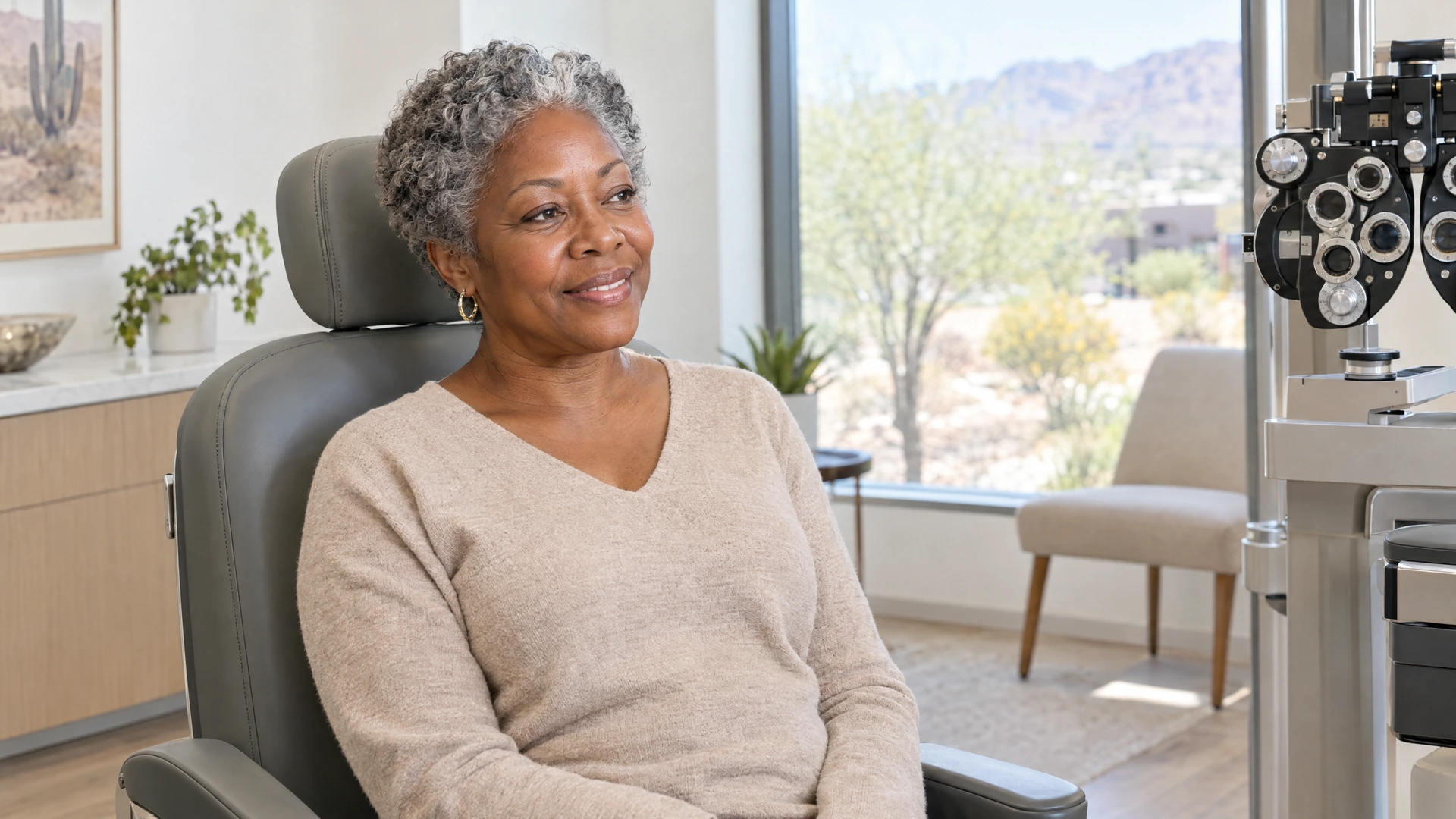
    Black woman in her 60s seated in an optometry exam chair, accompanying a guide to punctal plugs

    TLDR: Punctal plugs slow tear drainage to keep your own tears on your eyes longer. They are an option for dry eye, especially when you have too few watery tears, with dissolving and longer-lasting removable designs. Trial benefits remain uncertain, and plugs need follow-up for comfort, watering and fit.

    Answer: Punctal plugs are tiny devices placed in tear drain openings to conserve your tears. For Las Vegas patients, the decision starts with why the eyes feel dry and whether inflammation needs treatment first. An optometrist evaluates those needs before discussing plugs, their uncertain average benefit, and risks such as irritation, watering, loss and infection.

    You want your evening back. Dinner is over at your home in Summerlin, and you reach for the drop bottle beside your bed again. Punctal plugs sound appealing when moisture never seems to stay put. The smart question is whether conserving tears belongs in your dry eye treatment.

    I reviewed 51 primary sources across five research lenses for this guide, and trial evidence for punctal plug benefits remains inconclusive. For you, the Cochrane review supports an honest discussion of uncertain benefit. My approach to dry eye care starts with your symptoms and the findings from your eye exam. Small device, clear job. Know the job before you say yes.

    What Are Punctal Plugs, and Which Type Fits Your Plan?

    Woman in her 60s walking comfortably through an open-air plaza in Summerlin, a guide to punctal plugs
    Punctal plugs aim to keep more of your own tears on your eyes.

    Punctal plugs keep your own tears on your eyes longer. Your tears normally drain through tiny openings called puncta. A plug sits in that drain and slows the exit. It conserves moisture already on the ocular surface, the exposed surface of your eye.

    Start with the material and location. You will hear temporary for dissolving plugs and semi-permanent for longer-lasting, removable plugs. Designs differ, including plugs at the drainage opening and others deeper in the drainage channel. Know which design is being considered before deciding whether it suits your care.

    Plug TypeWhat Happens to ItWhat Matters to You
    Temporary, dissolvingOften made from collagen and absorbed over timeA trial of tear retention before considering a longer-lasting device
    Semi-permanent, removableOften silicone or acrylic, designed for longer useComfort, fit, follow-up and the removal method

    Get three answers before any plug goes in your eye. What is it made of? Where will it sit? How does it come out? Those details make the choice more concrete than the word plugs alone.

    Who Should Consider Punctal Plugs?

    Older Hispanic man and his wife listening during a consultation, illustrating a discussion of punctal plugs
    An older couple listens during a consultation.

    Too few watery tears give plugs a clear job. That shortage is called aqueous deficiency. Holding moisture on your eye addresses tear loss through drainage. Plugs enter the discussion when artificial tears or other drops have not provided enough relief.

    Your dryness might have several causes. Tears also evaporate, and some eyes have both low tear volume and fast evaporation. Meibomian gland dysfunction involves eyelid oil glands working poorly, which leaves the tear film more vulnerable to evaporation. Retaining watery tears leaves that oil-gland problem to address separately.

    Calm the inflammation first. For your eyes, the 2017 TFOS DEWS II management report recommends treating surface inflammation before plugging because retained tears also hold inflammatory proteins. Then a plug has a clear job to do. Treatment order matters as much as the device.

    I want every step in your plan to earn its place. A plug needs a specific purpose, such as retaining watery tears when drops have fallen short. Every added step adds work for you. Name the benefit first, then decide.

    What Happens When a Plug Is Placed?

    You should know the steps beforehand. Placement begins with an examination to choose the plug’s type and size. The eye doctor performing the procedure selects the drainage opening and discusses whether numbing is needed. Bring up any worries about placement during planning, so you have answers before deciding.

    1. The eye doctor examines your eyes and selects a suitable plug.
    2. Your eye doctor numbs the area when needed.
    3. Your eye doctor places the plug in the chosen tear drain opening.
    4. You receive instructions for care and follow-up.

    Most people resume normal activities right afterward, according to the AAO plug guide. Read your instructions before leaving, and confirm the next appointment and the contact for a problem after placement.

    What Happens If a Plug Falls Out?

    A lost plug calls for a fit review. The 2017 TFOS DEWS II complication review identifies spontaneous plug loss as the most common complication, reported in up to 60 percent of cases. Your own risk varies. It is a practical reason to discuss follow-up before placement.

    A lost plug does not mean your whole plan failed. Tell me when you noticed the change and whether dryness returned. A fit check, a different device or a new approach belongs in that discussion. Keep your hands away from the plug, since rubbing contributes to movement or loss.

    New watering is another reason to check your plug. A plug sometimes retains more tears than your eye comfortably handles, and a different type might be needed. Infections are uncommon but sometimes require antibiotics or removal. Report a suspected infection to your eye doctor right away.

    How Do Plugs Fit With Drops and Eyelid Care?

    Woman in her 50s applying eye drops while seated on her bed, illustrating care alongside punctal plugs
    A woman applies eye drops while seated on her bed.

    Each part of your plan needs a purpose. Artificial tears add moisture, while plugs slow drainage. Targeted prescription eye drops address inflammation when appropriate. Keeping those roles clear helps you understand why a plan sometimes includes both drops and plugs.

    Your eyelids still matter. Warm compresses and eyelid hygiene address needs beyond tear retention, including care for meibomian gland dysfunction and blepharitis. A plug leaves those needs in place. My guide to dry eye treatment in Las Vegas explains the treatment steps and their methods.

    You need a routine you understand. Picture the plain bottle beside your bed before an early start across Las Vegas. Adding a plug should come with clear instructions about which drops and eyelid steps continue. Tell me when the plan becomes confusing so we sort out the purpose of each step.

    What Does the Evidence Say About Comfort?

    Asian man in his 60s reading a hardcover book in an armchair, accompanying a guide to punctal plugs
    A man reads a hardcover book in a living room armchair.

    Your comfort is the reason to consider treatment. In three trials reporting symptoms, the 2017 Cochrane review found little or no symptom improvement with plugs compared with no plugs, with very low-certainty evidence. The overall benefit remains uncertain. Your decision needs both the clinical reason and the research.

    Make your goal concrete: less irritation while you prepare dinner at home in Summerlin, or a more comfortable evening afterward. Those are aims to discuss, alongside unwanted watering or scratchiness, rather than results to assume before a trial.

    I judge your plan by what improves in your day. A plug staying in place tells us about retention. Your comfort tells us something different. Follow-up should consider both, along with the eye’s condition and whether the rest of your care still fits.

    Which Plug Symptoms Need Care Right Away?

    With plugs in place, contact your eye doctor right away about eye pain, scratchiness or suspected infection, as the AAO plug safety guide advises. Do not wait for your planned follow-up. My guide to when dry eyes need care covers the broader warning signs that call for urgent evaluation.

    How I Discuss Punctal Plugs at Vision by Amel

    Your plug decision includes what happens next. I am Dr. Amel Youssef, OD, founder of Vision by Amel. Depending on your eyes, punctal plugs belong among the options in a care plan. During your evaluation, I discuss the purpose of tear retention and what we need to reassess afterward.

    During your evaluation, describe any plugs placed by a treating eye doctor and what changed afterward. Less dryness, extra watering and an irritating sensation lead to different questions about your eye care. Persistent symptoms need reassessment. Following AAO referral guidance, I refer you to an ophthalmologist when your eyes need one, including for non-response, moderate or severe pain, corneal ulceration or vision loss.

    You will find Vision by Amel at Festival Plaza in Downtown Summerlin. Your evaluation includes digital diagnostics. My eye exams page explains the appointment. Book online or call my team, with no referral needed for an eye exam.

    Frequently Asked Questions About Punctal Plugs

    Do Punctal Plugs Hurt?

    You might feel pressure during insertion. Numbing is sometimes used, but some placements do not require it. A scratchy feeling near the eye’s corner is the most common side effect and often fades, though you should report it right away.

    Are Punctal Plugs Permanent?

    No. Temporary plugs dissolve, while semi-permanent plugs are designed for longer use and are removable when needed. Permanently closing your tear drain is a separate surgical procedure, as the American Optometric Association explains.

    Do Punctal Plugs Really Work?

    Plugs have a clear purpose: keeping your watery tears on the eye longer. Research has not established a reliable average improvement in symptoms. That distinction explains why a reasonable trial still needs a goal and a review of your response.

    Will a Temporary Plug Help Me Decide About a Longer-Lasting One?

    A dissolving plug offers a trial of retaining your tears. I would weigh improved comfort alongside excess watering before discussing a longer-lasting design. The temporary device is absorbed, so the next decision includes whether continued tear retention suits your eyes.

    How Are Punctal Plugs Removed?

    Removal depends on where your plug sits. Silicone plugs are removed with forceps or flushing, while plugs deeper in the drainage channel require surgery for removal. Establish the removal method before placement and leave removal to the eye doctor performing it.

    Book My Eye Exam Call (702) 858-4362

    Like this article? Add Vision by Amel as a preferred source, and you are more likely to see our articles in Google’s Top Stories.
    Add as a preferred source on Google

  • Sun Protection for Kids’ Eyes in Summerlin: UV, Sunglasses and Outdoor Play

    Sun Protection for Kids’ Eyes in Summerlin: UV, Sunglasses and Outdoor Play

    Sun Protection for Kids’ Eyes in Summerlin: UV, Sunglasses and Outdoor Play

    Family in hats and sunglasses at a Summerlin park, UV protection for kids' eyes

    TLDR: Make UV protection for kids’ eyes part of your outdoor routine in Summerlin, with sunglasses, a broad-brimmed hat and planned shade. Check the lens protection label before choosing a frame. For sports, match eye protection to the activity.

    Answer: Sun protection for children in Las Vegas starts with sunglasses selected for UV protection, a hat and a plan for outdoor time. Your child’s everyday sunglasses and sports eye protection serve different purposes. Read the lens label, check the fit and choose equipment for the activity before heading to a park or Red Rock trail.

    Your child wants the playground. You want a morning outside without another argument over a hat. Put eye health on the packing list now, while the sunglasses are still within reach on the kitchen counter.

    I am Dr. Amel Youssef, an optometrist and the founder of Vision by Amel. I reviewed 73 primary sources across five research lenses for this guide, and the sources distinguish sun protection from sports eye protection. Bring your questions about outdoor eye care to an eye exam, along with the eyewear your child already uses, and explore our eye exam services.

    Why Does UV Protection for Kids’ Eyes Start Early?

    Mother tying her toddler's sun hat on a patio, UV protection for kids' eyes
    A mother helps her toddler put on a wide-brim sun hat.

    Start protecting your child’s eyes now. The Environmental Protection Agency links UV radiation to a greater likelihood of certain cataracts. That supports reducing exposure from childhood, without predicting your child’s future risk. The hat and sunglasses belong in the toddler bag, right next to the sunscreen.

    Eye protection matters for today’s outing, too. The EPA UV Index guide describes painful corneal burns from excess UV, stronger UV at higher elevations and around reflective sand or water, and a seasonal peak from April through August followed by a fall decline and winter low. Make protection part of your usual departure routine, whether you are walking around the neighborhood or spending the morning near Red Rock. Start with the things you control: the gear, the timing and the shade.

    A hat your child wears beats perfect sunglasses left on the counter. That is my practical starting point for children’s vision care outdoors. Keep working toward a comfortable pair of sunglasses alongside the hat, and let your child choose a color after you check the protection details. Cooperation starts before the front door opens.

    How Does Las Vegas UV Change With the Seasons?

    Plan by the season. Then check the day’s UV forecast before you leave. Use the EPA guide’s seasonal pattern above to plan ahead, then use the daily forecast to choose the time. Your October soccer schedule deserves a fresh check, even when the air finally feels cool.

    SeasonMidday UV WindowYour Outdoor Plan
    SpringIn the continental US, the CDC identifies the strongest UV window as 10 am to 4 pm daylight saving time, or 9 am to 3 pm standard time.Check whether daylight saving time has begun before choosing your playground time. Check last season’s sunglasses and hats ahead of the EPA peak period described above.
    SummerChoose outings outside the daylight saving time window. Plan a shade stop before you leave for the park.
    FallCheck whether standard time has resumed before choosing an outing time. Revisit your soccer sideline plans after the clock change, even when the air feels cool.
    WinterPlan desert walks outside the standard time window when possible. Check the day’s forecast and take your hat and sunglasses.

    Use timing to reduce exposure. Early and late outings still get the hat and the sunglasses. Put them on your child before leaving for the playground. A quieter morning departure gives you room to check the fit before the slide wins everyone’s attention.

    Pack the plan before you pack the car. Decide where your family will pause and where the glasses case will ride. Put it within your reach, above the spare clothes and snacks. Check before departure, while you are still beside the car.

    What Eye Protection Does Your Child Need for Sports?

    Latino boy in baseball uniform wearing protective sports goggles before practice, sports eye protection for kids
    A young baseball player wears protective sports goggles before practice.

    Match the protector to the game. Prevent Blindness recommends sport-specific protectors with polycarbonate lenses meeting the current applicable ASTM standard, because ordinary prescription glasses and sunglasses provide inadequate sports protection. Tell me which sport your child plays so we discuss the right protection question. The supplier should show you the applicable standard for the product you are considering.

    Bring the helmet when you shop for the protector. Have your child wear the equipment together and point out anything that presses or shifts. Work through those fit problems with the seller before practice starts. A helmet change is a reason to check the combination again.

    Shop with three facts: the sport, the prescription, indoors or out. Give the seller your details before looking at frame colors. For outdoor play, get separate confirmation of the sports standard and the UV protection. A sporty shape answers neither question.

    Sunglasses are for the sun. Sports protectors are for the ball. Your child needs the right pair for each. For a child who already wears prescription glasses, bring the prescription information when shopping. My guide to signs your child needs glasses covers the everyday vision concerns to discuss with me.

    How Do You Choose UV Protection for Kids’ Eyes?

    Father helping his daughter try sunglasses at a kitchen table, UV protection for kids' eyes
    A father helps his daughter try on sunglasses at home.

    Read the label first. The US Food and Drug Administration says to choose UV400 or 100 percent UV protection on the label for protection against UVA and UVB, while warning that dark tint does not establish UV protection and toy sunglasses lack assured protection. Get the protection statement for the exact pair before your child falls in love with the frame.

    Make comfort part of the decision. Let your child look down and turn their head while you watch the frame. Listen for pinching behind the ears or pressure around the nose, then try the hat alongside the glasses. The mirror shows the color, but the try-on reveals what needs attention.

    1. Check the protection statement for the exact lenses. Save the product information with your purchase records.
    2. Try the frame on your child. Let them point to any pressure instead of settling for a quick nod.
    3. Add the hat. Watch whether the brim or hatband pushes the glasses out of position.
    4. Name the intended activity. A park walk and a baseball practice call for different equipment decisions.
    5. Check the full setup before leaving. Let your child show you how the hat and glasses sit together.

    Give your child a real choice. Set out the suitable options and let them pick a favorite. Then rehearse the departure at home, with shoes, hat and glasses together. Save the final decision until you have watched the whole setup in use.

    How Do You Prepare for Summerlin Parks and Red Rock?

    East Asian siblings hiking in hats and sunglasses with a parent, UV protection for kids' eyes
    Siblings wear hats and sunglasses on a Red Rock trail.

    The trail matters as much as the forecast. Use the EPA guide’s elevation and reflection guidance above when planning your stops. Build shade stops into your route before leaving home. Look at where you will rest as carefully as where you will walk.

    Get ready before the playground takes over. At a Summerlin park, put your child’s hat and sunglasses on before opening the car door for the dash to the swings. For Red Rock, check them alongside shoes and water at the trailhead. A familiar sequence makes the preparation clear.

    Pack for every activity on your itinerary. A family walk followed by sports practice needs the appropriate eyewear for each. Put your walking gear and sports equipment together for a final check before leaving home. Gear left in the garage protects no one.

    What to Bring Me About Your Child’s Outdoor Eyewear

    Bring me the pair your child wears outside. Add its lens information and the name of any sport they play, so our conversation starts with specifics. At your pediatric eye exam, describe what slips, what pinches and what you want to understand about the prescription.

    Start with the outing you have in mind. Describe the moment the glasses come off, whether your child removes them before the playground or leaves them behind before practice. Point to the part of the frame that bothers them instead of settling for a general complaint about comfort. Bring those details into our conversation about outdoor eyewear.

    Bring me your questions about a comprehensive eye exam and the glasses your child uses outdoors. For the visit itself, my first eye exam guide explains how to prepare. Use our Downtown Summerlin page to plan your visit.

    Frequently Asked Questions About Kids’ Sun Protection

    What If My Toddler Refuses to Wear Sunglasses?

    Start with the hat your child will keep on. The National Eye Institute identifies a hat as a practical option when sunglasses will not stay on. Treat it as a workable start while you keep trying sunglasses, rather than equal protection. Offer the glasses during a calm moment at home, before the excitement of the park.

    Are Polarized Sunglasses Better for My Child’s UV Protection?

    Read past the glare feature. The CDC travel guidance explains that polarization reduces glare but polarized or mirrored lenses provide no extra UV protection. Compare the UV protection statement separately when you shop, even when a product description leads with polarization.

    What If I Cannot Find My Child’s Lens Information?

    Contact the seller with your order details and ask for the lens material and UV protection statement. Request information for the exact lenses your child received, including any prescription replacement lenses. Keep that reply with the product records before deciding what to buy next.

    What Should I Ask Before Buying Sunglasses Online?

    Get the protection information for the exact frame and lens combination in your cart. Check the child sizing details and the seller’s process for handling a poor fit. Save the product description with your order, then compare it with the pair you receive.

    How High Is the UV Index in Las Vegas, and When Is It Worst?

    NOAA’s 2025 Las Vegas chart records 142 Very High or Extreme forecast days, peaks around 12 in June and July, and Low levels from roughly mid-November through January. These are city forecasts, separate from your child’s eye exposure. Use the seasonal pattern to choose an outing time, then check the day’s forecast before leaving.

    Book My Eye Exam Call (702) 858-4362

    Like this article? Add Vision by Amel as a preferred source, and you are more likely to see our articles in Google’s Top Stories.
    Add as a preferred source on Google

  • Eye Care for Nevada Residential Facilities for Groups

    Eye Care for Nevada Residential Facilities for Groups

    Eye Care for Nevada Residential Facilities for Groups

    Clinician visiting a resident in a group home, eye care residential facilities for groups Nevada

    TLDR: I help you plan eye care for Nevada Residential Facilities for Groups around the home’s license and the residents who want an examination. Your preparation list needs voluntary participation, verified mobile-practice credentials, benefits, and a private room. Assign results, eyewear, and referral tasks before scheduling the visit.

    Answer: Eye care for Nevada Residential Facilities for Groups starts with your facility type, resident interest, and a check of my practice’s credentials and service scope. I coordinate planned examinations and eyewear services through a facility-coordinated vision day at your home. Prepare consent and insurance records, a private room with a power outlet, and named contacts for results, glasses delivery, and referrals.

    Give every preparation task a name. Your staff needs to know who handles consent, where I examine residents, and who follows up afterward. Put those decisions on the visit plan with a contact from my practice for unresolved questions. A caregiver carrying glasses to the room needs clear instructions before the exam starts.

    Describe the home before setting a date. Use on-site eye examinations for senior living to plan around your facility type, location, and resident support needs. Review the services available in your Las Vegas home and the route to additional assessment elsewhere. Keep the resident’s choice central when building the schedule.

    What Are Nevada Residential Facilities for Groups?

    Resident and visiting clinician in a residential home, eye care residential facilities for groups Nevada
    Resident and visiting clinician in a residential home.

    Start with the home’s licensed classification. Under Nevada’s statutory definition of a residential facility for groups, the category covers establishments supplying meals, housing, assistance and limited supervision to people who are aged, infirm or have intellectual or physical disabilities, subject to the statute’s exclusions. It includes assisted living facilities. Give me your actual classification from the facility record before describing the rooms and residents involved.

    Use the right plan for day care. Nevada’s facility definitions exclude establishments providing care only during the day from the RFG category and separately define adult-day-care facilities. Tell my team which setting you operate before planning the visit. A day program’s arrival and departure list needs its own attendance and handoff review.

    Have the license record ready. I reviewed 69 primary sources across five research lenses for this series, and Nevada treats assisted living and dementia-care endorsements as specific facility requirements. Nevada’s residential facility regulations address an assisted-living endorsement and an endorsement for care of residents with Alzheimer’s disease or related dementia. Read your home’s actual license and endorsements when describing its services to my team.

    How Should You Plan Eye Care for Residential Facilities for Groups in Nevada?

    Caregiver and clinician planning access beside a resident, eye care residential facilities for groups Nevada
    Caregiver and clinician planning access beside a resident.

    Begin with the resident’s reason. Record who wants an eye exam, who has current glasses to review, and who has an unfinished follow-up request. Send your resident’s concerns through private intake before the visit. A note about trouble reading at the table gives me a concern to assess without staff assigning a diagnosis.

    Describe the help each resident needs. Tell my team about the wheelchair, escort, or familiar caregiver your resident will need before reserving appointment times. Review positioning and communication needs alongside the staff assistance available at your home. Put the support plan with the resident’s visit details so the escort knows what to do.

    Walk from the bedroom to the exam room. Check your route for access, then review privacy, the power outlet, and space for portable examination equipment with my team. Get the room layout settled before the visit. Keep a scheduling alternative ready for residents unavailable at their planned time.

    Plan the trip after the referral. During your initial call, identify which needs the visit addresses and how appointments elsewhere are booked. Name who helps the resident or representative arrange travel when needed. Include that person in the referral handoff before an outside appointment becomes an open task.

    What Resident Choice and Consent Steps Belong in Your Plan?

    Clinician listening to a resident and caregiver, eye care residential facilities for groups Nevada
    Clinician listening to a resident and caregiver.

    Keep the invitation voluntary. Nevada’s residential service-contract requirements protect residents’ choice to obtain services from providers without a facility contract. Explain your vision day option while respecting the eye doctor and appointments a resident already has. I put the resident’s decision ahead of filling your facility schedule.

    Complete consent before assigning signatures. Use my team’s intake process to review current guardian or healthcare power of attorney documents where a representative is involved. Your staff needs the person’s actual authority clear before requesting a signature. Keep transport and scheduling tasks separate from the resident’s decision to receive care.

    Record a refusal privately. Nevada’s rule on rejection of medical care recognizes a resident’s rejection and requires documentation. Follow your facility’s process and tell my team the appointment has changed. Keep that response in the appropriate record and out of the common room’s schedule or discussion.

    Set who receives each update. Record your resident’s preferred contacts for scheduling, then use my team’s clinical communication process for results and health records. Send personal information through secure intake, away from public forms and visitor areas. Use the resident consent planning guide to prepare questions about signatures and sharing information.

    How Do Mobile Credentials and Facility Responsibilities Fit Together?

    Care director and clinician coordinating a resident visit, eye care residential facilities for groups Nevada
    Care director and clinician coordinating a resident visit.

    Verify the mobile clinic’s requirements. Nevada’s mobile optometry statute establishes certification, specified service populations including patients with impaired or restricted mobility, and licensee direction and final examination requirements. Ask me to explain how your visit meets those requirements before invitations go out. A residential address alone does not establish each resident’s eligibility for that service population.

    Confirm who leads your visit. Confirm my role as your visiting optometrist, verify the mobile clinic’s credentials, and settle the examination scope while your home prepares the private room. I determine the assessment and explain the referral process. Keep a named contact beside unresolved scope questions before staff invite residents to register.

    Planning taskYour facility’s roleProvider confirmation
    Visit suitabilityDescribe the setting and resident access needsMobile-clinic credentials and examination scope
    ParticipationGather interest and name resident contactsConsent and representative documentation
    BenefitsSend requested records through secure intakeResident-specific verification before service
    Examination spaceOffer privacy, access and electrical supplySuitability for the planned assessment
    Follow-upTrack outstanding actionsReports, eyewear and referral instructions

    Build the schedule around staff support. Set how your team escorts residents and supplies caregiver help during the visit. Name who updates the schedule when someone is late or needs a different appointment time. Use a private attendance list with no clinical reasons displayed beside resident names.

    How Do Benefits and Recurring Eye Care for Nevada RFGs Work?

    I arrange benefit verification before service. Send your resident’s actual Medicare, Medicaid, or Medicare Advantage details through secure intake for my team to review. Keep examination benefits and prescription eyewear choices clear in that conversation. An insurance card belongs with intake records, and individual plan questions belong outside the general facility announcement.

    Follow my clinical timing between visits. Your next group vision day belongs on the facility calendar, while each resident’s next clinical appointment follows the examination instructions. Track unfinished assessments and referrals before selecting another group date. Review which actions need attention now so they do not wait for the next facility visit.

    1. Review open examination, referral and eyewear tasks from the previous visit.
    2. Gather current resident interest and confirm the contact list.
    3. Arrange updated consent and benefit verification through my team.
    4. Confirm the room, staff availability and resident schedule.
    5. Agree how results and outstanding tasks will reach the next shift.

    Check open tasks before booking again. Use the facility vision day checklist to prepare your next planning call and review what staff have completed. Name who contacts residents or representatives about glasses, adjustments, and further appointments. Close each task when the assigned contact confirms completion, with the update recorded for the next shift.

    Keep concerns with the resident’s record. Share the changes your staff observed and follow my assessment instructions. Review medical eye care services when discussing whether a comprehensive eye exam fits the resident’s needs. Record which services require another setting alongside the next appointment or referral task.

    Schedule a Vision Day for Your RFG With Me

    Plan the exam around your home with me. I am Dr. Amel Youssef, OD, founder of my practice, Vision by Amel, in Downtown Summerlin. I bring on-site eye care to Nevada Residential Facilities for Groups and assisted living homes across the Las Vegas Valley. Bring resident interest, consent questions, insurance documents, and the room layout to your planning call so I review examination scope, eyewear selection, measurements, and referrals with you before building the schedule.

    Prepare your private room with electrical access and name your staff contact. My team provides the secure intake route and coordinates the follow-up list with you. Participation is voluntary, and I arrange insurance benefit verification before service. Benefits depend on each resident’s eligibility and plan terms. My team and I review results, eyewear delivery, adjustments, and clinical follow-up with you before the visit ends.

    Frequently Asked Questions About Eye Care for Nevada RFGs

    What should we include in the first facility planning request?

    Provide your contact details, role, facility type, address and preferred month. Use approximate interest information to start the scheduling conversation. Keep resident names, insurance cards and medical histories out of the public marketing form.

    How should an operator coordinate visits across several homes?

    Make a separate room, contact, and schedule plan for each home. Review each address with my team before setting visit dates for your residents. Keep attendance and follow-up tasks assigned to a local staff contact who knows that home’s residents and layout.

    What if the planned private room becomes unavailable?

    Ask me to review the alternative room before moving equipment or residents. Describe your replacement space, privacy, access, and power outlet against the planned services. Update the schedule after I confirm the new layout.

    How should we hand over coordination when an administrator leaves?

    Give the replacement administrator my practice contact and open task list through your internal handoff process. Update my practice’s facility contact record so reports and order questions reach the right person. Assign ongoing reports, eyewear requests, and referrals before the outgoing administrator leaves.

    What should a resident’s representative know before attending?

    Explain why the representative is attending, when to arrive, and which authority documents need review. Set those details with my team before adding the appointment to your final schedule. Give the representative the private intake route for documents and questions.

    Schedule an On-Site Vision Day Speak With Dr. Amel’s Team: (702) 858-4362

    Like this article? Add Vision by Amel as a preferred source, and you are more likely to see our articles in Google’s Top Stories.

    Add as a preferred source on Google

  • Screens, Contact Lenses and Dry Eye: Daily Habits That Help

    Screens, Contact Lenses and Dry Eye: Daily Habits That Help

    Screens, Contact Lenses and Dry Eye: Daily Habits That Help

    Woman resting her gaze out a home office window beside a laptop, illustrating screen time and dry eye

    TLDR: Better blinking, a lower monitor and regular breaks give you a practical starting point for screen time and dry eye. Pair those habits with careful contact lens care, and let an optometrist evaluate recurring discomfort.

    Answer: Three habits help with screen-related dry eye: full blinks, distance breaks and a monitor below eye level. For your workday in Las Vegas, keep glasses within reach and follow your lens care instructions. Recurring discomfort calls for an eye exam focused on both your eyes and your lenses.

    Your laptop closes. Your eyes still feel gritty. You spent the afternoon answering messages at home in Summerlin, and your contacts stayed in through dinner. Sound familiar? Give your eye health a place in the workday before another late laptop session begins.

    I reviewed 51 primary sources across five research lenses for this guide, and reduced blinking during screen work is a recognized dry eye aggravator. Full blinks, regular breaks and a screen below your eye level are practical habits from the AAO Preferred Practice Pattern, a guideline. Those habits belong alongside dry eye treatment when discomfort persists.

    Where Should Your Screen Sit for Dry Eye Comfort?

    Man lowering his monitor below eye level on an adjustable arm, a screen time and dry eye habit
    The monitor center sits below his eye level.

    Lower beats higher. Set the center of your screen below eye level. The American Optometric Association recommends a screen center 15 to 20 degrees below eye level and 20 to 28 inches from your eyes. Start from your normal seated position.

    The center is your reference point. Find it before adjusting the stand. A monitor with its top below eye level also puts its center below your gaze, but check the actual distance and angle. The goal is a comfortable downward view.

    You need no new furniture, but you need an honest look at your real day. Check the desk in your spare room, the laptop on the kitchen table and the monitor at work, then set each up for the way you sit.

    Your SetupThe Useful ChangePut It Into Practice
    Monitor above your gazeSet the center below eye levelAdjust while seated in your usual chair
    Laptop tucked behind other equipmentMake room at your intended viewing distanceMove the clutter before moving your chair closer
    Breaks spent scrollingChoose a distant viewLeave the phone beside the keyboard
    Contacts through a long device sessionKeep prescription glasses accessibleMake switching part of your workday plan

    Leave your chair and display where you intend to use them, then check the view when you sit down. A shared desk needs another look after someone else adjusts it.

    What Should Your Contact Lens Care Routine Include?

    Woman holding a contact lens case at a clean bathroom counter, illustrating screen time and dry eye
    A contact lens case stays away from the faucet.

    Protect your eyes with a dependable routine. Under CDC lens care guidance, wash and dry your hands before handling lenses, keep lenses away from water, remove them before showering or swimming, never mix fresh and old solution, and replace your case at least every three months. Make those steps part of the day even when work runs late.

    1. Start with clean, dry hands before touching your lenses.
    2. Take lenses out before a shower or swim.
    3. Use fresh solution for reusable lenses according to your care instructions.
    4. Keep the case replacement date in your calendar.

    Daily care should fit real life. A Summerlin morning often means answering messages before you have finished getting ready, then rushing out with your lens case still on the counter. Pause long enough to follow the routine. Your next meeting does not change the care instructions.

    Tell me about the messy days too. Travel, late meetings and overnight stays bend your lens routine, and they matter. Explain which step gets difficult when you are away from home or working late. I want a useful eye care conversation grounded in what you do.

    I believe your lens routine should be simple enough to follow on your busiest day. Keep your prescribed instructions together so you have a clear reference at home and when you travel. Ask my team when a step is unclear. A direct answer beats guessing over the bathroom sink.

    Why Do Screen Time and Dry Eye Go Together?

    Your blinking changes at a screen. According to the AAO computer-use guide, you normally blink about 15 times a minute, compared with roughly 5 to 7 during screen use. These are approximate rates, varying by person. Screens do not permanently damage your eyes, though long sessions leave some eyes uncomfortable and dry.

    Finish the blink. In a study published in Optometry and Vision Science involving 21 people, incomplete blinks tracked with symptoms, while increasing blink frequency alone did not improve symptoms. For you, the practical point is full eyelid closure. Chasing a faster blink count misses part of the problem.

    Give that habit a clear cue. When you finish a message or look away from a spreadsheet, notice whether your lids meet as you blink. Let the pause interrupt the long stretch of staring. You do not need to count every blink through every meeting.

    Count every screen in your day. Include the phone while you ride as a passenger on the 215, the recipe tablet and the late laptop session. Your work calendar captures only part of that time. For the air around those screens, read my guide to Las Vegas air and dry eyes.

    How Do You Build a Screen Break That Works?

    Man looking toward distant mountains from an office patio, illustrating screen time and dry eye
    Use a screen break to look into the distance.

    Give your eyes a distant view. The American Optometric Association recommends the 20-20-20 rule: every 20 minutes, look 20 feet away for 20 seconds. From a Summerlin office window, your view might be the red rock ridgeline. Leave the next message until the break ends.

    A phone swap keeps you looking close. Set the device down beside your keyboard and choose something farther away before the next task starts. On an office patio, let the mountains hold your attention for the pause. The view is already there.

    Make room for glasses, too. The AAO computer-use guide advises switching to glasses during long device sessions and avoiding sleep in contact lenses. Keep your glasses somewhere easy to reach before settling into evening work.

    End your lens day on purpose. Glasses and case on the desk before the after-dinner laptop opens. Lenses out before a late session turns into sleep.

    When Do Screen or Lens Symptoms Need Care Today?

    Seek care right away when your eye is red, painful and your vision is blurred: MedlinePlus identifies that combination as a medical emergency. Another screen break is no reason to delay care.

    Remove your contacts and call your eye doctor immediately for irritated red eyes, worsening pain even after lens removal, light sensitivity, sudden blur, unusual watering or discharge, as CDC infection guidance directs. When your eyes need an ophthalmologist, I refer you to one. My guide to when dry eye symptoms need care covers other warning signs.

    How I Approach Your Lens Comfort at Vision by Amel

    Woman seated for a contact lens fitting with doctor hands holding a case, illustrating screen time and dry eye
    Bring your lens comfort questions to your contact lens fitting.

    Your lens fit belongs in the discussion. At Vision by Amel, a contact lens fitting includes options from daily disposables onward, with changes to material, wear schedule or fit for discomfort. Tell me what you need from your contacts across desk work, errands and evenings out. I believe your workday deserves a lens plan you understand.

    Your comprehensive eye exam gives us time to discuss comfort alongside prescription needs. Bring the routine into that conversation: when you put lenses in, the screen tasks you spend time on and when you switch to glasses. I want to understand what you need from dry eye treatment alongside your lens plan.

    Make the concern concrete: are you removing lenses earlier than you want, or leaving them in through another uncomfortable evening? Mention whether the same feeling occurs with glasses. We will discuss lens choices with your actual day in mind.

    You will find my practice at Festival Plaza in Downtown Summerlin. Book online or call, with no referral needed for an eye exam. Let my team know you want to discuss lens comfort as well as your prescription.

    Frequently Asked Questions About Screens, Contact Lenses and Dry Eye

    How Much Less Do We Blink on Screens?

    In a study published in Graefe’s Archive, 30 participants with dry eye averaged 16.8 complete blinks per minute during conversation and 6.6 when screen work began. This small study measured complete blinks specifically. It gives you a concrete example of the change during focused work.

    Can Contact Lenses Cause Dry Eye?

    Yes. The AAO computer-use guide lists dry eye as a possible ongoing problem when you wear contacts through long device sessions. But a dry feeling in your contacts also occurs with normal tear function, according to the AAO. I distinguish lens discomfort from a tear film problem rather than treating the sensation alone as a diagnosis.

    Do Screens Damage Your Eyes?

    The AAO computer-use guide says screens do not permanently damage your eyes. For a more comfortable setup, that guide recommends sitting about 25 inches away, roughly arm’s length, with your gaze angled slightly downward. Use that distance when checking the space between your chair and screen.

    Can Screens Cause Dry Eye?

    Screen work contributes to dryness through reduced and incomplete blinking. Reading and driving also involve sustained visual effort linked with reduced blinking in the AAO guideline. Tell me when your symptoms appear during those activities, too.

    How Should I Care for Contact Lenses When My Eyes Feel Dry?

    Keep following the care instructions for your prescribed lens type, and use glasses for a break during long device sessions. Daily disposables and reusable lenses need different routines, so tell me which you wear. Fit, material and wear schedule are all part of the discussion when your usual lenses feel uncomfortable.

    Book My Eye Exam Call (702) 858-4362

    Like this article? Add Vision by Amel as a preferred source, and you are more likely to see our articles in Google’s Top Stories.
    Add as a preferred source on Google

  • Your Child’s First Eye Exam in Summerlin: What to Expect

    Your Child’s First Eye Exam in Summerlin: What to Expect

    Your Child’s First Eye Exam in Summerlin: What to Expect

    Mother and son entering a boutique for a child's first eye exam

    TLDR: Your child’s first eye exam in Summerlin starts with your concerns and ends with a clear next step. Talk through the visit, pack previous screening results, and leave time to hear the findings. Vision by Amel offers weekend appointments at Festival Plaza.

    Answer: At your child’s first eye exam in Summerlin, I review health history, check vision and eye health, and explain the findings. A comprehensive eye exam includes how the eyes focus and work together. As your optometrist, I use those findings to explain whether glasses, further assessment, or a return visit belongs in the plan.

    First visits come with questions. What is that machine, and what will my child need to do? Between preschool pickup and a weekend soccer game, you want clear answers before adding another appointment. My eye examination services page explains how I examine your eyes, and this guide walks you through your child’s visit.

    I start with your concerns. You leave with a next step. Whether you are driving across Las Vegas or coming from a nearby Summerlin neighborhood, preparation starts with knowing what you want to understand about your child’s eye health. I believe good eye care leaves parents with a plan they know how to use.

    How Do You Prepare for Your Child’s First Eye Exam?

    A father and his young son cover one eye in a playful game to prepare for a child's first eye exam
    A father and son share a playful one-eye game at home.

    Keep the explanation small. Your child needs a sense of what comes next. I reviewed 73 primary sources across five research lenses for this guide, and the AOA recommends talking through the visit beforehand with your child.

    Start with a conversation at home. The AOA recommends talking about the examination beforehand, inviting your child’s questions, and allowing about an hour for a preschool exam. Sitting together on the bedroom rug gives you a simple place to begin. Say, “We are going to have your eyes checked, and you get to ask questions too.”

    Pack once, then stop rehearsing. Put the records and questions together before you head toward Festival Plaza. Use this list to prepare for your pediatric eye exam while leaving the testing to me.

    • Previous vision screening results, a referral note, and any earlier eye records.
    • Current prescription glasses, if your child already wears them.
    • Medicines, allergies, relevant health history, and known family eye conditions.
    • Your main concern, with a concrete example of when it happens.
    • A familiar comfort item and the questions you most want answered.

    Tell my team about your child’s communication preferences, sensory concerns, or worries about unfamiliar rooms. Be specific about the worry. A child nervous about a machine needs a different explanation from a child worried about giving a wrong answer. Help me understand the worry before your child walks in.

    When Should You Book Your Child’s First Eye Exam?

    You deserve to see the timing advice side by side. The experts split on routine children’s vision checks. The table separates the American Optometric Association’s examination schedule from the screening approach of the American Academy of Ophthalmology and the American Association for Pediatric Ophthalmology and Strabismus.

    ApproachPublished GuidanceWhat to Discuss
    AOA, infancyThe AOA infant guidance recommends a first thorough examination at about age 6 months, even without apparent problems.Your baby’s previous checks and health history.
    AOA, preschoolThe AOA preschool guidance recommends an in-person examination between ages 3 and 5, then another around school entry at age 5.What your child has already had checked.
    AOA, school yearsThe AOA school-age guidance recommends annual examinations for school-age children, with more frequent visits for problems or risk factors.Your child’s individual follow-up plan.
    AAO and AAPOS, screening firstThe AAO and AAPOS joint statement supports screening and referral after a failed screen, while finding no proven medical benefit from routine comprehensive examinations in otherwise normal children without symptoms.Your child’s screening results, symptoms, and risk factors.

    Start with the checks your child has already had. Let my team know whether you are arranging a routine first visit or following up on a concern. The pediatric eye exam guide covers timing, Medicaid, and school screenings to give you more context for that conversation.

    What Happens During the Exam, Step by Step?

    Mother holding her daughter during a child's first eye exam
    A child sits on her mother's lap during an eye examination.

    Your child’s age shapes the examination. The AAO’s pediatric evaluation guidance describes history, vision and eye health checks, with techniques and order adapted to age, development, and cooperation. Here is the visit in five steps. The order bends to your child.

    1. Start with the history. Tell me why you booked and what you want answered. We review earlier results, medicines, and family eye history, including any known amblyopia or strabismus. Share the diagnosis as you received it.
    2. Check clarity of sight. Visual acuity describes how clearly your child sees. Let me explain the task, then give your child space to respond. You do not need to supply an answer when they hesitate.
    3. Look at teamwork. I check eye alignment and movement as part of evaluating how the eyes work together. Point out any instruction that seems unclear so I know what needs explaining.
    4. Assess focus and eye health. Refraction measures the need for a glasses prescription. I also evaluate the eyes themselves and explain the findings relevant to the concern you brought.
    5. Set the next step. We discuss what the findings mean, whether more assessment is needed, and what to do next. Before leaving, confirm how and when to follow the plan.

    You matter in that room. Share what helps your child communicate, then leave room for their response. Say so when they need a pause or do not understand an instruction. I value an honest “I don’t know” more than a coached answer.

    What Should You Do After the Visit?

    A mother and her young son on the sofa at home as he wears his new glasses after his first eye exam
    Know when your child should wear new glasses before you leave the visit.

    Leave with a clear next step. You should know whether the plan involves glasses, further evaluation, or a return visit. Ask me to explain any unfamiliar term before you head back to the parking area. Skip the jargon. Leave with one clear next step.

    When glasses are prescribed, settle the wear instructions first. You need to know when your child should wear them and what follow-up I recommend. During frame selection, invite your child to describe what presses at the nose or behind the ears. Discuss lens choices, including polycarbonate lenses and UV protection, in relation to the prescription.

    Keep the plan within reach. Save your visit information with the records you brought, so the next appointment starts with the previous findings available. Before leaving, repeat the next step back to me and clear up anything you are unsure about. Leave knowing what happens next and who to contact with questions.

    How Do You Plan the Trip to Festival Plaza?

    Family walking toward their car after a child's first eye exam
    A family walks together toward their car at a sunny plaza.

    Plan the arrival before you leave home. Vision by Amel is at 2010 Festival Plaza Dr, Suite 195, Las Vegas, NV 89135, in Downtown Summerlin at Festival Plaza. My office sits minutes from The Vistas, The Paseos, Sun City and Red Rock Country Club. Use the Downtown Summerlin location page to plan your route, with time to park and walk to the suite.

    Weekend hours give you options beyond school pickup. My office opens seven days a week, Monday to Saturday from 9 am to 6 pm and Sunday from 11 am to 5 pm. Check available appointment times with my team when you book. Choose a time you can reach without rushing from the last stop.

    Leave space around your visit. Do not stack soccer practice right after. Give yourself time to hear the findings before packing everyone back into the car under the desert sun. Block the morning and keep it calm.

    How I Walk You Through a First Visit at Vision by Amel

    Your first visit starts with why you came. I am Dr. Amel Youssef, OD, the optometrist who founded Vision by Amel, and I guide you through your child’s eye examination. My team welcomes Summerlin families every week, and you do not need a referral to book an eye exam. Tell us your child’s age and your main concern when you call (702) 858-4362 or book online.

    You get an explanation alongside the equipment. The office uses Visionix digital diagnostics, from digital refraction and eye-pressure measurement with tonometry to retinal imaging and corneal mapping. My evaluation includes binocular vision, color vision testing where needed, and screening for eye disease. I perform a dilated eye exam only when I see a medical reason for one.

    The findings lead to your plan. We move from your child’s history through diagnostics and my evaluation to the next step. Prescription glasses are available from my gallery when they belong in that plan. Have me explain anything unclear about the prescription before you choose frames.

    Sort out benefits before the first visit. Before you arrive, my team uses your plan details to verify benefits by phone. Vision by Amel accepts Nevada Medicaid, VSP, EyeMed, Aetna, and other plans on our accepted list. Your individual plan determines the benefits, so have its details ready when you call.

    Frequently Asked Questions About Your Child’s First Eye Exam

    What Should I Say If My Child Is Afraid of Getting an Answer Wrong?

    Try saying, “You are here to show us what you see.” A blurry view is useful information to share, so let your child say when something looks unclear. Avoid praising a guessed answer as correct, and let me explain a task again when needed.

    Does My Child Need to Know Their Letters?

    No, the AOA preschool exam guidance confirms children do not need the alphabet or reading skills for an eye examination and recommends booking early in the day. Use that advice to plan your first visit. When you call, discuss an available time that fits your child’s usual routine.

    Can My 3-Year-Old Do an Eye Exam If They Won’t Sit Still?

    A restless child still deserves an assessment suited to their development. The AAO explains that cooperation helps determine the examination order. Tell me what is difficult for your child, then confirm which parts were completed and whether anything needs another visit.

    What If I Do Not Know Our Family’s Eye History?

    Share what you know and mark the gaps. A relative’s diagnosis is useful even when you do not know the treatment details. I will help you identify which missing information is worth gathering, rather than asking you to guess at a family condition.

    What Should I Ask When Booking a Visit for a Young Child?

    Give my team your child’s age and reason for coming, then confirm the appointment details. Check whether there are instructions to follow before arrival. Mention language or accessibility needs during the call, so you know what to expect before you set out.

    Book My Eye Exam Call (702) 858-4362

    Like this article? Add Vision by Amel as a preferred source, and you are more likely to see our articles in Google’s Top Stories.
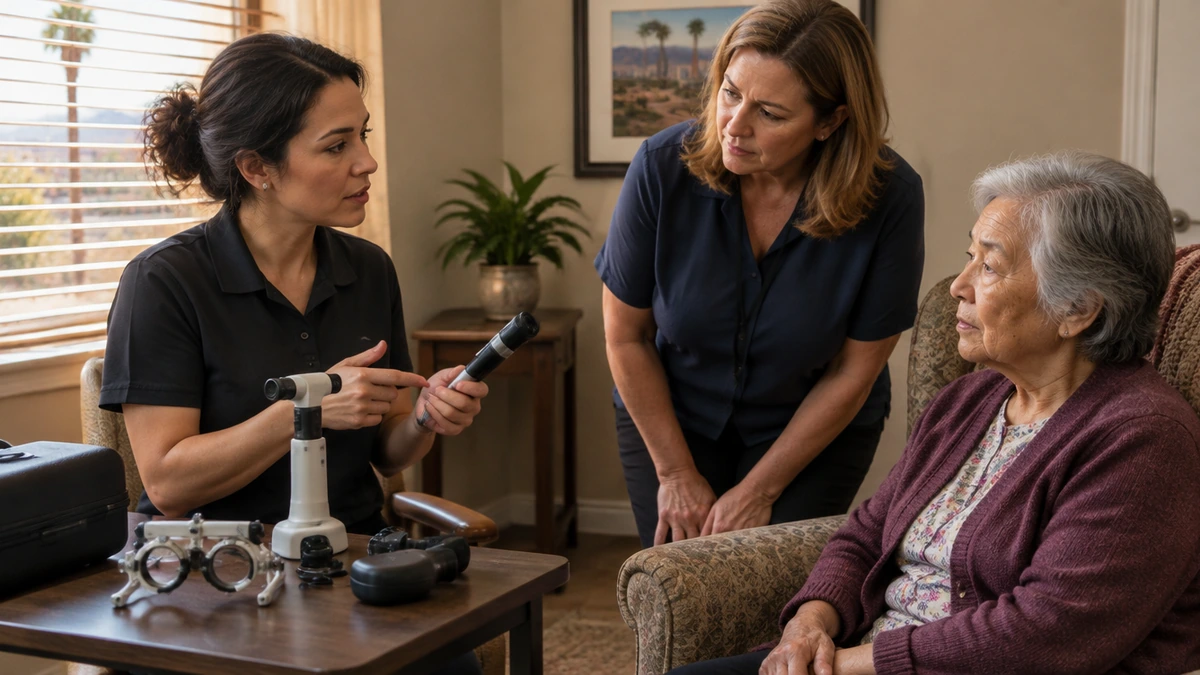
    Add as a preferred source on Google

  • Mobile Eye Exam Versus Vision Screening: What Facility Operators Should Know

    Mobile Eye Exam Versus Vision Screening: What Facility Operators Should Know

    Mobile Eye Exam Versus Vision Screening: What Facility Operators Should Know

    Clinician explaining an assessment to a resident, eye exam versus vision screening seniors

    TLDR: I help you compare an eye exam versus vision screening for seniors by what gets checked. Screening identifies selected vision concerns, while a comprehensive examination also evaluates overall eye health. Your visit plan needs the examination scope, a record of findings, and the next step for anything unresolved.

    Answer: For a mobile eye exam, I bring planned examination services to your assisted living facility in Las Vegas. Vision screening checks selected aspects of vision, leaving other questions for a fuller assessment. Choose the service by its tests, prescription process, findings, and follow-up, then prepare residents and the room for that specific visit.

    I want you to know the service scope before booking. You need to know what residents receive, what staff prepare, and what happens if testing remains incomplete. Put those details beside the schedule before inviting residents. A resident asking about blurred print needs a clear explanation of what the appointment will address.

    Match the room to the assessment. A facility-coordinated vision day joins preparation, examination, and follow-up in your visit plan. As your mobile optometrist, I explain the service and its limits, whether residents sit in your private room or attend another appointment. The location alone does not tell you how complete the examination will be.

    Eye Exam Versus Vision Screening for Seniors: What Changes?

    Resident and care director discussing an assessment, eye exam versus vision screening seniors
    Resident and care director discussing an assessment.

    A screening has a limited purpose. MedlinePlus explains screening limitations: screening identifies some common problems but misses other disorders, while a comprehensive eye exam also evaluates overall eye health. When comparing providers, check which measurements your proposed screening includes before putting it on the schedule. I do not treat a passing chart result as a complete assessment of a resident’s eyes.

    Give the appointment its correct name. Identify whether your booking is for screening, refraction, a comprehensive examination, or another defined service before comparing appointment slots. I explain the purpose of the visual acuity measurement in your visit description. Keep the planned service and completed work in the resident’s follow-up record.

    Check components before accepting the label. I reviewed 69 primary sources across five research lenses for this series, and Nevada defines comprehensive examinations by their components. Nevada’s comprehensive-examination statute specifies in-person elements and permits an alternative obtaining comparable data when a component cannot be performed. When comparing providers, review the planned components and documentation of incomplete testing with the optometrist offering your proposed service. The same statute distinguishes non-comprehensive examinations.

    Your comparison questionVision screeningComprehensive examination
    What is the purpose?Identify selected vision concernsAssess vision and overall eye health
    What should the proposal describe?Measurements and screening criteriaPlanned examination components
    What documentation should you request?Result and recommended next stepFindings, completion limits and clinical plan
    What about glasses?Identify whether refraction needs a separate appointmentConfirm the prescription and dispensing process
    How do you track follow-up?Record who arranges further assessmentRecord who handles clinical follow-up and referrals

    Eye Exam Versus Vision Screening for Seniors: What Should You Verify?

    Clinician preparing portable examination equipment, eye exam versus vision screening seniors
    Clinician preparing portable examination equipment.

    Put the scope in writing. Your visit description should identify what addresses vision correction, what assesses the health of the eye, and what the facility setting supports. Review those limits with me before your planning call ends. Give staff the description so they prepare the room and residents for the actual examination.

    Describe omitted services accurately. Nevada’s examination advertising rule requires a specific disclosure when an advertised examination omits a listed service, including subjective refraction or dilated fundus examination. When comparing providers, use the selected practice’s reviewed examination wording in your resident invitation. Keep the approved description with the visit plan before staff distribute the invitation.

    Set the location for retinal assessment. The AOA diabetes guideline recommends examining the retina through dilated pupils for diabetic retinopathy and treats retinal photography as a separate consideration. For your resident with diabetes, I clarify where the clinically indicated examination will happen. Record the next appointment when the needed assessment extends beyond the facility visit.

    Describe the resident in the chair. For your on-site eye care visit, I need positioning and communication details, including staff help, a familiar caregiver, or flexible scheduling. Supply those needs before booking without promising completion of every test. I determine the assessment and record its limits.

    How Do Prescriptions Differ From an Eye Health Assessment?

    Clinician and resident discussing current glasses, eye exam versus vision screening seniors
    Clinician and resident discussing current glasses.

    Bring both sets of concerns. For example, your resident wants replacement glasses, while the caregiver has noticed a change in reading or another familiar activity. Give me those observations alongside the prescription question. Before the visit ends, get the next steps for refraction, findings, and any further evaluation clear in the care record.

    Track glasses and clinical follow-up separately. I explain the prescription, and my eyewear team handles selection, frame fitting, and the order through delivery. Keep any additional clinical appointment on your follow-up list under its own contact. A glasses delivery update leaves pending examination findings for me to address.

    Prepare the glasses and relevant history. Review Vision by Amel’s eye examination services before your planning call so you have specific questions about the facility examination and services needing another setting. Supply the requested records through secure intake. Use the resulting instructions to assign staff follow-through after the examination.

    My team and I check benefits before service. Identify your resident’s actual Medicare, Medicaid, or Medicare Advantage plan for verification against the planned care. Review examination benefits and eyewear choices separately with my team. Keep the plan’s response in the resident’s private administrative record so staff know which questions remain open.

    What Should Clinical Documentation and Referrals Include?

    Resident and caregiver discussing follow-up, eye exam versus vision screening seniors
    Resident and caregiver discussing follow-up.

    Name who receives the findings. Plan how your resident, authorized representative, and appropriate care contacts receive reports before the exam begins. Set the secure channel for records and assign a facility contact to track instructions. Your contact follows up on missing reports, and I interpret the examination findings.

    Give missing reports a follow-up contact. A Canadian facility optometry program tracked follow-up timing and supplied examination reports to family physicians. Use those published tasks to prepare your own communication plan with my team. Record who checks for the report and who calls when an expected document has not arrived.

    Keep unfinished testing on the list. Your record needs the pending assessment, the person booking it, and the way the resident receives the plan. Record my intended timing alongside the task. Bring open actions to the next staff handoff instead of marking the visit complete because the resident attended.

    Make the referral ready to act on. Name who contacts the outside doctor receiving the referral, who sends the relevant records securely, and who helps your resident attend. Include the contact route for questions beside the referral entry. Check completion in the resident’s private care record so staff know whether the appointment happened.

    How Do You Choose the Right Service for Residents?

    Start with the resident’s reason for coming. Describe prescription questions, existing follow-up requests, and reported changes so I recommend the appropriate service for each person. If your resident holds a book away from the chair, describe that concern plainly. A shared address does not give everyone the same examination needs.

    1. Gather resident interest and the reason each person wants an appointment.
    2. Verify resident consent and any representative’s authority through the intake process.
    3. Request the planned examination scope and identify needs requiring another setting.
    4. Confirm benefits, private space, electrical access and the resident schedule.
    5. Assign responsibility for reports, eyewear questions and referral follow-up.

    Give staff a practical preparation list. Use the on-site examination workflow to organize your resident handoff before and after the visit. Apply the mobile optometrist selection questions when reviewing credentials, scope, and follow-up. Get answers tied to the room and residents involved in your facility’s appointment plan.

    Make the invitation match the service. Describe what your residents are choosing, voluntary participation, and how to raise questions before scheduling. Use my reviewed wording for the examination when you plan a visit with me. Keep the service name clear instead of calling every appointment a vision check.

    Request Comprehensive On-Site Eye Care With Vision by Amel

    Plan around your residents’ needs. I am Dr. Amel Youssef, OD, founder of my practice, Vision by Amel, in Downtown Summerlin. I invite you to plan a visit for your assisted living home, memory care community, or senior living community in the Las Vegas Valley. Bring the resident interest list and a description of the private room to the planning call. Review examination scope before building the schedule.

    Prepare the visit with my team. Your facility contact gathers resident interest, consent, and insurance documents and prepares a private room with electrical access. Participation is voluntary. My team and I verify insurance benefits before service. Benefits depend on each resident’s eligibility and plan terms.

    Plan your eyewear handoff with me. My team and I coordinate secure intake, eyewear selection, measurements, delivery, and adjustments. I review responsibility for follow-up or referral with you before the visit.

    Frequently Asked Questions About Mobile Examinations and Vision Screening

    What should we request if a proposal only says vision check?

    Get a service description naming the examination, its purpose, and the expected next steps. Keep it with your facility visit plan before circulating the invitation. Staff then have the same wording when a resident asks what the appointment includes.

    How should we handle residents already seeing another eye doctor?

    Keep existing follow-up appointments in the plan and let each resident choose whether to participate. Record what your resident wants the visit to address and send current care details through private intake. Set how your resident wants me and their existing eye doctor to share the relevant information.

    What if a resident changes their mind on examination day?

    Respect the decision and update your schedule. Tell my team the appointment has changed through the visit’s scheduling process. Offer information about another opportunity only if the resident wants it, with participation still voluntary.

    What should we do with old screening results?

    Keep old results available, with their source and date, for my review. Send the requested records through your secure intake channel once I identify which are useful. The date helps me see what the earlier screening describes.

    Who should explain an unfamiliar term in the examination report?

    I explain terms in my examination report and any action they call for. Send your question through the clinical contact route, quoting the report accurately. Record the explanation and resulting task in the resident’s care record.

    Schedule an On-Site Vision Day Speak With Dr. Amel’s Team: (702) 858-4362

    Like this article? Add Vision by Amel as a preferred source, and you are more likely to see our articles in Google’s Top Stories.

    Add as a preferred source on Google

  • Dry Eye Care in Summerlin: When to See an Optometrist

    Dry Eye Care in Summerlin: When to See an Optometrist

    Dry Eye Care in Summerlin: When to See an Optometrist

    South Asian woman rubbing one eye beside a coffee mug, dry eye care in Summerlin

    TLDR: Book dry eye care in Summerlin when discomfort keeps returning or interrupts your reading and work. An optometrist checks the cause and decides whether you need treatment or referral. Red or painful eyes and sudden vision changes need care right away.

    Answer: Arrange an eye exam in Summerlin when burning or grittiness keeps returning despite self-care. Your symptoms, tear function and eyelids help me decide the next step. Seek care right away for red or painful eyes, sudden vision changes, light sensitivity with pain, or sudden intense eye pain with nausea.

    You close your book halfway through a chapter. At breakfast in your Summerlin kitchen, the coffee sits untouched while you rub a stinging eye. Stop shopping the eye drop aisle for an answer. Your discomfort keeps coming back for a reason, and an exam is how we investigate it.

    I reviewed 51 primary sources across five research lenses for this guide, and no single test establishes a dry eye diagnosis. Your symptoms and examination belong together, as the AAO Dry Eye Preferred Practice Pattern explains below. My approach to dry eye treatment starts with a clear decision: what needs attention now, and what belongs in an ongoing plan.

    When Is It Time for Dry Eye Care in Summerlin?

    White man blinking hard while reading by a window, dry eye care in Summerlin
    A man pauses over a book beside a window.

    Book when discomfort keeps interrupting you, whether it is the book you put down, the work you leave unfinished, or the afternoon you spend blinking hard. You need no medical words to book. “My eyes burn and I stop reading” tells me plenty.

    Give self-care a clear stopping point. Contact an eye care provider promptly when your eyes fail to improve within a few days, as MedlinePlus dry eye guidance advises below. Repeatedly buying another bottle puts off the evaluation. Make the call and explain what keeps happening.

    Your call starts with the problem. “I need new glasses” leaves out the burning which brought you to the phone. A direct description helps my team understand why you want a visit. These details are enough to begin:

    • What you feel, such as grittiness or burning.
    • When the discomfort began and whether it keeps returning.
    • Whether it interrupts reading, work or another part of your day.
    • Which eye drops you have tried and whether they helped.

    You deserve an explanation for recurring discomfort. I believe a useful visit starts with what your eyes are costing you in daily life. Whether you are reading at home in The Paseos or finishing work before dinner in Downtown Summerlin, name the interruption. That gives our conversation a purpose.

    When Should Your Symptoms Bypass a Routine Visit?

    Your next step is immediate care when an eye turns red or painful. MedlinePlus dry eye guidance also advises contacting a provider right away for flaking, discharge or a sore on the eye or eyelid, an eye injury, a bulging eye or a drooping lid. Wearing contacts? Take them out and get care right away when your eyes turn light sensitive or painful. These changes belong outside the routine appointment queue.

    Sudden intense eye pain, nausea, a red eye or blurry vision are warning signs of angle-closure glaucoma, according to the National Eye Institute glaucoma guide, and any of these symptoms means you should go to a doctor or emergency room right away. Do not wait for the whole pattern to appear.

    A red, painful eye with blurred vision is a medical emergency, as MedlinePlus vision guidance explains. Get emergency help right away when this happens to you.

    What Does the Optometrist Check?

    Black woman in an exam chair with a doctor’s hands holding a small light, dry eye care in Summerlin
    A clinician holds a small light near a seated woman’s eye.

    Your examination should explain the next step. A comprehensive eye exam reaches beyond the glasses prescription. I put your history beside the findings, then explain what they mean for your eye health. The goal is a decision you understand.

    Your tear film is the thin coating over your eye. I check how it behaves and how your eyelids look, side by side. The National Eye Institute dry eye guide describes checks of tear quantity, evaporation and eyelid structure, and warns that untreated severe dry eye sometimes damages the cornea. Most people with dry eye have discomfort without vision loss.

    The details of your day matter. A chapter read beside a window in Sun City and a long work session in Las Vegas give me useful context for your symptoms. I want to know what interrupts each activity and what helps you resume it. For the environmental side, my guide explains why Las Vegas air dries out your eyes.

    Part of Your EvaluationWhat It Helps Me UnderstandWhat You Gain
    Symptoms and historyWhen discomfort occurs and what makes it worse.A visit focused on your daily problem.
    Tears and eyelidsTear quantity, evaporation and eyelid structure.An explanation of the findings behind your plan.
    Response to previous careWhether treatment has helped and whether referral is needed.A clear next step when symptoms persist.

    Your care needs a next step when treatment fails. Under the AAO Dry Eye Preferred Practice Pattern, moderate or severe pain, lack of treatment response, corneal ulceration or vision loss calls for evaluation by an ophthalmologist. I refer you to an ophthalmologist when your eyes need one. Referral belongs in good eye care.

    You should leave knowing what comes next. I want every recommendation to have a clear reason and every referral to have a clear purpose. Before you leave, we should be able to name the problem being addressed and the next decision. An unexplained list of products leaves too much work to you.

    Does Dry Eye Point to Something Else?

    Your general health belongs in this conversation. The National Eye Institute causes guide identifies diabetes, thyroid problems, lupus and Sjögren syndrome as possible causes of dry eye, along with some medicines for colds, allergies, depression and high blood pressure. Tell me about your diagnoses and medicines. The desert is only part of the history.

    Your dry mouth matters too. Dry eye together with daily dry mouth for over 3 months should prompt referral for possible Sjögren syndrome, according to the 2017 TFOS DEWS II diagnostic report. Tell me when this is happening to you. A symptom outside the eye still belongs in your eye history.

    Keep taking prescribed medicines as directed. A suspected side effect needs a conversation with your prescriber before any change. The medicine name and when you started it give that conversation a useful starting point. We need the whole picture.

    Your persistent symptoms need a broader look. Suspected systemic disease or moderate to severe dry eye which fails to respond warrants timely referral. Depending on your findings, that evaluation involves an ophthalmologist and sometimes a rheumatologist or internist. Tell me about dry mouth and joint pain, swelling or stiffness promptly.

    Does Medical or Vision Insurance Apply?

    Couple speaking with a front desk team member seen from behind, dry eye care in Summerlin
    A couple talks with a team member at the front desk.

    Start with why you need the visit. According to Prevent Blindness insurance guidance, glasses and contact prescriptions generally fall under vision benefits, while disease-related eye care generally goes through medical insurance. Payment still depends on your plan, network, deductible and medical necessity. Burning eyes belong in the booking conversation. Lead with the concern you want evaluated.

    Get the benefit details before your visit. My team verifies benefits by phone, using your specific plan information. My team accepts medical and vision plans including Medicare, Anthem, Aetna, United Healthcare, VSP and EyeMed. Your individual benefits determine what applies.

    Exam coverage and treatment coverage are two separate questions. My team checks each one. Give my team both medical and vision insurance details when you have both. Then work through the questions in order:

    1. Explain the symptoms prompting your visit.
    2. Confirm which plan applies to the planned examination.
    3. Clarify the benefits for any proposed treatment separately.
    4. Resolve outstanding benefit questions before assuming a service is included.

    Still unsure? Ask my team what they still need to confirm with your plan. You should hear which service is covered and what is still open.

    How I Approach Dry Eye Care in Summerlin at Festival Plaza

    Woman walking toward a glass-front boutique in Downtown Summerlin, dry eye care in Summerlin
    A woman walks toward a glass-front boutique in a Summerlin plaza.

    Your visit starts with your story. I am Dr. Amel Youssef, OD, founder and optometrist at Vision by Amel, and my exam moves from patient history through digital diagnostics to my evaluation and your plan. Visionix diagnostics include digital refraction, eye pressure measurement, retinal imaging and corneal mapping. I connect those findings to the concern which brought you in.

    I plan dry eye treatment around your eyes. Artificial tears or targeted prescription eye drops are among the options in my plans, depending on your findings. The appointment is the place to understand why a recommendation fits. My dry eye treatment guide explains the treatment options in more detail.

    Set your map to 2010 Festival Plaza Dr, Suite 195, Las Vegas, NV 89135, for my Downtown Summerlin location at Festival Plaza. My practice sits minutes from The Vistas, The Paseos, Sun City and Red Rock Country Club.

    Fit the visit into your week. My office is open seven days, Monday to Saturday 9 am to 6 pm and Sunday 11 am to 5 pm. Book online or call (702) 858-4362.

    Frequently Asked Questions About Dry Eye Care in Summerlin

    Which Eye Symptoms Are an Emergency?

    A red, painful eye with blurred vision needs emergency care right away. Any red eye needs a diagnosis, so contact your eye doctor right away instead of treating it yourself. Your next step is an examination, not another bottle of drops.

    Can Dry Eye Be a Sign of Another Disease?

    Yes, it sometimes accompanies diabetes, thyroid disease or autoimmune illness. Repeated salivary gland swelling or needing liquids to swallow dry food are additional clues for possible Sjögren syndrome. Tell me about either symptom so your evaluation includes the right referral decision.

    Can My Medications Cause Dry Eyes?

    Yes, some cold, allergy, depression and blood pressure medicines cause dryness as a side effect. A change in medicine is a prescriber decision, so keep taking yours as directed until you discuss it. Include nonprescription products in that conversation too.

    Why Do My Eyes Water If They Feel Dry?

    Excess tearing sometimes follows periods of dryness. Both sensations belong in your symptom history. Explain whether watering follows the gritty feeling so I hear the sequence as well as the symptoms.

    Do I Need a Referral to Book an Eye Exam?

    You do not need a referral to book an eye exam at Vision by Amel. Contact my team directly, even when you have never had dry eye evaluated before. A referral I arrange after examining your eyes serves a different purpose: getting the additional evaluation your findings require.

    Book My Eye Exam Call (702) 858-4362

    Like this article? Add Vision by Amel as a preferred source, and you are more likely to see our articles in Google’s Top Stories.
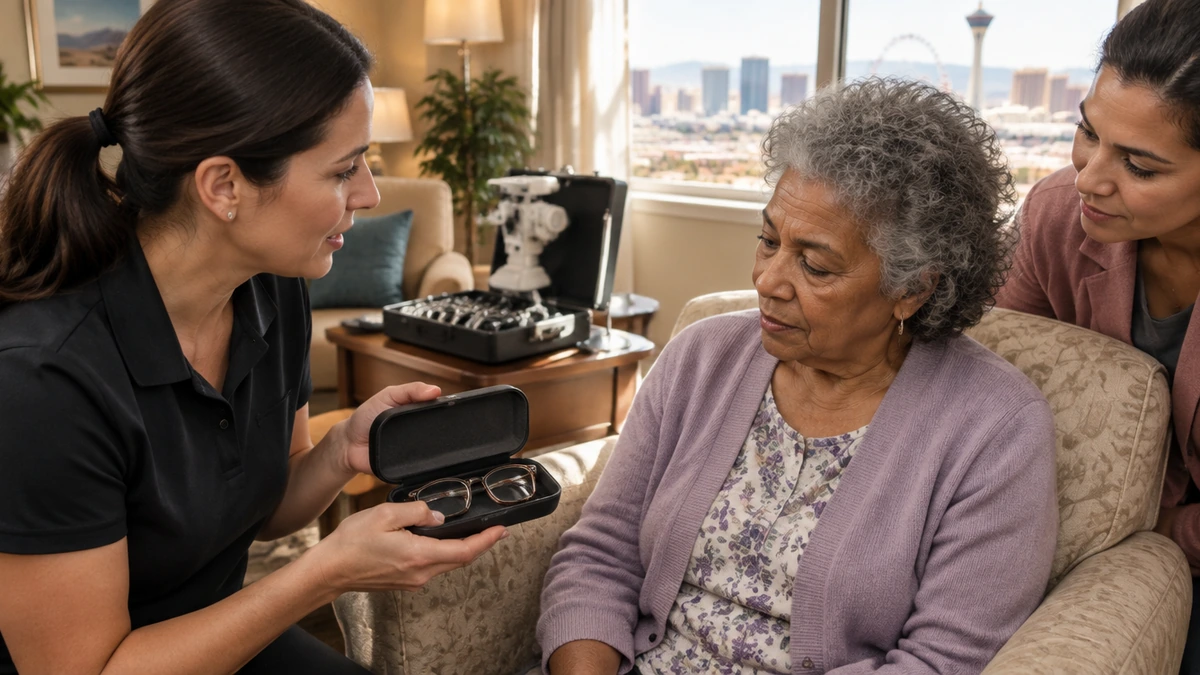
    Add as a preferred source on Google