Author: Dr. Amel Youssef, OD

  • Screen Time and Your Child’s Eyes: Healthy Habits for Las Vegas Families

    Screen Time and Your Child’s Eyes: Healthy Habits for Las Vegas Families

    Screen Time and Your Child’s Eyes: Healthy Habits for Las Vegas Families

    Girl doing homework beside a window with her brother nearby, kids screen time eye strain

    TLDR: Here is the good news on kids screen time eye strain: the American Academy of Ophthalmology describes temporary discomfort without permanent eye damage. Start with regular breaks, blinking reminders and a comfortable homework setup. Book your eye exam when discomfort keeps returning.

    Answer: Healthy screen habits give your child a practical way to manage digital eye strain during homework in Las Vegas. Build in looking-away breaks, adjust the device position and remind them to blink. Recurring headaches or blur deserve a comprehensive eye exam, even after you improve the desk setup.

    Your child finishes an online assignment, rubs tired eyes and asks to stop reading. You still have dinner to make and a backpack to check. Start with the next homework session. I favor a routine your family repeats over a rule everyone forgets.

    I reviewed 73 primary sources across five research lenses for this guide, and regular breaks are a central recommendation for screen comfort. As an optometrist, I want you to leave with habits worth using tonight and a clear reason to book when discomfort returns. See how I approach your eye care on my eye exams page. Complaints that keep coming back earn an exam.

    What Does Screen Time Eye Strain Feel Like in Kids?

    Boy rubbing his eyes on a couch beside a face-down tablet, kids screen time eye strain
    A boy pauses on the couch with his tablet face-down beside him.

    Digital eye strain is the dry, itchy, blurry, headachy feeling your child gets after a long stretch on a screen. The assignment ends, but the discomfort interrupts the evening. Pause the task and find out what hurts. Give your child room to explain before suggesting an answer.

    Take the complaint seriously. Your child still has a book to read and a school bag to pack. Resist the urge to bargain for another page while their eyes feel uncomfortable. Stop, notice the circumstances and decide whether this is becoming a pattern.

    A blink reminder earns its place beside your break reminder. The AAO reports that people generally blink about 15 times a minute, falling to about 5 to 7 during screen use. Those are general figures. Try a calm cue during homework: “Pause, blink, look away.”

    Which Breaks Ease Kids’ Screen Time Eye Strain?

    Mother and son looking toward distant red rock mountains, kids screen time eye strain
    A mother and son share a looking-away break by the window.

    Give your child somewhere else to look. Choose a distant object before the laptop opens, such as the red rock ridgeline beyond your window. Use the 20-20-20 rule in the steps below. Set up the cue before homework gets absorbing.

    1. Choose the view together. Pick an object beyond the window and agree on where your child will look when the reminder sounds.
    2. Follow AAPOS: set a timer for every 20 minutes, then have your child look at something 20 feet away for 20 seconds.
    3. Pause the assignment when the reminder sounds. Look toward the chosen object together until the timed pause ends.
    4. Before returning, check whether your child feels comfortable. Include a blink reminder, then pick up the assignment where you stopped.

    Join the pause when you are nearby. Put your own phone down and turn toward the window with your child. Looking at another device keeps the close-up task going. Make the distance break part of homework from the start.

    Make the cue easy to follow. A complicated reward chart adds another task to your evening. Let the cue do the reminding. Choose a cue you are willing to use when dinner is late and the backpack is still empty.

    How Should You Set Up the Homework Space?

    Start with distance, then tackle glare. For your child’s desk, AAO homework guidance recommends an arm’s-length viewing distance, a slight downward angle and adjustments for glare, brightness and contrast. Sit beside your child before moving anything. The reflection you miss while standing is easier to spot from the chair.

    Check the desk during actual homework. Your child should show you the position they settle into once they start reading, including the tablet creeping toward the edge of the table. Use the checks below to make a deliberate adjustment. Then let them show you whether the words feel comfortable to view.

    What You NoticeWhat to AdjustWhat to Ask Your Child
    The device sits close to the faceAbout an arm’s length, at or a little below eye levelAre the words comfortable to read here?
    A window reflects across the displayReposition the desk or adjust the shadeIs the reflection still across your work?
    Your child bends over a tablet on the couchMove the assignment to an upright seated setupDoes this position feel comfortable?
    The display looks harsh or dimAdjust brightness and contrast for the roomWhich setting feels easier to view?
    Discomfort returns after adjustmentsDescribe the recurring symptoms at an examWhat still bothers your eyes?

    Watch the light change in your Summerlin home. A window beside the homework desk offers a distant view, yet its reflection still needs checking. Look again when afternoon homework stretches into an evening under the kitchen lights. Let your child help restore the setup after someone else uses the desk.

    How Do You Make Room for Longer Breaks?

    Three children riding bikes on a Summerlin path in late afternoon light, kids screen time eye strain
    Children ride bicycles along a Summerlin neighborhood path.

    Build a proper step away into your homework plan. The American Academy of Pediatrics recommends that children leave the screen for at least 10 minutes every hour, alongside brief looking-away breaks. Pick the activity before the assignment starts. The rule is simple: the screen stays behind.

    July at 4 pm? Keep your child’s break indoors. A snack at the kitchen counter counts. On a cooler afternoon, a walk together or a bike ride along a Summerlin neighborhood path gives the pause a different setting.

    Make returning straightforward, too. Mark the stopping point in your child’s assignment. Put the device down without filling the pause with another video. The break ends and the assignment picks up right there.

    When Does Recurring Strain Need an Eye Exam?

    Book when the same discomfort keeps interrupting your child’s homework. In its general computer-vision guidance, the AOA notes that uncorrected vision problems can make digital eye strain worse. Tell me when desk changes and breaks have left the complaint unresolved. I take recurring discomfort seriously, even when homework still gets finished.

    Bring the pattern into focus. Describe which task brings on your child’s discomfort, which device they use and whether printed reading brings the same complaint. Include whether the discomfort settles after stopping or stays with them. Those details tell me more than a screen-time total.

    You do not need to solve the cause before booking a pediatric eye exam. Your job is to notice the pattern and describe it. My checklist of signs a child needs glasses covers observations beyond device use. We will put those concerns about children’s vision alongside the exam findings before deciding whether prescription glasses belong in the plan.

    How I Investigate Recurring Screen Strain at Vision by Amel
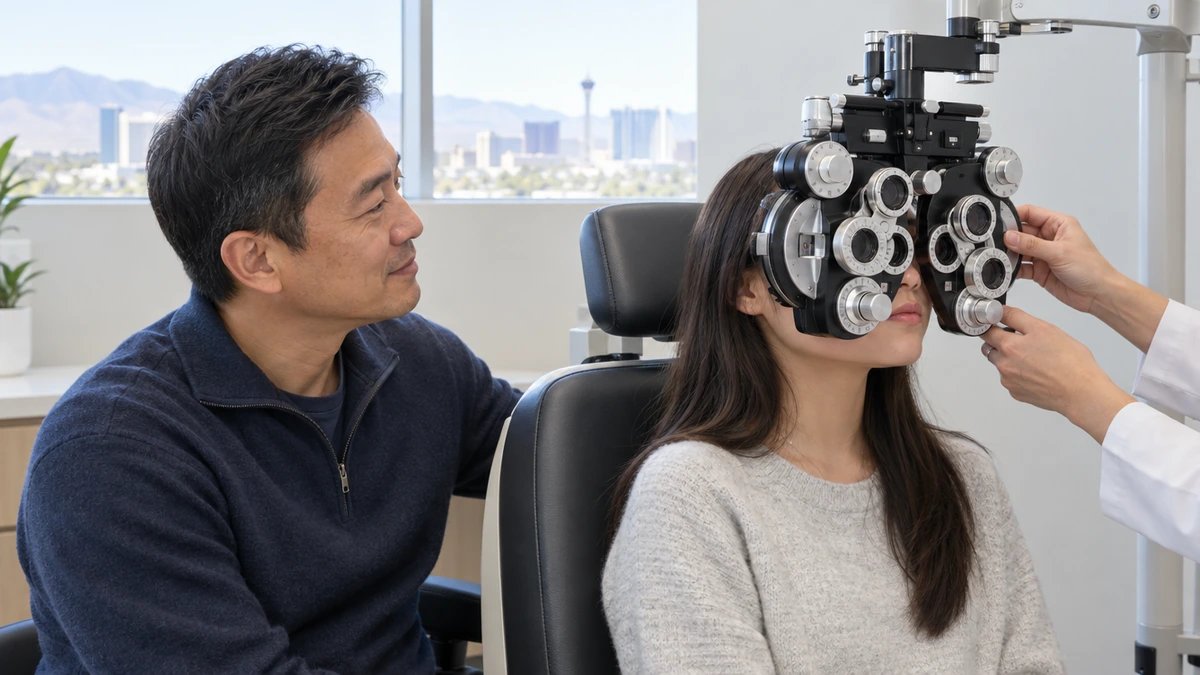
    Teen girl with her father during a phoropter adjustment, kids screen time eye strain
    A father stays beside his daughter during an eye examination.

    Bring your concerns about your child’s eye health into the conversation. I take that history and use Visionix digital refraction to measure the prescription. Start with the task that keeps bringing the complaint back, then describe what changed after breaks or desk adjustments. Keep the focus on what your child experiences while doing the work.

    Leave room to discuss what the findings mean for homework. Tell me which change you want explained before you leave, whether it concerns the viewing setup or prescription glasses. The exam findings guide that conversation. My aim is a plan you understand well enough to use at the desk that evening.

    Plan your trip with my Downtown Summerlin page. Choose an appointment that fits around homework and school pickup. For broader timing and screening questions, see my pediatric eye exam guide.

    Frequently Asked Questions About Kids and Screen Time

    Should I Buy Blue Light Glasses for My Child?

    The AAO does not recommend blue light glasses for computer use and cautions against screen use close to bedtime because of its effect on sleep quality. Give your evening device routine a place in the conversation. Start by deciding where the devices go when homework ends and bedtime approaches.

    My Child Passed the School Vision Screening. Should I Still Mention Screen Discomfort?

    Yes, tell me about your child’s current discomfort. My guide to school screening explains what a pass covers.

    What If My Child Forgets Every Looking-Away Break?

    Make the reminder visible to you, too. Start the cue while your child learns the routine, then invite them to take the lead. Rehearse the pause before opening the assignment so everyone knows what the reminder means.

    What Should I Tell the Teacher About Headaches During Homework?

    Describe the task your child was doing when the headache started and whether stopping helped. Find out whether similar complaints happen during class and where a looking-away break fits into a live lesson. A specific question about the assignment gives the teacher something practical to answer.

    What Is the 20-20-20 Rule for Kids?

    Every 20 minutes, your child looks at something 20 feet away for 20 seconds. Use a view through the window when your hallway is too short for 20 feet. Choose the object before homework starts so your child knows where to look. Alongside those brief pauses, the American Academy of Pediatrics recommends leaving the screen for at least 10 minutes every hour.

    Book My Eye Exam Call (702) 858-4362

    Like this article? Add Vision by Amel as a preferred source, and you are more likely to see our articles in Google’s Top Stories.

    Add as a preferred source on Google

  • How Prescription Glasses Are Fitted and Delivered to Assisted Living Residents

    How Prescription Glasses Are Fitted and Delivered to Assisted Living Residents

    How Prescription Glasses Are Fitted and Delivered to Assisted Living Residents

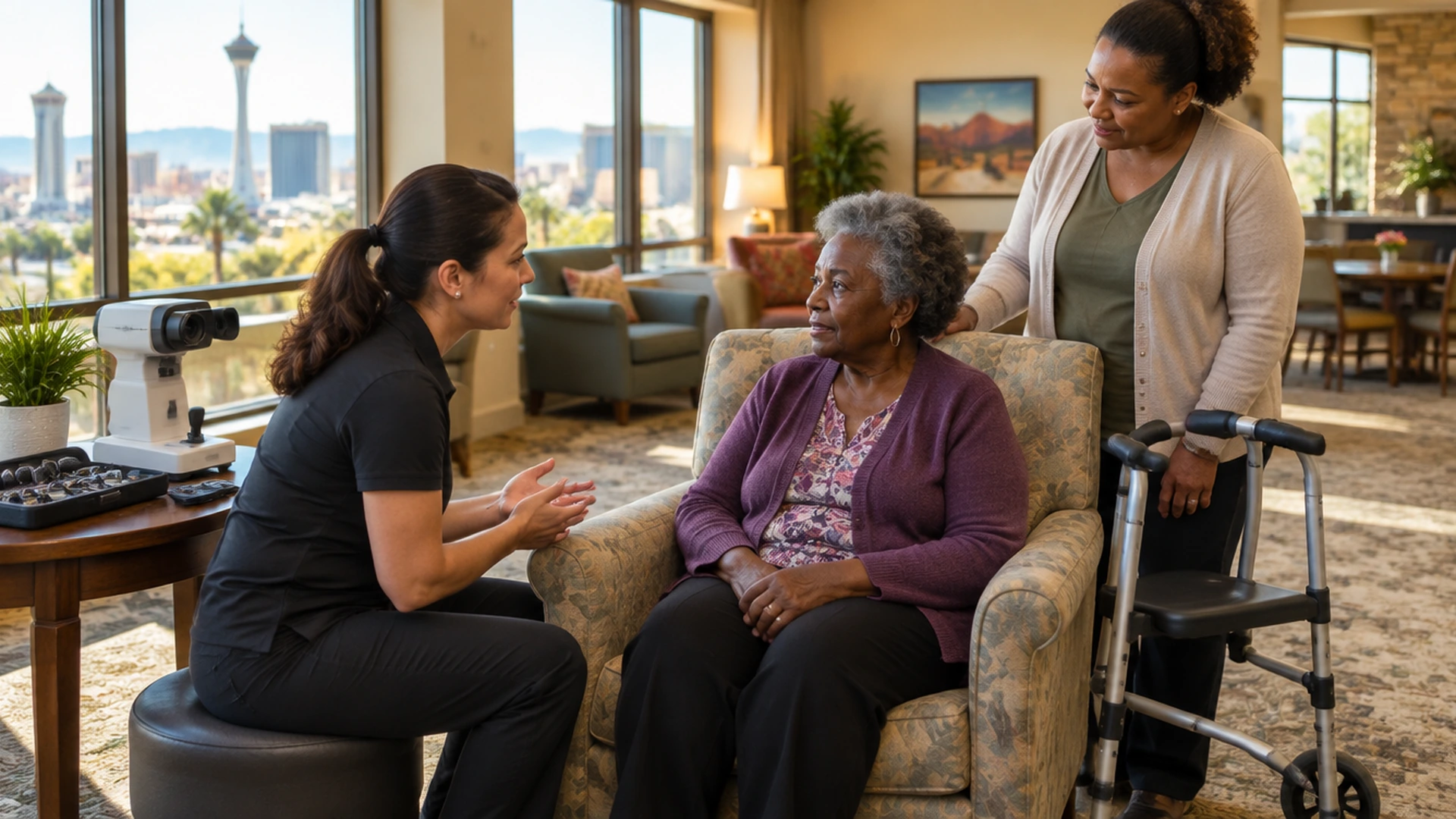
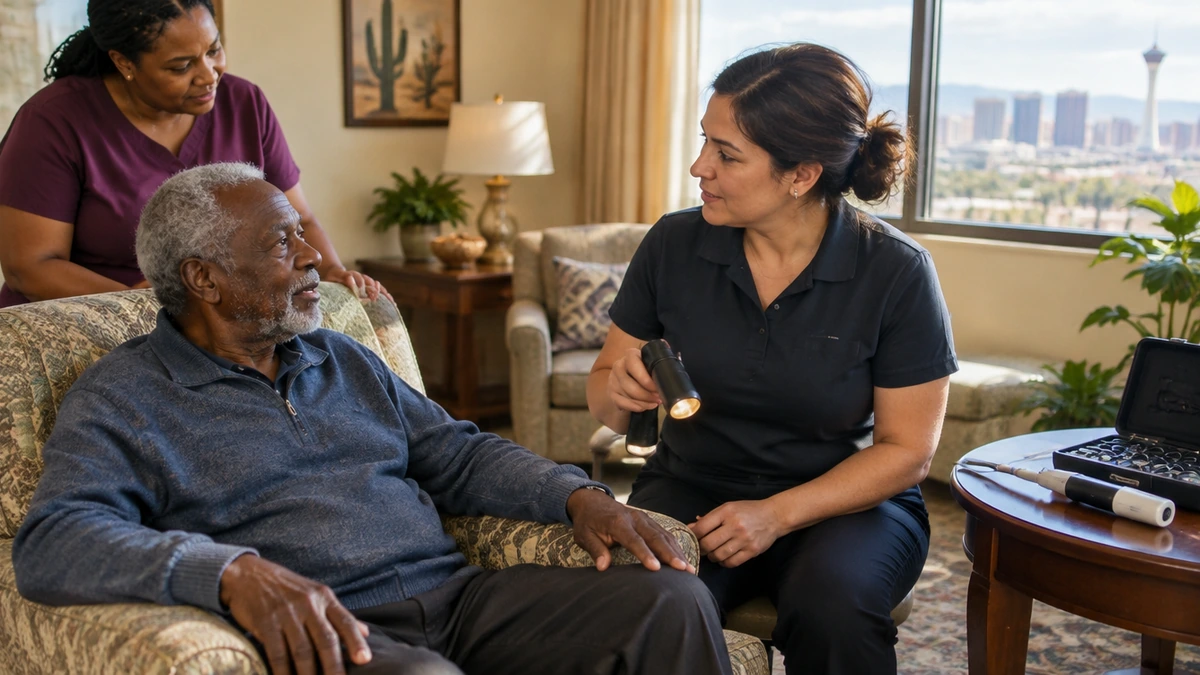
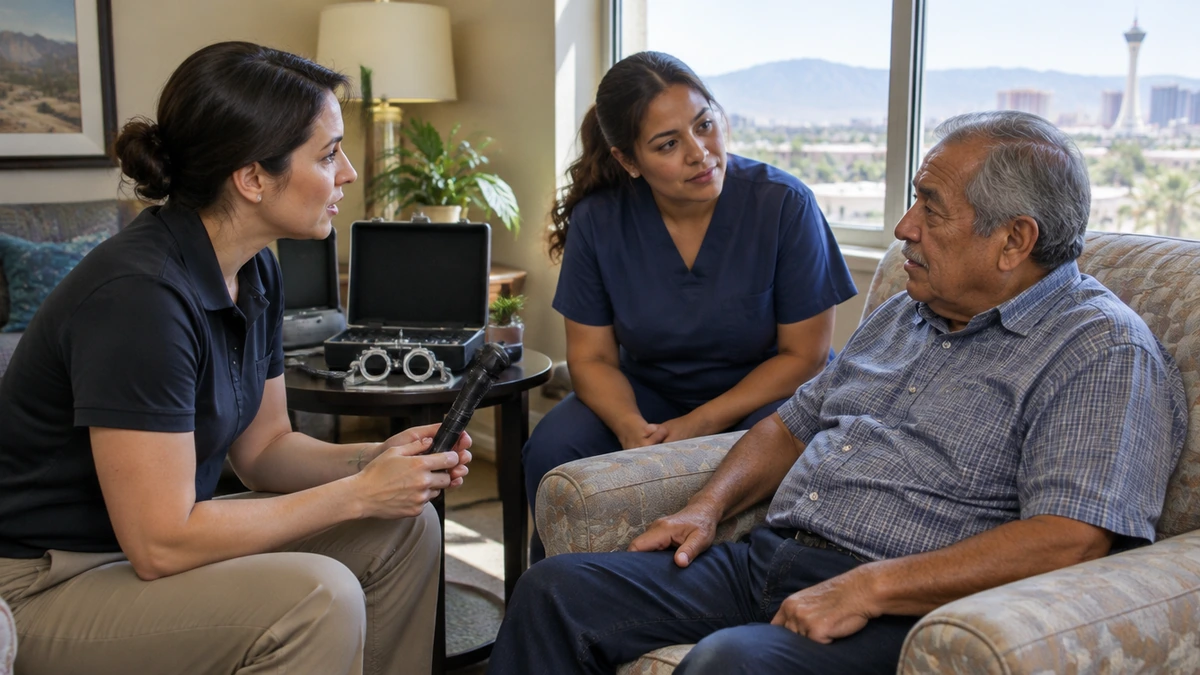
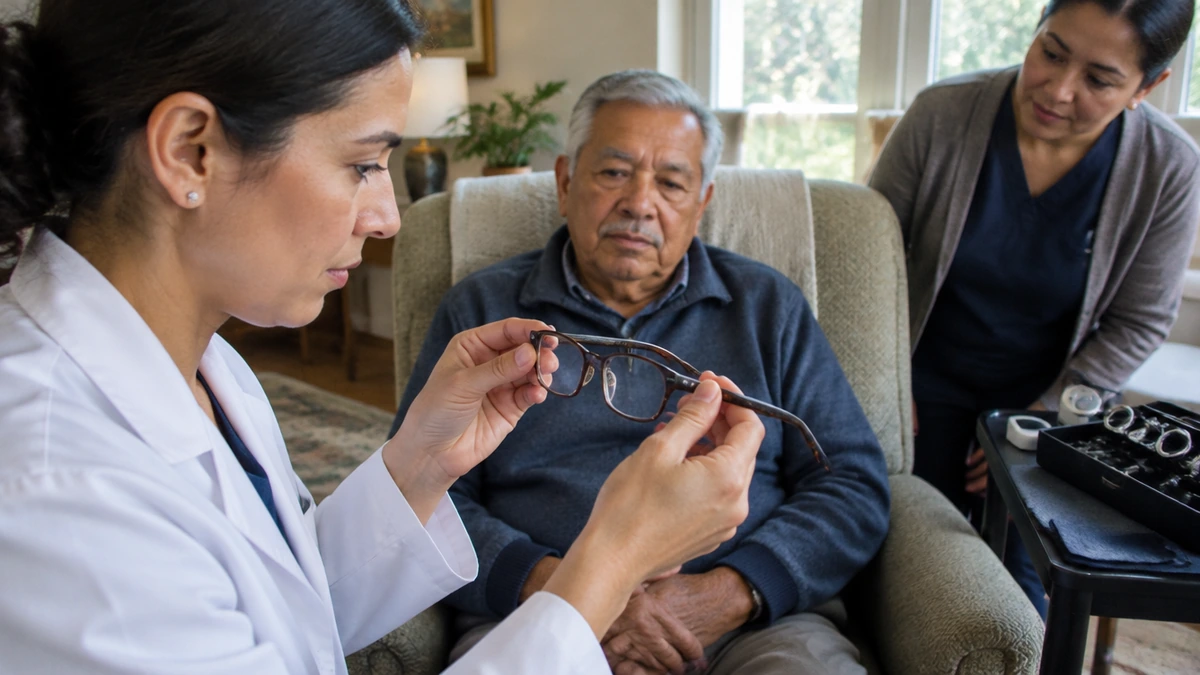
    Resident and clinician discussing eyewear, glasses for assisted living residents

    TLDR: I help you plan glasses for assisted living residents through the last fitting check, starting with prescription review and ending with follow-up. Your list needs verified benefits, ordering choices, a delivery contact, and a route for adjustments before residents select eyewear. Participation and purchasing stay voluntary.

    Answer: Prescription glasses for assisted living residents in Las Vegas begin with an eye exam and review of visual needs. Your facility contact helps plan frame selection, measurements, benefit verification, delivery, and adjustments with my team. Record the delivery estimate, identify whose glasses are arriving, and keep fitting or repair requests open until the assigned contact responds.

    I plan the eyewear handoff with you before examination day. For example, a resident chooses a frame, a representative requests an update and a caregiver needs to know which glasses belong beside the armchair. Treat these as planned handoffs. A clear eyewear record gives everyone an agreed place to check the next action.

    Plan the order before announcing the visit. Start with a facility-coordinated vision day built around your residents’ choices, with me as your visiting optometrist, my eyewear team, and your facility contact in the conversation. Your on-site eye care plan needs time for prescription questions, frame fitting, and follow-up instructions. Put a staff name beside each step before the visit goes on the calendar.

    How Do You Start Glasses for Assisted Living Residents?

    Clinician reviewing a resident's glasses, glasses for assisted living residents
    Clinician reviewing a resident's glasses.

    Begin with the resident’s current glasses. Ask your staff to note whether the resident uses them for reading, television or another familiar activity. Bring me concerns about fit, missing glasses and changing vision at the examination. Describe what staff observed without deciding which prescription the resident needs.

    Give each next step a contact. As your mobile optometrist, I review visual needs during the planned visit and explain the prescription and any further evaluation I recommend. Use the assisted living examination process to prepare the handoff from examination to eyewear. Track the glasses order and clinical follow-up separately so neither task closes before its work is done.

    Plan support beyond the new frame. I reviewed 69 primary sources across five research lenses for this series, and ongoing adjustments and identification belong in facility eyewear planning. The AOA’s nursing-home guidance recommends providing or arranging refraction and dispensing, routine adjustments and identification of residents’ glasses. Put those tasks on your planning list and establish who handles them for your home.

    Make the prescription clear to residents. Explain which activities the glasses are intended to support and how the new order relates to the current pair, using my instructions. Give your resident time for questions before choosing a frame. Direct prescription questions to me and order questions to my eyewear contact.

    What Should Frame Selection and Measurements Cover?

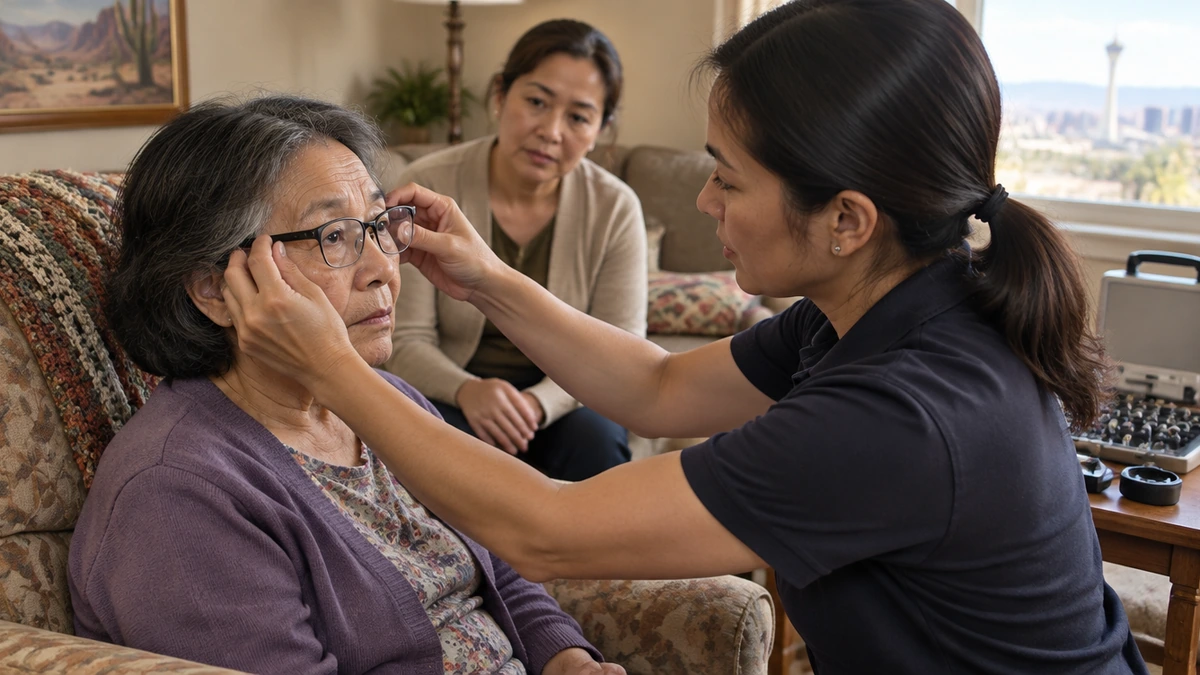
    Resident trying a frame with a clinician, glasses for assisted living residents
    Resident trying a frame with a clinician.

    Let the resident choose the frame. Explain the selection appointment and settle whether a representative will attend before your resident begins looking at glasses. Report a frame slipping during meals or glasses repeatedly removed during an activity. My eyewear team assesses fit with your resident.

    Keep the frame with the measurements. My team handles eyeglass selection and measurements as part of the vision day process. Review your resident’s frame and lens choice through the private order channel, including who checks the order and handles changes before submission. Keep that record available for questions when the glasses arrive.

    Describe the resident’s daily use. Tell my team whether your resident reads in an armchair, joins table activities, or asks for help locating glasses. The eyewear conversation starts with the individual examination, activities, and preferences. Review the recommendation for that resident before choosing a lens option for the order.

    • Bring current prescription glasses and describe how the resident uses them.
    • Confirm the resident’s frame choice and the person authorized to discuss the order.
    • Name who takes measurements and checks the submitted order.
    • Record the delivery contact and the route for requesting an adjustment.

    How Do You Verify Benefits and Choose Lenses?

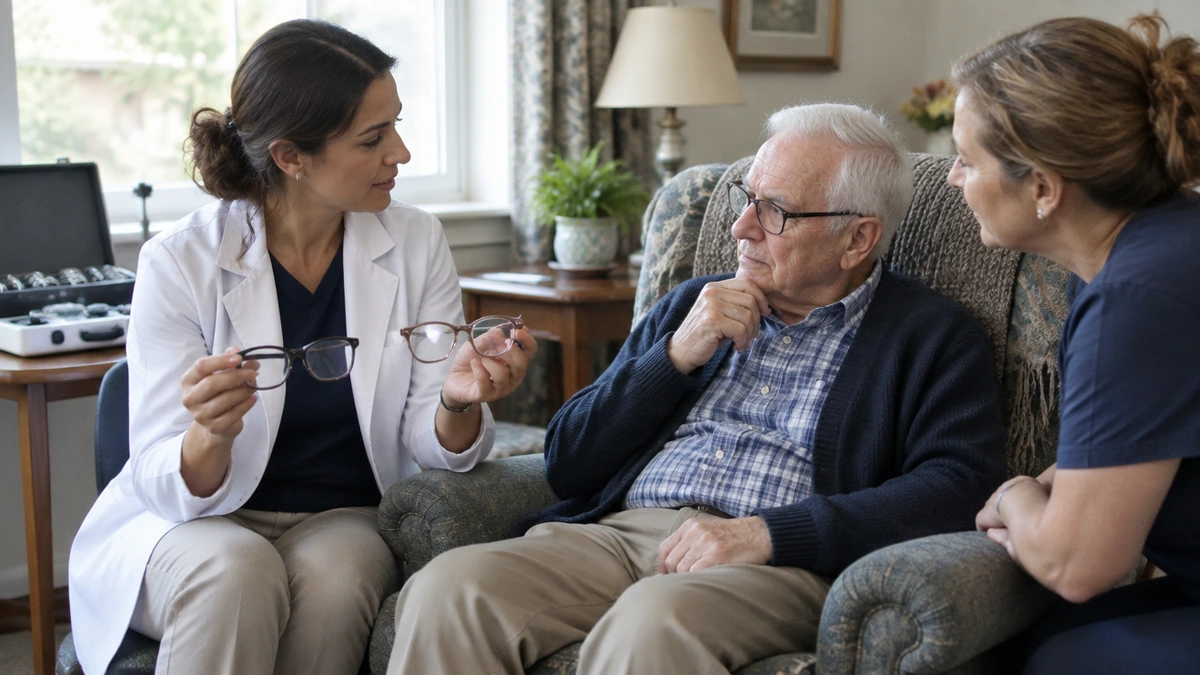
    Clinician discussing glasses with a resident, glasses for assisted living residents
    Clinician discussing glasses with a resident.

    Verify benefits before the order. Keep the examination, prescription eyewear, and selected upgrades clear in your resident’s intake notes. My team and I review verified benefits and ordering choices with you before proceeding. Use the Medicare and Medicaid eye benefits guide to prepare focused questions and keep unresolved items with the benefit review.

    Check the exception against the order. Original Medicare generally excludes ordinary eyewear, but its post-cataract eyewear benefit covers one standard-frame pair of glasses or one set of contact lenses after each cataract operation implanting an intraocular lens, subject to supplier and cost-sharing conditions and extra charges for upgrades. My team’s benefit review for your resident needs the surgery history and supplier check to establish whether this exception applies.

    Bring the existing frames into review. For adult lens replacement, Nevada Medicaid’s ocular manual generally requires significant refractive change and reuse of existing frames when possible, with prior authorization for exceeding the 12-month lens limit for adults aged 21 or older. Show my team your resident’s current pair. Complete the resident-specific benefit review before treating replacement as an approved order.

    Match lenses to the resident’s routine. I offer premium prescription lenses, including progressives and Transitions. Review the explanation of the proposed choice against your resident’s prescription, activities, and preferences. Record the final selection after the resident or authorized decision-maker has reviewed it in everyday language. Use the table below to direct prescription questions to me and eyewear questions to my team.

    DecisionWhat your coordinator confirmsWho answers
    PrescriptionIntended use and clinical follow-upExamining doctor
    Frame and lensesSelected frame, measurements and lens optionEyewear team
    BenefitsResident-specific order eligibility and termsBenefit verification contact
    DeliveryCurrent estimate and fitting planOrder contact
    Ongoing supportAdjustment, repair and replacement routeNamed follow-up contact

    How Are Glasses for Assisted Living Residents Delivered and Adjusted?

    Clinician checking delivered glasses on a resident, glasses for assisted living residents
    Clinician checking delivered glasses on a resident.

    Get the delivery plan when ordering. My team reviews the current estimate, how updates reach your staff, and whether the resident needs to attend a fitting appointment. Set the handoff around the resident’s availability. Share changes with the representative through the chosen contact method so everyone works from the same order notes.

    Arrival still needs a fitting check. Match the resident and order before your staff hands over a new pair of glasses. Follow my team’s plan for checking fit and explaining use at delivery. Keep discomfort or other unanswered concerns on the open task list until my eyewear team responds.

    Get wear and care instructions. A published nursing-home intervention included instruction for residents and nursing assistants when glasses were supplied. Use that finding to prepare your staff’s questions at the handoff. Name who explains the instructions again if the resident or a caregiver missed the original conversation.

    Describe the fit problem plainly. Tell my eyewear contact whether your resident reports pressure, slipping, or trouble using the glasses for the intended activity. Send that concern to my team for review before anyone bends the frame or changes the prescription. Obtain the resident’s next instructions while the problem is being reviewed.

    Who Handles Repairs and Replacement Planning?

    Keep each pair easy to identify. Record where your resident prefers to keep the glasses and whom staff contact about a problem in the resident’s care notes. Review suitable identification methods with my eyewear team. Keep personal information away from public displays and visitor areas when labeling or storing eyewear.

    Set the repair contact in advance. Record how your staff requests an assessment, where the broken frame goes, and how the resident receives updates. Review replacement as a separate decision from repair. Complete a fresh check of benefits and ordering choices when my team proposes a replacement pair.

    Keep visual concerns on the list. Report ongoing difficulty to me even after your resident’s frame has been adjusted, so I address unresolved eye health questions. Get the next instruction for another assessment or referral. Keep the clinical follow-up task open separately from the eyewear order.

    Bring Eye Exams and Eyewear to Your Facility With Vision by Amel

    Plan the glasses handoff with the exam. I am Dr. Amel Youssef, OD, founder of my practice, Vision by Amel, in Downtown Summerlin. I invite you to arrange a vision day for your assisted living home or senior living community in the Las Vegas Valley. I review resident interest, consent, insurance documents, and the examination schedule on your planning call. My team and I coordinate selection, measurements, delivery, and adjustments while you assign staff responsibilities.

    Prepare your private room and contact. The room needs electrical access, and the facility contact needs the secure intake route and follow-up tasks. Resident participation is voluntary. My team and I verify insurance benefits before service. Benefits depend on each resident’s eligibility and plan terms. I include referrals when reviewing the next steps after the visit with you.

    Frequently Asked Questions About Prescription Glasses in Assisted Living

    What should staff do when glasses arrive while the resident is away?

    Hold the glasses according to the storage instructions and arrange the resident’s fitting handoff. Tell my order contact your resident is away, and record who received the pair and where it is held. Keep the order open for the fitting check when the resident is available.

    How should we manage a resident who uses different pairs?

    Use the intended purpose of each pair in the resident’s instructions to guide storage and identification. Have your care team follow the same identification method, then show the resident where each pair belongs. Record unanswered questions for my eyewear team before changing those instructions.

    What if the family changes its frame preference after ordering?

    Keep the original order in place until my eyewear team confirms whether a revision is available. Send my team your order details through the secure channel and record the requested change. Have the resident or authorized decision-maker review the response before proceeding.

    What happens to an open order if the resident moves?

    Notify my eyewear team promptly and transfer the open task to the resident’s new contact. Set who receives updates and where the fitting handoff will happen through your private order channel. Update the former home’s visit list so the order has a clear owner after the move.

    What should our weekend staff know about eyewear questions?

    Give your weekend team my practice’s contact route and the resident’s current instructions. Explain where to record a concern and who checks for a response. Include unresolved requests in the next staff handoff so they stay visible.

    Schedule an On-Site Vision Day Speak With Dr. Amel’s Team: (702) 858-4362

    Like this article? Add Vision by Amel as a preferred source, and you are more likely to see our articles in Google’s Top Stories.
    Add as a preferred source on Google

  • Why Las Vegas Air Dries Out Your Eyes, and What You Can Do

    Why Las Vegas Air Dries Out Your Eyes, and What You Can Do

    Why Las Vegas Air Dries Out Your Eyes, and What You Can Do

    Middle Eastern woman squinting in wind on a palm-lined sidewalk, illustrating dry eyes in Las Vegas

    TLDR: Desert air and wind speed tear evaporation, making dry eyes in Las Vegas harder to ignore. Point your vents away, consider a humidifier at home and wear wraparound sunglasses outdoors. Persistent discomfort deserves an eye exam.

    Answer: Low humidity in Las Vegas speeds moisture loss from your tear film, and wind adds airflow across your eyes. Start with the air you control: redirect car vents, move out of household drafts and consider a humidifier. Wear wraparound sunglasses outside, and have persistent symptoms evaluated so the weather does not become your only explanation.

    The sidewalk is windy. Your car is cool. Yet your eyes sting through both parts of the trip home to Summerlin. You cannot change the desert, but you have control over the air hitting your face from the driver’s seat to your pillow.

    I reviewed 51 primary sources across five research lenses for this guide, and low humidity increases tear evaporation. The 2017 TFOS DEWS II report adds that moving air across your ocular surface, the exposed surface of the eye, speeds that loss too. My approach to dry eye treatment puts those everyday conditions alongside your symptoms.

    Your desert climate has numbers behind it: NOAA’s Las Vegas climate summary gives 1991 to 2020 airport humidity normals of 17% in June, falling to 11% at 4 p.m. local standard time, compared with 31% annually and 48% in January. These are long-term airport figures, not readings for Summerlin homes. The same summary describes Las Vegas as the driest major metro in the continental United States, storm gusts most often in spring and fall, dust and sand in strong winds, and airport winds near 10 mph from April through June. The wind speed is a 40-year mean.

    Why Do Dry Eyes in Las Vegas Flare Up in the Car?

    Man in a parked car angling the dashboard vent away from his face, a habit for dry eyes in Las Vegas
    Angle the vent away from your face while you are still parked.

    Turn the vent away from your face. A cool cabin still has moving air, and a dashboard vent puts the stream close to your eyes. On the 215, cooling down after a hot parking lot walk feels welcome. Keep the cool air and change its direction.

    You have a practical place to start: the American Academy of Ophthalmology says changing airflow at home, at work and in the car may help dry eye, along with humidifying the air and blocking drafts with side shields on your glasses. Pointing vents away from your face applies that advice to the driver’s seat. Make the adjustment while parked. Then give the road your full attention.

    1. Sit in your usual driving position before setting off.
    2. Feel where the dashboard air lands, including the vent nearest the side window.
    3. Angle the vents away from your eyes while keeping the cabin comfortably cool.
    4. Check the open window too, since it changes the airflow around your face.

    Hunt down the drafts in your day. Start with the car, then check the chair where you read and the fan aimed at your pillow. The aim is simple: stop sitting directly in the stream. Use the table to make a targeted change where you spend time.

    Everyday SettingAirflow to CheckPractical Adjustment
    Driving across Las VegasDashboard vents pointed at eye levelRedirect them before driving
    Reading at homeA nearby fan or overhead ventMove your chair out of the stream
    Settling into bedAir blowing toward your pillowChange the fan’s direction
    Walking outsideWind reaching around your glassesChoose wraparound coverage

    Same trip, same scratchy eyes? Check the seat you sit in. Your usual vent setting might feel different when someone else drives and you sit closer to the side outlet. Adjust the air for the seat you occupy before the car moves.

    Does a Humidifier Help Your Eyes at Home?

    Older white man asleep beside a small humidifier, illustrating dry eyes in Las Vegas
    A bedside humidifier releases mist while a man sleeps.

    A humidifier puts moisture back into dry bedroom air. Treat it as a comfort tool alongside your care plan. Start with the room where you want that extra moisture, rather than treating the entire house as one space. A quiet bedroom and a living room with a running fan have different setups.

    The evidence for adding a humidifier to your dry eye treatment plan has limits: the 2017 TFOS DEWS II management report identified only one controlled study supporting local humidifying devices at that time. That dated review is a reason to keep expectations modest, not a count of all research published since.

    Start at pillow level. Lie where you normally sleep and notice whether the fan blows across your face, then check the nearest vent. Follow the humidifier’s cleaning and placement instructions. Give the device a suitable place of its own instead of crowding it against your bedding.

    What did researchers measure? In a randomized crossover trial of 44 computer users published in Optometry and Vision Science, one hour beside a desktop humidifier improved reported comfort for 36% of participants, compared with 5% without it, and lengthened median tear breakup time by 4.0 seconds. The study shows short-term comfort and tear stability, not what a humidifier will do for your eyes over months. I favor changes you will keep using. Think about filling, cleaning and placement before choosing where it goes.

    How Should You Protect Your Eyes From Las Vegas Wind?

    Latino hiker wearing wraparound sunglasses on a red rock trail, illustrating dry eyes in Las Vegas
    Wraparound sunglasses provide coverage around the sides of your eyes.

    Take the wind seriously on ordinary errands. The airport wind figures above give your outdoor plans some local context, but you need no wind-speed measurement to notice air blowing around your glasses. Have your outdoor coverage ready before you leave.

    Put your wraparounds beside your keys. A walk across an exposed Summerlin parking lot counts as time outdoors, even when a red rock trail is nowhere on the day’s agenda. Look for coverage around the sides as well as the front. Wind reaches your eyes from more than straight ahead.

    Fit matters in daily eye care. Turn your head while trying the frame and check how it sits beside your temples. A close shape needs to feel comfortable enough for the walks you take. Choose with your ordinary day in mind, from errands at Festival Plaza to the path back to your car.

    What Changes Help Dry Eyes in Las Vegas Between Stops?

    Filipino woman drinking water at an office desk by a sunny window, illustrating dry eyes in Las Vegas
    A woman pauses for water beside a sunny office window.

    Your office air runs dry too: the American Academy of Ophthalmology explains that indoor humidity drops when heating or air conditioning works harder against outdoor temperature extremes. Use your next water break to find the vent aimed at your chair. Keep the room cool while moving out of its direct draft.

    A short stay in dry air matters in the research: the 2017 TFOS DEWS II pathophysiology report describes increased blink rate, discomfort and inflammatory markers in tears after as little as 90 minutes in low humidity. That finding gives you a reason to consider time indoors as well as time outside. It is an exposure-study result, not a countdown to symptoms for everyone who enters an office.

    Look at the room where you spend that time. An open-plan office, a shared living room and a bedroom each leave you different choices about where to sit and which vent to adjust. Moving a chair away from a fan takes less planning than rearranging an entire room. Leave room for the people sharing that space. I want your home adjustments to solve a specific problem you have noticed.

    A turned vent is a start. A sting that keeps coming back needs an exam. My guide to dry eye treatment options explains the next part of the conversation about your eye health.

    When Does Desert Dryness Need Care Today?

    Do not wait for a less windy day when your eye is red or painful, or you notice discharge or a sore on the eye or lid: contact an eye care provider right away, as MedlinePlus advises. Its separate advice for eyes that fail to improve with self-care within a few days is to contact your provider promptly. Give those symptoms priority over another change to the room.

    How I Connect Your Symptoms With Your Surroundings

    Your commute belongs in the conversation. As your optometrist, I start with your history, including the car vents, the fan at home and the places where discomfort interrupts your day. Tell me what happens in plain language. “The air hits my face all the way home” gives us a concrete starting point.

    Your comprehensive eye exam gives us time to connect the findings with the symptoms you describe. Environment habits are among the options I consider when we discuss your plan at an eye exam visit.

    You will find me at Vision by Amel in Downtown Summerlin, at 2010 Festival Plaza Dr, Suite 195, Las Vegas, NV 89135. My team takes bookings online or by phone, with no referral needed for an eye exam. Choose a visit so we have time to examine your eyes and discuss what comes next.

    Frequently Asked Questions About Dry Eyes in Las Vegas

    What Is the Average Humidity in Las Vegas?

    NOAA’s annual airport normal is 31%, but the June and January figures above show why you should specify the season. For your own room, record the location and hour alongside a humidity reading before comparing it with those outdoor figures. Keep an afternoon reading separate from a monthly average.

    Do Humidifiers Help Dry Eyes?

    It is a reasonable comfort measure to discuss for your room, with the short trial above setting the limits of the evidence. Before choosing one, decide where it would sit and who would keep up with its care. Follow its cleaning instructions, and judge the effort alongside the rest of your care plan.

    Is Las Vegas Wind Bad for Dry Eyes?

    Yes, moving air speeds evaporation from your tear film. A gusty walk and a steady household draft both put air across your eyes, so consider each when you change your surroundings. Wind protection matters on ordinary errands as well as longer outings.

    Should I Turn Off My Air Conditioning If My Eyes Feel Dry?

    No. Keep your room cool and point the vents away from your face. Check the outlet above or behind your usual seat too, where the source of a draft is easier to miss. Move the chair when the vent itself is hard to redirect.

    Do Wraparound Sunglasses Help Dry Eye?

    They help shield your eyes from wind coming around the sides. When you wear prescription glasses, discuss a wraparound shape or side protection suited to your lenses. Try the fit while looking sideways as well as straight ahead.

    Does Living in Las Vegas Mean I Have Dry Eye?

    No. Your ZIP code is not a diagnosis. Tell me when your symptoms hit and when they ease, including time away from drafts. Your surroundings belong in the history, and I evaluate your eyes before choosing a plan.

    Book My Eye Exam Call (702) 858-4362

    Like this article? Add Vision by Amel as a preferred source, and you are more likely to see our articles in Google’s Top Stories.
    Add as a preferred source on Google

  • Signs Your Child Needs Glasses: A Las Vegas Parent’s Checklist

    Signs Your Child Needs Glasses: A Las Vegas Parent’s Checklist

    Signs Your Child Needs Glasses: A Las Vegas Parent’s Checklist

    South Asian girl holding a picture book close as her mother watches from a doorway, signs your child needs glasses

    TLDR: Common signs your child needs glasses include squinting, holding books close, tilting the head and avoiding reading. Book an eye exam to find out what those habits mean for your child. Start with the behavior you notice, then let the findings guide the prescription.

    Answer: For parents in Las Vegas, repeated squinting, eye rubbing, headaches during schoolwork, covering an eye and losing place while reading are reasons to arrange a comprehensive eye exam. As your child’s optometrist, I check the cause before recommending glasses. An eye turning inward or outward also needs attention, even when your child reports clear vision.

    Your second grader squints at the whiteboard. Back home in Summerlin, a picture book comes close enough to hide their face. When these habits interrupt the school day or bedtime reading, move children’s vision up your list.

    I reviewed 73 primary sources across five research lenses for this guide, and a child with a vision problem does not always report difficulty seeing. Your notes hand me a head start before the exam even begins. My eye exams in Downtown Summerlin start with patient history, so tell me what caught your attention.

    What Are the Signs Your Child Needs Glasses at Different Ages?

    White boy tilting his head while fitting a puzzle piece, signs your child needs glasses
    Include head tilting in your observation notes.

    Watch the everyday moments. The American Optometric Association lists close viewing, squinting, head tilting and avoiding puzzles among preschool warning signs, and notes amblyopia sometimes develops without noticeable signs. Your child’s puzzle abandoned on the coffee table deserves a closer look before anyone calls it laziness.

    StageWhat You Might NoticeDetails Worth Sharing
    Preschool playA book held close, a tilted head, covering an eye or avoiding coloring and puzzlesThe activity, head position and whether the behavior repeats
    Early elementary schoolSquinting toward the board, rubbing eyes during homework or losing place while readingWhether the trouble happens looking across the room or down at a page
    Older school childrenHeadaches with schoolwork, reading avoidance, visual fatigue or reports of double visionWhich tasks bring on the discomfort and what makes the child stop

    Use this table as your watch list. It tells you what to look for. The exam tells you what it means.

    Notice the pattern without staging a test. During an ordinary evening at home, does your child pull the book closer, cover an eye or leave the puzzle unfinished? Describe the moment as it happened, including whether you have seen it before. There is no need to repeat an uncomfortable task for proof.

    I treat a repeated squint as a reason to investigate. The prescription comes from the exam. You have already done something useful by noticing the change and arranging a visit.

    Which Signs Your Child Needs Glasses Show Up in Class?

    East Asian boy rubbing one eye during homework by a window, signs your child needs glasses
    Describe when eye rubbing interrupts homework.

    Look beyond the report card. The AOA school-age guidance includes headaches, eye rubbing, reading avoidance, double vision and losing place, and explains children sometimes assume everyone sees as they do. Your child’s silence proves nothing. Watch what they do, not what they say.

    Compare the whiteboard with the homework page. Trouble copying from across the classroom and rubbing eyes over a book are different details for me to hear. Bring the teacher’s words and your own. Leave the diagnosis to the exam.

    Does Reading Trouble Mean a Learning Disability?

    Treat reading trouble and vision as two separate questions. Chase both answers. The AAP, AAO, AAPOS and AACO joint statement explains vision problems sometimes interfere with learning but do not cause dyslexia or other learning disabilities. Your child’s eye findings and educational assessment serve different purposes.

    Keep educational support moving while you arrange the visit. Describe whether your child struggles to see the page, recognize words or understand a passage. Glasses help your child see the page. Reading support helps them read it. Chase both.

    What Do an Eye Turn or Other Red Flags Mean?

    Report an eye turn when you arrange care. An eye turning inward or outward is called strabismus, while amblyopia, often called lazy eye, involves reduced vision developing in childhood. The National Eye Institute emphasizes starting amblyopia treatment early. Give your child’s eye alignment attention even when seeing seems easy to them.

    Tell me when the turn appears. You might notice it during reading, while your child looks across the living room or during several different activities. I check binocular vision as part of my evaluation and explain the findings alongside the rest of the exam. Your job is to describe what you see.

    A White Pupil Needs Immediate Attention

    A white pupil or white pupil reflection in your child’s photograph needs action right away because AAPOS warns it sometimes signals serious disease. Call your child’s eye doctor or pediatrician today and say the words “white pupil” to arrange an immediate eye assessment. Do not wait for a routine appointment. Skip further photo checks and seek care now.

    How Do You Help Your Child Wear New Glasses?

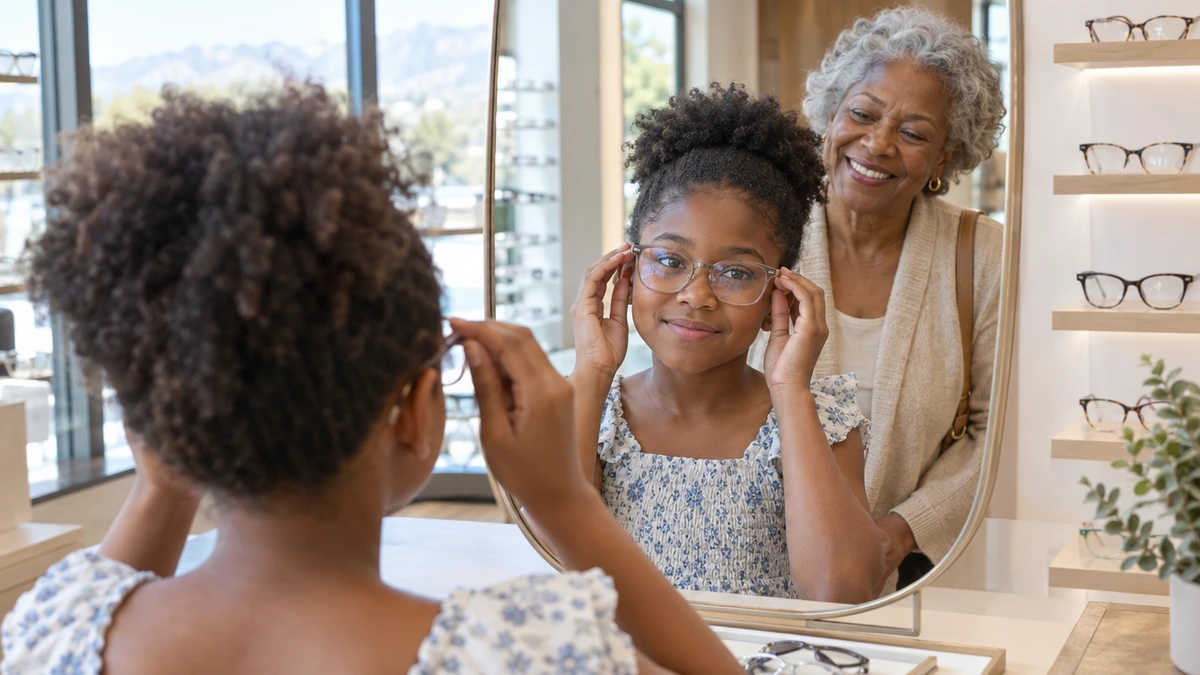
    Black girl trying on glasses in a mirror with her grandmother, signs your child needs glasses
    Ask your child how the new frames feel.

    Fit first, color second. Ask your child what presses, slips or pinches before anyone mentions purple frames. For everyday glasses, AAPOS fitting guidance recommends polycarbonate lenses and frames with eyes centered in the lenses, clear of cheeks and eyelashes. Have whoever fits the glasses show you those checks on your child’s face.

    Give adjustment time and a clear follow-up point: AAPOS says most children adjust within two weeks, and a prescription recheck may be needed when resistance continues after a few weeks. Some children need longer. Call my team to review the fit and prescription when your child keeps fighting the glasses. Pain or a pinching frame deserves a call sooner.

    I put comfort ahead of coaxing. A complaint about the frame deserves attention before another reminder to wear it. You learn more by finding the spot behind the ear that pinches than by debating whether the glasses look nice.

    1. Start with the fit. Have whoever fits the glasses adjust slipping frames or pressure points before you settle on a pair.
    2. Give your child a choice among suitable frames, then confirm the impact-resistant lens recommendation.
    3. Get the prescribed wear schedule from me so you know when the glasses belong on.
    4. Choose a regular place for the case when the glasses come off, away from the rush of backpacks and shoes.
    5. Encourage wearing the glasses and report persistent resistance so I know the plan needs another look.

    Make the morning routine practical. Before the Las Vegas school run, backpacks loaded and breakfast unfinished, check where the glasses belong under the prescribed schedule. Give your child a calm reminder and time to describe discomfort. A rushed departure is a poor moment to settle a fit problem.

    Make the next conversation specific. Tell me whether your child pushes the frames up, points to a sore spot or takes them off during a particular activity. Mention what happens with the glasses on as well as off. Those details help us address the complaint without turning every removal into an argument.

    Are Everyday Glasses Enough for Sports?

    Latino father and son kicking a soccer ball, boy wearing sports glasses, signs your child needs glasses
    Ask about protection matched to your child's sport.

    Everyday glasses are not soccer gear. Before your child’s next practice at a Summerlin park, follow Prevent Blindness guidance to choose sport-specific protective eyewear with polycarbonate lenses meeting the applicable ASTM standard. Bring the sport and the prescription when you shop for the protector.

    What Should You Do Before the Appointment?

    Give me the reason for your visit. A brief account of the squinting, reading trouble or frame discomfort gets us started. For a school referral, my guide to school screening and comprehensive exams explains what the screening result means and how to follow through.

    What I Check When You Report Squinting at Vision by Amel

    When you report squinting, I measure refraction, check whether both eyes team up and assess your child’s eye health in the same visit. Bring the concern back into the conversation as we discuss the findings. Keep asking until you understand what they mean for the moment that worried you.

    Use your pediatric eye exam to get the next step clear. Does the plan call for glasses, and when should your child wear them? Before you leave, confirm which changes to report and when to follow up.

    Make room for eye care in your school-week plans in Downtown Summerlin. Choose a visit you will be able to attend without rushing through the conversation. Keep your main concern in view from the first question to the last.

    Frequently Asked Questions About Signs Your Child Needs Glasses

    Will Glasses Make My Child’s Eyes Weaker?

    No, AAPOS explains glasses do not weaken your child’s eyesight or create dependence. Going without prescribed glasses sometimes harms normal vision development. I will explain the purpose of your child’s prescription so you understand why the wear schedule matters.

    What Should I Ask If My Child Already Has Glasses?

    Tell me whether your child’s symptoms happen with the current pair on, off or both. Use the pair worn at school for the discussion, including any bent or damaged frame. We will review the fit and prescription alongside the symptoms instead of assuming every complaint means stronger lenses.

    How Do I Get My Toddler to Keep Their Glasses On?

    Keep encouragement positive and check comfort first. AAPOS suggests books about children wearing glasses and family members modeling comfortable wear to help your toddler accept them. When slipping gets in the way, discuss a retaining strap or silicone temple tips with whoever fits your child’s glasses.

    Do I Need a Referral, and Does Vision by Amel Accept Nevada Medicaid?

    You do not need a referral for an eye exam at Vision by Amel, and we accept Nevada Medicaid. Give my team your plan details when you book online or call. We will help you check which benefits apply to the exam and any prescribed eyewear.

    What Should I Tell a Grandparent Who Helps With Glasses?

    Share your child’s prescribed wear schedule and the office contact information. Explain which concerns I want to hear about, including uncomfortable frames or continued resistance. Have the grandparent pass those concerns to you so we address them together before anyone changes the schedule.

    Book My Eye Exam Call (702) 858-4362

    Like this article? Add Vision by Amel as a preferred source, and you are more likely to see our articles in Google’s Top Stories.
    Add as a preferred source on Google

  • Eye Exams for Residents With Dementia or Limited Mobility

    Eye Exams for Residents With Dementia or Limited Mobility

    Eye Exams for Residents With Dementia or Limited Mobility

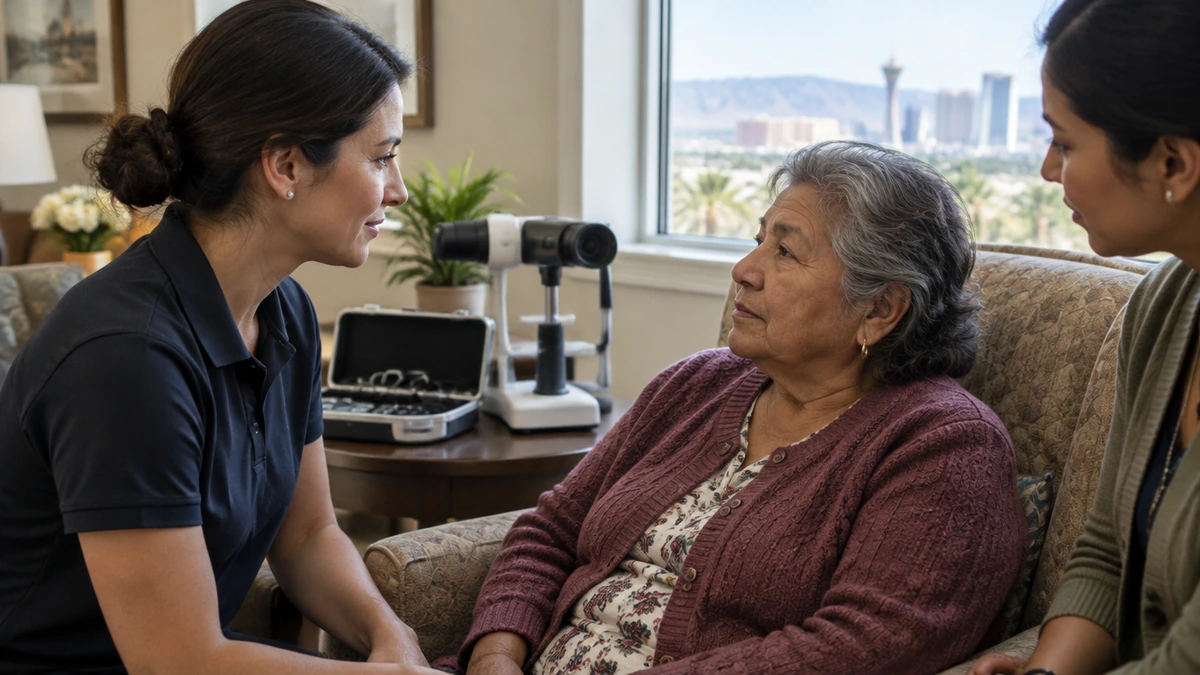
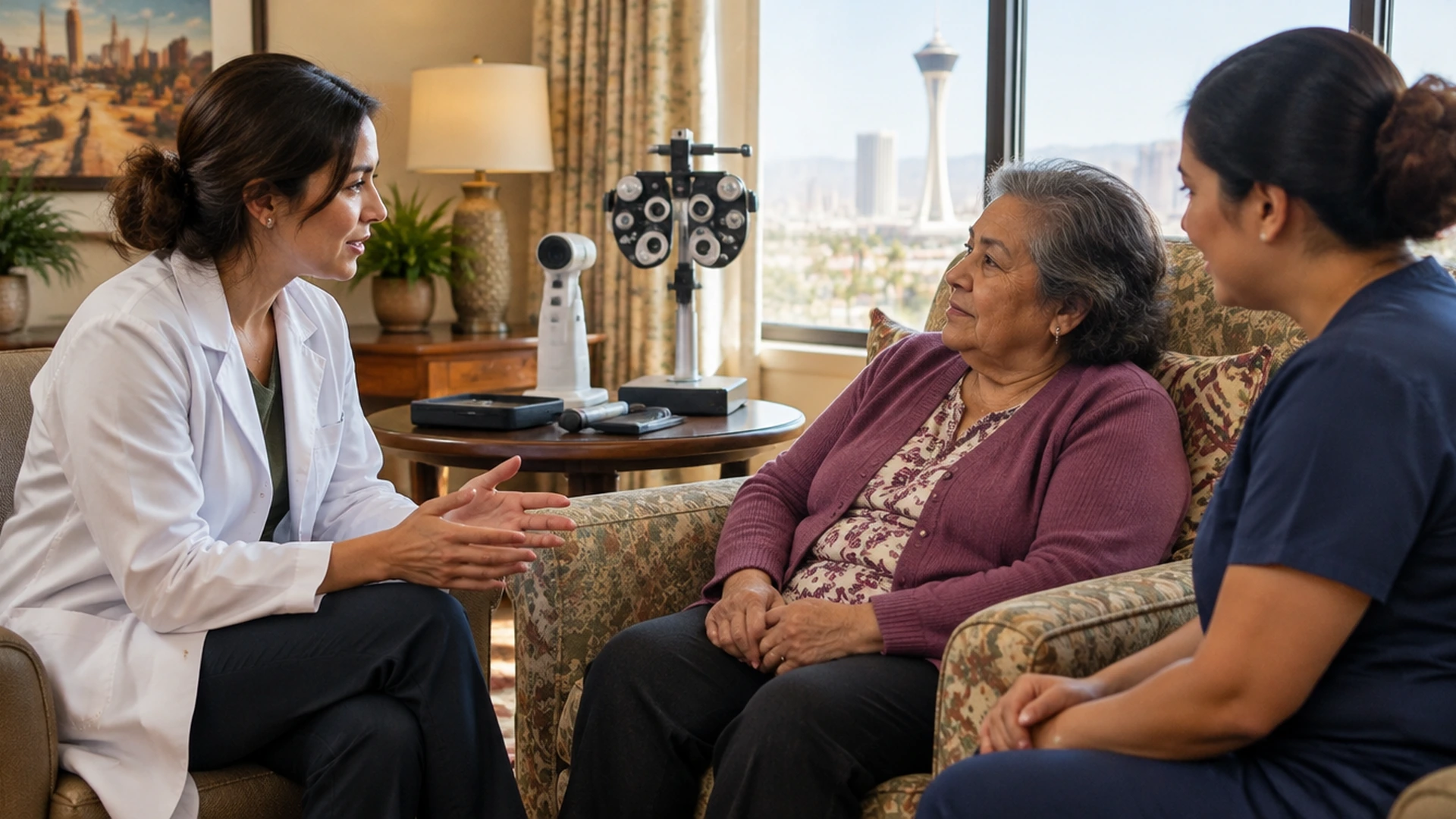
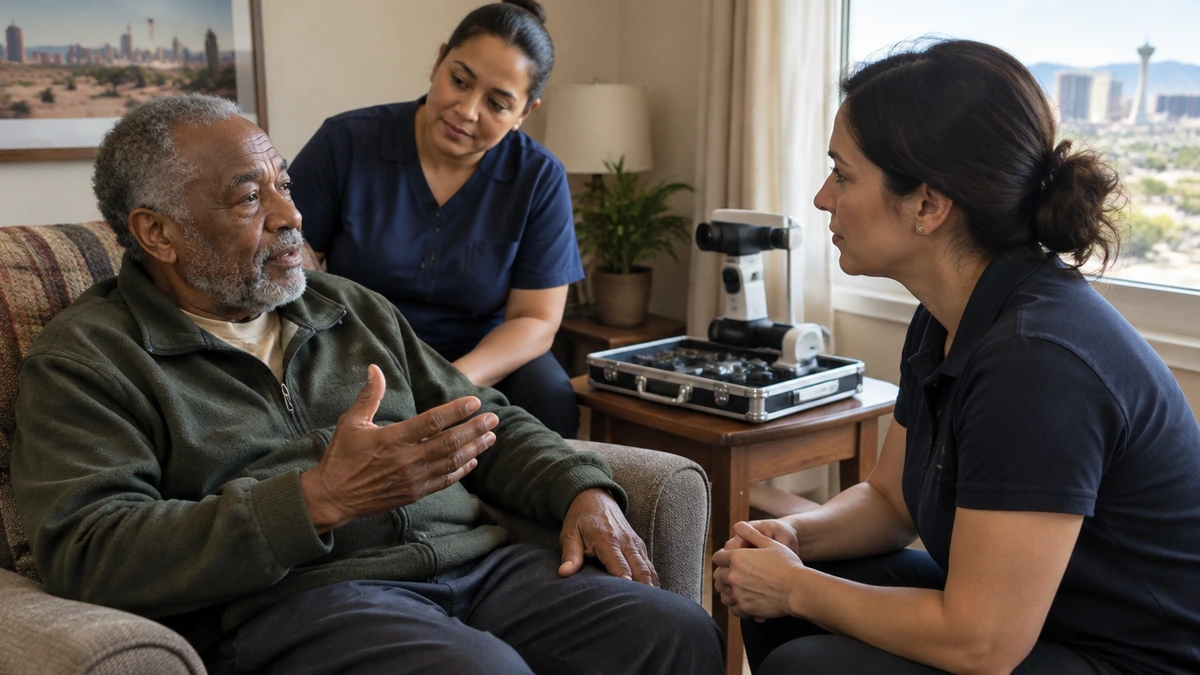
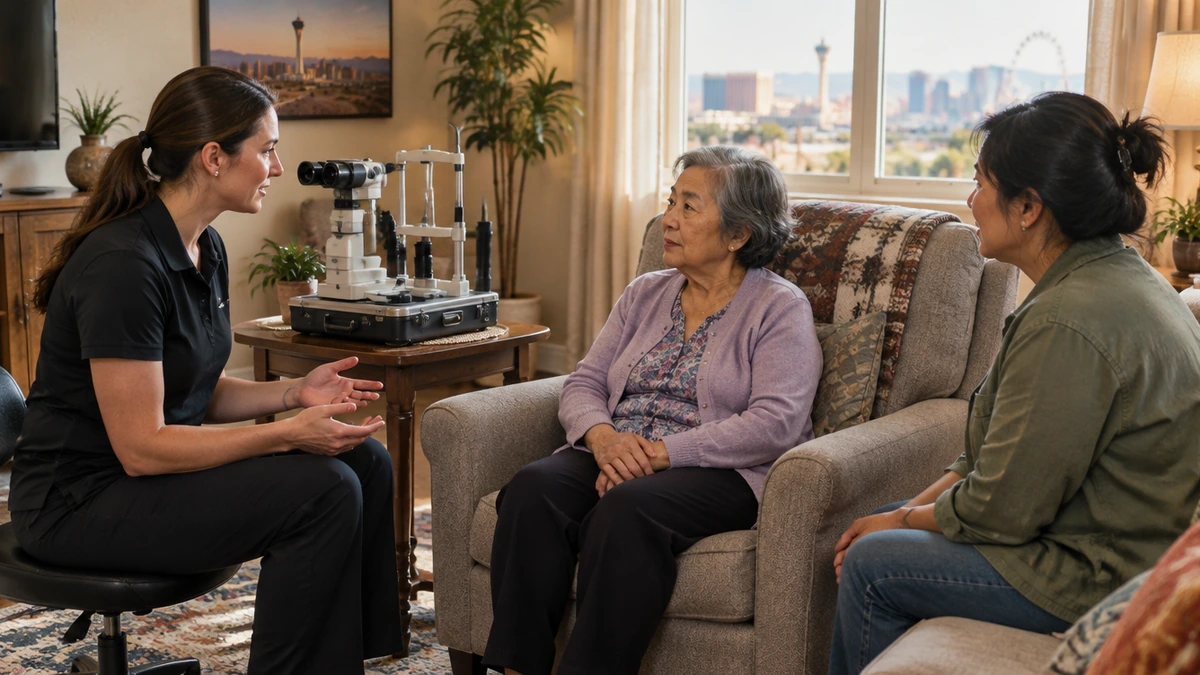
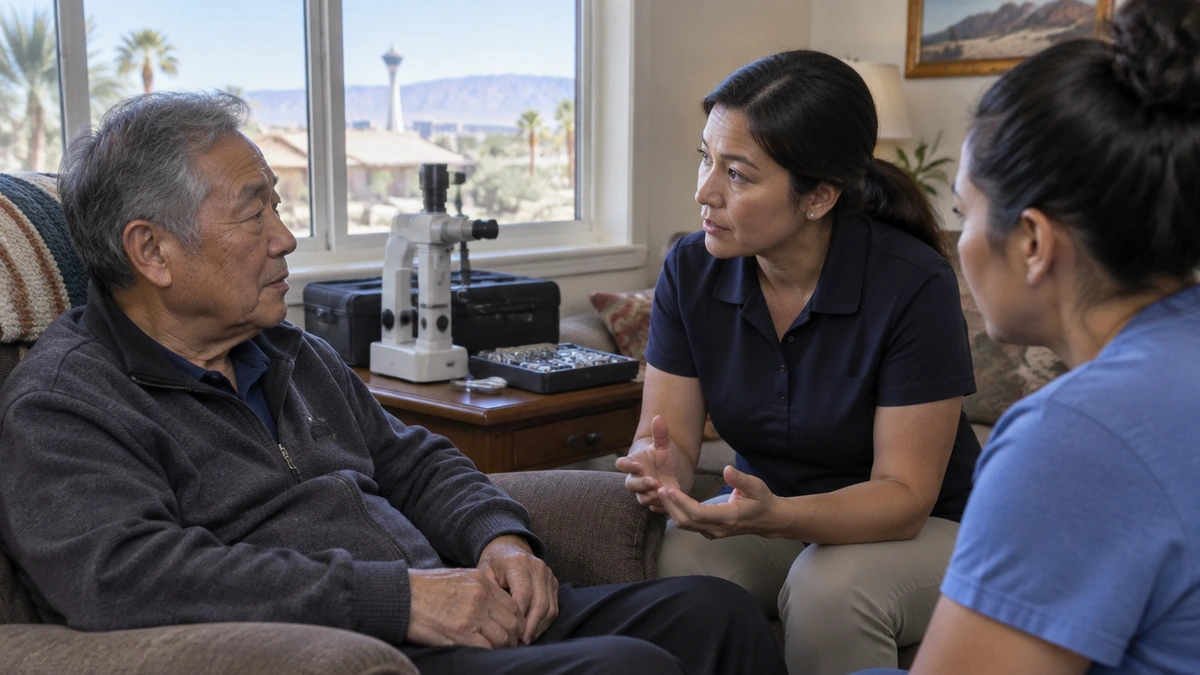
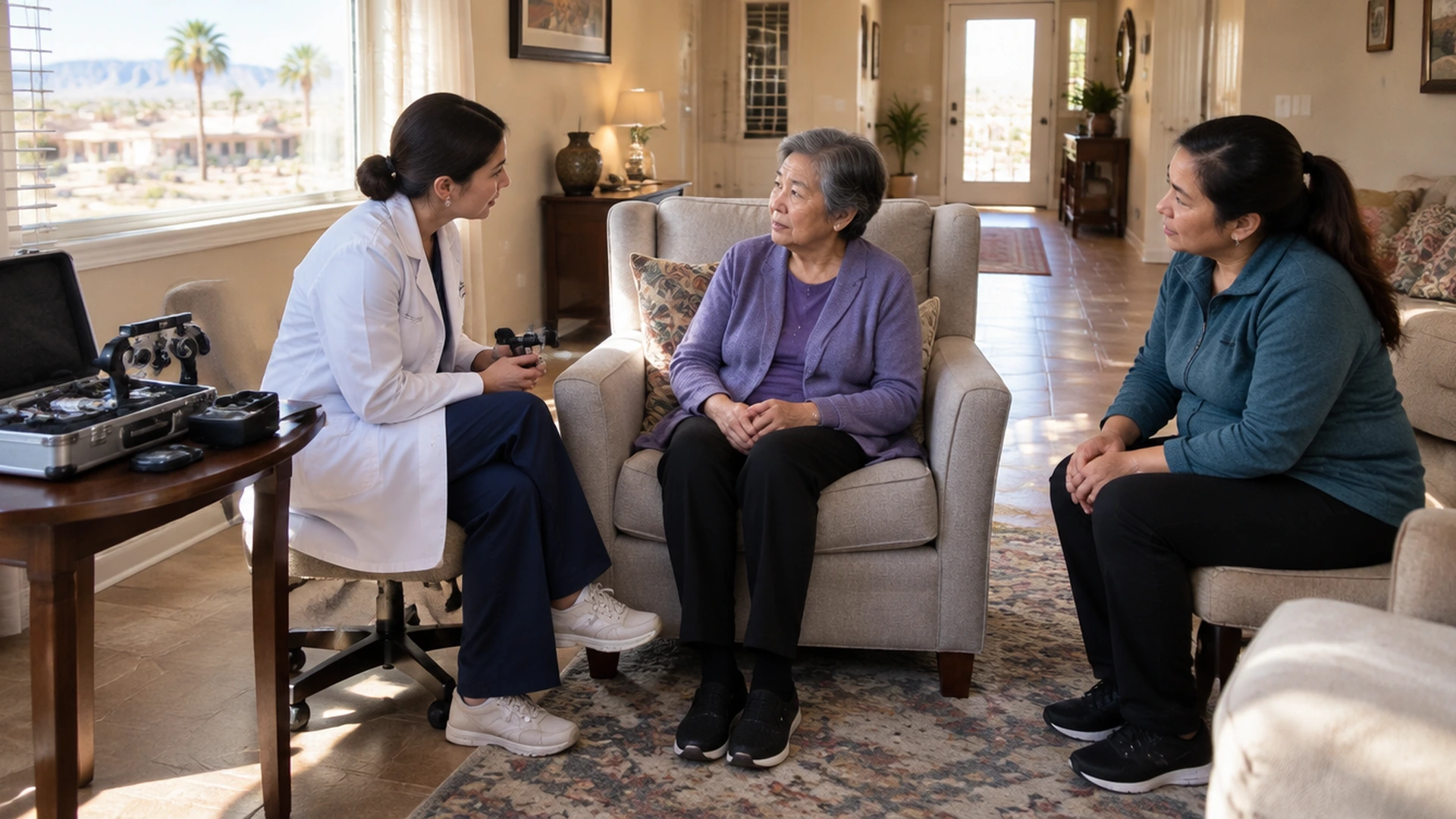
    Eye doctor speaks with a resident beside a mobility aid for eye exams for seniors with dementia

    TLDR: I plan eye exams for seniors with dementia around your resident’s communication, mobility, and decision-making needs. Prepare consent, support, examination scope, and follow-up with me before the visit. Discuss a familiar room, flexible pacing, and further assessment when needed.

    Answer: For eye exams for seniors with dementia in Nevada assisted living communities, give me your resident’s communication preferences, mobility needs, current glasses, and prior eye care instructions. Prepare consent and representative documents, then plan the room and assistance. Keep incomplete testing and referrals on the follow-up list after the exam.

    Give me a useful picture. Your resident’s discomfort signals, daily routine, and usual assistance belong in the visit notes. I need to know who helps with familiar activities and how the resident responds. A diagnosis alone leaves those practical details unanswered.

    Plan the people alongside your appointments. In Las Vegas, use an assisted living vision day call with me to settle access, privacy, consent, and examination scope. On-site eye care needs a suitable room and the right support. Include the next steps for further testing and referrals before the visit.

    How Should You Prepare Eye Exams for Seniors With Dementia?

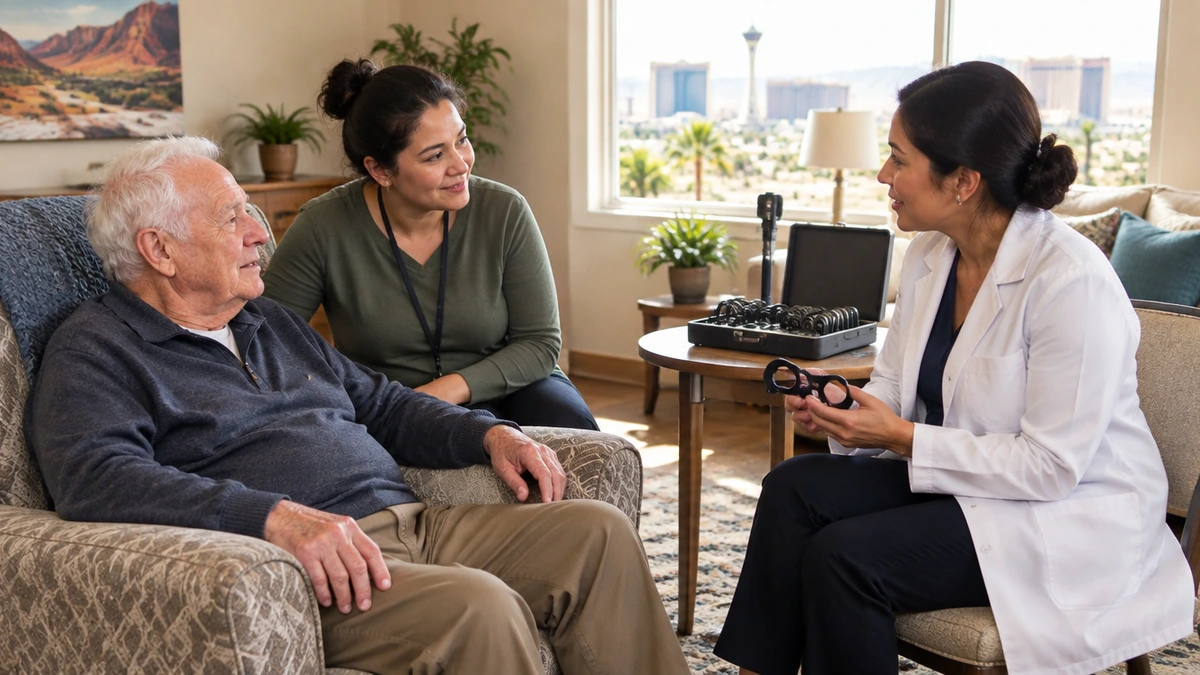
    Resident and caregiver meet an eye doctor in a sitting room for eye exams for seniors with dementia
    Resident and caregiver meet an eye doctor in a sitting room.

    Start with your resident’s routine. Note the practical time and setting, the person they want nearby, and what helps explain an unfamiliar activity. Discuss using a familiar room with me. Treat it as a possible accommodation without predicting comfort or more accurate findings.

    Leave room to adjust your plan. A published Canadian facility optometry program described some residents with dementia needing assessment across several days or help from a family member. I plan pacing around your resident’s response and identify further assessment when testing is unfinished. An examination slot does not establish every task will be completed during that visit.

    Bring the glasses your resident uses. Gather available eye examination reports and describe changes in familiar activities, such as reading or watching television. Include the glasses still needing adjustment and any pending referral. Put unfinished care beside the current concern for my review.

    Which Communication Arrangements Should Staff Discuss?

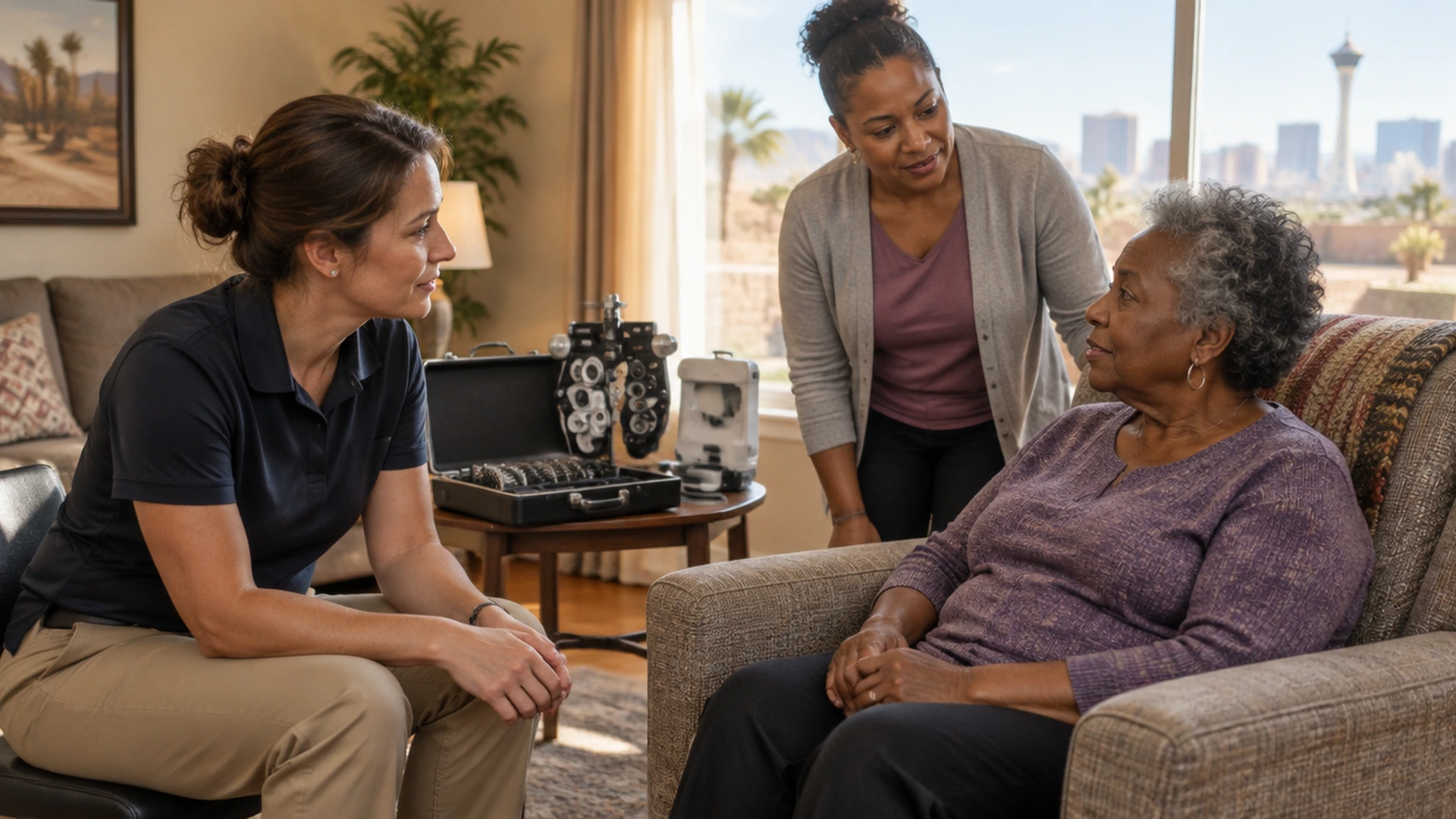
    Eye doctor pauses while a seated resident responds for eye exams for seniors with dementia
    Eye doctor pauses while a seated resident responds.

    Share the words your resident uses. Describe familiar task names, signs of discomfort, and whether a trusted caregiver helps explain activities. Give me that account before the examination. Settle the caregiver’s role while planning support for the resident.

    Give your resident time to respond. Explain who is visiting and the activity about to happen in simple, concrete words. I guide the pace and pauses. Let the resident hear a clear instruction without several people talking at once.

    Keep your resident’s preference visible. Record whom they want present and protect privacy in the examination room. If the resident becomes distressed or declines a step, pause. I address the next action with you before testing continues.

    Write down what helped your conversation. Describe what the resident understood or found difficult during the task, using concrete observations. An unfinished task does not describe every ability. Identify my assessment and your staff’s observations separately in the handoff.

    How Do You Confirm Guardian or Representative Involvement?

    Start with your resident’s participation. Establish who is making the care decision and gather the documents supporting any representative’s role. A relative’s name on the contact sheet does not establish consent authority. Keep the review separate from booking the room.

    Read the document in your file. For a healthcare power of attorney, Nevada law makes a health-care power of attorney effective when executed unless its terms specify a future date or incapacity trigger, with the required determination for that trigger. Share scope and activation terms with my team while preparing the representative’s role. Flag unanswered questions before seeking a signature.

    Send your current guardianship order for review. Under Nevada law, a guardian of the person generally authorizes medical care and serves as the protected person’s HIPAA personal representative unless the court orders otherwise. Have the responsible care-team contact check the actual appointment and any restrictions in the order. Settle consent and records authority from those documents before assigning decisions to the guardian.

    Flag overlapping papers before your visit. Nevada law suspends an existing durable health-care power of attorney when a guardian of the person is appointed. The resident consent coordination guide helps you collect the documents and identify the unresolved authority question. Keep the question visible for review with my team before routine examination scheduling proceeds.

    What Mobility Accommodations Should You Confirm?

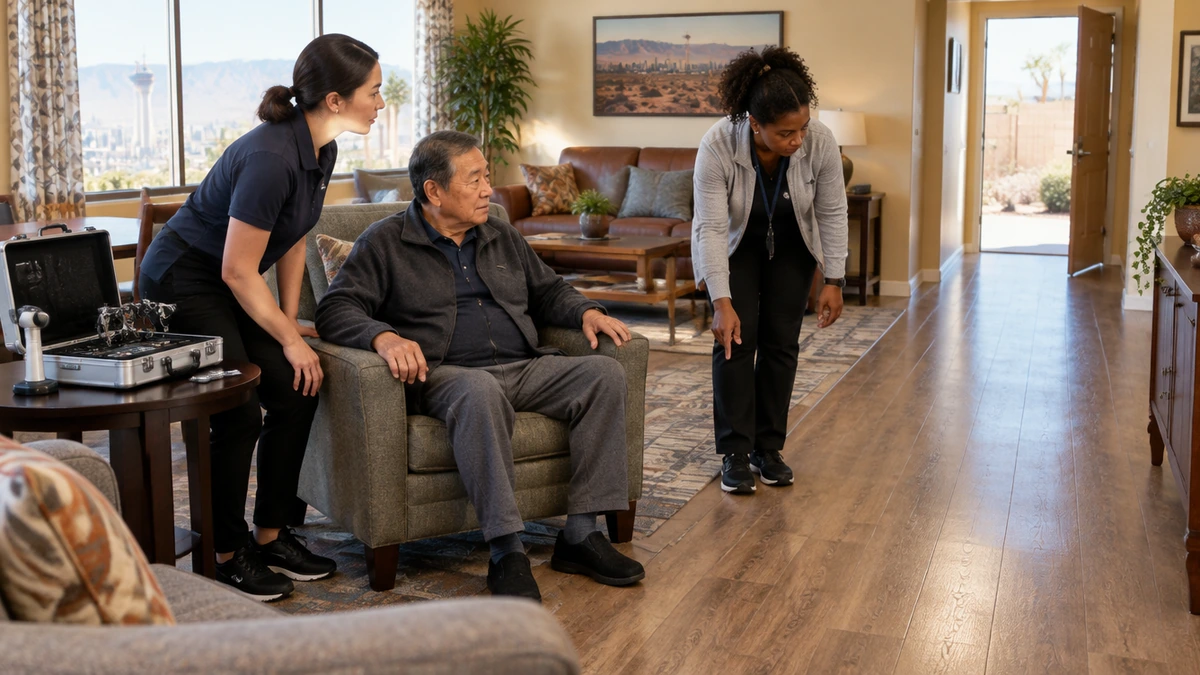
    Eye doctor and caregiver check space around resident seating for eye exams for seniors with dementia
    Eye doctor and caregiver check space around resident seating.

    Describe the chair your resident uses. Include the mobility device and usual assistance before settling the setup, since A published Delaware facility study documented examinations in chairs, wheelchairs, or at bedside. Those study settings show possible approaches. I still need to match the examination position to your resident and room.

    Walk your route before examination day. Check the doorway, space around the resident’s seating, privacy, and a power outlet for my setup. Name the staff member providing any agreed assistance. Leave no transfer dependent on a caregiver who has not been assigned.

    Raise positioning needs on your planning call. I review the room and portable examination equipment with you against the assessment planned for the resident. Identify a different setup or location when a component requires it. Keep that next step in the visit notes until resolved.

    Planning areaInformation to shareArrangement to confirm
    CommunicationResident’s preferences and discomfort signalsExplanation, pacing, and caregiver support
    Decision-makingRelevant consent and current authority documentsWho participates in each decision
    MobilitySeating, device, and assistance needsAccess and positioning for planned testing
    ExaminationPrevious findings and current concernsScope, limitations, and next assessment
    Follow-upProvider contacts and open tasksNamed staff owner for each action

    What Should You Expect From Adapted Testing?

    Eye doctor offers a pause during a resident assessment for eye exams for seniors with dementia
    Eye doctor offers a pause during a resident assessment.

    Get a clear account of your testing plan. As your visiting optometrist, I report what I assessed, and Nevada’s comprehensive-examination definition permits an alternative method for an unperformable component when it obtains comparable data. Record the findings obtained and the method used when relevant to the handoff. An unfinished assessment needs an explicit next step.

    I reviewed 69 primary sources across five research lenses for this series, and some residents with dementia needed assessment over several days in a published facility program. Put your resident’s pacing and support needs in the examination notes. Keep incomplete measurements visible in the report. I need to see what remains unresolved, as does any outside eye doctor receiving a referral.

    Record the examination your resident received. For a comprehensive eye exam, I identify completed parts, unfinished testing, and any referral or further appointment. Keep those details beside the next instruction. An ended appointment or recorded vision screening result does not establish a complete examination.

    How Do You Follow Through After Eye Exams for Seniors With Dementia?

    Locate your resident’s glasses first. Access belongs alongside prescription review, because A study of residents with probable Alzheimer’s disease at St. Louis nursing facilities identified unused glasses associated with inability to request them, lost or broken pairs, and inadequate prescriptions. Have staff find the correct pair and report fit or condition concerns. Record any need for reassessment with the eyewear task.

    Put names beside your next steps. Track prescription eyewear, delivery, adjustments, testing, and referral appointments as separate actions. At shift change, identify what is open and the provider or authorized contact receiving updates. A glasses case on the desk needs a clear destination.

    1. Obtain the examination findings and any limitations.
    2. Confirm the next assessment or referral instruction.
    3. Assign a contact for eyewear questions and adjustments.
    4. Send relevant instructions securely to the named recipient.
    5. Check that each requested action has been completed.

    Describe the care your resident received. An examination and usable glasses address eye health and vision needs without establishing a change in dementia or independence. Put the resident’s priorities beside my recommendations. Keep predictions out of the results handoff.

    Discuss Accessibility Needs With Vision by Amel

    Bring your accessibility notes to the call. I am Dr. Amel Youssef, OD, founder of my practice, Vision by Amel, in Downtown Summerlin. I invite you to plan a visit for your assisted living home, Residential Facility for Groups, memory care community, adult day care program, or senior living community in the Las Vegas Valley. Describe communication, mobility, and representative needs before settling the room and schedule.

    Build your voluntary resident interest list. Gather consent, representative documents, and insurance information. My team and I verify benefits before service. Prepare a private room with electrical access and the examination schedule with my team. Benefits depend on each resident’s eligibility and plan terms.

    Plan your visit through follow-up. Review eye examination services and the on-site examination process with the facility contact, including on-site limits and secure records. My team and I coordinate eyeglass selection, measurements, delivery, and adjustments. I use the accessibility call with you to identify support needs and the next steps for further assessment or referrals.

    Frequently Asked Questions About Accessible Resident Eye Exams

    What should I do if the resident uses different names for familiar objects?

    Give me your resident’s familiar words and their meanings before testing. Describe how the words are used in daily activities without coaching examination answers. I guide communication during each task.

    How should I arrange the caregiver’s role during testing?

    Assign a caregiver who knows your resident’s support needs when their involvement is appropriate. Agree with me where that person sits and when to help. Leave the resident space to respond directly.

    What if the resident arrives without the mobility device listed in the plan?

    Pause the planned setup and tell me what changed. Give your staff the assistance instructions already in the resident’s care plan. I reassess positioning before proceeding, so you do not need to improvise a transfer.

    How do I document an unfinished examination?

    Record completed tests, unfinished tests, and my next instruction. Name your staff contact arranging each follow-up action. Keep the report ready for the next appointment so the unanswered measurement stays visible.

    What information belongs in the initial accessibility call?

    Describe your facility type, room, and residents’ support needs in the initial call. My team and I establish secure intake with you for resident-specific details. Keep personal diagnoses, identity documents, and insurance records off the public marketing form.

    Schedule an On-Site Vision Day Speak With Dr. Amel’s Team: (702) 858-4362

    Like this article? Add Vision by Amel as a preferred source, and you are more likely to see our articles in Google’s Top Stories.
    Add as a preferred source on Google

  • Dry Eye Treatment in Las Vegas: What Helps and What to Expect

    Dry Eye Treatment in Las Vegas: What Helps and What to Expect

    Dry Eye Treatment in Las Vegas: What Helps and What to Expect

    Woman relaxing on a sofa with a warm eye compress mask for dry eye treatment

    TLDR: Smart dry eye treatment starts with finding why your eyes feel gritty, tired or sore. Artificial tears add moisture, eyelid care tackles blocked oils and debris, and prescription drops address inflammation. Your exam findings decide which steps earn a place in the plan.

    Answer: Dry eye treatment in Las Vegas starts with the cause of your discomfort. As your optometrist, I match artificial tears, warm compresses and eyelid hygiene to your findings. Prescription anti-inflammatory drops enter the discussion when your exam calls for them. Follow-up checks both your comfort and the condition of your eye surface.

    You leave work, join traffic on the 215 and reach for the drops in your bag again. By dinner, the grit is back. Your eyes are telling you something. Persistent dry eye has a cause, and my approach to dry eye care starts by finding yours.

    I am Dr. Amel Youssef, OD, founder of Vision by Amel in Downtown Summerlin. I reviewed 51 primary sources across five research lenses for this guide, and treatment improves dry eye symptoms and signs, but long-term care is usually needed. That finding in the AAO dry eye guideline sets a realistic goal for your eye care: improvement that we assess over time. You deserve a plan with a reason behind each step.

    Where Does Dry Eye Treatment Start?

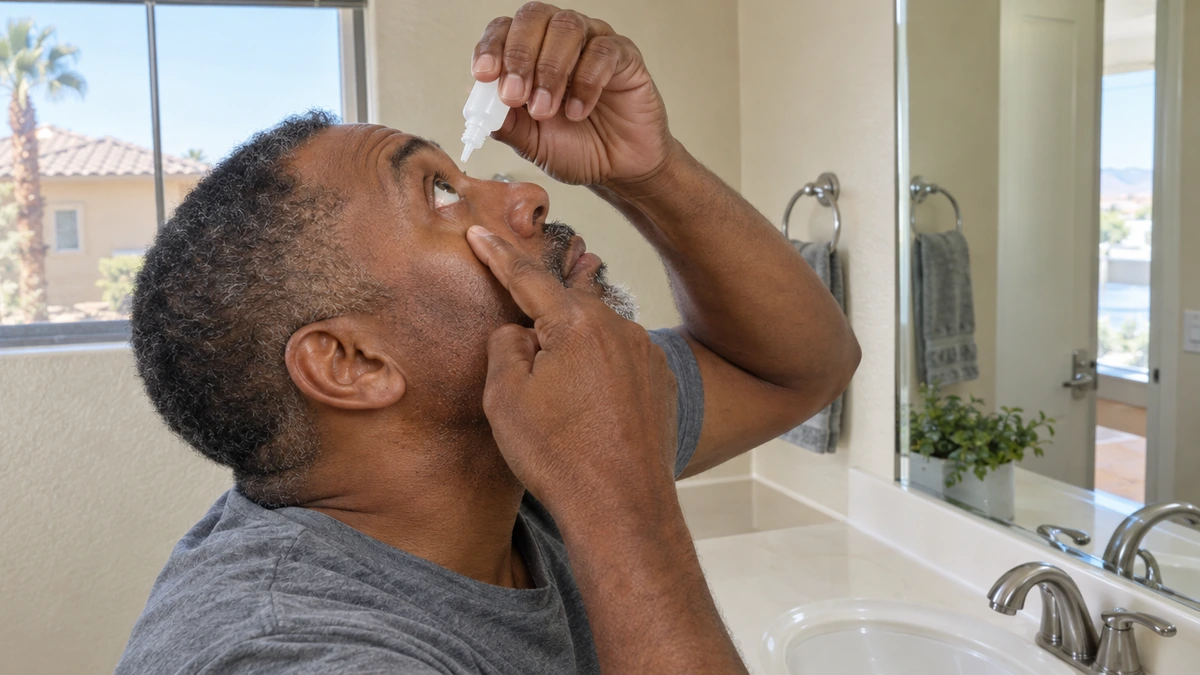
    Man applying artificial tears at a bathroom mirror for dry eye treatment
    A man applies an eye drop at his bathroom mirror.

    Artificial tears are the usual first treatment for mild dry eye. They support the tear film, the thin coating over your ocular surface, by adding lubrication. Still reaching for the bottle with little to show for it? Then drops alone are not your whole plan. Your response helps me decide what to examine next.

    Your choice of drops depends partly on how often you use them. Occasional use of a preserved drop is likely safe, but choose drops without preservatives when lubricating more than four times a day over a long period, as the AAO lubricant guide advises. Check the label for preservatives before choosing your bottle.

    Artificial tears lubricate, while other treatments address eyelid problems or inflammation. At your eye exam, tell me when drops help and when the discomfort returns. Those details help connect the bottle you use with the problem we need to treat.

    Treatment StepIts JobWhat Guides Your Choice
    Artificial tearsLubricate the eye surfaceYour symptoms, frequency of use and response
    Warm compressesSoften blocked eyelid gland oilsOil gland findings and a workable home routine
    Eyelid hygieneGently remove debris along the lash lineInflammation and crusting at the eyelid margins
    Prescription anti-inflammatory dropsAddress inflammationSeverity, earlier treatment and follow-up findings
    Punctal plugsSlow tear drainageWhether conserving your tears fits the problem

    How Do I Choose Your Next Treatment Step?

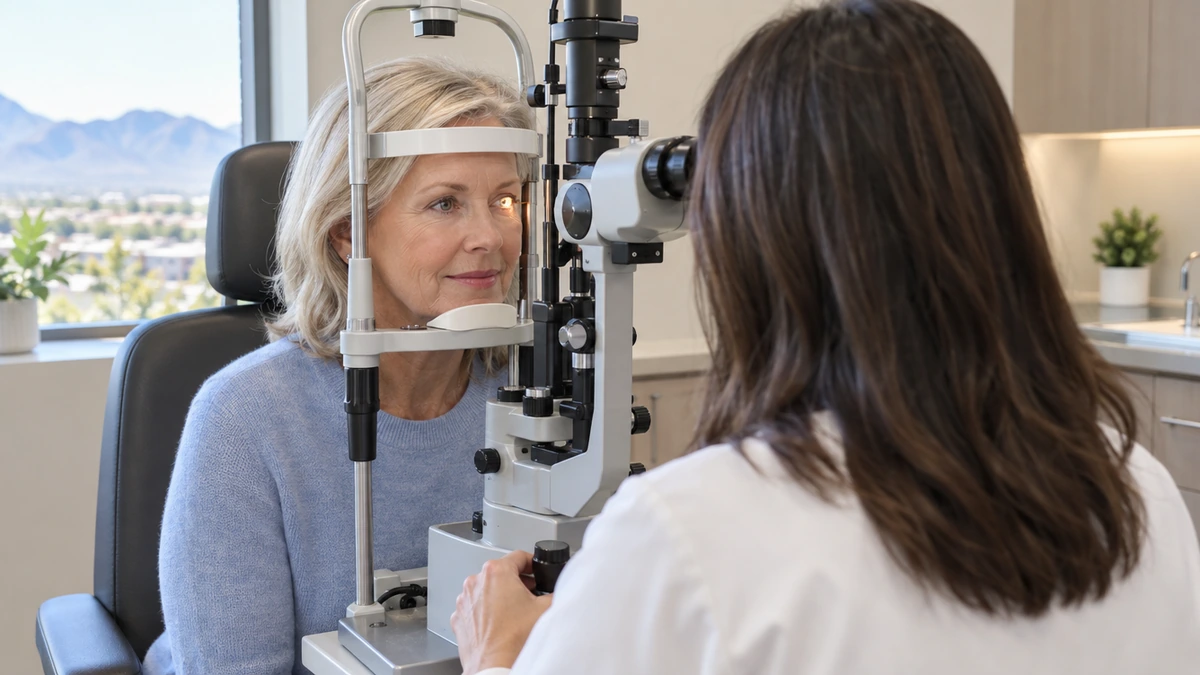
    Woman seated at a slit lamp with an eye doctor behind it during a dry eye treatment evaluation
    A woman rests her chin at a slit lamp during an eye examination.

    Too few watery tears and tears evaporating too quickly often occur together. Your treatment needs to account for both, with a comprehensive eye exam placing the tear and eyelid findings in the context of your broader eye health.

    One bottle rarely explains the whole picture. I check your tears and eyelids alongside your symptoms, because most people with dry eye have several contributing factors. A drop might help the surface while an eyelid problem remains, which is a reason to refine your plan.

    I favor the simplest plan with a clear job for every step. You should understand what each part is meant to change before making room for it in your day. A longer shopping list is no substitute for a clear explanation of warmth, cleaning or medication.

    Think back to the grit that followed you home from the 215. Getting through dinner without that familiar discomfort is a useful comfort goal to discuss. I also evaluate the eye surface, because treatment decisions include both how you feel and what the examination shows. What would a worthwhile change look like in your evening? Bring that goal into our discussion. It gives us something concrete to assess at follow-up.

    How Do You Use Warm Compresses and Clean Your Lids?

    Man gently cleaning his eyelid margin with a cleansing pad as part of dry eye treatment
    A man gently cleans his eyelid margin with a pad.

    Your eyelid oil glands affect how quickly tears evaporate. Meibomian gland dysfunction means the eyelid oil glands are blocked or working poorly, leaving the tear film more prone to evaporation. Warmth helps soften blocked gland oils. Gentle cleaning addresses debris along the lashes, especially with blepharitis, or eyelid inflammation.

    Your lids need two things: warmth to soften blocked oil and a gentle clean along the lash line. Here is the method from the AAO blepharitis guide, step by step.

    1. Wet a clean washcloth with warm water and wring it out, then hold it over your closed eyes for at least one minute and rewarm it as needed.
    2. For the cleaning step, soak a washcloth, cotton swab or pad that leaves no lint in baby shampoo diluted in warm water and gently scrub at the base of your eyelashes.
    3. Use gentle contact along the lash line, keeping pressure off your eye.

    The bathroom sink after brushing your teeth gives the routine a place in your day. Put the clean washcloth where you will see it, then follow the warming and cleaning instructions we discussed. A routine that looks simple on paper still has to work in your bathroom. Tell me when a step feels awkward so I know which instructions to clarify.

    Blepharitis care centers on keeping your eyelid margins clean. We will discuss how that care fits the problem I find and where it belongs alongside your drops. At follow-up, describe which steps you managed and which you struggled with. I want to understand the routine you used, including anything you left out.

    When Does Dry Eye Treatment Need Prescriptions or Plugs?

    Persistent symptoms are a reason to review your treatment. For more serious dry eye, the National Eye Institute names cyclosporine and lifitegrast as prescription drops that help your eyes make more tears. I choose the next step from your findings and treatment history.

    Prescription treatment needs a clear timetable. Anti-inflammatory drops address inflammation involved in dry eye, and some plans include a short course of steroid drops with monitoring for increased eye pressure and cataract. Follow your prescribed duration and keep the monitoring visit. Before leaving, make sure you know which bottle the instructions refer to and when I want to see you again. Keep that plan beside your usual routine so the next step is clear.

    Punctal plugs slow drainage through the small openings where tears leave your eyes. The 2017 TFOS DEWS II management report finds no large, high-level studies proving their benefit.

    A stalled plan needs review. Continued discomfort after treatment is a reason to reassess what your eyes need. For non-response or severe disease, I refer you to an ophthalmologist when your eyes need one. Repeating an unsuccessful routine should never become the goal.

    When Should You Stop Treating Dry Eye at Home?

    Seek emergency eye care right away when your eye is red and painful with blurred vision, a medical emergency described by MedlinePlus. Stop trying another bottle for a red eye: you need a diagnosis, as the AAO lubricant guide explains. Do not wait for your routine dry eye follow-up.

    How I Build Your Plan at Vision by Amel

    Couple listening to an eye doctor seen from behind during a dry eye treatment consultation
    A couple listens during a consultation with an eye doctor seen from behind.

    You should leave knowing what each treatment is for. My dry eye plans address the findings in front of me, including meibomian gland dysfunction and blepharitis when present. Depending on your eyes, the plan includes artificial tears, targeted prescription drops, warm compresses or eyelid hygiene.

    Your eye examinations give me the findings needed to explain a treatment choice. During our discussion, I connect what I find with the care we are considering and the changes you want to see. Leave room for questions about a step that feels unclear. I would rather explain it during your visit than have you guess at home.

    Every step in your plan earns its place. When a product sounds tempting, ask three questions. What problem does it solve? What evidence backs it? How will we know it works for you?

    Plan your visit around your week. You will find me at Vision by Amel, 2010 Festival Plaza Dr, Suite 195, Las Vegas, NV 89135, in Downtown Summerlin at Festival Plaza. Book online or call, with no referral needed for an eye exam. My Dry Eye Treatment topic page offers more reading before your visit.

    Frequently Asked Questions About Dry Eye Treatment

    Does Dry Eye Go Away for Good?

    Usually, dry eye needs ongoing management. Treatment aims to improve your symptoms and the condition of your eye surface, and long-term care is typical. A short course of drops rarely ends the problem permanently.

    Does Fish Oil Help Dry Eye?

    You should not count on fish oil as a proven dry eye treatment. The DREAM trial followed 535 people with moderate to severe dry eye for 12 months and found no significantly better outcomes with omega-3 supplements than with an olive oil placebo. Both groups improved. That is exactly why a placebo comparison matters.

    Do Artificial Tears Actually Work?

    Often, especially when your dry eye is mild. A Cochrane review of 43 trials and 3,497 people found over-the-counter tears may be safe and effective, though the evidence quality was low. No formula is proven best for everyone, so your response still matters.

    How Long Until Dry Eye Treatment Works?

    Expect a timetable tied to your treatment. Before you leave, I explain what change we are looking for and when I want to assess it. Your follow-up gives us a chance to compare that goal with what happened at home. I set your treatment goal and follow-up around your findings.

    When Do I Need Prescription Eye Drops for Dry Eye?

    More serious dry eye is a reason to discuss prescription treatment. Anti-inflammatory therapy sometimes accompanies tear supplementation, so your plan might include both. A prescription does not automatically replace every other step.

    Book My Eye Exam Call (702) 858-4362

    Like this article? Add Vision by Amel as a preferred source, and you are more likely to see our articles in Google’s Top Stories.

    Add as a preferred source on Google

  • School Vision Screening vs a Comprehensive Eye Exam in Las Vegas

    School Vision Screening vs a Comprehensive Eye Exam in Las Vegas

    School Vision Screening vs a Comprehensive Eye Exam in Las Vegas

    Father and daughter arriving at elementary school for a school vision screening article

    TLDR: A school vision screening flags possible vision problems, while an eye exam investigates your child’s vision and determines the next step. Book the exam when a referral note comes home, even when your child seems to see well. A passing screening does not rule out a vision problem.

    Answer: In Las Vegas, school vision screening helps identify children who need further evaluation. A comprehensive eye exam examines your child’s vision and eye health in more detail, including eye alignment and the structures of the eyes. Take a school referral to an optometrist or ophthalmologist for evaluation and a plan based on the findings.

    A referral note slides out beside the lunchbox. Your child swears the board looks fine. Trust the note anyway. Book the exam first, then gather what the school sent. My eye exams at Vision by Amel page explains the visit and booking options.

    I reviewed 73 primary sources across five research lenses for this guide, and passing a screening does not rule out a vision disorder. As Prevent Blindness explains, a screening flags a concern, while an eye doctor diagnoses the problem. That difference decides your next move.

    What Does a School Vision Screening Check in Nevada?

    Boy leaning forward toward a classroom board, illustrating school vision screening concerns
    A boy leans forward and squints toward the classroom board.

    Your child’s screening looks for signs worth investigating. A chart-based check measures visual acuity, meaning how clearly your child sees the chart, while other screenings use an instrument. The school nurse has the details about the method and result. A screening report is a snapshot of one morning’s check of children’s vision. Your child’s vision deserves the full picture.

    Nevada sets a school screening schedule so your child’s vision gets attention during the school years. Under NRS 392.420, schools with a school nurse check for visual problems before the end of the first elementary year, in at least one additional elementary grade, and in one middle and one high school grade, with parent notification of concerns and an option to decline in writing. The requirement covers school checks. A referral tells you to take the next step toward an exam.

    Get the result directly. An empty backpack tells you nothing about whether your child completed the screening or needs follow-up. Contact the nurse for the recorded outcome and any instructions sent home. On a busy Las Vegas pickup afternoon, a quick call beats searching through another pile of school papers.

    What Should You Do With a School Referral Note?

    Mother kneeling beside her son at a kitchen counter after school vision screening
    Ask your child about the screening and bring questions to the exam.

    Book the follow-up. The American Academy of Pediatrics advises an eye exam after a failed screening, even when you have noticed no problem. The exam determines whether your child needs glasses or other care. Your child has done nothing wrong.

    1. Read the requested action. Find the screening result, the eye involved and the follow-up instructions. Have the nurse explain any unfamiliar abbreviation.
    2. Arrange the exam. Explain to my team that a school screening prompted your call, and mention concerns from home or the classroom.
    3. Check the paperwork route. Find out which form the school wants back and who should receive it after the visit.
    4. Confirm your benefits. Give my team your insurance details before the appointment so we have the information needed to check them.
    5. Finish the handoff. Return the requested information after the exam and save a copy with the original screening result.

    Give the note a job. Put it beside your appointment details so it reaches the exam room instead of disappearing under homework. Let your child describe the screening without rehearsing chart answers or trying to prove the result wrong. The useful question is what the exam finds.

    What Happens When You Book a Comprehensive Eye Exam?

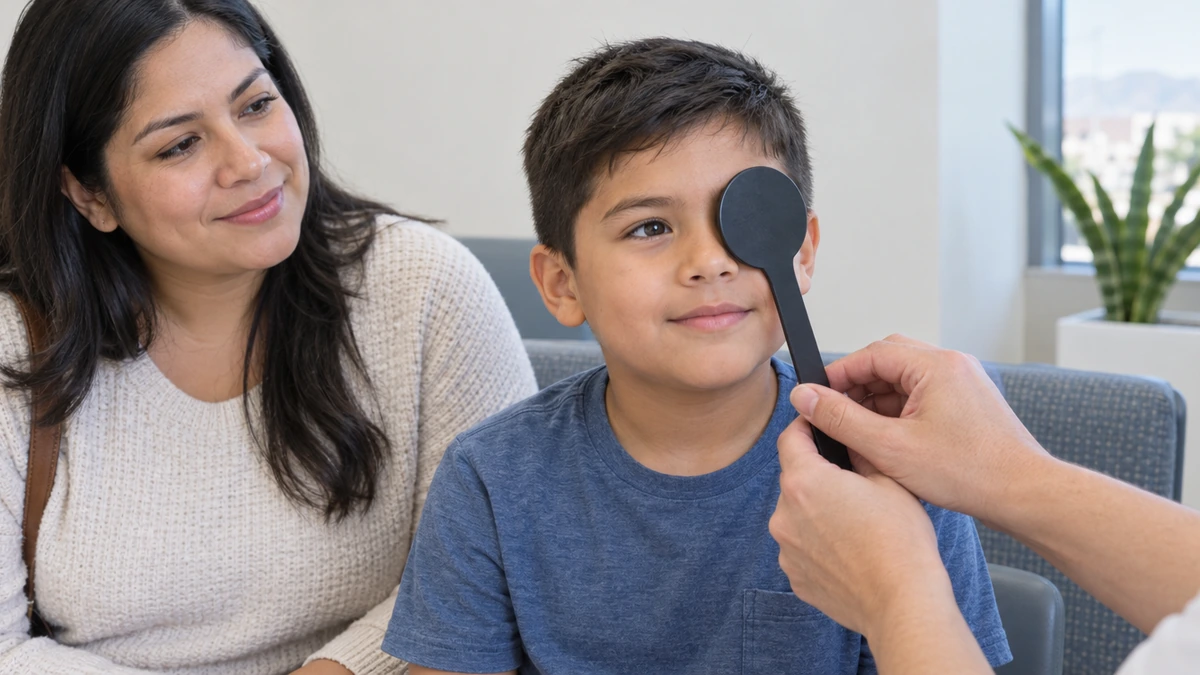
    Mother and son in an optometry waiting area for follow-up after school vision screening
    Bring the school referral and your questions to the appointment.

    A screening is a sorting tool. An eye exam is a diagnosis. Your child’s chart result belongs alongside the history, eye alignment and examination findings. I use those pieces to decide what care is needed and explain the next step.

    Your QuestionSchool ScreeningComprehensive Exam
    What is its purpose?Flag a possible vision problem needing follow-up.Evaluate vision and eye health and determine a plan.
    What does a chart result show?How clearly your child sees the chart during that check.Visual acuity interpreted with history and other findings.
    Does it diagnose a condition?The result identifies a concern for evaluation.I evaluate the findings to make a diagnosis.
    Does it prescribe glasses?The screening supplies no glasses prescription.I determine whether prescription glasses or other care are needed.
    What happens afterward?You complete the recommended follow-up.You follow the individual plan and return requested information to school.

    Leave knowing what the findings mean. A pediatric eye exam gives us room to discuss the concern behind the referral, beyond the letters your child read during screening. Tell me whether the difficult task is seeing the front board, reading a book or finishing homework comfortably. A specific example gives our conversation a clear starting point.

    You do not need a diagnosis before booking. Previous records sometimes contain terms such as amblyopia or strabismus, and I want to hear about those findings when we discuss your child’s history. Have me explain any unfamiliar terms. Leave the visit knowing what the findings mean for the school referral and what happens next.

    What Does a Passing School Vision Screening Miss?

    A pass is good news. Your child’s complaints still win the argument. In the 2004 Vision In Preschoolers study of 2,588 Head Start children aged 3 to 5, the best tests run by eye care professionals at 90% specificity detected about two-thirds of children with an eye condition targeted by the study and nearly 90% of those with the most important conditions. Those results describe the study’s preschool tests. Book the exam when those complaints keep coming.

    Homework discomfort deserves its own answer. The American Optometric Association’s parent guidance says school screenings look for amblyopia and its risk factors but do not check for most vision conditions behind digital eye strain. Your child reading the classroom chart does not settle a complaint about uncomfortable screen work at the kitchen counter. Tell me when the discomfort starts and which task brings it on.

    Watch what happens after the reassuring result. Your second grader still leaning toward the whiteboard gives us a concern to investigate. A parent in Summerlin hearing another complaint over evening homework has a reason to arrange an exam. My pediatric eye exam guide covers timing, Medicaid and school screenings when you need the wider overview.

    Why Does Completing the Follow-Up Matter?

    The referral needs a finished follow-up. A 2026 BMJ Open Ophthalmology review of 30 studies reported a median follow-up rate of 43.1% after school vision screening referrals. That median spans those studies. Make sure your child lands on the follow-through side of it.

    Choose a date you will keep. Check transportation and your work schedule before confirming the visit, especially when pickup and an afternoon shift compete for the same hour. A change of plans calls for a replacement date during the same phone call. Keep the school informed when arranging follow-up takes longer than expected.

    Showing up is half the job. Walking out with a plan you understand is the other half. Before you leave, confirm what the findings mean for the referral, whether your child needs glasses or other care, and when to return. A clear next step belongs beside the appointment on your calendar.

    Close the paperwork loop. Check the school’s instructions before sending the completed form, and keep your copy somewhere easier to find than the bottom of a backpack. Report continuing concerns to me even after the form is returned. The paperwork records the visit, while the plan guides your child’s care.

    How I Follow Up on Your School Referral at Vision by Amel

    Doctor's hands holding an occluder at a boy's left eye during school vision screening follow-up
    The eye exam evaluates the concern raised by screening.

    You do not need a referral for an eye exam at Vision by Amel, and we accept Nevada Medicaid. Mention the school screening when you book. A missing form need not delay that call.

    Put your main concern first when we talk. Start with what prompted the school referral, then describe anything you have noticed since the screening. Leave room for your child to explain what feels difficult, too.

    Plan your route to Festival Plaza in Downtown Summerlin before the appointment. Choose a time around your family’s school and work commitments. Keep the school’s contact details handy for returning the requested findings after the visit.

    Frequently Asked Questions About School Vision Screening

    What If I Lost the Referral Note From School?

    Request a replacement from your school nurse, including the screening date and recorded results. Tell my team you are waiting for the copy when you book. Confirm whether the school also has a separate form for the exam findings, so the replacement packet includes what you need.

    Should I Buy Glasses Based on the School Eye Test?

    Wait for my findings before buying prescription glasses for your child. The screening note supplies a reason to investigate, while the exam determines whether glasses belong in the plan. During the visit, have me explain what any prescription means and how the glasses should be worn.

    Which Grades Get Vision Screening in Clark County Schools?

    The Clark County School District screening schedule lists kindergarten and grades 4, 7 and 10, plus students new to the district, repeating a grade or with disabilities. Your child’s grade is therefore only part of the answer. Check with the school nurse about your child’s screening status and follow-up instructions.

    Does Nevada Medicaid Need Prior Approval for the Follow-Up Exam?

    No, Nevada Medicaid’s ocular services manual allows optometrists to examine Healthy Kids members without a referral or prior authorization and covers routine exams once every 12 months. Give my team your child’s plan details when you arrange the follow-up. Confirm the coverage for the planned visit before you arrive.

    Are Weekend Appointments Available at Vision by Amel?

    Yes, you have weekend booking options because my office opens seven days. Our hours are Monday to Saturday 9 am to 6 pm and Sunday 11 am to 5 pm. Call or use online booking to check appointment availability for your child.

    Book My Eye Exam Call (702) 858-4362

    Like this article? Add Vision by Amel as a preferred source, and you are more likely to see our articles in Google’s Top Stories.

    Add as a preferred source on Google

  • Diabetic Eye Care for Assisted Living Residents

    Diabetic Eye Care for Assisted Living Residents

    Diabetic Eye Care for Assisted Living Residents

    Eye doctor discusses care with a resident and caregiver for diabetic eye exams assisted living

    TLDR: I help you plan your residents’ diabetic eye assessments and follow-up. Gather prior findings, report changes, and track referrals, with clinical timing separate from benefits.

    Answer: Diabetic eye exams for assisted living residents in Las Vegas need consent, previous retinal findings, current medicines, and follow-up. Your team gathers records and support needs. I clarify examination scope and further testing with you. Confirm results contacts and report new symptoms before the next group visit.

    Find the instructions before the visit. For example, your resident has an outside eye doctor’s note in the record, a retinal photograph from a clinic visit two years ago, or a follow-up appointment nobody booked. Check your eye care records for those three things first. Unfinished appointments belong on a list with a name beside each one.

    Name your facility contact, then plan with me for on-site eye examinations for senior living around the residents whose diabetes care already has instructions attached. Track registration and results in one restricted record so the clinic report, the examination date and the referral status sit together. Your staff then sees what is done and what still needs a call.

    Diabetic Eye Exams Assisted Living Teams Should Plan Around

    Eye doctor listens to a resident describe previous care for diabetic eye exams assisted living
    Eye doctor listens to a resident describe previous care.

    Find the retinal assessment instructions. Your resident’s lack of a complaint leaves the question open, because The National Eye Institute states that early diabetic retinopathy usually has no symptoms. As your visiting optometrist, I need diabetes included in the history you send me, with previous retinal findings and requested follow-up. Keep missing reports on the preparation list.

    Send both concerns to me. Your resident’s glasses question and diabetic eye assessment each belong in the visit plan when relevant. Include known cataracts, glaucoma, macular degeneration, and other established diagnoses in the history. I assess the cause of a new difficulty during the examination.

    Make your resident’s history easy to follow. Include diabetes type, available diagnosis history, previous retinal findings, and the doctors already involved. Put those details beside the resident’s current concern. Send me the relevant records securely so I have them when planning assessment and follow-up.

    How Do You Confirm the Resident’s Examination Schedule?

    Caregiver supports a resident during a care planning discussion for diabetic eye exams assisted living
    Caregiver supports a resident during a care planning discussion.

    Find your resident’s next examination instruction. Start with the most recent report and the resident’s treating eye doctor’s reason for that timing. If the due date is unclear or the report is missing, get that question resolved. A date on the home’s group calendar does not establish when the resident needs care.

    Keep your appointment record current. Write down my name or the treating specialist’s name, according to who supplied the instruction, when it arrived, and the action required. When new findings lead to another appointment, update the schedule and notify the person booking it. Leave the next step visible at shift change.

    Keep your benefit review beside the care plan. Medicare Part B covers a diabetic-retinopathy eye examination once a year for beneficiaries with diabetes when performed by a legally authorized eye doctor. The benefit describes coverage, while instructions from me or the resident’s treating specialist set the follow-up schedule. New symptoms need assessment without waiting for the next benefit date.

    Plan the appointment your resident needs. My team and I review services and benefits with you before finalizing the routine visit schedule. Keep clinical instructions beside coverage details so staff see both. When follow-up falls outside the vision day, book the appropriate appointment through the outside treating team’s office.

    What Does a Diabetic Retinal Assessment Require?

    Eye doctor explains portable equipment to a seated resident for diabetic eye exams assisted living
    Eye doctor explains portable equipment to a seated resident.

    Set out the retinal examination clearly. On your planning call with me, address dilation, because The American Optometric Association’s diabetes guideline recommends retinal examinations through dilated pupils and separately recommends considering retinal photography to identify lesions and document retinal status. Describe the planned assessment in the resident’s visit record. I do not treat photography alone as a replacement for clinically indicated dilation.

    Check the room and positioning needs. I explain which parts of your resident’s assessment take place at the home and which require another setting. Portable examination equipment does not establish every measurement or treatment is available there. Keep incomplete findings and additional testing on the follow-up list.

    I reviewed 69 primary sources across five research lenses for this series, and retinal photography does not replace the guideline’s recommendation for a dilated retinal examination. Give your family contact an accurate description of the exam. Leave an unanswered scope question visible in the visit notes. Resolve it with me before describing the planned assessment as settled.

    Plan your resident’s aftercare before activities resume. The National Eye Institute notes that blurred vision and light sensitivity sometimes last several hours after a dilated eye examination. Get my aftercare instructions and assign the staff member providing the requested help. Include those instructions in the handoff for the resident’s next activity.

    Which Changes Should Staff Report?

    Resident describes an eye concern with caregiver support for diabetic eye exams assisted living
    Resident describes an eye concern with caregiver support.

    Report the task your resident finds difficult. Describe a new visual complaint or a change while reading, including the resident’s own words and when it began. Give me that account for assessment. I assess the cause rather than assume the change comes from blood sugar, an old prescription, or diabetic retinopathy.

    Act on sudden changes now. For your urgent response process, The National Eye Institute identifies sudden new floaters, flashes, or a dark curtain or shadow as possible retinal detachment symptoms requiring immediate assessment by an eye doctor or emergency department. Tell the eye doctor receiving the urgent referral when symptoms began and what the resident said. A routine diabetic eye appointment does not meet that immediate need.

    Write what your caregiver observed. If the resident struggles to explain, describe the changed activity and whether glasses were worn. Send me those facts and record the instructions I return. Name the staff member taking the next step before the shift ends.

    Information to sendWhat to includeWhy it belongs in the handoff
    Diabetes historyType and available diagnosis historyProvides clinical context
    Previous eye findingsLast report and requested follow-upIdentifies unfinished care
    Current medicinesMedication list and recent changesInforms the treating doctors
    New concernOnset and resident’s exact descriptionSupports clinical triage
    Access needsMobility, communication, and representative needsSupports visit preparation

    How Should You Coordinate Medicines, Records, and Consent?

    Send your current medication list. Include prescribing contacts, relevant medical history, and requested care instructions through secure intake. Flag recent changes for my review. Your resident’s prescribing doctors direct medicine changes, independent of what suits the vision day schedule.

    Keep your resident’s choice visible. Record how they wish to participate and who is involved in decisions, then gather consent and representative documents when needed. Resolve unclear paperwork with my team before the routine exam. A place on the interest list leaves those steps unfinished.

    Keep private records out of your public form. Use the resident information checklist to prepare current glasses, medication details, and the requested paperwork for assisted living eye exams. The facility form takes contact and scheduling information. Send clinical records through my team’s secure intake method.

    1. Locate prior retinal findings and the current follow-up instruction.
    2. Gather medication information, current glasses, and relevant history.
    3. Check consent, representative documents, and accessibility needs.
    4. Verify benefits and agree on the examination scope.
    5. Assign responsibility for results and any further appointment.

    How Do You Close the Loop After Diabetic Eye Exams Assisted Living Residents Receive?

    Turn your report into next steps. I document the assessment completed, its limits, and the next clinical action for your care record. Name the person arranging further testing or an ophthalmology referral. Record how findings will return to your care team before closing the handoff.

    Give report receipt a named owner. Your home needs someone watching for the examination report, and A Canadian facility optometry program tracked follow-up timing and supplied examination reports to residents’ family physicians. Assign staff to receive findings, book appointments, and pass instructions to the right contacts. Put each responsibility beside the pending action in the care record.

    Keep both tasks on your list. Eyeglass selection, measurements, delivery, and adjustments belong beside pending retinal assessment and referral work. A delivered pair of glasses leaves the clinical referral open. Mark each requested action finished only after it occurs and the next instruction is available.

    Plan your shift handoff before the visit. Review the on-site examination process with the facility contact and decide who carries unfinished tasks into the next shift. Name the person calling a receiving clinic when an appointment remains unresolved. Keep an owner on the referral through its final handoff.

    Schedule a Resident Eye Care Visit With Vision by Amel

    Bring your residents’ needs to the call. I am Dr. Amel Youssef, OD, founder of my practice, Vision by Amel, in Downtown Summerlin. I invite you to plan a visit for your assisted living home, Residential Facility for Groups, memory care community, adult day care program, or senior living community in the Las Vegas Valley. Have diabetes care instructions and access needs ready for visit planning.

    Start with your voluntary interest list. Gather consent, representative documents, and insurance information. My team and I verify benefits before service. Prepare a private room with electrical access and an examination schedule with my team. Benefits depend on each resident’s eligibility and plan terms.

    Plan your on-site eye care through follow-up. Review medical eye care services alongside the planned assessment and referrals beyond the visit’s scope. My team and I coordinate prescription eyewear selection, measurements, delivery, and adjustments when needed. I review secure record handling and responsibility for each next step with you before the vision day.

    Frequently Asked Questions About Diabetic Eye Care Coordination

    What should I do if the resident’s last report is unavailable?

    Mark the report as missing in your examination packet. Have the resident or authorized representative identify the previous practice, then request the report through secure records intake. Tell me what remains unavailable.

    How should I prepare a resident who already sees a retinal specialist?

    Bring the specialist’s current instructions and booked appointments into your visit plan. Tell my team about that active care before another assessment is arranged. I clarify my assessment’s purpose with you, and you confirm the specialist’s appointment purpose with that office.

    What happens if the resident declines the planned visit?

    Respect your resident’s decision and notify my team and your facility’s care contact. Record the declined visit and any request to discuss another option. Keep existing care instructions and unresolved follow-up visible for my next direction or instructions from the resident’s existing specialist.

    Should the public scheduling form include diabetes records?

    Keep diabetes records off your public scheduling form. Use it for facility contact details and planning needs, with resident names, diagnoses, insurance cards, and medical histories sent through secure intake. Establish the recipient and transfer method before sending those records.

    How do I manage follow-up when a resident moves?

    List your resident’s open appointments, missing reports, and unfinished eyewear tasks before the move. Send relevant instructions and provider contacts securely to the receiving care team. Name the next action and responsible contact in the transfer note.

    Schedule an On-Site Vision Day Speak With Dr. Amel’s Team: (702) 858-4362

    Like this article? Add Vision by Amel as a preferred source, and you are more likely to see our articles in Google’s Top Stories.

    Add as a preferred source on Google

  • How Vision Problems Affect Fall Risk in Senior Living Communities

    How Vision Problems Affect Fall Risk in Senior Living Communities

    How Vision Problems Affect Fall Risk in Senior Living Communities

    Eye doctor discusses daily activities with a resident for vision problems and falls in seniors

    TLDR: Put vision on your resident safety checklist alongside the care plan and conditions in the home. Research links visual impairment with falls, but a vision day does not establish a fall-prevention benefit. I help you plan the assessment, glasses follow-up, and staff handoff around each resident.

    Answer: Address vision problems and falls in seniors together in your Nevada assisted living safety review. Record difficulty judging steps, seeing edges, or using glasses, then arrange an eye exam and care-plan review. Include lighting, medication review, mobility support, and follow-up, with clear tasks for staff and no predicted reduction in falls from the visit.

    Your incident report tells part of the story. Add what the resident was doing, the glasses being worn, and the conditions in the room or walkway. Those details give your care team and me a better starting point than assuming every stumble has a visual cause.

    Give your caregivers a clear reporting route. In Las Vegas, a facility-coordinated vision day adds assessment and follow-up to the home’s existing safety work. Plan on-site eye care around each resident’s support needs. Keep the eye report with the care instructions staff use during daily activities.

    What Does Research Say About Vision Problems and Falls in Seniors?

    Eye doctor and caregiver listen to a seated resident for vision problems and falls in seniors
    Eye doctor and caregiver listen to a seated resident.

    Read the figures for what they measure. Your incident log and this study describe different groups: CDC’s analysis of the 2014 BRFSS, published in 2016, found that 46.7% of noninstitutionalized adults aged 65 or older with severe vision impairment reported a fall, compared with 27.7% without severe vision impairment. The figures describe an association in the study population. They do not predict your home’s fall rate or the result of changing a resident’s glasses.

    Keep treatment findings in view too. For your safety review, A 2007 randomized trial of 616 frail community-dwelling adults aged at least 70 found that 65% receiving a vision intervention versus 50% receiving usual care fell at least once, with a fall-rate ratio of 1.57 and a 95% confidence interval of 1.20 to 2.05. The percentages count participants who fell, while the ratio measures fall rates. Keep those measures distinct when explaining the study, which does not establish all eye care causes falls.

    Give your program a concrete task. Identify visual concerns, arrange assessment, and put the resulting instructions where caregivers will use them. Track your own incident reports and unfinished follow-up separately. A published study does not tell you what will happen in the hallway at your home.

    Why Discuss Depth Perception and Contrast Sensitivity?

    Eye doctor watches a resident reach toward a contrasting cup for vision problems and falls in seniors
    Eye doctor watches a resident reach toward a contrasting cup.

    Look beyond the printed page. When your resident struggles to judge an object’s position or see its edge, note the task, because A prospective study published in 2001 identified impaired depth perception, contrast sensitivity, and low-contrast visual acuity as the strongest visual risk factors for multiple falls in its community-dwelling sample. Include those observations even if ordinary print remains clear. Bring the activity into the examination history.

    Give me your account of the scene. Record hesitation at a step, difficulty finding a chair edge, or trouble locating an object against a similar color. Name the location and activity staff observed. I interpret those details with the resident’s history before identifying a visual deficit.

    Keep findings separate from impressions. As your visiting optometrist, I provide measured results for the handoff alongside the caregiver’s observations and unresolved questions. If the resident did not complete a task, record the limitation and next instruction. An empty result line needs follow-up, not a normal label.

    What Should You Do About Old Prescriptions and Multifocal Glasses?

    Resident holds glasses during a conversation with an eye doctor for vision problems and falls in seniors
    Resident holds glasses during a conversation with an eye doctor.

    Bring the glasses your resident wears. Include other available pairs and label their usual purpose, such as reading or watching television. Request a prescription and fit review when staff report difficulty. The age of a frame alone does not identify the cause of a fall.

    Match lens advice to your resident’s activities. The 2010 VISIBLE trial found no significant overall fall reduction from single-vision distance glasses plus counseling, with benefit in the active-outdoors subgroup and increased outdoor falls in the less-active subgroup. A resident’s outdoor routine belongs in the discussion about lenses and use. Keep the decision individual instead of setting a home-wide rule about multifocals or progressive lenses.

    Make wear instructions easy to find. Your caregiver needs to know which glasses the resident uses for each activity, with unclear directions sent back for explanation. Use the guide to prescription glasses fitting and delivery to plan measurements, delivery, and adjustments. Keep the resident’s questions beside the eyewear task.

    How Should You Review Lighting, the Environment, and Medicines?

    Caregiver and eye doctor review the route beside a seated resident for vision problems and falls in seniors
    Caregiver and eye doctor review the route beside a seated resident.

    Walk the route in your incident report. With the responsible care staff, record the lighting, glare, furniture, and objects where the resident moved. Have the care team decide what needs changing and assign each action. The note needs a person responsible for the furniture or lighting review.

    Check the setting at the relevant time. Your brightly lit hallway at another hour does not describe the activity the resident found difficult. Record the actual light, glasses worn, and usual mobility support used. Give me the scene staff observed.

    Name the person reviewing your medication list. Send the nurse or prescribing doctor the current medicines, recent changes, and symptom timing. Keep my findings beside those details for review. The resident’s prescribing team directs medicine changes.

    Review areaInformation to gatherNext staff action
    Vision and daily tasksResident’s description and observed difficultyRequest eye assessment
    GlassesPair worn, purpose, fit concernsObtain wear and adjustment instructions
    EnvironmentLighting and route at the timeAssign a care-team review
    MedicinesCurrent list and recent changesSend to the nurse or prescribing doctor
    Follow-upOpen referrals and pending instructionsName the person closing each task

    When Should Your Team Request an Eye Evaluation?

    Report a new difficulty promptly. Your note needs the resident’s words or the changed activity staff observed, with documented cataracts, glaucoma, or macular degeneration included when present. Bring the concern to me for diagnosis. Staff do not need another incident before requesting clinical direction.

    Send sudden symptoms for immediate assessment. For your urgent response plan, The National Eye Institute directs immediate eye-doctor or emergency-department assessment for sudden new floaters, flashes, or a dark curtain or shadow suggesting retinal detachment. Tell the eye doctor handling the urgent assessment when the change began and what the resident described. Keep that call out of the routine vision day queue.

    Give your referral a specific question. Describe the step, chair edge, or other task the resident struggled with and request assessment and assistance instructions. For a comprehensive eye exam, I explain the tests planned and any limitations needing another visit. Put the next appointment and staff responsibilities in the care record.

    Build a Follow-Up Process for Vision Problems and Falls in Seniors

    I reviewed 69 primary sources across five research lenses for this series, and vision intervention studies do not support a uniform fall-prevention promise. Use the trial findings above to set your goals around assessment and follow-through. Put the examination instructions beside the resident’s safety plan. A finished appointment does not establish that fall risk is gone.

    Turn the examination report into tasks your staff understand. Record whether there is a glasses order, an adjustment request, further testing, or a referral. Keep the resident’s existing mobility and safety instructions active while the care team reviews changes to the care plan.

    1. Gather the incident details and the resident’s account.
    2. Route urgent symptoms for immediate assessment.
    3. Prepare glasses, medication information, and previous eye reports.
    4. Prepare consent, the examination room, and resident assistance.
    5. Record results and assign responsibility for each next step.
    6. Check completion and report new concerns to me or the resident’s outside treating team.

    Count the tasks your staff finished. Check whether reports arrived, referrals were booked, and glasses questions were answered. Review incidents within the wider safety program, alongside the resident’s care and surroundings. Do not assign a change in falls to the eye visit alone.

    Add Vision by Amel to Your Resident Safety Planning

    Plan your vision day with me. I am Dr. Amel Youssef, OD, founder of my practice, Vision by Amel, in Downtown Summerlin. My team and I serve assisted living homes, Residential Facilities for Groups, memory care communities, adult day care programs, and senior living communities across the Las Vegas Valley. Bring your resident list to the planning call. Describe support needs before settling the room and examination schedule.

    Keep your resident participation voluntary. Gather consent, representative documents, and insurance information for my review. I verify benefits before service. Prepare a private room with electrical access and agree on the examination schedule. Benefits depend on each resident’s eligibility and plan terms.

    Plan for the work after your visit. My team and I coordinate prescription eyewear selection, measurements, delivery, and adjustments with you. I arrange clinical referrals and explain each next step. Review eye examination services and the facility examination workflow before the vision day. I explain on-site testing limits and secure record handling for your resident safety plan.

    Frequently Asked Questions About Vision and Resident Fall Risk

    What should I ask after a near miss without a fall?

    Ask the resident what they noticed and what they were trying to do. Record your staff’s observations through the usual care reporting process, including the location and glasses being worn. Send recurring or new visual concerns to me even when the event did not result in an injury.

    Should we put every resident into the same kind of glasses?

    Use individual eyewear instructions for your residents. Record each person’s activities, preferences, and difficulty with current glasses for my review. Keep clear wear directions with every replacement or additional pair.

    How should I handle a resident who dislikes a new pair?

    Record what your resident finds difficult and when it happens. Send that description to my eyewear team for fit, use, or reassessment instructions. Keep the concern in the care handoff until it is resolved, even after the glasses have arrived.

    What belongs in our vision-related safety audit?

    Check whether your reported concerns reached me or the resident’s outside eye doctor and requested follow-up occurred. Identify missing reports, unresolved glasses problems, and tasks without a staff owner. Use the findings to improve the handoff without treating completed paperwork as a clinical outcome.

    What if a family asks whether the visit will stop falls?

    A vision day does not establish that your resident will stop falling. Explain the planned assessment and how findings enter the resident’s wider care plan. Name the follow-up tasks without predicting a fall reduction.

    Schedule an On-Site Vision Day Speak With Dr. Amel’s Team: (702) 858-4362

    Like this article? Add Vision by Amel as a preferred source, and you are more likely to see our articles in Google’s Top Stories.

    Add as a preferred source on Google

  • Common Eye Problems Assisted Living Staff Should Watch For

    Common Eye Problems Assisted Living Staff Should Watch For

    Common Eye Problems Assisted Living Staff Should Watch For

    Eye doctor listens to a resident beside a caregiver for common eye problems in assisted living residents

    TLDR: Give your staff a clear reporting task: record vision changes, find existing eye care instructions, and send observations to me for the planned visit. Sudden new flashes, floaters, or a dark curtain need immediate assessment, as described by the National Eye Institute. Keep urgent symptoms out of the routine vision day queue.

    Answer: For common eye problems in assisted living residents, your Las Vegas team needs clear reporting and follow-up. Record changes, gather established diagnoses, and arrange an eye exam for ongoing concerns. Include cataracts, glaucoma, diabetic retinopathy, macular degeneration, dry eye, and irritation in my review, and send sudden changes for urgent assessment.

    Your caregivers notice daily tasks. For example, a resident stops reading a favorite book, asks for help finding glasses, or reports discomfort during breakfast. Record what changed and when, then give me a usable description rather than assigning a diagnosis from the dining room.

    Give each concern a next step. As an owner or care director, you need someone responsible for resident consent, records, and appointments. Start with on-site eye care for assisted living residents and name that contact. Build assisted living eye exams into the care plan, with a separate route for urgent symptoms.

    Common Eye Problems in Assisted Living Residents: Start With Cataracts

    Eye doctor reviews glasses with a seated resident for common eye problems in assisted living residents
    Eye doctor reviews glasses with a seated resident.

    Bring the glasses and prior advice. When you gather the resident’s history, include known cataracts and previous recommendations, because MedlinePlus explains that glasses and better lighting sometimes help early cataract difficulties, while surgery is the only way to remove a cataract. Put the current prescription glasses beside those records for me, your visiting optometrist. The next decision starts with what the resident uses and what earlier care established.

    Name the task your resident finds hard. Write down trouble reading a page, finding an object, or using the glasses prescribed for that activity. Include the resident’s own words and the circumstances staff saw. I handle diagnosis, treatment, and any surgical referral.

    Explain the next appointment plainly. I examine, diagnose, manage, and co-manage eye conditions, with referral when needed. If surgery enters your resident’s plan, name the receiving surgical specialist and the staff contact booking the appointment. Keep those details beside the referral instructions for the family conversation.

    What Should Staff Report About Glaucoma?

    Find your resident’s current glaucoma instructions. Check the resident’s existing treating eye doctor’s name, prescribed eye medicines, and follow-up already requested. A medication entry without the requested appointment leaves work unfinished. Send missing instructions to the resident’s existing treating team for clarification before creating a facility schedule.

    Act on sudden symptoms now. Your team needs immediate medical care when this combination occurs: The National Eye Institute identifies sudden intense eye pain, redness, blurred vision, and nausea as possible angle-closure glaucoma symptoms requiring immediate medical care. Contact the resident’s treating eye doctor or emergency department for immediate care. Keep the resident’s symptom description ready for the call and follow the instructions returned.

    Send your observation note with the resident. Include when symptoms began, the resident’s words, and actions already taken under the home’s response process. Write down who received the call and the instructions returned. The incoming caregiver needs that record at the shift handoff.

    How Should You Handle Diabetes and Macular Degeneration?

    Caregiver and eye doctor discuss care with a resident for common eye problems in assisted living residents
    Caregiver and eye doctor discuss care with a resident.

    Find the retinal follow-up plan. Your resident’s lack of a complaint does not settle the question, because The National Eye Institute states that early diabetic retinopathy usually has no symptoms. Locate the existing retinal assessment and instructions even when the resident still reads comfortably. Keep any missing report visible for my review.

    Put known macular degeneration in your handoff. Gather prior findings, the resident’s existing treating eye doctor’s contact details, and instructions for reporting a change. If reading a familiar page becomes difficult, describe the task and what changed. Leave the cause to the resident’s treating eye doctor’s assessment.

    Track both tasks in your resident’s plan. The glasses order and disease follow-up each need a next action and a responsible contact. A prescription review leaves an unresolved clinical referral open. The guide to coordinating diabetic eye care helps your staff prepare records and follow through.

    How Should You Respond to Dry Eye, Irritation, or Suspected Infection?

    Eye doctor cleans her hands before approaching a resident for common eye problems in assisted living residents
    Eye doctor cleans her hands before approaching a resident.

    Use your resident’s description of discomfort. Record when it began, whether either eye or both are affected, and existing treatment instructions. A report of irritation at breakfast gives me a concrete starting point. Send it for assessment without naming dry eye or infection from appearance alone.

    Prepare the room before residents arrive. For your examination setup, CDC’s core practices call for hand hygiene and appropriate reprocessing of reusable equipment between patients or when soiled. Work through my team’s cleaning steps and assign responsibility for shared surfaces and equipment. Staff need to know who handles the examination table and room between appointments.

    Tell my team about infection concerns before the visit. Send your description through secure intake and settle any needed changes to the appointment schedule or room. Give staff the revised instructions. Keep medical details off the sign-up sheet, communal calendar, and marketing form.

    Which Sudden Changes Belong Outside the Routine Schedule?

    Resident describes a visual concern to an eye doctor for common eye problems in assisted living residents
    Resident describes a visual concern to an eye doctor.

    Keep sudden changes off your waiting list. New flashes, floaters, or a curtain across vision need the immediate assessment described in the guidance above. Use the home’s urgent response process while the resident’s account is fresh. A future group appointment leaves that urgent need unanswered.

    Start your call with what happened. State when it began and whether the resident reports pain or changed vision, using their own words when available. Write down instructions from the eye doctor handling urgent care and carry out the next step. Give the incoming caregiver the same facts and directions.

    Observation or record findingStaff actionHandoff detail
    Sudden flashes, floaters, or a dark curtainArrange immediate assessmentOnset and resident’s description
    Sudden intense eye pain with redness, blur, and nauseaSeek immediate medical careSymptoms and actions already taken
    Ongoing difficulty with a familiar taskRequest my reviewTask, glasses used, and observed change
    Existing diagnosis with missing follow-up instructionsContact the resident’s treating teamLast available report and unresolved action

    Keep the care instructions beside your phone. Use this table to organize the report while clinical staff direct care. Read back the resident’s description, onset, and actions already taken. A short factual account is more useful than a guessed disease name.

    Turn Common Eye Problems in Assisted Living Residents Into Clear Handoffs

    I reviewed 69 primary sources across five research lenses for this series, and aging alone does not cause low vision. You have a reason to act when a resident stops reading a familiar book, consistent with the National Eye Institute’s low-vision guidance. Record the change instead of dismissing it as age. Name the person taking the next step.

    Make your handoff ready for the next shift. Keep observations, resident consent, clinical instructions, and appointment status in the secure care record. After a comprehensive eye exam or referral, turn the report into tasks staff understand. A pending appointment needs an owner as much as a missing pair of glasses does.

    1. Record the resident’s complaint or the observed change.
    2. Route sudden symptoms through the urgent response process.
    3. Gather current glasses, medication information, and previous eye reports.
    4. Confirm consent and any representative’s authority before the visit.
    5. Assign responsibility for results, referrals, and eyewear follow-up.

    Track completion in your appointment record. The on-site examination process helps you plan registration through results with the facility contact. When further assessment is requested, keep the task open until the receiving service and next step are confirmed. A call requesting an appointment is the start of that work.

    Arrange a Facility-Coordinated Vision Day With Vision by Amel

    Plan your vision day with me. I am Dr. Amel Youssef, OD, founder of my practice, Vision by Amel, in Downtown Summerlin. My team and I serve assisted living homes, Residential Facilities for Groups, memory care communities, adult day care programs, and senior living communities in the Las Vegas Valley. Bring your resident concerns to the planning call. Discuss the examination scope alongside the glasses, records, and support each resident needs.

    Start with your resident interest list. Participation is voluntary. My team and I review consent, representative authority, and insurance documents, and I verify benefits before service. Prepare a private room with electrical access and an examination schedule with my team. Benefits depend on each resident’s eligibility and plan terms.

    Keep your plan open after the examination. My team and I coordinate eyeglass selection, measurements, delivery, adjustments, and clinical follow-up with you. I arrange testing or referrals beyond the on-site visit when needed. Review medical eye care services during the planning call. Connect each staff observation with the next appointment or instruction it needs.

    Frequently Asked Questions About Common Resident Eye Problems

    What should I ask a resident who has stopped reading?

    Ask what makes reading difficult and whether the change is new. Have your team record the answer alongside the reading material and glasses being used. Include whether the resident still wants to read, so I receive the resident’s priorities as well as the observation.

    How should I handle conflicting reports from different shifts?

    Keep both reports with their times and settings. Your morning and evening caregivers need to describe what each saw without changing either account to match. Send both to me, especially when the change comes and goes or the resident struggles to explain it.

    What if the resident already has an outside eye doctor?

    Keep the resident’s chosen eye doctor and active instructions in your plan. With appropriate permission, obtain relevant reports and tell my team about appointments already booked. Discuss the resident’s preferences before adding another examination.

    What should I record when glasses are missing?

    Record the missing pair’s purpose and last known location. Have your contact check for another current pair or an available prescription record. Keep the replacement task separate from a new visual complaint needing my assessment.

    How do I brief temporary staff about eye health concerns?

    Give temporary staff your current reporting instructions at handoff. Name the person receiving an eye health concern and show staff where urgent response instructions are kept. Include the resident’s assistance plan in the private care record.

    Schedule an On-Site Vision Day Speak With Dr. Amel’s Team: (702) 858-4362

    Like this article? Add Vision by Amel as a preferred source, and you are more likely to see our articles in Google’s Top Stories.

    Add as a preferred source on Google